

Lorem ipsum dolor sit amet, consectetur adipiscing elit. Suspendisse varius enim in eros elementum tristique. Duis cursus, mi quis viverra ornare, eros dolor interdum nulla, ut commodo diam libero vitae erat.
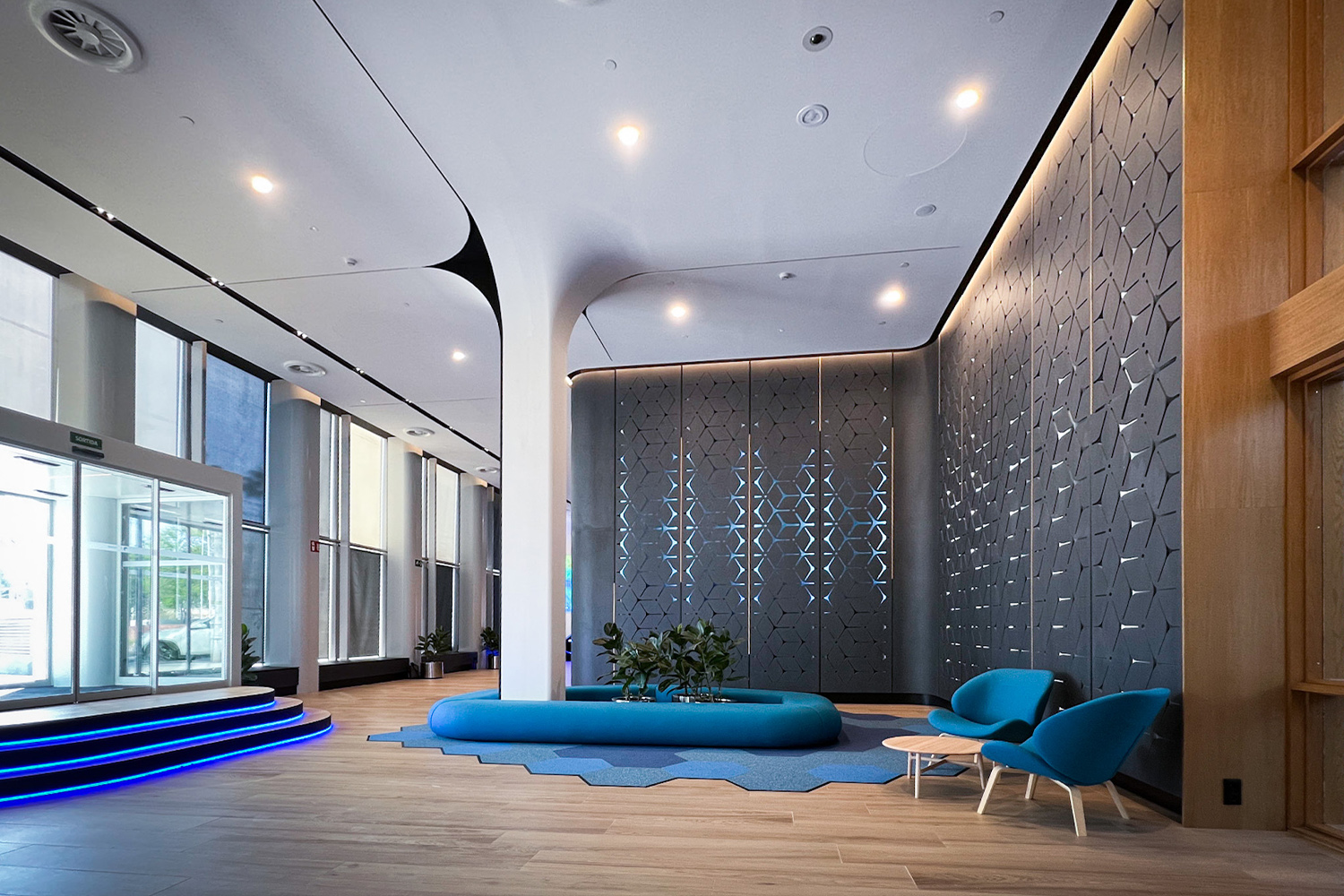
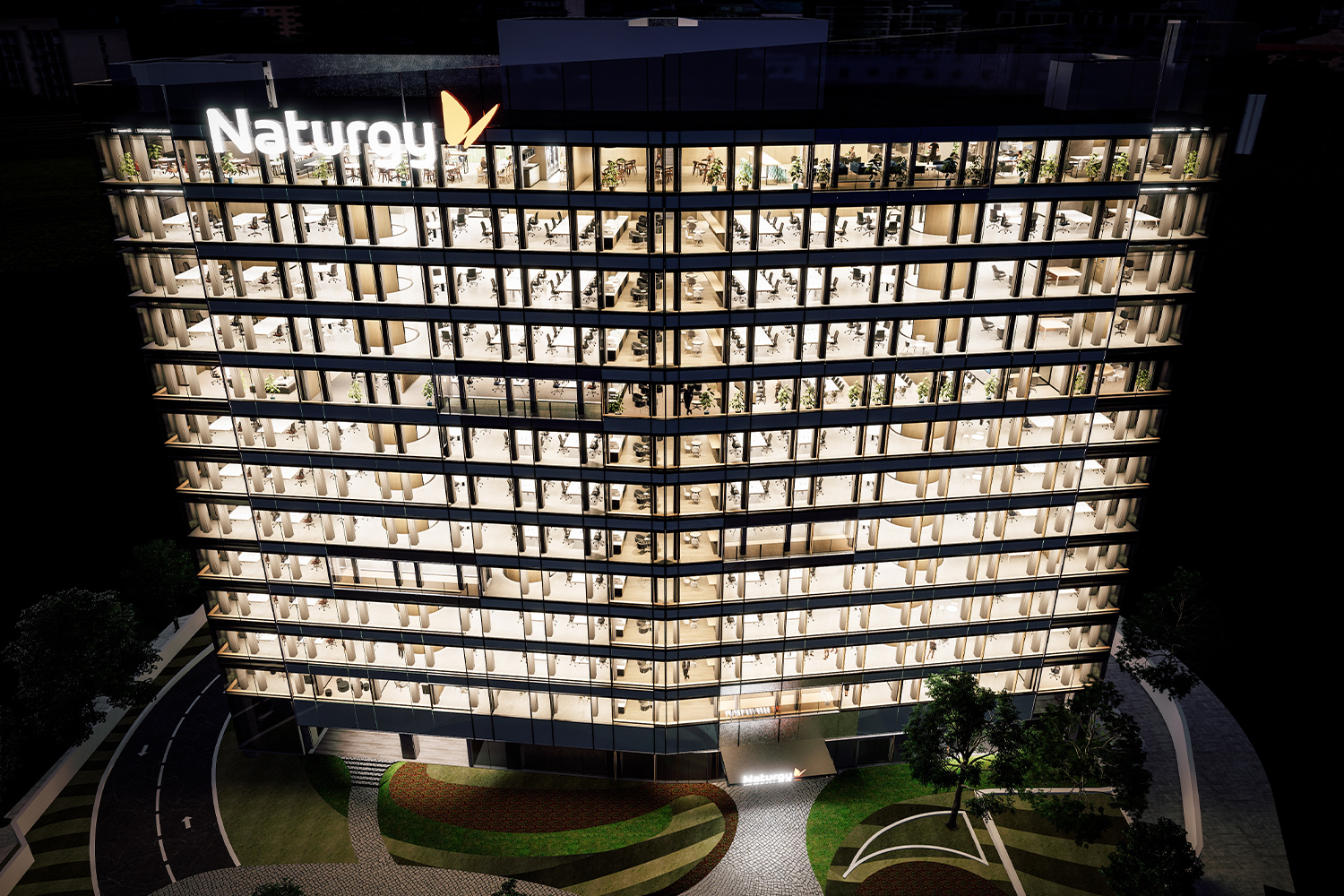
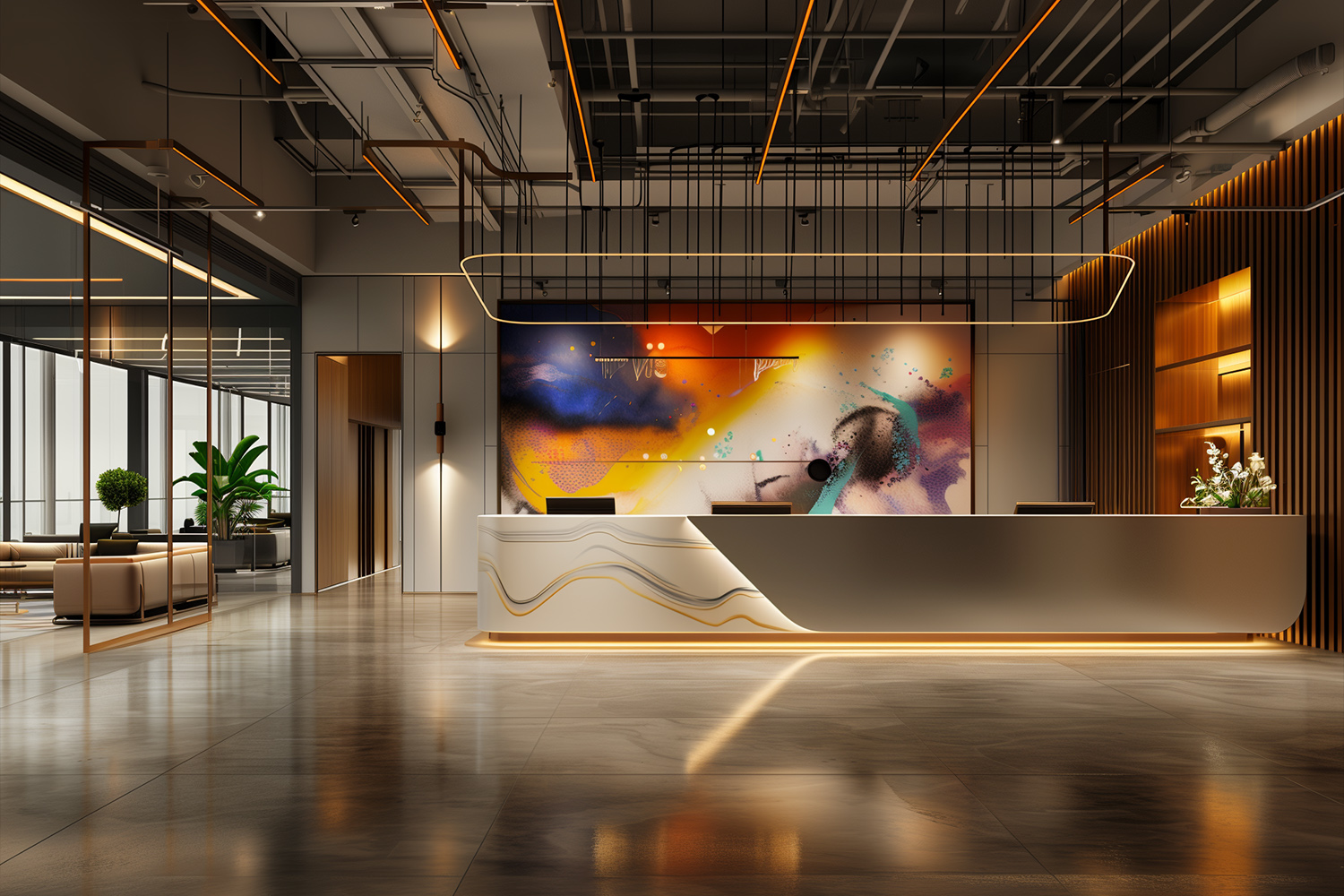
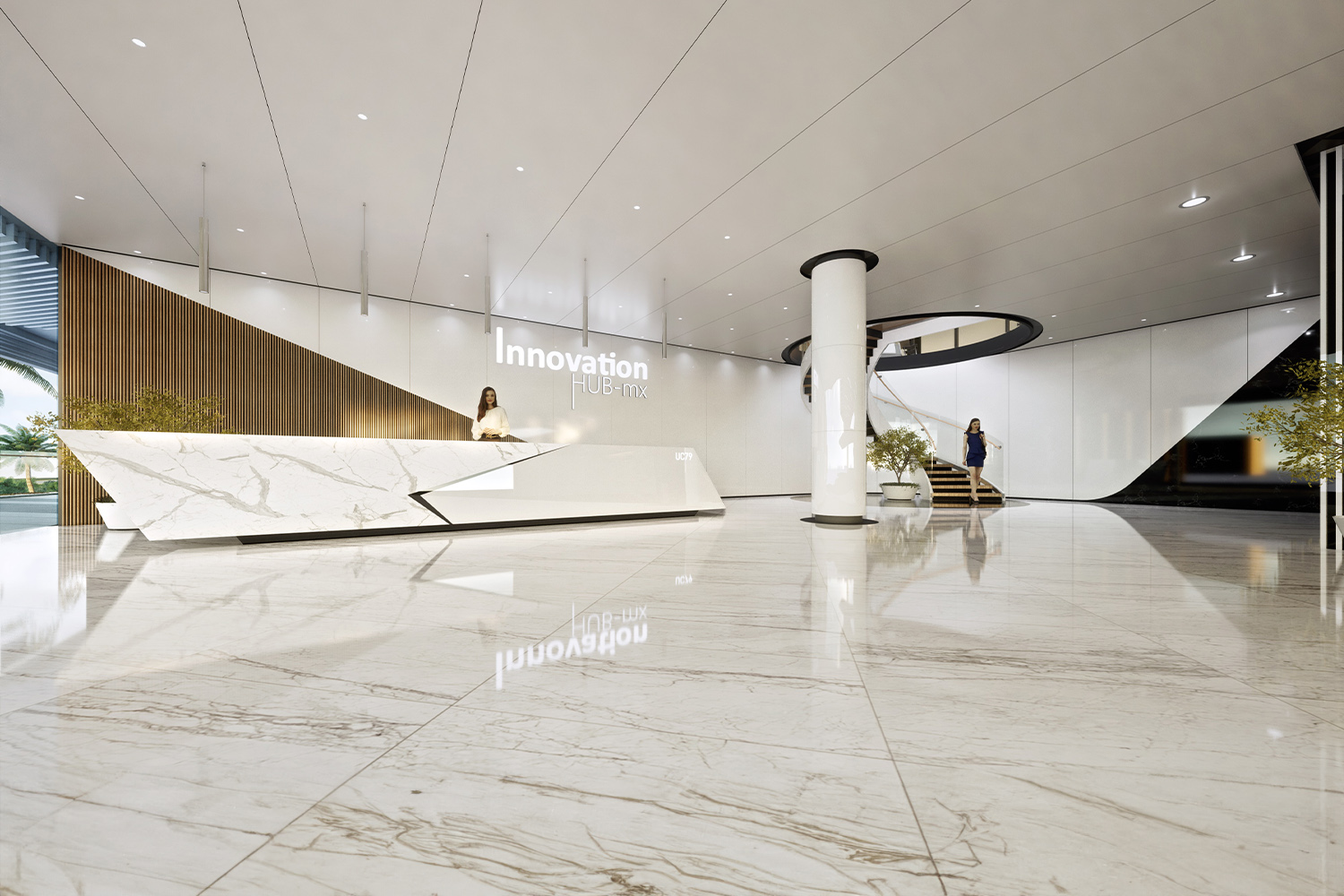
Our Luxury Design Department is devoted to creating high-end villas, private palaces, premium hotels and exclusive retail and lifestyle spaces where bespoke detail and noble materials define every experience. From private palace commissions in Riyadh and Doha — Bayt Al Qamar, Qasr Al-Noor and Al Rayyan Palace — to the Ras Umm Leigi beach villa on the Qatari coast and luxury hospitality concepts in Cancún, we design with absolute discretion and precision. A luxury space is more than refined aesthetics; it is a personal universe that expresses who you are, protects your privacy and elevates every moment lived within it.
ARCHITECTURE DESIGN
Iconic villas, palaces and destinations where proportion, light and landscape come together to create enduring presence and value.
INTERIOR DESIGN
Bespoke interiors where noble materials, custom craftsmanship and curated lighting compose a five-star experience in every room.
True luxury never needs to raise its voice. We craft spaces where excellence is felt in the weight of a door, the grain of a stone and the way light falls at dusk. Every detail is drawn, sourced and supervised to perfection, creating environments that convey exclusivity at first glance and reveal new depth every day.
We have designed +30 luxury residences, palaces and premium hospitality projects across the world.
Over the years, we've participated in numerous projects at various stages, from conception to completion. Some cannot be showcased in our portfolio due to client confidentiality, but each has enriched our experience. Below is a list of projects we have been involved with in various capacities.
• Ras Umm Leigi Beach Villa, Doha, Qatar • Qasr Al-Haya Palace • Bayt Al Qamar Palace, Riyadh, Saudi Arabia • Al-Solaimi Farm House, Doha, Qatar • Qasr Al-Noor Palace, Riyadh, Saudi Arabia • LVH Hotel, Cancún, México • Al Rayyan Palace, Doha, Qatar • A Palace for Nature, Doha, Qatar
Experience the breadth of our capabilities and the depth of our dedication as you navigate through our Published Projects Portfolio. Here, we're not just showcasing our projects; we're inviting you to understand the passion and precision that we bring to every design we create.
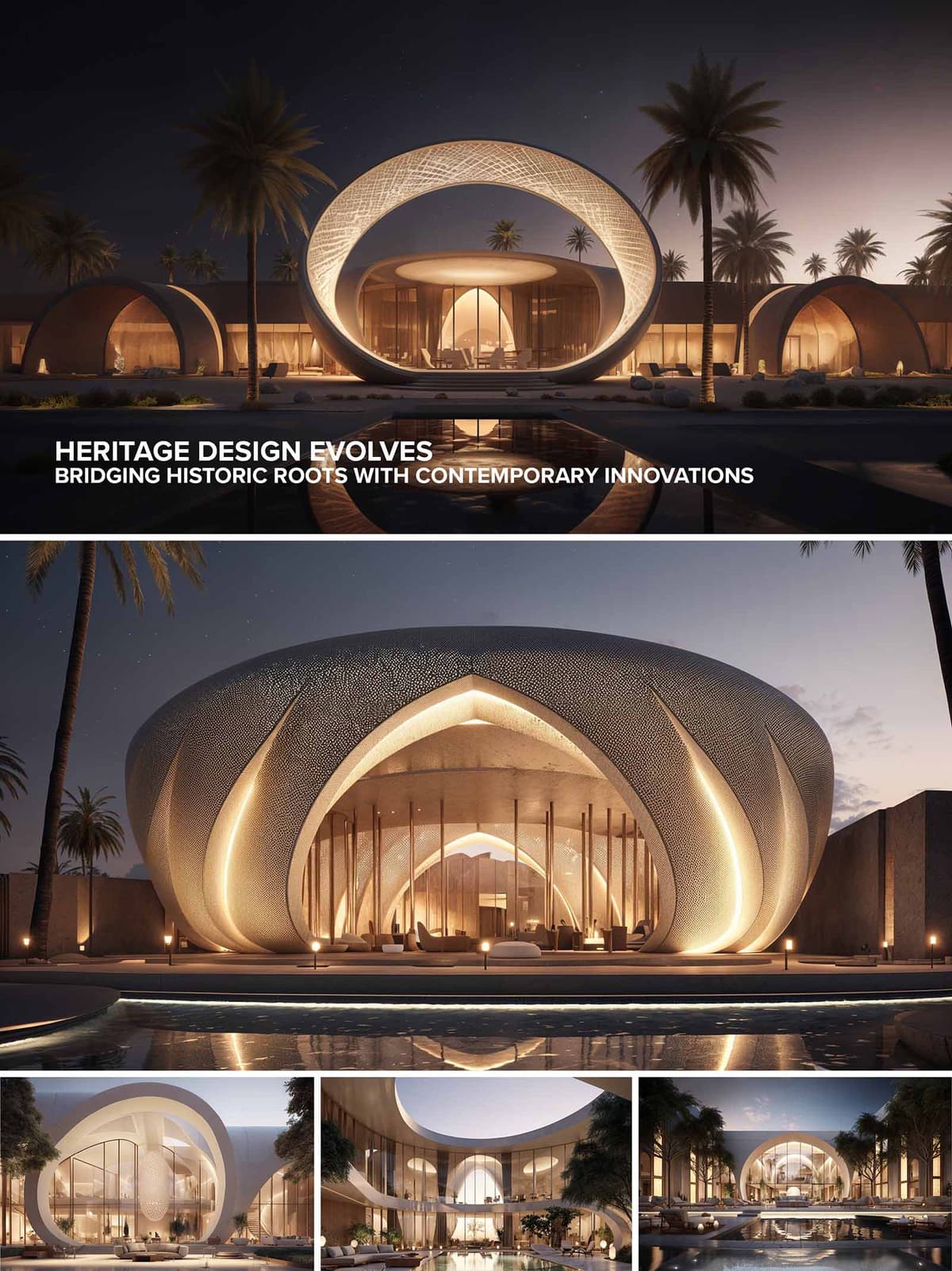
Bayt Al-Qamar Palace is conceived as a contemporary interpretation of the desert majlis, where the architecture becomes a lunar halo resting on the sand. The overarching circular ring and petal-like shells reference the full moon and its phases, a symbol deeply rooted in Arabian poetry and navigation. I worked with pure geometries—circle, arch and ellipse—to translate traditional Islamic motifs into a fluid, sculptural language. Rather than copying historical forms, the project abstracts them, creating an iconic silhouette that feels simultaneously ancestral and futuristic, and clearly legible against the vast Saudi night sky.
The palace sits low and wide, aligning itself with the horizontal character of the desert and the rhythm of palm trees. The central water axis reflects the main ring volume, visually doubling the form and anchoring the complex within its landscape. Perimeter walls and flanking barrel-vaulted wings create a sense of enclosure, echoing the introverted typology of traditional courtyard houses, while carefully framed openings preserve long views to the horizon. Vehicular access is kept discreet, allowing the arrival sequence to emphasize the ceremonial approach on foot along the reflecting pool.
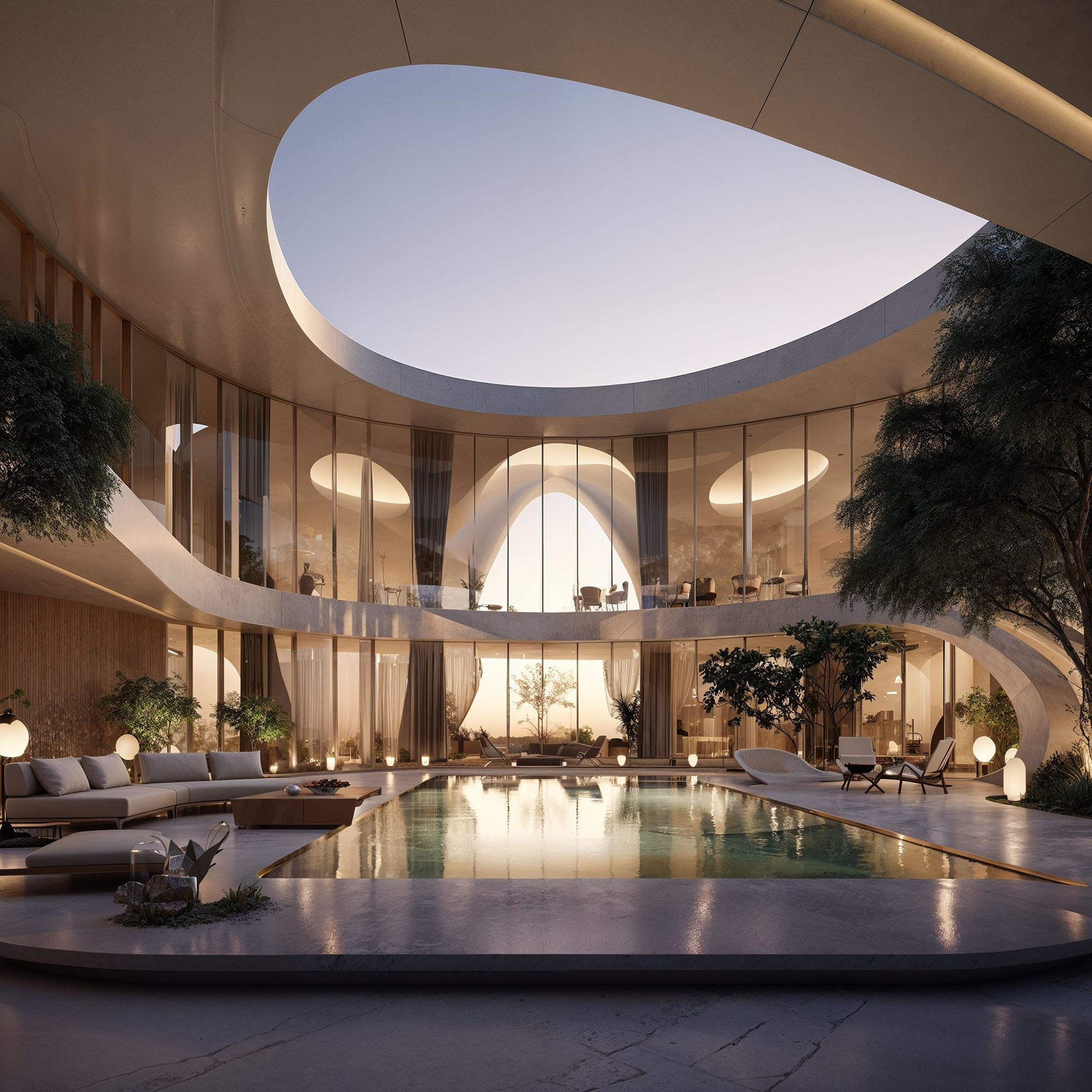
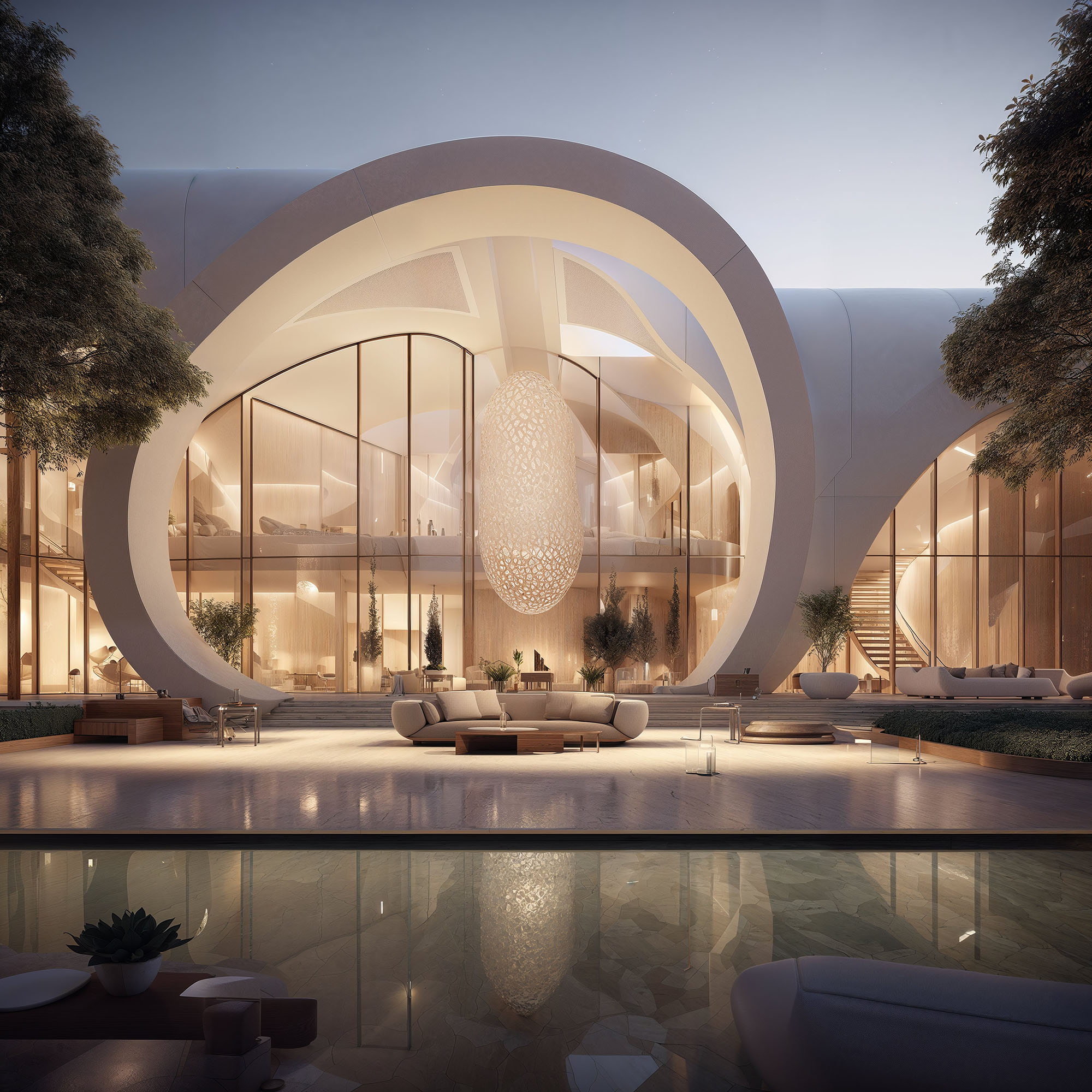
The main hall is housed within the crescent-like shell, whose layered petals overlap to form deep portals. These portals articulate a gradation from public to intimate, guiding guests from open terrace to semi-public lounge and finally to more private reception areas. The circular ring overhead acts as a unifying canopy that organizes the plan around a central axis of water and light. Secondary functions—guest suites, spa, and service zones—occupy linear wings that embrace the central court, creating a protected micro-climate and ensuring that all principal spaces maintain a direct relationship with the pool and gardens.
The external skin employs a finely perforated, metallic-mineral finish inspired by traditional mashrabiya screens. By day, this shell reads as a monolithic, sand-tinted volume; by night, integrated linear LEDs emphasize the petals’ edges and reveal the intricate perforation as a glowing veil. Large, frameless glass panes behind the shell provide visual permeability while keeping the technical envelope clean. Interiors continue the soft, dune-like palette: warm stone flooring, light plaster, and timber accents that absorb and reflect the golden lighting strategy. The result is a gradation from bright exterior glow to warm, cocooned interiors.
From the outset, the design pursued passive environmental performance. The thick shell and ring elements act as thermal mass, buffering internal spaces from desert temperature swings, while their overhangs provide deep shade that minimizes direct solar gain on glass. The central water body assists evaporative cooling, working in tandem with cross-ventilation encouraged by carefully oriented openings. Primary materials are specified as locally sourced stone and high-recycled-content metal cladding to reduce embodied carbon. Roof surfaces are prepared to receive photovoltaic panels, and a grey-water system is integrated to reuse pool backwash and landscape runoff for irrigation of drought-tolerant planting.
Inside Bayt Al-Qamar, the spatial narrative is deliberately serene and ceremonial. Guests enter through a shaded, compressed threshold and emerge into a generous lounge that opens directly to the mirror-like pool, reinforcing the connection between architecture, sky, and water. Furnishings are kept low and minimal, allowing the eye to travel uninterrupted along the curved shells and up to the luminous ring above. Acoustic treatment is concealed within the sculpted ceilings to maintain intimacy even in large gatherings. Ultimately, the palace offers a sequence of spaces that support both grand receptions and quiet contemplation, always framed by the presence of the desert night and the metaphorical light of the moon.
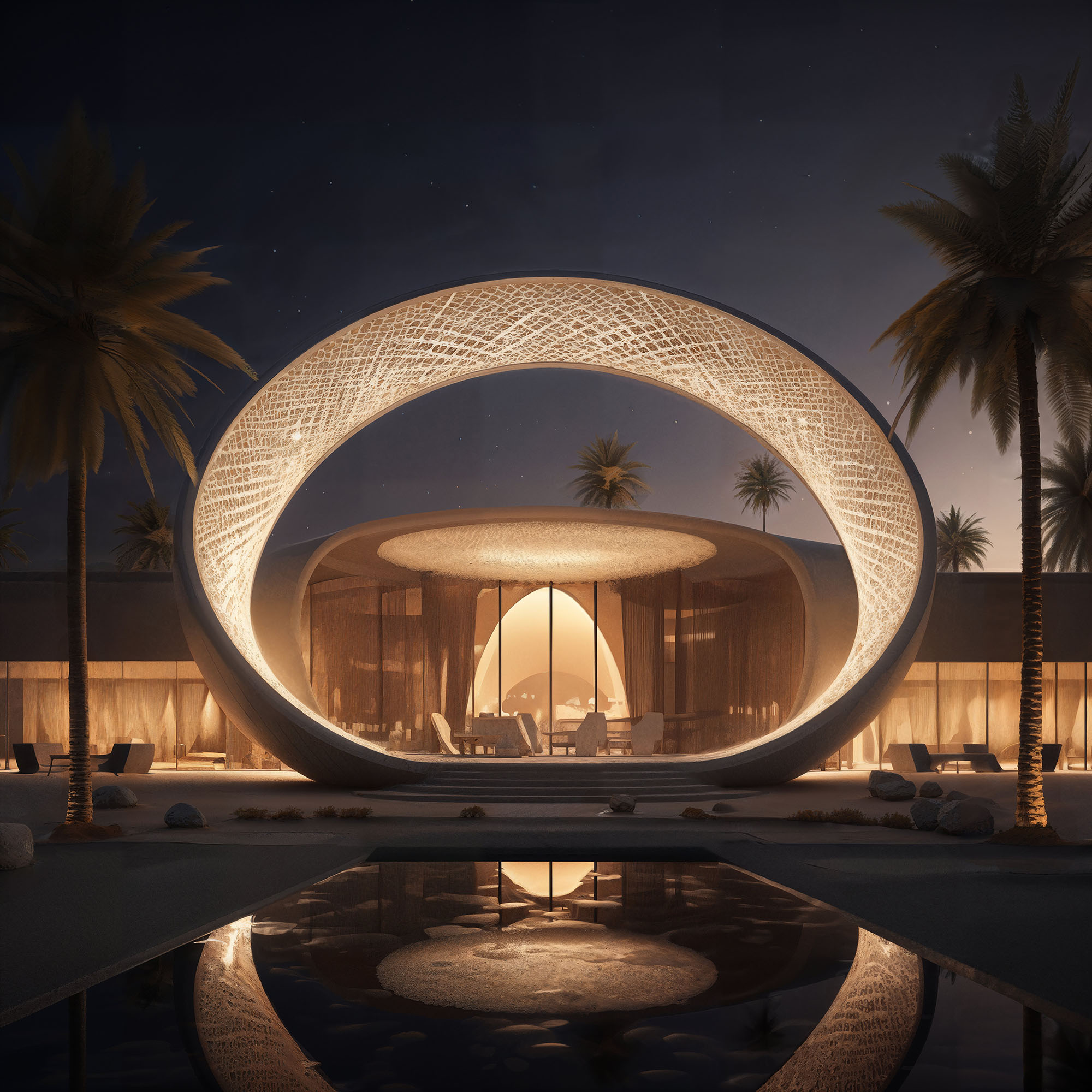
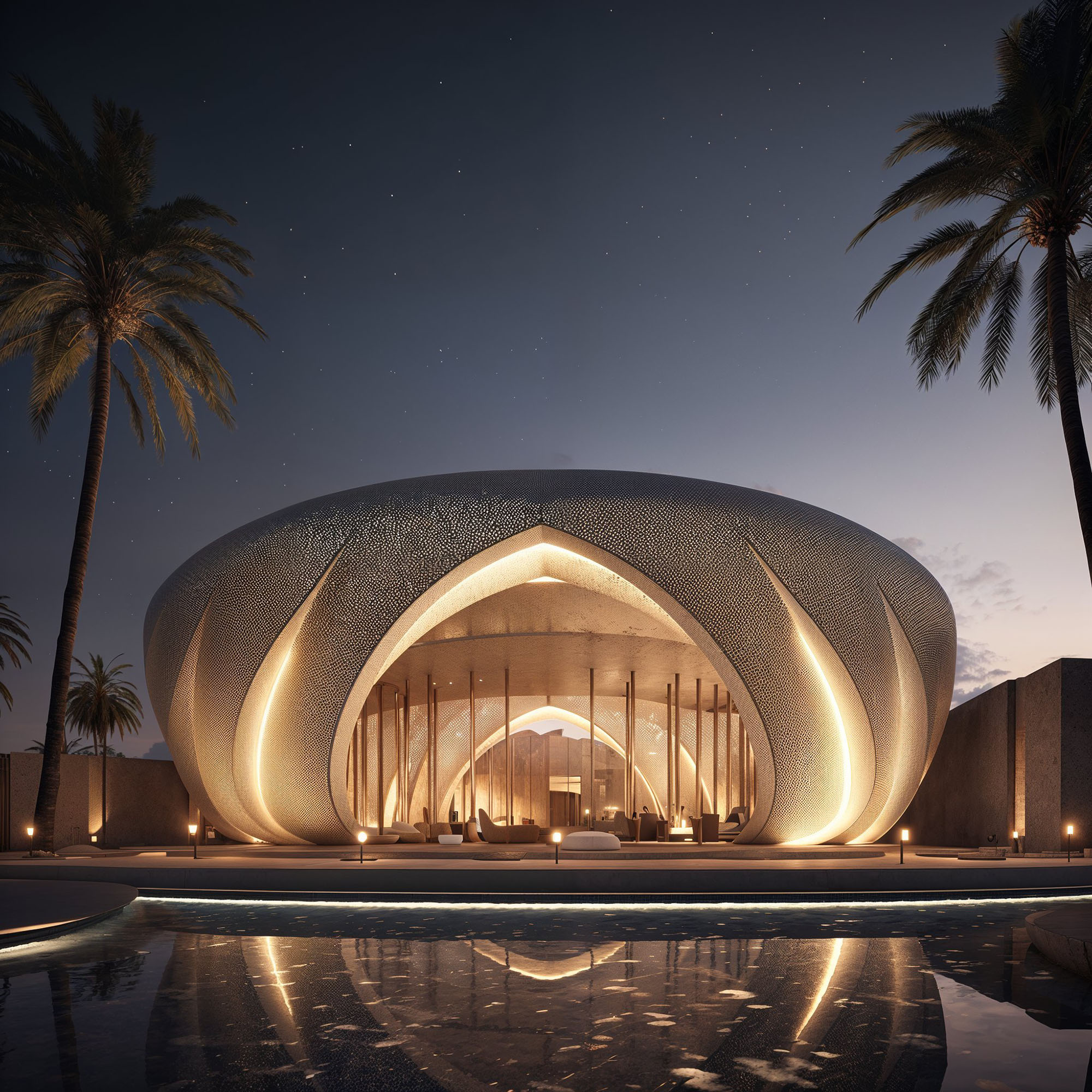
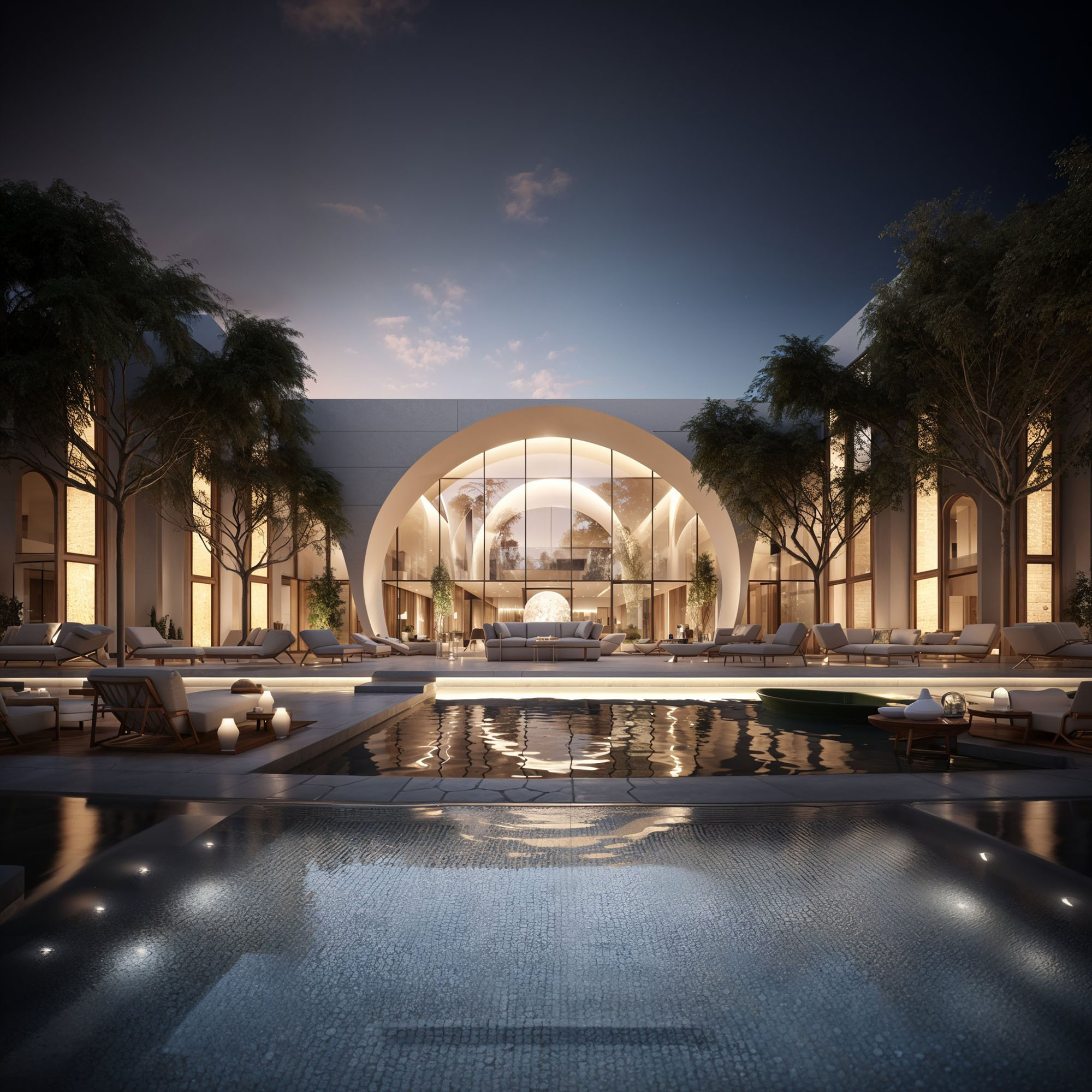
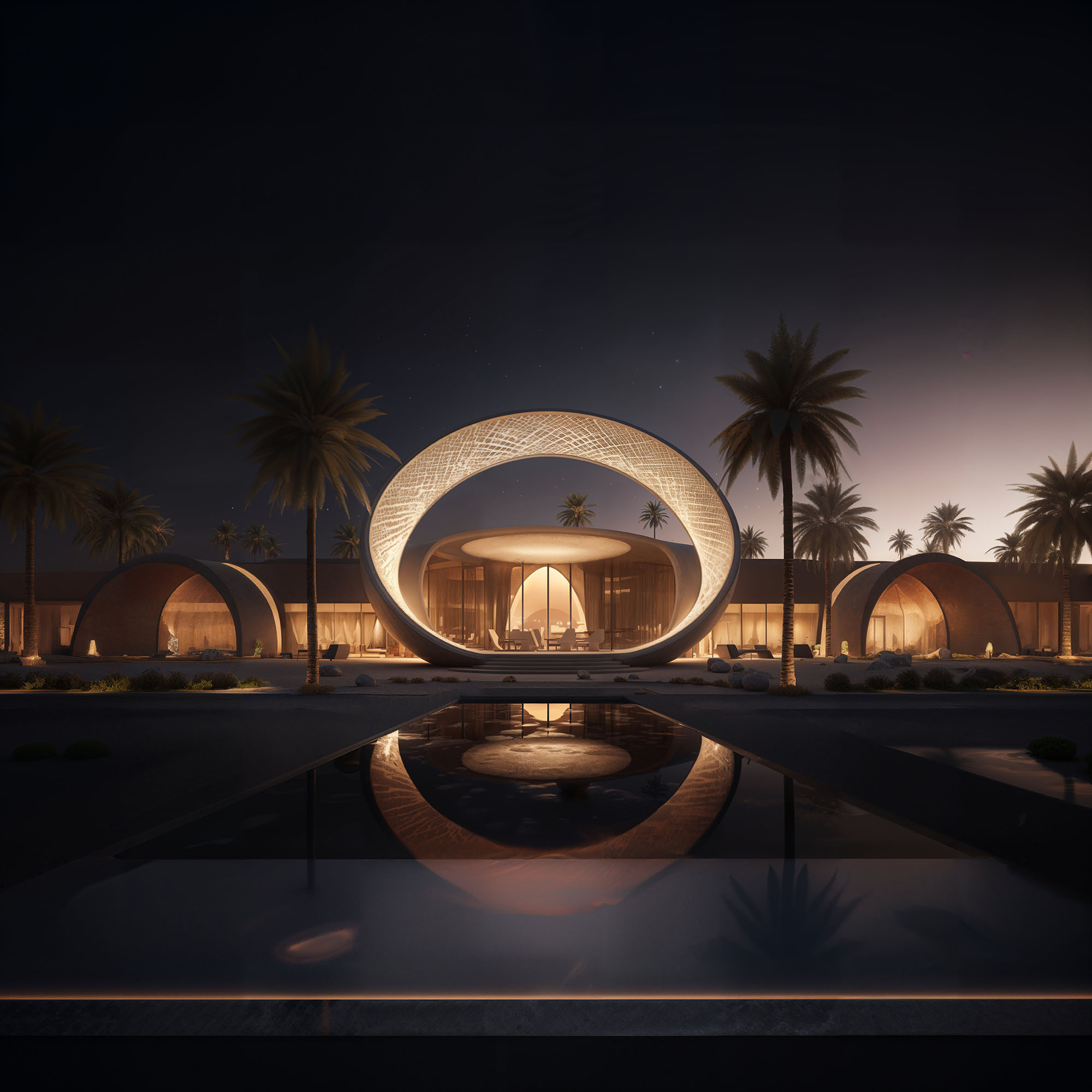
Bayt Al-Qamar Palace is conceived as a contemporary interpretation of the desert majlis, where the architecture becomes a lunar halo resting on the sand. The overarching circular ring and petal-like shells reference the full moon and its phases, a symbol deeply rooted in Arabian poetry and navigation. I worked with pure geometries—circle, arch and ellipse—to translate traditional Islamic motifs into a fluid, sculptural language. Rather than copying historical forms, the project abstracts them, creating an iconic silhouette that feels simultaneously ancestral and futuristic, and clearly legible against the vast Saudi night sky.
The palace sits low and wide, aligning itself with the horizontal character of the desert and the rhythm of palm trees. The central water axis reflects the main ring volume, visually doubling the form and anchoring the complex within its landscape. Perimeter walls and flanking barrel-vaulted wings create a sense of enclosure, echoing the introverted typology of traditional courtyard houses, while carefully framed openings preserve long views to the horizon. Vehicular access is kept discreet, allowing the arrival sequence to emphasize the ceremonial approach on foot along the reflecting pool.
The main hall is housed within the crescent-like shell, whose layered petals overlap to form deep portals. These portals articulate a gradation from public to intimate, guiding guests from open terrace to semi-public lounge and finally to more private reception areas. The circular ring overhead acts as a unifying canopy that organizes the plan around a central axis of water and light. Secondary functions—guest suites, spa, and service zones—occupy linear wings that embrace the central court, creating a protected micro-climate and ensuring that all principal spaces maintain a direct relationship with the pool and gardens.
The external skin employs a finely perforated, metallic-mineral finish inspired by traditional mashrabiya screens. By day, this shell reads as a monolithic, sand-tinted volume; by night, integrated linear LEDs emphasize the petals’ edges and reveal the intricate perforation as a glowing veil. Large, frameless glass panes behind the shell provide visual permeability while keeping the technical envelope clean. Interiors continue the soft, dune-like palette: warm stone flooring, light plaster, and timber accents that absorb and reflect the golden lighting strategy. The result is a gradation from bright exterior glow to warm, cocooned interiors.
From the outset, the design pursued passive environmental performance. The thick shell and ring elements act as thermal mass, buffering internal spaces from desert temperature swings, while their overhangs provide deep shade that minimizes direct solar gain on glass. The central water body assists evaporative cooling, working in tandem with cross-ventilation encouraged by carefully oriented openings. Primary materials are specified as locally sourced stone and high-recycled-content metal cladding to reduce embodied carbon. Roof surfaces are prepared to receive photovoltaic panels, and a grey-water system is integrated to reuse pool backwash and landscape runoff for irrigation of drought-tolerant planting.
Inside Bayt Al-Qamar, the spatial narrative is deliberately serene and ceremonial. Guests enter through a shaded, compressed threshold and emerge into a generous lounge that opens directly to the mirror-like pool, reinforcing the connection between architecture, sky, and water. Furnishings are kept low and minimal, allowing the eye to travel uninterrupted along the curved shells and up to the luminous ring above. Acoustic treatment is concealed within the sculpted ceilings to maintain intimacy even in large gatherings. Ultimately, the palace offers a sequence of spaces that support both grand receptions and quiet contemplation, always framed by the presence of the desert night and the metaphorical light of the moon.
© 2021 by sanzpont [arquitectura] . Webpage by sanzpont [digital] . Innovative Digital Experiences
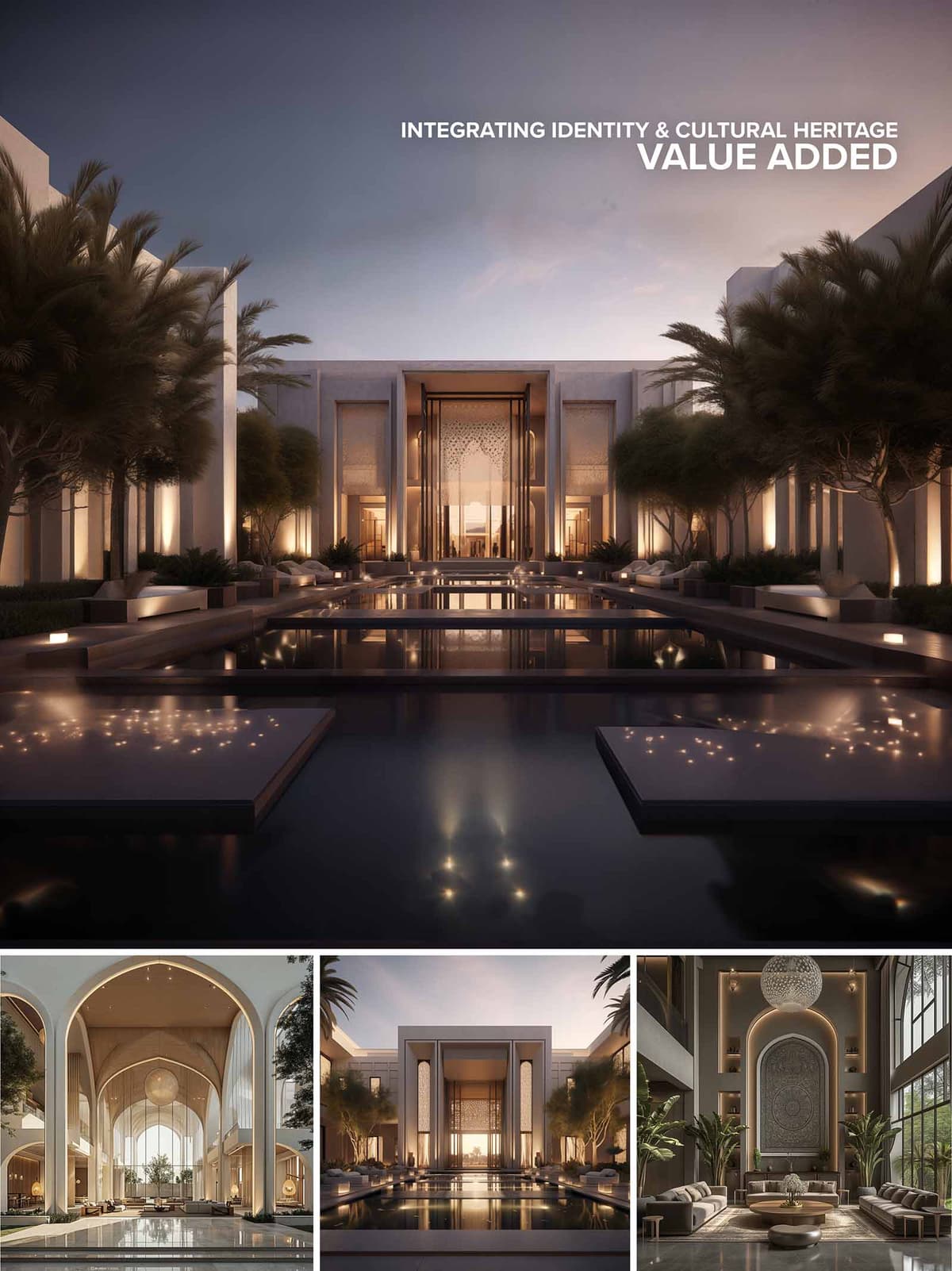
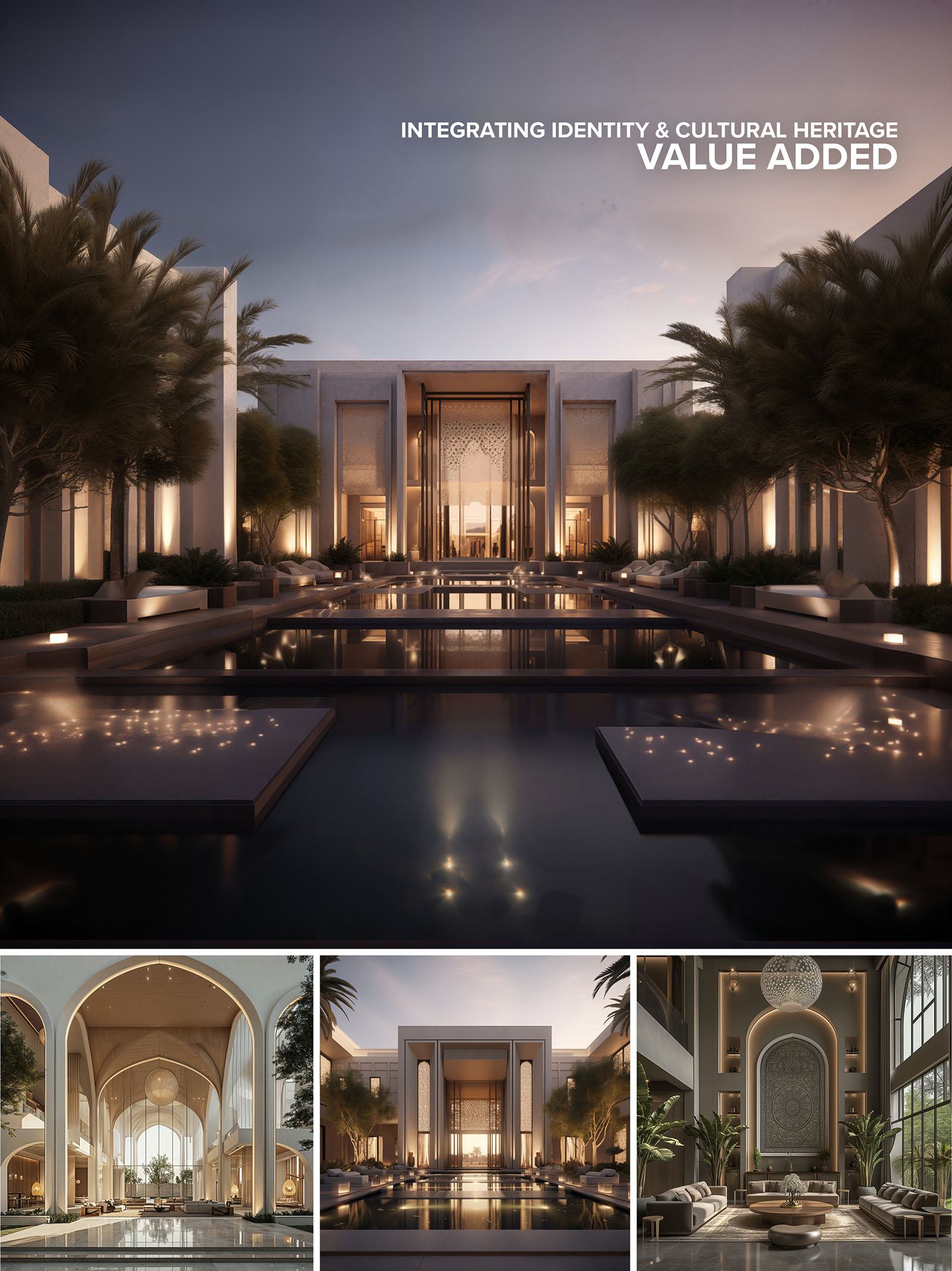
Qasr Al-Haya Palace is conceived as a contemporary interpretation of the desert palace, merging refined minimalism with the opulent spatial sequences of traditional Arab architecture. The design orchestrates a ceremonial journey from exterior to interior, using water, light, and shadow as primary compositional elements. A strong axial approach leads guests through layered thresholds, framing views and gradually revealing the richness of the inner world.
The architectural language is deliberately calm and monolithic on the outside, allowing the interiors and courtyards to express the emotional intensity of the palace life. Verticality, generous volumes, and finely worked details emphasize dignity and permanence, while soft, warm lighting underscores the palace’s residential and intimate vocation.
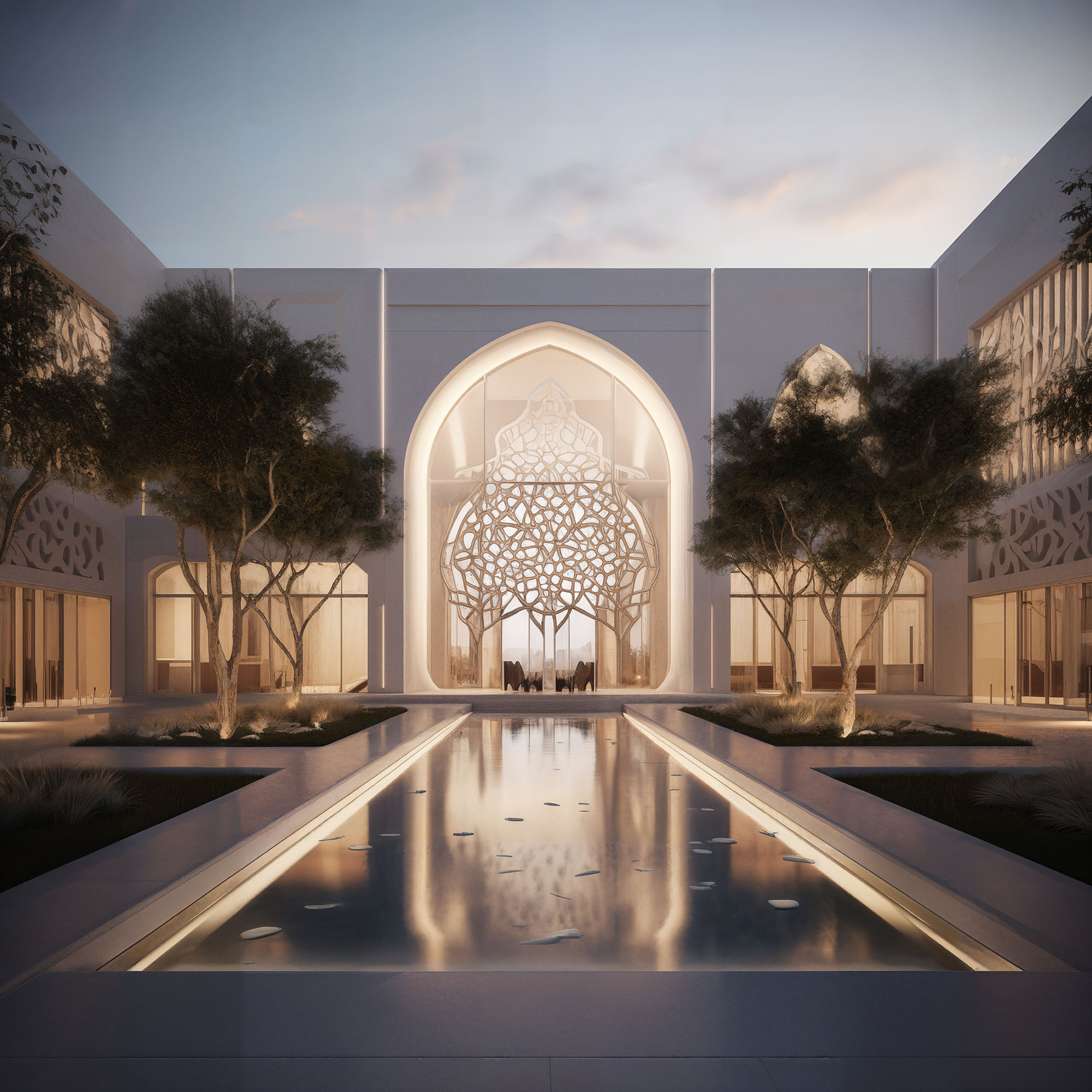
The palace is structured as a series of orthogonal volumes around a central water courtyard. Clean, rectilinear masses are articulated by deep reveals and tall portals, generating a rhythm of solids and voids. The main entrance façade is dominated by a grand propylaeum-like frame, within which a delicately perforated metal screen filters light and provides privacy. This large-scale mashrabiya becomes the symbolic “veil” of the palace.
Vertical pilasters and recessed bays create a sequence of shaded niches along the perimeter, reinforcing a sense of procession. The overall massing remains low and horizontal, echoing the horizon line of the desert landscape, while selective vertical accents—entrance portal, double-height arcades, and interior colonnades—mark important nodes in the spatial hierarchy.
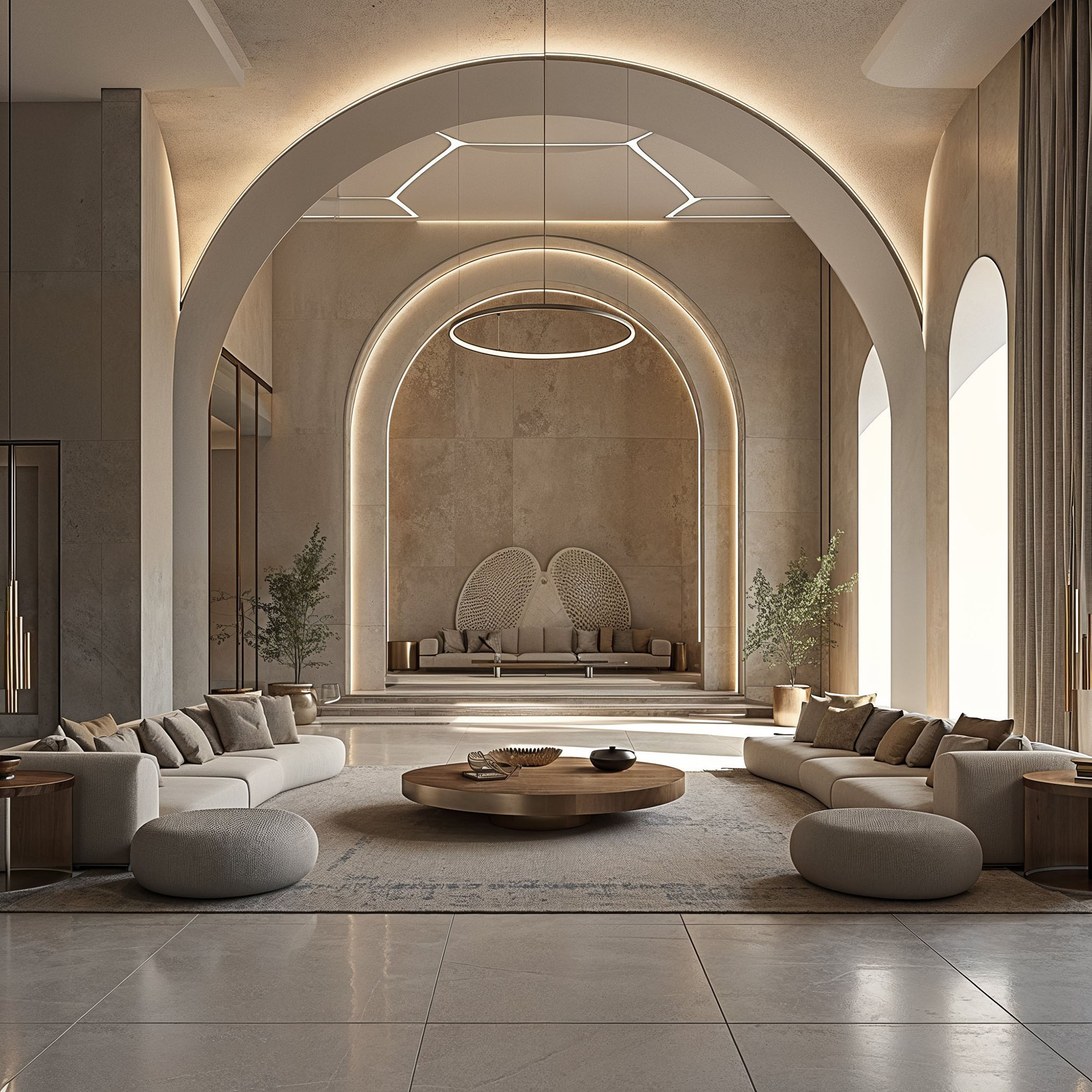
The interior spaces revolve around a monumental, double-height reception hall, defined by slender arches and a sweeping vaulted ceiling. Natural light enters through tall, glazed openings, softened by sheer layers and exterior shading devices. This creates a diffused, golden atmosphere that enhances the perception of height and depth. The hall connects visually to the central courtyard, dissolving the boundary between inside and outside.
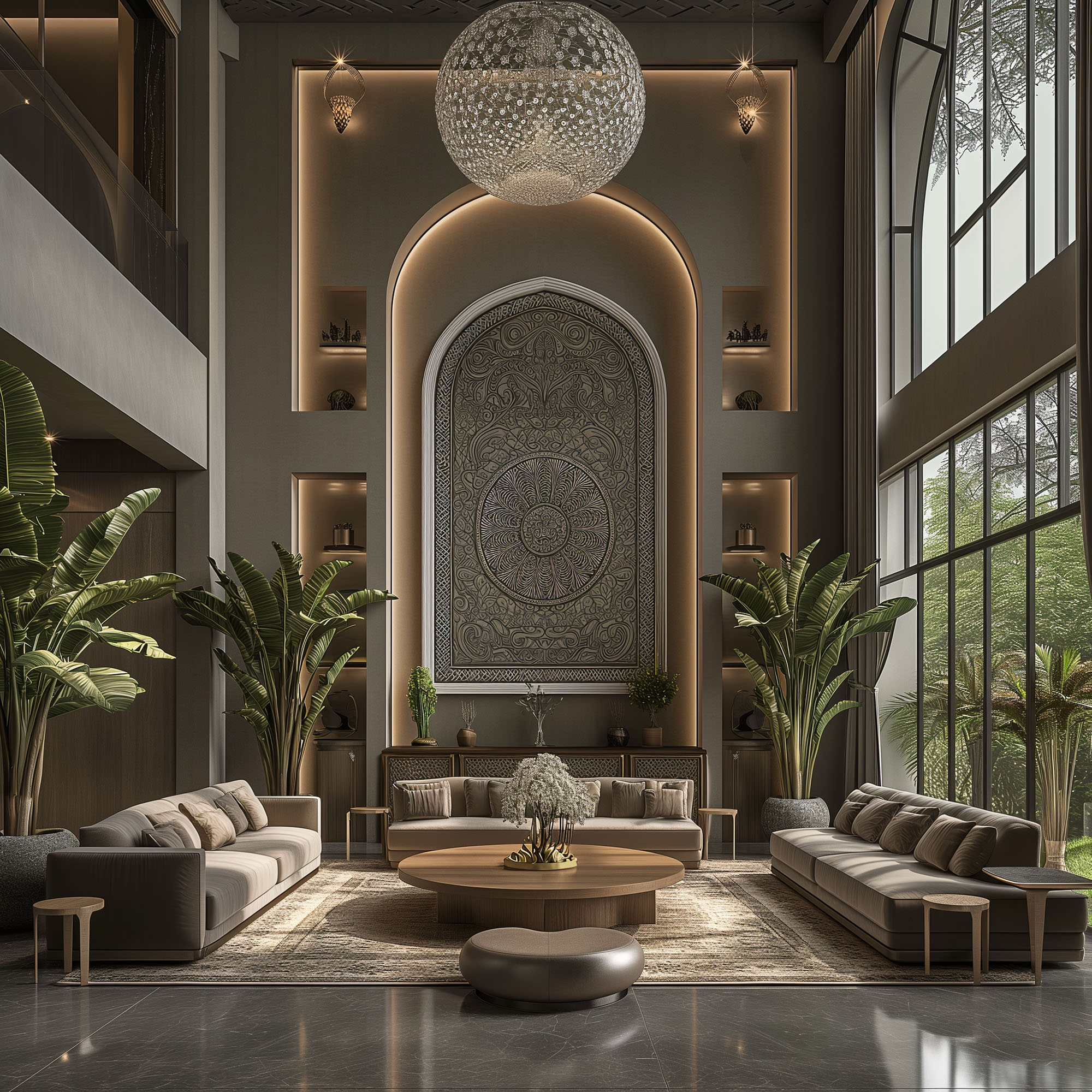
Key interior walls are treated as sculpted surfaces: recessed panels, carved geometric patterns, and large-scale ornamental medallions act as focal points. Furnishings are arranged in generous conversation clusters, combining low modular seating reminiscent of majlis typologies with contemporary pieces in neutral textiles. The palette favors warm stone, bronze accents, and soft fabrics, enriched by greenery that introduces a subtle biophilic dimension.
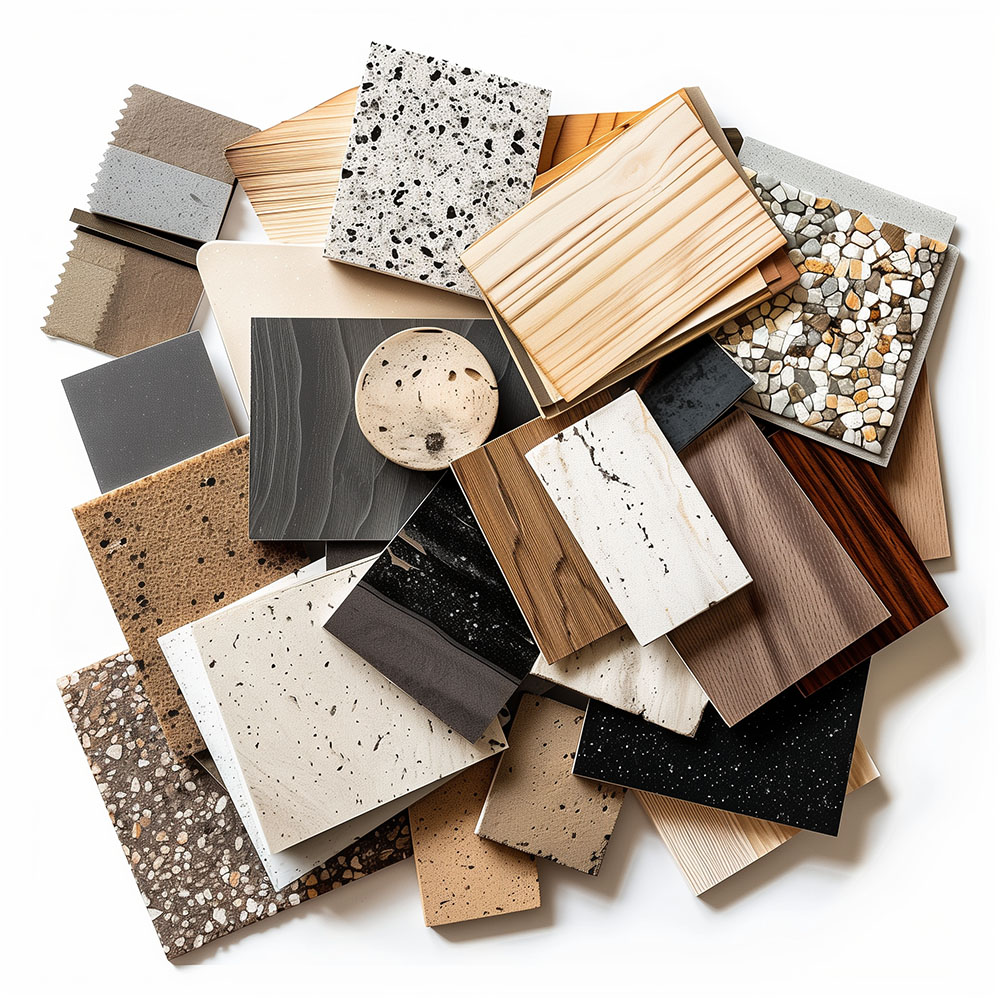
The material strategy balances durability, tactility, and understated luxury. External façades use light-toned stone or high-performance stucco, chosen for its thermal inertia and ability to reflect harsh sunlight. Fine metalwork in bronze or champagne anodized aluminum defines doors, screens, and balustrades, providing a delicate contrast to the solid masonry volumes.
Internally, large-format stone flooring, timber ceilings, and finely textured plaster surfaces create a cohesive, timeless backdrop. The chromatic palette remains in the spectrum of sands, creams, and warm greys, punctuated by metallic highlights and the deep greens of planting. Lighting is layered: concealed linear LEDs accentuate cornices and arches, while sculptural pendants and chandeliers articulate key vertical spaces and emphasize the palace’s ceremonial character.
The landscape design extends the architecture through a sequence of reflecting pools, planted terraces, and shaded seating platforms. Linear water features aligned with the central axis not only create a powerful visual perspective, but also assist in microclimate regulation through evaporative cooling. Strategically placed palms and drought-tolerant native species provide shade, reduce heat gain on hard surfaces, and minimize irrigation demand.
Sustainability is embedded through passive and active strategies: deep overhangs, colonnades, and screens mitigate solar exposure; high-performance glazing and insulated envelopes improve thermal performance; and the central courtyard acts as a climatic buffer, encouraging cross-ventilation. Water-efficient fixtures, greywater reuse for irrigation, and energy-efficient LED lighting systems contribute to reduced operational consumption, ensuring that the palace’s sense of grandeur is aligned with contemporary environmental responsibility.
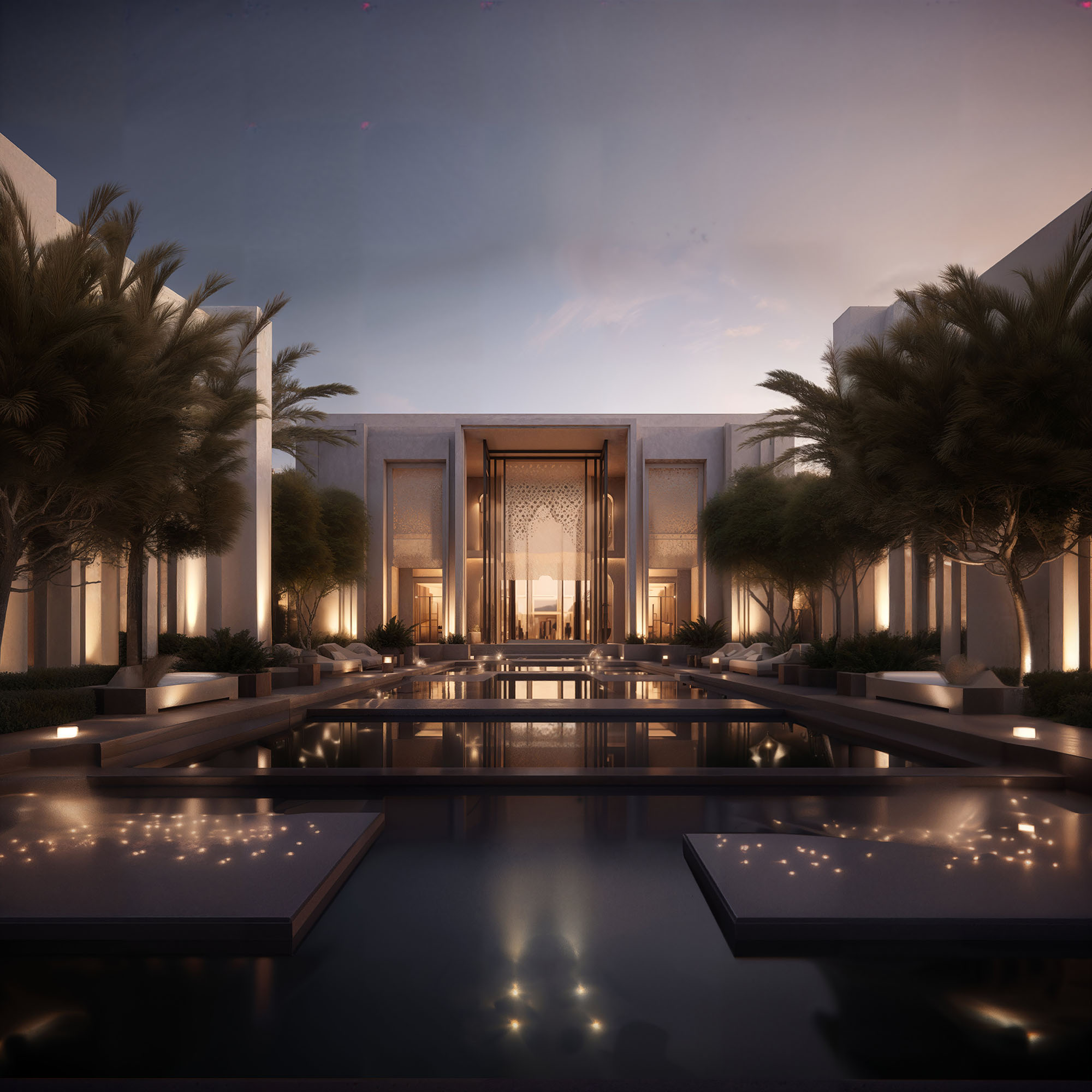
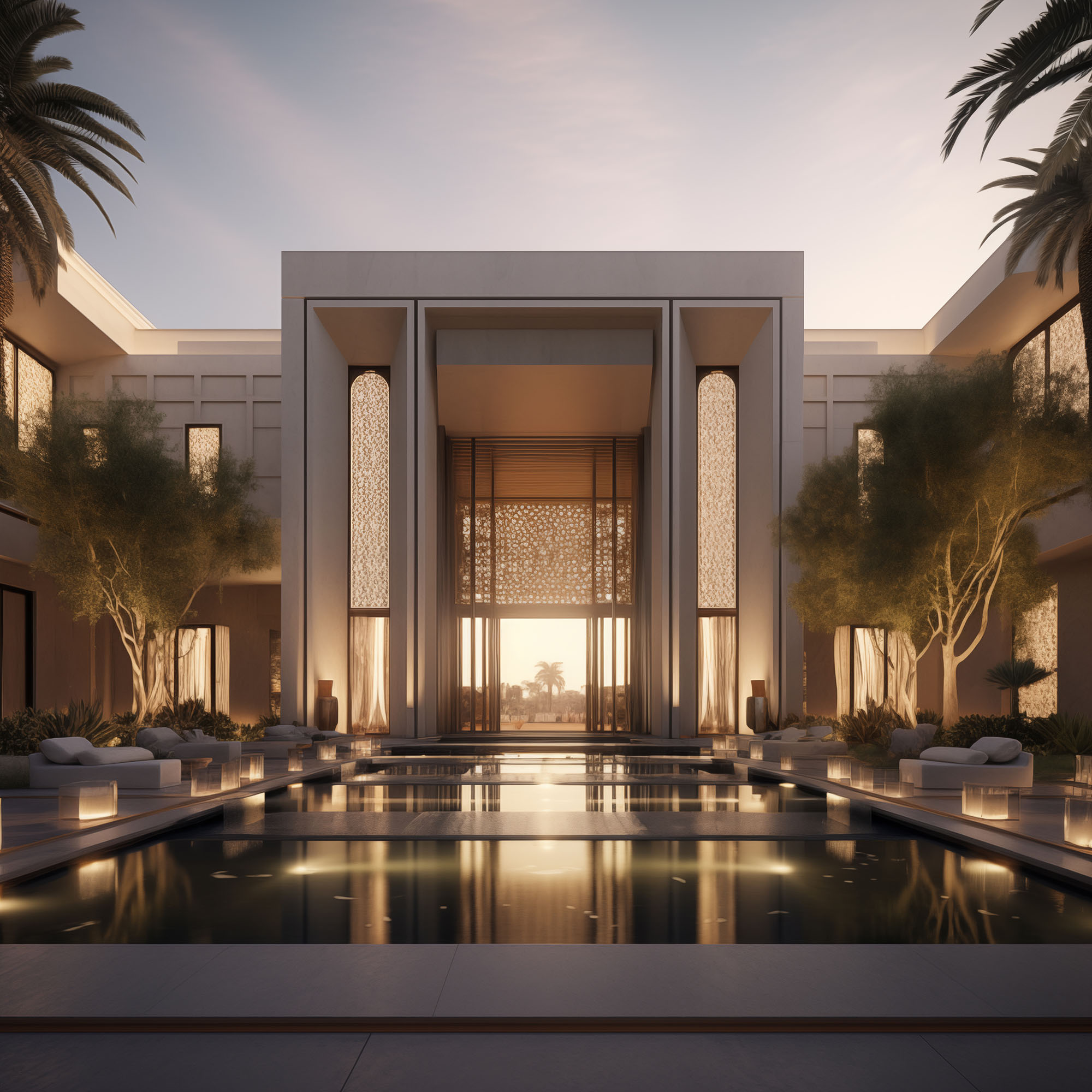

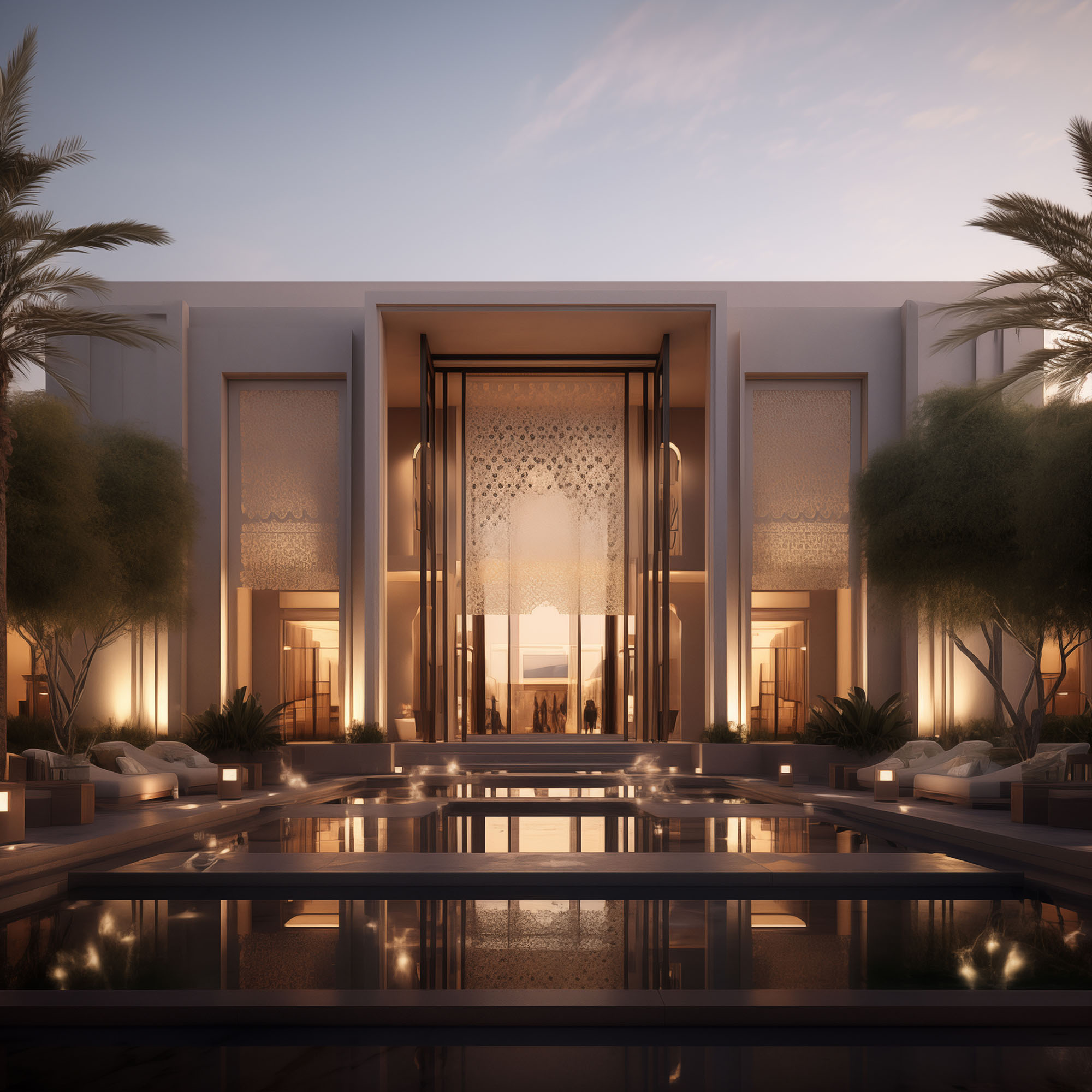
Qasr Al-Haya Palace is conceived as a contemporary interpretation of the desert palace, merging refined minimalism with the opulent spatial sequences of traditional Arab architecture. The design orchestrates a ceremonial journey from exterior to interior, using water, light, and shadow as primary compositional elements. A strong axial approach leads guests through layered thresholds, framing views and gradually revealing the richness of the inner world.
The architectural language is deliberately calm and monolithic on the outside, allowing the interiors and courtyards to express the emotional intensity of the palace life. Verticality, generous volumes, and finely worked details emphasize dignity and permanence, while soft, warm lighting underscores the palace’s residential and intimate vocation.
The palace is structured as a series of orthogonal volumes around a central water courtyard. Clean, rectilinear masses are articulated by deep reveals and tall portals, generating a rhythm of solids and voids. The main entrance façade is dominated by a grand propylaeum-like frame, within which a delicately perforated metal screen filters light and provides privacy. This large-scale mashrabiya becomes the symbolic “veil” of the palace.
Vertical pilasters and recessed bays create a sequence of shaded niches along the perimeter, reinforcing a sense of procession. The overall massing remains low and horizontal, echoing the horizon line of the desert landscape, while selective vertical accents—entrance portal, double-height arcades, and interior colonnades—mark important nodes in the spatial hierarchy.
The interior spaces revolve around a monumental, double-height reception hall, defined by slender arches and a sweeping vaulted ceiling. Natural light enters through tall, glazed openings, softened by sheer layers and exterior shading devices. This creates a diffused, golden atmosphere that enhances the perception of height and depth. The hall connects visually to the central courtyard, dissolving the boundary between inside and outside.
Key interior walls are treated as sculpted surfaces: recessed panels, carved geometric patterns, and large-scale ornamental medallions act as focal points. Furnishings are arranged in generous conversation clusters, combining low modular seating reminiscent of majlis typologies with contemporary pieces in neutral textiles. The palette favors warm stone, bronze accents, and soft fabrics, enriched by greenery that introduces a subtle biophilic dimension.
The material strategy balances durability, tactility, and understated luxury. External façades use light-toned stone or high-performance stucco, chosen for its thermal inertia and ability to reflect harsh sunlight. Fine metalwork in bronze or champagne anodized aluminum defines doors, screens, and balustrades, providing a delicate contrast to the solid masonry volumes.
Internally, large-format stone flooring, timber ceilings, and finely textured plaster surfaces create a cohesive, timeless backdrop. The chromatic palette remains in the spectrum of sands, creams, and warm greys, punctuated by metallic highlights and the deep greens of planting. Lighting is layered: concealed linear LEDs accentuate cornices and arches, while sculptural pendants and chandeliers articulate key vertical spaces and emphasize the palace’s ceremonial character.
The landscape design extends the architecture through a sequence of reflecting pools, planted terraces, and shaded seating platforms. Linear water features aligned with the central axis not only create a powerful visual perspective, but also assist in microclimate regulation through evaporative cooling. Strategically placed palms and drought-tolerant native species provide shade, reduce heat gain on hard surfaces, and minimize irrigation demand.
Sustainability is embedded through passive and active strategies: deep overhangs, colonnades, and screens mitigate solar exposure; high-performance glazing and insulated envelopes improve thermal performance; and the central courtyard acts as a climatic buffer, encouraging cross-ventilation. Water-efficient fixtures, greywater reuse for irrigation, and energy-efficient LED lighting systems contribute to reduced operational consumption, ensuring that the palace’s sense of grandeur is aligned with contemporary environmental responsibility.
© 2021 by sanzpont [arquitectura] . Webpage by sanzpont [digital] . Innovative Digital Experiences
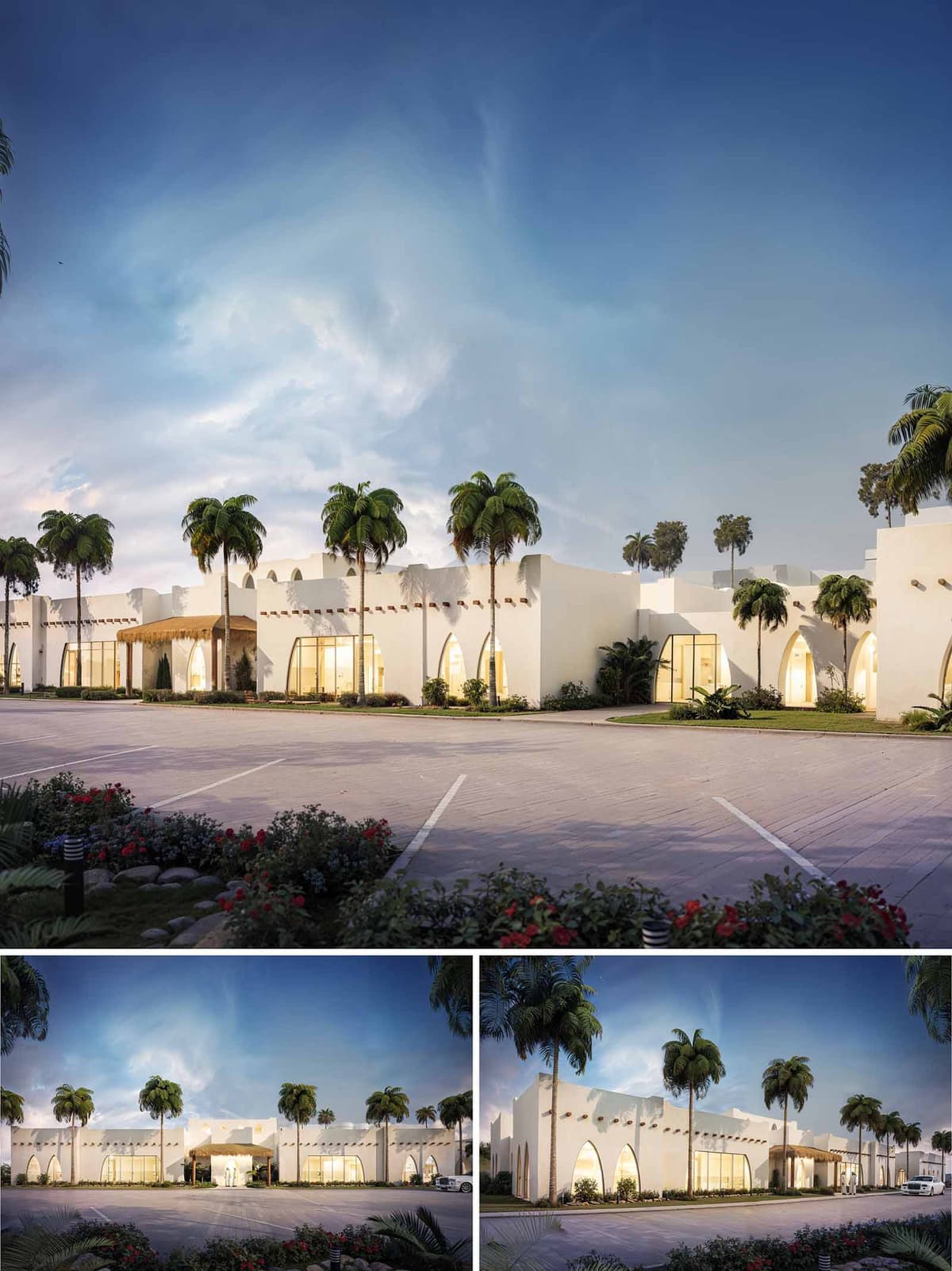
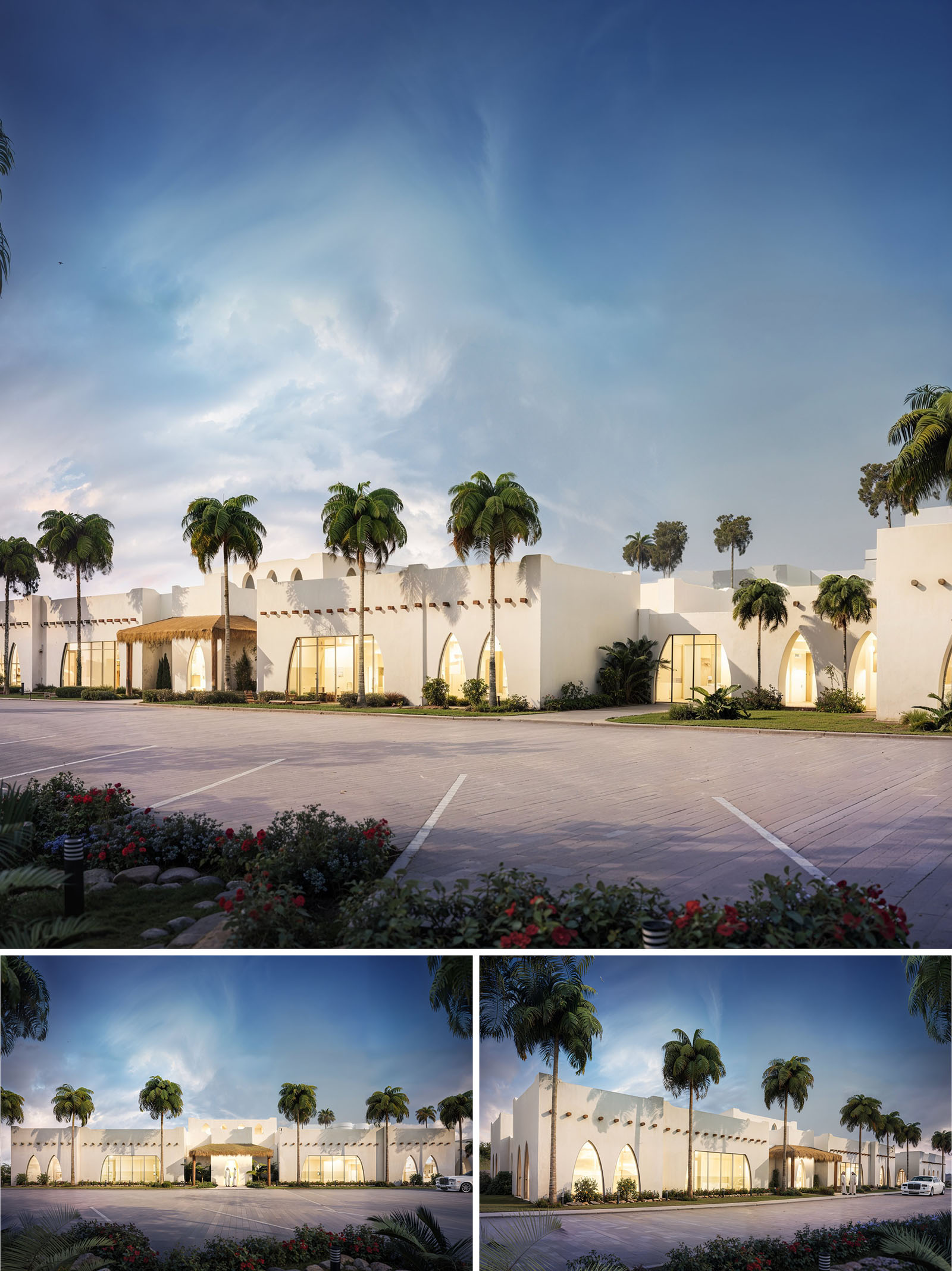
RAS Umm Leigi Beach Villa is conceived as a low-rise coastal retreat that fuses contemporary luxury with the quiet monumentality of vernacular Gulf architecture. The ensemble reads as a sculpted white village, stretching horizontally along the shoreline to maximize visual and physical connection with the sea. The architecture favors calm, continuous planes and softened edges that respond to the expansive desert-sky backdrop while creating a serene, resort-like ambience for residents and guests.
The concept celebrates thresholds: between inside and outside, light and shade, public arrival and intimate retreat. Repetitive arcades, deep reveals and carefully framed openings orchestrate these transitions, allowing the building to appear almost carved from a single, monolithic mass while remaining permeable and luminous at ground level. Palm trees and lush planting complete the image of an oasis, contrasting with the austere purity of the white volumes.
The architectural language is anchored in a restrained palette: white, planar walls, rhythmically punctured by tall, pointed-arch openings that reinterpret traditional Islamic and Qatari forms in a contemporary key. These arches, expressed as deep, vertical cuts in the façade, create a dynamic interplay of shadow and emphasize the building’s horizontality. The upper parapets are articulated with a crenellated profile and projecting timber-like elements, subtly recalling historic fortifications and wind towers without literal imitation.
Glazed curtain-wall panels are carefully recessed within the arches, reducing solar exposure while maintaining transparency. At the main entrance, the volume steps back to form a generous porch, highlighted by a warmer, textured canopy that marks the ceremonial drop-off. Nighttime illumination washes the façade, accentuating the sculptural qualities of the white surfaces and turning the sequence of arches into a luminous colonnade facing the parking forecourt.
The villa complex is organized as a linear bar parallel to the beach, with a strong arrival axis connecting the access road, parking zone and main entrance portico. This clear geometry ensures intuitive wayfinding and a dignified approach sequence, transitioning visitors from the urban edge to a protected, inward-looking oasis. The building’s relatively low height preserves human scale and maintains uninterrupted views toward the sea and the sky.
Primary functions are likely distributed along the façade line, with public and semi-public spaces occupying the more transparent front bays, while private suites and service zones nest behind a thicker, thermally insulated wall layer. Repetitive structural bays, expressed by the exterior arches, support flexible interior planning, allowing modular villa units or clusters of suites to be interconnected or separated according to functional needs and degrees of privacy.
The exterior is dominated by a smooth, high-reflectance plaster or stucco finish, optimized for the coastal context of Doha. This white skin reduces heat gain, reinforces the minimalist aesthetic and amplifies the changing tones of the sky throughout the day. Warm, low-iron glazing is used within the arch openings to maintain clarity while subtly filtering harsh daylight. The glass proportion is carefully balanced to ensure a sense of openness without compromising thermal comfort.
Soft, indirect lighting is integrated at the façade base and within the arch intrados, creating a layered night-time atmosphere. Light spills onto adjacent planting beds and walkways, emphasizing the interplay between architecture and landscape. The restrained palette of neutral walls, glass and natural textures from the entrance canopy and planting ensures that the setting feels both luxurious and timeless, avoiding visual clutter.
Landscape design plays a central role in environmental performance and user experience. Rows of mature palm trees align with the façade rhythm, providing vertical shading and helping to cool the microclimate through evapotranspiration. Low-height flowering shrubs and groundcovers define the parking edges, guiding movement while softening the hardscape. The generous setbacks between façade and driveways create buffer zones that reduce glare and reflected heat.
Sustainability strategies are embedded in the architectural form: compact building depth, limited height and continuous roof parapets support the integration of high-performance roof insulation and potential photovoltaic arrays. The deep façade recesses, pointed arches and recessed glazing significantly reduce direct solar gain while allowing ample daylight, lowering dependence on artificial lighting. Use of high-albedo exterior finishes, drought-tolerant planting and efficient irrigation systems is consistent with Qatar’s water and energy conservation priorities, aligning the luxury villa experience with responsible environmental stewardship.
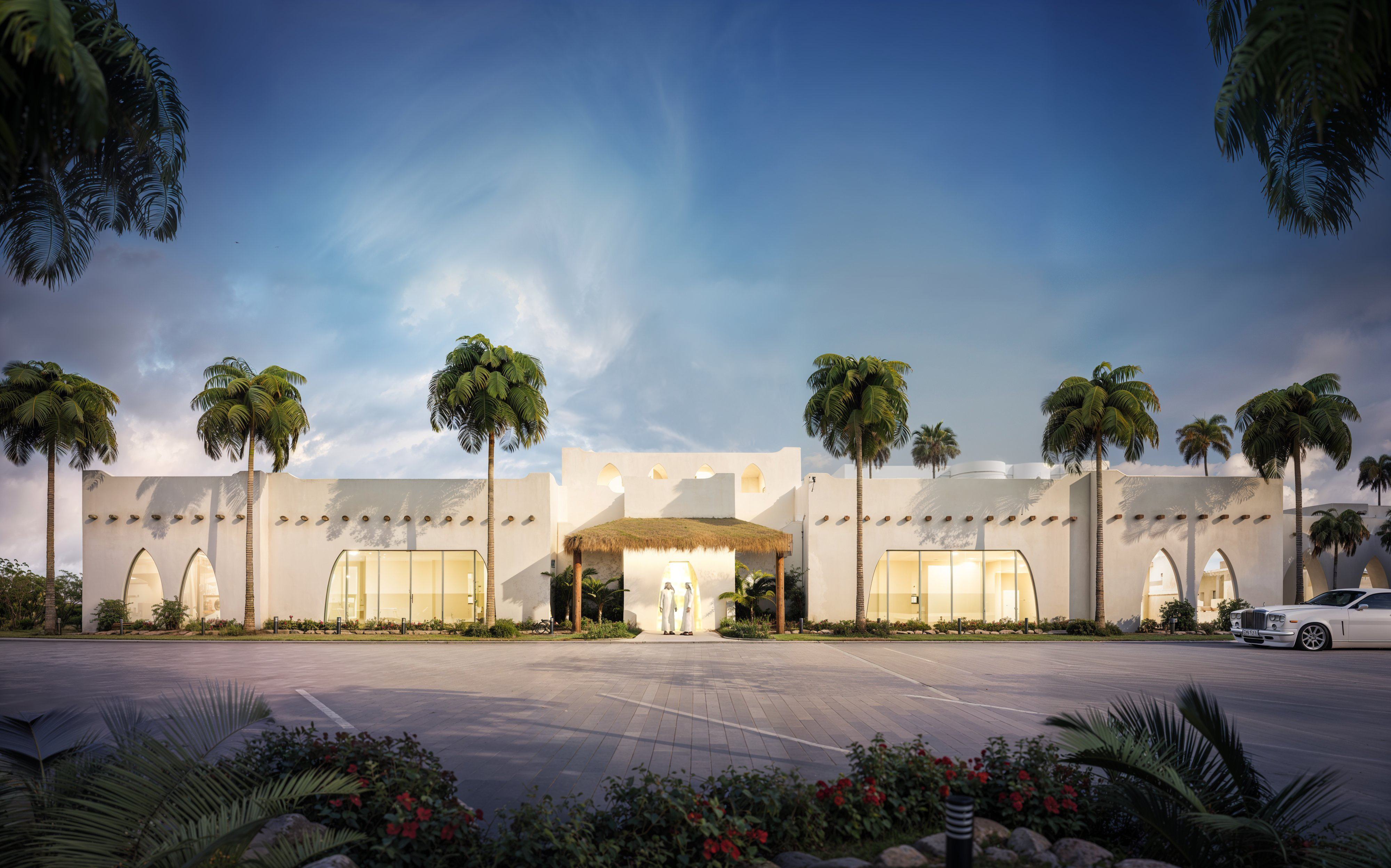
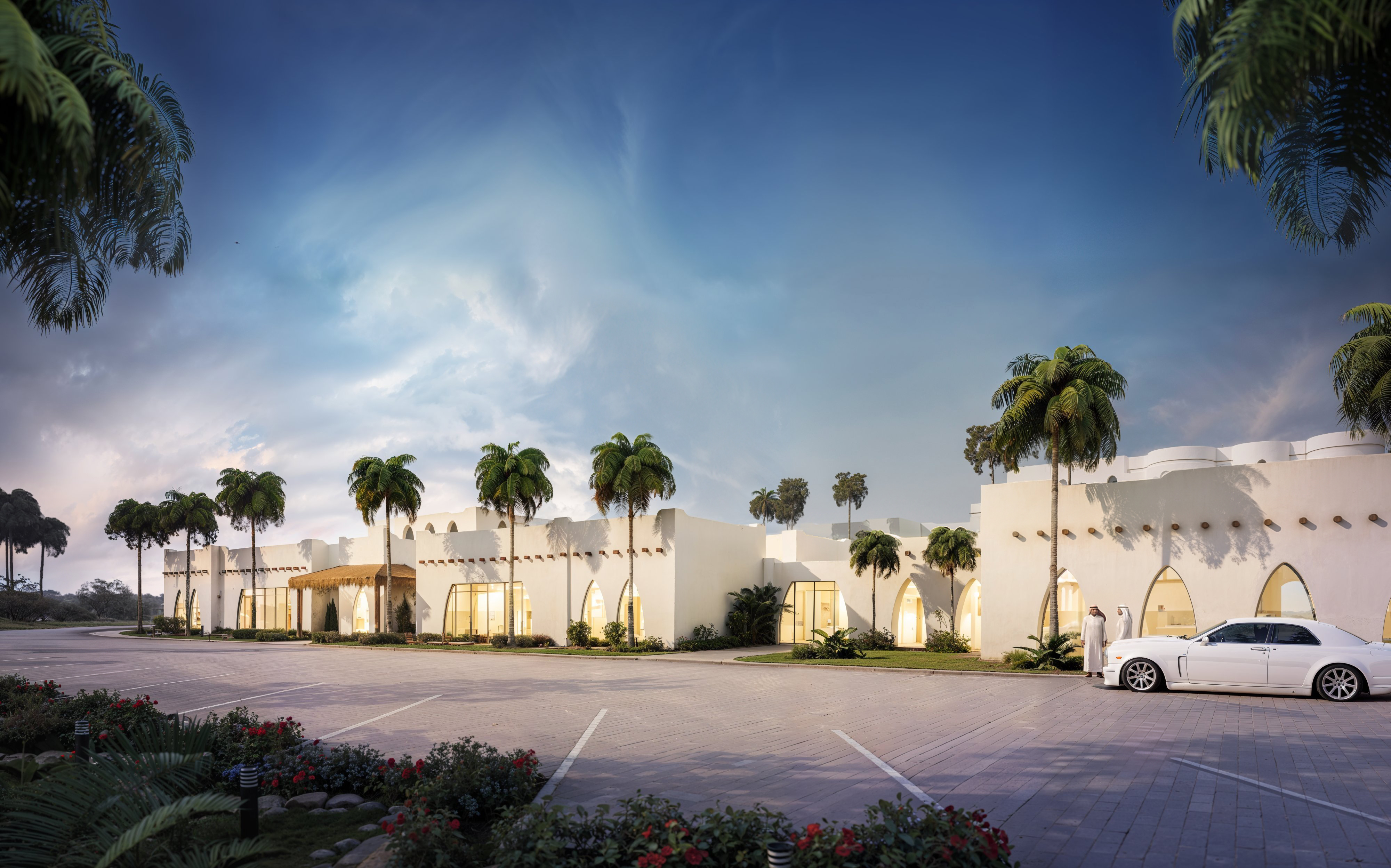
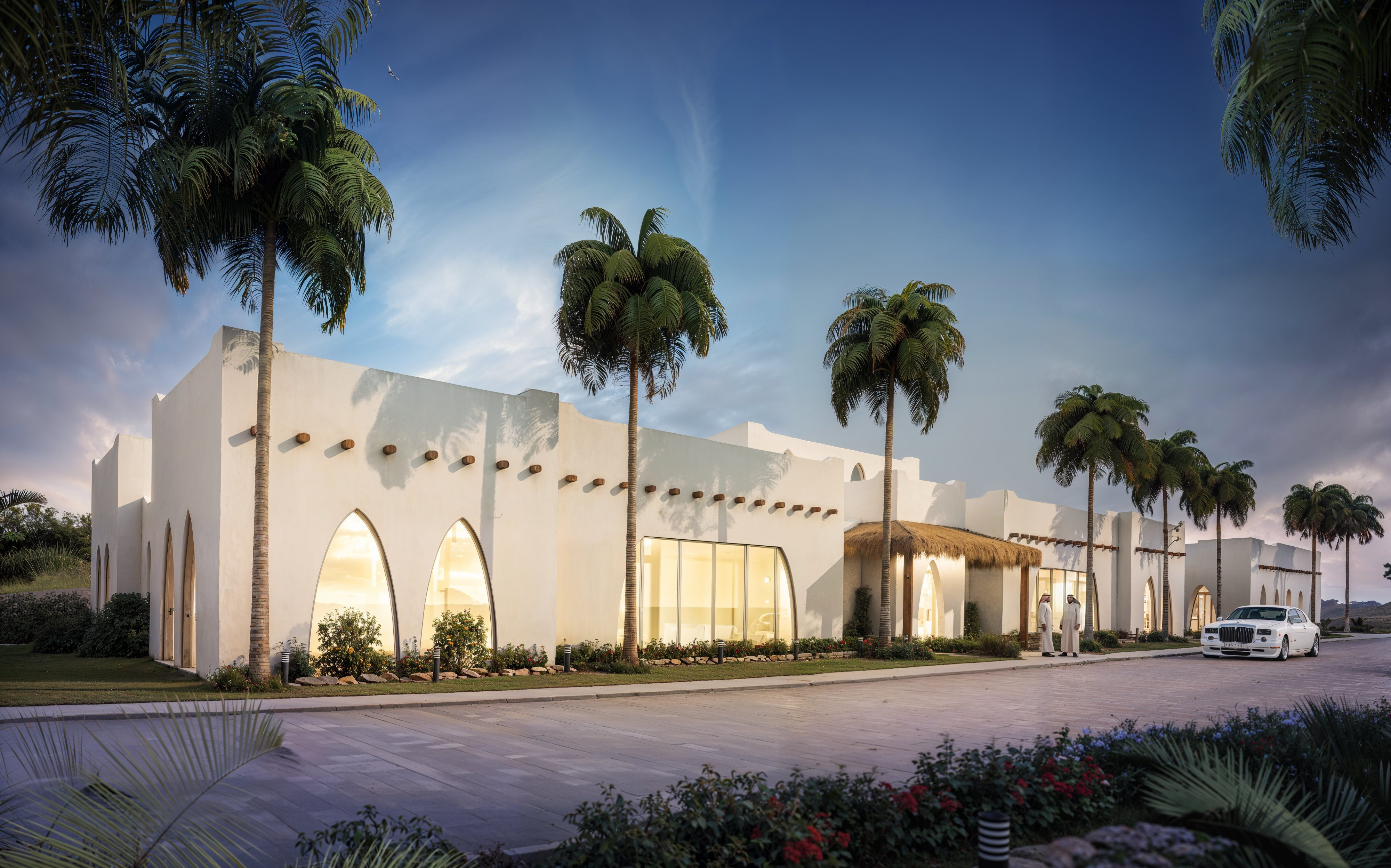
RAS Umm Leigi Beach Villa is conceived as a low-rise coastal retreat that fuses contemporary luxury with the quiet monumentality of vernacular Gulf architecture. The ensemble reads as a sculpted white village, stretching horizontally along the shoreline to maximize visual and physical connection with the sea. The architecture favors calm, continuous planes and softened edges that respond to the expansive desert-sky backdrop while creating a serene, resort-like ambience for residents and guests.
The concept celebrates thresholds: between inside and outside, light and shade, public arrival and intimate retreat. Repetitive arcades, deep reveals and carefully framed openings orchestrate these transitions, allowing the building to appear almost carved from a single, monolithic mass while remaining permeable and luminous at ground level. Palm trees and lush planting complete the image of an oasis, contrasting with the austere purity of the white volumes.
The architectural language is anchored in a restrained palette: white, planar walls, rhythmically punctured by tall, pointed-arch openings that reinterpret traditional Islamic and Qatari forms in a contemporary key. These arches, expressed as deep, vertical cuts in the façade, create a dynamic interplay of shadow and emphasize the building’s horizontality. The upper parapets are articulated with a crenellated profile and projecting timber-like elements, subtly recalling historic fortifications and wind towers without literal imitation.
Glazed curtain-wall panels are carefully recessed within the arches, reducing solar exposure while maintaining transparency. At the main entrance, the volume steps back to form a generous porch, highlighted by a warmer, textured canopy that marks the ceremonial drop-off. Nighttime illumination washes the façade, accentuating the sculptural qualities of the white surfaces and turning the sequence of arches into a luminous colonnade facing the parking forecourt.
The villa complex is organized as a linear bar parallel to the beach, with a strong arrival axis connecting the access road, parking zone and main entrance portico. This clear geometry ensures intuitive wayfinding and a dignified approach sequence, transitioning visitors from the urban edge to a protected, inward-looking oasis. The building’s relatively low height preserves human scale and maintains uninterrupted views toward the sea and the sky.
Primary functions are likely distributed along the façade line, with public and semi-public spaces occupying the more transparent front bays, while private suites and service zones nest behind a thicker, thermally insulated wall layer. Repetitive structural bays, expressed by the exterior arches, support flexible interior planning, allowing modular villa units or clusters of suites to be interconnected or separated according to functional needs and degrees of privacy.
The exterior is dominated by a smooth, high-reflectance plaster or stucco finish, optimized for the coastal context of Doha. This white skin reduces heat gain, reinforces the minimalist aesthetic and amplifies the changing tones of the sky throughout the day. Warm, low-iron glazing is used within the arch openings to maintain clarity while subtly filtering harsh daylight. The glass proportion is carefully balanced to ensure a sense of openness without compromising thermal comfort.
Soft, indirect lighting is integrated at the façade base and within the arch intrados, creating a layered night-time atmosphere. Light spills onto adjacent planting beds and walkways, emphasizing the interplay between architecture and landscape. The restrained palette of neutral walls, glass and natural textures from the entrance canopy and planting ensures that the setting feels both luxurious and timeless, avoiding visual clutter.
Landscape design plays a central role in environmental performance and user experience. Rows of mature palm trees align with the façade rhythm, providing vertical shading and helping to cool the microclimate through evapotranspiration. Low-height flowering shrubs and groundcovers define the parking edges, guiding movement while softening the hardscape. The generous setbacks between façade and driveways create buffer zones that reduce glare and reflected heat.
Sustainability strategies are embedded in the architectural form: compact building depth, limited height and continuous roof parapets support the integration of high-performance roof insulation and potential photovoltaic arrays. The deep façade recesses, pointed arches and recessed glazing significantly reduce direct solar gain while allowing ample daylight, lowering dependence on artificial lighting. Use of high-albedo exterior finishes, drought-tolerant planting and efficient irrigation systems is consistent with Qatar’s water and energy conservation priorities, aligning the luxury villa experience with responsible environmental stewardship.
© 2021 by sanzpont [arquitectura] . Webpage by sanzpont [digital] . Innovative Digital Experiences
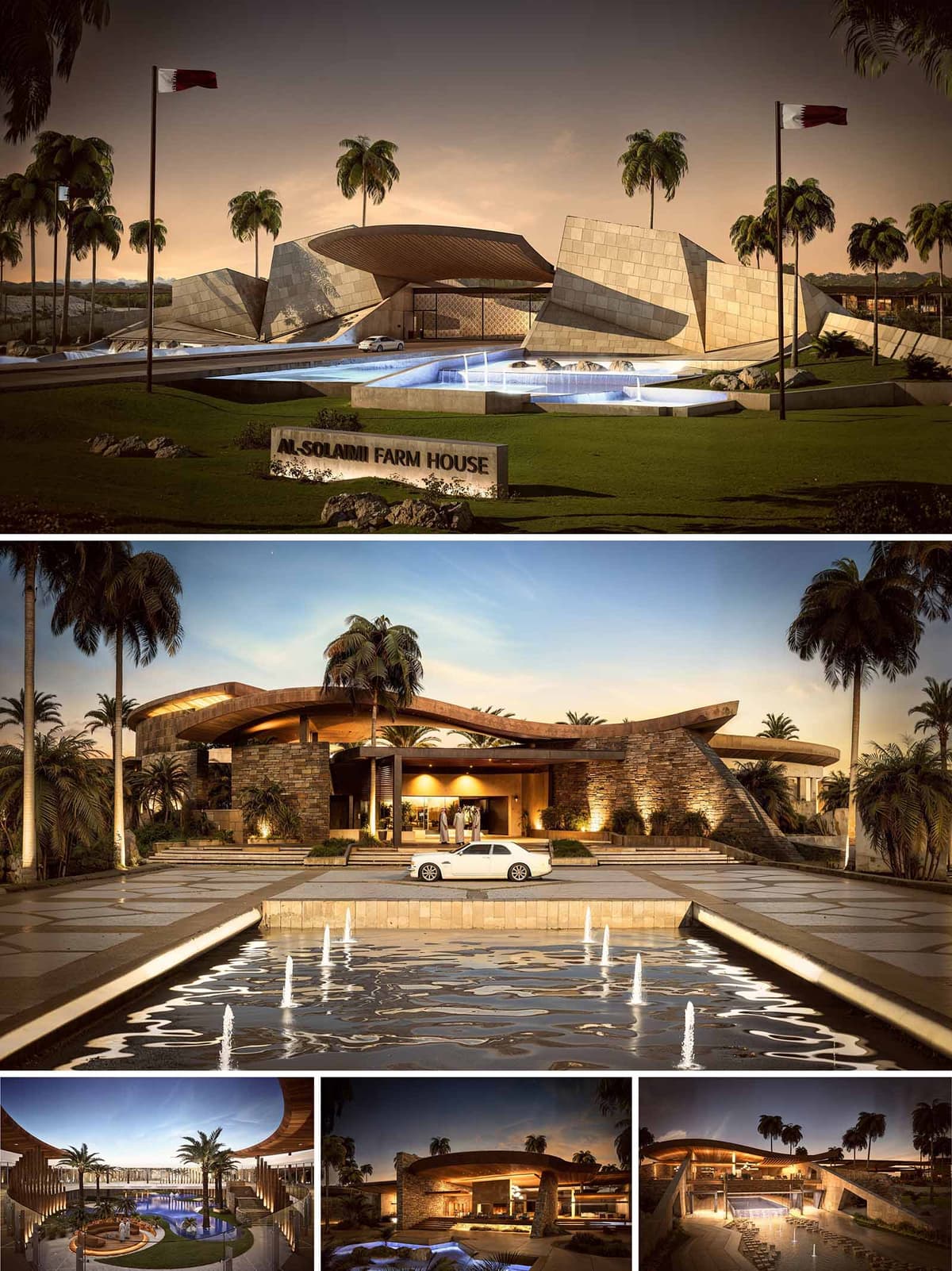
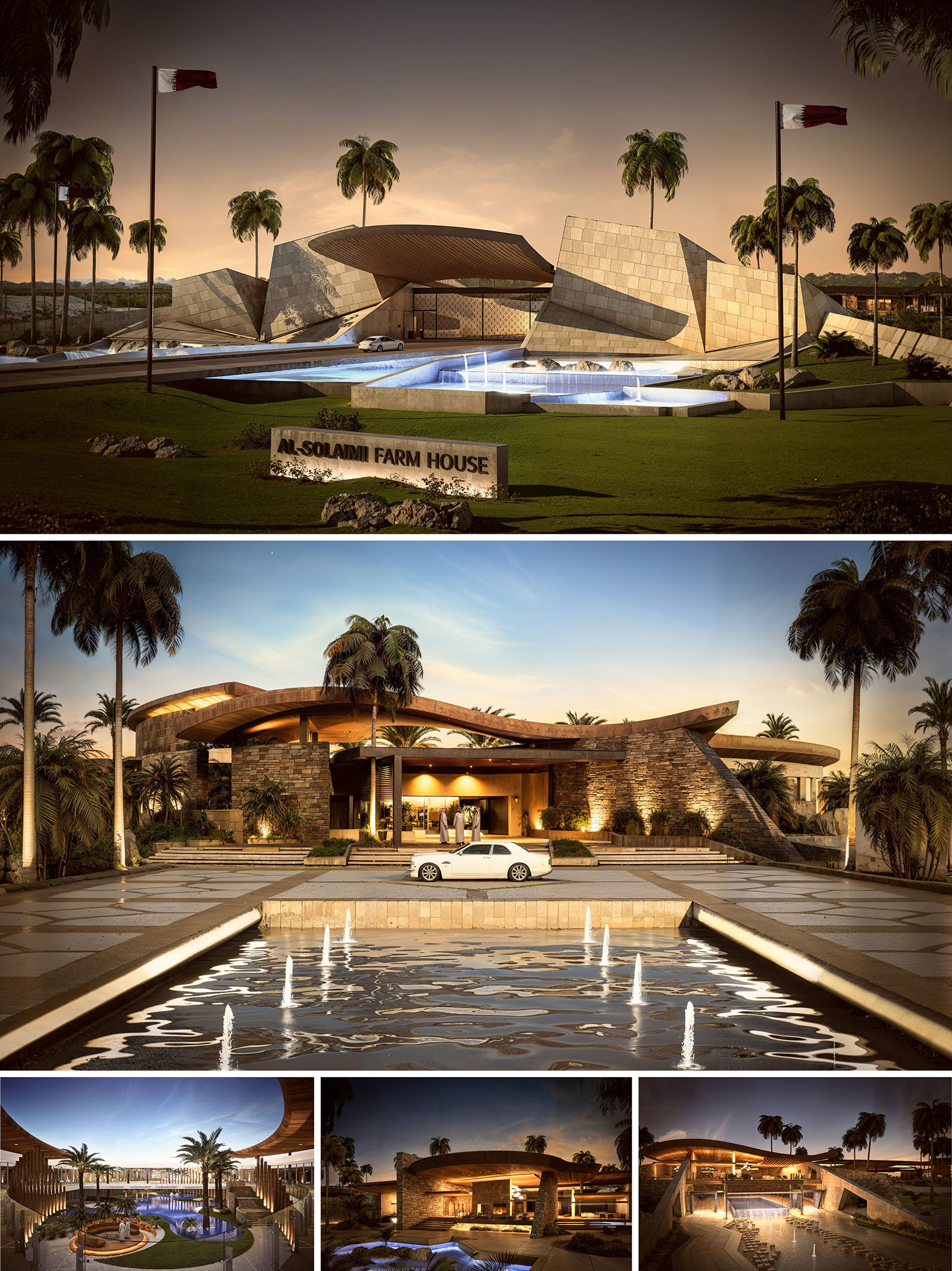
Al-Solaimi Farm House is conceived as a contemporary desert retreat that expresses both solidity and fluidity. The project translates the idea of “oasis” into architecture: protective stone masses sheltering generous, shaded voids animated by water and vegetation. The formal language moves between angular, tectonic planes at the entrance and soft, sweeping roofs around the main residence, reflecting the contrast between the harsh exterior landscape and the calm domestic interior. The farmhouse becomes a sculpted landmark within the agricultural setting, yet remains grounded in its rural function as a family gathering place.
Located within a palm-fringed farm in Qatar, the house is oriented to capture prevailing breezes and to frame long views across the cultivated land. The approach sequence is axial and ceremonial, crossing water and greenery before reaching the main porte-cochère. Slightly elevating the built mass above the surrounding fields protects it from irrigation flows while giving a clear visual hierarchy between landscape and architecture. The palm trees act as vertical markers and as climatic devices, shading outdoor circulation and reinforcing the oasis imagery.
At the front, faceted stone and concrete walls create a dynamic, almost geological entrance composition, suggesting protective layers opening toward the interior. Moving deeper into the house, the geometry relaxes into broad, curving roofs that hover above stacked-stone walls. Warm-toned stone cladding, timber soffits and earth-colored renders are chosen to resonate with local materials while offering durability in the desert climate. The thick envelope, recessed glazing and pronounced overhangs work together to reduce solar gain, while the sculptural form gives the farmhouse a strong, recognizable identity.
Water is a central design element, choreographing arrival and daily experience. Linear reflecting pools and shallow basins line the driveway, culminating in a larger water body in front of the entrance. Inside the compound, a central courtyard pool with integrated seating becomes the social heart, surrounded by soft landscaping and palms. These water elements cool the microclimate through evaporation, provide acoustic comfort, and visually link the various wings of the farmhouse. Hardscape patterns and stepped platforms manage level transitions while subtly guiding circulation.
The interiors are organized around open, interconnected social spaces that flow toward the courtyard and pool. Large glazed openings slide away to dissolve the boundary between inside and outside, turning terraces into extensions of the living areas. The main entrance lobby compresses the ceiling, then releases into double-height volumes under the sweeping roof, emphasizing the sense of arrival. Service spaces and private suites are discreetly embedded within the thicker stone masses, ensuring privacy and acoustic separation while maintaining direct visual connections to the landscape.
Artificial lighting is carefully integrated into the architecture, emphasizing the material texture and form. Warm, concealed linear lights wash stone walls and timber soffits, while recessed downlights define circulation paths. Exterior uplights highlight the vertical rhythm of palms and the sculptural roofs, giving the farmhouse a strong nocturnal presence without excessive glare. Water features are lit from within, creating reflections that animate adjacent ceilings and terraces, reinforcing the atmosphere of an inhabited oasis.
Sustainability is addressed through passive design and careful material selection rather than overt technological expression. Deep overhangs, shaded verandas and colonnades minimize direct solar exposure on glazing. The stone envelope provides thermal mass, moderating temperature fluctuations, while cross-ventilation paths are aligned with prevailing winds for natural cooling during milder months. Water bodies are strategically located to assist evaporative cooling in key outdoor living zones. Durable, low-maintenance finishes reduce lifecycle impacts, and the integration of landscaping with existing farm structures supports biodiversity and preserves the productive character of the land.
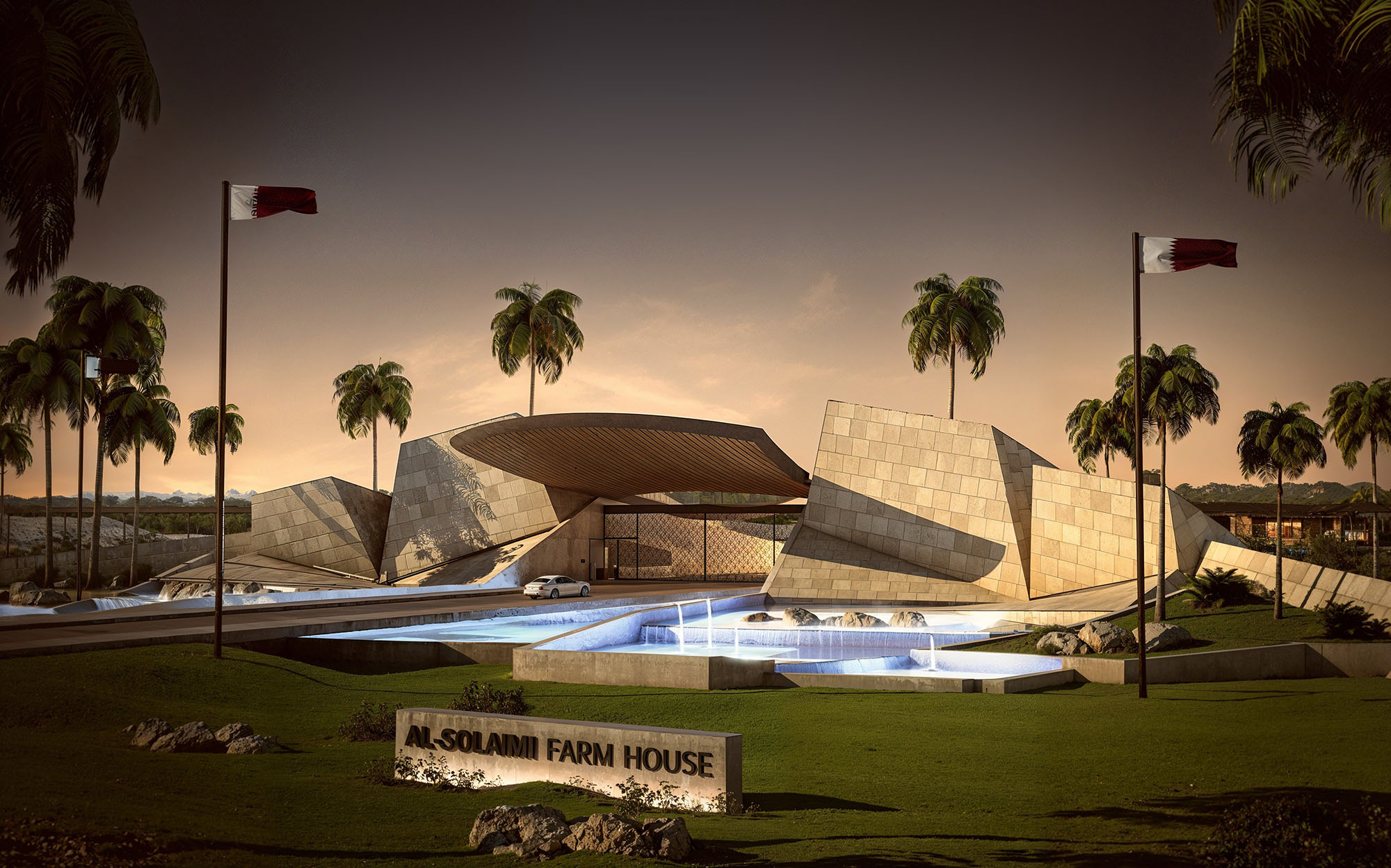
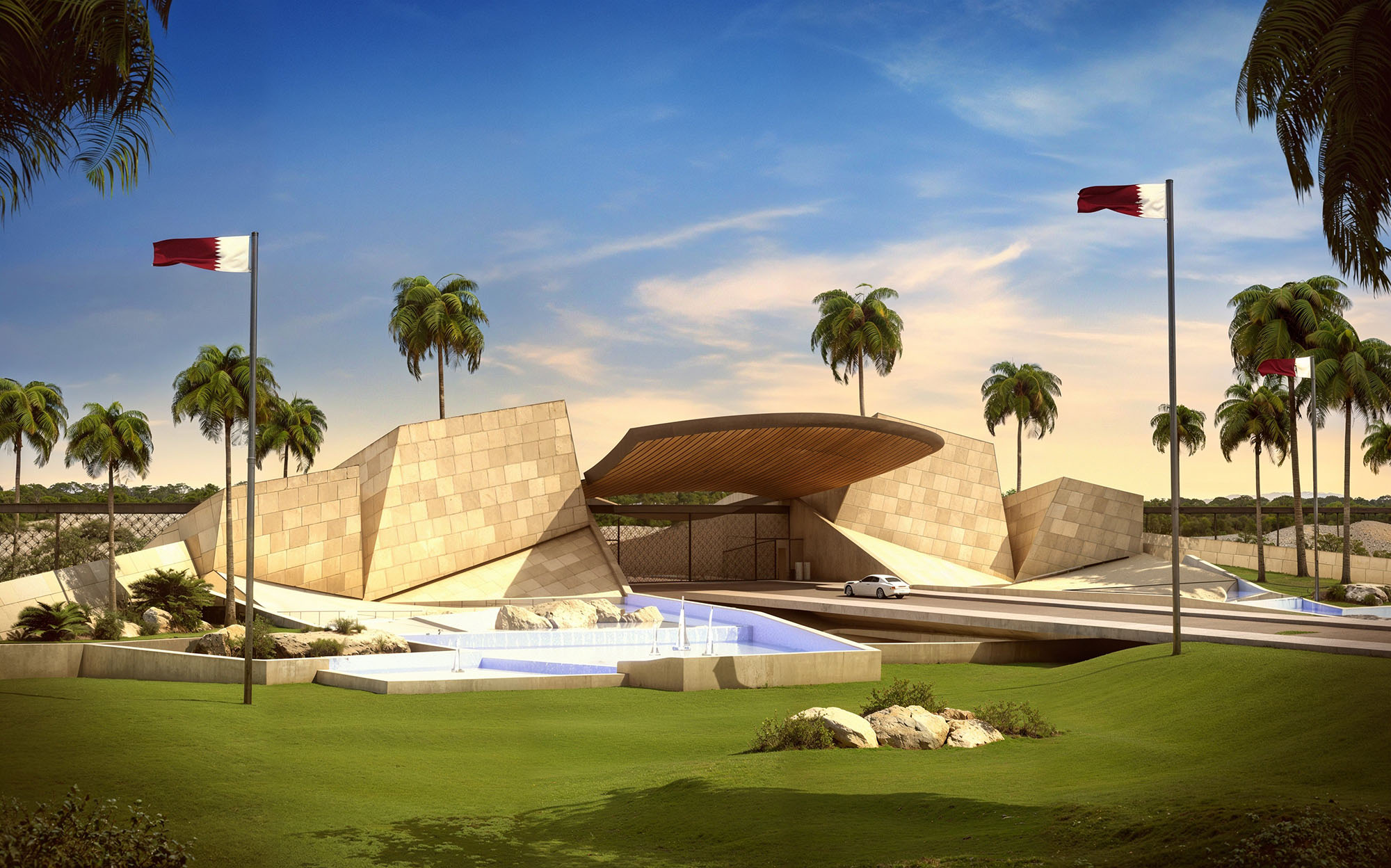
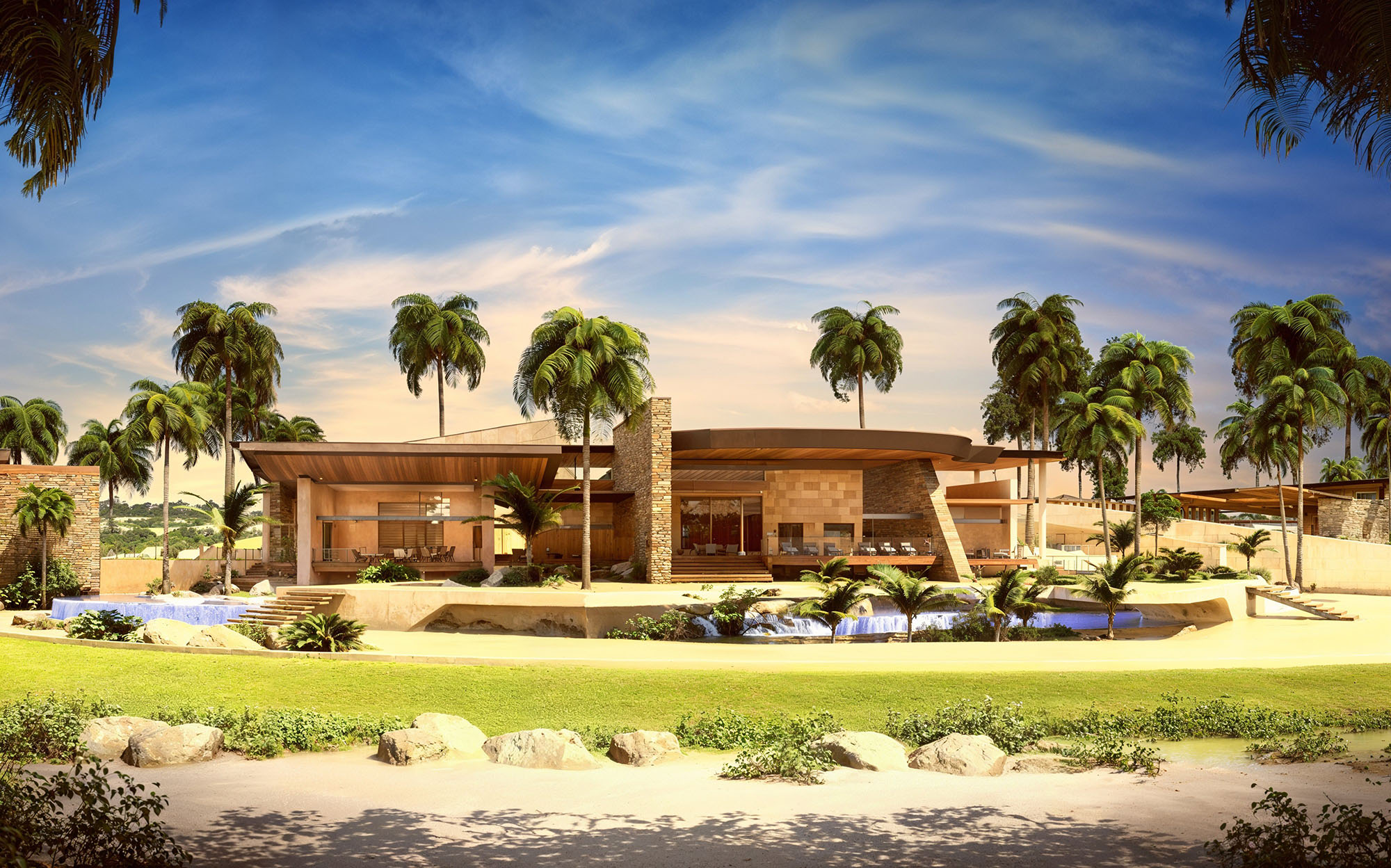
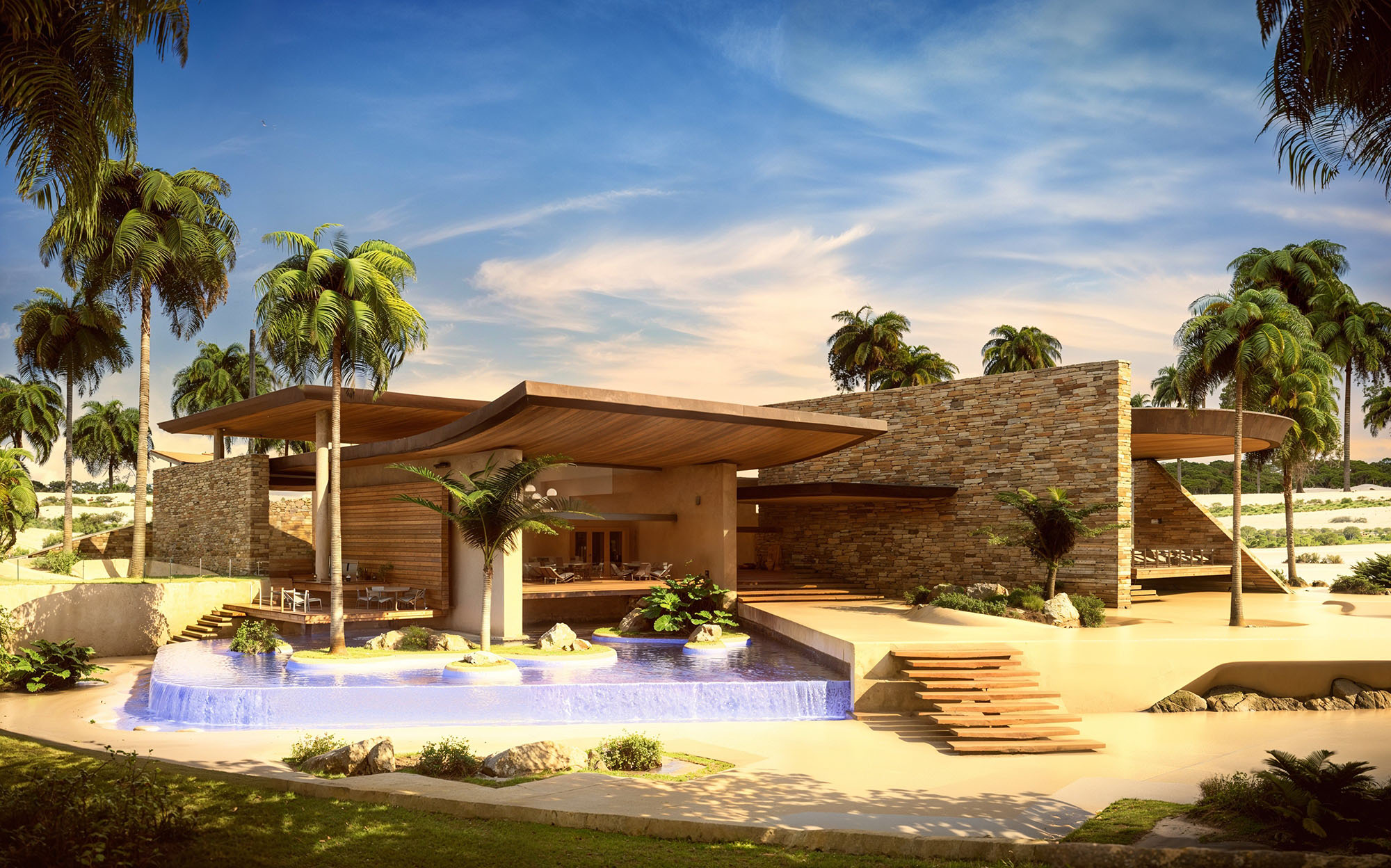
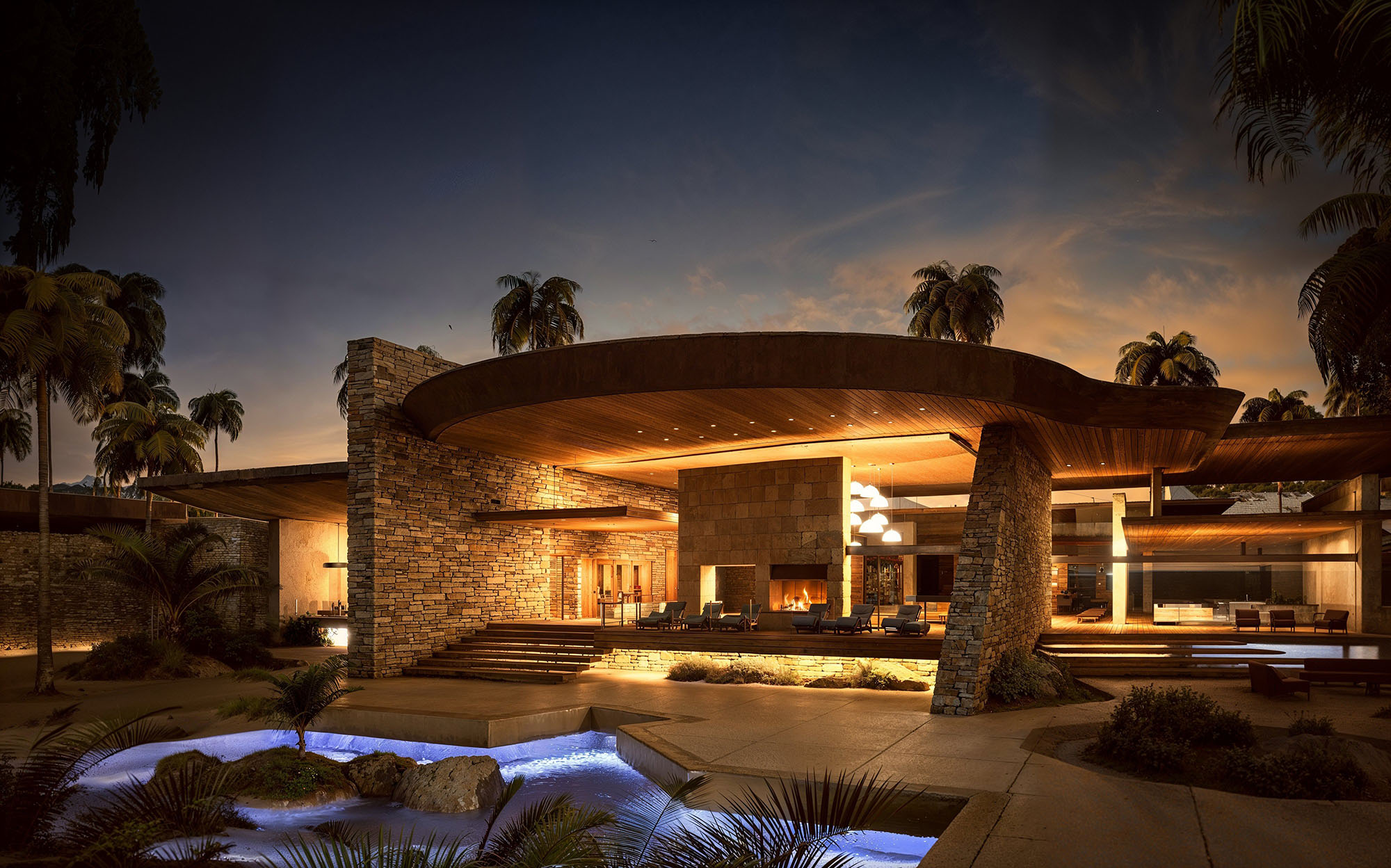
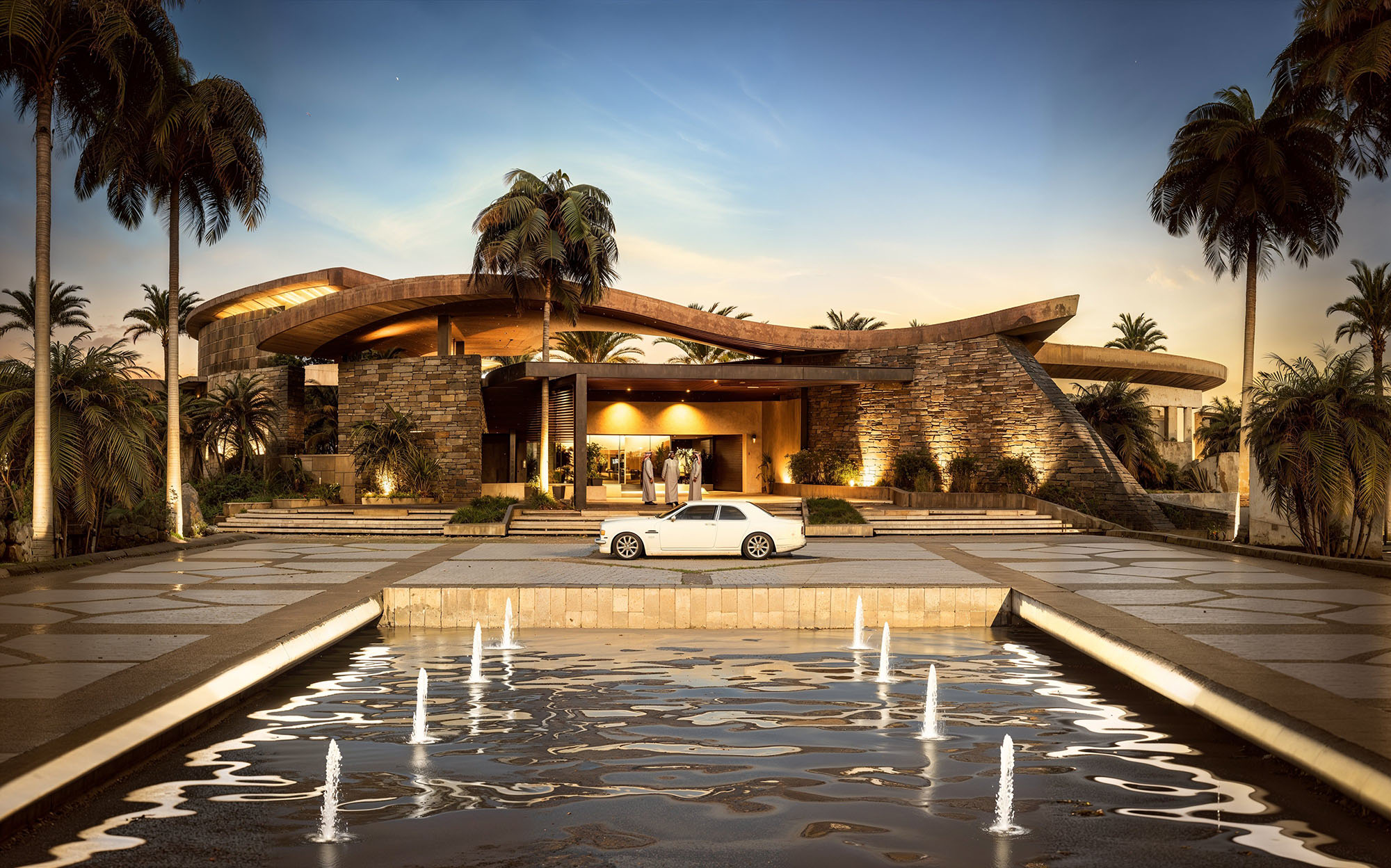
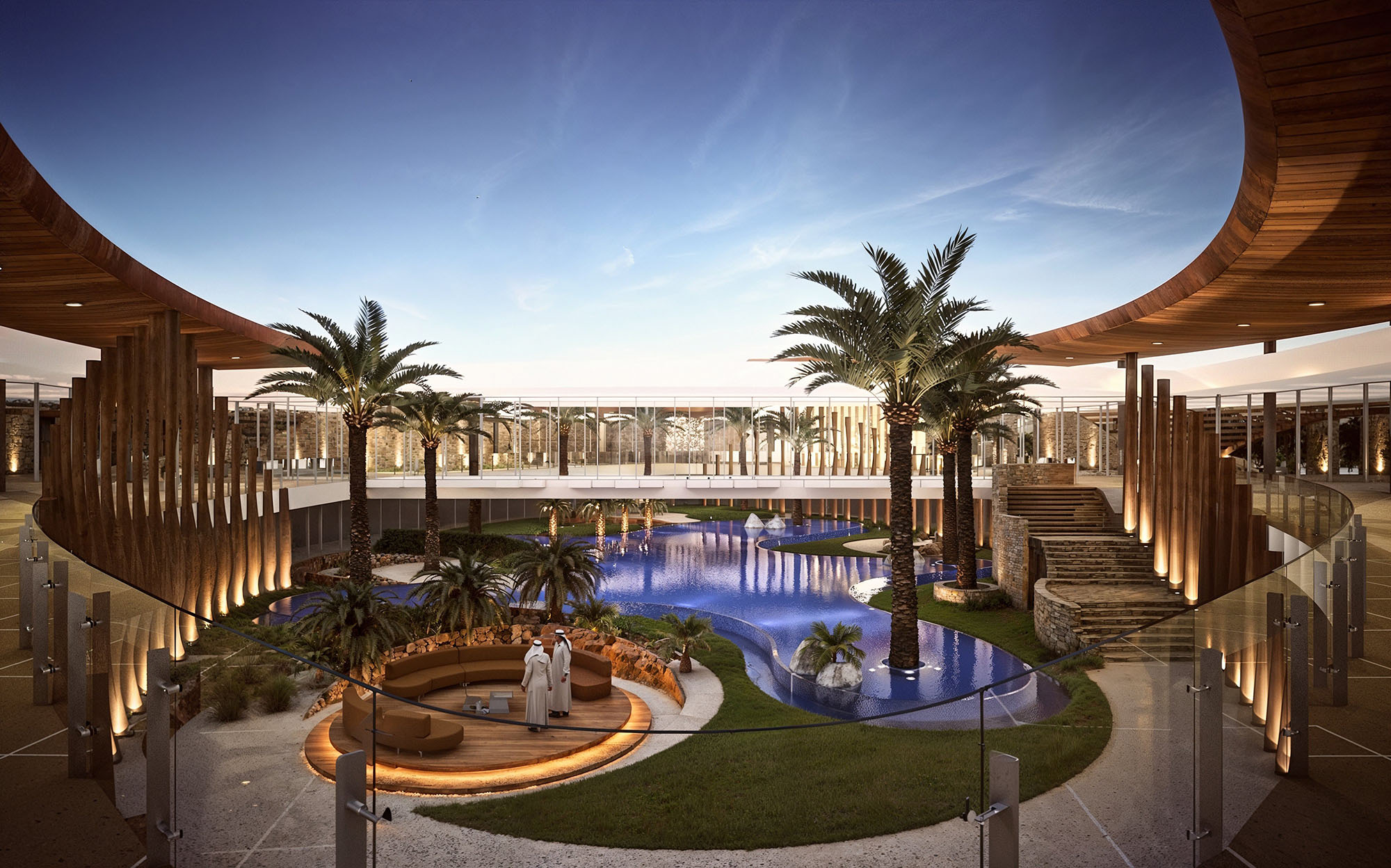
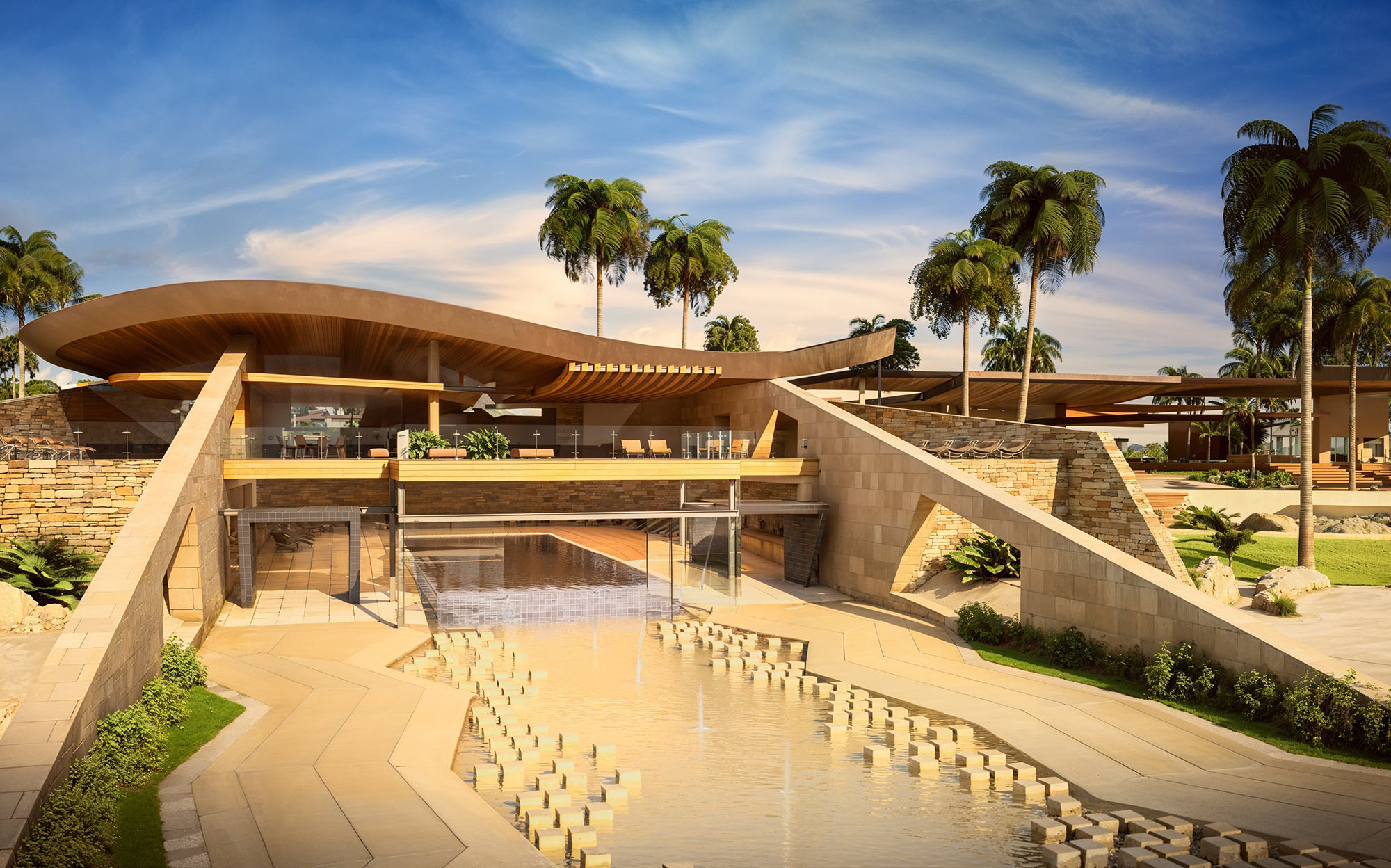
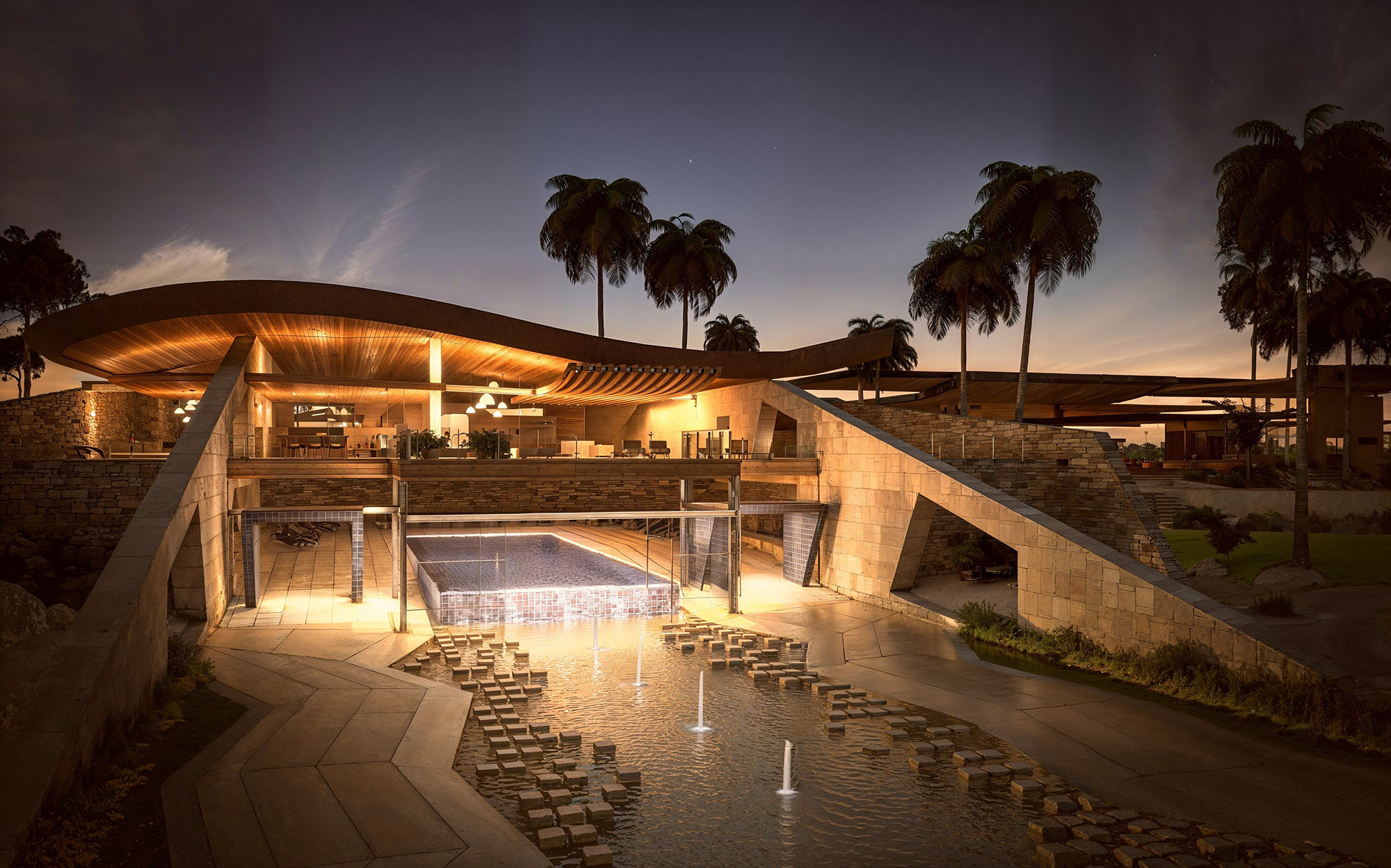
Al-Solaimi Farm House is conceived as a contemporary desert retreat that expresses both solidity and fluidity. The project translates the idea of “oasis” into architecture: protective stone masses sheltering generous, shaded voids animated by water and vegetation. The formal language moves between angular, tectonic planes at the entrance and soft, sweeping roofs around the main residence, reflecting the contrast between the harsh exterior landscape and the calm domestic interior. The farmhouse becomes a sculpted landmark within the agricultural setting, yet remains grounded in its rural function as a family gathering place.
Located within a palm-fringed farm in Qatar, the house is oriented to capture prevailing breezes and to frame long views across the cultivated land. The approach sequence is axial and ceremonial, crossing water and greenery before reaching the main porte-cochère. Slightly elevating the built mass above the surrounding fields protects it from irrigation flows while giving a clear visual hierarchy between landscape and architecture. The palm trees act as vertical markers and as climatic devices, shading outdoor circulation and reinforcing the oasis imagery.
At the front, faceted stone and concrete walls create a dynamic, almost geological entrance composition, suggesting protective layers opening toward the interior. Moving deeper into the house, the geometry relaxes into broad, curving roofs that hover above stacked-stone walls. Warm-toned stone cladding, timber soffits and earth-colored renders are chosen to resonate with local materials while offering durability in the desert climate. The thick envelope, recessed glazing and pronounced overhangs work together to reduce solar gain, while the sculptural form gives the farmhouse a strong, recognizable identity.
Water is a central design element, choreographing arrival and daily experience. Linear reflecting pools and shallow basins line the driveway, culminating in a larger water body in front of the entrance. Inside the compound, a central courtyard pool with integrated seating becomes the social heart, surrounded by soft landscaping and palms. These water elements cool the microclimate through evaporation, provide acoustic comfort, and visually link the various wings of the farmhouse. Hardscape patterns and stepped platforms manage level transitions while subtly guiding circulation.
The interiors are organized around open, interconnected social spaces that flow toward the courtyard and pool. Large glazed openings slide away to dissolve the boundary between inside and outside, turning terraces into extensions of the living areas. The main entrance lobby compresses the ceiling, then releases into double-height volumes under the sweeping roof, emphasizing the sense of arrival. Service spaces and private suites are discreetly embedded within the thicker stone masses, ensuring privacy and acoustic separation while maintaining direct visual connections to the landscape.
Artificial lighting is carefully integrated into the architecture, emphasizing the material texture and form. Warm, concealed linear lights wash stone walls and timber soffits, while recessed downlights define circulation paths. Exterior uplights highlight the vertical rhythm of palms and the sculptural roofs, giving the farmhouse a strong nocturnal presence without excessive glare. Water features are lit from within, creating reflections that animate adjacent ceilings and terraces, reinforcing the atmosphere of an inhabited oasis.
Sustainability is addressed through passive design and careful material selection rather than overt technological expression. Deep overhangs, shaded verandas and colonnades minimize direct solar exposure on glazing. The stone envelope provides thermal mass, moderating temperature fluctuations, while cross-ventilation paths are aligned with prevailing winds for natural cooling during milder months. Water bodies are strategically located to assist evaporative cooling in key outdoor living zones. Durable, low-maintenance finishes reduce lifecycle impacts, and the integration of landscaping with existing farm structures supports biodiversity and preserves the productive character of the land.
© 2021 by sanzpont [arquitectura] . Webpage by sanzpont [digital] . Innovative Digital Experiences
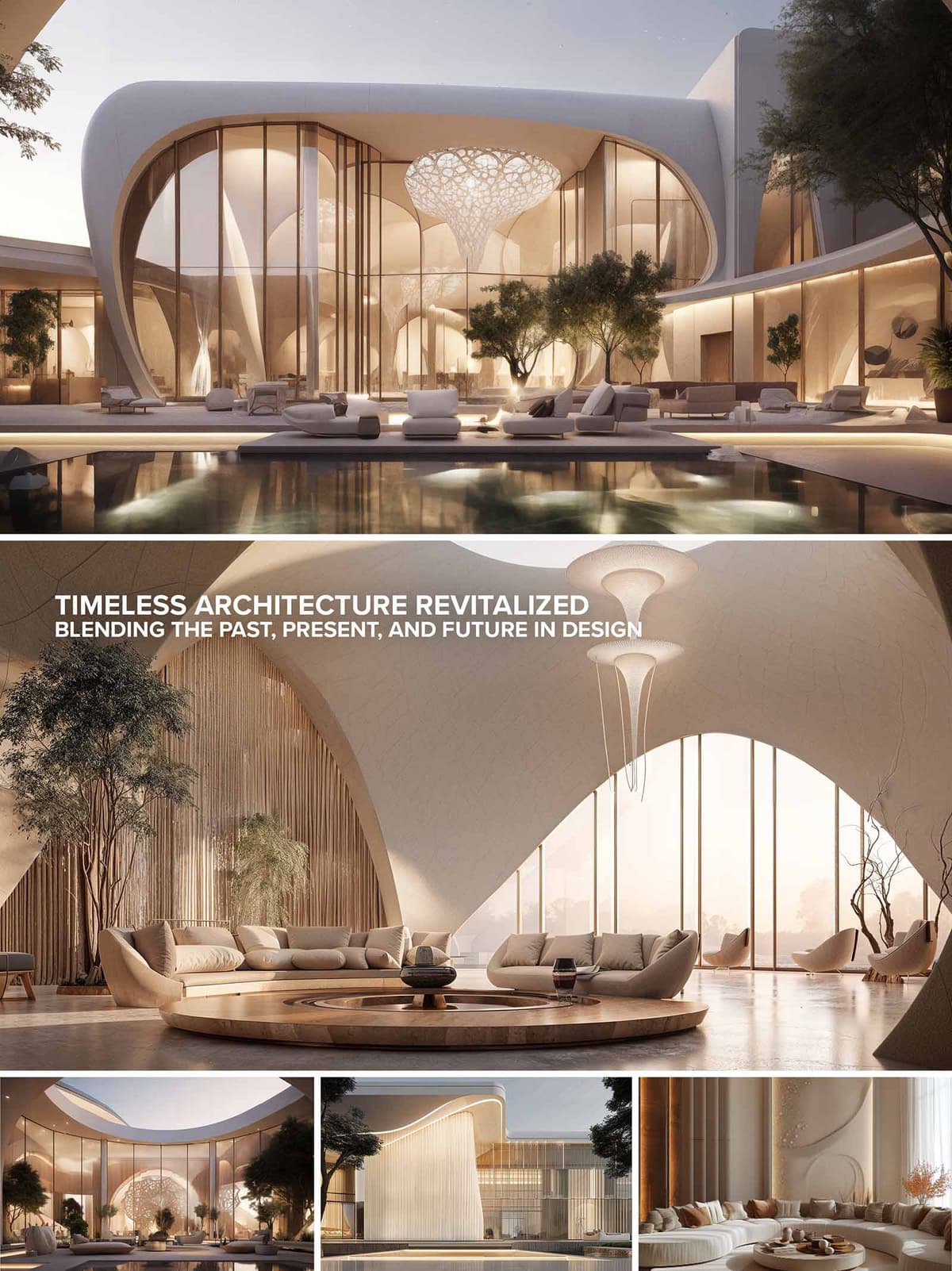

This palace embodies the pinnacle of sophisticated design, blending timeless architectural elements with modern innovations. The design concept revolves around creating an elegant yet sustainable environment that leverages natural light, ventilation, and cutting-edge materials. The palace features expansive spaces that seamlessly integrate indoor and outdoor living, emphasizing harmony with the natural surroundings.
The design exemplifies the fusion of luxury, elegance and sustainability, setting a new standard for high-end residential design. Through its thoughtful integration of natural light, ventilation, and sustainable practices, the palace not only provides an exquisite living experience but also demonstrates a commitment to environmental stewardship. The result is a timeless architectural masterpiece that offers both comfort and ecological responsibility.
The exterior is distinguished by its graceful curves and extensive use of glass, creating a transparent façade that blurs the lines between indoors and outdoors. The strategic placement of large windows follows the solar path, maximizing natural light while minimizing heat gain. Louvers and overhangs provide effective sun protection, ensuring comfort throughout the day. The exterior materials include reinforced concrete and high-performance glazing, ensuring durability and energy efficiency. Integrated landscaping, including mature trees and lush gardens, enhances the building’s organic aesthetic.
The interior design maintains the palace’s refined essence with spacious, light-filled rooms. The central living area features double-height ceilings adorned with custom sculptural light fixtures that mimic natural forms, such as blooming flowers, providing both illumination and visual interest. The layout promotes fluidity between spaces, with each area flowing seamlessly into the next.
The interior palette is dominated by natural, high-quality materials such as warm woods, polished stone, and rich textiles. The furnishings are designed for both comfort and elegance, featuring custom-made pieces that reflect the palace’s overall aesthetic. The color scheme consists of neutral tones, with accents of greenery and gold to enhance the refined feel.
Sustainability is a cornerstone of the palace’s design. The architecture incorporates advanced climate control systems and high-performance insulation, reducing energy consumption. Solar panels on the roof harness renewable energy, while efficient water systems, including rainwater harvesting, support conservation efforts. The design also emphasizes natural ventilation and lighting, significantly reducing reliance on artificial systems. Green spaces within and around the palace improve air quality and provide natural cooling.
The design strategically incorporates patios and courtyards to enhance natural sunlight and ventilation. These open spaces are thoughtfully placed to allow cross-ventilation, reducing the need for mechanical cooling. The patios serve as tranquil retreats, featuring water elements and native vegetation that create a serene ambiance while promoting environmental sustainability.
The landscape design mirrors the palace’s architectural elegance with a combination of formal and organic elements. Terraces, reflective pools, and lush gardens create a serene outdoor environment. The use of native plants ensures water efficiency and supports local biodiversity. The central courtyard, with its expansive water feature, acts as a focal point, offering a space for relaxation and reflection.
Lighting is meticulously planned to highlight the architectural features and enhance the palace’s sophisticated ambiance. Large windows and skylights are strategically positioned to maximize natural daylight, reducing the need for artificial lighting. At night, carefully placed LED fixtures illuminate the palace’s contours and materials, creating a captivating nighttime aesthetic while ensuring energy efficiency.


This palace embodies the pinnacle of sophisticated design, blending timeless architectural elements with modern innovations. The design concept revolves around creating an elegant yet sustainable environment that leverages natural light, ventilation, and cutting-edge materials. The palace features expansive spaces that seamlessly integrate indoor and outdoor living, emphasizing harmony with the natural surroundings.
The design exemplifies the fusion of luxury, elegance and sustainability, setting a new standard for high-end residential design. Through its thoughtful integration of natural light, ventilation, and sustainable practices, the palace not only provides an exquisite living experience but also demonstrates a commitment to environmental stewardship. The result is a timeless architectural masterpiece that offers both comfort and ecological responsibility.
The exterior is distinguished by its graceful curves and extensive use of glass, creating a transparent façade that blurs the lines between indoors and outdoors. The strategic placement of large windows follows the solar path, maximizing natural light while minimizing heat gain. Louvers and overhangs provide effective sun protection, ensuring comfort throughout the day. The exterior materials include reinforced concrete and high-performance glazing, ensuring durability and energy efficiency. Integrated landscaping, including mature trees and lush gardens, enhances the building’s organic aesthetic.
The interior design maintains the palace’s refined essence with spacious, light-filled rooms. The central living area features double-height ceilings adorned with custom sculptural light fixtures that mimic natural forms, such as blooming flowers, providing both illumination and visual interest. The layout promotes fluidity between spaces, with each area flowing seamlessly into the next.
The interior palette is dominated by natural, high-quality materials such as warm woods, polished stone, and rich textiles. The furnishings are designed for both comfort and elegance, featuring custom-made pieces that reflect the palace’s overall aesthetic. The color scheme consists of neutral tones, with accents of greenery and gold to enhance the refined feel.
Sustainability is a cornerstone of the palace’s design. The architecture incorporates advanced climate control systems and high-performance insulation, reducing energy consumption. Solar panels on the roof harness renewable energy, while efficient water systems, including rainwater harvesting, support conservation efforts. The design also emphasizes natural ventilation and lighting, significantly reducing reliance on artificial systems. Green spaces within and around the palace improve air quality and provide natural cooling.
The design strategically incorporates patios and courtyards to enhance natural sunlight and ventilation. These open spaces are thoughtfully placed to allow cross-ventilation, reducing the need for mechanical cooling. The patios serve as tranquil retreats, featuring water elements and native vegetation that create a serene ambiance while promoting environmental sustainability.
The landscape design mirrors the palace’s architectural elegance with a combination of formal and organic elements. Terraces, reflective pools, and lush gardens create a serene outdoor environment. The use of native plants ensures water efficiency and supports local biodiversity. The central courtyard, with its expansive water feature, acts as a focal point, offering a space for relaxation and reflection.
Lighting is meticulously planned to highlight the architectural features and enhance the palace’s sophisticated ambiance. Large windows and skylights are strategically positioned to maximize natural daylight, reducing the need for artificial lighting. At night, carefully placed LED fixtures illuminate the palace’s contours and materials, creating a captivating nighttime aesthetic while ensuring energy efficiency.
© 2021 by sanzpont [arquitectura] . Webpage by sanzpont [digital] . Innovative Digital Experiences
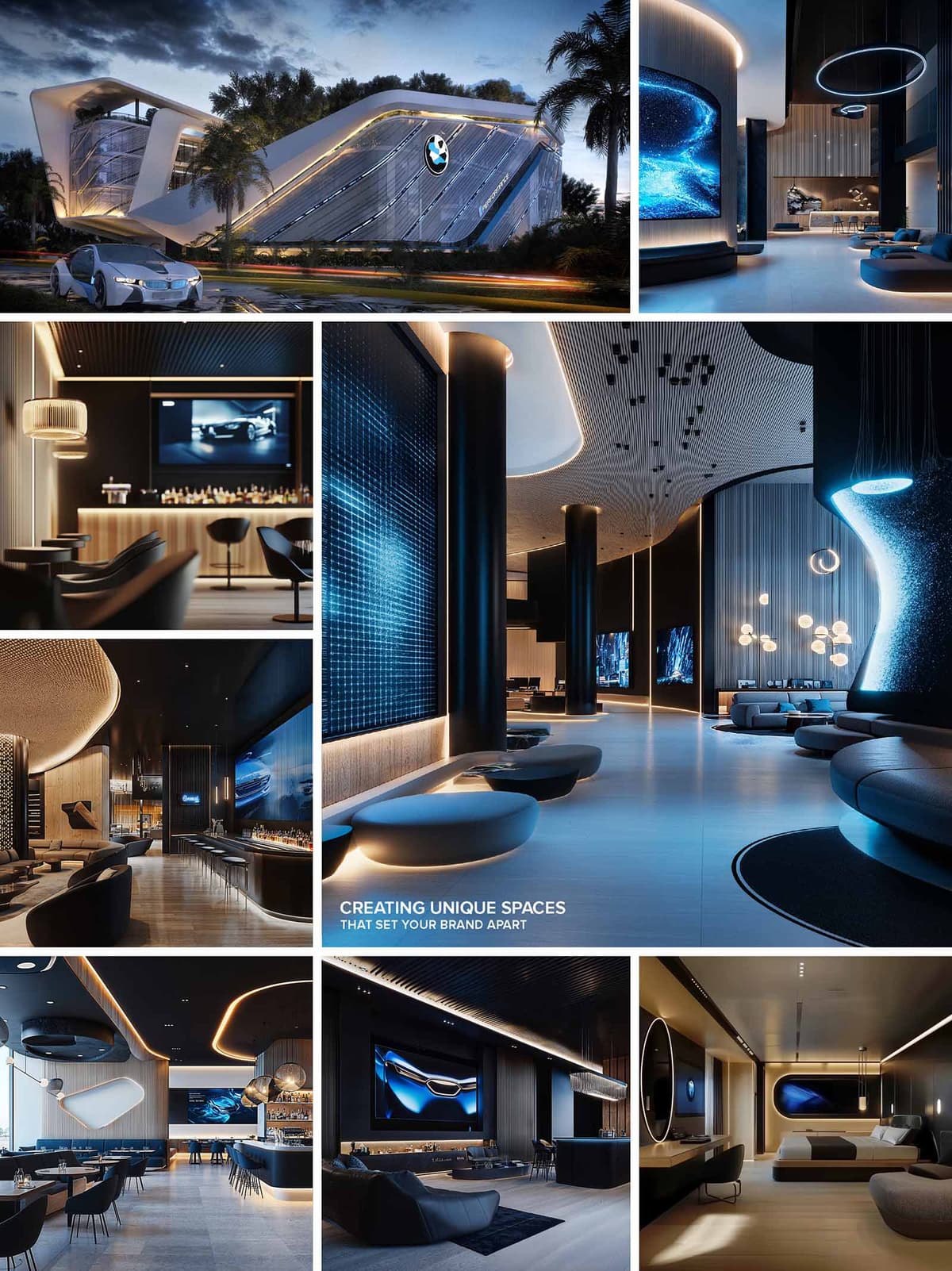
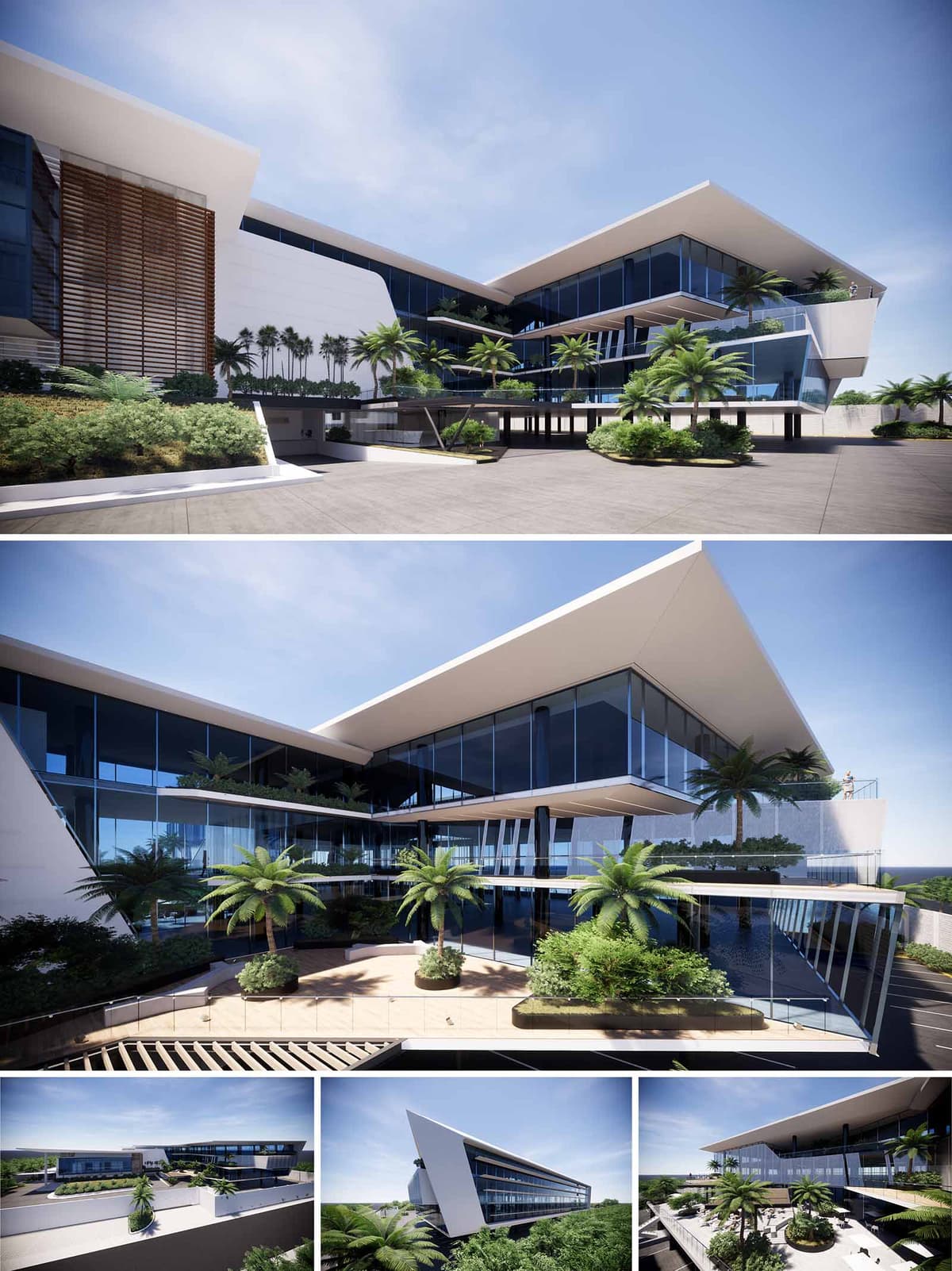
The LVH Hotel in Cancún is conceived as a sculptural gateway where automotive precision meets coastal resort lifestyle. The overall concept translates the dynamism of a performance vehicle into architecture: flowing lines, accelerated silhouettes and continuous surfaces create a sense of motion even when the building is at rest. The project aims to deliver an immersive brand environment rather than a conventional hotel, choreographing guest journeys through a sequence of cinematic spaces that highlight innovation, technology and luxury within a relaxed tropical context.
The exterior envelope is a sweeping white shell that wraps around a glazed volume, lifting from the ground like an aerodynamic body panel. This shell frames large expanses of high-performance glass, allowing curated views to the lush Cancún landscape while protecting interiors from direct solar gain. Night lighting accentuates the dynamic geometry with linear LEDs tracing the building’s edges, transforming the façade into a luminous icon along the boulevard and clearly expressing the brand emblem as a floating element within the composition.
Interior spaces are designed as dark, immersive lounges where controlled lighting and large digital surfaces orchestrate the mood. Deep charcoal ceilings and walls create a neutral canvas against which electric blues and warm amber tones stand out, evoking the contrast between night driving and illuminated dashboards. Seating areas are fluid and informal, with low, sculpted sofas and ottomans forming islands that encourage social interaction while maintaining generous circulation suited to a luxury lobby and bar environment.
A precise material palette combines matte black metals, brushed brass accents and warm woods with smooth, upholstered surfaces. These textures are enhanced by an integrated lighting system based almost entirely on concealed linear LEDs and halo-like luminaires. Indirect cove lighting softens ceiling curves and highlights vertical fins, while feature pendants introduce a sense of depth over bars and lounge clusters. Large digital walls and curved screens act as luminous art pieces, allowing the content to shift from brand storytelling to ambient atmospheres, effectively turning light into a primary material.
The public areas are organized as a continuous sequence: lobby, bar, lounge and gallery-like display zones visually connected by long perspectives and rhythmically placed columns. This open plan is punctuated with intimate pockets where guests can recline, work or socialize in smaller groups. In the guest rooms, the language becomes more restrained yet consistent: low platform beds, integrated headboards, and media walls framed by light create a calm, technologically refined retreat, with built-in storage and minimal furniture ensuring clear, uncluttered spaces.
Throughout the hotel, brand identity is subtly yet consistently embedded. Curved feature walls recall the profile of a car body, while digital content celebrates motion, innovation and precision engineering without becoming overtly thematic. The design aims to deliver an aspirational environment where guests experience the sophistication of a high-end showroom combined with the comfort of a luxury resort, reinforcing the hotel as a flagship destination for lifestyle, design and technology enthusiasts.
Sustainability is addressed through both passive and active measures suited to Cancún’s climate. The aerodynamic shell doubles as solar shading, reducing direct heat gain and lowering cooling loads, while high-performance glazing maximizes daylight with controlled glare. Interior lighting relies on low-consumption LED systems with smart controls and scene settings to minimize energy use. Durable, long-life materials are prioritized for high-traffic areas, and the open-plan layout allows flexible reconfiguration over time, supporting longevity of the fit-out and reducing future waste.
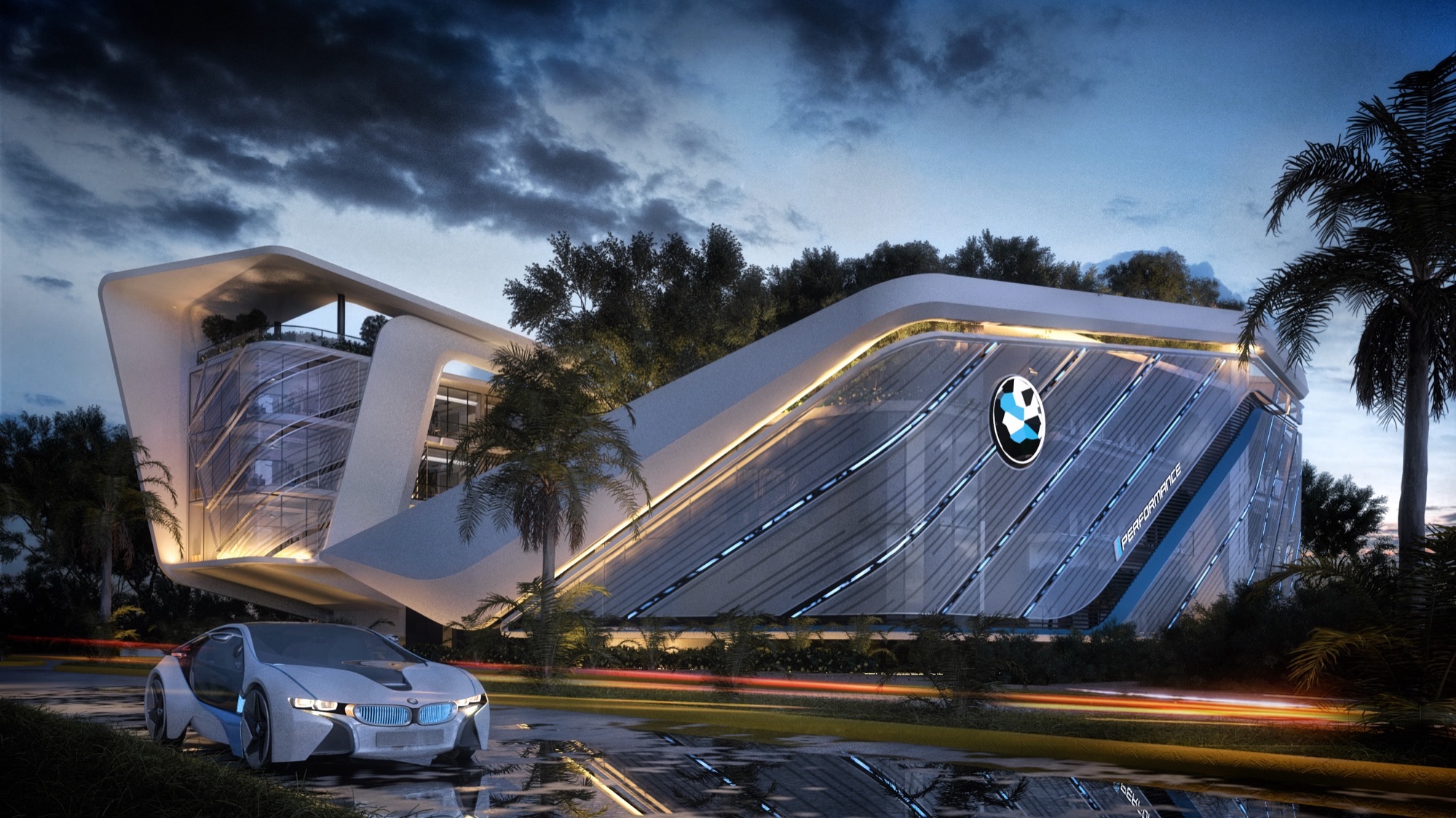
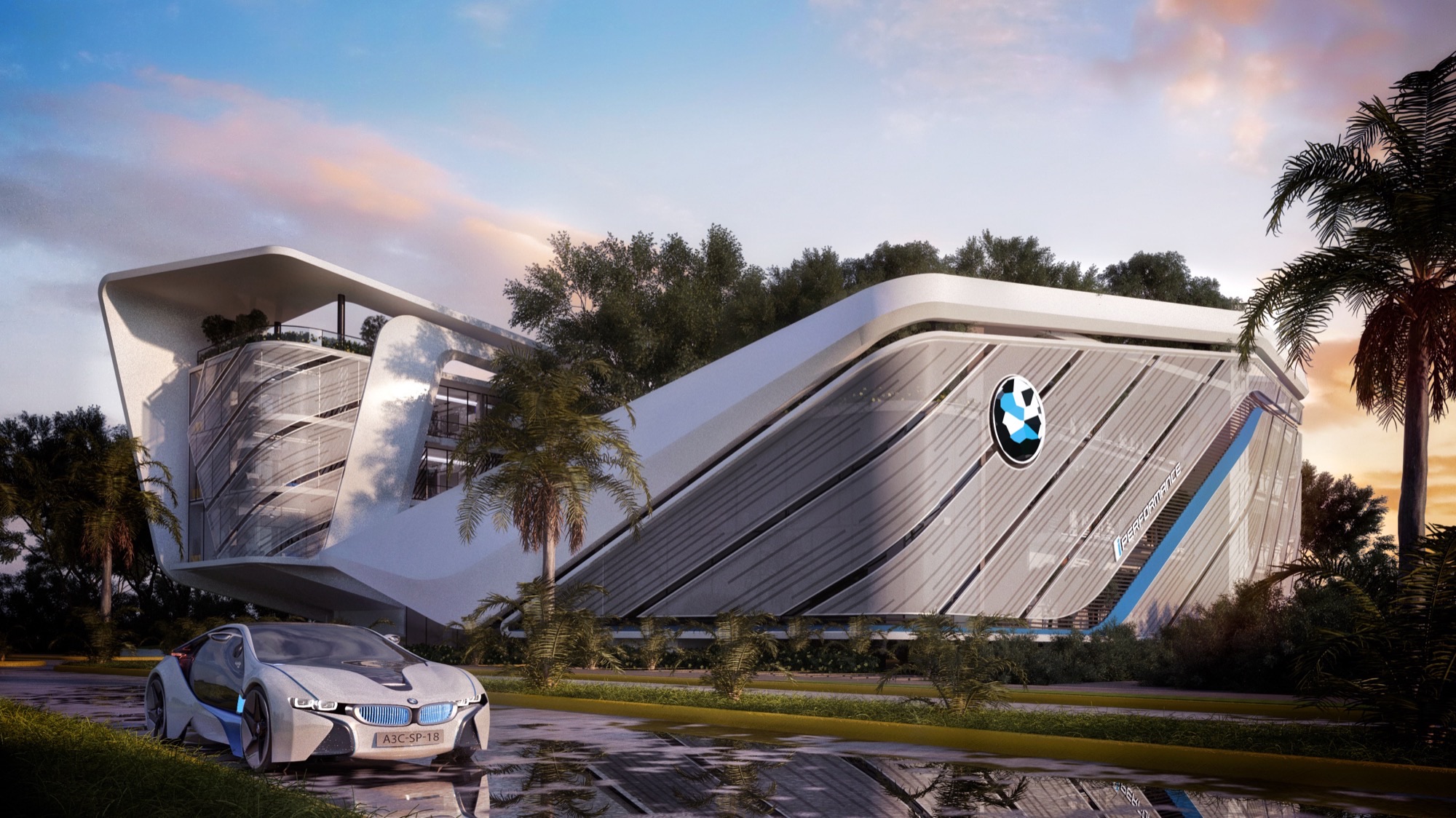
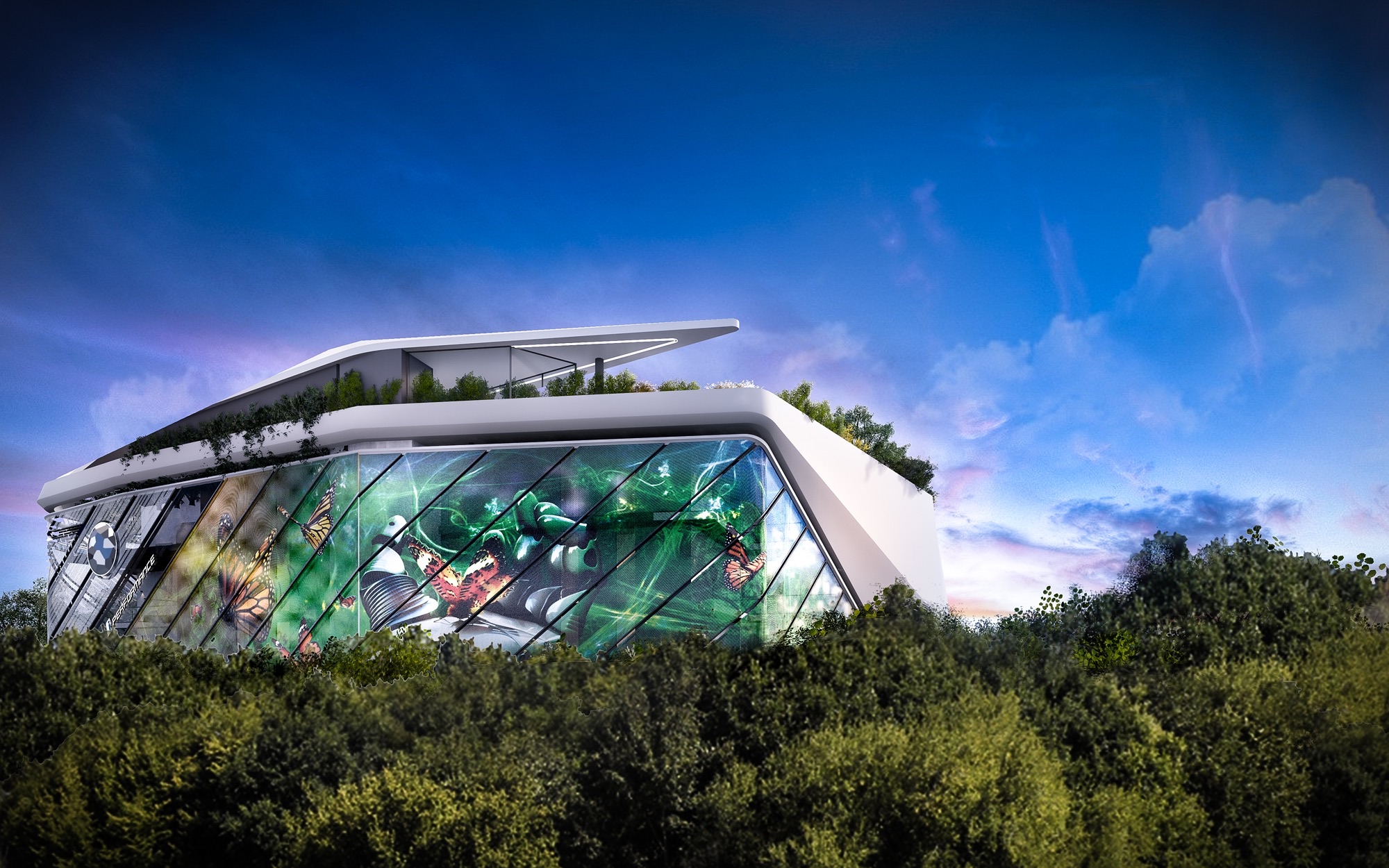
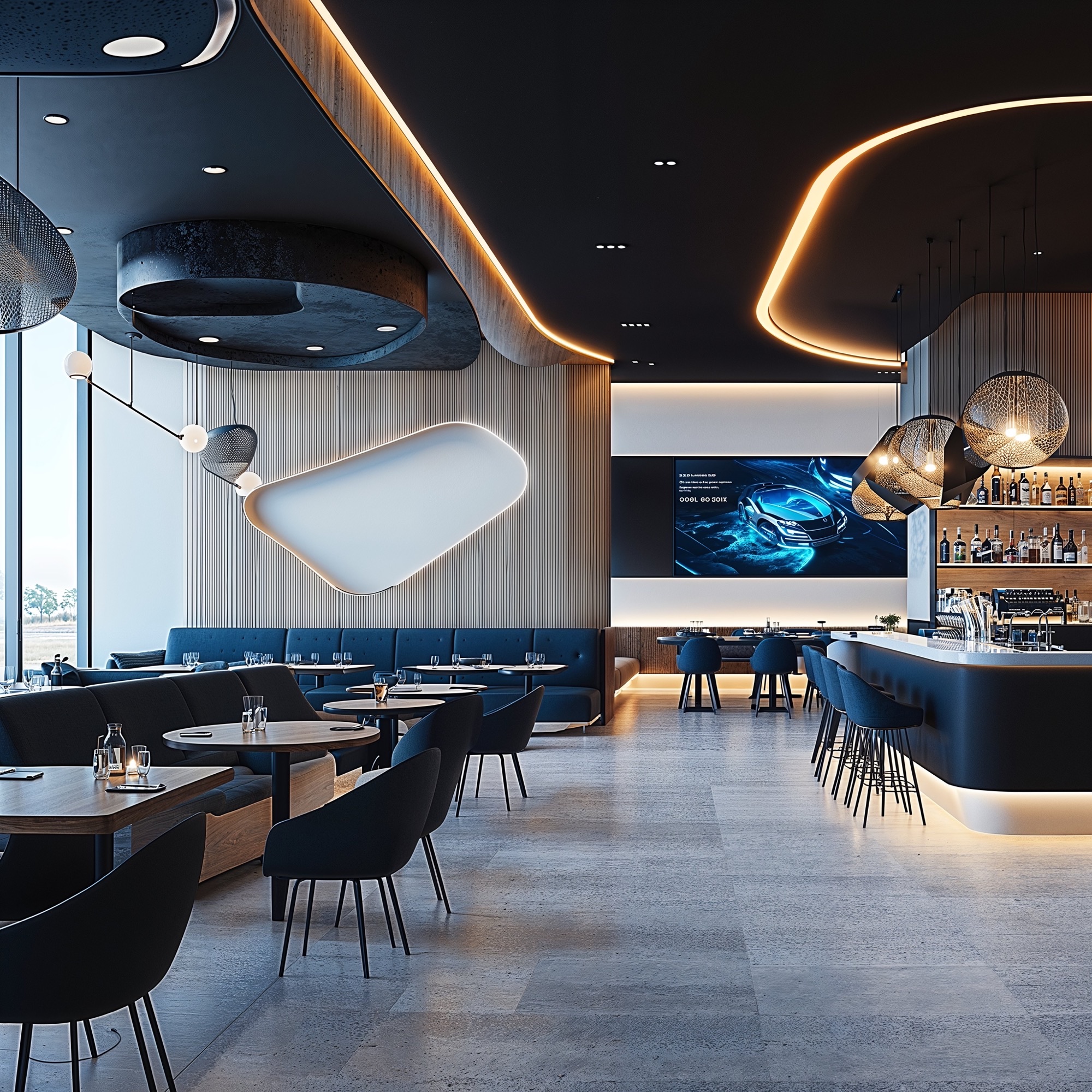
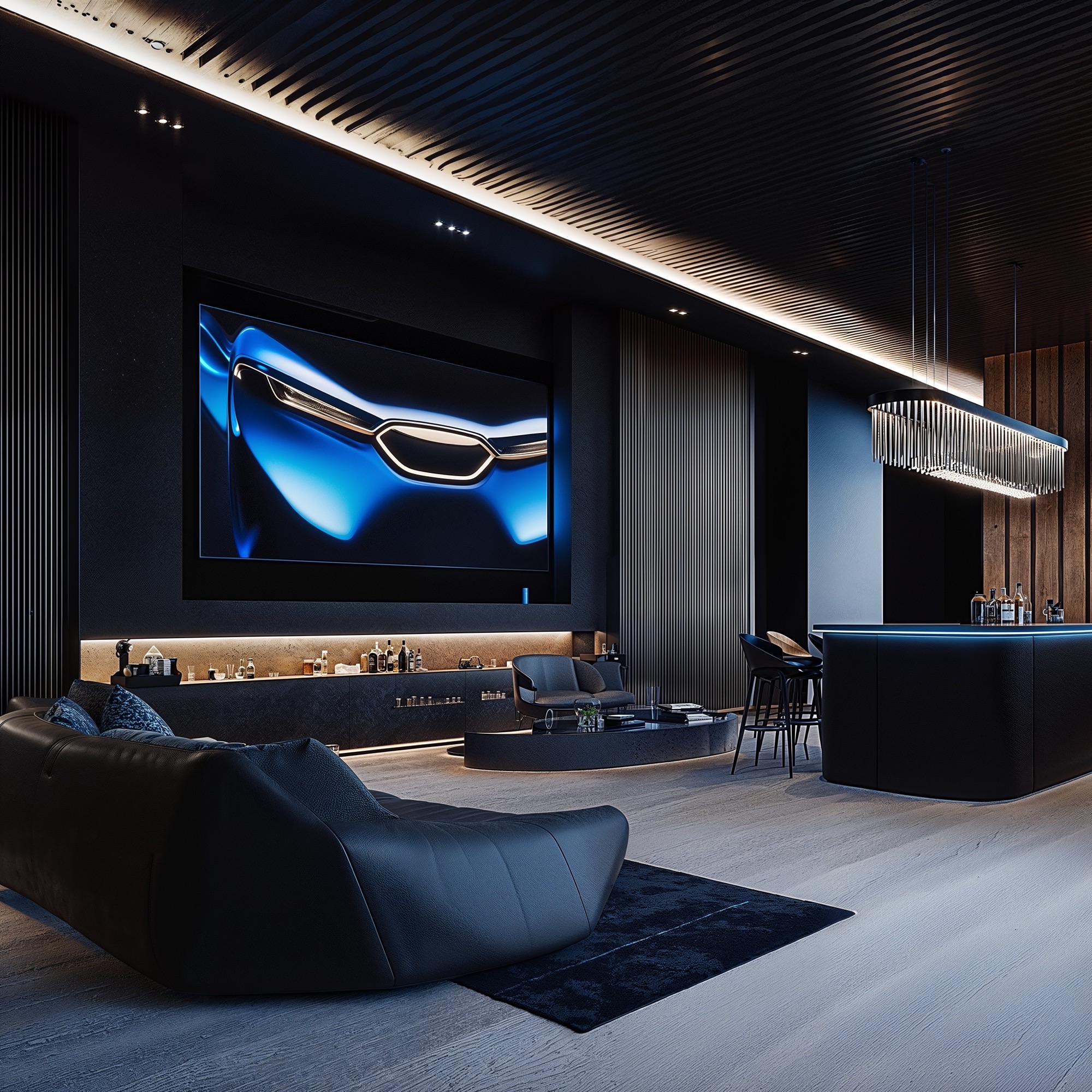
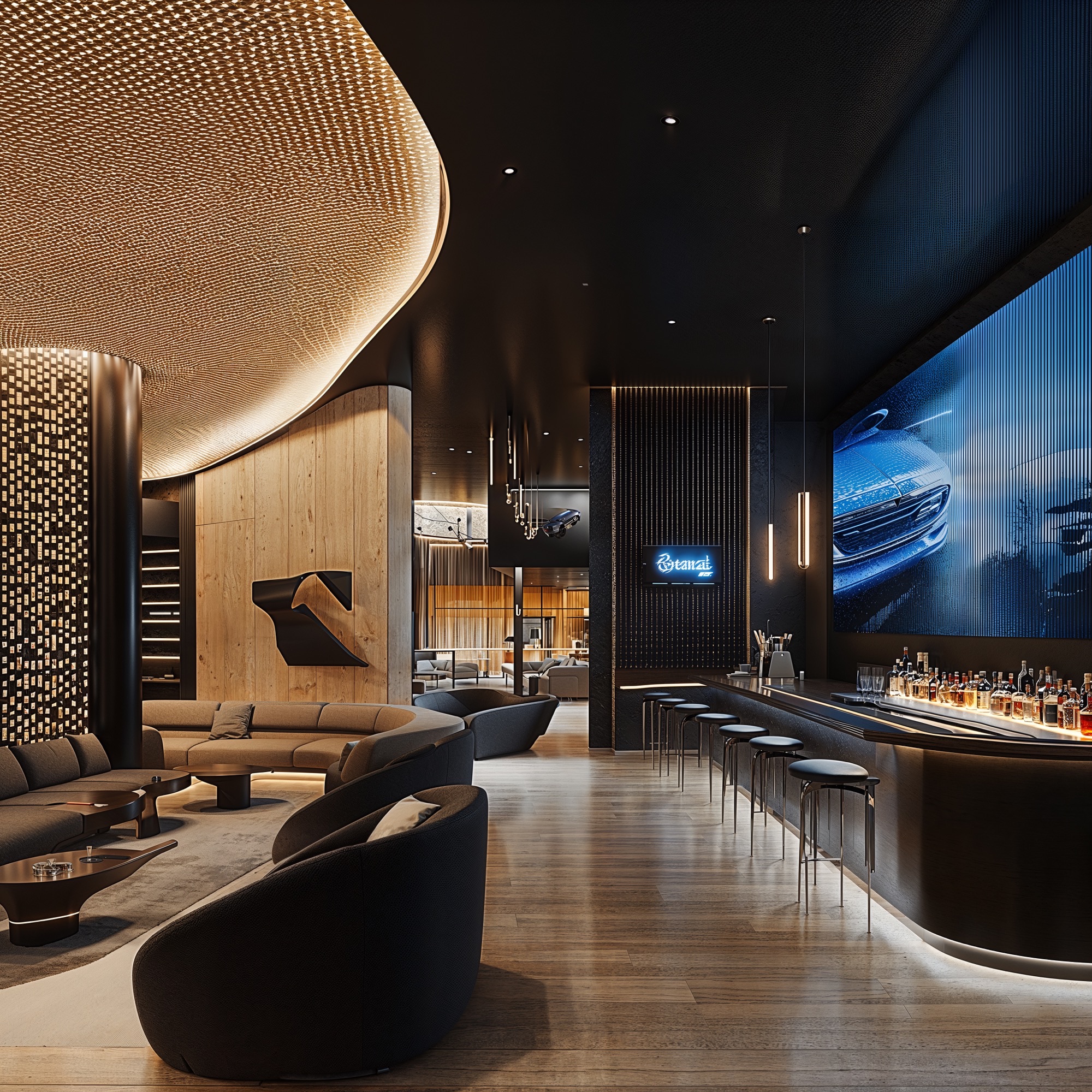
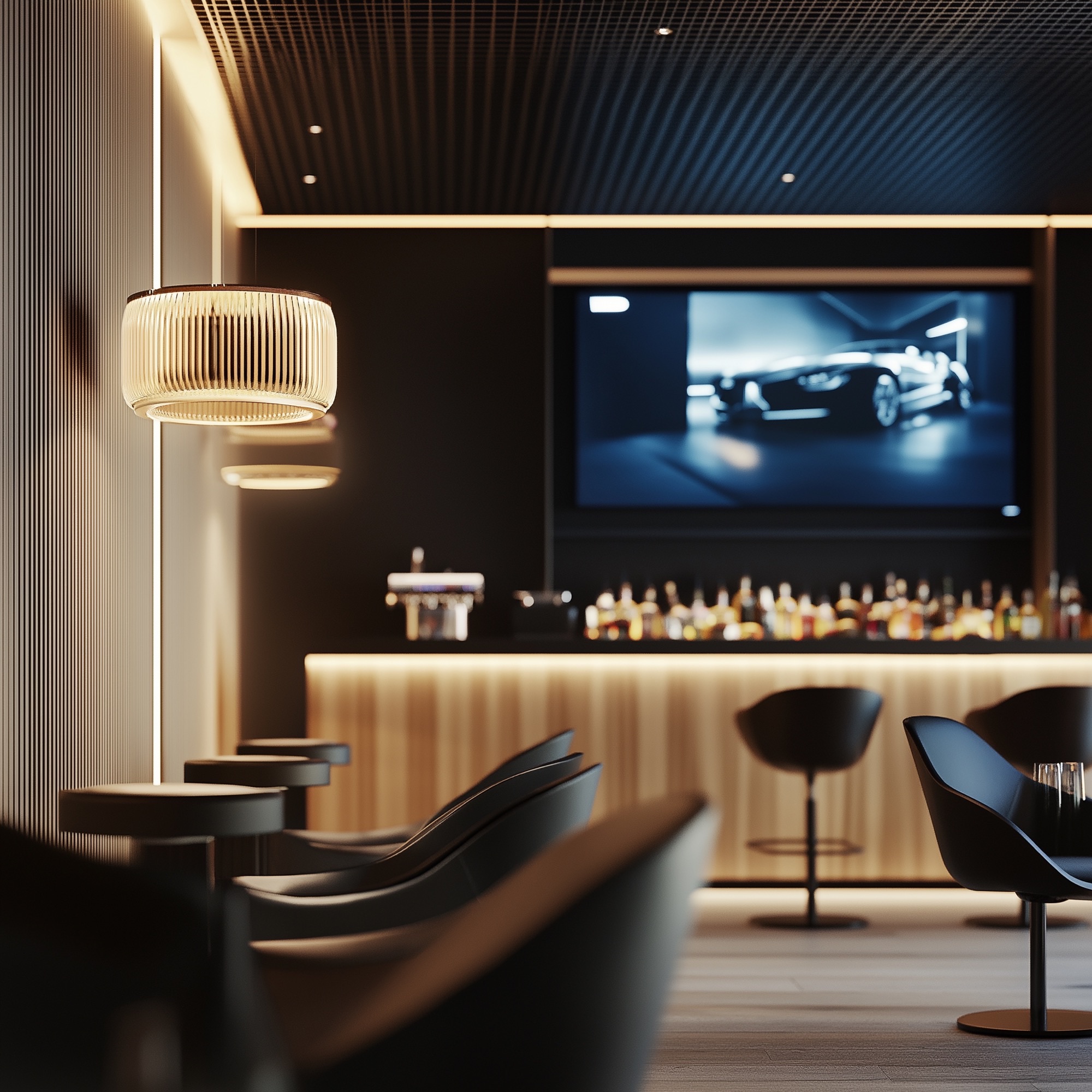
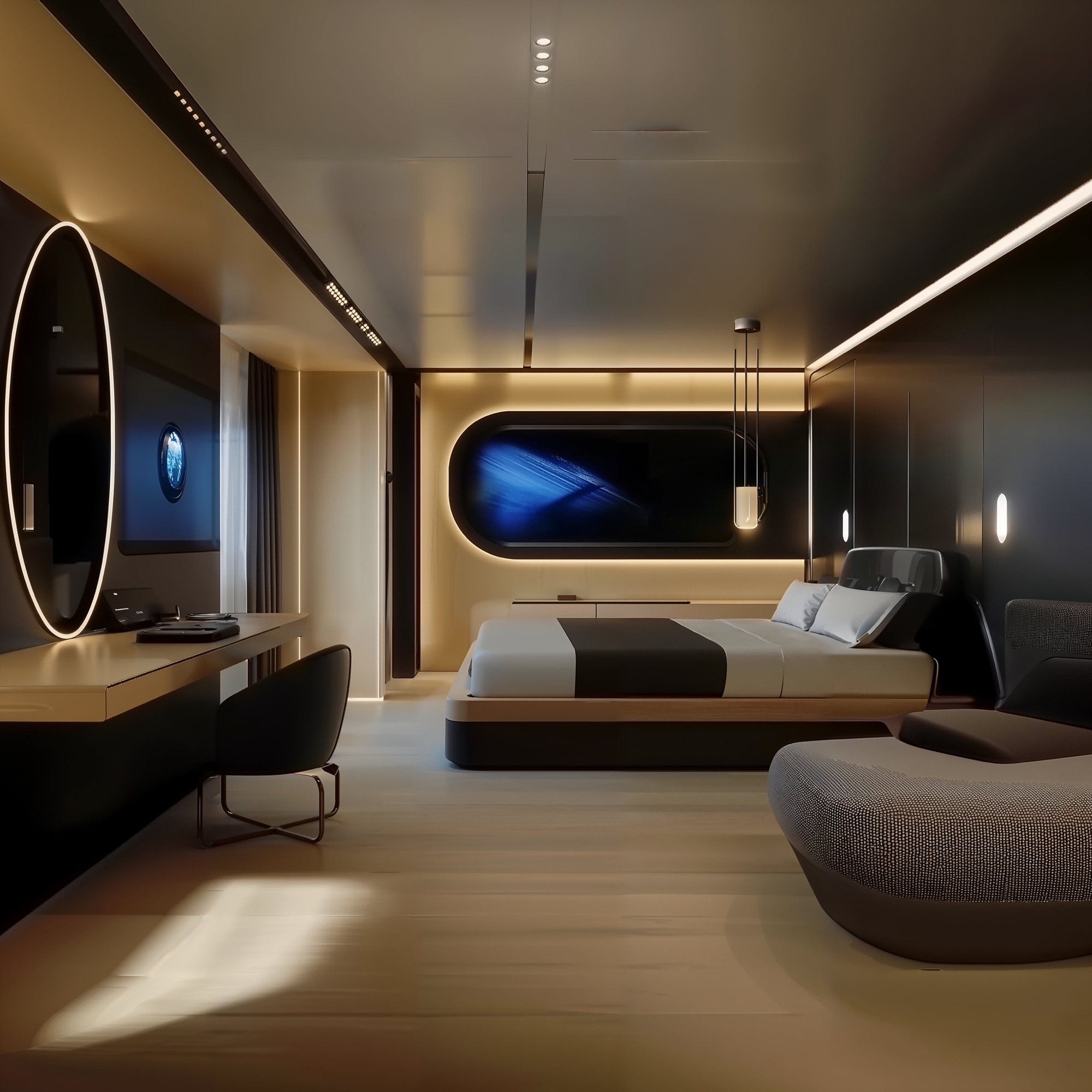
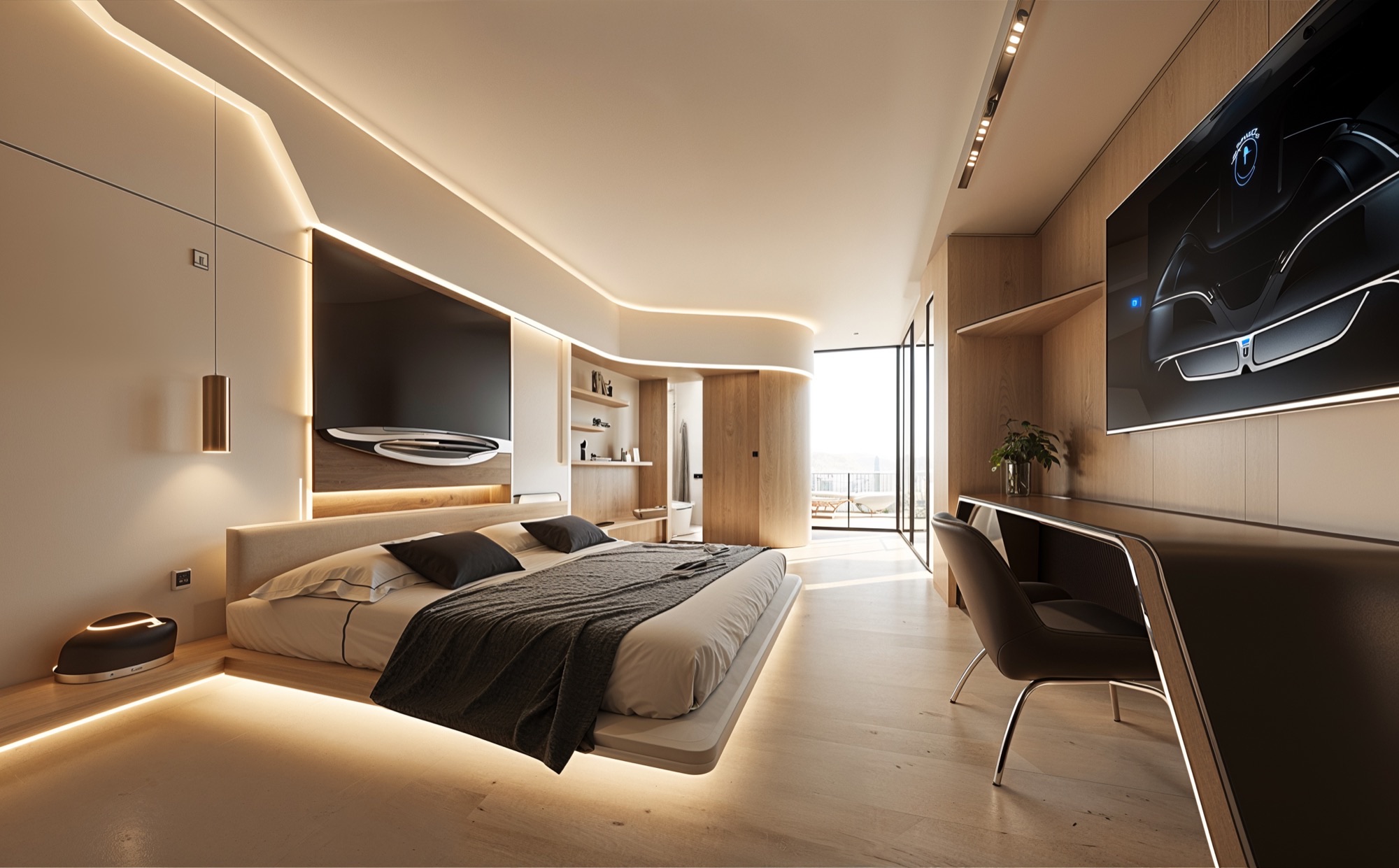
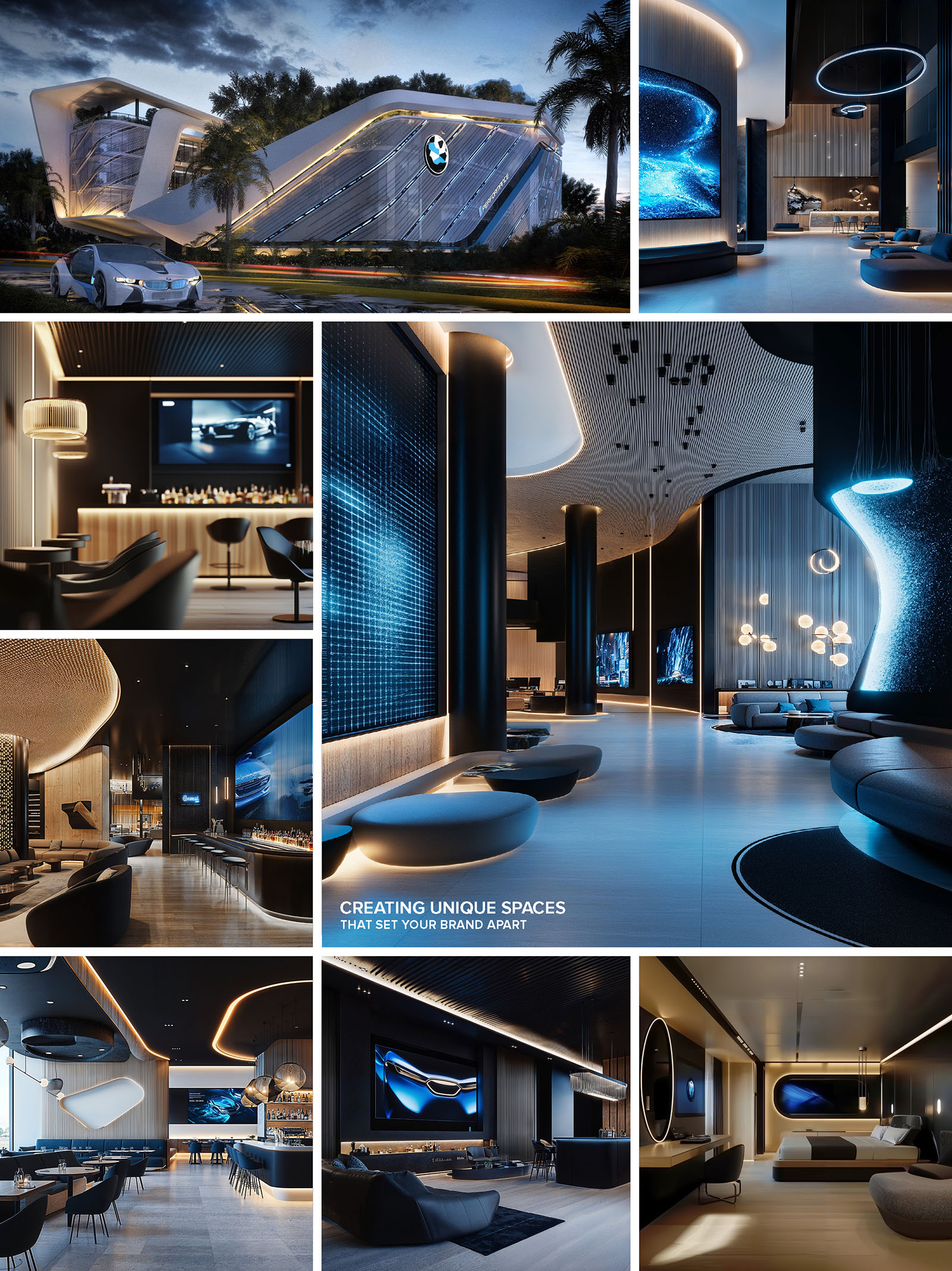
The LVH Hotel in Cancún is conceived as a sculptural gateway where automotive precision meets coastal resort lifestyle. The overall concept translates the dynamism of a performance vehicle into architecture: flowing lines, accelerated silhouettes and continuous surfaces create a sense of motion even when the building is at rest. The project aims to deliver an immersive brand environment rather than a conventional hotel, choreographing guest journeys through a sequence of cinematic spaces that highlight innovation, technology and luxury within a relaxed tropical context.
The exterior envelope is a sweeping white shell that wraps around a glazed volume, lifting from the ground like an aerodynamic body panel. This shell frames large expanses of high-performance glass, allowing curated views to the lush Cancún landscape while protecting interiors from direct solar gain. Night lighting accentuates the dynamic geometry with linear LEDs tracing the building’s edges, transforming the façade into a luminous icon along the boulevard and clearly expressing the brand emblem as a floating element within the composition.
Interior spaces are designed as dark, immersive lounges where controlled lighting and large digital surfaces orchestrate the mood. Deep charcoal ceilings and walls create a neutral canvas against which electric blues and warm amber tones stand out, evoking the contrast between night driving and illuminated dashboards. Seating areas are fluid and informal, with low, sculpted sofas and ottomans forming islands that encourage social interaction while maintaining generous circulation suited to a luxury lobby and bar environment.
A precise material palette combines matte black metals, brushed brass accents and warm woods with smooth, upholstered surfaces. These textures are enhanced by an integrated lighting system based almost entirely on concealed linear LEDs and halo-like luminaires. Indirect cove lighting softens ceiling curves and highlights vertical fins, while feature pendants introduce a sense of depth over bars and lounge clusters. Large digital walls and curved screens act as luminous art pieces, allowing the content to shift from brand storytelling to ambient atmospheres, effectively turning light into a primary material.
The public areas are organized as a continuous sequence: lobby, bar, lounge and gallery-like display zones visually connected by long perspectives and rhythmically placed columns. This open plan is punctuated with intimate pockets where guests can recline, work or socialize in smaller groups. In the guest rooms, the language becomes more restrained yet consistent: low platform beds, integrated headboards, and media walls framed by light create a calm, technologically refined retreat, with built-in storage and minimal furniture ensuring clear, uncluttered spaces.
Throughout the hotel, brand identity is subtly yet consistently embedded. Curved feature walls recall the profile of a car body, while digital content celebrates motion, innovation and precision engineering without becoming overtly thematic. The design aims to deliver an aspirational environment where guests experience the sophistication of a high-end showroom combined with the comfort of a luxury resort, reinforcing the hotel as a flagship destination for lifestyle, design and technology enthusiasts.
Sustainability is addressed through both passive and active measures suited to Cancún’s climate. The aerodynamic shell doubles as solar shading, reducing direct heat gain and lowering cooling loads, while high-performance glazing maximizes daylight with controlled glare. Interior lighting relies on low-consumption LED systems with smart controls and scene settings to minimize energy use. Durable, long-life materials are prioritized for high-traffic areas, and the open-plan layout allows flexible reconfiguration over time, supporting longevity of the fit-out and reducing future waste.
© 2021 by sanzpont [arquitectura] . Webpage by sanzpont [digital] . Innovative Digital Experiences
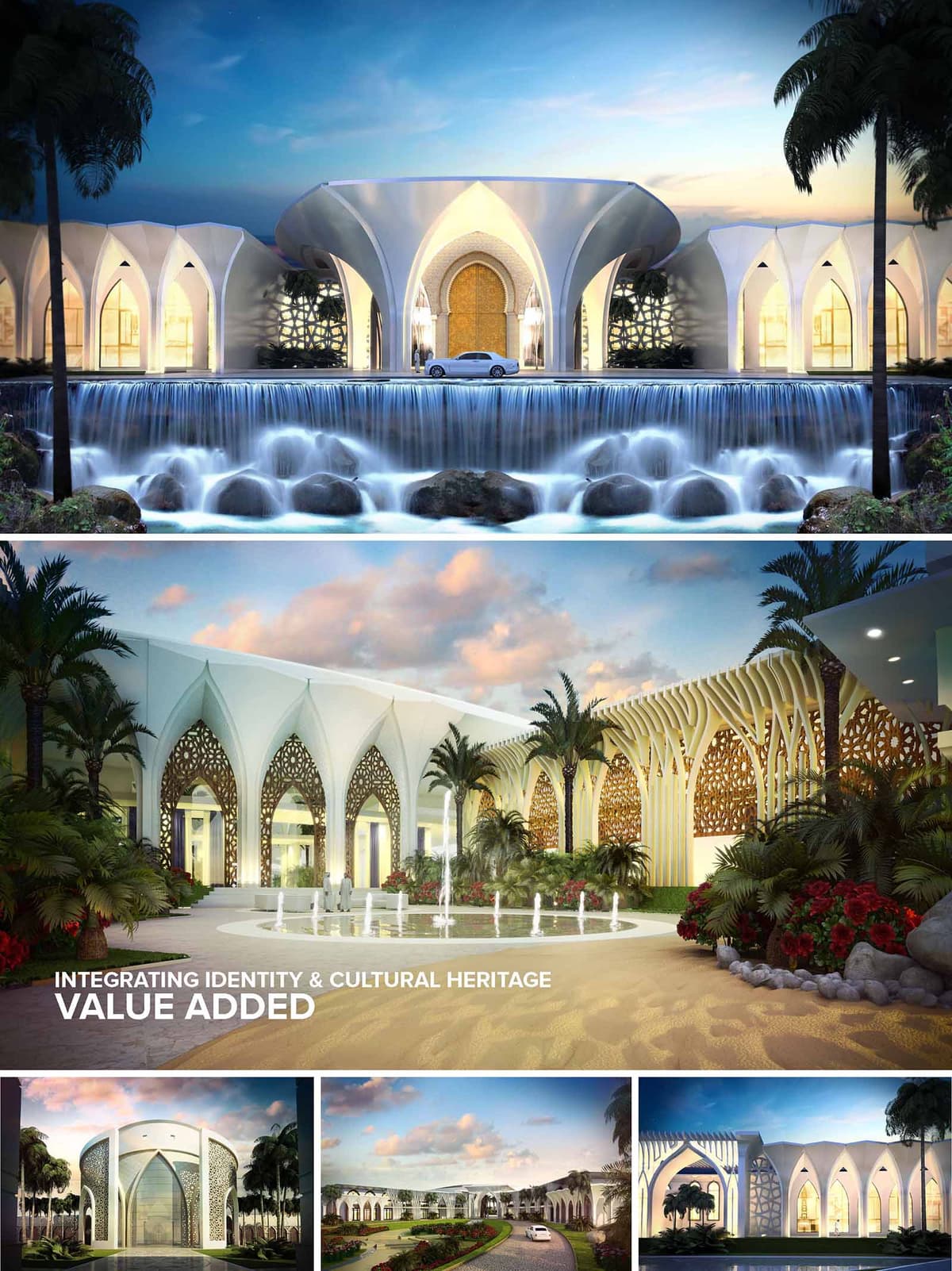

Al Rayyan Palace is conceived as a contemporary reinterpretation of the Qatari palace typology, fusing classical Islamic geometry with a sculptural, resort-like architectural language. The design organizes the residence around a ceremonial arrival axis, framed by a sequence of arches and water features that extend the landscape into the built form. Architecture, light and water are choreographed to announce a luxurious yet culturally rooted domestic environment. The palace functions as both private residence and representative space, allowing formal receptions to coexist with intimate family life while preserving privacy and hierarchy.
The architectural vocabulary is built on a repeated pointed-arch module, stretched vertically to create a series of elegant white “petals” that read as both columns and shells. These elements form a rhythmic arcade enclosing the main façades, while the central volume projects forward as a grand, double-height portal. The smooth, continuous roofline gently undulates, recalling desert dunes and creating a soft silhouette against the sky. Solid and void alternate through deep reveals, screens and glazed infills, resulting in a façade that is simultaneously monumental and permeable. At night, concealed lighting transforms the white shells into luminous lanterns, emphasizing the three-dimensional curvature of the envelope.
The palette is intentionally restrained to highlight form and light. Exterior surfaces employ high-performance white render or stone cladding, selected for its thermal reflectivity and timeless appearance. Large, gilded entrance doors and finely perforated metal mashrabiya panels introduce a warm golden accent that resonates with traditional craftsmanship. Glazing is generously used yet always recessed within arches or screened, mitigating glare while preserving transparency. The water features and lush planting provide rich blue and green counterpoints to the predominantly white architecture, creating a cool micro-oasis effect that reinforces the palace’s sense of exclusivity and serenity.
The arrival sequence is articulated through layered landscape experiences: a long approach drive framed by palm trees, a circular fountain forecourt, and a dramatic linear water cascade aligned with the main entrance. The elevated plinth of the palace allows water to fall in terraces, visually grounding the building while enhancing its ceremonial presence. Reflecting pools amplify the façade through mirrored images, doubling the perception of space and contributing to passive cooling. Dense planting with tropical and regional species softens the geometry, filters views, and forms a buffer between public arrival zones and private garden courts.
The design draws from Islamic architectural heritage through pointed arches, geometric tracery and layered thresholds while avoiding literal historicism. The structural rhythm of columns recalls the hypostyle hall, reinterpreted in a fluid, contemporary manner. Public reception spaces align along the main axis facing the primary water features, while private residential wings are discreetly set back, accessed through controlled circulation routes that respect local privacy norms. Transitional semi-open loggias mediate between interior and exterior, supporting social gatherings in shaded, naturally ventilated spaces that are integral to the region’s lifestyle.
Sustainability is embedded through climate-responsive form, material selection and landscape design. The deep arches and overhanging shells act as self-shading devices, reducing direct solar gain on glazed surfaces. High-reflectance façade finishes and insulated envelopes contribute to thermal comfort and lower cooling loads. Water bodies and dense planting assist microclimate regulation through evaporative cooling and shading, while the orientation of major openings promotes cross ventilation in transitional spaces. The use of screens and filtered daylight minimizes reliance on artificial lighting during the day. Provision for high-efficiency MEP systems, potential grey-water reuse for irrigation and integration of LED lighting further enhance the project’s environmental performance while maintaining the palace’s luxurious character.


Al Rayyan Palace is conceived as a contemporary reinterpretation of the Qatari palace typology, fusing classical Islamic geometry with a sculptural, resort-like architectural language. The design organizes the residence around a ceremonial arrival axis, framed by a sequence of arches and water features that extend the landscape into the built form. Architecture, light and water are choreographed to announce a luxurious yet culturally rooted domestic environment. The palace functions as both private residence and representative space, allowing formal receptions to coexist with intimate family life while preserving privacy and hierarchy.
The architectural vocabulary is built on a repeated pointed-arch module, stretched vertically to create a series of elegant white “petals” that read as both columns and shells. These elements form a rhythmic arcade enclosing the main façades, while the central volume projects forward as a grand, double-height portal. The smooth, continuous roofline gently undulates, recalling desert dunes and creating a soft silhouette against the sky. Solid and void alternate through deep reveals, screens and glazed infills, resulting in a façade that is simultaneously monumental and permeable. At night, concealed lighting transforms the white shells into luminous lanterns, emphasizing the three-dimensional curvature of the envelope.
The palette is intentionally restrained to highlight form and light. Exterior surfaces employ high-performance white render or stone cladding, selected for its thermal reflectivity and timeless appearance. Large, gilded entrance doors and finely perforated metal mashrabiya panels introduce a warm golden accent that resonates with traditional craftsmanship. Glazing is generously used yet always recessed within arches or screened, mitigating glare while preserving transparency. The water features and lush planting provide rich blue and green counterpoints to the predominantly white architecture, creating a cool micro-oasis effect that reinforces the palace’s sense of exclusivity and serenity.
The arrival sequence is articulated through layered landscape experiences: a long approach drive framed by palm trees, a circular fountain forecourt, and a dramatic linear water cascade aligned with the main entrance. The elevated plinth of the palace allows water to fall in terraces, visually grounding the building while enhancing its ceremonial presence. Reflecting pools amplify the façade through mirrored images, doubling the perception of space and contributing to passive cooling. Dense planting with tropical and regional species softens the geometry, filters views, and forms a buffer between public arrival zones and private garden courts.
The design draws from Islamic architectural heritage through pointed arches, geometric tracery and layered thresholds while avoiding literal historicism. The structural rhythm of columns recalls the hypostyle hall, reinterpreted in a fluid, contemporary manner. Public reception spaces align along the main axis facing the primary water features, while private residential wings are discreetly set back, accessed through controlled circulation routes that respect local privacy norms. Transitional semi-open loggias mediate between interior and exterior, supporting social gatherings in shaded, naturally ventilated spaces that are integral to the region’s lifestyle.
Sustainability is embedded through climate-responsive form, material selection and landscape design. The deep arches and overhanging shells act as self-shading devices, reducing direct solar gain on glazed surfaces. High-reflectance façade finishes and insulated envelopes contribute to thermal comfort and lower cooling loads. Water bodies and dense planting assist microclimate regulation through evaporative cooling and shading, while the orientation of major openings promotes cross ventilation in transitional spaces. The use of screens and filtered daylight minimizes reliance on artificial lighting during the day. Provision for high-efficiency MEP systems, potential grey-water reuse for irrigation and integration of LED lighting further enhance the project’s environmental performance while maintaining the palace’s luxurious character.
© 2021 by sanzpont [arquitectura] . Webpage by sanzpont [digital] . Innovative Digital Experiences
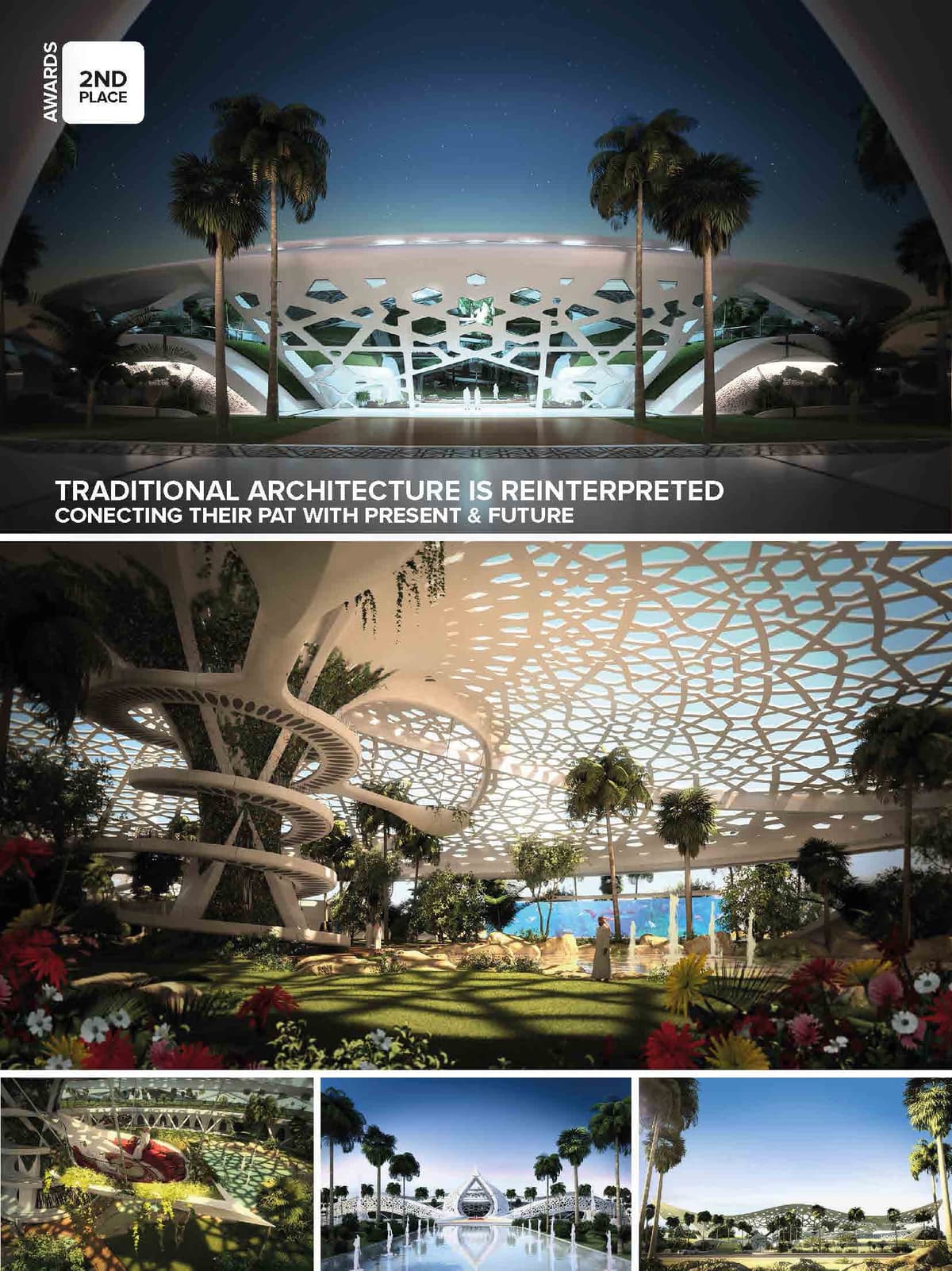

“An Oasis is a miracle of life in the desert.” sanzpont [arquitectura] has being awarded 3rd place in an international restricted competition for a VIP Palace in Qatar for its innovative and ecologic response to the project brief of this private residence: "The purpose of the competition was to stimulate innovative and creative ideas to create high end luxurious Palace to achieve relaxation and luxury for its VIP users."
This Palace reinvents the simple idea of creating luxury into something meaningful, creating life and nature through a self-sustainable botanical oasis in the desert. The microclimate needed for botanical species is created by a mist irrigation system located in the inner skin of the palace central dome. Water is obtained from an underground aquifer and sustainable desalinated by an electrodialysis system that is powered by solar renewable sources. Photovoltaic panels are integrated into the outer skin of the dome and building roofs, water is stored in the landscaping lakes featuring various thematic gardens and picnic areas.
“Architecture design should be integrated with its surrounding environment should reflect its culture in time, so we studied their historical typologies and architectural language to evolve it into innovative vanguard design plenty of cultural heritage.”
The heart of the palace is an oasis covered by a central dome, its unique design is inspired by the Sidra Tree, which is native to Qatar and is a symbol for perseverance, solidarity and determination.
Historically, this tree unifies people looking shade in the desert, meeting and talking bellow its spreading branches. These branches are symbolized with a leaf-shaped seating spaces hanging inside the Sidra Tree Dome, these seating spaces for calm and relaxation are called “Floating Majlis”.
Traditional Qatari architecture is reinterpreted connecting their past with present and future.
Sustainable Design. Photovoltaic Energy: The tensile skin incorporates Foldable Photovoltaic Solar Panels capturing energy from the sun to generate and supply electricity from a clean and sustainable energy. This makes the bridge self-sustainable.
Air-Cleaning Plants: To go beyond green, the design includes Plants that clean and purify the air, transforming the pollution of the city in pure oxygen. Plants and the Breathable Membrane make a greener environment and a clean pedestrian tunnel.
LED RGB Technology: Linear LED technology glow the structure of the bridge at night, creating art with light of low power consumption. This emphasizes the fluid and organic forms and creates different sensations.
INTERNATIONAL ARCHITECTURE AWARDS
• A’ Design Awards, Milán, Italy: Silver Medal - Certificate of Excellence in World Landscape & Planning Design : A Palace for Nature (2015)


INTERNATIONAL ARCHITECTURE AWARDS
• A’ Design Awards, Milán, Italy: Silver Medal - Certificate of Excellence in World Landscape & Planning Design : A Palace for Nature (2015)
“An Oasis is a miracle of life in the desert.” sanzpont [arquitectura] has being awarded 3rd place in an international restricted competition for a VIP Palace in Qatar for its innovative and ecologic response to the project brief of this private residence: "The purpose of the competition was to stimulate innovative and creative ideas to create high end luxurious Palace to achieve relaxation and luxury for its VIP users."
This Palace reinvents the simple idea of creating luxury into something meaningful, creating life and nature through a self-sustainable botanical oasis in the desert. The microclimate needed for botanical species is created by a mist irrigation system located in the inner skin of the palace central dome. Water is obtained from an underground aquifer and sustainable desalinated by an electrodialysis system that is powered by solar renewable sources. Photovoltaic panels are integrated into the outer skin of the dome and building roofs, water is stored in the landscaping lakes featuring various thematic gardens and picnic areas.
“Architecture design should be integrated with its surrounding environment should reflect its culture in time, so we studied their historical typologies and architectural language to evolve it into innovative vanguard design plenty of cultural heritage.”
The heart of the palace is an oasis covered by a central dome, its unique design is inspired by the Sidra Tree, which is native to Qatar and is a symbol for perseverance, solidarity and determination.
Historically, this tree unifies people looking shade in the desert, meeting and talking bellow its spreading branches. These branches are symbolized with a leaf-shaped seating spaces hanging inside the Sidra Tree Dome, these seating spaces for calm and relaxation are called “Floating Majlis”.
Traditional Qatari architecture is reinterpreted connecting their past with present and future.
Sustainable Design. Photovoltaic Energy: The tensile skin incorporates Foldable Photovoltaic Solar Panels capturing energy from the sun to generate and supply electricity from a clean and sustainable energy. This makes the bridge self-sustainable.
Air-Cleaning Plants: To go beyond green, the design includes Plants that clean and purify the air, transforming the pollution of the city in pure oxygen. Plants and the Breathable Membrane make a greener environment and a clean pedestrian tunnel.
LED RGB Technology: Linear LED technology glow the structure of the bridge at night, creating art with light of low power consumption. This emphasizes the fluid and organic forms and creates different sensations.
© 2021 by sanzpont [arquitectura] . Webpage by sanzpont [digital] . Innovative Digital Experiences
Client involvement and co-design are central to our approach, ensuring that each project reflects the unique needs and visions of those we serve. In the world of luxury, this dialogue unfolds with complete discretion: by actively engaging you throughout the design process, we foster a collaborative environment where ideas flourish, resulting in spaces that are deeply personal and quietly extraordinary.
A project is not only about the result, is about enjoying the journey with the client.
At our firm, tailoring your dream residence, hotel or boutique is our specialty. We meticulously craft each design to align with your lifestyle, your brand and your aesthetic sensibility. Our process is interactive and client-focused, ensuring that every element — from the master plan to the finest detail — embodies your identity perfectly.
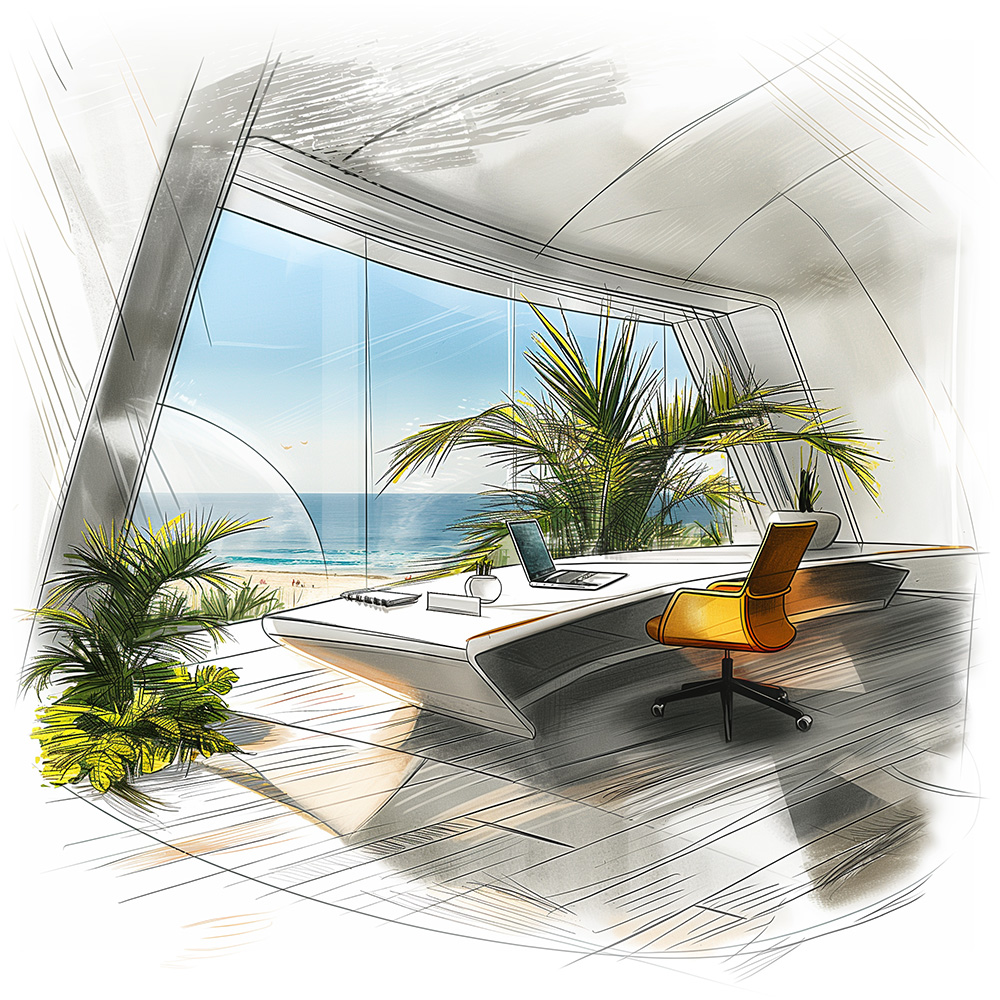
Sustainable and bioclimatic design focuses on environmental responsibility and energy efficiency. By integrating natural elements and innovative technologies, these designs enhance comfort, reduce energy consumption, and promote a healthier way of living, aligning contemporary luxury environments with ecological principles.
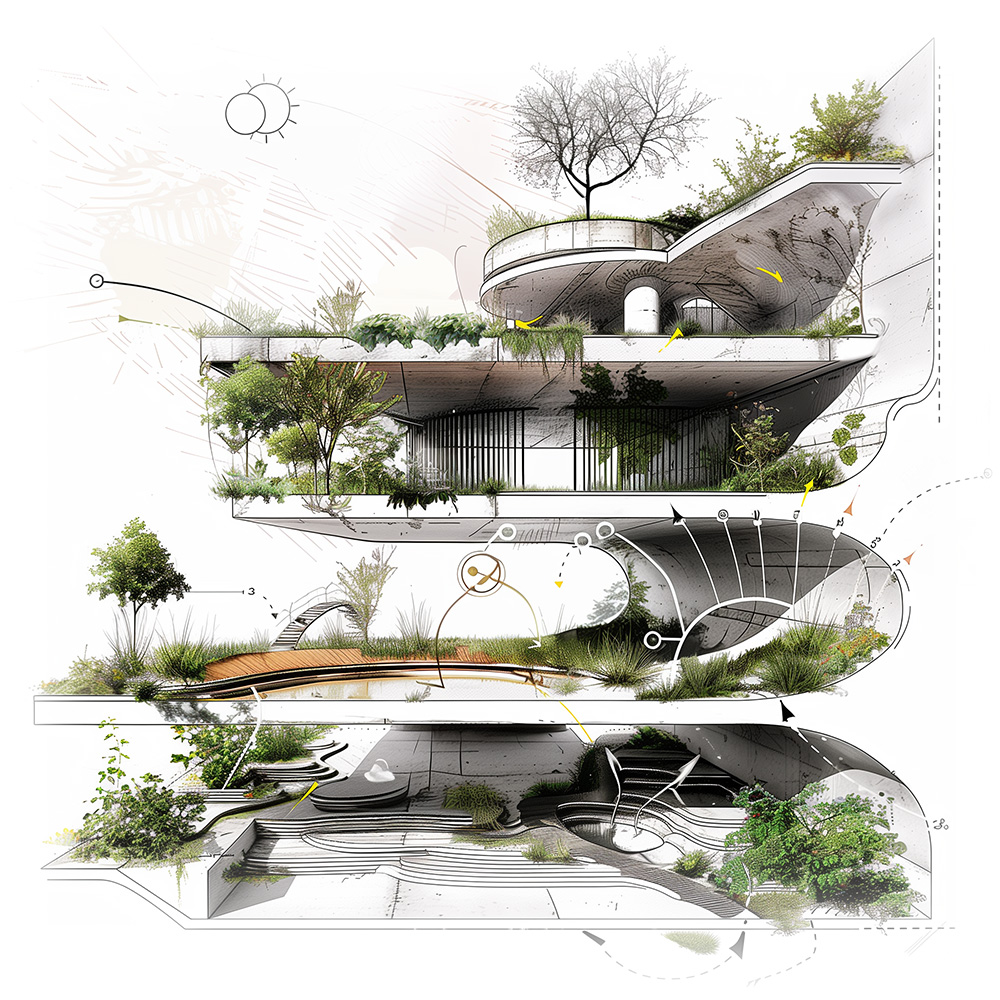
Our designs are user-focused, logical, and functional, tailored to meet the specific needs of those who inhabit the spaces we create. We prioritize intuitive layouts and smart solutions that enhance usability and efficiency. Every design decision is driven by a deep understanding of user interaction and operational flow, ensuring optimal functionality.
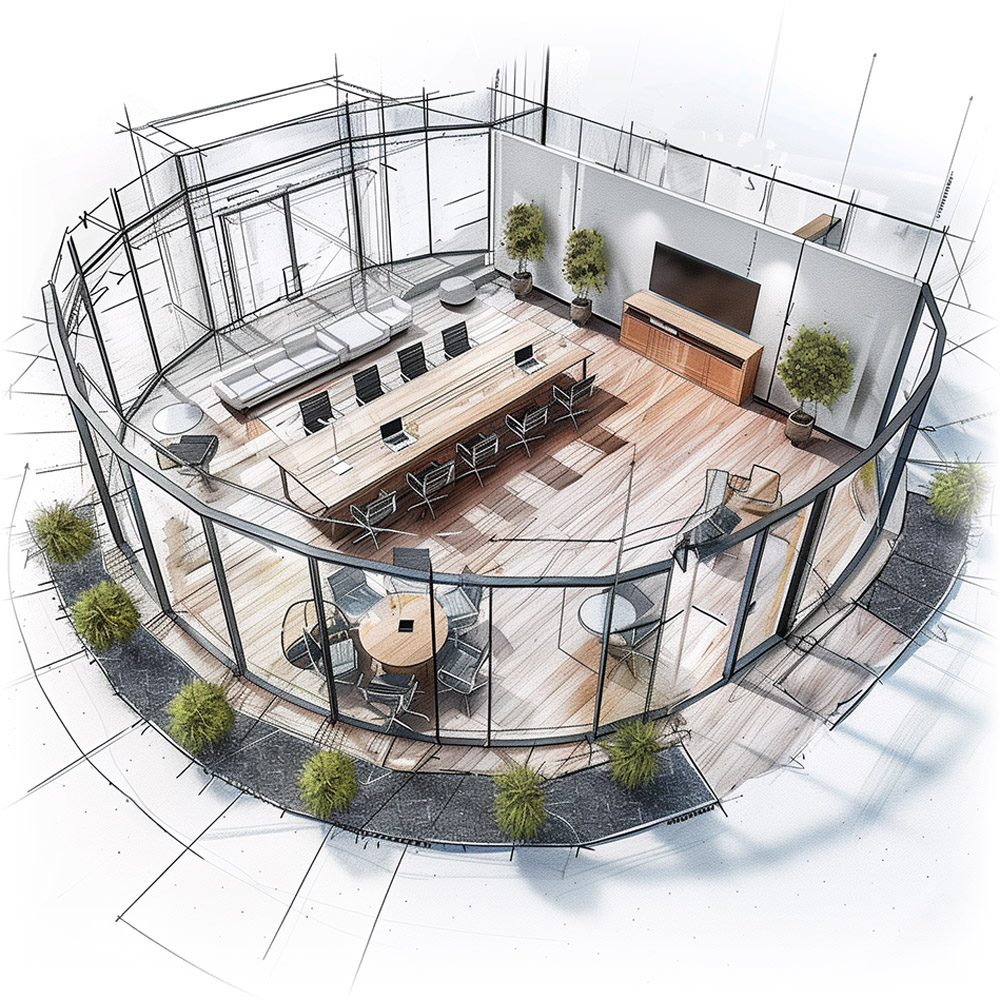
Our BIM (Building Information Modeling) projects workflow integrates advanced technology to streamline and enhance the design process. This method allows for precise, efficient planning and execution, enabling better coordination, cost management, and project visualization. With BIM, we ensure a seamless, collaborative, and high-quality construction process.
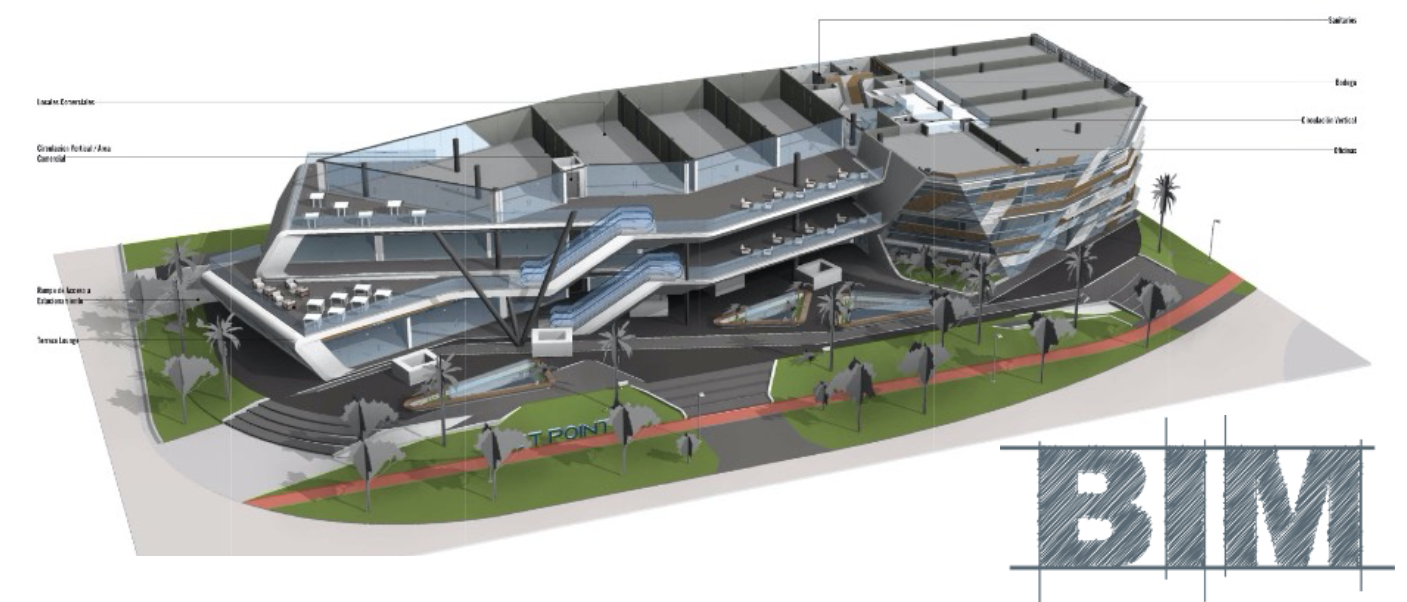
Our interactive visualizations bring your project to life before construction begins, offering a dynamic and immersive experience. These advanced tools enable you to explore design options and modifications in real-time, ensuring the final outcome perfectly aligns with your vision. This technology fosters deeper understanding and engagement throughout the design process.

Virtual Reality (VR) visualization lets you experience and refine your project before it's built, providing a clear sense of space and design. This real-time capability ensures accuracy, saves time, and prevents expensive modifications, enhancing decision-making and deepening your connection to the project's final vision.

At our core, we are a collective of creative minds, constantly pushing the boundaries of design and innovation. Our team thrives on challenging conventions and exploring new possibilities to create spaces that are not only functional but also artistically inspiring. We transform visions into realities, crafting environments that resonate and inspire.
We are acutely sensitive to project budgets, ensuring that our designs align with your financial parameters without compromising quality or functionality. Our strategic approach involves meticulous planning and resource management, allowing us to deliver exceptional spaces that respect your budget and maximize the value of your investment.
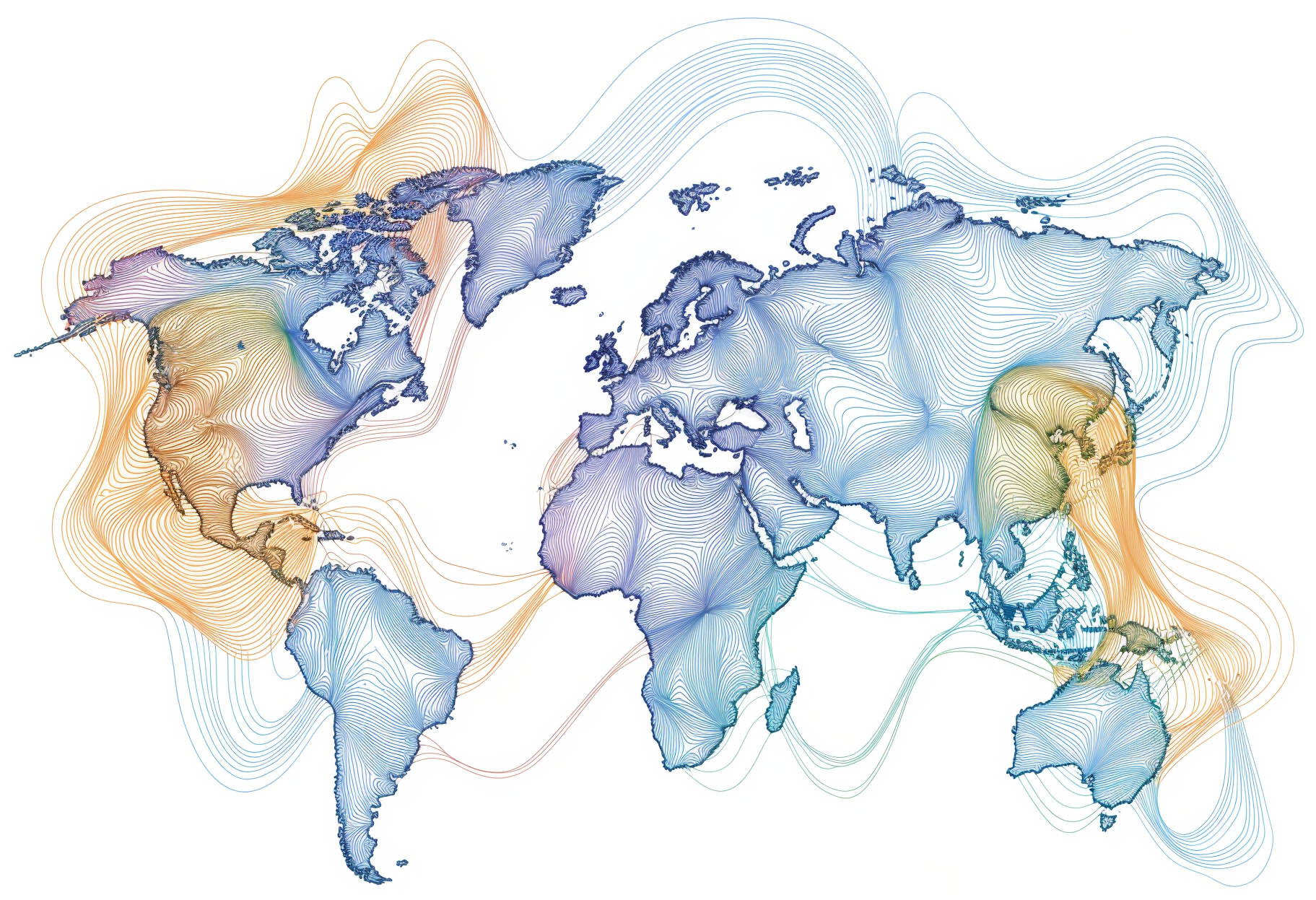
Our expertise in international design allows us to create exceptional residences and destinations anywhere in the world. With offices in Spain, Mexico, the USA and the Dominican Republic, and commissions across the Middle East, we tailor each design to local culture and climate while meeting universal standards of excellence. No matter where your project is located, we can craft your ideal space.
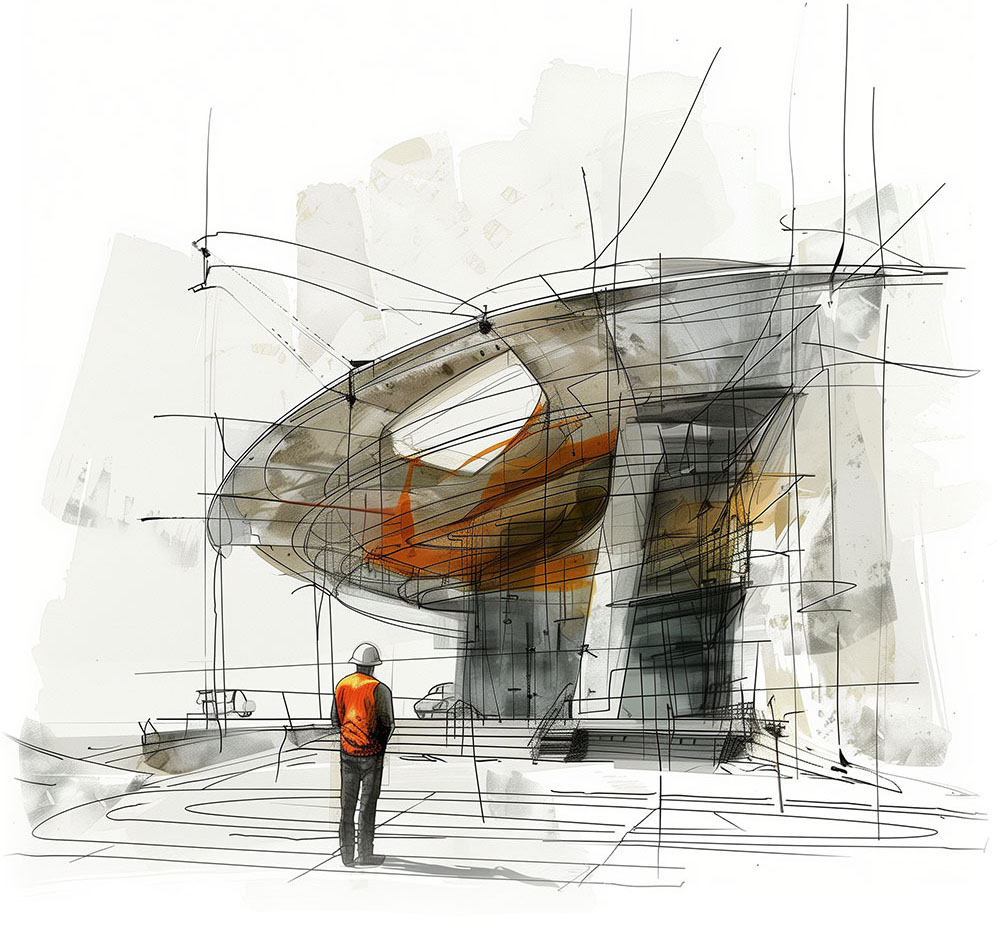
We prioritize local collaboration, working closely as a team with regional consultants to ensure our designs meet local regulations and community standards. This approach enriches our projects with local expertise and insight, guaranteeing that each project is not only compliant but also contextually integrated.


Our offices are located in Barcelona, Cancún, Chicago and Santo Domingo, but thanks to technology we can do projects on all over the world.
Barcelona
Bac de Roda 136
08020, Barcelona
Spain
Madrid
Av. de Buendía 11
19005 Guadalajara (Madrid)
Spain
Chicago
373 Hazel Ave, Apt A1
60022, Glencoe, Illinois
United States