

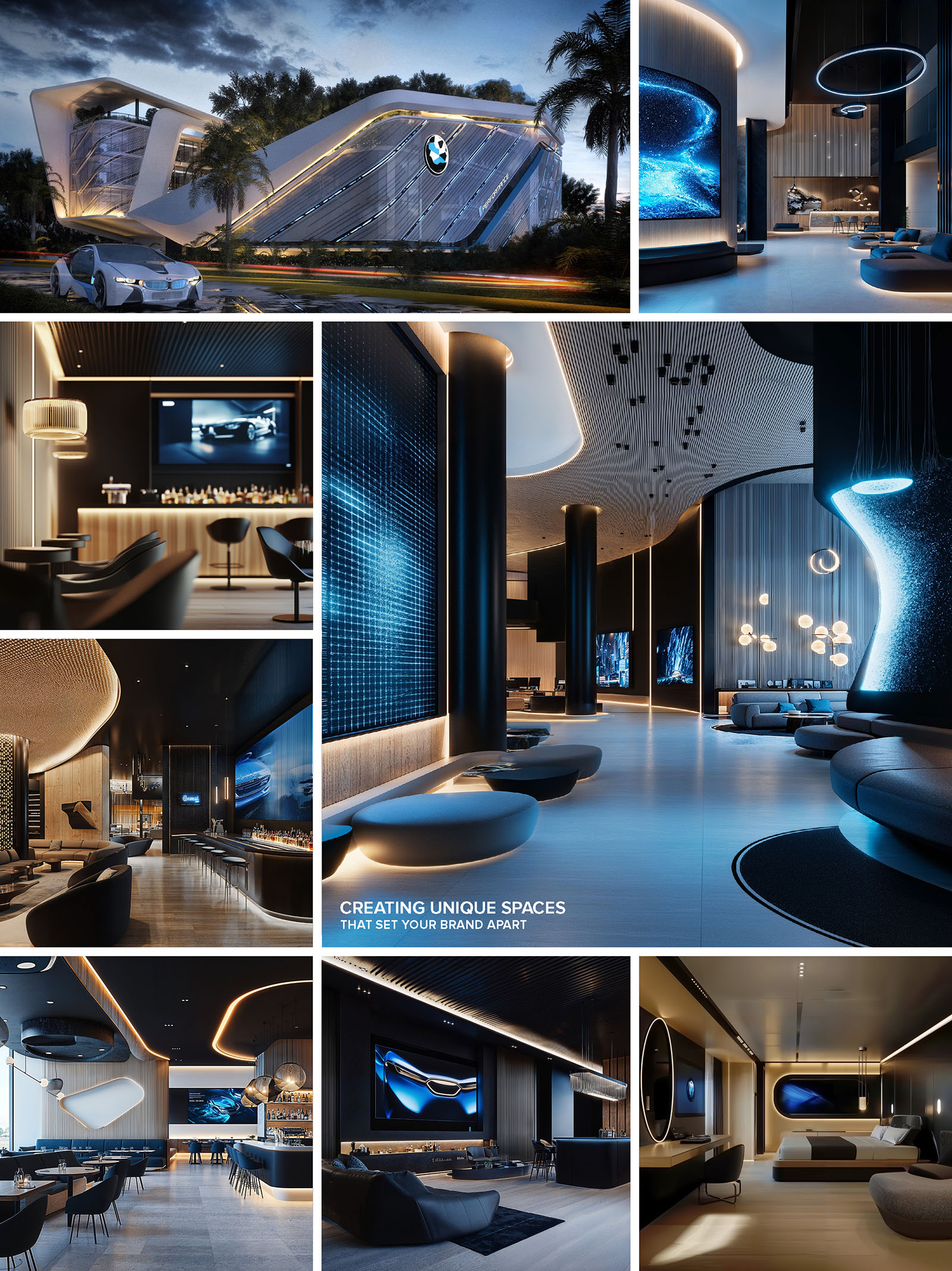
The LVH Hotel in Cancún is conceived as a sculptural gateway where automotive precision meets coastal resort lifestyle. The overall concept translates the dynamism of a performance vehicle into architecture: flowing lines, accelerated silhouettes and continuous surfaces create a sense of motion even when the building is at rest. The project aims to deliver an immersive brand environment rather than a conventional hotel, choreographing guest journeys through a sequence of cinematic spaces that highlight innovation, technology and luxury within a relaxed tropical context.
The exterior envelope is a sweeping white shell that wraps around a glazed volume, lifting from the ground like an aerodynamic body panel. This shell frames large expanses of high-performance glass, allowing curated views to the lush Cancún landscape while protecting interiors from direct solar gain. Night lighting accentuates the dynamic geometry with linear LEDs tracing the building’s edges, transforming the façade into a luminous icon along the boulevard and clearly expressing the brand emblem as a floating element within the composition.
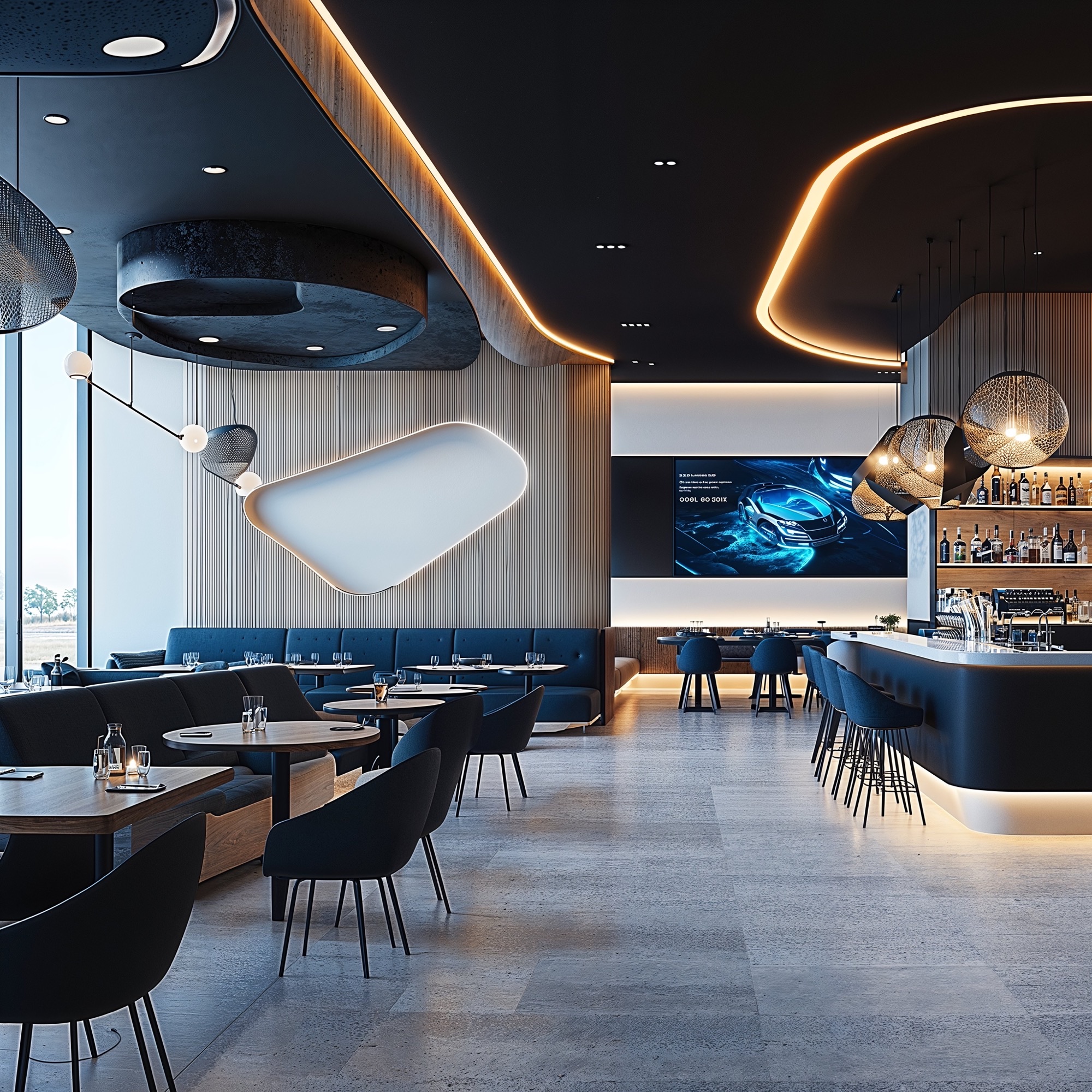
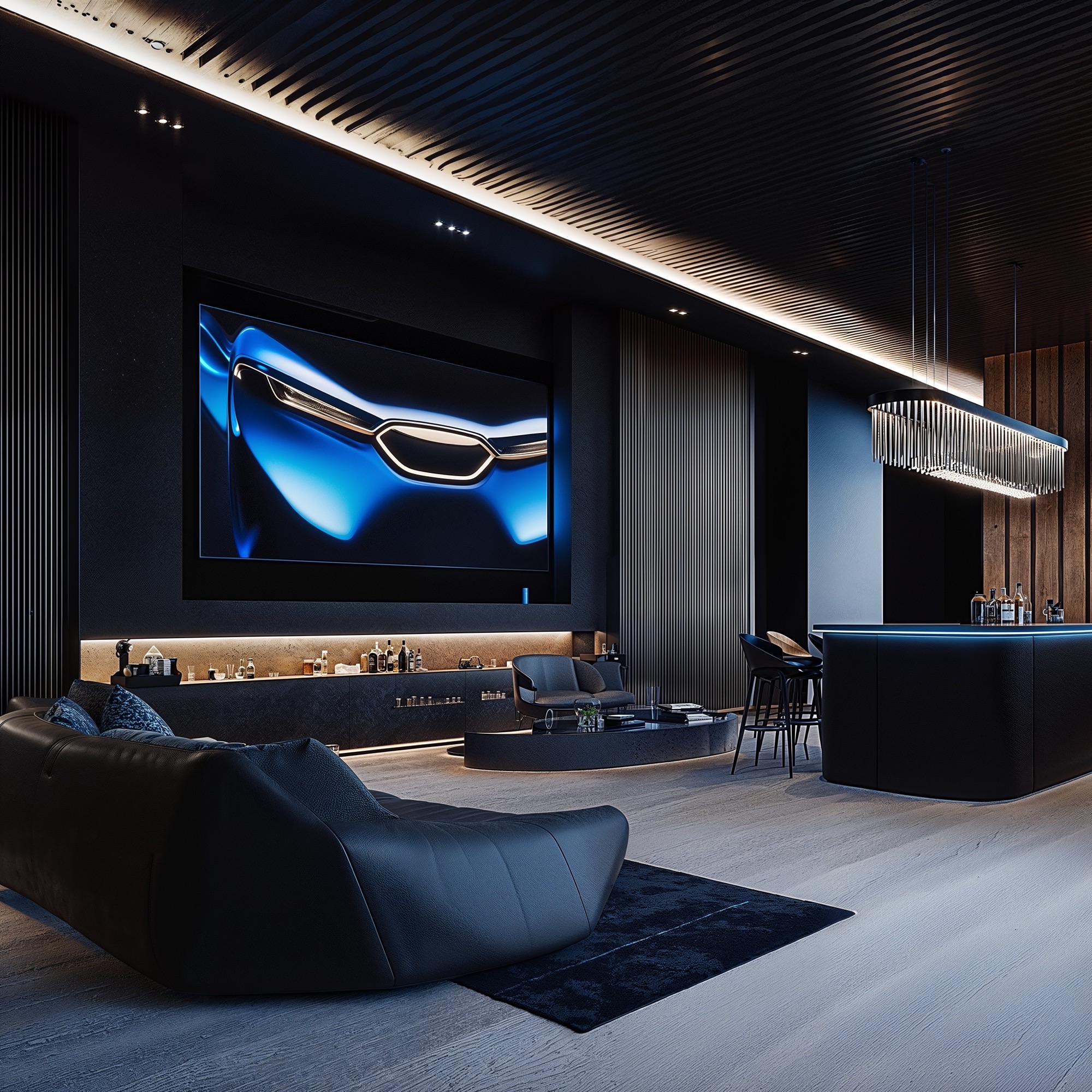
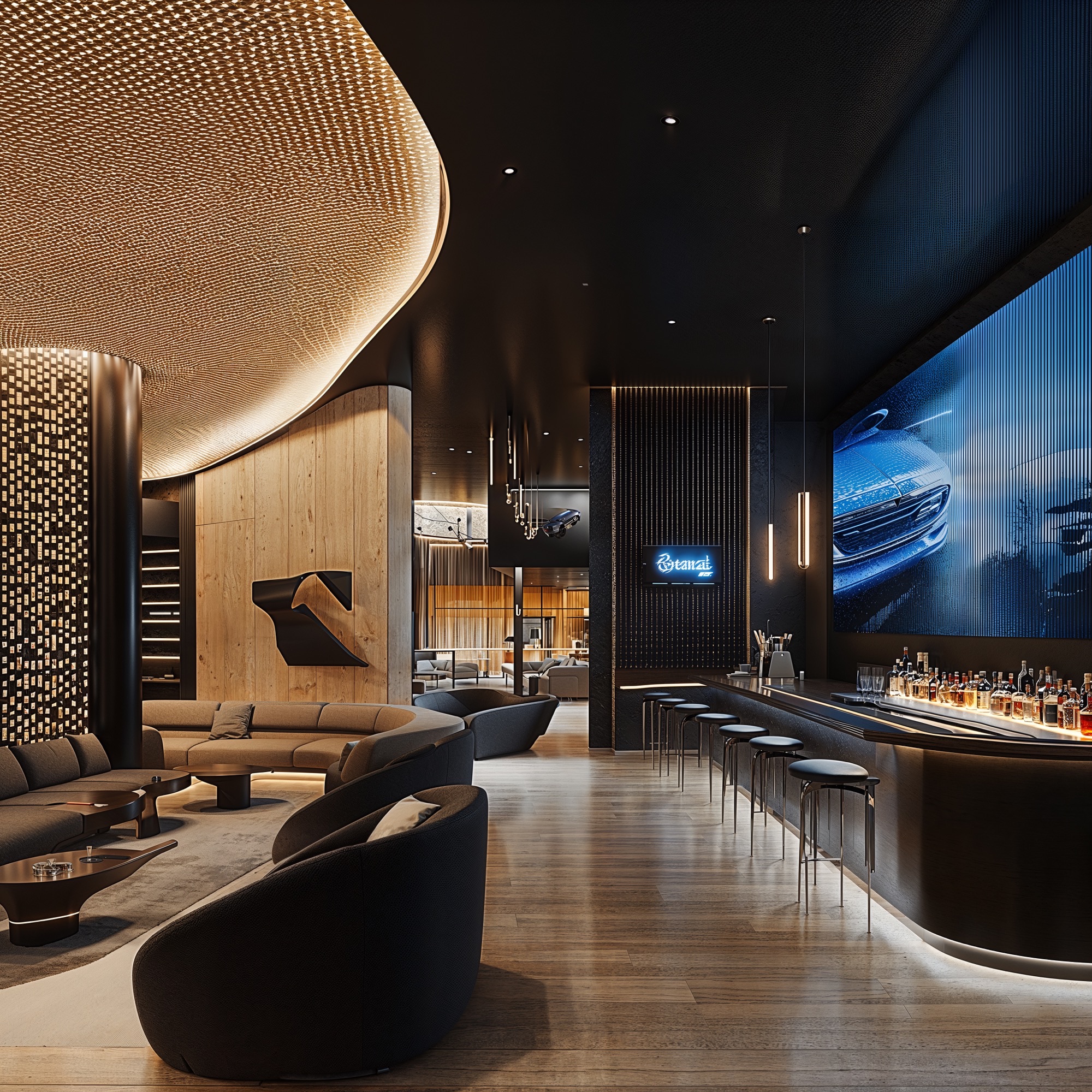
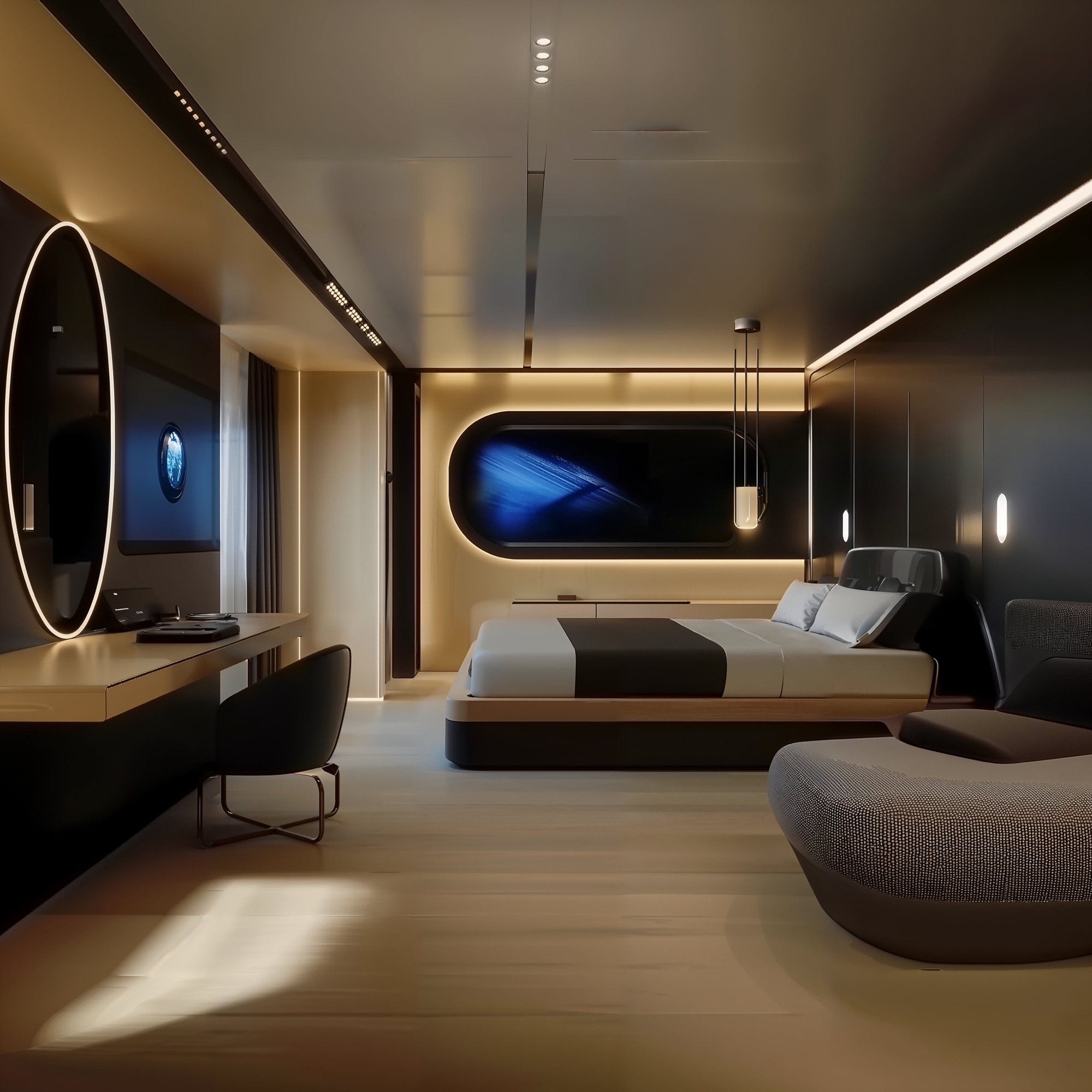
Interior spaces are designed as dark, immersive lounges where controlled lighting and large digital surfaces orchestrate the mood. Deep charcoal ceilings and walls create a neutral canvas against which electric blues and warm amber tones stand out, evoking the contrast between night driving and illuminated dashboards. Seating areas are fluid and informal, with low, sculpted sofas and ottomans forming islands that encourage social interaction while maintaining generous circulation suited to a luxury lobby and bar environment.
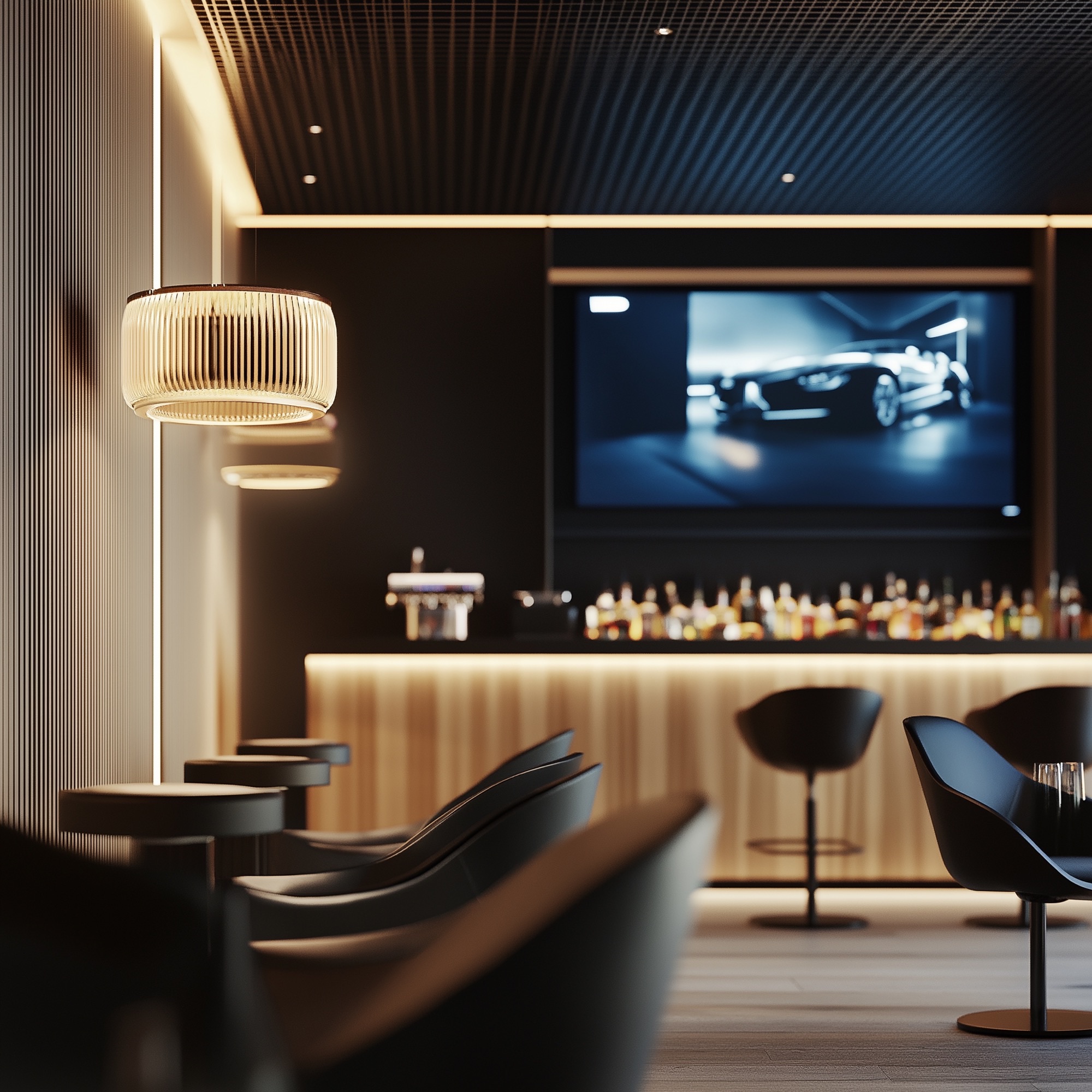
A precise material palette combines matte black metals, brushed brass accents and warm woods with smooth, upholstered surfaces. These textures are enhanced by an integrated lighting system based almost entirely on concealed linear LEDs and halo-like luminaires. Indirect cove lighting softens ceiling curves and highlights vertical fins, while feature pendants introduce a sense of depth over bars and lounge clusters. Large digital walls and curved screens act as luminous art pieces, allowing the content to shift from brand storytelling to ambient atmospheres, effectively turning light into a primary material.
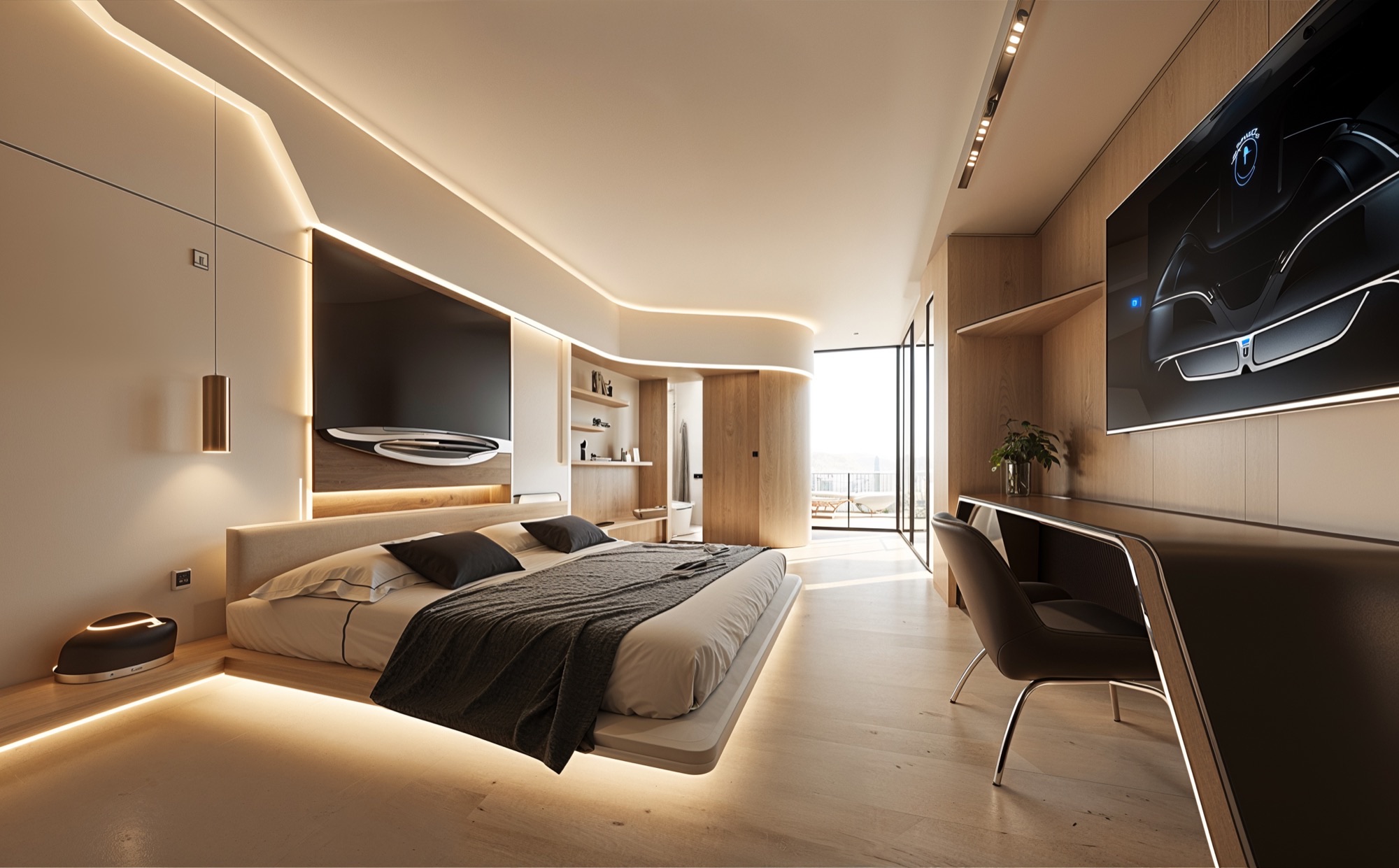
The public areas are organized as a continuous sequence: lobby, bar, lounge and gallery-like display zones visually connected by long perspectives and rhythmically placed columns. This open plan is punctuated with intimate pockets where guests can recline, work or socialize in smaller groups. In the guest rooms, the language becomes more restrained yet consistent: low platform beds, integrated headboards, and media walls framed by light create a calm, technologically refined retreat, with built-in storage and minimal furniture ensuring clear, uncluttered spaces.
Throughout the hotel, brand identity is subtly yet consistently embedded. Curved feature walls recall the profile of a car body, while digital content celebrates motion, innovation and precision engineering without becoming overtly thematic. The design aims to deliver an aspirational environment where guests experience the sophistication of a high-end showroom combined with the comfort of a luxury resort, reinforcing the hotel as a flagship destination for lifestyle, design and technology enthusiasts.
Sustainability is addressed through both passive and active measures suited to Cancún’s climate. The aerodynamic shell doubles as solar shading, reducing direct heat gain and lowering cooling loads, while high-performance glazing maximizes daylight with controlled glare. Interior lighting relies on low-consumption LED systems with smart controls and scene settings to minimize energy use. Durable, long-life materials are prioritized for high-traffic areas, and the open-plan layout allows flexible reconfiguration over time, supporting longevity of the fit-out and reducing future waste.
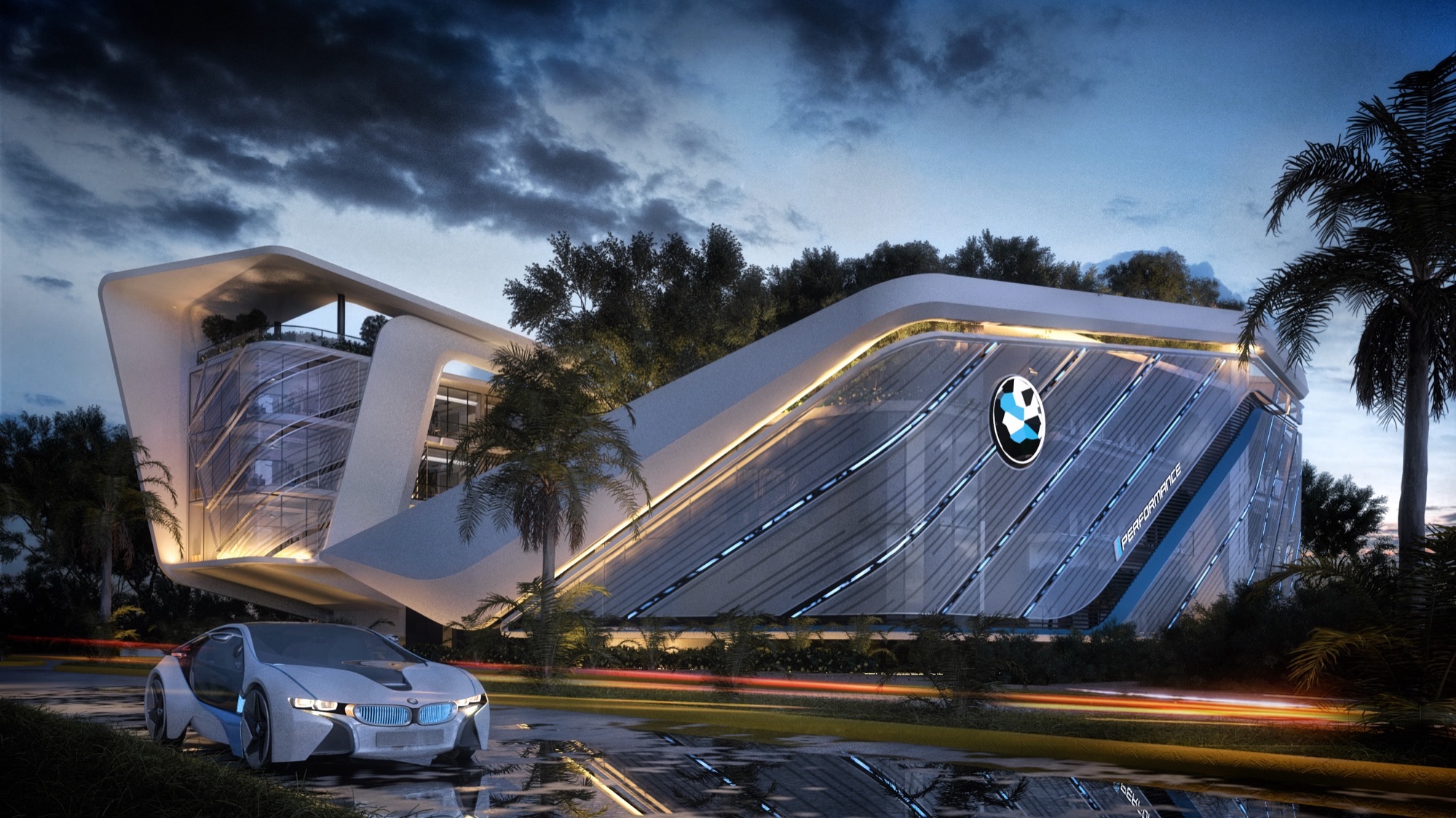
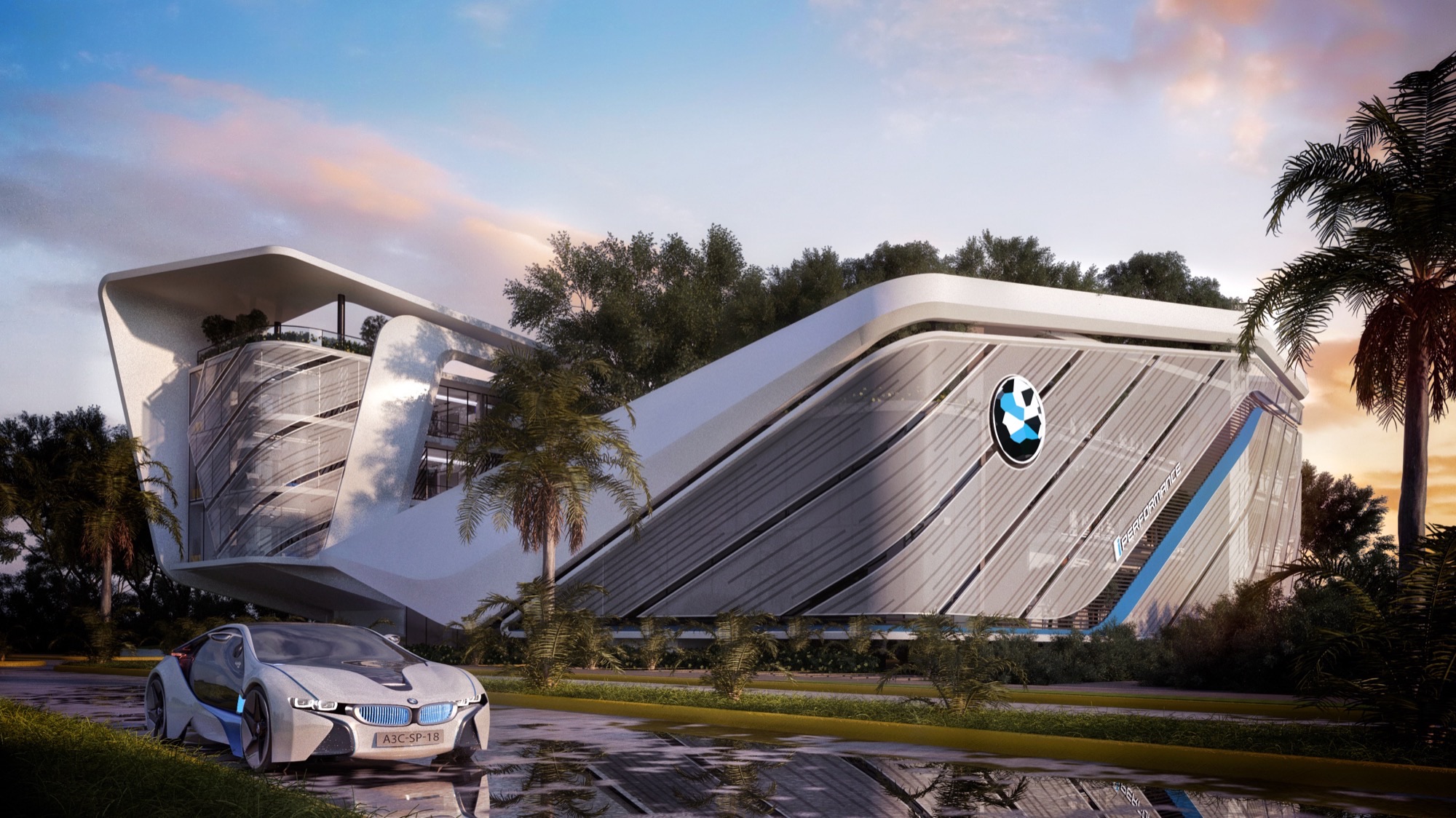
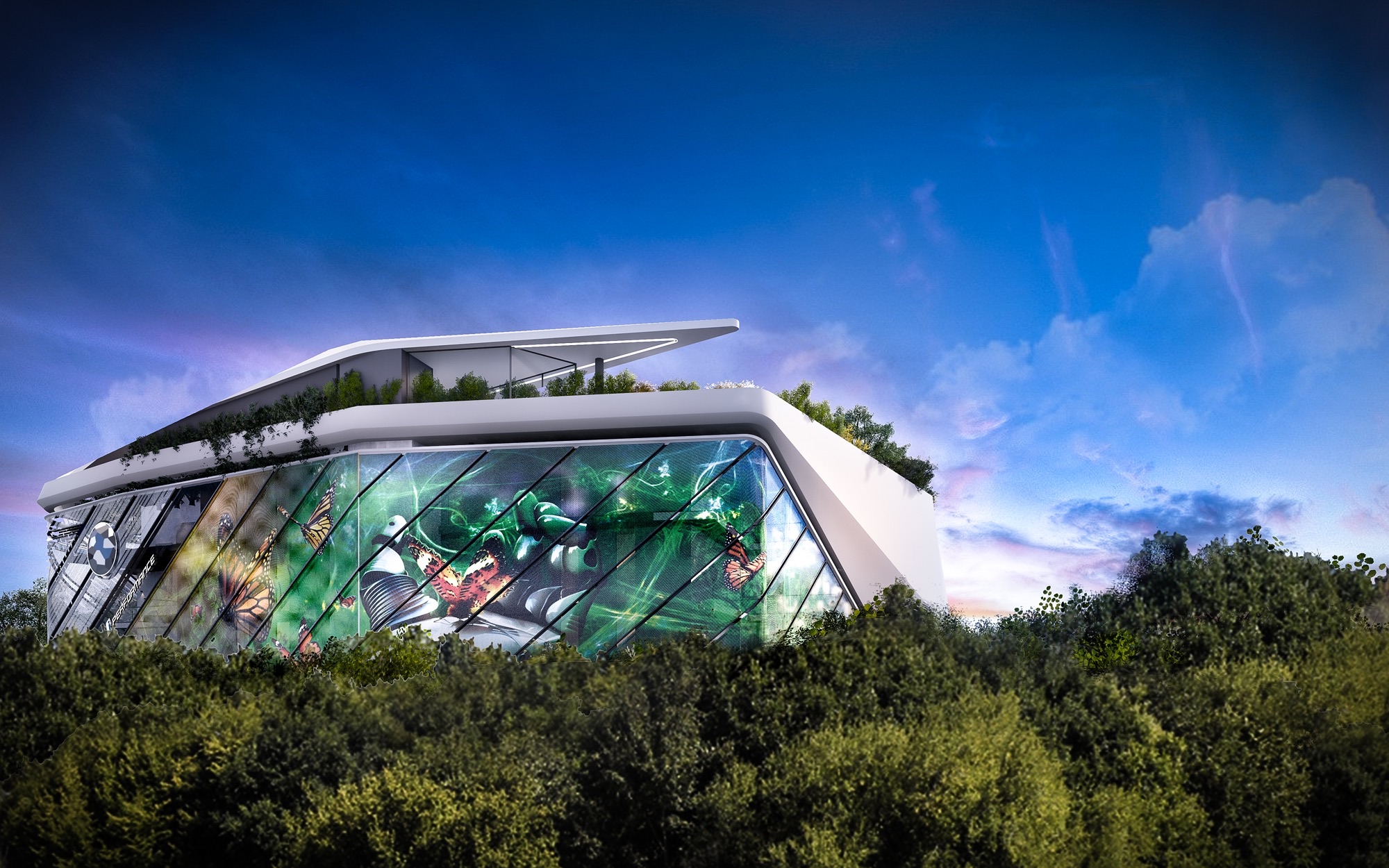
The LVH Hotel in Cancún is conceived as a sculptural gateway where automotive precision meets coastal resort lifestyle. The overall concept translates the dynamism of a performance vehicle into architecture: flowing lines, accelerated silhouettes and continuous surfaces create a sense of motion even when the building is at rest. The project aims to deliver an immersive brand environment rather than a conventional hotel, choreographing guest journeys through a sequence of cinematic spaces that highlight innovation, technology and luxury within a relaxed tropical context.
The exterior envelope is a sweeping white shell that wraps around a glazed volume, lifting from the ground like an aerodynamic body panel. This shell frames large expanses of high-performance glass, allowing curated views to the lush Cancún landscape while protecting interiors from direct solar gain. Night lighting accentuates the dynamic geometry with linear LEDs tracing the building’s edges, transforming the façade into a luminous icon along the boulevard and clearly expressing the brand emblem as a floating element within the composition.
Interior spaces are designed as dark, immersive lounges where controlled lighting and large digital surfaces orchestrate the mood. Deep charcoal ceilings and walls create a neutral canvas against which electric blues and warm amber tones stand out, evoking the contrast between night driving and illuminated dashboards. Seating areas are fluid and informal, with low, sculpted sofas and ottomans forming islands that encourage social interaction while maintaining generous circulation suited to a luxury lobby and bar environment.
A precise material palette combines matte black metals, brushed brass accents and warm woods with smooth, upholstered surfaces. These textures are enhanced by an integrated lighting system based almost entirely on concealed linear LEDs and halo-like luminaires. Indirect cove lighting softens ceiling curves and highlights vertical fins, while feature pendants introduce a sense of depth over bars and lounge clusters. Large digital walls and curved screens act as luminous art pieces, allowing the content to shift from brand storytelling to ambient atmospheres, effectively turning light into a primary material.
The public areas are organized as a continuous sequence: lobby, bar, lounge and gallery-like display zones visually connected by long perspectives and rhythmically placed columns. This open plan is punctuated with intimate pockets where guests can recline, work or socialize in smaller groups. In the guest rooms, the language becomes more restrained yet consistent: low platform beds, integrated headboards, and media walls framed by light create a calm, technologically refined retreat, with built-in storage and minimal furniture ensuring clear, uncluttered spaces.
Throughout the hotel, brand identity is subtly yet consistently embedded. Curved feature walls recall the profile of a car body, while digital content celebrates motion, innovation and precision engineering without becoming overtly thematic. The design aims to deliver an aspirational environment where guests experience the sophistication of a high-end showroom combined with the comfort of a luxury resort, reinforcing the hotel as a flagship destination for lifestyle, design and technology enthusiasts.
Sustainability is addressed through both passive and active measures suited to Cancún’s climate. The aerodynamic shell doubles as solar shading, reducing direct heat gain and lowering cooling loads, while high-performance glazing maximizes daylight with controlled glare. Interior lighting relies on low-consumption LED systems with smart controls and scene settings to minimize energy use. Durable, long-life materials are prioritized for high-traffic areas, and the open-plan layout allows flexible reconfiguration over time, supporting longevity of the fit-out and reducing future waste.


Our offices are located in Barcelona, Cancún, Chicago and Santo Domingo, but thanks to technology we can do projects on all over the world.
Barcelona
Bac de Roda 136
08020, Barcelona
Spain
Madrid
Av. de Buendía 11
19005 Guadalajara (Madrid)
Spain
Chicago
373 Hazel Ave, Apt A1
60022, Glencoe, Illinois
United States