

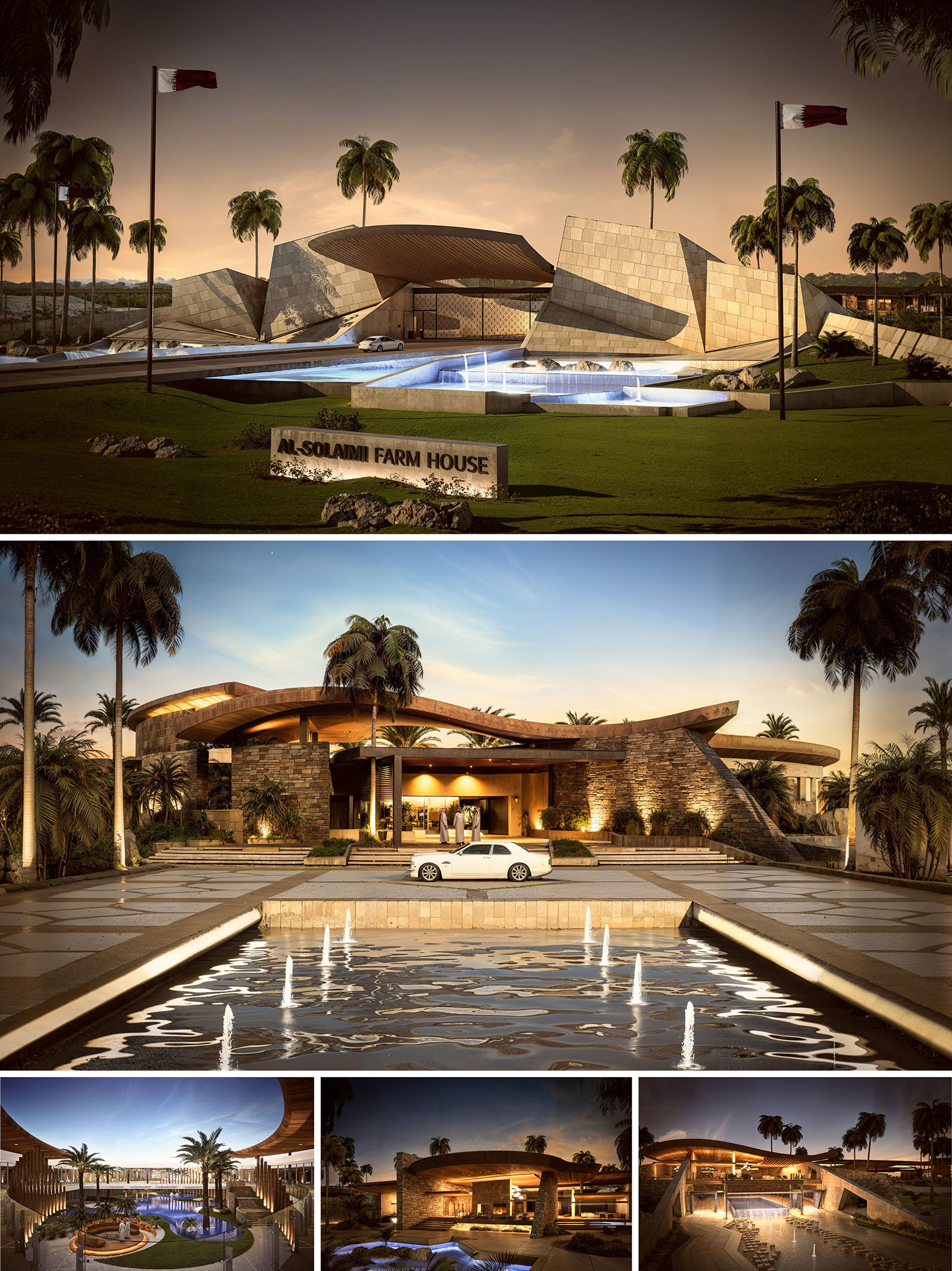
Al-Solaimi Farm House is conceived as a contemporary desert retreat that expresses both solidity and fluidity. The project translates the idea of “oasis” into architecture: protective stone masses sheltering generous, shaded voids animated by water and vegetation. The formal language moves between angular, tectonic planes at the entrance and soft, sweeping roofs around the main residence, reflecting the contrast between the harsh exterior landscape and the calm domestic interior. The farmhouse becomes a sculpted landmark within the agricultural setting, yet remains grounded in its rural function as a family gathering place.
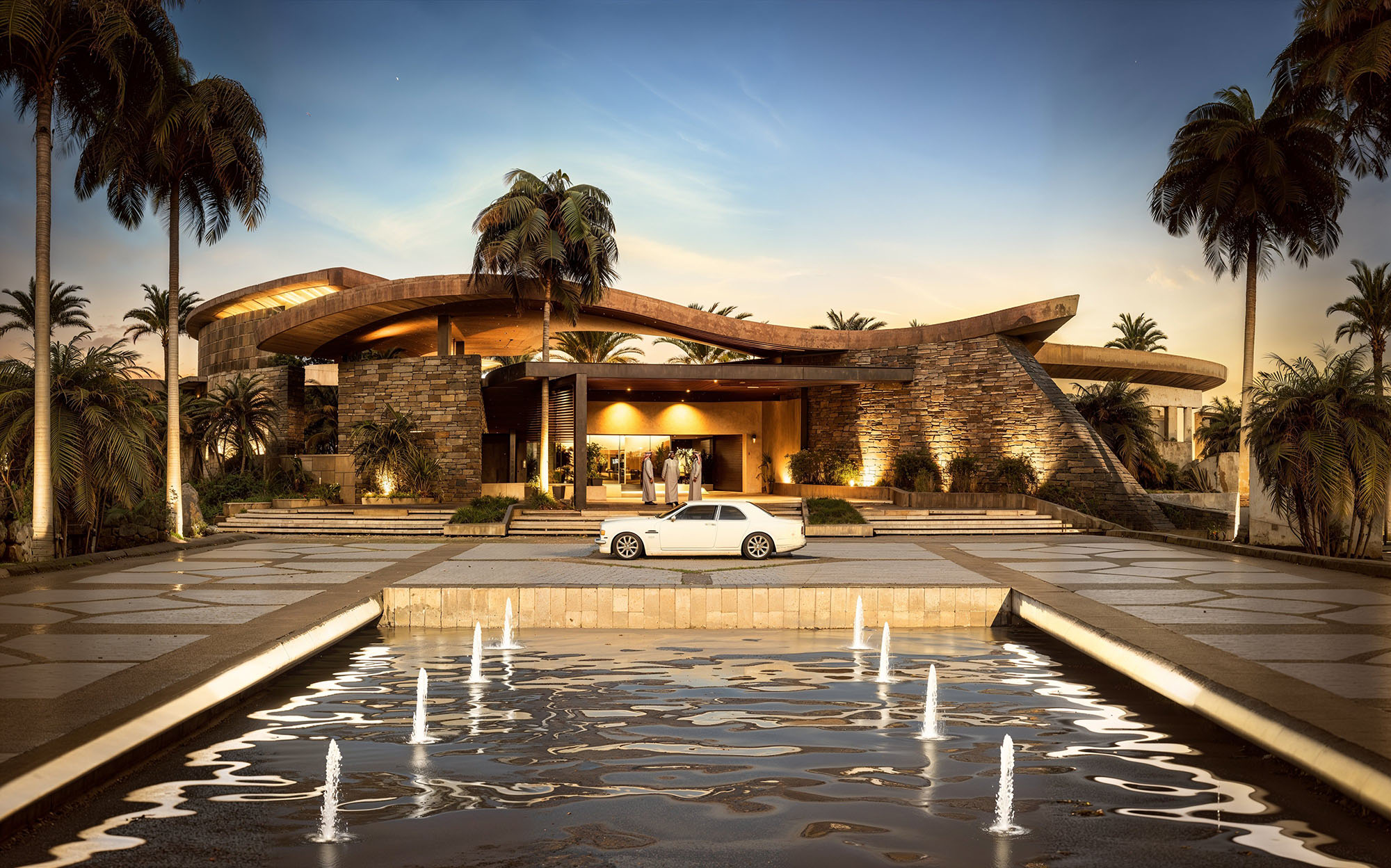
Located within a palm-fringed farm in Qatar, the house is oriented to capture prevailing breezes and to frame long views across the cultivated land. The approach sequence is axial and ceremonial, crossing water and greenery before reaching the main porte-cochère. Slightly elevating the built mass above the surrounding fields protects it from irrigation flows while giving a clear visual hierarchy between landscape and architecture. The palm trees act as vertical markers and as climatic devices, shading outdoor circulation and reinforcing the oasis imagery.
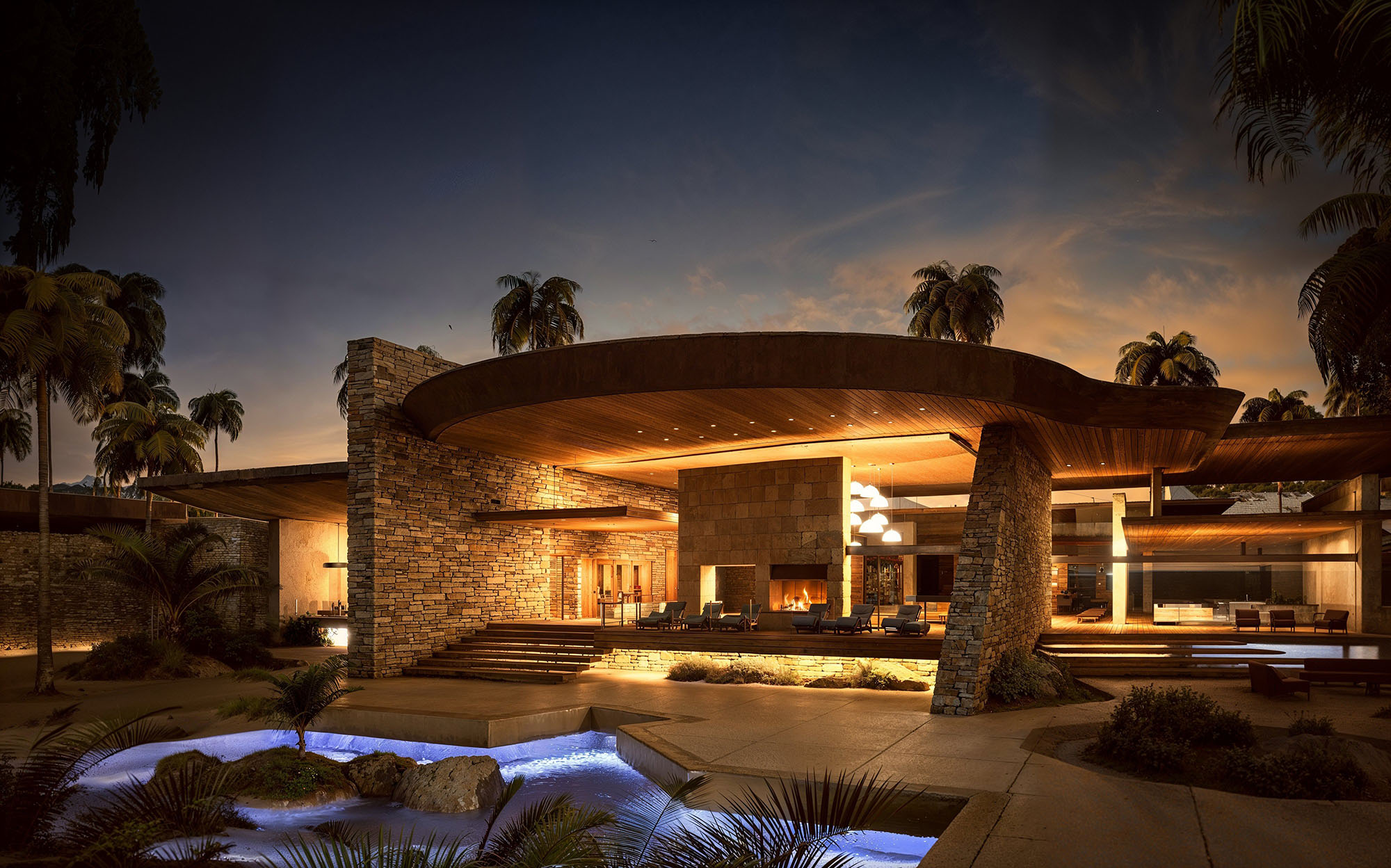
At the front, faceted stone and concrete walls create a dynamic, almost geological entrance composition, suggesting protective layers opening toward the interior. Moving deeper into the house, the geometry relaxes into broad, curving roofs that hover above stacked-stone walls. Warm-toned stone cladding, timber soffits and earth-colored renders are chosen to resonate with local materials while offering durability in the desert climate. The thick envelope, recessed glazing and pronounced overhangs work together to reduce solar gain, while the sculptural form gives the farmhouse a strong, recognizable identity.
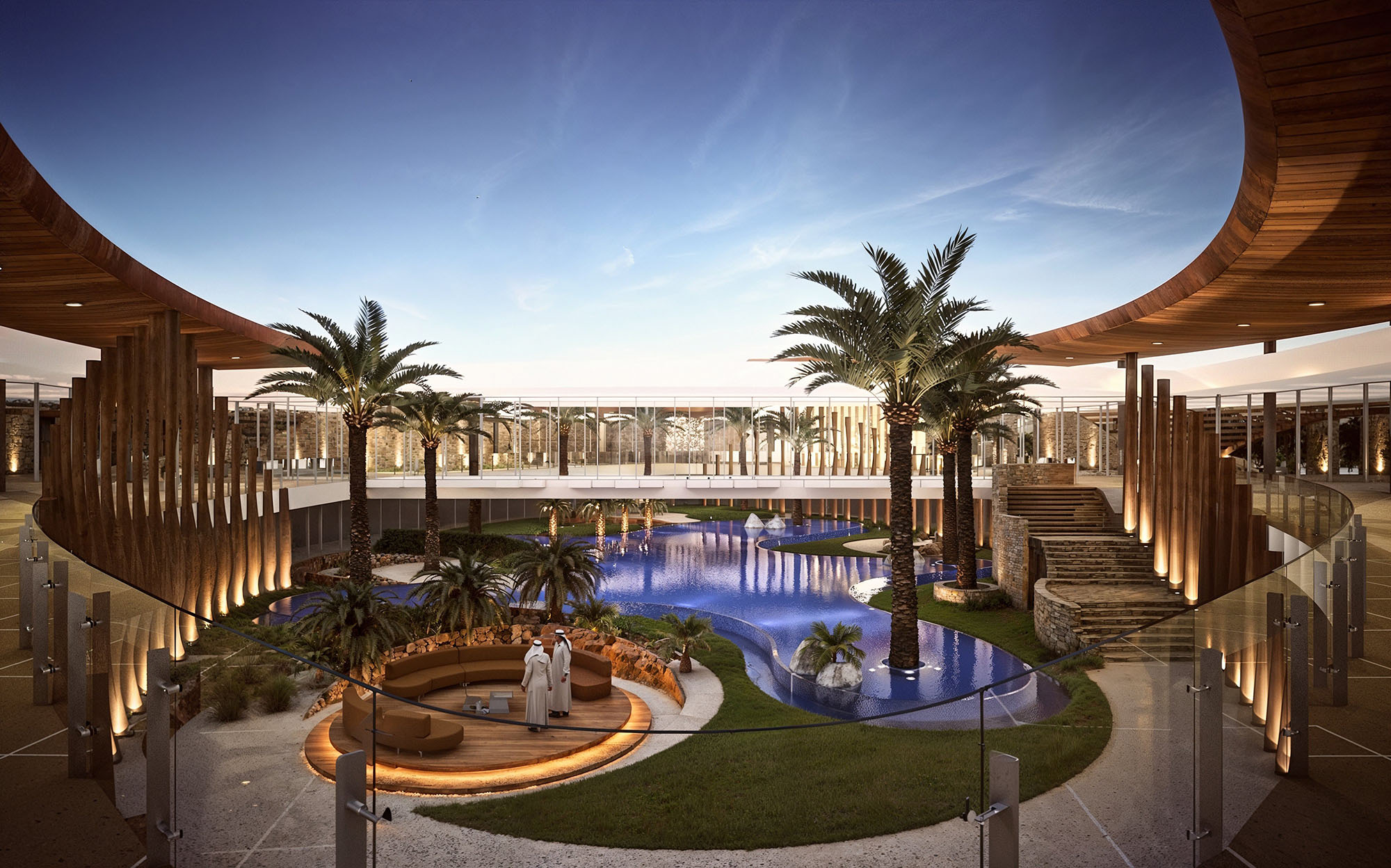
Water is a central design element, choreographing arrival and daily experience. Linear reflecting pools and shallow basins line the driveway, culminating in a larger water body in front of the entrance. Inside the compound, a central courtyard pool with integrated seating becomes the social heart, surrounded by soft landscaping and palms. These water elements cool the microclimate through evaporation, provide acoustic comfort, and visually link the various wings of the farmhouse. Hardscape patterns and stepped platforms manage level transitions while subtly guiding circulation.
The interiors are organized around open, interconnected social spaces that flow toward the courtyard and pool. Large glazed openings slide away to dissolve the boundary between inside and outside, turning terraces into extensions of the living areas. The main entrance lobby compresses the ceiling, then releases into double-height volumes under the sweeping roof, emphasizing the sense of arrival. Service spaces and private suites are discreetly embedded within the thicker stone masses, ensuring privacy and acoustic separation while maintaining direct visual connections to the landscape.
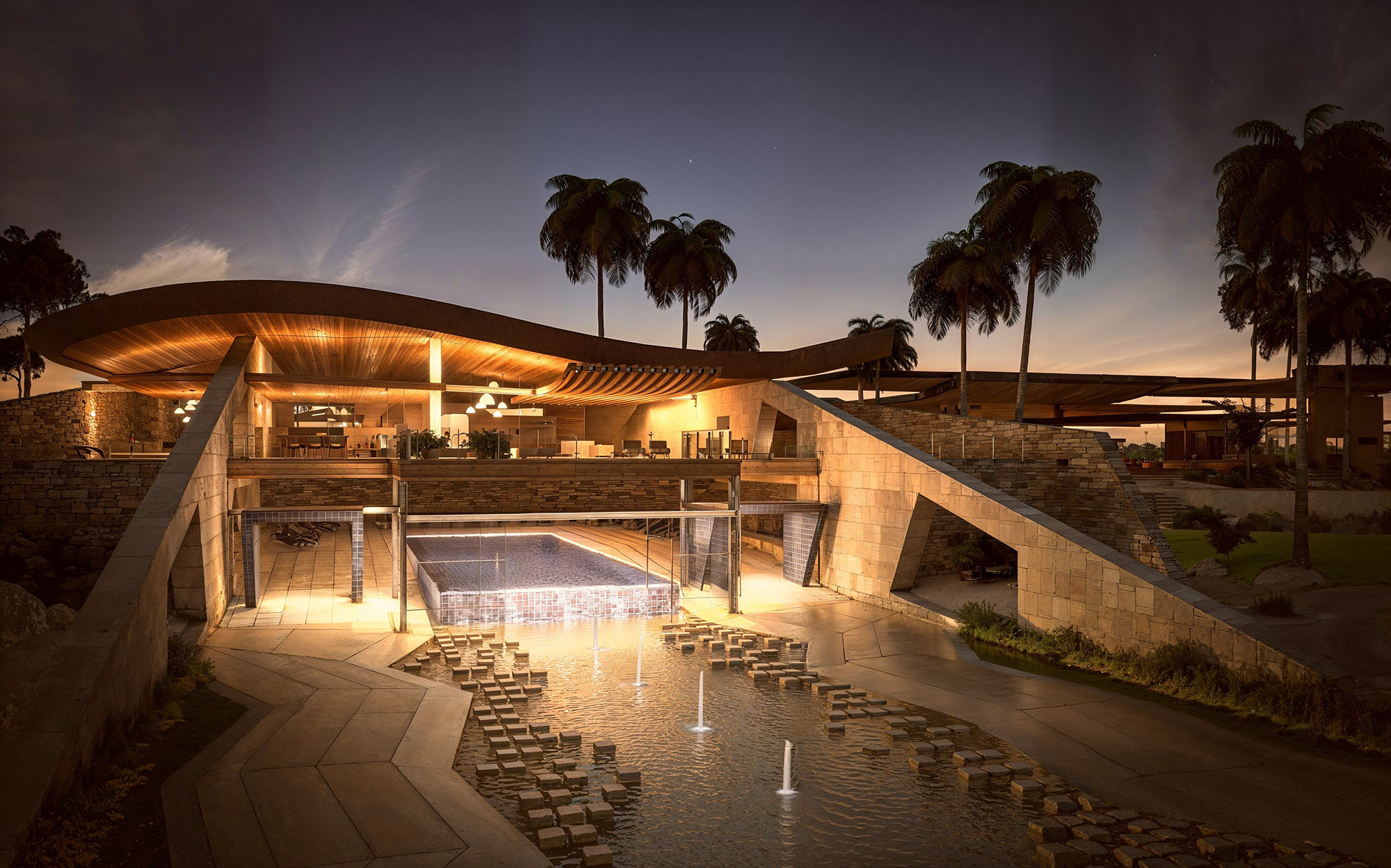
Artificial lighting is carefully integrated into the architecture, emphasizing the material texture and form. Warm, concealed linear lights wash stone walls and timber soffits, while recessed downlights define circulation paths. Exterior uplights highlight the vertical rhythm of palms and the sculptural roofs, giving the farmhouse a strong nocturnal presence without excessive glare. Water features are lit from within, creating reflections that animate adjacent ceilings and terraces, reinforcing the atmosphere of an inhabited oasis.
Sustainability is addressed through passive design and careful material selection rather than overt technological expression. Deep overhangs, shaded verandas and colonnades minimize direct solar exposure on glazing. The stone envelope provides thermal mass, moderating temperature fluctuations, while cross-ventilation paths are aligned with prevailing winds for natural cooling during milder months. Water bodies are strategically located to assist evaporative cooling in key outdoor living zones. Durable, low-maintenance finishes reduce lifecycle impacts, and the integration of landscaping with existing farm structures supports biodiversity and preserves the productive character of the land.
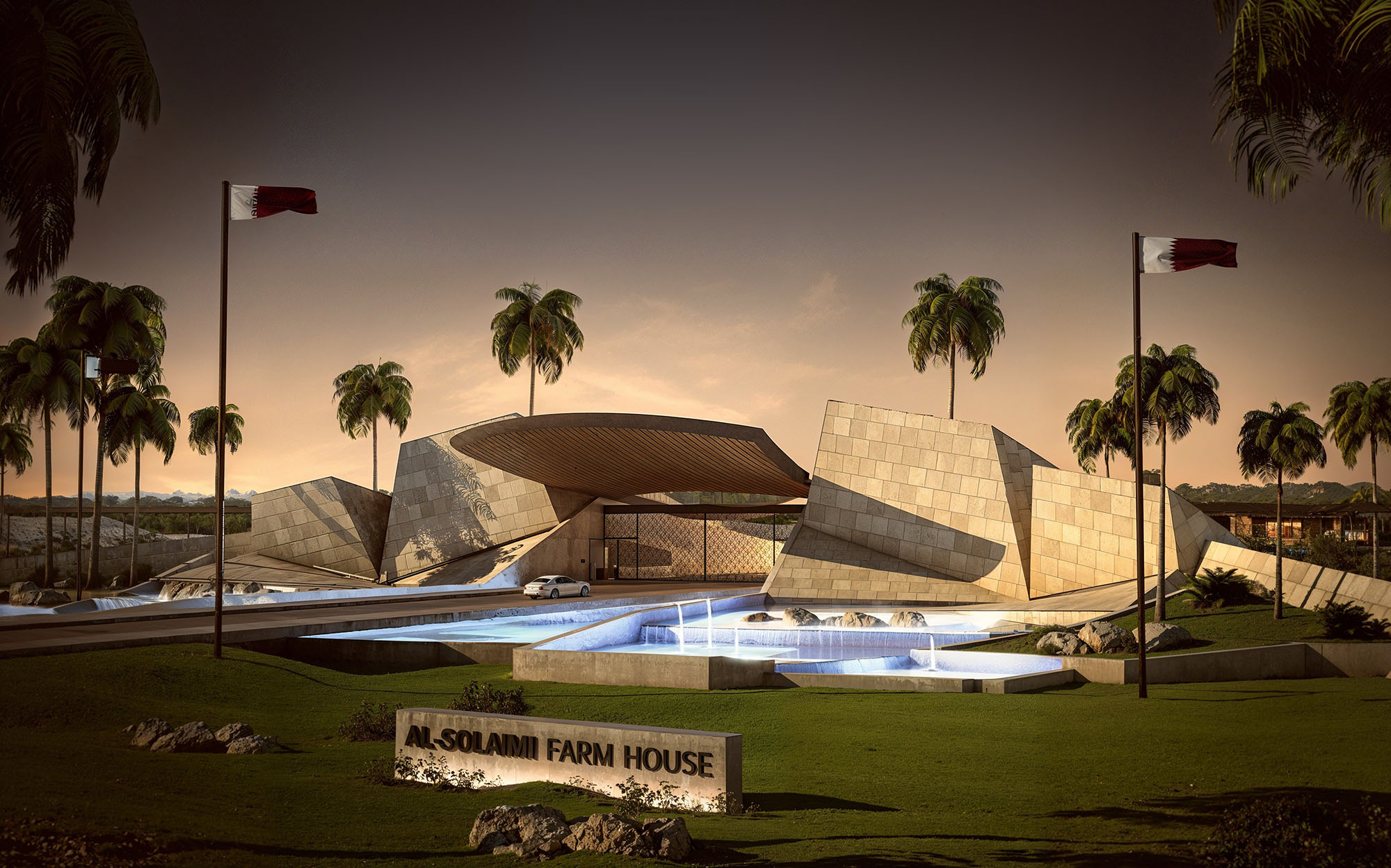
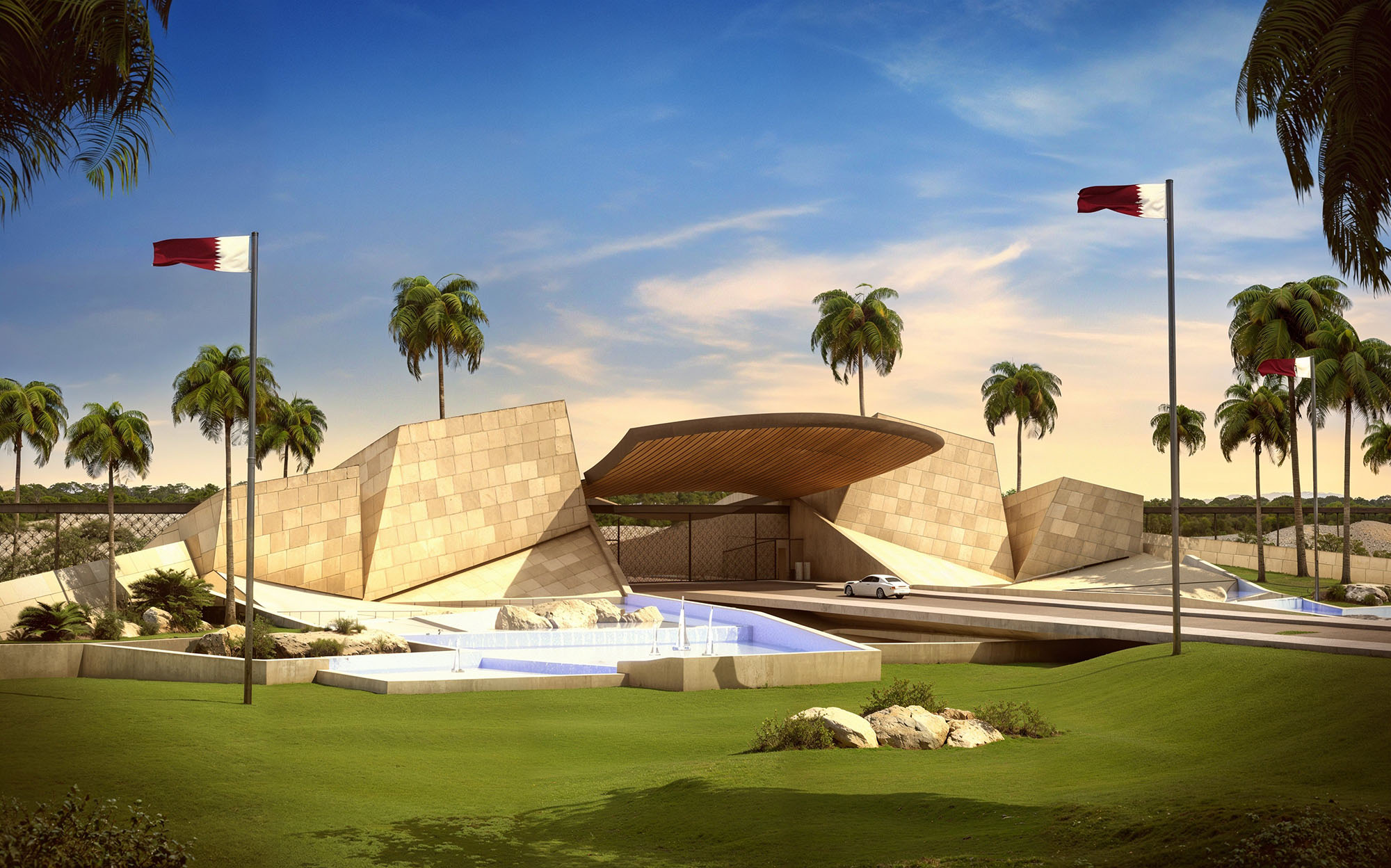
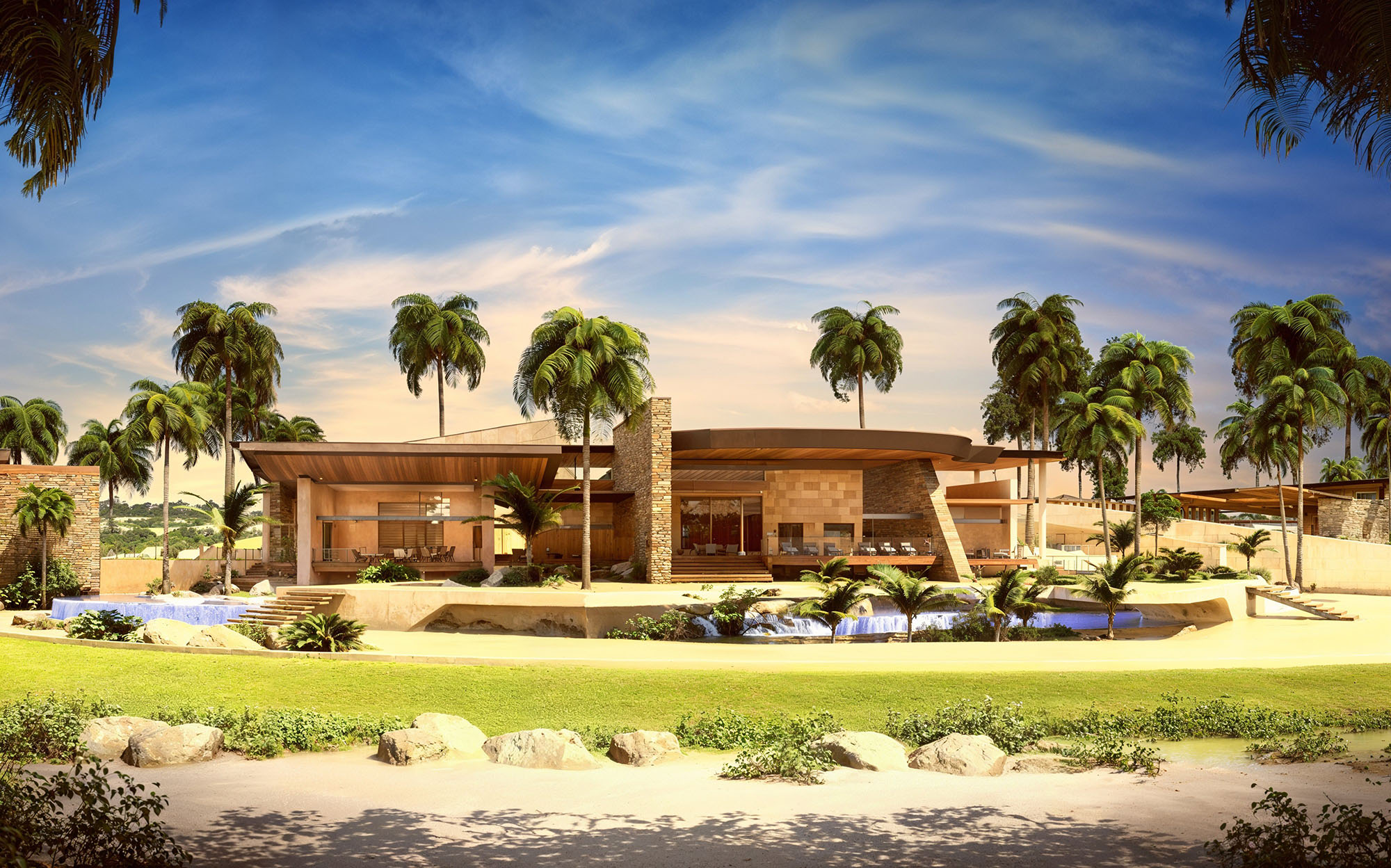
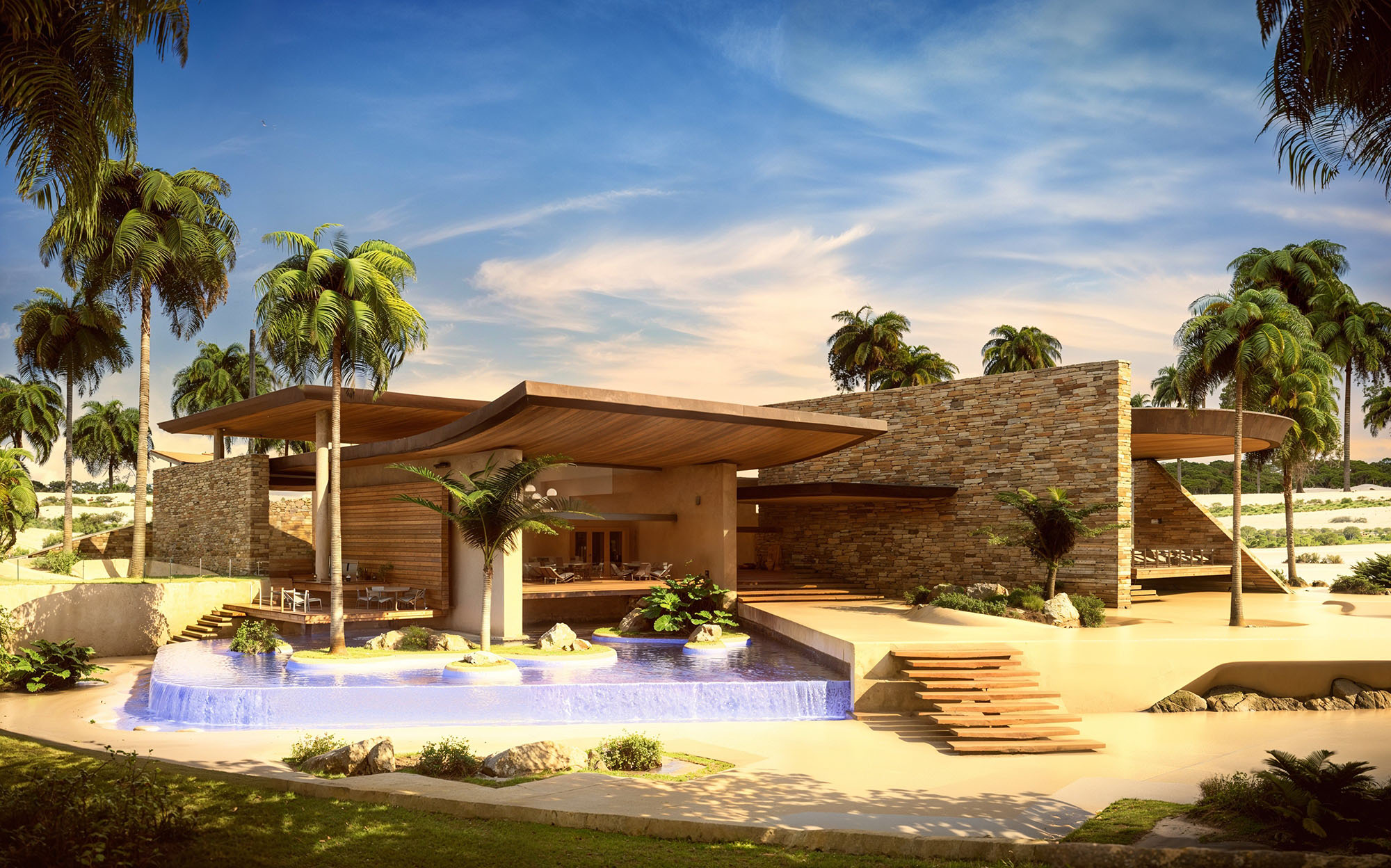
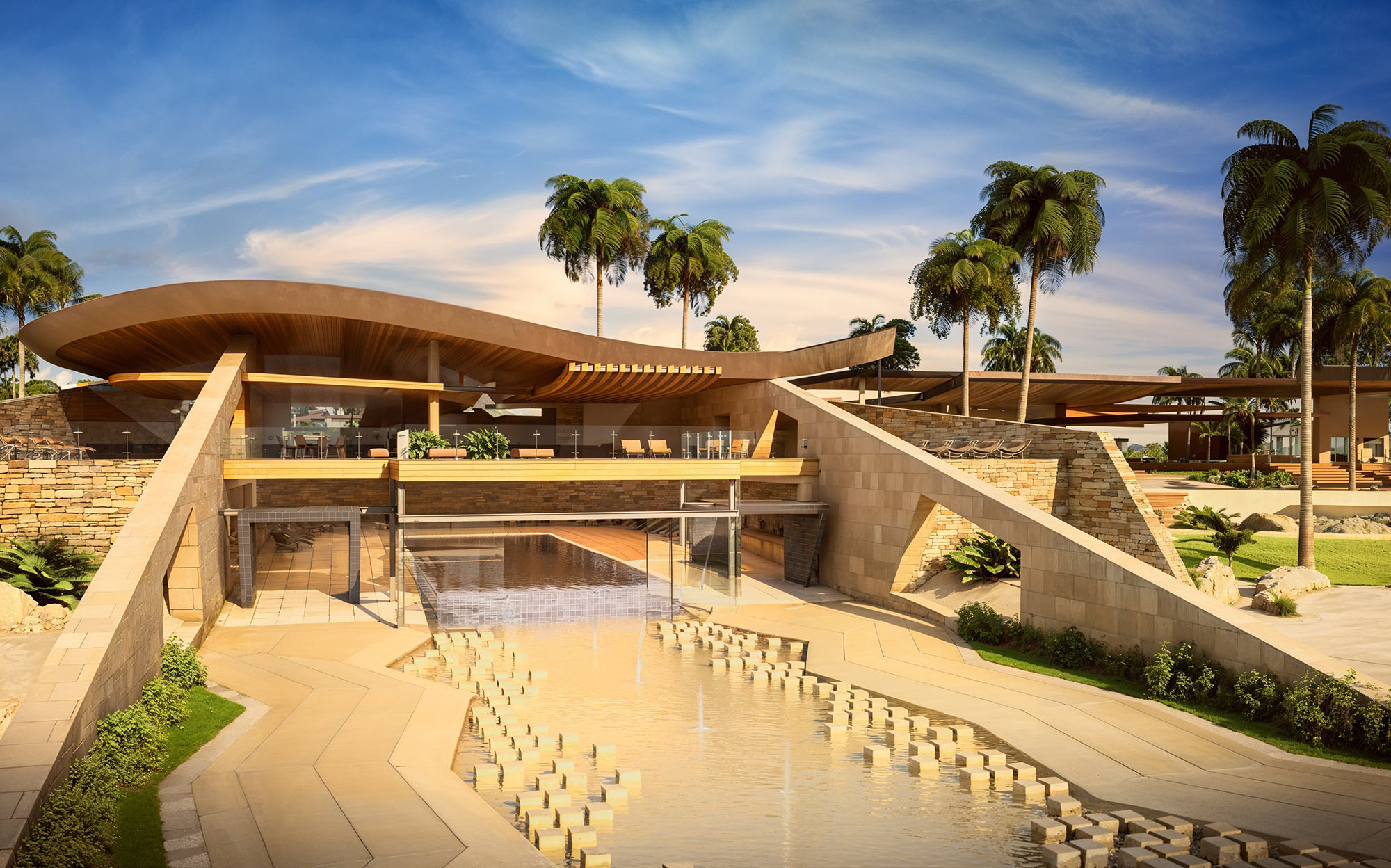
Al-Solaimi Farm House is conceived as a contemporary desert retreat that expresses both solidity and fluidity. The project translates the idea of “oasis” into architecture: protective stone masses sheltering generous, shaded voids animated by water and vegetation. The formal language moves between angular, tectonic planes at the entrance and soft, sweeping roofs around the main residence, reflecting the contrast between the harsh exterior landscape and the calm domestic interior. The farmhouse becomes a sculpted landmark within the agricultural setting, yet remains grounded in its rural function as a family gathering place.
Located within a palm-fringed farm in Qatar, the house is oriented to capture prevailing breezes and to frame long views across the cultivated land. The approach sequence is axial and ceremonial, crossing water and greenery before reaching the main porte-cochère. Slightly elevating the built mass above the surrounding fields protects it from irrigation flows while giving a clear visual hierarchy between landscape and architecture. The palm trees act as vertical markers and as climatic devices, shading outdoor circulation and reinforcing the oasis imagery.
At the front, faceted stone and concrete walls create a dynamic, almost geological entrance composition, suggesting protective layers opening toward the interior. Moving deeper into the house, the geometry relaxes into broad, curving roofs that hover above stacked-stone walls. Warm-toned stone cladding, timber soffits and earth-colored renders are chosen to resonate with local materials while offering durability in the desert climate. The thick envelope, recessed glazing and pronounced overhangs work together to reduce solar gain, while the sculptural form gives the farmhouse a strong, recognizable identity.
Water is a central design element, choreographing arrival and daily experience. Linear reflecting pools and shallow basins line the driveway, culminating in a larger water body in front of the entrance. Inside the compound, a central courtyard pool with integrated seating becomes the social heart, surrounded by soft landscaping and palms. These water elements cool the microclimate through evaporation, provide acoustic comfort, and visually link the various wings of the farmhouse. Hardscape patterns and stepped platforms manage level transitions while subtly guiding circulation.
The interiors are organized around open, interconnected social spaces that flow toward the courtyard and pool. Large glazed openings slide away to dissolve the boundary between inside and outside, turning terraces into extensions of the living areas. The main entrance lobby compresses the ceiling, then releases into double-height volumes under the sweeping roof, emphasizing the sense of arrival. Service spaces and private suites are discreetly embedded within the thicker stone masses, ensuring privacy and acoustic separation while maintaining direct visual connections to the landscape.
Artificial lighting is carefully integrated into the architecture, emphasizing the material texture and form. Warm, concealed linear lights wash stone walls and timber soffits, while recessed downlights define circulation paths. Exterior uplights highlight the vertical rhythm of palms and the sculptural roofs, giving the farmhouse a strong nocturnal presence without excessive glare. Water features are lit from within, creating reflections that animate adjacent ceilings and terraces, reinforcing the atmosphere of an inhabited oasis.
Sustainability is addressed through passive design and careful material selection rather than overt technological expression. Deep overhangs, shaded verandas and colonnades minimize direct solar exposure on glazing. The stone envelope provides thermal mass, moderating temperature fluctuations, while cross-ventilation paths are aligned with prevailing winds for natural cooling during milder months. Water bodies are strategically located to assist evaporative cooling in key outdoor living zones. Durable, low-maintenance finishes reduce lifecycle impacts, and the integration of landscaping with existing farm structures supports biodiversity and preserves the productive character of the land.


Our offices are located in Barcelona, Cancún, Chicago and Santo Domingo, but thanks to technology we can do projects on all over the world.
Barcelona
Bac de Roda 136
08020, Barcelona
Spain
Madrid
Av. de Buendía 11
19005 Guadalajara (Madrid)
Spain
Chicago
373 Hazel Ave, Apt A1
60022, Glencoe, Illinois
United States