

Lorem ipsum dolor sit amet, consectetur adipiscing elit. Suspendisse varius enim in eros elementum tristique. Duis cursus, mi quis viverra ornare, eros dolor interdum nulla, ut commodo diam libero vitae erat.
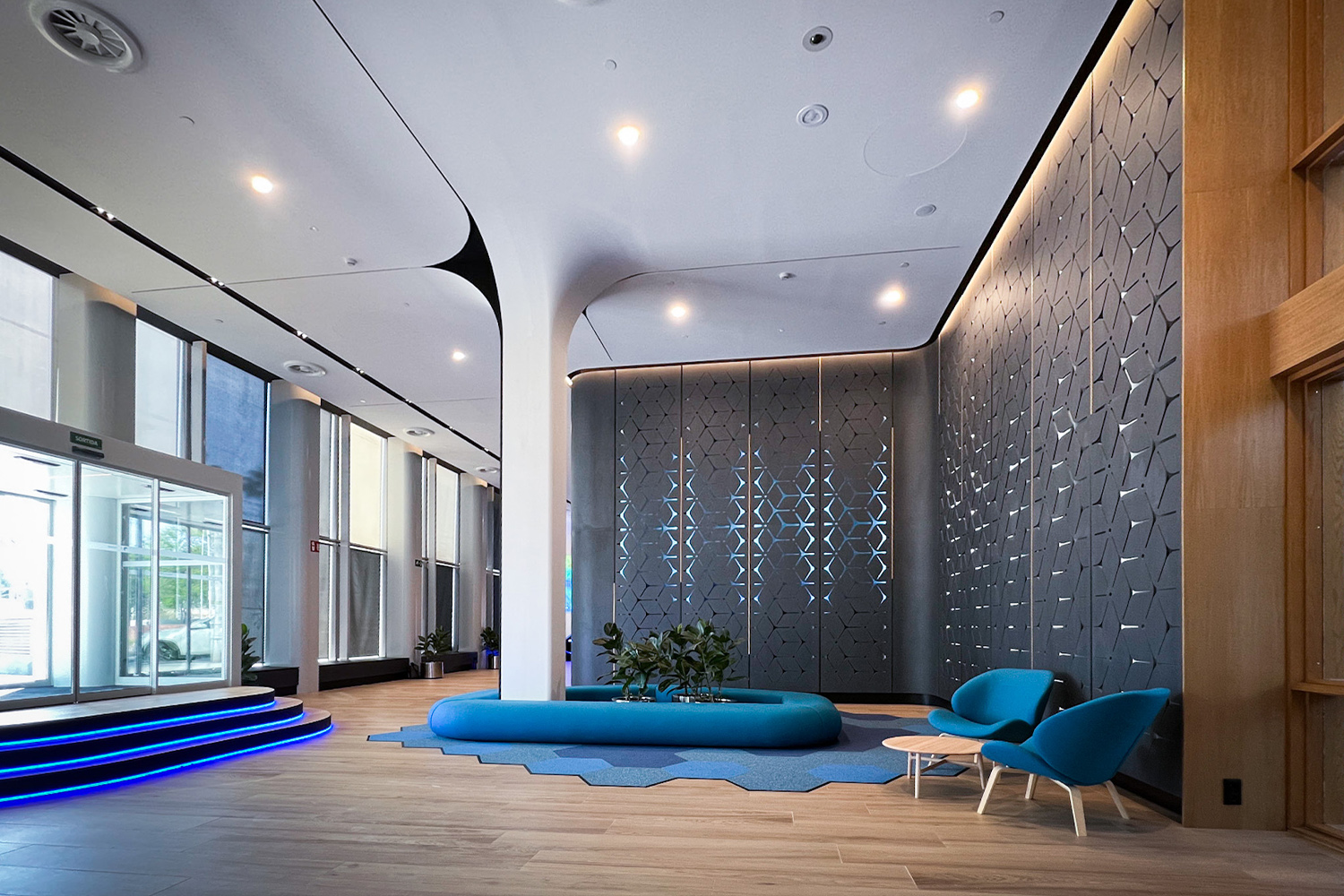
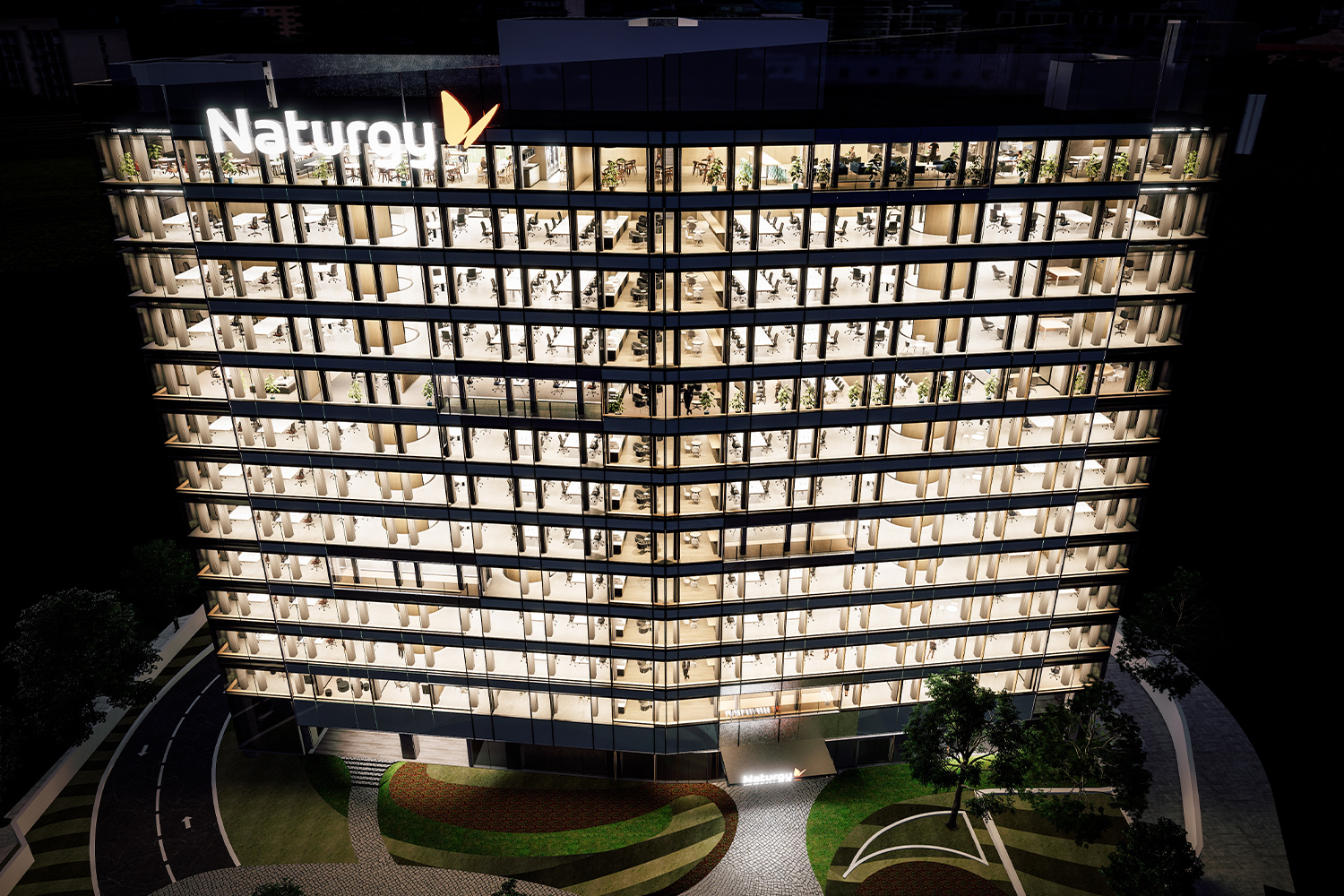
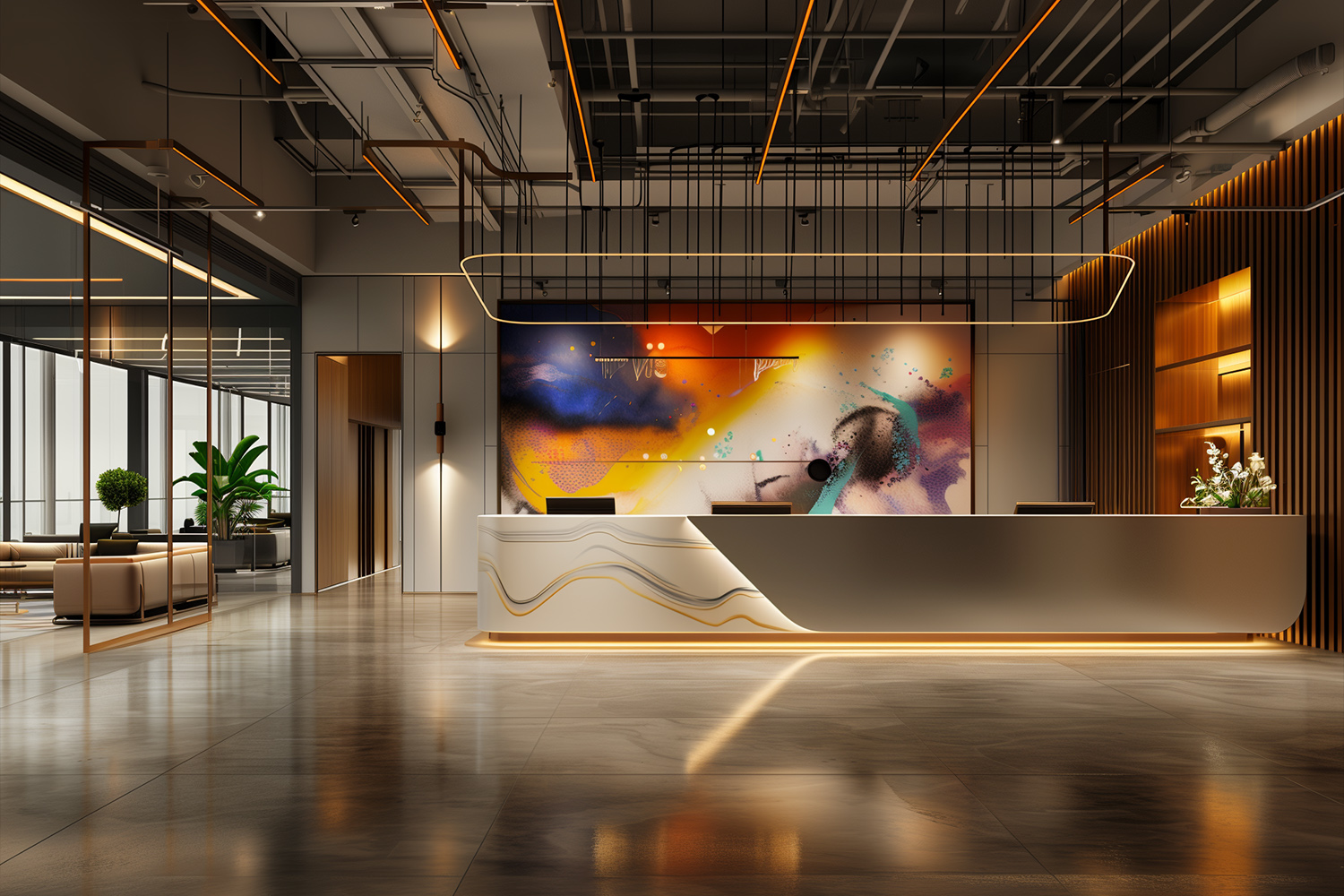
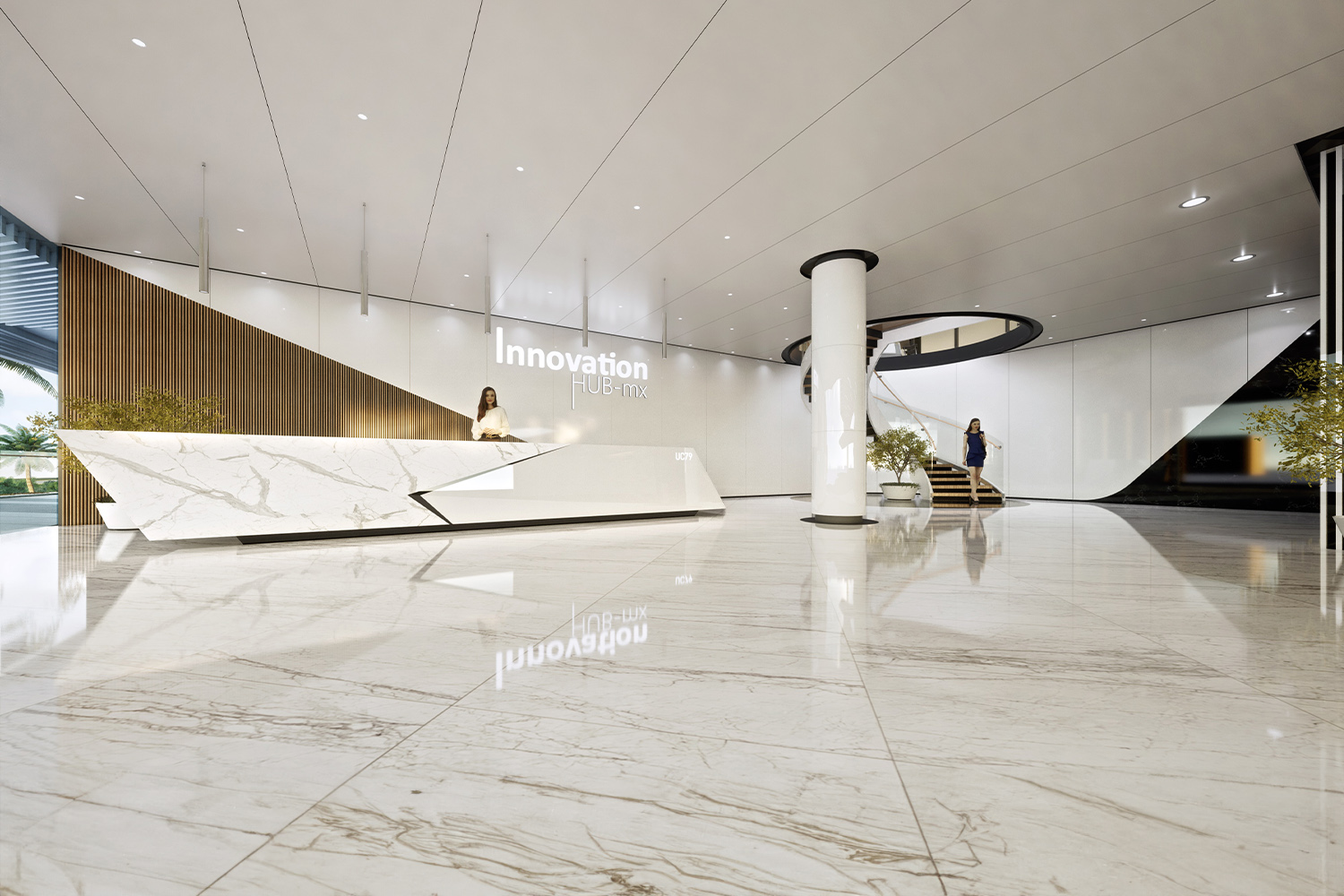
Our Dominican Republic Studio, based in Santo Domingo, is dedicated to designing architecture made for the Caribbean — resorts, residential communities, and commercial and corporate spaces that reflect excellence and innovation. From Living The Noom in Miches to Ocoabay on the Azua coast and Coco Bongo Punta Cana, our work across the country combines award-winning international experience with deep local knowledge. Your project becomes more than a building; it stands as a destination that connects with people, respects its environment and multiplies the value of your investment.
ARCHITECTURE DESIGN
Bioclimatic buildings designed for the Caribbean — naturally ventilated, shaded and resilient, made to thrive in the tropical climate.
INTERIOR DESIGN
Warm, light-filled interiors where local materials and spatial storytelling create memorable experiences for residents and guests.
With our own office in Santo Domingo and partner consultants across the country, we manage every stage locally — from concept design and permitting to construction documents and site supervision. Global brands such as United Airlines and Huawei have trusted our work in the country. You get the creativity of an international firm with the responsiveness of a local team.
We have designed +10 projects in the Dominican Republic, from Santo Domingo to Punta Cana and Miches.
Over the years, we've participated in numerous projects at various stages, from conception to completion. Some cannot be showcased in our portfolio due to client confidentiality, but each has enriched our experience. Below is a list of projects we have been involved with in various capacities.
• Maralda Showroom, Miches, Dominican Republic • Coco Bongo, Punta Cana, Dominican Republic • Maralda Beach Club, Miches, Dominican Republic • Living The Noom, Miches, Dominican Republic • Barna Management School, Santo Domingo, Dominican Republic • Huawei Office, Santo Domingo, Dominican Republic • RRT Villa, Punta Cana, Dominican Republic • Ocoabay, Azua, Dominican Republic • United Airlines ATO, Multiple Locations, México & Dominican Republic
Experience the breadth of our capabilities as you explore our featured projects across the Dominican Republic — from the beaches of Miches and Punta Cana to Santo Domingo and the Azua coast. Here, we're not just showcasing our work; we're inviting you to discover the passion and precision we bring to architecture that belongs to its place, its climate and its people.
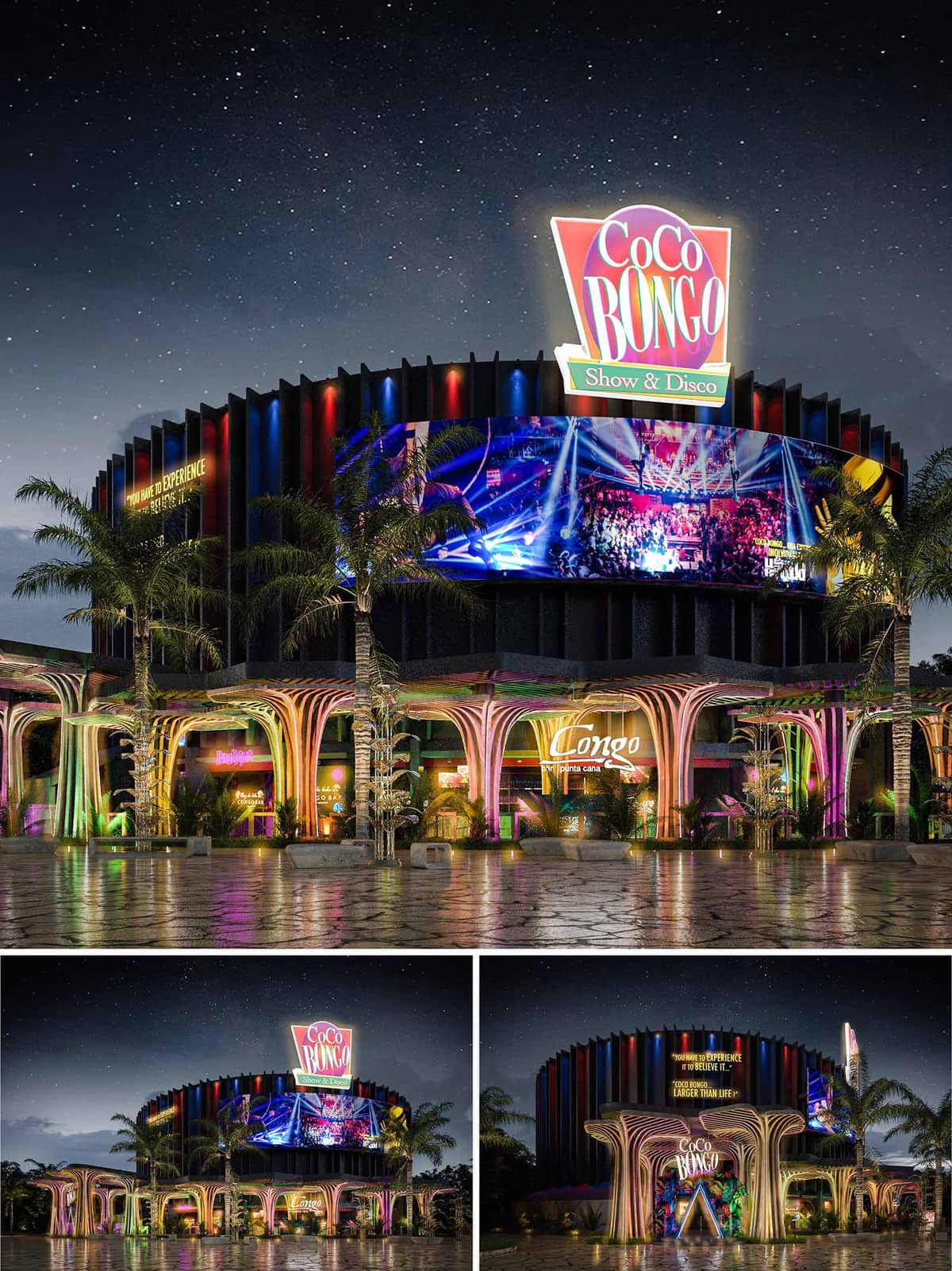
The facade renovation of the Coco Bongo Night Club in Punta Cana, Dominican Republic, embodies a vibrant and theatrical design that aligns with the club's iconic status as a destination for entertainment and nightlife. The architectural concept harnesses the dynamic spirit of the tropics and the energy of the nightlife, incorporating organic forms and expressive colors that suggest movement and excitement. The renovation expands the club's engagement with its external environment through the addition of an extended outdoor terrace bar, enhancing the venue's openness and accessibility.
The facade of Coco Bongo is characterized by its use of sweeping, fluidic forms that mimic natural elements. These organically shaped portals and supports, designed with a structural rhythm, create a welcoming grand entrance that is both functional and sculptural. The use of vivid lighting and neon accents not only highlights these forms but also works to attract attention from afar, ensuring that the building stands out in its urban setting.
Above, the main structure presents a series of vertical fins arranged in a rhythmic pattern, echoing the vibrant energy within. This choice of facade treatment not only contributes to the aesthetic but also serves a practical purpose, providing a semi-permeable barrier that enhances the acoustic qualities of the building while maintaining airflow. The integration of digital screens adds a layer of interactivity and connectivity, displaying vibrant visuals that reflect the lively atmosphere of the interior.
The selection of materials is pivotal in articulating the design's intent. High-performance concrete and advanced composites are used for the structural elements, chosen for their durability and flexibility in forming complex shapes. These are complemented by glass panels that allow visual continuity between the indoor and outdoor spaces, enriching the visitor's experience by merging the two settings seamlessly.
The color palette is intentionally bold and lively, featuring deep blues, bright reds, and vibrant purples that mirror the tropical environment and the club's energetic branding. These colors are used strategically to enhance the architectural forms and to create a visual narrative that guides visitors through the space.
Incorporating sustainable practices, the renovation utilizes energy-efficient LED lighting throughout the facade and terrace, significantly reducing the building's energy consumption while enhancing its nighttime appearance. The landscaping around the building employs native plants that are drought-resistant and require minimal maintenance, reducing water usage and integrating the building more deeply into its natural setting.
The extension of the outdoor terrace bar is a crucial aspect of this renovation, designed to offer an immersive experience that leverages the natural beauty of Punta Cana. This space is crafted to provide expansive views, employing minimalistic guardrails and strategically placed lighting to ensure safety without compromising the aesthetic. The terrace is configured to accommodate both intimate gatherings and larger groups, flexible in its layout while providing all visitors with a sense of exclusivity and engagement with the vibrant nightlife activities.
The combination of these architectural and design elements makes the Coco Bongo Night Club a landmark of modern design, infusing local cultural elements with contemporary architectural practices to create a space that is both inviting and exhilarating.


The facade renovation of the Coco Bongo Night Club in Punta Cana, Dominican Republic, embodies a vibrant and theatrical design that aligns with the club's iconic status as a destination for entertainment and nightlife. The architectural concept harnesses the dynamic spirit of the tropics and the energy of the nightlife, incorporating organic forms and expressive colors that suggest movement and excitement. The renovation expands the club's engagement with its external environment through the addition of an extended outdoor terrace bar, enhancing the venue's openness and accessibility.
The facade of Coco Bongo is characterized by its use of sweeping, fluidic forms that mimic natural elements. These organically shaped portals and supports, designed with a structural rhythm, create a welcoming grand entrance that is both functional and sculptural. The use of vivid lighting and neon accents not only highlights these forms but also works to attract attention from afar, ensuring that the building stands out in its urban setting.
Above, the main structure presents a series of vertical fins arranged in a rhythmic pattern, echoing the vibrant energy within. This choice of facade treatment not only contributes to the aesthetic but also serves a practical purpose, providing a semi-permeable barrier that enhances the acoustic qualities of the building while maintaining airflow. The integration of digital screens adds a layer of interactivity and connectivity, displaying vibrant visuals that reflect the lively atmosphere of the interior.
The selection of materials is pivotal in articulating the design's intent. High-performance concrete and advanced composites are used for the structural elements, chosen for their durability and flexibility in forming complex shapes. These are complemented by glass panels that allow visual continuity between the indoor and outdoor spaces, enriching the visitor's experience by merging the two settings seamlessly.
The color palette is intentionally bold and lively, featuring deep blues, bright reds, and vibrant purples that mirror the tropical environment and the club's energetic branding. These colors are used strategically to enhance the architectural forms and to create a visual narrative that guides visitors through the space.
Incorporating sustainable practices, the renovation utilizes energy-efficient LED lighting throughout the facade and terrace, significantly reducing the building's energy consumption while enhancing its nighttime appearance. The landscaping around the building employs native plants that are drought-resistant and require minimal maintenance, reducing water usage and integrating the building more deeply into its natural setting.
The extension of the outdoor terrace bar is a crucial aspect of this renovation, designed to offer an immersive experience that leverages the natural beauty of Punta Cana. This space is crafted to provide expansive views, employing minimalistic guardrails and strategically placed lighting to ensure safety without compromising the aesthetic. The terrace is configured to accommodate both intimate gatherings and larger groups, flexible in its layout while providing all visitors with a sense of exclusivity and engagement with the vibrant nightlife activities.
The combination of these architectural and design elements makes the Coco Bongo Night Club a landmark of modern design, infusing local cultural elements with contemporary architectural practices to create a space that is both inviting and exhilarating.
© 2021 by sanzpont [arquitectura] . Webpage by sanzpont [digital] . Innovative Digital Experiences
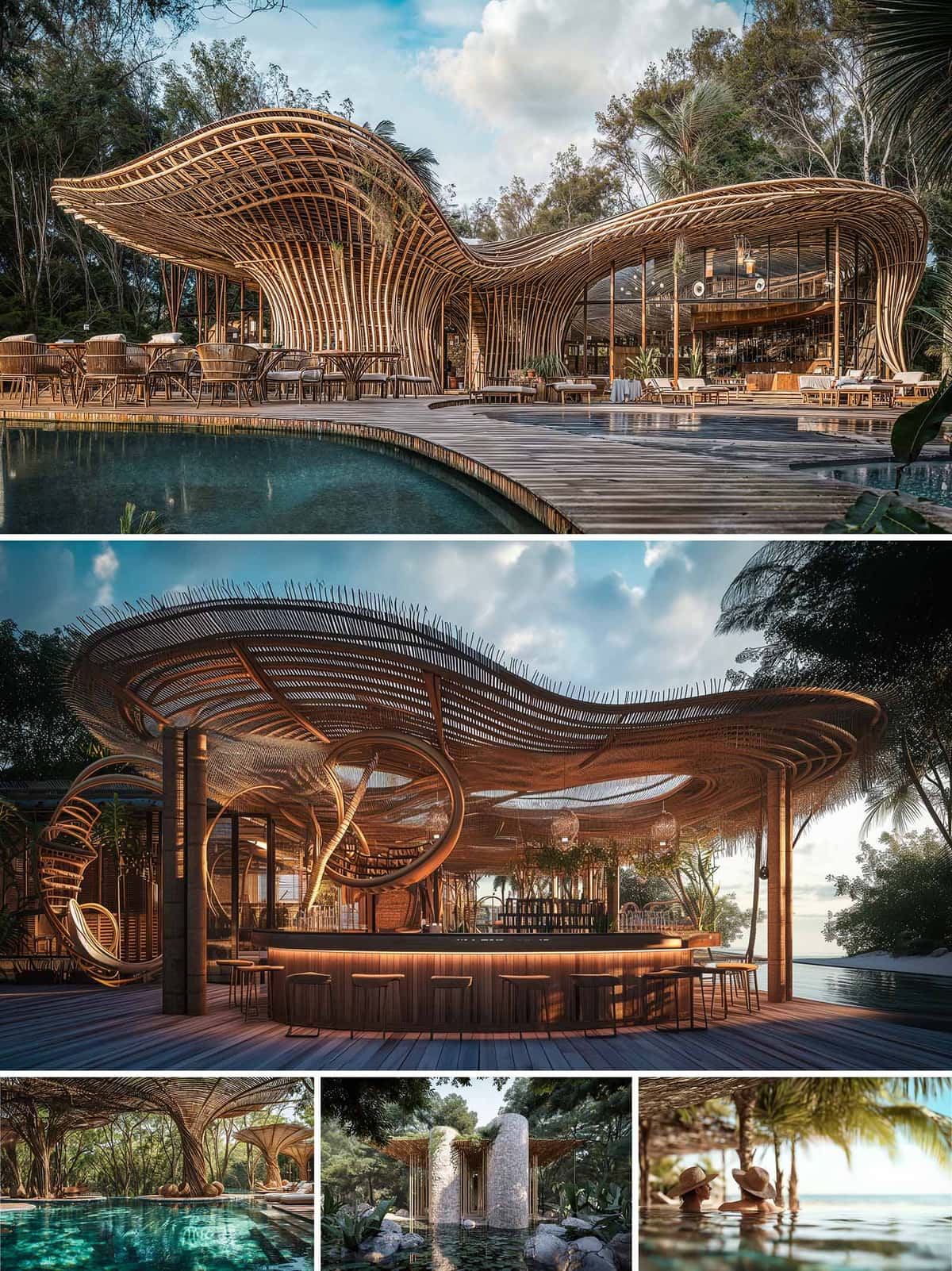

The Maralda Beach Club in Miches, Dominican Republic is conceived as an architecture that dissolves into its tropical surroundings through a fluid, biomorphic formal language. The overall concept draws inspiration from natural coastal geometries—waves, dunes, and the articulated patterns of palm canopies. This results in a continuous undulating roofscape formed primarily in bamboo, giving the impression that the structure emerges organically from the landscape. The design privileges openness, natural ventilation, and seamless integration of programmatic zones with the surrounding beach and forest.
The complex is arranged as an interconnected sequence of open-air environments, each calibrated to maximize visual and physical permeability. The central structure accommodates dining and lounge areas, set on a curvilinear timber platform that mirrors the form of the adjacent pool. The spatial composition avoids rigid enclosures, enabling breezes from the coastline to permeate throughout. Satellite structures—such as the sculptural bar pavilion and the secluded wellness retreat—reinforce the overall architectural language through similar curving, elevated, and porous forms. Together, these elements create an experiential promenade that guides visitors fluidly from beach to forest.
Bamboo is the dominant structural and expressive material, used both for its mechanical properties and its aesthetic resonance with tropical environments. Vertical bamboo culms are bundled to form branching structural supports that flare outward to hold the expansive roof. The roof itself—woven from bamboo, cane, and lightweight timber battens—achieves a high level of translucency, mediating sunlight and casting dynamic shadows throughout the day. Circular and looping bamboo elements within the bar pavilion function both as structural reinforcement and sculptural ornamentation, amplifying the sense of movement inherent in the design.
The interior environment maintains a cohesive aesthetic through the use of natural fibers, raw timber finishes, and artisanal furniture. Rattan, rope, and hand-woven textures complement the architectural palette, promoting a tactile and inviting atmosphere. Seating arrangements near the pool emphasize informality and relaxation, with low-profile lounge furniture and organically shaped platforms that blur the boundary between built space and water. Illumination is subtle and integrated into the structure, allowing the warm tones of the materials to define the nighttime ambiance.
The landscape strategy reinforces the project's immersive character by incorporating native vegetation directly into architectural voids and structural intersections. Pathways meander through dense foliage, leading to a stone-clad wellness pavilion set within a reflective water garden. Views are choreographed to maintain continuous contact with the surrounding ecological context, whether looking outward toward the sea or inward toward shaded courtyards. Pools and water features serve as transitional elements, cooling the microclimate and strengthening the visual connection between architecture and nature.
Sustainability is central to the project, beginning with the extensive use of bamboo, a rapidly renewable resource with low embodied energy. The open-air design reduces the need for mechanical cooling, leveraging cross-ventilation and shading from the expansive roof. Local sourcing of materials minimizes transportation impact while supporting regional craftsmanship. Rainwater is collected through the curving roof forms for use in irrigation, and the landscape relies on native plant species that naturally thrive in the coastal environment, reducing maintenance and preserving biodiversity.


The Maralda Beach Club in Miches, Dominican Republic is conceived as an architecture that dissolves into its tropical surroundings through a fluid, biomorphic formal language. The overall concept draws inspiration from natural coastal geometries—waves, dunes, and the articulated patterns of palm canopies. This results in a continuous undulating roofscape formed primarily in bamboo, giving the impression that the structure emerges organically from the landscape. The design privileges openness, natural ventilation, and seamless integration of programmatic zones with the surrounding beach and forest.
The complex is arranged as an interconnected sequence of open-air environments, each calibrated to maximize visual and physical permeability. The central structure accommodates dining and lounge areas, set on a curvilinear timber platform that mirrors the form of the adjacent pool. The spatial composition avoids rigid enclosures, enabling breezes from the coastline to permeate throughout. Satellite structures—such as the sculptural bar pavilion and the secluded wellness retreat—reinforce the overall architectural language through similar curving, elevated, and porous forms. Together, these elements create an experiential promenade that guides visitors fluidly from beach to forest.
Bamboo is the dominant structural and expressive material, used both for its mechanical properties and its aesthetic resonance with tropical environments. Vertical bamboo culms are bundled to form branching structural supports that flare outward to hold the expansive roof. The roof itself—woven from bamboo, cane, and lightweight timber battens—achieves a high level of translucency, mediating sunlight and casting dynamic shadows throughout the day. Circular and looping bamboo elements within the bar pavilion function both as structural reinforcement and sculptural ornamentation, amplifying the sense of movement inherent in the design.
The interior environment maintains a cohesive aesthetic through the use of natural fibers, raw timber finishes, and artisanal furniture. Rattan, rope, and hand-woven textures complement the architectural palette, promoting a tactile and inviting atmosphere. Seating arrangements near the pool emphasize informality and relaxation, with low-profile lounge furniture and organically shaped platforms that blur the boundary between built space and water. Illumination is subtle and integrated into the structure, allowing the warm tones of the materials to define the nighttime ambiance.
The landscape strategy reinforces the project's immersive character by incorporating native vegetation directly into architectural voids and structural intersections. Pathways meander through dense foliage, leading to a stone-clad wellness pavilion set within a reflective water garden. Views are choreographed to maintain continuous contact with the surrounding ecological context, whether looking outward toward the sea or inward toward shaded courtyards. Pools and water features serve as transitional elements, cooling the microclimate and strengthening the visual connection between architecture and nature.
Sustainability is central to the project, beginning with the extensive use of bamboo, a rapidly renewable resource with low embodied energy. The open-air design reduces the need for mechanical cooling, leveraging cross-ventilation and shading from the expansive roof. Local sourcing of materials minimizes transportation impact while supporting regional craftsmanship. Rainwater is collected through the curving roof forms for use in irrigation, and the landscape relies on native plant species that naturally thrive in the coastal environment, reducing maintenance and preserving biodiversity.
© 2021 by sanzpont [arquitectura] . Webpage by sanzpont [digital] . Innovative Digital Experiences
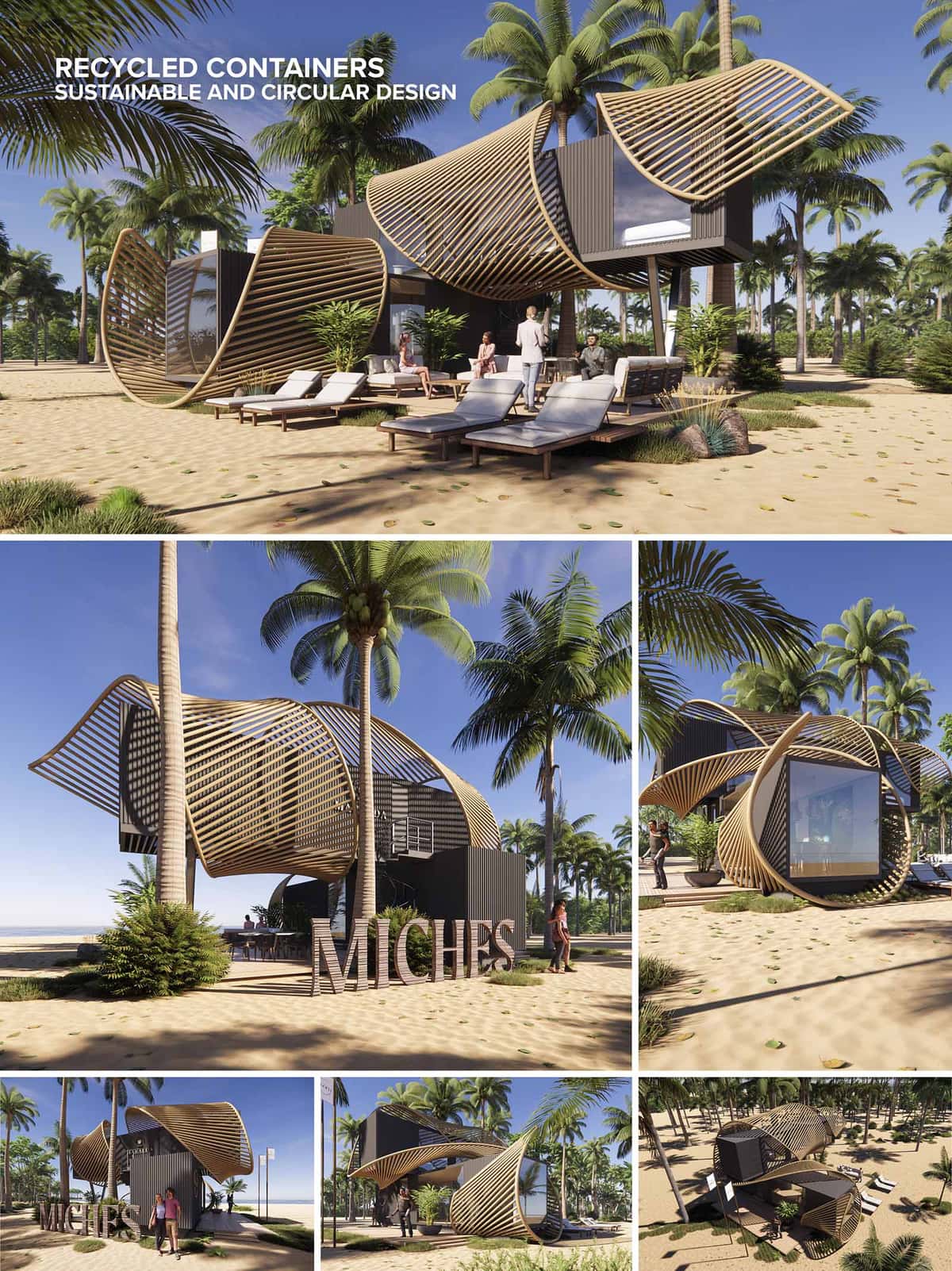

This innovative beach showroom project embodies a synthesis of sustainability and modern design, employing recycled shipping containers as the primary structural framework, enveloped by a dynamic "second skin" of bamboo sticks. This concept not only leverages the robust, modular nature of the containers but also introduces a bioclimatic element with the bamboo, which integrates natural ventilation and light filtering properties to enhance the indoor environment while maintaining a low environmental footprint.
The layout consists of strategically placed containers that define a compact, efficient core, adapted to accommodate a showroom with minimal ecological impact. The containers are staggered and oriented to maximize views and natural light penetration, which are essential for a beachfront property. The interconnected spaces maintain an open flow, conducive to both display and interaction, which is critical in a showroom setting. External decking and walkways link the containers, promoting an indoor-outdoor connection that is vital for beachside architecture.
Central to the design philosophy is the use of recycled materials and sustainable practices. The shipping containers themselves are a nod to reusability, providing a sturdy and durable structure that repurposes industrial objects for architectural use. The bamboo facade acts as a sustainable, renewable resource that serves multiple functions: it forms an aesthetic statement with its rhythmic, linear patterns; provides shade and privacy; and enhances the building's thermal performance by creating a ventilated facade that reduces heat gain.
The choice of materials extends to the interior, where sustainable, locally-sourced materials are preferred, reducing transportation costs and supporting local economies. The landscaping around the pavilions also reflects a commitment to sustainability, using native plants that are drought-resistant and suitable for the sandy soil, minimizing water use and maintenance requirements.
Aesthetically, the design strikes a balance between industrial ruggedness and natural elegance. The dark tones of the containers contrast with the warm, natural texture of the bamboo, making the structure both a focal point and an integrated part of the landscape. Functionally, the bamboo not only embellishes the exterior but also acts as a natural insulator and sunshade, critical for thermal comfort in tropical climates. The open terraces and shaded areas provide spaces for relaxation and social interaction, essential in a showroom designed to attract and engage visitors.
This project is a prime example of how modern design can meet ecological responsibility without compromising on style or functionality. By integrating recycled materials with traditional techniques and modern technology, the beach showroom stands as a testament to innovative, sustainable architecture in a challenging coastal environment.


This innovative beach showroom project embodies a synthesis of sustainability and modern design, employing recycled shipping containers as the primary structural framework, enveloped by a dynamic "second skin" of bamboo sticks. This concept not only leverages the robust, modular nature of the containers but also introduces a bioclimatic element with the bamboo, which integrates natural ventilation and light filtering properties to enhance the indoor environment while maintaining a low environmental footprint.
The layout consists of strategically placed containers that define a compact, efficient core, adapted to accommodate a showroom with minimal ecological impact. The containers are staggered and oriented to maximize views and natural light penetration, which are essential for a beachfront property. The interconnected spaces maintain an open flow, conducive to both display and interaction, which is critical in a showroom setting. External decking and walkways link the containers, promoting an indoor-outdoor connection that is vital for beachside architecture.
Central to the design philosophy is the use of recycled materials and sustainable practices. The shipping containers themselves are a nod to reusability, providing a sturdy and durable structure that repurposes industrial objects for architectural use. The bamboo facade acts as a sustainable, renewable resource that serves multiple functions: it forms an aesthetic statement with its rhythmic, linear patterns; provides shade and privacy; and enhances the building's thermal performance by creating a ventilated facade that reduces heat gain.
The choice of materials extends to the interior, where sustainable, locally-sourced materials are preferred, reducing transportation costs and supporting local economies. The landscaping around the pavilions also reflects a commitment to sustainability, using native plants that are drought-resistant and suitable for the sandy soil, minimizing water use and maintenance requirements.
Aesthetically, the design strikes a balance between industrial ruggedness and natural elegance. The dark tones of the containers contrast with the warm, natural texture of the bamboo, making the structure both a focal point and an integrated part of the landscape. Functionally, the bamboo not only embellishes the exterior but also acts as a natural insulator and sunshade, critical for thermal comfort in tropical climates. The open terraces and shaded areas provide spaces for relaxation and social interaction, essential in a showroom designed to attract and engage visitors.
This project is a prime example of how modern design can meet ecological responsibility without compromising on style or functionality. By integrating recycled materials with traditional techniques and modern technology, the beach showroom stands as a testament to innovative, sustainable architecture in a challenging coastal environment.
© 2021 by sanzpont [arquitectura] . Webpage by sanzpont [digital] . Innovative Digital Experiences

How would you like to live the rest of your life? We have asked ourselves the same question. Each one of us looks alike because we are human beings, but… we are truly different, we have different tastes, different needs… and above all a personality, each of us is “unique” in our own particular way. And this is where we have always asked ourselves: Why are all the homes for sale almost, all the same? Because almost all of them seem to be cut from the same mold? Do we all have the same personality? The same beliefs, or the same way of being? or the same tastes?
The reality is that on many occasions we let situations define us and we choose the least bad option.
IN HARMONY WITH THE SPIRIT
We are clear that living a full life, not only contemplates covering the basic physiological needs, also we must fill and satisfy the soul through stimuli that make us feel alive, we want to create a community that promotes Artistic Expression, invites to exercise, Yoga and Meditation, live with Nature every day at all times, promote a healthy diet, be designed for all family members through Pet Friendly spaces, but truly create a Community of people who share life with the same values.
Contact with nature transmits us tranquility, and provides us with a good dose of calm, and it can be the anti-stress oxygen that lowers the revolutions of the day, creating a bubble of peace that gives us mental health; with outdoor spaces for Exercise, Yoga and Meditation, as well as promoting healthy Eating through an Organic Garden and Hydroponic Cultivation.
PEACE “If you are sad, you are living in the past. Being anxious in some way means that you are living in the future. If you are at peace, you are living in the present ”Lao Tzu
We look for admirers of expressions, who through spaces surrounded by murals, installations, poetry and positive sentences written on the walls, floors and furniture, open us to experiment. We want to breathe art and expressions, and through workshops with local artists inspire us to create, to dream.
“Art is dreaming, it is living, it is feeling. Art sears your soul, moves you, transports you. It has a magical power in people if we open ourselves to experiment. And best of all, it invites us to express ourselves, to bring out the artist that we all carry inside ... Because art can be a great discovery. " Mercè López, The heART Ambassadors
We want to create a Pet Friendly community that provides a better life for all of our loved ones, because for many of us the love of our pets is as great as if they were our children.
Because it is difficult to live with people who do not share the same ideals and values, and society is very heterogeneous in ways of thinking, what is important for one may be trivial for others. We are convinced that in order to truly have a full life in society, community must be formed. The most important thing in real estate products should not be the business, but rather bring people who are like-minded closer to improving their quality of life, with tribal projects.
We care a lot about nature, we hate how people just eliminate and destroy everything in order to accommodate. Our duty should simply be to improve each place where we decide to build, we must simply coexist and have respect for the earth. That is the reason why we have decided to only occupy a maximum of 30% of the land, respecting the existing trees, in addition to providing even more green surface than we found, ultimately managing to increase the total green area by 130%.
The project promotes through passive and bioclimatic design the reduction of the use of resources, economic savings, with the aim of achieving a more sustainable and environmentally friendly housing product.
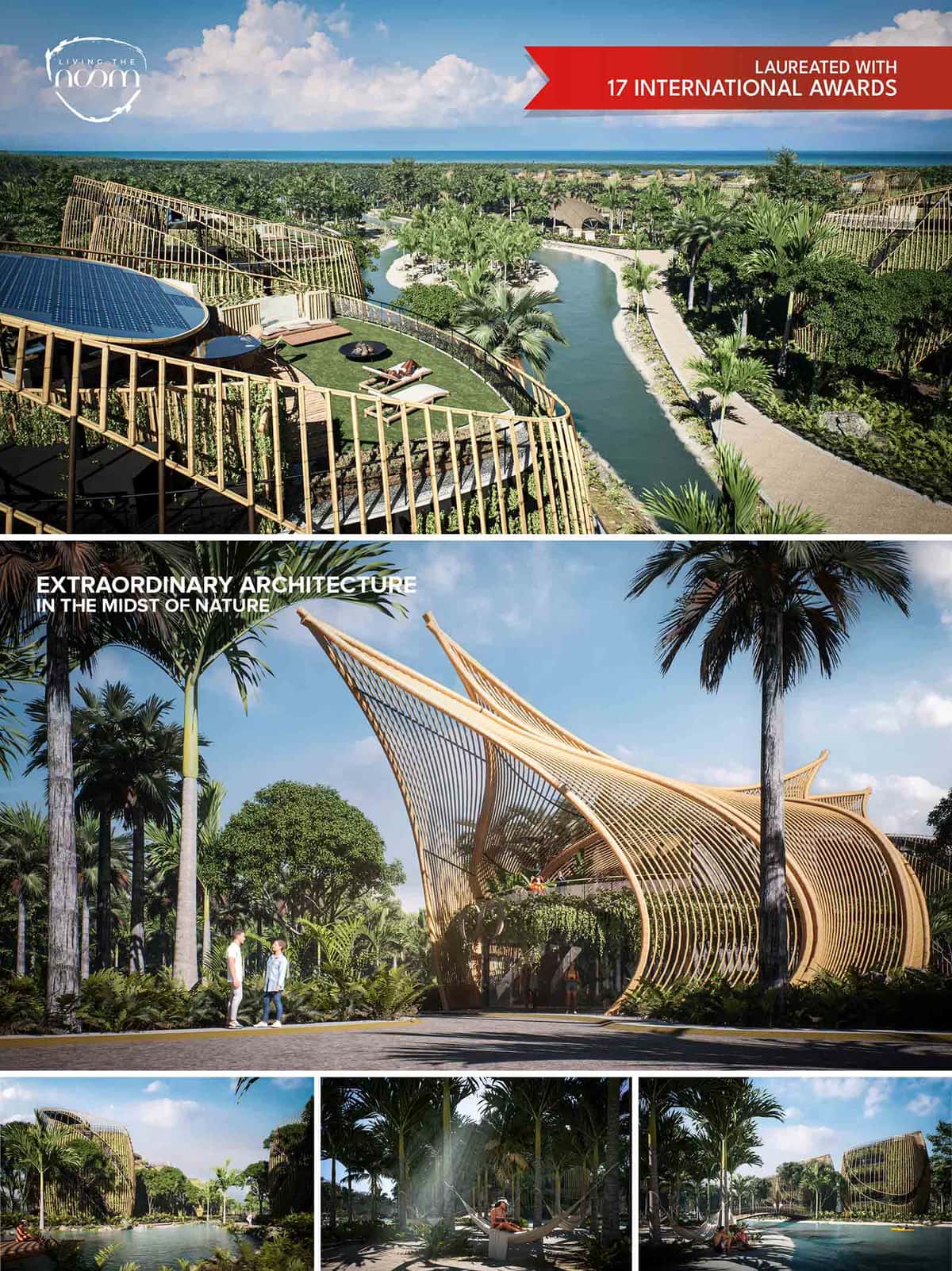
Passive design strategies are proposed to reduce energy consumption and increase the efficiency of the building, taking advantage of renewable energies for lighting, taking advantage of natural light, in addition to generating energy, through photovoltaic solar panels, located on the roof. Efficient installations are also very important, as well as the high-efficiency LED artificial lighting system.
1.- The interior spaces are illuminated throughout the day by natural lighting.
2.- Solar panels on the roof that generate energy.
3.- Cover with Thermal Insulation, to prevent thermal transmission.
4.- Natural green roof with grass as Thermal Insulation and social recreation area, in addition to cultivation area, for edible plants.
Natural lighting is achieved through the facades, where each unit has a single level taking advantage of 360 degrees of natural light. A bamboo and vegetation lattice is used to mitigate the overheating of the facades and to have a better control of the light and an adequate thermal environment in the interior spaces.
1.- All spaces have indirect natural light.
2.- The design of the house promotes natural ventilation to renew the indoor air and ensure an optimal level of comfort.
A more intelligent use of water is applied, both inside and outside the building, using technologies to reduce consumption, efficient installations, recycling water through the separation of gray water, then taking advantage of it for the irrigation of green areas, as well as its control and measurement.
The selection of responsible and local materials is proposed, in addition to minimizing the amount of waste in construction, as well as materials with recycled components and low environmental impact.
Although we know the human impact generated in nature by the settlement of people to live, we want to minimize it by preserving existing trees, also respecting natural life, trying to cohabit with squirrels, birds, iguanas and coatis that visit the land regularly, promoting a Low Ecological Footprint project
• LADI Awards, Latin American Real Estate Awards, Panamá : Best Disruptive Real State Product in Latin America : Living The Noom (2022)
• IDA Design Awards 2021 : Gold Medal : Living The Noom (2021)
• Global Future Design Awards 2021 : Winner : Living The Noom (2021)
• Golden Trezzini Awards 2021 : Best Project Residential : Living The Noom (2021)
• Tuvie Magazine : 2nd Best of the Best Design of the Year : Living The Noom (2021)
• The Architecture Community World Design Awards 2021 : Winner : Living The Noom (2021)
• Loop Design Awards : Architecture Concept Winner : Living The Noom (2021)
• The Plan Awards, Bologna, Italy : Honorable Mention in Future Housing : Living The Noom (2021)
• Top 20 A’ Architecture, Building And Structure Design Award, Milan, Italy: 2nd Best of the Best Design of the Year : Living The Noom (2020-2021)
• Novum Design Awards, Helsinki, Finland : Gold Award Winner : Living The Noom (2021)
• Architizer A+ Design Awards : 1st Place Jury Winner : Living The Noom (2021)
• Architizer A+ Design Awards : 1st Place Popular Choice Winner : Living The Noom (2021)
• APR Urban Design & Architecture Design Awards : 1st Place Winner : Living The Noom (2021)
• Rethinking The Future, New Delhi, India: Second Award - Housing (Upto 5 Floors) Concept : Living The Noom (2021)
• A’ Design Awards, Milan, Italy: Platinum Medal - Certificate Of Excellence in Architecture, Building and Structure Design Category: Living The Noom (2021)
• Muse Design Awards, New York, USA : Platinum Award - Conceptual Design of the Year : Living The Noom (2021)
• World Architecture Awards 10+5+X Honorary Members: Architecture - Designed Category, 36th Cycle : Living The Noom (2021)
sanzpont [arquitectura]
Pedrajo+Pedrajo Arquitectos
Grupo NX6 + Nader Enterprises


• LADI Awards, Latin American Real Estate Awards, Panamá : Best Disruptive Real State Product in Latin America : Living The Noom (2022)
• IDA Design Awards 2021 : Gold Medal : Living The Noom (2021)
• Global Future Design Awards 2021 : Winner : Living The Noom (2021)
• Golden Trezzini Awards 2021 : Best Project Residential : Living The Noom (2021)
• Tuvie Magazine : 2nd Best of the Best Design of the Year : Living The Noom (2021)
• The Architecture Community World Design Awards 2021 : Winner : Living The Noom (2021)
• Loop Design Awards : Architecture Concept Winner : Living The Noom (2021)
• The Plan Awards, Bologna, Italy : Honorable Mention in Future Housing : Living The Noom (2021)
• Top 20 A’ Architecture, Building And Structure Design Award, Milan, Italy: 2nd Best of the Best Design of the Year : Living The Noom (2020-2021)
• Novum Design Awards, Helsinki, Finland : Gold Award Winner : Living The Noom (2021)
• Architizer A+ Design Awards : 1st Place Jury Winner : Living The Noom (2021)
• Architizer A+ Design Awards : 1st Place Popular Choice Winner : Living The Noom (2021)
• APR Urban Design & Architecture Design Awards : 1st Place Winner : Living The Noom (2021)
• Rethinking The Future, New Delhi, India: Second Award - Housing (Upto 5 Floors) Concept : Living The Noom (2021)
• A’ Design Awards, Milan, Italy: Platinum Medal - Certificate Of Excellence in Architecture, Building and Structure Design Category: Living The Noom (2021)
• Muse Design Awards, New York, USA : Platinum Award - Conceptual Design of the Year : Living The Noom (2021)
• World Architecture Awards 10+5+X Honorary Members: Architecture - Designed Category, 36th Cycle : Living The Noom (2021)
sanzpont [arquitectura]
Pedrajo+Pedrajo Arquitectos
Grupo NX6 + Nader Enterprises
How would you like to live the rest of your life? We have asked ourselves the same question. Each one of us looks alike because we are human beings, but… we are truly different, we have different tastes, different needs… and above all a personality, each of us is “unique” in our own particular way. And this is where we have always asked ourselves: Why are all the homes for sale almost, all the same? Because almost all of them seem to be cut from the same mold? Do we all have the same personality? The same beliefs, or the same way of being? or the same tastes?
The reality is that on many occasions we let situations define us and we choose the least bad option.
IN HARMONY WITH THE SPIRIT
We are clear that living a full life, not only contemplates covering the basic physiological needs, also we must fill and satisfy the soul through stimuli that make us feel alive, we want to create a community that promotes Artistic Expression, invites to exercise, Yoga and Meditation, live with Nature every day at all times, promote a healthy diet, be designed for all family members through Pet Friendly spaces, but truly create a Community of people who share life with the same values.
Contact with nature transmits us tranquility, and provides us with a good dose of calm, and it can be the anti-stress oxygen that lowers the revolutions of the day, creating a bubble of peace that gives us mental health; with outdoor spaces for Exercise, Yoga and Meditation, as well as promoting healthy Eating through an Organic Garden and Hydroponic Cultivation.
PEACE “If you are sad, you are living in the past. Being anxious in some way means that you are living in the future. If you are at peace, you are living in the present ”Lao Tzu
We look for admirers of expressions, who through spaces surrounded by murals, installations, poetry and positive sentences written on the walls, floors and furniture, open us to experiment. We want to breathe art and expressions, and through workshops with local artists inspire us to create, to dream.
“Art is dreaming, it is living, it is feeling. Art sears your soul, moves you, transports you. It has a magical power in people if we open ourselves to experiment. And best of all, it invites us to express ourselves, to bring out the artist that we all carry inside ... Because art can be a great discovery. " Mercè López, The heART Ambassadors
We want to create a Pet Friendly community that provides a better life for all of our loved ones, because for many of us the love of our pets is as great as if they were our children.
Because it is difficult to live with people who do not share the same ideals and values, and society is very heterogeneous in ways of thinking, what is important for one may be trivial for others. We are convinced that in order to truly have a full life in society, community must be formed. The most important thing in real estate products should not be the business, but rather bring people who are like-minded closer to improving their quality of life, with tribal projects.
We care a lot about nature, we hate how people just eliminate and destroy everything in order to accommodate. Our duty should simply be to improve each place where we decide to build, we must simply coexist and have respect for the earth. That is the reason why we have decided to only occupy a maximum of 30% of the land, respecting the existing trees, in addition to providing even more green surface than we found, ultimately managing to increase the total green area by 130%.
The project promotes through passive and bioclimatic design the reduction of the use of resources, economic savings, with the aim of achieving a more sustainable and environmentally friendly housing product.
Passive design strategies are proposed to reduce energy consumption and increase the efficiency of the building, taking advantage of renewable energies for lighting, taking advantage of natural light, in addition to generating energy, through photovoltaic solar panels, located on the roof. Efficient installations are also very important, as well as the high-efficiency LED artificial lighting system.
1.- The interior spaces are illuminated throughout the day by natural lighting.
2.- Solar panels on the roof that generate energy.
3.- Cover with Thermal Insulation, to prevent thermal transmission.
4.- Natural green roof with grass as Thermal Insulation and social recreation area, in addition to cultivation area, for edible plants.
Natural lighting is achieved through the facades, where each unit has a single level taking advantage of 360 degrees of natural light. A bamboo and vegetation lattice is used to mitigate the overheating of the facades and to have a better control of the light and an adequate thermal environment in the interior spaces.
1.- All spaces have indirect natural light.
2.- The design of the house promotes natural ventilation to renew the indoor air and ensure an optimal level of comfort.
A more intelligent use of water is applied, both inside and outside the building, using technologies to reduce consumption, efficient installations, recycling water through the separation of gray water, then taking advantage of it for the irrigation of green areas, as well as its control and measurement.
The selection of responsible and local materials is proposed, in addition to minimizing the amount of waste in construction, as well as materials with recycled components and low environmental impact.
Although we know the human impact generated in nature by the settlement of people to live, we want to minimize it by preserving existing trees, also respecting natural life, trying to cohabit with squirrels, birds, iguanas and coatis that visit the land regularly, promoting a Low Ecological Footprint project
© 2021 by sanzpont [arquitectura] . Webpage by sanzpont [digital] . Innovative Digital Experiences
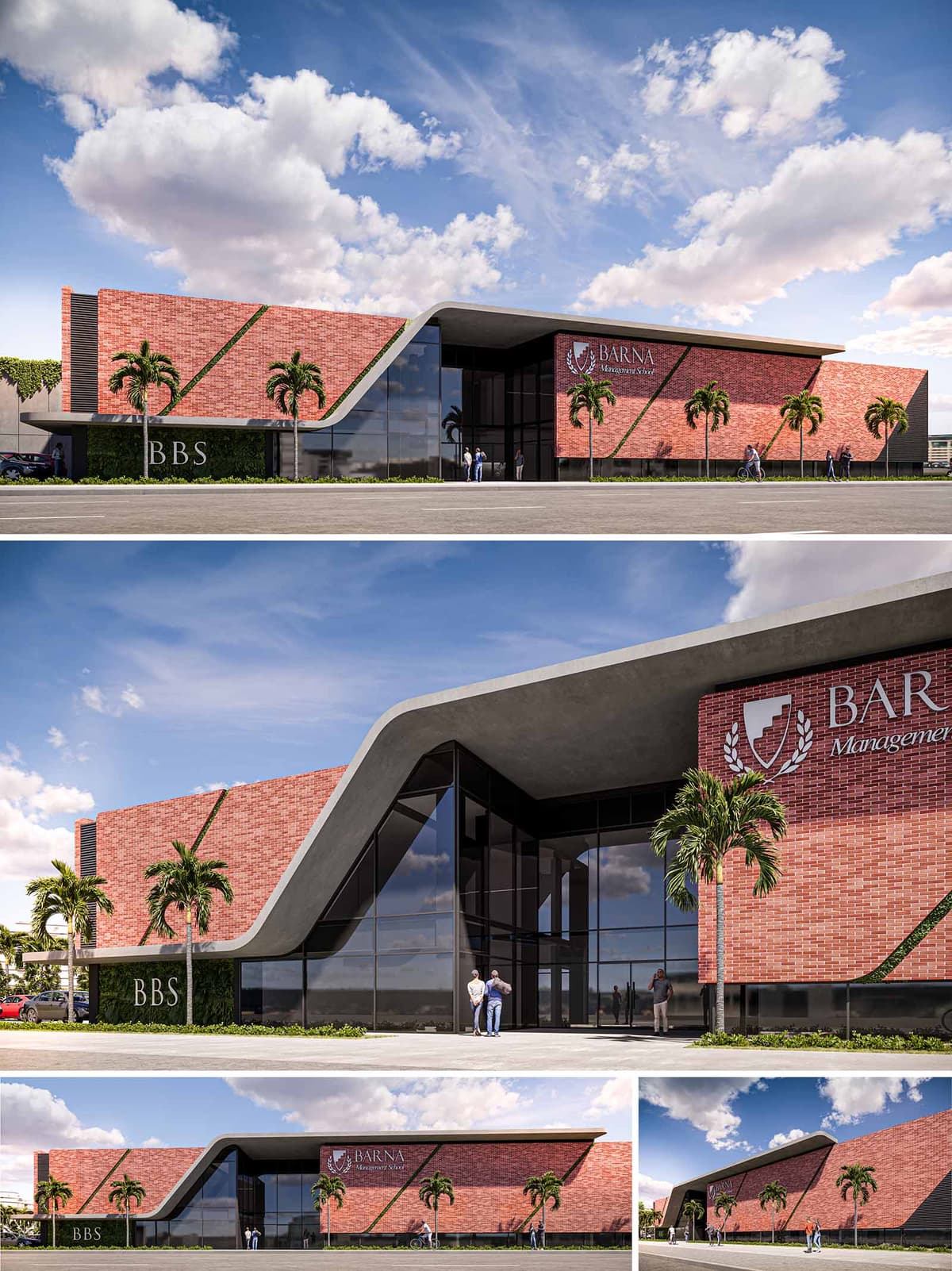

This architectural proposal illustrates a renovation and extension of a business school located in Santo Domingo, Dominican Republic, combining modern design principles with traditional materials to create a landmark educational facility. The design balances the robust, historical qualities of brickwork with contemporary glass and metal elements, symbolizing a bridge between traditional business practices and innovative management strategies.
The building's facade is striking, featuring a sloping roof that smoothly transitions into vertical walls, enveloping the structure in a seamless curve. This dynamic form not only contributes to the building's visual impact but also suggests a forward-thinking approach to education. The use of deep red bricks not only pays homage to the local architectural vernacular but also provides a textural contrast against the sleek, expansive glass panels that invite natural light deep into the interiors. The incorporation of the school's emblem on the exterior wall acts as a proud declaration of its identity and ethos.
The design optimally utilizes the space by clearly differentiating between the newly constructed areas and the renovated sections. The entrance is grand, marked by an expansive, welcoming glass front, ensuring visibility and accessibility. It leads into a multifunctional lobby that serves as both a social space for students and a transitional area leading to more private educational environments.
Teaching spaces and administrative offices are strategically placed to benefit from natural lighting, reducing the reliance on artificial light sources. Outdoor spaces are thoughtfully integrated with the internal environments, featuring landscaped areas where students and faculty can gather, promoting a sense of community and well-being.
Sustainability is a key component of the design, with the choice of materials reflecting both durability and environmental sensitivity. The bricks are locally sourced, reducing transportation emissions and supporting local industries. The large glass panels are double-glazed, minimizing heat gain while maximizing daylight use, which is critical in the tropical climate of Santo Domingo.
Moreover, the roofing material is chosen for its reflective properties, helping to reduce the building’s thermal load. Landscaping around the building utilizes native plants that require minimal irrigation, further contributing to the project's sustainability goals.
Technological integration is evident in the smart use of energy-efficient systems within the building. These include advanced HVAC systems that adapt to occupancy and weather conditions, and LED lighting with sensors that adjust based on the time of day and room usage, enhancing energy conservation.
The architectural design also incorporates rainwater harvesting systems that reduce the demand on the municipal water supply and provide water for landscape irrigation. This not only decreases operational costs but also exemplifies the institution’s commitment to sustainable practices.
This proposal for the business school in Santo Domingo is a testament to how architectural innovation can embody the spirit of an institution while promoting environmental stewardship and advanced learning environments.


This architectural proposal illustrates a renovation and extension of a business school located in Santo Domingo, Dominican Republic, combining modern design principles with traditional materials to create a landmark educational facility. The design balances the robust, historical qualities of brickwork with contemporary glass and metal elements, symbolizing a bridge between traditional business practices and innovative management strategies.
The building's facade is striking, featuring a sloping roof that smoothly transitions into vertical walls, enveloping the structure in a seamless curve. This dynamic form not only contributes to the building's visual impact but also suggests a forward-thinking approach to education. The use of deep red bricks not only pays homage to the local architectural vernacular but also provides a textural contrast against the sleek, expansive glass panels that invite natural light deep into the interiors. The incorporation of the school's emblem on the exterior wall acts as a proud declaration of its identity and ethos.
The design optimally utilizes the space by clearly differentiating between the newly constructed areas and the renovated sections. The entrance is grand, marked by an expansive, welcoming glass front, ensuring visibility and accessibility. It leads into a multifunctional lobby that serves as both a social space for students and a transitional area leading to more private educational environments.
Teaching spaces and administrative offices are strategically placed to benefit from natural lighting, reducing the reliance on artificial light sources. Outdoor spaces are thoughtfully integrated with the internal environments, featuring landscaped areas where students and faculty can gather, promoting a sense of community and well-being.
Sustainability is a key component of the design, with the choice of materials reflecting both durability and environmental sensitivity. The bricks are locally sourced, reducing transportation emissions and supporting local industries. The large glass panels are double-glazed, minimizing heat gain while maximizing daylight use, which is critical in the tropical climate of Santo Domingo.
Moreover, the roofing material is chosen for its reflective properties, helping to reduce the building’s thermal load. Landscaping around the building utilizes native plants that require minimal irrigation, further contributing to the project's sustainability goals.
Technological integration is evident in the smart use of energy-efficient systems within the building. These include advanced HVAC systems that adapt to occupancy and weather conditions, and LED lighting with sensors that adjust based on the time of day and room usage, enhancing energy conservation.
The architectural design also incorporates rainwater harvesting systems that reduce the demand on the municipal water supply and provide water for landscape irrigation. This not only decreases operational costs but also exemplifies the institution’s commitment to sustainable practices.
This proposal for the business school in Santo Domingo is a testament to how architectural innovation can embody the spirit of an institution while promoting environmental stewardship and advanced learning environments.
© 2021 by sanzpont [arquitectura] . Webpage by sanzpont [digital] . Innovative Digital Experiences
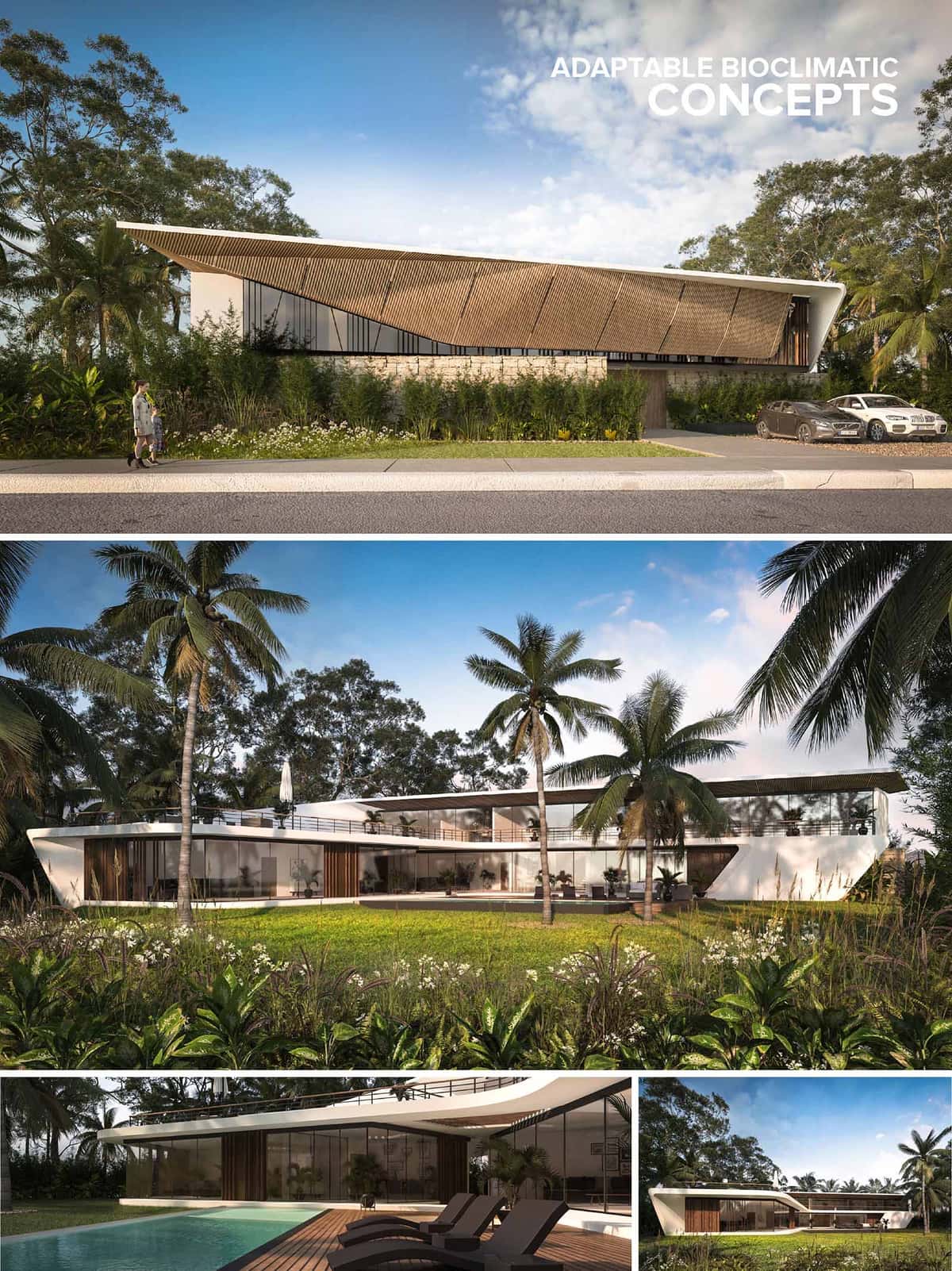

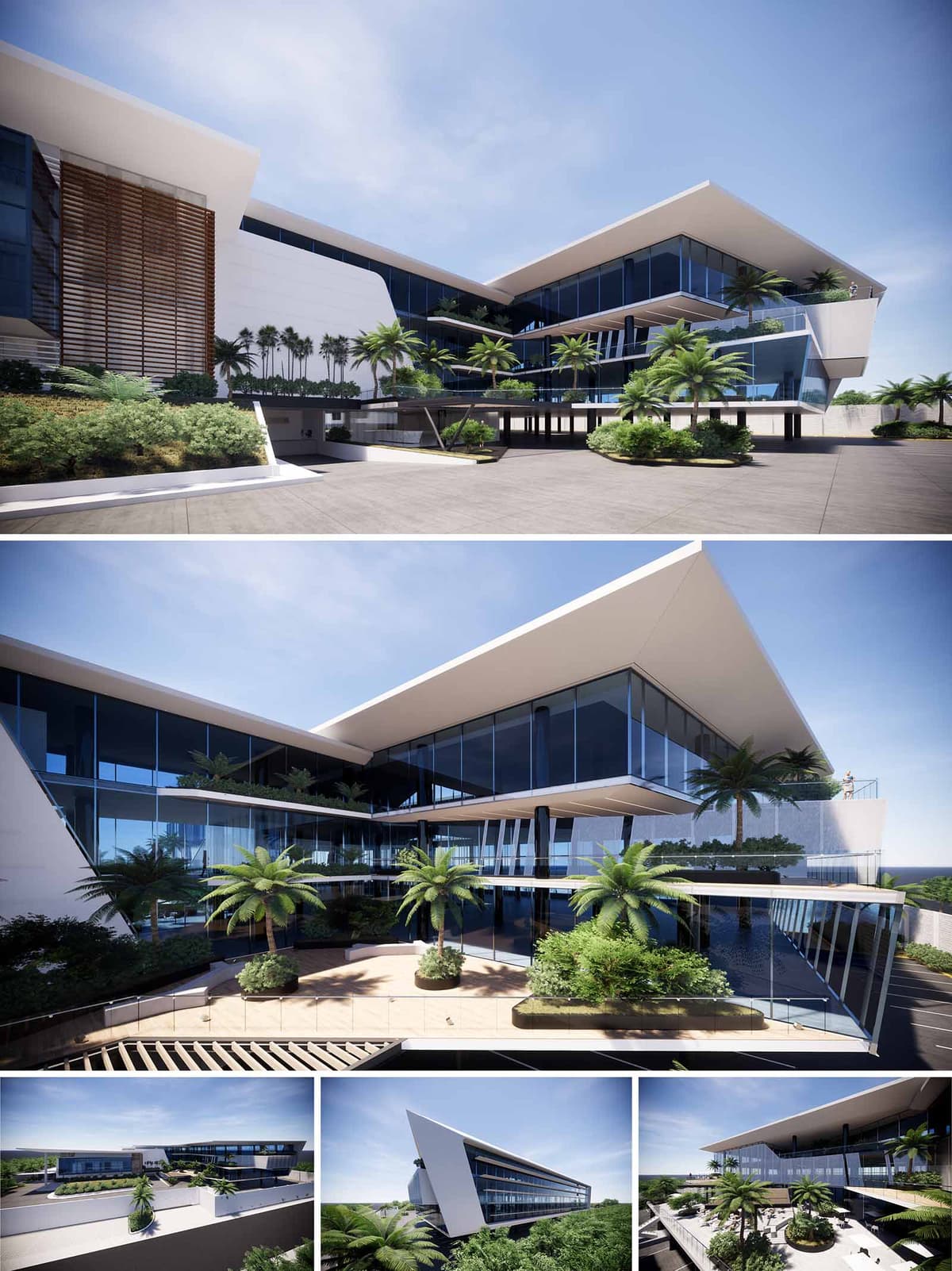
The RRT Villa in Punta Cana is conceived as an adaptable bioclimatic envelope rather than a closed object. The house stretches horizontally, embracing the landscape with a continuous, flowing roofline that folds down to form structural planes. Architecture, climate and lifestyle are integrated to create a resort-like home where shading, cross-ventilation and outdoor living drive every spatial decision. The composition balances privacy to the street with full openness to the garden and poolside life.
Located in a tropical coastal environment, the villa is oriented to capture prevailing breezes and frame long views across the garden. The street façade is more opaque and elevated, acting as a protective filter against heat, noise and visual exposure. Towards the interior of the plot, the building opens in a linear bar facing the lawn, water and palms, maximizing east–west light while controlling direct solar gain with deep overhangs and vertical fins.
The architectural expression is defined by a light, aerodynamically shaped white roof that hovers above glazed volumes. This roof wraps down at the ends, becoming a sculpted wall that anchors the composition. The overall language is minimal and horizontal, with continuous bands of glass, slender columns and recessed ground floor planes, giving the upper level a clear floating effect. The structure reads as a series of layered planes—roof, screen and glass—designed to modulate sun, views and privacy.
Living spaces are organized as a continuous indoor–outdoor sequence. Large sliding glass panels disappear into pockets, turning the main social areas into an open pavilion facing the pool. The upper floor enjoys a linear balcony and roof terrace, creating shaded outdoor lounges directly connected to bedrooms and family spaces. Visual permeability allows the landscape to be present from almost every room, while overhangs and screens ensure comfort without relying solely on mechanical cooling.
Materials are kept honest and tactile: smooth white rendered surfaces, warm vertical timber slats, clear and tinted glazing, and natural stone at the lower plinth. Timber elements function both as aesthetic accents and as operable shading devices. The pool deck is finished in timber to remain cool underfoot and to visually merge with the interior flooring. Junctions between roof and glazing are treated with thin reveals, emphasizing the lightness of the canopy and the precision of the modernist detailing.
The villa integrates passive design as its primary sustainability tool. Extended eaves, vertical wooden louvers and recessed façades reduce solar gain on the glass. Cross-ventilation corridors are established through the linear plan, allowing night flushing and natural cooling. The flat roof is designed to accommodate solar panels and potential green roof areas, reducing heat island effects. Local materials and tropical planting minimize environmental impact, while the shaded outdoor rooms and pool reduce dependence on air-conditioning by encouraging naturally ventilated living.
Landscape design reinforces the bioclimatic concept with dense, native vegetation forming a green buffer around the property. Palm trees punctuate the lawn, offering additional shade and anchoring the villa in its Caribbean context. The pool aligns with the main façade, acting as a climatic mirror that visually extends the interior and provides evaporative cooling. Low-maintenance, drought-tolerant species are prioritized to reduce irrigation demands, creating a cohesive, sustainable resort atmosphere for year-round troical living.


The RRT Villa in Punta Cana is conceived as an adaptable bioclimatic envelope rather than a closed object. The house stretches horizontally, embracing the landscape with a continuous, flowing roofline that folds down to form structural planes. Architecture, climate and lifestyle are integrated to create a resort-like home where shading, cross-ventilation and outdoor living drive every spatial decision. The composition balances privacy to the street with full openness to the garden and poolside life.
Located in a tropical coastal environment, the villa is oriented to capture prevailing breezes and frame long views across the garden. The street façade is more opaque and elevated, acting as a protective filter against heat, noise and visual exposure. Towards the interior of the plot, the building opens in a linear bar facing the lawn, water and palms, maximizing east–west light while controlling direct solar gain with deep overhangs and vertical fins.
The architectural expression is defined by a light, aerodynamically shaped white roof that hovers above glazed volumes. This roof wraps down at the ends, becoming a sculpted wall that anchors the composition. The overall language is minimal and horizontal, with continuous bands of glass, slender columns and recessed ground floor planes, giving the upper level a clear floating effect. The structure reads as a series of layered planes—roof, screen and glass—designed to modulate sun, views and privacy.
Living spaces are organized as a continuous indoor–outdoor sequence. Large sliding glass panels disappear into pockets, turning the main social areas into an open pavilion facing the pool. The upper floor enjoys a linear balcony and roof terrace, creating shaded outdoor lounges directly connected to bedrooms and family spaces. Visual permeability allows the landscape to be present from almost every room, while overhangs and screens ensure comfort without relying solely on mechanical cooling.
Materials are kept honest and tactile: smooth white rendered surfaces, warm vertical timber slats, clear and tinted glazing, and natural stone at the lower plinth. Timber elements function both as aesthetic accents and as operable shading devices. The pool deck is finished in timber to remain cool underfoot and to visually merge with the interior flooring. Junctions between roof and glazing are treated with thin reveals, emphasizing the lightness of the canopy and the precision of the modernist detailing.
The villa integrates passive design as its primary sustainability tool. Extended eaves, vertical wooden louvers and recessed façades reduce solar gain on the glass. Cross-ventilation corridors are established through the linear plan, allowing night flushing and natural cooling. The flat roof is designed to accommodate solar panels and potential green roof areas, reducing heat island effects. Local materials and tropical planting minimize environmental impact, while the shaded outdoor rooms and pool reduce dependence on air-conditioning by encouraging naturally ventilated living.
Landscape design reinforces the bioclimatic concept with dense, native vegetation forming a green buffer around the property. Palm trees punctuate the lawn, offering additional shade and anchoring the villa in its Caribbean context. The pool aligns with the main façade, acting as a climatic mirror that visually extends the interior and provides evaporative cooling. Low-maintenance, drought-tolerant species are prioritized to reduce irrigation demands, creating a cohesive, sustainable resort atmosphere for year-round troical living.
© 2021 by sanzpont [arquitectura] . Webpage by sanzpont [digital] . Innovative Digital Experiences

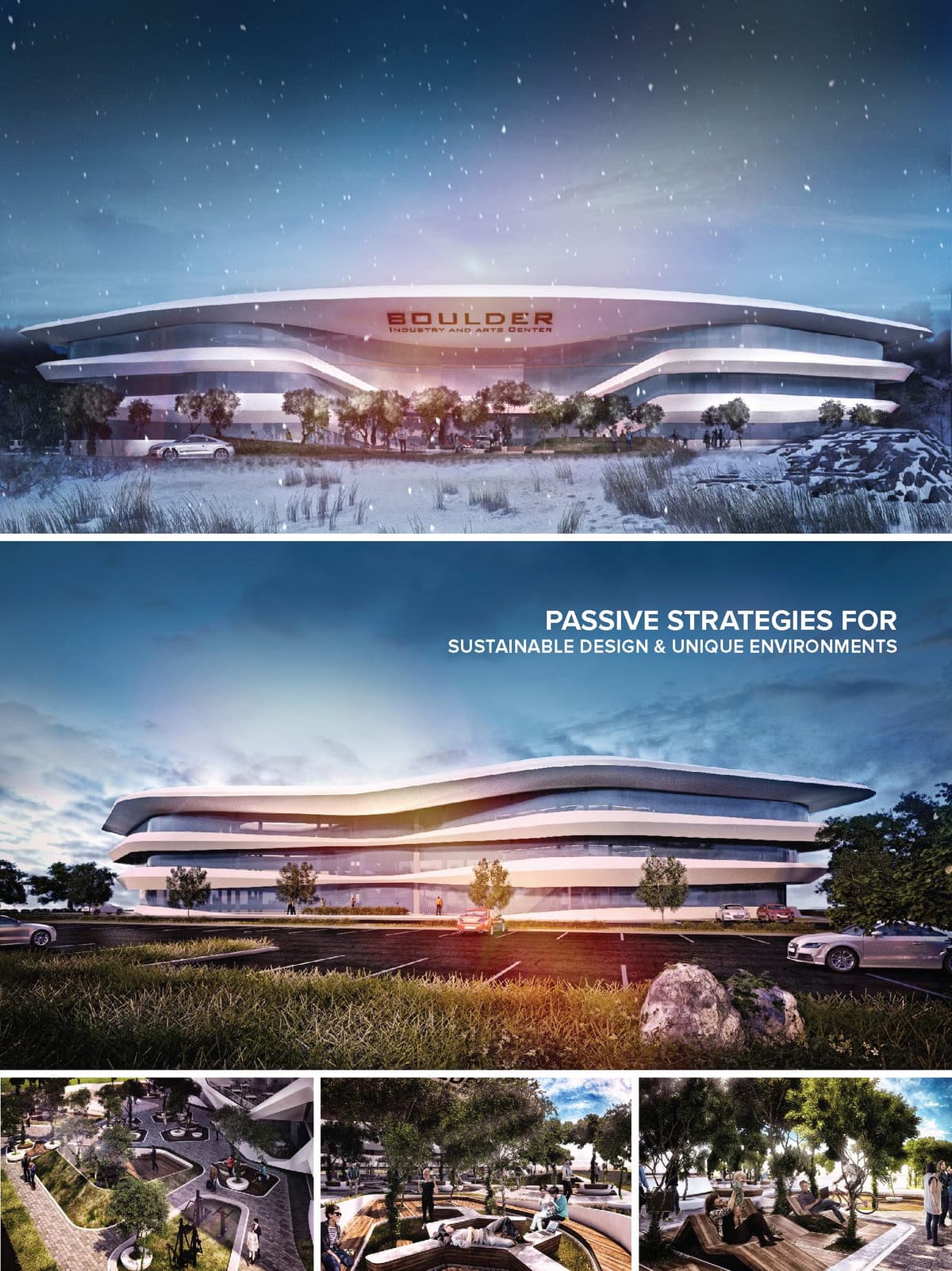
Ocoabay is located in Azua, Dominican Republic, one of 13 Caribbean countries. Azua is one of the 32 provinces of the Dominican Republic, which is located in the southwestern region of the country and bordered to the northwest by San Juan, to the west by Bahoruco, to the southwest by Barahona, to the south by the Caribbean Sea, to the northeast by La Vega, to the east by San José de Ocoa and to the southeast by Peravia.
According to the topographic plan, the lot is spread out over an area of 1,568,814.62 square meters (16,886,580 square feet) which varies between regular and mountainous. The regular areas maintain a constant slope, while the mountainous areas offer more variation including flatter sections where buildings were placed.
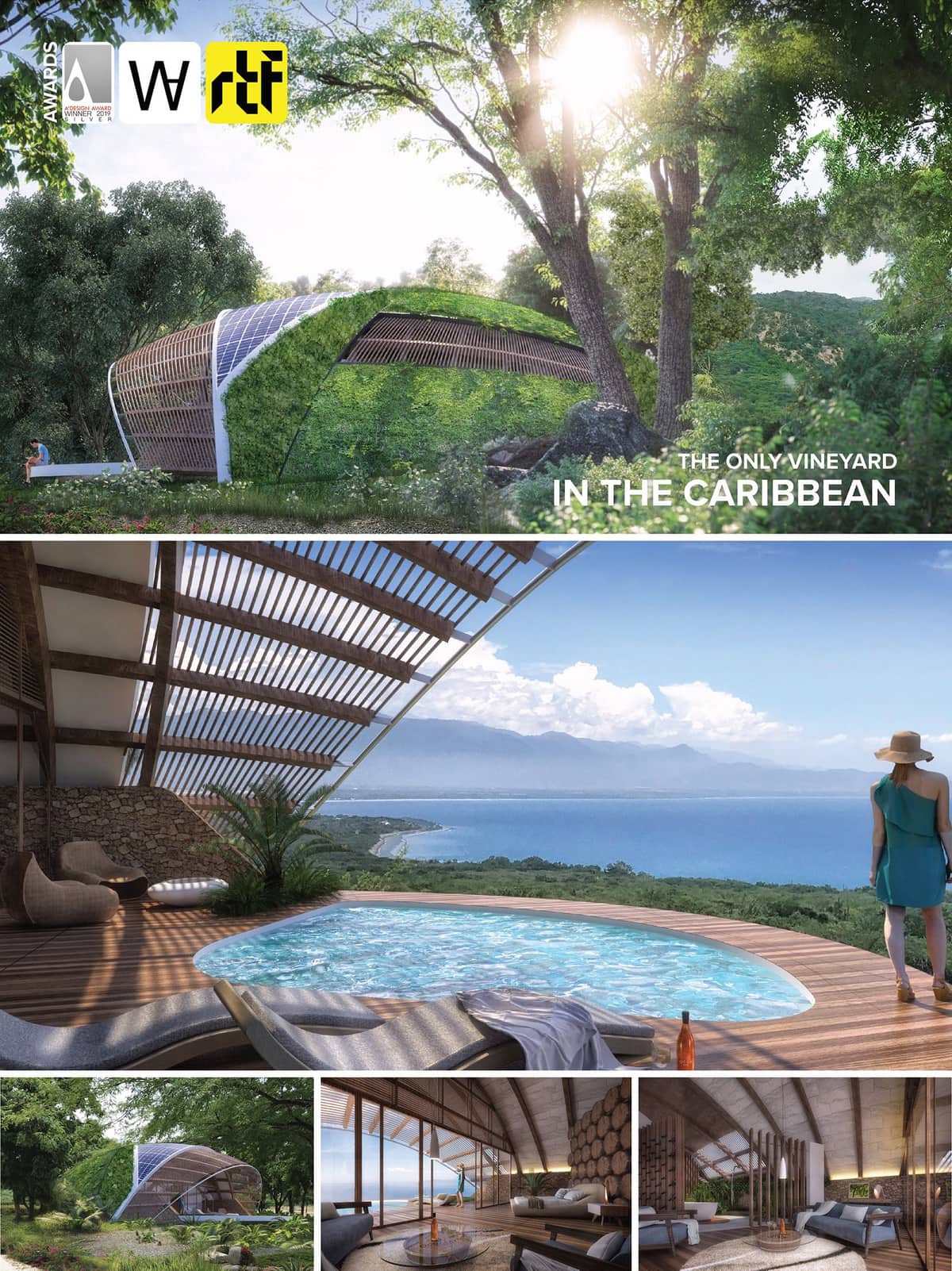
The general concept of Ocoabay revolves around the only vineyard in the Caribbean. This unique environment is what surrounds and gives life to this tourist destination. Ocoabay is the only development in the Caribbean that is based on wine production and the vineyard experience, which is why the vineyard itself is the inspiration that governs the design of the project. The Dominican Republic is one of the richest cultural and nature destinations, making Ocoabay one of the best destinations in all of the Caribbean.
The Ocoabay project is divided into two phases; the first phase includes a Boutique Hotel, Villas and an ApartHotel, plus an extensive variety of activities, which surround the vineyards, generating a circuit. PHASE I has a higher construction density than PHASE II since the latter is considered a natural reserve area, therefore the activities and works located within this phase are of low environmental impact. The activity areas within the project are linked one by one along the perimeter roads forming a circuit, allowing ease of mobility and orientation for guests and residents. The villas are the most densely occupied area and are organized in clusters around the large, central vineyard. This clustered organizational approach makes the location of each villa ideal. Ocoabay is a development focused on sustainability. Each of the areas contemplate a series of passive sustainable design strategies, combining the design concept with functionality to take advantage of the natural riches and merge architecture with the natural environment.
Furthermore, this organizational approach allows for the division of infrastructure and basic services, such as electricity and water, to be clearly controlled and operated by section. Also, the layout of the tertiary roads functions clearly and concisely by connecting each cluster to the secondary roads that surround the perimeter of the large, central vineyard, connecting each villa to the center of the project.
Strategies are considered to reduce energy consumption and increase the efficiency of the building, making use of renewable energy for lighting and making the most of natural light, in addition to the generation of energy, by means of solar photovoltaic panels, located on the roof. Efficient installations are also very important, as well as the artificial lighting system, which is proposed with a high efficiency LED system.
Natural lighting is achieved through the facade of extra clear glass solar control, promoting the best use of natural light during the day creating an adequate thermal environment.
The selection of responsable and local materials in proposed to minimize the amount of waste in the construction, as well as materials with recycled components and of low environmental impact.
A more intelligent use of drinking water is applied, both inside and outside the building, using technologies to reduce consumption, efficient installations, water recycling through the separation of gray water, taking advantage of then to irrigate green areas, as well as their control and measurement.
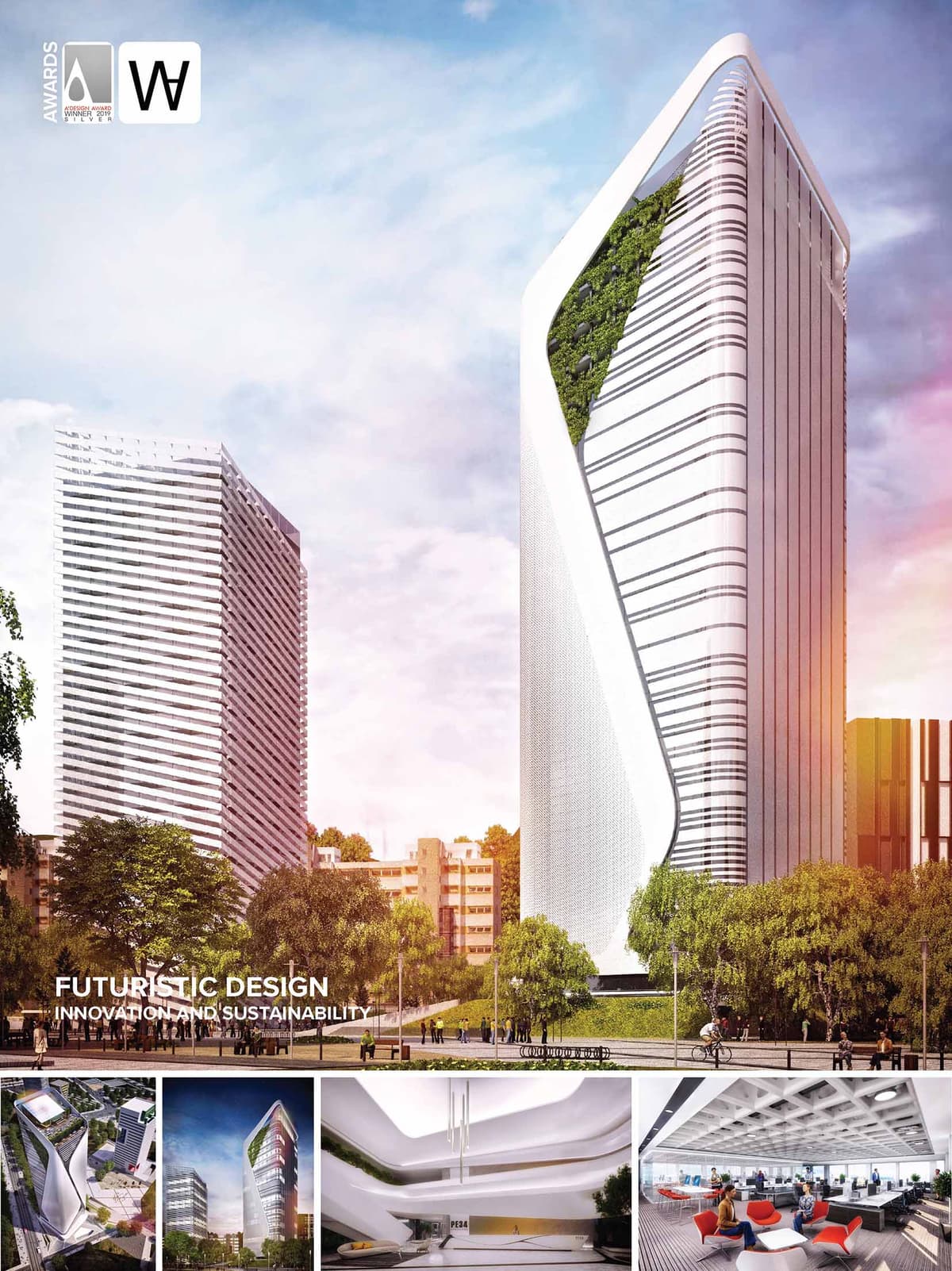
• A’ Design Award, Milan, Italy: Silver A' Design Award - A' Spatial Design Award
• ReThinking The Future, New Delhi, India: Second Award - Mixed Use Concept
• World Architecture Awards 10+5+X: Designed Category


• A’ Design Award, Milan, Italy: Silver A' Design Award - A' Spatial Design Award
• ReThinking The Future, New Delhi, India: Second Award - Mixed Use Concept
• World Architecture Awards 10+5+X: Designed Category
Ocoabay is located in Azua, Dominican Republic, one of 13 Caribbean countries. Azua is one of the 32 provinces of the Dominican Republic, which is located in the southwestern region of the country and bordered to the northwest by San Juan, to the west by Bahoruco, to the southwest by Barahona, to the south by the Caribbean Sea, to the northeast by La Vega, to the east by San José de Ocoa and to the southeast by Peravia.
According to the topographic plan, the lot is spread out over an area of 1,568,814.62 square meters (16,886,580 square feet) which varies between regular and mountainous. The regular areas maintain a constant slope, while the mountainous areas offer more variation including flatter sections where buildings were placed.
The general concept of Ocoabay revolves around the only vineyard in the Caribbean. This unique environment is what surrounds and gives life to this tourist destination. Ocoabay is the only development in the Caribbean that is based on wine production and the vineyard experience, which is why the vineyard itself is the inspiration that governs the design of the project. The Dominican Republic is one of the richest cultural and nature destinations, making Ocoabay one of the best destinations in all of the Caribbean.
The Ocoabay project is divided into two phases; the first phase includes a Boutique Hotel, Villas and an ApartHotel, plus an extensive variety of activities, which surround the vineyards, generating a circuit. PHASE I has a higher construction density than PHASE II since the latter is considered a natural reserve area, therefore the activities and works located within this phase are of low environmental impact. The activity areas within the project are linked one by one along the perimeter roads forming a circuit, allowing ease of mobility and orientation for guests and residents. The villas are the most densely occupied area and are organized in clusters around the large, central vineyard. This clustered organizational approach makes the location of each villa ideal. Ocoabay is a development focused on sustainability. Each of the areas contemplate a series of passive sustainable design strategies, combining the design concept with functionality to take advantage of the natural riches and merge architecture with the natural environment.
Furthermore, this organizational approach allows for the division of infrastructure and basic services, such as electricity and water, to be clearly controlled and operated by section. Also, the layout of the tertiary roads functions clearly and concisely by connecting each cluster to the secondary roads that surround the perimeter of the large, central vineyard, connecting each villa to the center of the project.
Strategies are considered to reduce energy consumption and increase the efficiency of the building, making use of renewable energy for lighting and making the most of natural light, in addition to the generation of energy, by means of solar photovoltaic panels, located on the roof. Efficient installations are also very important, as well as the artificial lighting system, which is proposed with a high efficiency LED system.
Natural lighting is achieved through the facade of extra clear glass solar control, promoting the best use of natural light during the day creating an adequate thermal environment.
The selection of responsable and local materials in proposed to minimize the amount of waste in the construction, as well as materials with recycled components and of low environmental impact.
A more intelligent use of drinking water is applied, both inside and outside the building, using technologies to reduce consumption, efficient installations, water recycling through the separation of gray water, taking advantage of then to irrigate green areas, as well as their control and measurement.
© 2021 by sanzpont [arquitectura] . Webpage by sanzpont [digital] . Innovative Digital Experiences
Client involvement and co-design are central to our approach, ensuring that each project reflects the unique needs and visions of those we serve. By actively engaging clients throughout the design process, we foster a collaborative environment where ideas flourish, resulting in spaces that are not only functional but also deeply personalized.
A project is not only about the result, is about enjoying the journey with the client.
At our firm, tailoring your Caribbean project is our specialty. Whether it is a beachfront resort, a residential community or a commercial destination, we craft each design to align with your business goals, your site and your brand. Our process is interactive and client-focused, ensuring every decision supports the experience you want to create.
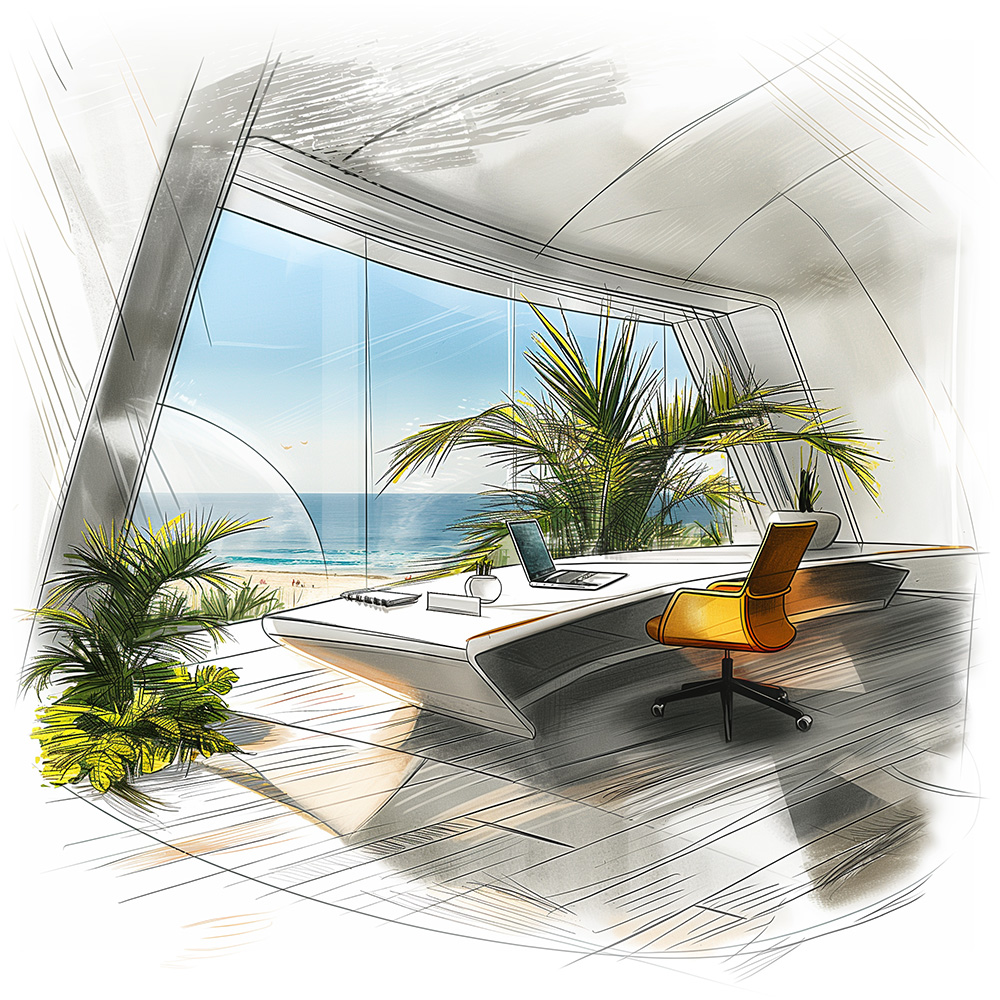
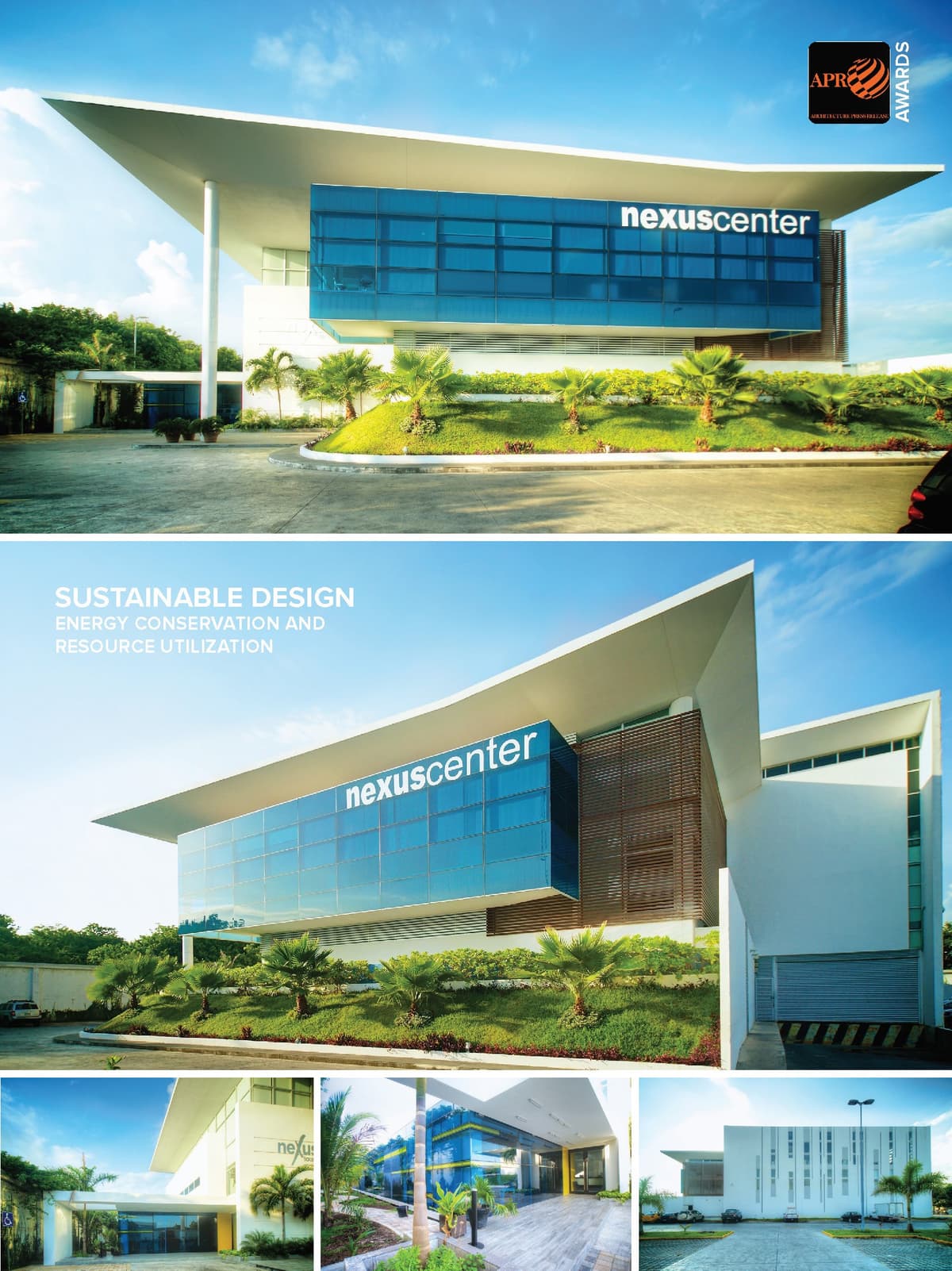
In the Caribbean, bioclimatic design is essential. Orientation, cross ventilation, solar shading and resilient materials allow our buildings to work with the tropical climate rather than against it — reducing energy consumption, enhancing comfort and protecting your investment year-round, in harmony with the Dominican landscape.
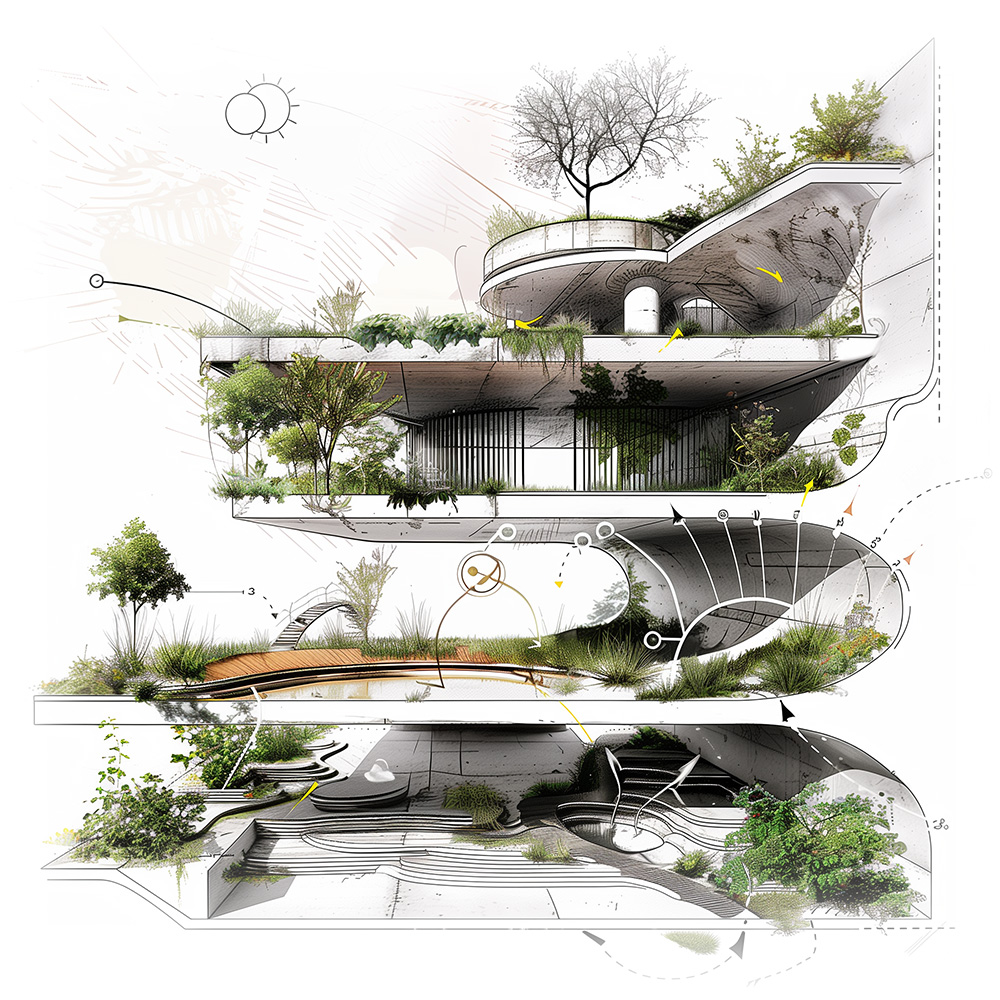
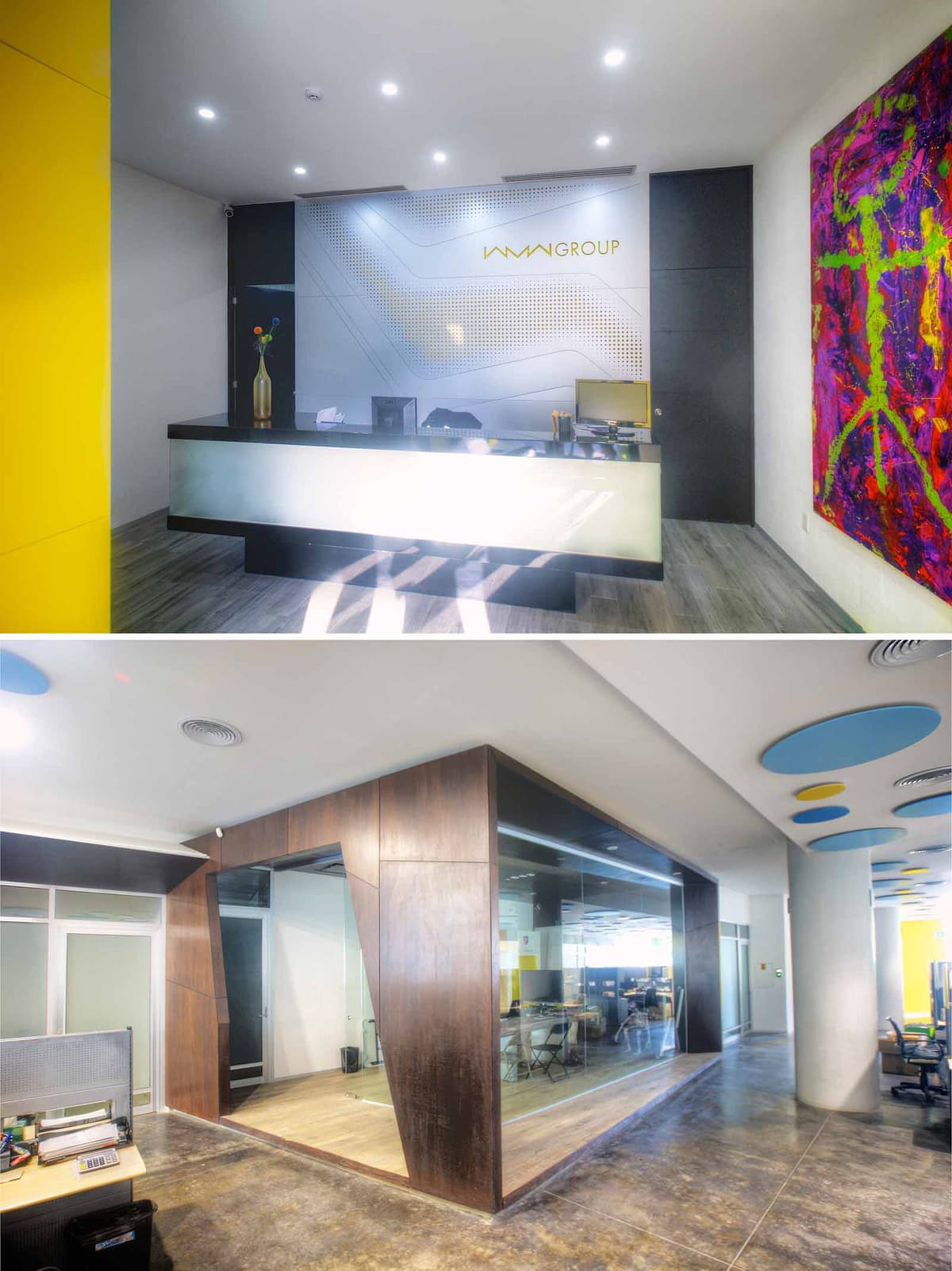
Our designs are user-focused, logical, and functional, tailored to meet the specific needs of those who inhabit the spaces we create. We prioritize intuitive layouts and smart solutions that enhance usability and efficiency. Every design decision is driven by a deep understanding of user interaction and operational flow, ensuring optimal functionality.
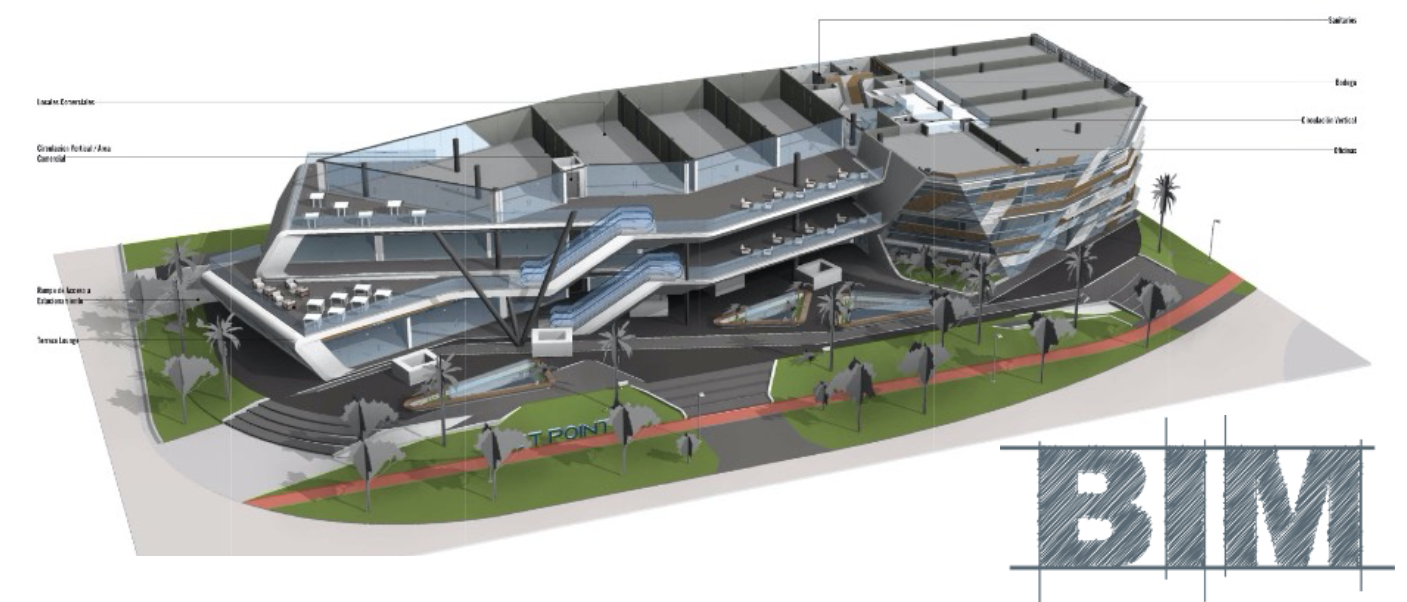
Our BIM (Building Information Modeling) projects workflow integrates advanced technology to streamline and enhance the design process. This method allows for precise, efficient planning and execution, enabling better coordination, cost management, and project visualization. With BIM, we ensure a seamless, collaborative, and high-quality construction process.
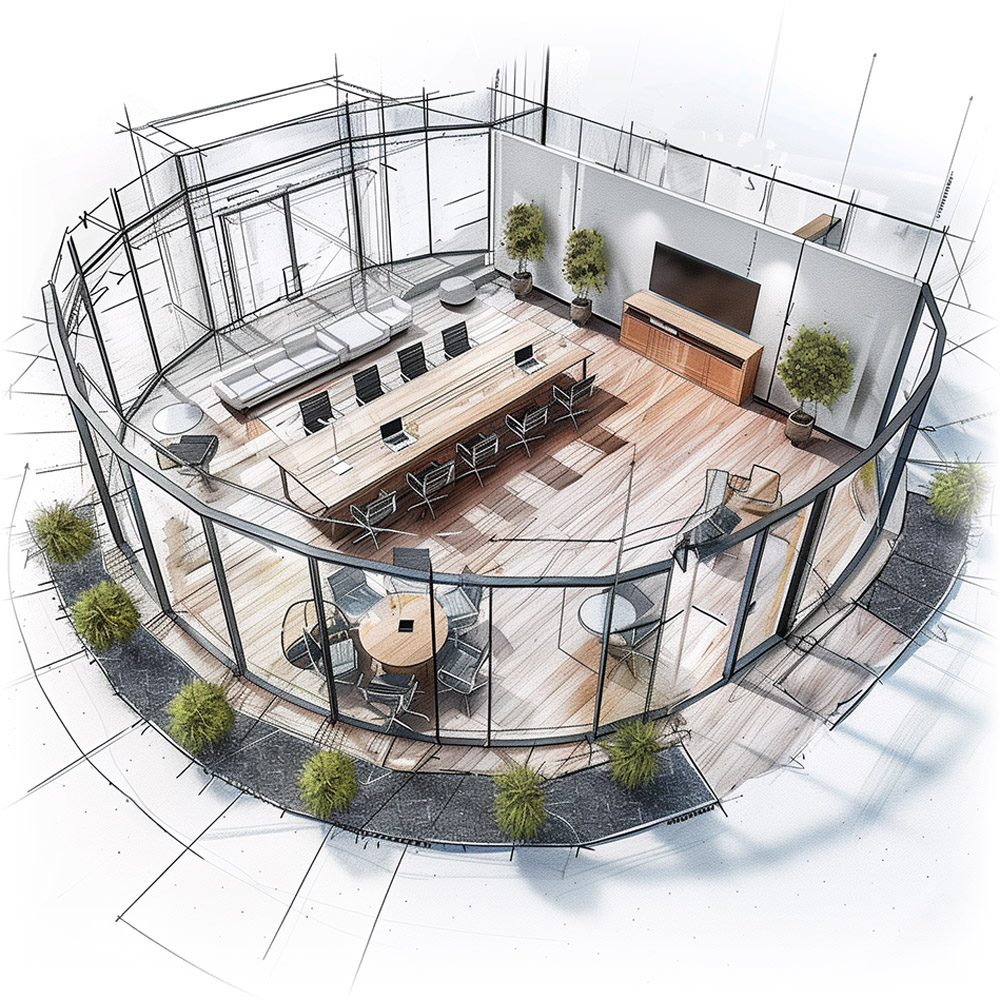
Our interactive visualizations bring your project to life before construction begins, offering a dynamic and immersive experience. These advanced tools enable you to explore design options and modifications in real-time, ensuring the final outcome perfectly aligns with your vision. This technology fosters deeper understanding and engagement throughout the design process.

Virtual Reality (VR) visualization lets you experience and refine your project before it's built, providing a clear sense of space and design. This real-time capability ensures accuracy, saves time, and prevents expensive modifications, enhancing decision-making and deepening your connection to the project's final vision.

At our core, we are a collective of creative minds, constantly pushing the boundaries of design and innovation. Our team thrives on challenging conventions and exploring new possibilities to create spaces that are not only functional but also artistically inspiring. We transform visions into realities, crafting environments that resonate and inspire.
We are acutely sensitive to project budgets, ensuring that our designs align with your financial parameters without compromising quality or functionality. Our strategic approach involves meticulous planning and resource management, allowing us to deliver exceptional projects that respect your budget and maximize your investment.

With offices in Barcelona, Cancún, Chicago and Santo Domingo, we bring a global perspective to every project. Our international experience, recognized with more than 100 design awards, meets universal standards of excellence while adapting each design to the culture, climate and character of the Dominican Republic.

Our Santo Domingo studio works hand in hand with Dominican consultants, engineers and builders, ensuring every design complies with local regulations and construction practice. This local presence allows us to accompany your project on site, from the first sketch to the final detail — as one team, on the ground.
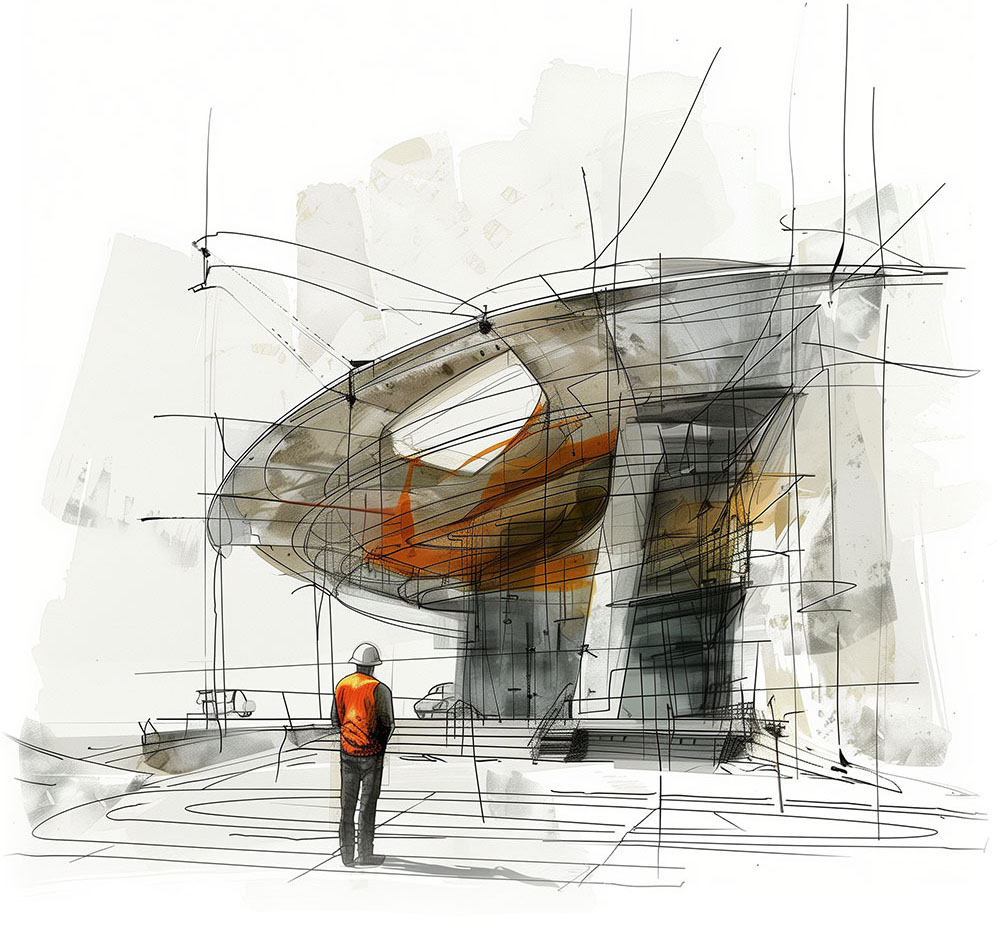


Our offices are located in Barcelona, Cancún, Chicago and Santo Domingo, but thanks to technology we can do projects on all over the world.
Barcelona
Bac de Roda 136
08020, Barcelona
Spain
Madrid
Av. de Buendía 11
19005 Guadalajara (Madrid)
Spain
Chicago
373 Hazel Ave, Apt A1
60022, Glencoe, Illinois
United States