

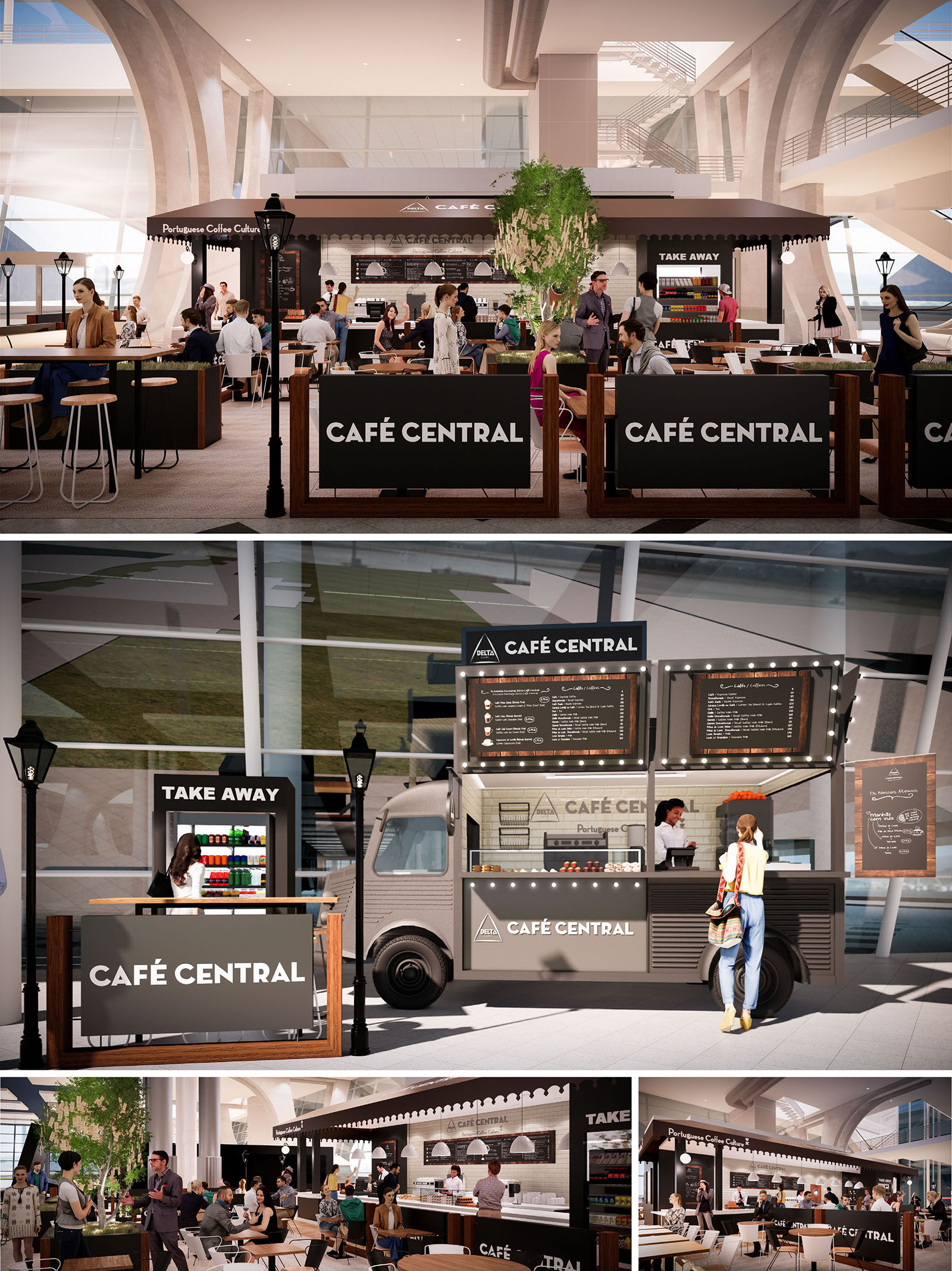
DELTA CAFE is conceived as a contemporary interpretation of the Portuguese café culture, designed to adapt to three different locations while maintaining a clear and recognisable identity. The project merges the informality of the traditional “café de bairro” with the efficiency of a transit‑oriented food hub, using a modular language that can be scaled, rotated and recombined according to each site. The core intention is to create an urban living room inside infrastructural environments such as malls or transport terminals, where people can pause, meet and experience coffee as a social ritual.
The architecture responds to the fluidity of public circulation with permeable edges, low partitions and open counters that invite approach from all sides. The visual vocabulary balances heritage and modernity: a monochrome base palette, clear signage and graphic rigor underline the brand, while material warmth and human scale bring comfort and familiarity to large glazed surroundings.
The spatial strategy is based on a sequence of differentiated zones: ordering counters, bar seating, communal tables and peripheral lounge areas. In the main configuration, the central bar aligns longitudinally with the flow of the concourse, creating a clear front for service and a more intimate back area for preparation. Peripheral timber-framed balustrades delineate the café footprint without forming solid walls, allowing views across the public hall and maintaining visual continuity.
High stools along linear counters support fast consumption for travellers, while larger shared tables accommodate groups and longer stays. The modular takeaway stations and the mobile coffee truck can operate independently or as extensions of the primary unit, ensuring flexibility during peak hours and the possibility of reconfiguring the layout as tenant needs or circulation patterns evolve.
The interior palette is deliberately restrained: deep charcoal and warm grey form the background for the white brand logotype, ensuring high legibility in busy environments. Timber in a medium, natural tone is used for frames, table tops and balustrades, providing tactile warmth and a domestic counterpoint to the surrounding structural concrete and glass. Black metal elements in stools, lamps and menu frames echo the graphic identity and create a coherent visual rhythm.
Surfaces behind the counter make use of white tiles and light-toned finishes to emphasise cleanliness and reflect light onto the worktop. Awning-like cornices and scalloped edges reference traditional Portuguese cafés, while festoon lighting around the truck and menu boards introduces a subtle festive atmosphere. The repetition of the “CAFÉ CENTRAL” signage on multiple planes ensures that the space is clearly identifiable from various approach angles within large-scale halls.
Furniture is designed for robustness and high turnover, with round-edged table tops and simple stool geometries that facilitate quick rearrangement. The mix of bar-height and standard-height seating addresses different user profiles, from solo travellers needing a quick stop with luggage to families or groups seeking a more relaxed moment. The defined yet permeable boundary created by branded panels offers a psychological sense of enclosure without compromising transparency.
Lighting combines the existing ambient illumination of the host buildings with focused pendant lights over the counter and integrated LED strips in menu boards and display shelves. This layered approach accentuates product presentation and guides the user intuitively to ordering points and pickup zones, while maintaining a comfortable overall luminance suitable for reading or working.
Sustainability is addressed through modular construction, durable materials and an emphasis on reusability across the three locations. The main structural and furniture elements are conceived as kit-of-parts systems that can be dismantled, transported and reassembled, reducing construction waste and enabling future adaptation when commercial requirements change. Timber components are specified from certified sources, and metal structures are designed for long life and easy maintenance.
The open, naturally lit host environments reduce the need for artificial lighting during daytime, while energy-efficient LED fixtures and compact equipment minimise operational consumption. The takeaway kiosks and mobile truck concentrate services and storage, optimising logistics and limiting back-of-house areas. The project also facilitates waste separation and encourages reusable cups and packaging solutions, integrating brand experience with responsible environmental behaviour.
LIST OF PROJECTS EXPERIENCE
Designed, Executed and/or Built Projects
PORTUGAL
1. Delta Café - Lisboa - T1.L4.03
2. Delta Café - Oporto - Terraza Exterior
3. Delta Café - Oporto - Tierra Llegadas
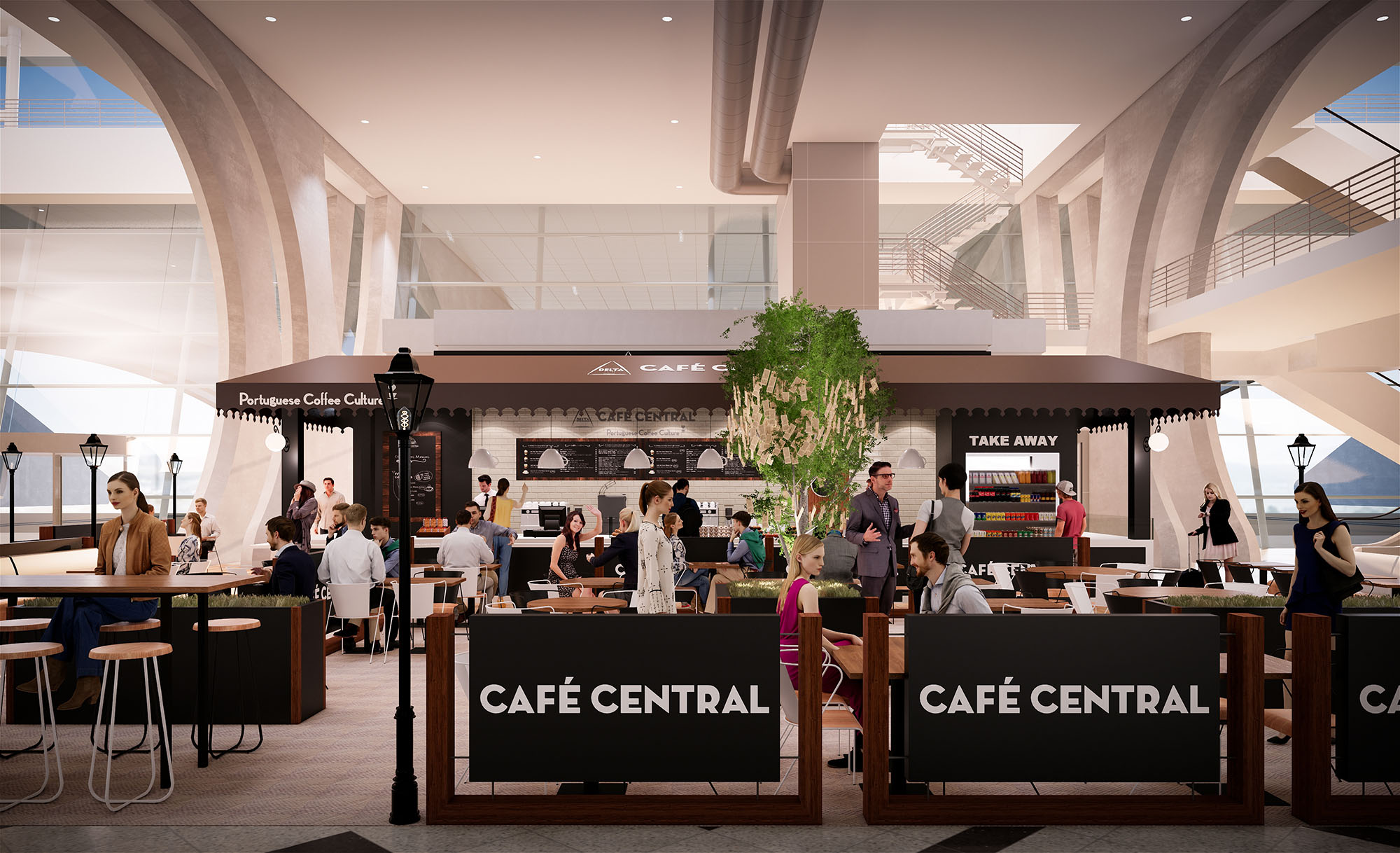

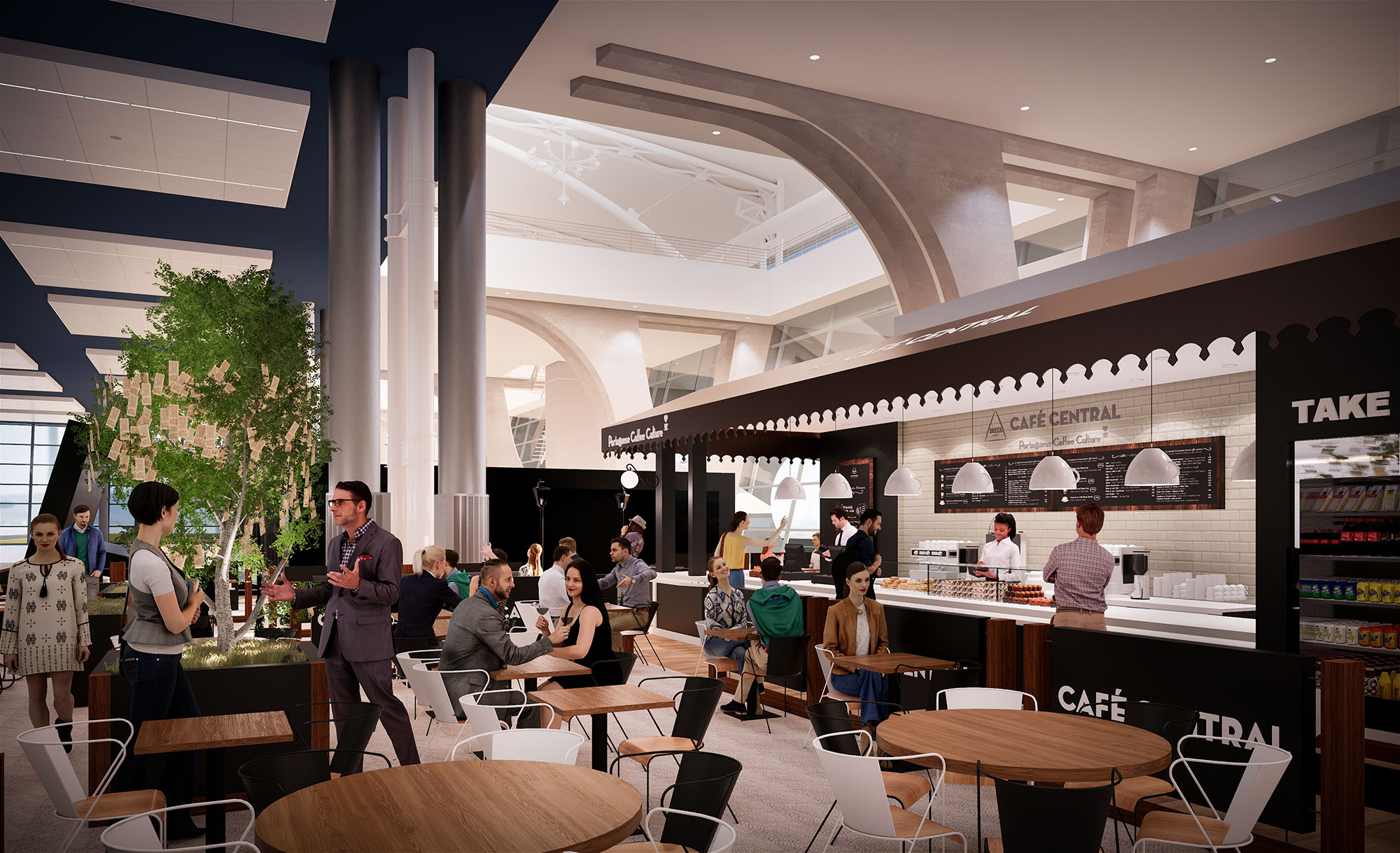
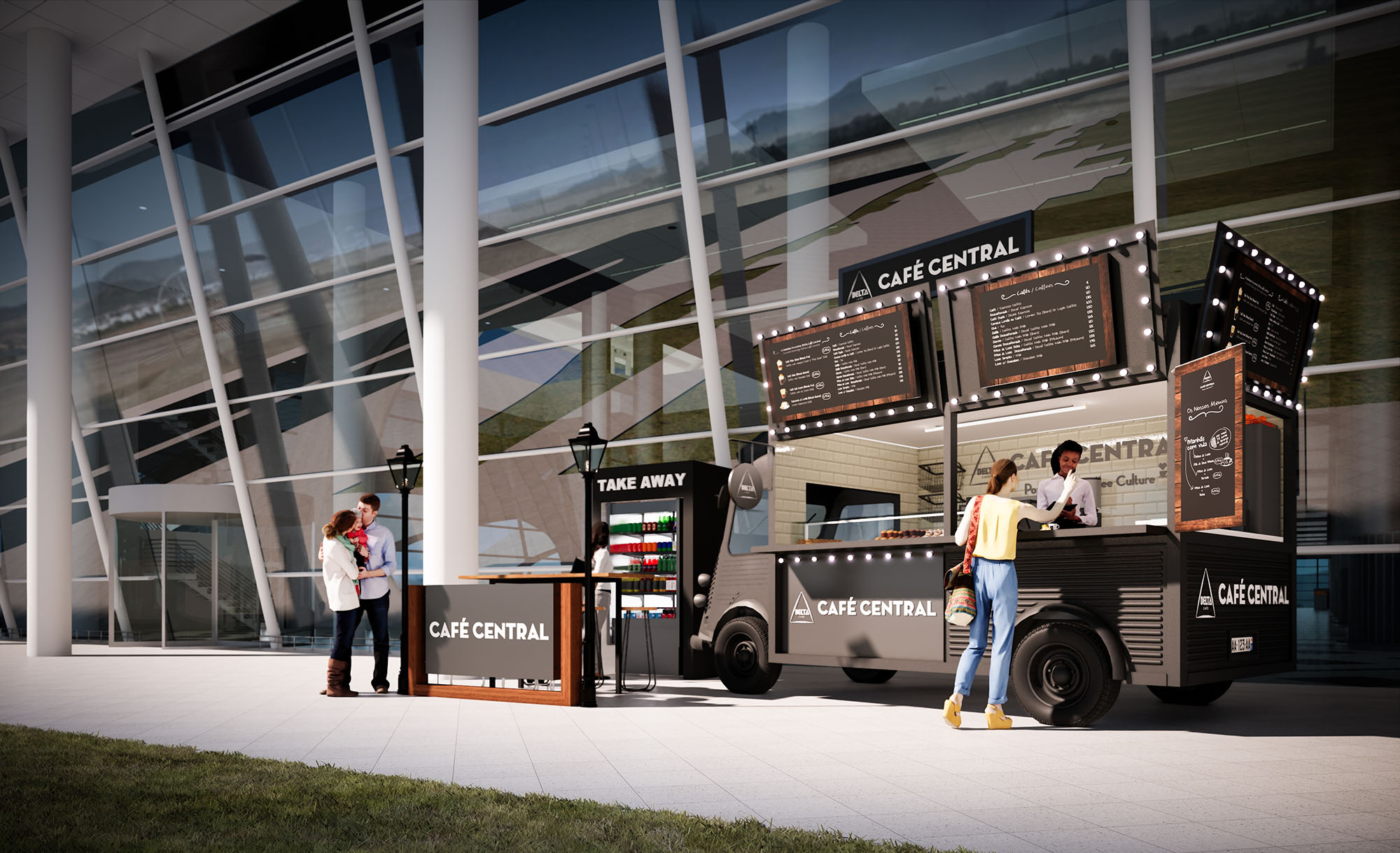
DELTA CAFE is conceived as a contemporary interpretation of the Portuguese café culture, designed to adapt to three different locations while maintaining a clear and recognisable identity. The project merges the informality of the traditional “café de bairro” with the efficiency of a transit‑oriented food hub, using a modular language that can be scaled, rotated and recombined according to each site. The core intention is to create an urban living room inside infrastructural environments such as malls or transport terminals, where people can pause, meet and experience coffee as a social ritual.
The architecture responds to the fluidity of public circulation with permeable edges, low partitions and open counters that invite approach from all sides. The visual vocabulary balances heritage and modernity: a monochrome base palette, clear signage and graphic rigor underline the brand, while material warmth and human scale bring comfort and familiarity to large glazed surroundings.
The spatial strategy is based on a sequence of differentiated zones: ordering counters, bar seating, communal tables and peripheral lounge areas. In the main configuration, the central bar aligns longitudinally with the flow of the concourse, creating a clear front for service and a more intimate back area for preparation. Peripheral timber-framed balustrades delineate the café footprint without forming solid walls, allowing views across the public hall and maintaining visual continuity.
High stools along linear counters support fast consumption for travellers, while larger shared tables accommodate groups and longer stays. The modular takeaway stations and the mobile coffee truck can operate independently or as extensions of the primary unit, ensuring flexibility during peak hours and the possibility of reconfiguring the layout as tenant needs or circulation patterns evolve.
The interior palette is deliberately restrained: deep charcoal and warm grey form the background for the white brand logotype, ensuring high legibility in busy environments. Timber in a medium, natural tone is used for frames, table tops and balustrades, providing tactile warmth and a domestic counterpoint to the surrounding structural concrete and glass. Black metal elements in stools, lamps and menu frames echo the graphic identity and create a coherent visual rhythm.
Surfaces behind the counter make use of white tiles and light-toned finishes to emphasise cleanliness and reflect light onto the worktop. Awning-like cornices and scalloped edges reference traditional Portuguese cafés, while festoon lighting around the truck and menu boards introduces a subtle festive atmosphere. The repetition of the “CAFÉ CENTRAL” signage on multiple planes ensures that the space is clearly identifiable from various approach angles within large-scale halls.
Furniture is designed for robustness and high turnover, with round-edged table tops and simple stool geometries that facilitate quick rearrangement. The mix of bar-height and standard-height seating addresses different user profiles, from solo travellers needing a quick stop with luggage to families or groups seeking a more relaxed moment. The defined yet permeable boundary created by branded panels offers a psychological sense of enclosure without compromising transparency.
Lighting combines the existing ambient illumination of the host buildings with focused pendant lights over the counter and integrated LED strips in menu boards and display shelves. This layered approach accentuates product presentation and guides the user intuitively to ordering points and pickup zones, while maintaining a comfortable overall luminance suitable for reading or working.
Sustainability is addressed through modular construction, durable materials and an emphasis on reusability across the three locations. The main structural and furniture elements are conceived as kit-of-parts systems that can be dismantled, transported and reassembled, reducing construction waste and enabling future adaptation when commercial requirements change. Timber components are specified from certified sources, and metal structures are designed for long life and easy maintenance.
The open, naturally lit host environments reduce the need for artificial lighting during daytime, while energy-efficient LED fixtures and compact equipment minimise operational consumption. The takeaway kiosks and mobile truck concentrate services and storage, optimising logistics and limiting back-of-house areas. The project also facilitates waste separation and encourages reusable cups and packaging solutions, integrating brand experience with responsible environmental behaviour.


Our offices are located in Barcelona, Cancún, Chicago and Santo Domingo, but thanks to technology we can do projects on all over the world.
Barcelona
Bac de Roda 136
08020, Barcelona
Spain
Madrid
Av. de Buendía 11
19005 Guadalajara (Madrid)
Spain
Chicago
373 Hazel Ave, Apt A1
60022, Glencoe, Illinois
United States