

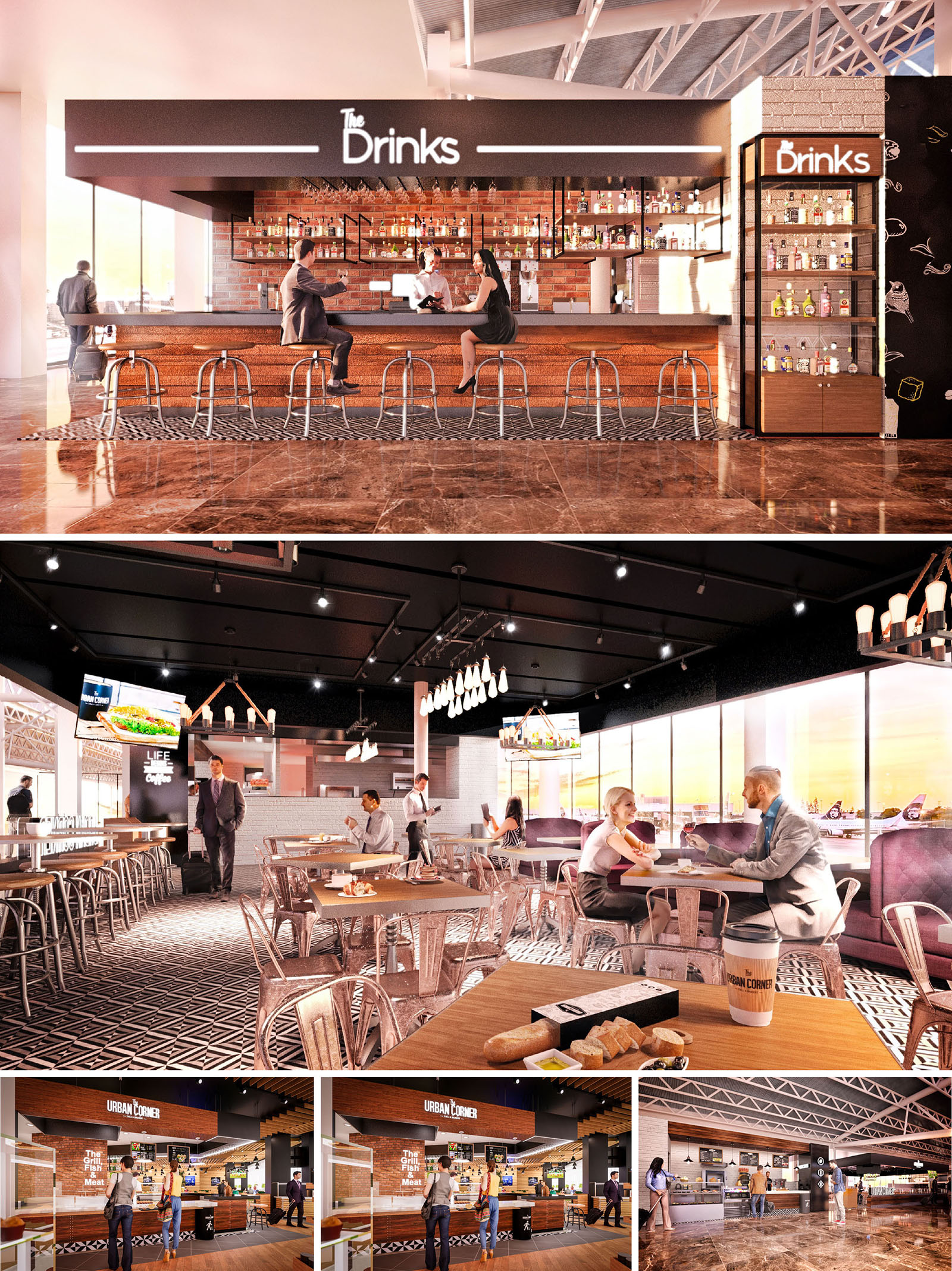
URBAN CORNER is conceived as a contemporary metropolitan oasis inside the dynamic context of airports in Tijuana and Guadalajara. The project merges the atmosphere of a street bistro and an urban bar, translating the vibrancy of the city into an interior that feels both informal and carefully curated. The design emphasizes clear brand visibility, open connectivity with the terminal, and a fluid customer experience from quick coffee stops to longer meals and drinks.
The overall language is industrial‑chic, combining exposed structures, metal furniture and warm woods to generate a robust yet welcoming environment. The spatial narrative is anchored by two main elements: the central bar “The Drinks” as a social focus, and the surrounding food counters and seating platforms that organize circulation and invite users to occupy the space in different ways.
The plan is structured around a clear axial composition. The bar occupies a central peninsula, open on three sides, allowing customers to approach from the main corridor or from the dining area. This strategy maximizes visibility and creates an iconic silhouette against the terminal glazing. Seating is distributed in layers: high stools along the bar and perimeter counters for quick stays, and standard tables with upholstered benches and metal chairs for longer visits.
Circulation flows diagonally across the restaurant, guiding users from the airport concourse into the service area and then towards the panoramic windows. Service counters for food selection, payment and beverage pick‑up are aligned to avoid crossings between staff and passengers with luggage. Lighting tracks and ceiling elements also help define functional zones without using physical barriers, preserving openness and transparency.
The palette is intentionally warm and urban. Brick cladding and timber panels define the main volumes, contrasted by black metal frames and shelving that reinforce the industrial character. The bar front and back counter use horizontal wood slats and glossy surfaces to reflect ambient light and highlight the bottle display. Behind the bar, a brick wall with open shelving becomes a graphic backdrop, intensifying the sense of depth.
The flooring alternates between polished stone in the circulation belt and patterned tiles in the dining and bar area. This contrast clearly marks the transition from public flow to the more intimate restaurant domain. Neutral tones—browns, grays and off‑whites—are punctuated by brand elements in black and white signage, as well as the warm glow of the suspended luminaires. The result is an atmosphere that feels sophisticated yet accessible to a broad traveler profile.
The lighting concept balances natural and artificial sources. Large glazed façades flood the interior with daylight and maintain visual continuity with the runways, transforming the restaurant into an observation platform. At night or in low‑light conditions, a combination of linear LEDs, track spotlights and decorative fixtures articulates the space and emphasizes textures.
Above the central dining area, sculptural pendant luminaires with exposed bulbs introduce a casual, almost domestic scale, softening the otherwise infrastructural character of the airport. The black ceiling absorbs reflections and hides installations, while focused lighting on tables and counters ensures visual comfort and highlights food presentation and brand graphics.
Furniture selection reinforces the urban identity. Metal Tolix‑style chairs and high stools echo the industrial vocabulary, while upholstered banquettes along the windows provide comfort for longer waits. Tables are simple wooden tops with robust metal bases, designed for intensive use and easy maintenance. The layout allows flexible grouping of tables to accommodate solo travelers, couples or larger groups.
Branding is integrated architecturally rather than applied superficially. Large overhead signage—“URBAN CORNER” and “The Drinks”—acts as a beacon visible from the concourse. Chalkboard‑style graphics and illuminated menu boards contribute to an informal, contemporary feel. The overall experience supports multiple rhythms of stay: a fast breakfast, a working coffee with laptops, or an after‑flight drink at the bar, all within a consistent visual identity.
Sustainability is addressed through material selection, energy efficiency and operational layout. Durable finishes such as ceramic tiles, metal furniture and engineered wood reduce replacement cycles and maintenance, key for high‑traffic airport environments. Where possible, locally sourced materials and standardized components minimize transport impacts and facilitate repairs.
The design maximizes existing natural light to reduce dependence on artificial lighting during the day, while LED technology and dimmable circuits optimize energy consumption after dark. The open layout allows cross‑ventilation in areas with operable façades and reduces the need for internal partitions, limiting construction waste. Operationally, the compact organization of kitchen, bar and service counters shortens staff routes and supports efficient use of equipment and resources, encouraging a more sustainable daily operation for URBAN CORNER.
URBAN CORNER is conceived as a contemporary metropolitan oasis inside the dynamic context of airports in Tijuana and Guadalajara. The project merges the atmosphere of a street bistro and an urban bar, translating the vibrancy of the city into an interior that feels both informal and carefully curated. The design emphasizes clear brand visibility, open connectivity with the terminal, and a fluid customer experience from quick coffee stops to longer meals and drinks.
The overall language is industrial‑chic, combining exposed structures, metal furniture and warm woods to generate a robust yet welcoming environment. The spatial narrative is anchored by two main elements: the central bar “The Drinks” as a social focus, and the surrounding food counters and seating platforms that organize circulation and invite users to occupy the space in different ways.
The plan is structured around a clear axial composition. The bar occupies a central peninsula, open on three sides, allowing customers to approach from the main corridor or from the dining area. This strategy maximizes visibility and creates an iconic silhouette against the terminal glazing. Seating is distributed in layers: high stools along the bar and perimeter counters for quick stays, and standard tables with upholstered benches and metal chairs for longer visits.
Circulation flows diagonally across the restaurant, guiding users from the airport concourse into the service area and then towards the panoramic windows. Service counters for food selection, payment and beverage pick‑up are aligned to avoid crossings between staff and passengers with luggage. Lighting tracks and ceiling elements also help define functional zones without using physical barriers, preserving openness and transparency.
The palette is intentionally warm and urban. Brick cladding and timber panels define the main volumes, contrasted by black metal frames and shelving that reinforce the industrial character. The bar front and back counter use horizontal wood slats and glossy surfaces to reflect ambient light and highlight the bottle display. Behind the bar, a brick wall with open shelving becomes a graphic backdrop, intensifying the sense of depth.
The flooring alternates between polished stone in the circulation belt and patterned tiles in the dining and bar area. This contrast clearly marks the transition from public flow to the more intimate restaurant domain. Neutral tones—browns, grays and off‑whites—are punctuated by brand elements in black and white signage, as well as the warm glow of the suspended luminaires. The result is an atmosphere that feels sophisticated yet accessible to a broad traveler profile.
The lighting concept balances natural and artificial sources. Large glazed façades flood the interior with daylight and maintain visual continuity with the runways, transforming the restaurant into an observation platform. At night or in low‑light conditions, a combination of linear LEDs, track spotlights and decorative fixtures articulates the space and emphasizes textures.
Above the central dining area, sculptural pendant luminaires with exposed bulbs introduce a casual, almost domestic scale, softening the otherwise infrastructural character of the airport. The black ceiling absorbs reflections and hides installations, while focused lighting on tables and counters ensures visual comfort and highlights food presentation and brand graphics.
Furniture selection reinforces the urban identity. Metal Tolix‑style chairs and high stools echo the industrial vocabulary, while upholstered banquettes along the windows provide comfort for longer waits. Tables are simple wooden tops with robust metal bases, designed for intensive use and easy maintenance. The layout allows flexible grouping of tables to accommodate solo travelers, couples or larger groups.
Branding is integrated architecturally rather than applied superficially. Large overhead signage—“URBAN CORNER” and “The Drinks”—acts as a beacon visible from the concourse. Chalkboard‑style graphics and illuminated menu boards contribute to an informal, contemporary feel. The overall experience supports multiple rhythms of stay: a fast breakfast, a working coffee with laptops, or an after‑flight drink at the bar, all within a consistent visual identity.
Sustainability is addressed through material selection, energy efficiency and operational layout. Durable finishes such as ceramic tiles, metal furniture and engineered wood reduce replacement cycles and maintenance, key for high‑traffic airport environments. Where possible, locally sourced materials and standardized components minimize transport impacts and facilitate repairs.
The design maximizes existing natural light to reduce dependence on artificial lighting during the day, while LED technology and dimmable circuits optimize energy consumption after dark. The open layout allows cross‑ventilation in areas with operable façades and reduces the need for internal partitions, limiting construction waste. Operationally, the compact organization of kitchen, bar and service counters shortens staff routes and supports efficient use of equipment and resources, encouraging a more sustainable daily operation for URBAN CORNER.


Nuestras oficinas están en Barcelona, Cancún, Chicago y Santo Domingo, pero gracias a la tecnología podemos desarrollar proyectos en cualquier parte del mundo.
Barcelona
Bac de Roda 136
08020, Barcelona
Spain
Madrid
Av. de Buendía 11
19005 Guadalajara (Madrid)
Spain
Chicago
373 Hazel Ave, Apt A1
60022, Glencoe, Illinois
United States