

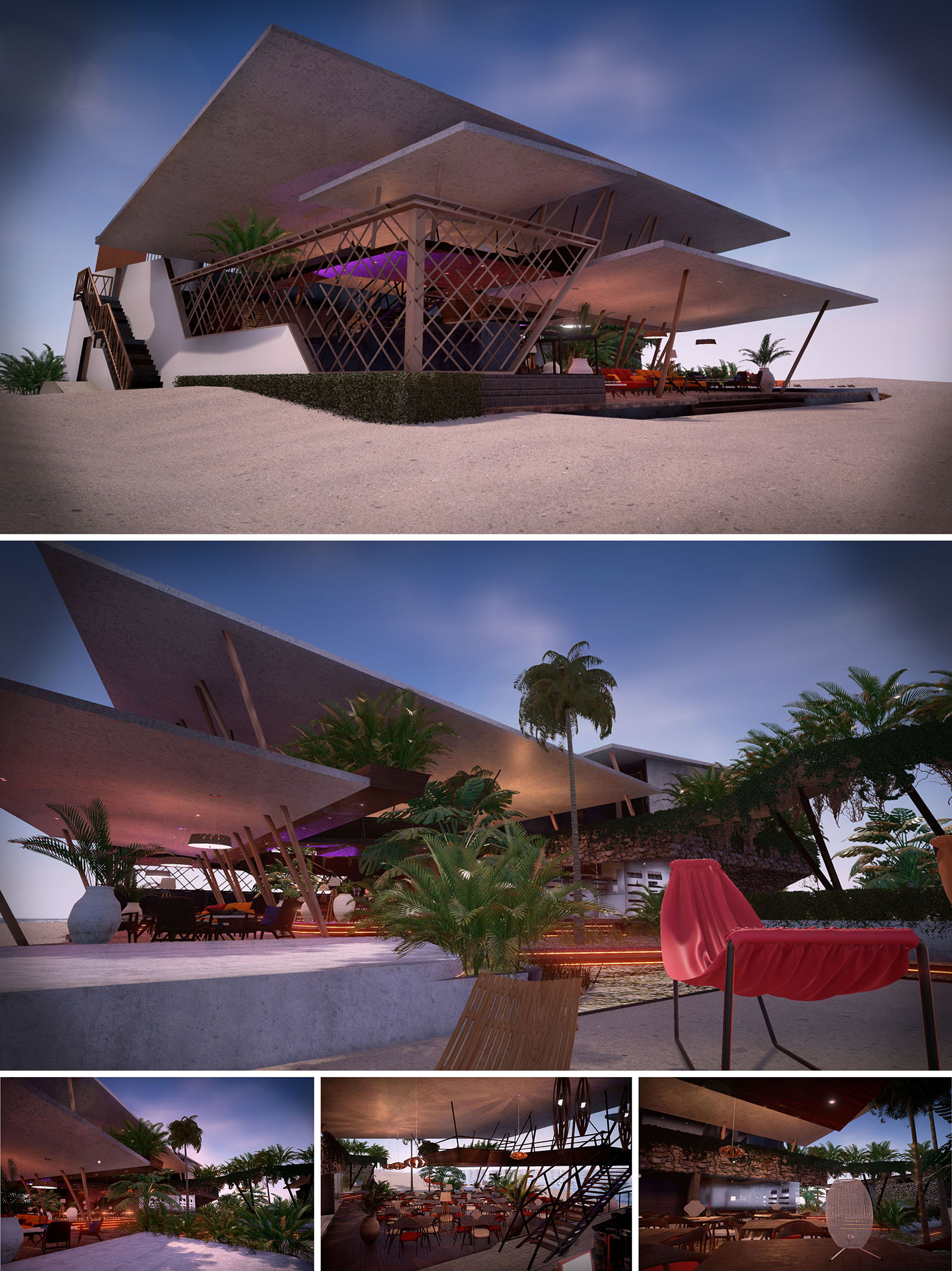
Tulum Beach Club is conceived as a sculptural shelter that hovers lightly above the sand, framing the Caribbean horizon through a sequence of horizontal planes and permeable enclosures. The project fuses contemporary coastal architecture with a relaxed, barefoot luxury atmosphere, using large cantilevered slabs that evoke the abstraction of waves and dunes. The design is organized as a series of terraces and platforms that gradually descend toward the sea, allowing the social life of the club to unfold in constant visual and climatic dialogue with the beach.
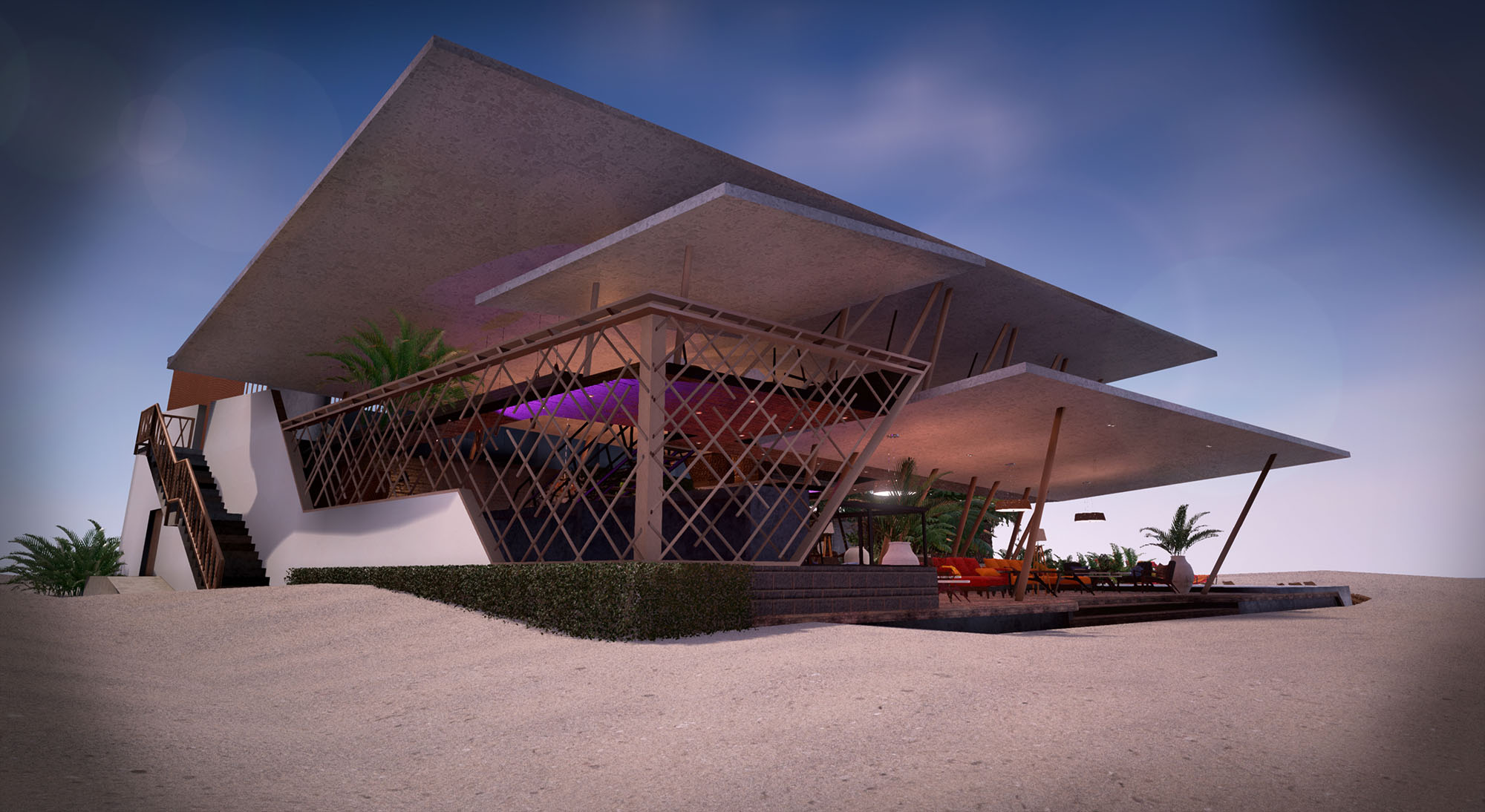
The architecture is intentionally open and porous, privileging natural ventilation, visual continuity and the sensory experience of light, shade and breeze. Structural elements are expressed as part of the aesthetic language, with inclined supports and latticework that produce a dynamic, almost kinetic reading of the building while maintaining a clear and legible geometry.
The club is positioned parallel to the shoreline, creating a low, elongated volume that respects the natural profile of the dune and preserves existing vegetation where possible. Access from the land side is resolved through a gradual ascent via staircases and ramps that elevate visitors above the sand, generating a threshold between the public beach and the semi-private world of the club.
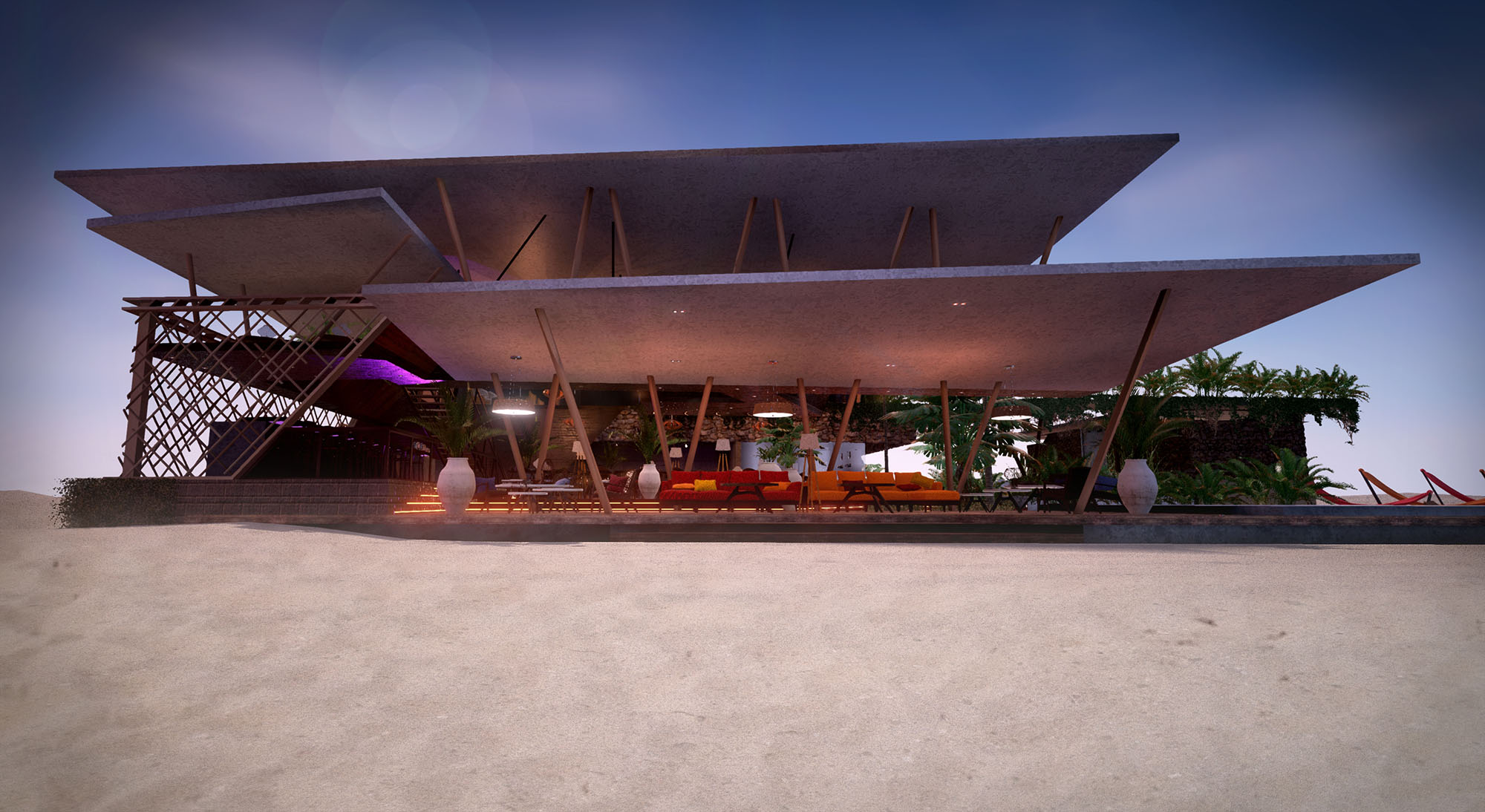
The architecture avoids vertical excessive impact by fragmenting the mass into staggered plates and open voids. This strategy maintains ocean views from the surroundings and allows sea breezes to cross the project. Vegetation bands and low hedges stabilize the dune, prevent erosion and visually soften the transition between built and natural environments.
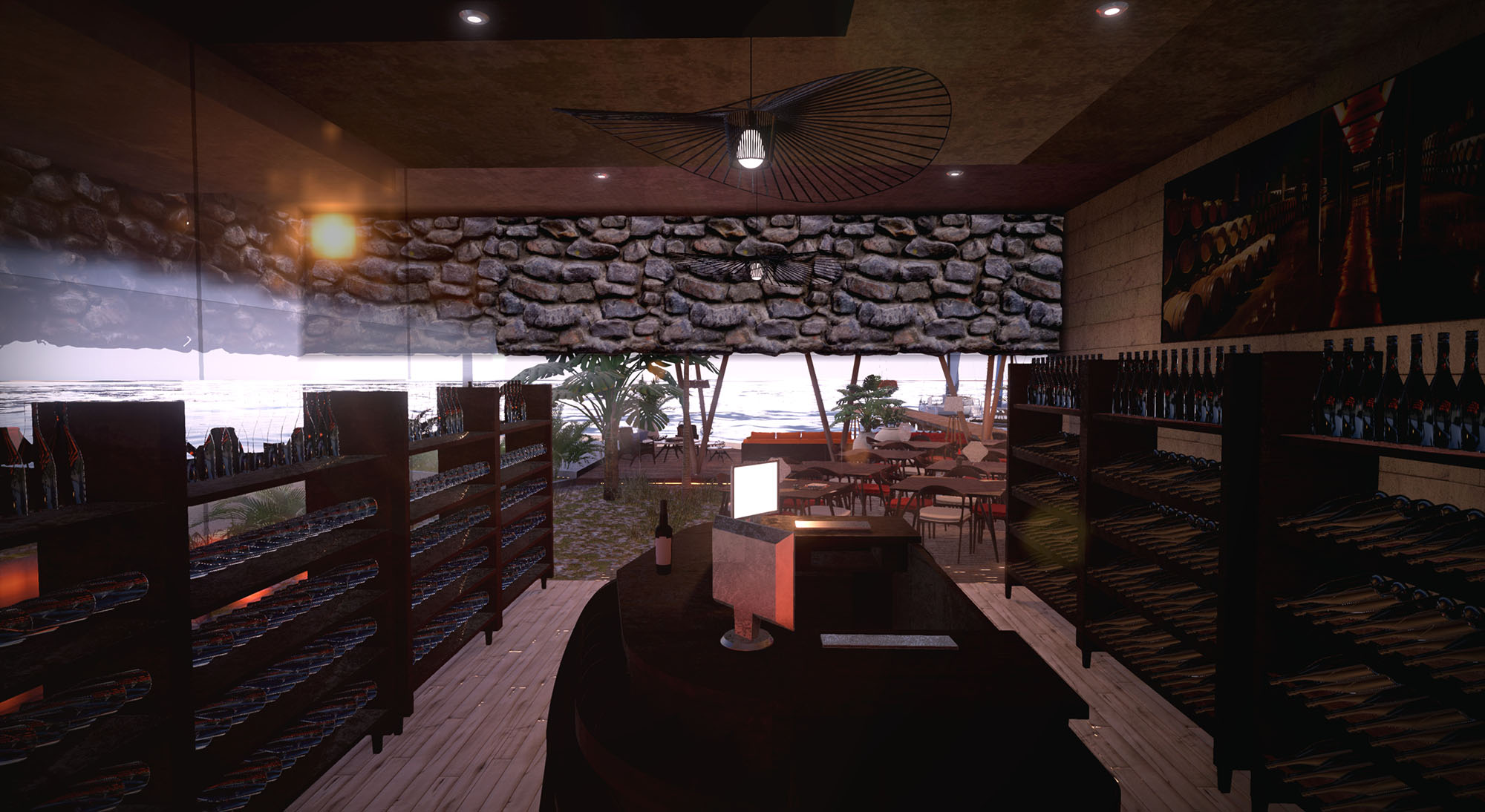
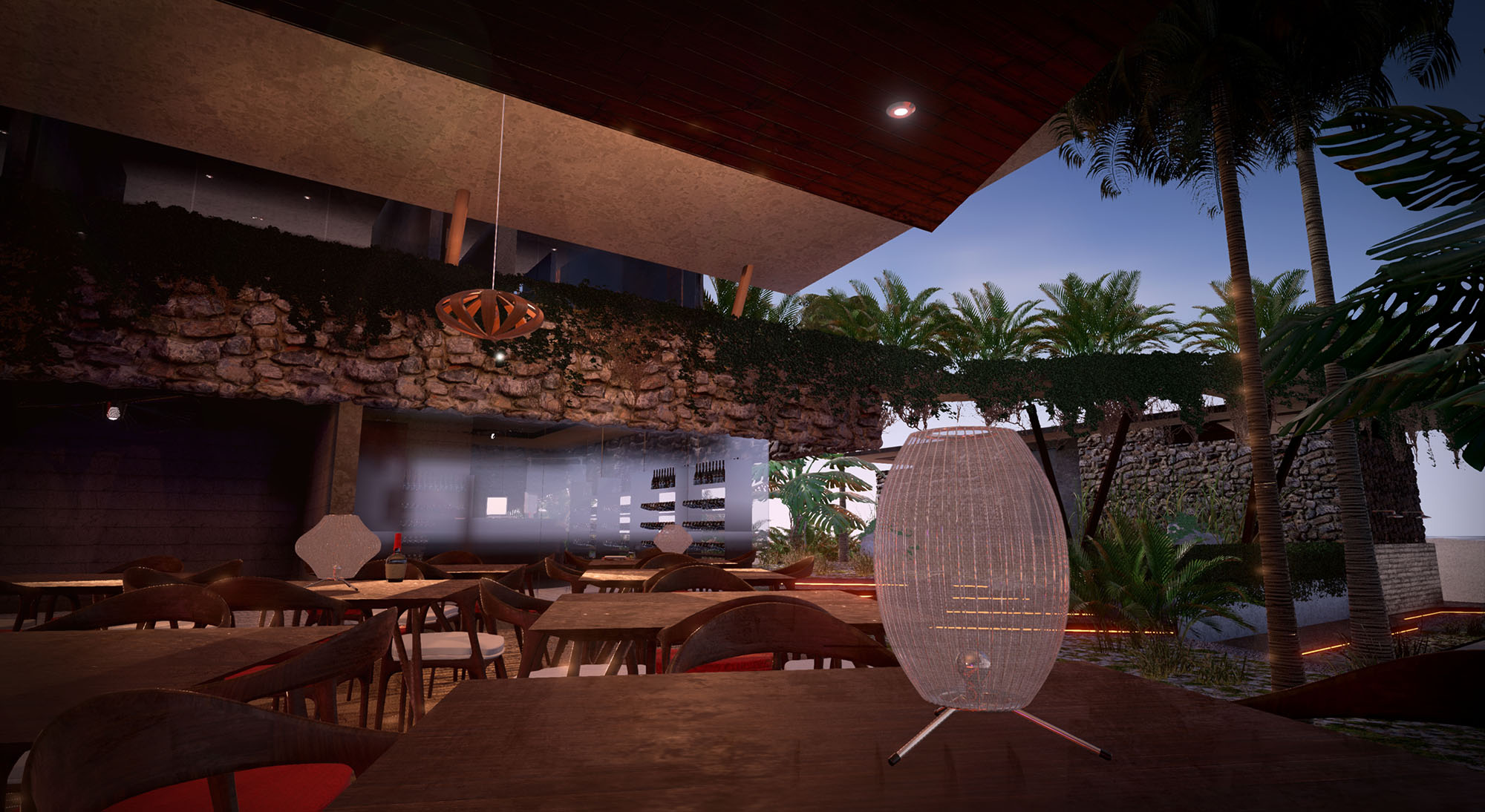
The interior layout is structured around a central bar and lounge core, from which different atmospheres are articulated: dining terraces, shaded relaxation areas, and front-row sun decks directed to the sea. A double-height space under the main slab enhances openness, while intermediate mezzanines generate more intimate corners without losing connection to the main environment.
Circular and fluid circulation promotes exploration. Long peripheral promenades connect seating platforms, pools and beach access, allowing guests to move barefoot on continuous surfaces that alternate between polished concrete, wood decking and sand. Vertical circulation is resolved with light staircases that emphasize transparency and maintain visual continuity between levels.
The structural system is based on exposed reinforced concrete slabs in large overhangs, supported by inclined steel or timber-like columns that reinforce the nautical and tropical character of the club. These planes float above the terrain, generating deep eaves that protect from sun and rain while producing generous shaded outdoor rooms.
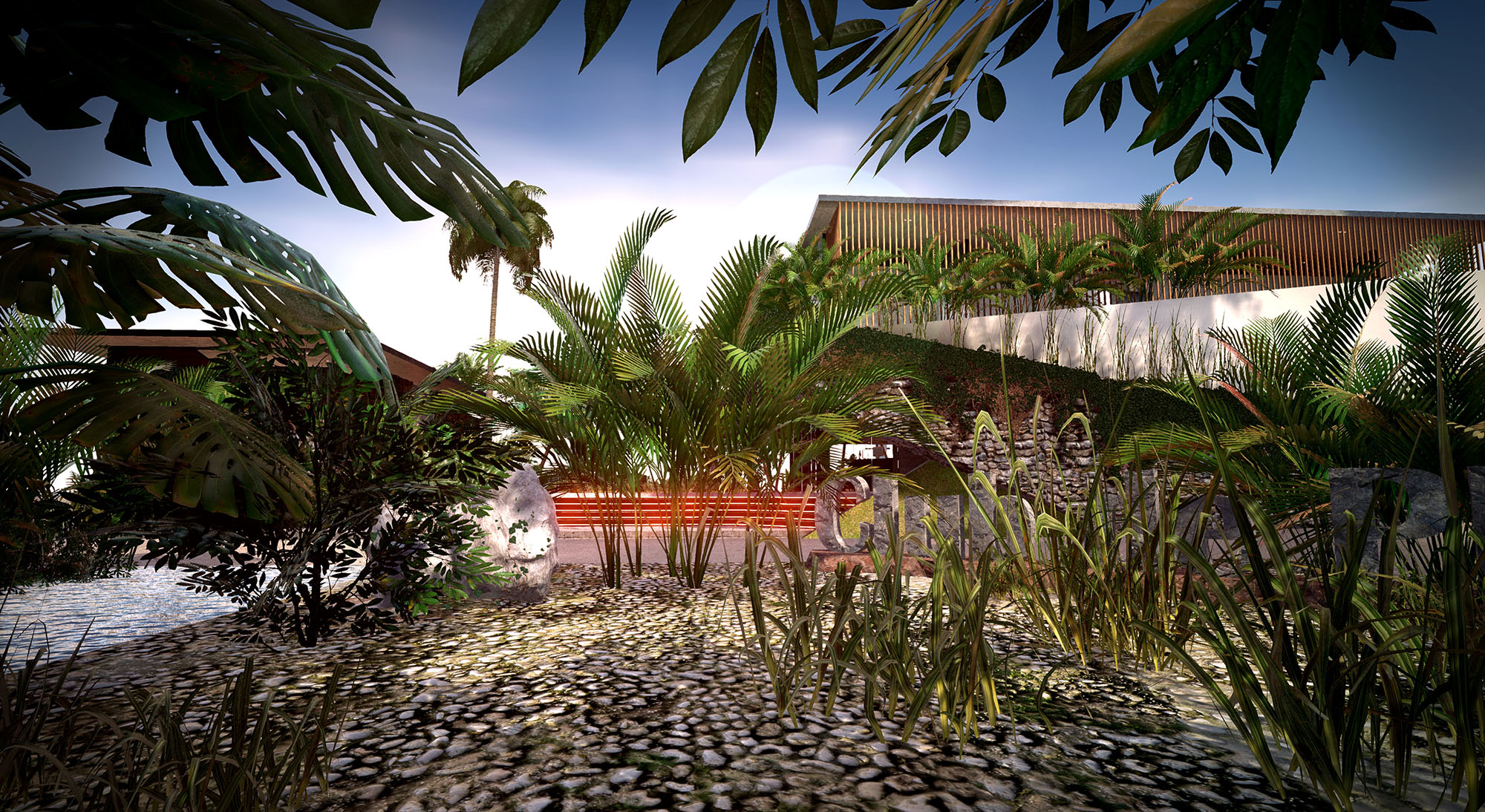
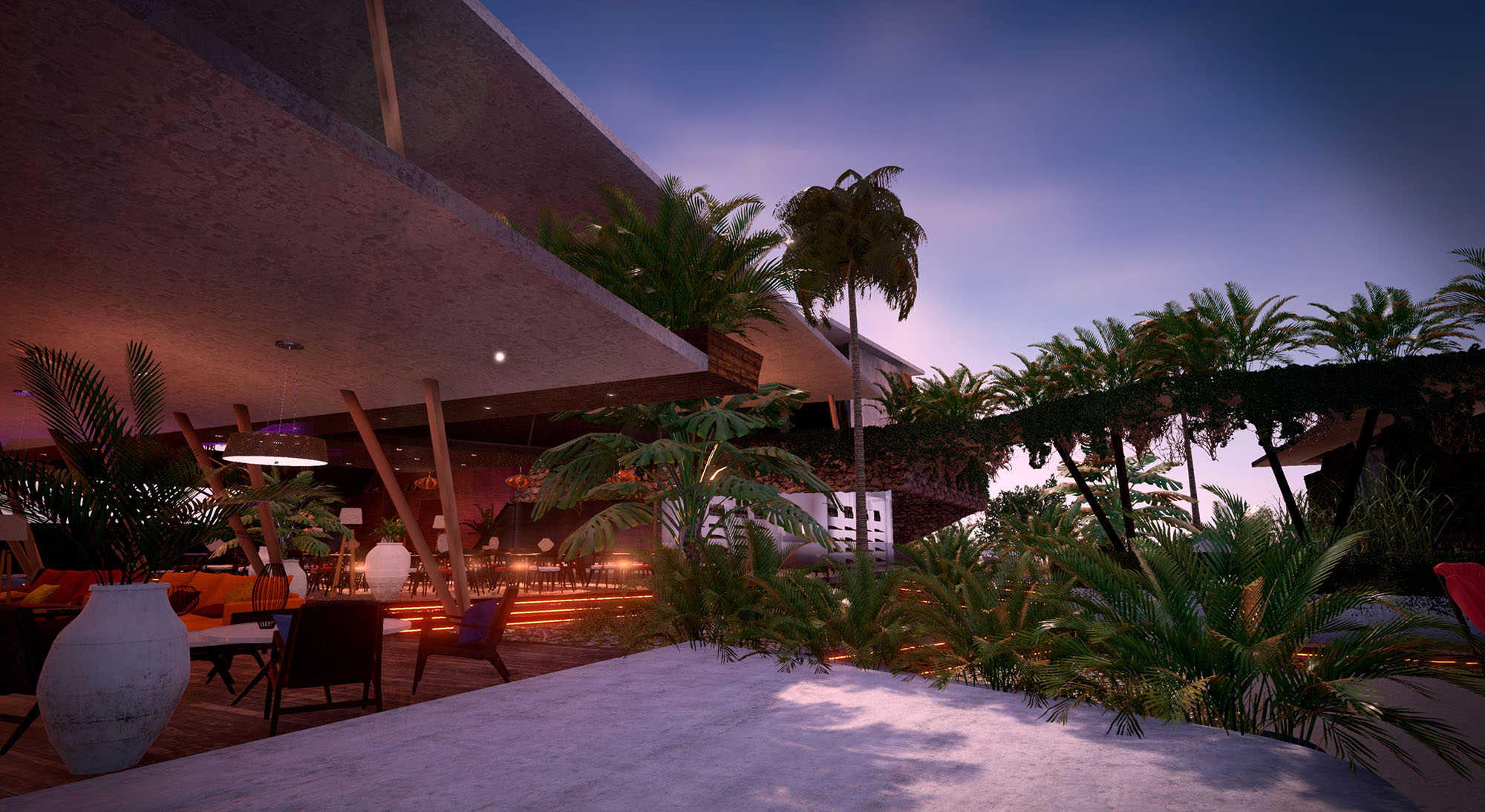
The material palette combines raw concrete, natural wood tones, stone walls and woven elements that reference local craft traditions. Interior furnishings introduce warm colors such as terracotta and coral, contrasted with abundant greenery in large planters. At night, a calibrated lighting scheme with warm LEDs and integrated strips in floors and ceilings enhances textures and creates a vibrant yet cozy atmosphere appropriate for events and evening gatherings.
Landscape design is conceived as an extension of the coastal ecosystem, using native and adaptive species that require minimal irrigation and contribute to dune stabilization. Palm trees, shrubs and groundcovers are strategically placed to filter views, provide shade and create microclimates within the terraces and paths.
Sustainability is present through passive environmental control: the open, cross-ventilated configuration reduces dependence on mechanical air conditioning, while the deep concrete overhangs limit direct solar gain on occupied areas. Durable, low-maintenance materials such as exposed concrete and natural stone are selected for their longevity and thermal inertia, improving comfort in the tropical climate. The design contemplates efficient LED lighting, potential integration of solar panels on the upper slabs, and water-saving fixtures, aligning the project with responsible tourism principles in Tulum’s fragile coastal context.
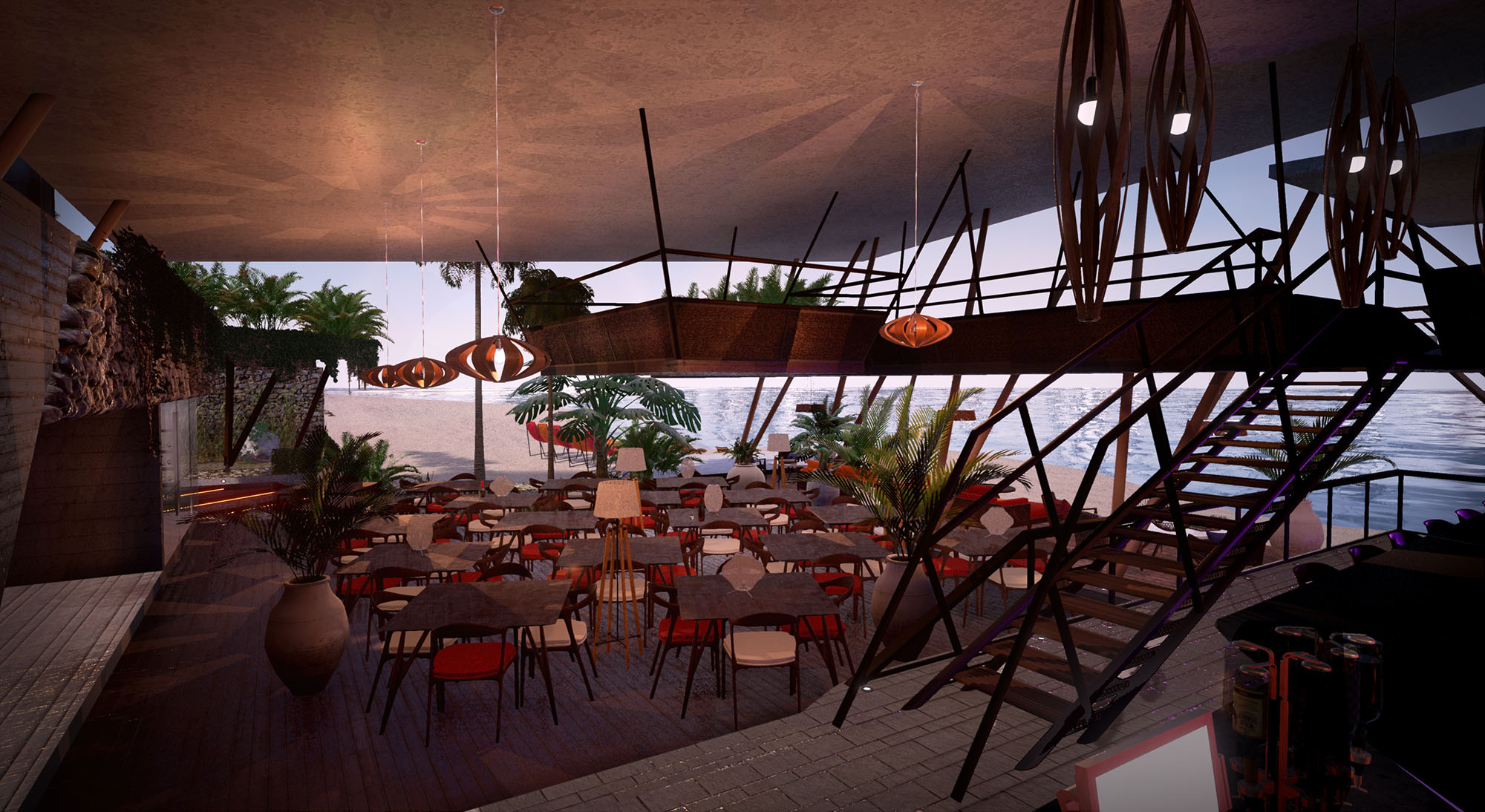
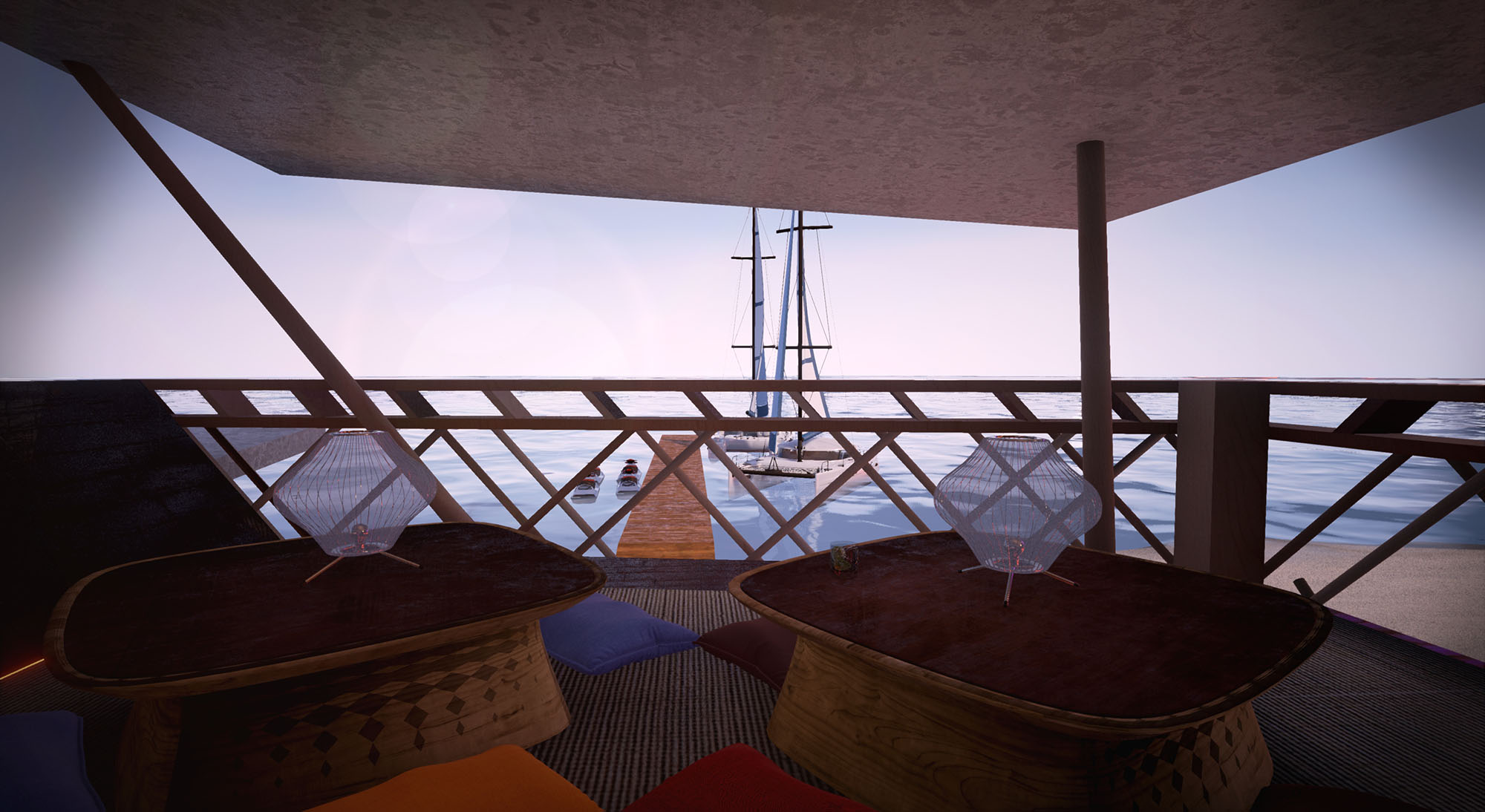
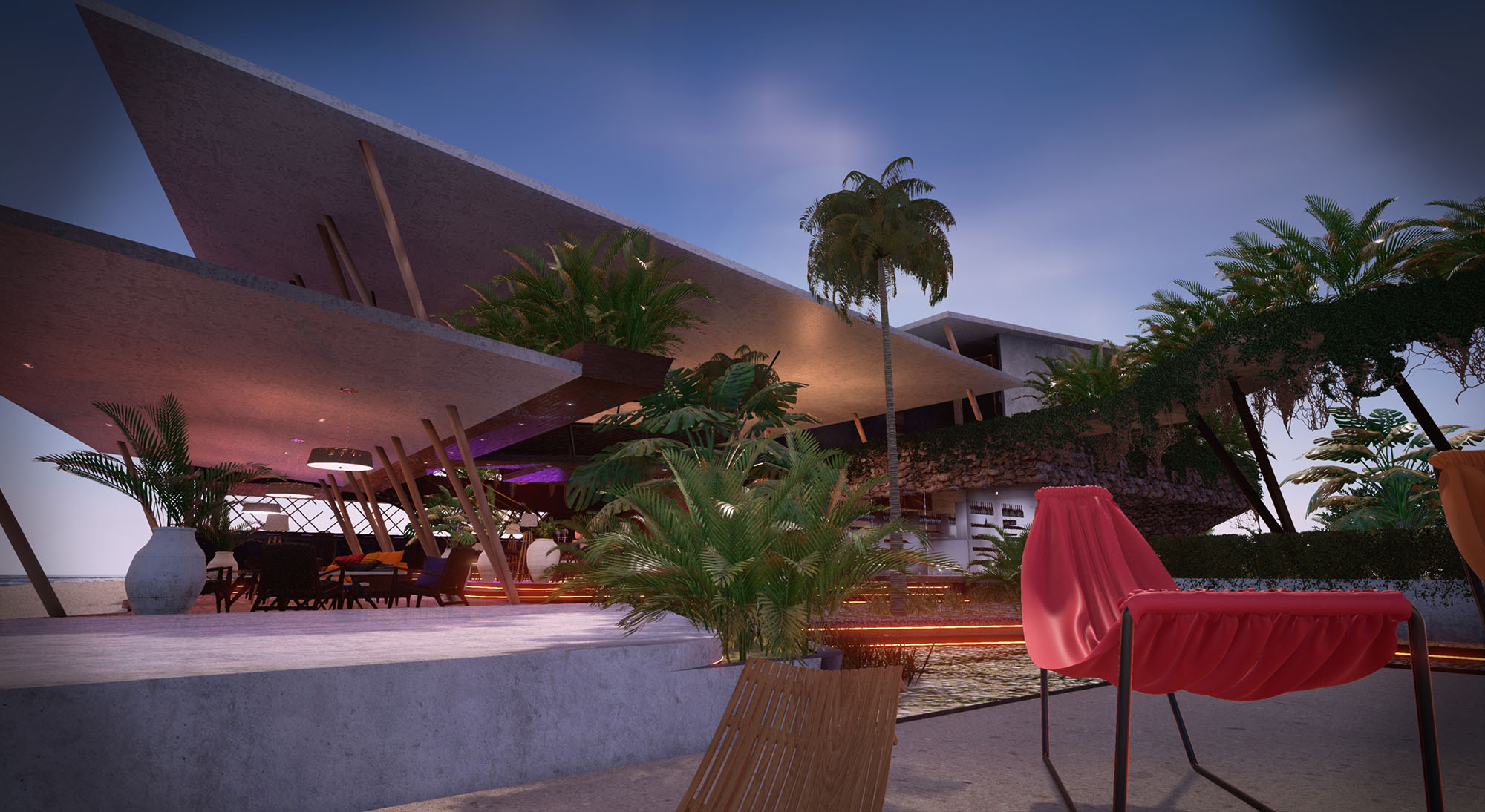
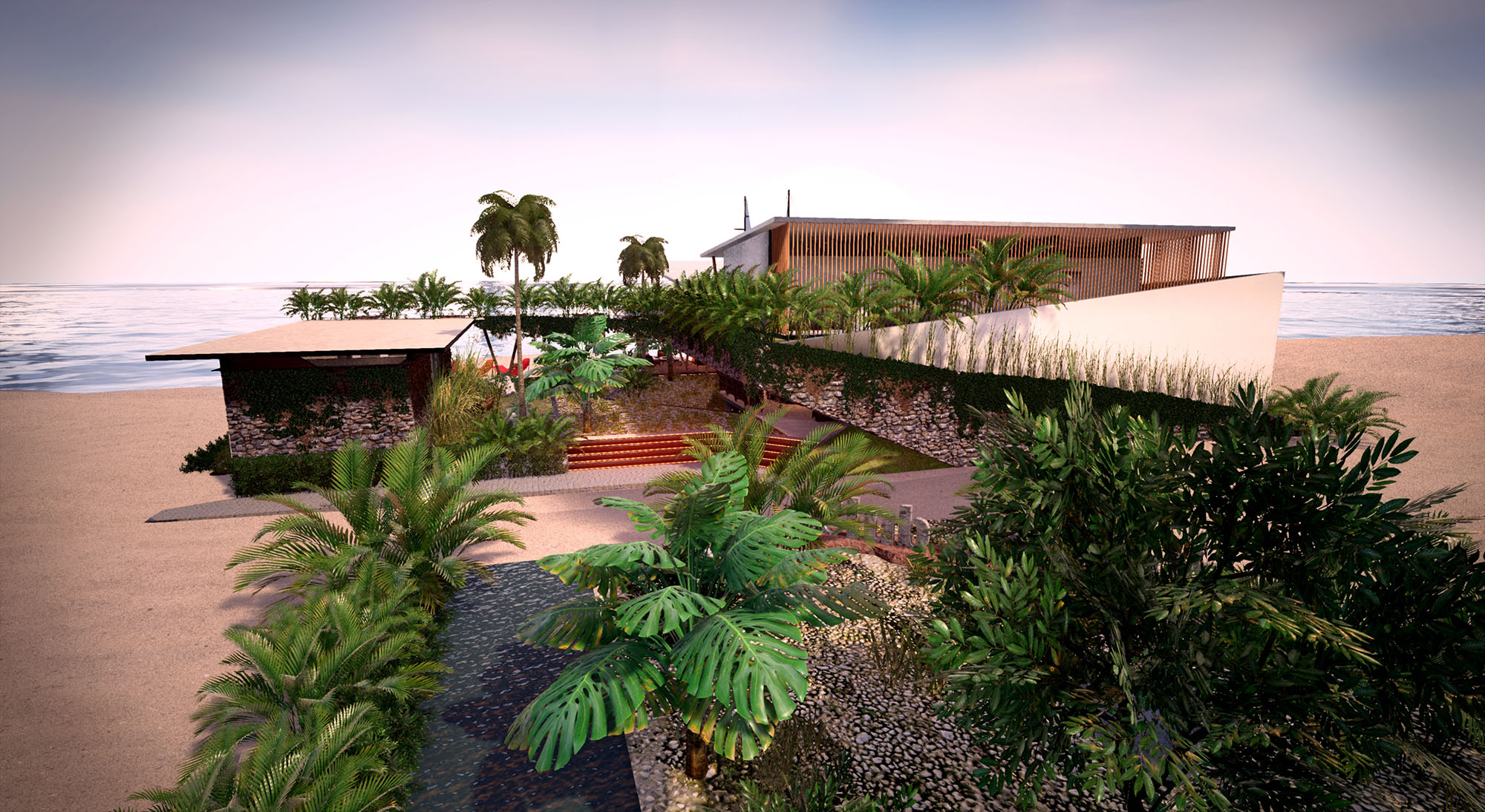
Tulum Beach Club is conceived as a sculptural shelter that hovers lightly above the sand, framing the Caribbean horizon through a sequence of horizontal planes and permeable enclosures. The project fuses contemporary coastal architecture with a relaxed, barefoot luxury atmosphere, using large cantilevered slabs that evoke the abstraction of waves and dunes. The design is organized as a series of terraces and platforms that gradually descend toward the sea, allowing the social life of the club to unfold in constant visual and climatic dialogue with the beach.
The architecture is intentionally open and porous, privileging natural ventilation, visual continuity and the sensory experience of light, shade and breeze. Structural elements are expressed as part of the aesthetic language, with inclined supports and latticework that produce a dynamic, almost kinetic reading of the building while maintaining a clear and legible geometry.
The club is positioned parallel to the shoreline, creating a low, elongated volume that respects the natural profile of the dune and preserves existing vegetation where possible. Access from the land side is resolved through a gradual ascent via staircases and ramps that elevate visitors above the sand, generating a threshold between the public beach and the semi-private world of the club.
The architecture avoids vertical excessive impact by fragmenting the mass into staggered plates and open voids. This strategy maintains ocean views from the surroundings and allows sea breezes to cross the project. Vegetation bands and low hedges stabilize the dune, prevent erosion and visually soften the transition between built and natural environments.
The interior layout is structured around a central bar and lounge core, from which different atmospheres are articulated: dining terraces, shaded relaxation areas, and front-row sun decks directed to the sea. A double-height space under the main slab enhances openness, while intermediate mezzanines generate more intimate corners without losing connection to the main environment.
Circular and fluid circulation promotes exploration. Long peripheral promenades connect seating platforms, pools and beach access, allowing guests to move barefoot on continuous surfaces that alternate between polished concrete, wood decking and sand. Vertical circulation is resolved with light staircases that emphasize transparency and maintain visual continuity between levels.
The structural system is based on exposed reinforced concrete slabs in large overhangs, supported by inclined steel or timber-like columns that reinforce the nautical and tropical character of the club. These planes float above the terrain, generating deep eaves that protect from sun and rain while producing generous shaded outdoor rooms.
The material palette combines raw concrete, natural wood tones, stone walls and woven elements that reference local craft traditions. Interior furnishings introduce warm colors such as terracotta and coral, contrasted with abundant greenery in large planters. At night, a calibrated lighting scheme with warm LEDs and integrated strips in floors and ceilings enhances textures and creates a vibrant yet cozy atmosphere appropriate for events and evening gatherings.
Landscape design is conceived as an extension of the coastal ecosystem, using native and adaptive species that require minimal irrigation and contribute to dune stabilization. Palm trees, shrubs and groundcovers are strategically placed to filter views, provide shade and create microclimates within the terraces and paths.
Sustainability is present through passive environmental control: the open, cross-ventilated configuration reduces dependence on mechanical air conditioning, while the deep concrete overhangs limit direct solar gain on occupied areas. Durable, low-maintenance materials such as exposed concrete and natural stone are selected for their longevity and thermal inertia, improving comfort in the tropical climate. The design contemplates efficient LED lighting, potential integration of solar panels on the upper slabs, and water-saving fixtures, aligning the project with responsible tourism principles in Tulum’s fragile coastal context.


Nuestras oficinas están en Barcelona, Cancún, Chicago y Santo Domingo, pero gracias a la tecnología podemos desarrollar proyectos en cualquier parte del mundo.
Barcelona
Bac de Roda 136
08020, Barcelona
Spain
Madrid
Av. de Buendía 11
19005 Guadalajara (Madrid)
Spain
Chicago
373 Hazel Ave, Apt A1
60022, Glencoe, Illinois
United States