

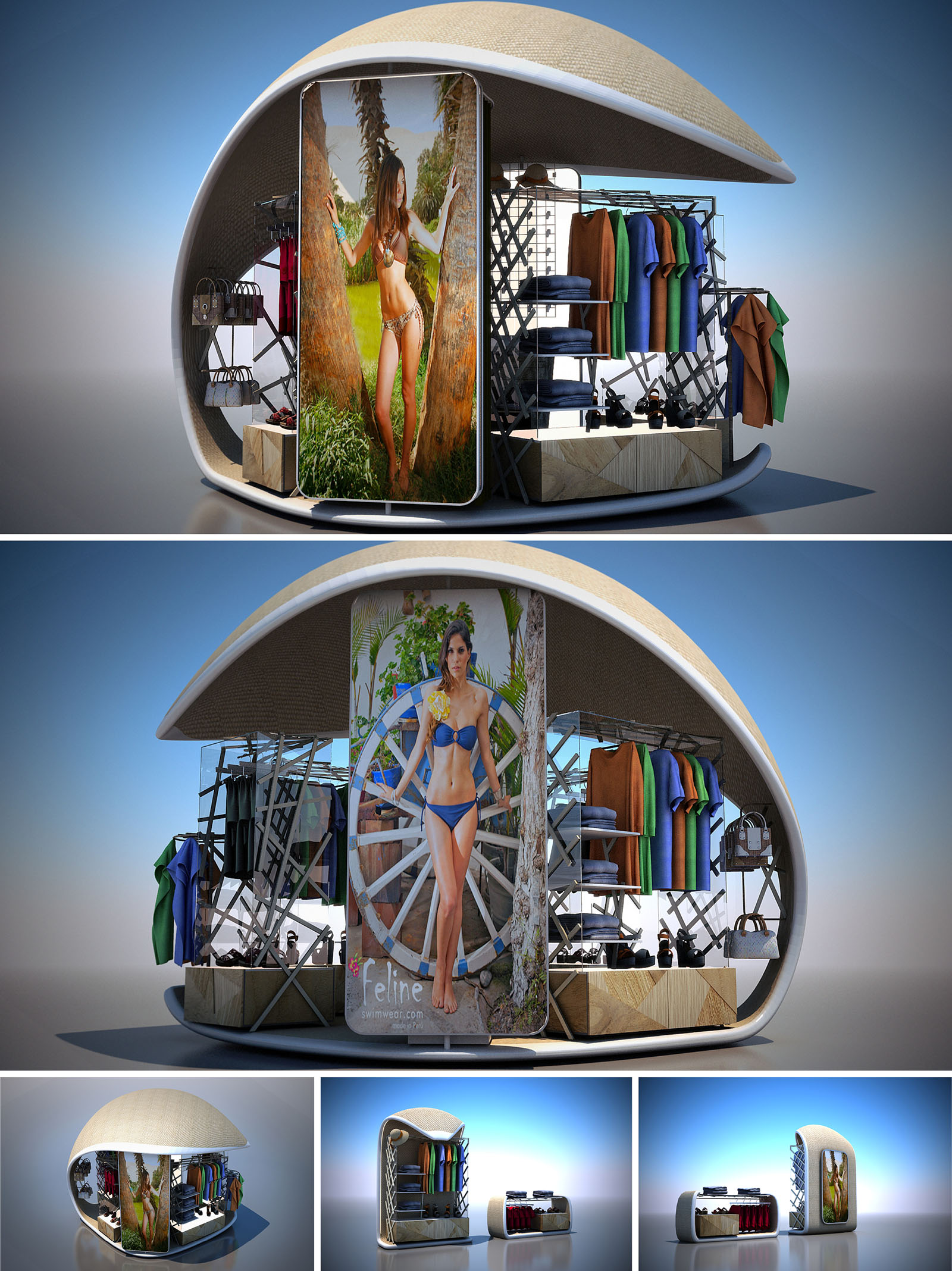
The swimwear store is conceived as a compact beach pavilion, a mobile shell that appears to have been shaped by sea breeze and sand. Its continuous curved envelope evokes a seashell resting on the coast of Playa del Carmen, creating an iconic object that is instantly recognizable from a distance. The formal language is aerodynamic and soft, minimizing sharp edges and emphasizing fluidity, in tune with the movement of waves and the body.
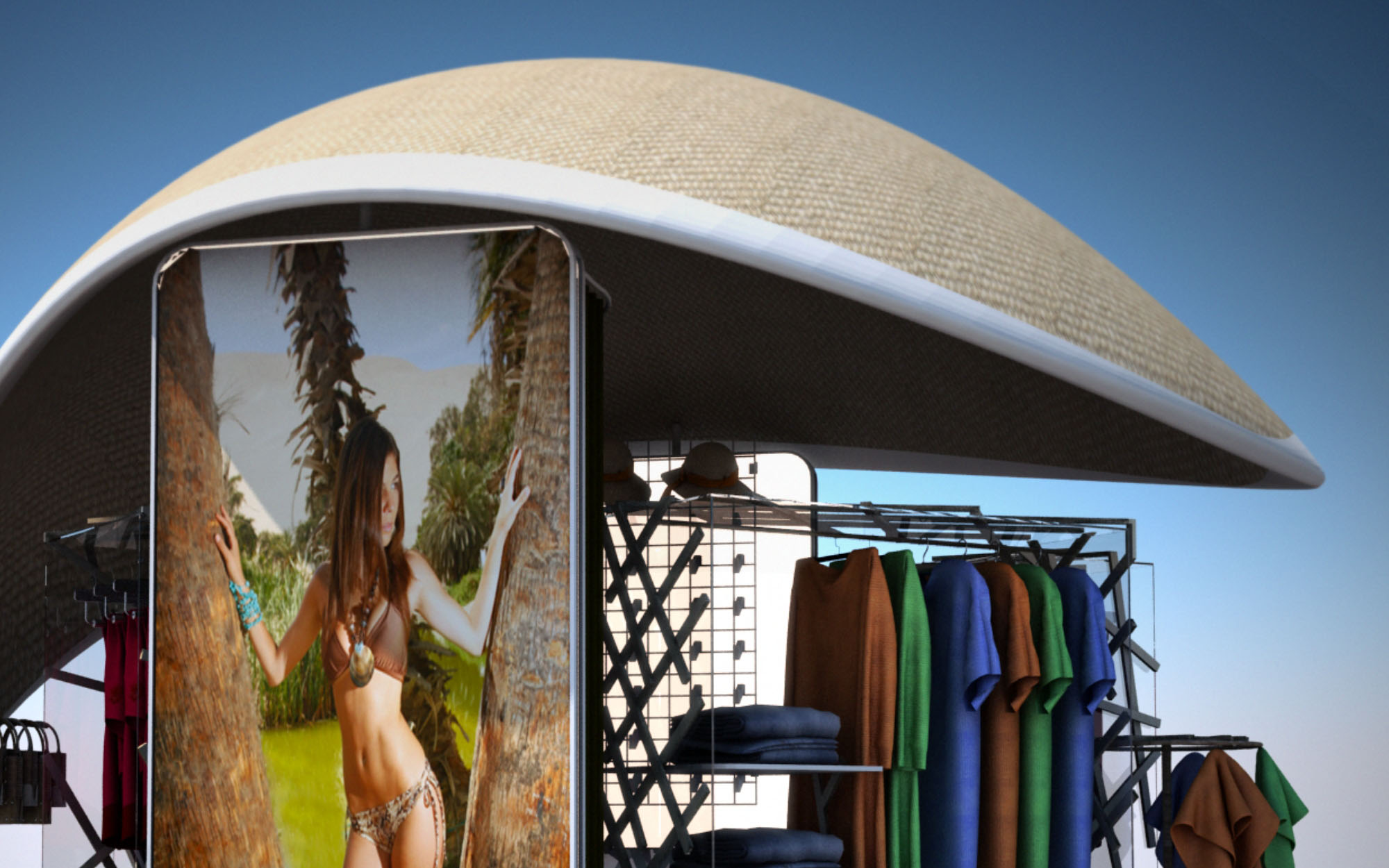
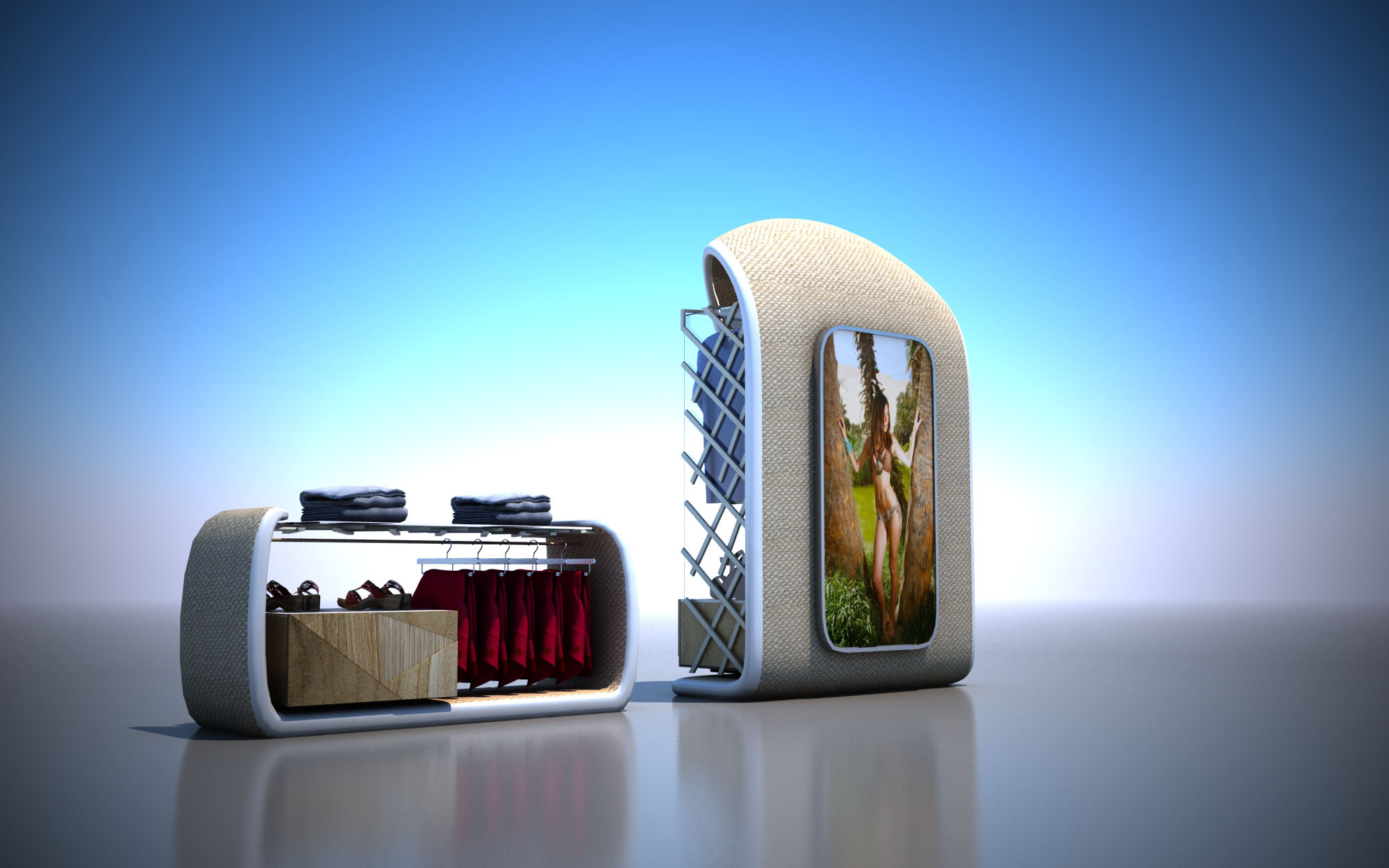
The project merges retail space and advertising surface into a single sculpted volume. A large vertical display panel anchors the composition, acting both as entry threshold and brand totem. Around it, the open perimeter showcases merchandise on all sides, transforming the store into a 360-degree window that attracts beachgoers from any direction.
The interior is organized as a ring around a central core that can host storage, graphics, or digital media. Circulation is radial and intuitive: users naturally drift along the curved perimeter, discovering garments as they follow the shell’s inner line. The absence of interior partitions preserves visual continuity and allows maximum flexibility in arranging the product mix.
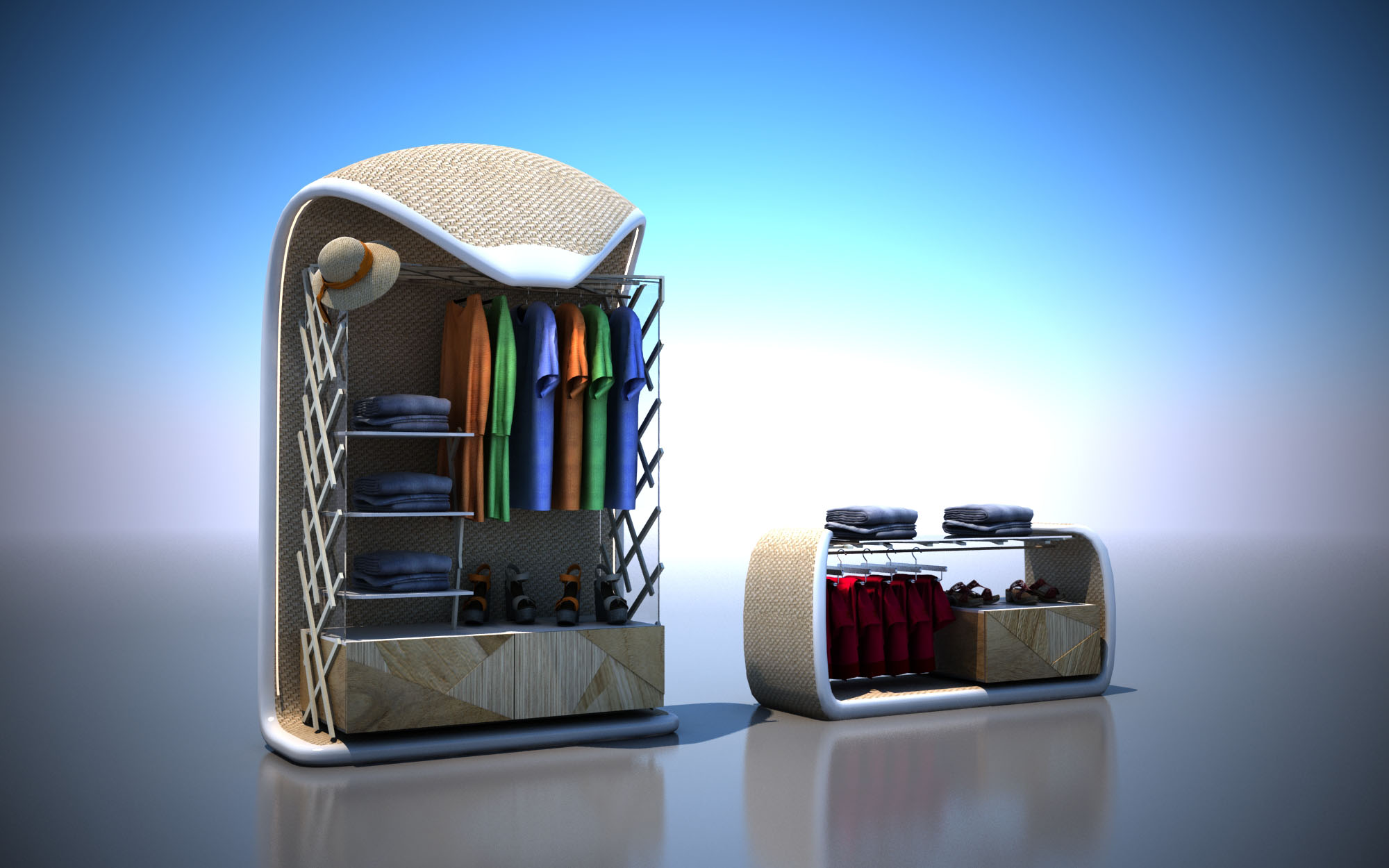
Display modules are suspended from a structural lattice, freeing the floor area and keeping the space visually light. Folded garments, accessories, and hanging swimwear each occupy dedicated zones, clearly legible despite the compact footprint. The store can operate as a walk-in kiosk or as a semi-open stand, depending on placement within a resort, promenade, or shopping mall.
The envelope reads as a double-curved shell, likely built from a lightweight structural frame clad with composite panels and a textured outer skin. The exterior finish suggests a woven or fabric-like material, recalling beach umbrellas and sunshades, while the interior surfaces are smoother and more reflective to enhance natural light and product visibility.
Timber accents at the lower display plinths introduce warmth and a tactile counterpoint to the otherwise sleek structure. The lattice display system appears to be in powder-coated metal, delivering slenderness and durability in a high-humidity coastal environment. The base platform anchors the kiosk while defining a subtle threshold between the public promenade and the retail micro-interior.
The color palette balances neutral tones in the architecture with vibrant hues in the merchandise. The shell remains in light sand and soft white shades, deliberately understated so that the swimwear and accessories provide the main chromatic impact. This strategy reinforces the seasonal, playful character of the brand without visually overloading a small volume.
Large-scale photographic panels provide immediate storytelling, linking the product to the local landscape of palm trees and turquoise water. At night, integrated linear lighting along the roof and base would transform the kiosk into a softly glowing object, highlighting silhouettes of the garments and maintaining a resort-like atmosphere even after sunset.
Sustainability is addressed through compactness, modularity, and potential for reuse. The kiosk behaves as a demountable unit that can be transported, reassembled, and reconfigured according to seasonal demand, reducing the need for permanent construction along the coast. Lightweight construction minimizes material consumption and simplifies future disassembly and recycling.
The overhanging shell functions as a passive shading device, protecting users and products from direct solar radiation and reducing cooling requirements. The open, cross-ventilated layout encourages natural airflow, enhancing comfort without mechanical systems. Specifying certified timber, recyclable metal components, and high-durability finishes ensures longevity in the marine climate while aligning the project with responsible tourism and environmentally conscious retail practices in Playa del Carmen.
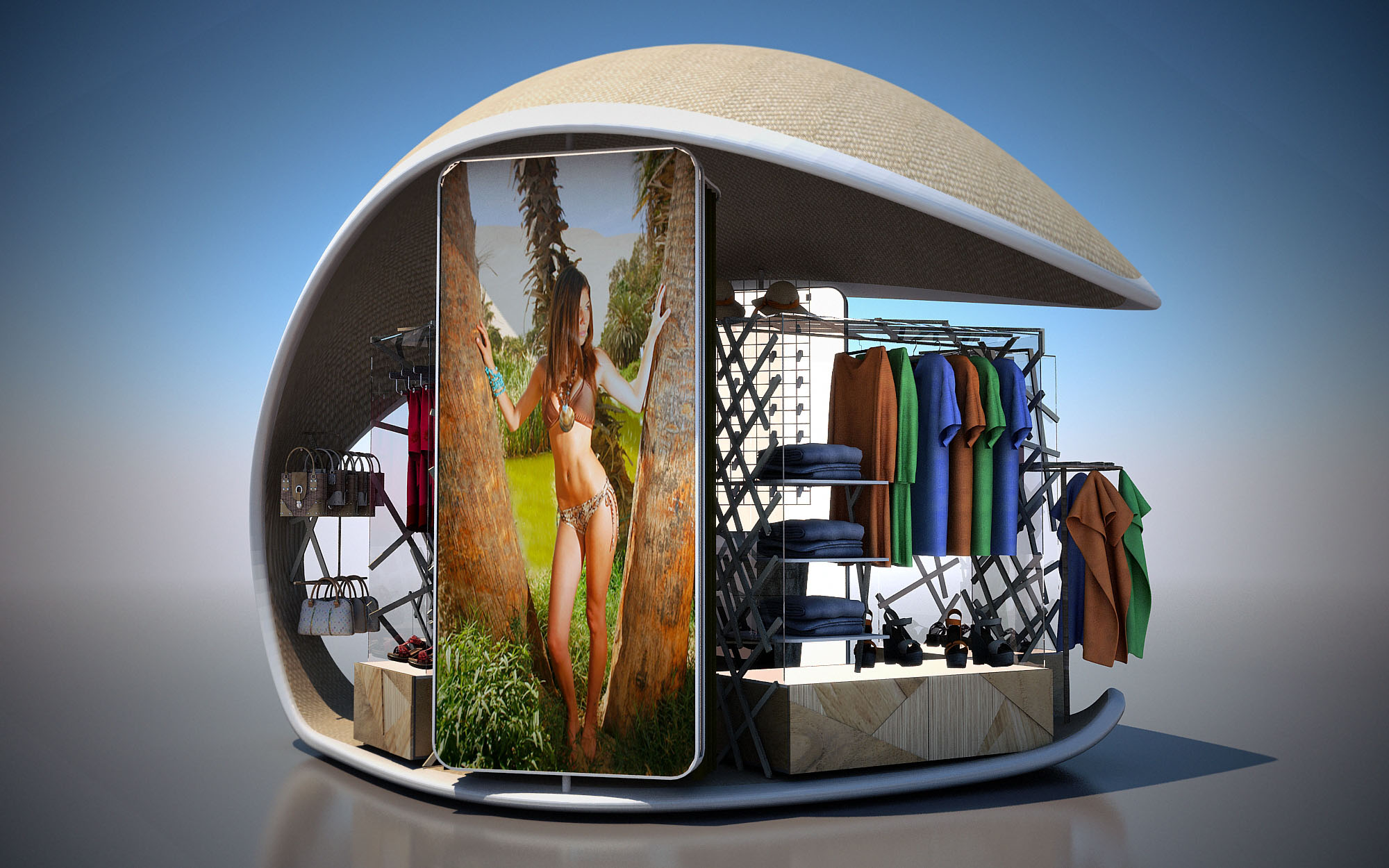
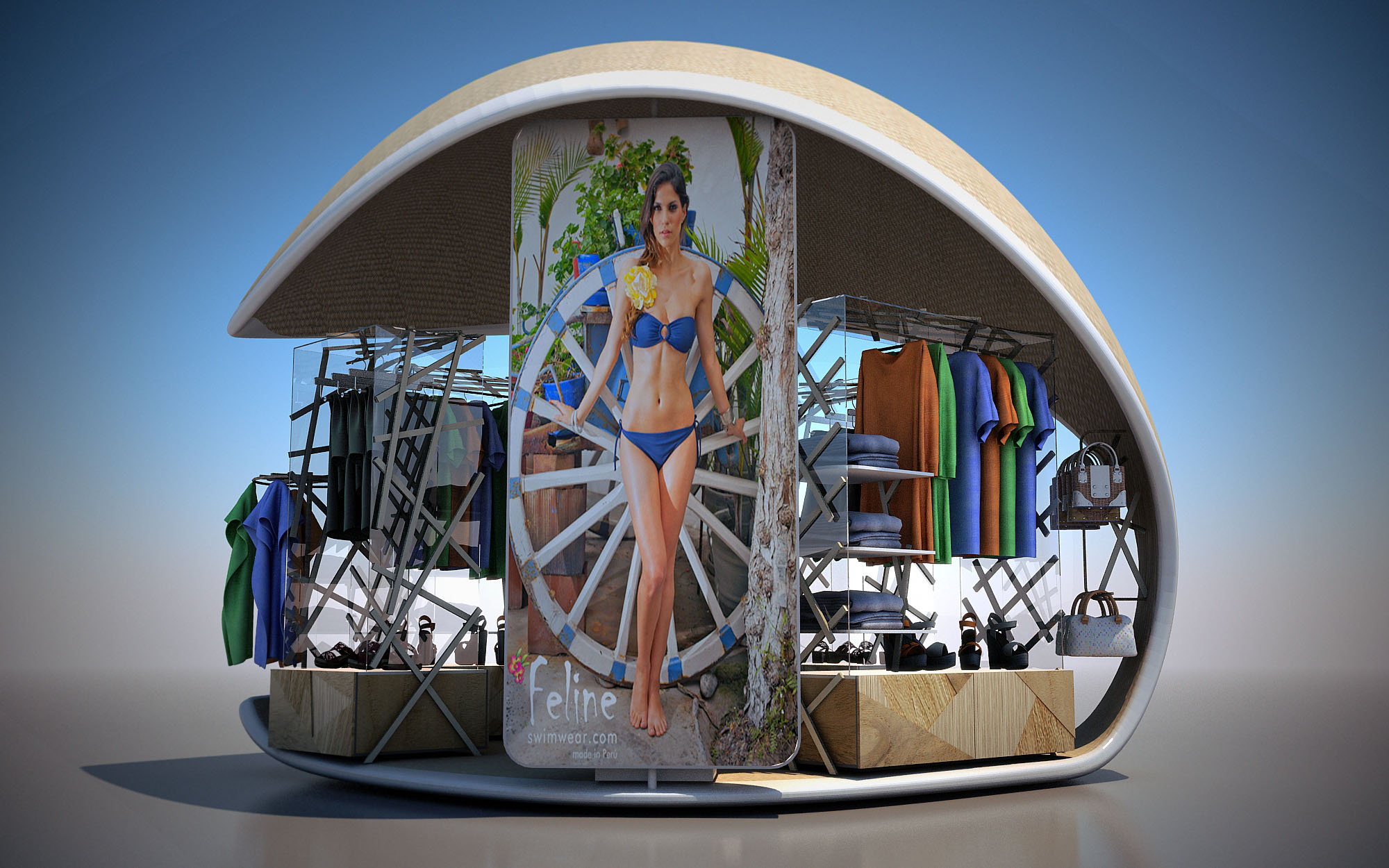
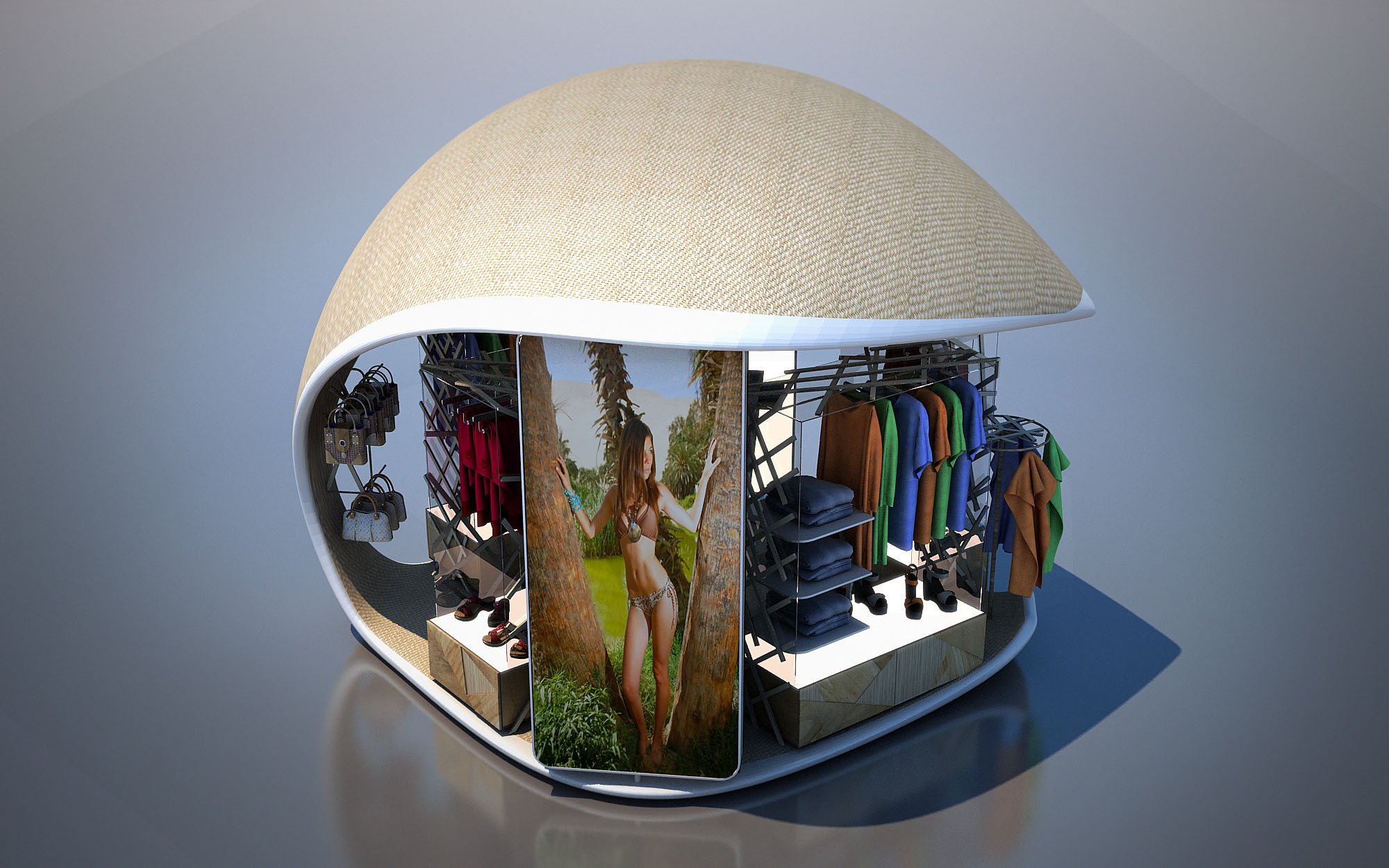

The swimwear store is conceived as a compact beach pavilion, a mobile shell that appears to have been shaped by sea breeze and sand. Its continuous curved envelope evokes a seashell resting on the coast of Playa del Carmen, creating an iconic object that is instantly recognizable from a distance. The formal language is aerodynamic and soft, minimizing sharp edges and emphasizing fluidity, in tune with the movement of waves and the body.
The project merges retail space and advertising surface into a single sculpted volume. A large vertical display panel anchors the composition, acting both as entry threshold and brand totem. Around it, the open perimeter showcases merchandise on all sides, transforming the store into a 360-degree window that attracts beachgoers from any direction.
The interior is organized as a ring around a central core that can host storage, graphics, or digital media. Circulation is radial and intuitive: users naturally drift along the curved perimeter, discovering garments as they follow the shell’s inner line. The absence of interior partitions preserves visual continuity and allows maximum flexibility in arranging the product mix.
Display modules are suspended from a structural lattice, freeing the floor area and keeping the space visually light. Folded garments, accessories, and hanging swimwear each occupy dedicated zones, clearly legible despite the compact footprint. The store can operate as a walk-in kiosk or as a semi-open stand, depending on placement within a resort, promenade, or shopping mall.
The envelope reads as a double-curved shell, likely built from a lightweight structural frame clad with composite panels and a textured outer skin. The exterior finish suggests a woven or fabric-like material, recalling beach umbrellas and sunshades, while the interior surfaces are smoother and more reflective to enhance natural light and product visibility.
Timber accents at the lower display plinths introduce warmth and a tactile counterpoint to the otherwise sleek structure. The lattice display system appears to be in powder-coated metal, delivering slenderness and durability in a high-humidity coastal environment. The base platform anchors the kiosk while defining a subtle threshold between the public promenade and the retail micro-interior.
The color palette balances neutral tones in the architecture with vibrant hues in the merchandise. The shell remains in light sand and soft white shades, deliberately understated so that the swimwear and accessories provide the main chromatic impact. This strategy reinforces the seasonal, playful character of the brand without visually overloading a small volume.
Large-scale photographic panels provide immediate storytelling, linking the product to the local landscape of palm trees and turquoise water. At night, integrated linear lighting along the roof and base would transform the kiosk into a softly glowing object, highlighting silhouettes of the garments and maintaining a resort-like atmosphere even after sunset.
Sustainability is addressed through compactness, modularity, and potential for reuse. The kiosk behaves as a demountable unit that can be transported, reassembled, and reconfigured according to seasonal demand, reducing the need for permanent construction along the coast. Lightweight construction minimizes material consumption and simplifies future disassembly and recycling.
The overhanging shell functions as a passive shading device, protecting users and products from direct solar radiation and reducing cooling requirements. The open, cross-ventilated layout encourages natural airflow, enhancing comfort without mechanical systems. Specifying certified timber, recyclable metal components, and high-durability finishes ensures longevity in the marine climate while aligning the project with responsible tourism and environmentally conscious retail practices in Playa del Carmen.


Nuestras oficinas están en Barcelona, Cancún, Chicago y Santo Domingo, pero gracias a la tecnología podemos desarrollar proyectos en cualquier parte del mundo.
Barcelona
Bac de Roda 136
08020, Barcelona
Spain
Madrid
Av. de Buendía 11
19005 Guadalajara (Madrid)
Spain
Chicago
373 Hazel Ave, Apt A1
60022, Glencoe, Illinois
United States