

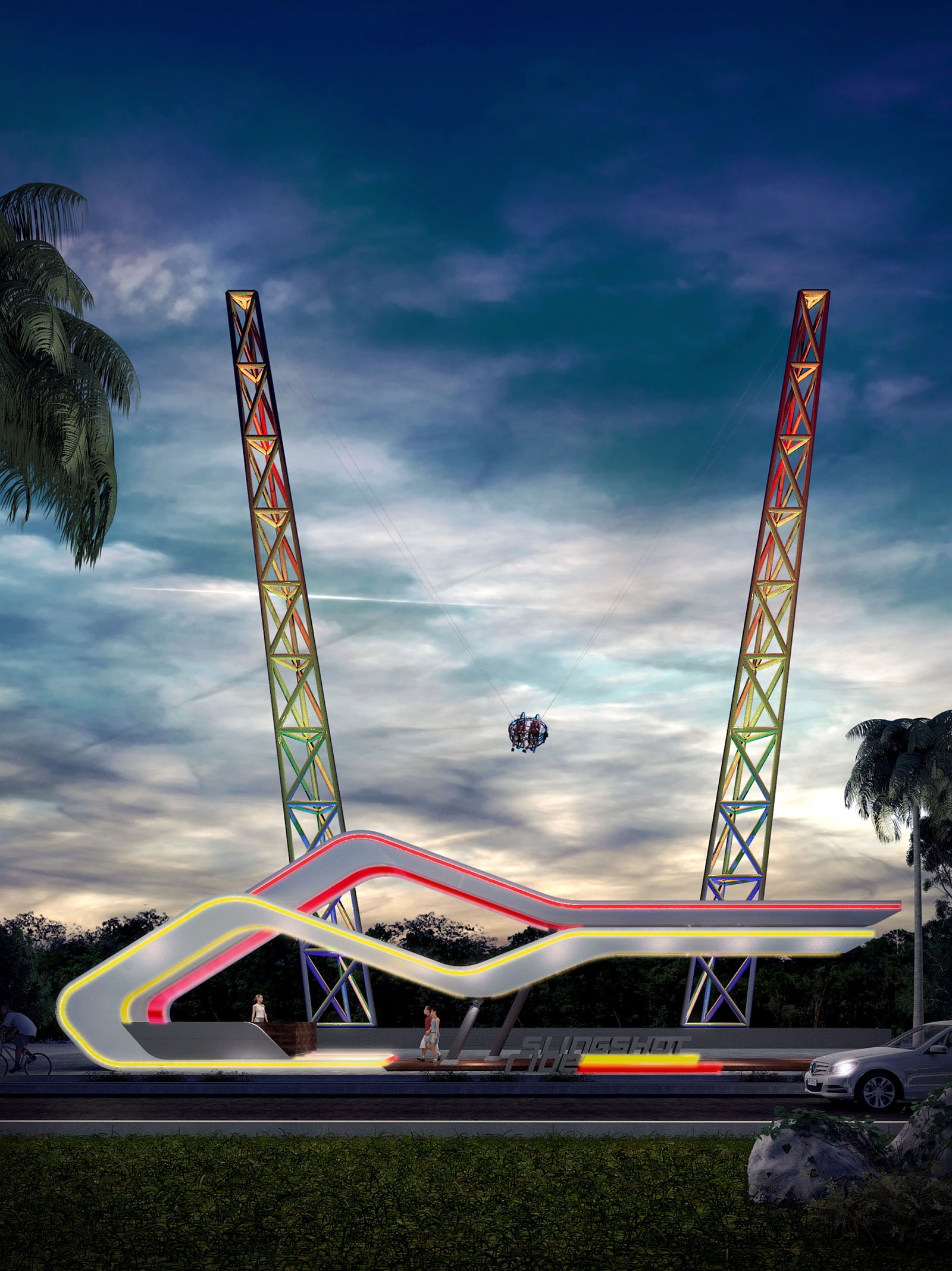
The Slingshot Ride in Cancún is conceived as an urban landmark that translates the extreme dynamics of the attraction into an architectural gesture. The project explores the tension between earth and sky: two vertical towers anchor the structure to the ground while a fluid, illuminated base traces the trajectory of the launch. The architecture is not a neutral support for the ride, but a three-dimensional graphic that amplifies the sensation of speed, risk and elevation.
The formal language is inspired by the energy of light trails and aerodynamic profiles. Continuous curves envelop the boarding platform, creating a sculptural shell that visually connects the towers and defines a clear, iconic silhouette against the Caribbean sky. The design aims to be instantly recognizable from the hotel zone and the nearby road, functioning simultaneously as infrastructure, attraction and luminous sign.
The project is located along a primary vehicular corridor, so the composition is organized longitudinally, parallel to the street, to maximize visibility and legibility at high speed. The access esplanade, ticketing and waiting area are all integrated into a low, elongated plinth that visually grounds the towers and protects users from the traffic edge.
Circulation is resolved through a clear sequence: street sidewalk, raised platform, controlled access and embarkation zone. Visual permeability is maintained at all times, both for safety and for the theatricality of the experience, allowing passersby to observe the preparation and launch. The vertical towers frame the horizon and work as a contemporary gateway, signaling arrival to a leisure strip within the city.
The two slender towers are expressed as triangulated steel trusses, optimized for stiffness and wind performance in a coastal environment. Their geometry responds to the mechanical requirements of the slingshot system, while the colored lighting accentuates the rhythm of the structural modules. The apparent lightness of the towers contrasts with their technical robustness, emphasizing the controlled nature of the extreme experience.
The base canopy is conceived as a ribbon-like steel structure clad with high-performance composites and smooth, durable finishes suitable for outdoor, saline conditions. Its continuous curves function as a structural shell and as an integrated support for LED lighting, signage and safety barriers. Joints and fixings are concealed to preserve the impression of a seamless, flowing element hovering above the platform.
Given Cancún’s strong nocturnal tourism activity, the project is designed primarily as a night-time icon. Dynamic RGB LED lines trace the contours of the base canopy, while programmable fixtures embedded in the truss bays transform the towers into vertical light totems. Color gradients can be synchronized with the launch sequence, turning each ride into a short light performance visible from long distances.
The palette is intentionally vibrant, referencing the atmosphere of amusement parks and the luminosity of the Caribbean nightlife. At the same time, the use of linear lighting and controlled optics reduces glare and focuses brightness where it amplifies the geometry, allowing the structure to remain legible without excessive light pollution.
The architecture frames the emotional transition of the user from spectator to participant. The enveloping canopy creates a threshold that separates the everyday urban context from the intense moment of launch. The raised platform allows unobstructed views for companions and onlookers, transforming the waiting time into a shared show.
Safety is expressed through transparency and clarity: guardrails, access ramps and control zones are integrated into the overall form, avoiding visual clutter while ensuring compliance with international amusement-ride standards. Night lighting of circulation edges and steps reinforces intuitive wayfinding and reduces risk, even during peak hours.
The project incorporates sustainable strategies adapted to the tropical, coastal climate of Cancún. The compact footprint minimizes land occupation and preserves existing vegetation around the perimeter, using it as a natural backdrop instead of overdeveloping the plot. Structural steel is specified with a high recycled content and is designed for potential disassembly or relocation, aligning with circular economy principles for entertainment infrastructure.
Energy consumption is reduced through the exclusive use of LED technology with programmable scenarios that dim lighting during low-traffic hours. Control systems allow selective activation of tower and canopy effects, optimizing power use during operation. Corrosion-resistant coatings and low-maintenance materials extend the life cycle of components in the saline environment, reducing replacement frequency and associated environmental impact. Rainwater harvesting from the canopy for landscape irrigation is foreseen, contributing to responsible water management in the region.
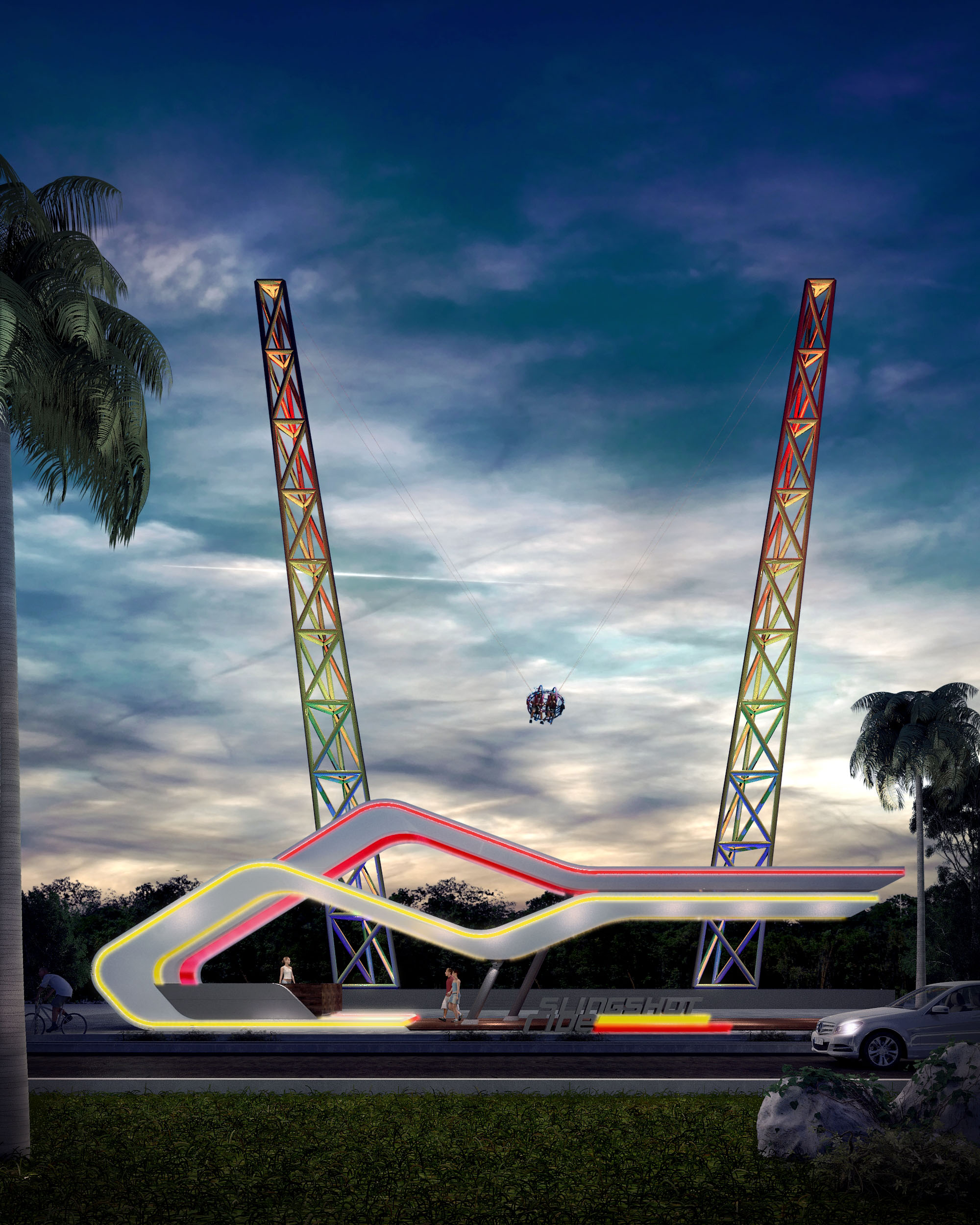
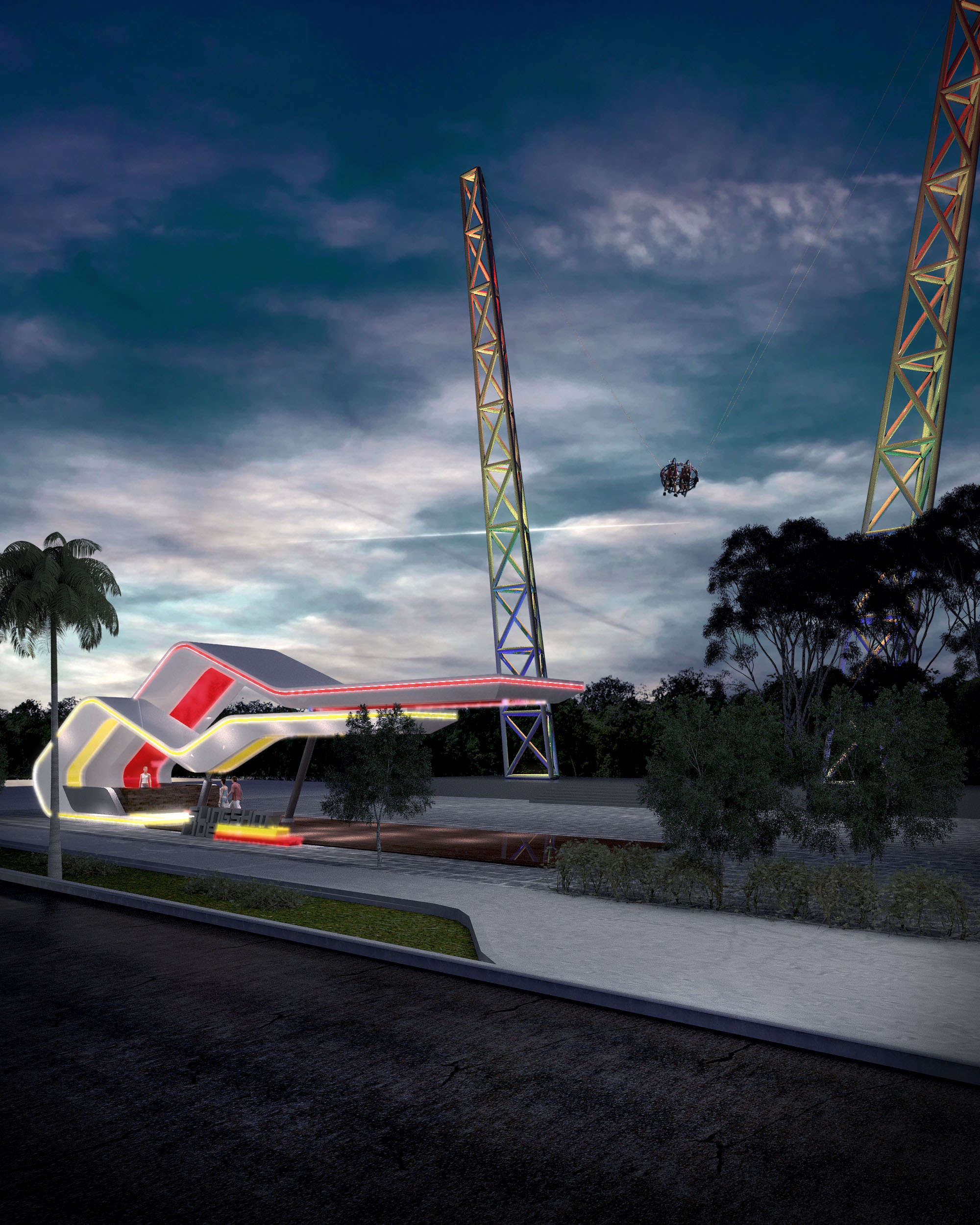
The Slingshot Ride in Cancún is conceived as an urban landmark that translates the extreme dynamics of the attraction into an architectural gesture. The project explores the tension between earth and sky: two vertical towers anchor the structure to the ground while a fluid, illuminated base traces the trajectory of the launch. The architecture is not a neutral support for the ride, but a three-dimensional graphic that amplifies the sensation of speed, risk and elevation.
The formal language is inspired by the energy of light trails and aerodynamic profiles. Continuous curves envelop the boarding platform, creating a sculptural shell that visually connects the towers and defines a clear, iconic silhouette against the Caribbean sky. The design aims to be instantly recognizable from the hotel zone and the nearby road, functioning simultaneously as infrastructure, attraction and luminous sign.
The project is located along a primary vehicular corridor, so the composition is organized longitudinally, parallel to the street, to maximize visibility and legibility at high speed. The access esplanade, ticketing and waiting area are all integrated into a low, elongated plinth that visually grounds the towers and protects users from the traffic edge.
Circulation is resolved through a clear sequence: street sidewalk, raised platform, controlled access and embarkation zone. Visual permeability is maintained at all times, both for safety and for the theatricality of the experience, allowing passersby to observe the preparation and launch. The vertical towers frame the horizon and work as a contemporary gateway, signaling arrival to a leisure strip within the city.
The two slender towers are expressed as triangulated steel trusses, optimized for stiffness and wind performance in a coastal environment. Their geometry responds to the mechanical requirements of the slingshot system, while the colored lighting accentuates the rhythm of the structural modules. The apparent lightness of the towers contrasts with their technical robustness, emphasizing the controlled nature of the extreme experience.
The base canopy is conceived as a ribbon-like steel structure clad with high-performance composites and smooth, durable finishes suitable for outdoor, saline conditions. Its continuous curves function as a structural shell and as an integrated support for LED lighting, signage and safety barriers. Joints and fixings are concealed to preserve the impression of a seamless, flowing element hovering above the platform.
Given Cancún’s strong nocturnal tourism activity, the project is designed primarily as a night-time icon. Dynamic RGB LED lines trace the contours of the base canopy, while programmable fixtures embedded in the truss bays transform the towers into vertical light totems. Color gradients can be synchronized with the launch sequence, turning each ride into a short light performance visible from long distances.
The palette is intentionally vibrant, referencing the atmosphere of amusement parks and the luminosity of the Caribbean nightlife. At the same time, the use of linear lighting and controlled optics reduces glare and focuses brightness where it amplifies the geometry, allowing the structure to remain legible without excessive light pollution.
The architecture frames the emotional transition of the user from spectator to participant. The enveloping canopy creates a threshold that separates the everyday urban context from the intense moment of launch. The raised platform allows unobstructed views for companions and onlookers, transforming the waiting time into a shared show.
Safety is expressed through transparency and clarity: guardrails, access ramps and control zones are integrated into the overall form, avoiding visual clutter while ensuring compliance with international amusement-ride standards. Night lighting of circulation edges and steps reinforces intuitive wayfinding and reduces risk, even during peak hours.
The project incorporates sustainable strategies adapted to the tropical, coastal climate of Cancún. The compact footprint minimizes land occupation and preserves existing vegetation around the perimeter, using it as a natural backdrop instead of overdeveloping the plot. Structural steel is specified with a high recycled content and is designed for potential disassembly or relocation, aligning with circular economy principles for entertainment infrastructure.
Energy consumption is reduced through the exclusive use of LED technology with programmable scenarios that dim lighting during low-traffic hours. Control systems allow selective activation of tower and canopy effects, optimizing power use during operation. Corrosion-resistant coatings and low-maintenance materials extend the life cycle of components in the saline environment, reducing replacement frequency and associated environmental impact. Rainwater harvesting from the canopy for landscape irrigation is foreseen, contributing to responsible water management in the region.


Nuestras oficinas están en Barcelona, Cancún, Chicago y Santo Domingo, pero gracias a la tecnología podemos desarrollar proyectos en cualquier parte del mundo.
Barcelona
Bac de Roda 136
08020, Barcelona
Spain
Madrid
Av. de Buendía 11
19005 Guadalajara (Madrid)
Spain
Chicago
373 Hazel Ave, Apt A1
60022, Glencoe, Illinois
United States