

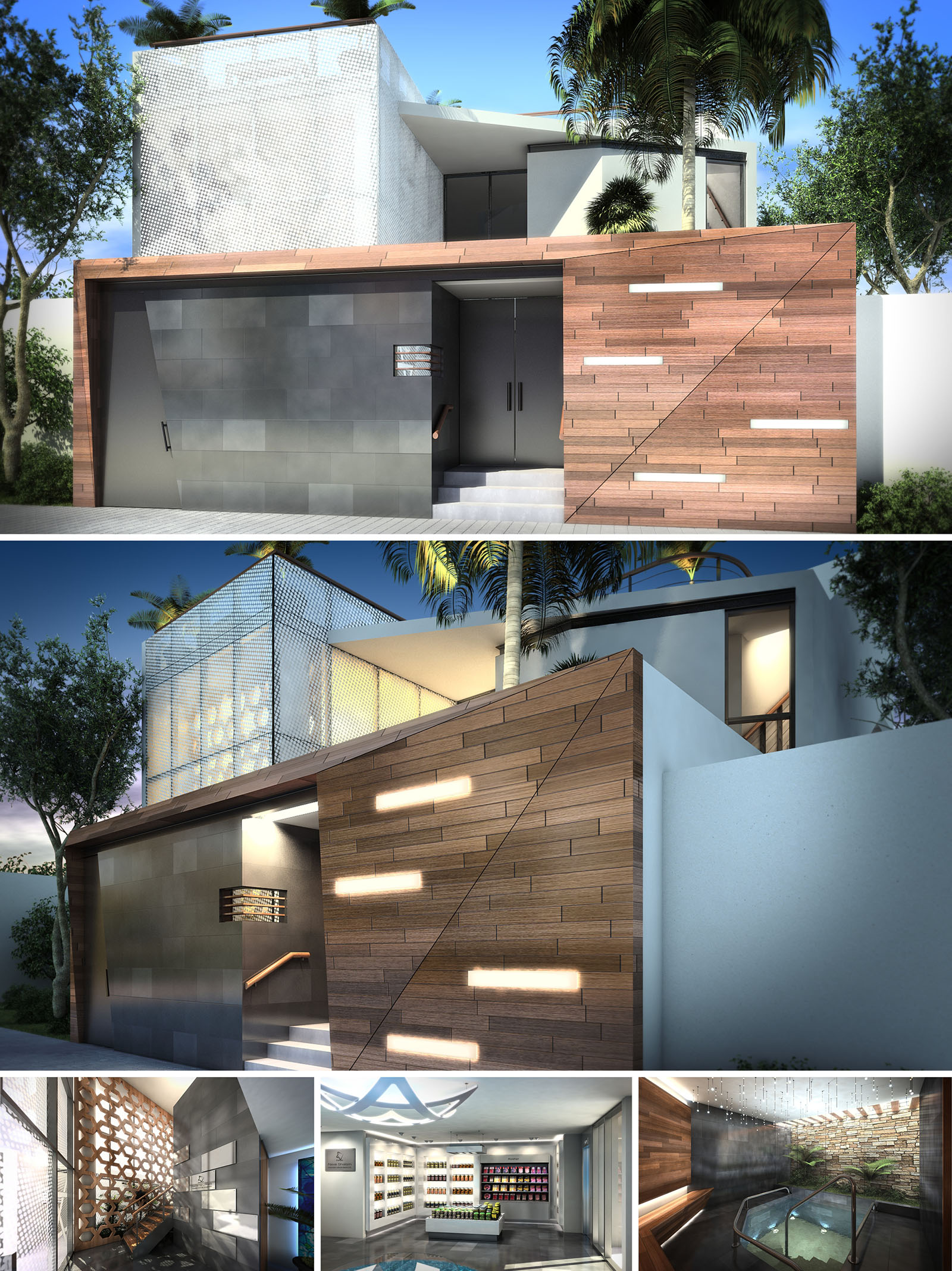
The Neve Shalom Temple in Cancún is conceived as a compact urban sanctuary that filters the intensity of the city and the Caribbean climate into a calm, introspective interior. The architectural language merges contemporary minimalism with symbolic elements of light, enclosure, and layered thresholds, expressing the idea of protection and spiritual ascent within a restrained, cubic volume. The building operates as both a religious and community space, with a façade that is reserved toward the street and increasingly permeable as visitors move inward.
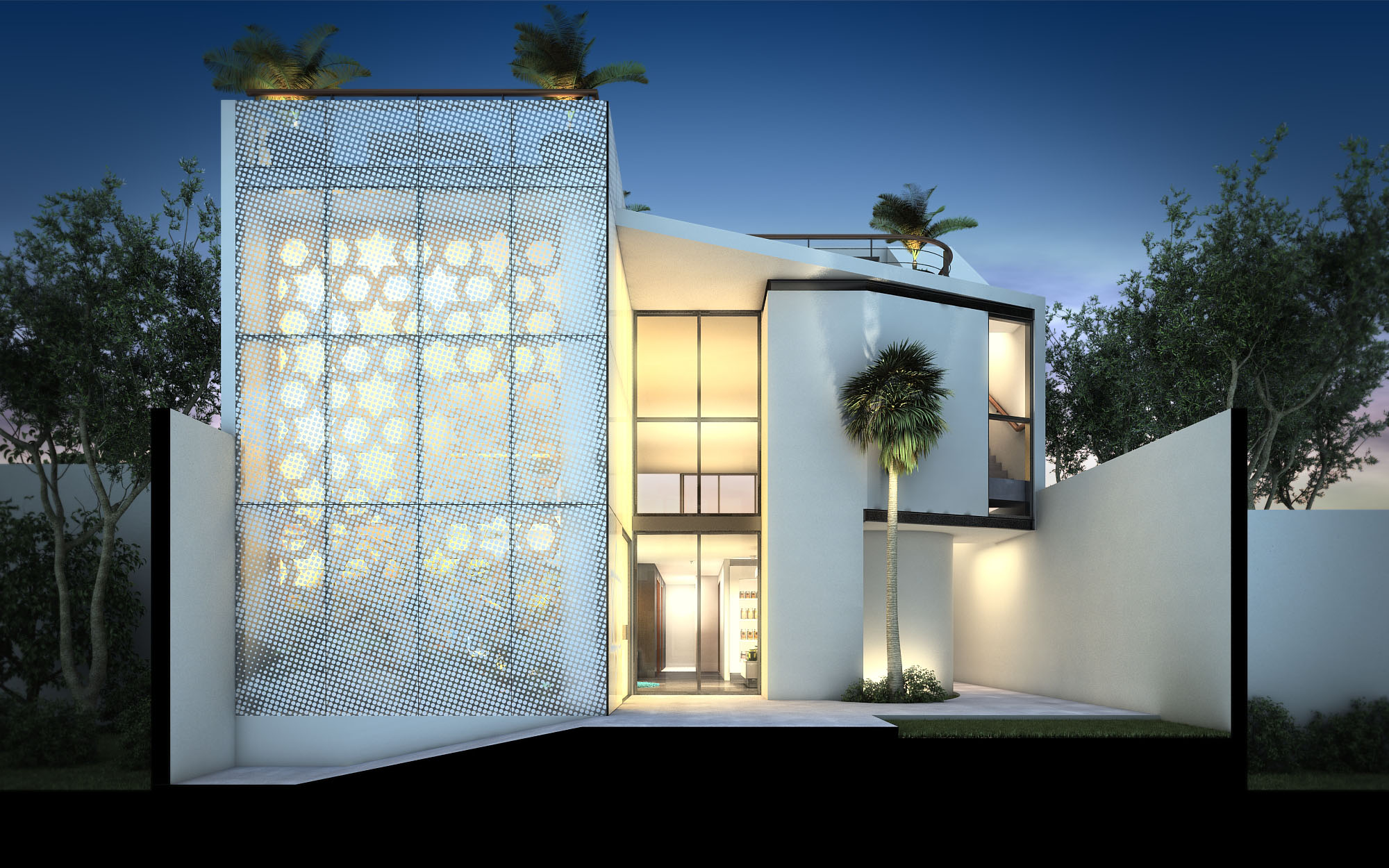
The composition articulates a clear base–middle–crown hierarchy: an opaque plinth anchors the project to the street, a warm timber band creates a human-scale interface, and a luminous perforated upper volume signals the sacred space. This tripartite reading allows the temple to be recognizable in the urban fabric while maintaining an intimate scale appropriate to the local community.
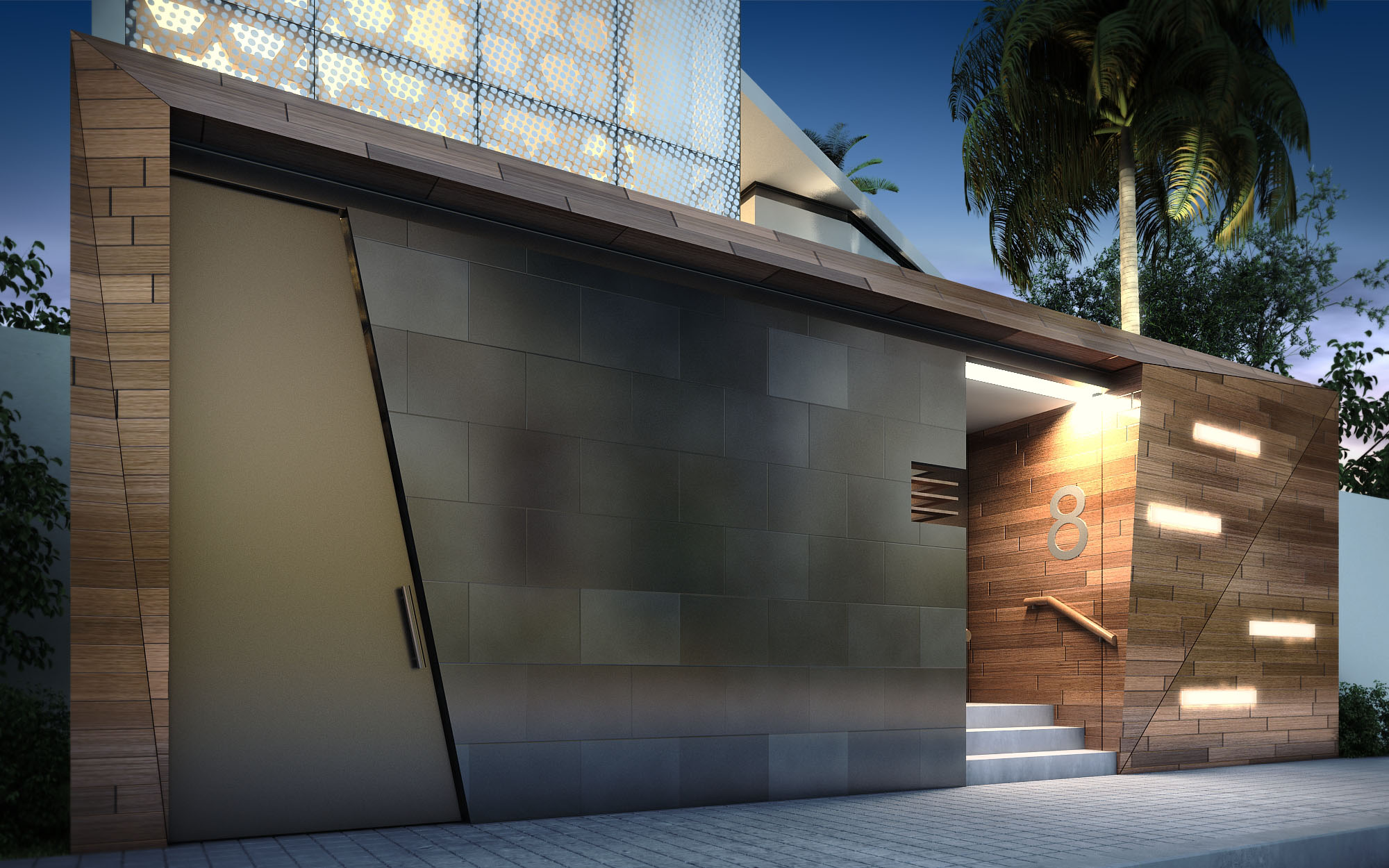
The main façade is organized as a horizontal bar that screens the interior from direct views while subtly announcing the entrance through a recessed portal. Large-format dark panels form a solid, tectonic base, contrasted by a diagonally articulated timber cladding that introduces dynamism and visually extends the volume along the street front. Linear light slots integrated into the wood create a discreet nocturnal identity and echo the idea of prayers as beams of light emerging from within.
Above this grounded base, the upper sanctuary volume is wrapped in a perforated metallic skin. This translucent enclosure transforms the interior lighting into a soft lantern effect at night, while by day it filters sunlight and frames silhouettes of palm trees and sky. The interplay of wood, metal, and smooth white plaster surfaces creates a precise, contemporary palette that withstands the tropical climate yet feels warm and approachable.
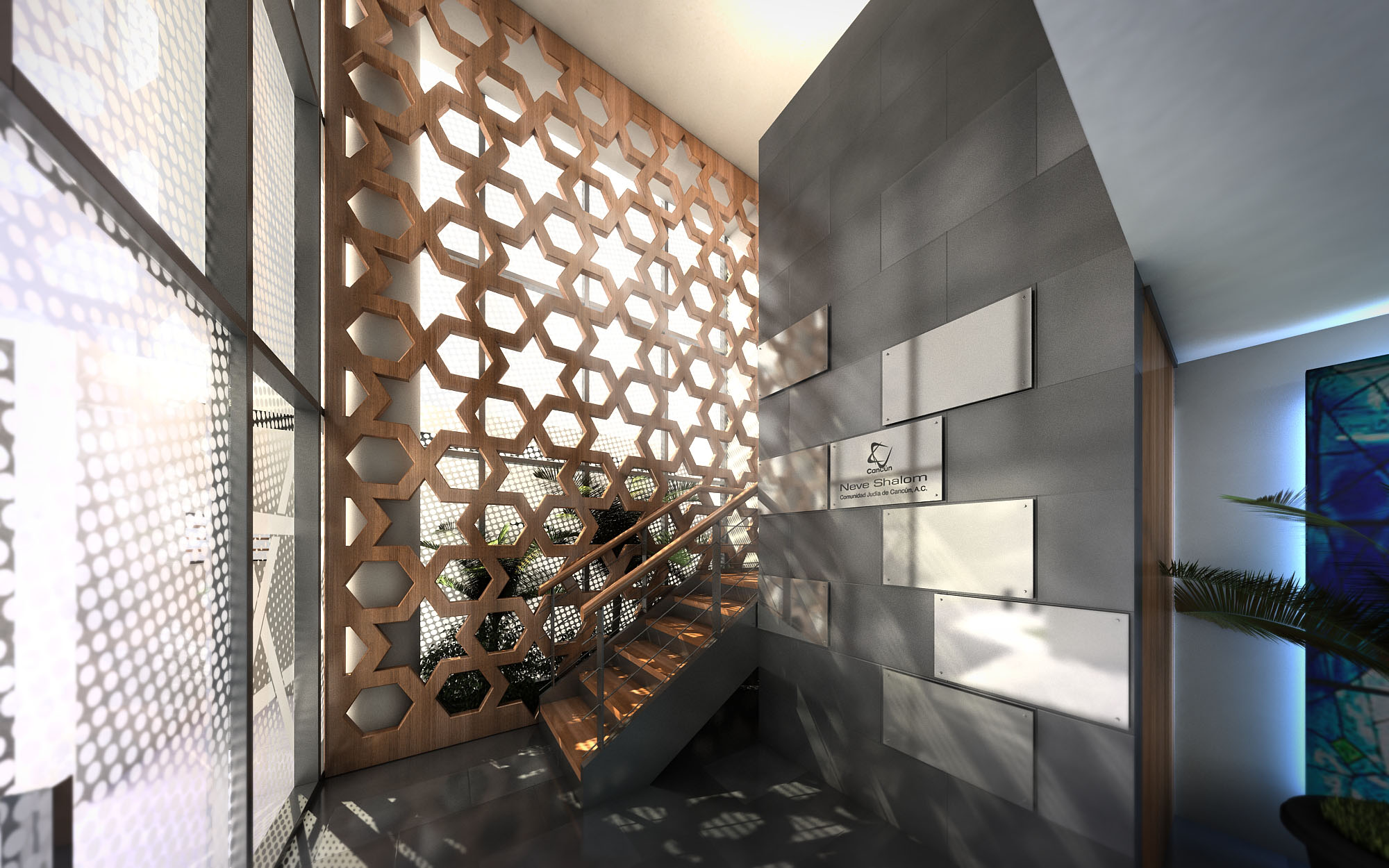
The interior journey is choreographed as a gradual transition from compression to openness. Entry occurs through a contained vestibule, moving into a double-height hall defined by latticed wood screens and controlled overhead light. These perforated elements modulate views and acoustics, guiding the eye toward the central worship or gathering space while preserving a sense of privacy.
Within the main hall, surfaces are handled with a balance of solidity and reflection. Timber cladding, stacked in horizontal bands, is juxtaposed with polished dark flooring that subtly mirrors light fixtures and water elements. Circulation is clear and legible, with stairs and ramps carefully integrated along the perimeter to maintain a central, uninterrupted devotional or assembly area suitable for flexible programming.
Material selection focuses on tactile warmth and controlled luminosity. Exterior timber is used in calibrated strips, emphasizing horizontality and guiding natural ventilation joints. The dark stone or porcelain cladding grounds the building while offering durability against humidity and saline air. The perforated metal mesh of the upper volume acts as a climatic and visual veil, generating dappled light patterns that recall traditional screens while remaining distinctly contemporary.
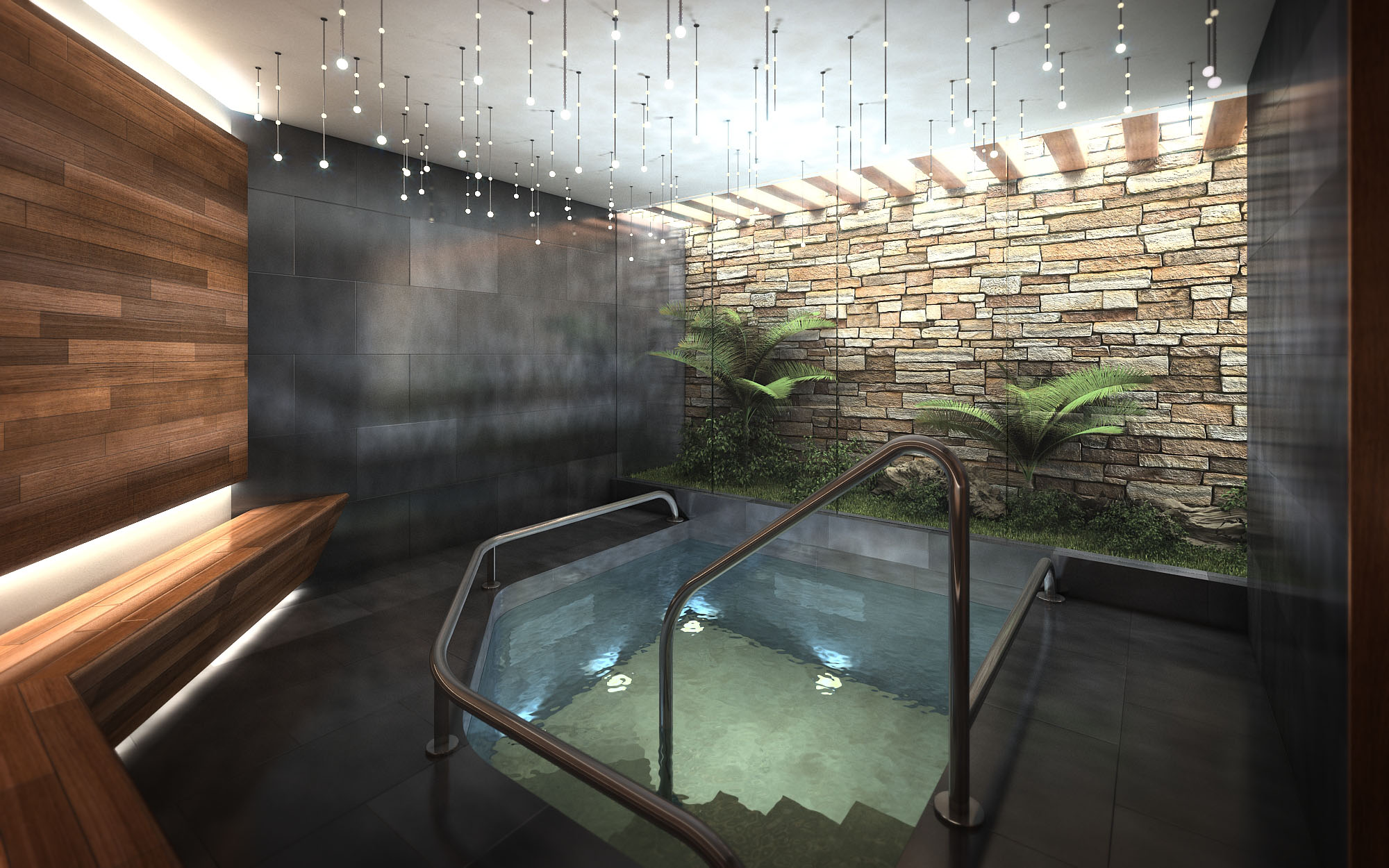
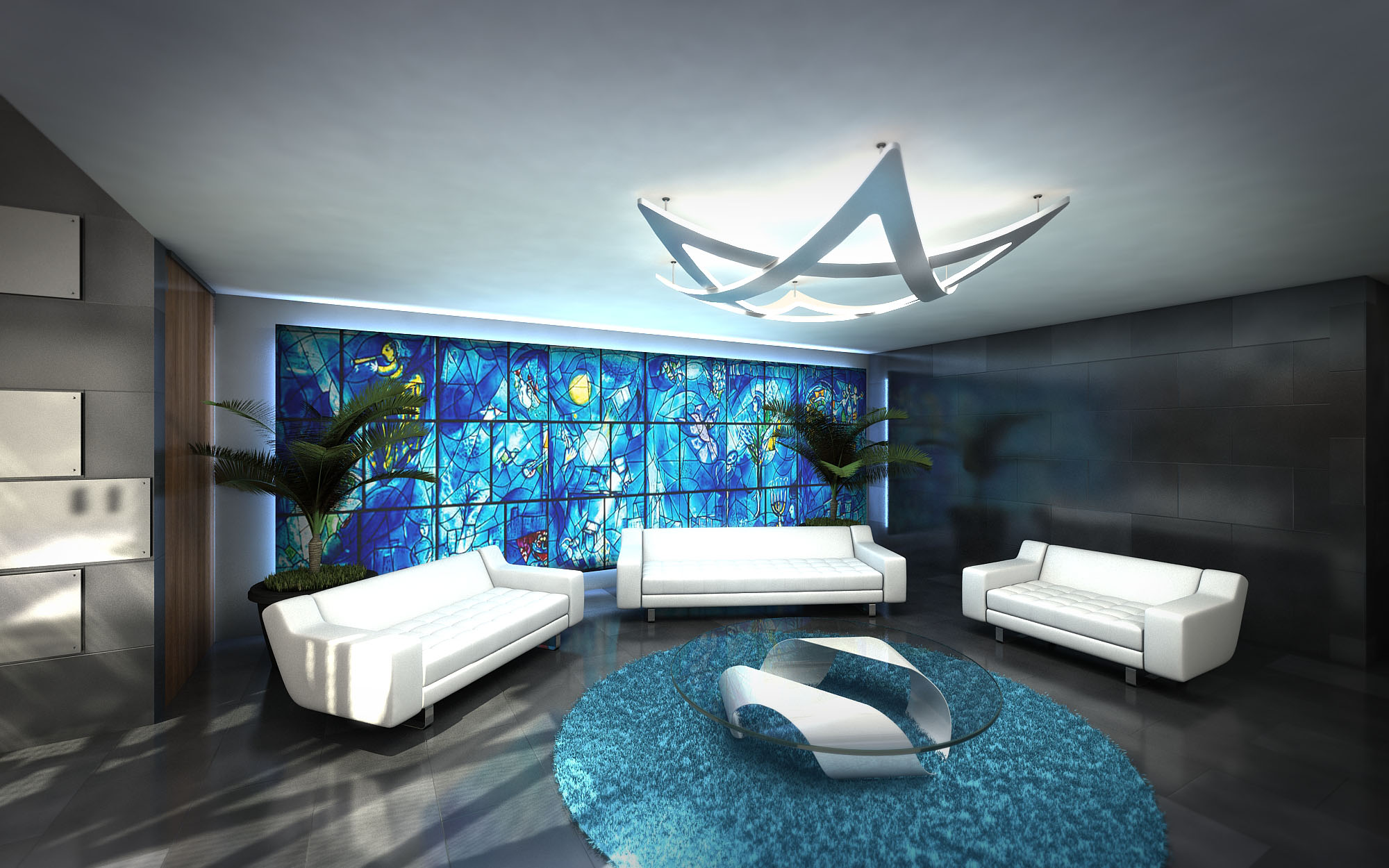
Artificial lighting is conceived as an extension of the architecture. Integrated linear fixtures within the façade boards and interior walls create soft washes rather than direct glare, reinforcing the meditative character of the spaces. In select areas, clusters of suspended luminaires simulate a starry canopy, emphasizing verticality and enhancing the ceremonial dimension without resorting to overt ornamentation.
The project accommodates worship functions alongside educational and community activities, organized around a clear zoning strategy. Public and semi-public areas occupy the lower level, ensuring direct access from the street, while more contemplative spaces are located above, buffered from noise and urban distractions. Service zones and storage are compactly arranged along blind walls, maximizing usable area for gathering and circulation.
Sustainability is addressed through passive and material strategies appropriate to Cancún’s tropical climate. The perforated upper skin acts as a brise-soleil, reducing solar gain while allowing cross-ventilation and lowering reliance on mechanical cooling. High-performance glazing, insulated roof assemblies, and the use of durable, low-maintenance finishes extend the building’s life cycle. Where possible, locally sourced timber and stone reduce transportation impacts, while the careful orientation of openings optimizes natural light, minimizing artificial lighting loads and ensuring that the temple remains both energy-efficient and comfortable throughout the year.

The Neve Shalom Temple in Cancún is conceived as a compact urban sanctuary that filters the intensity of the city and the Caribbean climate into a calm, introspective interior. The architectural language merges contemporary minimalism with symbolic elements of light, enclosure, and layered thresholds, expressing the idea of protection and spiritual ascent within a restrained, cubic volume. The building operates as both a religious and community space, with a façade that is reserved toward the street and increasingly permeable as visitors move inward.
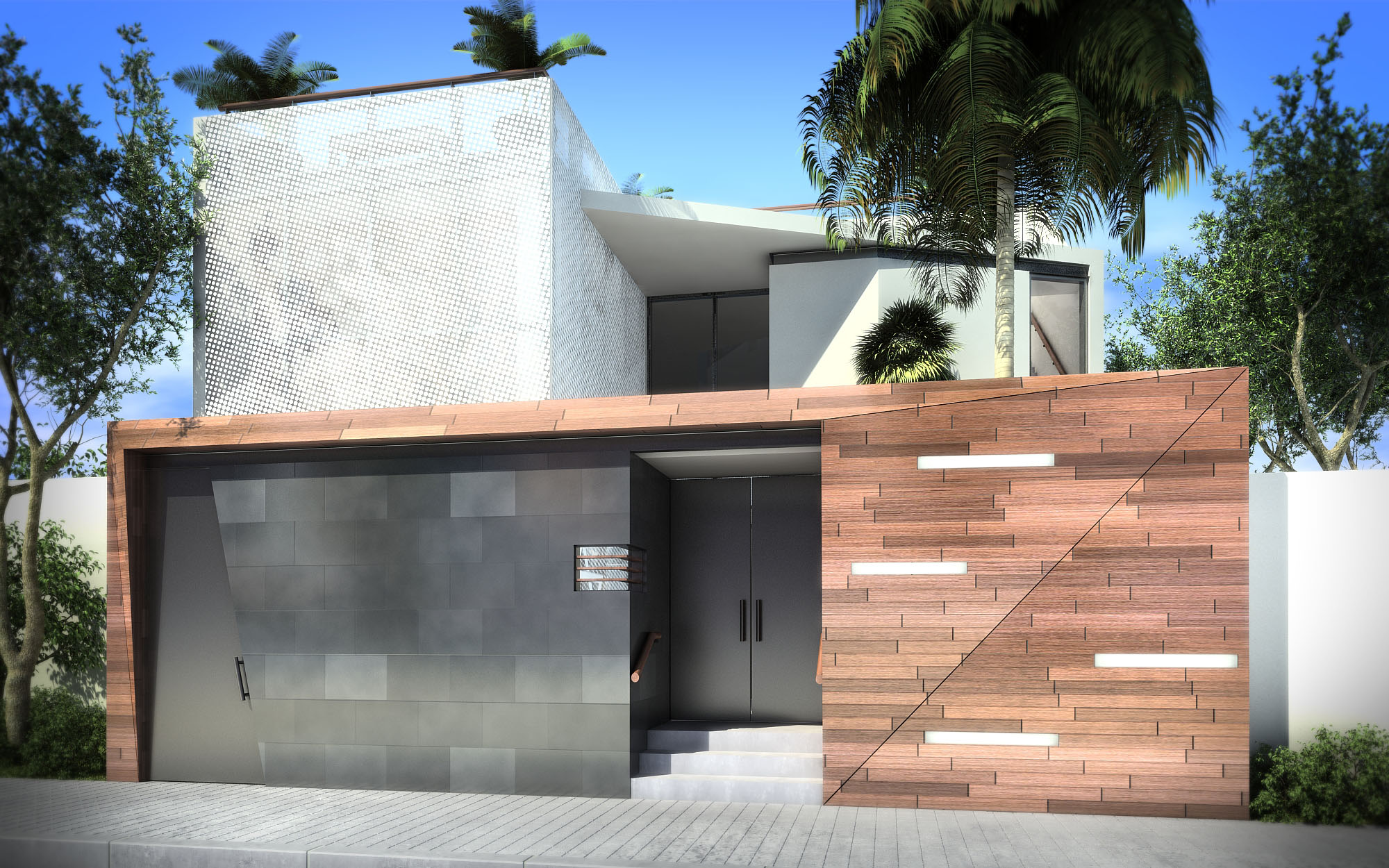
The composition articulates a clear base–middle–crown hierarchy: an opaque plinth anchors the project to the street, a warm timber band creates a human-scale interface, and a luminous perforated upper volume signals the sacred space. This tripartite reading allows the temple to be recognizable in the urban fabric while maintaining an intimate scale appropriate to the local community.
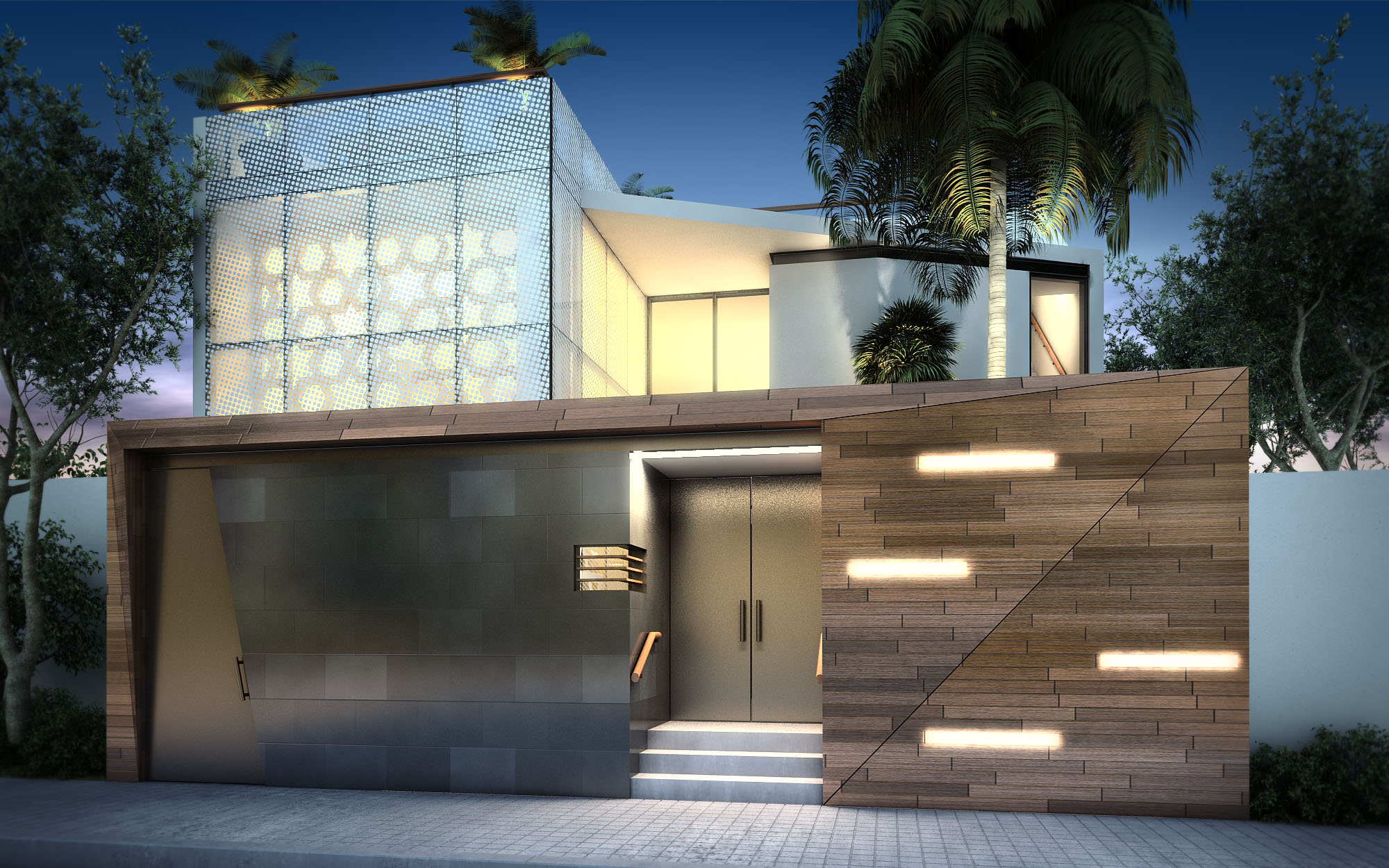
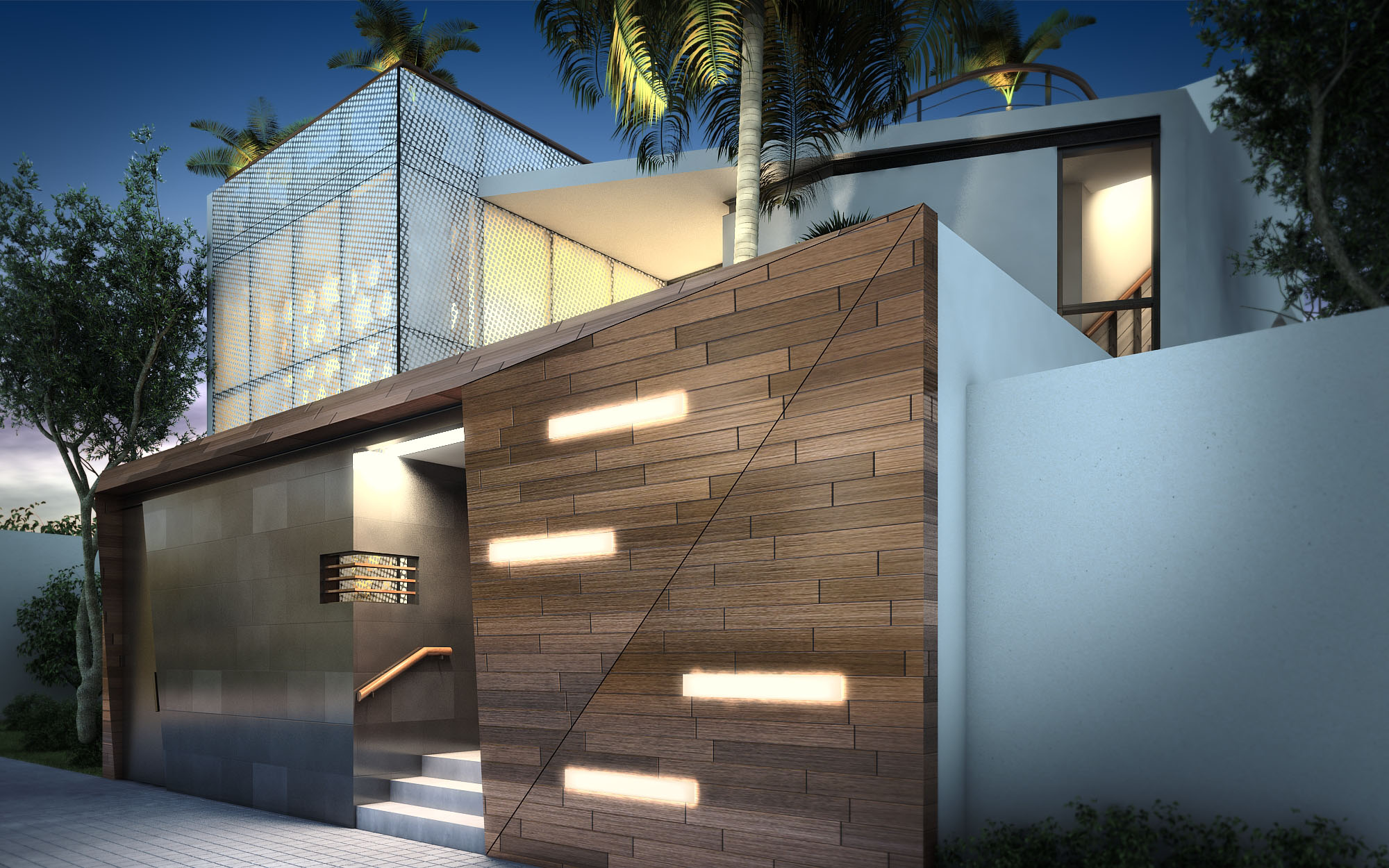
The main façade is organized as a horizontal bar that screens the interior from direct views while subtly announcing the entrance through a recessed portal. Large-format dark panels form a solid, tectonic base, contrasted by a diagonally articulated timber cladding that introduces dynamism and visually extends the volume along the street front. Linear light slots integrated into the wood create a discreet nocturnal identity and echo the idea of prayers as beams of light emerging from within.
Above this grounded base, the upper sanctuary volume is wrapped in a perforated metallic skin. This translucent enclosure transforms the interior lighting into a soft lantern effect at night, while by day it filters sunlight and frames silhouettes of palm trees and sky. The interplay of wood, metal, and smooth white plaster surfaces creates a precise, contemporary palette that withstands the tropical climate yet feels warm and approachable.
The interior journey is choreographed as a gradual transition from compression to openness. Entry occurs through a contained vestibule, moving into a double-height hall defined by latticed wood screens and controlled overhead light. These perforated elements modulate views and acoustics, guiding the eye toward the central worship or gathering space while preserving a sense of privacy.
Within the main hall, surfaces are handled with a balance of solidity and reflection. Timber cladding, stacked in horizontal bands, is juxtaposed with polished dark flooring that subtly mirrors light fixtures and water elements. Circulation is clear and legible, with stairs and ramps carefully integrated along the perimeter to maintain a central, uninterrupted devotional or assembly area suitable for flexible programming.
Material selection focuses on tactile warmth and controlled luminosity. Exterior timber is used in calibrated strips, emphasizing horizontality and guiding natural ventilation joints. The dark stone or porcelain cladding grounds the building while offering durability against humidity and saline air. The perforated metal mesh of the upper volume acts as a climatic and visual veil, generating dappled light patterns that recall traditional screens while remaining distinctly contemporary.
Artificial lighting is conceived as an extension of the architecture. Integrated linear fixtures within the façade boards and interior walls create soft washes rather than direct glare, reinforcing the meditative character of the spaces. In select areas, clusters of suspended luminaires simulate a starry canopy, emphasizing verticality and enhancing the ceremonial dimension without resorting to overt ornamentation.
The project accommodates worship functions alongside educational and community activities, organized around a clear zoning strategy. Public and semi-public areas occupy the lower level, ensuring direct access from the street, while more contemplative spaces are located above, buffered from noise and urban distractions. Service zones and storage are compactly arranged along blind walls, maximizing usable area for gathering and circulation.
Sustainability is addressed through passive and material strategies appropriate to Cancún’s tropical climate. The perforated upper skin acts as a brise-soleil, reducing solar gain while allowing cross-ventilation and lowering reliance on mechanical cooling. High-performance glazing, insulated roof assemblies, and the use of durable, low-maintenance finishes extend the building’s life cycle. Where possible, locally sourced timber and stone reduce transportation impacts, while the careful orientation of openings optimizes natural light, minimizing artificial lighting loads and ensuring that the temple remains both energy-efficient and comfortable throughout the year.


Nuestras oficinas están en Barcelona, Cancún, Chicago y Santo Domingo, pero gracias a la tecnología podemos desarrollar proyectos en cualquier parte del mundo.
Barcelona
Bac de Roda 136
08020, Barcelona
Spain
Madrid
Av. de Buendía 11
19005 Guadalajara (Madrid)
Spain
Chicago
373 Hazel Ave, Apt A1
60022, Glencoe, Illinois
United States