

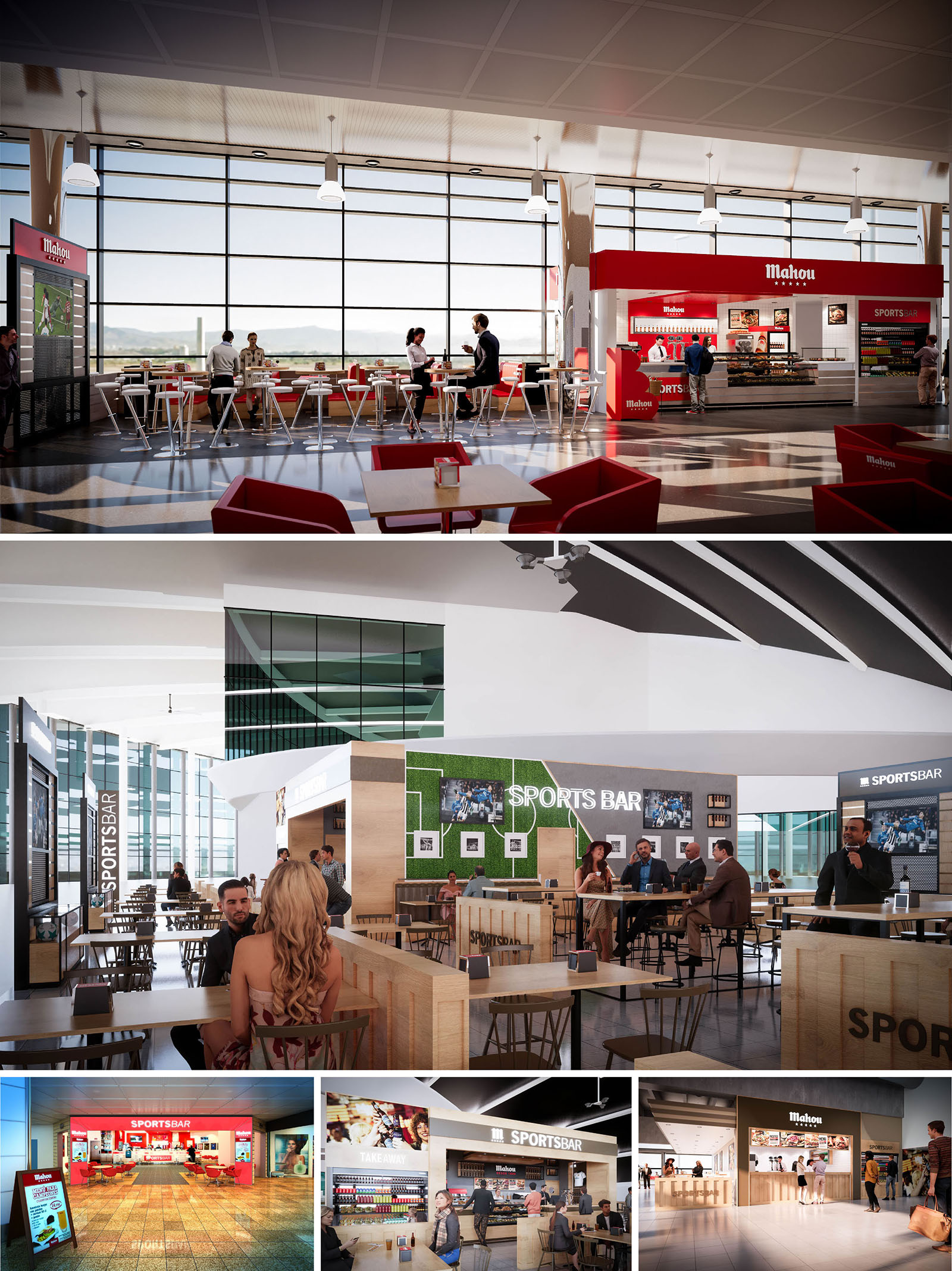
Mahou Sport Bar is conceived as a modular hospitality concept capable of adapting to different airport and transport-hub locations across Spain while maintaining a powerful and recognizable brand image. The project merges the vocabulary of contemporary sports arenas with the clarity of a fast-service bar, using strong geometry, bold color blocks, and open sight lines to promote visibility and intuitive circulation.
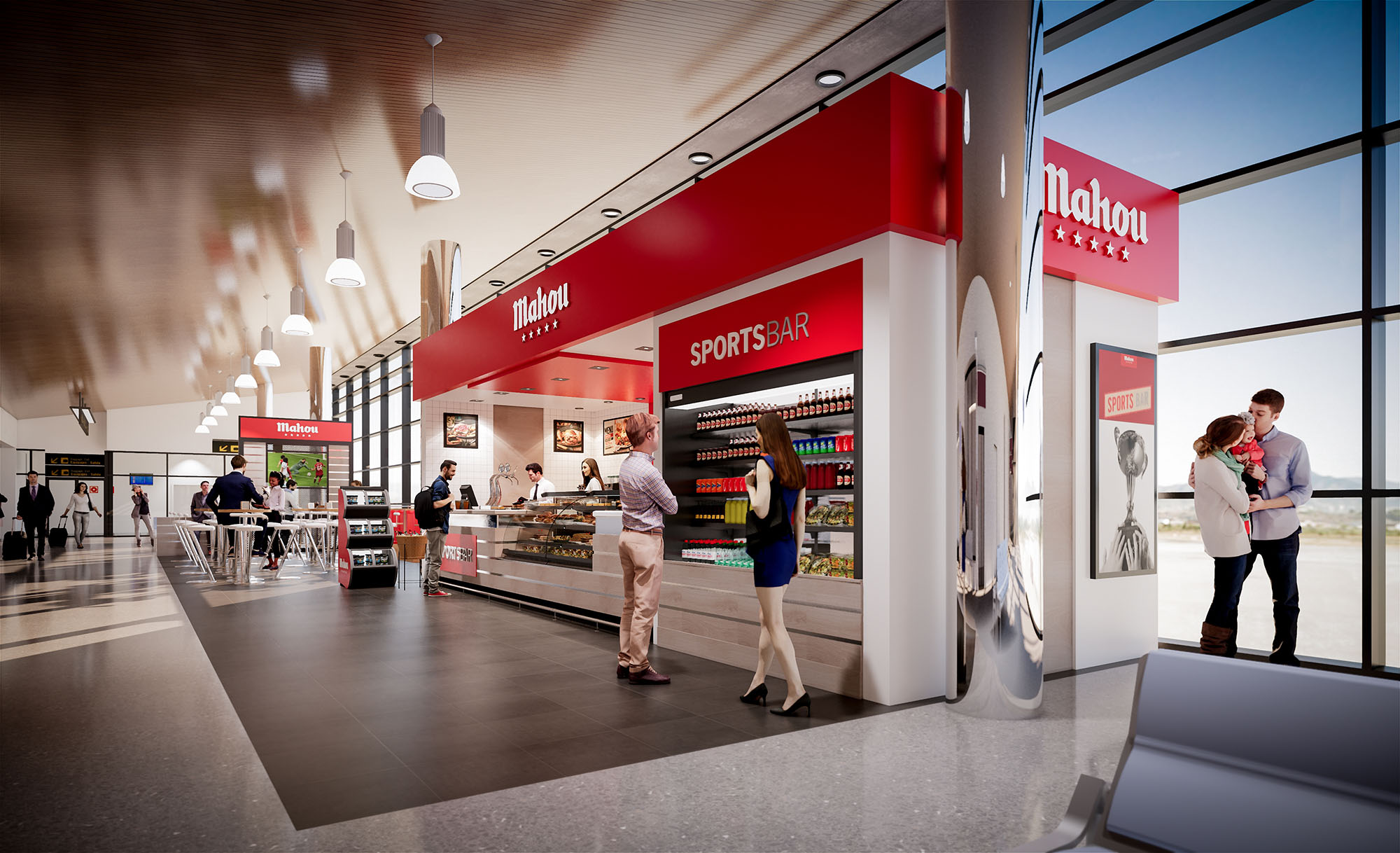
The design strategy prioritizes transparency and interaction with the surrounding terminal, framing runway views and public flows as part of the interior experience. Each unit operates as an “island” within the larger concourse, using low-height perimeters and permeable layouts so that the bar blends seamlessly with passenger movement while still generating a defined, welcoming atmosphere.
The spatial layout is structured around a central service spine: an elongated counter that concentrates ordering, preparation, and product display. This bar volume acts as the functional and visual anchor, allowing customers to immediately locate the point of service from multiple approach directions. Around this core, differentiated seating rings are arranged—from quick stop high tables near circulation routes to more relaxed low seating deeper in the footprint.
Visual axes are carefully maintained, ensuring uninterrupted views to flight information screens and to the large-format televisions broadcasting sports content. Circulation paths are generous, with clear transversal routes through the seating field so that even during high occupancy, passenger flow remains fluid. Edge conditions are treated with bar-height counters facing windows or concourse, offering solo travelers convenient spots without entering the interior cluster.
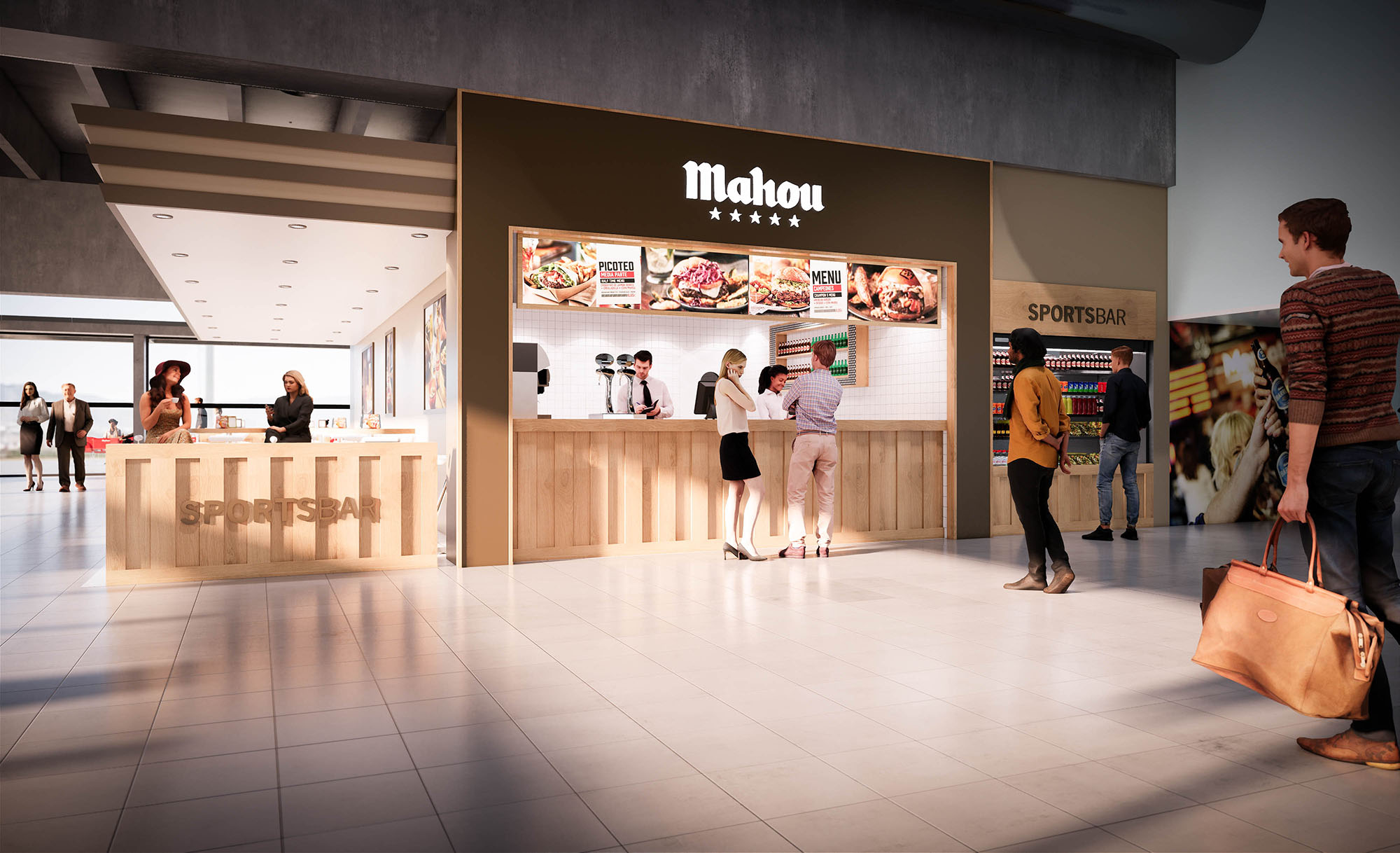
The material palette combines warm, light-toned wood with contrasting red brand accents and black technical elements. Timber veneers and laminated boards define the furniture and vertical cladding, creating a unified base that softens the predominantly glazed and metallic context of airport architecture. The red Mahou fascia, menu bands, and strategic surfaces provide an immediate brand reading and act as wayfinding beacons within the terminal.
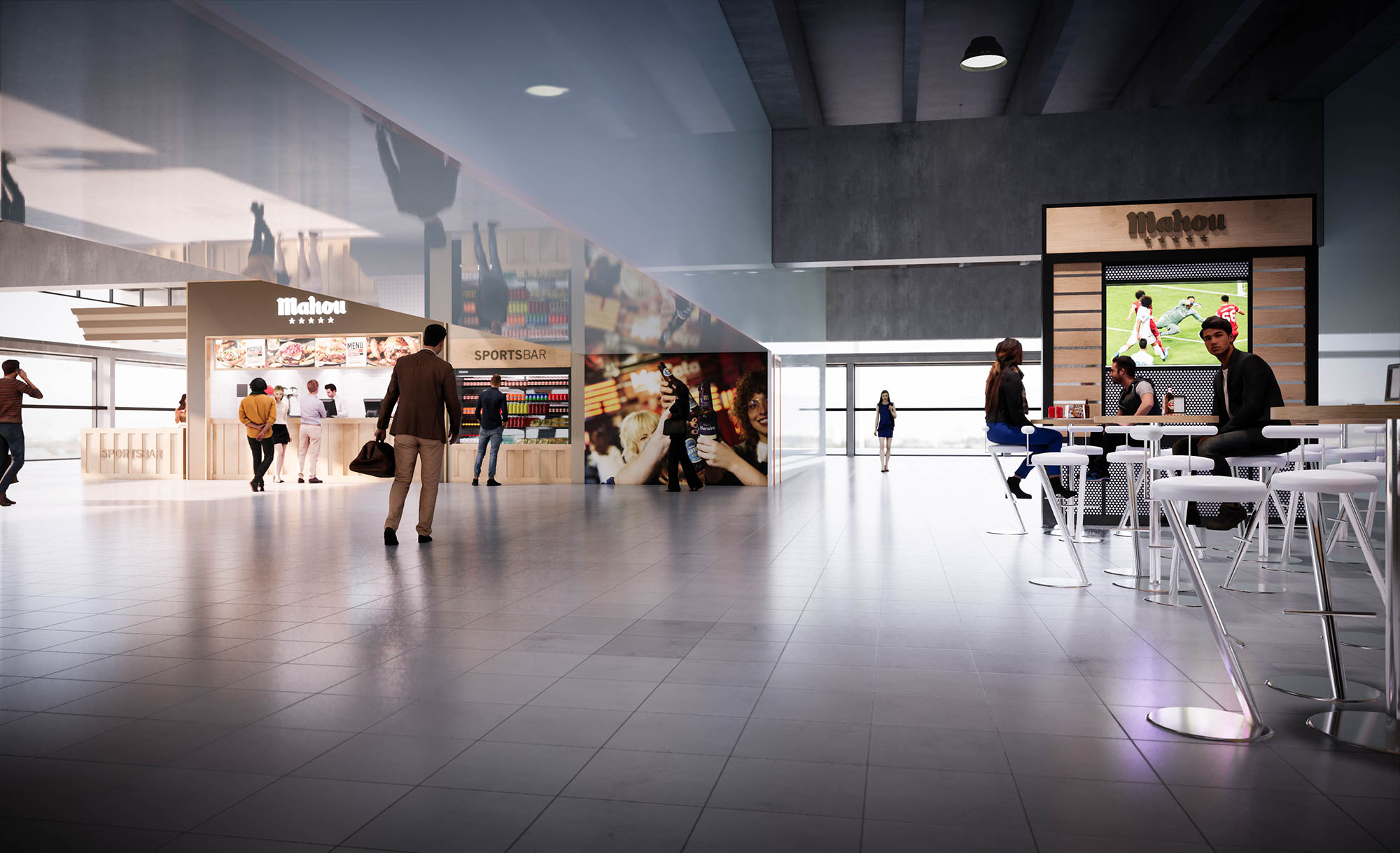
Sports identity is expressed through artificial turf panels, line graphics reminiscent of playing fields, and integrated media walls. These are carefully scaled to avoid visual overload while creating a dynamic backdrop to the bar activity. Metallic frames, slim-profile stools, and high tables with circular tops reference stadium furniture and emphasize lightness, enabling easy reconfiguration for future operational changes.
Lighting design balances the abundant natural light of the terminal with a precise artificial scheme. Daylight is harnessed through floor-to-ceiling glazing, with interiors organized to avoid glare on display screens and counters. Pendant luminaires above high tables and linear LED profiles integrated into the bar canopy generate a comfortable luminance hierarchy, emphasizing key functional areas such as the ordering points and product showcases.
Vertical surfaces, especially branding and sports graphics, are washed with indirect light to enhance legibility without adding visual noise. Color temperatures are calibrated in a warm-neutral range to contrast subtly with the cooler terminal environment, making the bar feel more domestic and inviting while still aligned with the contemporary airport aesthetic.
Furniture is standardized yet varied in typology, offering stools at high communal tables, bar counters for single users, and low tables for longer stays. Heights, clearances, and distances between pieces follow ergonomic criteria that facilitate both comfort and rapid turnover. The use of slender, metal-framed chairs with wooden seats responds to maintenance needs while preserving a warm tactile quality.
Operational efficiency is supported by clear queuing zones, visible menu bands, and self-service display areas that reduce waiting times. Acoustic comfort is enhanced through soft finishes on selected walls and soffits, as well as the strategic positioning of screens and speakers to localize sound around the sports viewing areas without disturbing adjacent terminal spaces.
The concept is designed as a kit-of-parts system, allowing components to be prefabricated, transported, and assembled with minimal on-site waste. Standardized modules for counters, back-bars, and seating islands reduce material offcuts and enable reuse when units are relocated or remodeled. Durable finishes with high resistance to wear and easy-clean properties extend life cycles and minimize replacement needs.
Where possible, LED lighting with high energy efficiency and integrated controls reduces consumption, while the open layout maximizes the use of existing terminal daylight and mechanical systems, avoiding redundant installations. Timber elements are specified from certified sources, and the restrained use of applied finishes lowers embodied carbon. This combination of modularity, longevity, and efficient resource use ensures that Mahou Sport Bar can be replicated across multiple locations with a consistent, sustainable design framework.
LIST OF PROJECTS EXPERIENCE
Designed, Executed and/or Built Projects
SPAIN
1. Mahou - Asturias - L201A
2. Mahou - La Palma - L035B
3. Mahou - Madrid - R105
4. Mahou - Valencia - L187.1
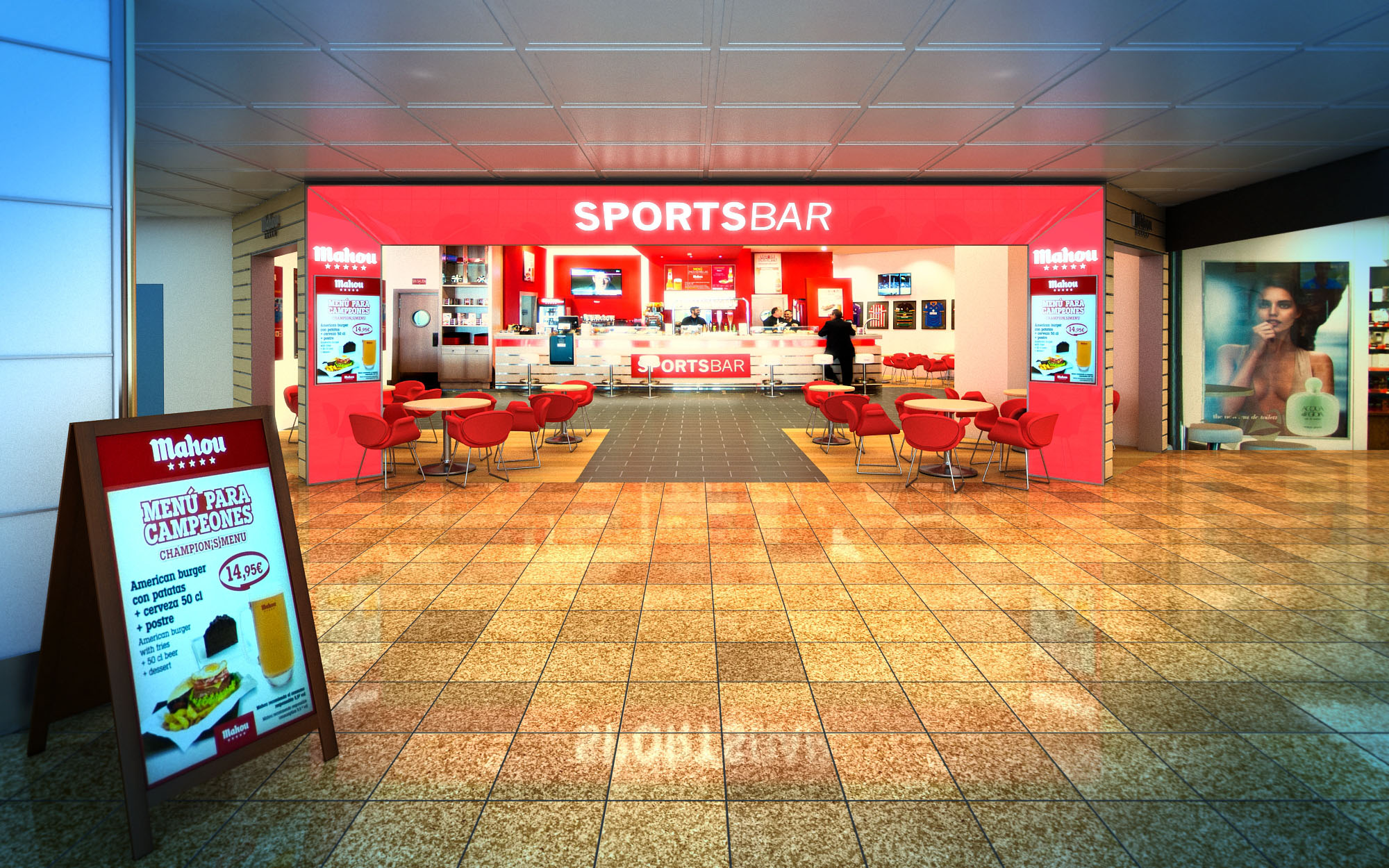
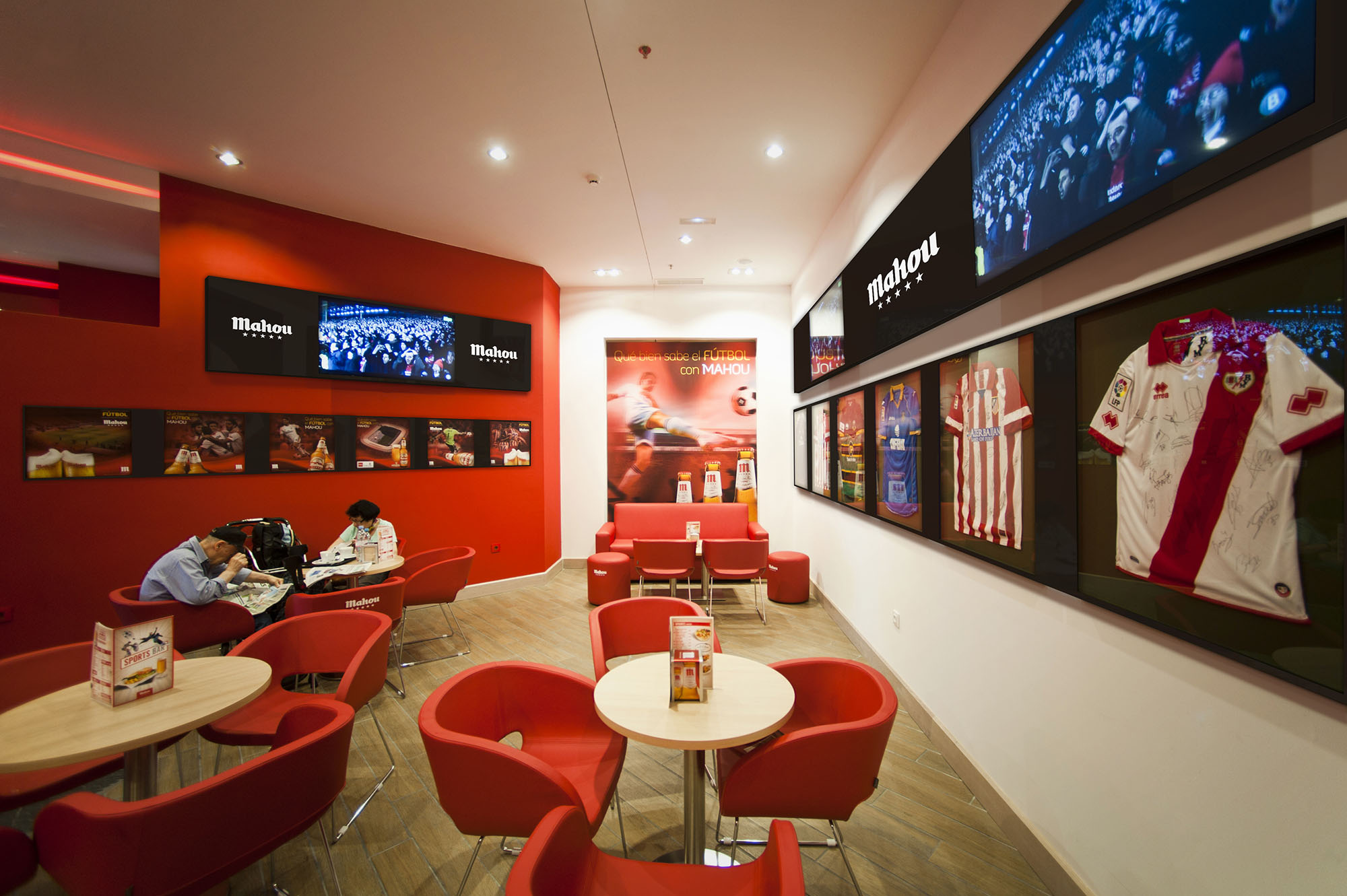
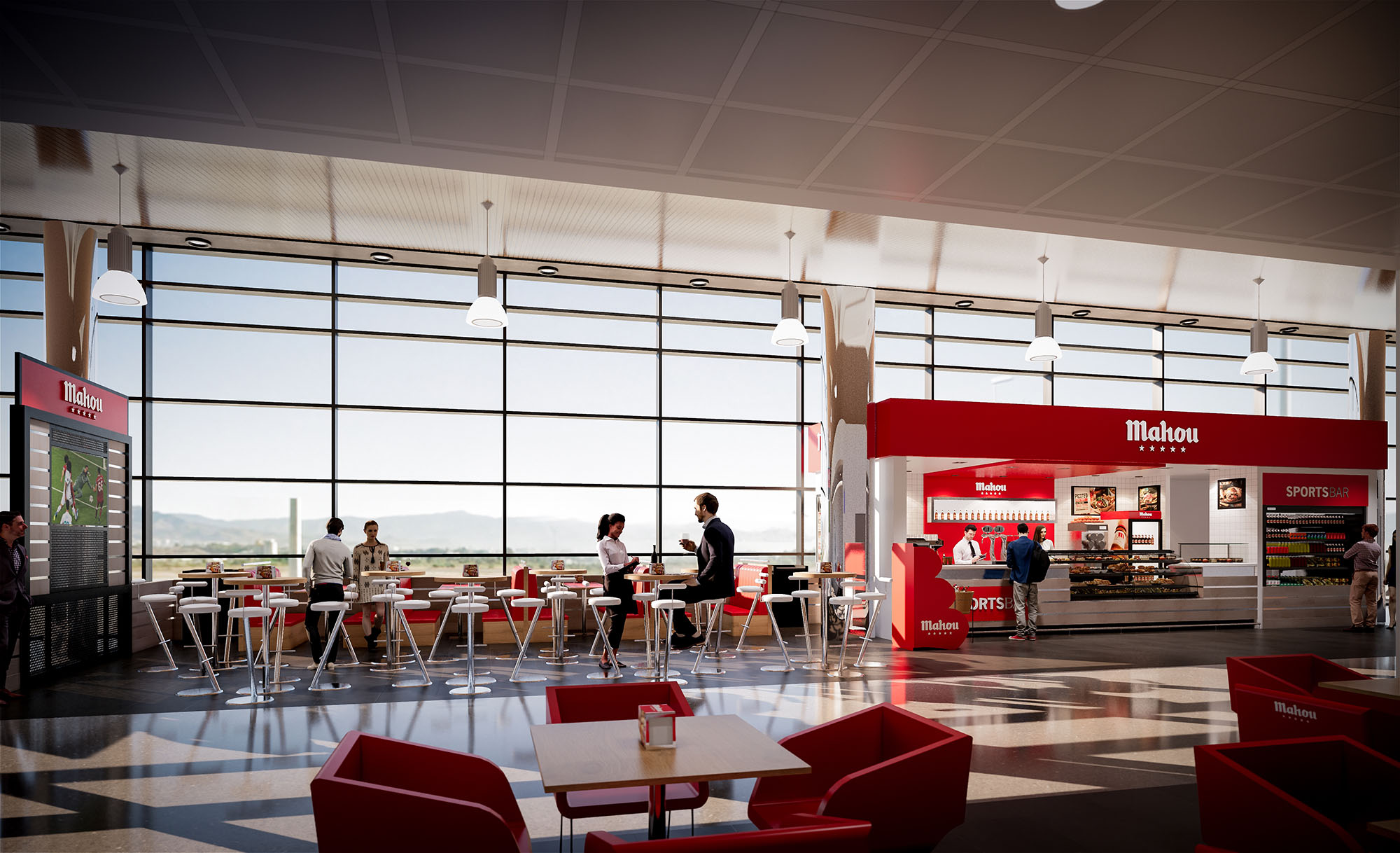
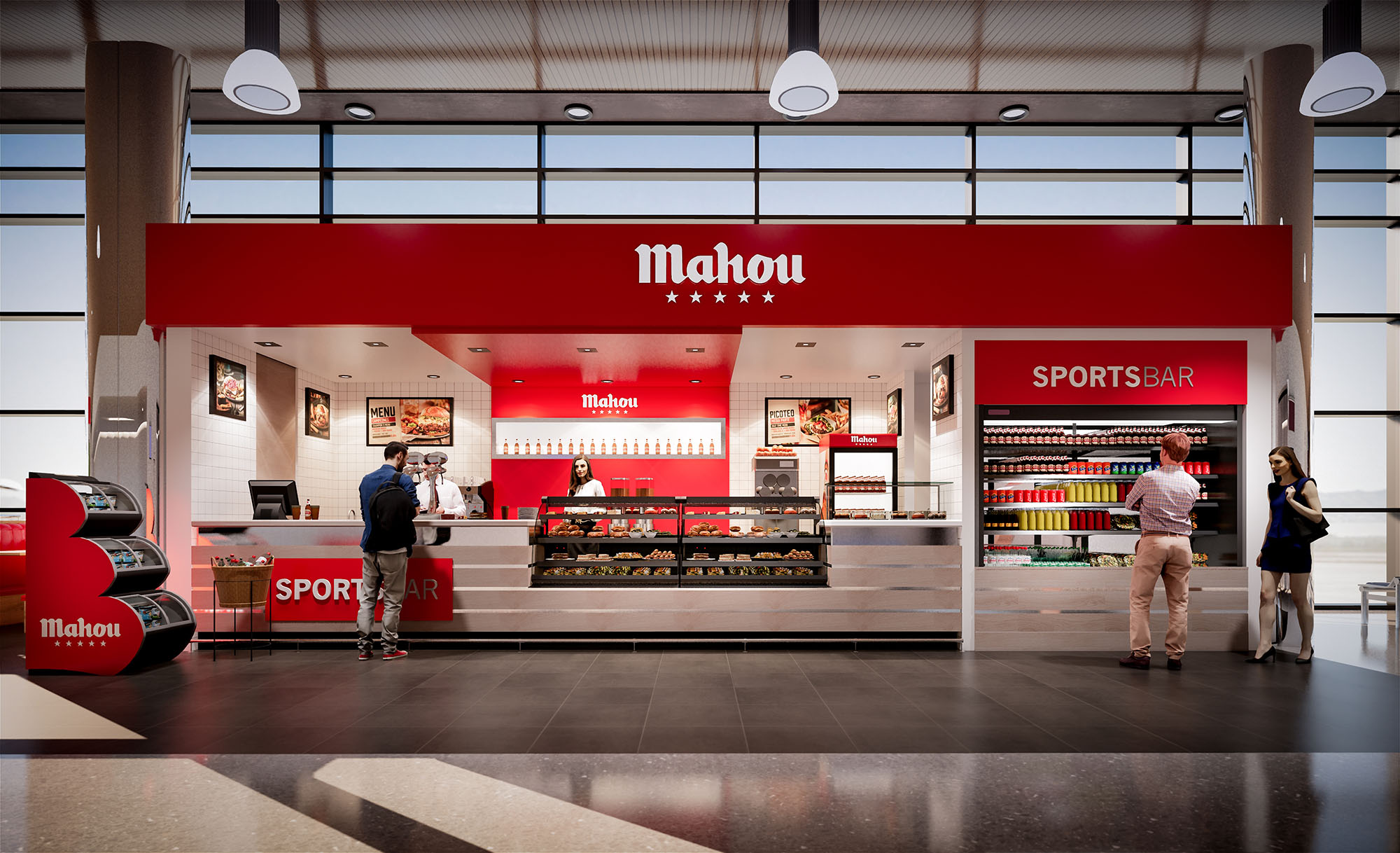
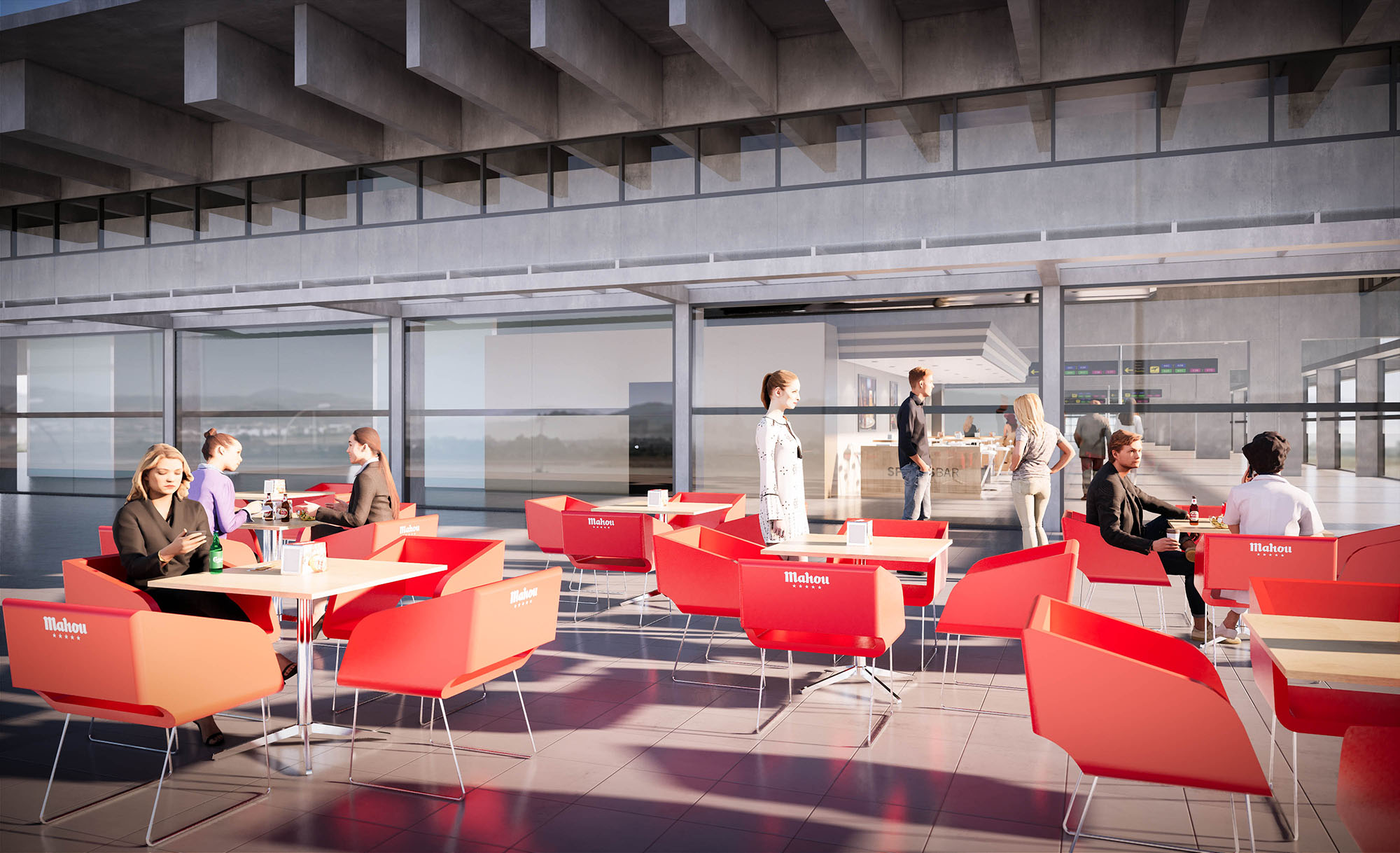
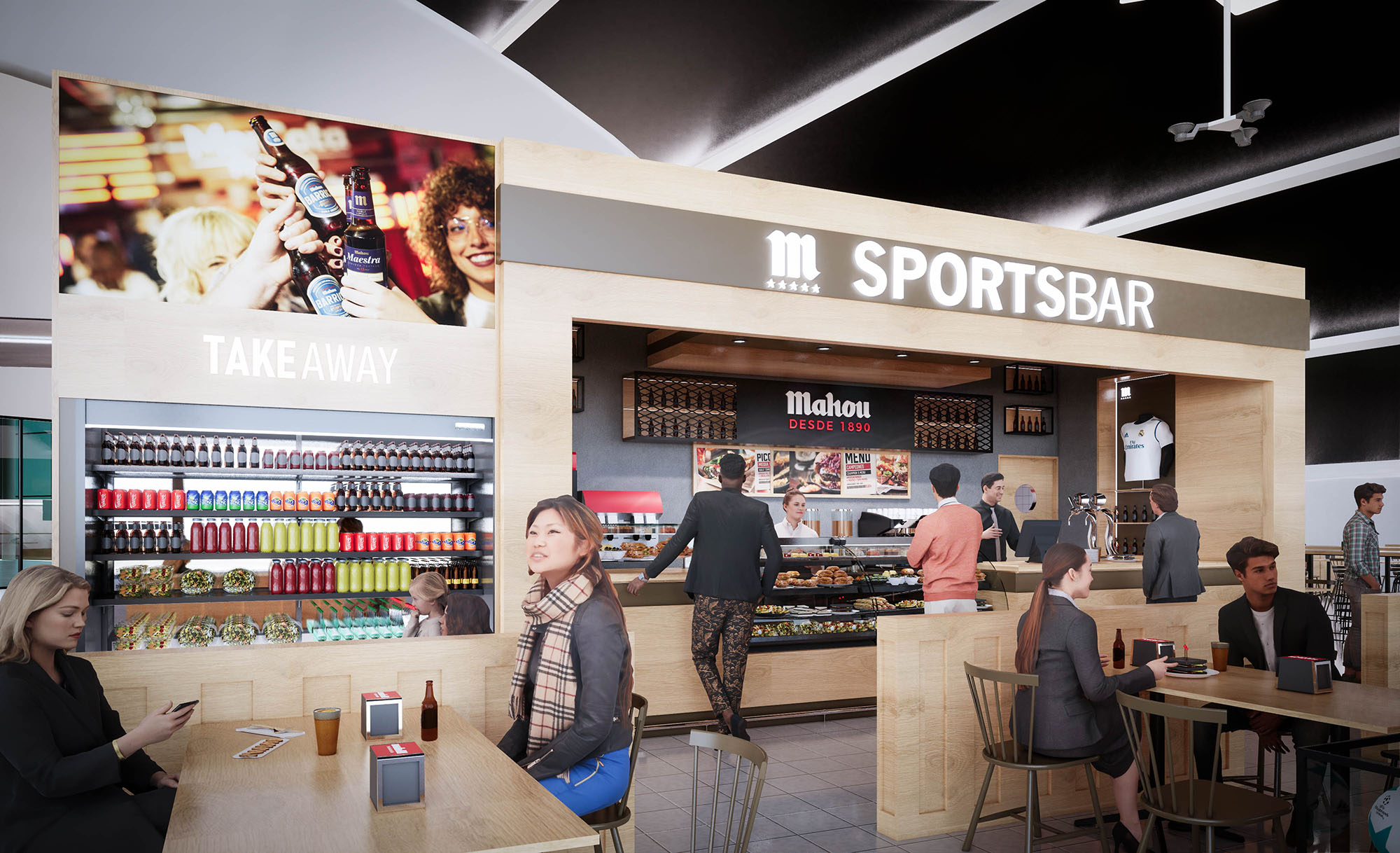
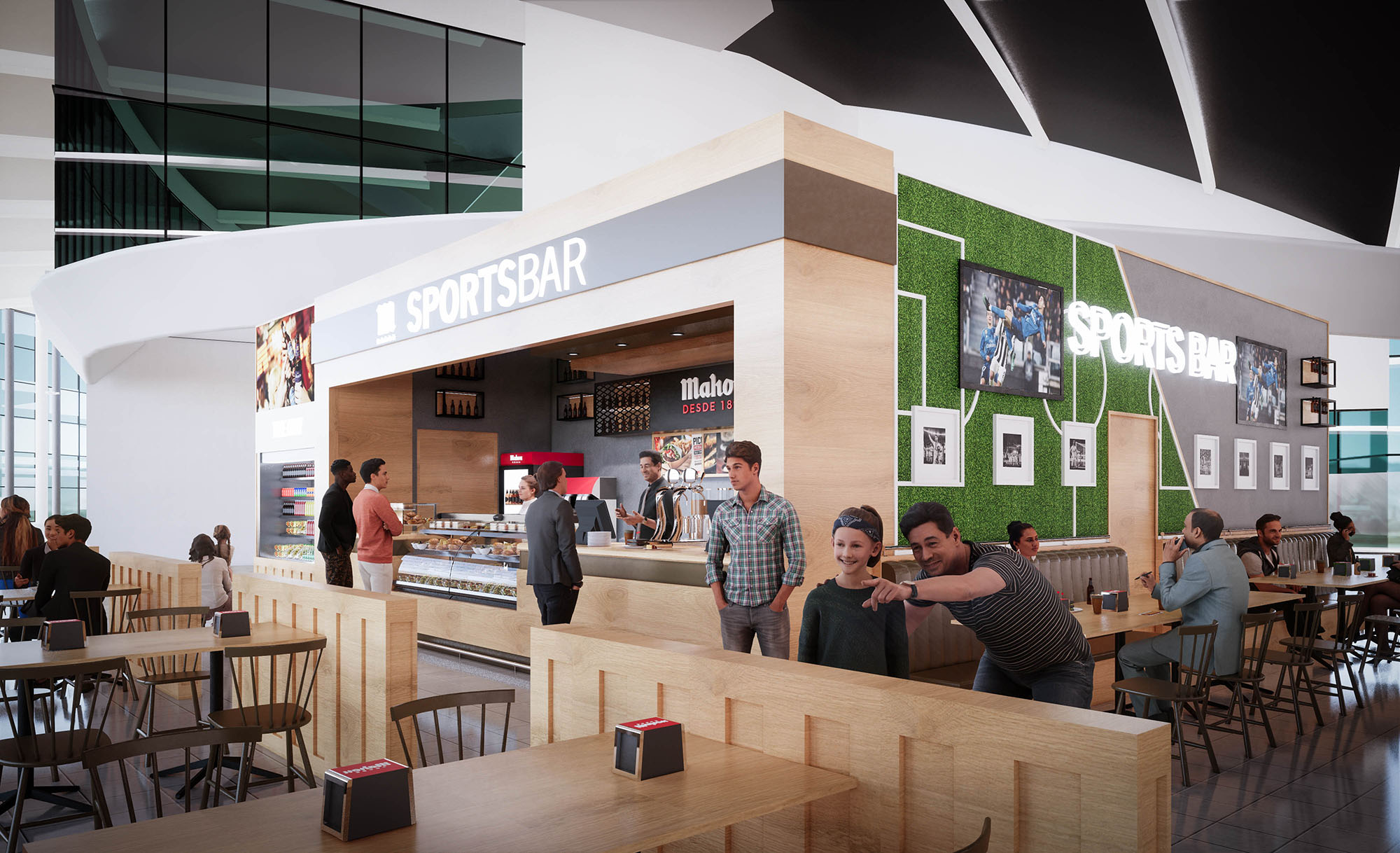
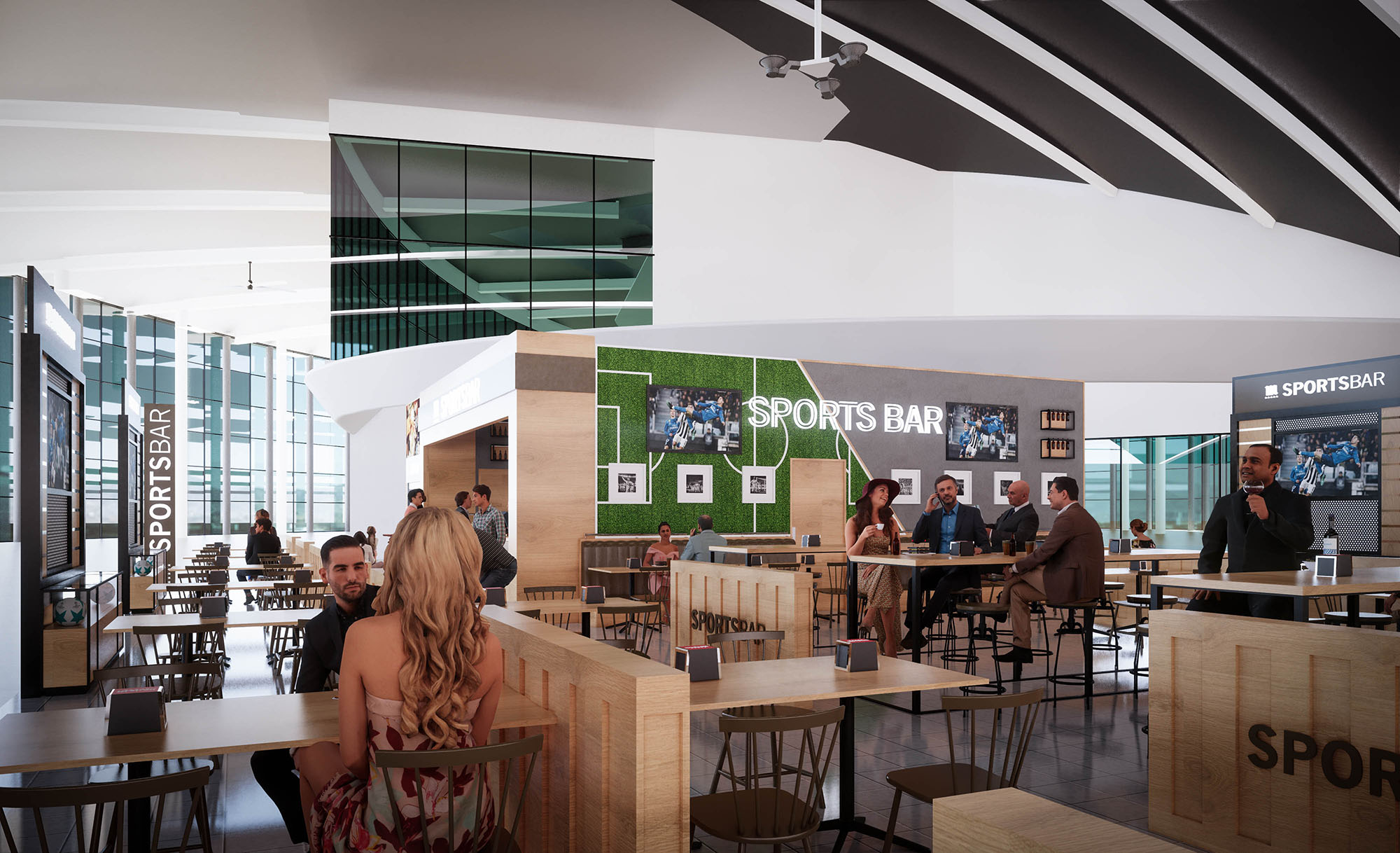
Mahou Sport Bar is conceived as a modular hospitality concept capable of adapting to different airport and transport-hub locations across Spain while maintaining a powerful and recognizable brand image. The project merges the vocabulary of contemporary sports arenas with the clarity of a fast-service bar, using strong geometry, bold color blocks, and open sight lines to promote visibility and intuitive circulation.
The design strategy prioritizes transparency and interaction with the surrounding terminal, framing runway views and public flows as part of the interior experience. Each unit operates as an “island” within the larger concourse, using low-height perimeters and permeable layouts so that the bar blends seamlessly with passenger movement while still generating a defined, welcoming atmosphere.
The spatial layout is structured around a central service spine: an elongated counter that concentrates ordering, preparation, and product display. This bar volume acts as the functional and visual anchor, allowing customers to immediately locate the point of service from multiple approach directions. Around this core, differentiated seating rings are arranged—from quick stop high tables near circulation routes to more relaxed low seating deeper in the footprint.
Visual axes are carefully maintained, ensuring uninterrupted views to flight information screens and to the large-format televisions broadcasting sports content. Circulation paths are generous, with clear transversal routes through the seating field so that even during high occupancy, passenger flow remains fluid. Edge conditions are treated with bar-height counters facing windows or concourse, offering solo travelers convenient spots without entering the interior cluster.
The material palette combines warm, light-toned wood with contrasting red brand accents and black technical elements. Timber veneers and laminated boards define the furniture and vertical cladding, creating a unified base that softens the predominantly glazed and metallic context of airport architecture. The red Mahou fascia, menu bands, and strategic surfaces provide an immediate brand reading and act as wayfinding beacons within the terminal.
Sports identity is expressed through artificial turf panels, line graphics reminiscent of playing fields, and integrated media walls. These are carefully scaled to avoid visual overload while creating a dynamic backdrop to the bar activity. Metallic frames, slim-profile stools, and high tables with circular tops reference stadium furniture and emphasize lightness, enabling easy reconfiguration for future operational changes.
Lighting design balances the abundant natural light of the terminal with a precise artificial scheme. Daylight is harnessed through floor-to-ceiling glazing, with interiors organized to avoid glare on display screens and counters. Pendant luminaires above high tables and linear LED profiles integrated into the bar canopy generate a comfortable luminance hierarchy, emphasizing key functional areas such as the ordering points and product showcases.
Vertical surfaces, especially branding and sports graphics, are washed with indirect light to enhance legibility without adding visual noise. Color temperatures are calibrated in a warm-neutral range to contrast subtly with the cooler terminal environment, making the bar feel more domestic and inviting while still aligned with the contemporary airport aesthetic.
Furniture is standardized yet varied in typology, offering stools at high communal tables, bar counters for single users, and low tables for longer stays. Heights, clearances, and distances between pieces follow ergonomic criteria that facilitate both comfort and rapid turnover. The use of slender, metal-framed chairs with wooden seats responds to maintenance needs while preserving a warm tactile quality.
Operational efficiency is supported by clear queuing zones, visible menu bands, and self-service display areas that reduce waiting times. Acoustic comfort is enhanced through soft finishes on selected walls and soffits, as well as the strategic positioning of screens and speakers to localize sound around the sports viewing areas without disturbing adjacent terminal spaces.
The concept is designed as a kit-of-parts system, allowing components to be prefabricated, transported, and assembled with minimal on-site waste. Standardized modules for counters, back-bars, and seating islands reduce material offcuts and enable reuse when units are relocated or remodeled. Durable finishes with high resistance to wear and easy-clean properties extend life cycles and minimize replacement needs.
Where possible, LED lighting with high energy efficiency and integrated controls reduces consumption, while the open layout maximizes the use of existing terminal daylight and mechanical systems, avoiding redundant installations. Timber elements are specified from certified sources, and the restrained use of applied finishes lowers embodied carbon. This combination of modularity, longevity, and efficient resource use ensures that Mahou Sport Bar can be replicated across multiple locations with a consistent, sustainable design framework.


Nuestras oficinas están en Barcelona, Cancún, Chicago y Santo Domingo, pero gracias a la tecnología podemos desarrollar proyectos en cualquier parte del mundo.
Barcelona
Bac de Roda 136
08020, Barcelona
Spain
Madrid
Av. de Buendía 11
19005 Guadalajara (Madrid)
Spain
Chicago
373 Hazel Ave, Apt A1
60022, Glencoe, Illinois
United States