

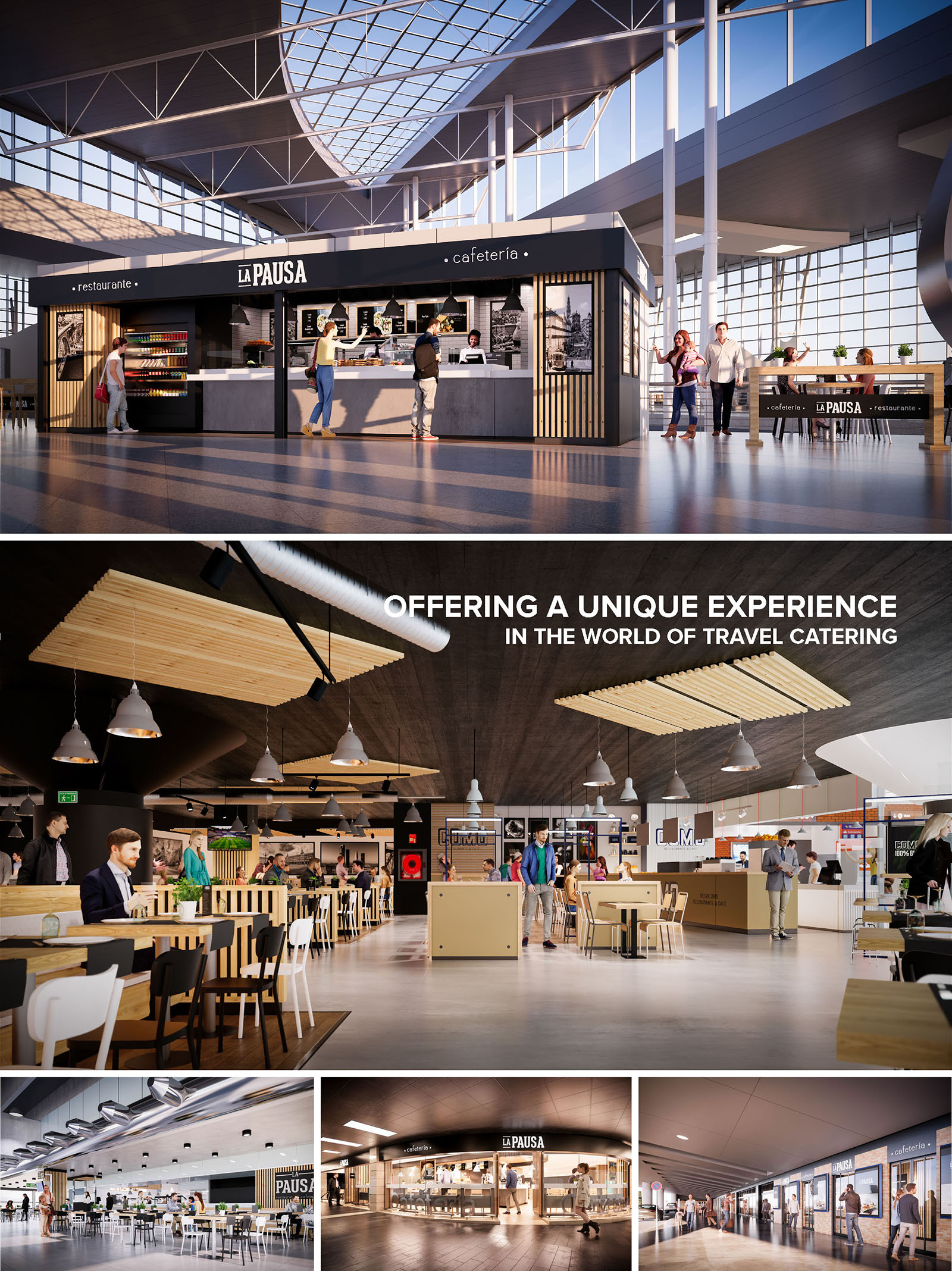
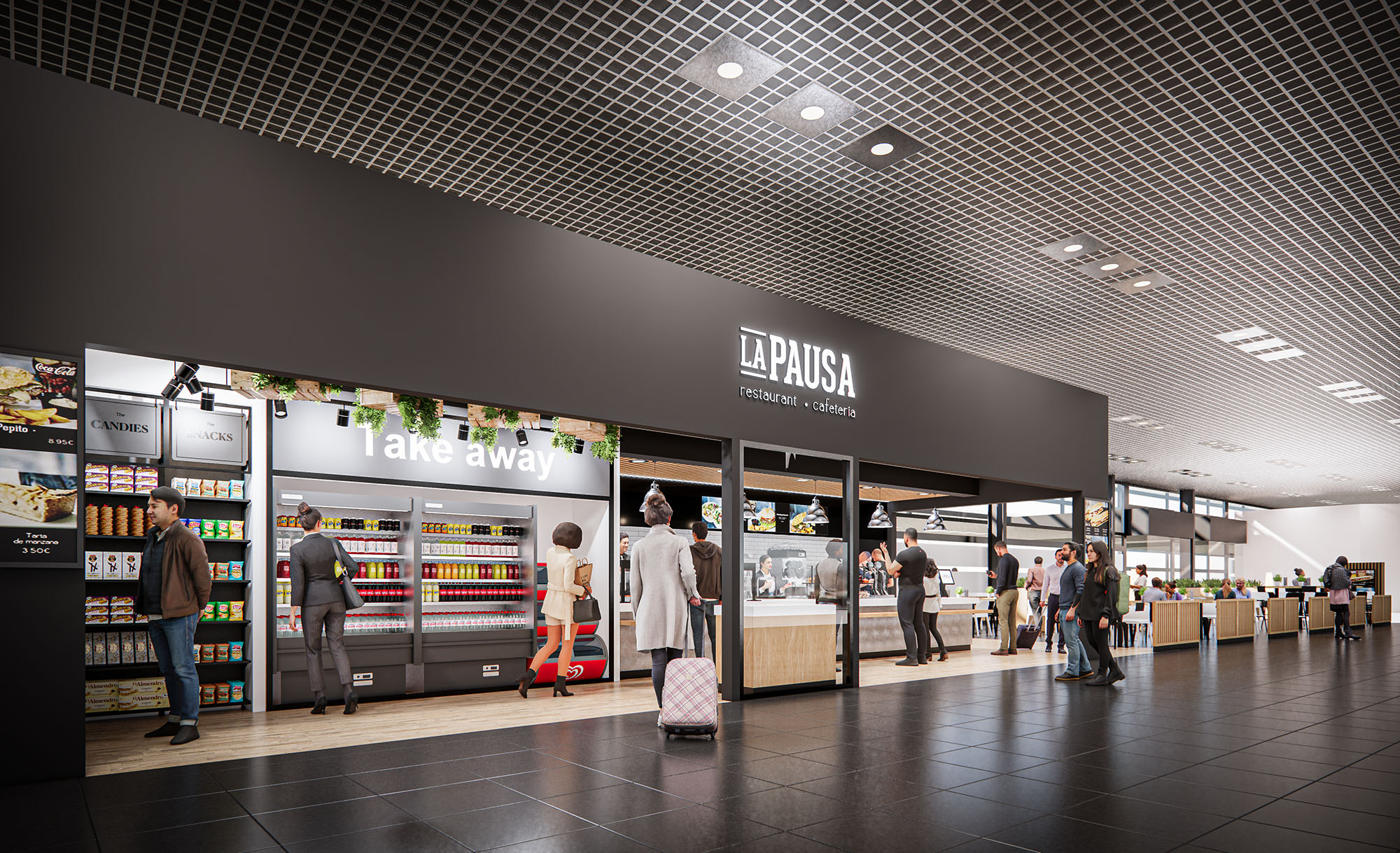
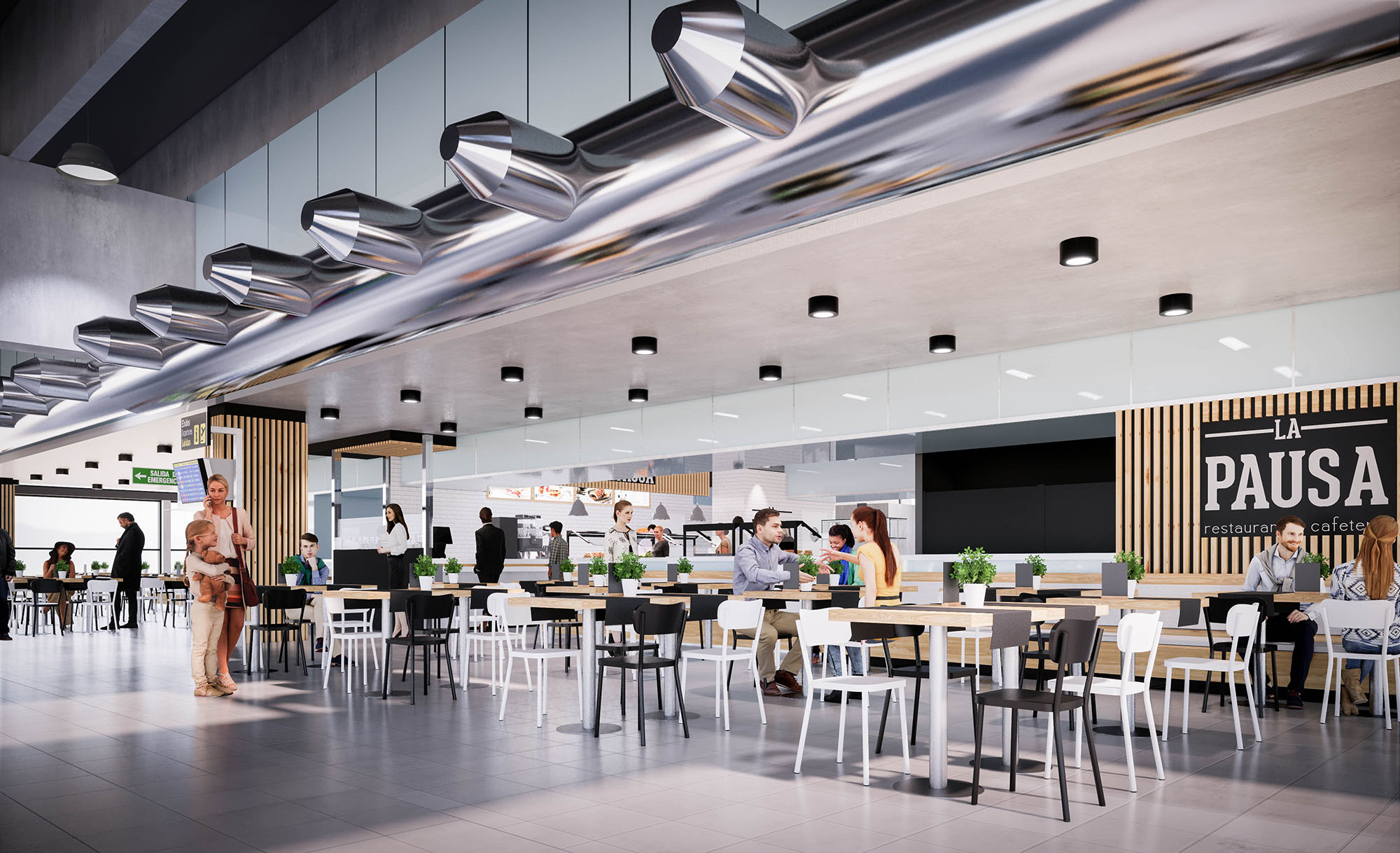
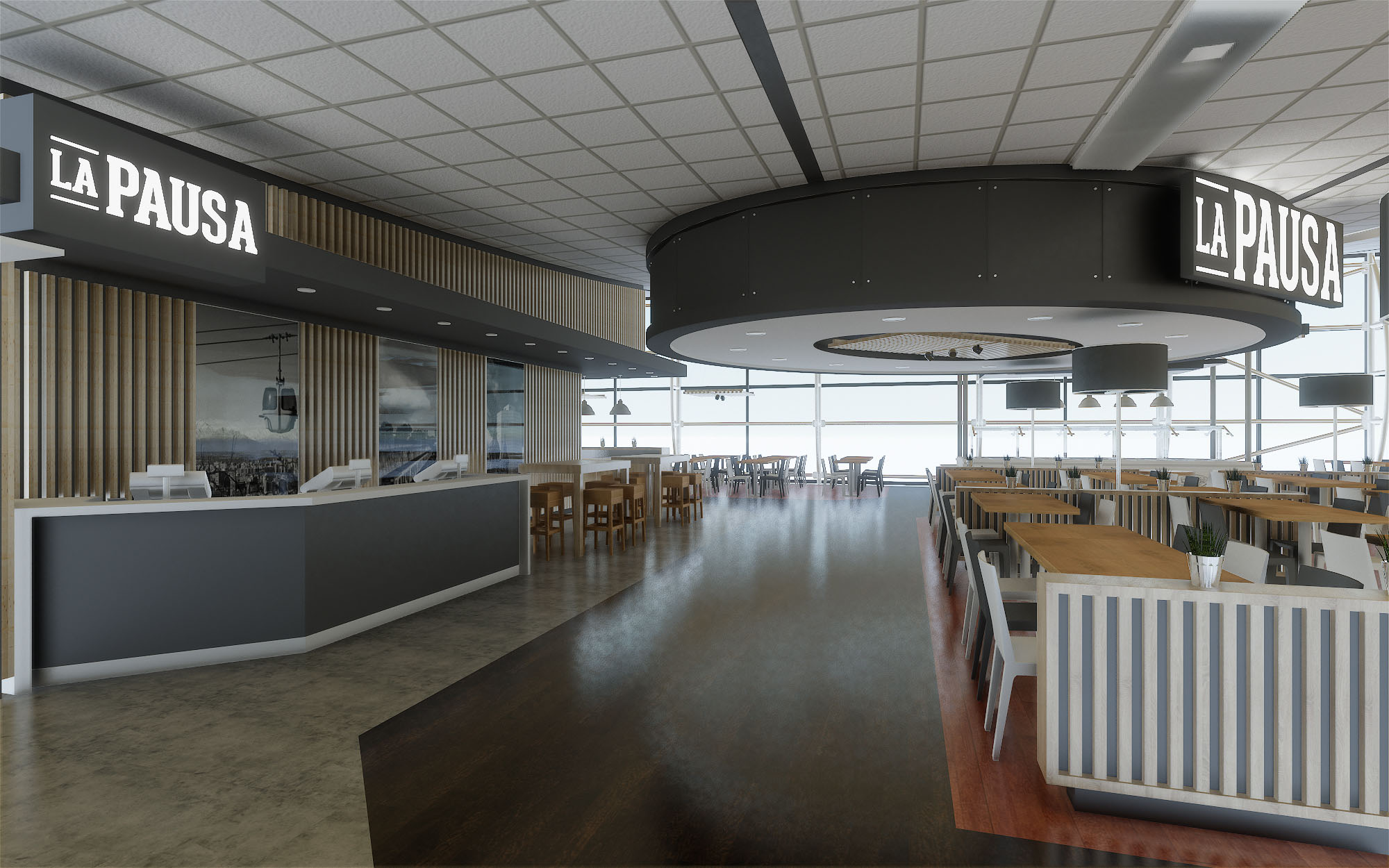
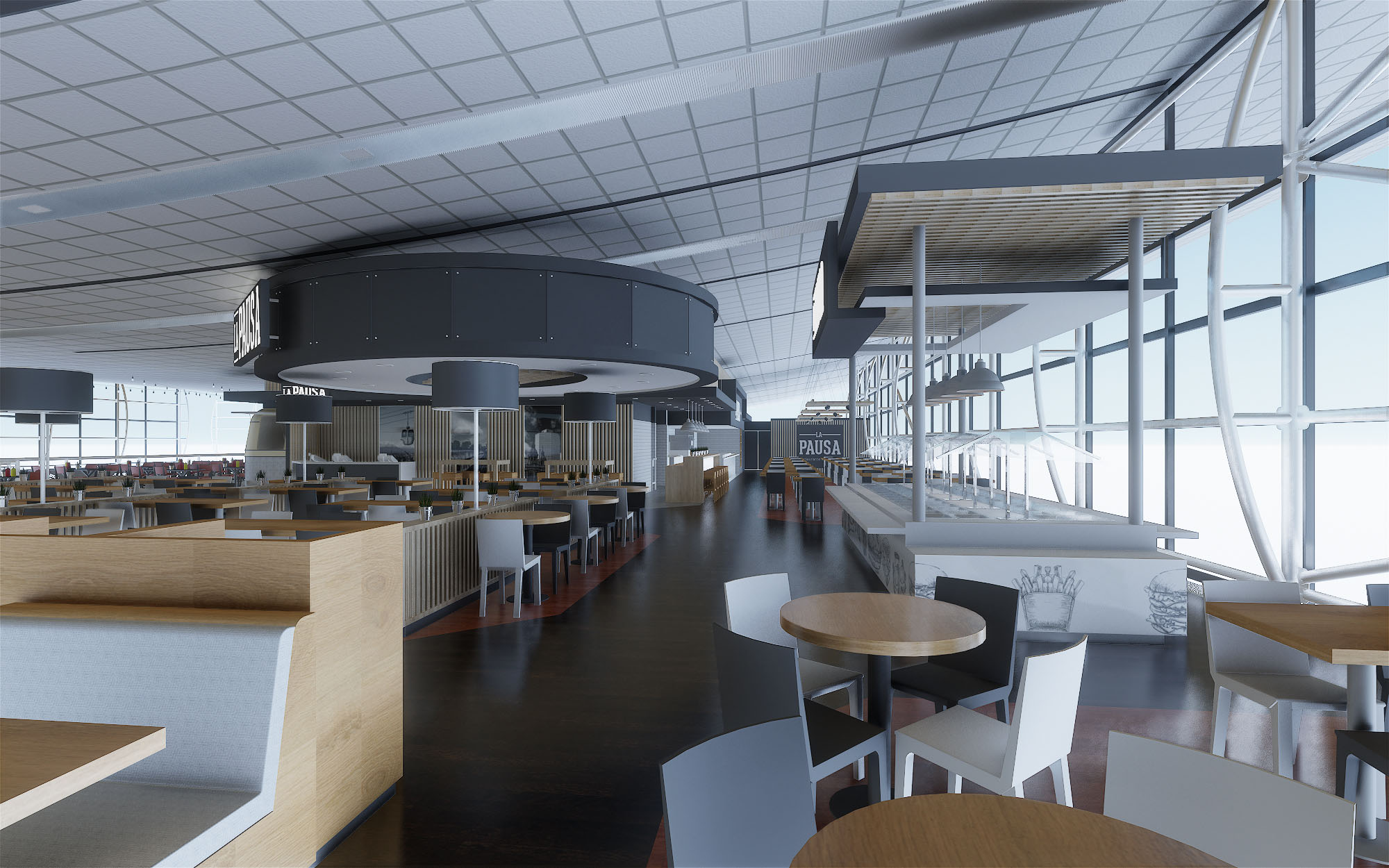
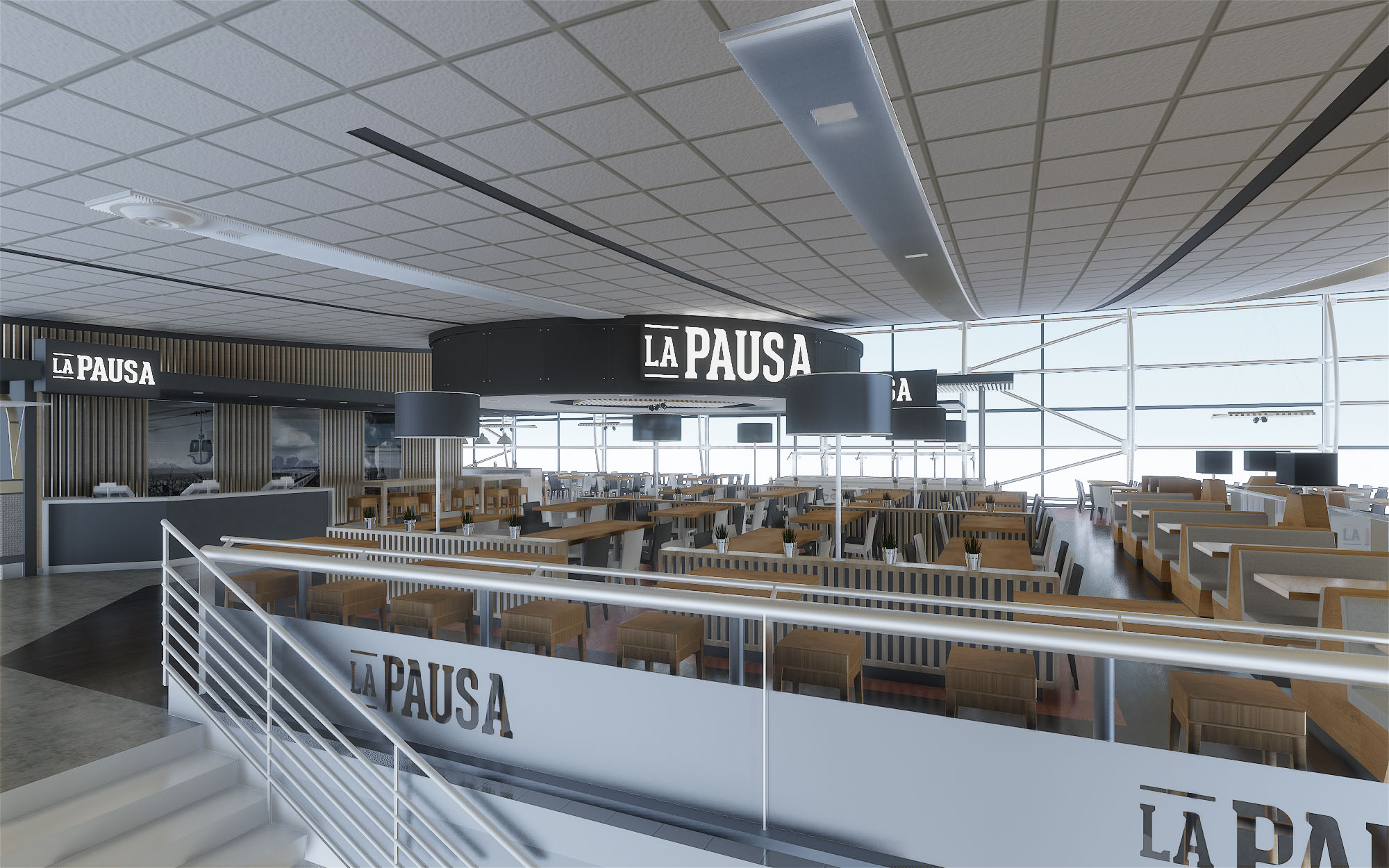
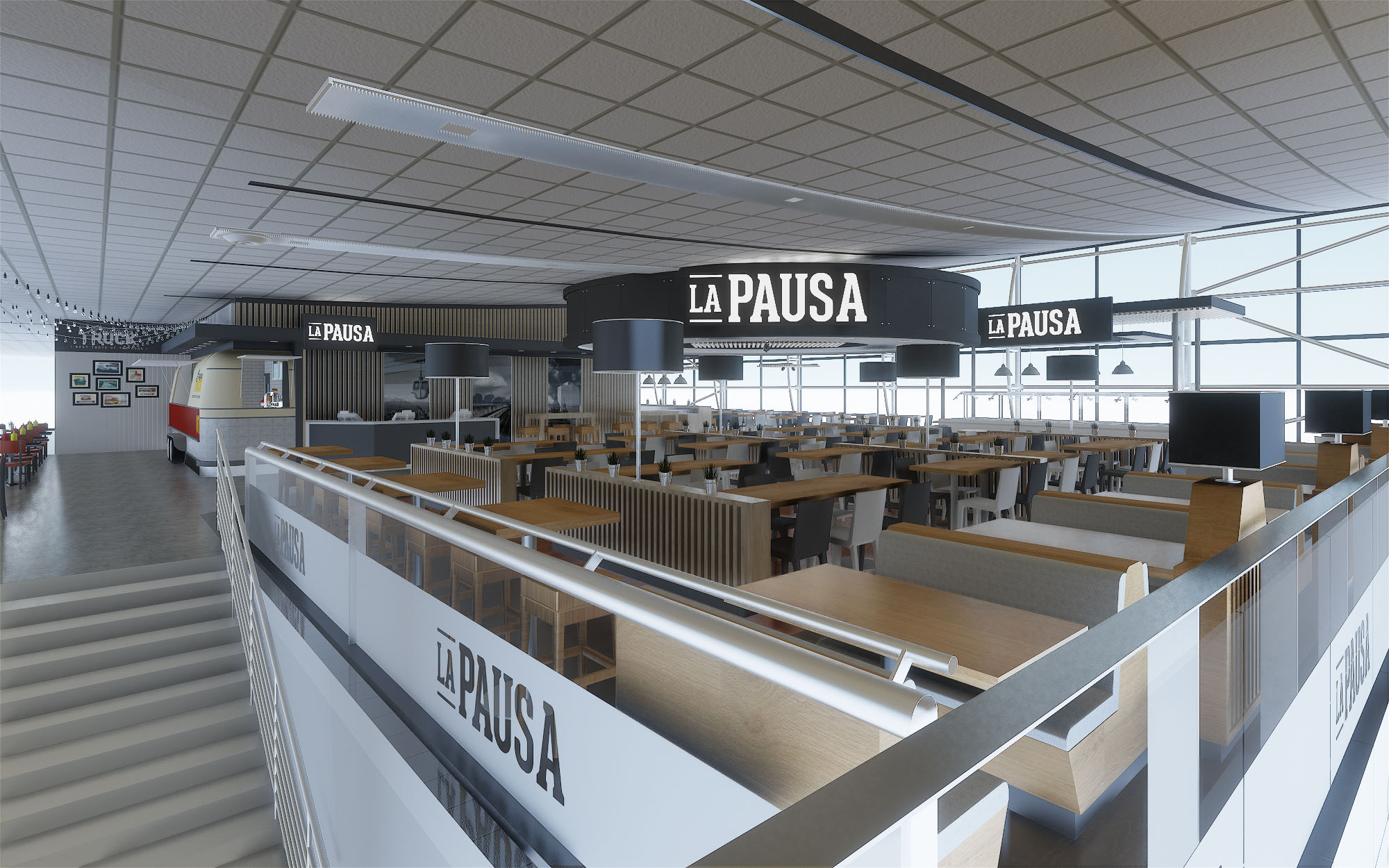
LA PAUSA is conceived as a contemporary travel‑catering brand that transforms waiting time into a calm, pleasurable interlude. Across multiple airports in Spain, Portugal, Chile and Mexico, the concept establishes a clear, easily recognizable identity that can adapt to different terminal geometries while maintaining a coherent architectural language. The design balances speed of service with a more relaxed, lounge‑like ambience, inviting passengers to slow down without losing visual contact with the flows of the terminal.
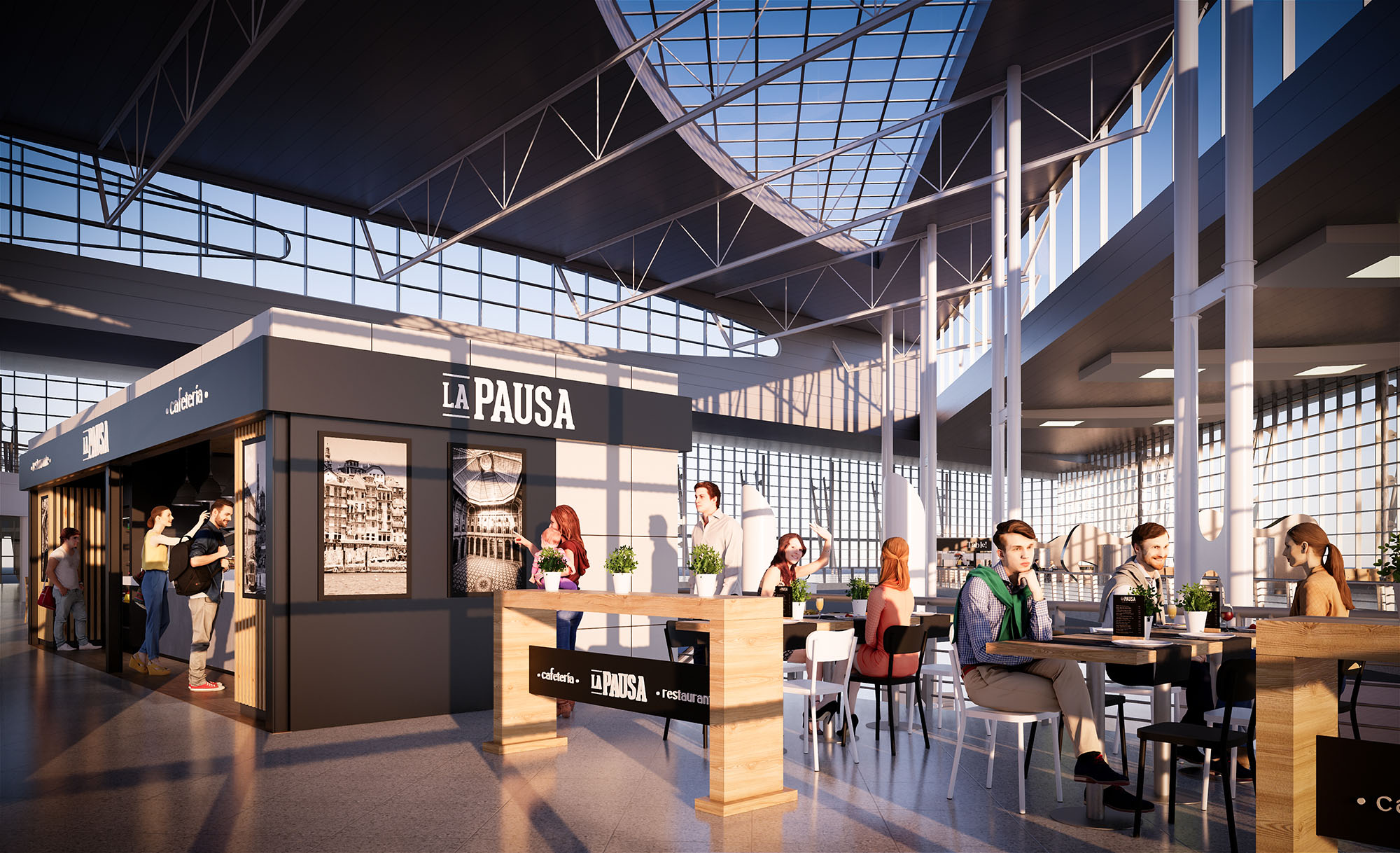
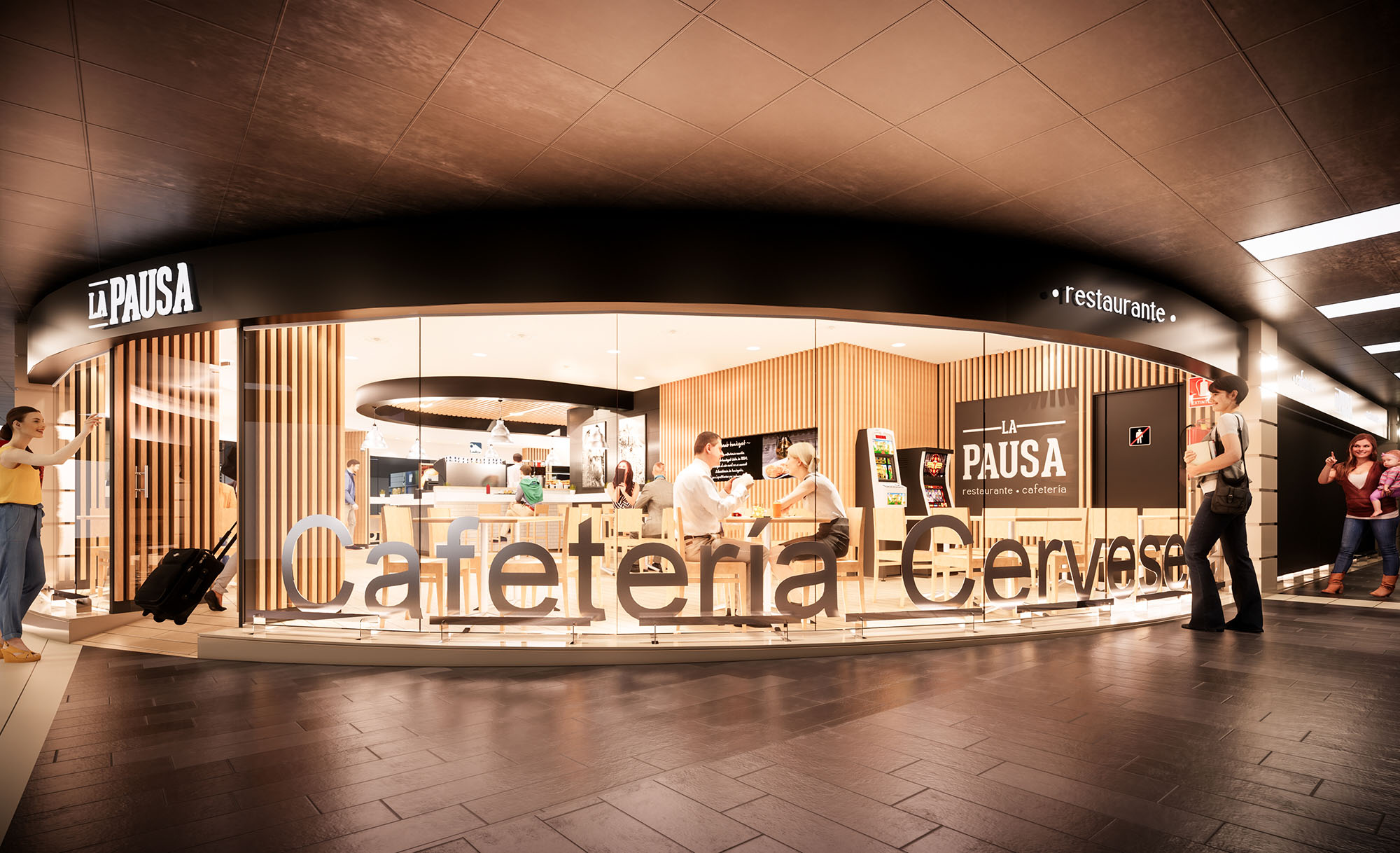
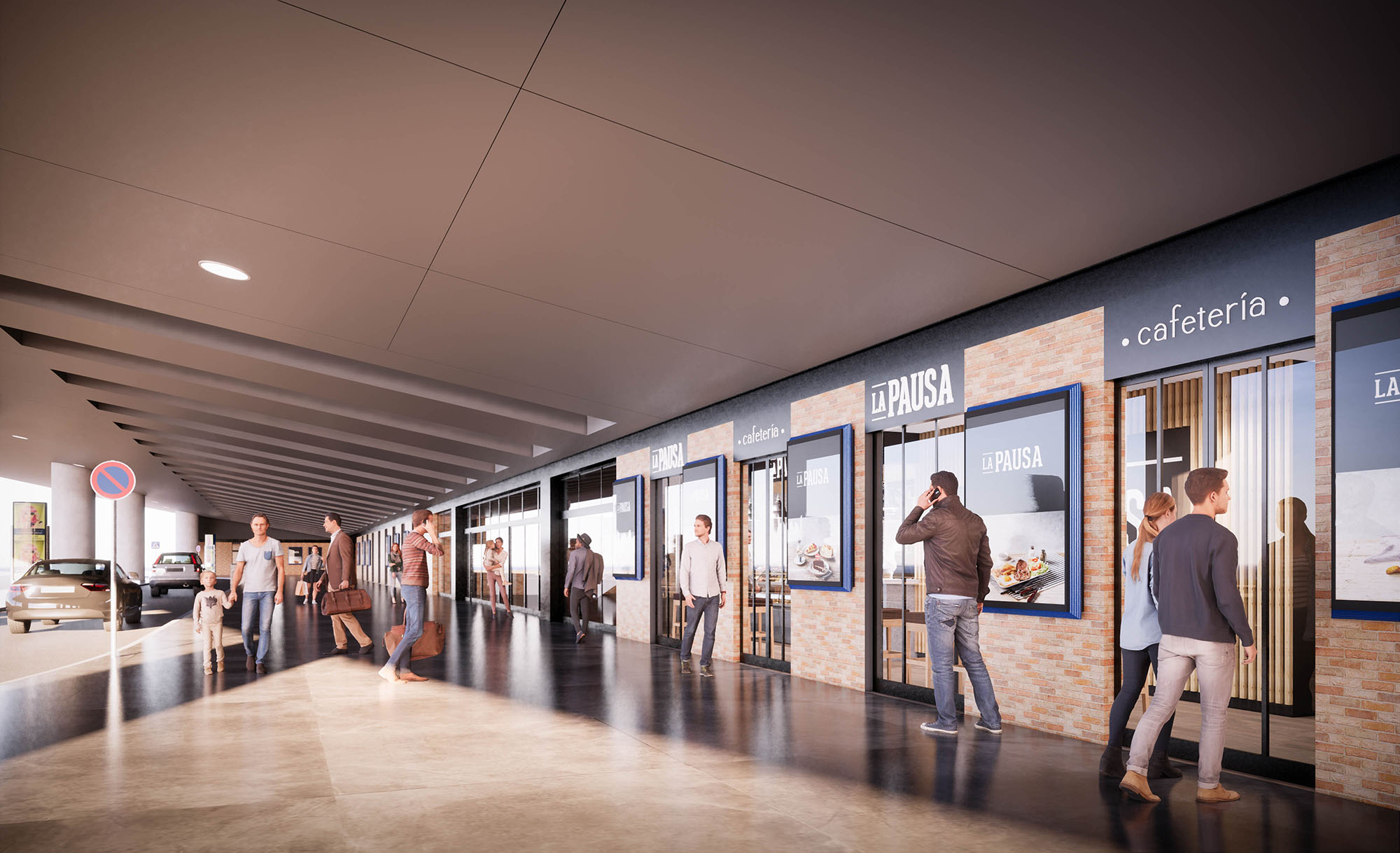
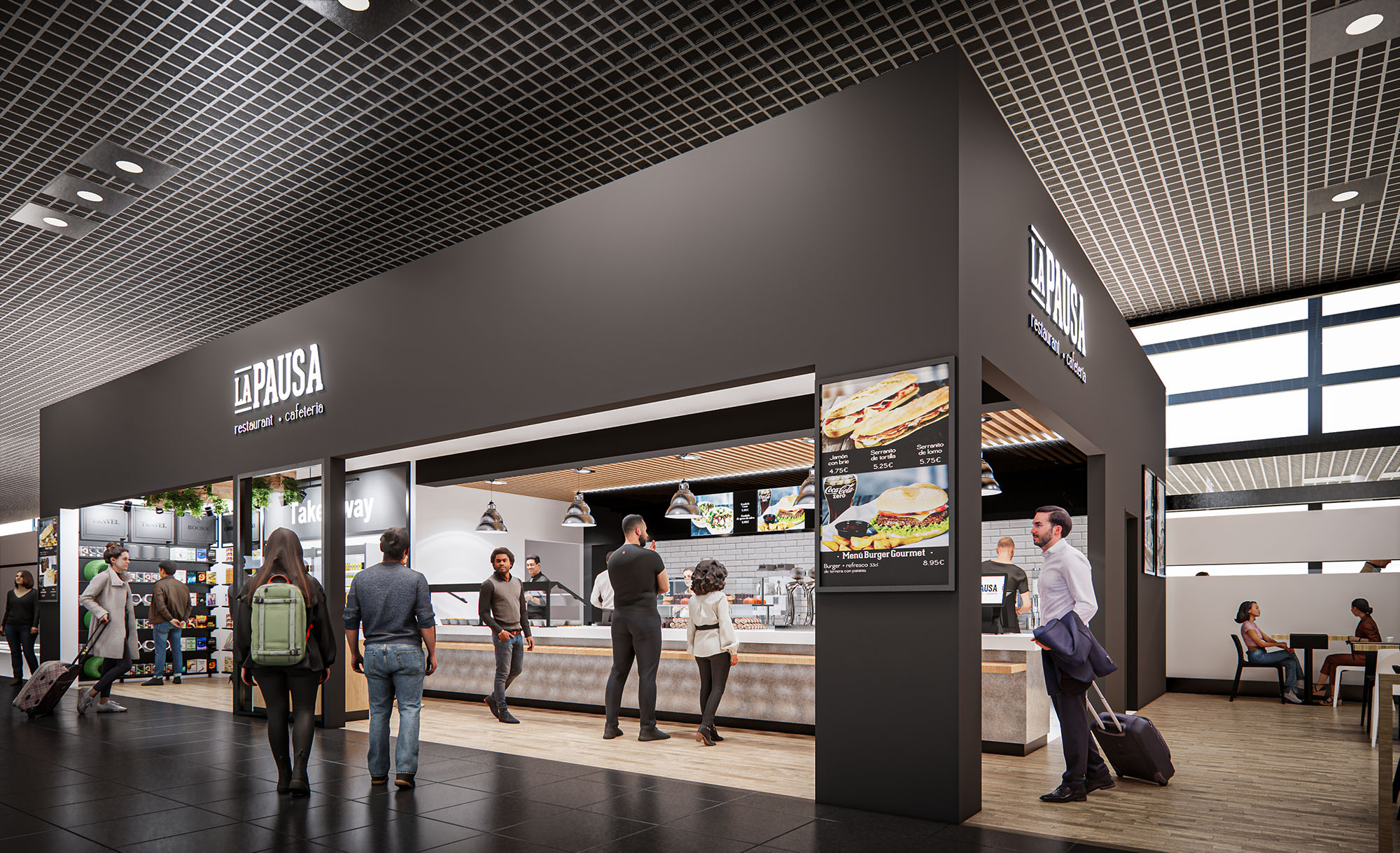
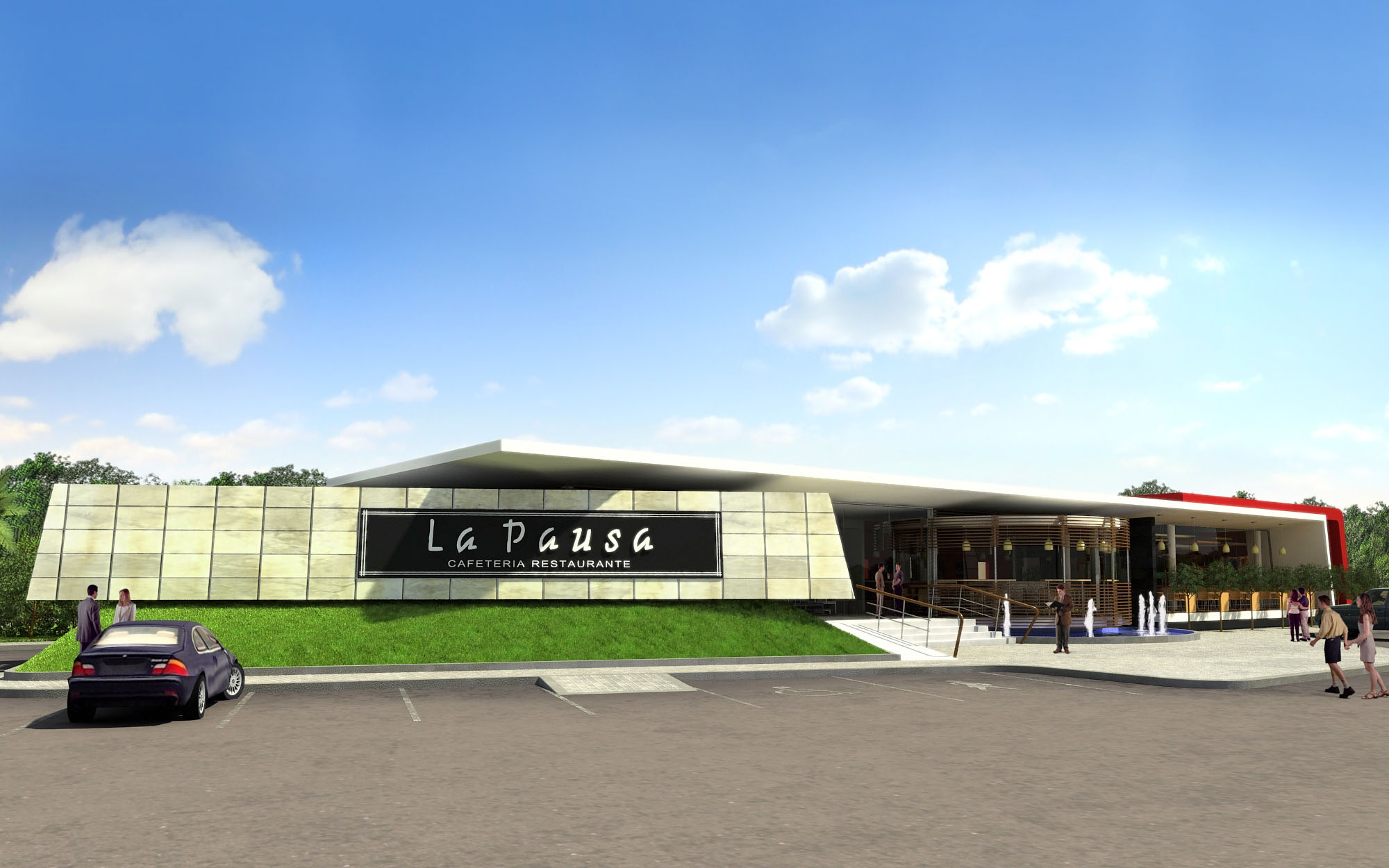
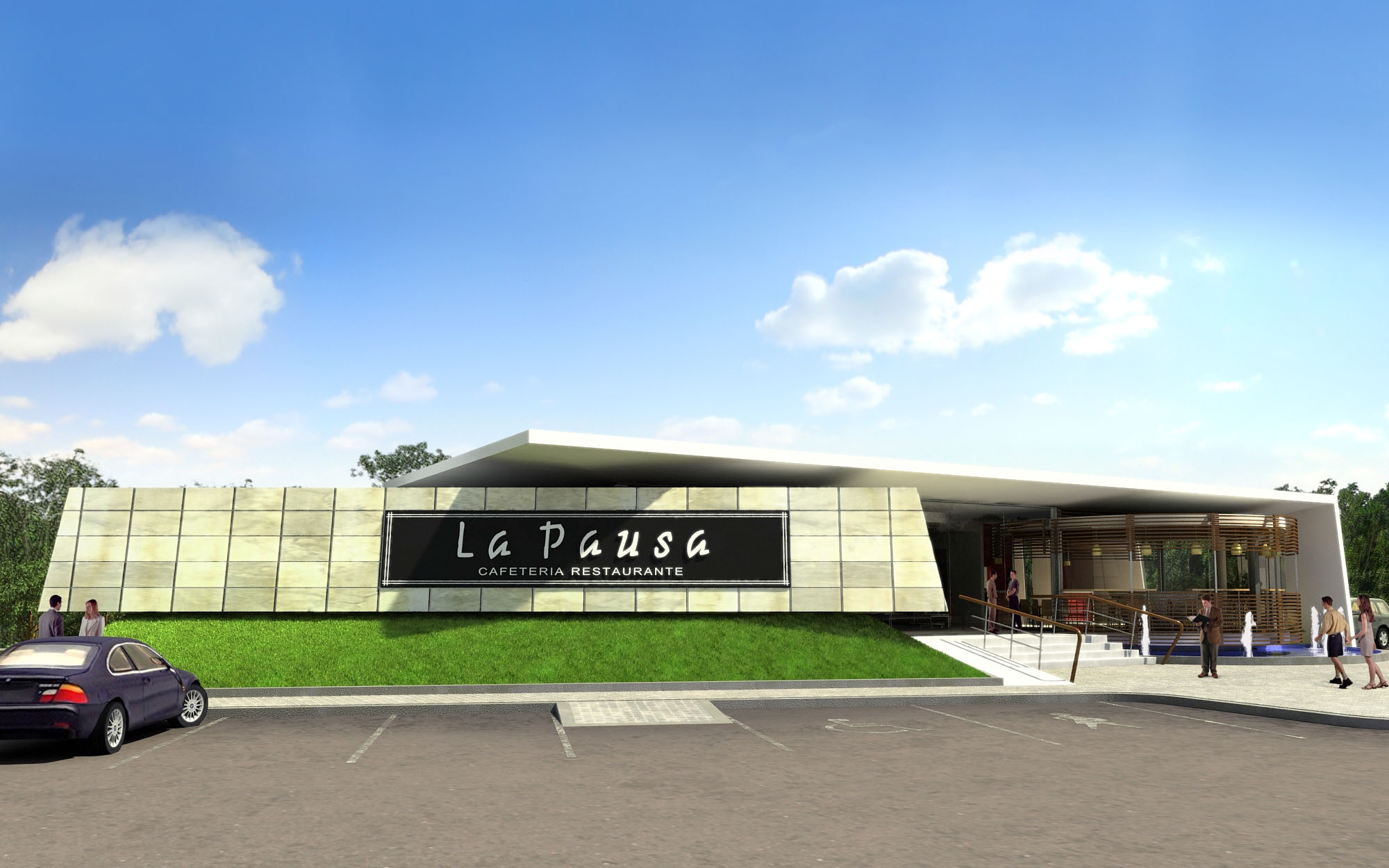
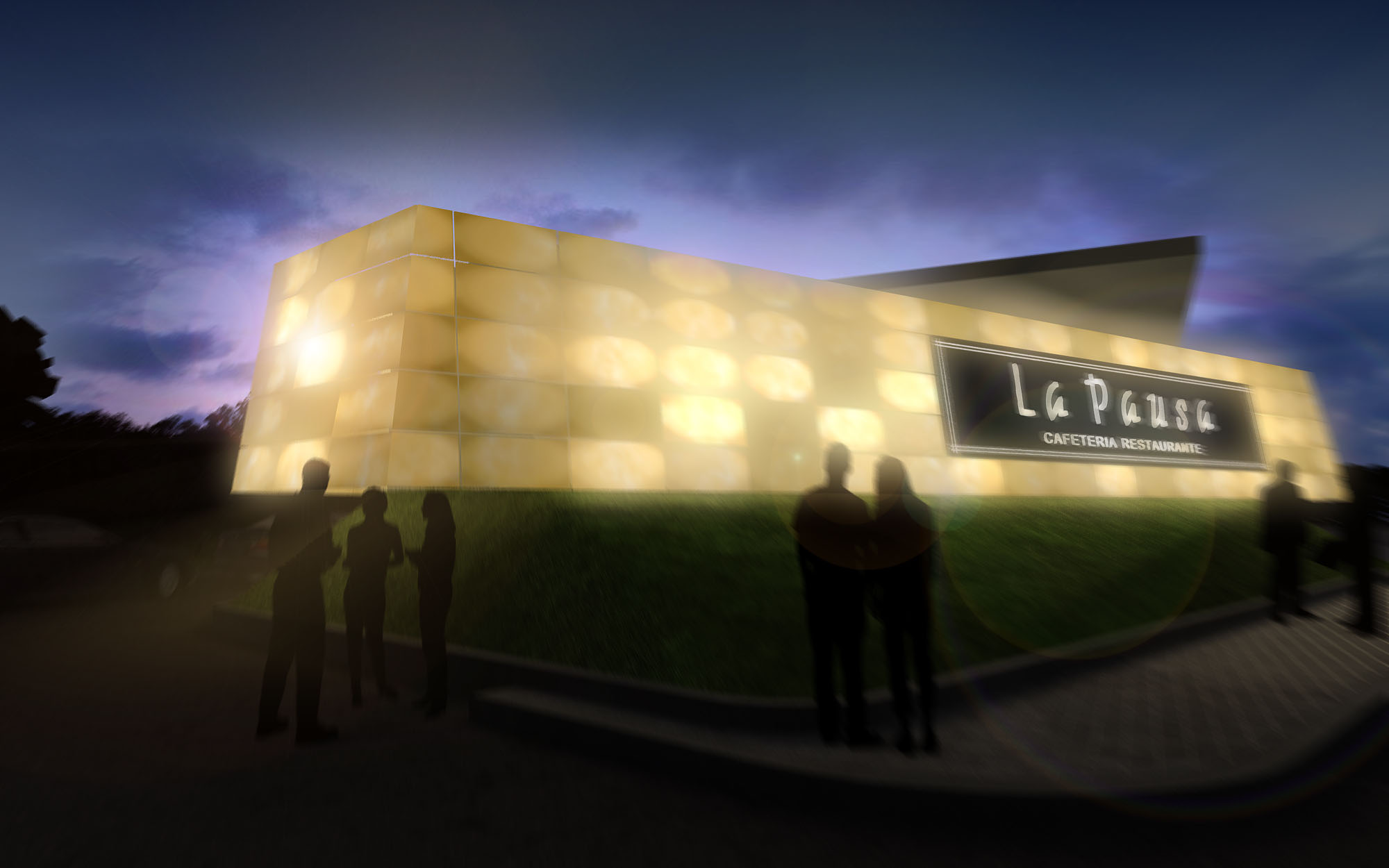
The architecture is based on simple, rectilinear volumes inserted as light “pavilions” within the large infrastructural shells of airports. These recognizable boxes frame the gastronomic offer and organize circulation: fast, linear fronts for grab‑and‑go functions and more porous edges where dining zones dissolve gradually into the public concourse.
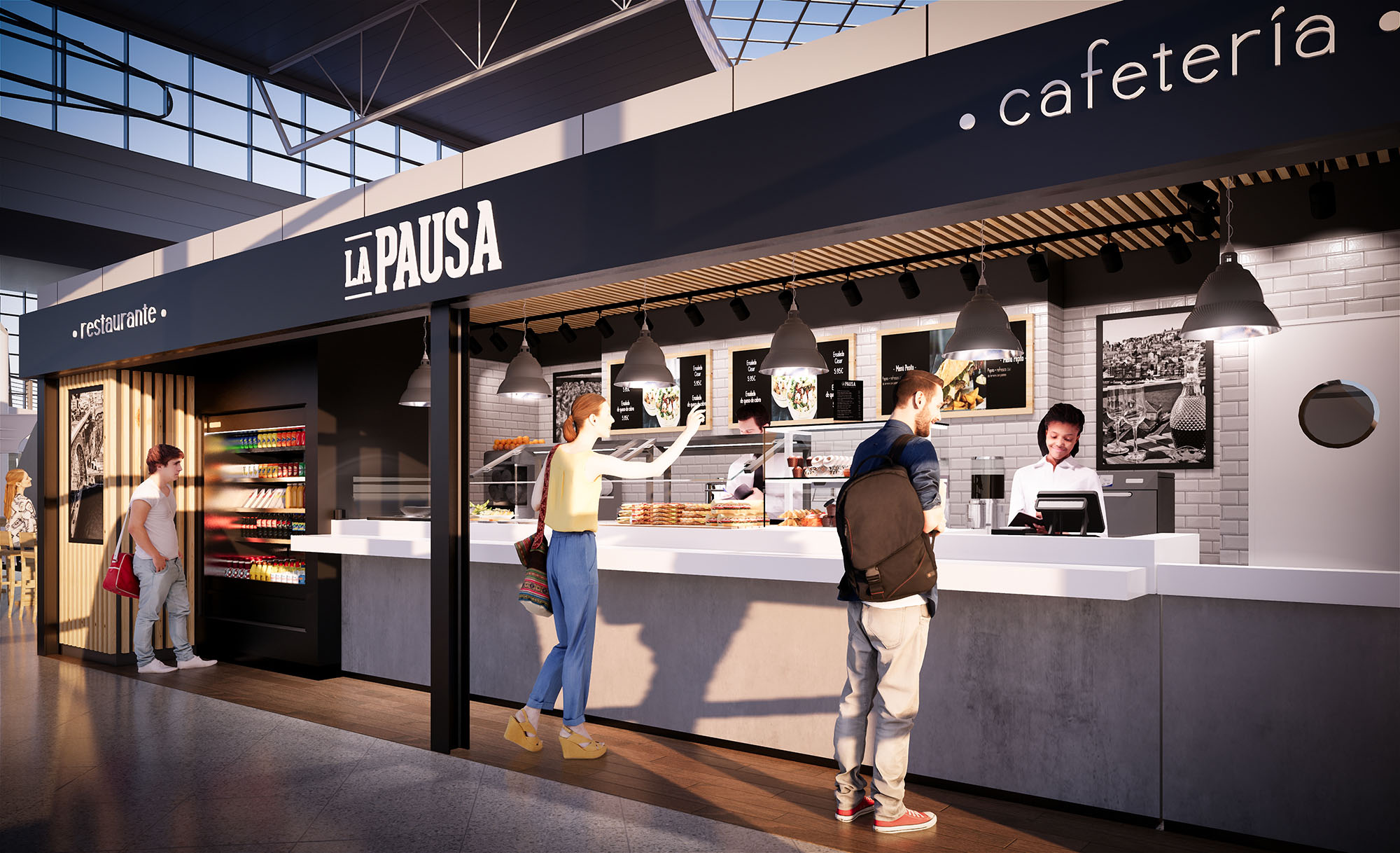
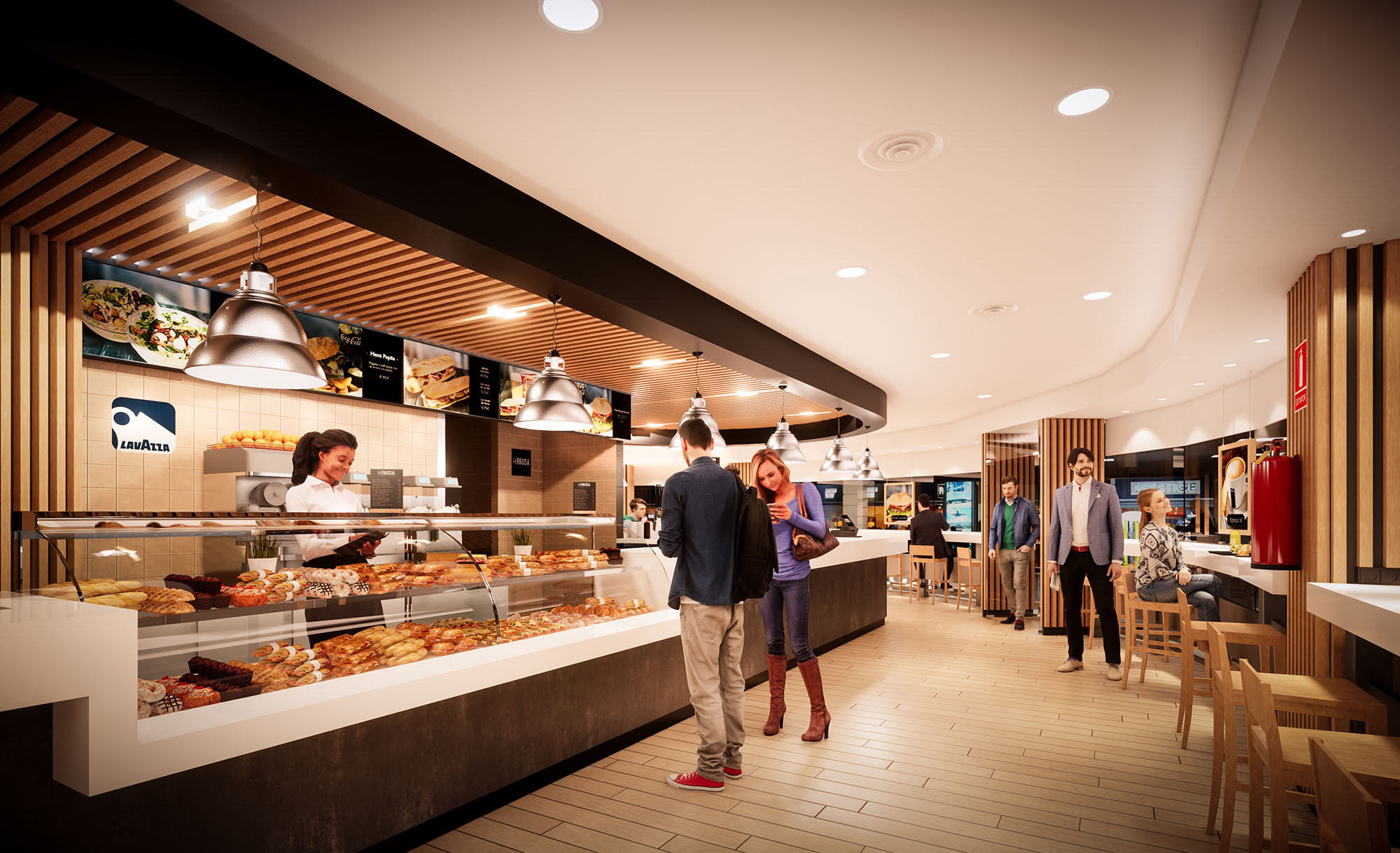
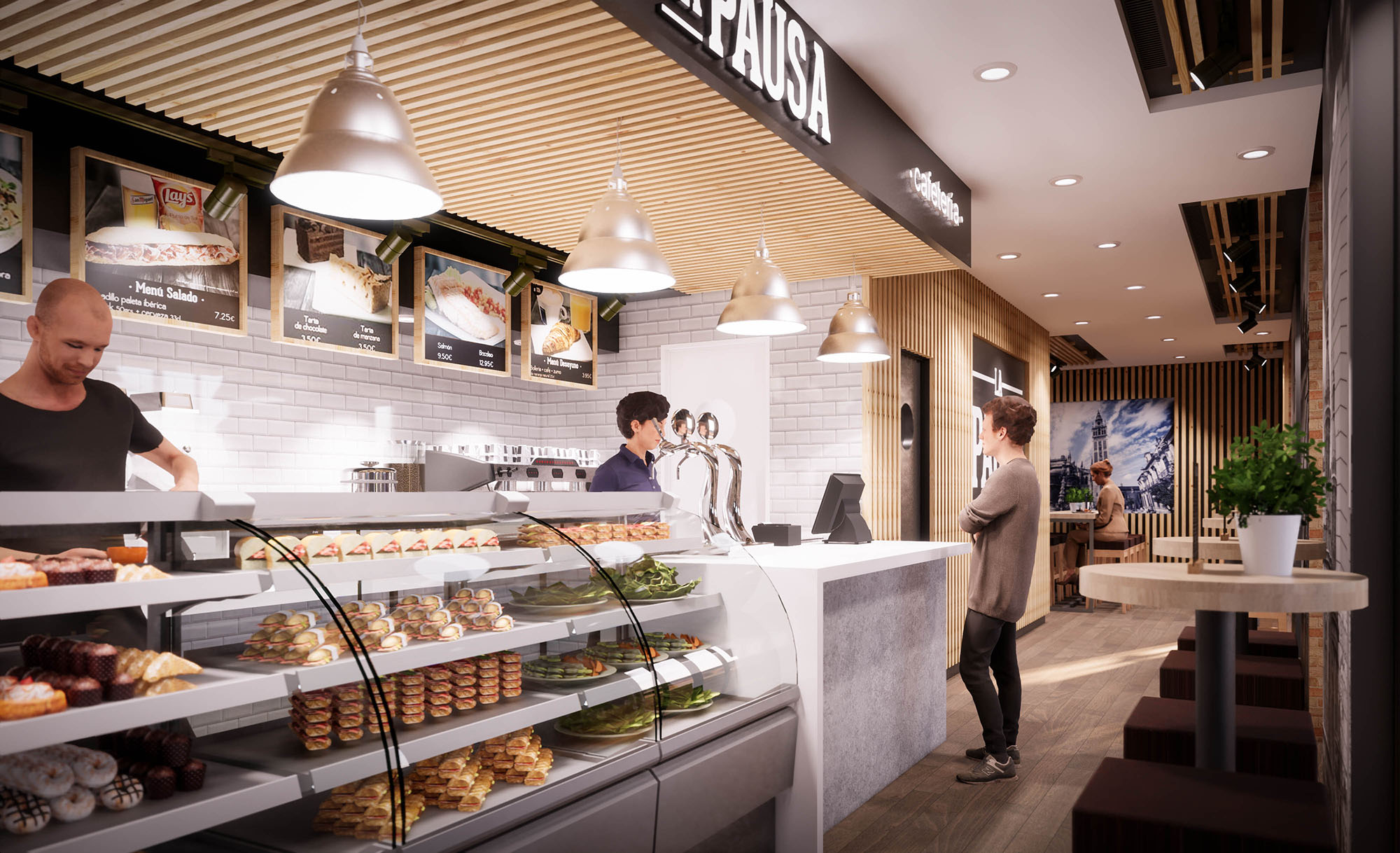
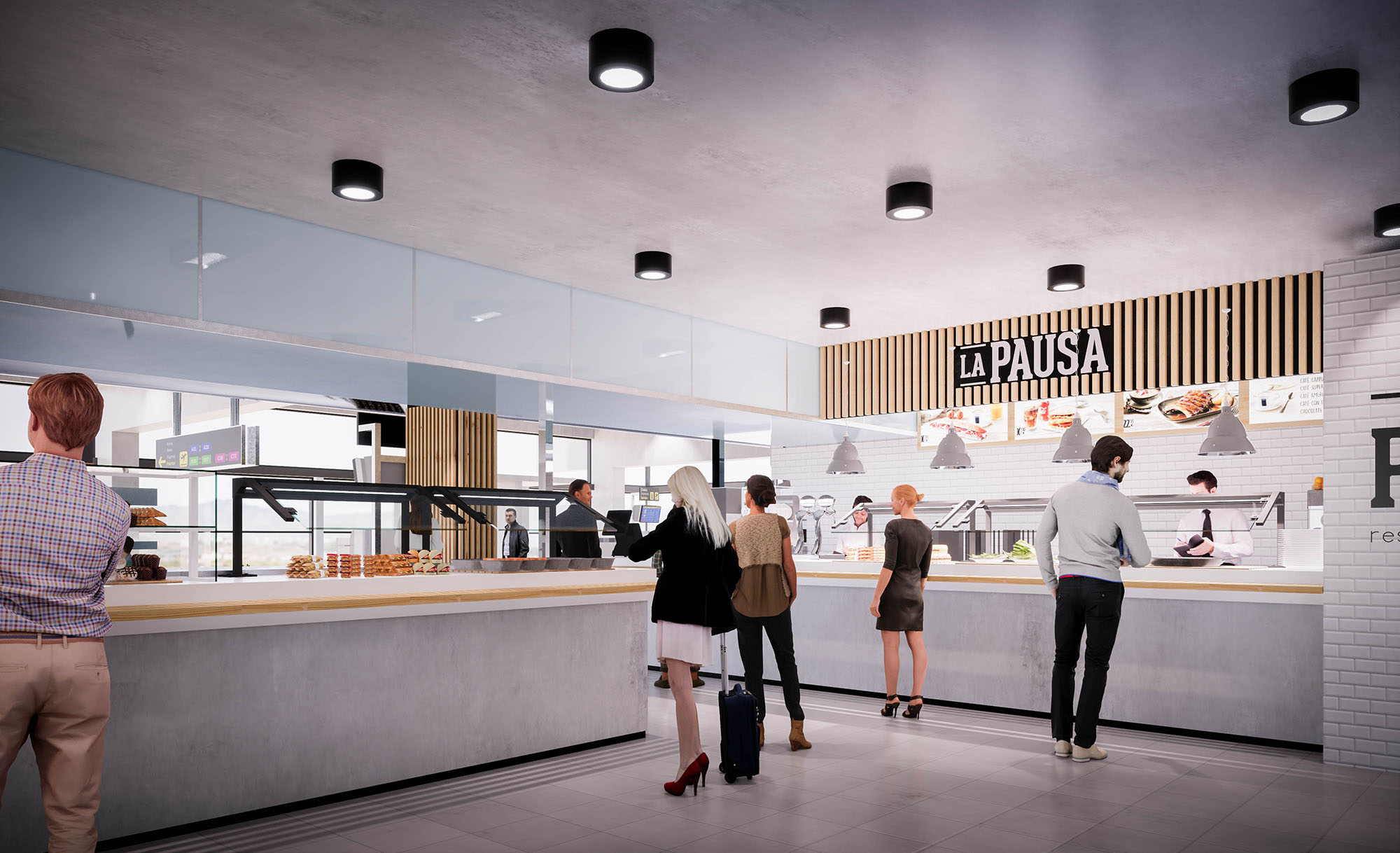
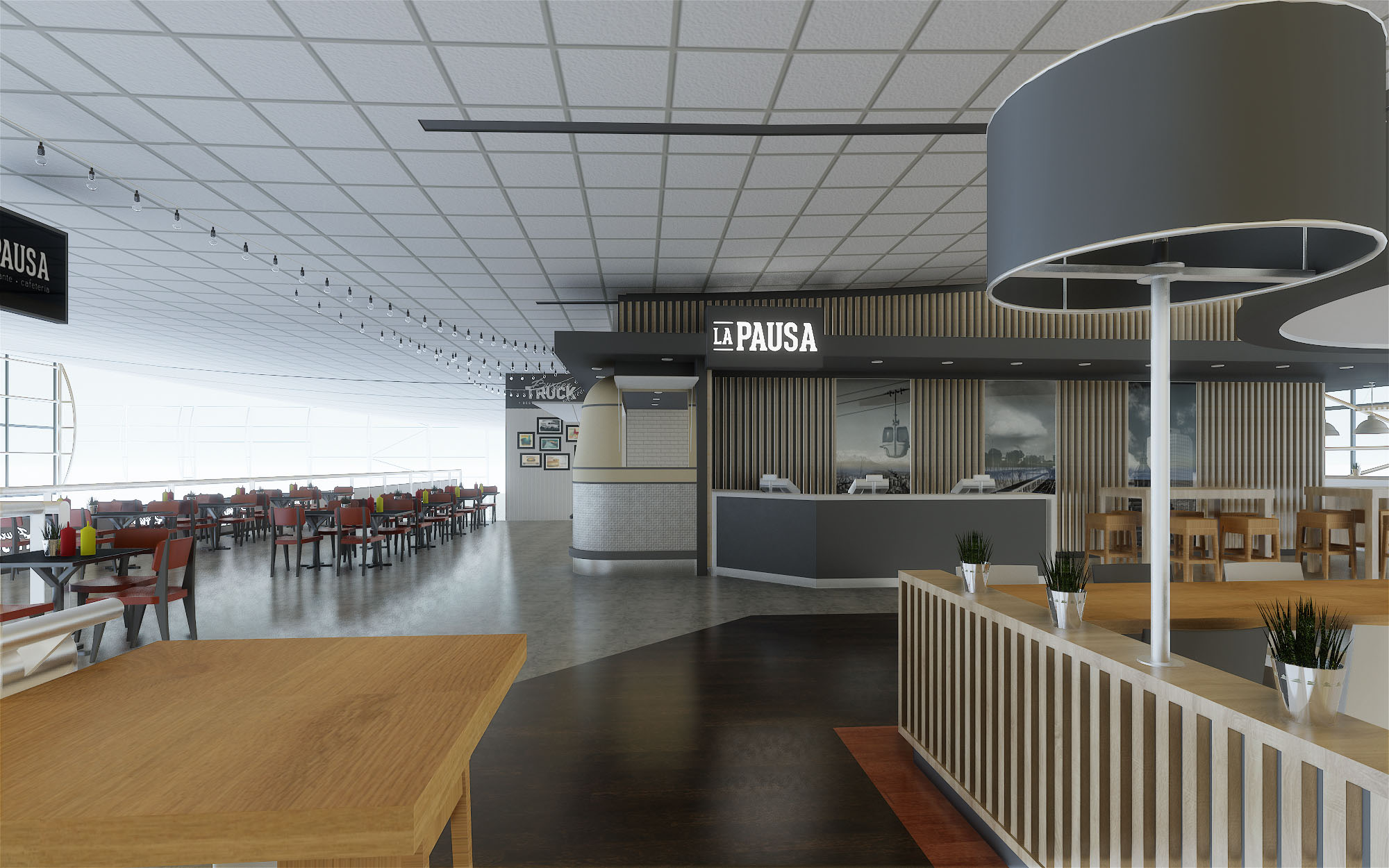
The typical layout is structured around a frontal service counter aligned with the main passenger flow, optimizing visibility and impulse access. Behind this counter, a compact production core integrates bar, kitchen and storage, allowing efficient operations with reduced back‑of‑house area. To each side, filtered entrances lead towards the seating areas, which extend either as open islands in the terminal or as semi‑enclosed dining rooms defined by low partitions.
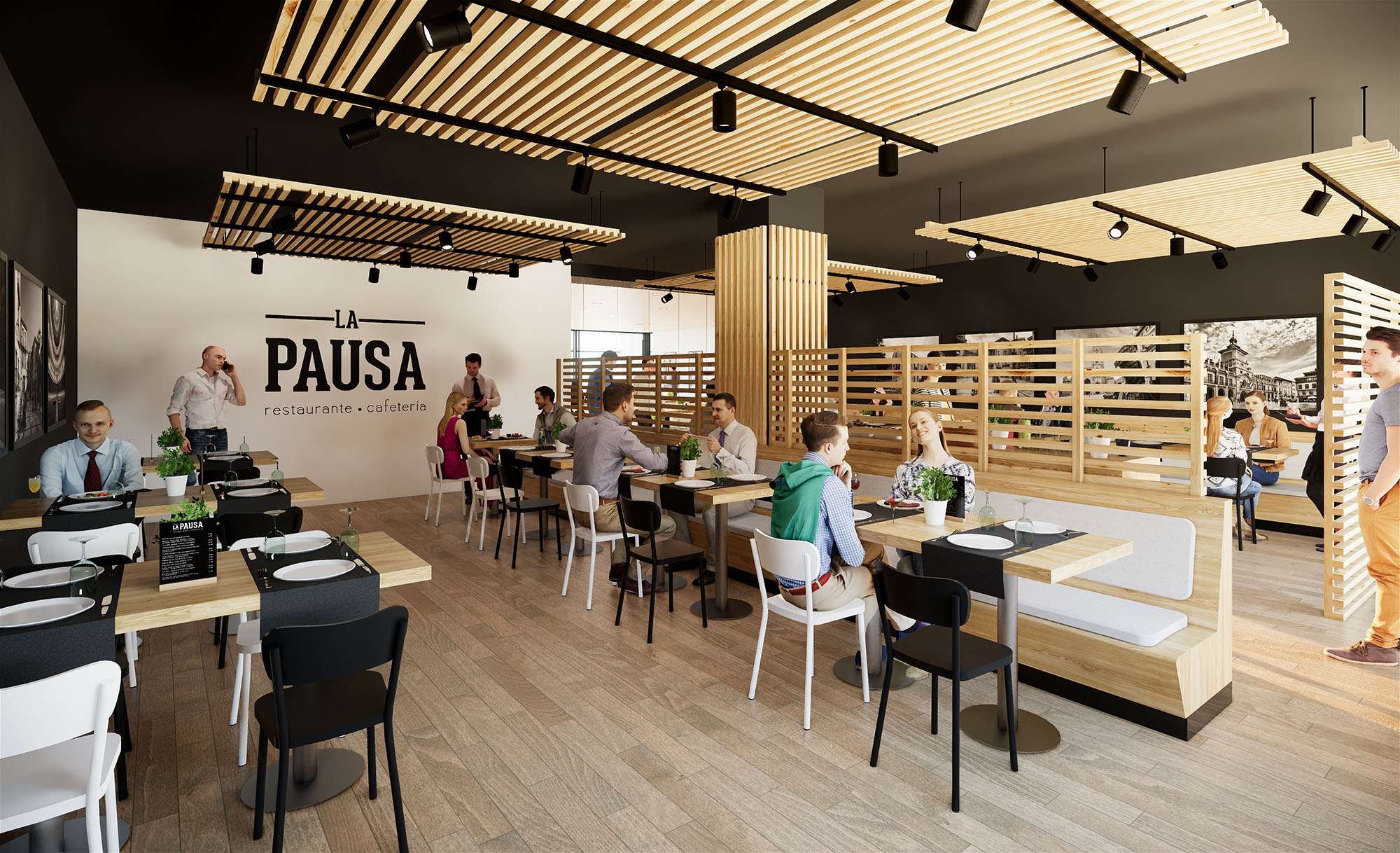
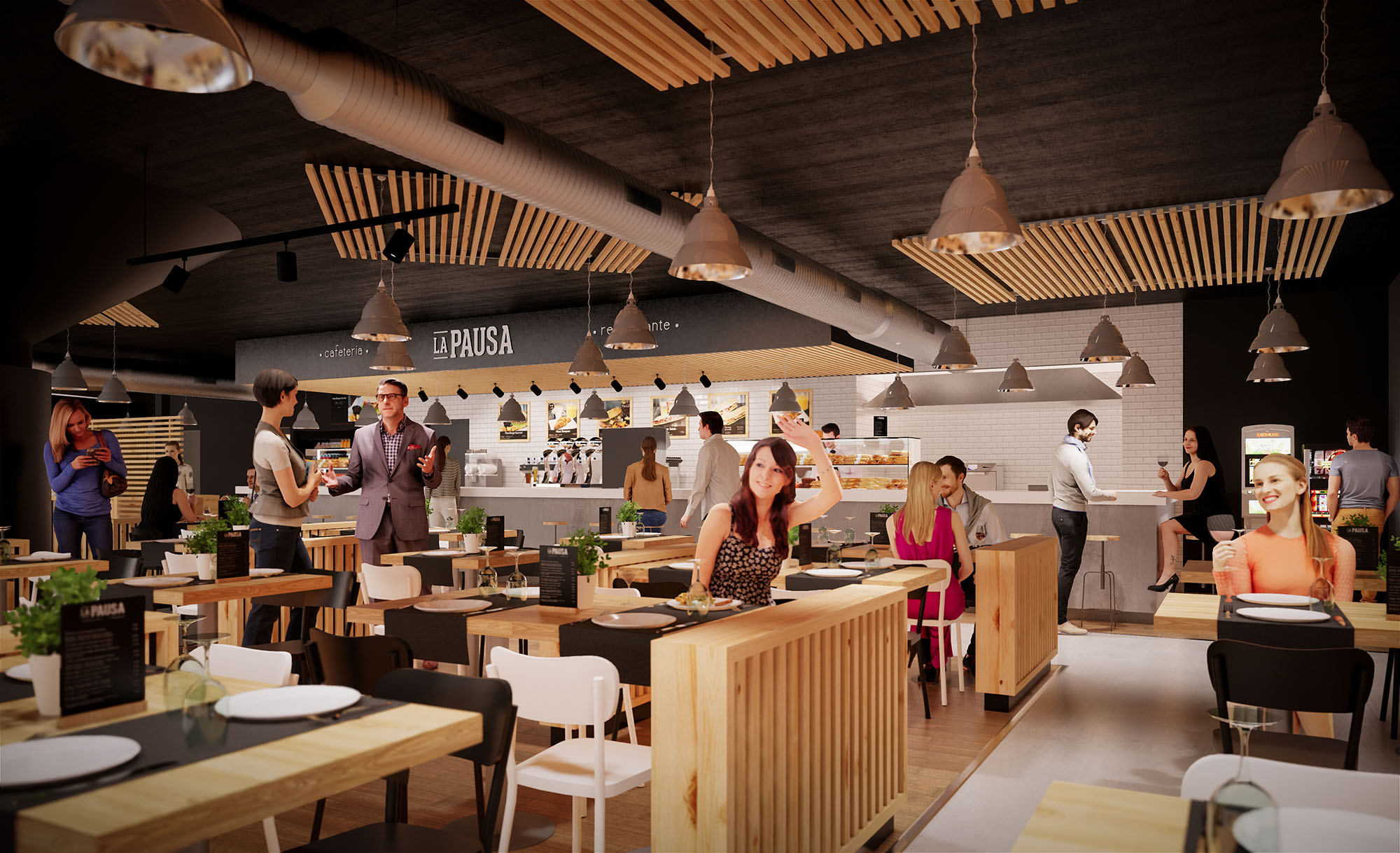
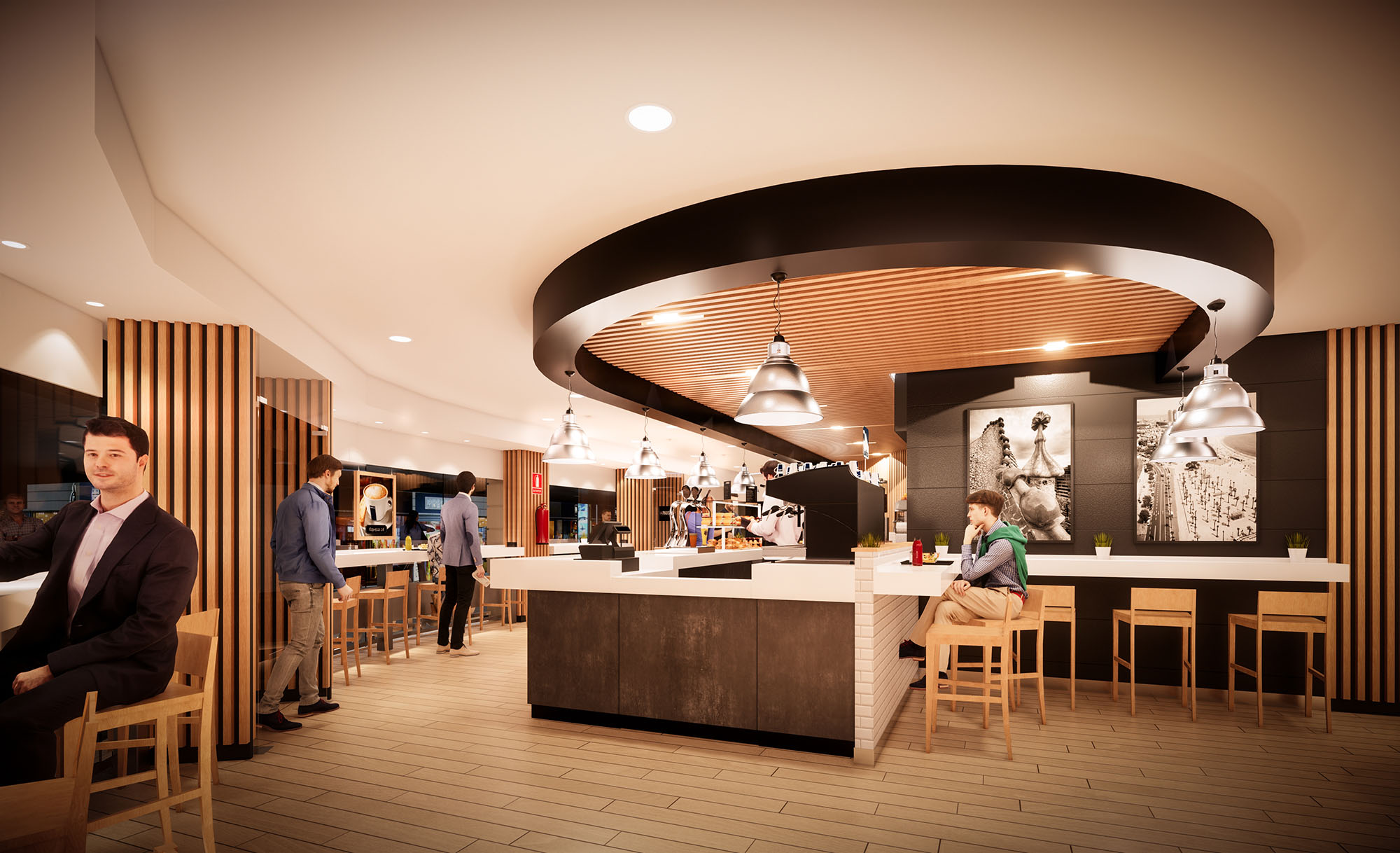
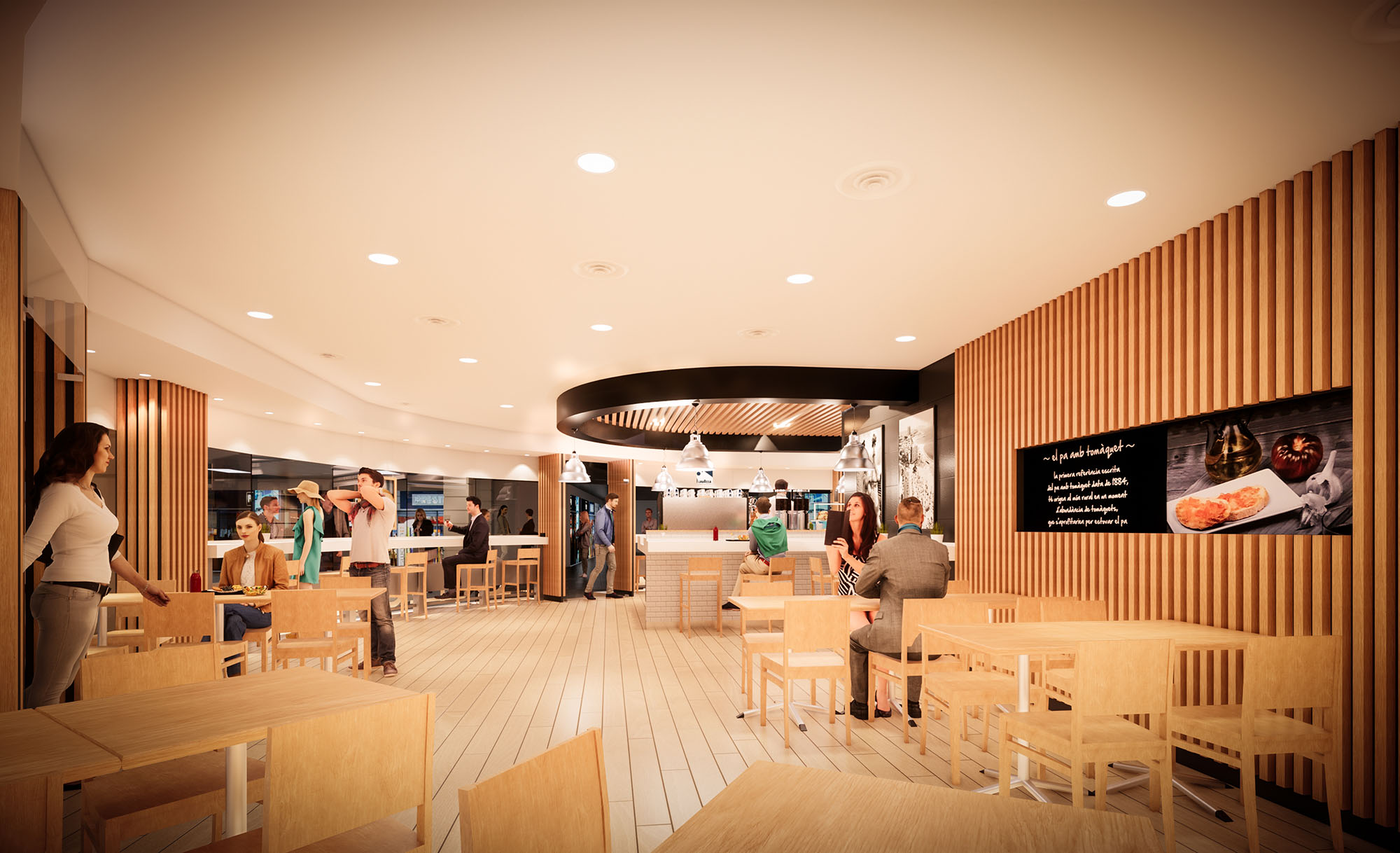
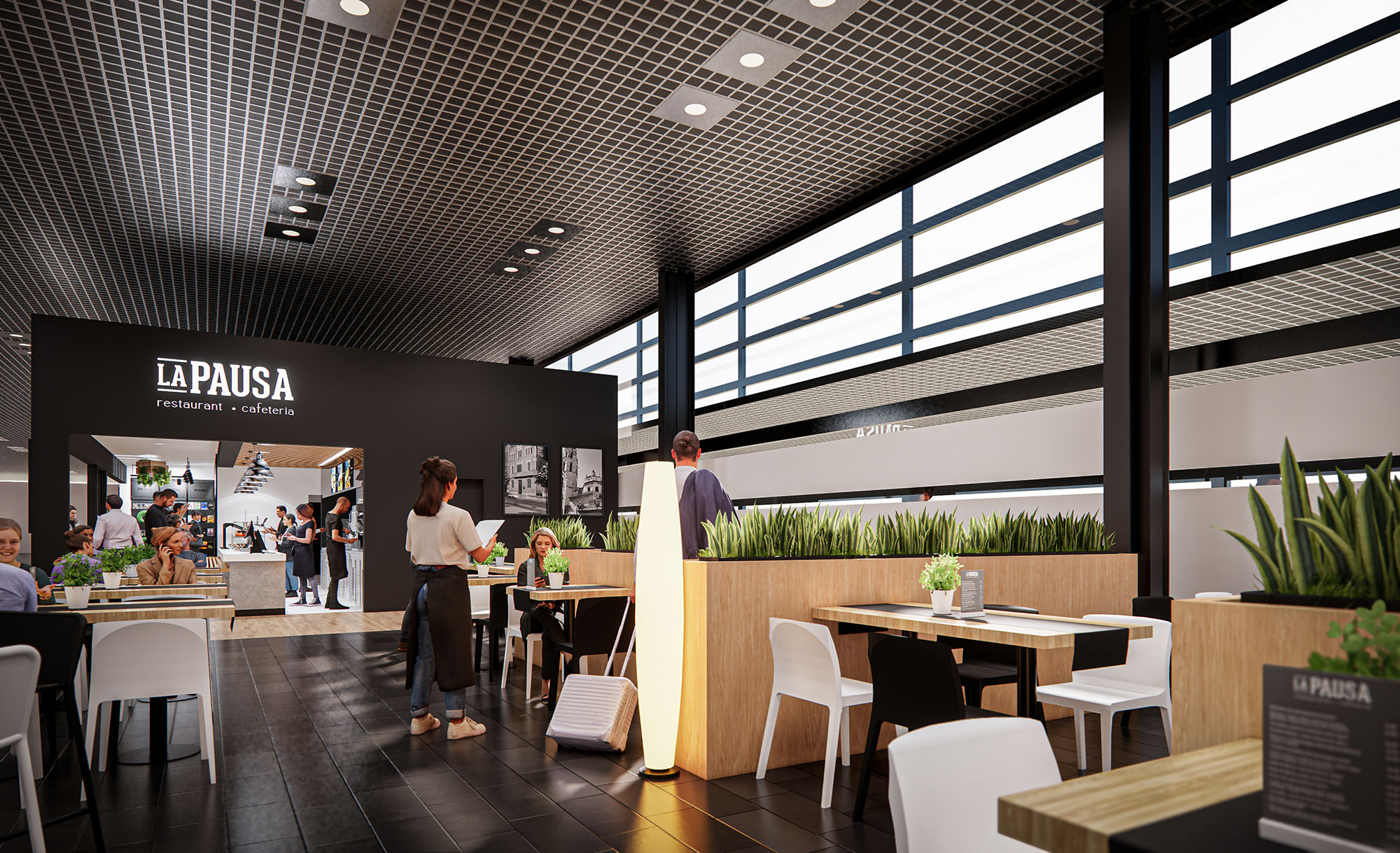
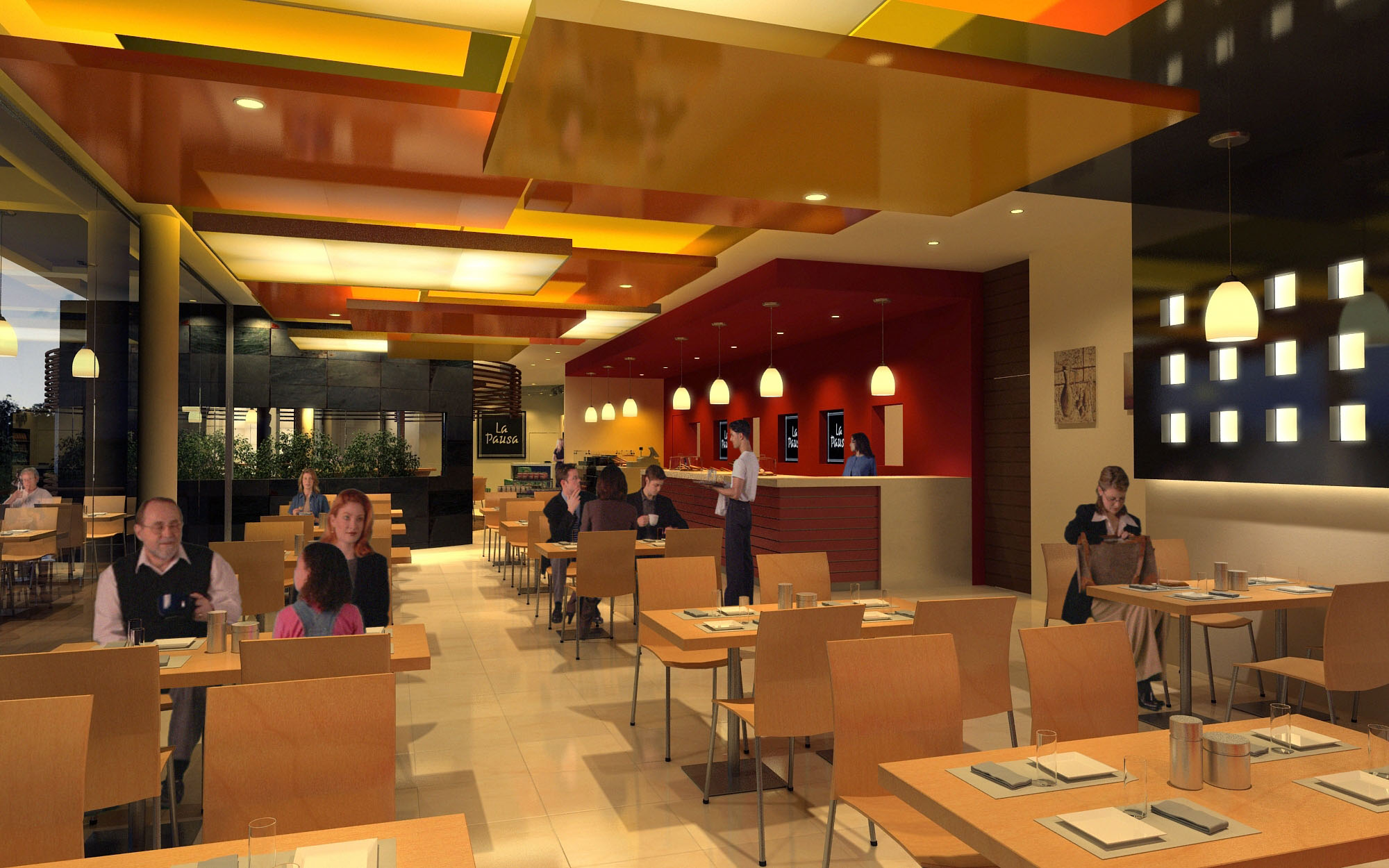
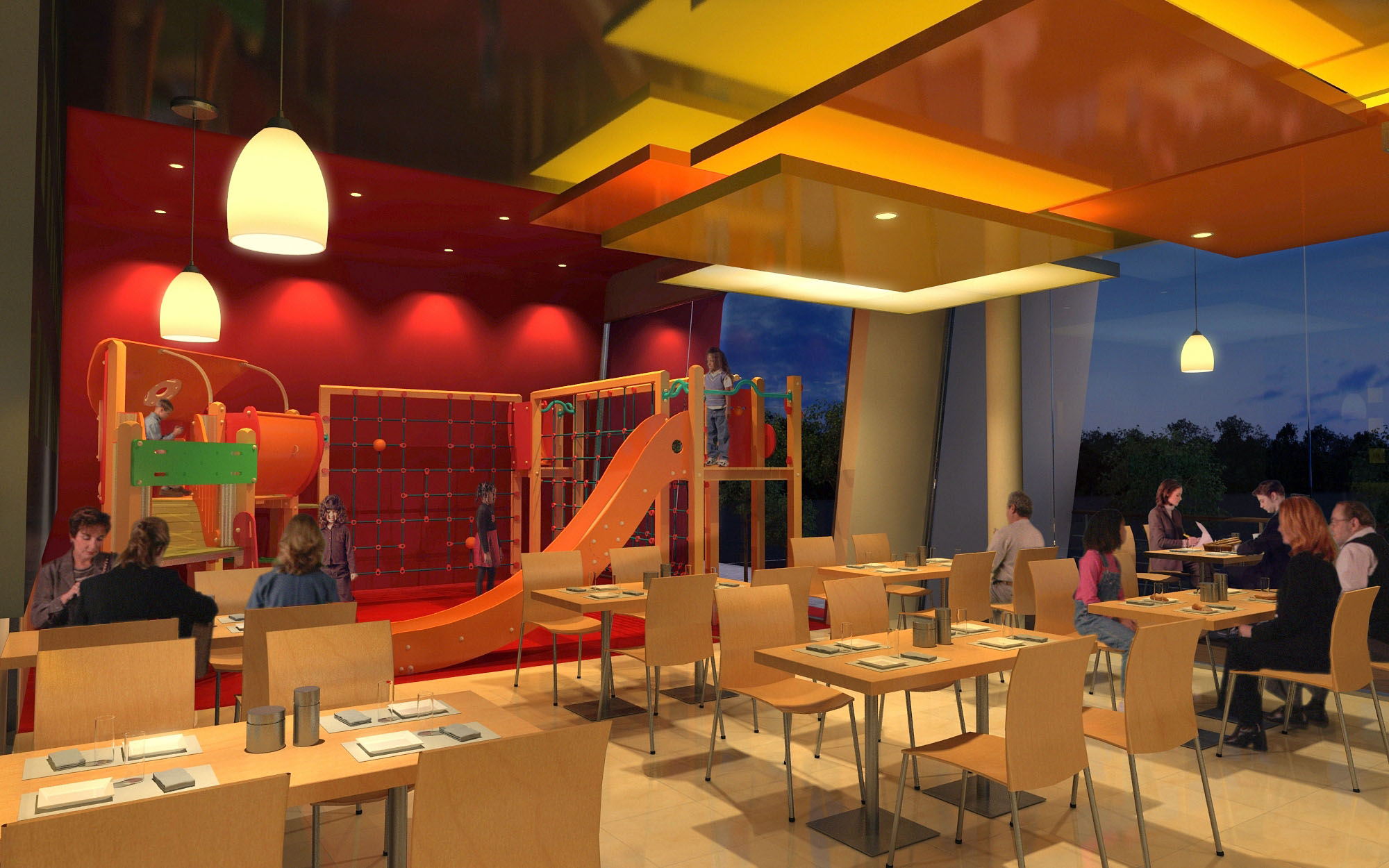
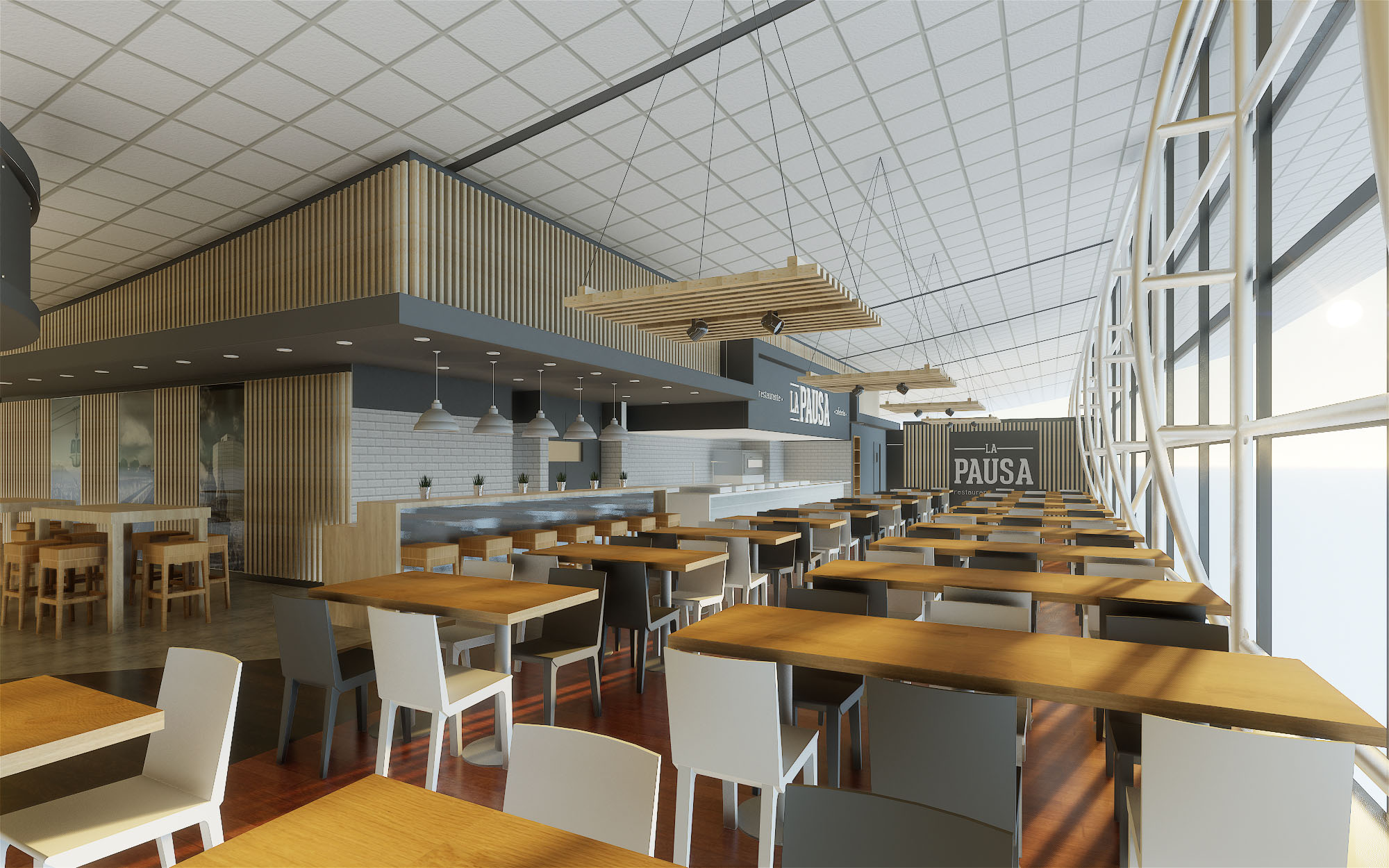
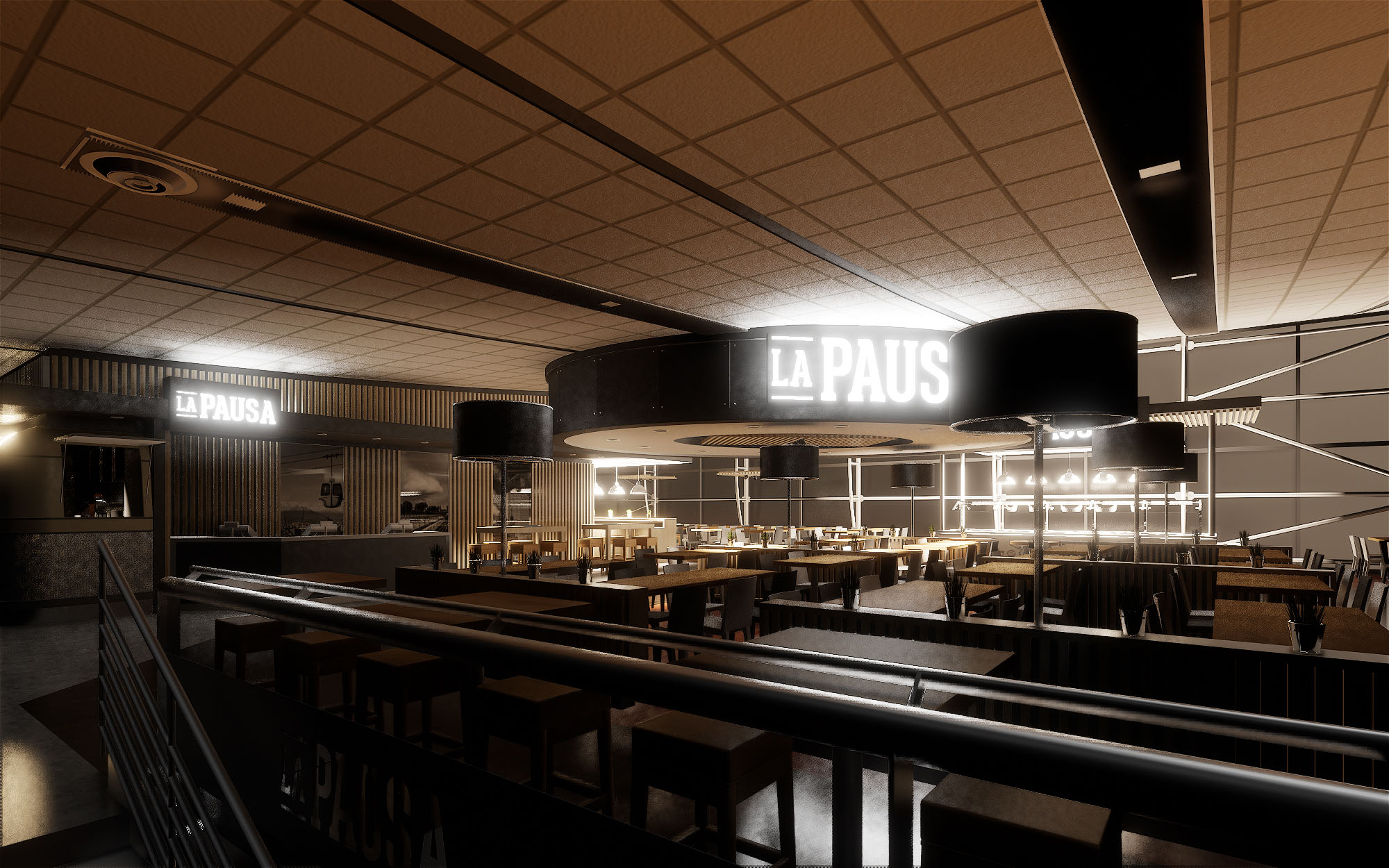
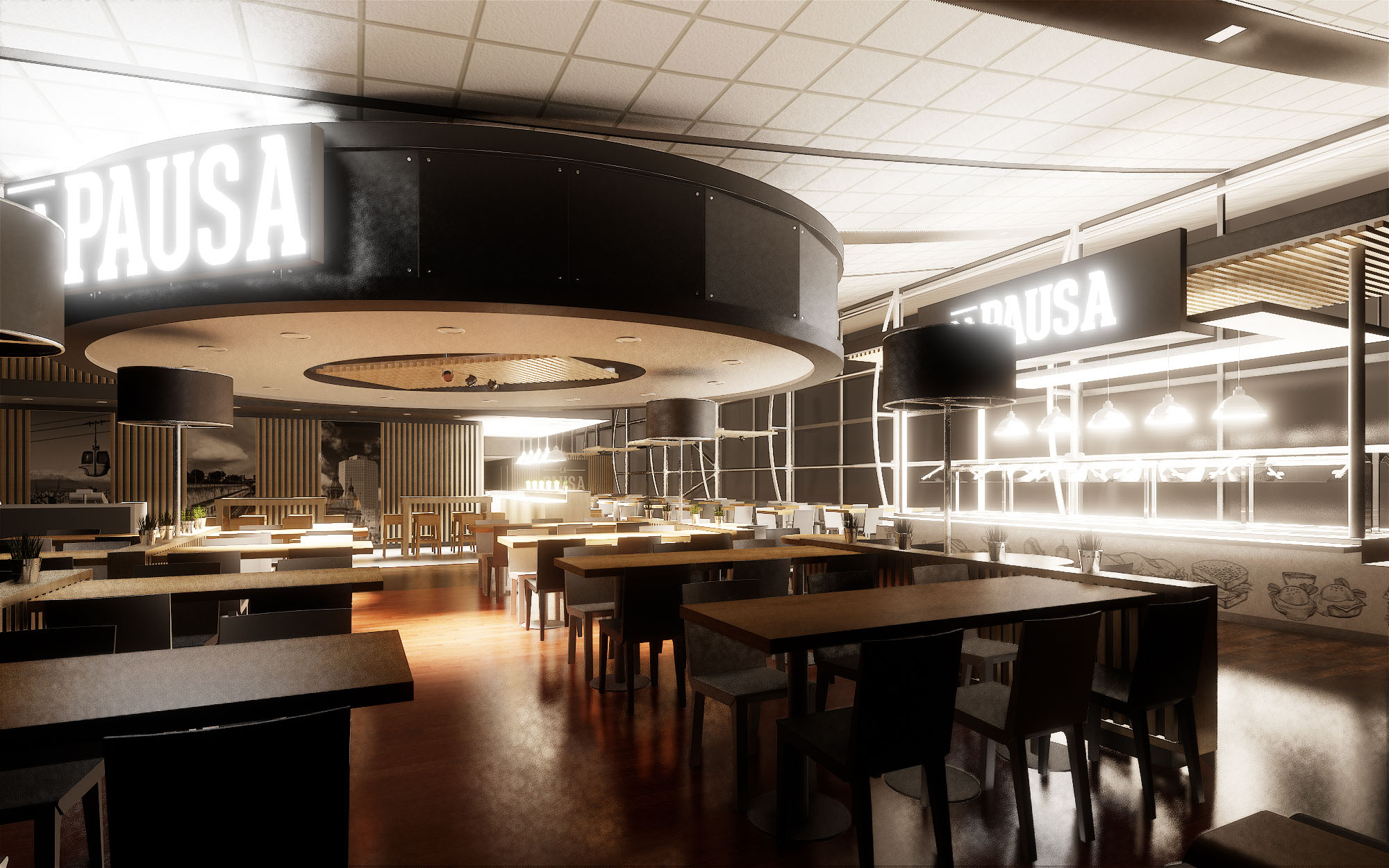
Seating typologies are diversified to respond to different travel profiles: high stools for quick stops, standard tables for families and small groups, and communal tables that maximize density during peak hours. Circulation paths remain generous and orthogonal, ensuring clear sightlines to departure gates and flight information while avoiding bottlenecks at the counter. This rational zoning supports modular replication across the 16 locations, allowing each unit to be scaled while preserving operational logic.
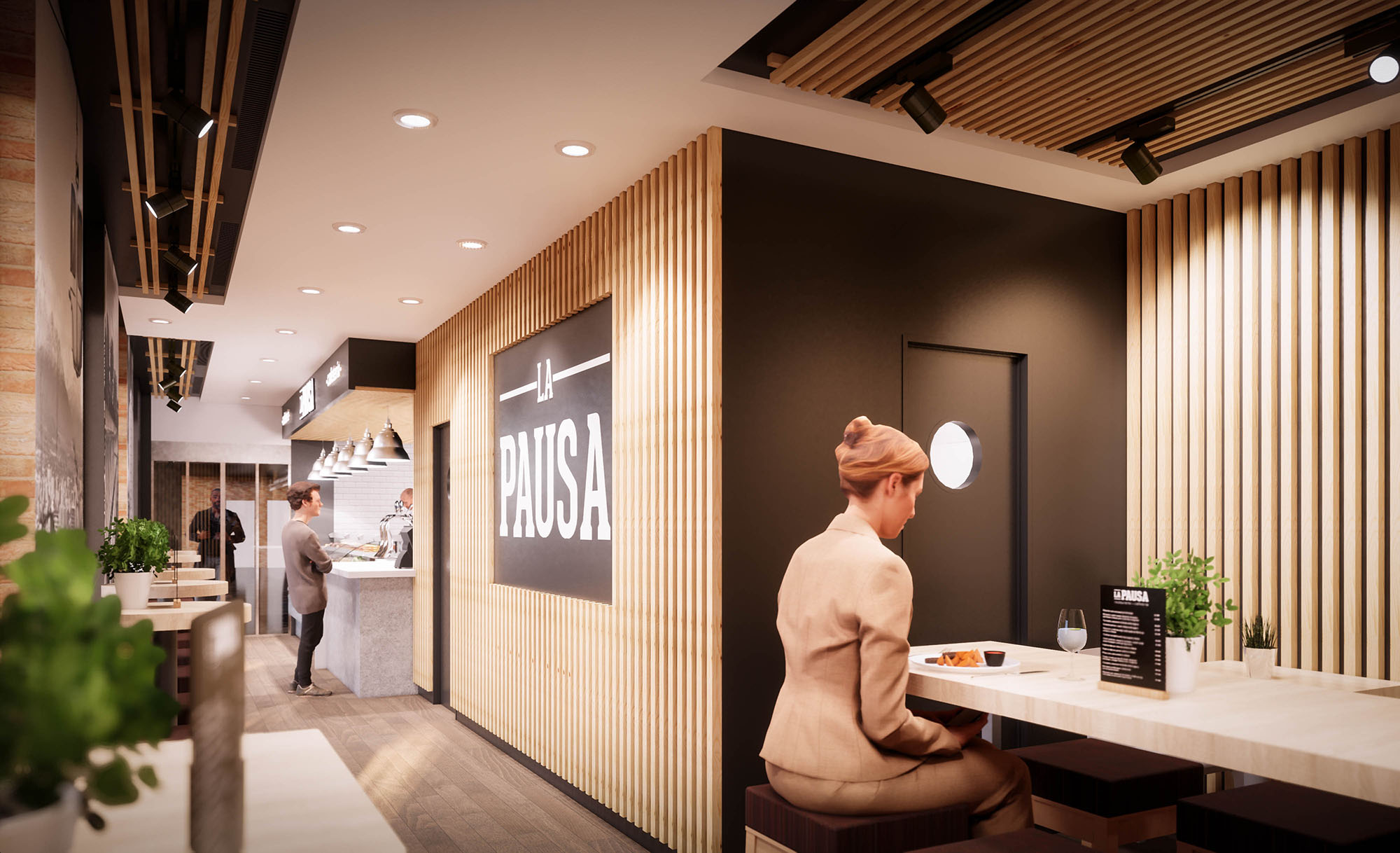
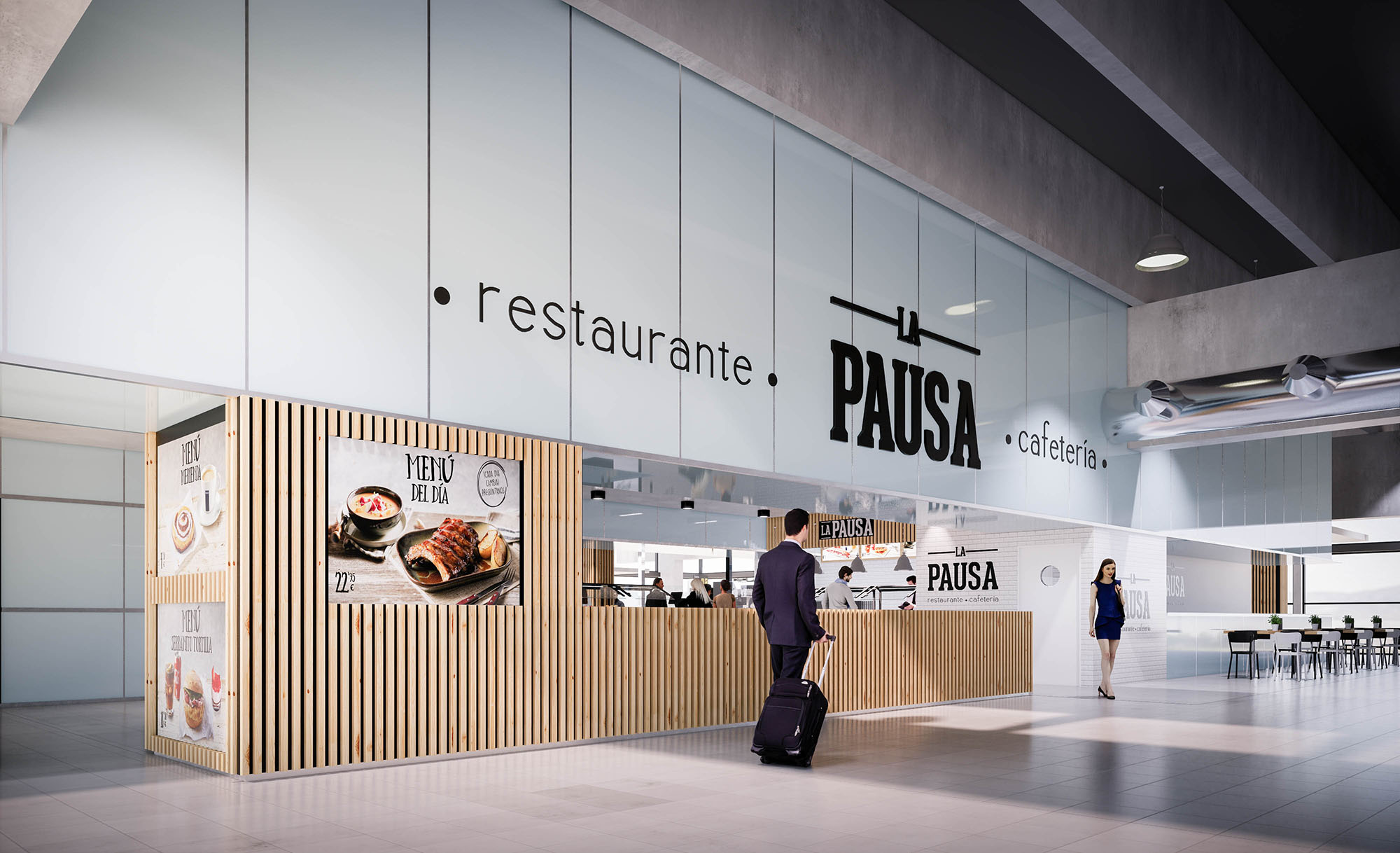
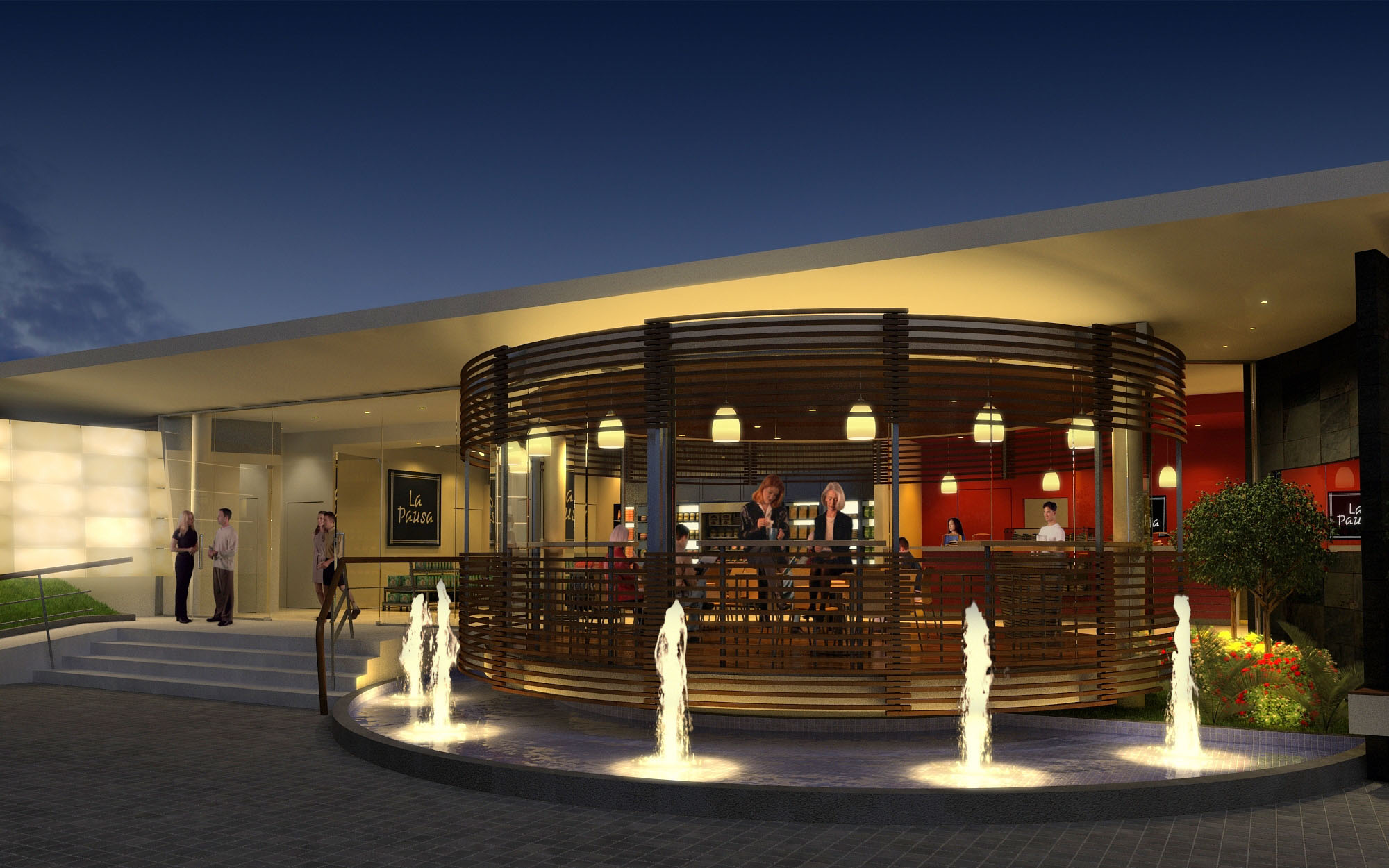
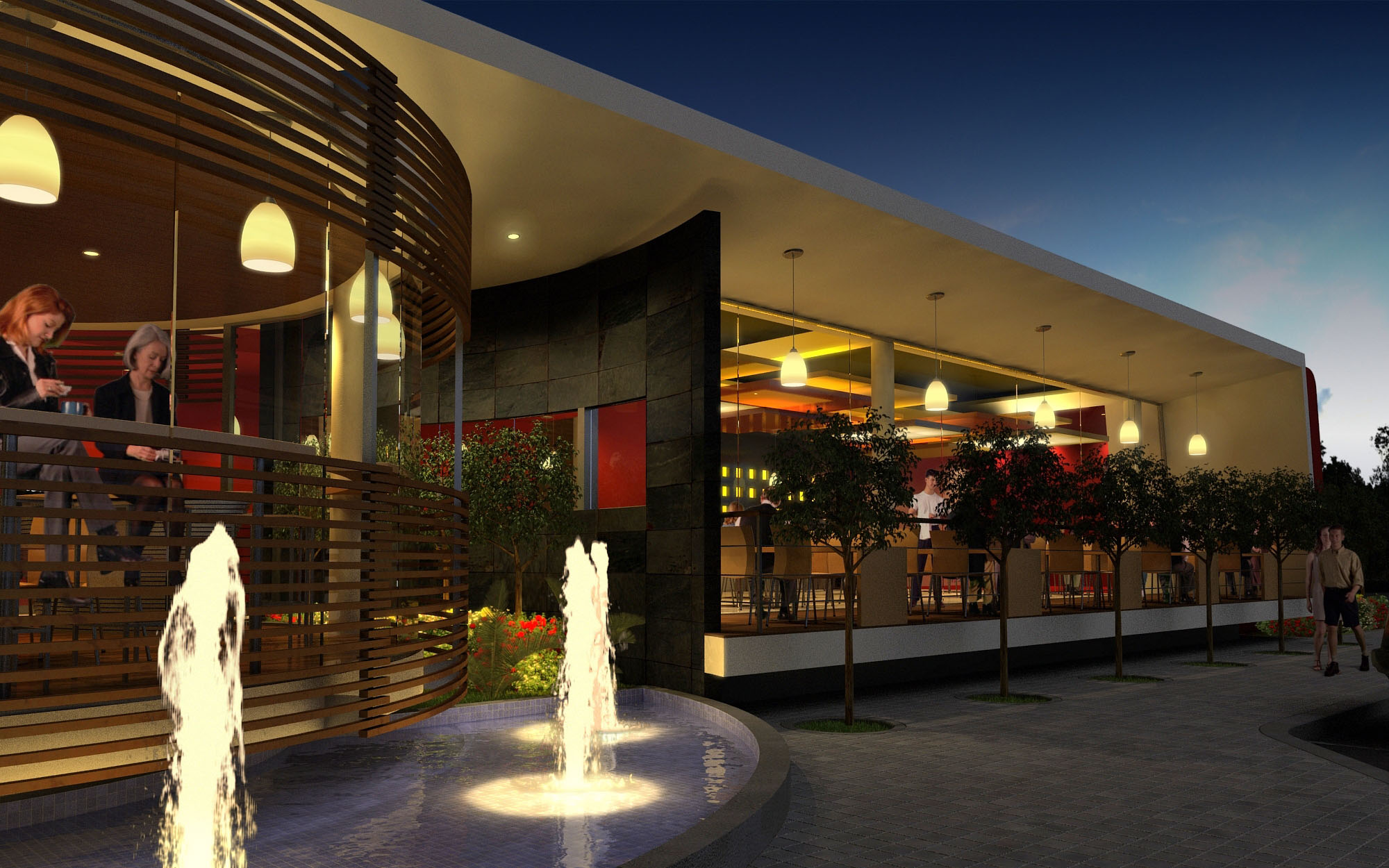
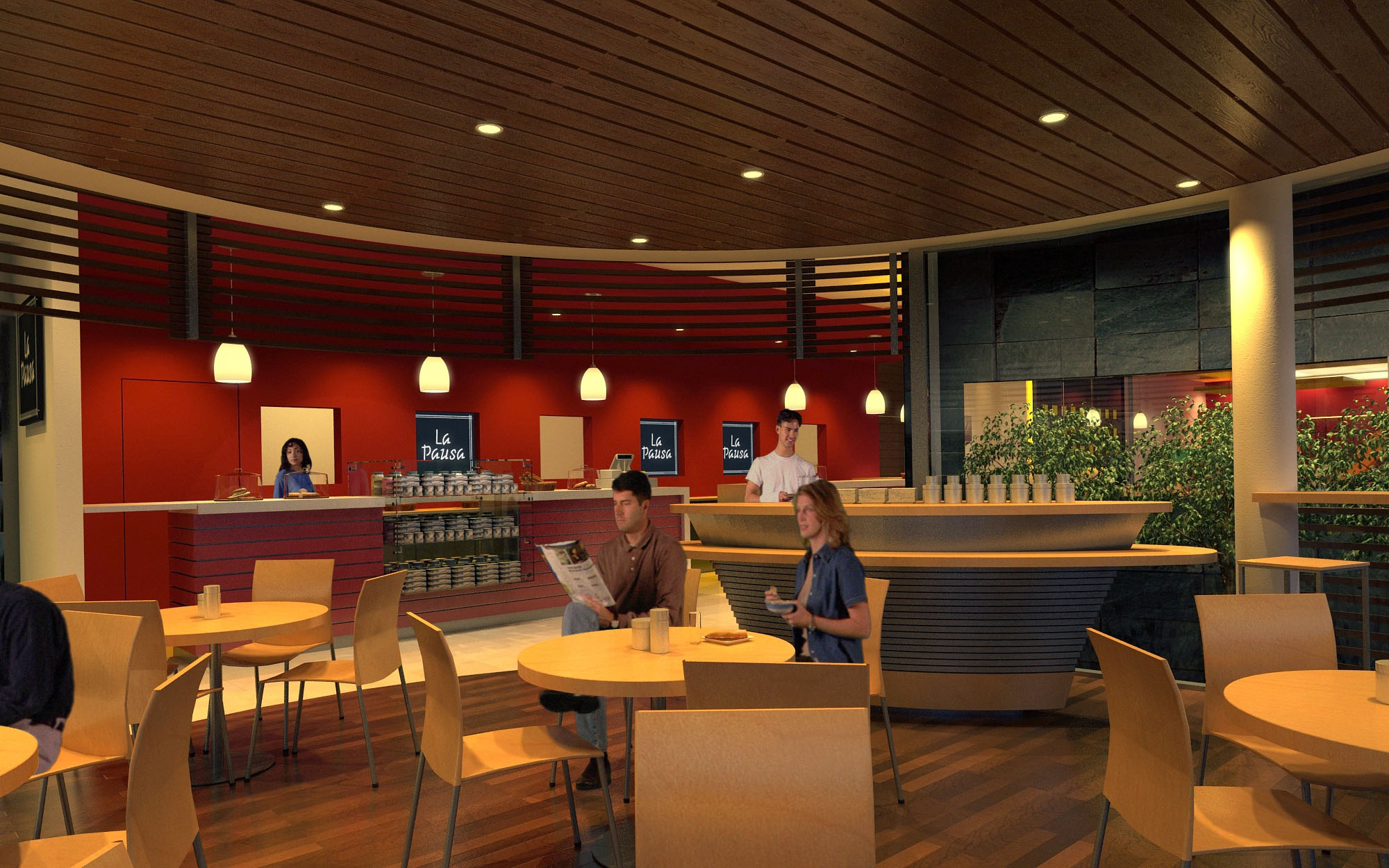
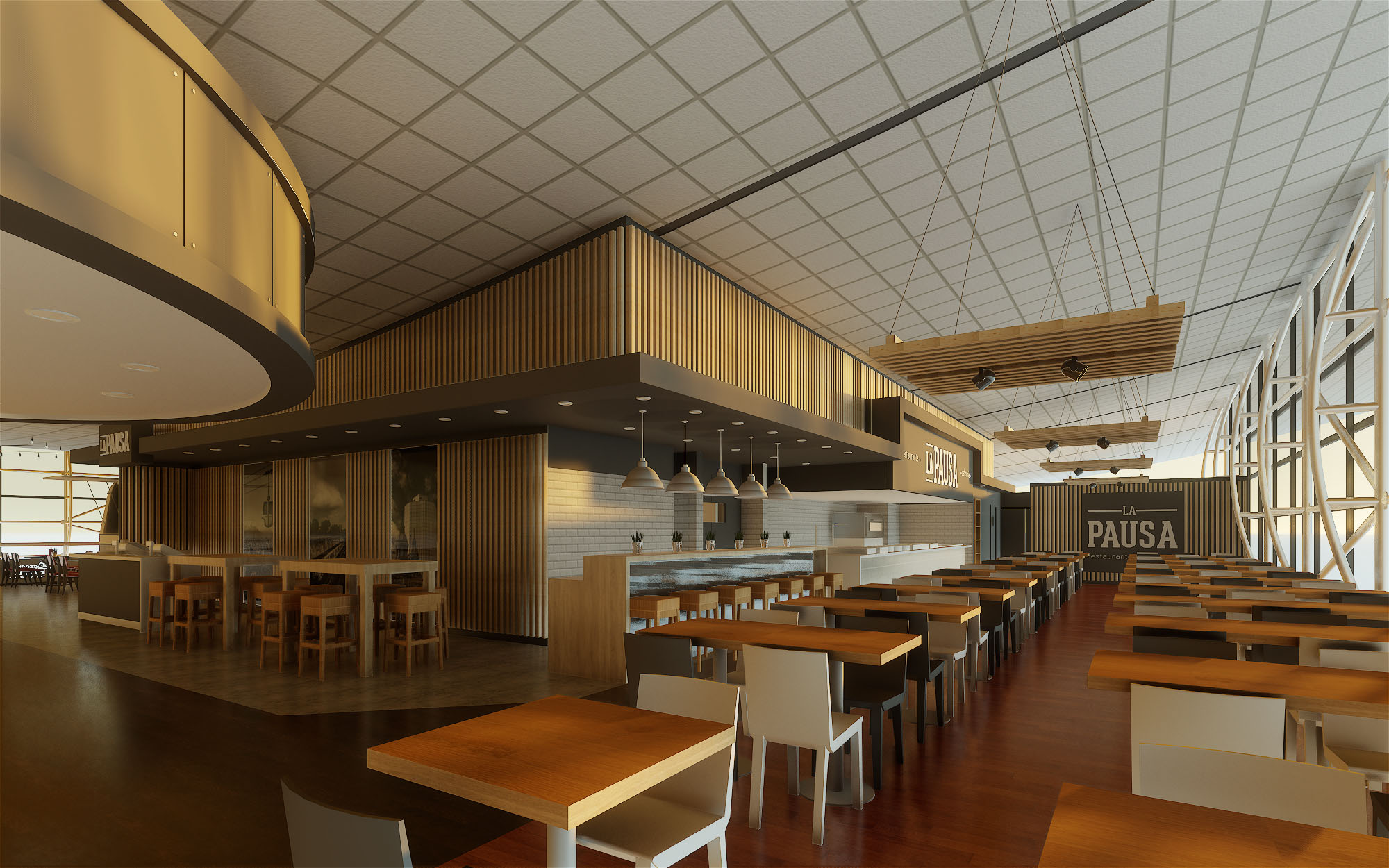
The material palette combines warm natural finishes with precise, graphic elements that reinforce brand legibility. Light woods in slats and panels provide a domestic warmth that softens the often‑technical character of airport halls. These are contrasted with dark framing in metal and lacquered surfaces, which clearly delineate the brand envelope and highlight openings, counters and signage bands.
The color strategy is deliberately restrained: neutral greys on floors and counters, black for structural and graphic elements, and the natural tone of timber as the main chromatic accent. This controlled palette makes the illuminated menu boards and refrigerated displays stand out as focal points while maintaining a calm visual background in environments typically saturated with commercial stimuli.
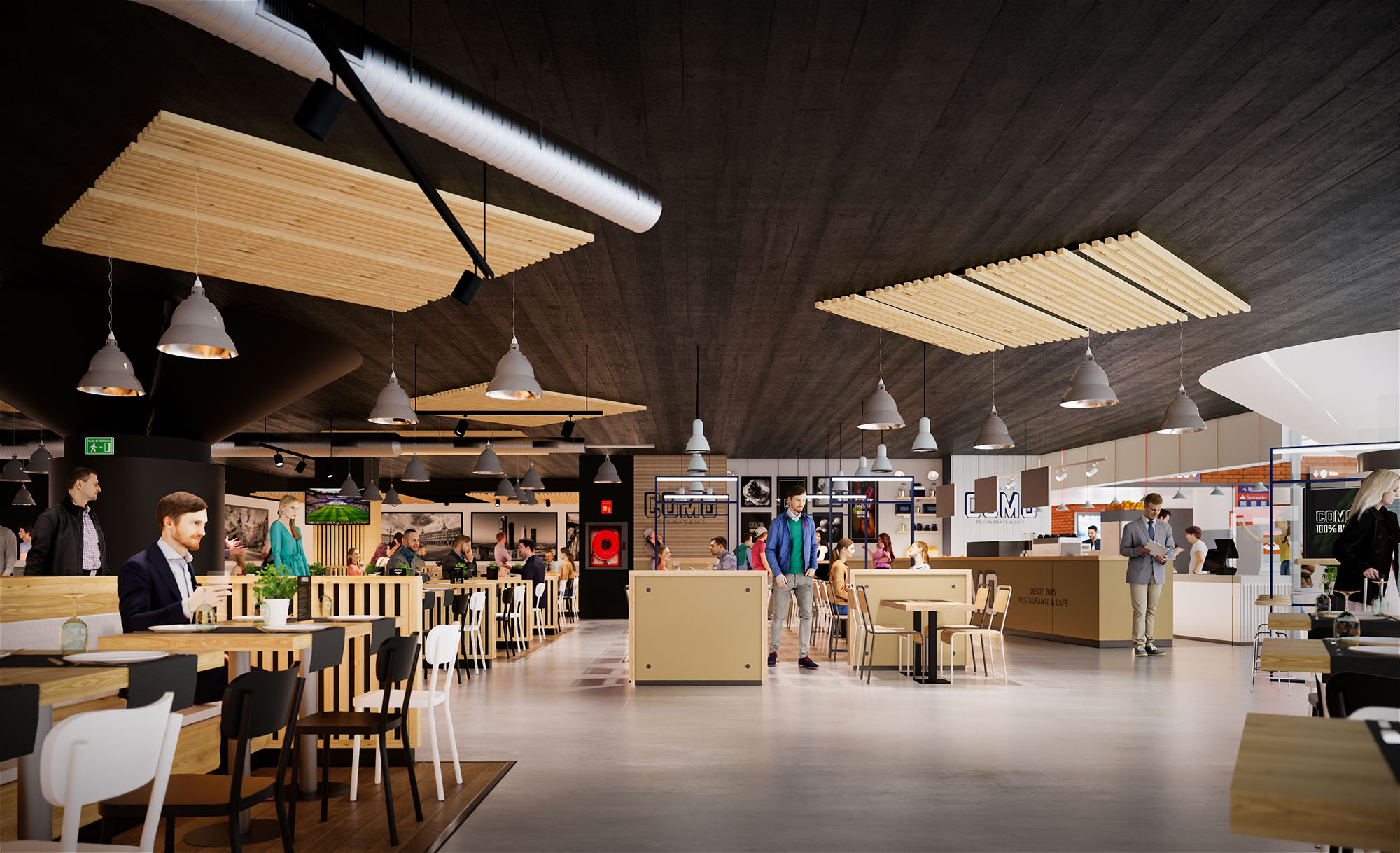
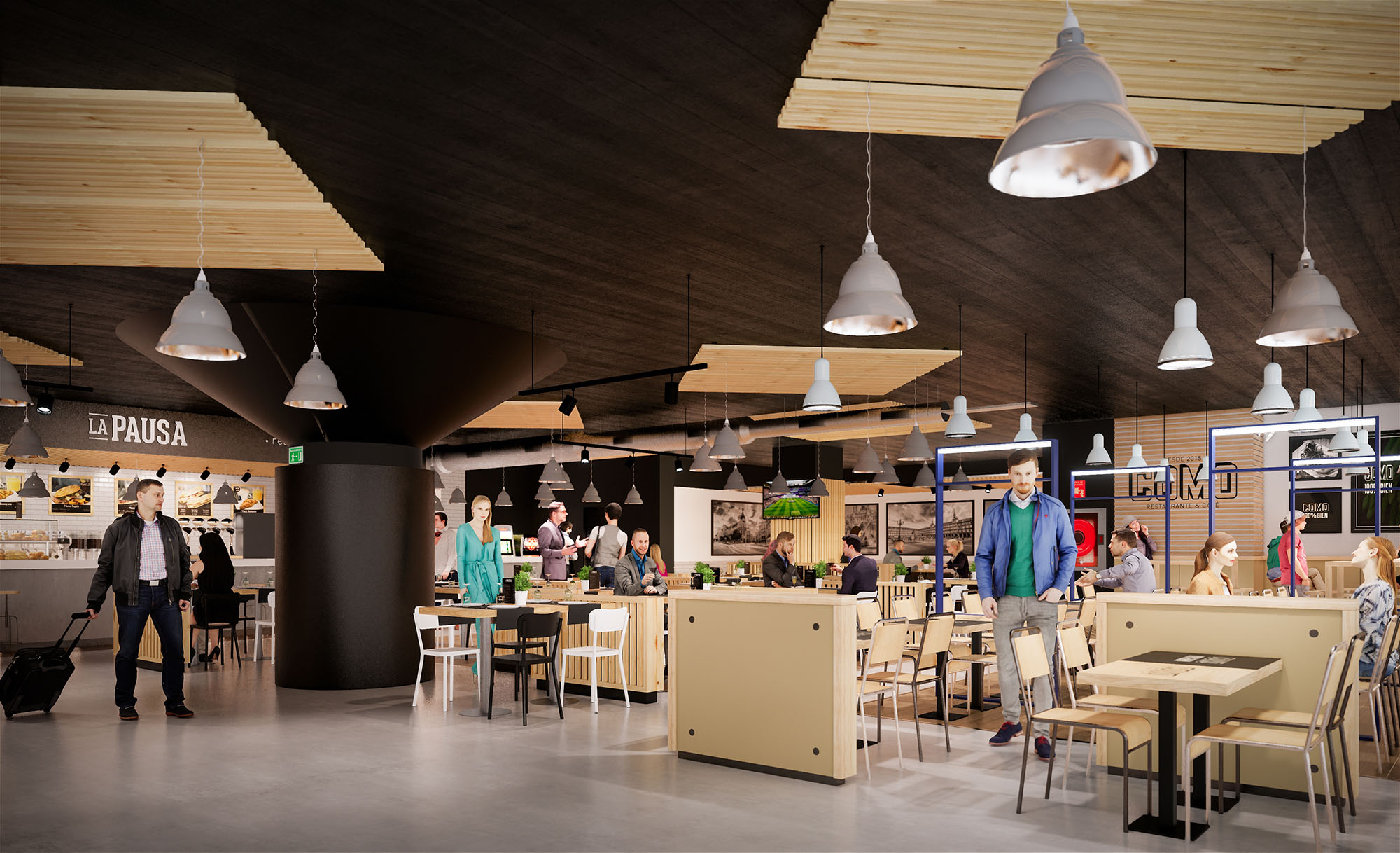
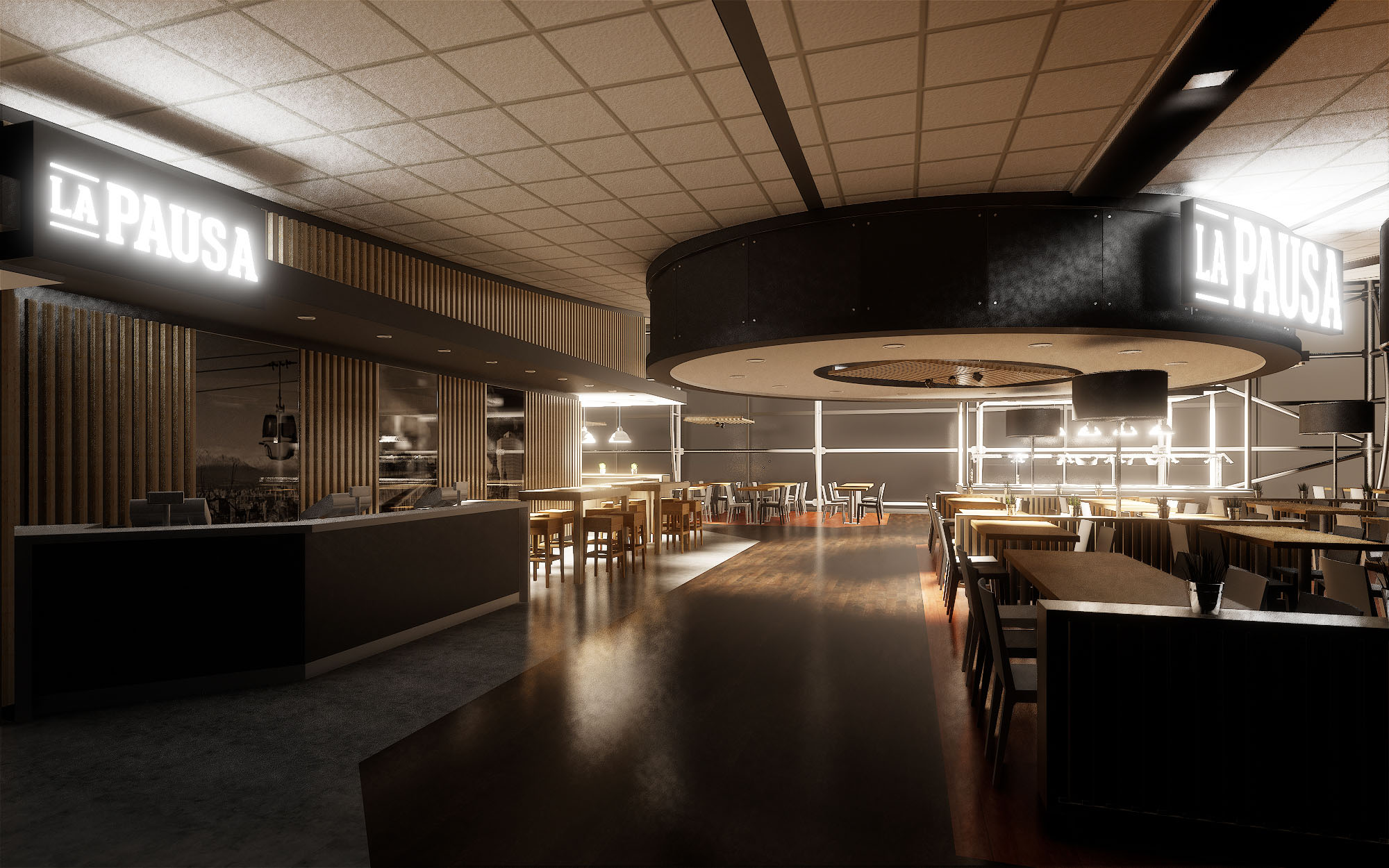
Lighting design plays a key role in generating a distinct micro‑atmosphere within the open airport context. In units exposed to abundant natural light, the structures are conceived as lightly shaded kiosks, using overhanging fascias and vertical slats to reduce glare on the counter. In more enclosed terminals, suspended luminaires and integrated linear lighting define a warm, intimate ceiling plane that visually lowers the large heights and anchors the dining area.
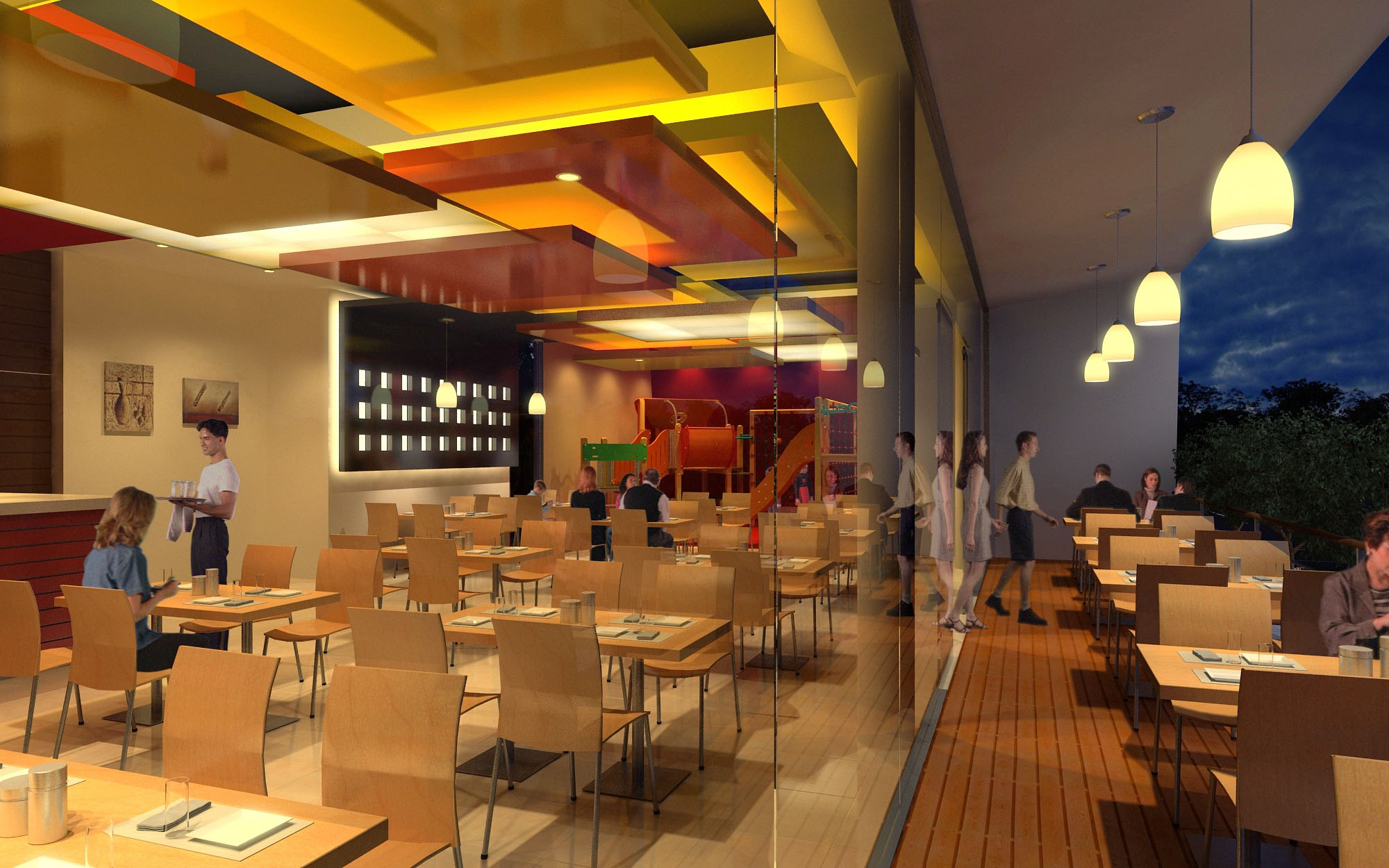
Clusters of pendant lamps emphasize the different seating zones and create gradients of brightness, from the more intense illumination at the service front to softer, more comfortable levels in the seating. The combination of decorative fittings with efficient LED lines ensures both visual comfort and energy performance, while the glow of the counter front becomes an orientating beacon within the concourse.
The architectural envelope works closely with graphic design to articulate a strong, consistent identity. Continuous black sign bands with the LA PAUSA logotype form a clear horizontal datum line, visible from long distances within the terminal. Below this band, changeable menu displays and back‑lit merchandising niches allow local adaptation of offers without altering the core image.
Large‑scale photographic panels and subtle wayfinding graphics are embedded into wall claddings and partitions, adding depth and narrative while avoiding visual clutter. The repetition of key elements—slatted timber, dark frames, and the characteristic counter configuration—creates an immediate association with the brand across different countries and cultural contexts.
The project prioritizes a dry, modular construction system to ensure rapid installation within operational airports and to minimize waste. Prefabricated metal frames, standardized counter modules and repeatable timber slat panels can be assembled and disassembled with minimal intervention in the existing terminal structures, facilitating future relocations or reconfigurations.
Material selection favors durable, low‑maintenance surfaces to extend life cycles and reduce replacement needs: high‑pressure laminates, compact surfaces for worktops, and sealed woods from certified sources. Efficient LED lighting, demand‑controlled ventilation in kitchen areas and optimized refrigeration equipment contribute to reducing energy consumption. The open layout, with visual permeability and shared lighting with the terminal, avoids unnecessary enclosure and allows the restaurants to benefit from existing environmental systems, aligning the concept with contemporary sustainability criteria for high‑traffic infrastructures.
LIST OF PROJECTS EXPERIENCE
Designed, Executed and/or Built Projects
SPAIN
1. La Pausa - A Coruña - L165A
2. La Pausa - Asturias - L201C
3. La Pausa - Compostela
4. La Pausa - Fuentidueñas5. La Pausa - La Palma - L035C
6. La Pausa - Murcia - L205C
7. La Pausa - RENFE - Atocha
8. La Pausa - RENFE - Castellon
9. La Pausa - RENFE - Plaza Catalunya
10. La Pausa - RENFE - Sevilla
11. La Pausa - Reus - L226.1
12. La Pausa - San Simón
13. La Pausa - Santander - L083A
PORTUGAL
14. La Pausa - Oporto - Aire Schengen
MÉXICO
15. La Pausa - Queretaro
CHILE
16. La Pausa - Santiago de Chile - N12.20
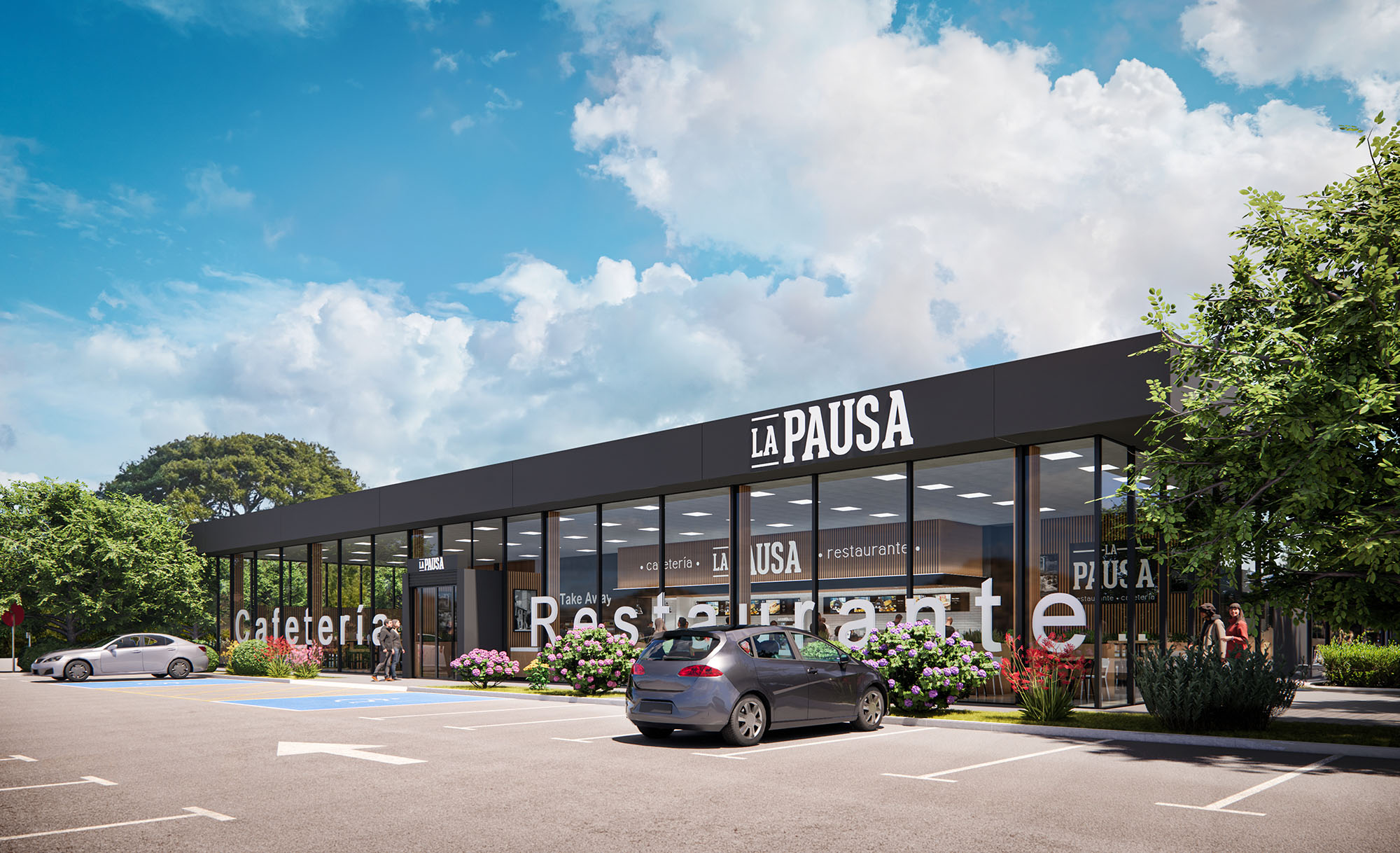
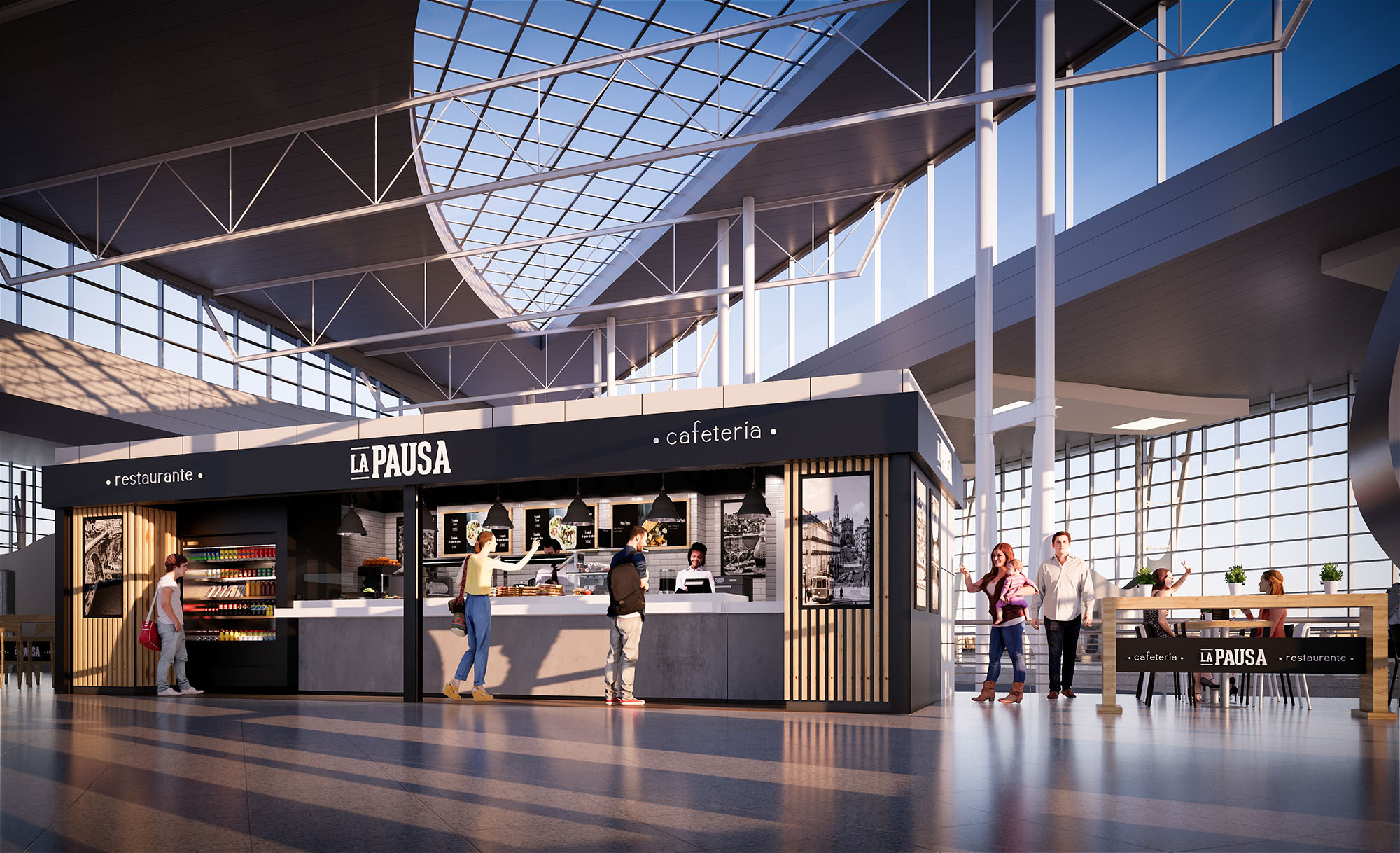
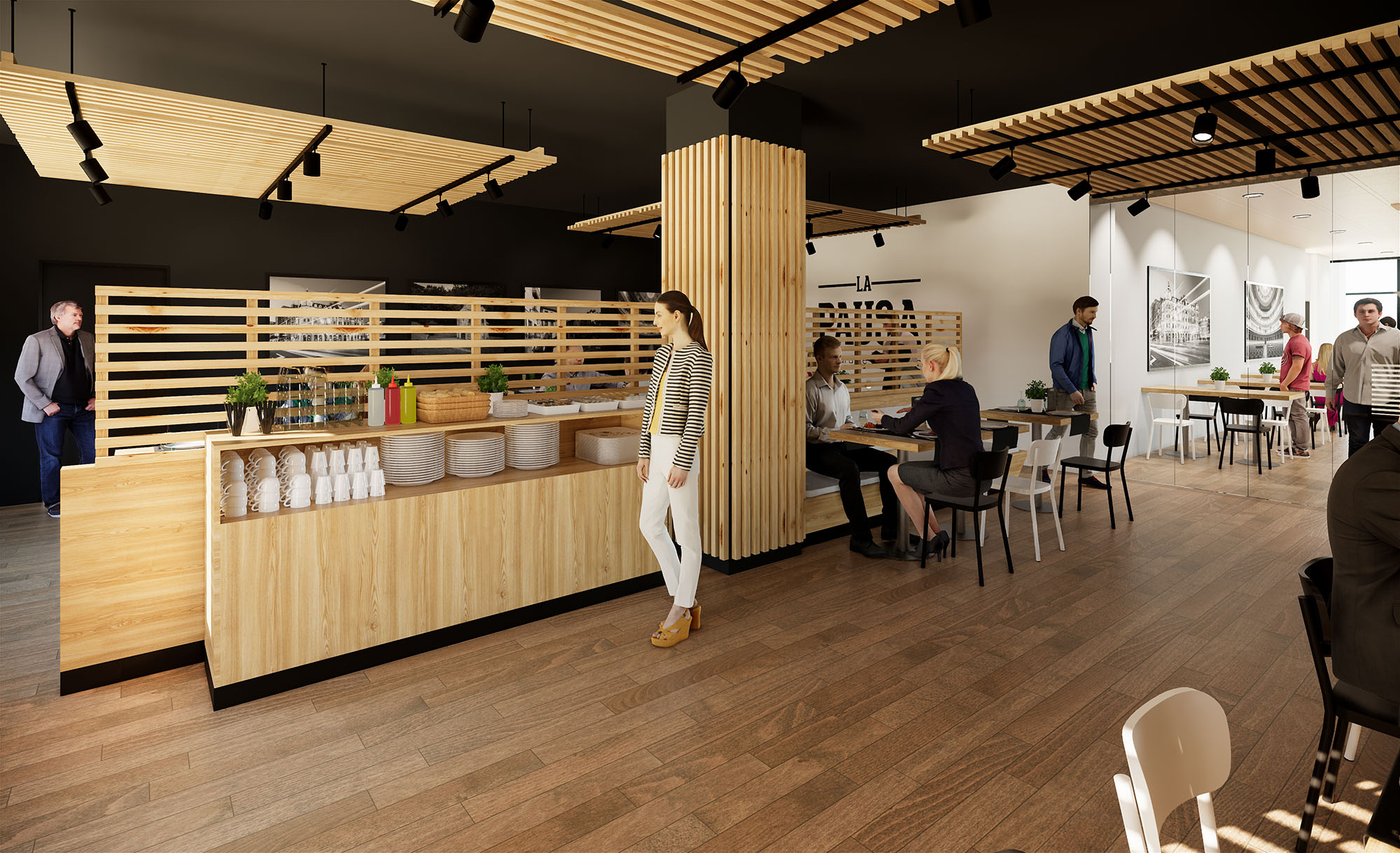
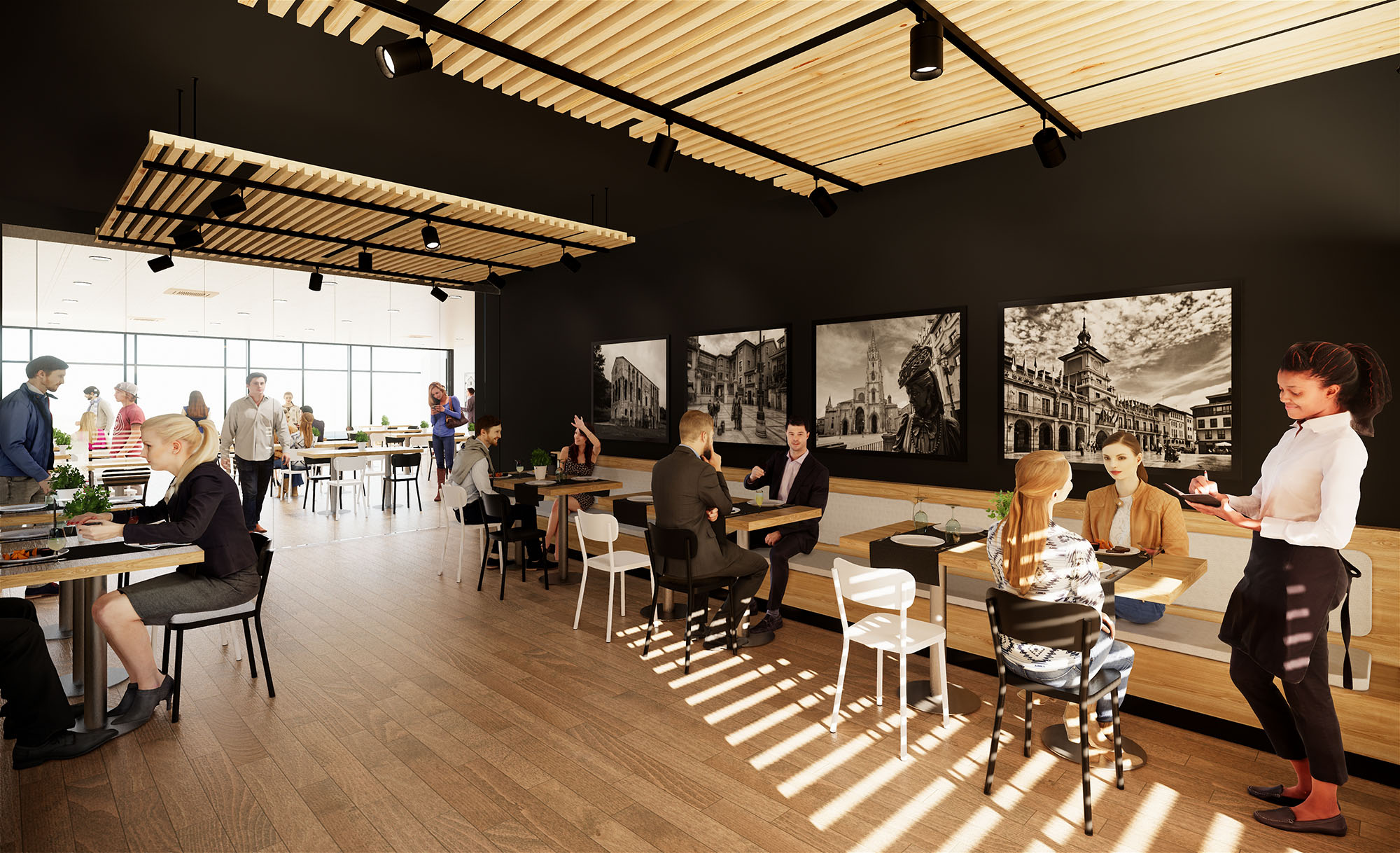
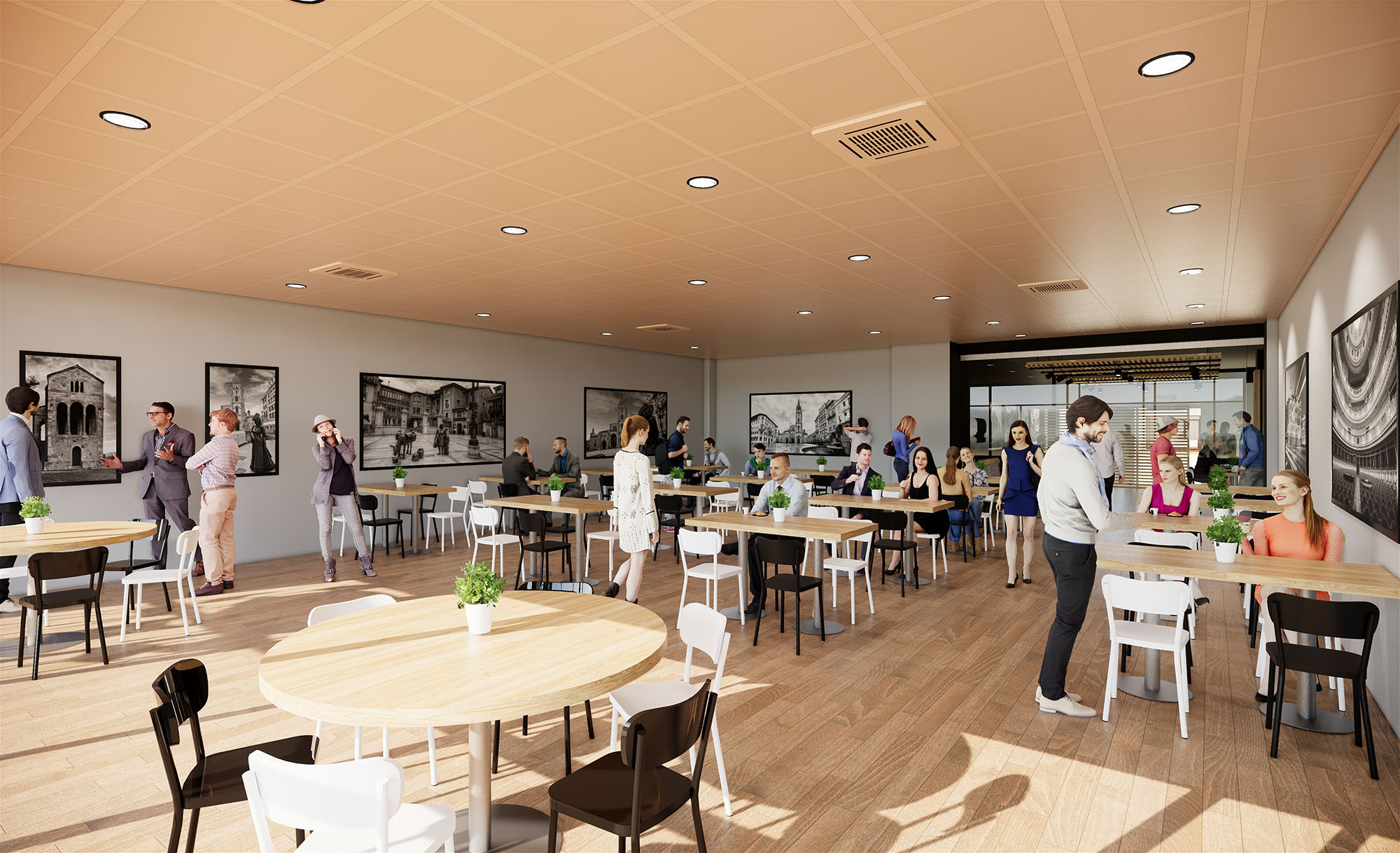
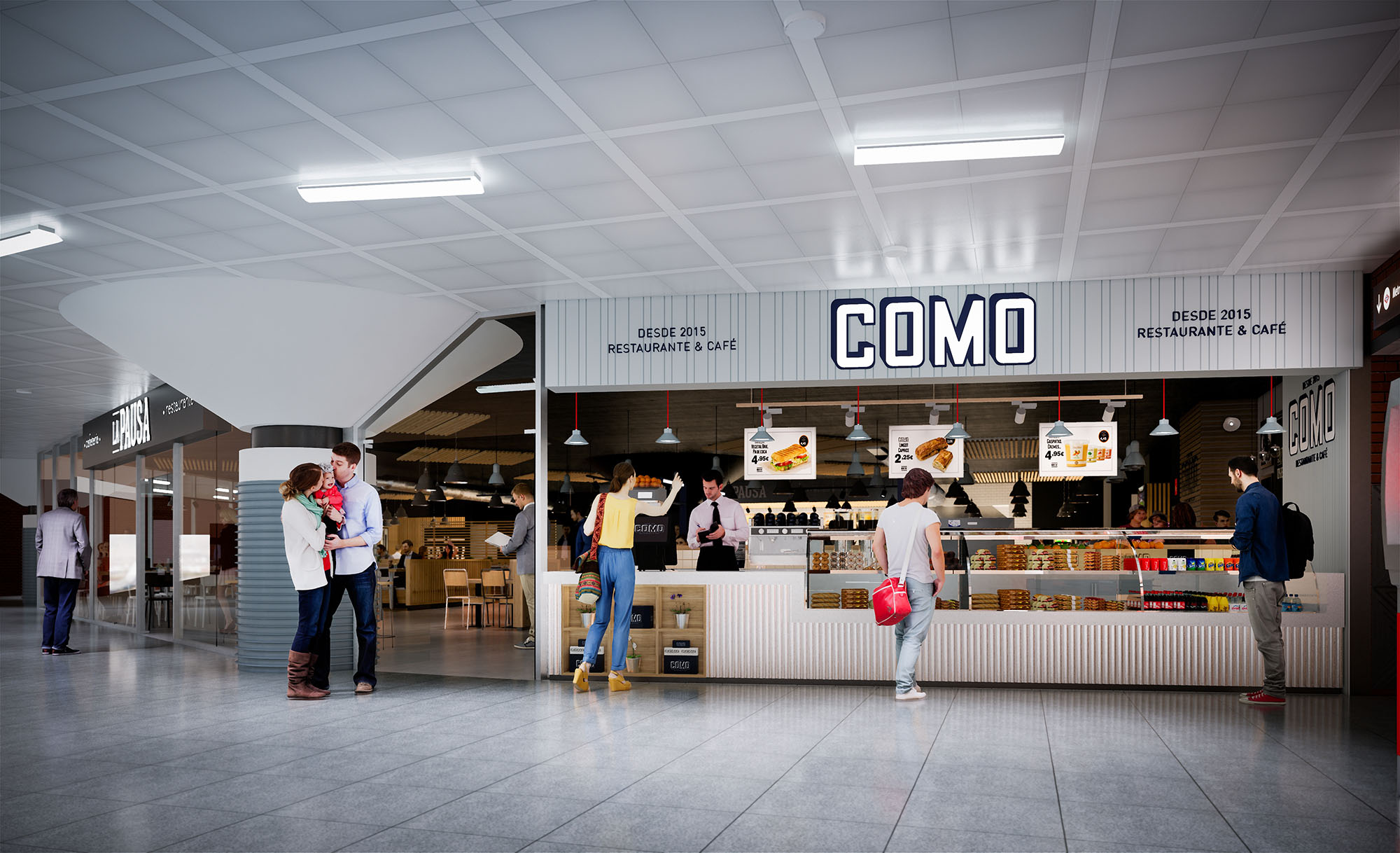
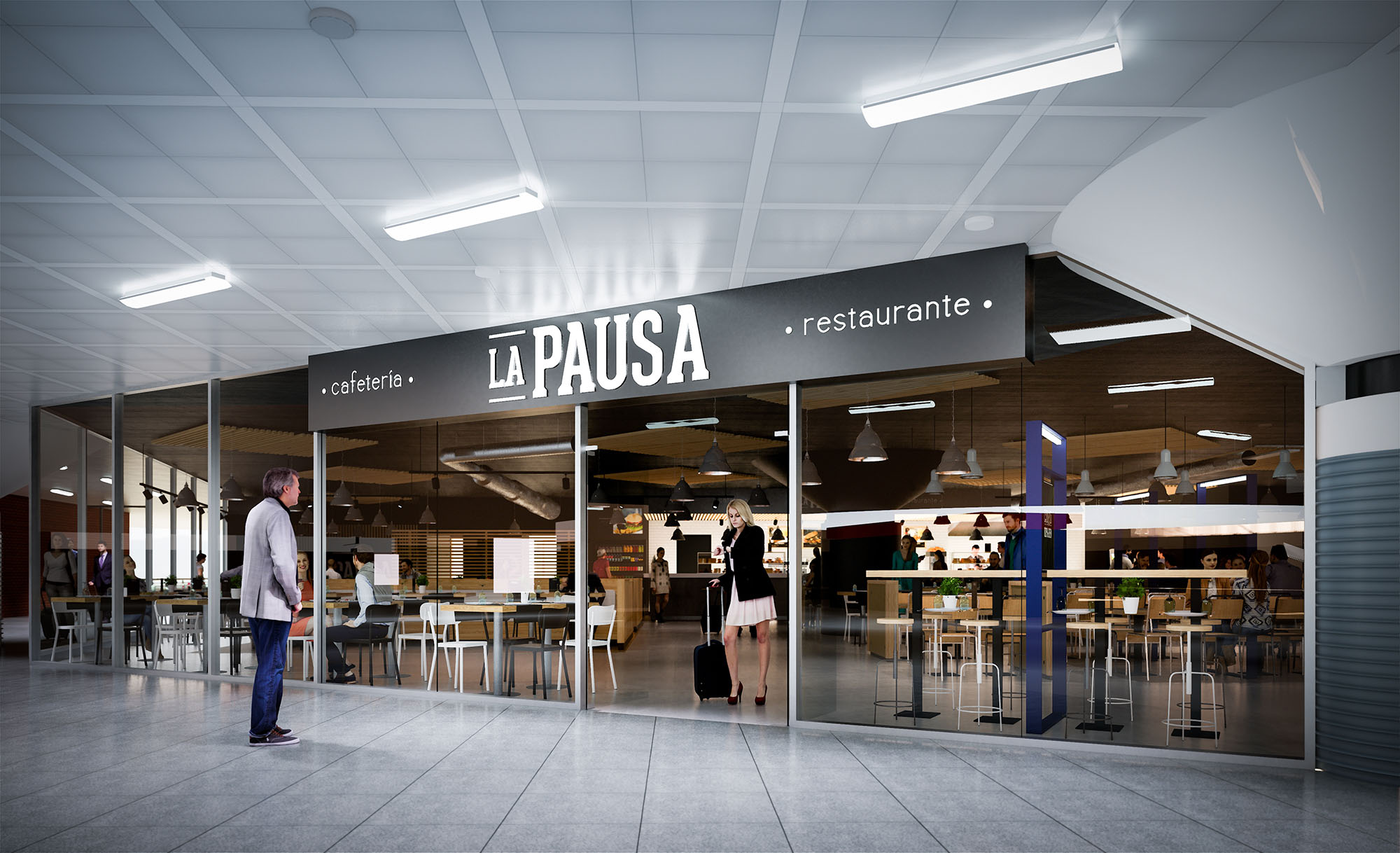

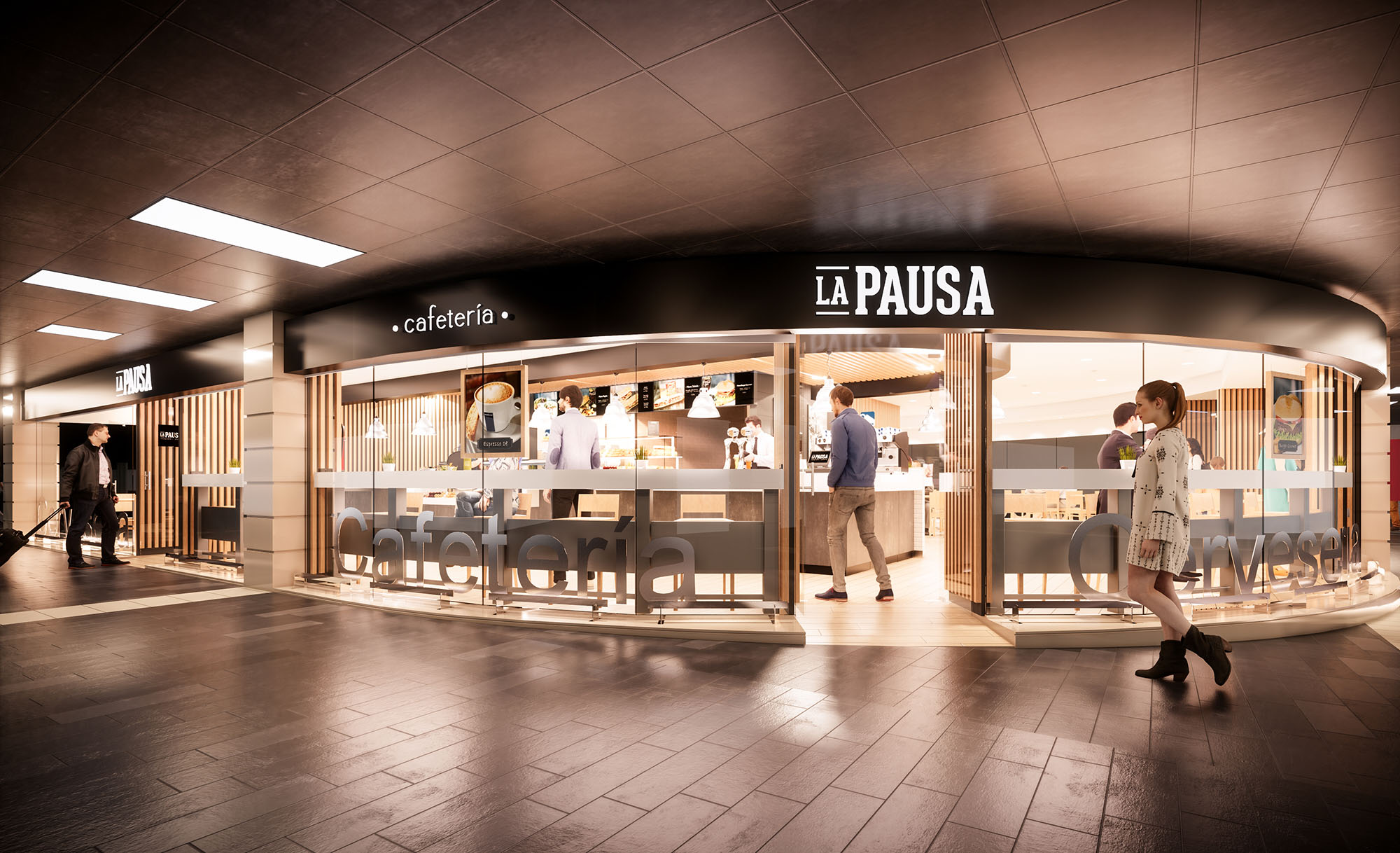
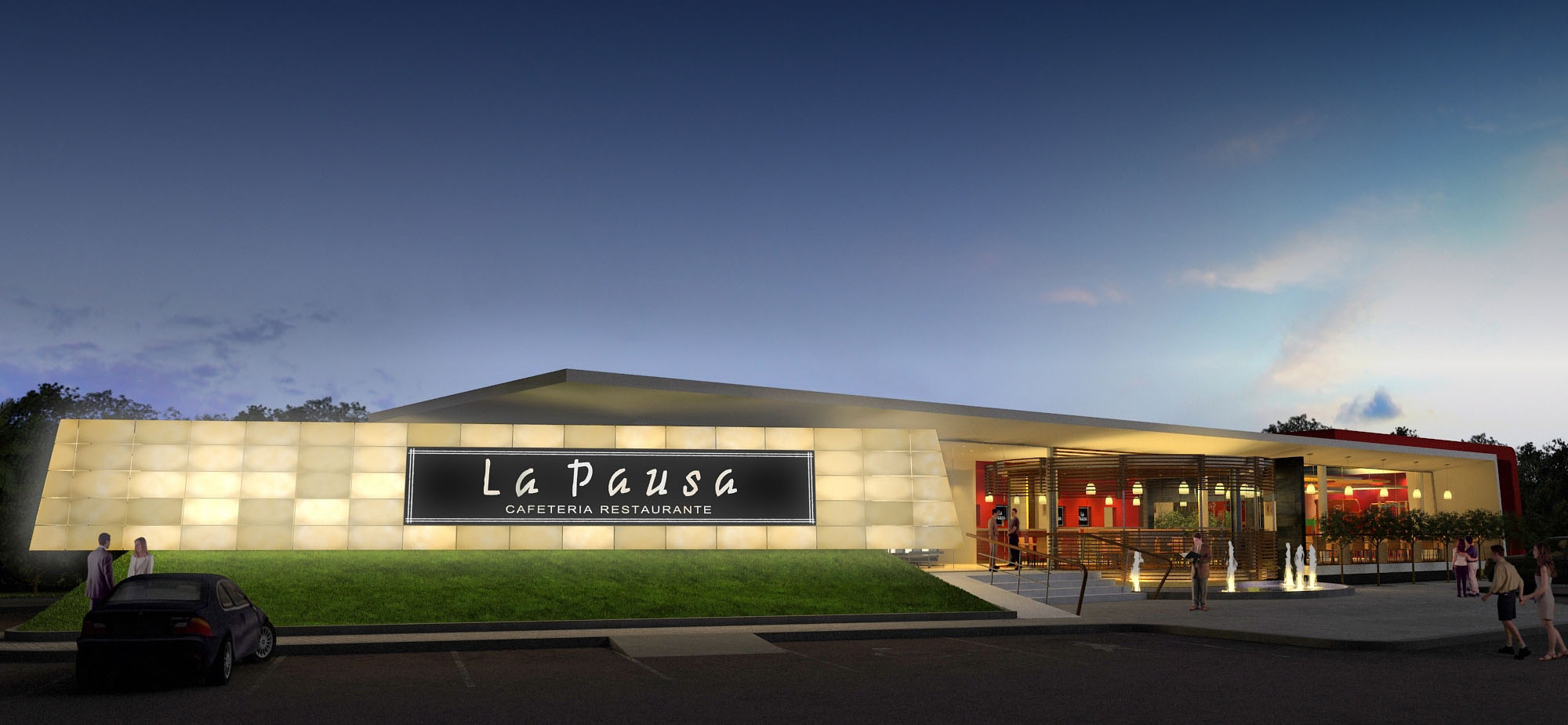
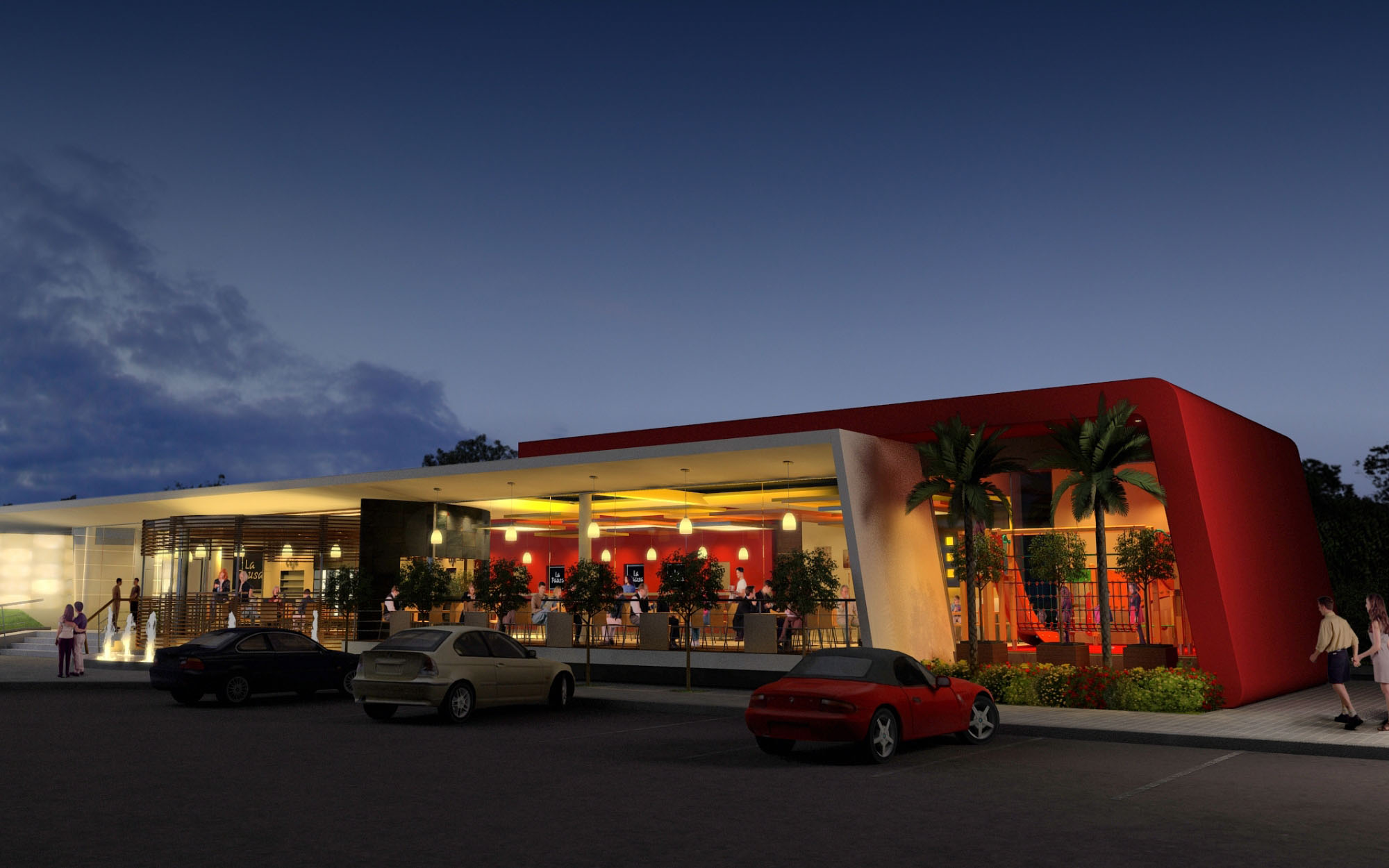
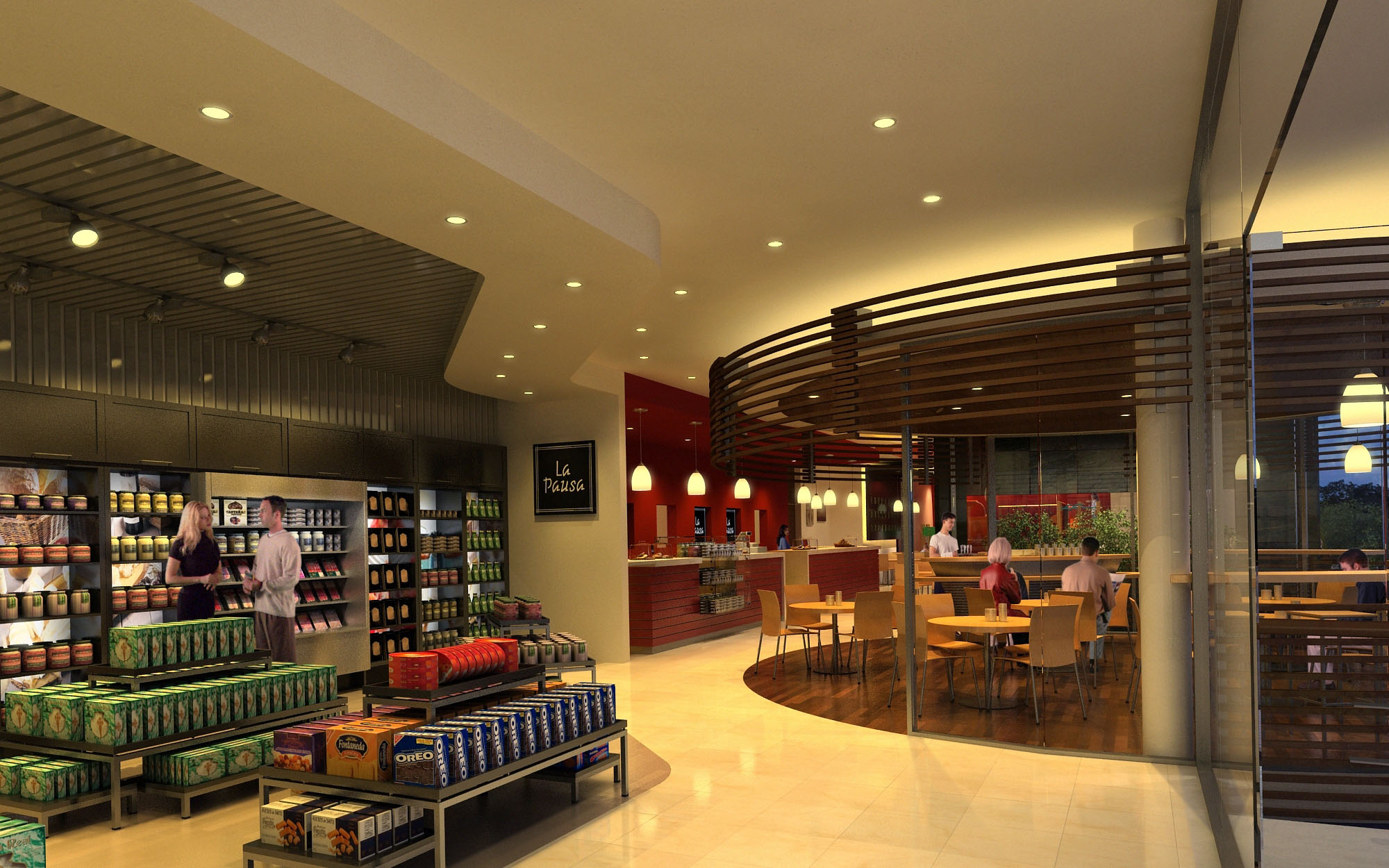

LA PAUSA is conceived as a contemporary travel‑catering brand that transforms waiting time into a calm, pleasurable interlude. Across multiple airports in Spain, Portugal, Chile and Mexico, the concept establishes a clear, easily recognizable identity that can adapt to different terminal geometries while maintaining a coherent architectural language. The design balances speed of service with a more relaxed, lounge‑like ambience, inviting passengers to slow down without losing visual contact with the flows of the terminal.
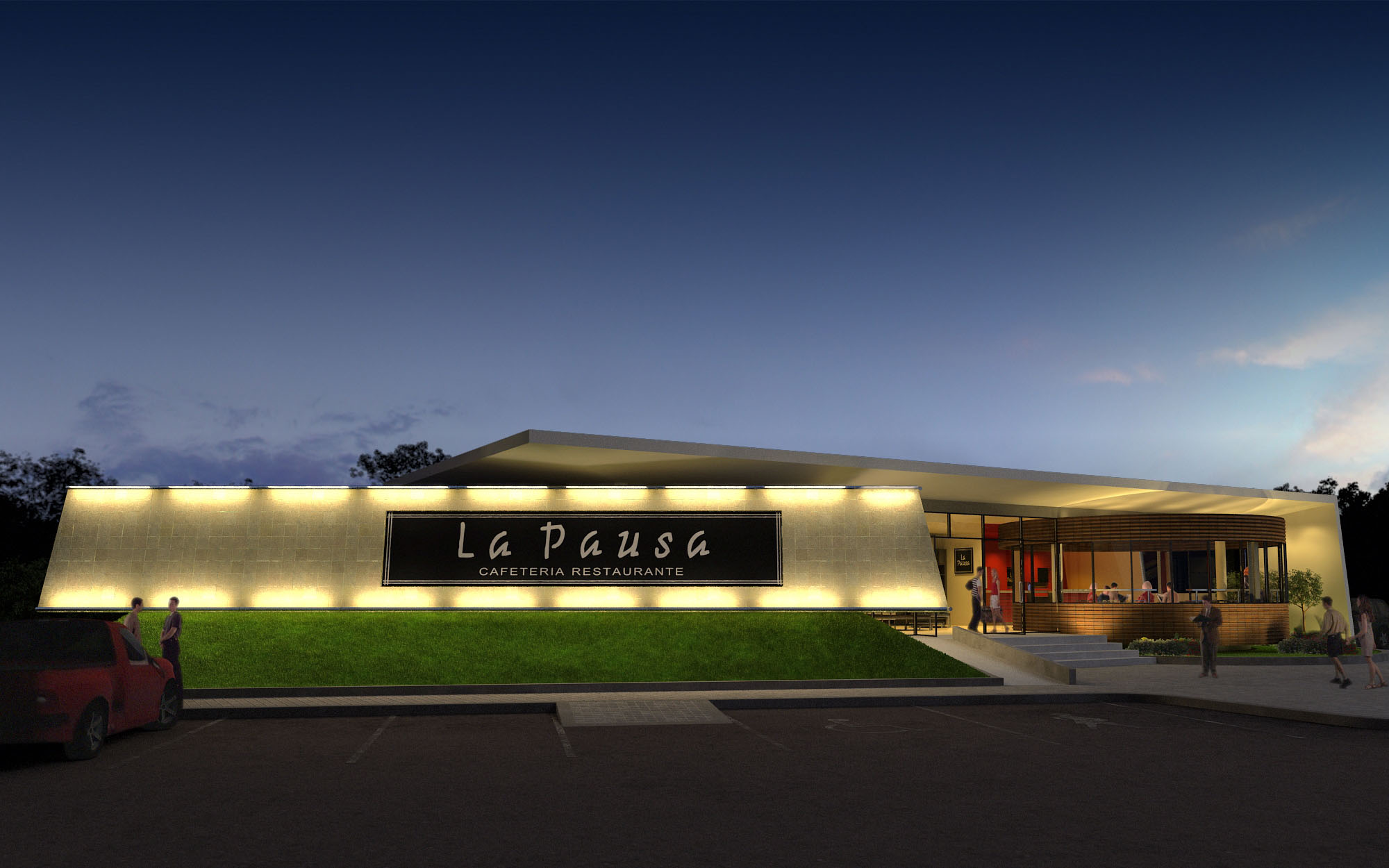
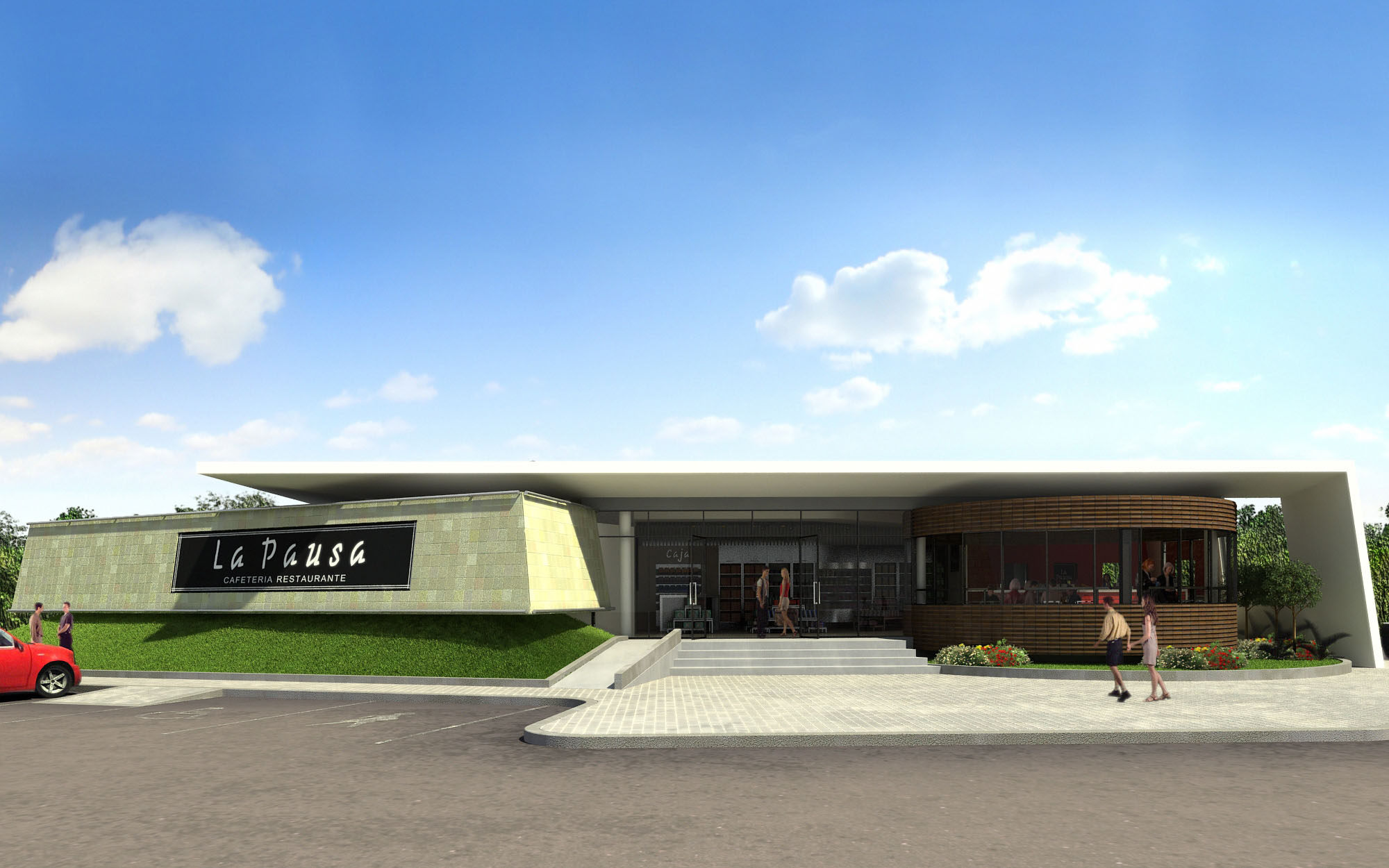
The architecture is based on simple, rectilinear volumes inserted as light “pavilions” within the large infrastructural shells of airports. These recognizable boxes frame the gastronomic offer and organize circulation: fast, linear fronts for grab‑and‑go functions and more porous edges where dining zones dissolve gradually into the public concourse.
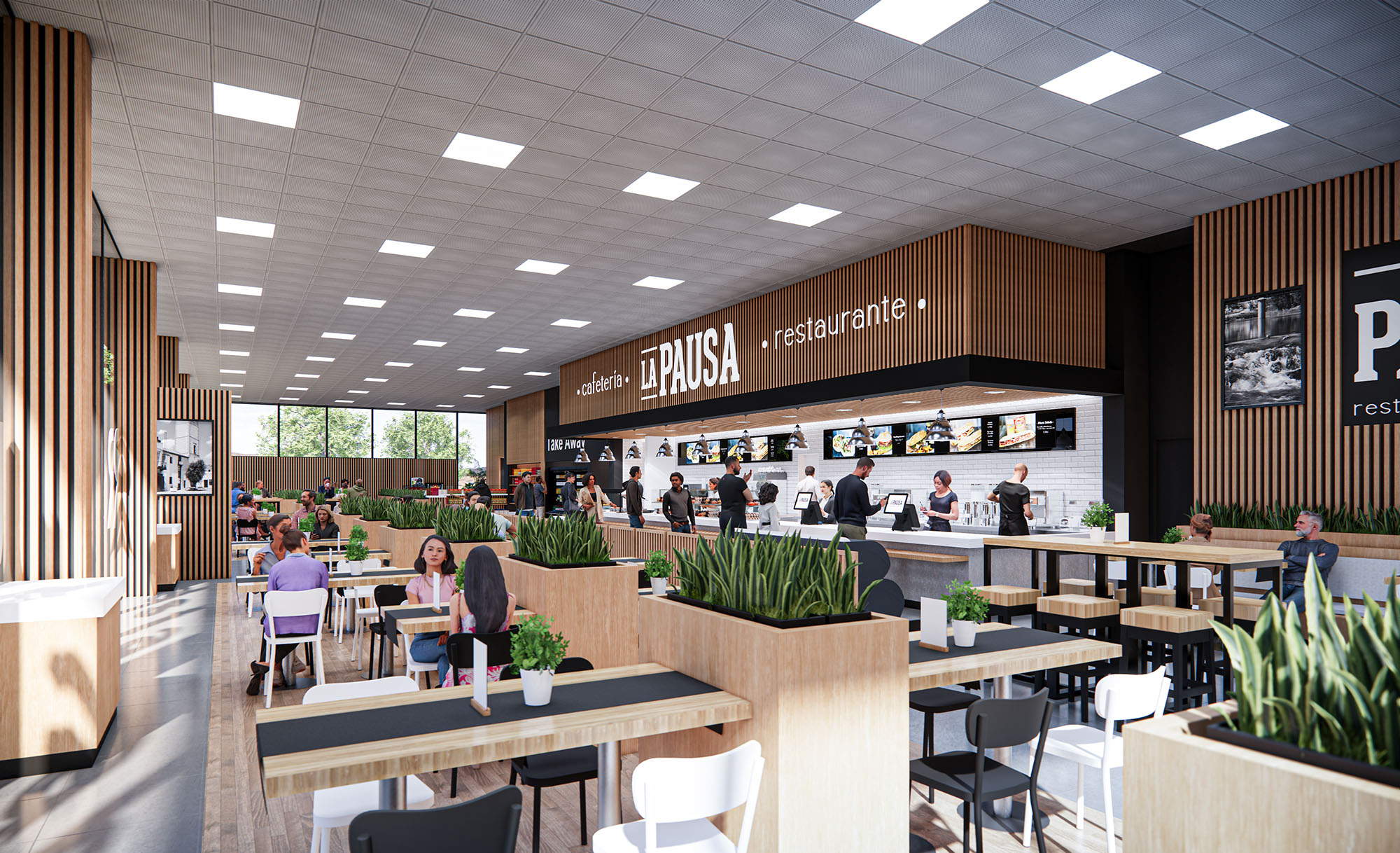
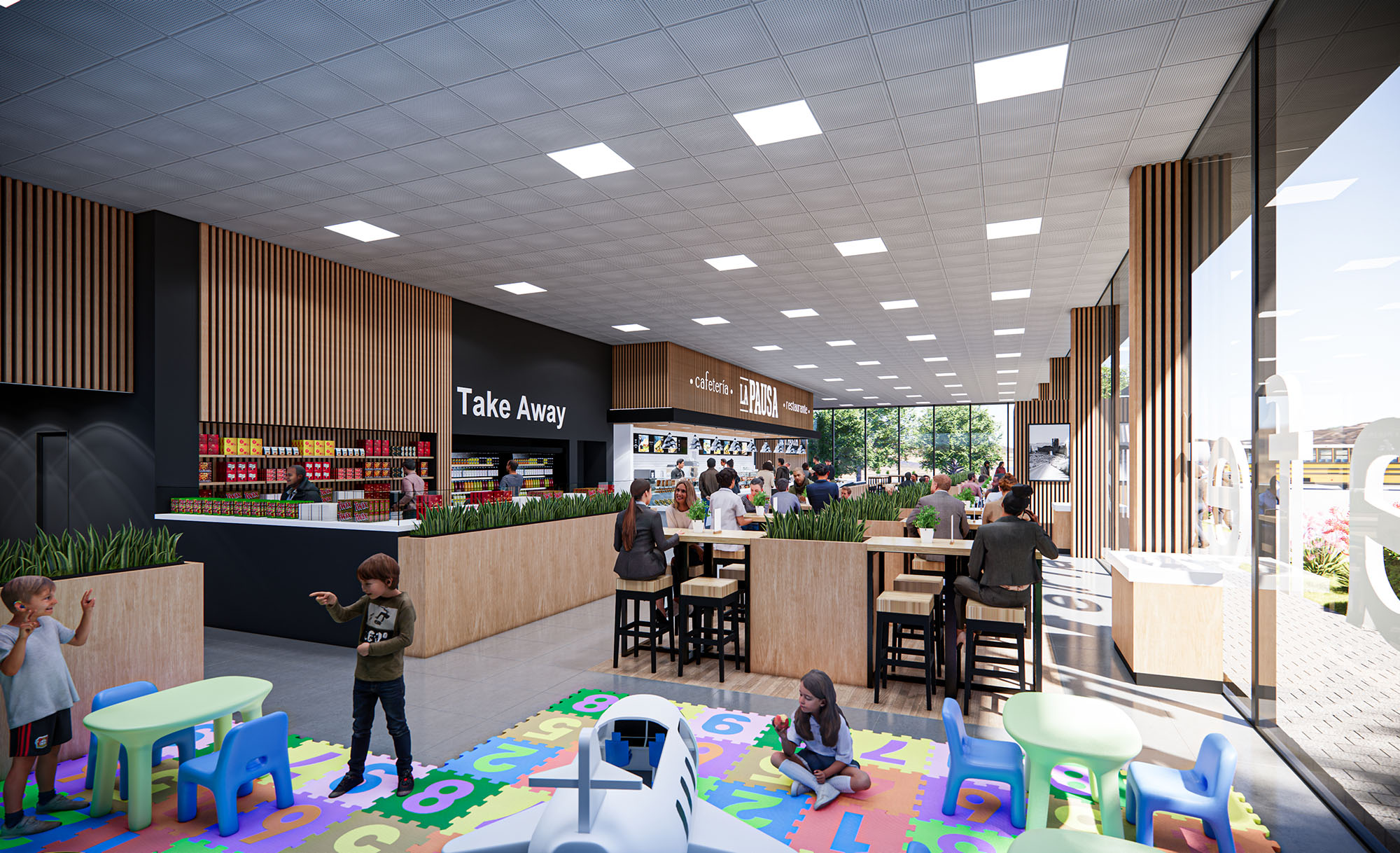
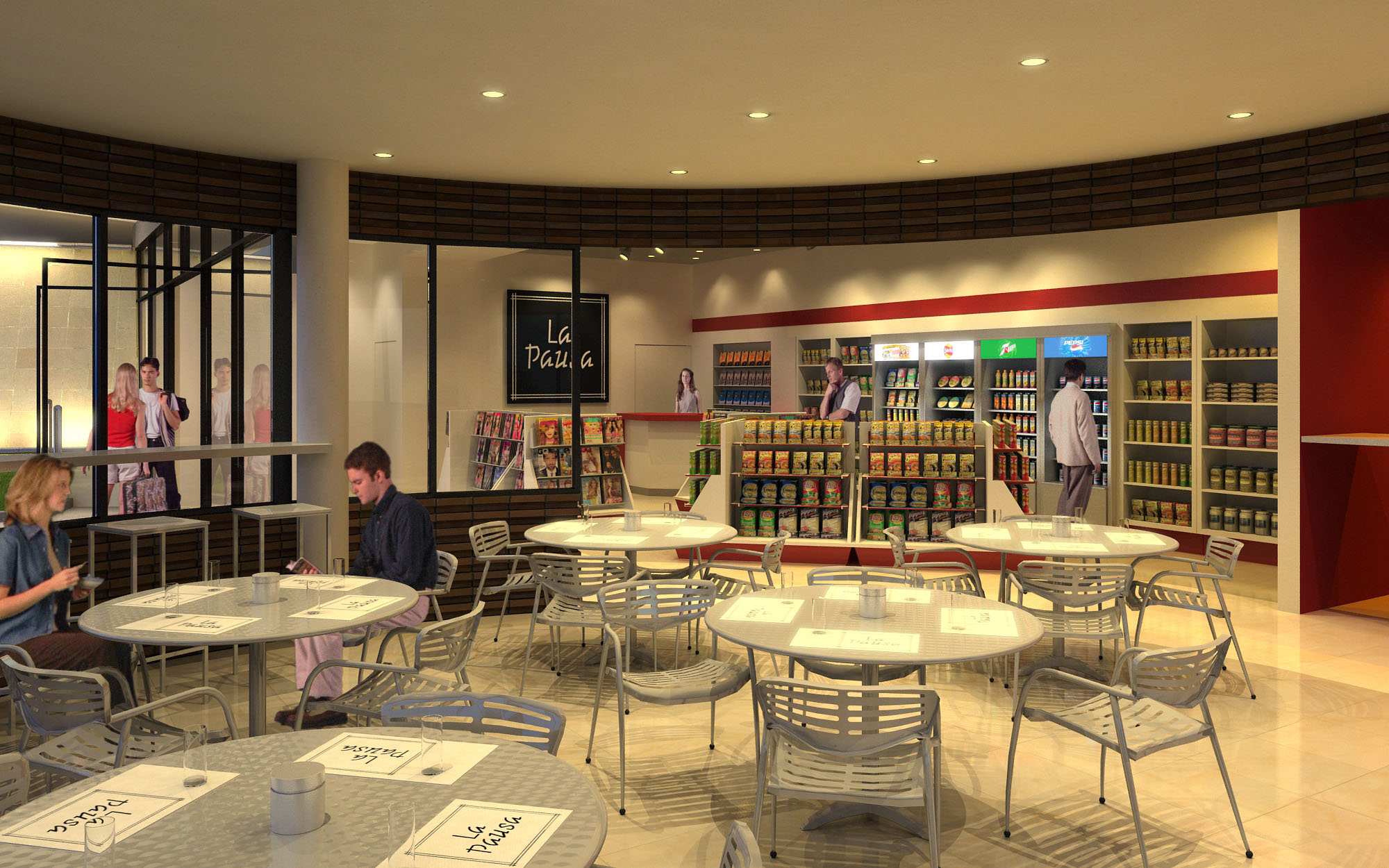
The typical layout is structured around a frontal service counter aligned with the main passenger flow, optimizing visibility and impulse access. Behind this counter, a compact production core integrates bar, kitchen and storage, allowing efficient operations with reduced back‑of‑house area. To each side, filtered entrances lead towards the seating areas, which extend either as open islands in the terminal or as semi‑enclosed dining rooms defined by low partitions.
Seating typologies are diversified to respond to different travel profiles: high stools for quick stops, standard tables for families and small groups, and communal tables that maximize density during peak hours. Circulation paths remain generous and orthogonal, ensuring clear sightlines to departure gates and flight information while avoiding bottlenecks at the counter. This rational zoning supports modular replication across the 16 locations, allowing each unit to be scaled while preserving operational logic.
The material palette combines warm natural finishes with precise, graphic elements that reinforce brand legibility. Light woods in slats and panels provide a domestic warmth that softens the often‑technical character of airport halls. These are contrasted with dark framing in metal and lacquered surfaces, which clearly delineate the brand envelope and highlight openings, counters and signage bands.
The color strategy is deliberately restrained: neutral greys on floors and counters, black for structural and graphic elements, and the natural tone of timber as the main chromatic accent. This controlled palette makes the illuminated menu boards and refrigerated displays stand out as focal points while maintaining a calm visual background in environments typically saturated with commercial stimuli.
Lighting design plays a key role in generating a distinct micro‑atmosphere within the open airport context. In units exposed to abundant natural light, the structures are conceived as lightly shaded kiosks, using overhanging fascias and vertical slats to reduce glare on the counter. In more enclosed terminals, suspended luminaires and integrated linear lighting define a warm, intimate ceiling plane that visually lowers the large heights and anchors the dining area.
Clusters of pendant lamps emphasize the different seating zones and create gradients of brightness, from the more intense illumination at the service front to softer, more comfortable levels in the seating. The combination of decorative fittings with efficient LED lines ensures both visual comfort and energy performance, while the glow of the counter front becomes an orientating beacon within the concourse.
The architectural envelope works closely with graphic design to articulate a strong, consistent identity. Continuous black sign bands with the LA PAUSA logotype form a clear horizontal datum line, visible from long distances within the terminal. Below this band, changeable menu displays and back‑lit merchandising niches allow local adaptation of offers without altering the core image.
Large‑scale photographic panels and subtle wayfinding graphics are embedded into wall claddings and partitions, adding depth and narrative while avoiding visual clutter. The repetition of key elements—slatted timber, dark frames, and the characteristic counter configuration—creates an immediate association with the brand across different countries and cultural contexts.
The project prioritizes a dry, modular construction system to ensure rapid installation within operational airports and to minimize waste. Prefabricated metal frames, standardized counter modules and repeatable timber slat panels can be assembled and disassembled with minimal intervention in the existing terminal structures, facilitating future relocations or reconfigurations.
Material selection favors durable, low‑maintenance surfaces to extend life cycles and reduce replacement needs: high‑pressure laminates, compact surfaces for worktops, and sealed woods from certified sources. Efficient LED lighting, demand‑controlled ventilation in kitchen areas and optimized refrigeration equipment contribute to reducing energy consumption. The open layout, with visual permeability and shared lighting with the terminal, avoids unnecessary enclosure and allows the restaurants to benefit from existing environmental systems, aligning the concept with contemporary sustainability criteria for high‑traffic infrastructures.


Nuestras oficinas están en Barcelona, Cancún, Chicago y Santo Domingo, pero gracias a la tecnología podemos desarrollar proyectos en cualquier parte del mundo.
Barcelona
Bac de Roda 136
08020, Barcelona
Spain
Madrid
Av. de Buendía 11
19005 Guadalajara (Madrid)
Spain
Chicago
373 Hazel Ave, Apt A1
60022, Glencoe, Illinois
United States