

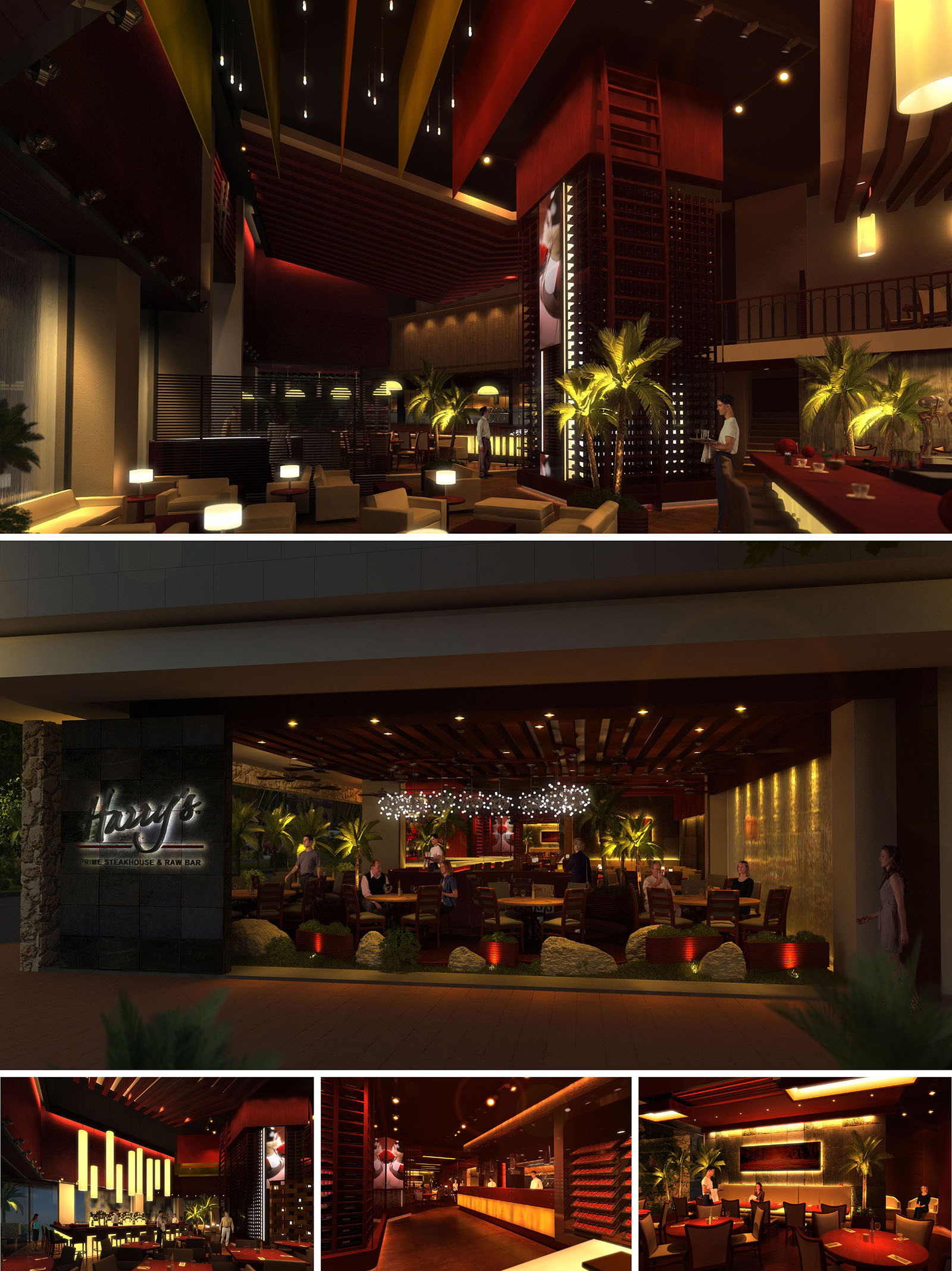
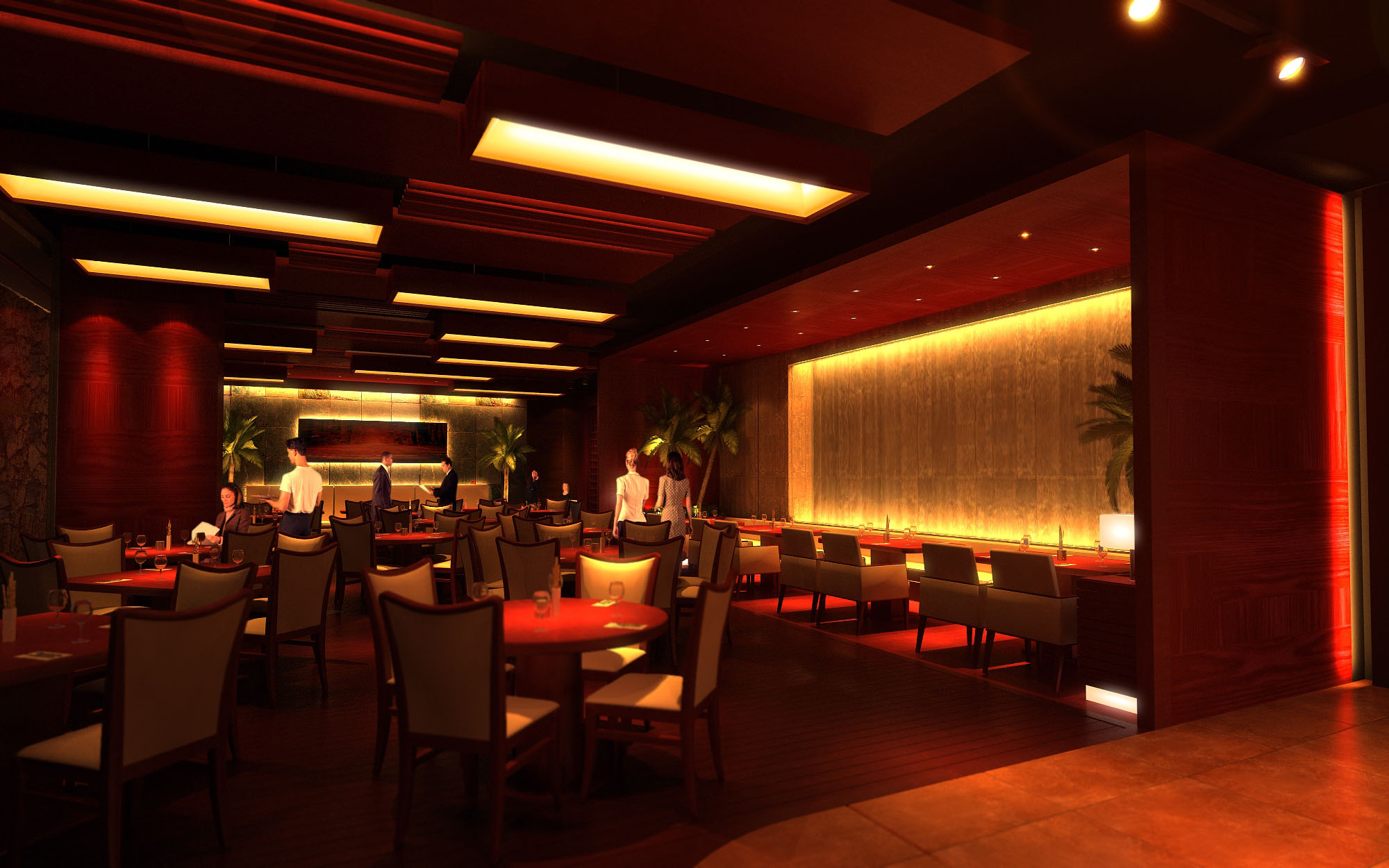
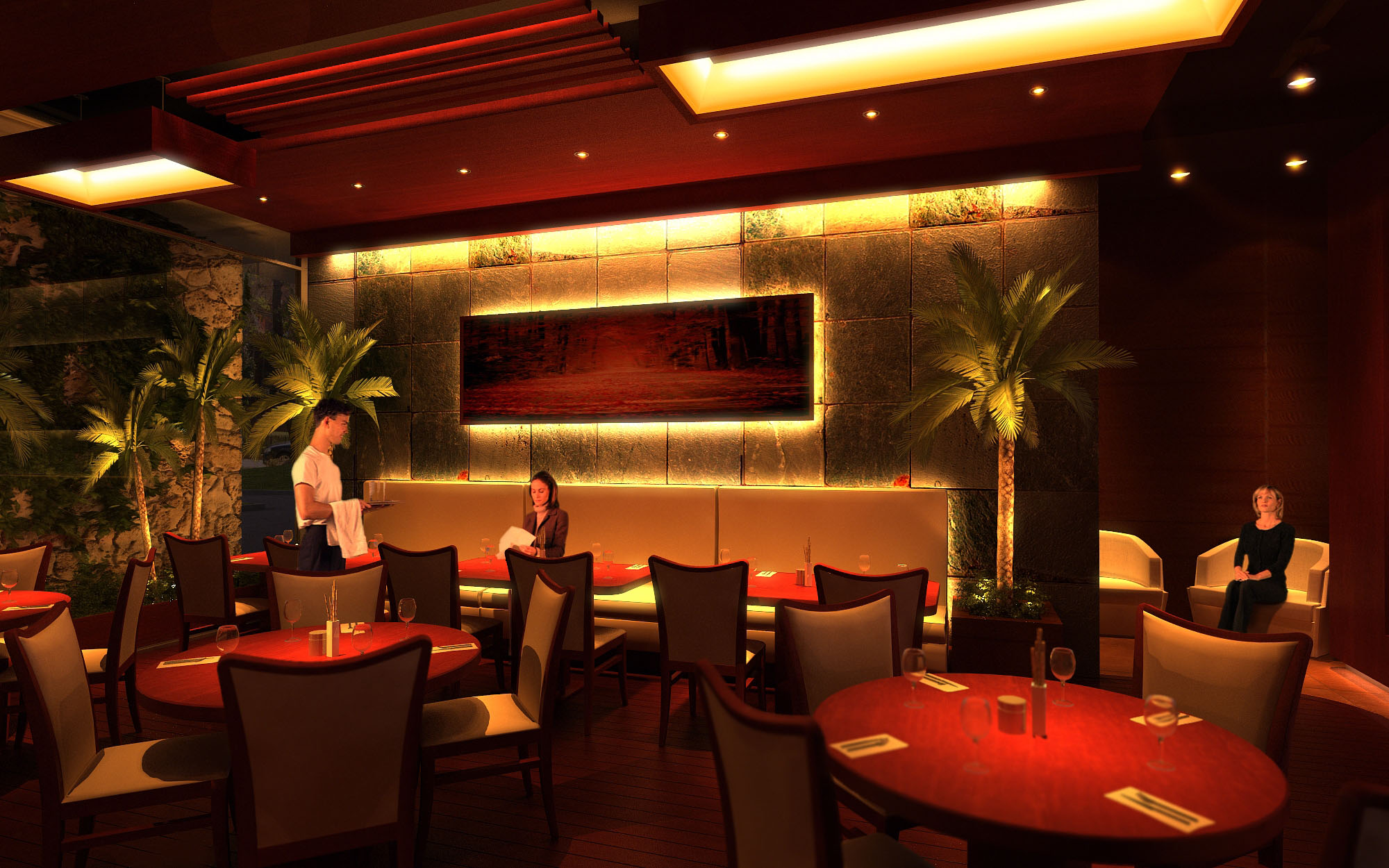
Harry’s is conceived as a contemporary Mexican steakhouse where gastronomy, light and materiality converge to create an immersive nocturnal atmosphere. The architectural language fuses cosmopolitan sophistication with resort-inspired openness, allowing the interior to extend visually toward the lush exterior landscape. Verticality, warm tones and controlled lighting orchestrate a highly sensorial experience that positions the restaurant as both destination and urban lounge.
The design emphasizes drama and intimacy simultaneously. Double-height spaces, sculptural ceiling elements and a central wine tower serve as focal points that organize circulation and frame views. Around these, a sequence of terraces, lounge areas and dining rooms gradates from public to private, offering diverse spatial experiences within a coherent aesthetic narrative.
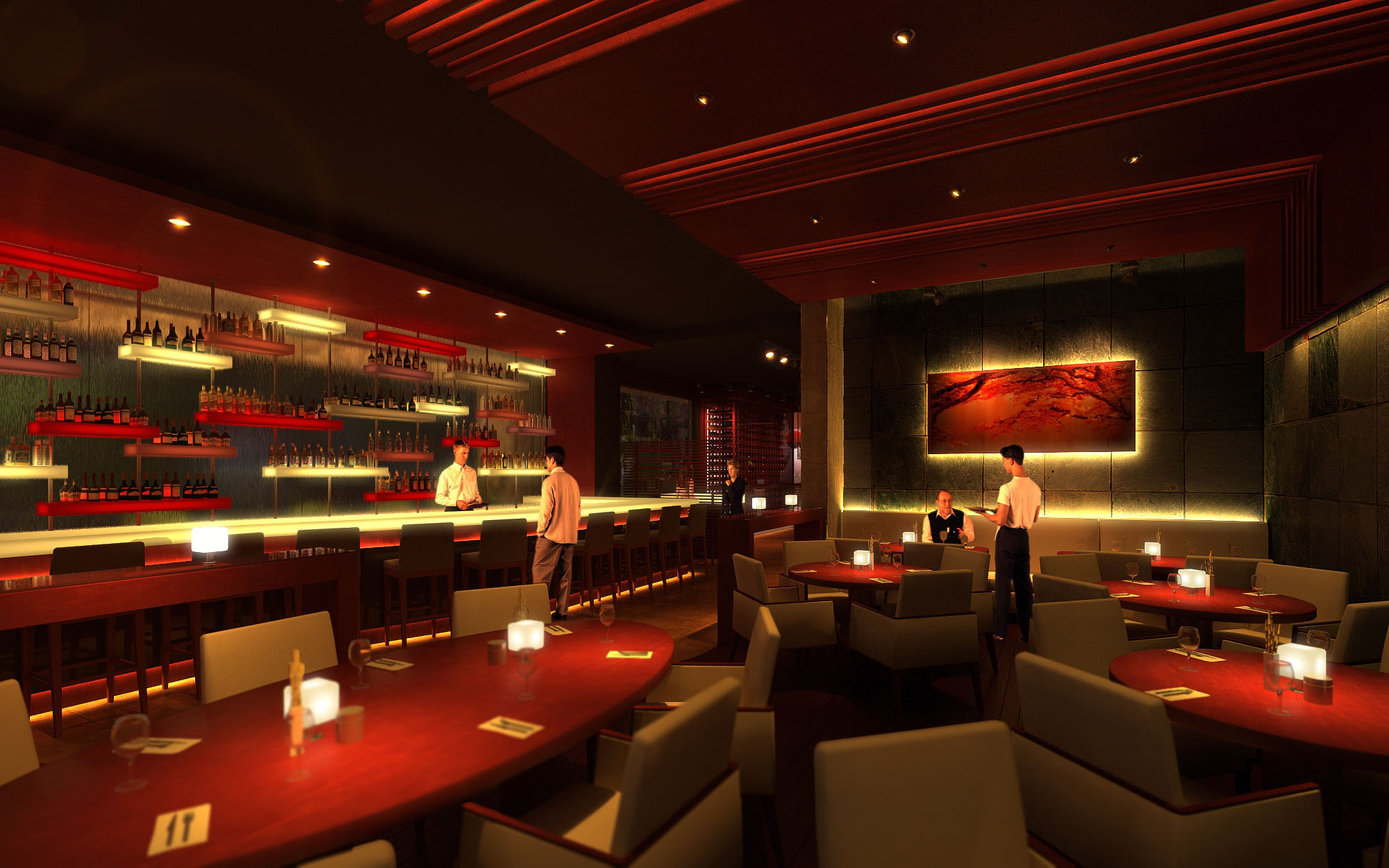
The layout is structured around a central bar and wine library, which function as the core of the project. This nucleus anchors the main dining room, flanked by elevated platforms and semi-enclosed lounges that provide vantage points over the activity below. Split-level arrangements subtly separate acoustic zones while preserving continuous visual connection across the restaurant.
At the frontage, an open terrace mediates between the street and interior, operating as a threshold that blurs boundaries through retractable openings and continuous flooring. Internal circulation is intuitive and ring-shaped: guests can move fluidly around the bar, past the wine tower and along the glazing line, always maintaining orientation through strong axial views toward illuminated landscape features and feature walls.
The material palette is dominated by dark-stained woods, textured stone and burnished metal accents. These elements, combined with leather upholstery and deep red highlights, evoke the tactile richness of a classic steakhouse reinterpreted in a contemporary key. The contrast between matte and glossy surfaces is carefully calibrated to catch and modulate light.
Walls and ceilings incorporate slatted timber and perforated panels that add depth while concealing acoustic treatments and mechanical systems. Flooring alternates between warm-toned wood and large-format stone, visually anchoring the furniture islands. The chromatic strategy centers on warm ambers, caramels and burgundies, counterbalanced by greenery and the soft glow of integrated lighting.
Lighting design is central to the restaurant’s identity, shaping mood and hierarchy. A layered scheme combines concealed linear LEDs, pendant luminaires and table-level lamps to build a rich gradient of brightness from ceiling to floor. Vertical surfaces—wine racks, textured walls and palm foliage—are grazed with warm light, generating depth and emphasizing the architecture’s vertical rhythm.
In the double-height zones, suspended linear pendants and cluster fixtures create a sculptural ceiling landscape, guiding the eye upward and reinforcing the sense of grandeur. At guest level, localized lighting over tables ensures visual comfort and intimacy, while bar and kitchen front illumination highlights the theatrical nature of food and drink preparation.
Furniture is robust and generously proportioned, with solid wood tables, upholstered chairs and low lounge seating that invite long stays. The arrangement supports flexible configurations, from intimate dinners to larger social gatherings. Custom millwork, including the wine display modules and backlit bottle niches, becomes both storage and ornamental architecture.
Brand identity is subtly integrated through the signage, the distinctive script logo in backlit metal and the consistent use of red accent lighting. Decorative elements are restrained: natural stone boulders, planters and curated art pieces are positioned to reinforce focal points without cluttering the space, allowing the materials and lighting to remain protagonists.
The project responds to its Mexican locations by embracing an indoor-outdoor lifestyle. Generous openings, covered terraces and ceiling fans reduce reliance on full mechanical cooling during temperate conditions, enhancing natural cross-ventilation. Landscaping with palms and dense greenery creates visual continuity with the local environment and provides passive shading and evaporative cooling.
Sustainability strategies include the extensive use of durable, locally sourced stone and timber, which minimize transport impacts and resonate with regional construction traditions. LED lighting, dimming systems and zoning controls optimize energy consumption while enabling atmospheric flexibility. The modular furniture layout and adaptable lighting infrastructure are designed for longevity, allowing the restaurant to evolve over time without major material waste.
LIST OF PROJECTS EXPERIENCE
Designed, Executed and/or Built Projects
MEXICO
1. Harry's - Acapulco - La Isla
2. Harry's - México City - Masaryk
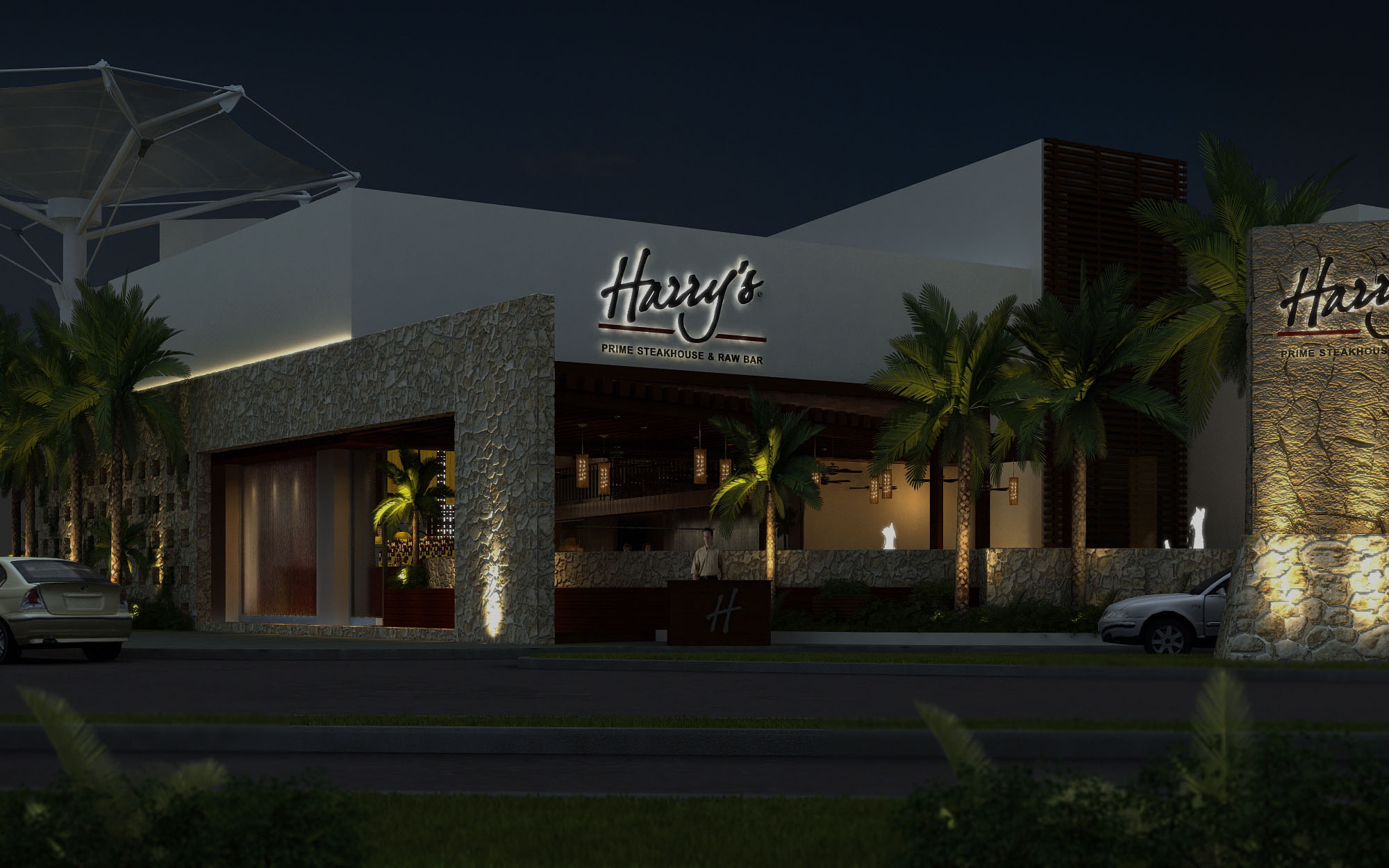
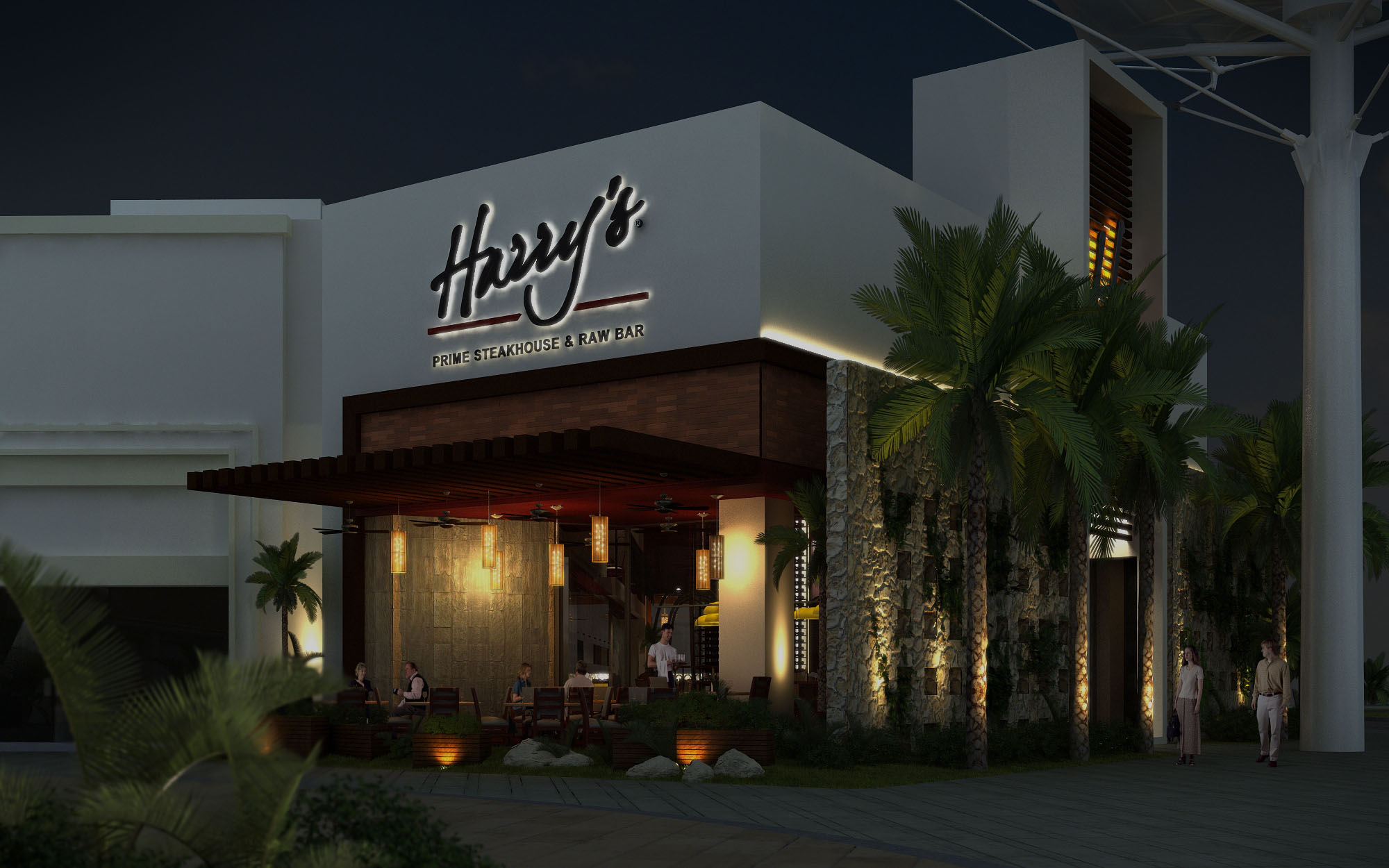
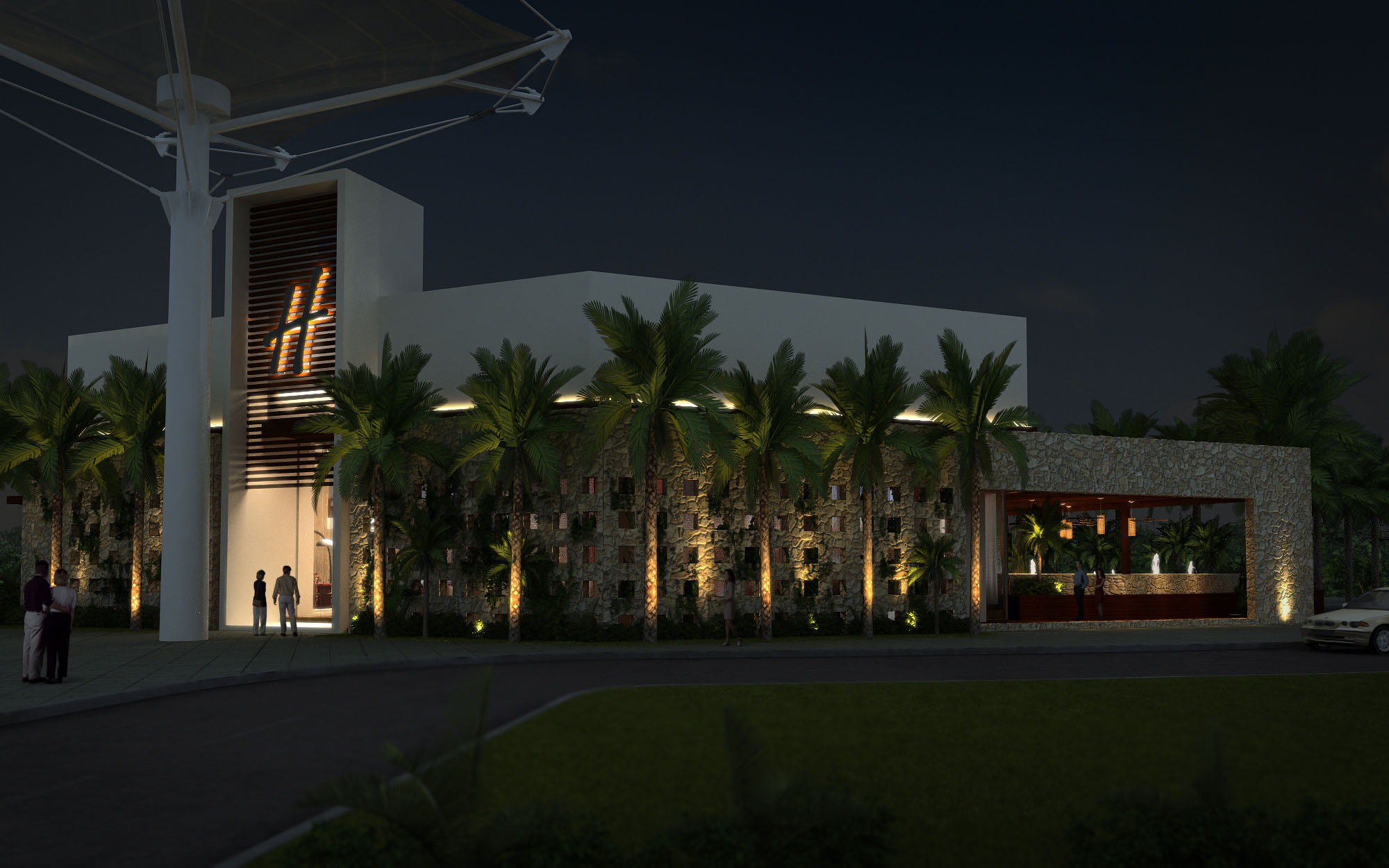
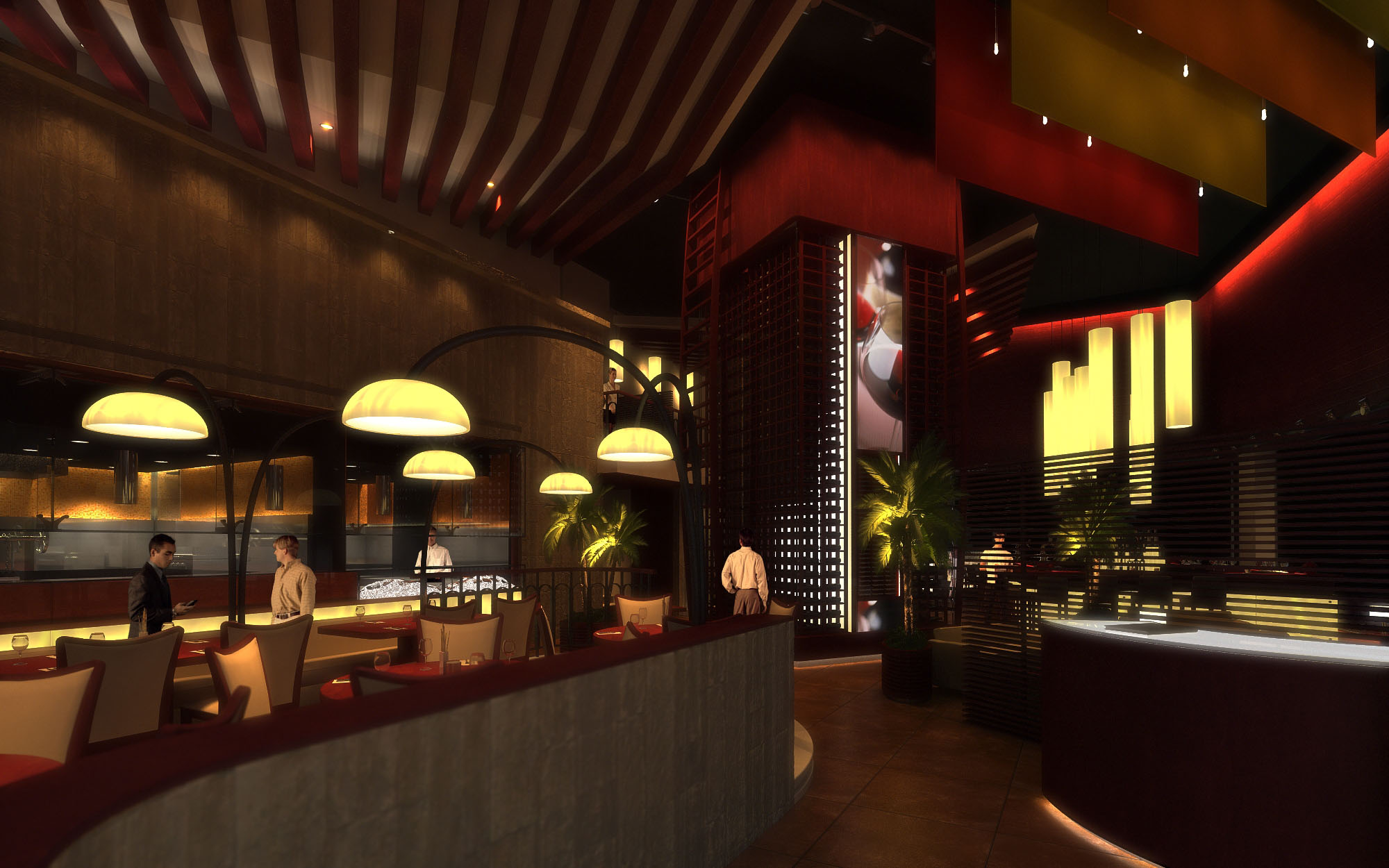
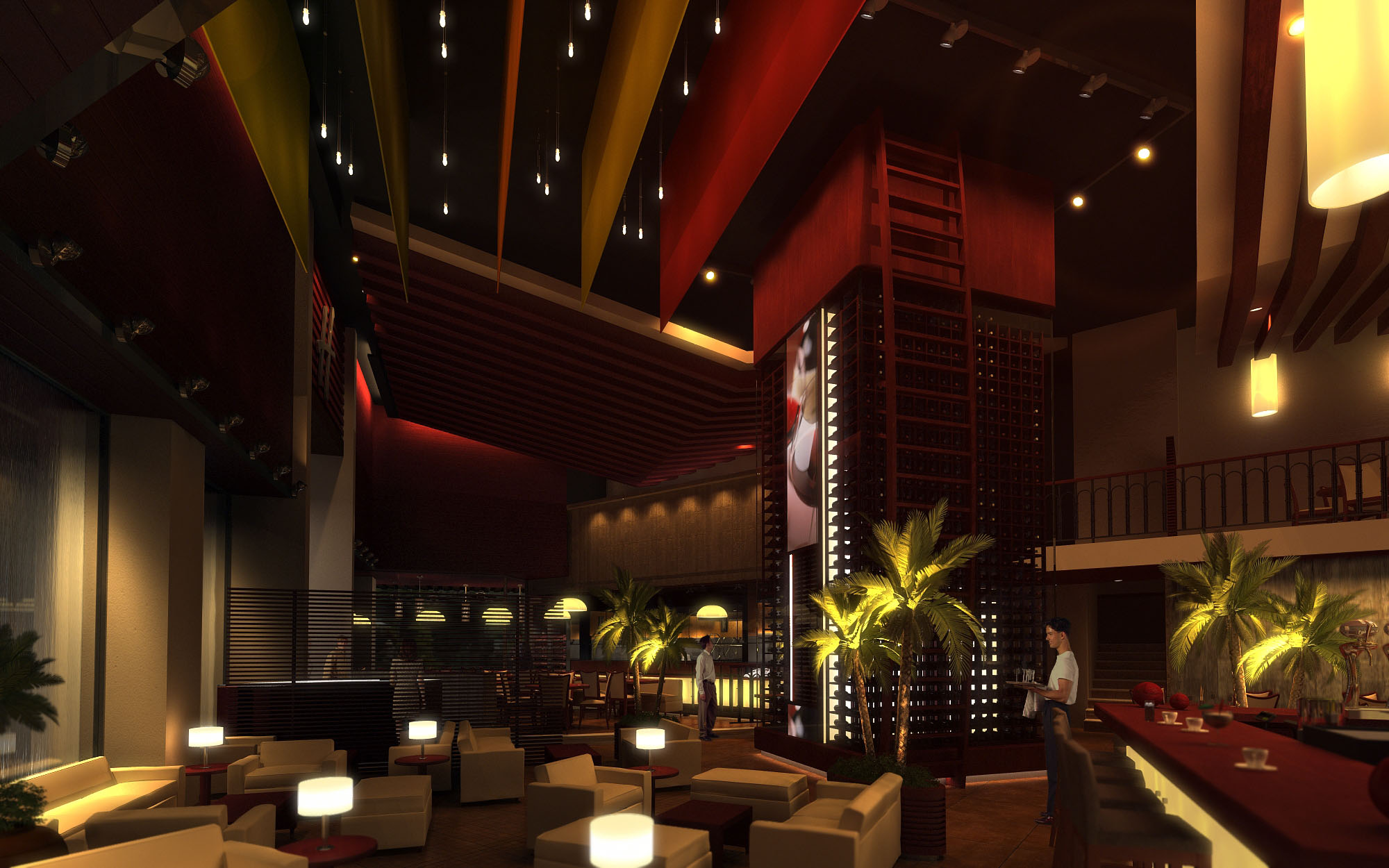

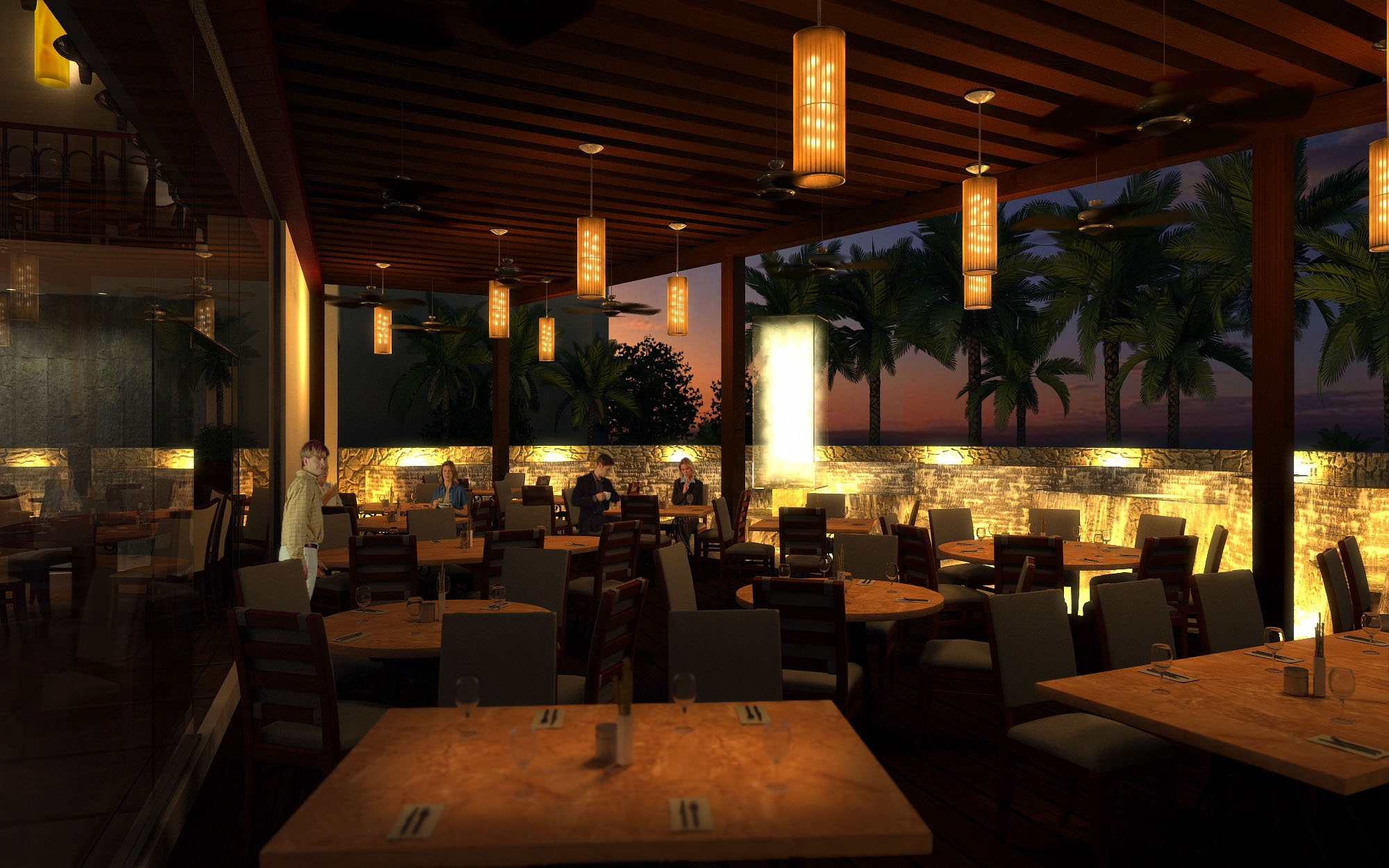
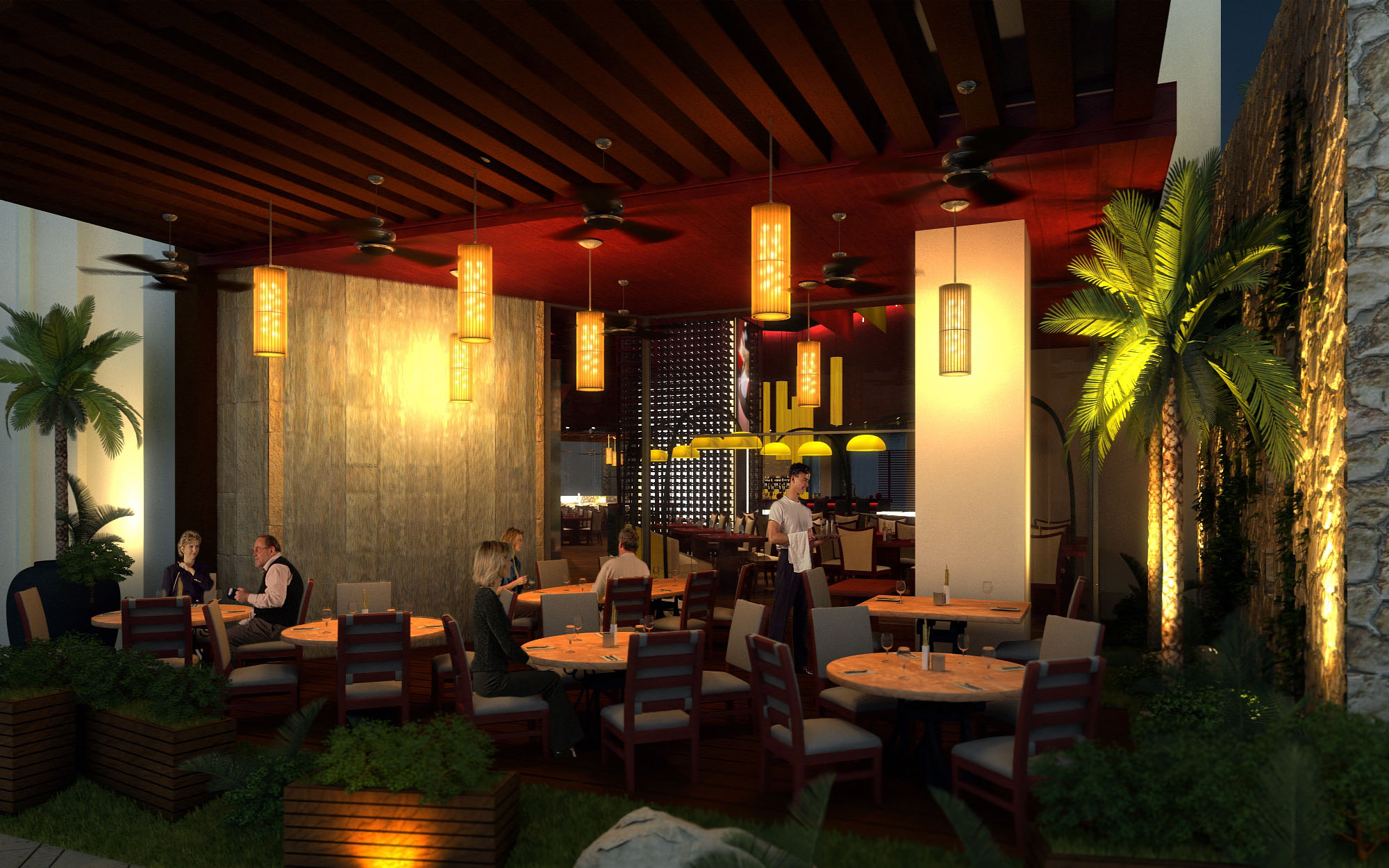
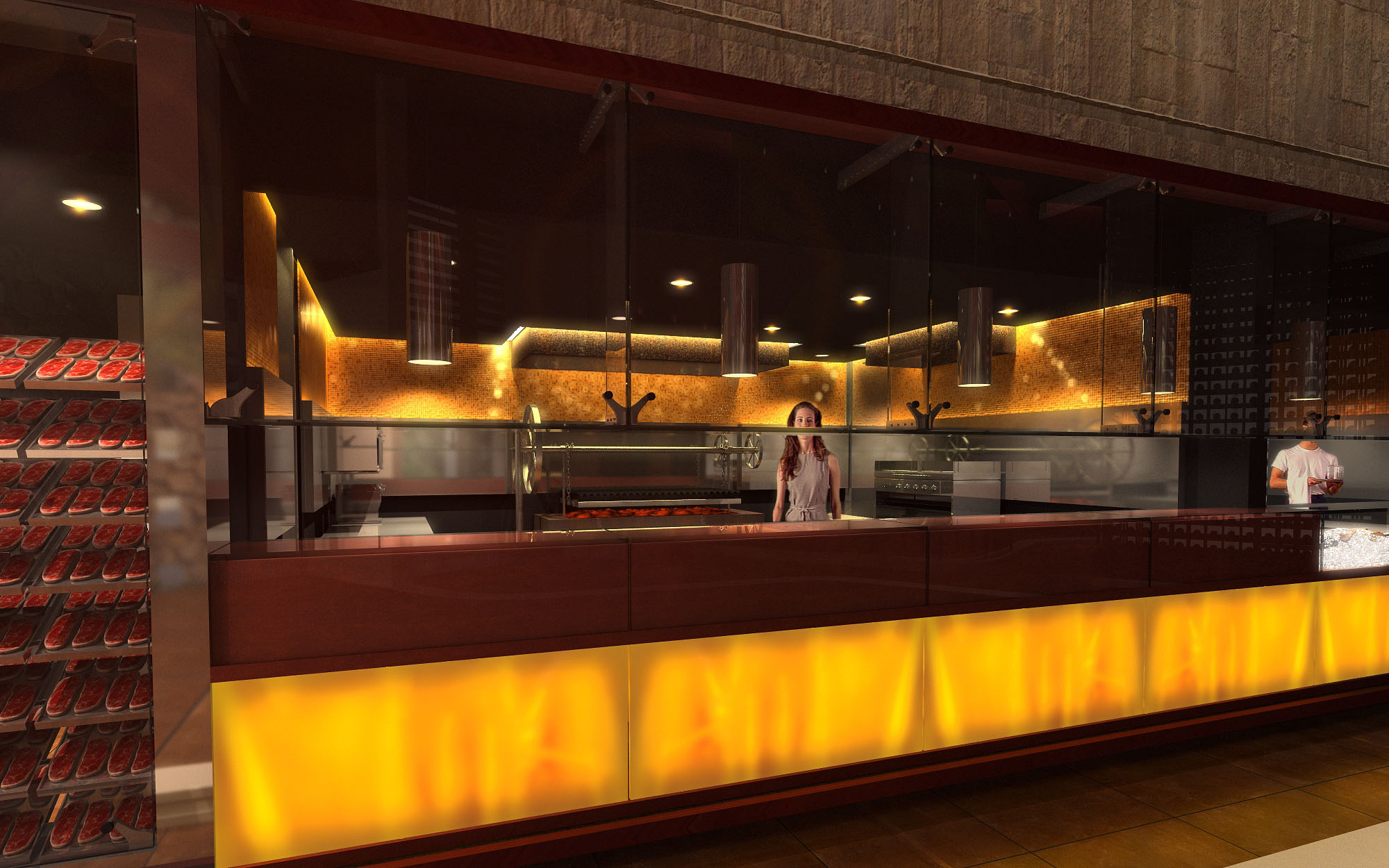

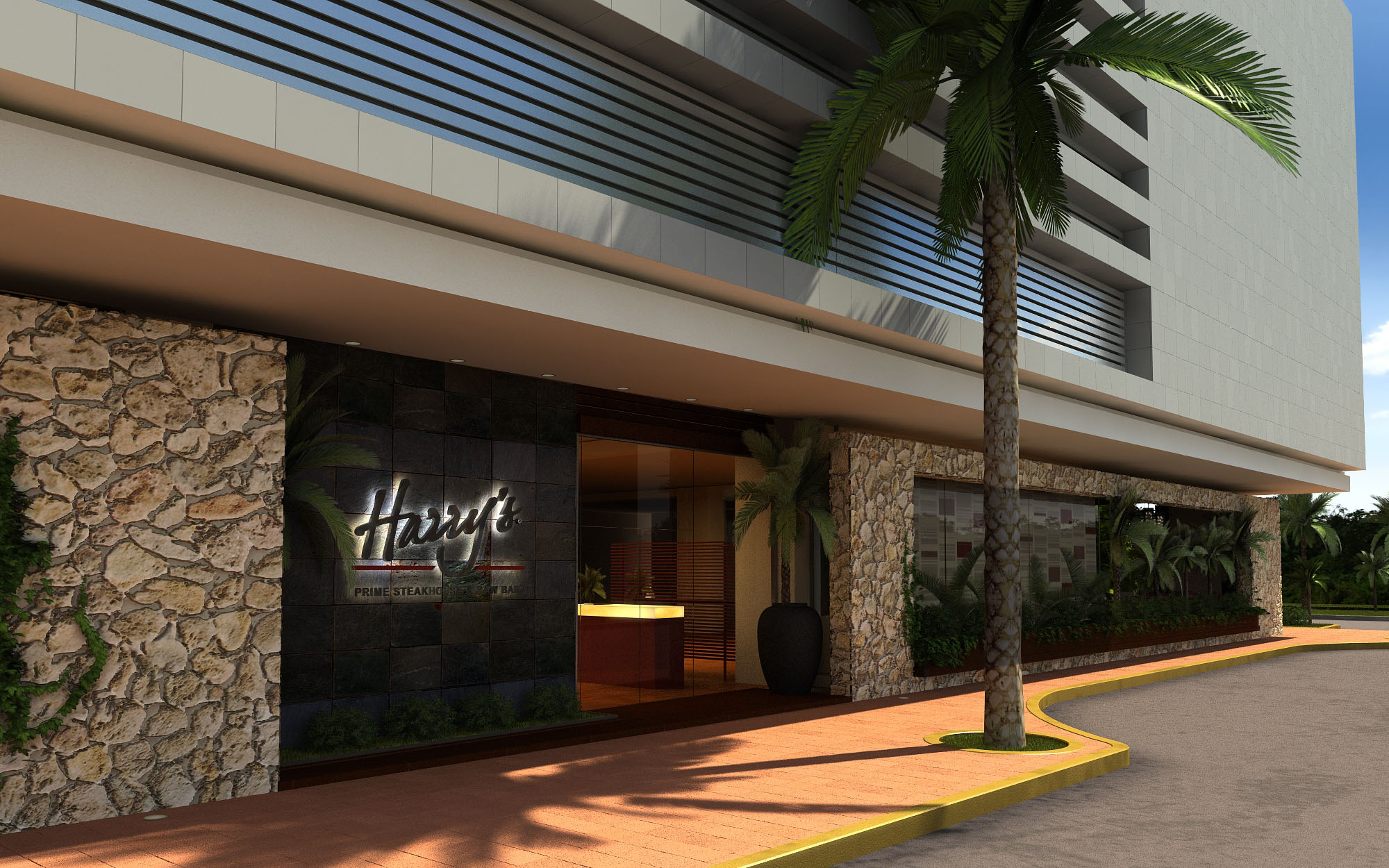
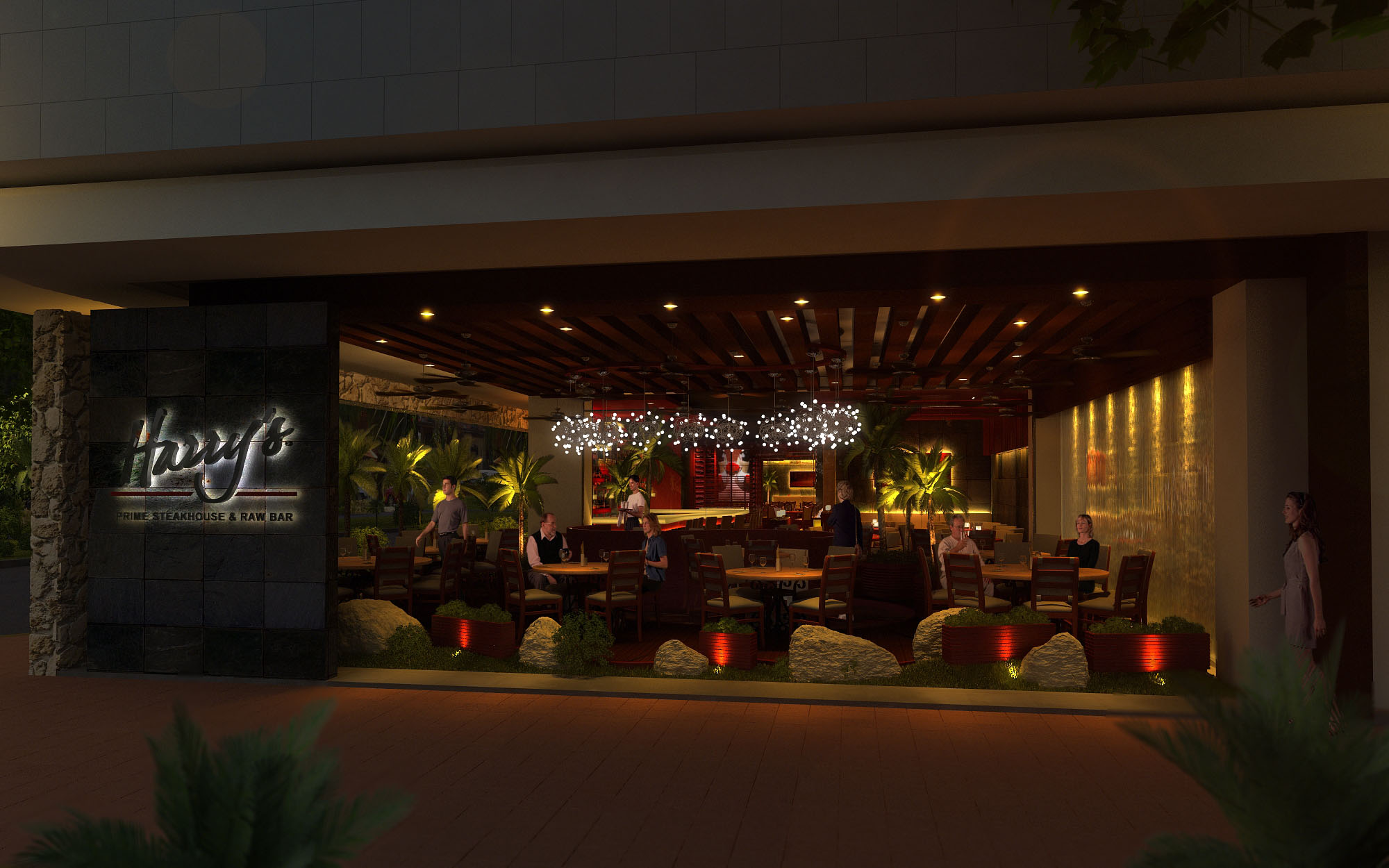
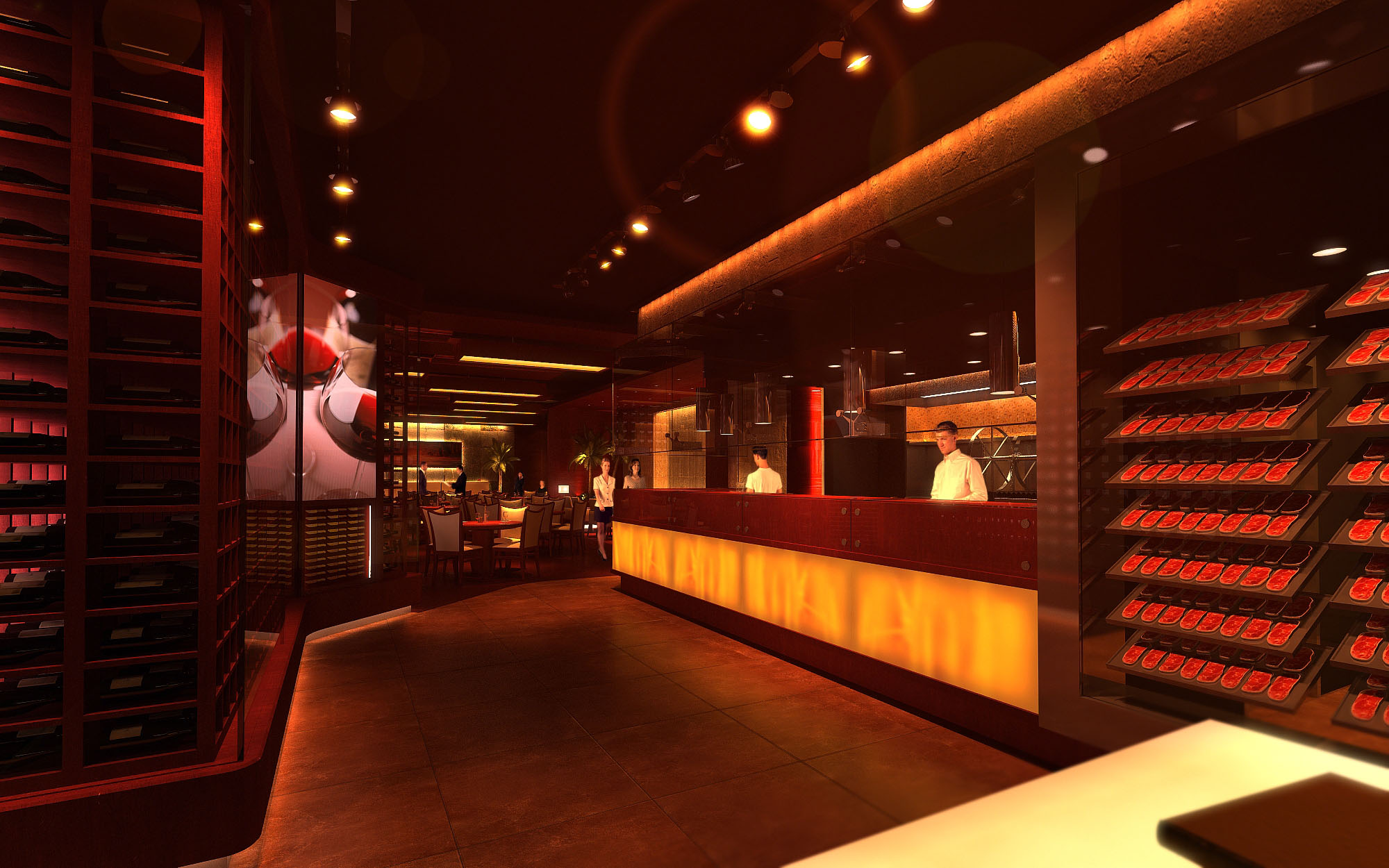
Harry’s is conceived as a contemporary Mexican steakhouse where gastronomy, light and materiality converge to create an immersive nocturnal atmosphere. The architectural language fuses cosmopolitan sophistication with resort-inspired openness, allowing the interior to extend visually toward the lush exterior landscape. Verticality, warm tones and controlled lighting orchestrate a highly sensorial experience that positions the restaurant as both destination and urban lounge.
The design emphasizes drama and intimacy simultaneously. Double-height spaces, sculptural ceiling elements and a central wine tower serve as focal points that organize circulation and frame views. Around these, a sequence of terraces, lounge areas and dining rooms gradates from public to private, offering diverse spatial experiences within a coherent aesthetic narrative.
The layout is structured around a central bar and wine library, which function as the core of the project. This nucleus anchors the main dining room, flanked by elevated platforms and semi-enclosed lounges that provide vantage points over the activity below. Split-level arrangements subtly separate acoustic zones while preserving continuous visual connection across the restaurant.
At the frontage, an open terrace mediates between the street and interior, operating as a threshold that blurs boundaries through retractable openings and continuous flooring. Internal circulation is intuitive and ring-shaped: guests can move fluidly around the bar, past the wine tower and along the glazing line, always maintaining orientation through strong axial views toward illuminated landscape features and feature walls.
The material palette is dominated by dark-stained woods, textured stone and burnished metal accents. These elements, combined with leather upholstery and deep red highlights, evoke the tactile richness of a classic steakhouse reinterpreted in a contemporary key. The contrast between matte and glossy surfaces is carefully calibrated to catch and modulate light.
Walls and ceilings incorporate slatted timber and perforated panels that add depth while concealing acoustic treatments and mechanical systems. Flooring alternates between warm-toned wood and large-format stone, visually anchoring the furniture islands. The chromatic strategy centers on warm ambers, caramels and burgundies, counterbalanced by greenery and the soft glow of integrated lighting.
Lighting design is central to the restaurant’s identity, shaping mood and hierarchy. A layered scheme combines concealed linear LEDs, pendant luminaires and table-level lamps to build a rich gradient of brightness from ceiling to floor. Vertical surfaces—wine racks, textured walls and palm foliage—are grazed with warm light, generating depth and emphasizing the architecture’s vertical rhythm.
In the double-height zones, suspended linear pendants and cluster fixtures create a sculptural ceiling landscape, guiding the eye upward and reinforcing the sense of grandeur. At guest level, localized lighting over tables ensures visual comfort and intimacy, while bar and kitchen front illumination highlights the theatrical nature of food and drink preparation.
Furniture is robust and generously proportioned, with solid wood tables, upholstered chairs and low lounge seating that invite long stays. The arrangement supports flexible configurations, from intimate dinners to larger social gatherings. Custom millwork, including the wine display modules and backlit bottle niches, becomes both storage and ornamental architecture.
Brand identity is subtly integrated through the signage, the distinctive script logo in backlit metal and the consistent use of red accent lighting. Decorative elements are restrained: natural stone boulders, planters and curated art pieces are positioned to reinforce focal points without cluttering the space, allowing the materials and lighting to remain protagonists.
The project responds to its Mexican locations by embracing an indoor-outdoor lifestyle. Generous openings, covered terraces and ceiling fans reduce reliance on full mechanical cooling during temperate conditions, enhancing natural cross-ventilation. Landscaping with palms and dense greenery creates visual continuity with the local environment and provides passive shading and evaporative cooling.
Sustainability strategies include the extensive use of durable, locally sourced stone and timber, which minimize transport impacts and resonate with regional construction traditions. LED lighting, dimming systems and zoning controls optimize energy consumption while enabling atmospheric flexibility. The modular furniture layout and adaptable lighting infrastructure are designed for longevity, allowing the restaurant to evolve over time without major material waste.


Nuestras oficinas están en Barcelona, Cancún, Chicago y Santo Domingo, pero gracias a la tecnología podemos desarrollar proyectos en cualquier parte del mundo.
Barcelona
Bac de Roda 136
08020, Barcelona
Spain
Madrid
Av. de Buendía 11
19005 Guadalajara (Madrid)
Spain
Chicago
373 Hazel Ave, Apt A1
60022, Glencoe, Illinois
United States