

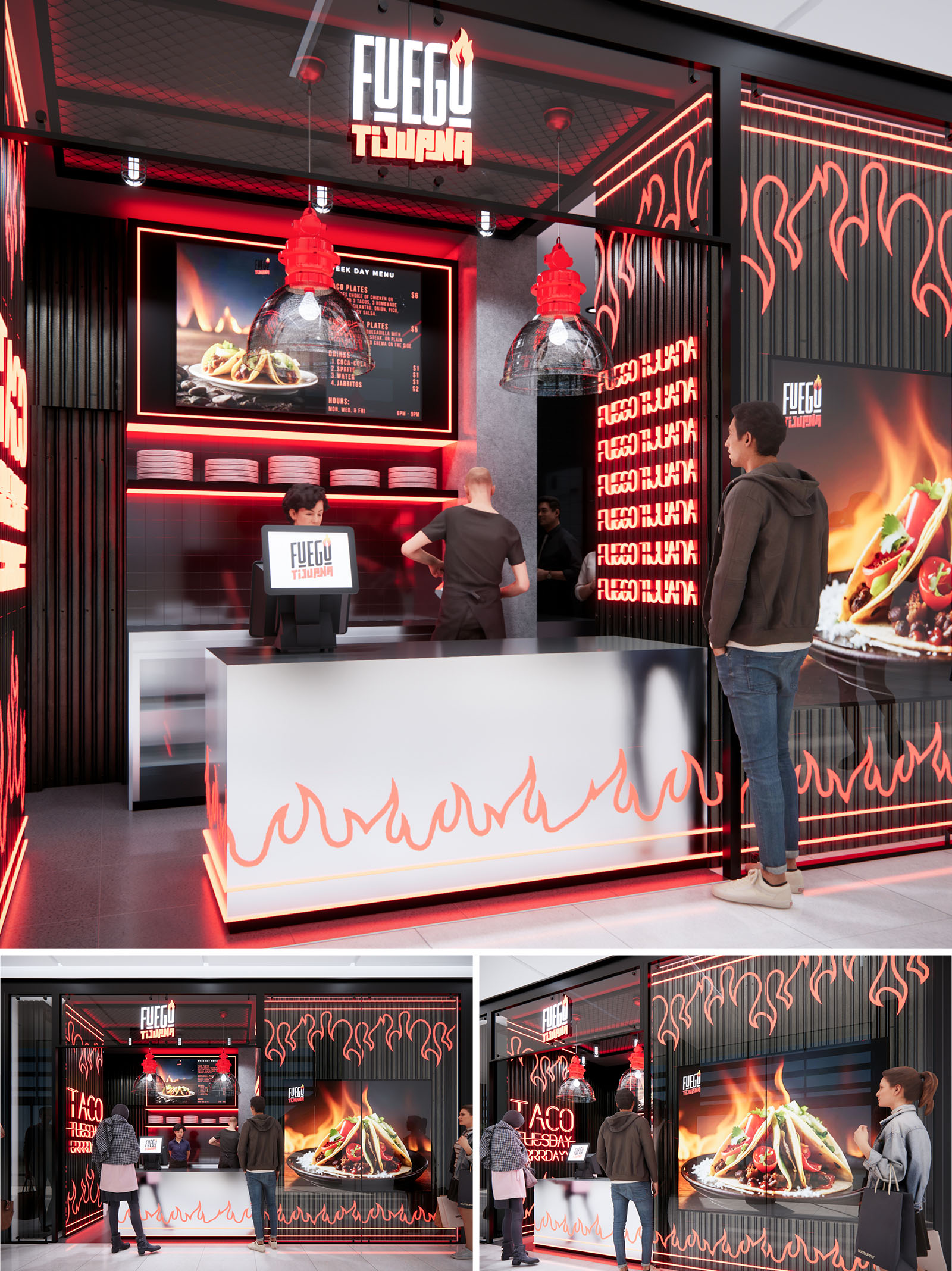
FUEGO is conceived as an urban food counter that translates the intensity of open flame cooking into a compact architectural statement. The design uses light, color, and graphics to evoke heat and movement, projecting the gastronomic experience directly onto the shopping mall corridor. The goal is to create a recognizable visual icon that communicates speed, freshness, and bold flavor within a minimal footprint.
The architectural language is based on clear, rectilinear volumes that act as a neutral framework for a vibrant graphic layer. Dark, almost monolithic surfaces form the backdrop, while luminous red lines and flame silhouettes appear to float over them, generating depth and visual rhythm. This contrast allows the brand to be legible from a distance and positions the kiosk as a dynamic focal point within the commercial environment.
The plan is organized around a frontal service counter that occupies the full width of the local, ensuring maximum exposure and intuitive access. Customers approach a single, linear counter where ordering, payment, and pick-up are aligned to reduce cross-traffic and waiting time. The generous counter depth provides sufficient staging space for packaging and plating, maintaining a clear and tidy visual field towards the corridor.
The kitchen and preparation zone are placed directly behind the counter, partially visible through the service opening. This proximity shortens internal circulations, enhances operational efficiency, and reinforces the connection between fire, preparation, and delivery. Vertical storage niches below the menu display enable quick access to plates and utensils while integrating seamlessly into the graphic composition of the back wall.
The material palette is deliberately concise: black ribbed cladding, satin metallic finishes, and high-resistance solid surfaces form the base layer. These materials offer durability and ease of cleaning, critical for a high-turnover restaurant environment, while providing a sophisticated neutral background for the brand’s chromatic accents. The black vertical slats add texture and a sense of height, visually stretching the compact space.
The counter front is defined by a smooth, light-toned surface that reflects the red LED illumination, creating a subtle gradient effect. Over this plane, stylized flame graphics are applied as a continuous frieze, unifying the lower band of the façade and reinforcing brand recognition. Large-format digital screens act as both menu and façade cladding, merging communication and architecture in a single luminous element.
Lighting is the primary generator of atmosphere. Linear red LEDs run along the perimeter of the opening and the counter base, outlining the geometry and simulating the glow of embers. The ceiling integrates a more neutral, diffused light to ensure accurate color rendering of food while maintaining comfortable brightness for staff and customers.
Suspended dome luminaires with red upper housings introduce a sculptural element above the service area, anchoring the visual axis of the kiosk. The signage, with its flame-shaped accent, is framed by a luminous box that ensures perfect readability under different mall lighting conditions. Repeated logo patterns on side walls and the backlit flame crown create a continuous, immersive brand environment without relying on additional decorative elements.
The proposal incorporates sustainability criteria through the selection of long-life, low-maintenance materials and the intensive use of LED technology. LED strips and backlit panels significantly reduce energy consumption compared to conventional lighting, while offering flexibility to adjust intensity and programming according to operational schedules.
The compact layout minimizes construction materials and optimizes conditioned volume, reducing the energy required for ventilation and refrigeration. Non-porous surfaces and modular cladding systems are specified to extend service life and facilitate replacement of individual components, supporting a circular approach. Digital menu boards replace printed signage, lowering paper use and enabling agile updates that reduce waste associated with rebranding or seasonal changes.
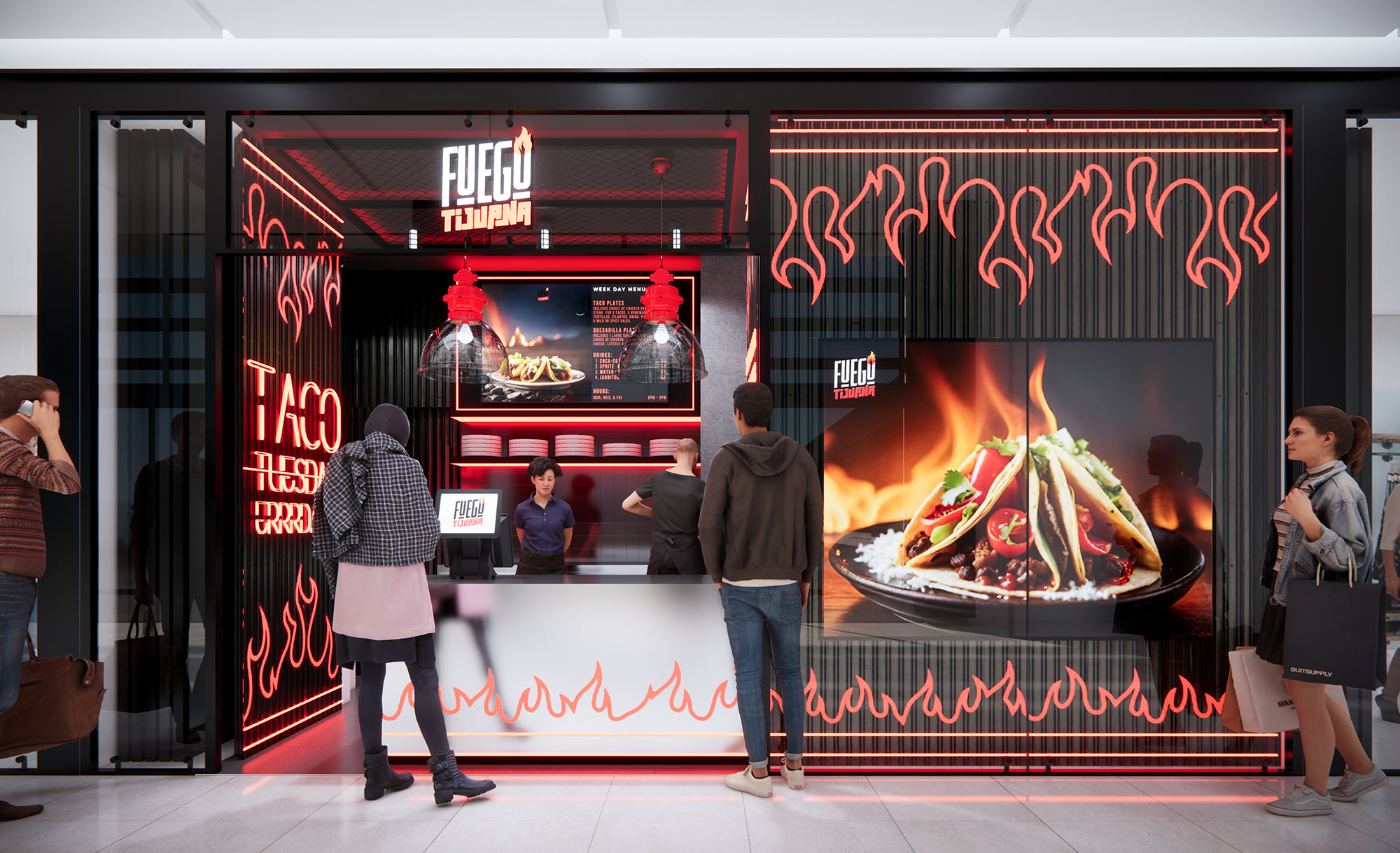
FUEGO is conceived as an urban food counter that translates the intensity of open flame cooking into a compact architectural statement. The design uses light, color, and graphics to evoke heat and movement, projecting the gastronomic experience directly onto the shopping mall corridor. The goal is to create a recognizable visual icon that communicates speed, freshness, and bold flavor within a minimal footprint.
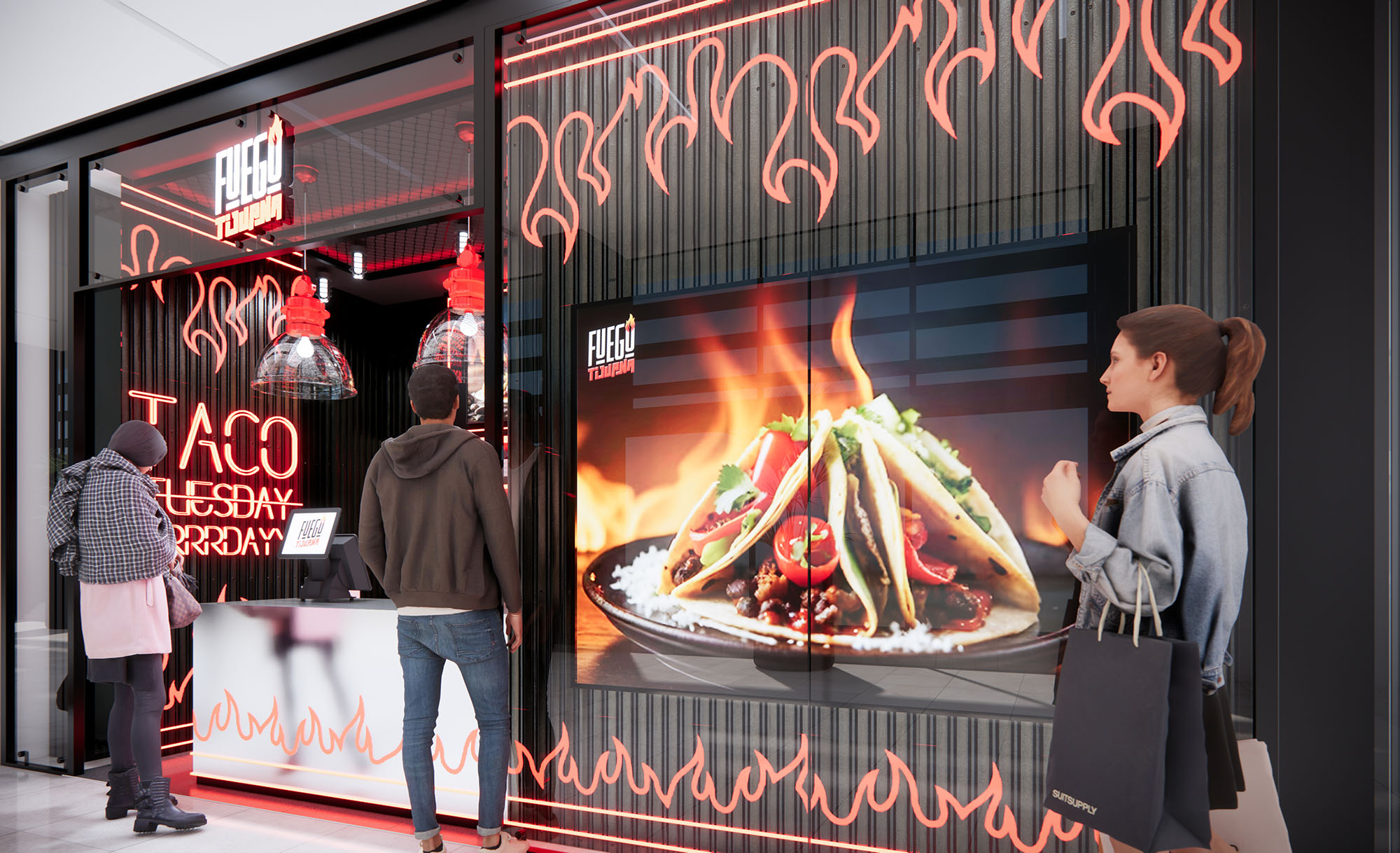
The architectural language is based on clear, rectilinear volumes that act as a neutral framework for a vibrant graphic layer. Dark, almost monolithic surfaces form the backdrop, while luminous red lines and flame silhouettes appear to float over them, generating depth and visual rhythm. This contrast allows the brand to be legible from a distance and positions the kiosk as a dynamic focal point within the commercial environment.
The plan is organized around a frontal service counter that occupies the full width of the local, ensuring maximum exposure and intuitive access. Customers approach a single, linear counter where ordering, payment, and pick-up are aligned to reduce cross-traffic and waiting time. The generous counter depth provides sufficient staging space for packaging and plating, maintaining a clear and tidy visual field towards the corridor.
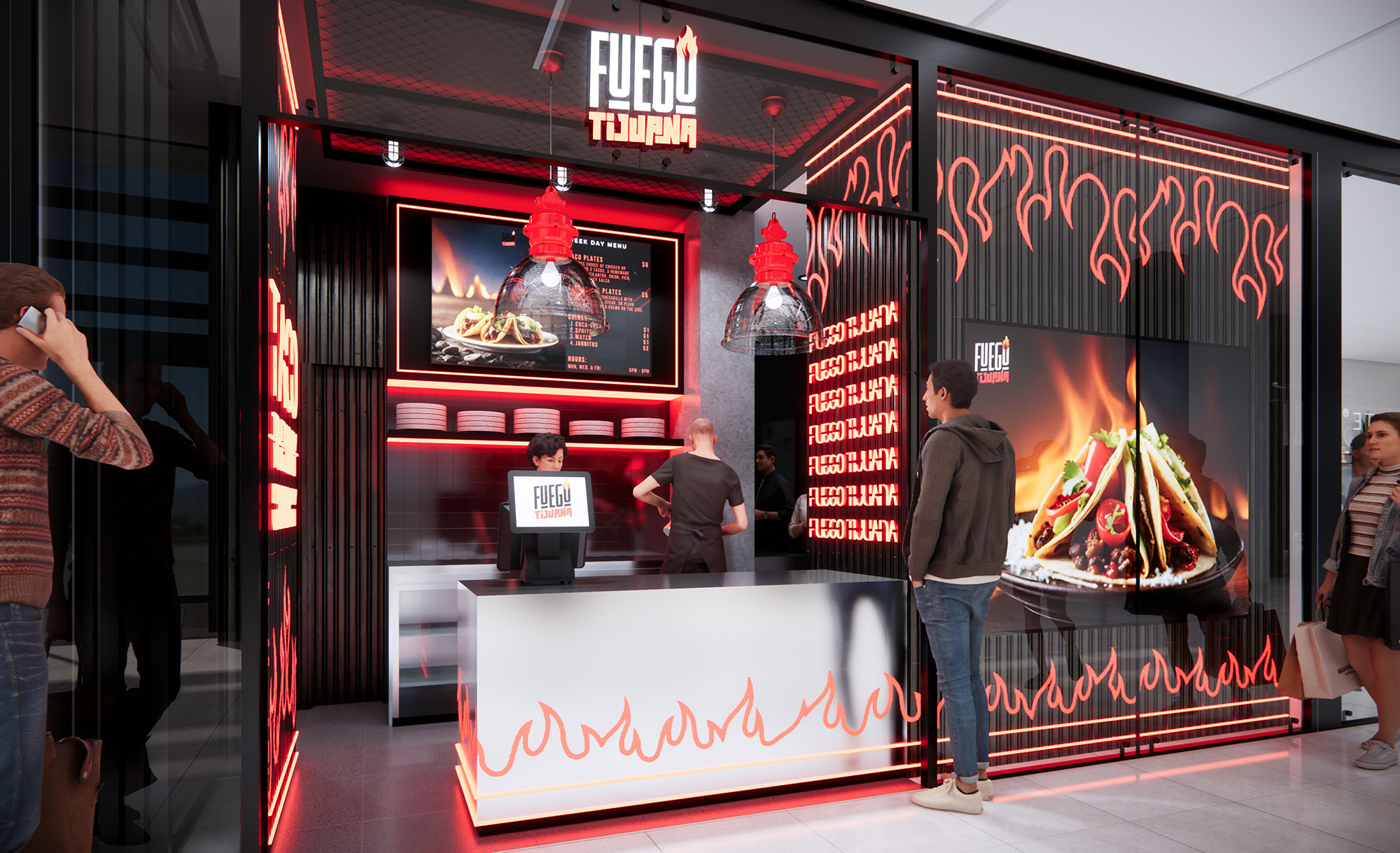
The kitchen and preparation zone are placed directly behind the counter, partially visible through the service opening. This proximity shortens internal circulations, enhances operational efficiency, and reinforces the connection between fire, preparation, and delivery. Vertical storage niches below the menu display enable quick access to plates and utensils while integrating seamlessly into the graphic composition of the back wall.
The material palette is deliberately concise: black ribbed cladding, satin metallic finishes, and high-resistance solid surfaces form the base layer. These materials offer durability and ease of cleaning, critical for a high-turnover restaurant environment, while providing a sophisticated neutral background for the brand’s chromatic accents. The black vertical slats add texture and a sense of height, visually stretching the compact space.
The counter front is defined by a smooth, light-toned surface that reflects the red LED illumination, creating a subtle gradient effect. Over this plane, stylized flame graphics are applied as a continuous frieze, unifying the lower band of the façade and reinforcing brand recognition. Large-format digital screens act as both menu and façade cladding, merging communication and architecture in a single luminous element.
Lighting is the primary generator of atmosphere. Linear red LEDs run along the perimeter of the opening and the counter base, outlining the geometry and simulating the glow of embers. The ceiling integrates a more neutral, diffused light to ensure accurate color rendering of food while maintaining comfortable brightness for staff and customers.
Suspended dome luminaires with red upper housings introduce a sculptural element above the service area, anchoring the visual axis of the kiosk. The signage, with its flame-shaped accent, is framed by a luminous box that ensures perfect readability under different mall lighting conditions. Repeated logo patterns on side walls and the backlit flame crown create a continuous, immersive brand environment without relying on additional decorative elements.
The proposal incorporates sustainability criteria through the selection of long-life, low-maintenance materials and the intensive use of LED technology. LED strips and backlit panels significantly reduce energy consumption compared to conventional lighting, while offering flexibility to adjust intensity and programming according to operational schedules.
The compact layout minimizes construction materials and optimizes conditioned volume, reducing the energy required for ventilation and refrigeration. Non-porous surfaces and modular cladding systems are specified to extend service life and facilitate replacement of individual components, supporting a circular approach. Digital menu boards replace printed signage, lowering paper use and enabling agile updates that reduce waste associated with rebranding or seasonal changes.


Nuestras oficinas están en Barcelona, Cancún, Chicago y Santo Domingo, pero gracias a la tecnología podemos desarrollar proyectos en cualquier parte del mundo.
Barcelona
Bac de Roda 136
08020, Barcelona
Spain
Madrid
Av. de Buendía 11
19005 Guadalajara (Madrid)
Spain
Chicago
373 Hazel Ave, Apt A1
60022, Glencoe, Illinois
United States