


ERIZO is conceived as an open, extroverted seafood bar that brings the atmosphere of Tijuana’s coastal street food into the interior of a contemporary shopping center. The design blurs the boundary between corridor and restaurant, transforming the façade into a permeable threshold where the activity at the bar becomes a visual attractor for pedestrians. The space operates as a linear pavilion, emphasizing horizontality and transparency while celebrating local culinary culture.
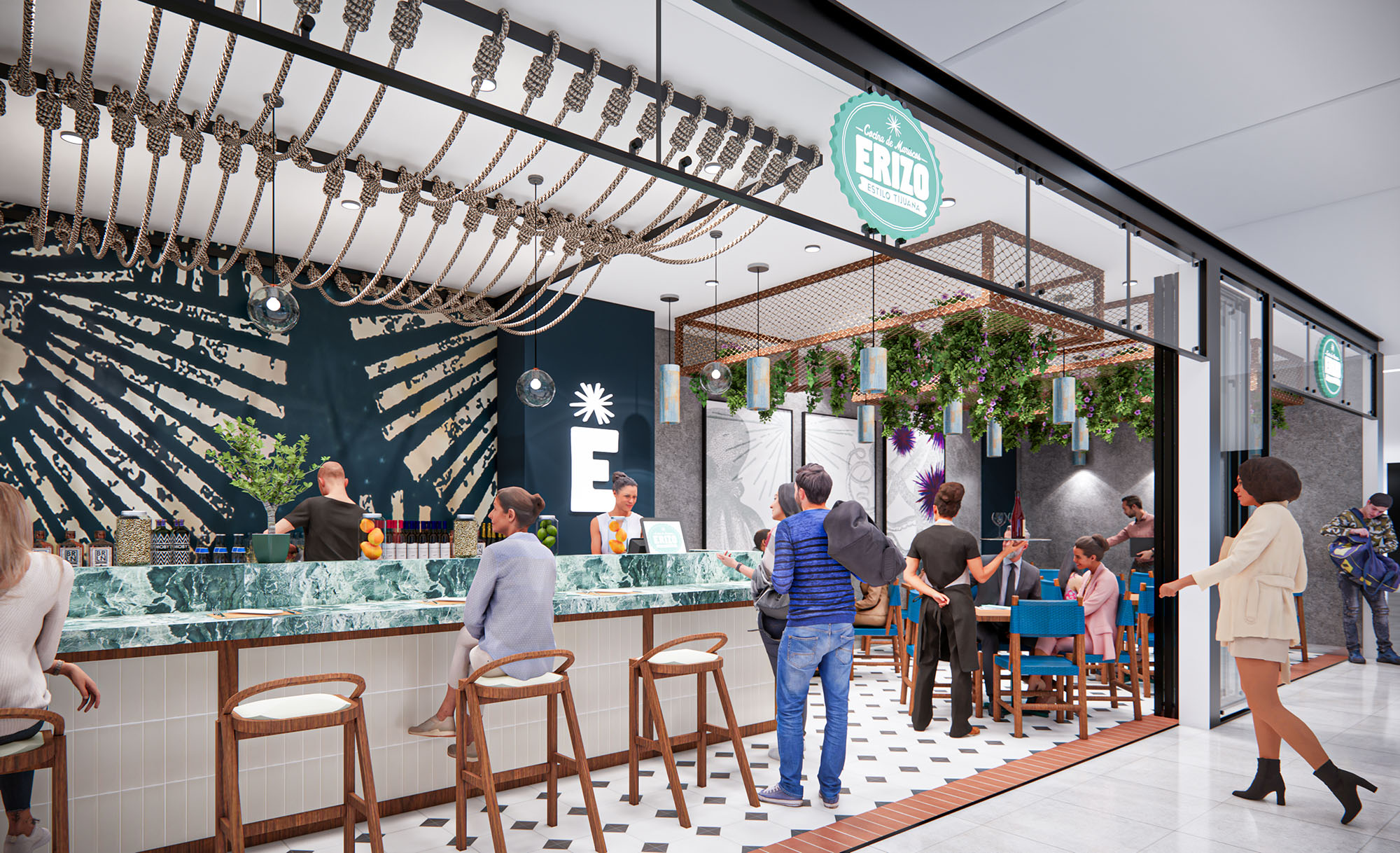
The concept is organized around a central bar as the main stage, with the remaining program wrapping around it in a U-shaped configuration. This creates a continuous social perimeter where diners maintain direct contact with the preparation of food and drinks, reminiscent of mercado stalls and marisquerías typical of northern Mexico.
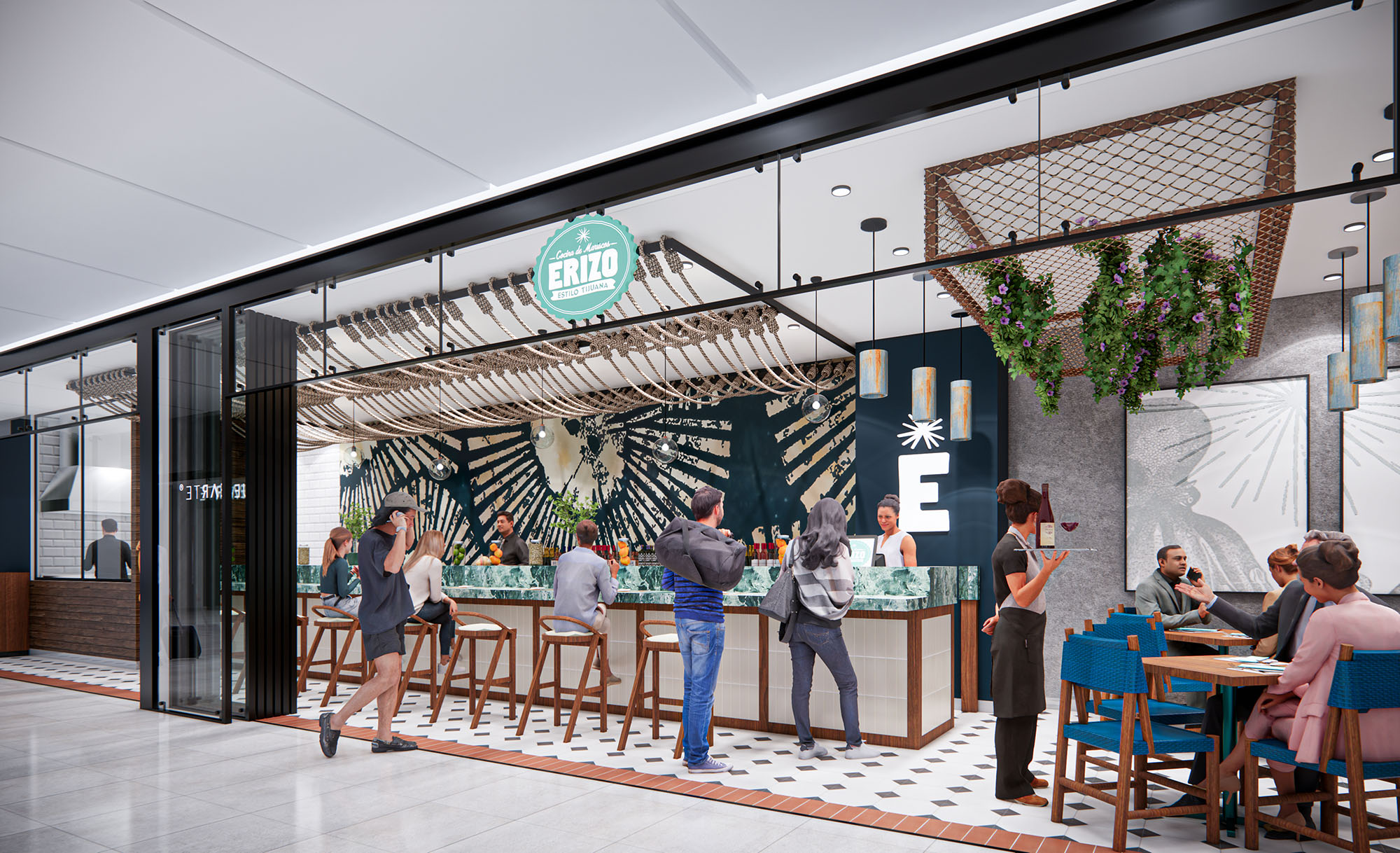
The layout is deliberately compact and efficient. A generous bar fronts the circulation axis of the mall, functioning as both façade and interior element. High stools along the bar cater to quick, informal service, while standard-height tables in the back half of the premises offer a more relaxed dining experience. This duality allows the restaurant to respond to different user profiles, from passersby to destination guests.
Sliding or retractable glazed panels define the front boundary, enabling maximum openness during operation and an unobstructed visual connection. Circulation is intuitive, with direct access from the corridor into the bar zone, and a secondary flow that guides guests around the perimeter to the dining area. Service routes remain compressed behind the bar, securing optimal interaction between kitchen, bar and waitstaff.
The material palette combines fresh, maritime references with the robust character of Tijuana’s urban landscape. Warm-toned woods are used for bar fronts, stools and chair structures, introducing tactility and a sense of craftsmanship. These are contrasted with a stone or quartz bar top in greenish tones, evoking sea colors and providing a durable, hygienic working surface.
The flooring articulates the transition between mall and restaurant through patterned tiles, using black and white geometry to frame the bar as a central rug, while a slim border in terracotta visually anchors the area. Walls incorporate textured plaster and murals in neutral hues, allowing the deep navy backdrop of the bar and the turquoise accents to stand out. The chromatic composition of blue seating upholstery, white bases and dark background surfaces creates a strong identity aligned with a coastal theme.
The ceiling is a key expressive element. A suspended installation of parallel rods or tubes extends above the bar, echoing fishing gear and marine structures while providing rhythm and depth. This sculptural canopy also helps visually lower the height over the counter, generating a more intimate scale inside the otherwise open mall volume.
Lighting is stratified: pendant fixtures with cylindrical shades mark the longitudinal axis of the bar and dining area, while integrated linear lighting in the soffit and perimeter ensures uniform ambient levels. Accent lights highlight the mural and branding elements, increasing visibility from the corridor. The warm color temperature of the luminaires softens the crisp palette and enhances the perceived warmth of the wooden surfaces.
The storefront operates as a transparent frame. Slender black metal profiles outline large glass panels, generating a clean, contemporary façade that contrasts with the vibrant interior. Graphic elements, including the circular ERIZO logo and large-scale wall art, are carefully positioned to be legible from a distance, reinforcing recognition along the mall’s circulation spine.
An overhead mesh structure near the entry accommodates hanging planters, introducing greenery as a soft filter between corridor and dining space. This vegetal layer tempers the hard surfaces and contributes to a relaxed, informal atmosphere reminiscent of outdoor patios, despite the fully indoor context.
Although located within a conditioned mall environment, the project incorporates several strategies to improve environmental performance and durability. The compact footprint and central bar configuration minimize internal travel distances for staff, improving operational efficiency and reducing energy use associated with food handling and refrigeration logistics.
Material selection prioritizes longevity and low maintenance: high-resistance tile flooring, treated woods, and durable composite stone surfaces reduce the need for frequent replacement. The extensive use of LED lighting and targeted accent fixtures lowers electrical consumption, while hanging vegetation contributes to acoustic absorption and enhances indoor environmental quality. The open, non-enclosed façade allows visual permeability and shared ambient lighting with the mall, reducing the need for excessive artificial illumination within the restaurant.
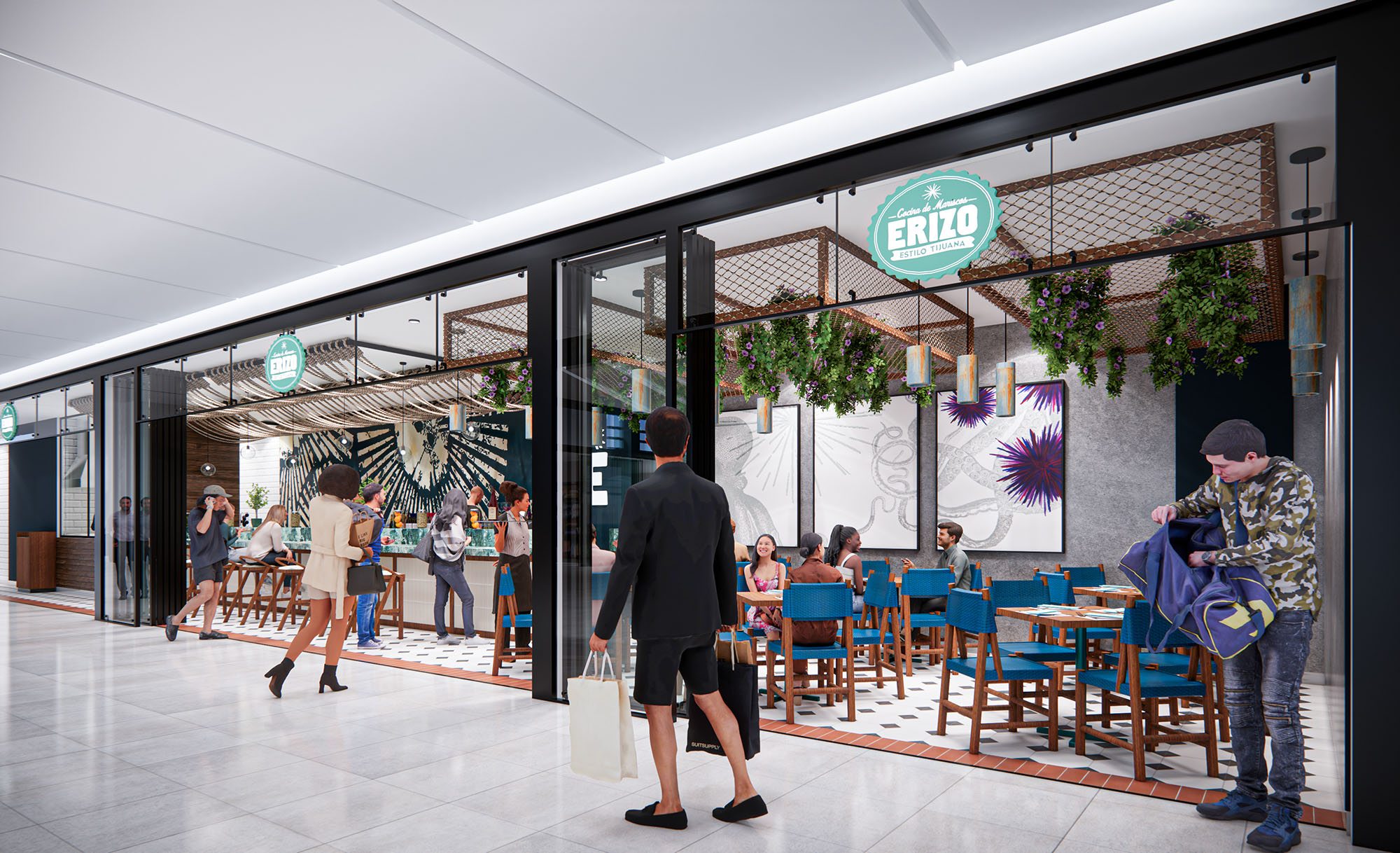
ERIZO is conceived as an open, extroverted seafood bar that brings the atmosphere of Tijuana’s coastal street food into the interior of a contemporary shopping center. The design blurs the boundary between corridor and restaurant, transforming the façade into a permeable threshold where the activity at the bar becomes a visual attractor for pedestrians. The space operates as a linear pavilion, emphasizing horizontality and transparency while celebrating local culinary culture.
The concept is organized around a central bar as the main stage, with the remaining program wrapping around it in a U-shaped configuration. This creates a continuous social perimeter where diners maintain direct contact with the preparation of food and drinks, reminiscent of mercado stalls and marisquerías typical of northern Mexico.
The layout is deliberately compact and efficient. A generous bar fronts the circulation axis of the mall, functioning as both façade and interior element. High stools along the bar cater to quick, informal service, while standard-height tables in the back half of the premises offer a more relaxed dining experience. This duality allows the restaurant to respond to different user profiles, from passersby to destination guests.
Sliding or retractable glazed panels define the front boundary, enabling maximum openness during operation and an unobstructed visual connection. Circulation is intuitive, with direct access from the corridor into the bar zone, and a secondary flow that guides guests around the perimeter to the dining area. Service routes remain compressed behind the bar, securing optimal interaction between kitchen, bar and waitstaff.
The material palette combines fresh, maritime references with the robust character of Tijuana’s urban landscape. Warm-toned woods are used for bar fronts, stools and chair structures, introducing tactility and a sense of craftsmanship. These are contrasted with a stone or quartz bar top in greenish tones, evoking sea colors and providing a durable, hygienic working surface.
The flooring articulates the transition between mall and restaurant through patterned tiles, using black and white geometry to frame the bar as a central rug, while a slim border in terracotta visually anchors the area. Walls incorporate textured plaster and murals in neutral hues, allowing the deep navy backdrop of the bar and the turquoise accents to stand out. The chromatic composition of blue seating upholstery, white bases and dark background surfaces creates a strong identity aligned with a coastal theme.
The ceiling is a key expressive element. A suspended installation of parallel rods or tubes extends above the bar, echoing fishing gear and marine structures while providing rhythm and depth. This sculptural canopy also helps visually lower the height over the counter, generating a more intimate scale inside the otherwise open mall volume.
Lighting is stratified: pendant fixtures with cylindrical shades mark the longitudinal axis of the bar and dining area, while integrated linear lighting in the soffit and perimeter ensures uniform ambient levels. Accent lights highlight the mural and branding elements, increasing visibility from the corridor. The warm color temperature of the luminaires softens the crisp palette and enhances the perceived warmth of the wooden surfaces.
The storefront operates as a transparent frame. Slender black metal profiles outline large glass panels, generating a clean, contemporary façade that contrasts with the vibrant interior. Graphic elements, including the circular ERIZO logo and large-scale wall art, are carefully positioned to be legible from a distance, reinforcing recognition along the mall’s circulation spine.
An overhead mesh structure near the entry accommodates hanging planters, introducing greenery as a soft filter between corridor and dining space. This vegetal layer tempers the hard surfaces and contributes to a relaxed, informal atmosphere reminiscent of outdoor patios, despite the fully indoor context.
Although located within a conditioned mall environment, the project incorporates several strategies to improve environmental performance and durability. The compact footprint and central bar configuration minimize internal travel distances for staff, improving operational efficiency and reducing energy use associated with food handling and refrigeration logistics.
Material selection prioritizes longevity and low maintenance: high-resistance tile flooring, treated woods, and durable composite stone surfaces reduce the need for frequent replacement. The extensive use of LED lighting and targeted accent fixtures lowers electrical consumption, while hanging vegetation contributes to acoustic absorption and enhances indoor environmental quality. The open, non-enclosed façade allows visual permeability and shared ambient lighting with the mall, reducing the need for excessive artificial illumination within the restaurant.


Nuestras oficinas están en Barcelona, Cancún, Chicago y Santo Domingo, pero gracias a la tecnología podemos desarrollar proyectos en cualquier parte del mundo.
Barcelona
Bac de Roda 136
08020, Barcelona
Spain
Madrid
Av. de Buendía 11
19005 Guadalajara (Madrid)
Spain
Chicago
373 Hazel Ave, Apt A1
60022, Glencoe, Illinois
United States