

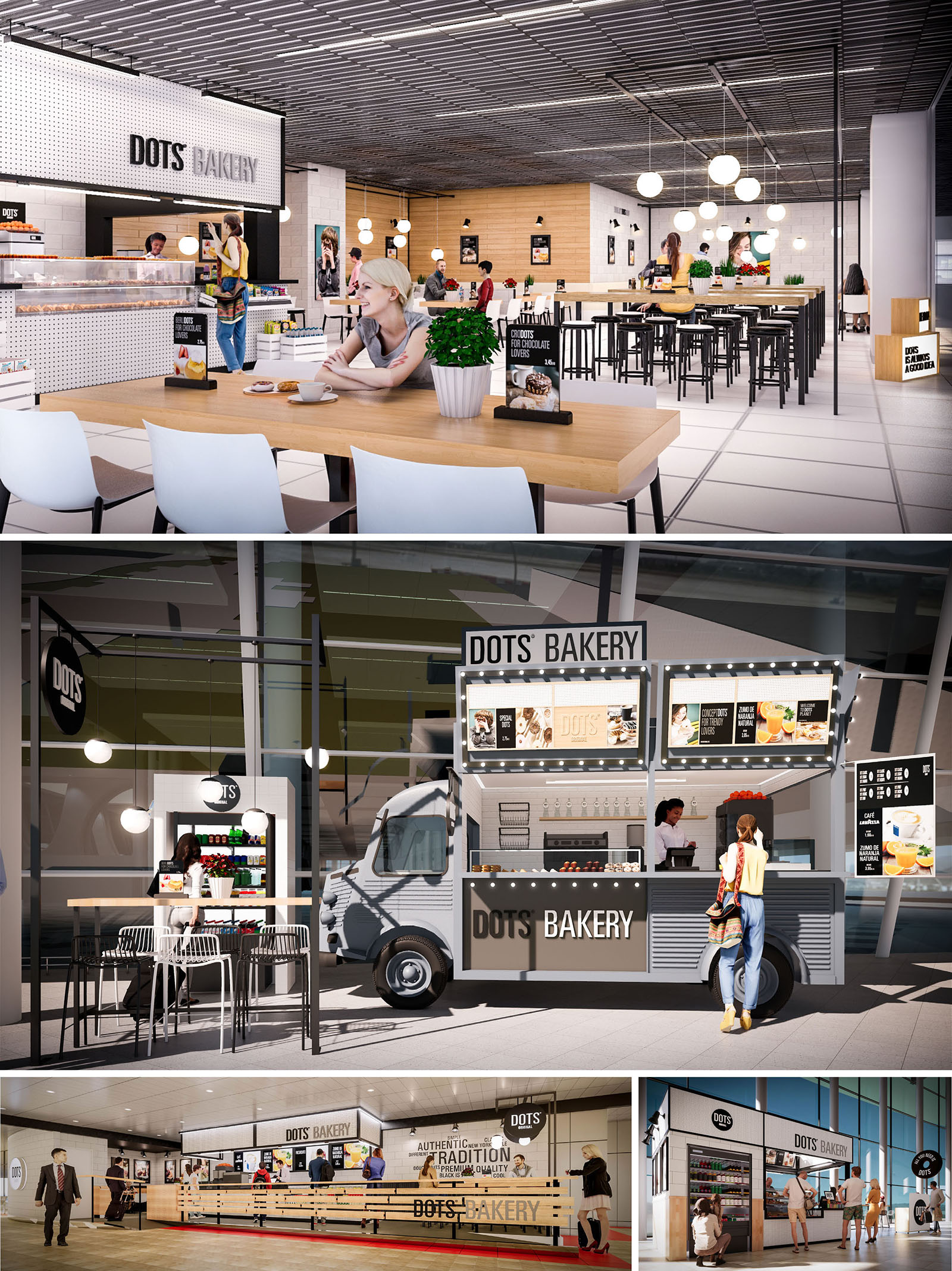
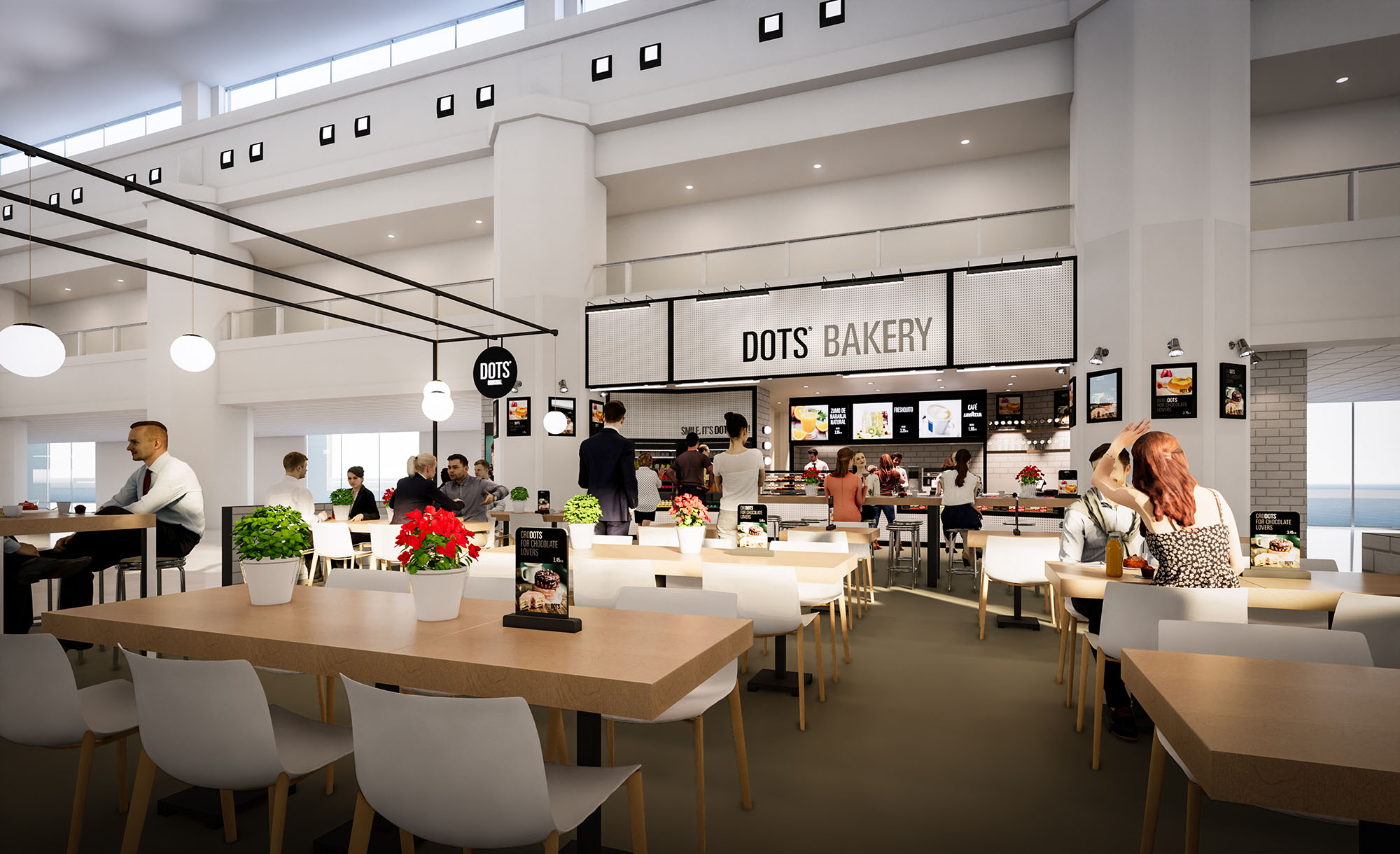
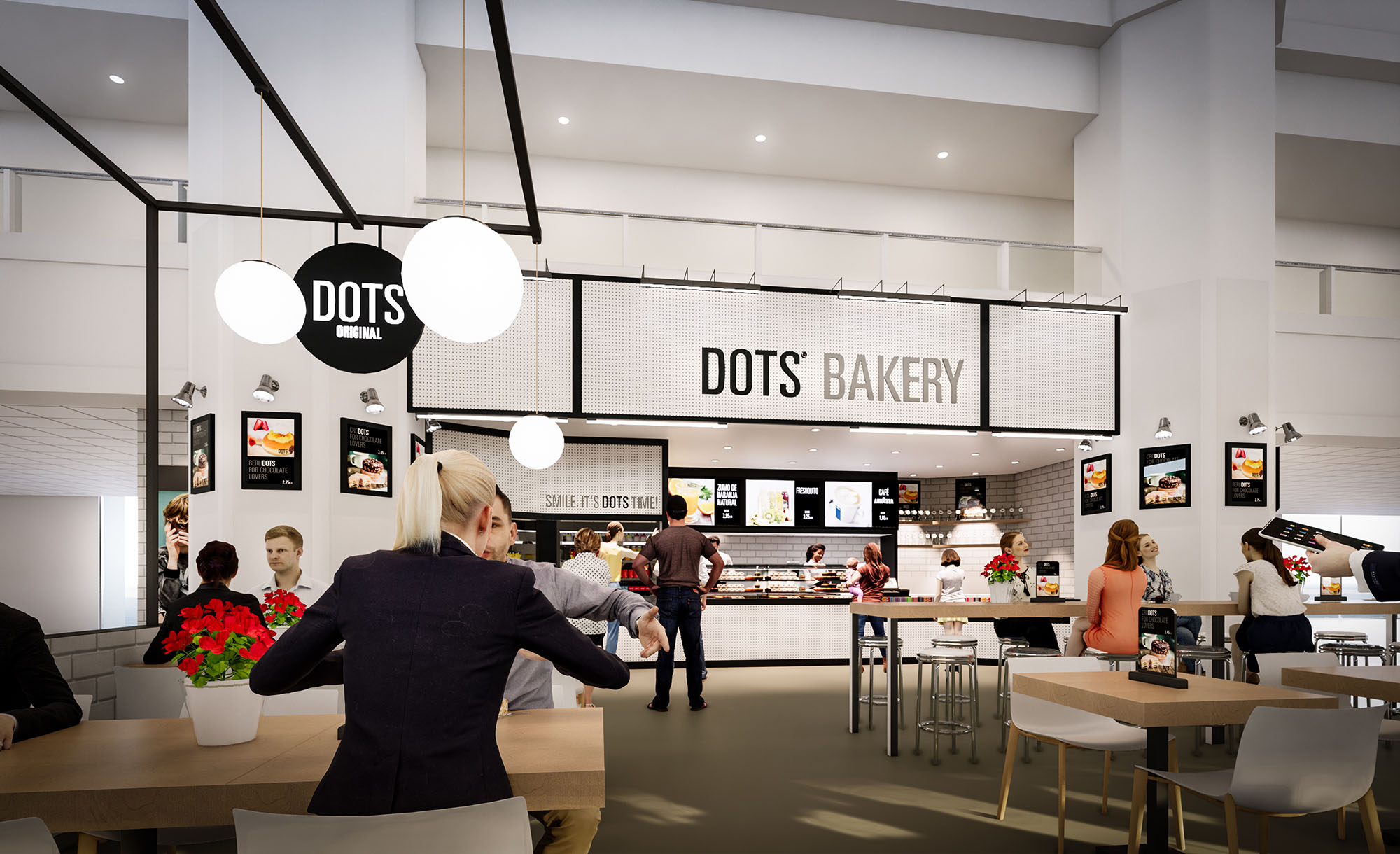
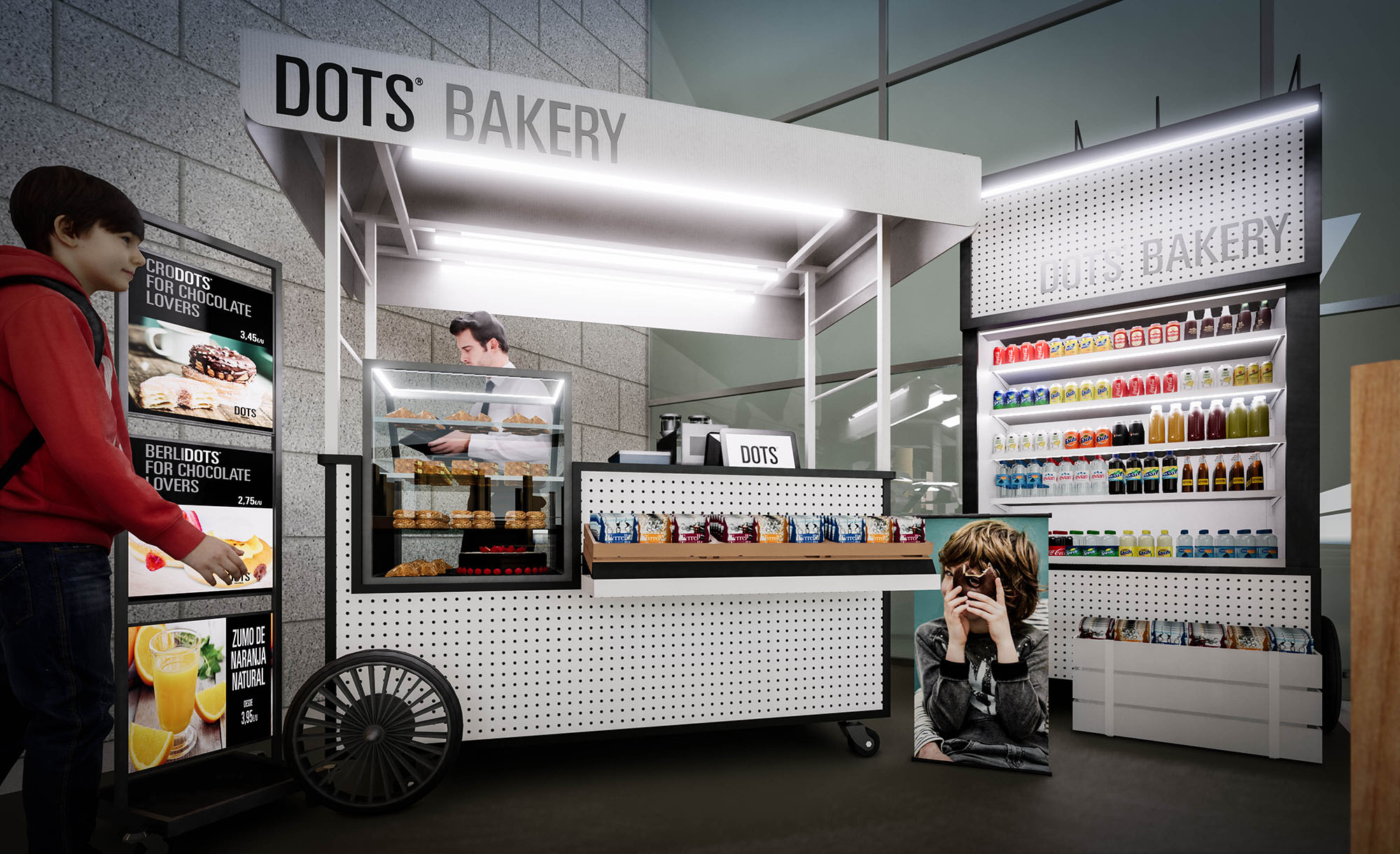
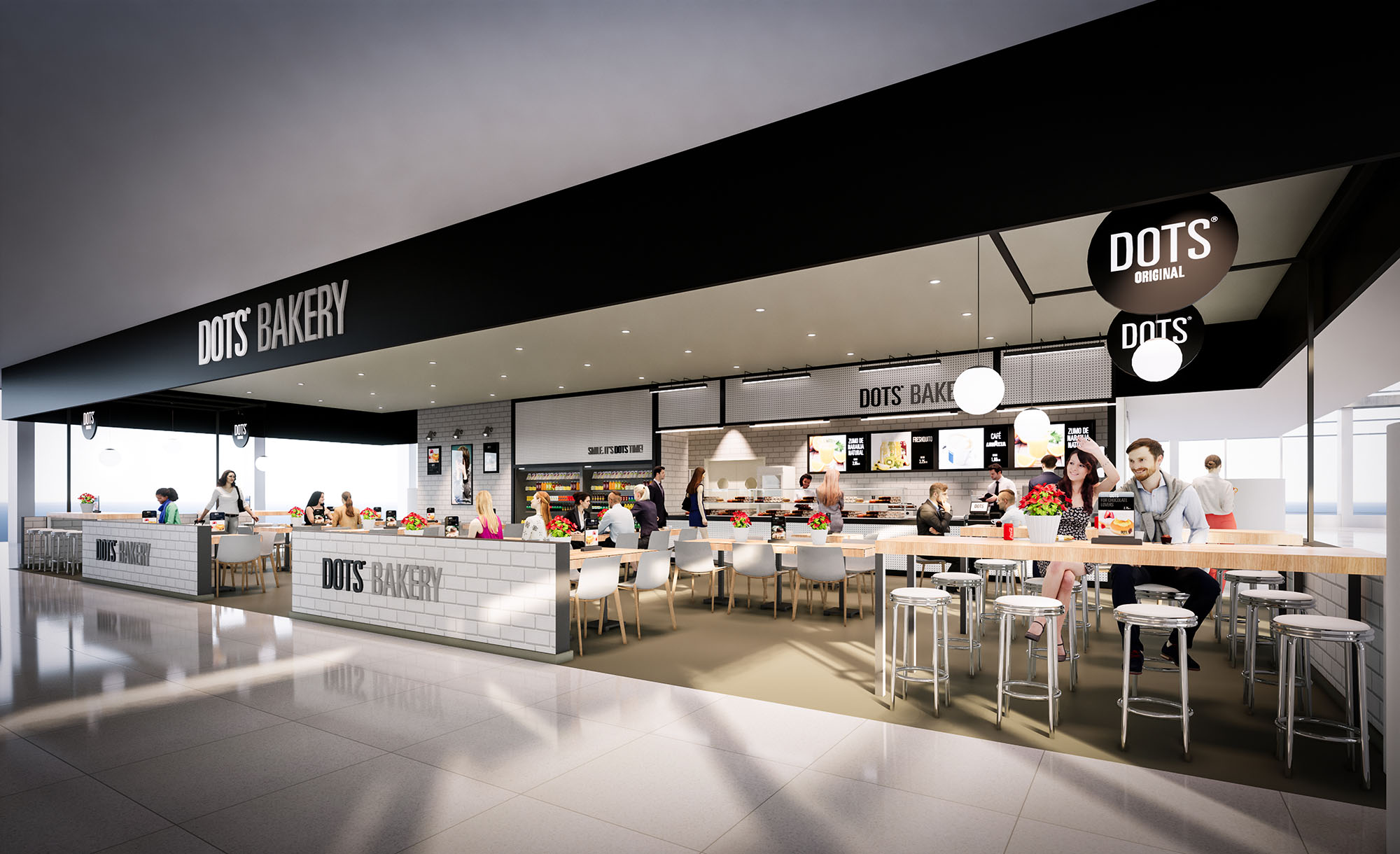
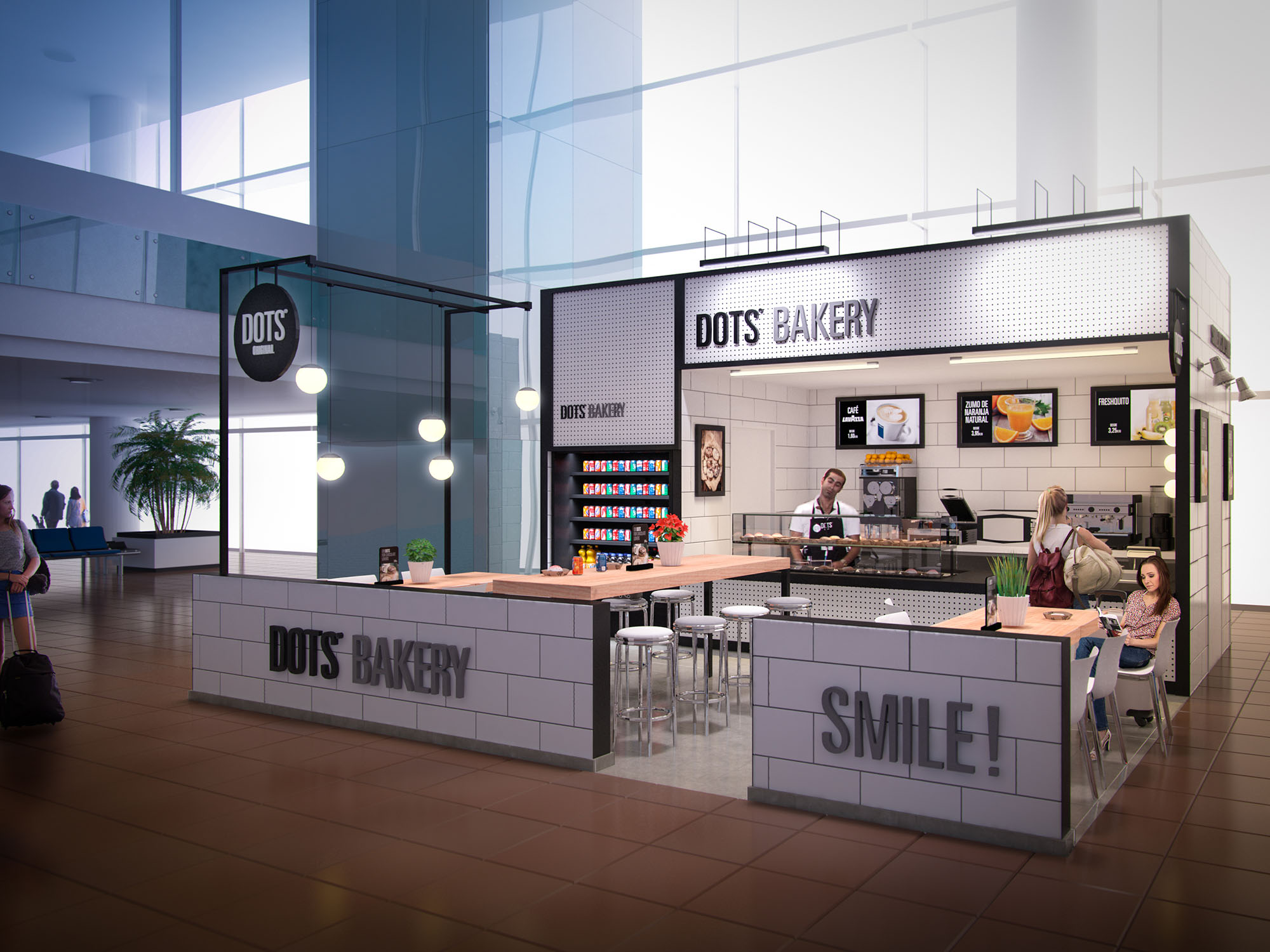
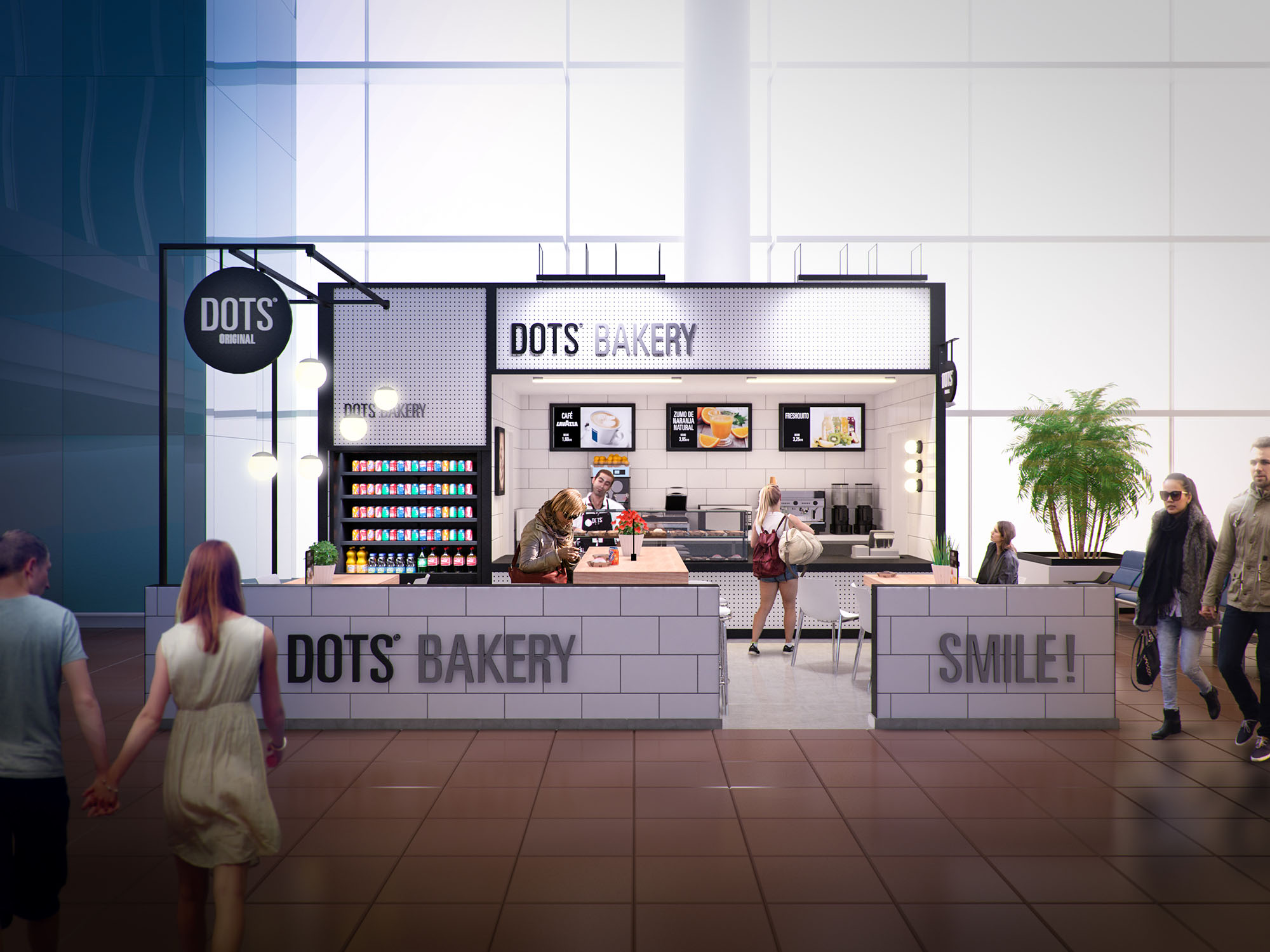
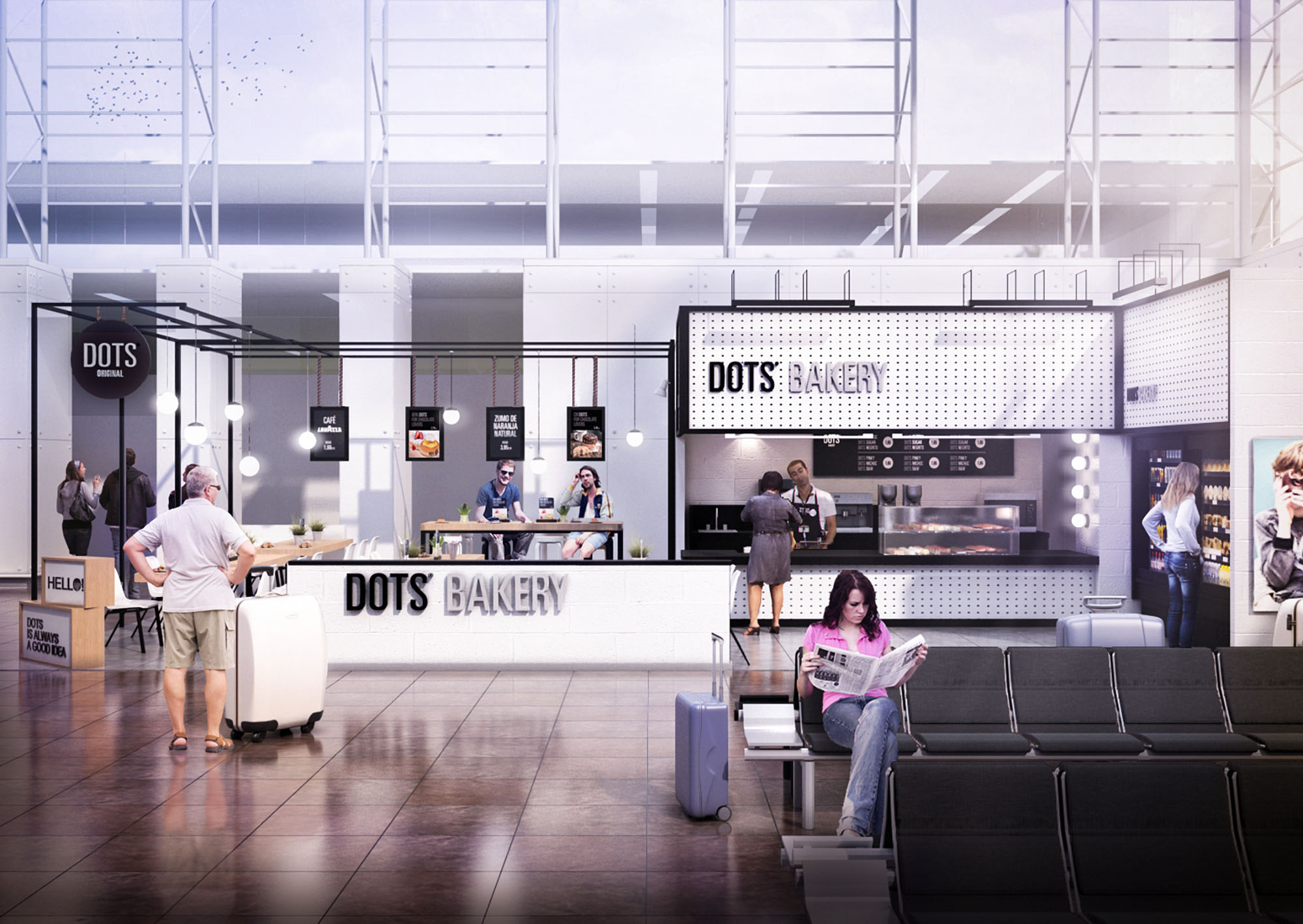
Dots’ Bakery is conceived as a flexible, replicable hospitality concept that can adapt to multiple locations across Spain and Portugal, from shopping malls to transit hubs and outdoor plazas. The design language is based on a clear, graphic identity where the idea of the “dot” becomes a visual and spatial motif, expressed through lighting, perforated panels, and circular details in signage and furniture.
The overall concept combines the warmth of a neighborhood bakery with the efficiency and clarity of a contemporary fast-casual restaurant. Open layouts, long communal tables, and visible production and service areas foster transparency and a sense of craftsmanship, while a restrained palette and strong branding ensure recognizability across all 10 units, including the food truck version.
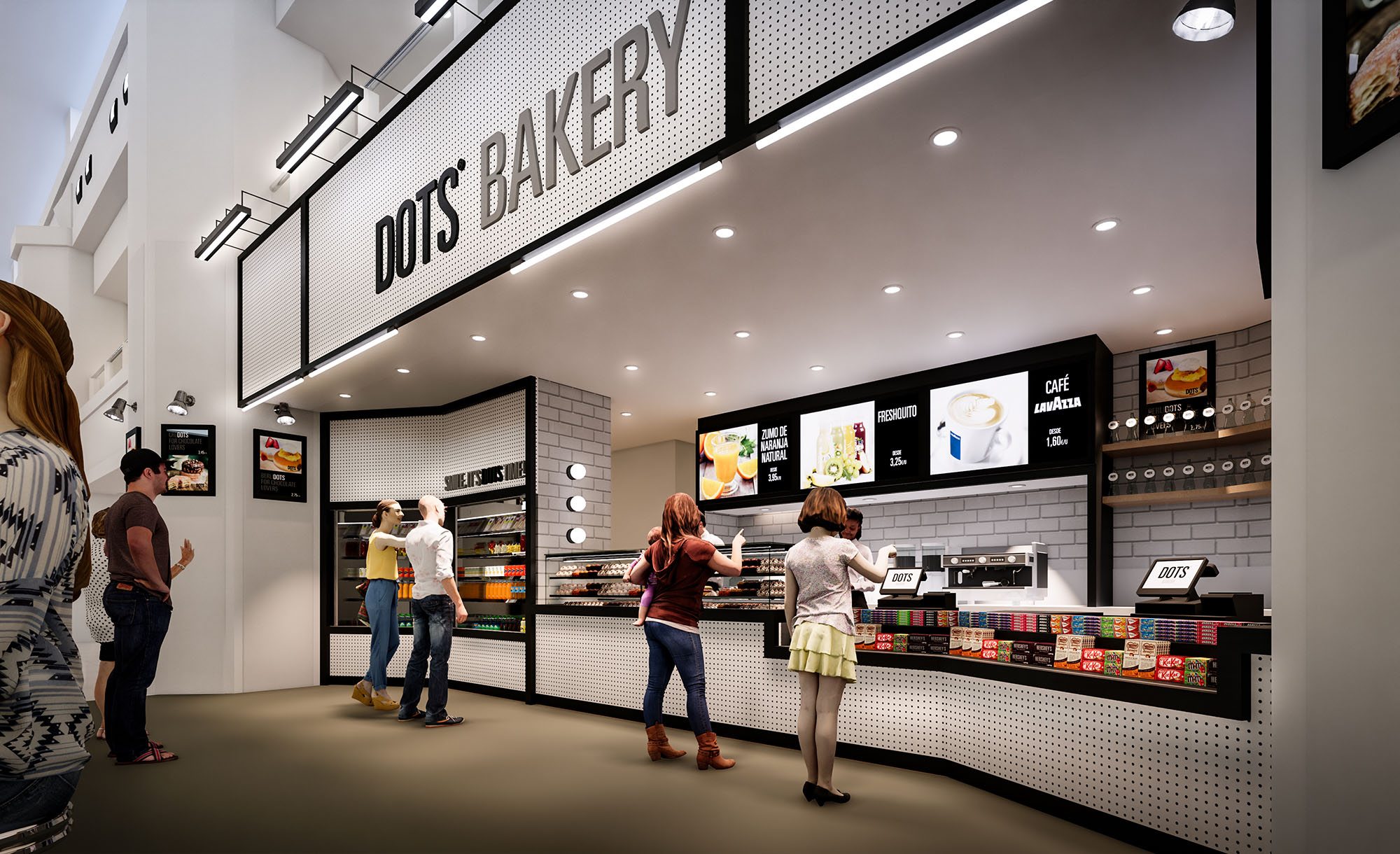
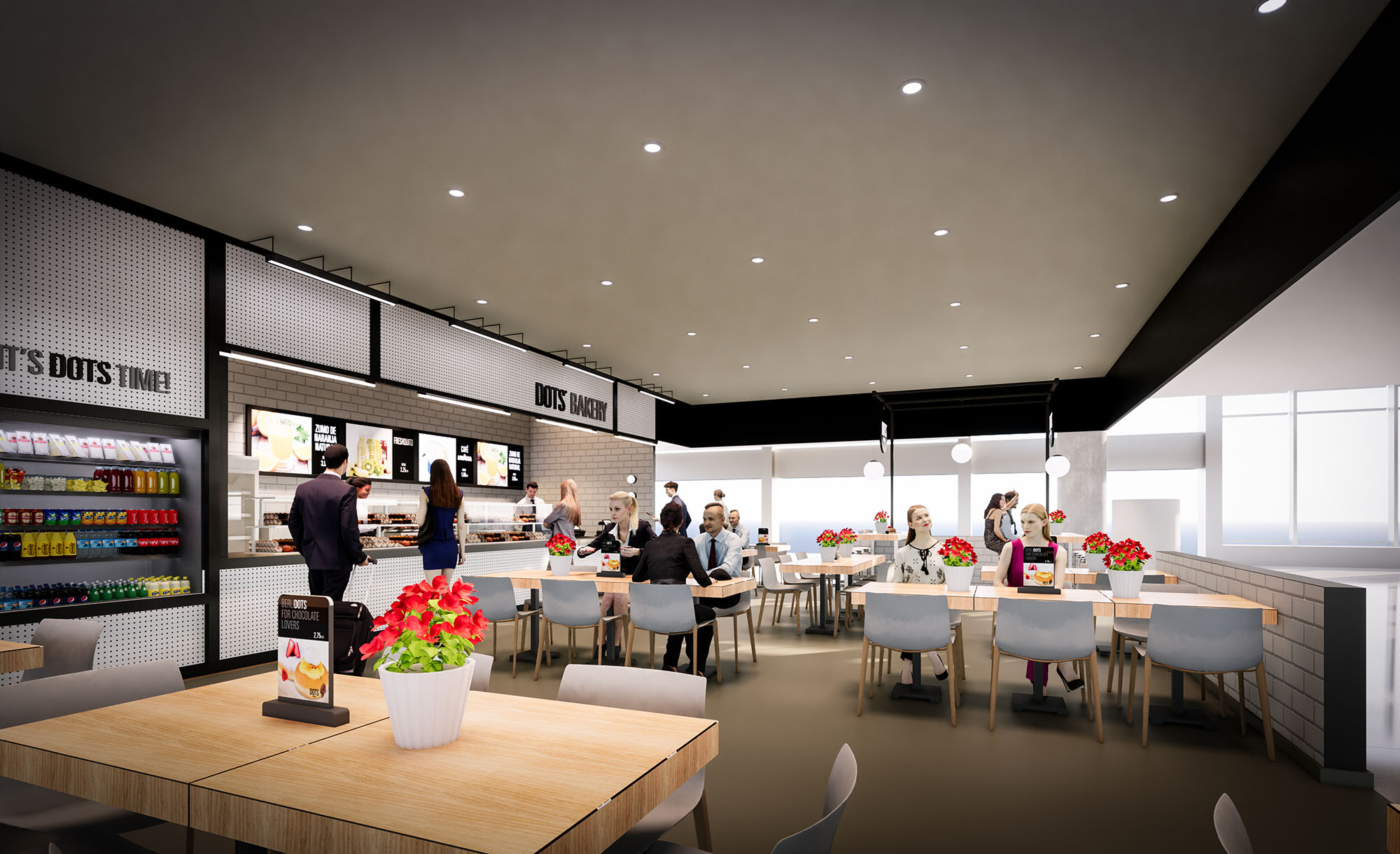
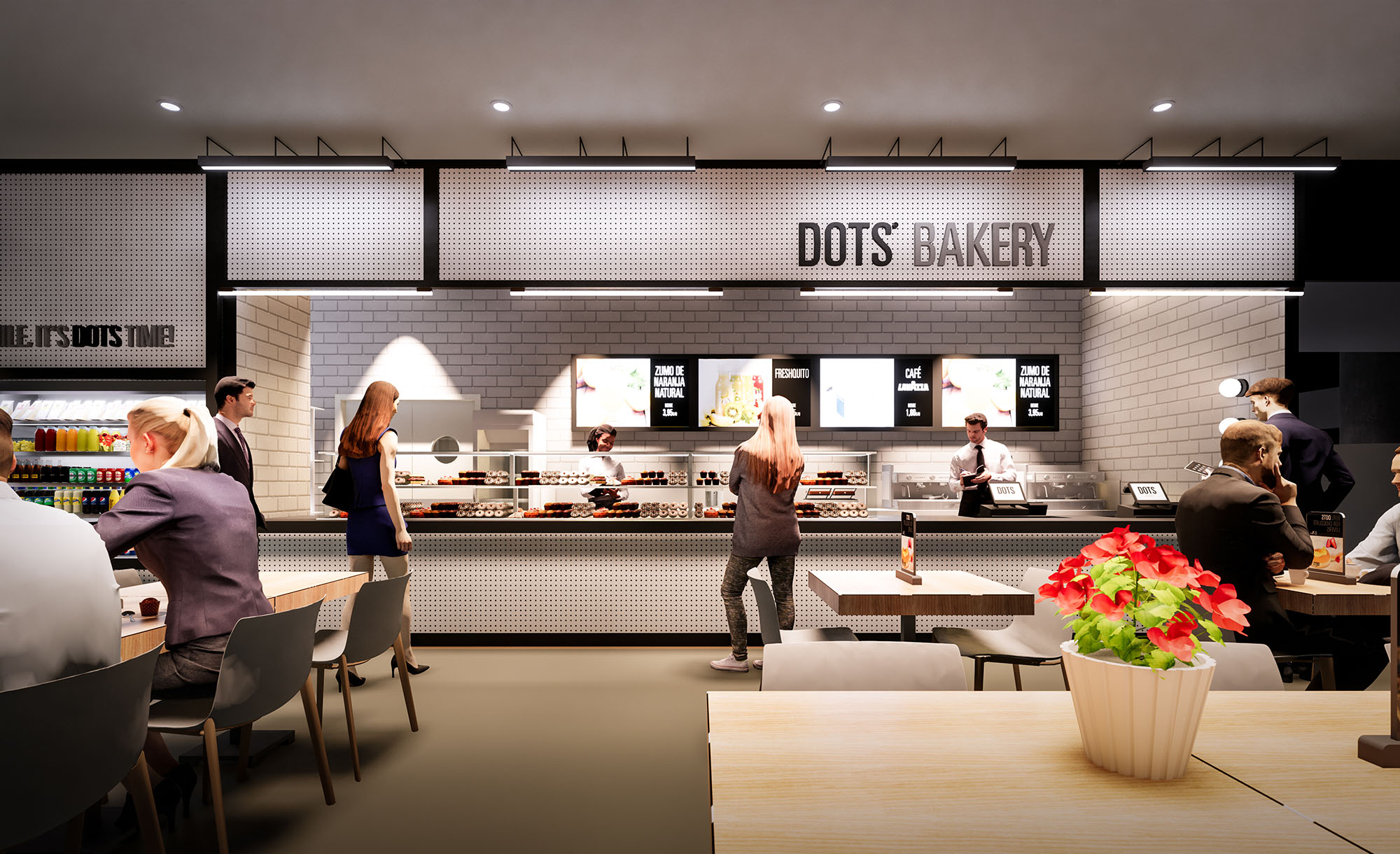
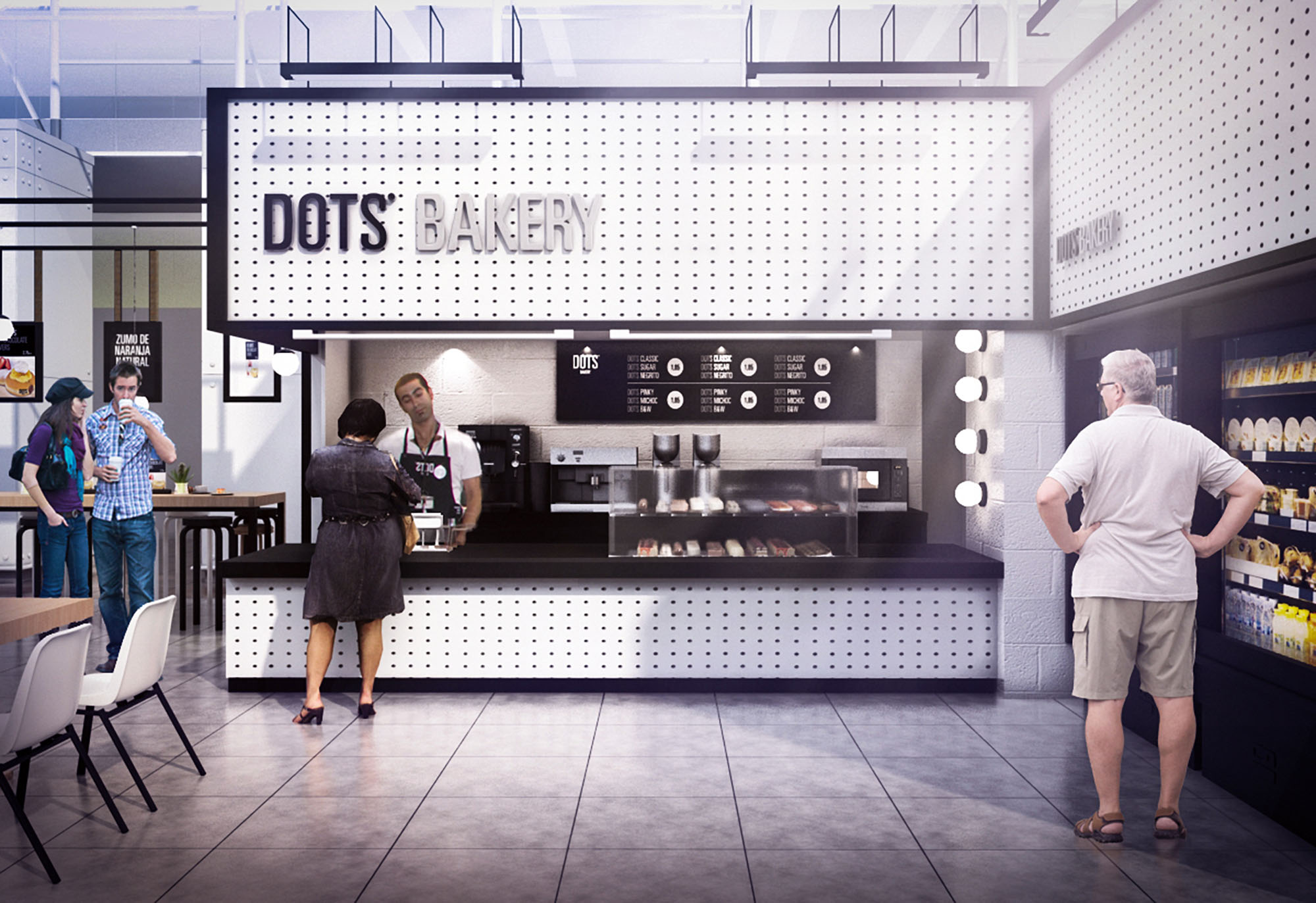
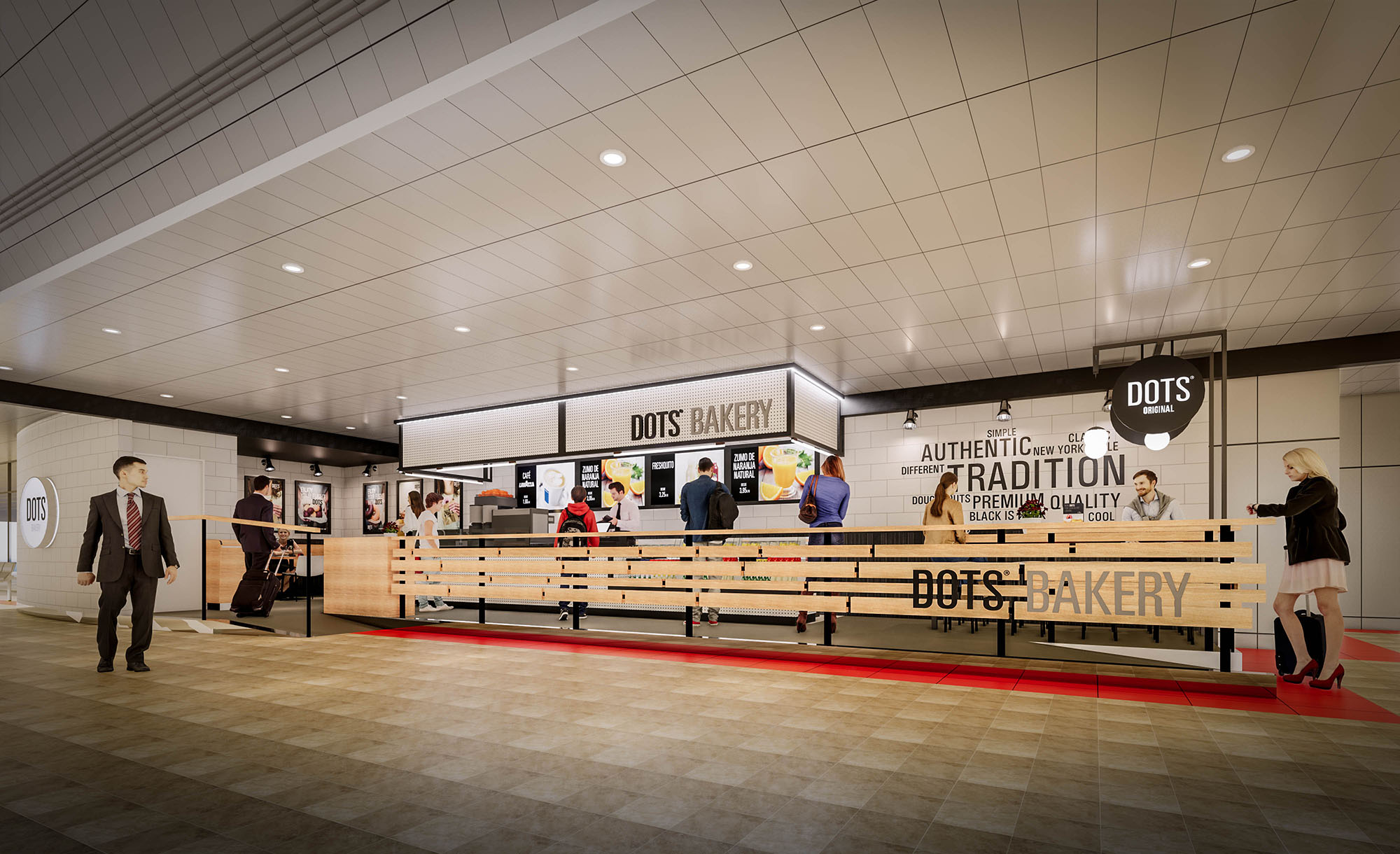
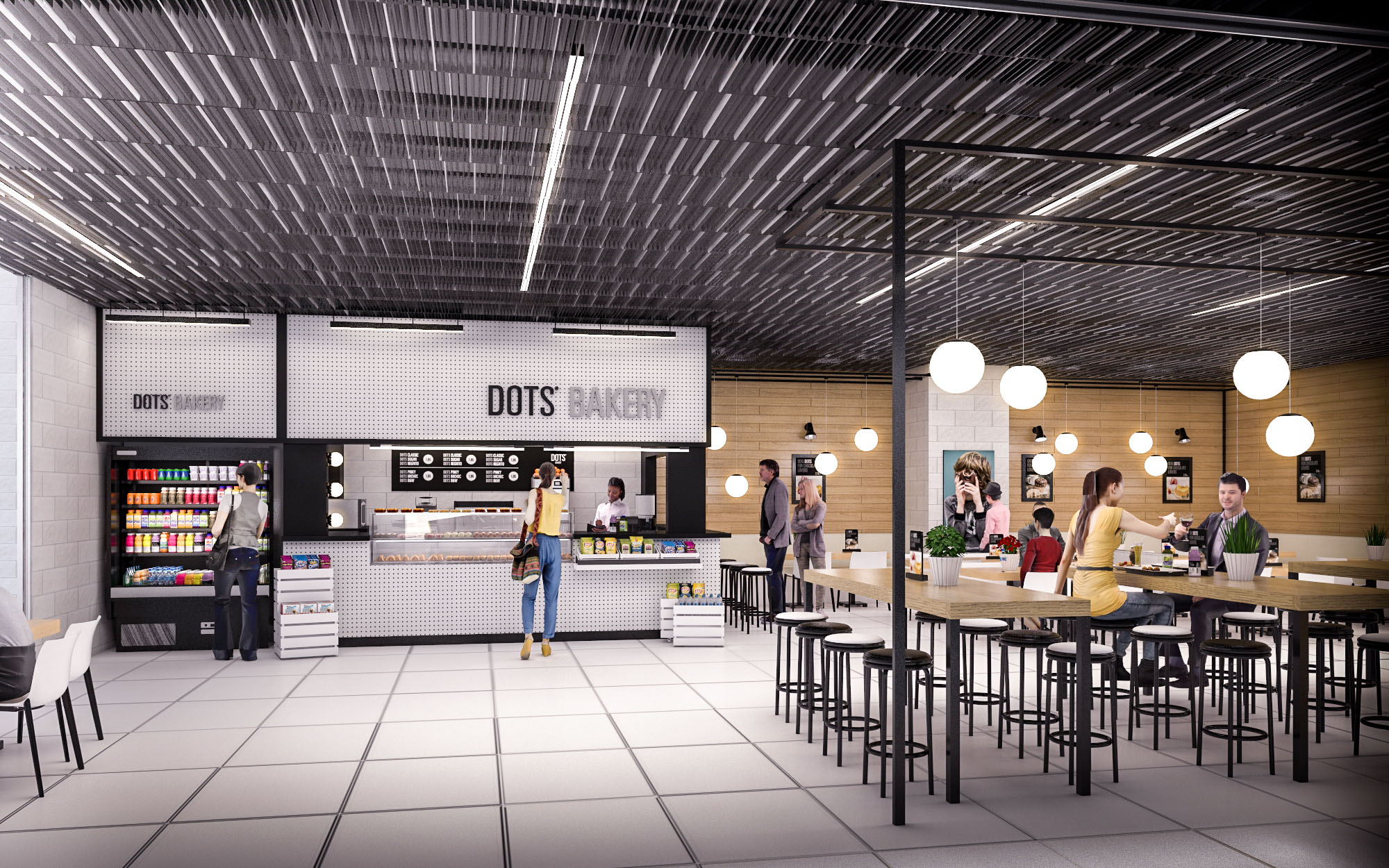
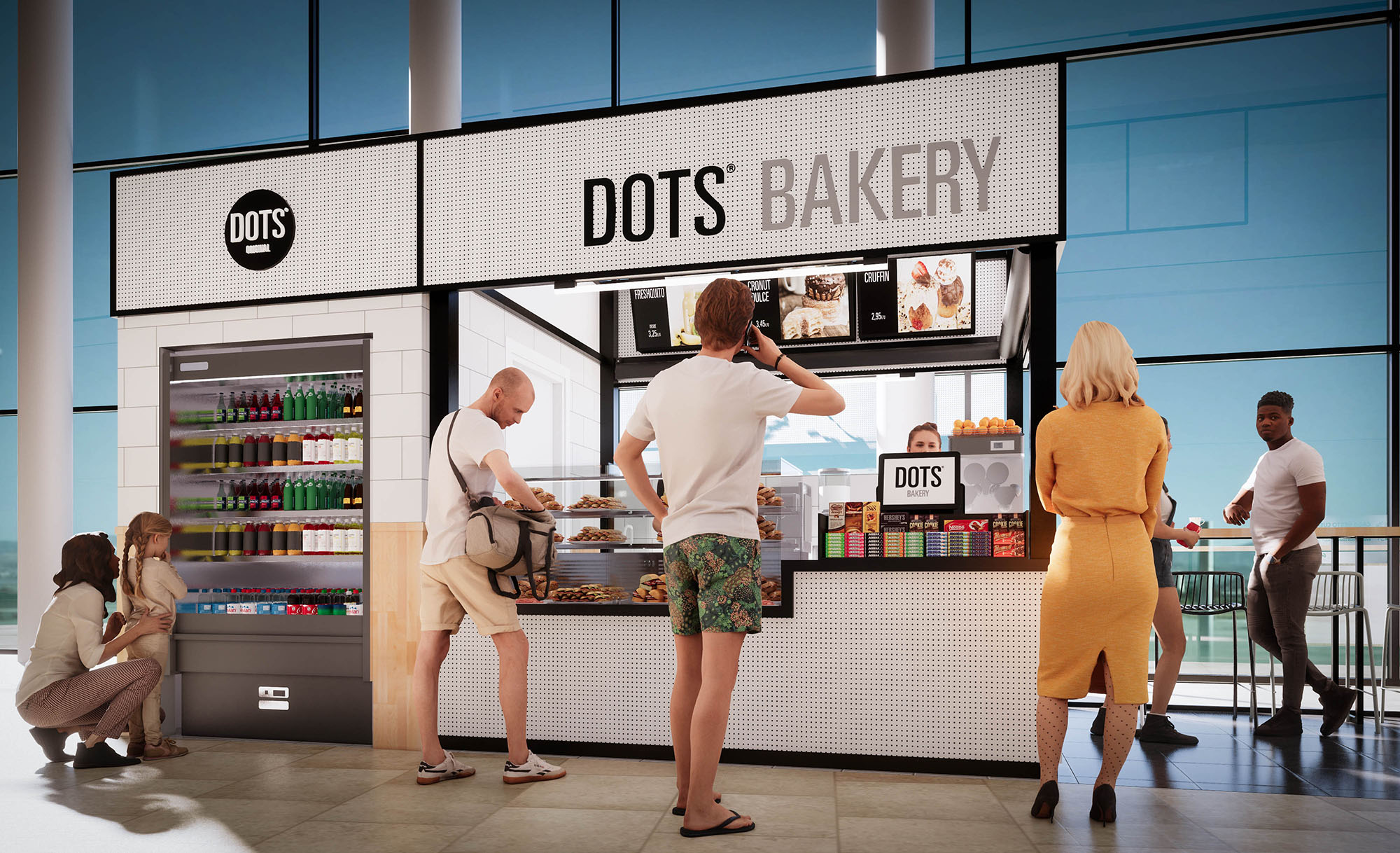
The interior spaces are organized around a linear service counter that acts as the project’s main spine. Customers encounter the products immediately upon entry, with the display vitrines aligned to optimize visibility and encourage impulse purchases. Behind this front line, back-of-house areas are compact and rational, with clear separations between preparation, storage, and service zones to streamline operations.
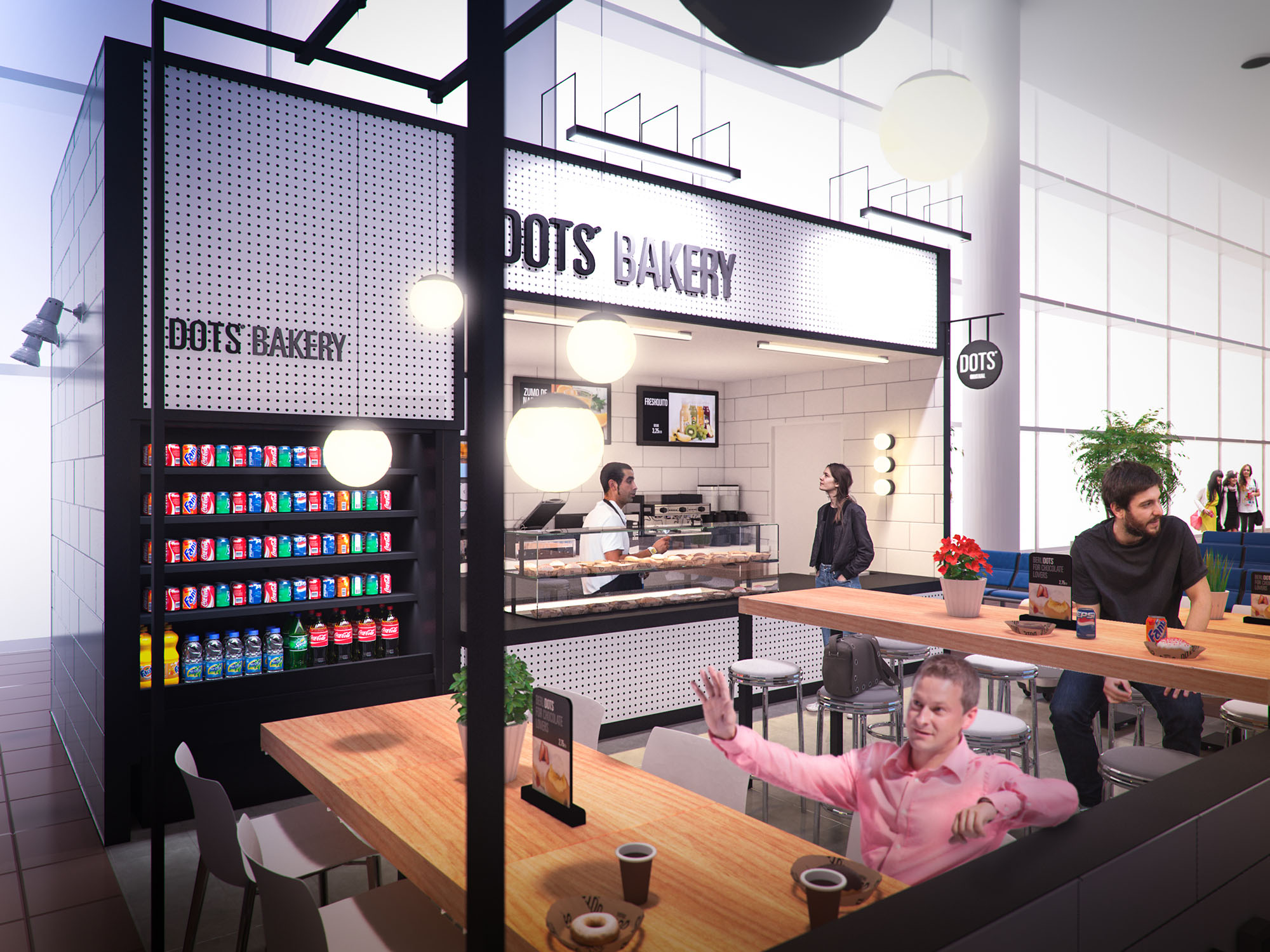
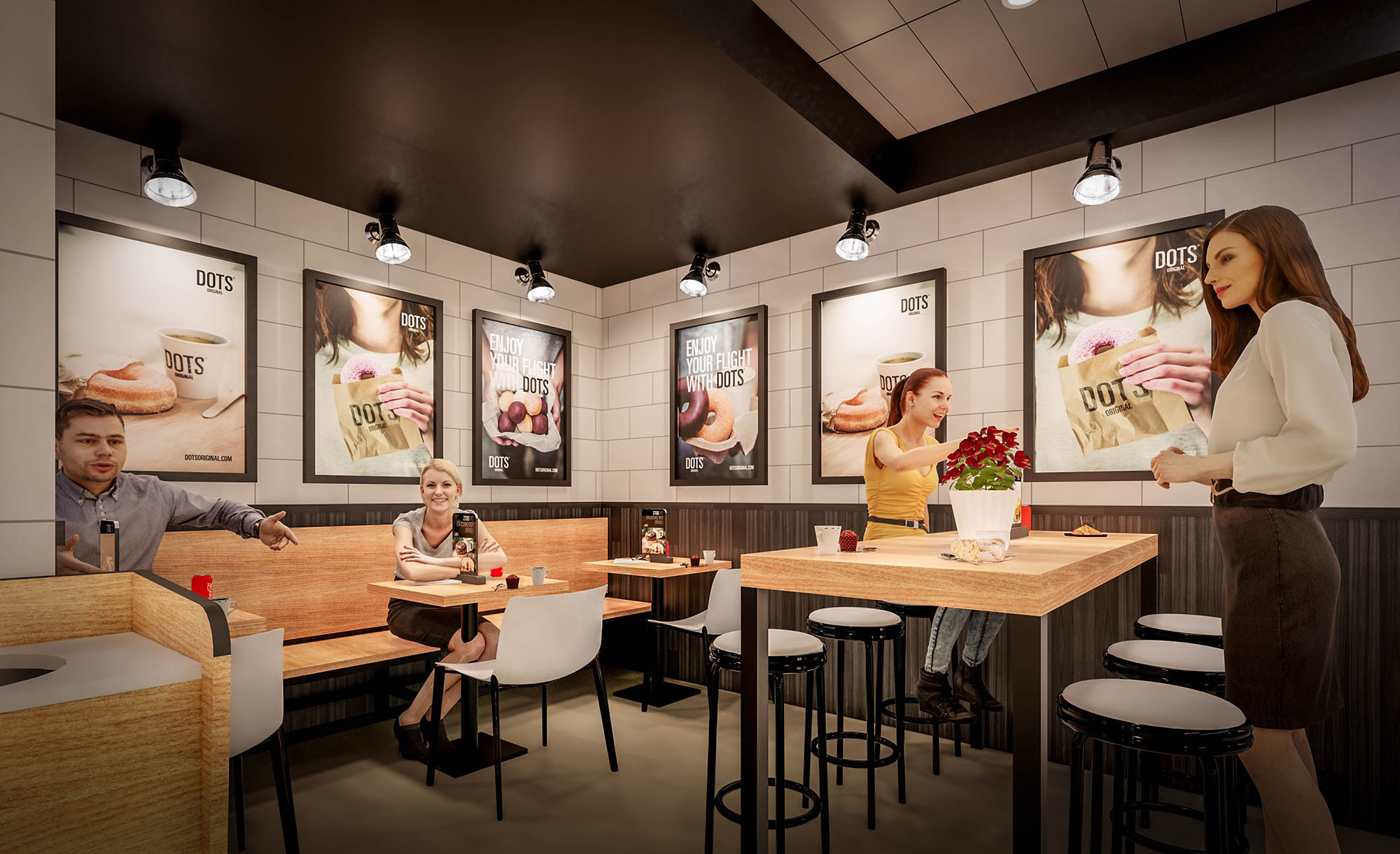
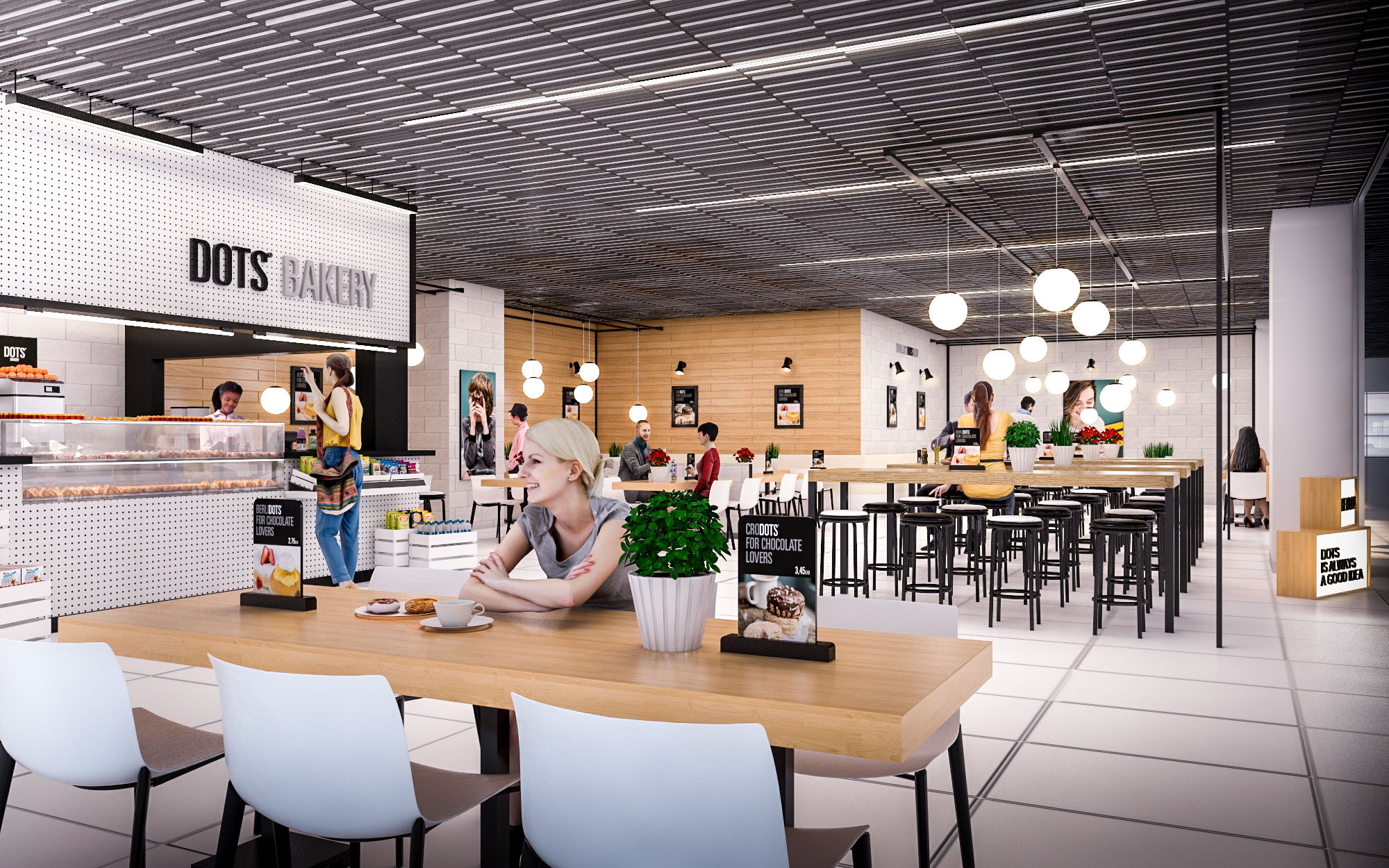
Seating is structured in layers: perimeter benches for quick stays, central communal tables for groups, and high tables with stools that create a more informal bar-like atmosphere. Circulation routes are legible, with generous widths to accommodate peak hour queues, while strategic positioning of freestanding elements—such as menu totems and planter boxes—guides movement intuitively without physical barriers.
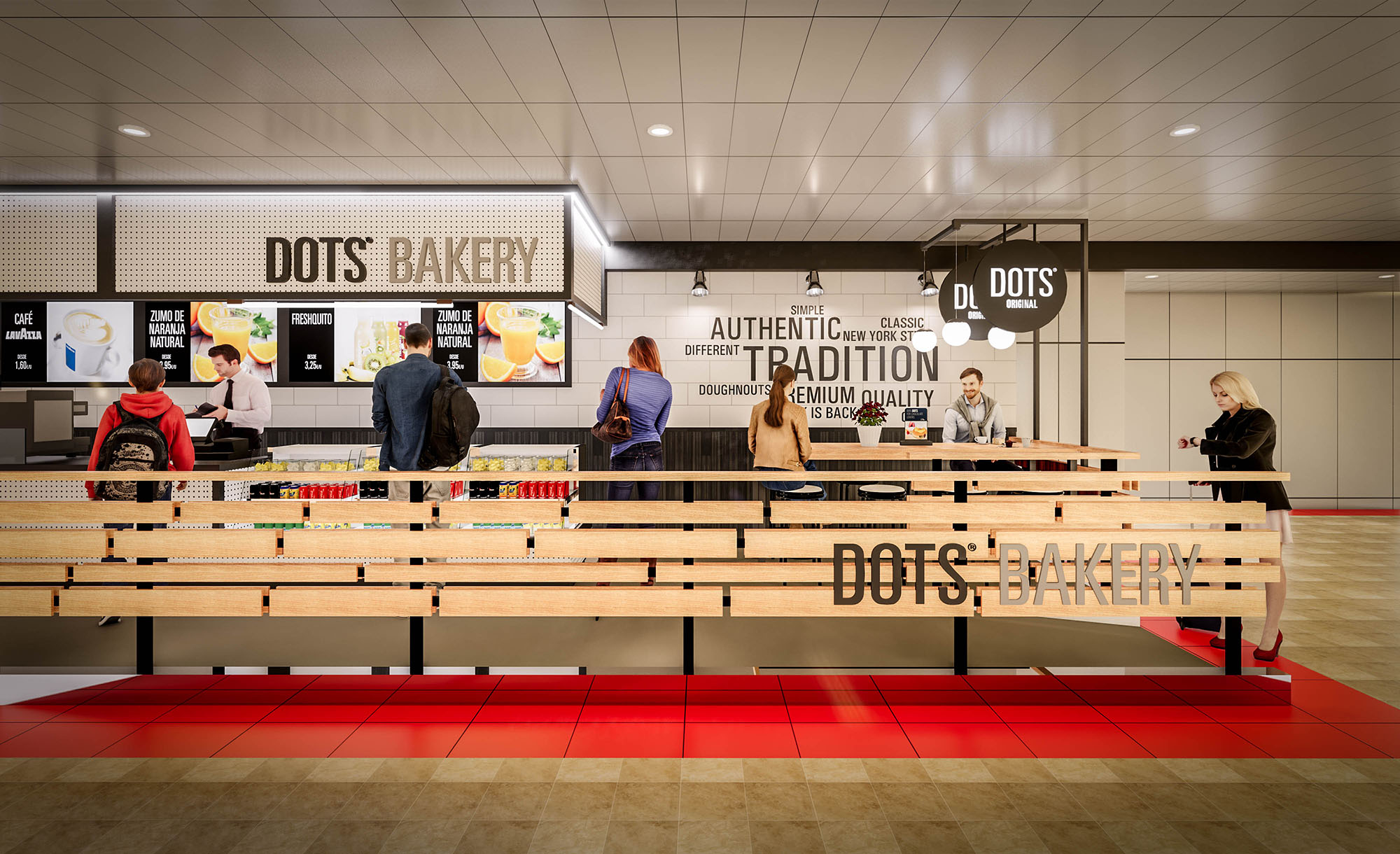
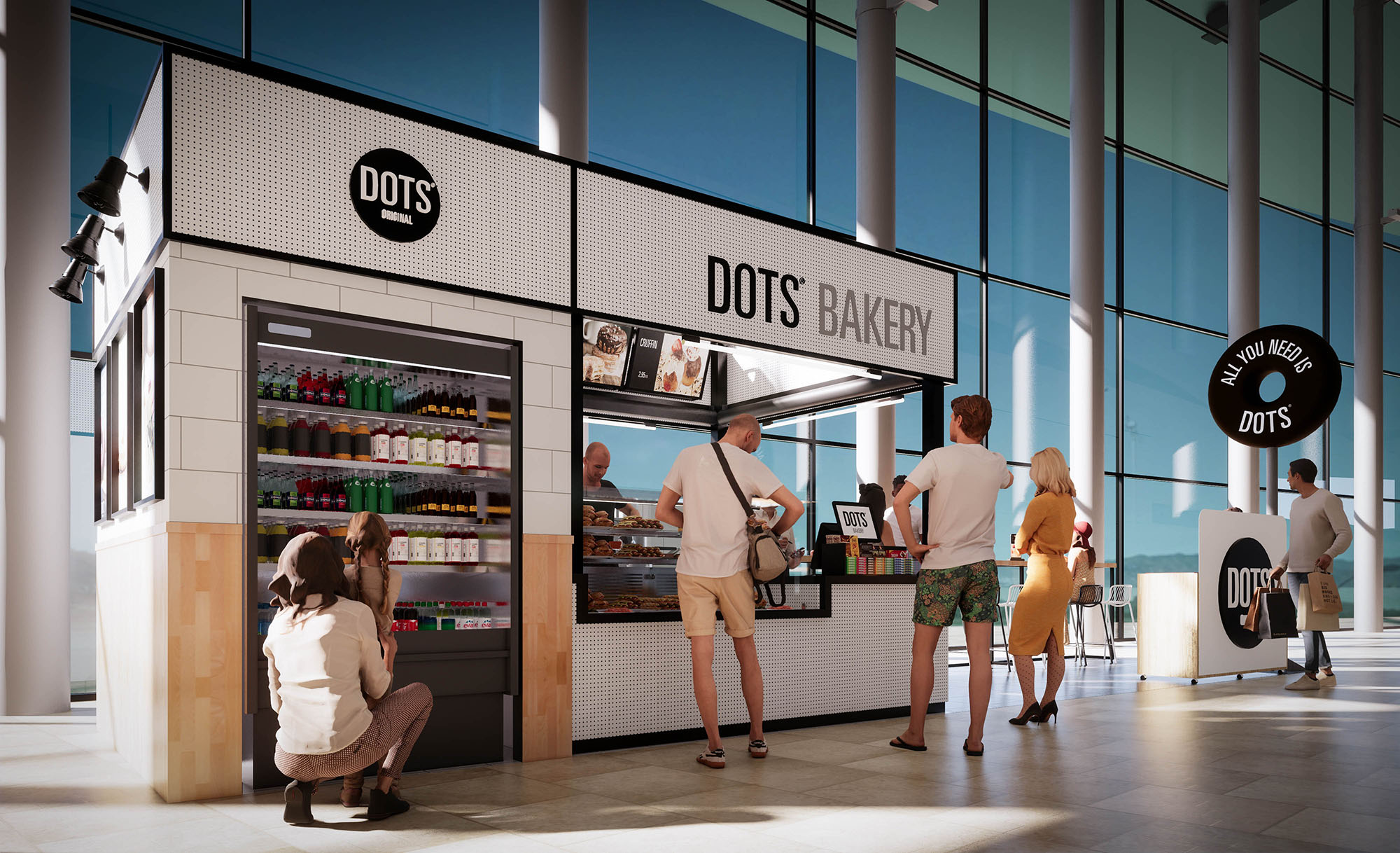
The material palette combines light-toned woods, white ceramic or painted masonry, and perforated metal panels to craft an interior that is both warm and highly durable. Timber tabletops and cladding soften the overall feel, contrasting with the industrial presence of black metal chair frames, barstools, and ceiling grids. The monochrome base—white, black, and shades of grey—is punctuated by the natural green of plants and the warm color of bakery products, which become the true chromatic protagonists.
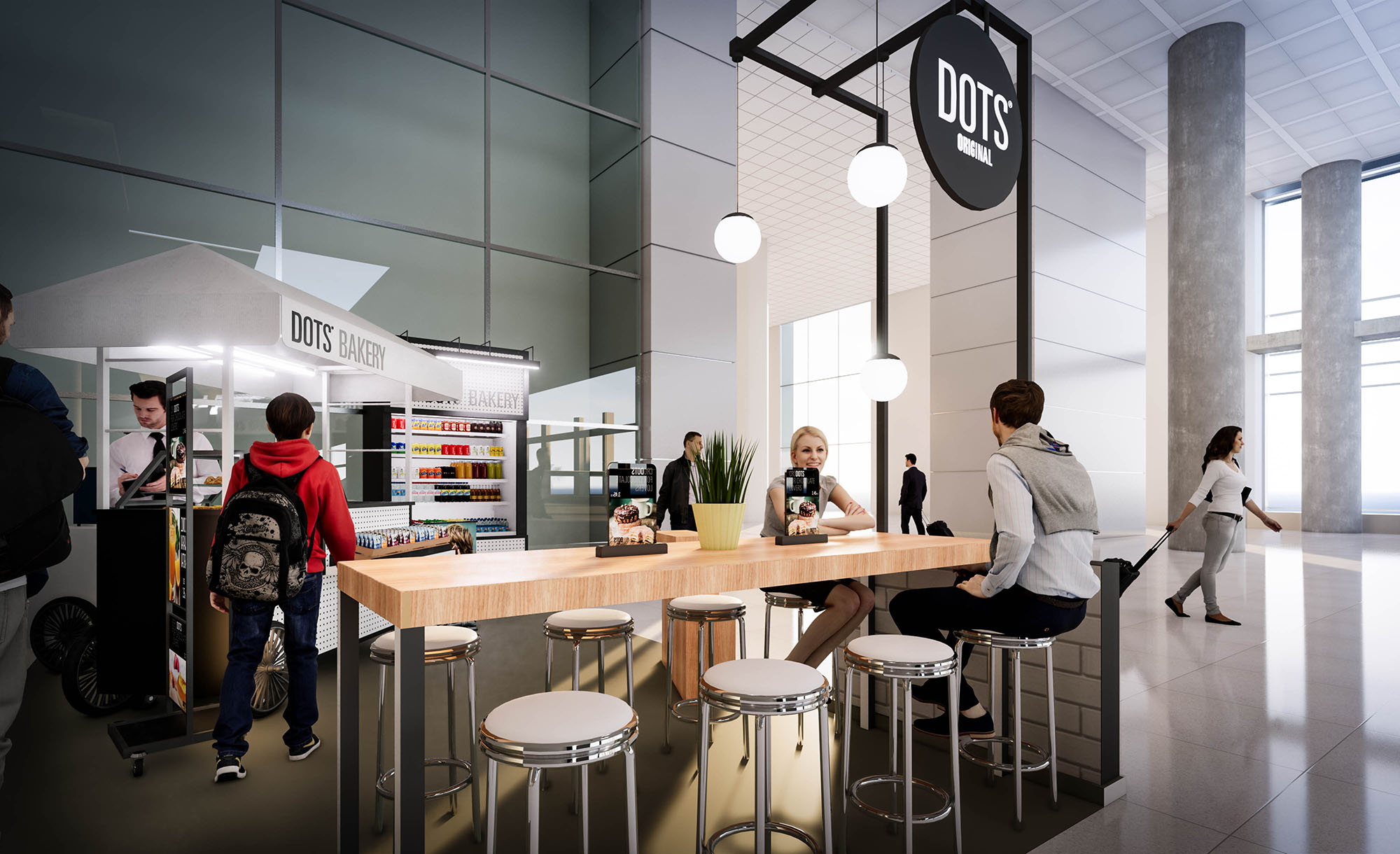
Lighting is articulated through spherical pendant luminaires and linear tracks. The circular pendants echo the “dot” identity while providing comfortable, diffuse illumination above tables. Integrated LED strips in counters and display cases accentuate baked goods and graphics, improving legibility and driving sales. In the food truck and kiosk versions, strings of point lights reinforce the festive, street-food character and ensure visibility from a distance.
Graphic design is fully integrated into the architecture: logos, typography, and iconography appear on walls, menus, and counter fronts as architectural elements rather than applied decoration. The black-and-white branding enables quick reading of essential information—products, prices, offers—across different scales, from large interior murals to compact truck signage.
The customer experience is oriented toward clarity and comfort. Self-service elements, such as open refrigerators and accessible condiments, reduce waiting times, while a variety of seating configurations addresses different user profiles: solitary travelers, families, and office workers. Visual communication is carefully positioned at eye level to support intuitive ordering and encourage repeat visits.
The food truck extends the architectural identity into the public realm. Its façade operates as a compact, fold-out elevation where windows, shelves, and menu boards form a coherent composition. Corrugated metal cladding and compact counters are designed for quick assembly and disassembly, allowing the unit to be deployed at events, streets, or transport nodes without losing the core Dots’ image.
All elements—furniture, lighting fixtures, and signage—follow modular dimensions, facilitating replication in different footprints. This modularity allows rapid adaptation to varying lease depths, ceiling heights, and circulation patterns while maintaining consistent operational flows and brand perception across all locations.
The project incorporates sustainability through the careful selection of materials and long-term operational strategies. High-wear surfaces, such as tabletops and counter fronts, use robust laminates and hardwoods from certified sources, reducing the need for frequent replacement. Metal components are primarily powder-coated steel and aluminum, chosen for recyclability and ease of maintenance.
Energy-efficient LED lighting is used throughout, with dimmable systems to adapt brightness to natural light conditions and operating hours, reducing consumption. The open, compact layouts minimize unnecessary partitioning, decreasing material use and facilitating natural cross-ventilation where possible. Standardized components and modular construction further limit waste during fit-out and allow components to be reused when units relocate or are refurbished, reinforcing the lifecycle sustainability of the Dots’ Bakery network.
LIST OF PROJECTS EXPERIENCE
Designed, Executed and/or Built Projects
SPAIN
1. Dots Bakery - Barcelona - L202
2. Dots Bakery - Barcelona - L204
3. Dots Bakery - Gran Canaria - L726
4. Dots Bakery - Valencia - L188.2
5. DotsBakery - Malaga - L137B
6. DotsBakery - Malaga - L137C
7. DotsBakery - Malaga - L144A
PORTUGAL
8. Dots Bakery - Lisboa - L10
9. Dots Bakery - Oporto - Terraza Exterior
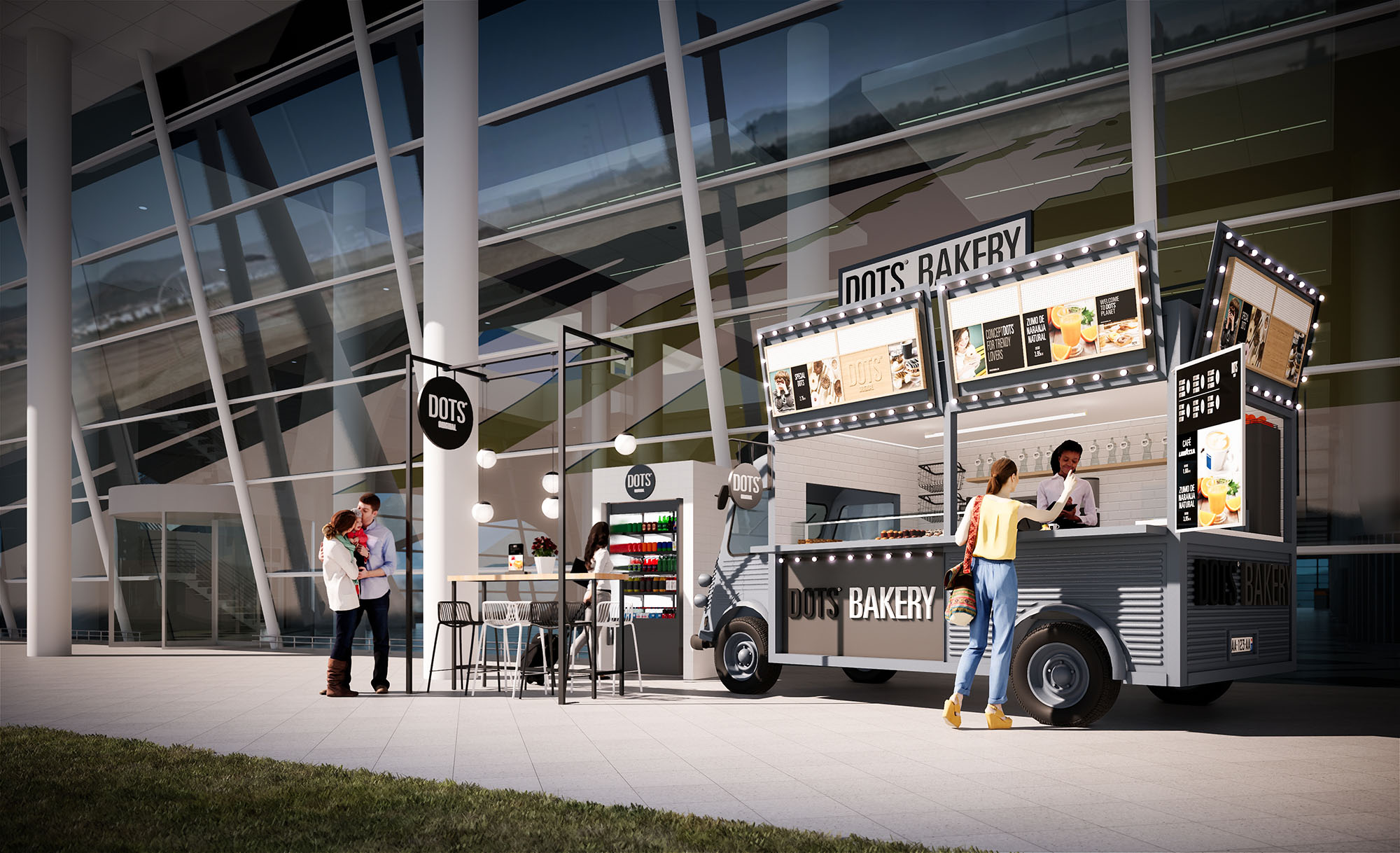
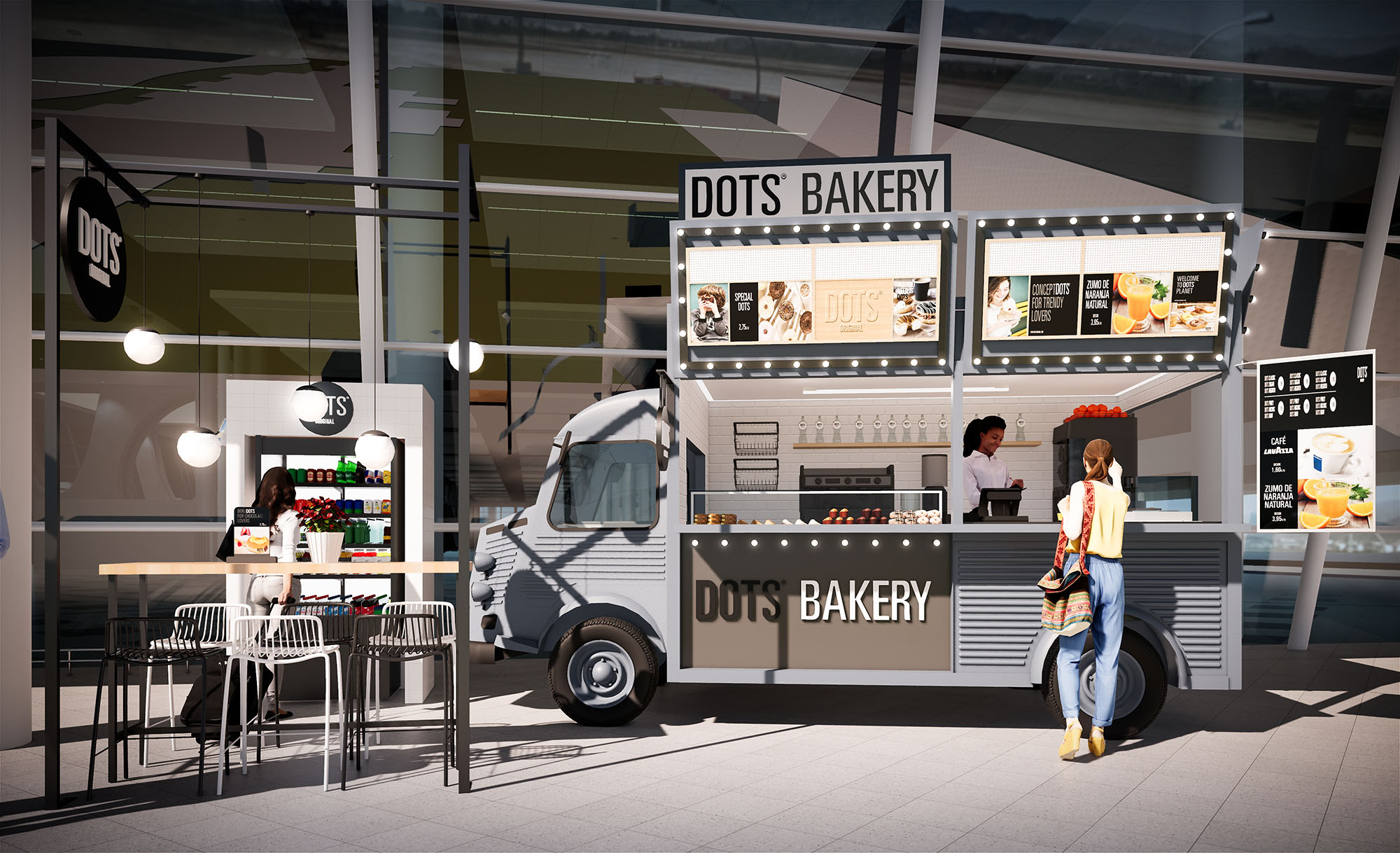
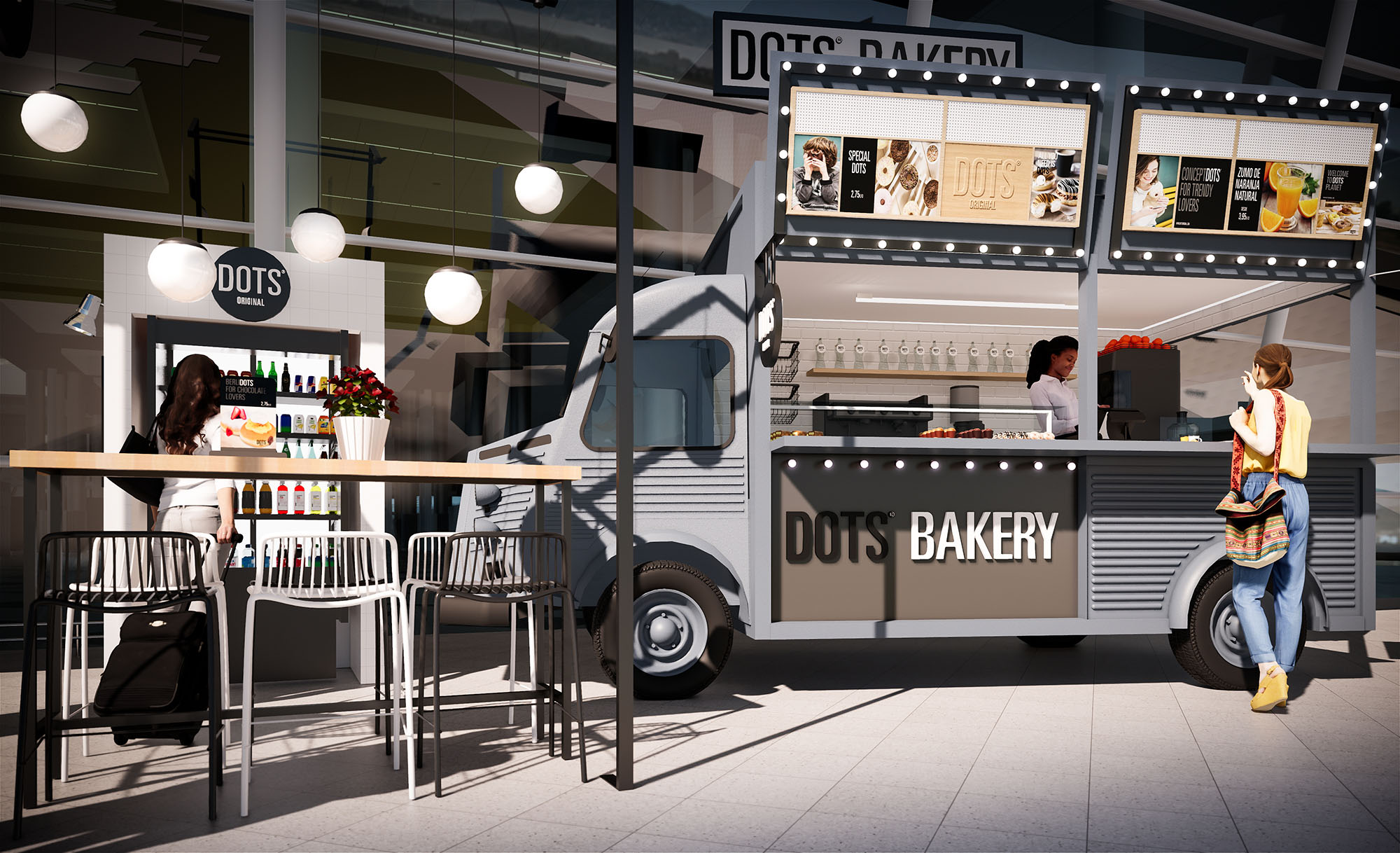

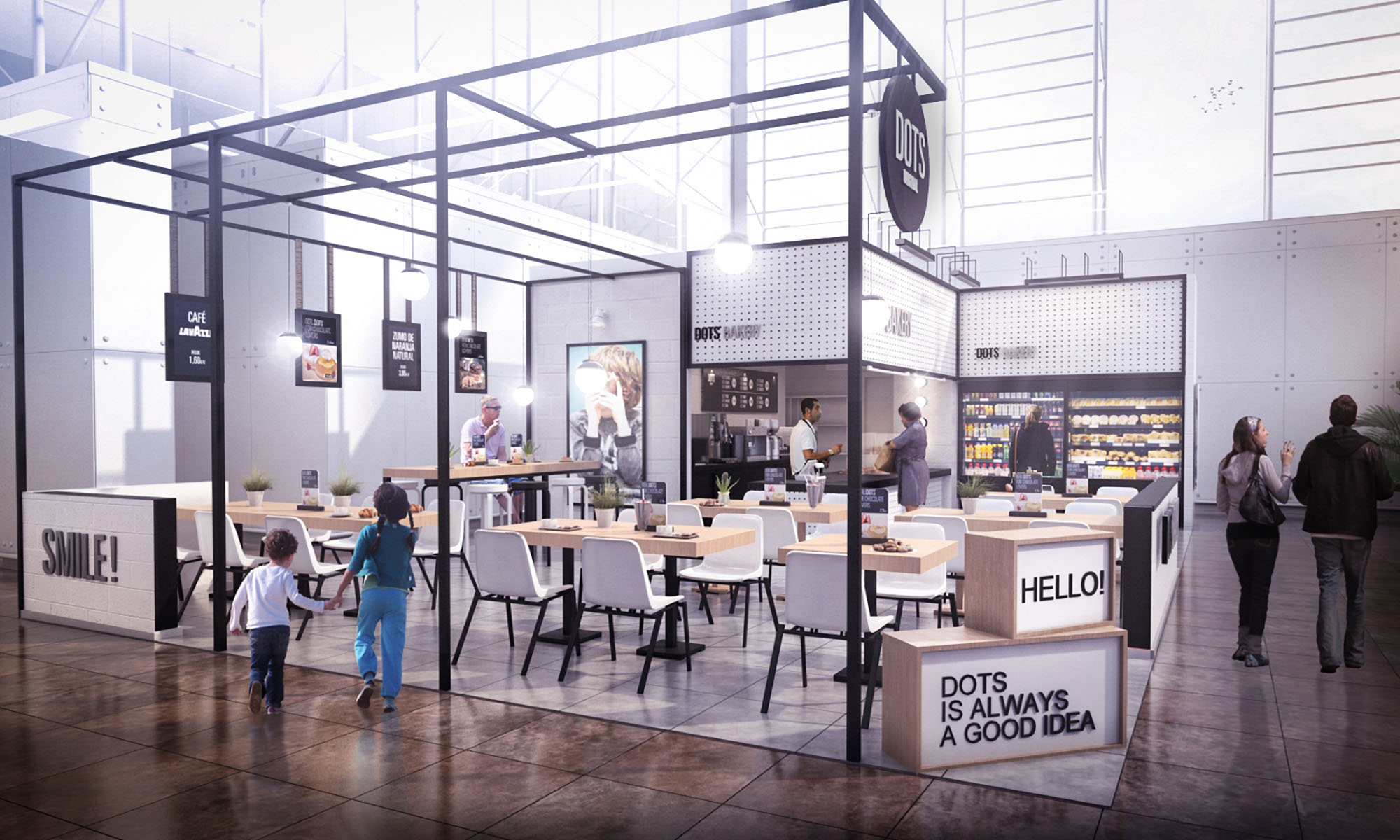
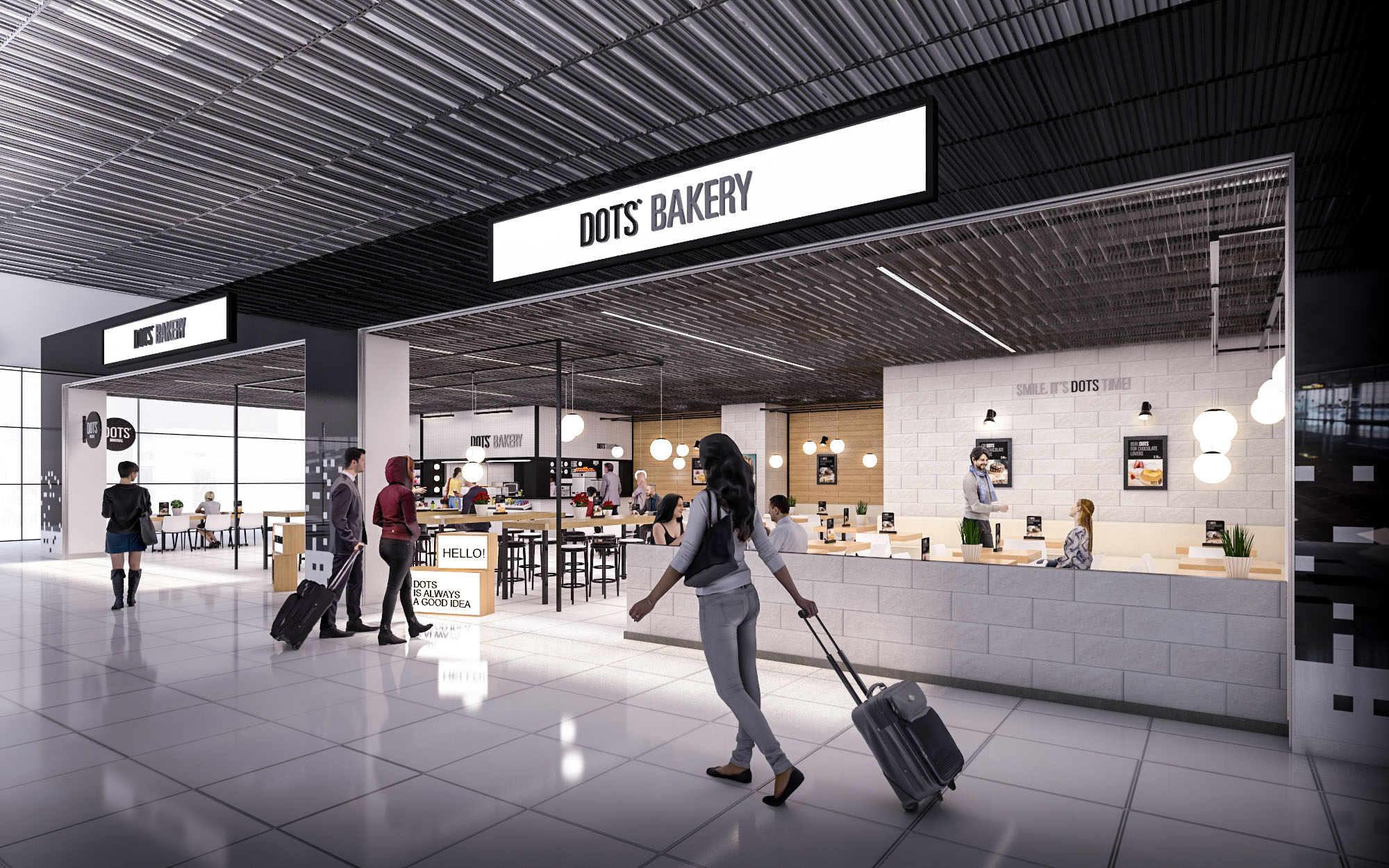
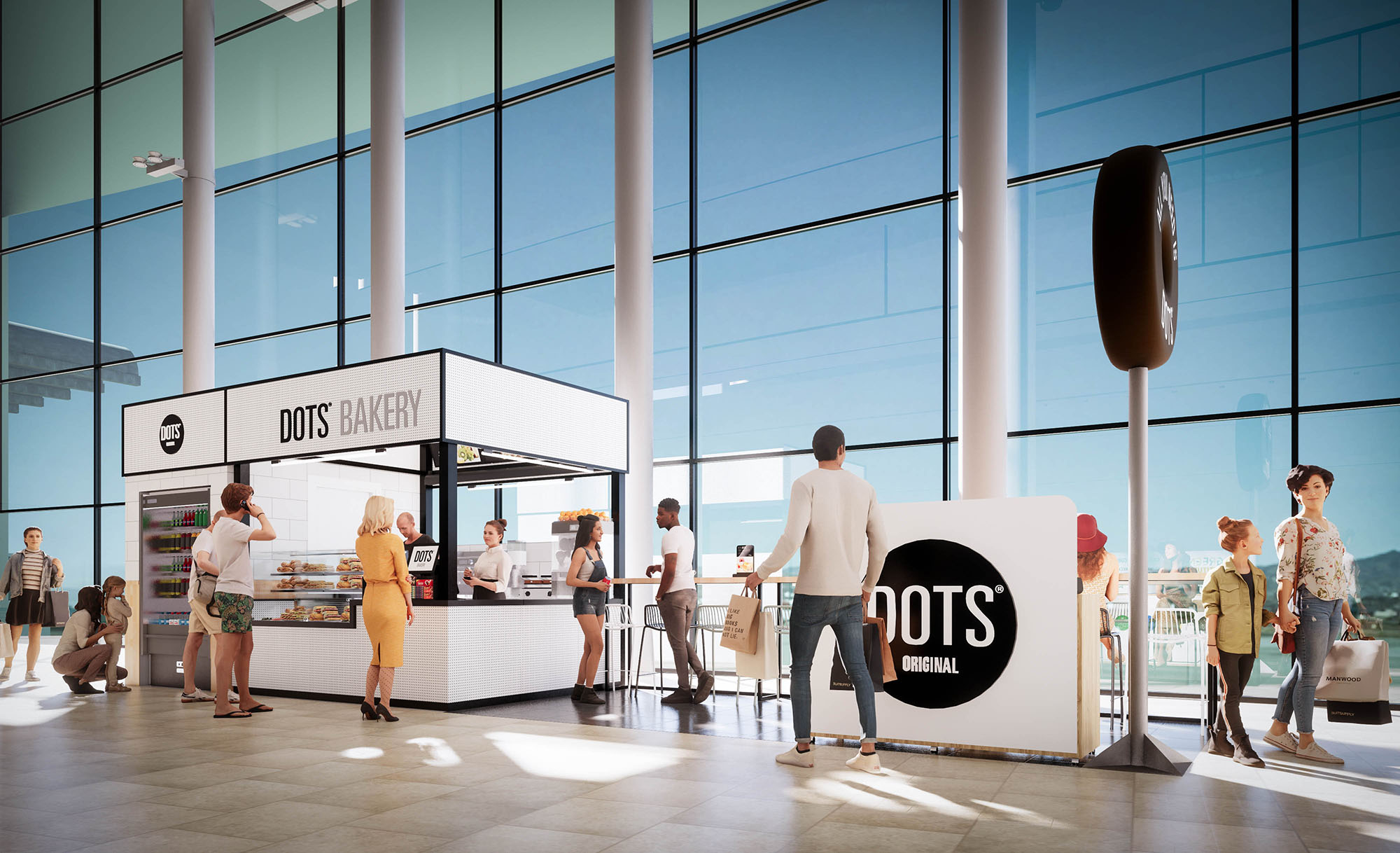
Dots’ Bakery is conceived as a flexible, replicable hospitality concept that can adapt to multiple locations across Spain and Portugal, from shopping malls to transit hubs and outdoor plazas. The design language is based on a clear, graphic identity where the idea of the “dot” becomes a visual and spatial motif, expressed through lighting, perforated panels, and circular details in signage and furniture.
The overall concept combines the warmth of a neighborhood bakery with the efficiency and clarity of a contemporary fast-casual restaurant. Open layouts, long communal tables, and visible production and service areas foster transparency and a sense of craftsmanship, while a restrained palette and strong branding ensure recognizability across all 10 units, including the food truck version.
The interior spaces are organized around a linear service counter that acts as the project’s main spine. Customers encounter the products immediately upon entry, with the display vitrines aligned to optimize visibility and encourage impulse purchases. Behind this front line, back-of-house areas are compact and rational, with clear separations between preparation, storage, and service zones to streamline operations.
Seating is structured in layers: perimeter benches for quick stays, central communal tables for groups, and high tables with stools that create a more informal bar-like atmosphere. Circulation routes are legible, with generous widths to accommodate peak hour queues, while strategic positioning of freestanding elements—such as menu totems and planter boxes—guides movement intuitively without physical barriers.
The material palette combines light-toned woods, white ceramic or painted masonry, and perforated metal panels to craft an interior that is both warm and highly durable. Timber tabletops and cladding soften the overall feel, contrasting with the industrial presence of black metal chair frames, barstools, and ceiling grids. The monochrome base—white, black, and shades of grey—is punctuated by the natural green of plants and the warm color of bakery products, which become the true chromatic protagonists.
Lighting is articulated through spherical pendant luminaires and linear tracks. The circular pendants echo the “dot” identity while providing comfortable, diffuse illumination above tables. Integrated LED strips in counters and display cases accentuate baked goods and graphics, improving legibility and driving sales. In the food truck and kiosk versions, strings of point lights reinforce the festive, street-food character and ensure visibility from a distance.
Graphic design is fully integrated into the architecture: logos, typography, and iconography appear on walls, menus, and counter fronts as architectural elements rather than applied decoration. The black-and-white branding enables quick reading of essential information—products, prices, offers—across different scales, from large interior murals to compact truck signage.
The customer experience is oriented toward clarity and comfort. Self-service elements, such as open refrigerators and accessible condiments, reduce waiting times, while a variety of seating configurations addresses different user profiles: solitary travelers, families, and office workers. Visual communication is carefully positioned at eye level to support intuitive ordering and encourage repeat visits.
The food truck extends the architectural identity into the public realm. Its façade operates as a compact, fold-out elevation where windows, shelves, and menu boards form a coherent composition. Corrugated metal cladding and compact counters are designed for quick assembly and disassembly, allowing the unit to be deployed at events, streets, or transport nodes without losing the core Dots’ image.
All elements—furniture, lighting fixtures, and signage—follow modular dimensions, facilitating replication in different footprints. This modularity allows rapid adaptation to varying lease depths, ceiling heights, and circulation patterns while maintaining consistent operational flows and brand perception across all locations.
The project incorporates sustainability through the careful selection of materials and long-term operational strategies. High-wear surfaces, such as tabletops and counter fronts, use robust laminates and hardwoods from certified sources, reducing the need for frequent replacement. Metal components are primarily powder-coated steel and aluminum, chosen for recyclability and ease of maintenance.
Energy-efficient LED lighting is used throughout, with dimmable systems to adapt brightness to natural light conditions and operating hours, reducing consumption. The open, compact layouts minimize unnecessary partitioning, decreasing material use and facilitating natural cross-ventilation where possible. Standardized components and modular construction further limit waste during fit-out and allow components to be reused when units relocate or are refurbished, reinforcing the lifecycle sustainability of the Dots’ Bakery network.


Nuestras oficinas están en Barcelona, Cancún, Chicago y Santo Domingo, pero gracias a la tecnología podemos desarrollar proyectos en cualquier parte del mundo.
Barcelona
Bac de Roda 136
08020, Barcelona
Spain
Madrid
Av. de Buendía 11
19005 Guadalajara (Madrid)
Spain
Chicago
373 Hazel Ave, Apt A1
60022, Glencoe, Illinois
United States