

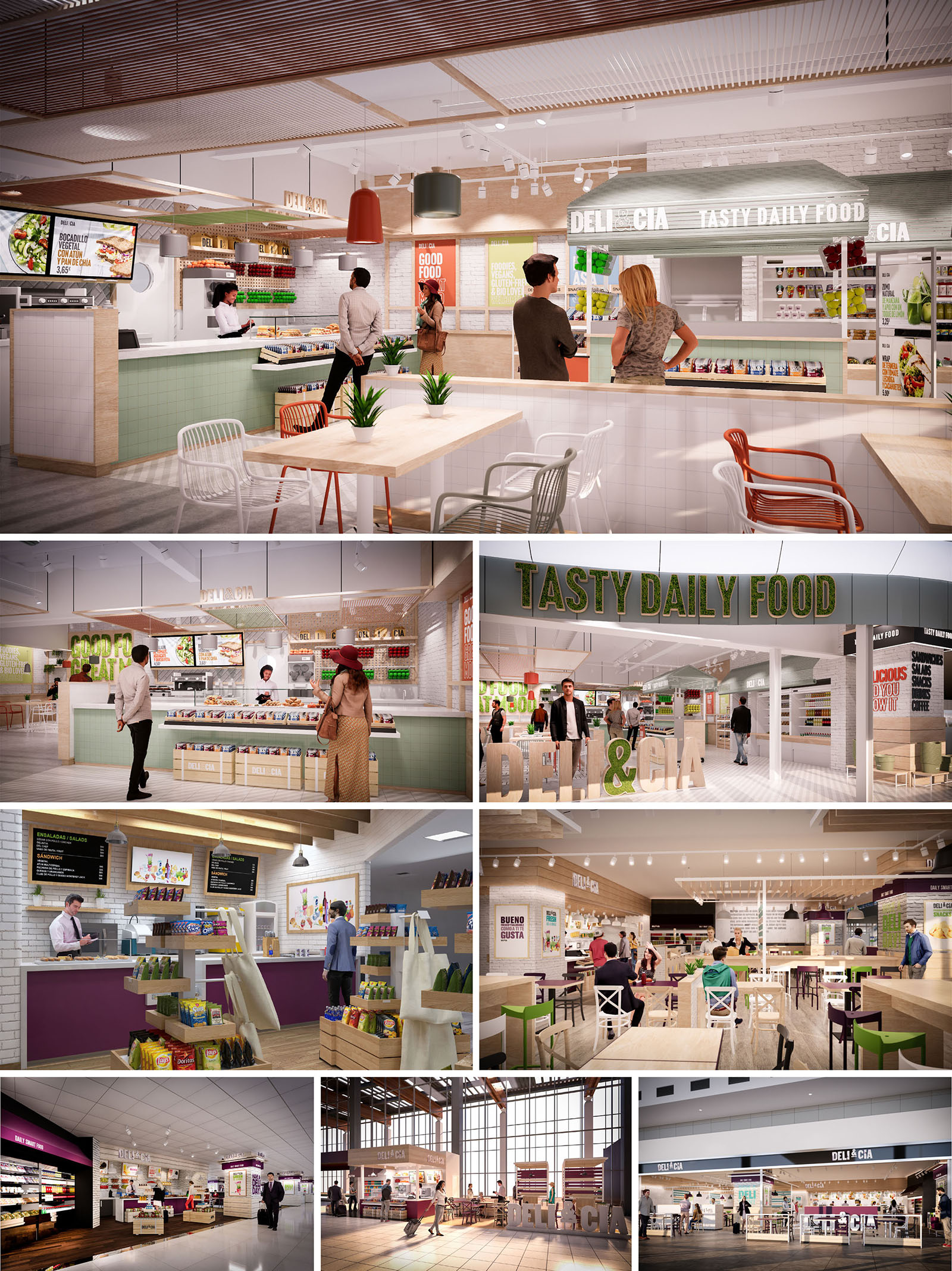
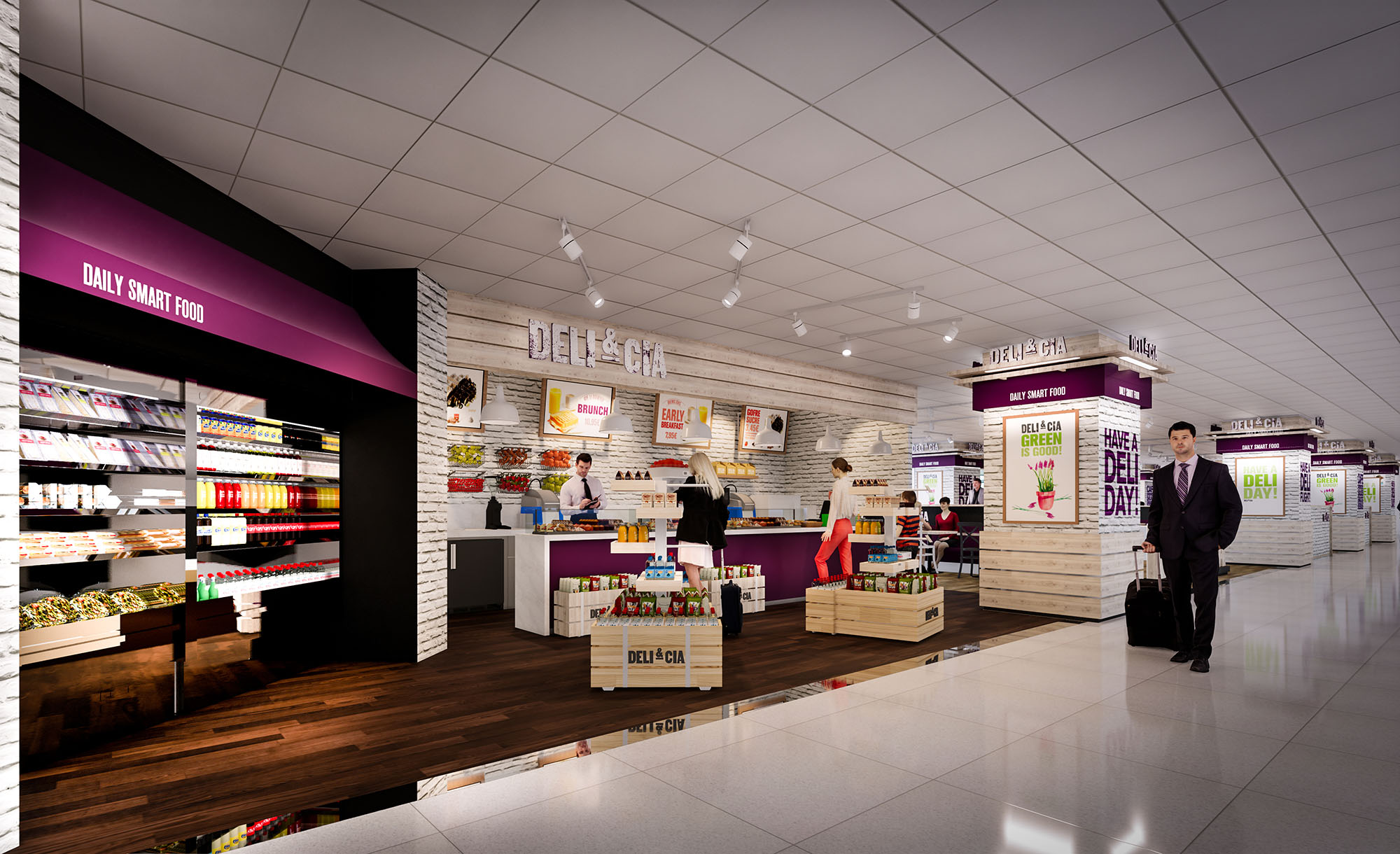
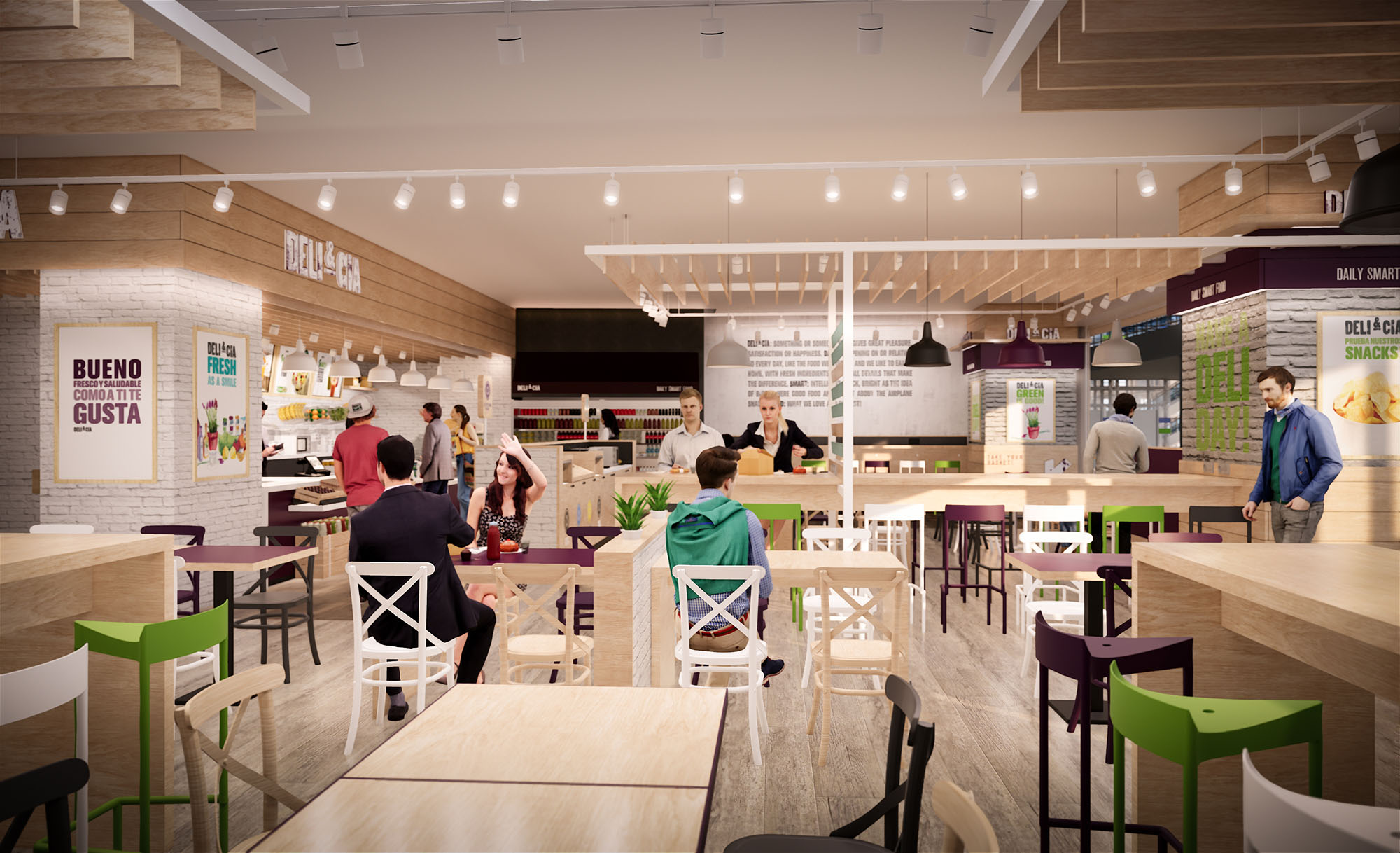
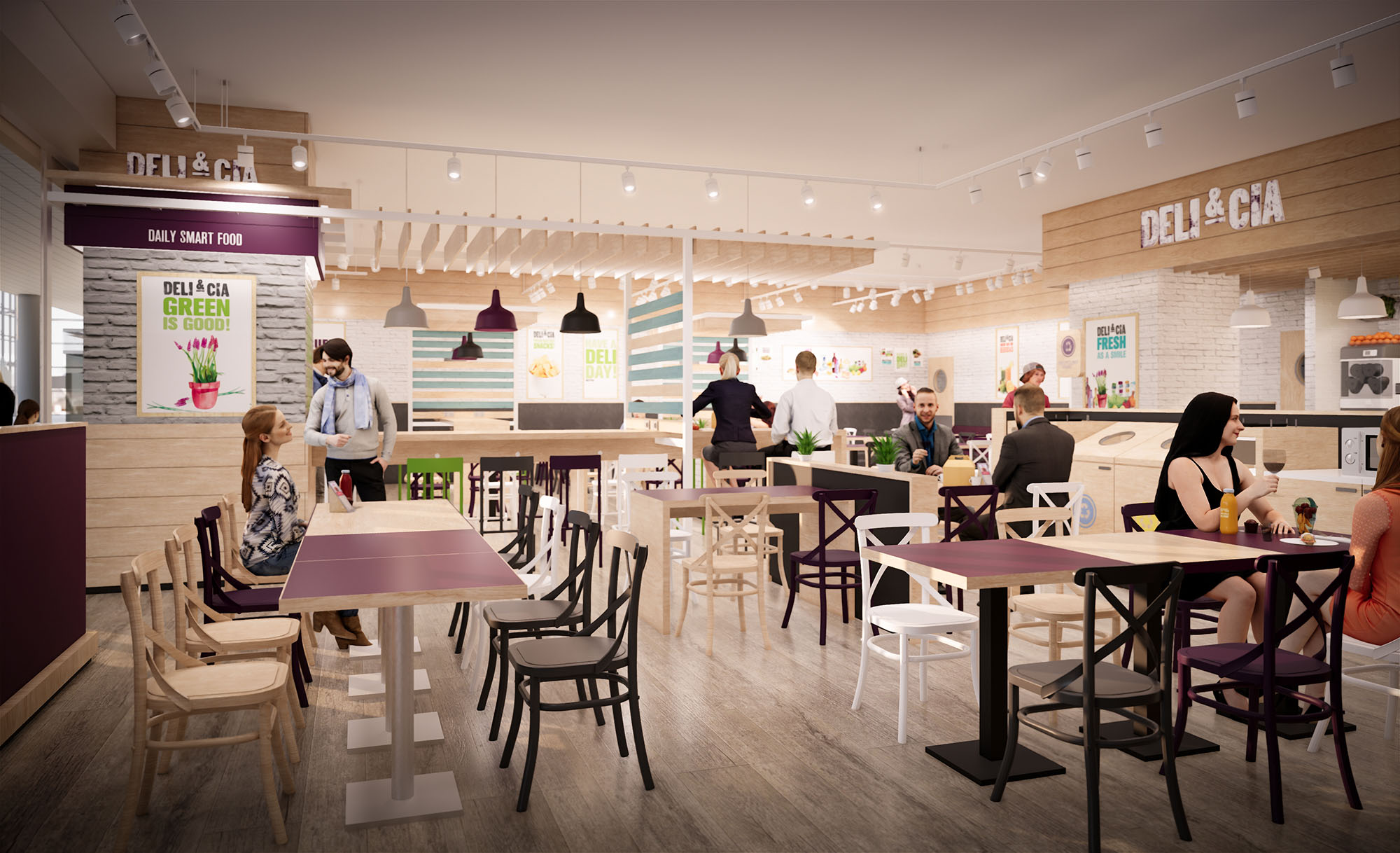
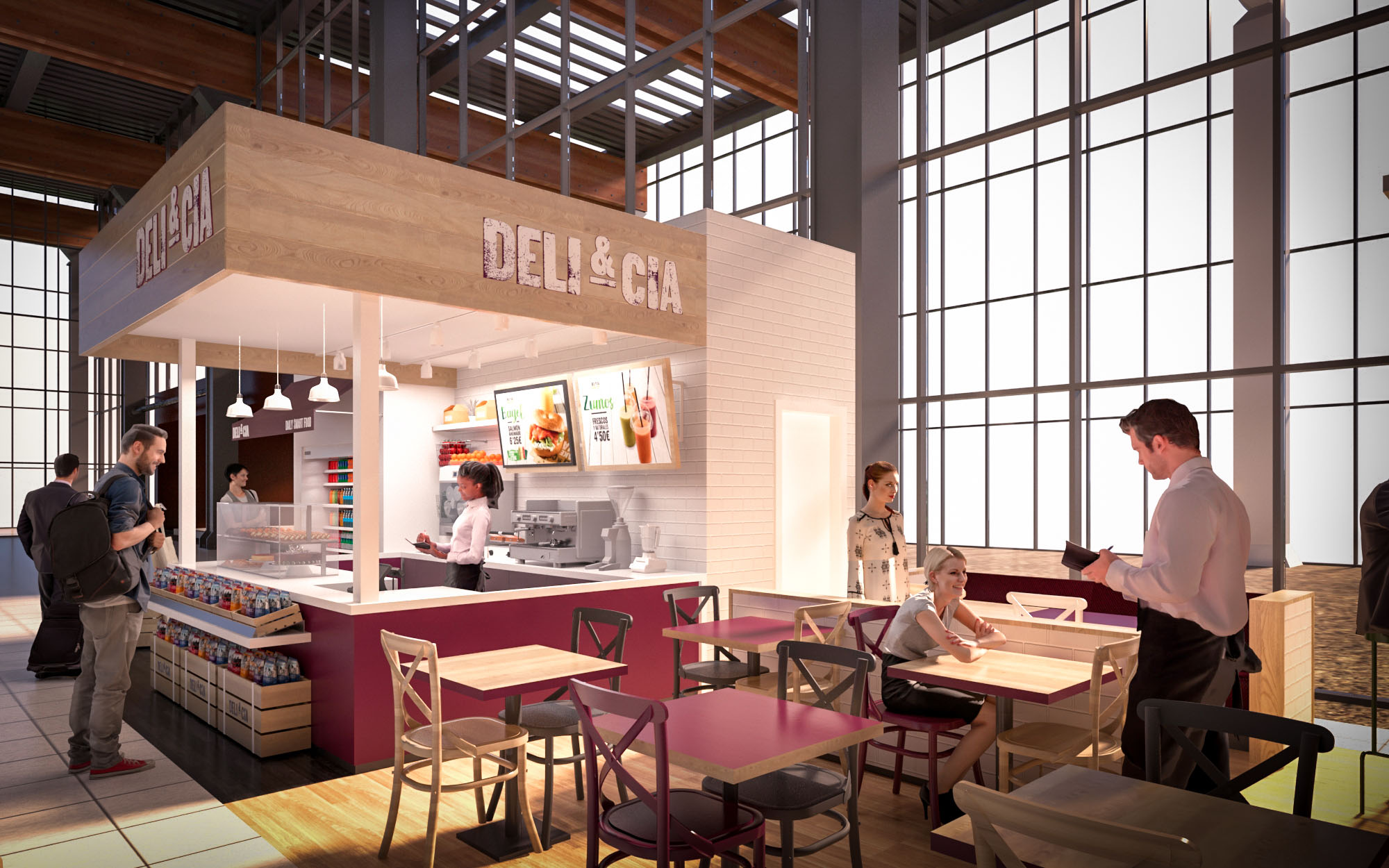
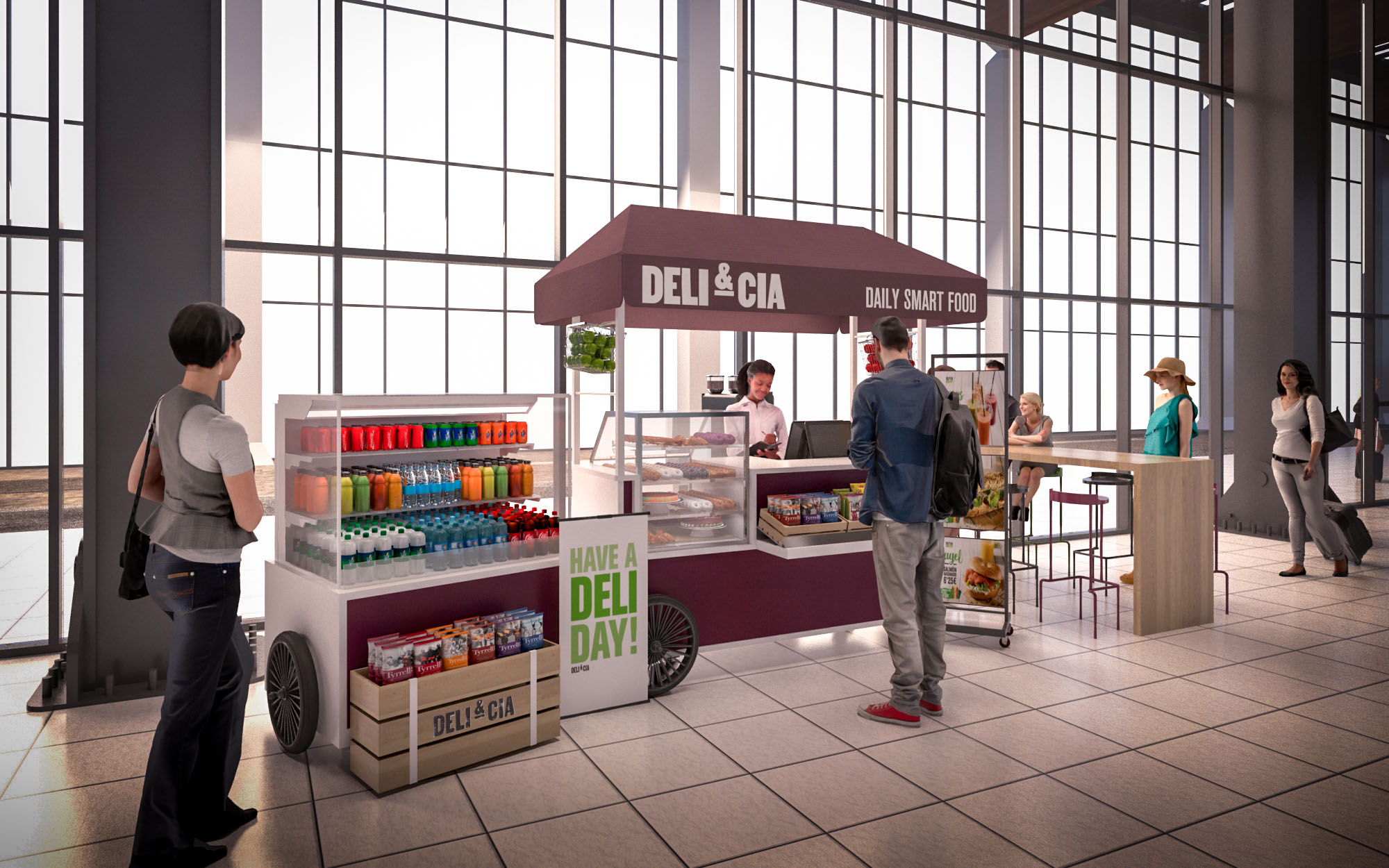
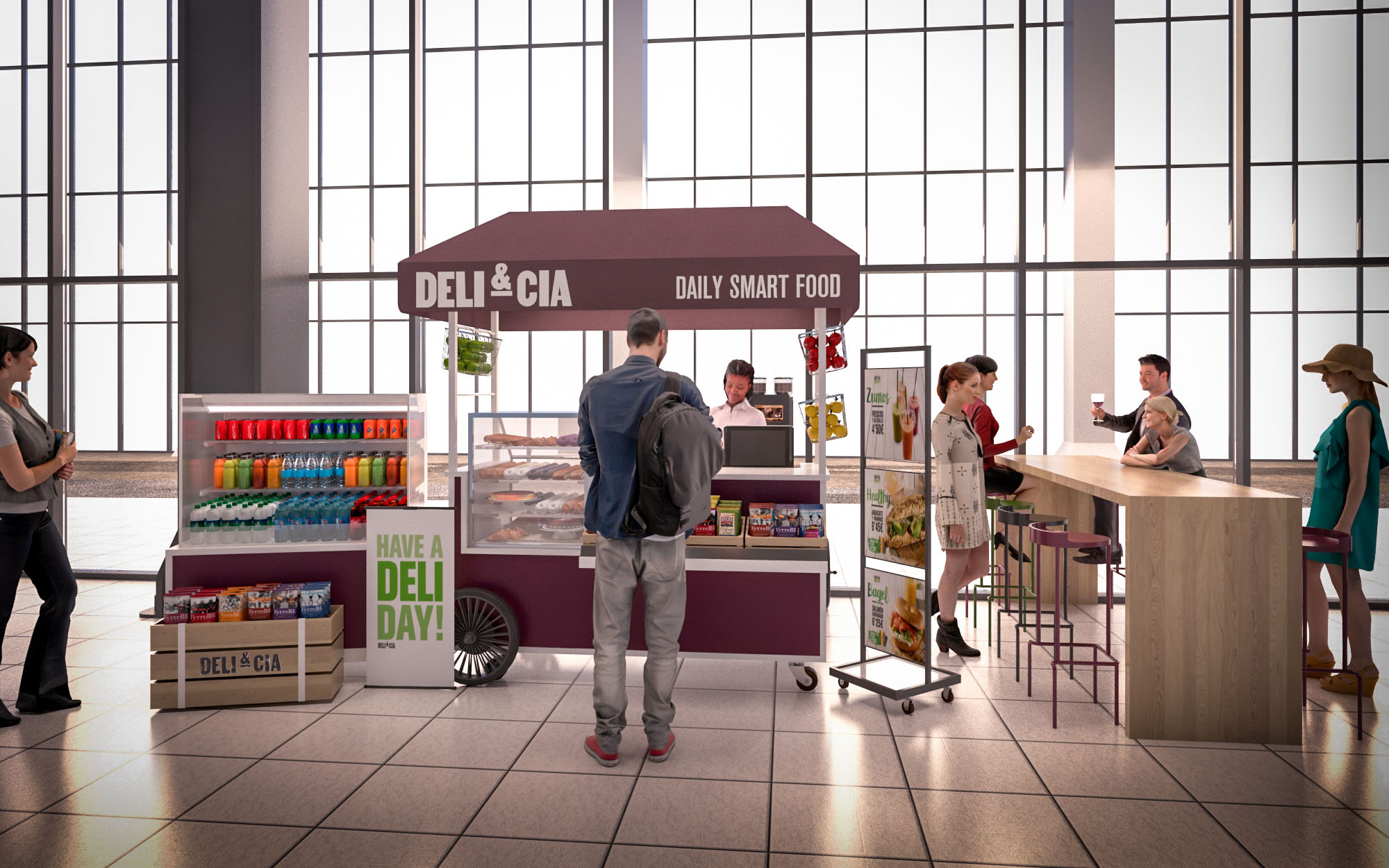
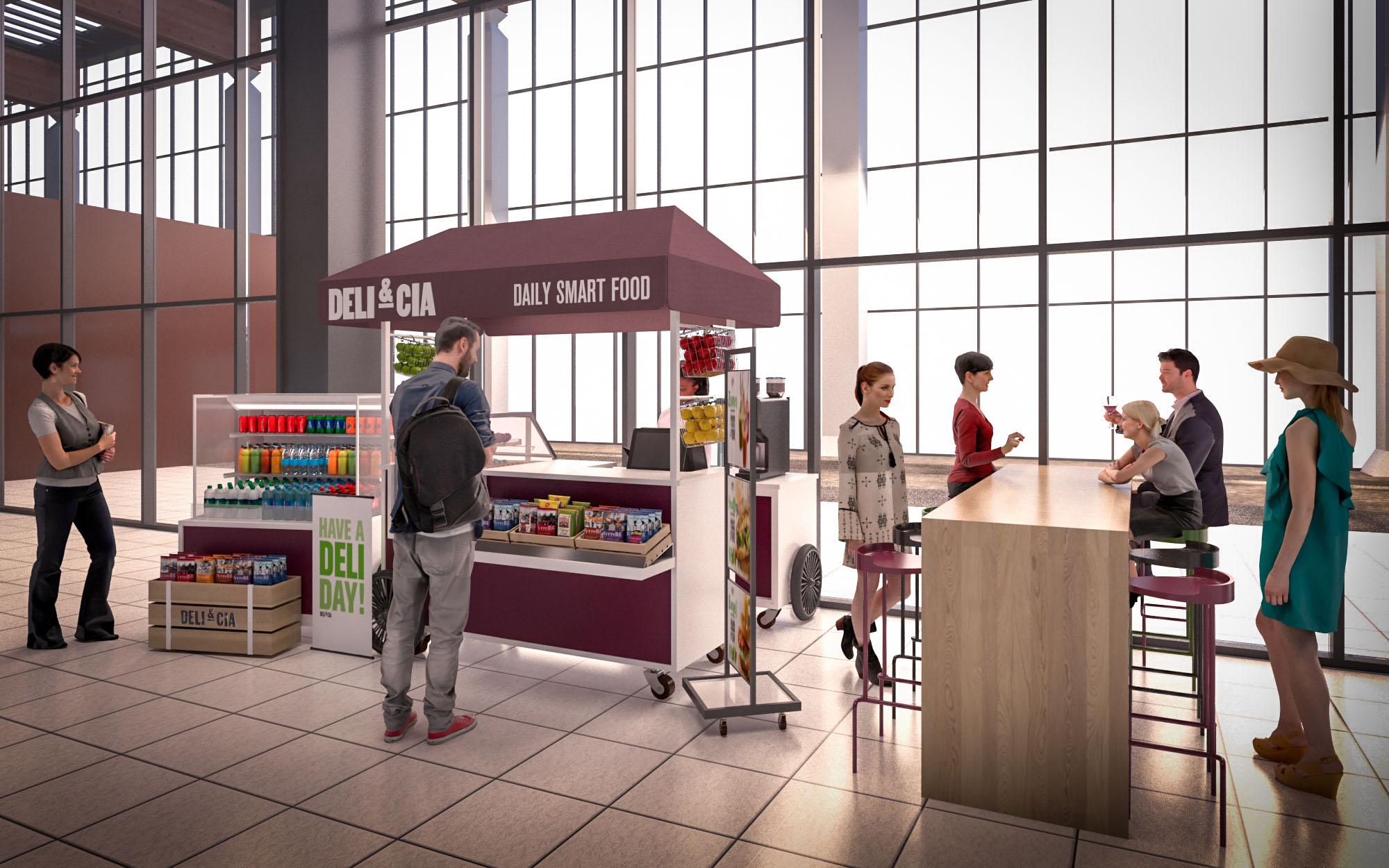
DELI & CIA is conceived as a contemporary fast-casual food concept that combines the spontaneity of grab-and-go with the warmth of a neighborhood deli. Across the different locations in Spain, Portugal, Chile and México, the design language remains consistent: a fresh, luminous environment that communicates transparency, health and everyday accessibility. The space is organized as an open market counter wrapped by islands of product display and casual seating, dissolving the boundary between kitchen, retail and dining.
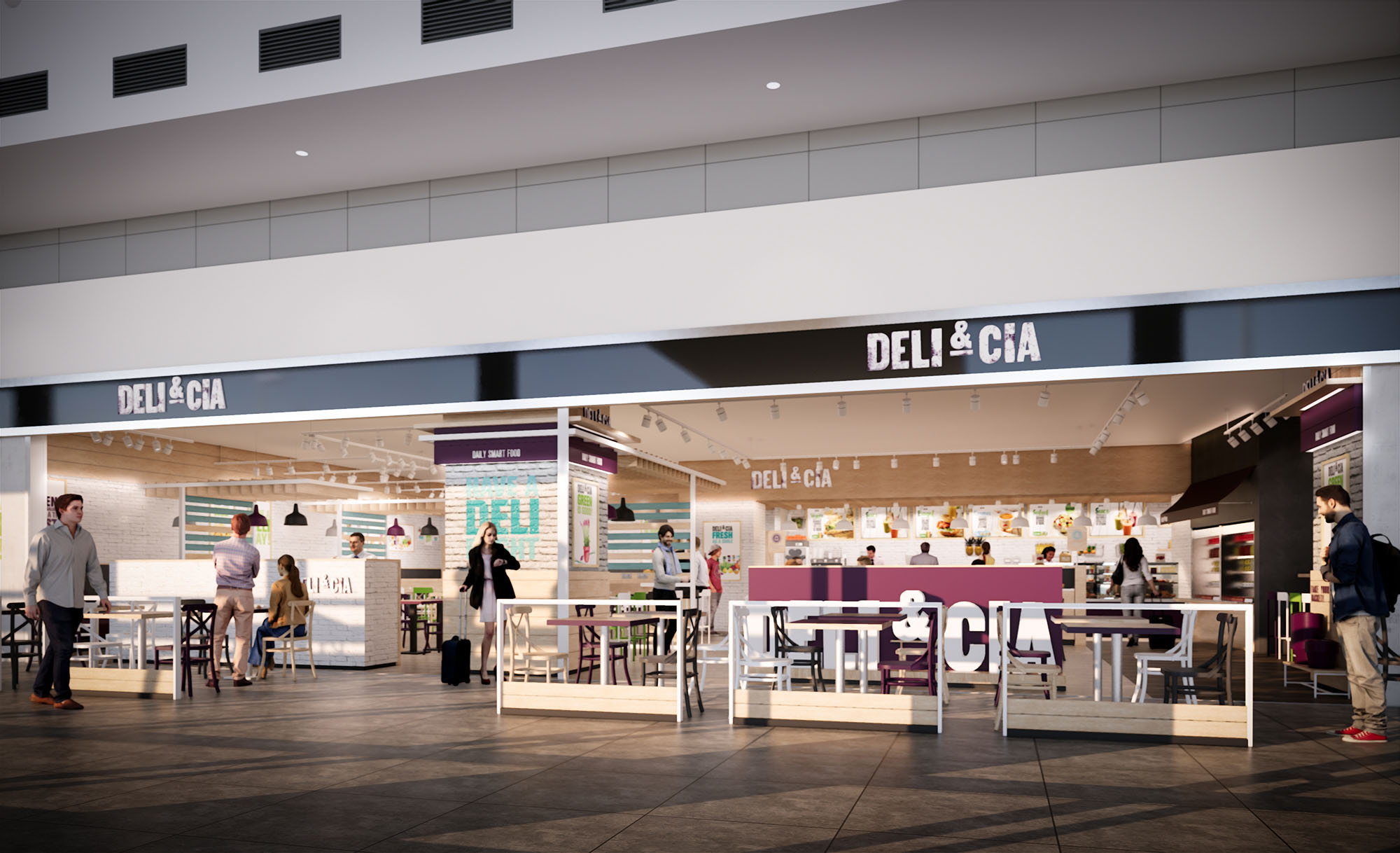
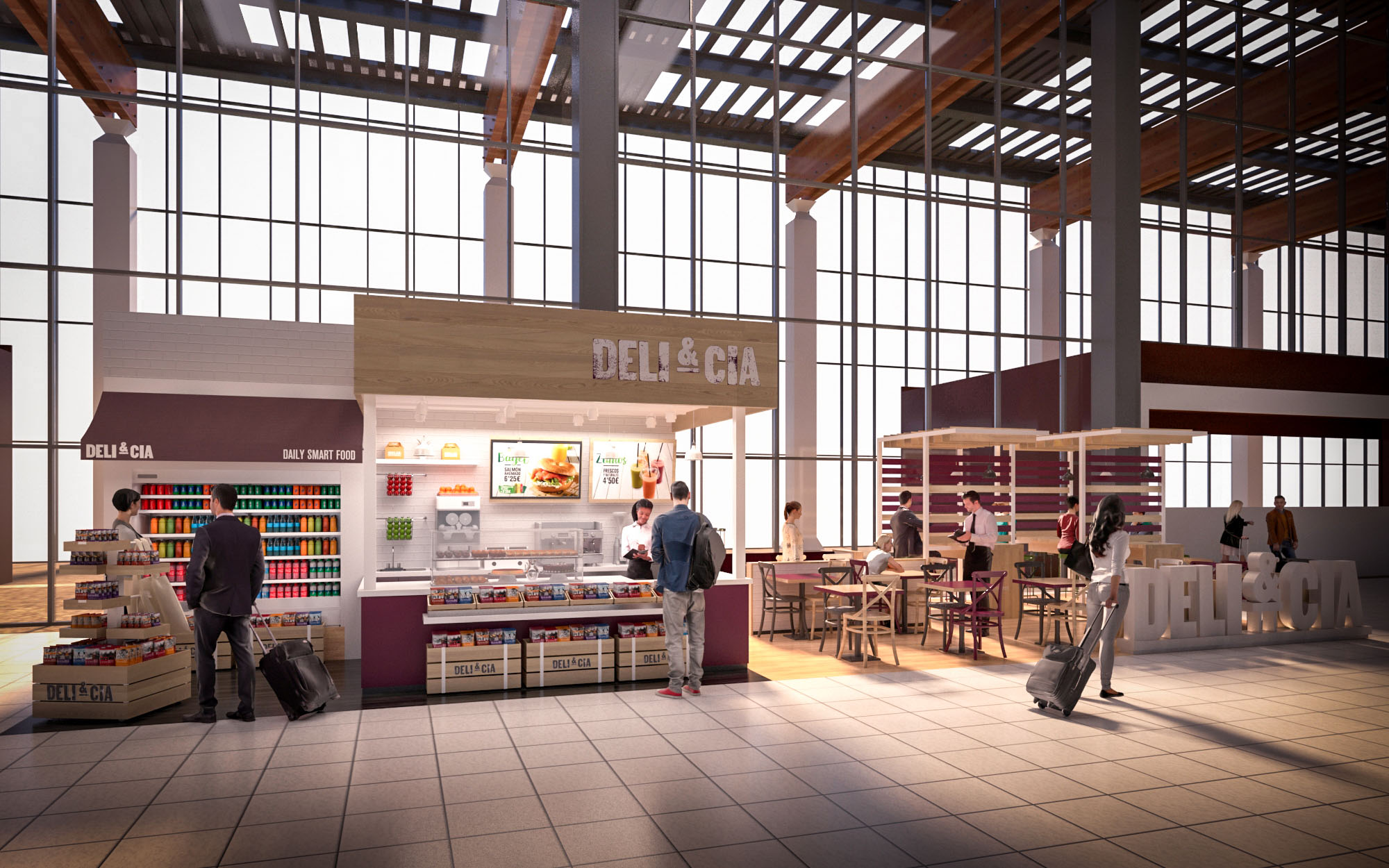
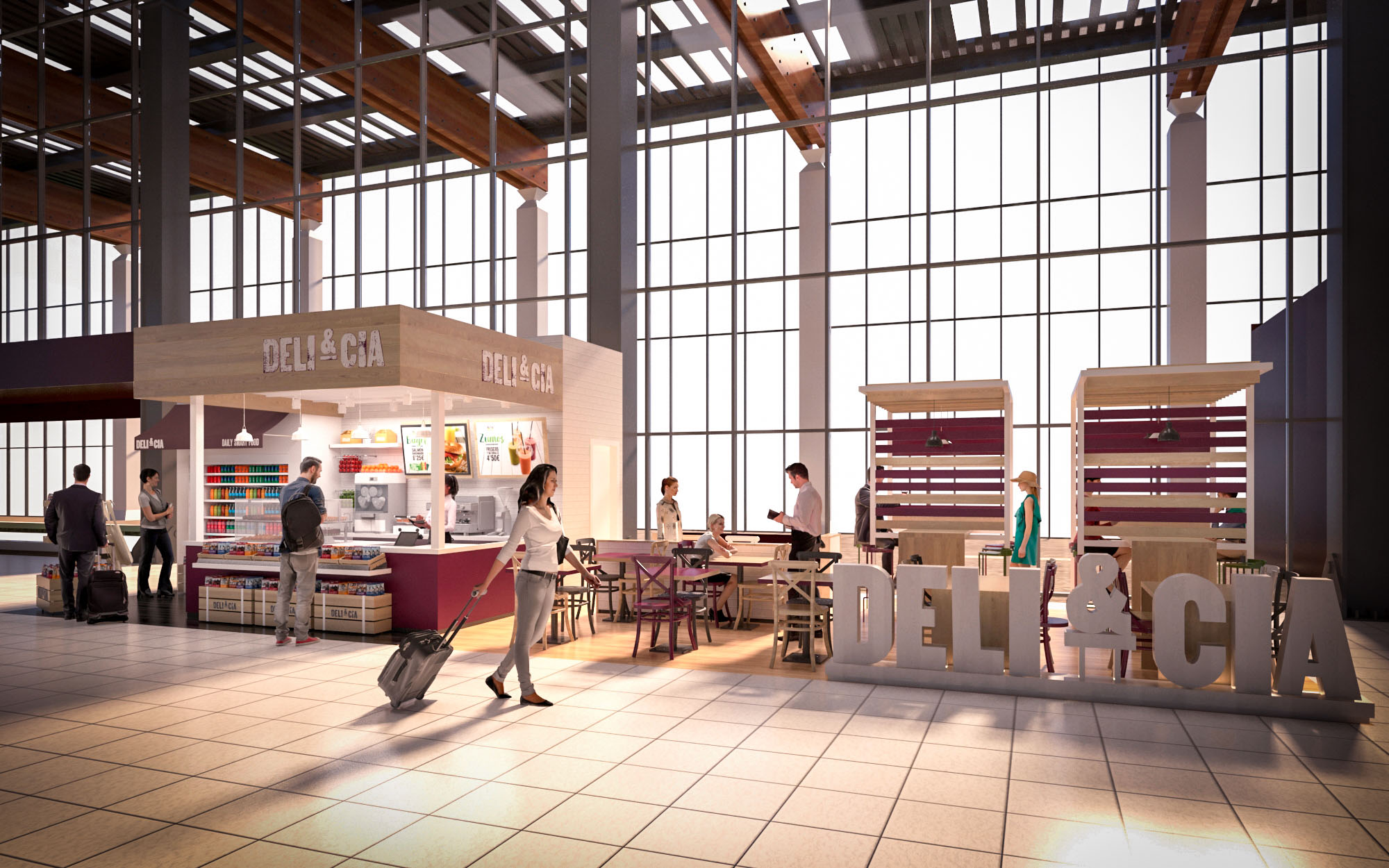
The brand identity is translated into architecture through clear, legible signage and volumetric elements that float above the counters. Generous visual connections between preparation areas, self-service lines and eating zones emphasize an honest, “nothing to hide” attitude, reinforcing trust in the food offer and encouraging intuitive circulation.
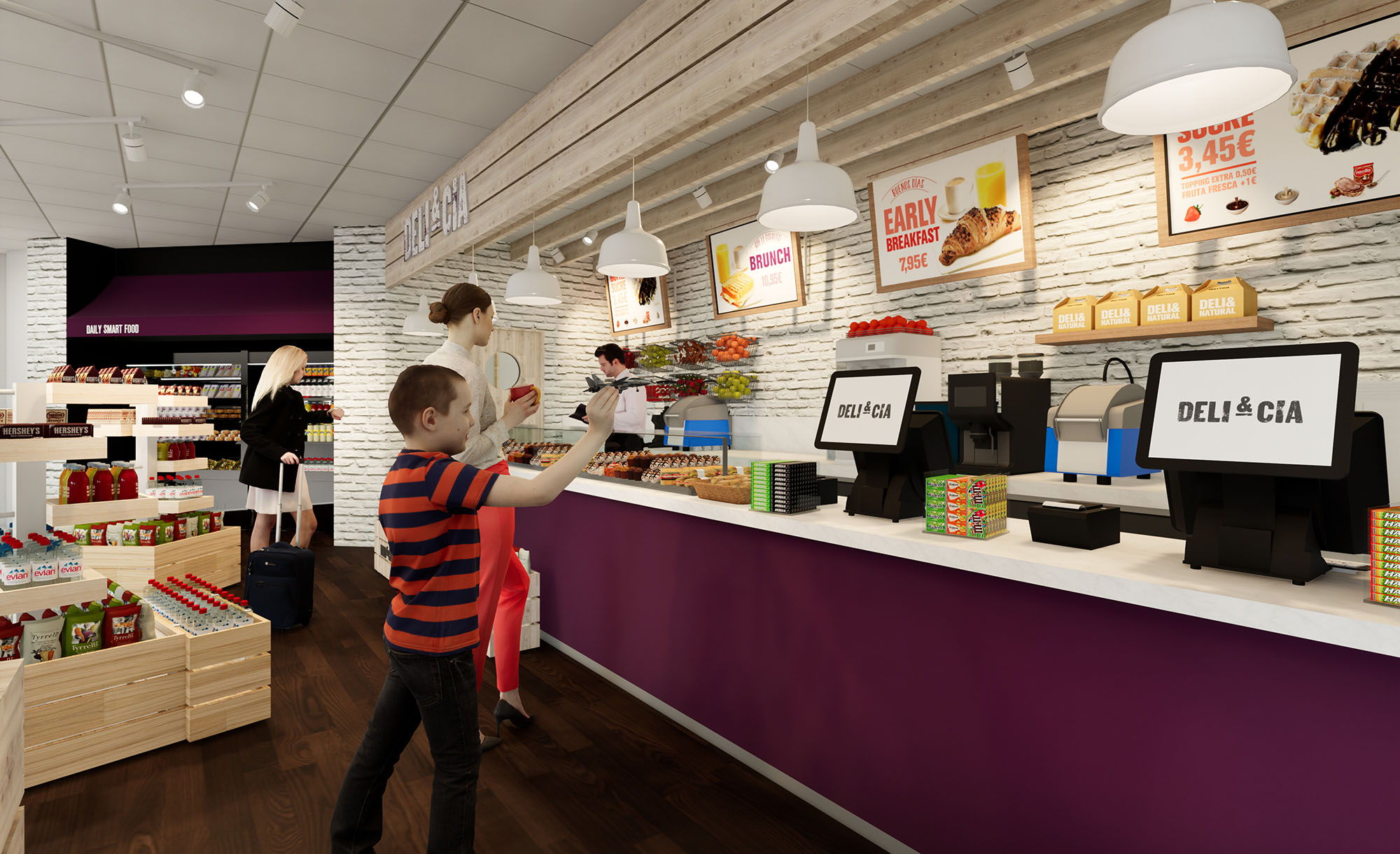
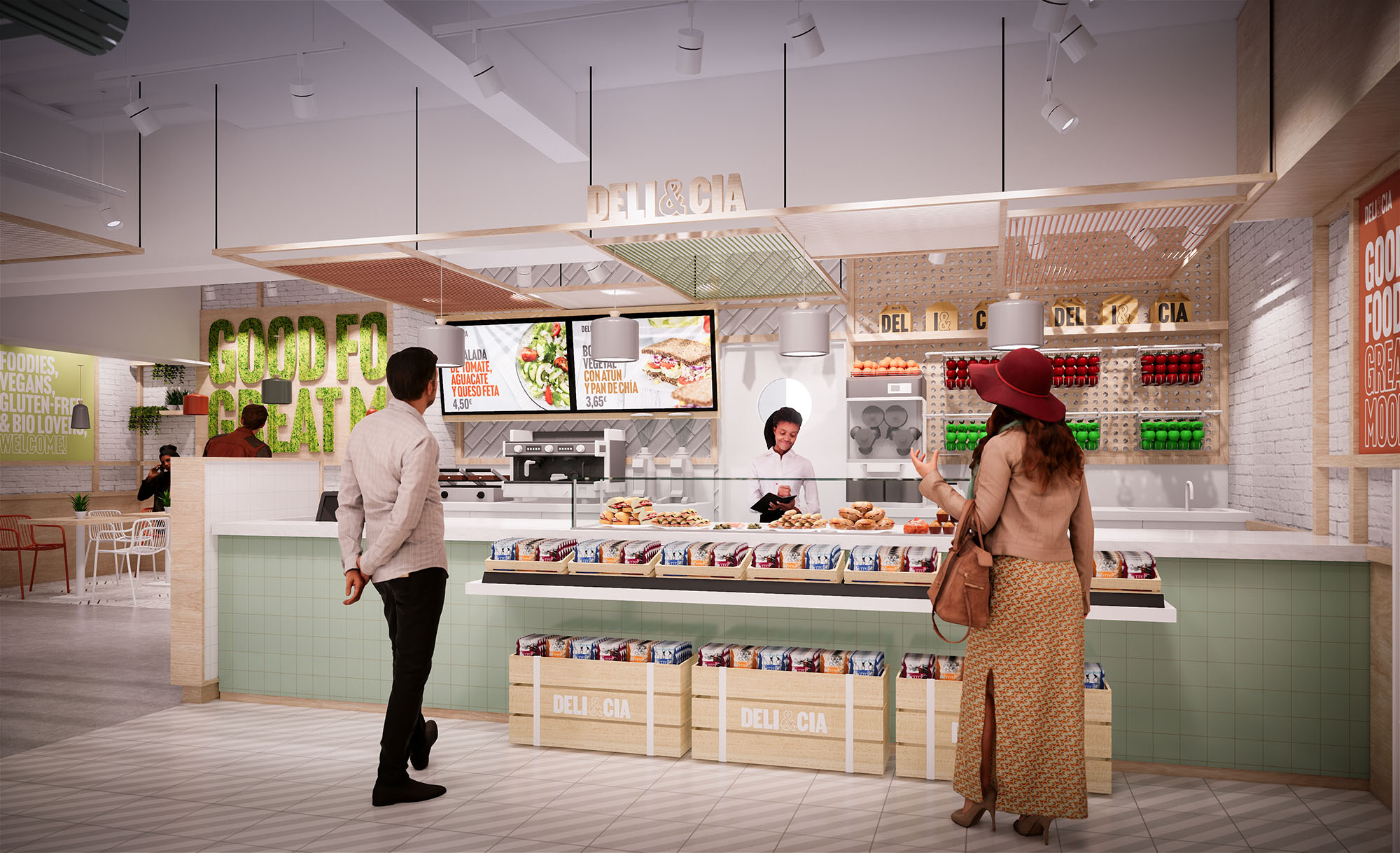
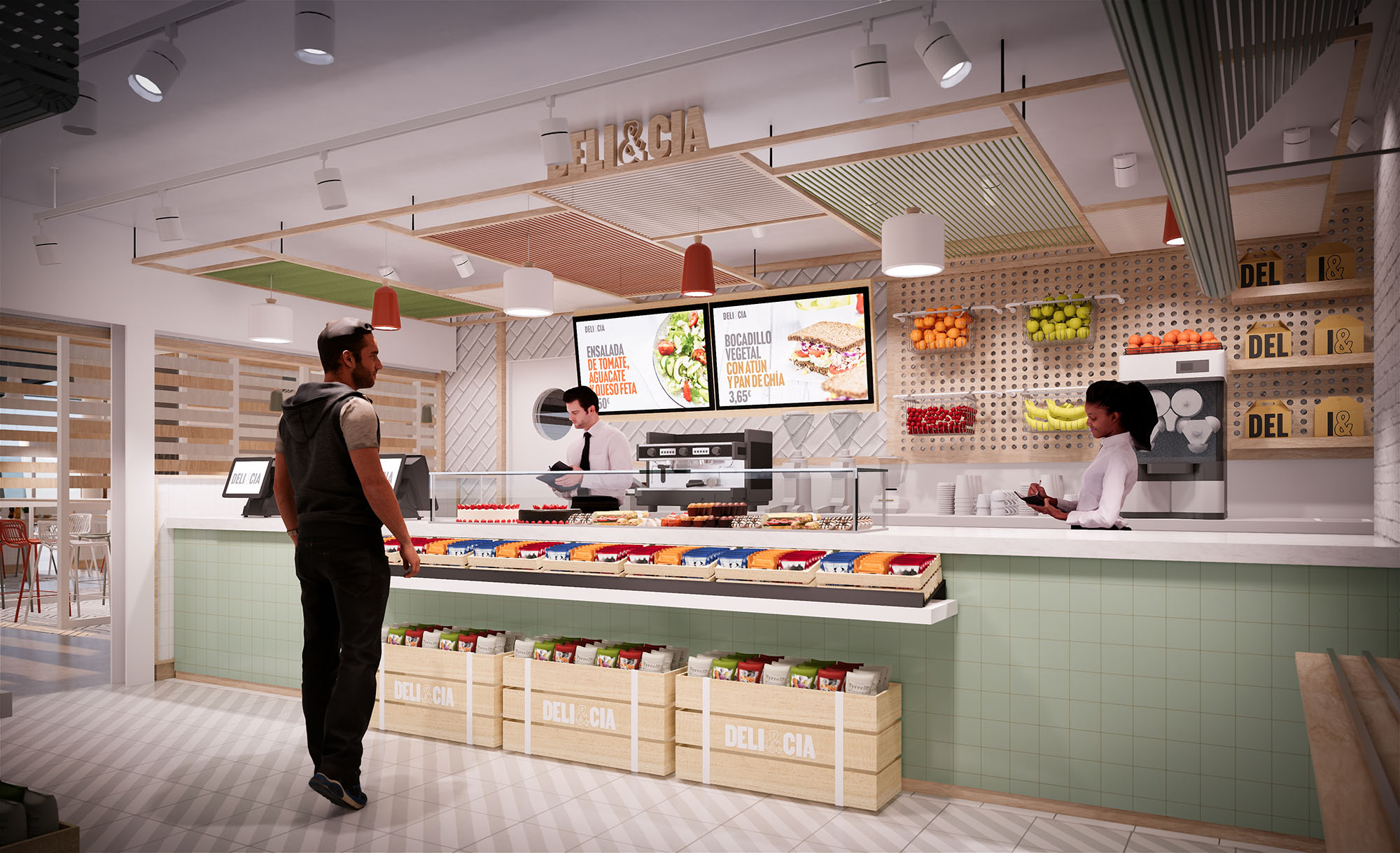
The interior layout is based on a linear service counter that anchors the space and guides customers from menu selection to payment and pick-up. This counter is complemented by freestanding merchandise displays that create soft partitions without obstructing views. The sequence allows for high throughput during peak hours, while maintaining a relaxed, open ambience.
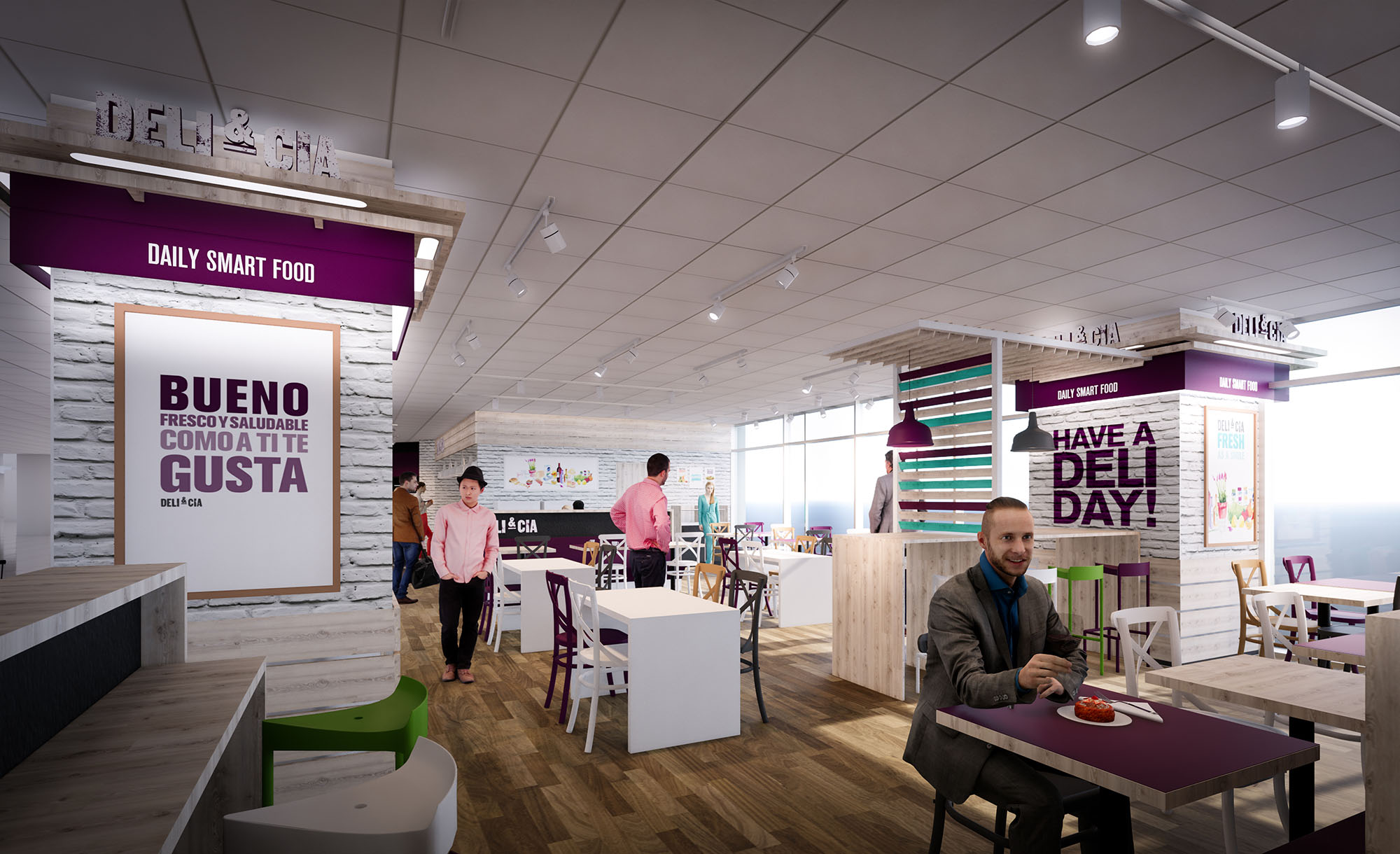
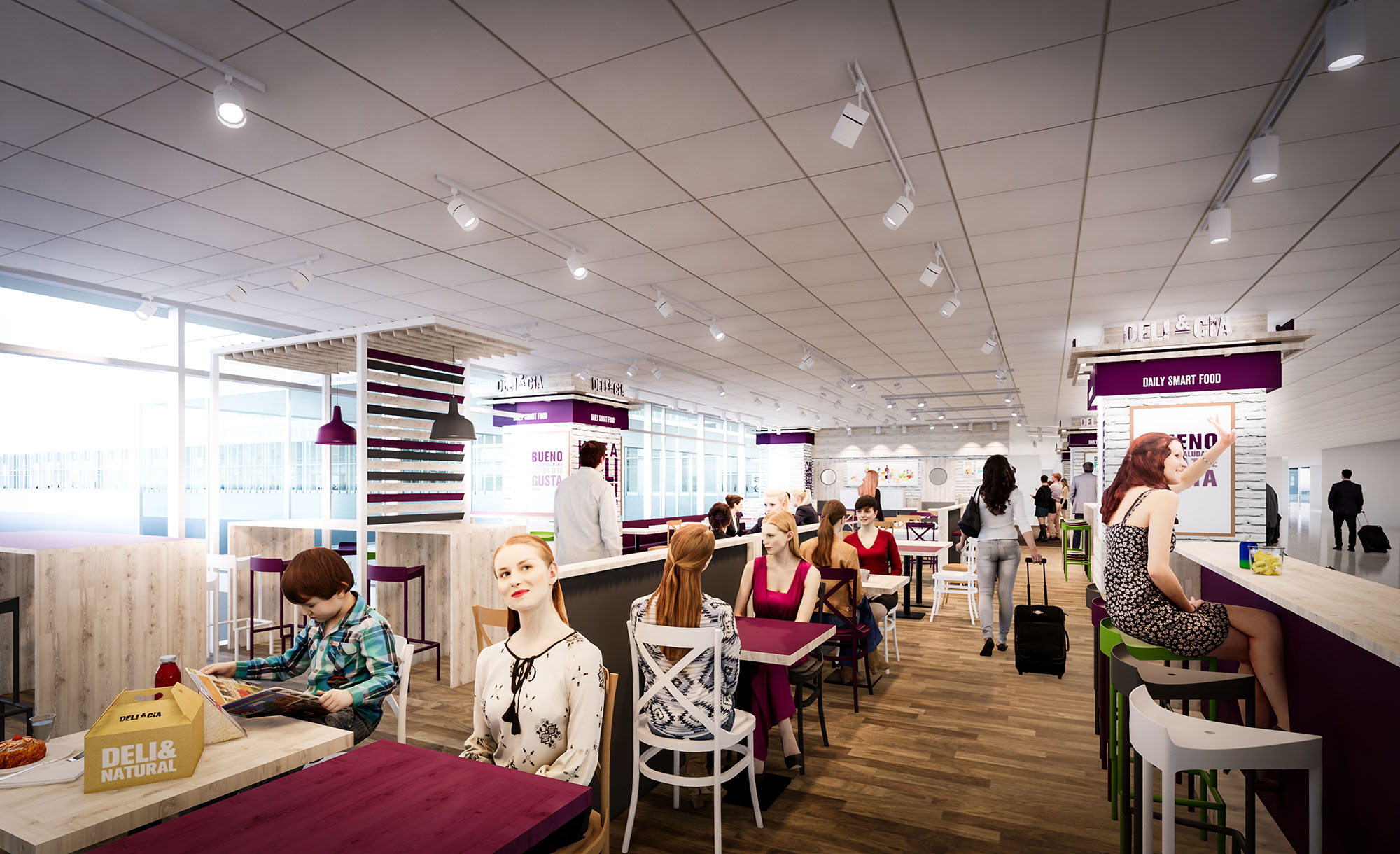
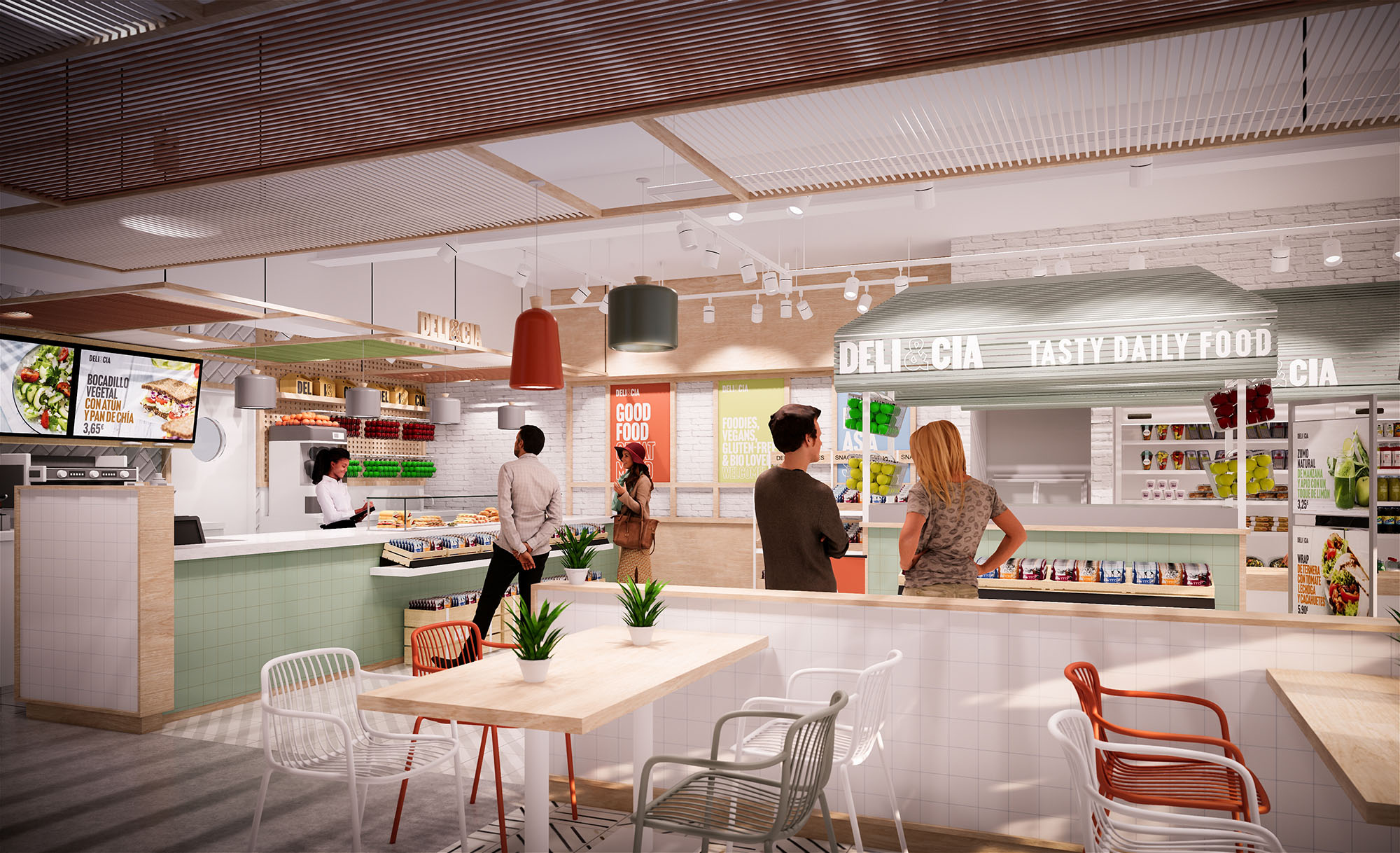
Seating zones are strategically located at the perimeter and in central islands, offering both quick-stop tables and more comfortable areas for longer stays. Mixed-height furniture, from bar counters to standard tables, generates a varied landscape that adapts to solo travelers, couples and small groups. Wayfinding is intuitive, with clear visual cues from color-coded areas and suspended signage indicating food stations and self-service points.
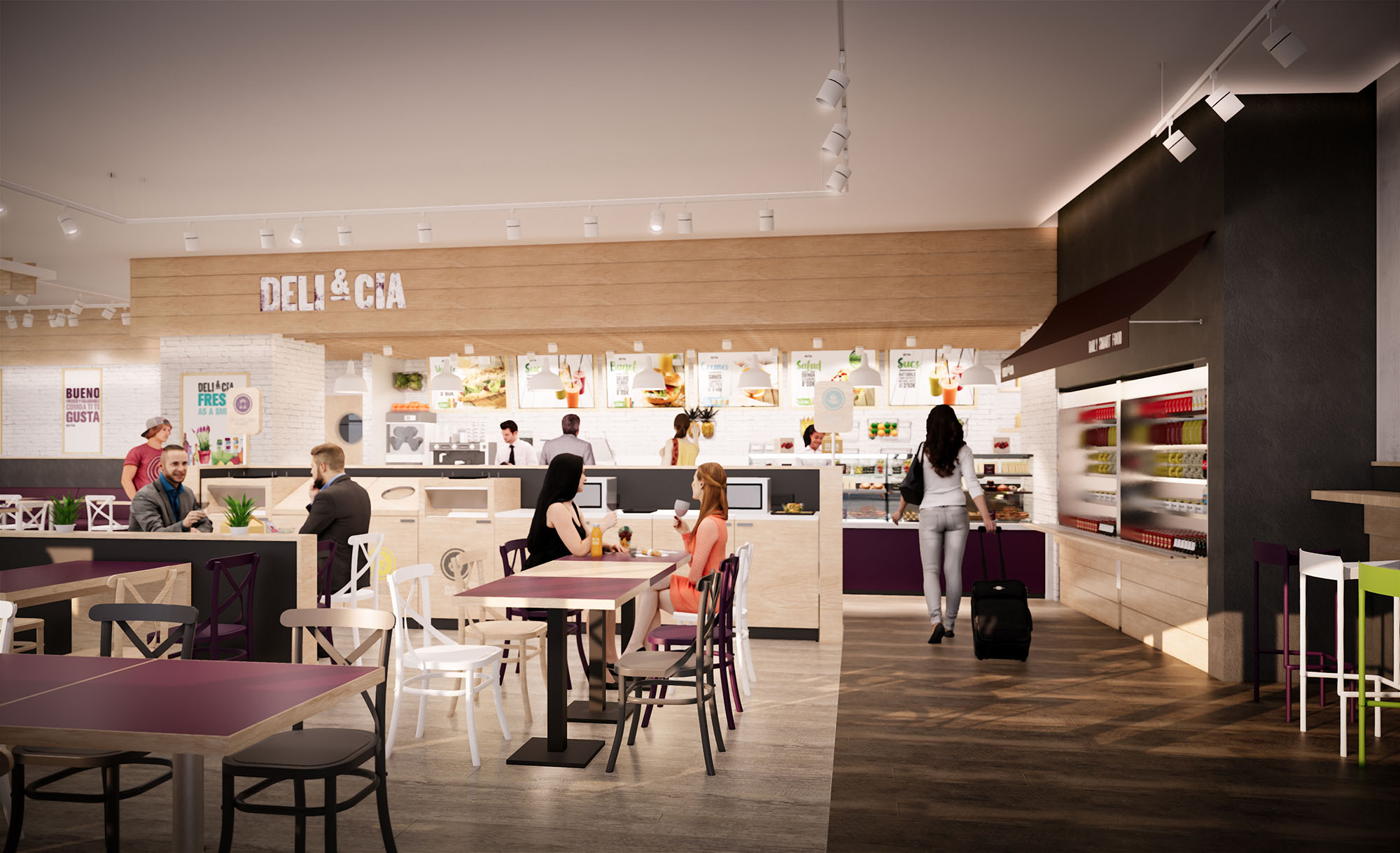
The material palette balances the cleanliness required for food environments with a domestic, approachable character. Light ceramic tiles and white brick cladding provide a hygienic and easily maintainable base, while natural or light-toned woods introduce warmth and tactility in counters, shelving and tabletops. Metal structures and wire shelves add robustness and an industrial-refined touch.
Color plays a strategic role in brand differentiation. Soft greens, warm oranges and purples are applied in measured accents on counters, chairs and graphic elements, reinforcing the visual identity without saturating the space. White ceilings and pale floors amplify natural and artificial light, ensuring a bright atmosphere even in interior airport or mall locations.
The lighting design layers functional and ambient illumination to support both product display and spatial comfort. Linear LED tracks provide uniform general lighting, while pendant fixtures over counters and communal tables create focal points and a more intimate scale. Warm color temperatures are selected to enhance the appearance of fresh food and make the environment feel welcoming rather than purely technical.
In locations with double-height spaces or large façades, natural light is maximized through generous glazing, reinforcing the sense of openness and transparency. At night or in windowless terminals, the internal lighting concept reproduces this daylight quality, ensuring consistency of brand experience across all sites.
Brand messages such as “Tasty Daily Food” are integrated three-dimensionally into the architecture via large-scale letterings, backlit panels and volumetric logos placed above entrances and counters. Graphic panels in vivid colors communicate menu items, nutritional messages and promotions, acting as both signage and decorative layer.
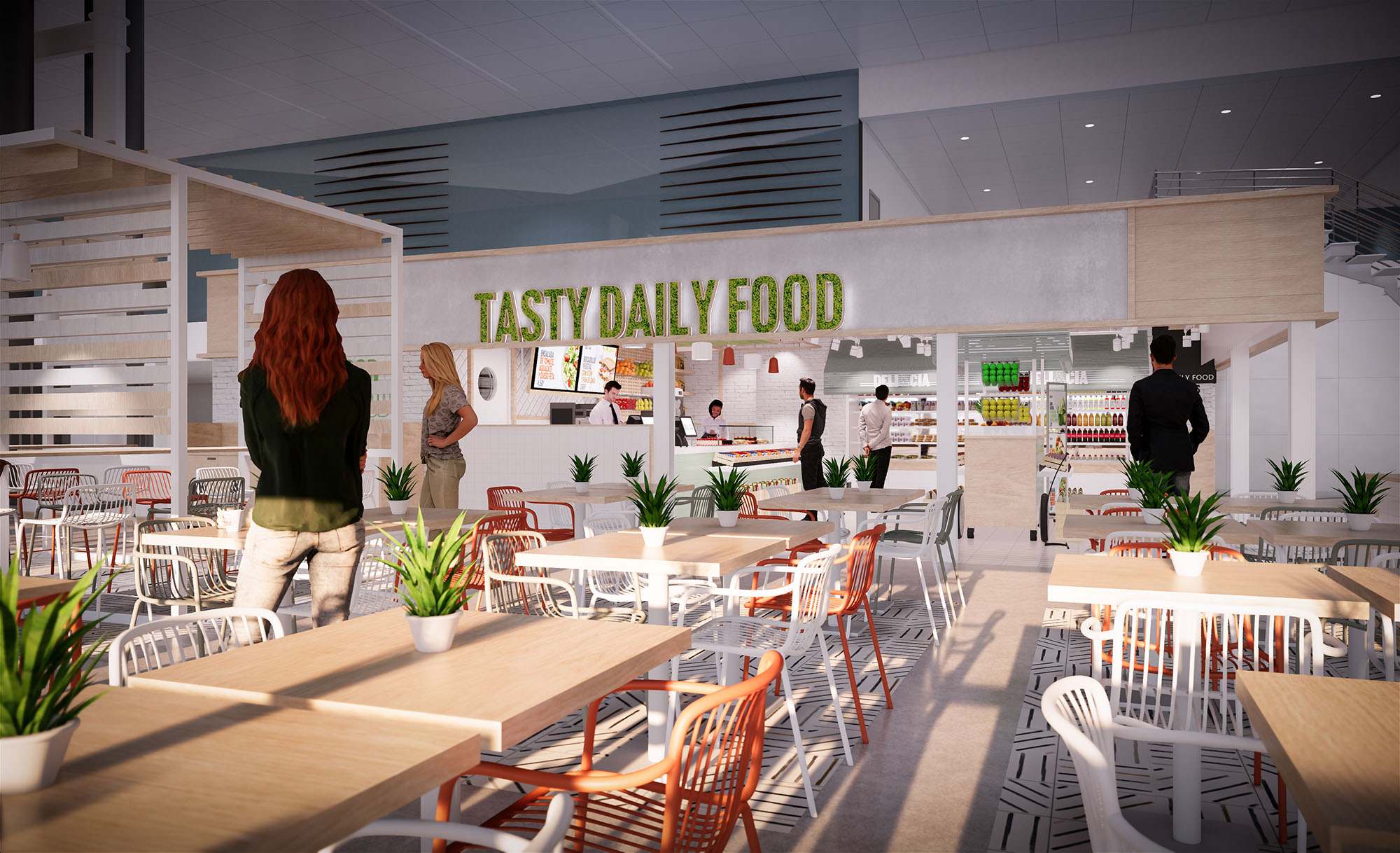
The furniture is deliberately simple, stackable and robust, with metal chairs in white and accent colors paired with wooden or laminate tabletops. This combination allows for high flexibility in reconfiguring seating according to different footprints and passenger flows, while maintaining a coherent aesthetic family across all eight projects.
Sustainability is addressed through the selection of durable, low-maintenance materials that extend the lifecycle of the fit-out and reduce replacement needs. Where possible, certified wood products are used for furniture and shelving, and finishes are chosen with attention to low-VOC content to improve indoor air quality for both staff and customers.
Energy-efficient LED lighting, integrated with smart controls and zoning, minimizes electricity consumption while ensuring appropriate illumination for each functional area. The open-plan layout optimizes air circulation and reduces the need for compartmentalized climate control. Modular furniture and display systems facilitate adaptation over time, supporting evolving menus and operational changes without requiring resource-intensive refurbishments, thus contributing to a more sustainable long-term model for the brand.
LIST OF PROJECTS EXPERIENCE
Designed, Executed and/or Built Projects
SPAIN
1. Deli&Cia - Alicante - L104D
2. Deli&Cia - Gran Canaria - L711
3. Deli&Cia - Gran Canaria - L712
4. Deli&Cia - Málaga - L140B
5. Deli&Cia - Málaga - L143C
MÉXICO
6. Deli&Cia - México - Aeropuerto Tijuana
PORTUGAL
7. Deli&Cia - Oporto - Aire Schengen
8. Deli&Cia - Oporto - Tierra Llegadas
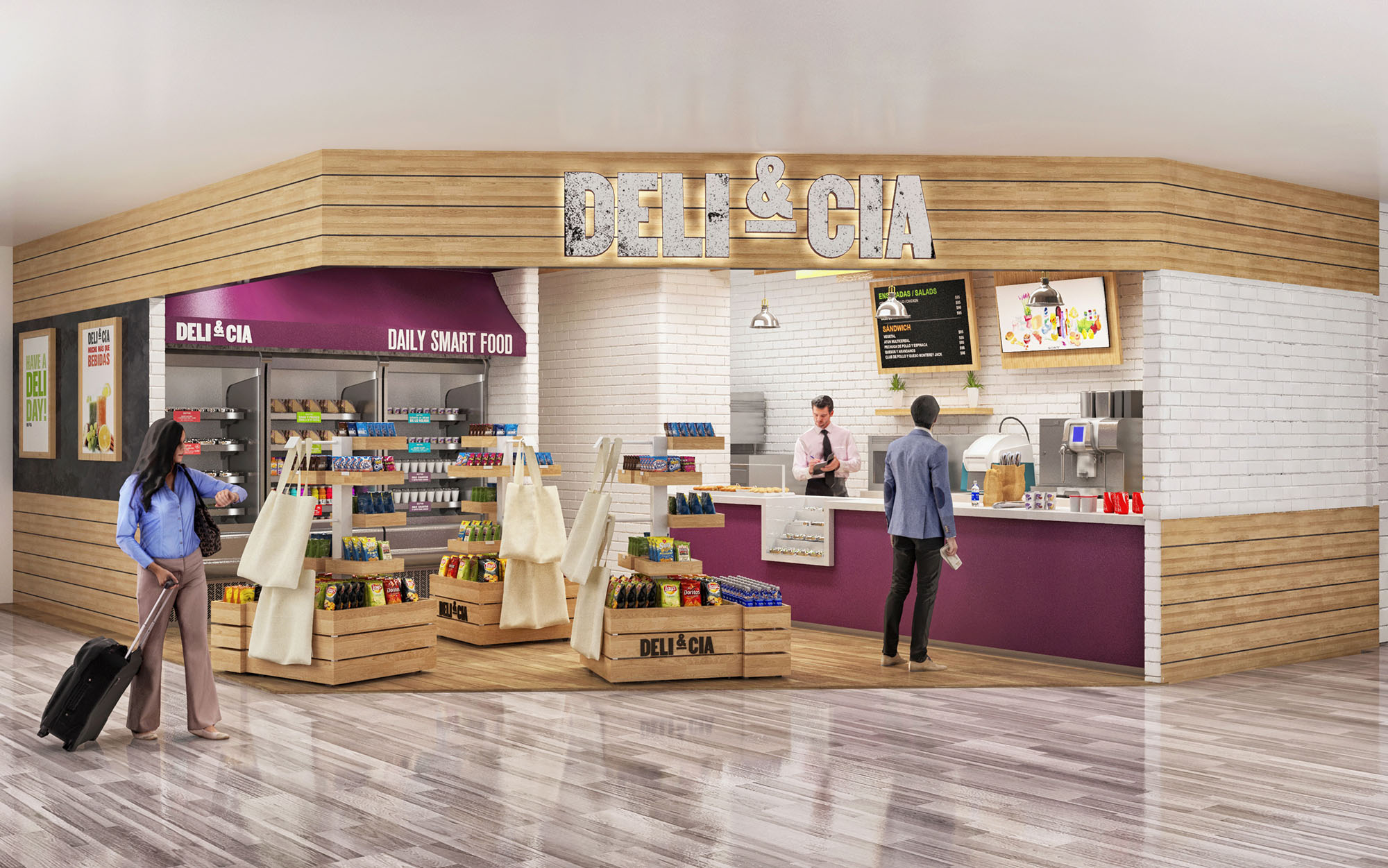
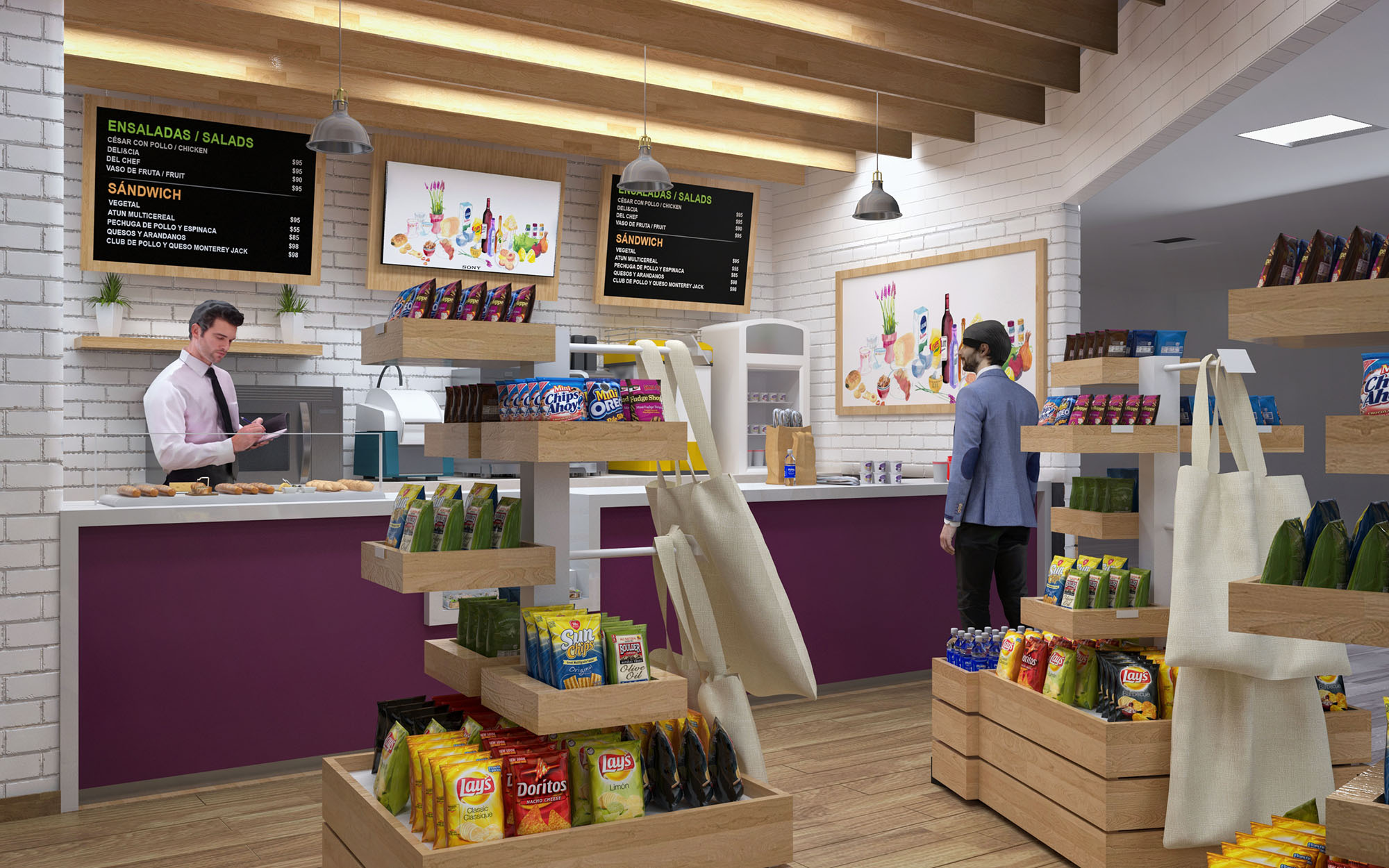
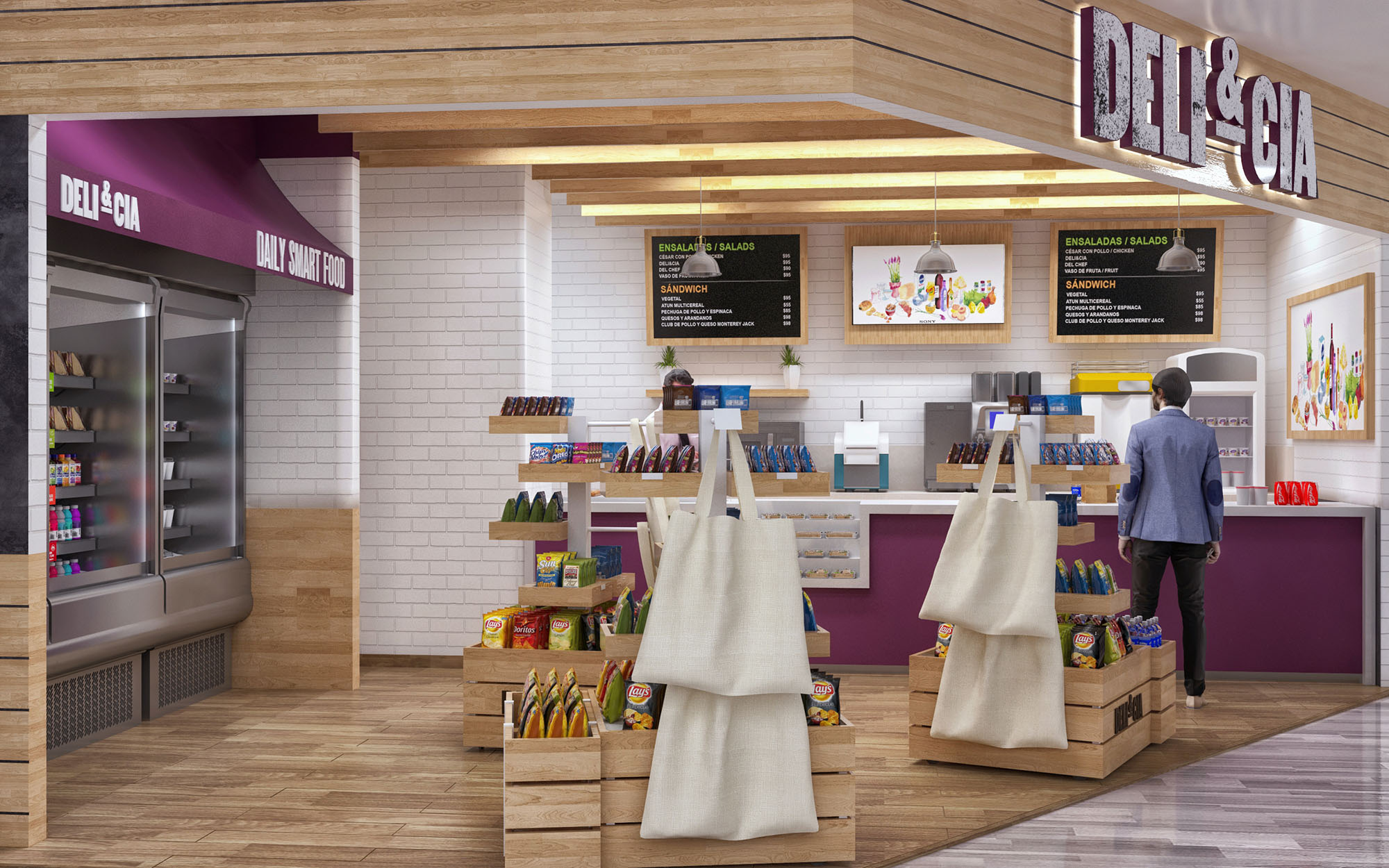
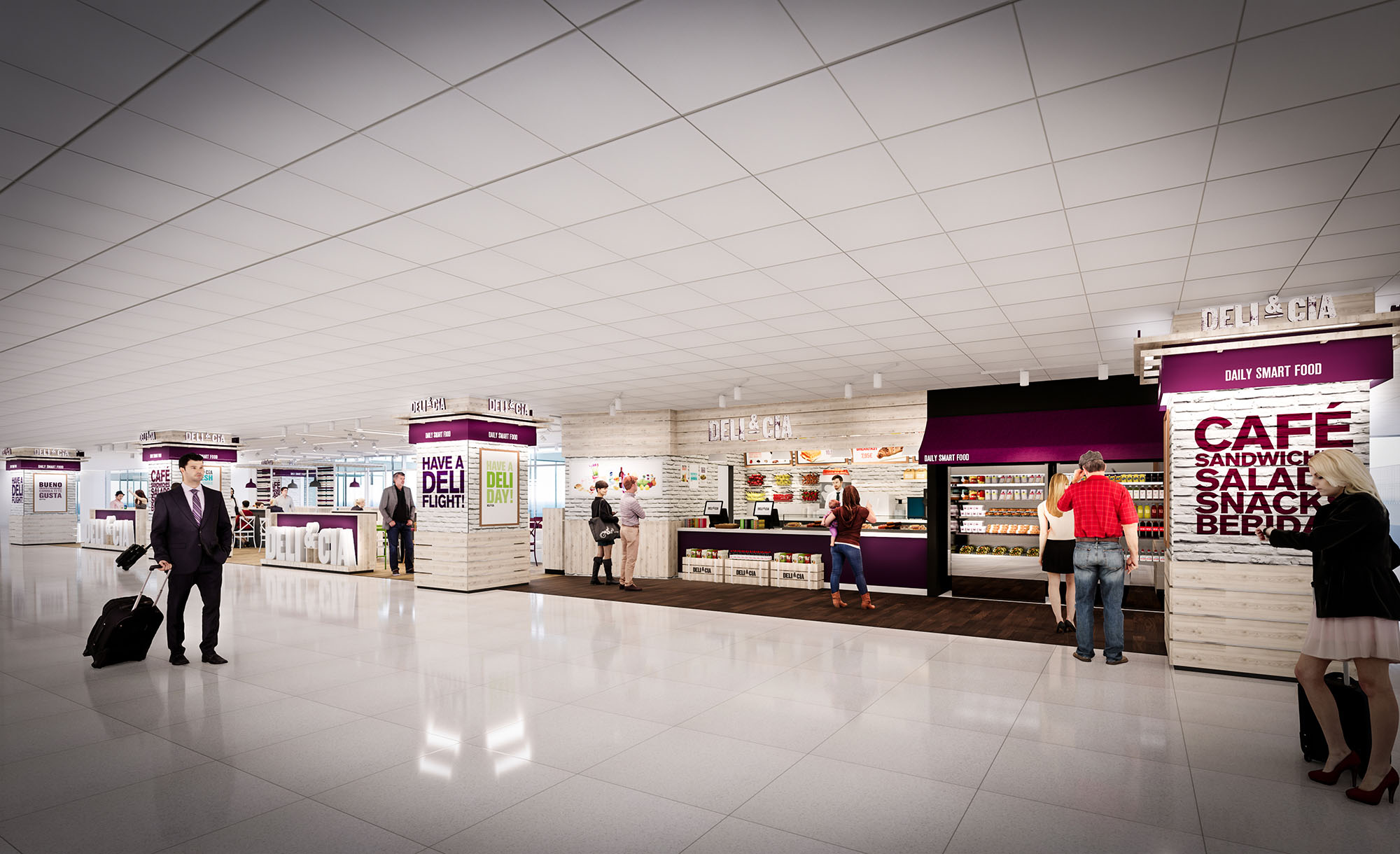
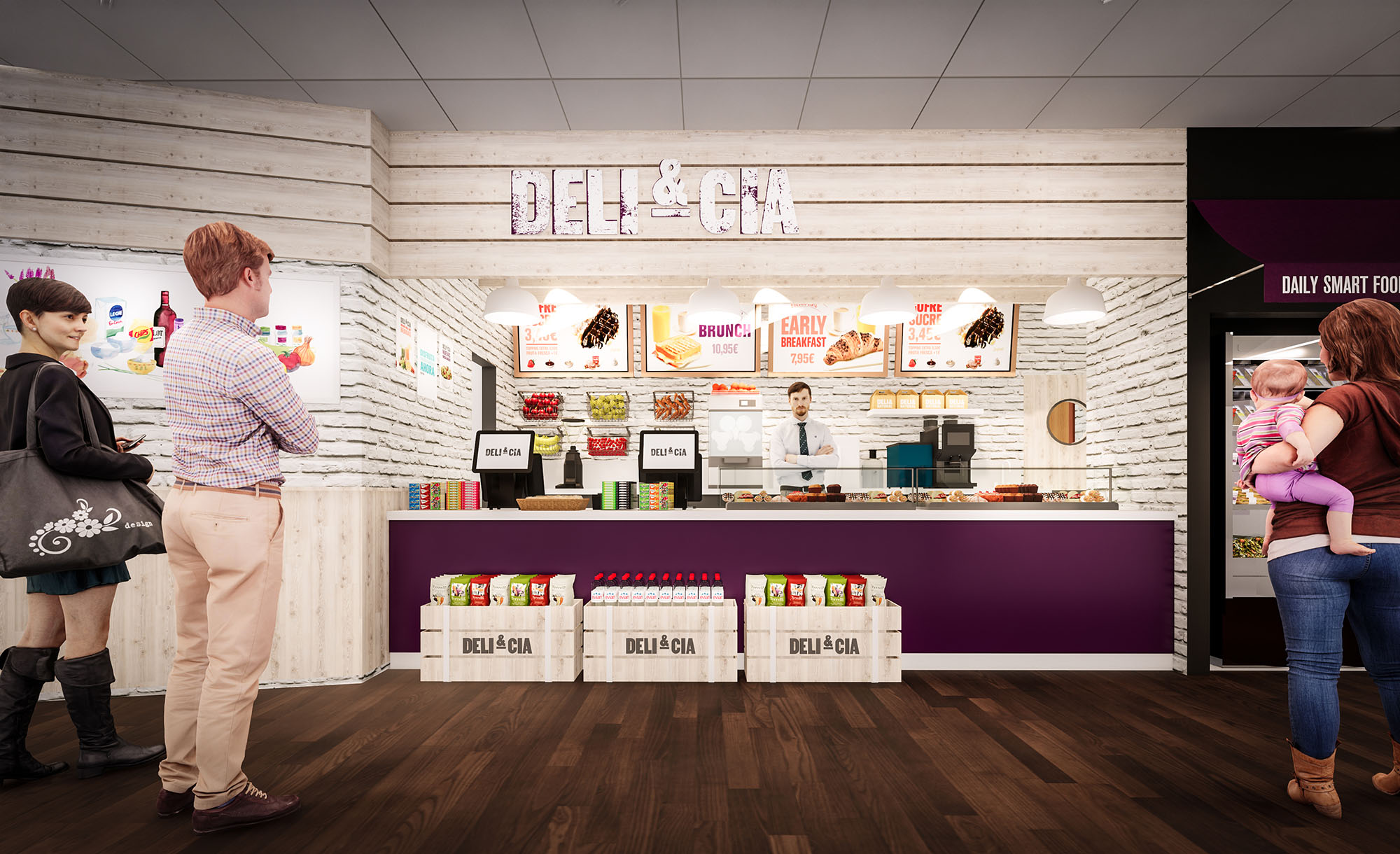
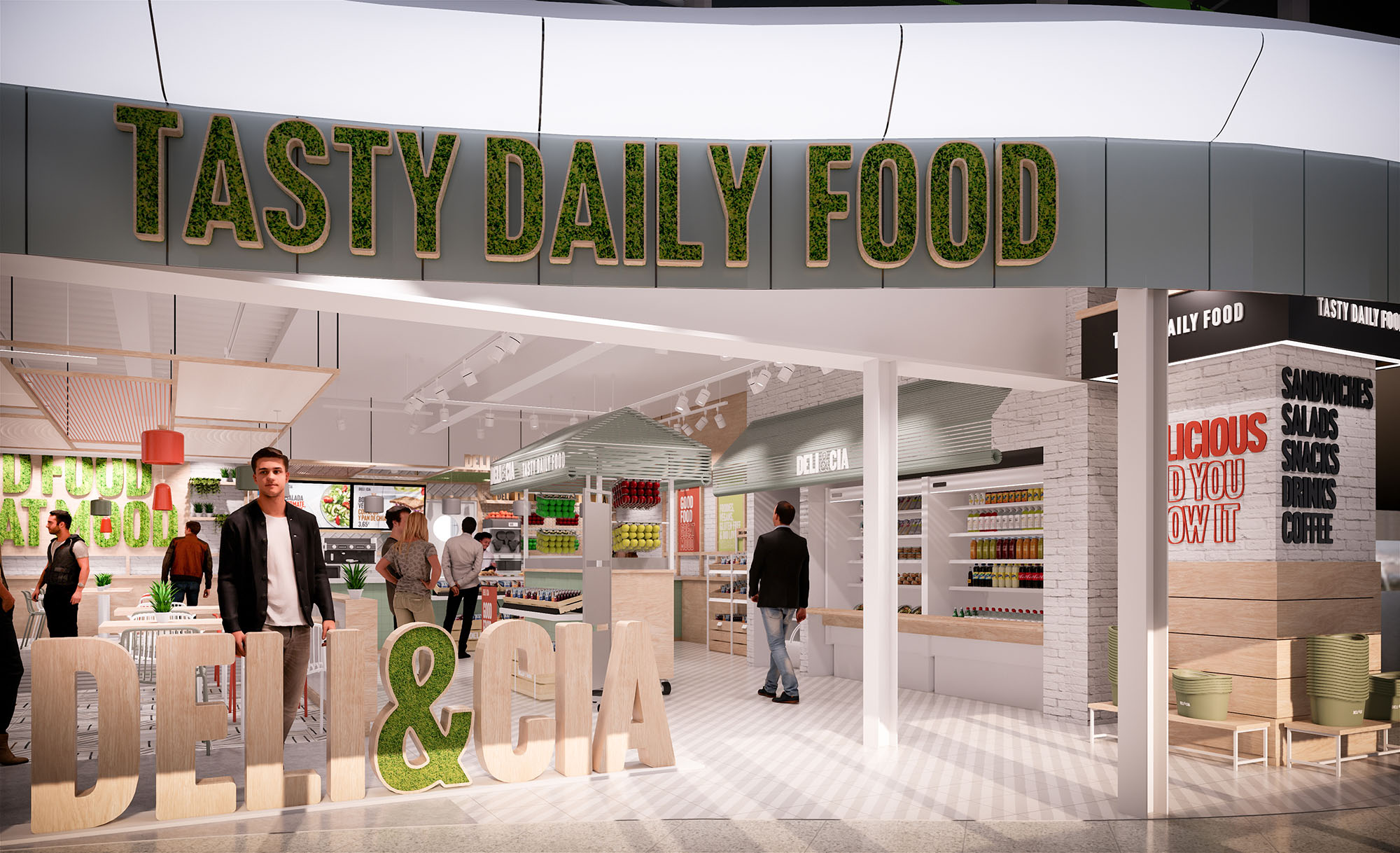
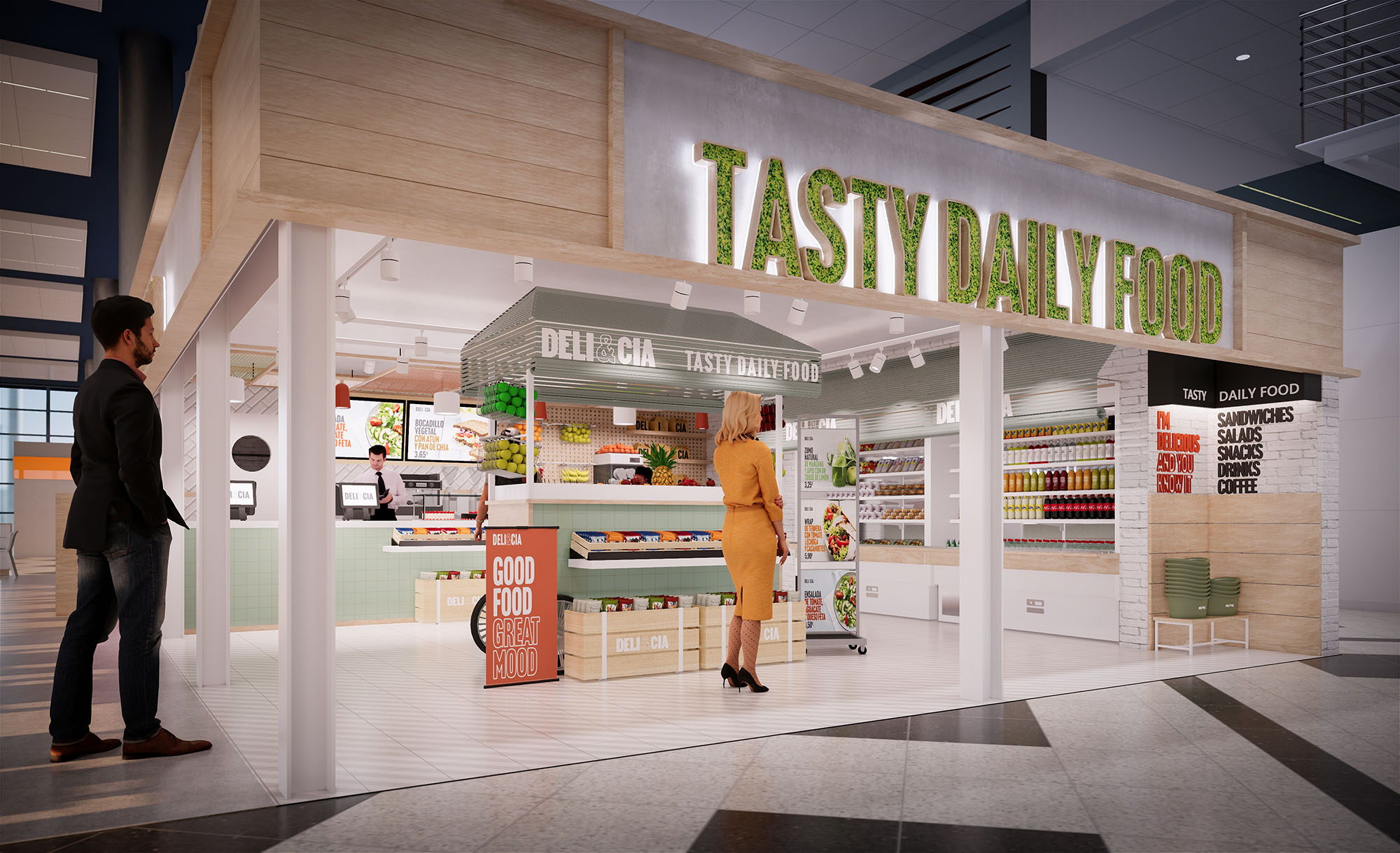
DELI & CIA is conceived as a contemporary fast-casual food concept that combines the spontaneity of grab-and-go with the warmth of a neighborhood deli. Across the different locations in Spain, Portugal, Chile and México, the design language remains consistent: a fresh, luminous environment that communicates transparency, health and everyday accessibility. The space is organized as an open market counter wrapped by islands of product display and casual seating, dissolving the boundary between kitchen, retail and dining.
The brand identity is translated into architecture through clear, legible signage and volumetric elements that float above the counters. Generous visual connections between preparation areas, self-service lines and eating zones emphasize an honest, “nothing to hide” attitude, reinforcing trust in the food offer and encouraging intuitive circulation.
The interior layout is based on a linear service counter that anchors the space and guides customers from menu selection to payment and pick-up. This counter is complemented by freestanding merchandise displays that create soft partitions without obstructing views. The sequence allows for high throughput during peak hours, while maintaining a relaxed, open ambience.
Seating zones are strategically located at the perimeter and in central islands, offering both quick-stop tables and more comfortable areas for longer stays. Mixed-height furniture, from bar counters to standard tables, generates a varied landscape that adapts to solo travelers, couples and small groups. Wayfinding is intuitive, with clear visual cues from color-coded areas and suspended signage indicating food stations and self-service points.
The material palette balances the cleanliness required for food environments with a domestic, approachable character. Light ceramic tiles and white brick cladding provide a hygienic and easily maintainable base, while natural or light-toned woods introduce warmth and tactility in counters, shelving and tabletops. Metal structures and wire shelves add robustness and an industrial-refined touch.
Color plays a strategic role in brand differentiation. Soft greens, warm oranges and purples are applied in measured accents on counters, chairs and graphic elements, reinforcing the visual identity without saturating the space. White ceilings and pale floors amplify natural and artificial light, ensuring a bright atmosphere even in interior airport or mall locations.
The lighting design layers functional and ambient illumination to support both product display and spatial comfort. Linear LED tracks provide uniform general lighting, while pendant fixtures over counters and communal tables create focal points and a more intimate scale. Warm color temperatures are selected to enhance the appearance of fresh food and make the environment feel welcoming rather than purely technical.
In locations with double-height spaces or large façades, natural light is maximized through generous glazing, reinforcing the sense of openness and transparency. At night or in windowless terminals, the internal lighting concept reproduces this daylight quality, ensuring consistency of brand experience across all sites.
Brand messages such as “Tasty Daily Food” are integrated three-dimensionally into the architecture via large-scale letterings, backlit panels and volumetric logos placed above entrances and counters. Graphic panels in vivid colors communicate menu items, nutritional messages and promotions, acting as both signage and decorative layer.
The furniture is deliberately simple, stackable and robust, with metal chairs in white and accent colors paired with wooden or laminate tabletops. This combination allows for high flexibility in reconfiguring seating according to different footprints and passenger flows, while maintaining a coherent aesthetic family across all eight projects.
Sustainability is addressed through the selection of durable, low-maintenance materials that extend the lifecycle of the fit-out and reduce replacement needs. Where possible, certified wood products are used for furniture and shelving, and finishes are chosen with attention to low-VOC content to improve indoor air quality for both staff and customers.
Energy-efficient LED lighting, integrated with smart controls and zoning, minimizes electricity consumption while ensuring appropriate illumination for each functional area. The open-plan layout optimizes air circulation and reduces the need for compartmentalized climate control. Modular furniture and display systems facilitate adaptation over time, supporting evolving menus and operational changes without requiring resource-intensive refurbishments, thus contributing to a more sustainable long-term model for the brand.


Nuestras oficinas están en Barcelona, Cancún, Chicago y Santo Domingo, pero gracias a la tecnología podemos desarrollar proyectos en cualquier parte del mundo.
Barcelona
Bac de Roda 136
08020, Barcelona
Spain
Madrid
Av. de Buendía 11
19005 Guadalajara (Madrid)
Spain
Chicago
373 Hazel Ave, Apt A1
60022, Glencoe, Illinois
United States