

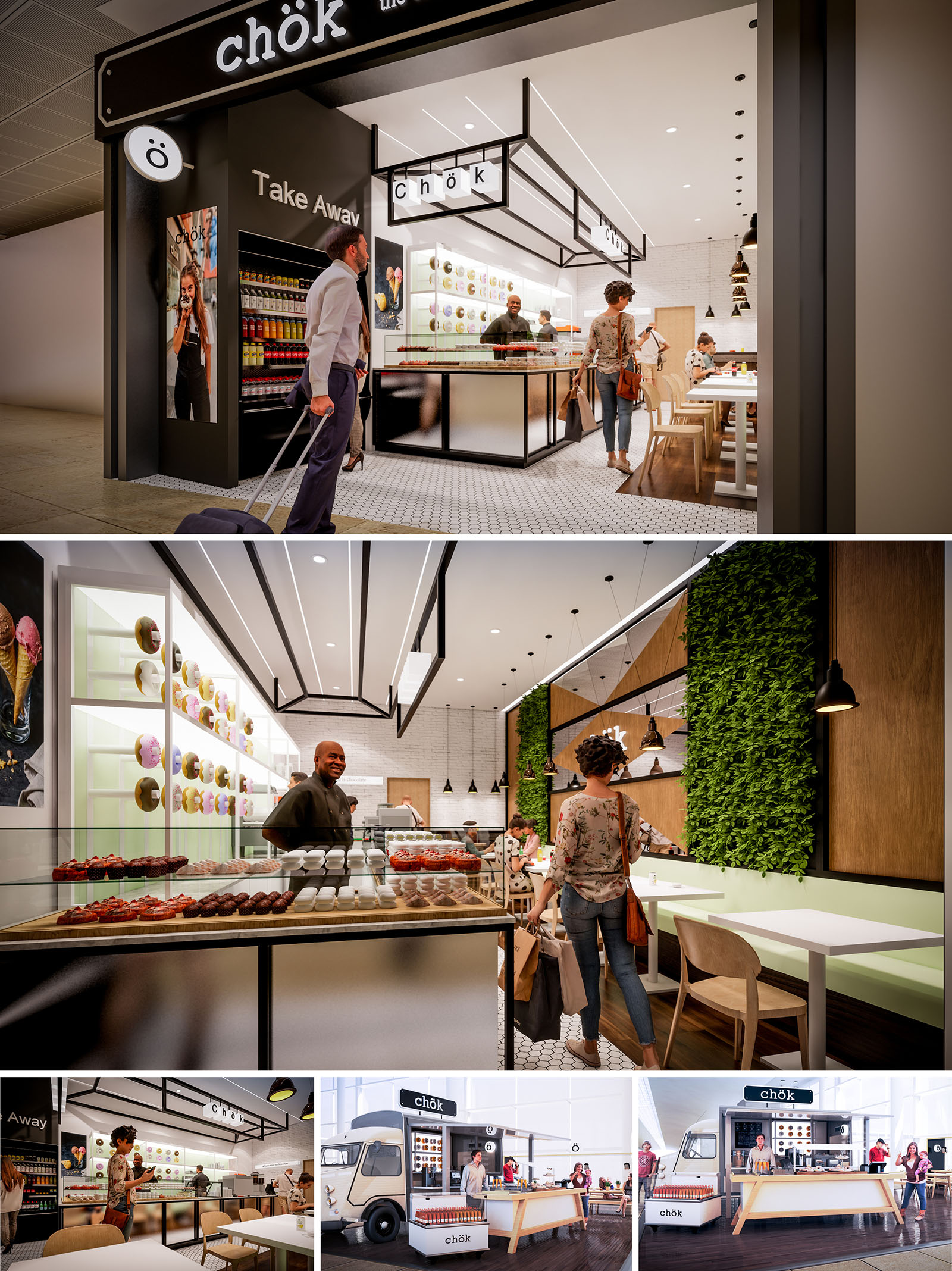
CHÖK is conceived as a contemporary pastry and coffee destination that merges the spontaneity of street food with the precision of boutique retail. The architectural language is based on a clear black-and-white framework that acts as a visual “grid” for the colorful product display, turning donuts and pastries into the main chromatic protagonists. The design is replicated across multiple locations, including a permanent interior venue and a mobile truck format, ensuring strong brand recognition through consistent spatial and graphic elements.
The project balances efficiency and warmth: rapid takeaway service for travelers coexists with a comfortable sit-in area. The space communicates transparency and openness, making the production and display of desserts visible from the exterior, and inviting passersby through an almost shop-window-like façade.
The plan is organized around a central service island that integrates display counters, preparation zones and payment points. This island anchors the circulation: customers naturally flow from the entrance along the showcases, then towards the barista zone and finally to the seating area at the rear. The configuration minimizes cross-traffic between staff and customers, enhancing operational efficiency.
At the threshold, a clearly defined takeaway corridor allows quick access for travelers, separated from the slower, more relaxed seating strip. In the food truck version, the same logic is compressed into a linear counter that unfolds along the truck façade, with an extended timber bar acting as an exterior communal table.
The material palette is deliberately restrained to highlight the product. Black metal frames and profiles define ceilings, counters and signage, acting as a strong graphic outline. These are combined with white ceilings and light-toned wall finishes, creating a bright, neutral backdrop that enhances both natural and artificial light.
Warm wood veneers are used on wall panels, furniture and floor accents to introduce a tactile, humane quality. The patterned hexagonal floor tiles at the entrance delineate the public zone and recall traditional café pavements, while the smooth darker flooring in the seating area emphasizes comfort. Pastel accents, predominantly soft greens, appear on bench seating and some vertical surfaces, giving a fresh and playful touch aligned with the dessert offer.
Lighting design is a key component in shaping the brand’s identity. Integrated linear LED profiles trace the geometry of the black ceiling frames, visually extending the counter and guiding movement towards the back of the store. This creates a dynamic, almost theatrical canopy over the main activity strip.
Ambient recessed downlights provide uniform general illumination, while suspended black pendants over tables and the main counter generate warmer pools of light, enhancing the perception of material texture and product detail. In the truck concept, exterior spotlights and the illuminated signage ensure clear visibility in transit environments and during evening operation.
Branding is integrated architecturally rather than applied superficially. The logo and typography are embedded in the metal canopy, in the frontal fascia of the counters and in circular projecting signs that act as beacons in busy circulation areas such as airports or stations. Vertical display niches showcasing products and imagery function as both merchandising and decorative elements.
Furniture is lightweight yet robust, with simple timber chairs and benches that echo Scandinavian simplicity. The glass display cases are designed with minimal framing to avoid visual barriers between customers and the product, reinforcing the idea of openness and abundance.
Sustainability strategies focus on material selection, energy efficiency and user wellbeing. The project favors durable, easily cleanable finishes that extend lifecycle and reduce maintenance, such as ceramic tiles and high-resistance laminates. Wood elements are specified from certified sources where possible, contributing to responsible resource use.
Energy-efficient LED lighting systems with dimming capabilities reduce consumption while allowing adaptation to different times of day and ambient conditions. The inclusion of vertical green walls not only offers a strong visual focal point but also improves acoustic comfort and perceived indoor air quality. The modular furniture and the mobile truck format encourage flexibility and future reconfiguration, extending the overall usefulness of the built elements and aligning the brand with contemporary sustainable hospitality practices.
LIST OF PROJECTS EXPERIENCE
Designed, Executed and/or Built Projects
SPAIN
1. Chök - Barcelona - L008
2. Chök - Madrid - L153.4
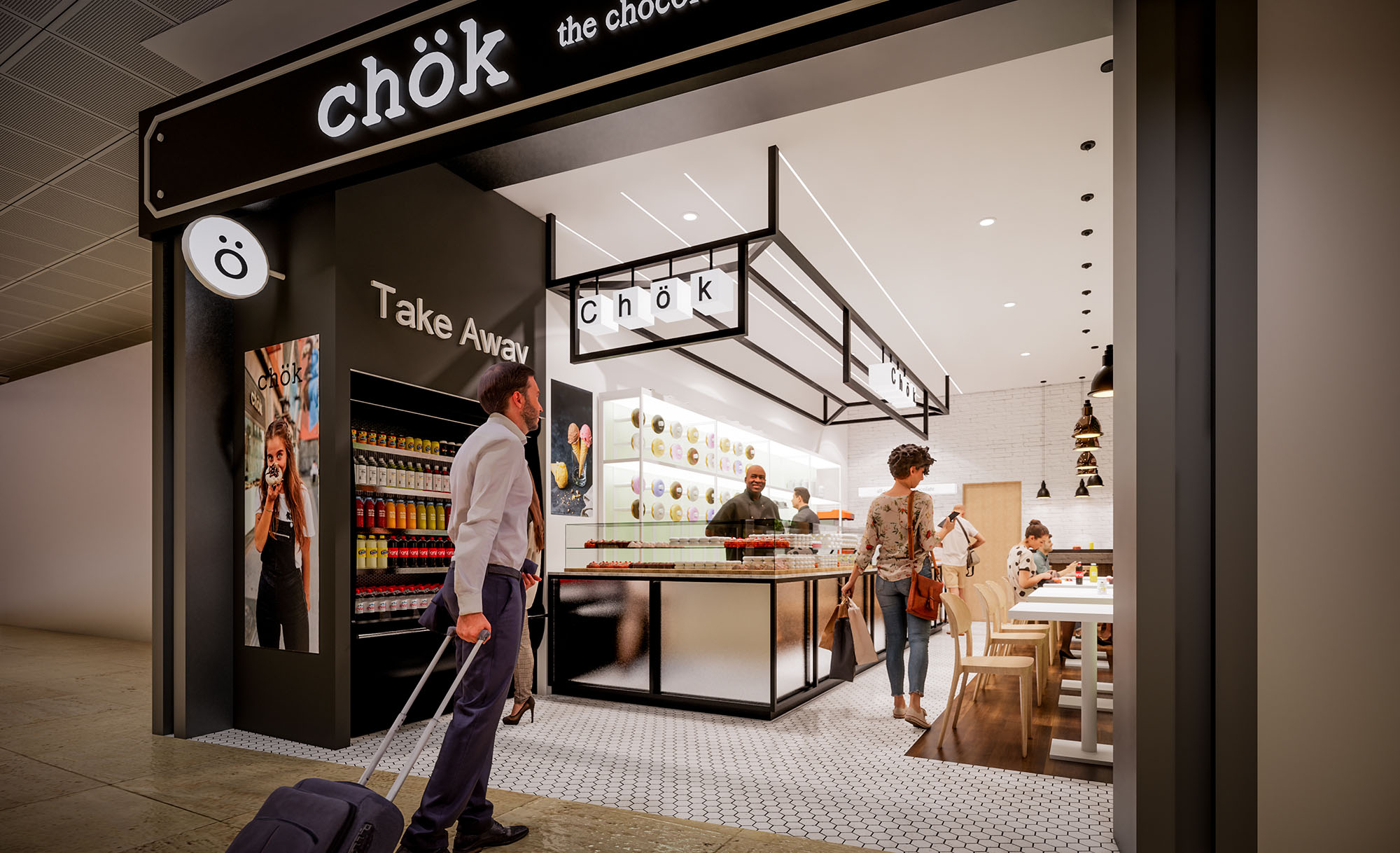
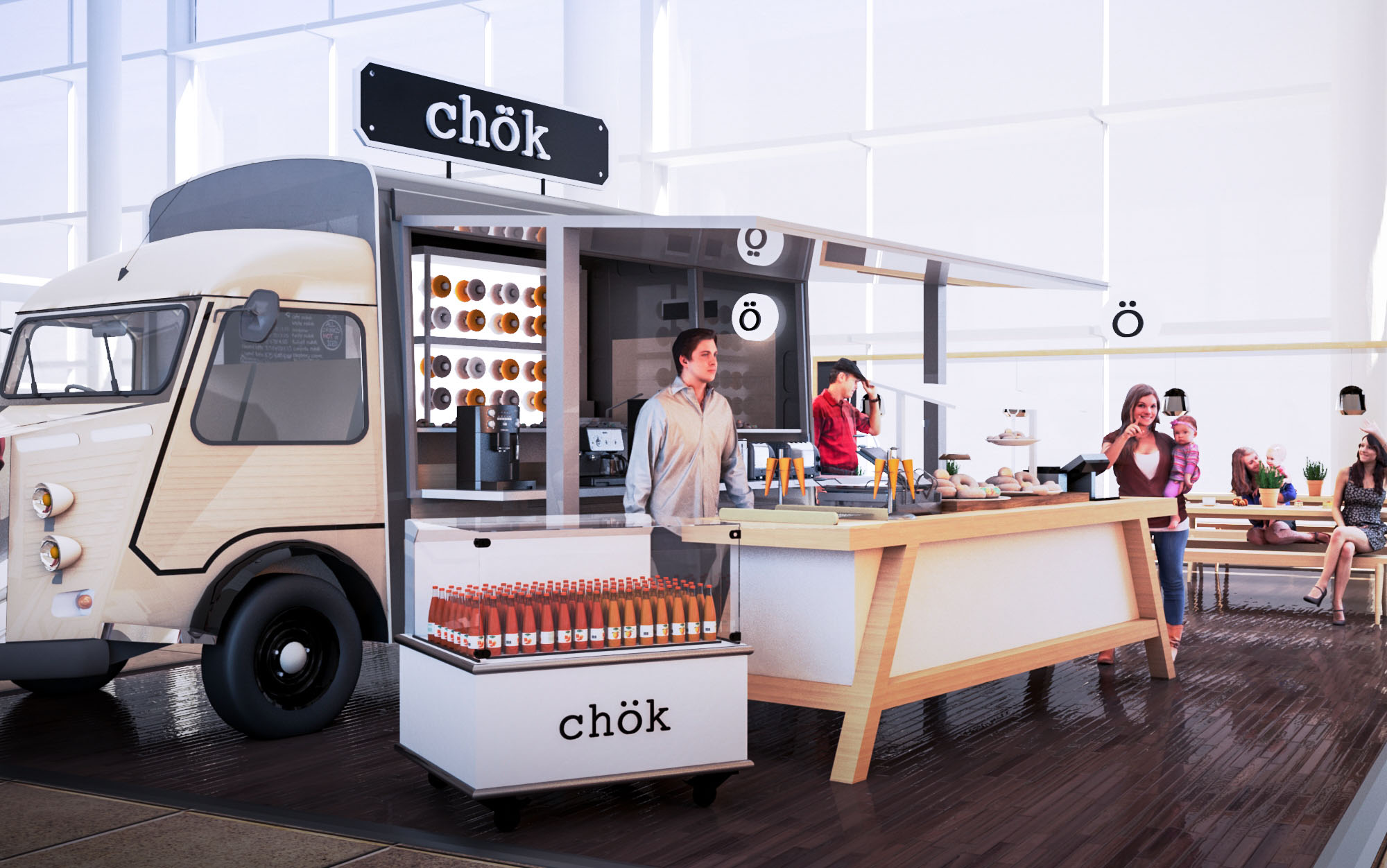
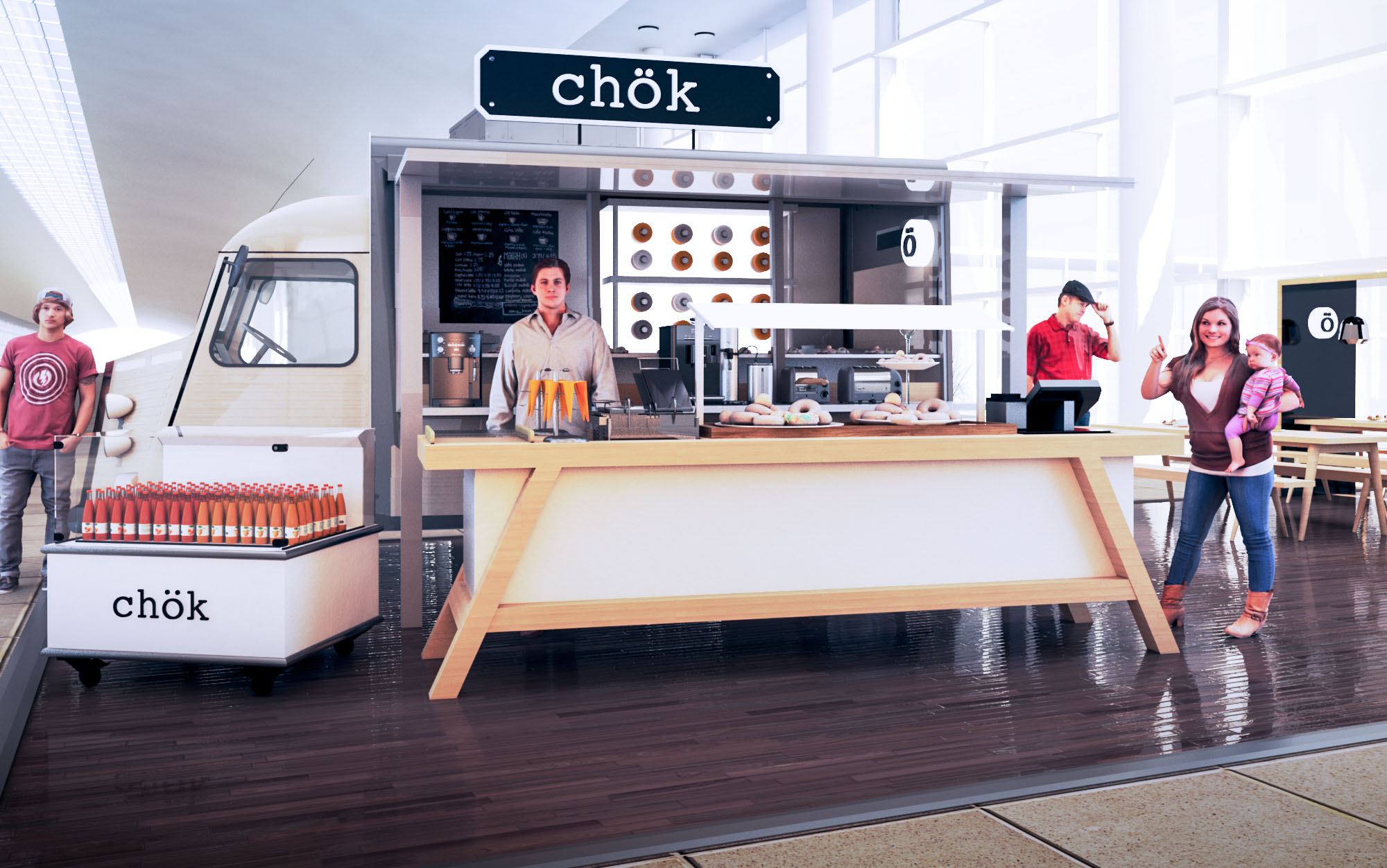
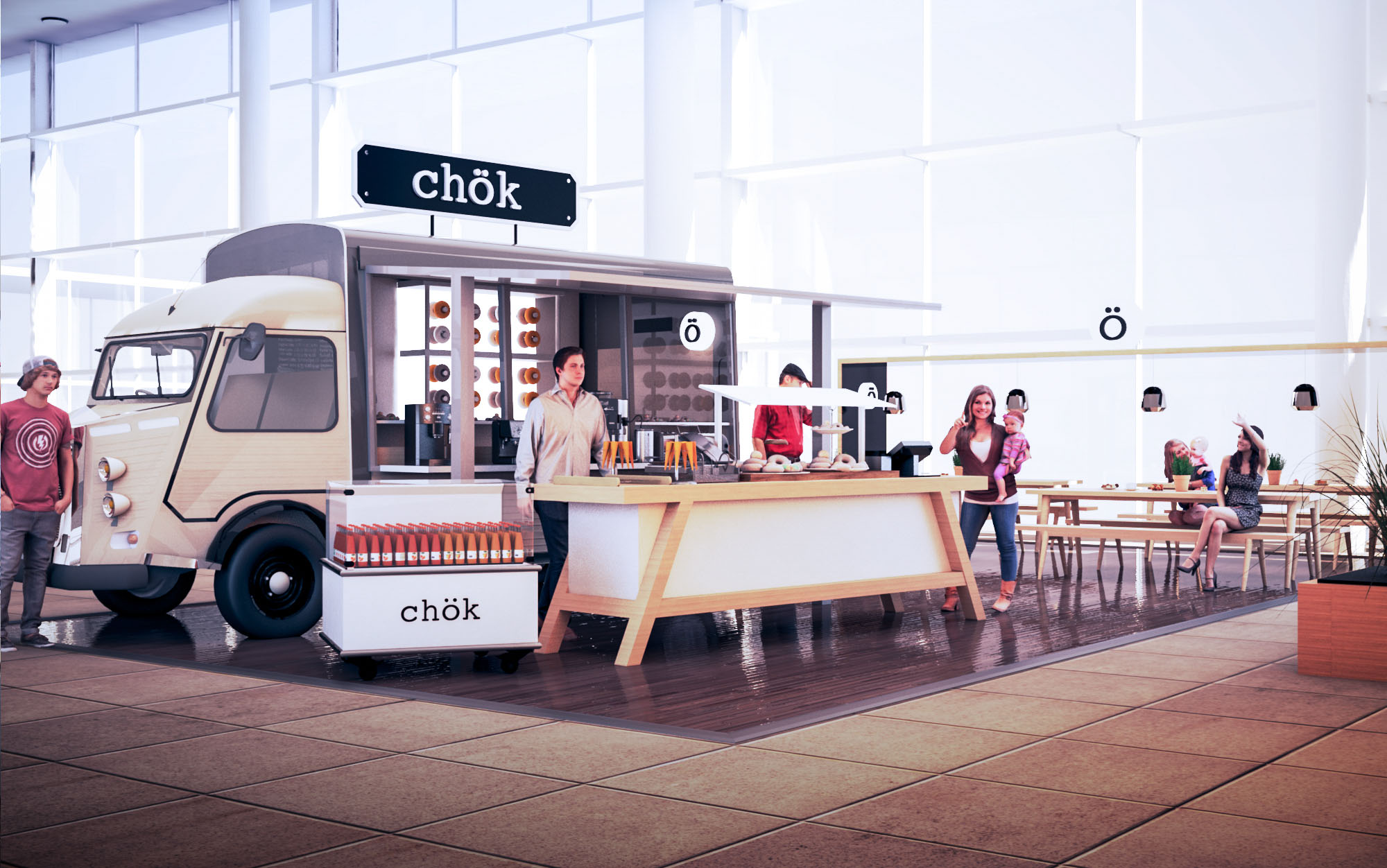
CHÖK is conceived as a contemporary pastry and coffee destination that merges the spontaneity of street food with the precision of boutique retail. The architectural language is based on a clear black-and-white framework that acts as a visual “grid” for the colorful product display, turning donuts and pastries into the main chromatic protagonists. The design is replicated across multiple locations, including a permanent interior venue and a mobile truck format, ensuring strong brand recognition through consistent spatial and graphic elements.
The project balances efficiency and warmth: rapid takeaway service for travelers coexists with a comfortable sit-in area. The space communicates transparency and openness, making the production and display of desserts visible from the exterior, and inviting passersby through an almost shop-window-like façade.
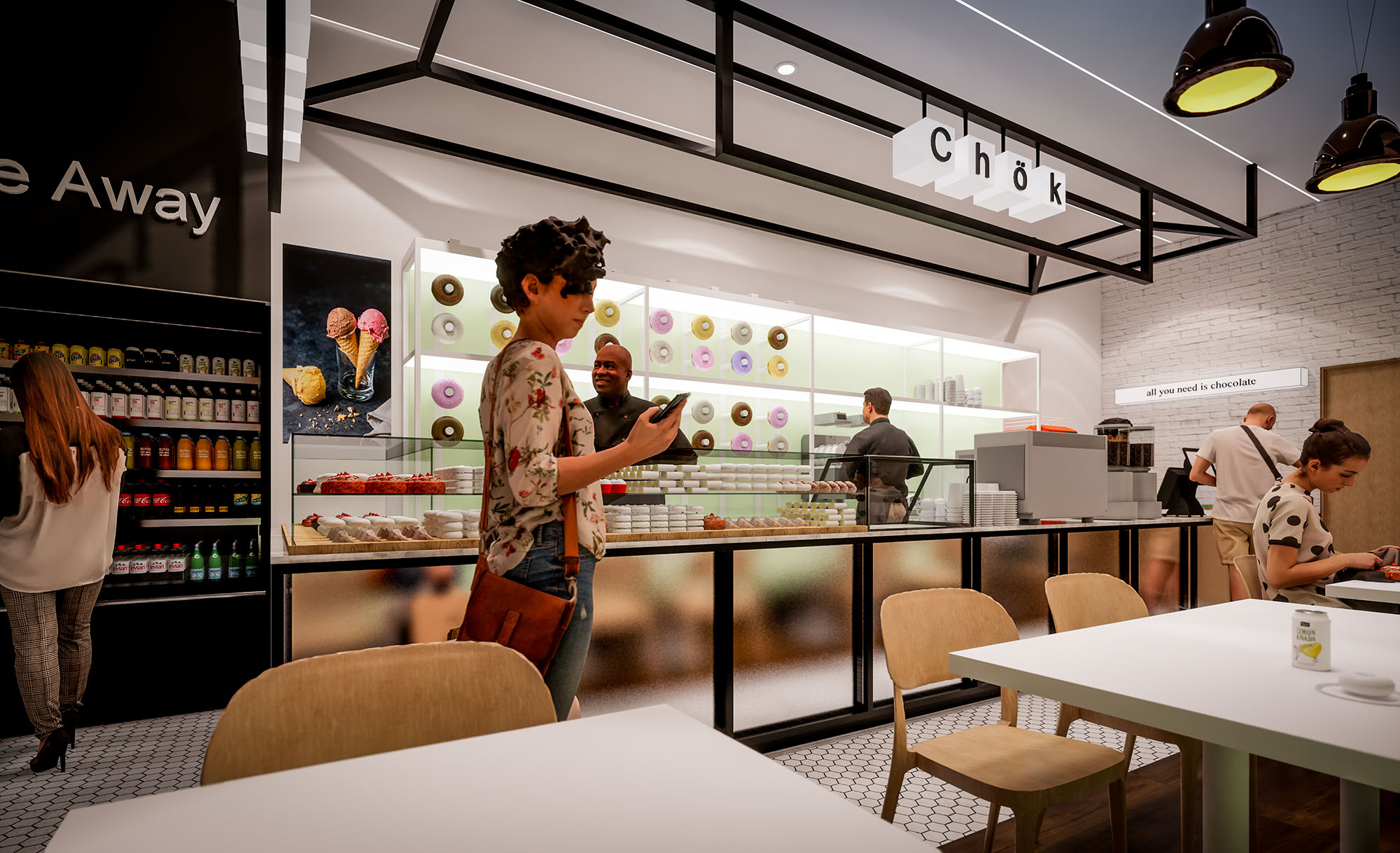
The plan is organized around a central service island that integrates display counters, preparation zones and payment points. This island anchors the circulation: customers naturally flow from the entrance along the showcases, then towards the barista zone and finally to the seating area at the rear. The configuration minimizes cross-traffic between staff and customers, enhancing operational efficiency.
At the threshold, a clearly defined takeaway corridor allows quick access for travelers, separated from the slower, more relaxed seating strip. In the food truck version, the same logic is compressed into a linear counter that unfolds along the truck façade, with an extended timber bar acting as an exterior communal table.
The material palette is deliberately restrained to highlight the product. Black metal frames and profiles define ceilings, counters and signage, acting as a strong graphic outline. These are combined with white ceilings and light-toned wall finishes, creating a bright, neutral backdrop that enhances both natural and artificial light.
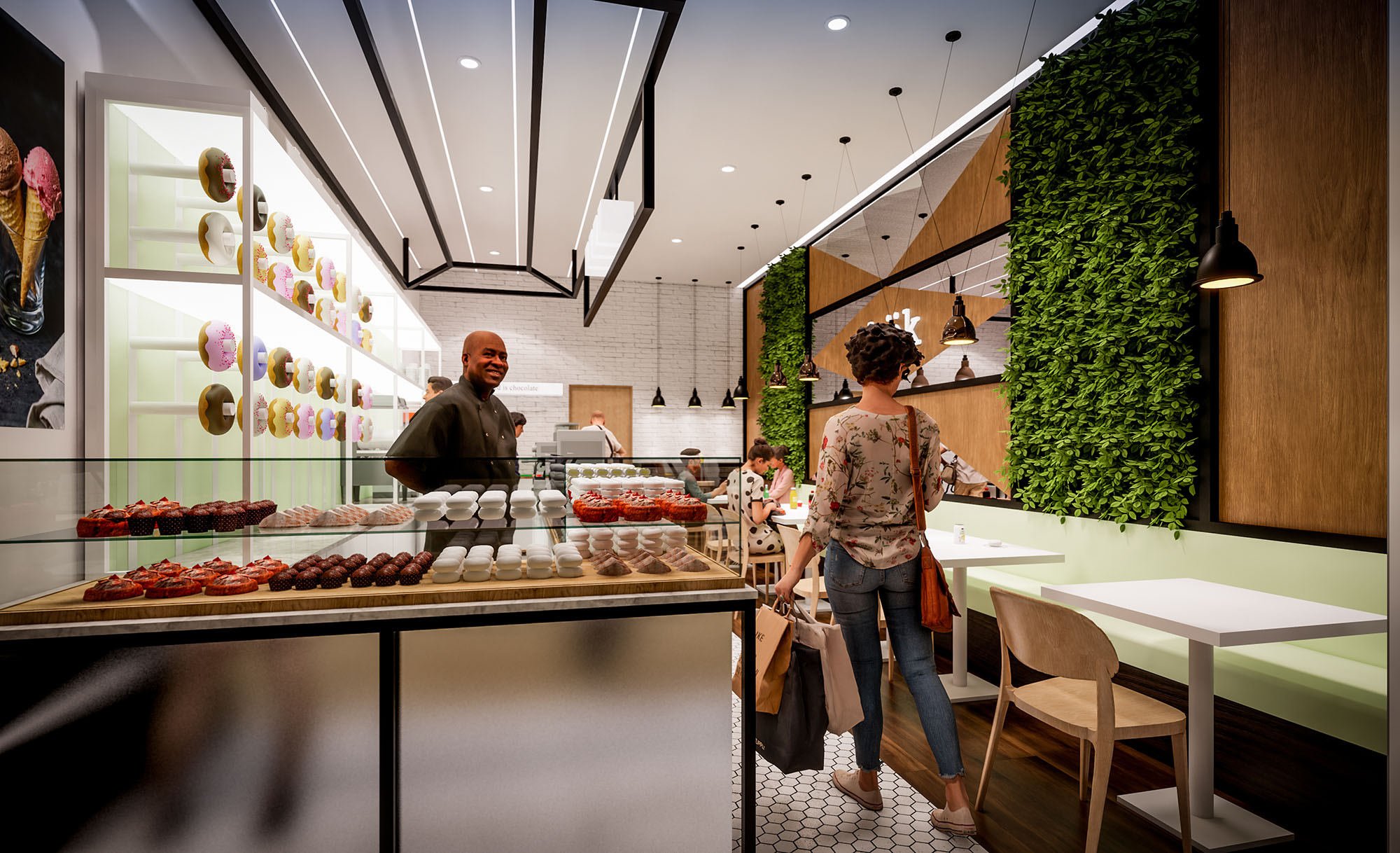
Warm wood veneers are used on wall panels, furniture and floor accents to introduce a tactile, humane quality. The patterned hexagonal floor tiles at the entrance delineate the public zone and recall traditional café pavements, while the smooth darker flooring in the seating area emphasizes comfort. Pastel accents, predominantly soft greens, appear on bench seating and some vertical surfaces, giving a fresh and playful touch aligned with the dessert offer.
Lighting design is a key component in shaping the brand’s identity. Integrated linear LED profiles trace the geometry of the black ceiling frames, visually extending the counter and guiding movement towards the back of the store. This creates a dynamic, almost theatrical canopy over the main activity strip.
Ambient recessed downlights provide uniform general illumination, while suspended black pendants over tables and the main counter generate warmer pools of light, enhancing the perception of material texture and product detail. In the truck concept, exterior spotlights and the illuminated signage ensure clear visibility in transit environments and during evening operation.
Branding is integrated architecturally rather than applied superficially. The logo and typography are embedded in the metal canopy, in the frontal fascia of the counters and in circular projecting signs that act as beacons in busy circulation areas such as airports or stations. Vertical display niches showcasing products and imagery function as both merchandising and decorative elements.
Furniture is lightweight yet robust, with simple timber chairs and benches that echo Scandinavian simplicity. The glass display cases are designed with minimal framing to avoid visual barriers between customers and the product, reinforcing the idea of openness and abundance.
Sustainability strategies focus on material selection, energy efficiency and user wellbeing. The project favors durable, easily cleanable finishes that extend lifecycle and reduce maintenance, such as ceramic tiles and high-resistance laminates. Wood elements are specified from certified sources where possible, contributing to responsible resource use.
Energy-efficient LED lighting systems with dimming capabilities reduce consumption while allowing adaptation to different times of day and ambient conditions. The inclusion of vertical green walls not only offers a strong visual focal point but also improves acoustic comfort and perceived indoor air quality. The modular furniture and the mobile truck format encourage flexibility and future reconfiguration, extending the overall usefulness of the built elements and aligning the brand with contemporary sustainable hospitality practices.


Nuestras oficinas están en Barcelona, Cancún, Chicago y Santo Domingo, pero gracias a la tecnología podemos desarrollar proyectos en cualquier parte del mundo.
Barcelona
Bac de Roda 136
08020, Barcelona
Spain
Madrid
Av. de Buendía 11
19005 Guadalajara (Madrid)
Spain
Chicago
373 Hazel Ave, Apt A1
60022, Glencoe, Illinois
United States