

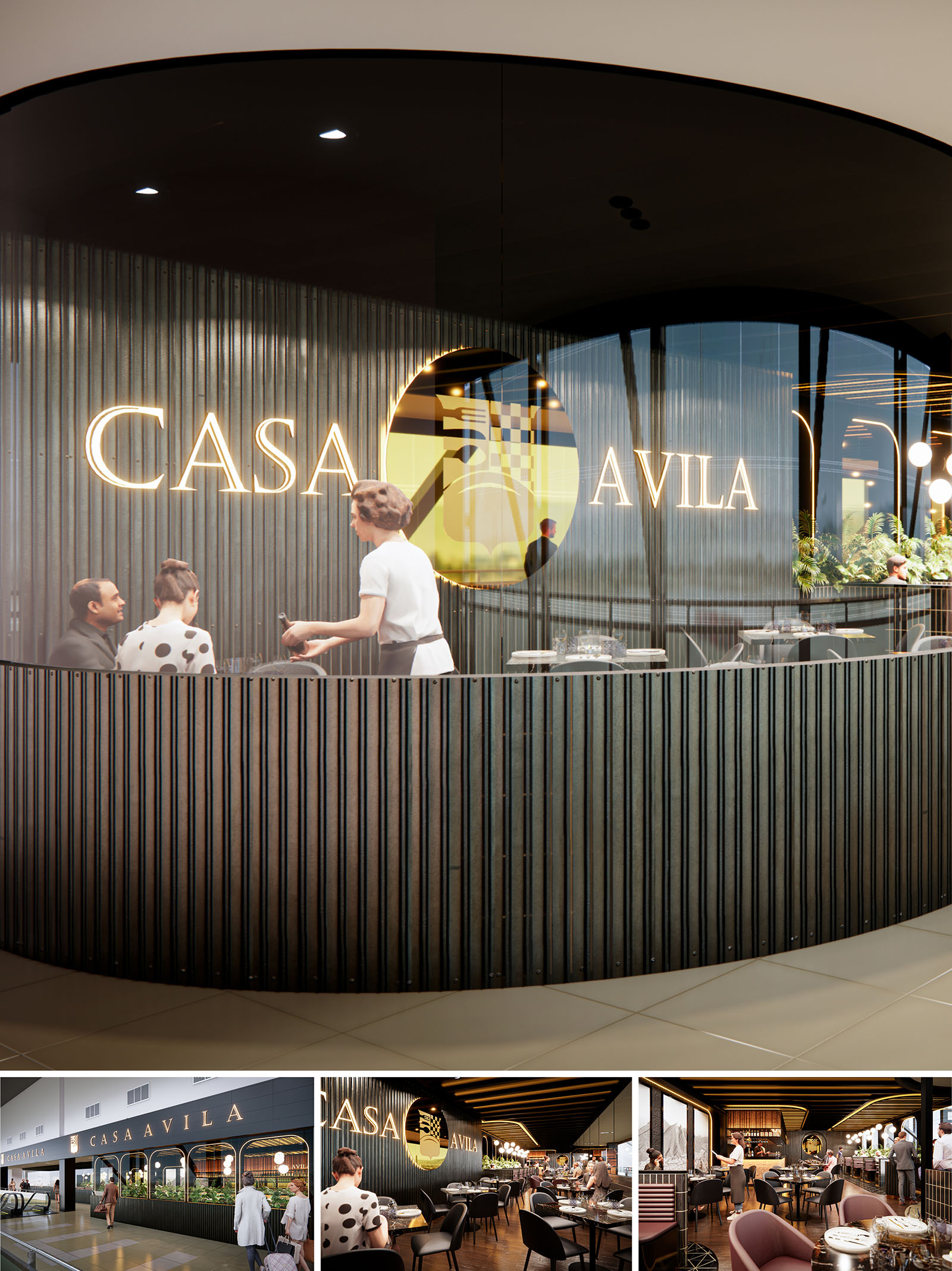
Casa Ávila is conceived as an urban refuge within the dynamic context of an airport terminal in Monterrey. The design creates a clear visual and spatial threshold between the public concourse and an interior atmosphere of calm, warmth and sophistication. The envelope works as a continuous façade that unifies branding, enclosure and interior ambience, turning the restaurant into a recognizable landmark in the circulation flow of the terminal.
The concept draws on contemporary interpretations of classic brasserie language: rhythmic vertical elements, warm metallic highlights and carefully modulated lighting. These resources communicate a sense of permanence and quality while remaining light and open, appropriate to a high-traffic, transient environment.
The exterior façade is structured as a gently curved, dark ribbed screen that defines the boundary with the terminal. Slender vertical fins generate depth and shadow, providing privacy to diners while maintaining controlled visual permeability. This linear texture gives the front a strong tectonic reading and a refined, almost architectural scale within the commercial corridor.
Branding is seamlessly integrated through a large illuminated logotype and a circular emblem that pierces the vertical grid. The backlit letters and logo act as a lantern, visible from long distances in the terminal. The circular opening frames partial views of the interior, offering a curated glimpse of the atmosphere while functioning as a focal point that organizes the façade composition.
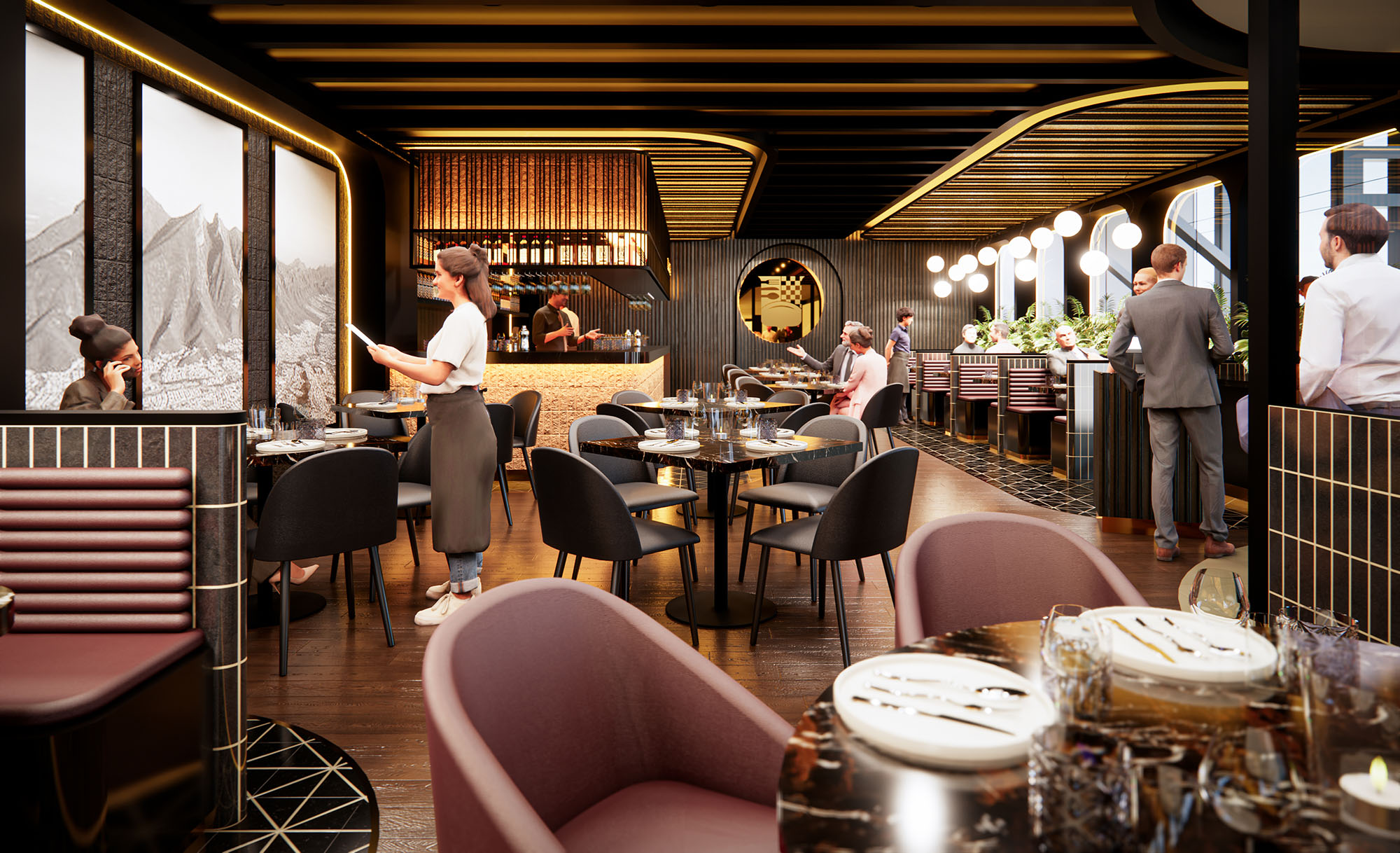
The interior is arranged as a longitudinal nave parallel to the concourse, optimizing frontage and maximizing the number of seats with exterior visibility. Seating typologies are layered from the façade inward: small tables for two along the edge, more generous groupings in the central zone, and lounge-style settings near the bar. This gradation of densities allows for both fast, individual service and longer, social stays.
Circular circulation is ensured by a clear spine connecting entry, bar and kitchen. Service paths run along the perimeter of the bar and between seating bands, minimizing interference with the guest experience. The plan supports high turnover at peak hours while maintaining an orderly, legible space.
The material palette balances dark, textured surfaces with warm accents. The exterior ribs appear to be finished in a deep charcoal or bronzed tone, complemented by metallic details in brass or gold at the logo and lighting fixtures. Inside, timber or wood-look flooring adds warmth and continuity, while upholstered chairs in muted rose and earth tones introduce softness and tactility.
Ceiling elements follow the linear expression of the façade, with dark beams or slats directing perspective toward the bar and logo wall. Lighting is layered through indirect cove washing on the ceiling, integrated strip lighting in the logo and warm, spherical pendants that echo classic hospitality design. The overall luminous environment is intimate but sufficiently bright for an airport context, using warm color temperatures to counteract the cooler ambient light of the terminal.
Furniture is specified with slender metal legs and refined profiles to keep the visual field light despite the dark palette. Tabletops in stone or high-performance composite materials provide durability and a sense of solidity. Curved banquettes and upholstered armchairs contribute ergonomic comfort during longer waits between flights, while their rounded forms soften the rigorous vertical and linear geometry of the shell.
Planters integrated into the façade and interior partitions bring greenery into the space, softening the boundary with the concourse and introducing biophilic elements. Detailing in joints, edges and transitions between materials is deliberately minimal, reinforcing a contemporary aesthetic that privileges continuity over ornament.
Although located in a controlled airport environment, the project addresses sustainability through material selection, lighting design and operational efficiency. The predominant use of durable finishes such as metal, composite cladding and engineered wood reduces the need for frequent replacement, extending the life cycle of the fit-out. Upholstery fabrics and finishes can be specified with high recycled content and low-VOC emissions, improving indoor air quality for both staff and guests.
Lighting is based on LED technology with directional and dimmable fixtures, reducing energy consumption while allowing adaptation to different times of day and levels of natural light in the terminal. The vertical façade not only provides identity but also acts as a passive filter, reducing glare and improving visual comfort. The compact, linear layout concentrates service areas and shortens routes, contributing to more efficient operations and lower resource use over time.
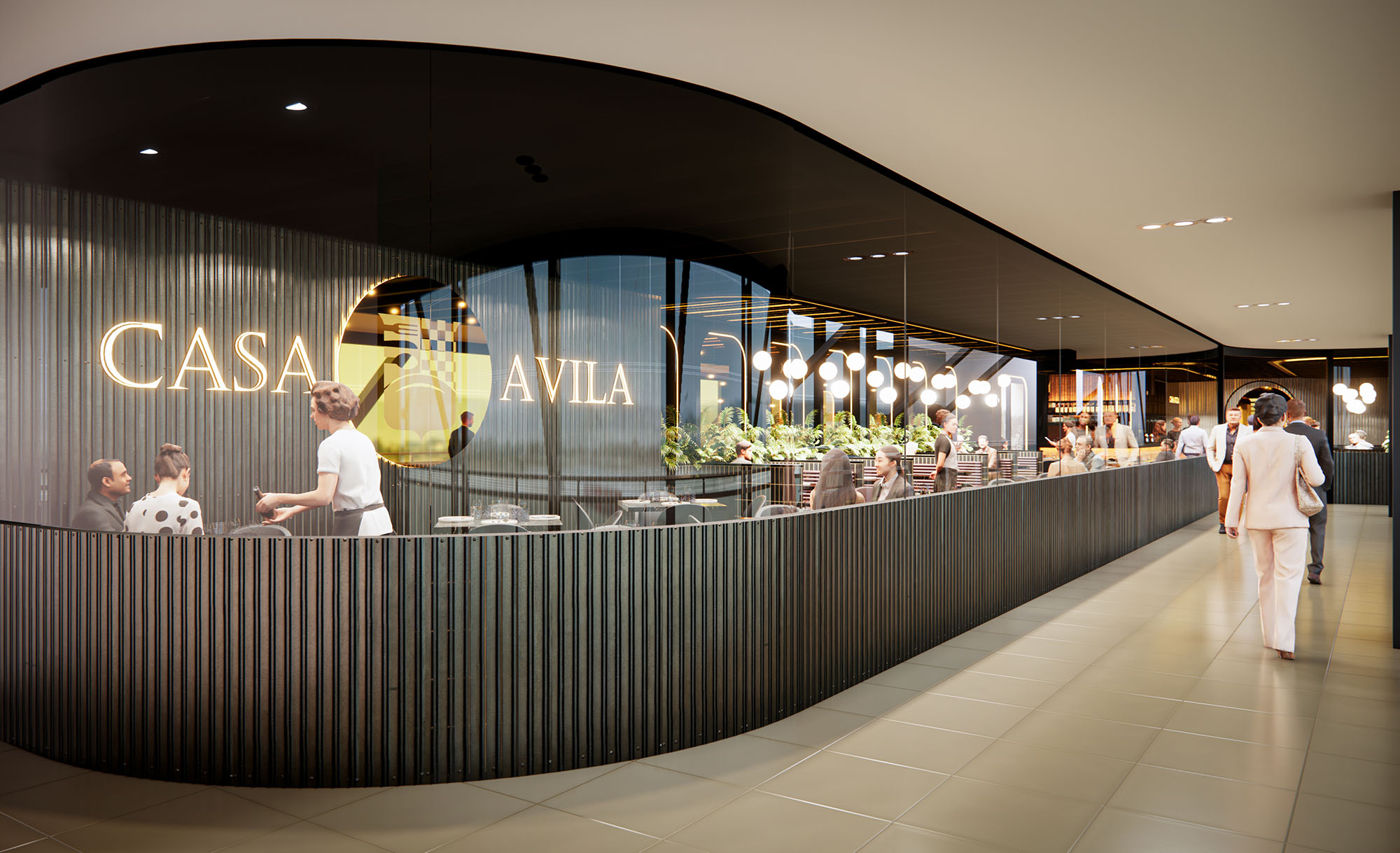
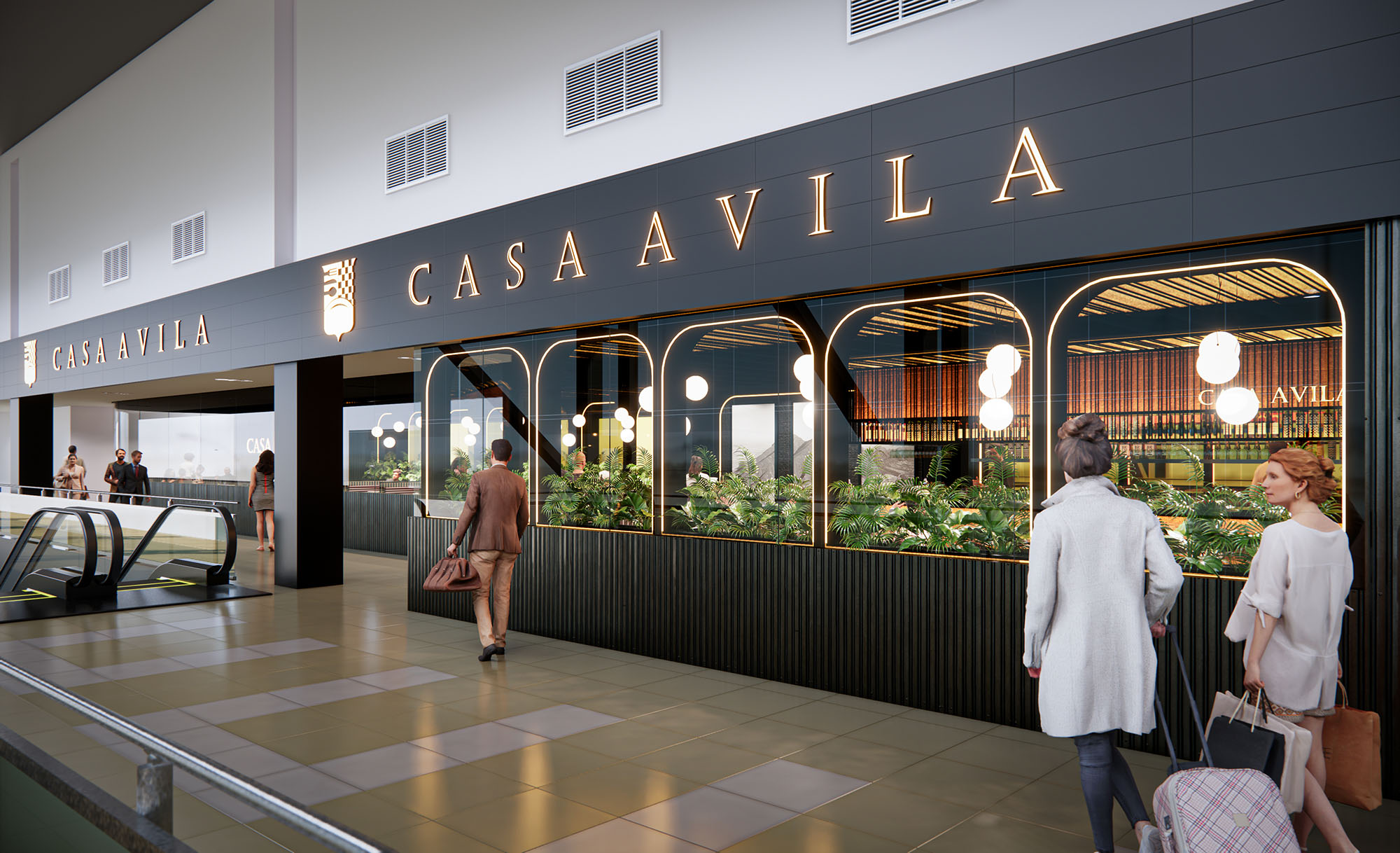
Casa Ávila is conceived as an urban refuge within the dynamic context of an airport terminal in Monterrey. The design creates a clear visual and spatial threshold between the public concourse and an interior atmosphere of calm, warmth and sophistication. The envelope works as a continuous façade that unifies branding, enclosure and interior ambience, turning the restaurant into a recognizable landmark in the circulation flow of the terminal.
The concept draws on contemporary interpretations of classic brasserie language: rhythmic vertical elements, warm metallic highlights and carefully modulated lighting. These resources communicate a sense of permanence and quality while remaining light and open, appropriate to a high-traffic, transient environment.
The exterior façade is structured as a gently curved, dark ribbed screen that defines the boundary with the terminal. Slender vertical fins generate depth and shadow, providing privacy to diners while maintaining controlled visual permeability. This linear texture gives the front a strong tectonic reading and a refined, almost architectural scale within the commercial corridor.
Branding is seamlessly integrated through a large illuminated logotype and a circular emblem that pierces the vertical grid. The backlit letters and logo act as a lantern, visible from long distances in the terminal. The circular opening frames partial views of the interior, offering a curated glimpse of the atmosphere while functioning as a focal point that organizes the façade composition.
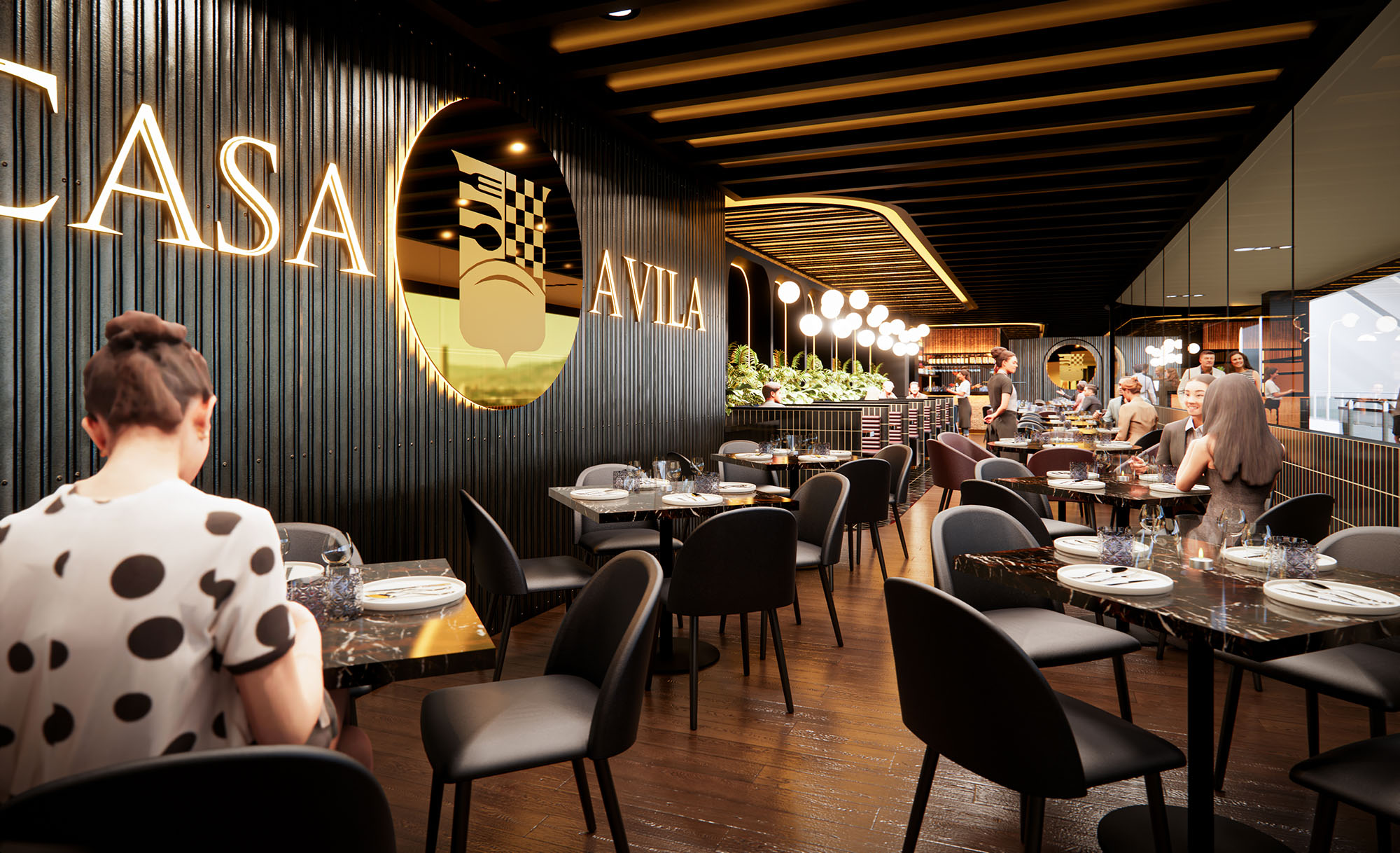
The interior is arranged as a longitudinal nave parallel to the concourse, optimizing frontage and maximizing the number of seats with exterior visibility. Seating typologies are layered from the façade inward: small tables for two along the edge, more generous groupings in the central zone, and lounge-style settings near the bar. This gradation of densities allows for both fast, individual service and longer, social stays.
Circular circulation is ensured by a clear spine connecting entry, bar and kitchen. Service paths run along the perimeter of the bar and between seating bands, minimizing interference with the guest experience. The plan supports high turnover at peak hours while maintaining an orderly, legible space.
The material palette balances dark, textured surfaces with warm accents. The exterior ribs appear to be finished in a deep charcoal or bronzed tone, complemented by metallic details in brass or gold at the logo and lighting fixtures. Inside, timber or wood-look flooring adds warmth and continuity, while upholstered chairs in muted rose and earth tones introduce softness and tactility.
Ceiling elements follow the linear expression of the façade, with dark beams or slats directing perspective toward the bar and logo wall. Lighting is layered through indirect cove washing on the ceiling, integrated strip lighting in the logo and warm, spherical pendants that echo classic hospitality design. The overall luminous environment is intimate but sufficiently bright for an airport context, using warm color temperatures to counteract the cooler ambient light of the terminal.
Furniture is specified with slender metal legs and refined profiles to keep the visual field light despite the dark palette. Tabletops in stone or high-performance composite materials provide durability and a sense of solidity. Curved banquettes and upholstered armchairs contribute ergonomic comfort during longer waits between flights, while their rounded forms soften the rigorous vertical and linear geometry of the shell.
Planters integrated into the façade and interior partitions bring greenery into the space, softening the boundary with the concourse and introducing biophilic elements. Detailing in joints, edges and transitions between materials is deliberately minimal, reinforcing a contemporary aesthetic that privileges continuity over ornament.
Although located in a controlled airport environment, the project addresses sustainability through material selection, lighting design and operational efficiency. The predominant use of durable finishes such as metal, composite cladding and engineered wood reduces the need for frequent replacement, extending the life cycle of the fit-out. Upholstery fabrics and finishes can be specified with high recycled content and low-VOC emissions, improving indoor air quality for both staff and guests.
Lighting is based on LED technology with directional and dimmable fixtures, reducing energy consumption while allowing adaptation to different times of day and levels of natural light in the terminal. The vertical façade not only provides identity but also acts as a passive filter, reducing glare and improving visual comfort. The compact, linear layout concentrates service areas and shortens routes, contributing to more efficient operations and lower resource use over time.


Nuestras oficinas están en Barcelona, Cancún, Chicago y Santo Domingo, pero gracias a la tecnología podemos desarrollar proyectos en cualquier parte del mundo.
Barcelona
Bac de Roda 136
08020, Barcelona
Spain
Madrid
Av. de Buendía 11
19005 Guadalajara (Madrid)
Spain
Chicago
373 Hazel Ave, Apt A1
60022, Glencoe, Illinois
United States