

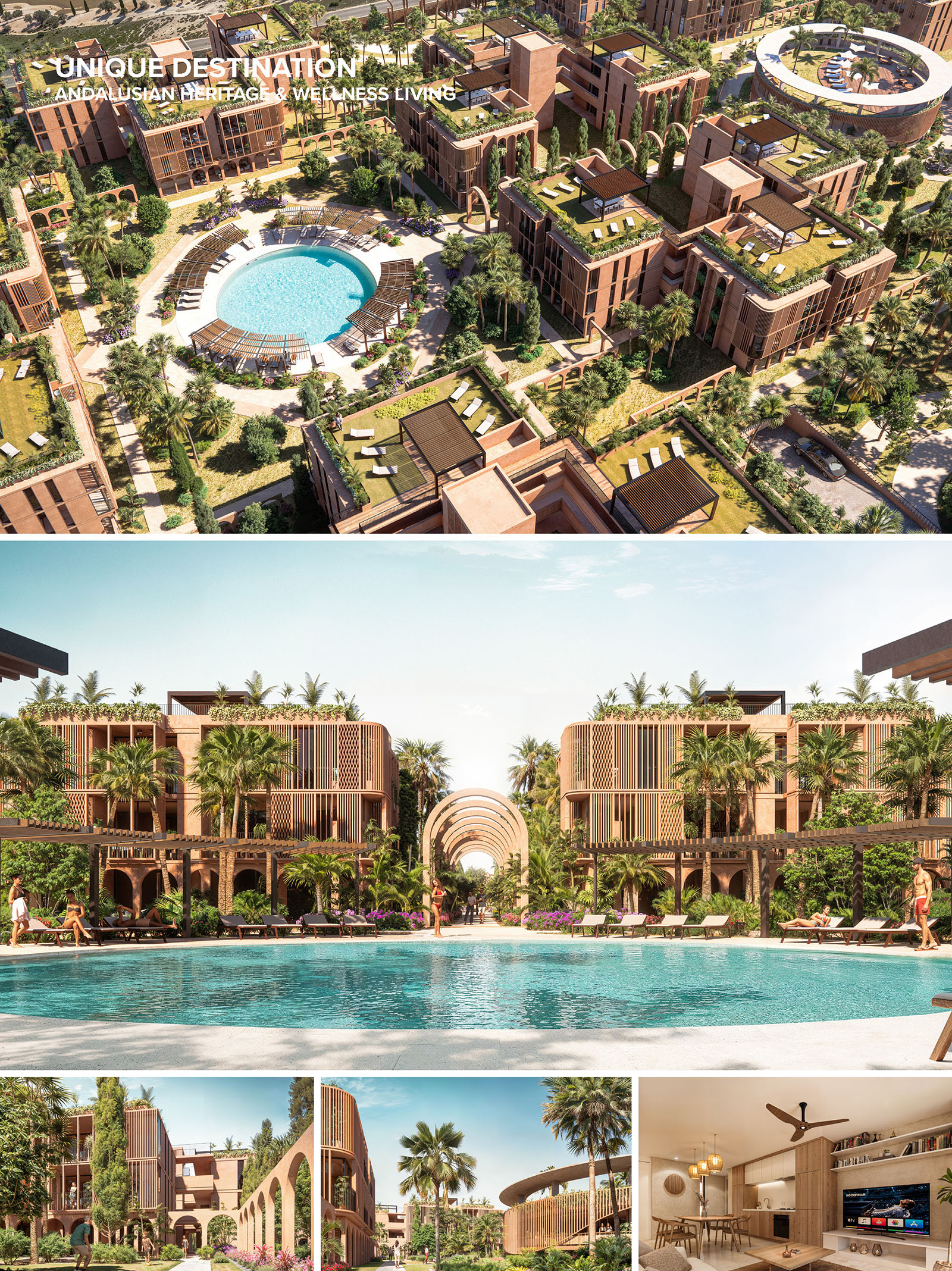
Alhambra Tourist Apartments is envisioned as a contemporary Mediterranean village that reinterprets tradition through a lens of wellness, sustainability, and experiential design. More than a collection of buildings, the project aspires to create a holistic environment where architecture, landscape, and human activity are intimately connected. Located in Murcia—an area steeped in natural beauty, Moorish heritage, and strong sunlight—the design draws inspiration from the poetic geometry and spatial richness of Islamic-Andalusian architecture. In particular, the visual language established by the Alhambra Wellness Hotel and Alhambra Residential is extended here, establishing a unified architectural identity across all three developments. These projects, though distinct in function, form a collective narrative centered on harmony, serenity, and timelessness.
At the core of the concept is the desire to craft a destination that operates on a human scale—walkable, immersive, and emotionally resonant. The masterplan replaces conventional urban grids with a soft, organic layout composed of sinuous walkways, shaded arcades, and landscaped gathering spaces. This design approach creates a sense of discovery, as residents and visitors move through a sequence of curated spatial experiences: quiet courtyards, communal gardens, open plazas, and tranquil water features. The resulting fabric encourages social interaction, introspection, and engagement with nature.
The architectural forms are deliberately restrained, defined by simplicity, repetition, and proportion. Their elegance lies not in ornamentation but in rhythm, balance, and material honesty. Inspired by vernacular Mediterranean construction, buildings are rendered in soft terracotta tones and finished in natural textures that reflect and absorb light differently throughout the day. These materials do not compete with the landscape—they belong to it. Volumes are articulated with vertical wooden screens and generous pergolas, creating an ever-changing interplay of light and shadow that adds depth and comfort.
Crucially, the design privileges the seamless flow between interior and exterior space. Each unit opens out to private terraces, shaded loggias, or rooftop gardens that become part of daily life. These outdoor rooms are not decorative—they are functional extensions of the home, encouraging open-air living and offering shelter from the sun. The layout ensures that nearly every room is cross-ventilated and naturally lit, enhancing comfort and well-being.
The identity of Alhambra Tourist Apartments is not defined solely by its aesthetics, but by its values. It reflects a Mediterranean philosophy of living: one that embraces slowness, rootedness, and intention. In a world increasingly shaped by speed and disconnection, this project offers an alternative—a place where time slows, where beauty is found in the ordinary, and where the architecture supports a life lived in balance with others and with nature. Through this design, we seek to redefine hospitality as something deeply human: immersive, grounding, and meaningful.
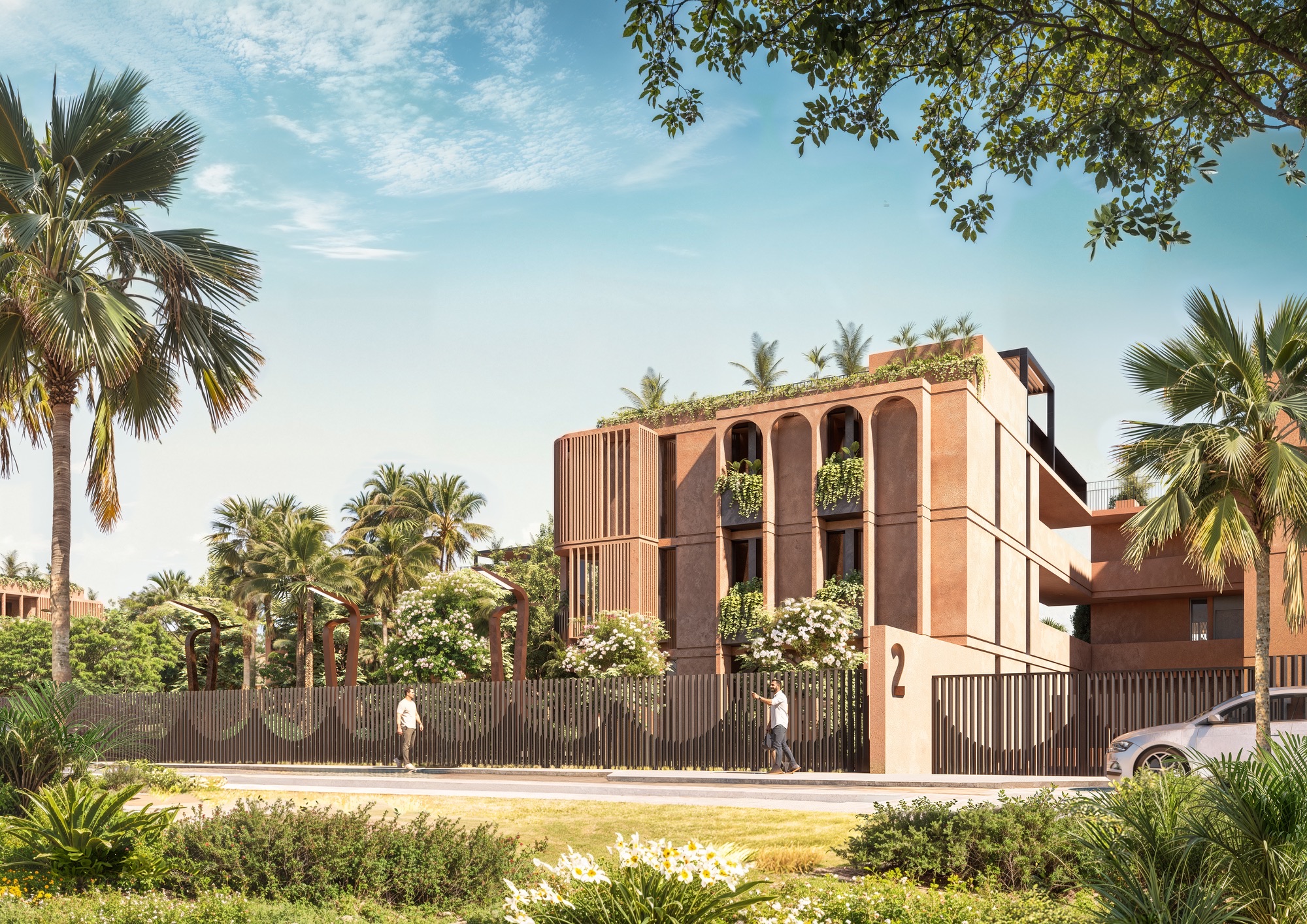
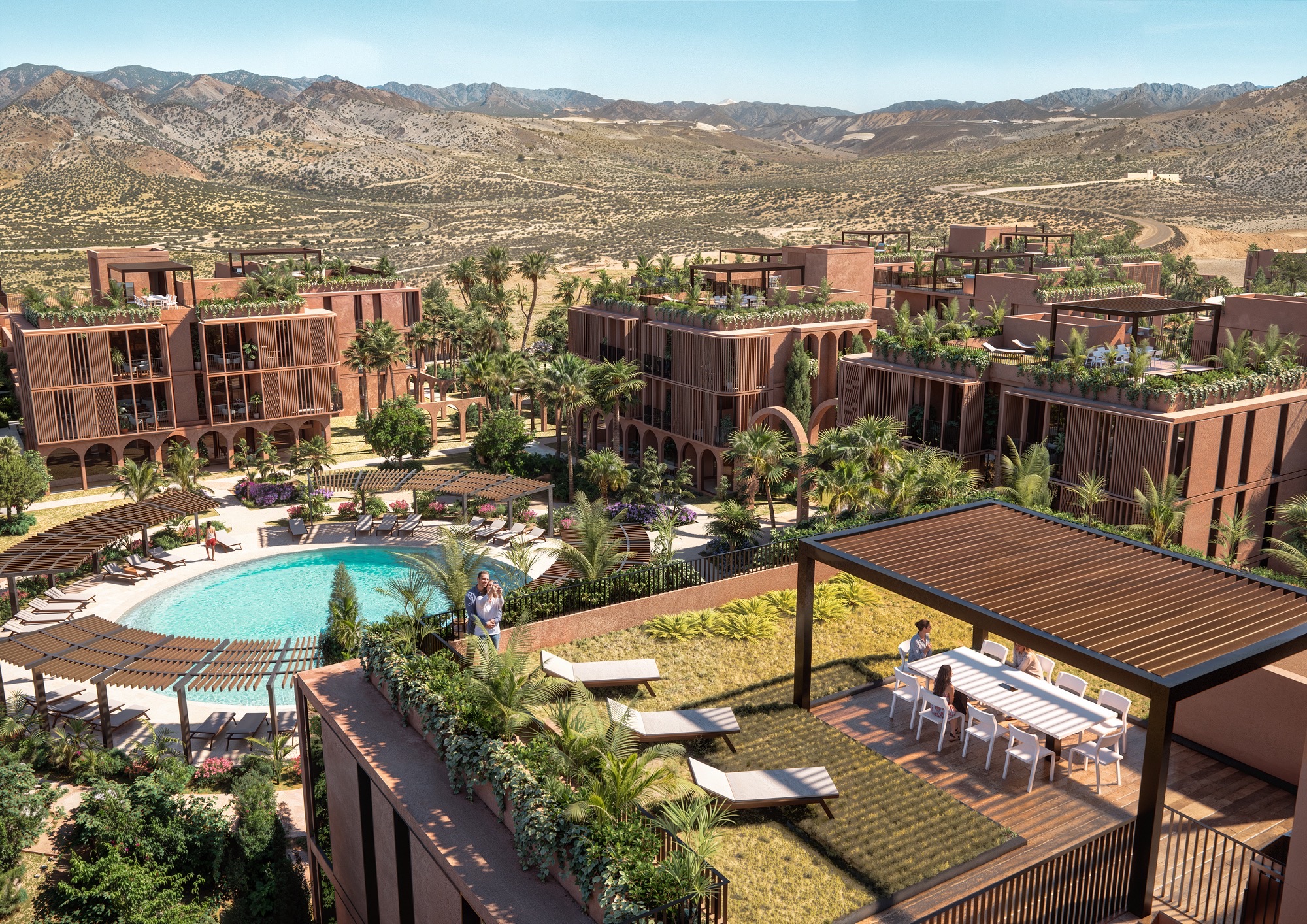
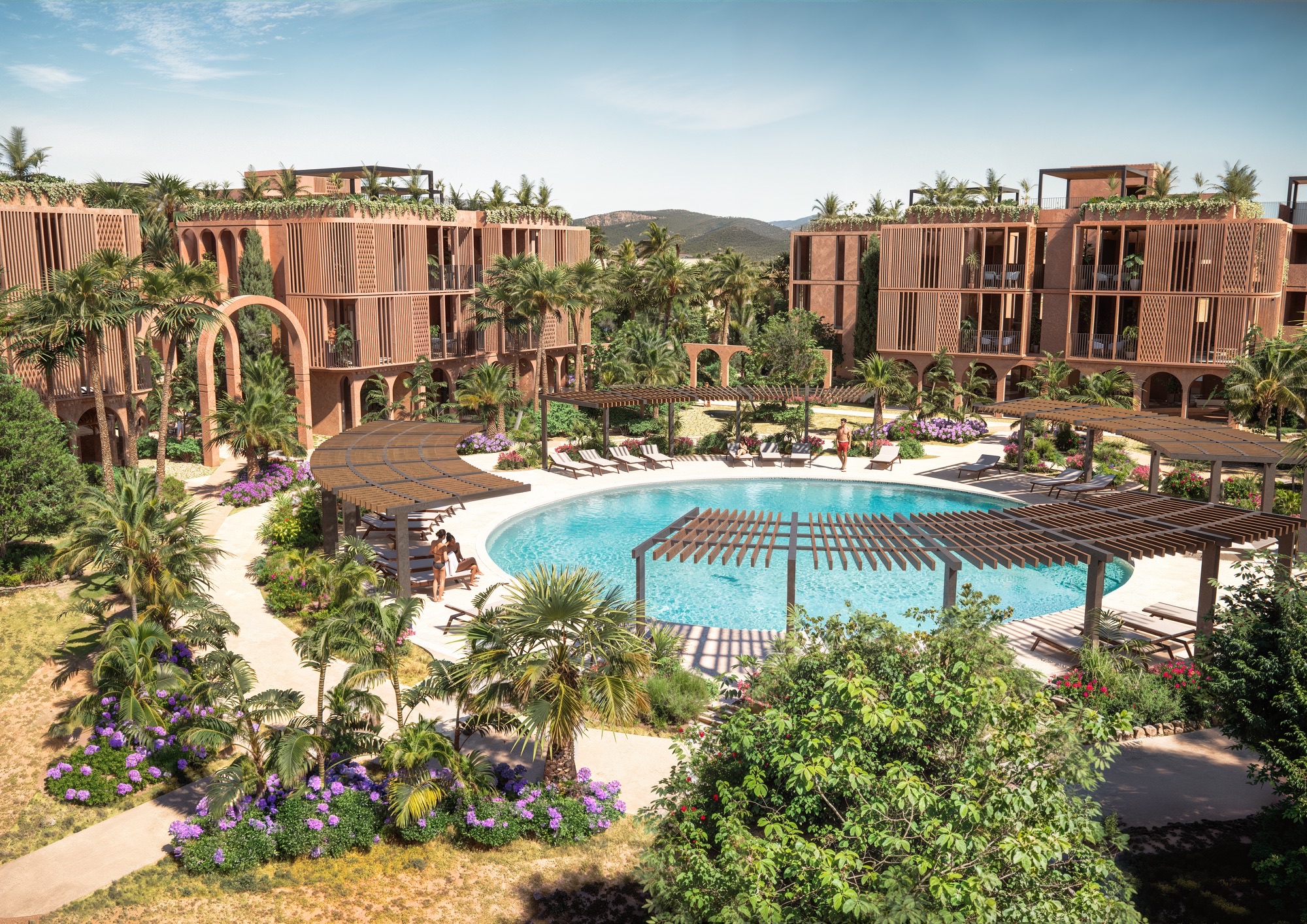
The buildings are organized as low-density clusters around communal courtyards and swimming pools, providing a balance of privacy and social interaction. Arches, arcades, and latticework reinterpret traditional motifs with a contemporary sensibility. Vertical wooden screens serve dual functions—providing solar protection while referencing mashrabiya elements, enhancing the dialogue between inside and outside. The rhythm of façades is carefully calibrated to create visual coherence, alternating between solid planes and permeable enclosures that filter natural light.
Volumes are modulated in warm, earthy tones with textures reminiscent of tadelakt and terracotta plaster, allowing the structures to blend seamlessly into the semi-arid landscape. Roof terraces, pergolas, and generous balconies become extensions of living spaces, encouraging open-air living in harmony with the region’s mild climate.
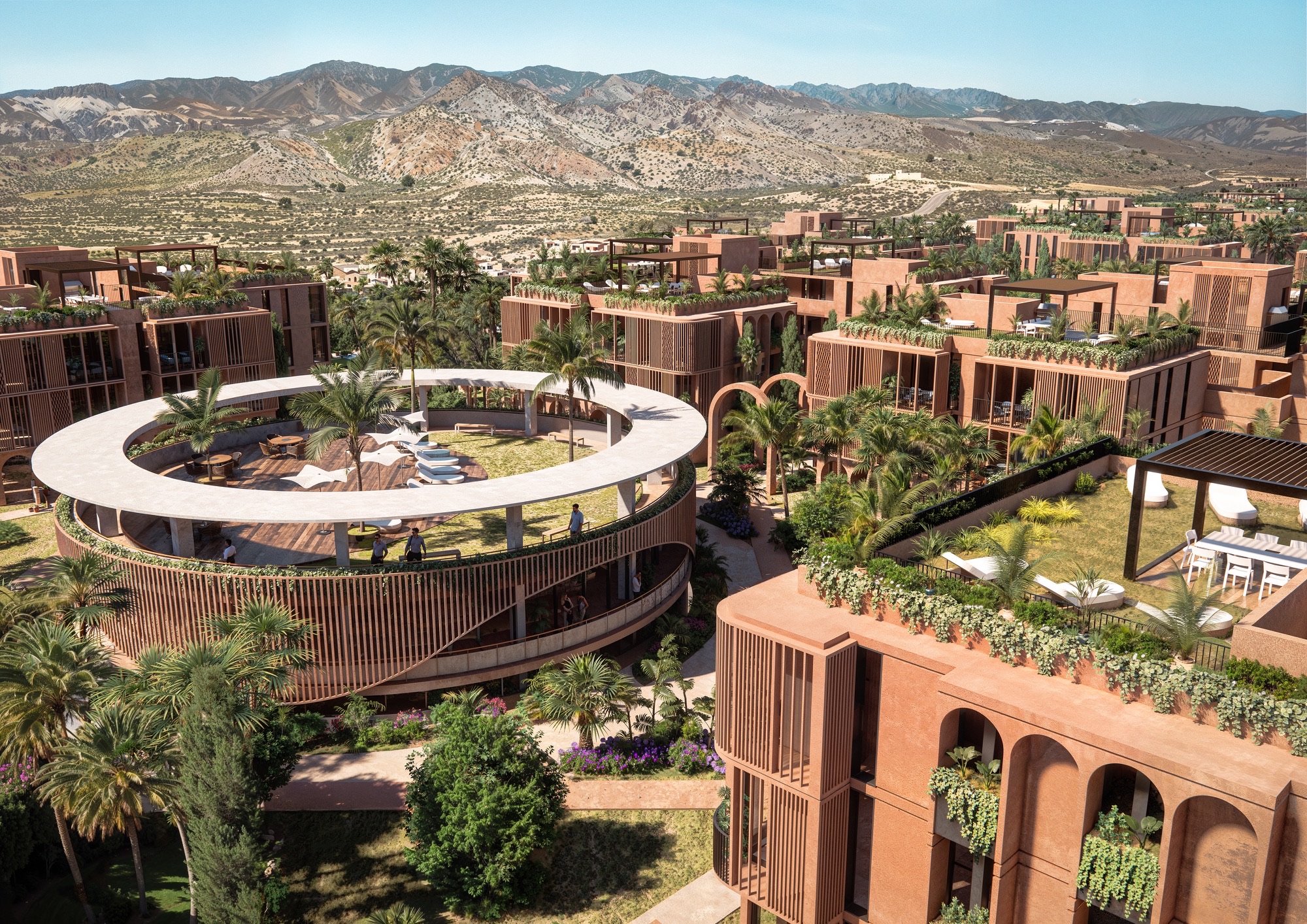
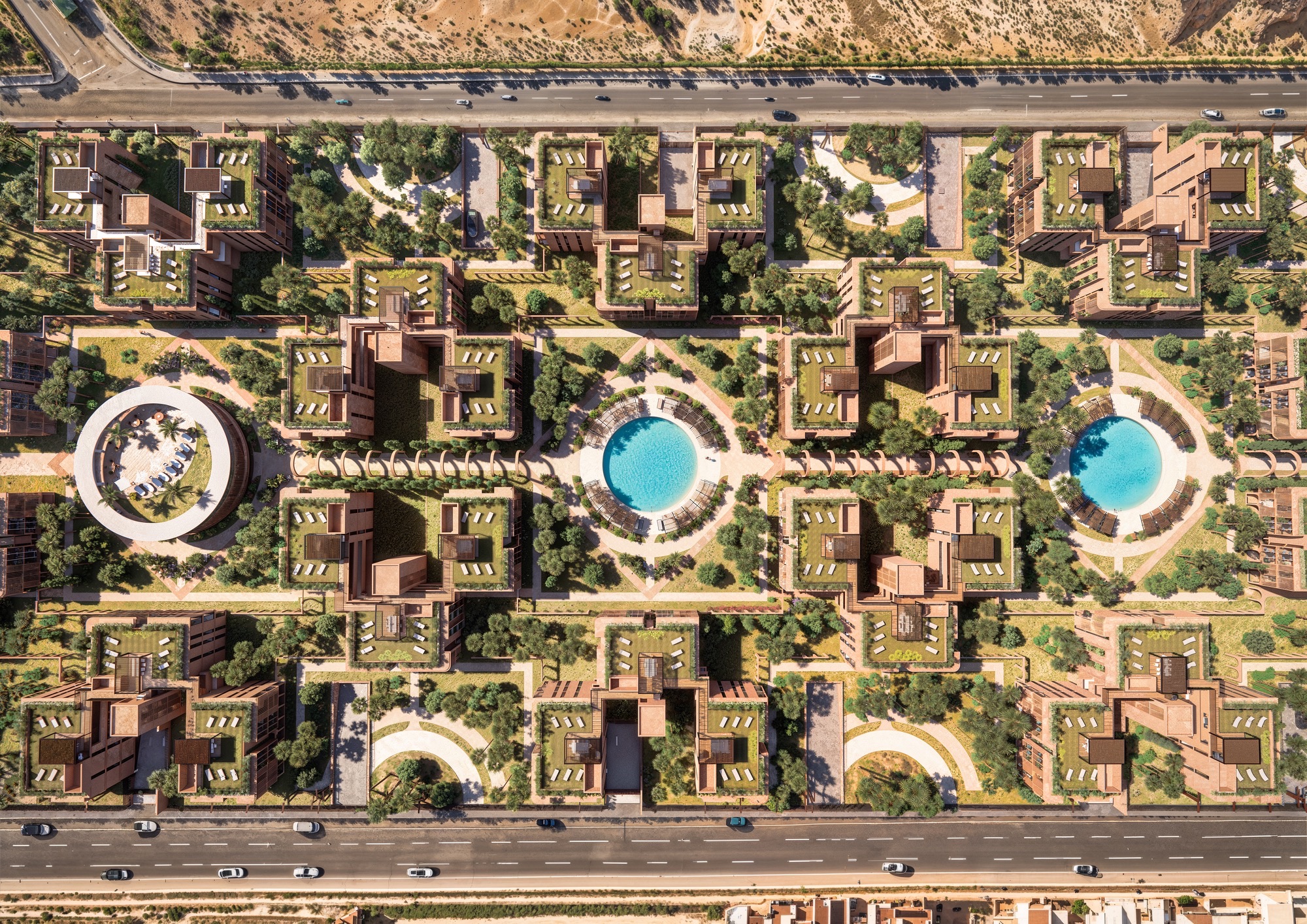
The urban layout of Alhambra Tourist Apartments is grounded in a precise geometric order inspired by traditional Islamic patterns—traces and grids that are not only ornamental, but structural tools for creating harmony, repetition, and spatial clarity. From the aerial perspective, the masterplan reveals itself as an intricate yet balanced composition: a modular arrangement of orthogonal blocks organized around interior patios and unified by a strong axial logic. This approach enables a readable, walkable environment where orientation, rhythm, and cohesion guide the user experience.
One of the defining qualities of the Alhambra Tourist Apartments is the seamless integration between interior and exterior environments. Ground-level units open directly to garden patios, while upper levels enjoy cross-ventilation and panoramic views of the surrounding landscape. Interiors are oriented to maximize daylight and natural airflow, eliminating the need for mechanical cooling for much of the year.
The architecture supports a biophilic lifestyle: residents are invited to engage with their surroundings, whether tending to a planter on a balcony, strolling through an olive grove, or gathering in the communal spaces under filtered shade.
Sustainability is embedded at every scale of the project. Bioclimatic design principles shape the orientation, form, and materiality of the buildings. Deep overhangs, vertical wooden slats, and thermal mass strategies work together to maintain interior comfort while minimizing energy demand.
The extensive use of native, drought-tolerant vegetation supports water conservation efforts and fosters local biodiversity. Greywater recycling systems and low-flow irrigation are integrated to optimize water use. At the infrastructural level, the incorporation of photovoltaic panels on rooftops and the potential for district-scale renewable energy systems contribute to a low-carbon operational footprint.
The design of the Alhambra Tourist Apartments exemplifies architecture as a holistic practice—merging beauty, tradition, and environmental stewardship into a harmonious, human-scaled living environment.
Explore our space through this immersive Virtual Tour: navigate freely, zoom in to discover details and move around by clicking the arrows or portals. Use the blue icons to teleport anywhere in the project, viewpoints or full‑screen mode, and feel free to switch to VR mode on VT Glasses for an even deeper experience! Sit back, take your time, and experience the environment as if you were really there—enjoy your journey
CRAFTED MASTER PLAN DESIGN
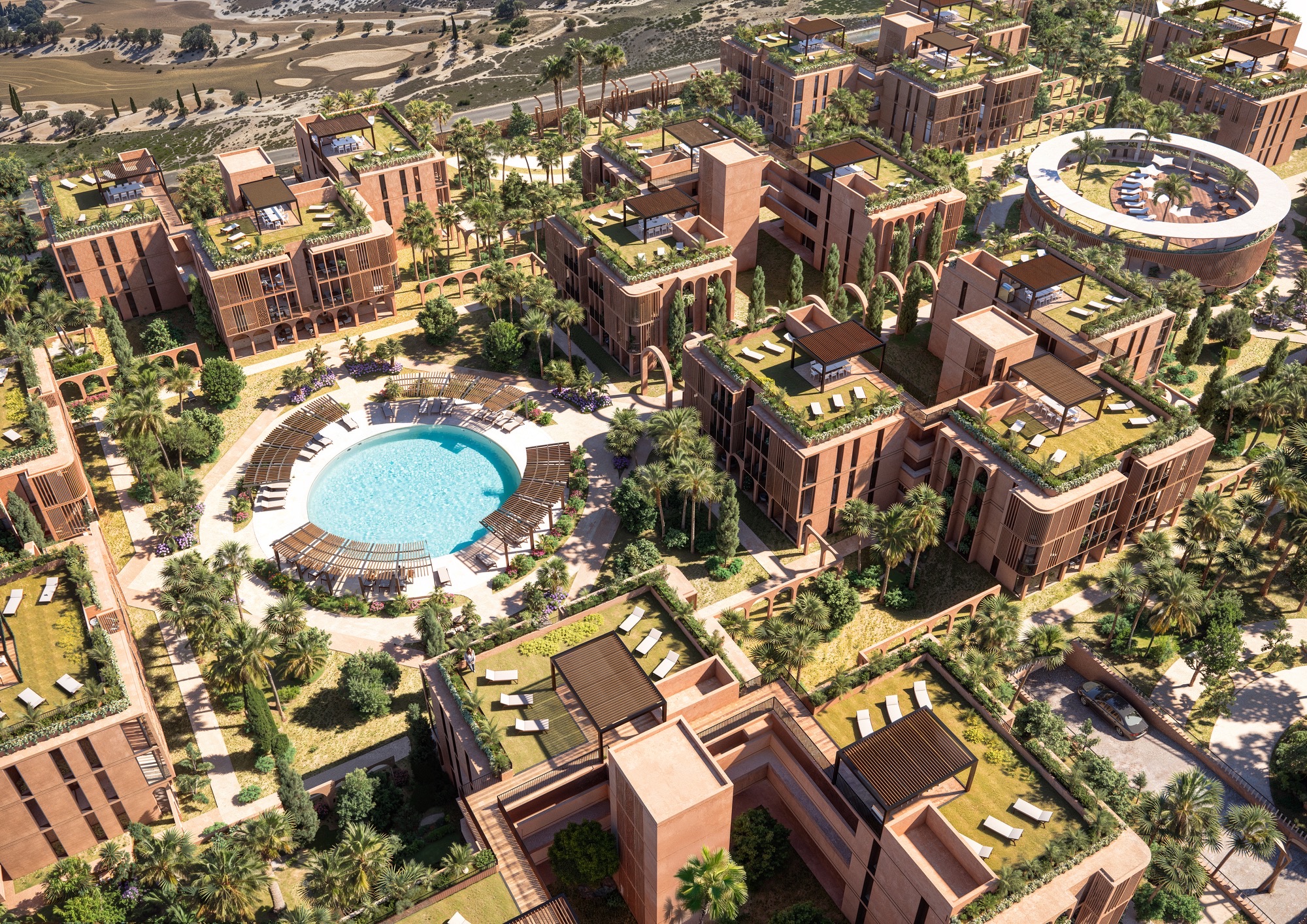
The entire complex is structured around a network of shaded pedestrian axes that link communal courtyards, swimming pools, plazas, and garden spaces. These pathways are defined by architectural elements such as rhythmic archways, pergolas, and arcades, which do more than mark circulation—they create a continuous canopy of shadow. In the hot Mediterranean climate of Murcia, shade is not a decorative gesture but an essential spatial strategy. It moderates temperature, softens light, and makes outdoor movement comfortable throughout the seasons.
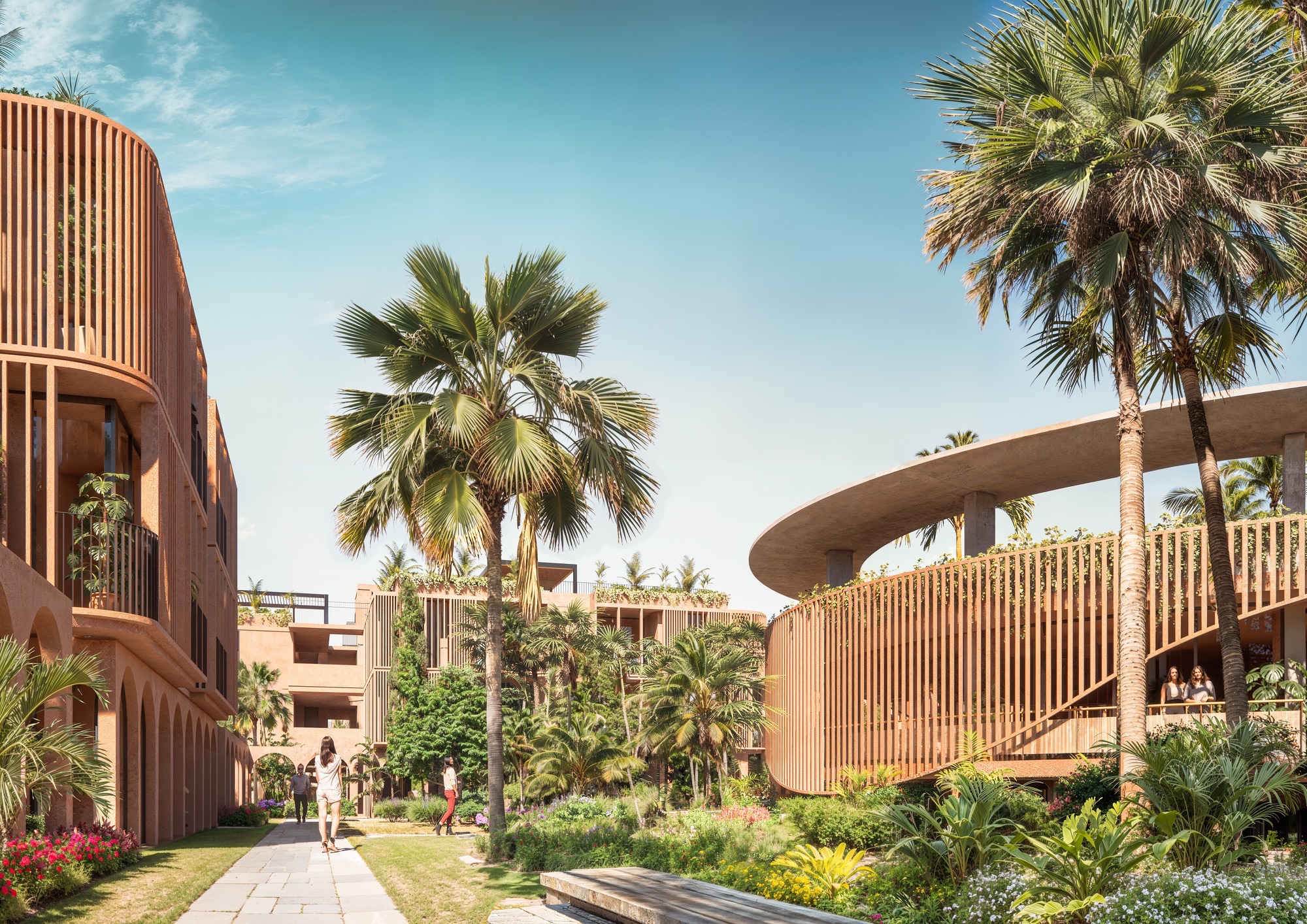
Each cluster of buildings is arranged around an interior courtyard, as a social and climatic nucleus. These courtyards are conceived as lush, introverted gardens featuring water elements, native planting, and social seating areas. Circular pools and linear gardens act as climatic moderators, producing natural cooling through evapotranspiration while offering communal areas for leisure and connection.
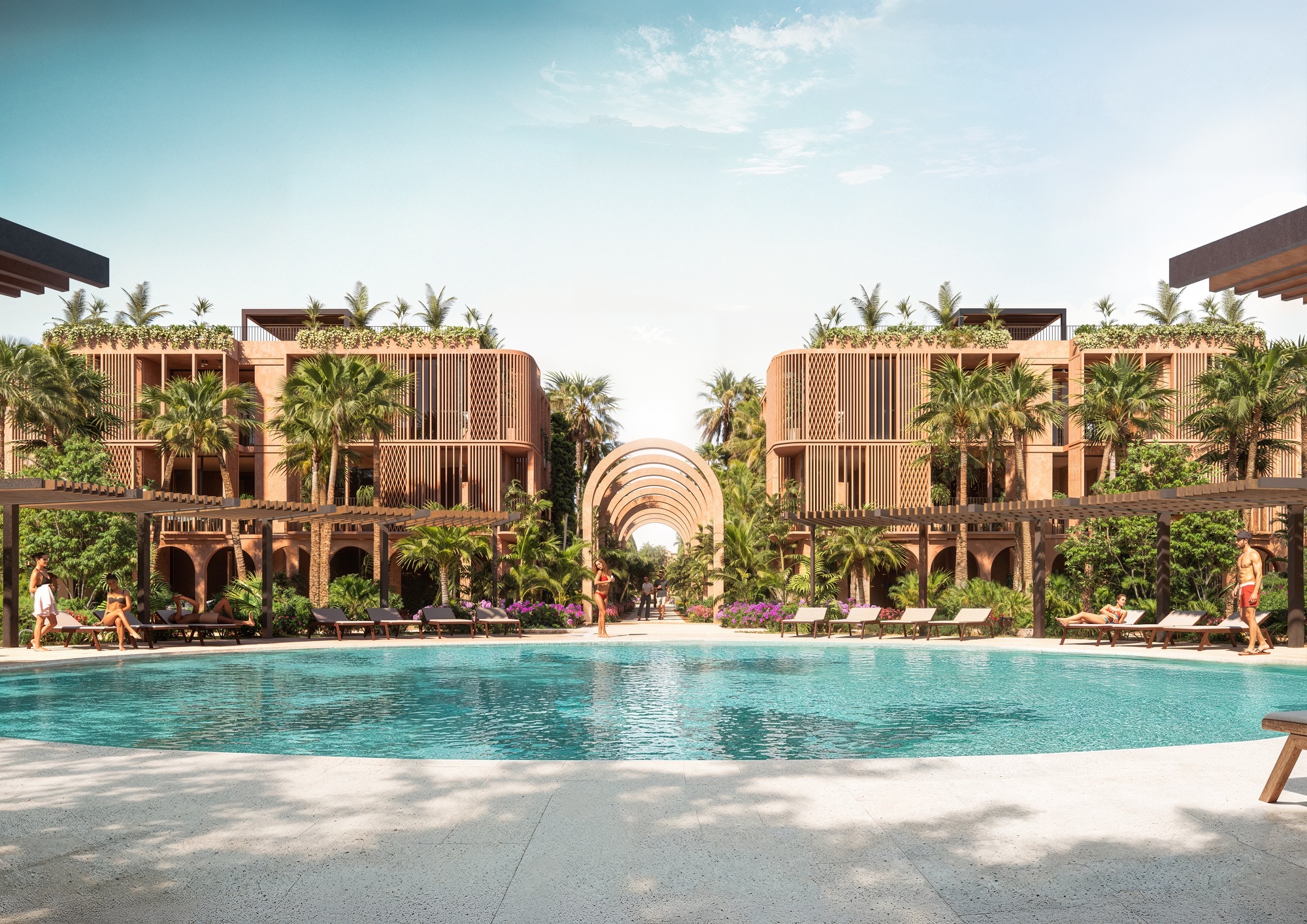
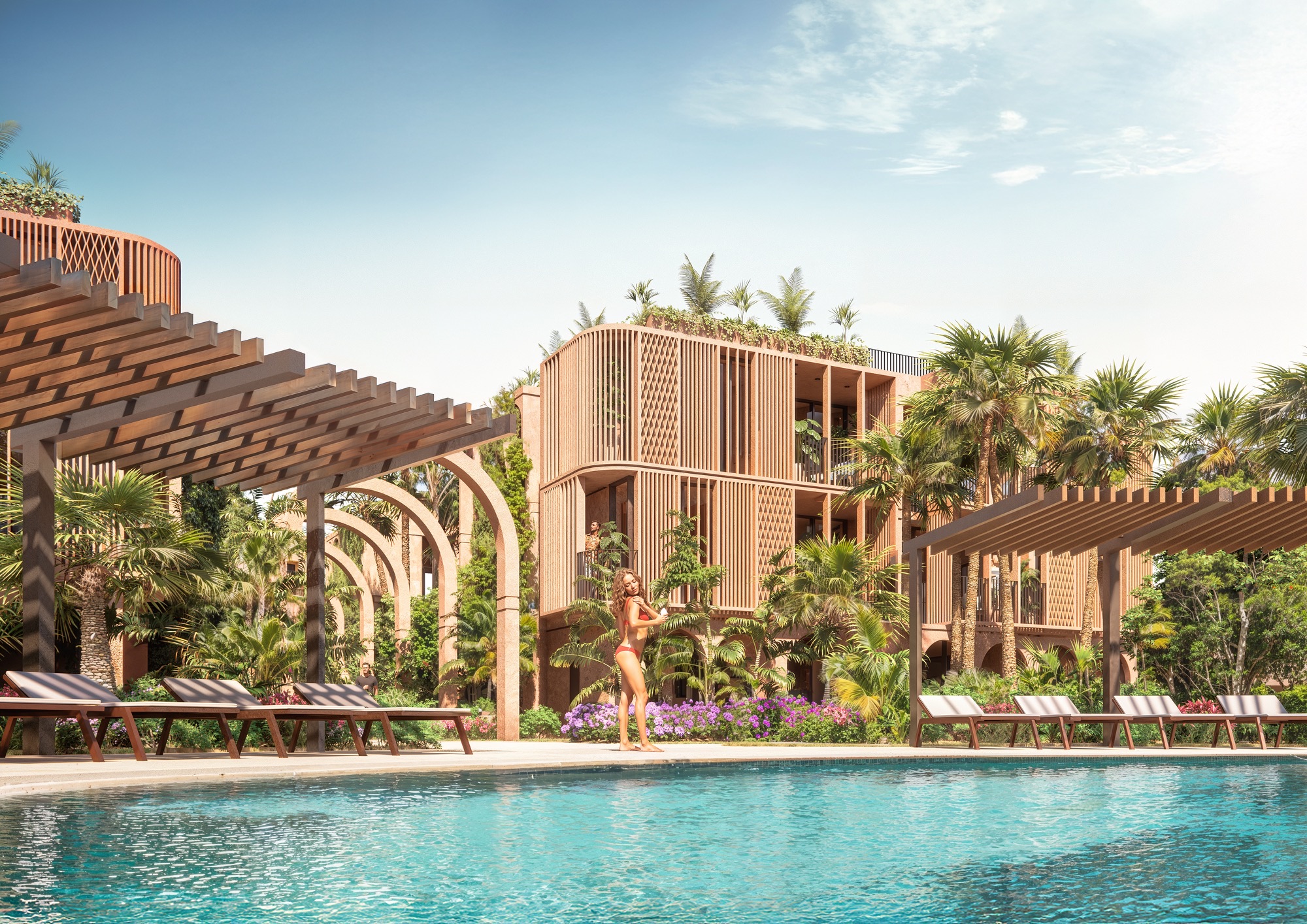
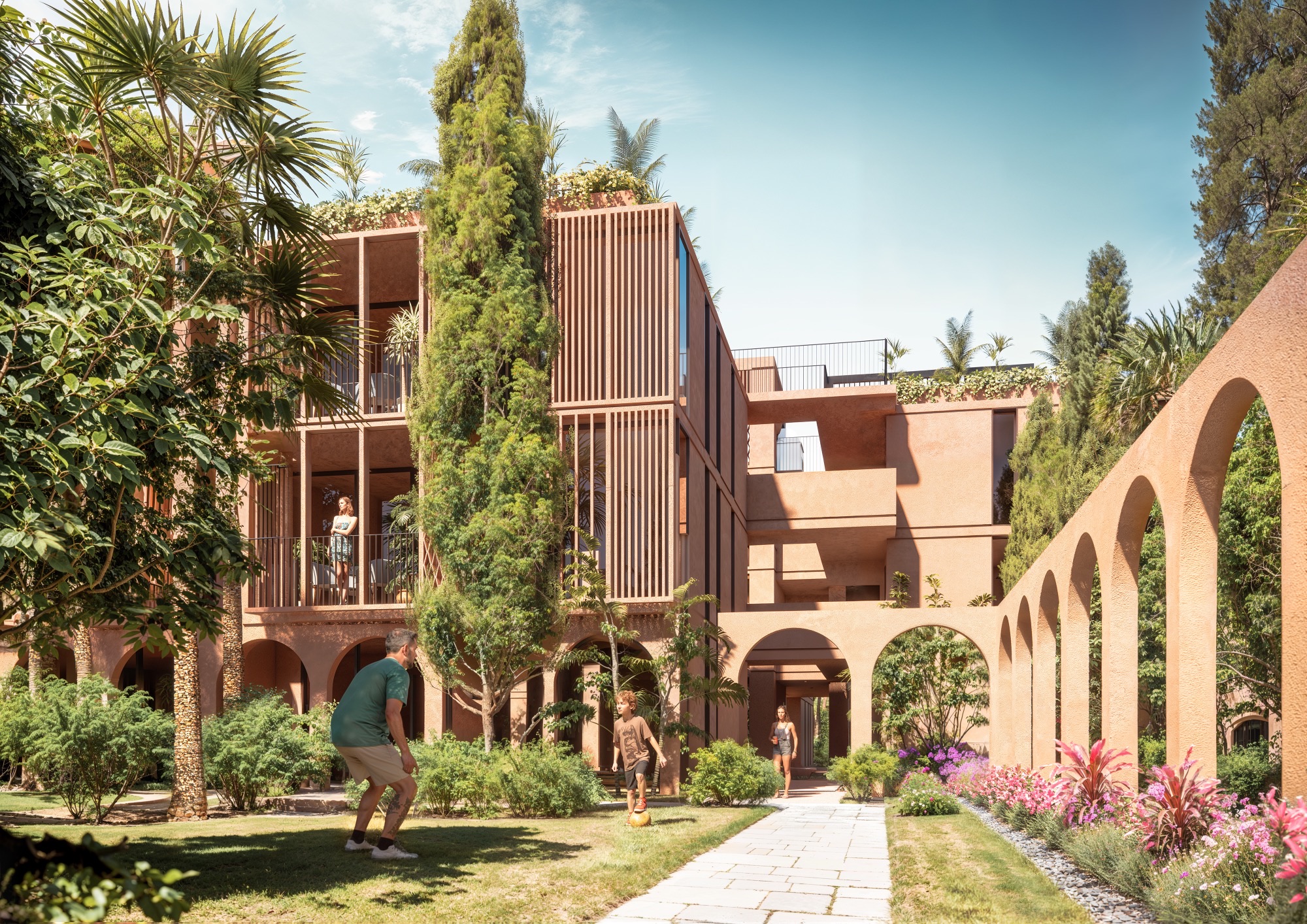
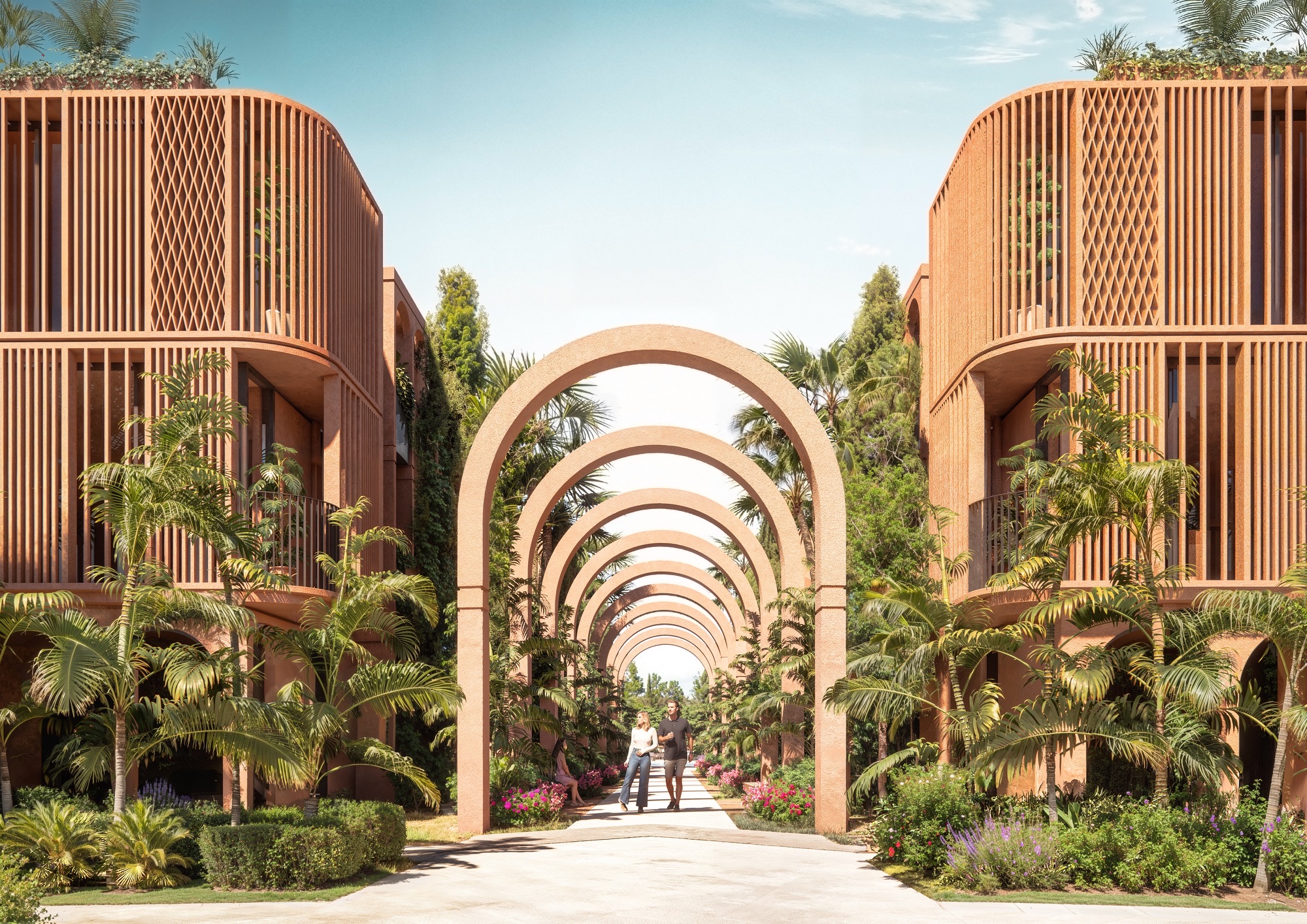
The planting strategy emphasizes Mediterranean and drought-tolerant species such as palm trees, cypresses, olive trees, and flowering shrubs—selected not only for their resilience but for their sensory richness. Ground-level paths are defined by stone paving, linear tree alignments, and structured garden beds that guide movement while softening the geometry of the built forms. Vegetation becomes a vital counterpoint to the architectural rigor, introducing texture, color, and seasonality.
The design follows a logic of proximity and intimacy, reinforcing the idea of a contemporary village. The low-rise typologies and repeated patio modules ensure that no space feels overwhelming or out of scale. Life happens in the in-between: in colonnaded walkways, garden corridors, quiet benches under pergolas, and the shaded thresholds between buildings and landscape. These interstitial zones encourage casual encounters, reflection, and slowness.
Ultimately, the landscape and urban structure serve as the unifying backbone of the project. Through the use of geometric harmony and carefully modulated shade, Alhambra Tourist Apartments offers not just legibility and comfort, but an emotional atmosphere—one rooted in cultural memory and elevated through contemporary spatial language.
The interiors of Alhambra Tourist Apartments are designed to echo the same principles that define the architecture and landscape: natural materiality, soft Mediterranean tones, and a deep connection between indoor and outdoor living. Every space is conceived as an extension of the serene, rooted lifestyle promoted by the project—calm, tactile, and intentional.
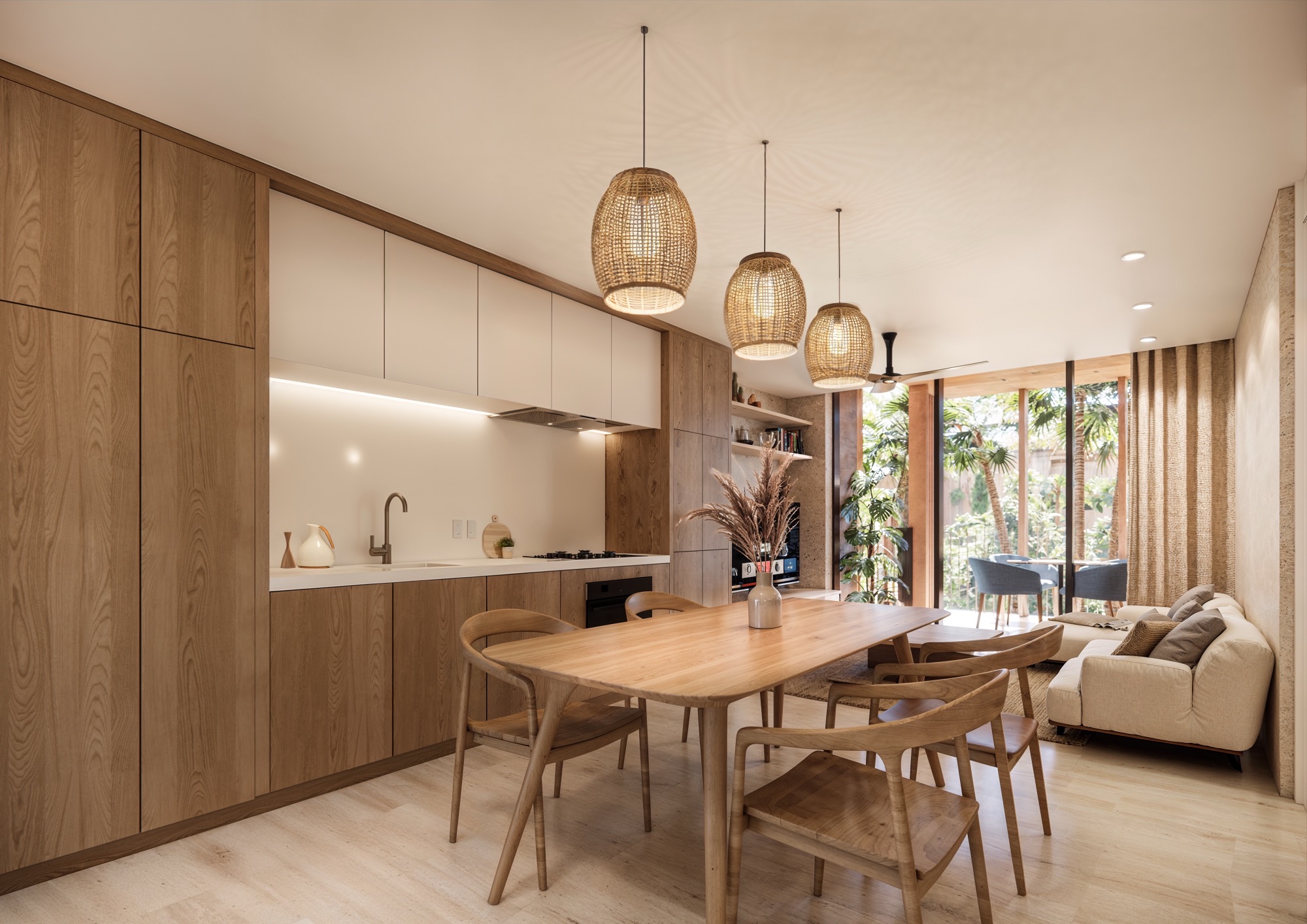
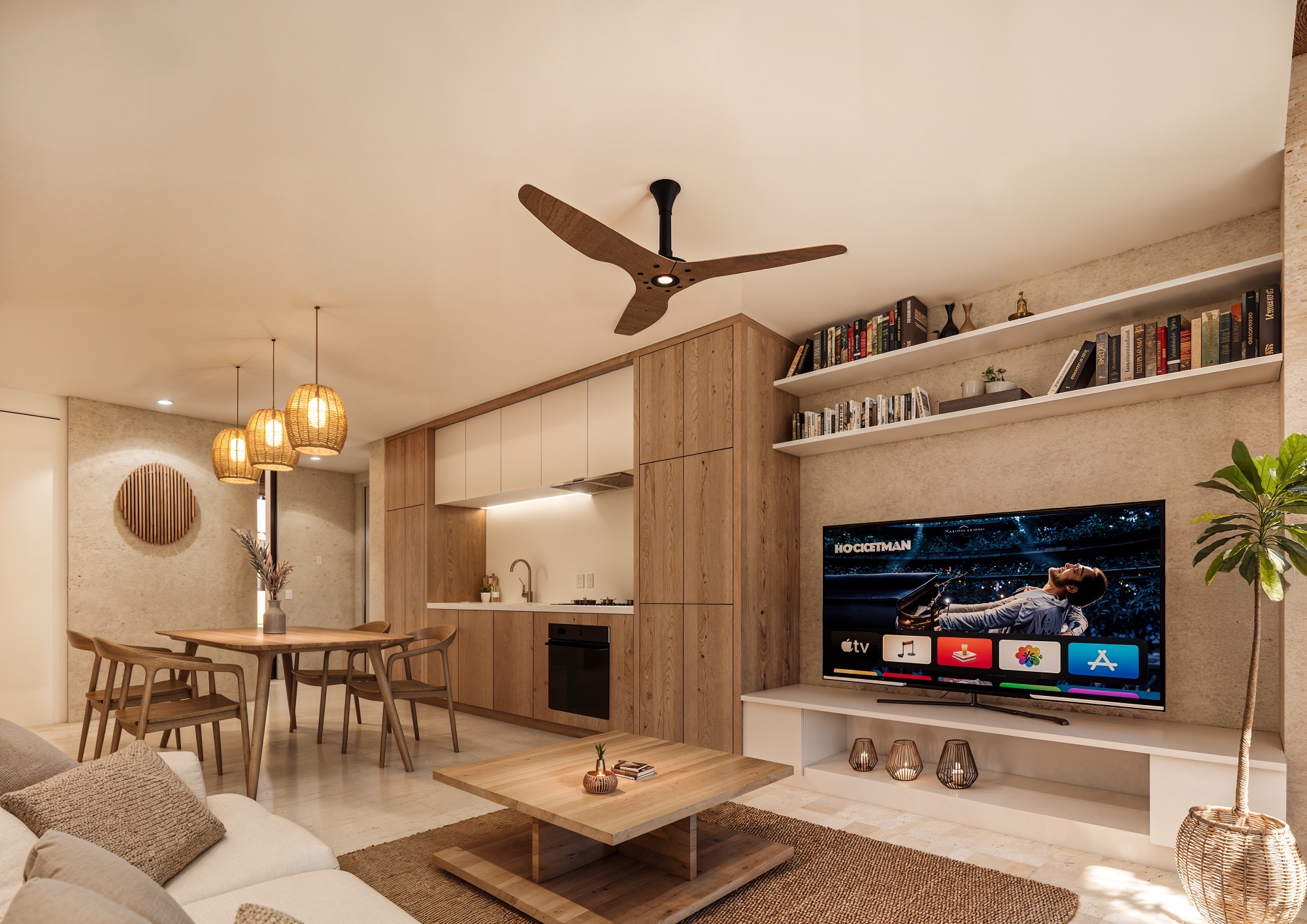
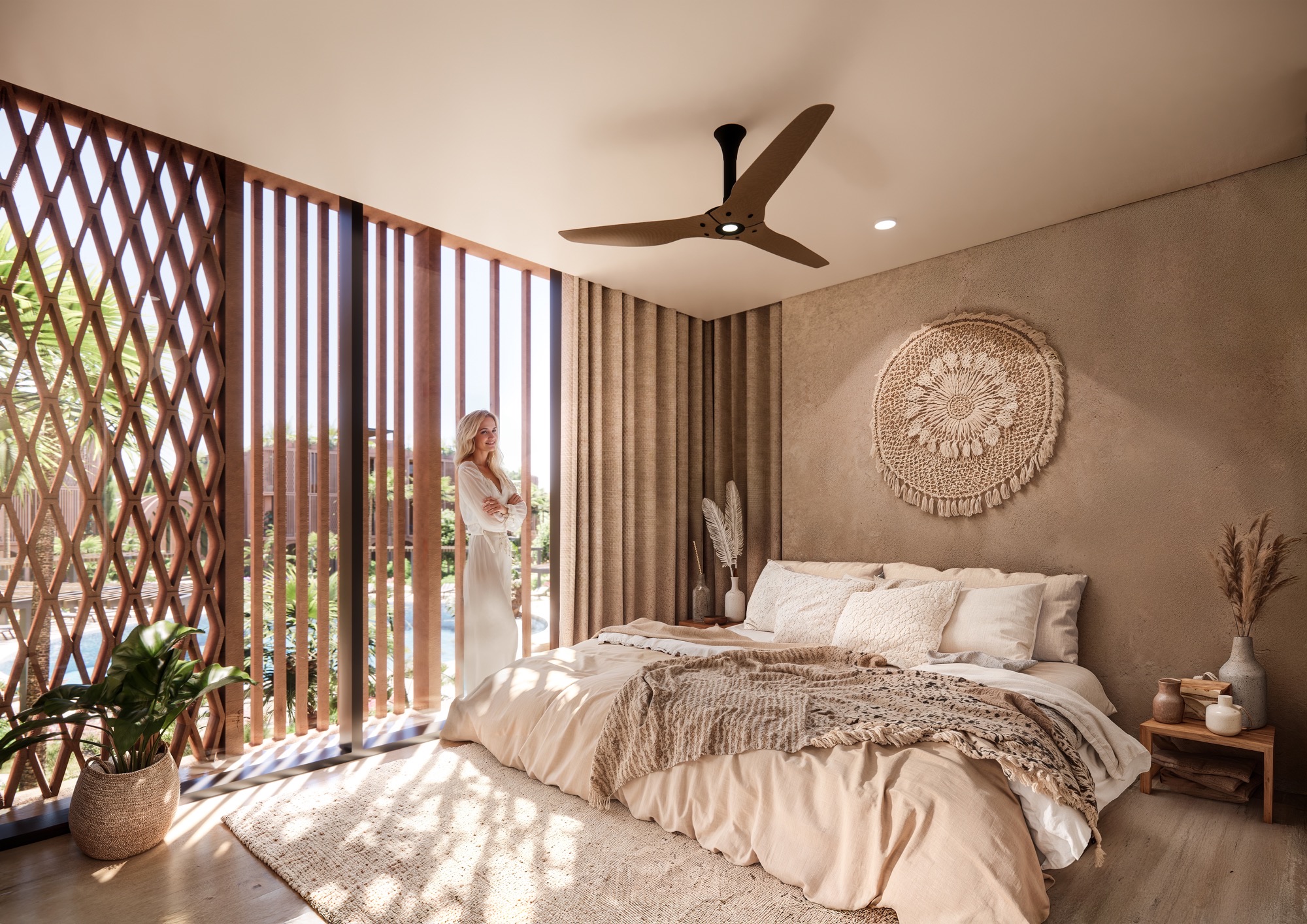
The design embraces a palette of warm neutrals and earthy textures that speak to the regional context and climate. Floors are finished in light-toned limestone or ceramic materials that reflect natural light and keep interiors cool. Walls are rendered in natural plasters, subtly textured to create visual warmth and depth. Custom carpentry in oak or ash wood introduces a layer of artisanal refinement, present in built-in cabinetry, shelving, and millwork.
Ventilation and light control are key strategies. Ceiling fans and cross-ventilation reduce the need for artificial cooling, while layered lighting schemes allow for flexible ambiance: indirect LED strips under cabinetry, warm pendant lights over dining tables, and recessed fixtures for focused illumination. The lighting is not merely functional, but curated to enhance the spatial mood throughout the day and night. The interior design aims to support a lifestyle that values simplicity, wellness, and sensory connection. Each unit is a sanctuary, carefully composed with natural materials, elegant details, and spatial clarity—creating a domestic environment that is both tranquil and deeply connected to the surrounding landscape.

Alhambra Tourist Apartments is envisioned as a contemporary Mediterranean village that reinterprets tradition through a lens of wellness, sustainability, and experiential design. More than a collection of buildings, the project aspires to create a holistic environment where architecture, landscape, and human activity are intimately connected. Located in Murcia—an area steeped in natural beauty, Moorish heritage, and strong sunlight—the design draws inspiration from the poetic geometry and spatial richness of Islamic-Andalusian architecture. In particular, the visual language established by the Alhambra Wellness Hotel and Alhambra Residential is extended here, establishing a unified architectural identity across all three developments. These projects, though distinct in function, form a collective narrative centered on harmony, serenity, and timelessness.
At the core of the concept is the desire to craft a destination that operates on a human scale—walkable, immersive, and emotionally resonant. The masterplan replaces conventional urban grids with a soft, organic layout composed of sinuous walkways, shaded arcades, and landscaped gathering spaces. This design approach creates a sense of discovery, as residents and visitors move through a sequence of curated spatial experiences: quiet courtyards, communal gardens, open plazas, and tranquil water features. The resulting fabric encourages social interaction, introspection, and engagement with nature.
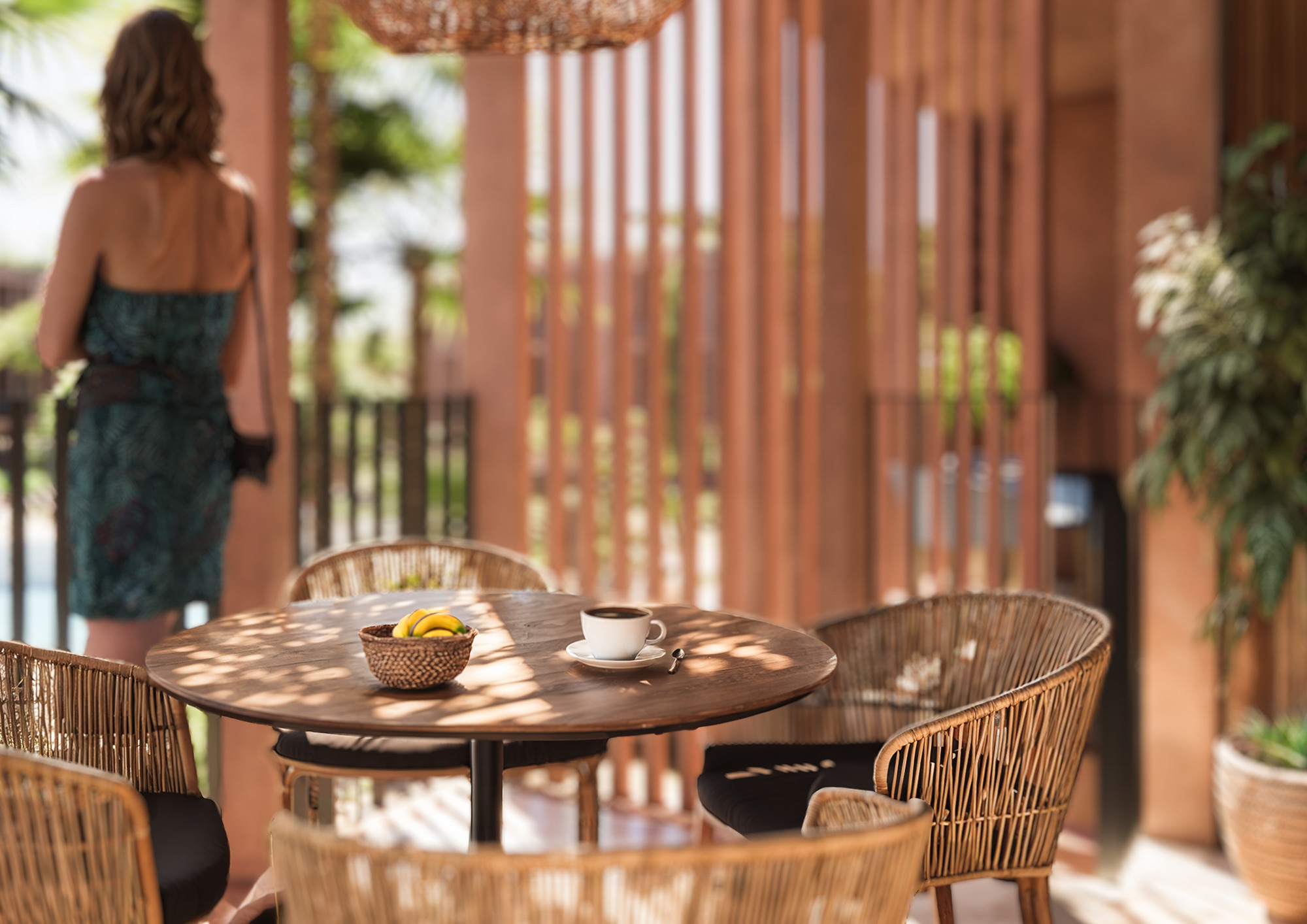
The architectural forms are deliberately restrained, defined by simplicity, repetition, and proportion. Their elegance lies not in ornamentation but in rhythm, balance, and material honesty. Inspired by vernacular Mediterranean construction, buildings are rendered in soft terracotta tones and finished in natural textures that reflect and absorb light differently throughout the day. These materials do not compete with the landscape—they belong to it. Volumes are articulated with vertical wooden screens and generous pergolas, creating an ever-changing interplay of light and shadow that adds depth and comfort.
Crucially, the design privileges the seamless flow between interior and exterior space. Each unit opens out to private terraces, shaded loggias, or rooftop gardens that become part of daily life. These outdoor rooms are not decorative—they are functional extensions of the home, encouraging open-air living and offering shelter from the sun. The layout ensures that nearly every room is cross-ventilated and naturally lit, enhancing comfort and well-being.
The identity of Alhambra Tourist Apartments is not defined solely by its aesthetics, but by its values. It reflects a Mediterranean philosophy of living: one that embraces slowness, rootedness, and intention. In a world increasingly shaped by speed and disconnection, this project offers an alternative—a place where time slows, where beauty is found in the ordinary, and where the architecture supports a life lived in balance with others and with nature. Through this design, we seek to redefine hospitality as something deeply human: immersive, grounding, and meaningful.
The buildings are organized as low-density clusters around communal courtyards and swimming pools, providing a balance of privacy and social interaction. Arches, arcades, and latticework reinterpret traditional motifs with a contemporary sensibility. Vertical wooden screens serve dual functions—providing solar protection while referencing mashrabiya elements, enhancing the dialogue between inside and outside. The rhythm of façades is carefully calibrated to create visual coherence, alternating between solid planes and permeable enclosures that filter natural light.
Volumes are modulated in warm, earthy tones with textures reminiscent of tadelakt and terracotta plaster, allowing the structures to blend seamlessly into the semi-arid landscape. Roof terraces, pergolas, and generous balconies become extensions of living spaces, encouraging open-air living in harmony with the region’s mild climate.
The urban layout of Alhambra Tourist Apartments is grounded in a precise geometric order inspired by traditional Islamic patterns—traces and grids that are not only ornamental, but structural tools for creating harmony, repetition, and spatial clarity. From the aerial perspective, the masterplan reveals itself as an intricate yet balanced composition: a modular arrangement of orthogonal blocks organized around interior patios and unified by a strong axial logic. This approach enables a readable, walkable environment where orientation, rhythm, and cohesion guide the user experience.
One of the defining qualities of the Alhambra Tourist Apartments is the seamless integration between interior and exterior environments. Ground-level units open directly to garden patios, while upper levels enjoy cross-ventilation and panoramic views of the surrounding landscape. Interiors are oriented to maximize daylight and natural airflow, eliminating the need for mechanical cooling for much of the year.
The architecture supports a biophilic lifestyle: residents are invited to engage with their surroundings, whether tending to a planter on a balcony, strolling through an olive grove, or gathering in the communal spaces under filtered shade.
Sustainability is embedded at every scale of the project. Bioclimatic design principles shape the orientation, form, and materiality of the buildings. Deep overhangs, vertical wooden slats, and thermal mass strategies work together to maintain interior comfort while minimizing energy demand.
The extensive use of native, drought-tolerant vegetation supports water conservation efforts and fosters local biodiversity. Greywater recycling systems and low-flow irrigation are integrated to optimize water use. At the infrastructural level, the incorporation of photovoltaic panels on rooftops and the potential for district-scale renewable energy systems contribute to a low-carbon operational footprint.
The design of the Alhambra Tourist Apartments exemplifies architecture as a holistic practice—merging beauty, tradition, and environmental stewardship into a harmonious, human-scaled living environment.
Explore our space through this immersive Virtual Tour: navigate freely, zoom in to discover details and move around by clicking the arrows or portals. Use the blue icons to teleport anywhere in the project, viewpoints or full‑screen mode, and feel free to switch to VR mode on VT Glasses for an even deeper experience! Sit back, take your time, and experience the environment as if you were really there—enjoy your journey
CRAFTED MASTER PLAN DESIGN
The entire complex is structured around a network of shaded pedestrian axes that link communal courtyards, swimming pools, plazas, and garden spaces. These pathways are defined by architectural elements such as rhythmic archways, pergolas, and arcades, which do more than mark circulation—they create a continuous canopy of shadow. In the hot Mediterranean climate of Murcia, shade is not a decorative gesture but an essential spatial strategy. It moderates temperature, softens light, and makes outdoor movement comfortable throughout the seasons.
Each cluster of buildings is arranged around an interior courtyard, as a social and climatic nucleus. These courtyards are conceived as lush, introverted gardens featuring water elements, native planting, and social seating areas. Circular pools and linear gardens act as climatic moderators, producing natural cooling through evapotranspiration while offering communal areas for leisure and connection.
The planting strategy emphasizes Mediterranean and drought-tolerant species such as palm trees, cypresses, olive trees, and flowering shrubs—selected not only for their resilience but for their sensory richness. Ground-level paths are defined by stone paving, linear tree alignments, and structured garden beds that guide movement while softening the geometry of the built forms. Vegetation becomes a vital counterpoint to the architectural rigor, introducing texture, color, and seasonality.
The design follows a logic of proximity and intimacy, reinforcing the idea of a contemporary village. The low-rise typologies and repeated patio modules ensure that no space feels overwhelming or out of scale. Life happens in the in-between: in colonnaded walkways, garden corridors, quiet benches under pergolas, and the shaded thresholds between buildings and landscape. These interstitial zones encourage casual encounters, reflection, and slowness.
Ultimately, the landscape and urban structure serve as the unifying backbone of the project. Through the use of geometric harmony and carefully modulated shade, Alhambra Tourist Apartments offers not just legibility and comfort, but an emotional atmosphere—one rooted in cultural memory and elevated through contemporary spatial language.
The interiors of Alhambra Tourist Apartments are designed to echo the same principles that define the architecture and landscape: natural materiality, soft Mediterranean tones, and a deep connection between indoor and outdoor living. Every space is conceived as an extension of the serene, rooted lifestyle promoted by the project—calm, tactile, and intentional.
The design embraces a palette of warm neutrals and earthy textures that speak to the regional context and climate. Floors are finished in light-toned limestone or ceramic materials that reflect natural light and keep interiors cool. Walls are rendered in natural plasters, subtly textured to create visual warmth and depth. Custom carpentry in oak or ash wood introduces a layer of artisanal refinement, present in built-in cabinetry, shelving, and millwork.
Ventilation and light control are key strategies. Ceiling fans and cross-ventilation reduce the need for artificial cooling, while layered lighting schemes allow for flexible ambiance: indirect LED strips under cabinetry, warm pendant lights over dining tables, and recessed fixtures for focused illumination. The lighting is not merely functional, but curated to enhance the spatial mood throughout the day and night. The interior design aims to support a lifestyle that values simplicity, wellness, and sensory connection. Each unit is a sanctuary, carefully composed with natural materials, elegant details, and spatial clarity—creating a domestic environment that is both tranquil and deeply connected to the surrounding landscape.


Nuestras oficinas están en Barcelona, Cancún, Chicago y Santo Domingo, pero gracias a la tecnología podemos desarrollar proyectos en cualquier parte del mundo.
Barcelona
Bac de Roda 136
08020, Barcelona
Spain
Madrid
Av. de Buendía 11
19005 Guadalajara (Madrid)
Spain
Chicago
373 Hazel Ave, Apt A1
60022, Glencoe, Illinois
United States