

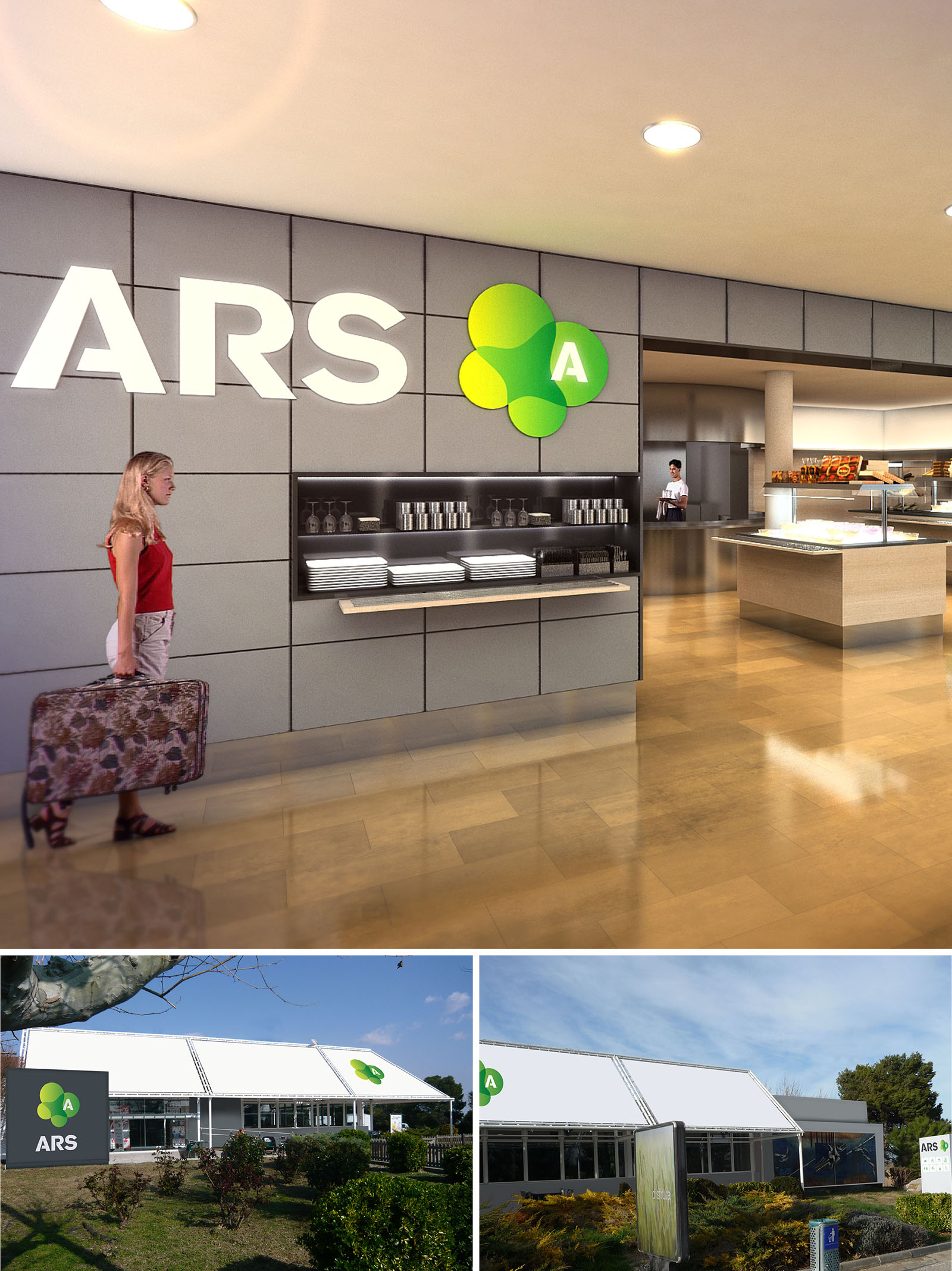
The ARS restaurants are conceived as a unified hospitality brand deployed across multiple Spanish locations, combining a clean, contemporary interior language with a light, pavilion-like architectural envelope. The design seeks to convey efficiency and clarity while maintaining a warm, approachable atmosphere for transient users such as travelers and resort guests. A strong, easily recognizable visual identity supports wayfinding and reinforces the sense of a coherent network of venues.
The concept is based on a dialogue between robust, orthogonal surfaces and a softer, organic graphic motif. This contrast generates a memorable spatial experience: rational layouts and precise detailing form the background for a friendly, nature-inspired logo and selective color accents, suggesting freshness and dynamism associated with food and landscape.
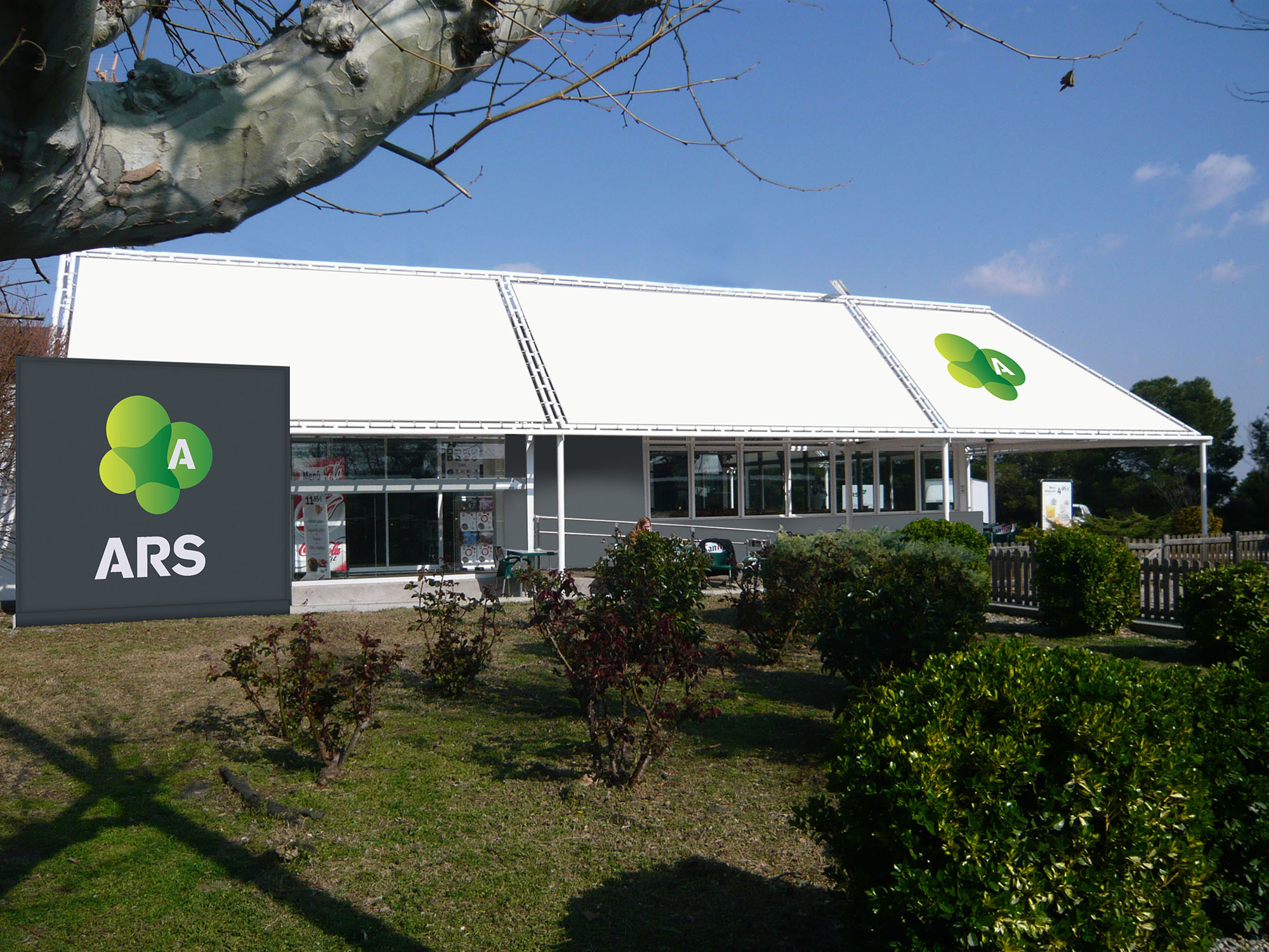
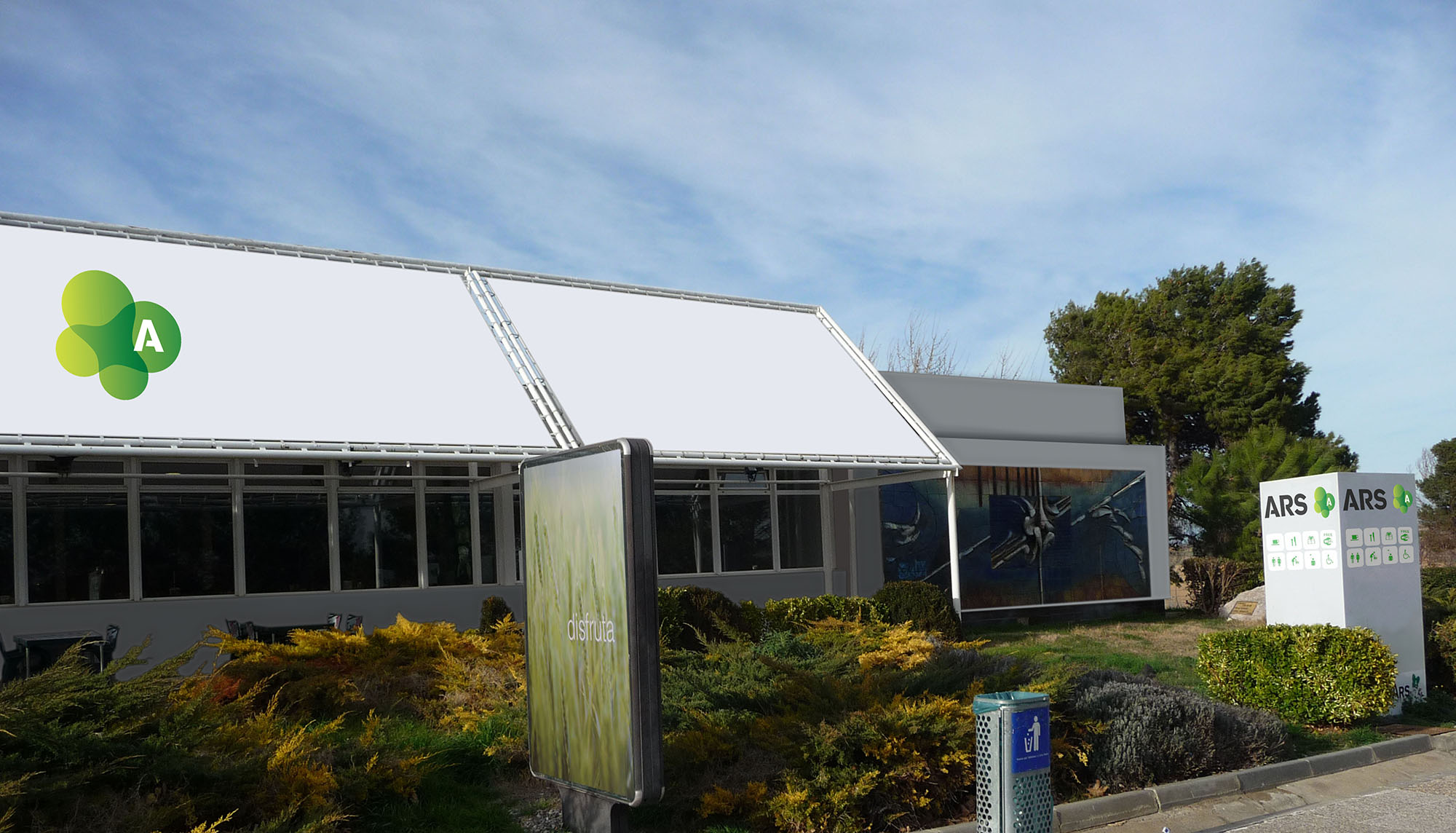
The exterior architecture adopts a lightweight, modular pavilion typology. Large, white roof planes fold gently over glazed façades, creating a clear, graphic silhouette that stands out in the suburban and landscaped contexts. The geometry is simple and repetitive, facilitating construction in multiple locations while allowing adaptation to plot conditions and orientation.
Extensive glazing along the perimeter promotes visual permeability between interior dining areas and surrounding gardens, reinforcing the connection with the landscape and maximizing natural light. The buildings are surrounded by low-maintenance planting beds and existing vegetation, which soften the linear volume and help anchor the pavilions within their green settings.
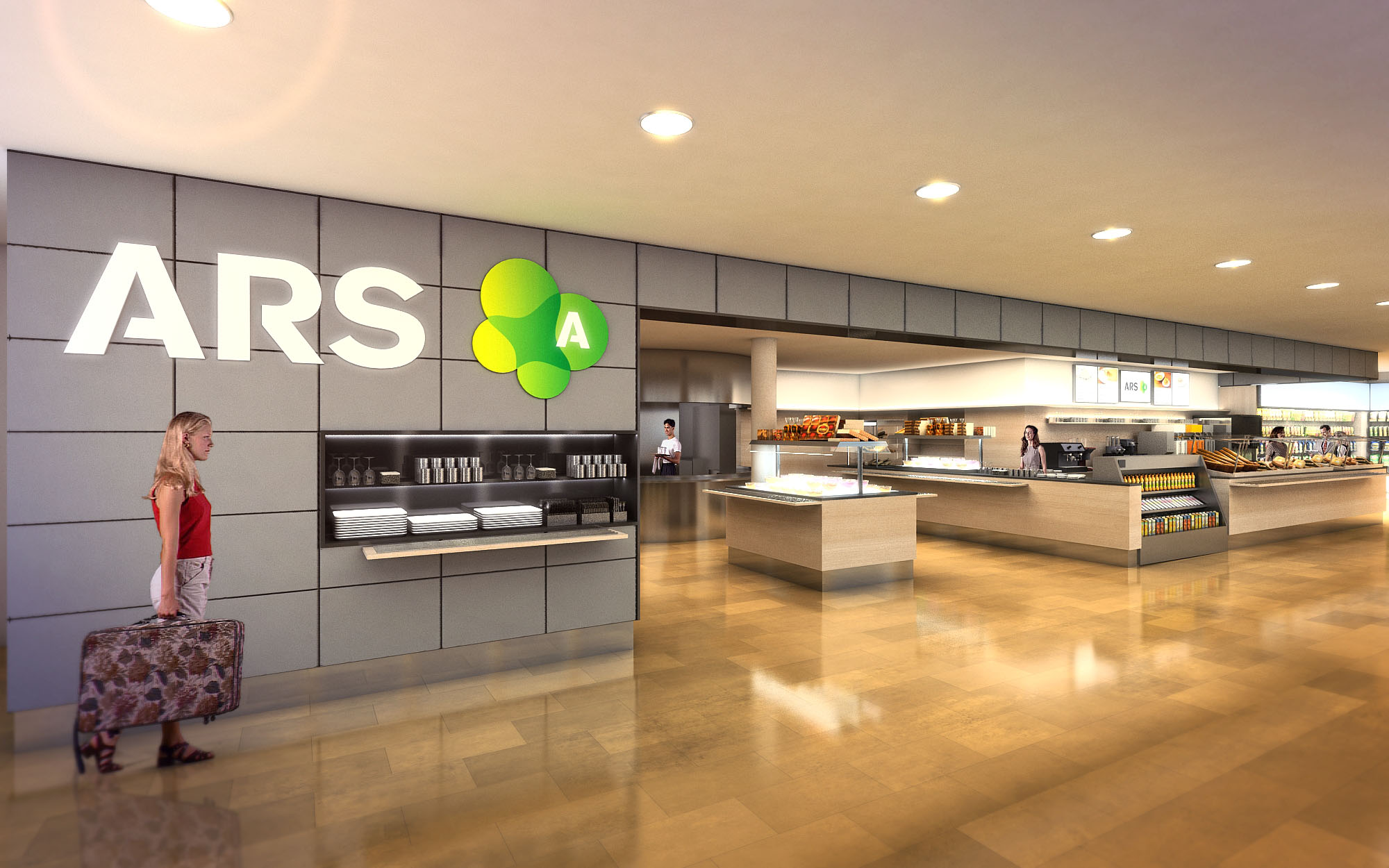
The interior organization prioritizes legibility and fluid circulation. Upon entering, guests encounter a clear visual axis toward the serving counters, with self-service islands and display areas arranged to minimize crossing paths and congestion. The open-plan configuration ensures direct visibility of food offers, seating zones, and exits, supporting intuitive wayfinding.
Back-of-house areas are compact and strategically located behind the service line, optimizing functional adjacency between storage, preparation, and dishwashing. Structural elements such as columns are integrated into the layout, often acting as subtle separators between serving areas and seating zones without fragmenting the spatial continuity.
The interior palette combines large-format floor tiles in warm, honey-toned finishes with neutral wall cladding composed of rectified panels arranged in a precise grid. This grid provides a calm, orderly backdrop for the bold ARS signage and green logo, which appear as illuminated relief elements, transforming the wall into a branded feature surface.
Horizontal shelving, integrated into the wall plane, displays plates, glasses, and accessories, turning operational storage into a graphic composition. Ceiling-integrated downlights provide uniform ambient illumination, complemented by accent lighting over the food counters to emphasize freshness and texture. The restrained material selection ensures durability and ease of maintenance in high-traffic environments, while the brand colors—especially the gradient greens—introduce a sense of vitality associated with healthy cuisine and natural surroundings.
The repeated pavilion typology allows for standardized, efficient construction, reducing material waste and simplifying maintenance across the different sites. The lightweight roof and façade systems are designed to accommodate high-performance insulation and reflective exterior finishes, helping to control solar gain in the Spanish climate and improving thermal comfort with reduced energy demand for cooling.
Generous glazing is oriented and shaded to leverage daylight while minimizing glare, decreasing the reliance on artificial lighting during daytime operation. The use of durable, easy-to-clean interior finishes extends life cycles and lowers replacement frequency, contributing to resource efficiency. The landscape design favors drought-tolerant planting and existing vegetation, reducing irrigation needs and enhancing local biodiversity around the restaurant pavilions.
LIST OF PROJECTS EXPERIENCE
Designed, Executed and/or Built Projects
SPAIN
1. Ars - Montcada
2. Ars - Monegros
3. Ars - Pina
The ARS restaurants are conceived as a unified hospitality brand deployed across multiple Spanish locations, combining a clean, contemporary interior language with a light, pavilion-like architectural envelope. The design seeks to convey efficiency and clarity while maintaining a warm, approachable atmosphere for transient users such as travelers and resort guests. A strong, easily recognizable visual identity supports wayfinding and reinforces the sense of a coherent network of venues.
The concept is based on a dialogue between robust, orthogonal surfaces and a softer, organic graphic motif. This contrast generates a memorable spatial experience: rational layouts and precise detailing form the background for a friendly, nature-inspired logo and selective color accents, suggesting freshness and dynamism associated with food and landscape.
The exterior architecture adopts a lightweight, modular pavilion typology. Large, white roof planes fold gently over glazed façades, creating a clear, graphic silhouette that stands out in the suburban and landscaped contexts. The geometry is simple and repetitive, facilitating construction in multiple locations while allowing adaptation to plot conditions and orientation.
Extensive glazing along the perimeter promotes visual permeability between interior dining areas and surrounding gardens, reinforcing the connection with the landscape and maximizing natural light. The buildings are surrounded by low-maintenance planting beds and existing vegetation, which soften the linear volume and help anchor the pavilions within their green settings.
The interior organization prioritizes legibility and fluid circulation. Upon entering, guests encounter a clear visual axis toward the serving counters, with self-service islands and display areas arranged to minimize crossing paths and congestion. The open-plan configuration ensures direct visibility of food offers, seating zones, and exits, supporting intuitive wayfinding.
Back-of-house areas are compact and strategically located behind the service line, optimizing functional adjacency between storage, preparation, and dishwashing. Structural elements such as columns are integrated into the layout, often acting as subtle separators between serving areas and seating zones without fragmenting the spatial continuity.
The interior palette combines large-format floor tiles in warm, honey-toned finishes with neutral wall cladding composed of rectified panels arranged in a precise grid. This grid provides a calm, orderly backdrop for the bold ARS signage and green logo, which appear as illuminated relief elements, transforming the wall into a branded feature surface.
Horizontal shelving, integrated into the wall plane, displays plates, glasses, and accessories, turning operational storage into a graphic composition. Ceiling-integrated downlights provide uniform ambient illumination, complemented by accent lighting over the food counters to emphasize freshness and texture. The restrained material selection ensures durability and ease of maintenance in high-traffic environments, while the brand colors—especially the gradient greens—introduce a sense of vitality associated with healthy cuisine and natural surroundings.
The repeated pavilion typology allows for standardized, efficient construction, reducing material waste and simplifying maintenance across the different sites. The lightweight roof and façade systems are designed to accommodate high-performance insulation and reflective exterior finishes, helping to control solar gain in the Spanish climate and improving thermal comfort with reduced energy demand for cooling.
Generous glazing is oriented and shaded to leverage daylight while minimizing glare, decreasing the reliance on artificial lighting during daytime operation. The use of durable, easy-to-clean interior finishes extends life cycles and lowers replacement frequency, contributing to resource efficiency. The landscape design favors drought-tolerant planting and existing vegetation, reducing irrigation needs and enhancing local biodiversity around the restaurant pavilions.


Nuestras oficinas están en Barcelona, Cancún, Chicago y Santo Domingo, pero gracias a la tecnología podemos desarrollar proyectos en cualquier parte del mundo.
Barcelona
Bac de Roda 136
08020, Barcelona
Spain
Madrid
Av. de Buendía 11
19005 Guadalajara (Madrid)
Spain
Chicago
373 Hazel Ave, Apt A1
60022, Glencoe, Illinois
United States