

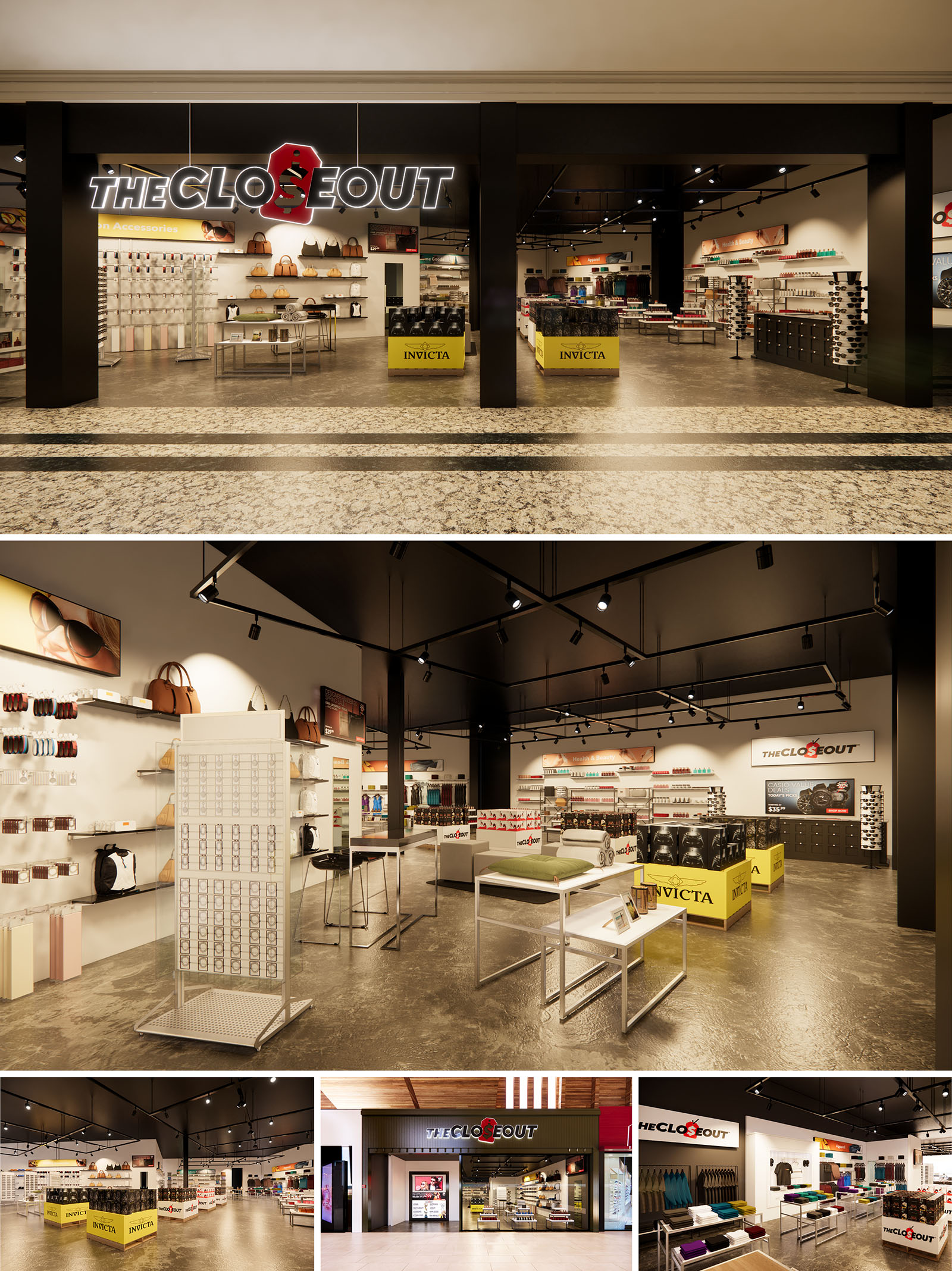
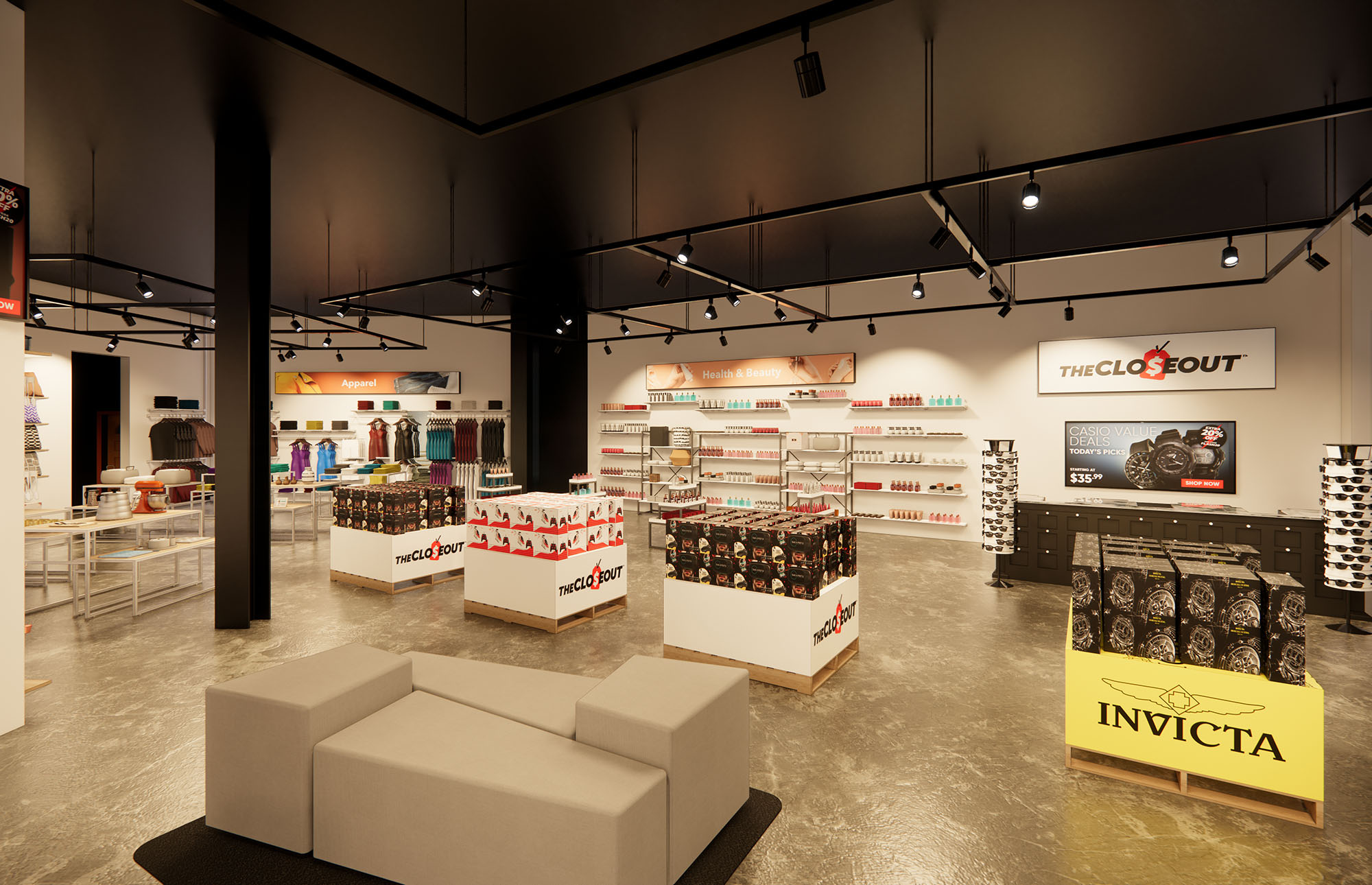
The Close Out is conceived as a flexible retail platform that stages discounted products with the same clarity and dignity as premium merchandise. The design language merges the efficiency of a warehouse with the precision of a fashion boutique, using a restrained material and color palette to foreground the products. Large, open floor plates and minimal vertical obstructions ensure full visual transparency from the mall circulation areas into the depth of the store, drawing visitors toward value-driven discoveries.
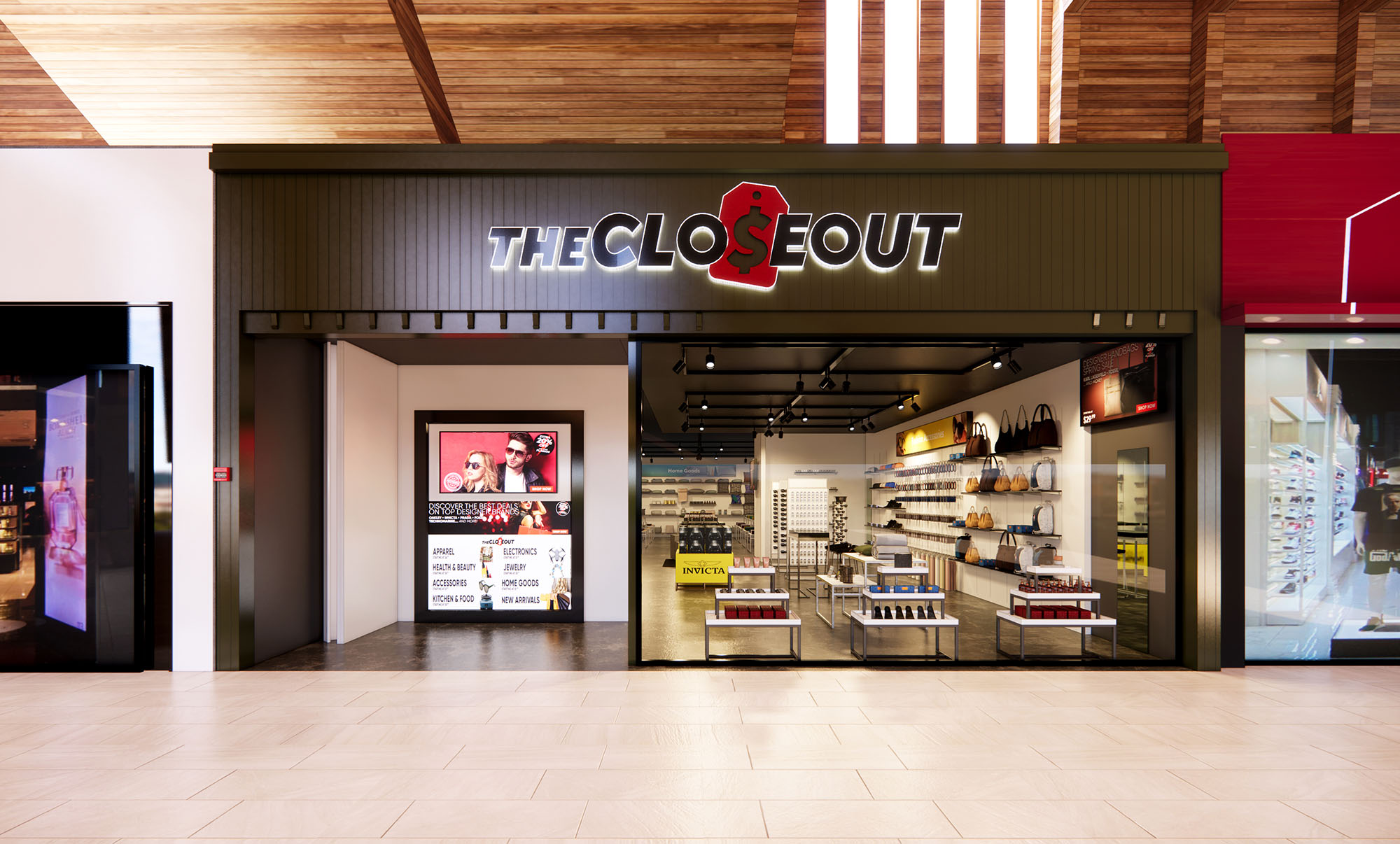
The architectural expression is unified across locations in the continental United States and Puerto Rico, establishing a recognizable brand environment that can adapt to varying leasable footprints. A strong black frame, illuminated signage, and a luminous interior backdrop create an immediately legible threshold between the public mall and the retail universe inside, reinforcing brand identity and ease of orientation.
The store fronts are organized as large, open portals framed in matte black cladding. This frame acts as an urban proscenium, showcasing the merchandise and displays as if on stage. The illuminated logotype is positioned centrally above the opening, with a slightly oversized red “O” element that becomes the focal point and a key component of the brand’s visual lexicon.
The flooring at the entry negotiates the transition between mall finishes and the more industrial interior. Subtle banding and texture shifts guide customers inward, while the absence of physical doors maintains a seamless, welcoming flow. The transparent interior composition—low gondolas and clear sightlines—allows the facade to operate almost like a display window without glass, emphasizing accessibility and immediacy.
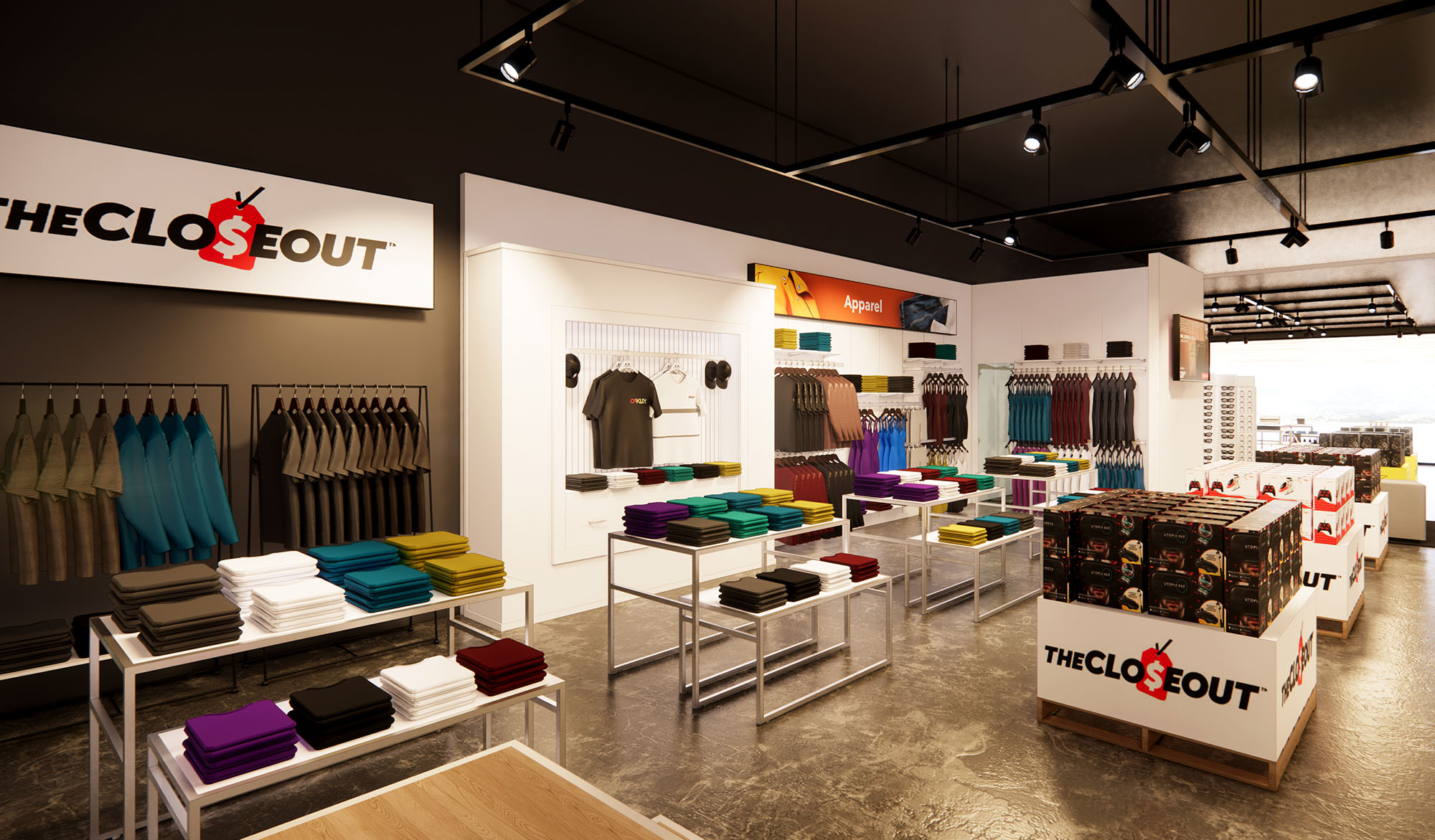
The layout is based on a flexible grid of modular display islands that can accommodate rapid changes in product categories and inventory density. Primary circulation runs diagonally across the store, encouraging cross-shopping between accessories, apparel, and specialty items. Secondary paths weave through gondolas and wall systems, maintaining ADA-compliant widths while enabling high product exposure.
Key zones—such as promotional platforms, seasonal merchandise, and branded partner areas—are articulated through distinct cluster arrangements and the strategic use of branded yellow plinths. These elements act as navigational beacons, visually organizing the open plan and creating intuitive pause points for browsing and up-selling opportunities.
The interior materials balance robustness with a contemporary aesthetic suited to high-traffic retail. Polished concrete flooring provides a continuous, durable surface that reflects light and underscores the industrial tone of the concept. Perimeter walls are treated in a warm, neutral white to enhance product visibility, while black ceiling planes and structural elements frame the scene and conceal technical systems.
The color strategy relies on a triad of black, white, and brand-accent yellow. Black is used for framing, fixture bases, and ceiling grids; white surfaces support merchandising clarity; yellow highlights promotional zones and communicates value. Track-mounted LED spotlights and linear fixtures deliver a layered lighting scheme, offering accent illumination on shelving and feature tables while maintaining overall ambient brightness. This system is fully adjustable, enabling rapid re-focusing as product mixes evolve.
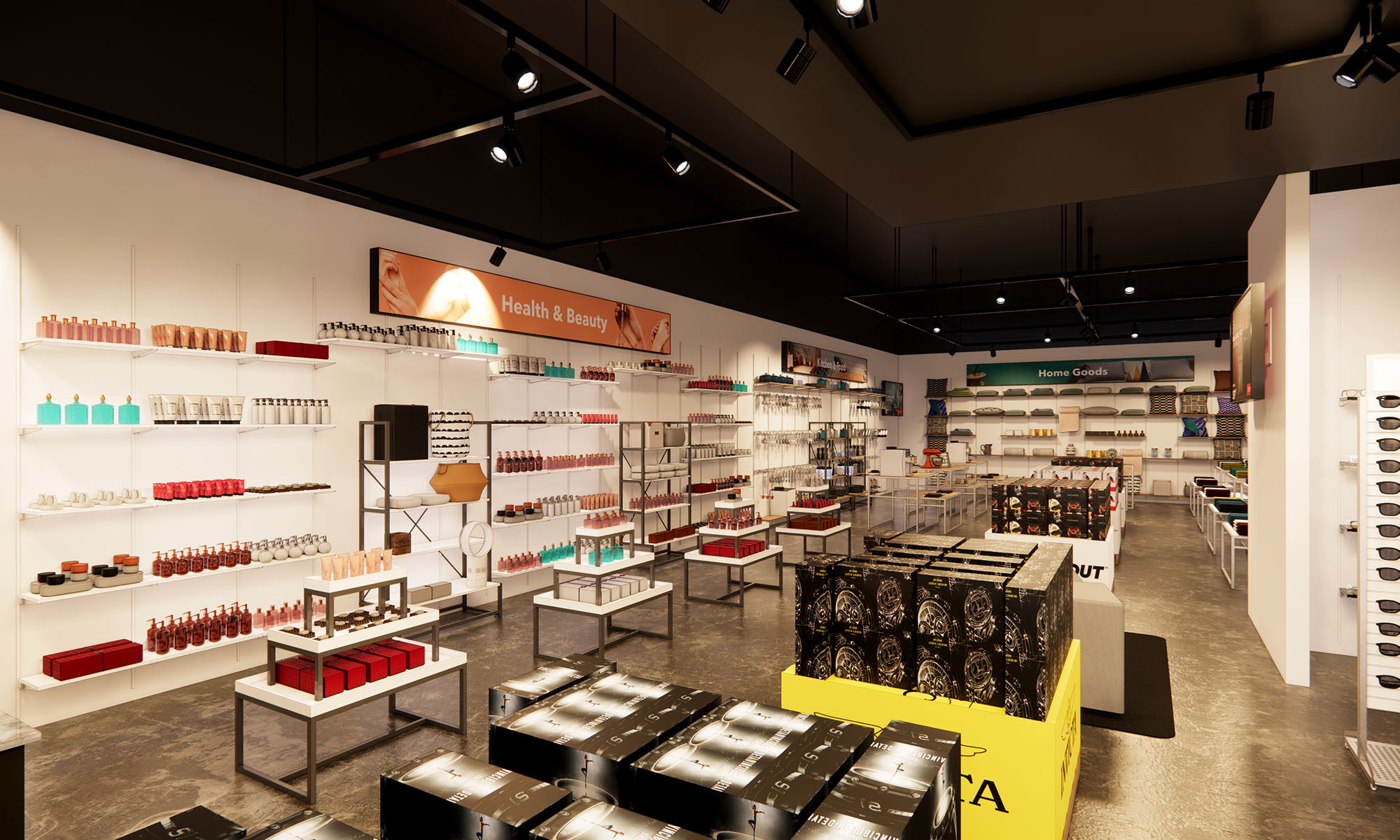
Display fixtures are designed as lightweight, modular assemblies in powder-coated metal and laminate surfaces. Wall systems employ slotted standards and shelves to adapt to belts, bags, eyewear, and small accessories without requiring structural changes. Freestanding tables and gondolas feature clean, rectilinear forms and open bases to preserve visual permeability and ease of maintenance.
Partner brands are integrated via dedicated bays and mobile cubes that can be repositioned to support seasonal campaigns or store reconfigurations. This kit-of-parts approach allows each location—whether in mainland malls or Caribbean shopping centers—to maintain a coherent identity while responding to different floor plates, customer flows, and sales strategies.
Sustainability is addressed through both material selection and operational efficiency. The use of polished concrete as the primary flooring minimizes additional finish layers and future replacement cycles. Fixtures are largely fabricated from recyclable metal components with bolted rather than welded connections, facilitating disassembly, reuse, and end-of-life recycling when store layouts are updated.
Energy-efficient LED lighting significantly reduces electrical loads and maintenance requirements across the multiple locations, while programmable controls allow dimming schedules aligned with mall operating hours. Standardized fixture families and finishes promote economies of scale in manufacturing and shipping, reducing material waste and transportation impacts. Together, these strategies support a resilient retail concept capable of evolving over time with reduced environmental footprint.
LIST OF PROJECTS EXPERIENCE
Designed, Executed and/or Built Projects
USA
1. The Close Out - FL - Westland Mall
PUERTO RICO
3. The Close Out - PR - Mayagüez Mall
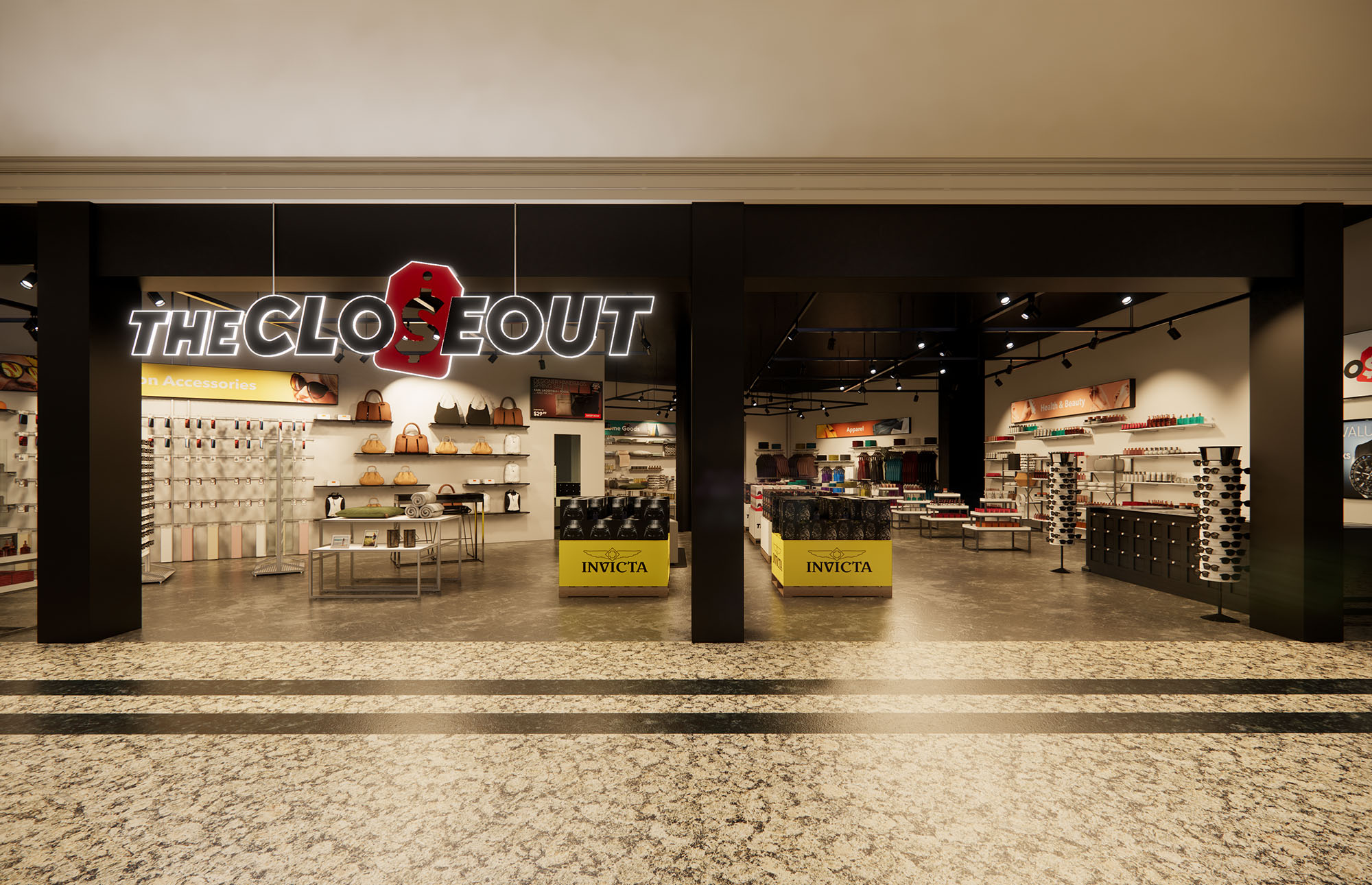
The Close Out is conceived as a flexible retail platform that stages discounted products with the same clarity and dignity as premium merchandise. The design language merges the efficiency of a warehouse with the precision of a fashion boutique, using a restrained material and color palette to foreground the products. Large, open floor plates and minimal vertical obstructions ensure full visual transparency from the mall circulation areas into the depth of the store, drawing visitors toward value-driven discoveries.
The architectural expression is unified across locations in the continental United States and Puerto Rico, establishing a recognizable brand environment that can adapt to varying leasable footprints. A strong black frame, illuminated signage, and a luminous interior backdrop create an immediately legible threshold between the public mall and the retail universe inside, reinforcing brand identity and ease of orientation.
The store fronts are organized as large, open portals framed in matte black cladding. This frame acts as an urban proscenium, showcasing the merchandise and displays as if on stage. The illuminated logotype is positioned centrally above the opening, with a slightly oversized red “O” element that becomes the focal point and a key component of the brand’s visual lexicon.
The flooring at the entry negotiates the transition between mall finishes and the more industrial interior. Subtle banding and texture shifts guide customers inward, while the absence of physical doors maintains a seamless, welcoming flow. The transparent interior composition—low gondolas and clear sightlines—allows the facade to operate almost like a display window without glass, emphasizing accessibility and immediacy.
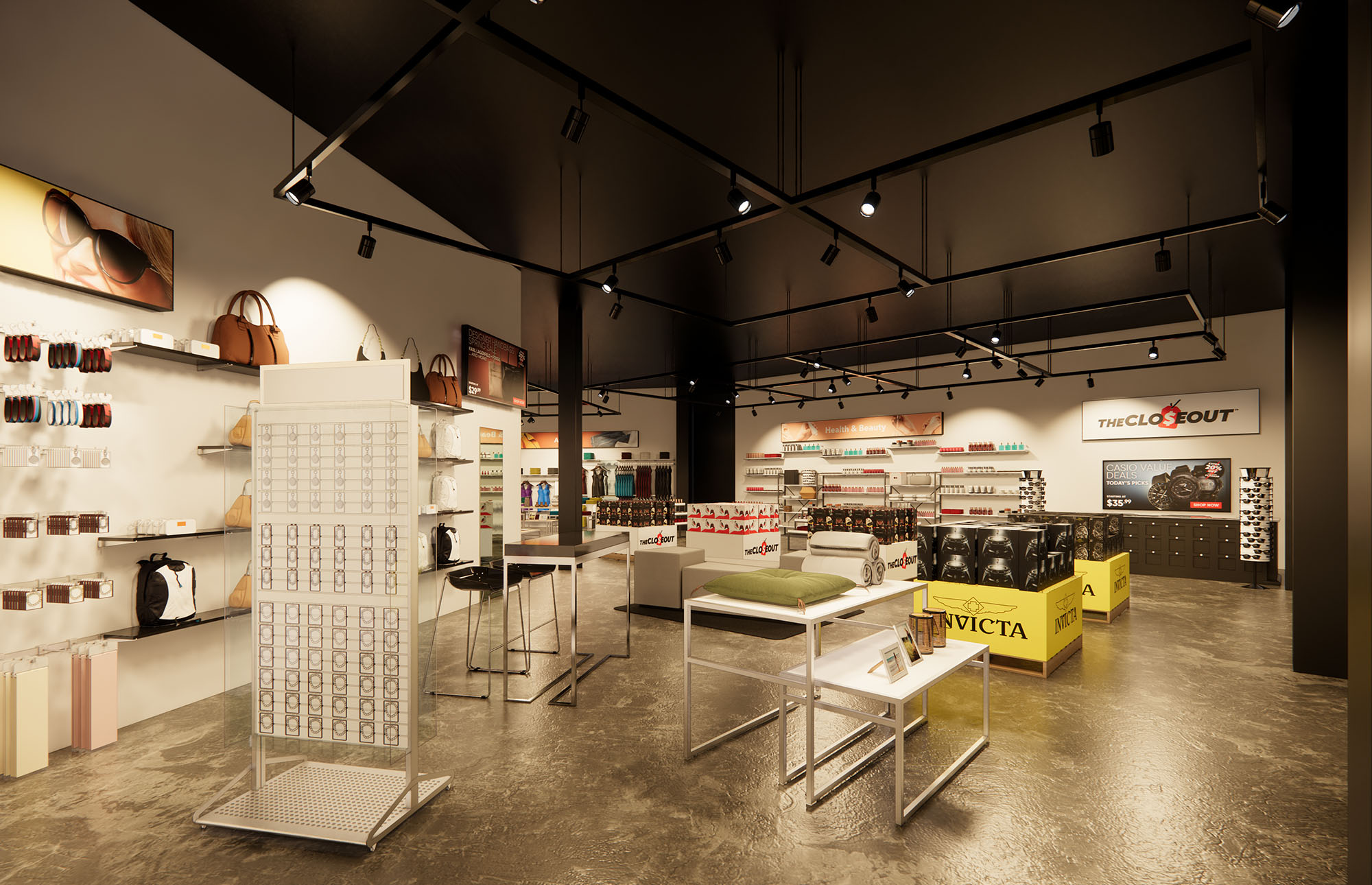
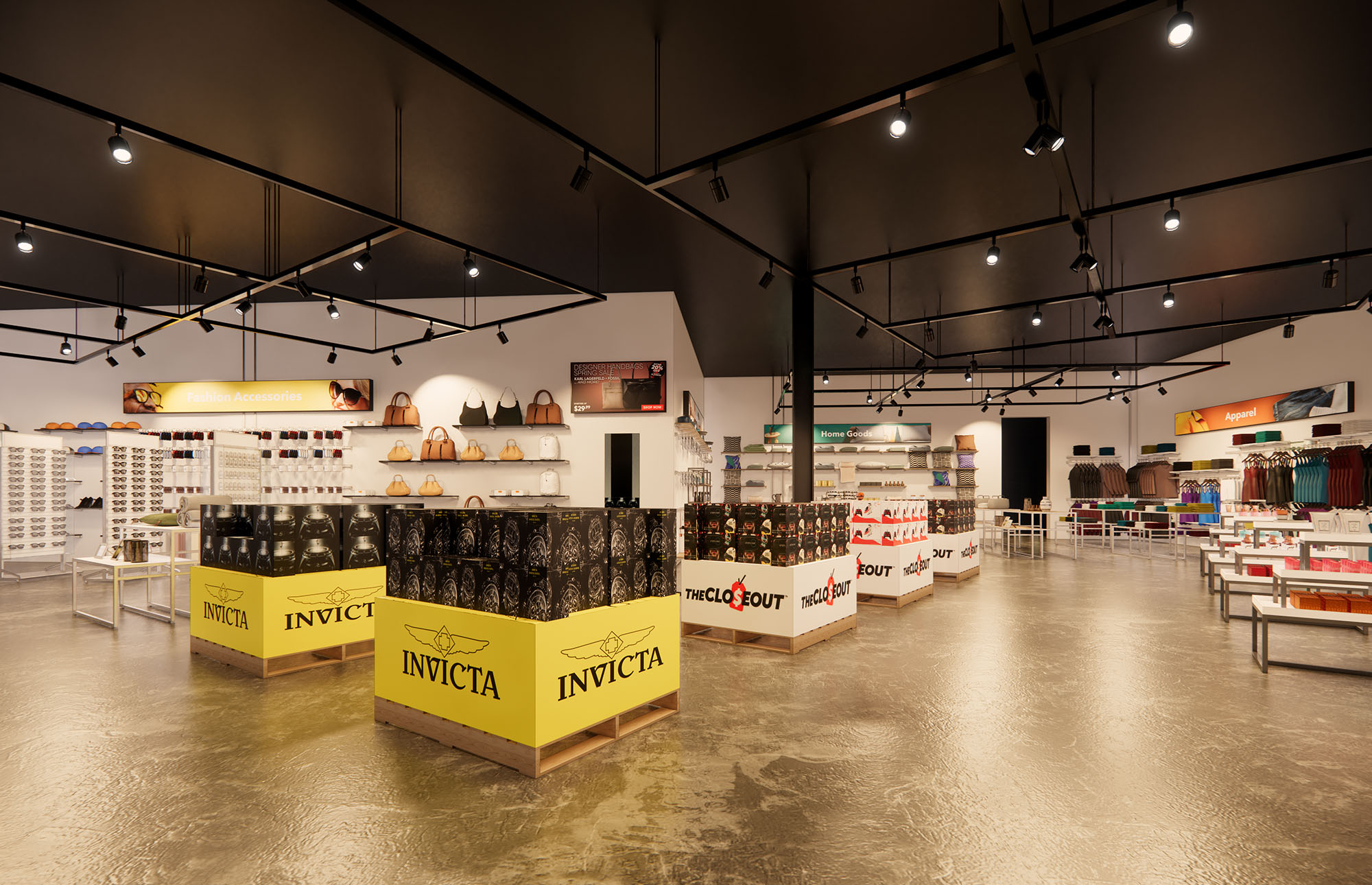
The layout is based on a flexible grid of modular display islands that can accommodate rapid changes in product categories and inventory density. Primary circulation runs diagonally across the store, encouraging cross-shopping between accessories, apparel, and specialty items. Secondary paths weave through gondolas and wall systems, maintaining ADA-compliant widths while enabling high product exposure.
Key zones—such as promotional platforms, seasonal merchandise, and branded partner areas—are articulated through distinct cluster arrangements and the strategic use of branded yellow plinths. These elements act as navigational beacons, visually organizing the open plan and creating intuitive pause points for browsing and up-selling opportunities.
The interior materials balance robustness with a contemporary aesthetic suited to high-traffic retail. Polished concrete flooring provides a continuous, durable surface that reflects light and underscores the industrial tone of the concept. Perimeter walls are treated in a warm, neutral white to enhance product visibility, while black ceiling planes and structural elements frame the scene and conceal technical systems.
The color strategy relies on a triad of black, white, and brand-accent yellow. Black is used for framing, fixture bases, and ceiling grids; white surfaces support merchandising clarity; yellow highlights promotional zones and communicates value. Track-mounted LED spotlights and linear fixtures deliver a layered lighting scheme, offering accent illumination on shelving and feature tables while maintaining overall ambient brightness. This system is fully adjustable, enabling rapid re-focusing as product mixes evolve.
Display fixtures are designed as lightweight, modular assemblies in powder-coated metal and laminate surfaces. Wall systems employ slotted standards and shelves to adapt to belts, bags, eyewear, and small accessories without requiring structural changes. Freestanding tables and gondolas feature clean, rectilinear forms and open bases to preserve visual permeability and ease of maintenance.
Partner brands are integrated via dedicated bays and mobile cubes that can be repositioned to support seasonal campaigns or store reconfigurations. This kit-of-parts approach allows each location—whether in mainland malls or Caribbean shopping centers—to maintain a coherent identity while responding to different floor plates, customer flows, and sales strategies.
Sustainability is addressed through both material selection and operational efficiency. The use of polished concrete as the primary flooring minimizes additional finish layers and future replacement cycles. Fixtures are largely fabricated from recyclable metal components with bolted rather than welded connections, facilitating disassembly, reuse, and end-of-life recycling when store layouts are updated.
Energy-efficient LED lighting significantly reduces electrical loads and maintenance requirements across the multiple locations, while programmable controls allow dimming schedules aligned with mall operating hours. Standardized fixture families and finishes promote economies of scale in manufacturing and shipping, reducing material waste and transportation impacts. Together, these strategies support a resilient retail concept capable of evolving over time with reduced environmental footprint.


Our offices are located in Barcelona, Cancún, Chicago and Santo Domingo, but thanks to technology we can do projects on all over the world.
Barcelona
Bac de Roda 136
08020, Barcelona
Spain
Madrid
Av. de Buendía 11
19005 Guadalajara (Madrid)
Spain
Chicago
373 Hazel Ave, Apt A1
60022, Glencoe, Illinois
United States