

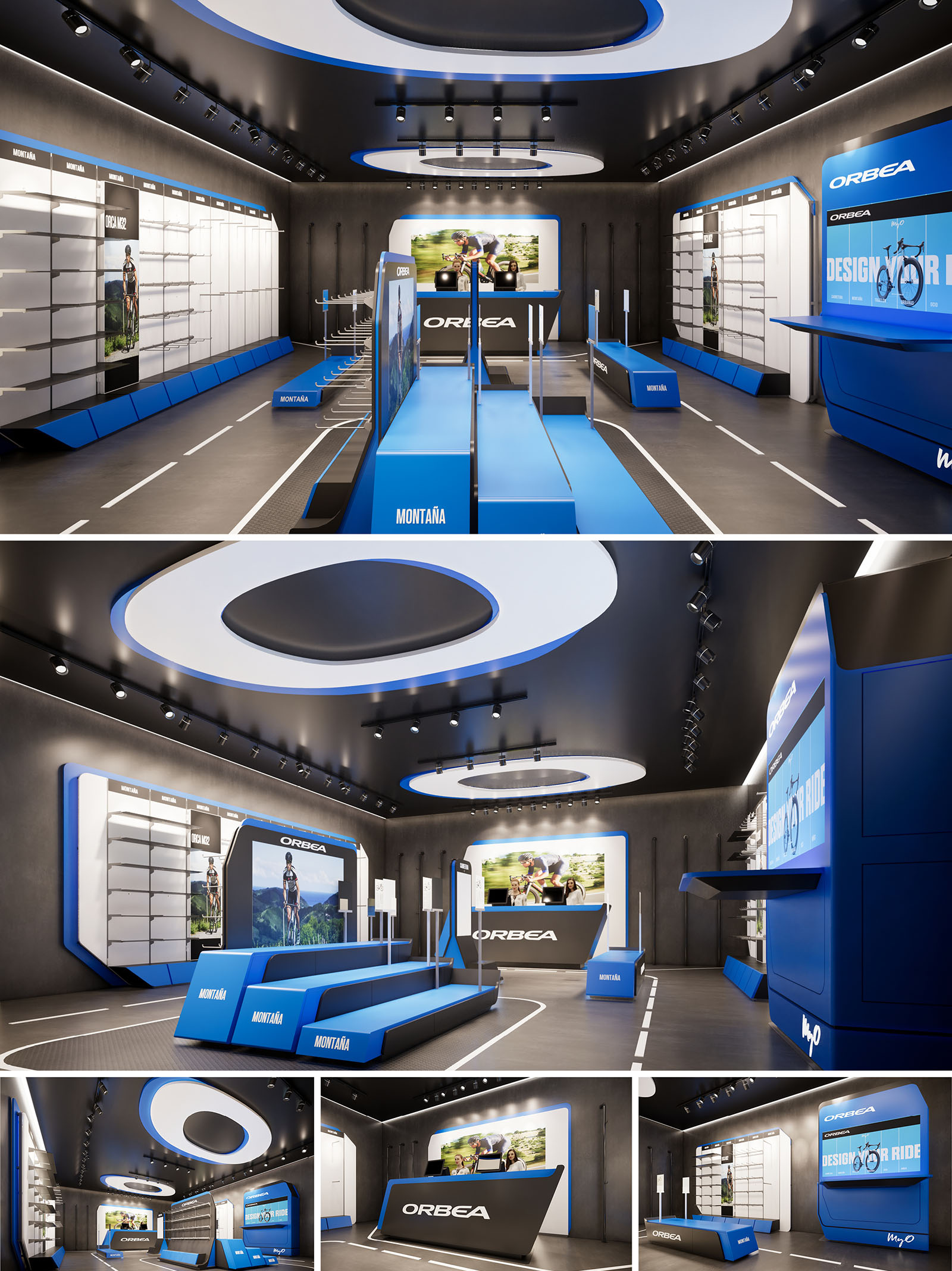
The ORBEA retail space in Barcelona is conceived as an immersive brand landscape that translates cycling performance into architectural form. The design uses the geometry and dynamics of a racing circuit to organize the interior, transforming the store into a three‑dimensional track where products, graphics and users move in a choreographed flow. Strong, clean lines and a controlled color palette create a highly recognizable brand environment that can be replicated in future locations as a scalable retail concept.
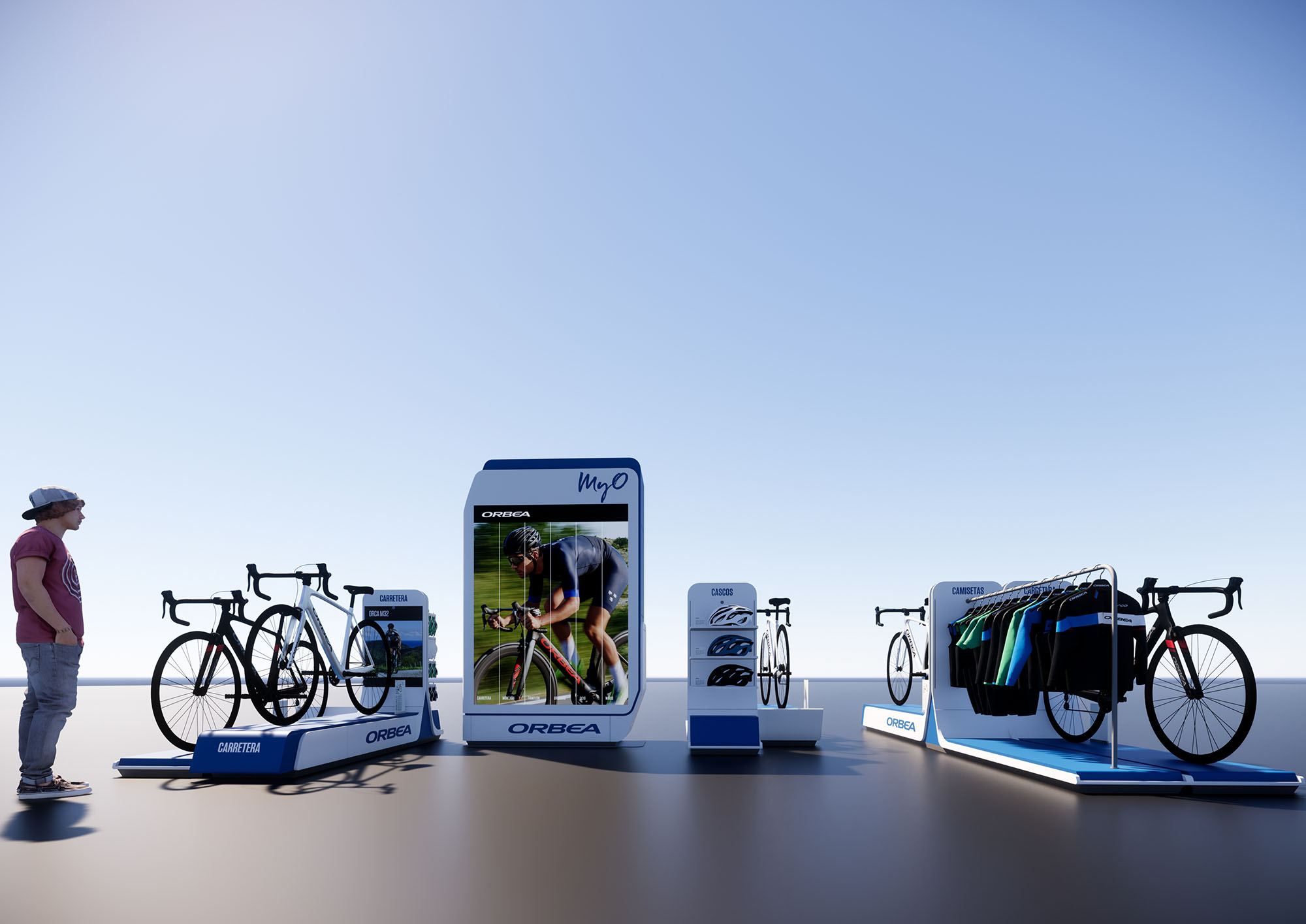
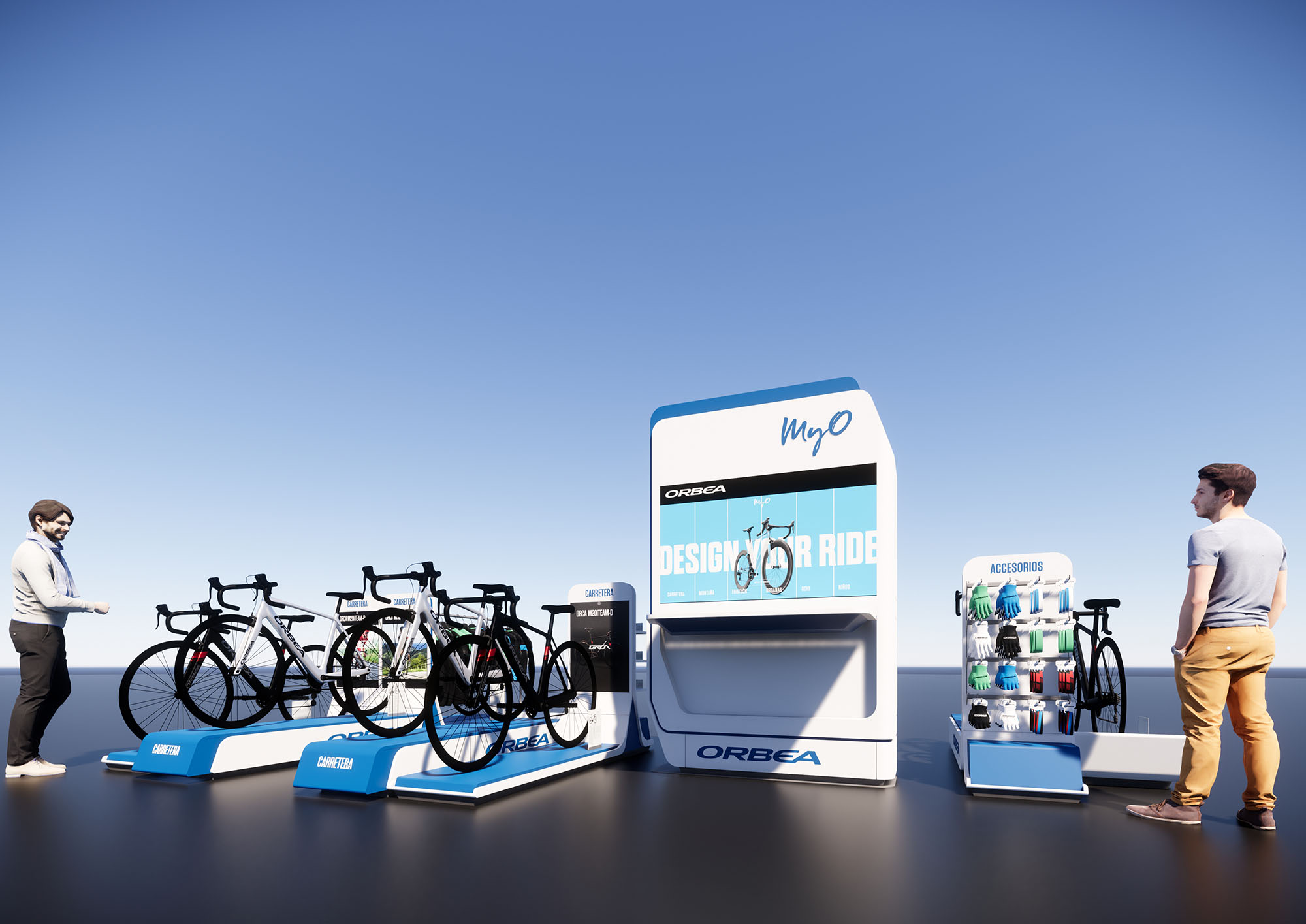
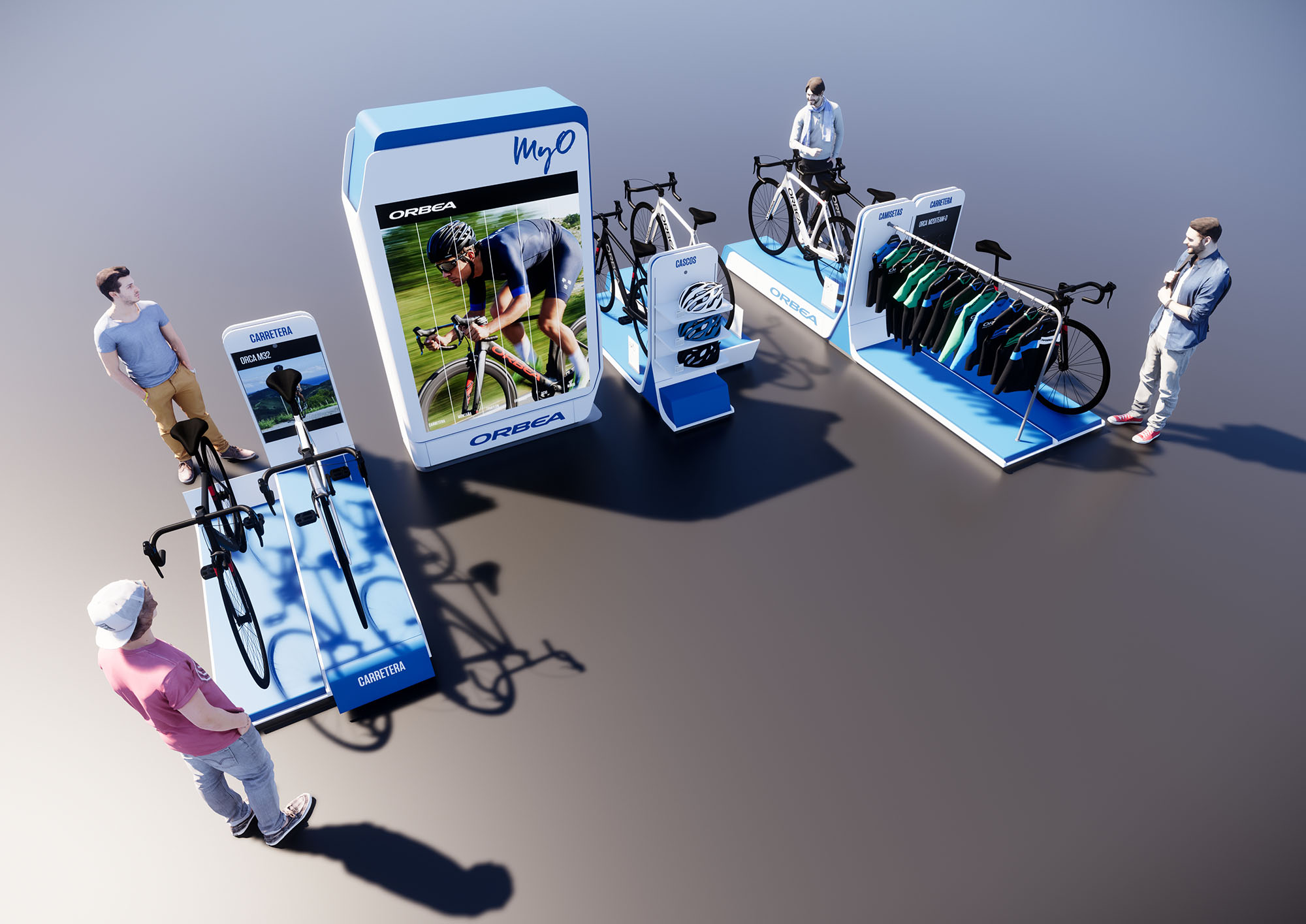
The concept focuses on clarity of orientation and product storytelling. Longitudinal axes direct visitors from the entrance to the main communication walls, while central islands define thematic zones such as mountain, road and urban categories. The store is understood as a showcase for innovation rather than a traditional shop, emphasizing experience, consultation and configuration over simple display.
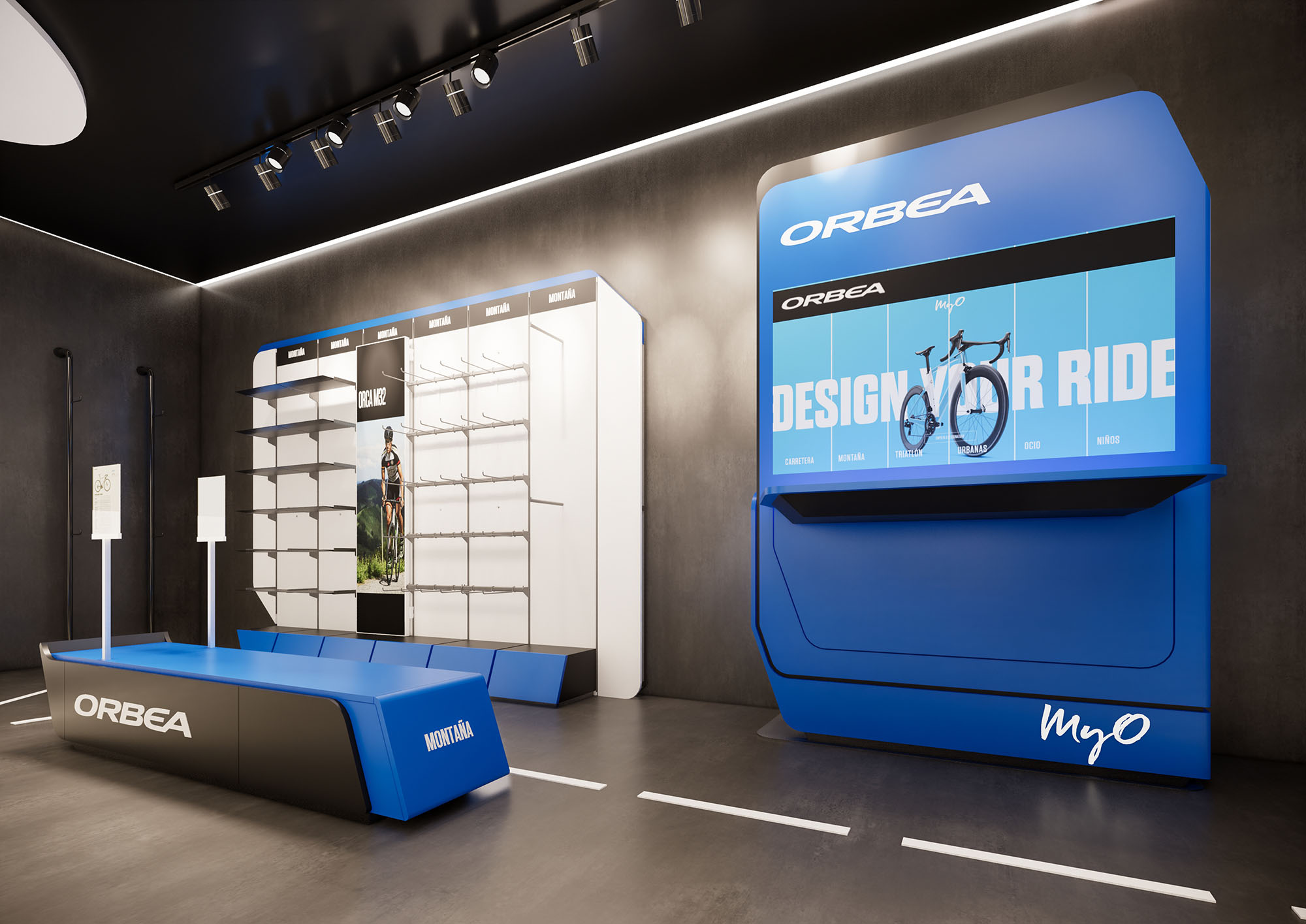
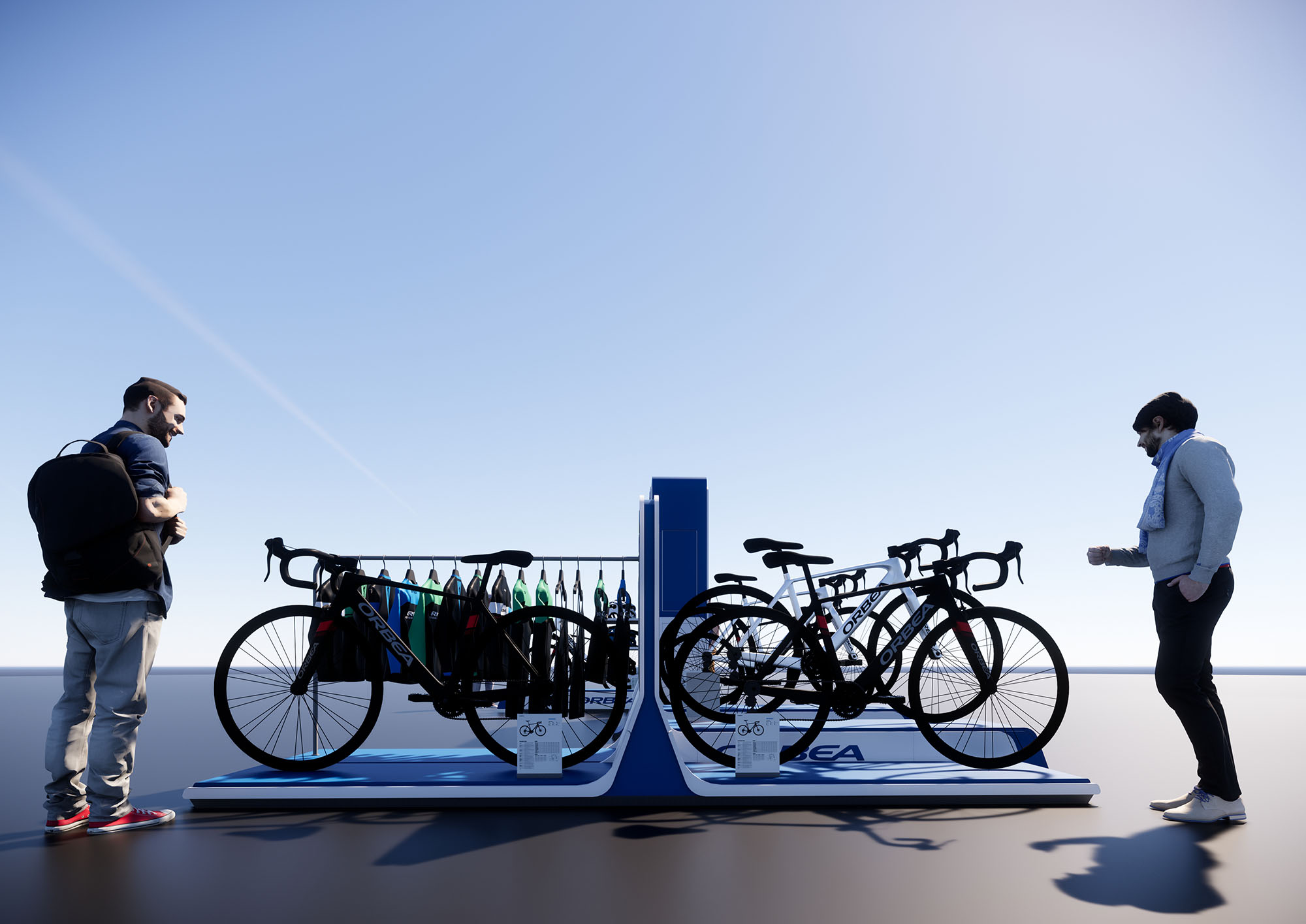
The spatial layout is organized around a central spine composed of elevated blue platforms that function as display plinths and informal seating. This spine structures the circulation, encouraging a progressive discovery of the different product universes. Perimeter walls are reserved for modular display systems, leaving the core of the space open and highly flexible for seasonal changes or event setups.
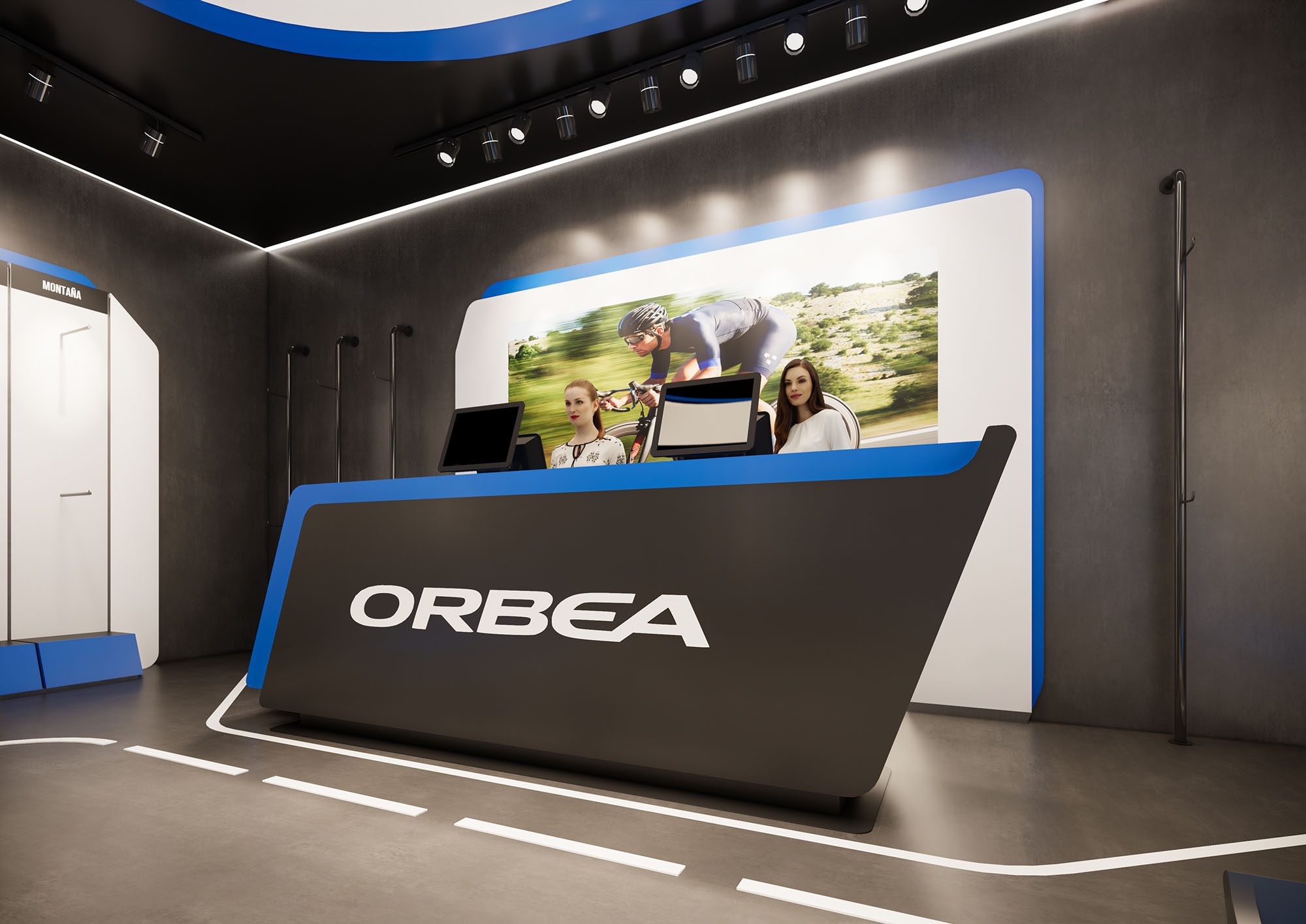
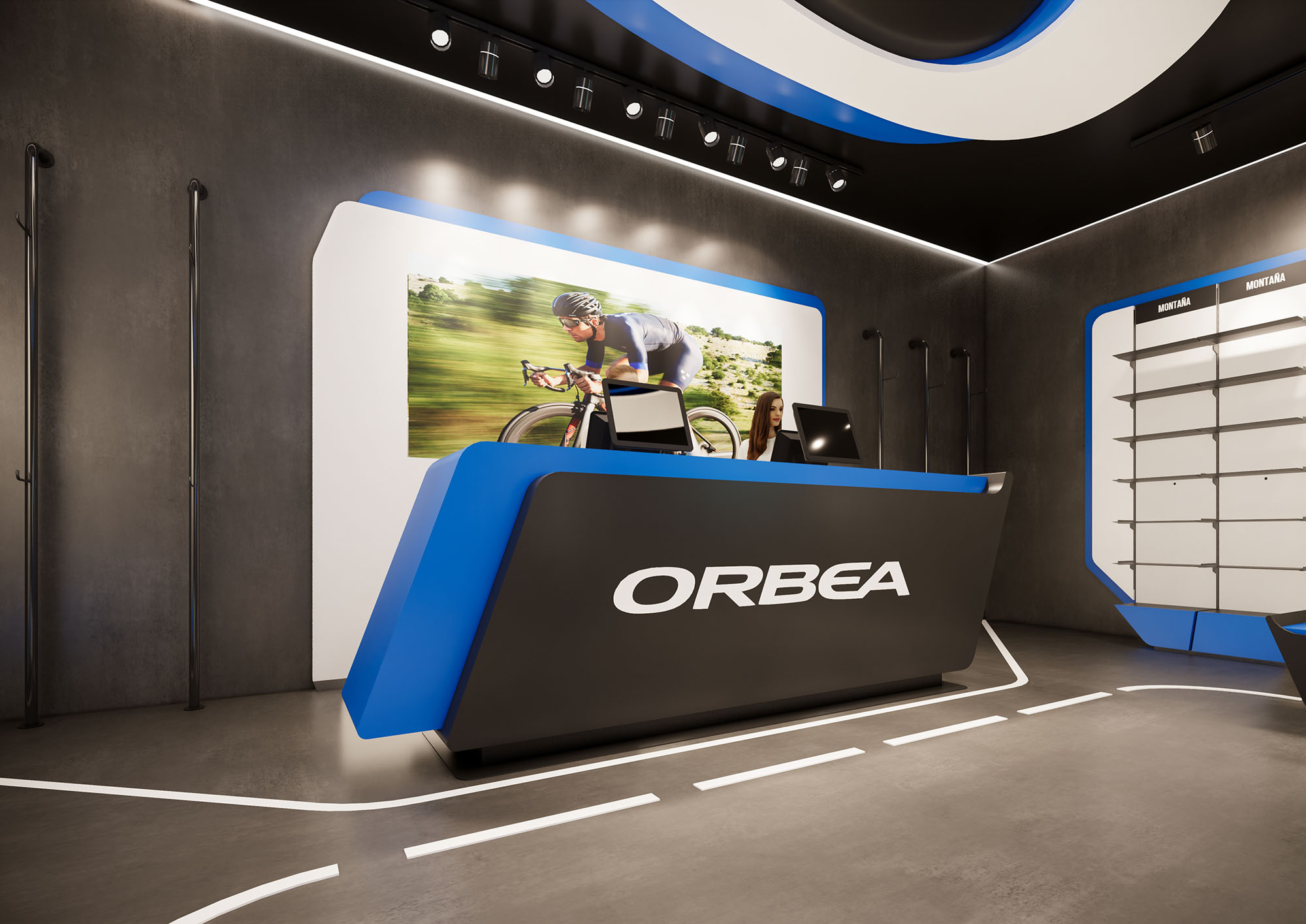
At the entrance, a reception and information counter establishes an immediate point of contact with staff. From there, a clearly marked circulation path—suggested by floor graphics that reference road markings—guides visitors through the store. Large digital and printed visuals at focal points punctuate the route, reinforcing brand narratives and providing orientation anchors without the need for intrusive signage.
The material palette contrasts the technical precision of cycling equipment with a sober, almost industrial envelope. Dark, matte wall surfaces and ceilings create a neutral background that absorbs reflections and visually amplifies the luminous blue elements. The flooring uses a high‑resistance, low‑gloss surface suitable for heavy traffic, with integrated striping that suggests lanes and movement.
ORBEA blue is deployed as a structural element: it forms the volumetric frames of the display walls, the edges of the counters, and the central islands, creating a continuous chromatic thread. White planes are used selectively to highlight product areas and increase perceived brightness at eye level. Black accents in profiles, fixtures and lighting tracks add definition and a technical character consistent with high‑performance sports equipment.
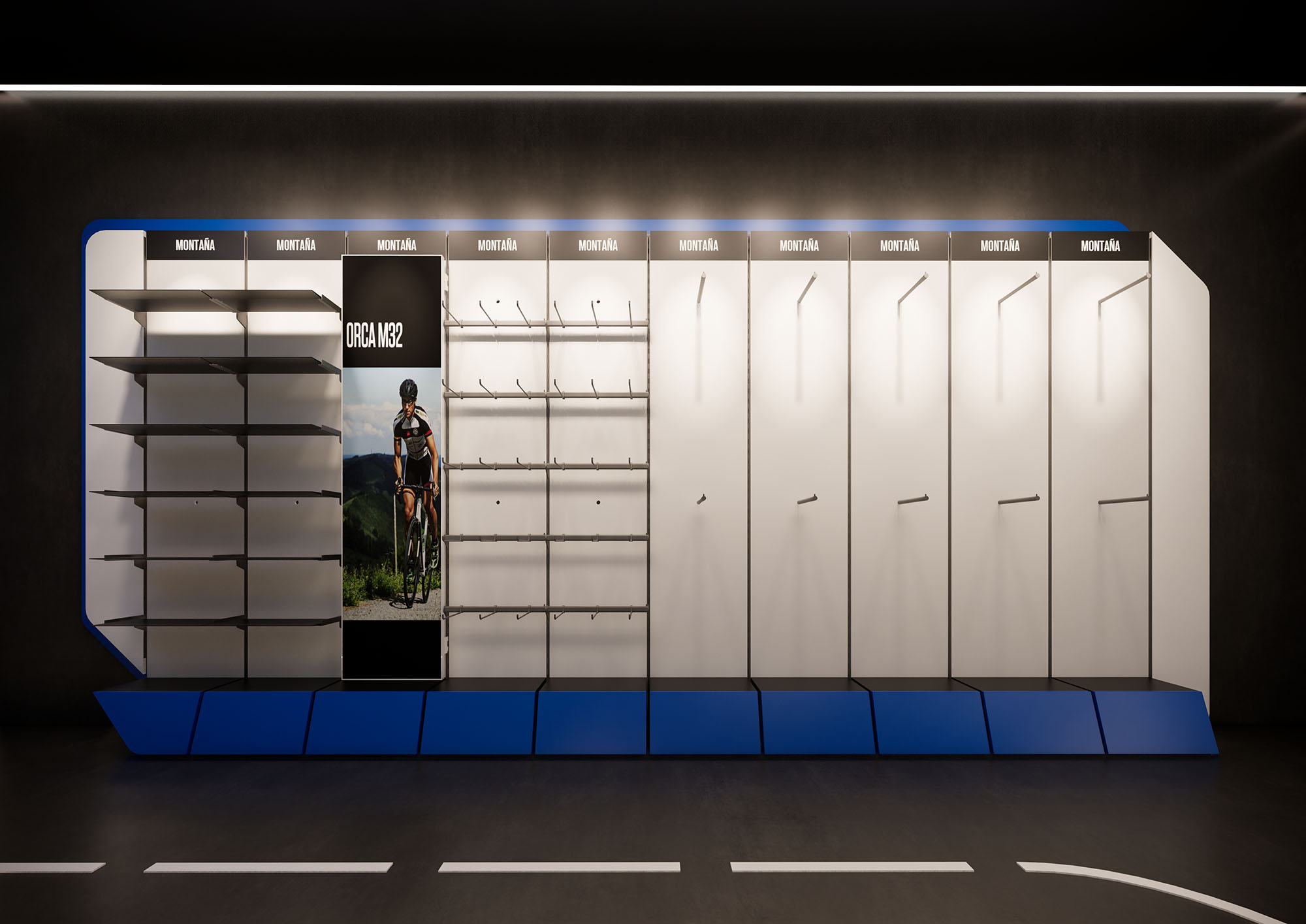
The furniture is conceived as an integrated system rather than isolated pieces. Perimeter walls feature modular panels with interchangeable brackets, shelves and hooks, allowing quick reconfiguration for different product typologies. The base volumes, inclined and faceted, echo the geometry of frames and helmets, subtly referencing the mechanics of cycling.
The central blue platforms act as stages for hero products, special editions or bike fitting demonstrations. Freestanding totems accommodate digital screens and wayfinding information, while broad counters provide areas for configuration services and after‑sales support. All elements are dimensioned to maintain maximum transparency across the store, preserving long visual perspectives and avoiding visual clutter.
Lighting design plays a key role in shaping the atmosphere. A continuous track along the perimeter allows precise positioning of adjustable projectors to emphasize products without excessive glare. The dark ceiling visually disappears, turning luminaires and circular ceiling features into floating graphic elements that echo wheels and motion.
Large circular recessed elements, finished in white and blue, generate homogeneous ambient illumination over the central axis, while accent lighting intensifies contrast on key display walls. The result is a controlled, cinematic light level that enhances textures and colors of the merchandise and reinforces the high‑tech identity of the brand.
Sustainability is addressed through a combination of material selection, energy efficiency and long‑term adaptability. The use of LED luminaires with high luminous efficacy significantly reduces energy consumption compared to traditional retail lighting, while track systems allow reorientation without additional installations, extending the life of the infrastructure.
Furniture and wall systems are designed as modular, demountable components fabricated principally from recyclable metal profiles and certified wood panels with low‑emission finishes. This approach minimizes waste during updates and facilitates disassembly or relocation. The restrained palette and timeless geometry reduce the need for frequent refurbishments, supporting a slower, more responsible renovation cycle aligned with contemporary environmental standards.
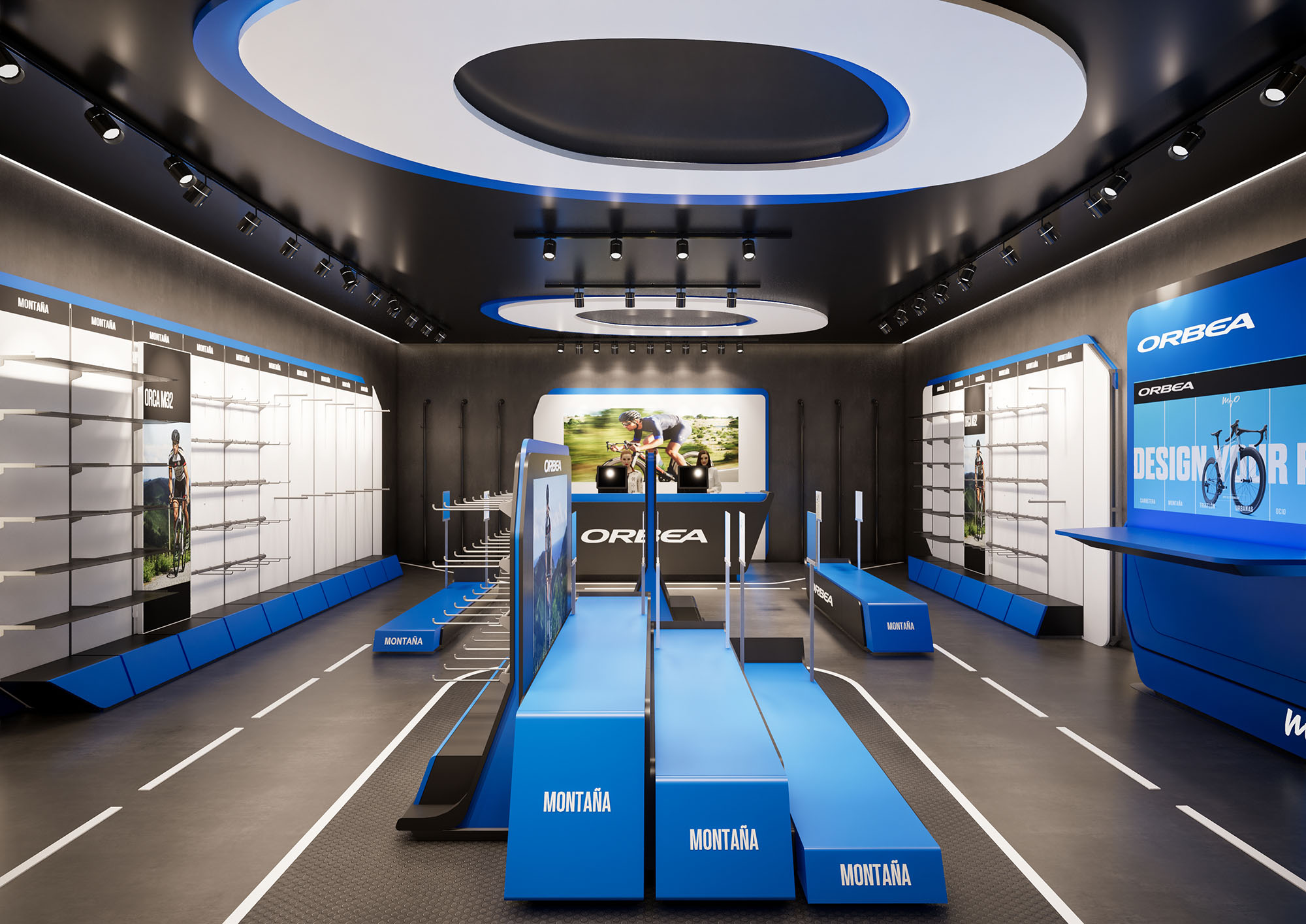
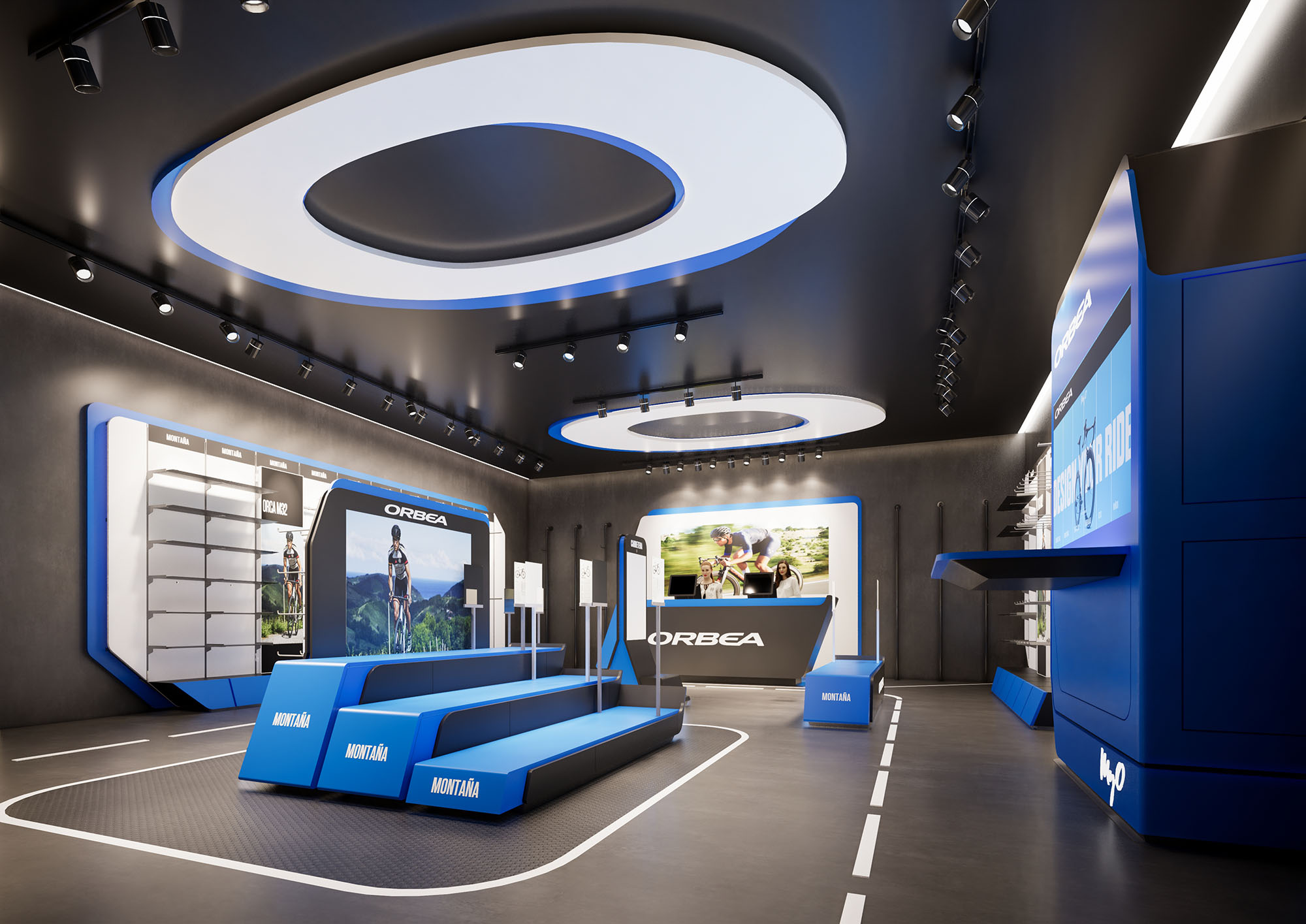
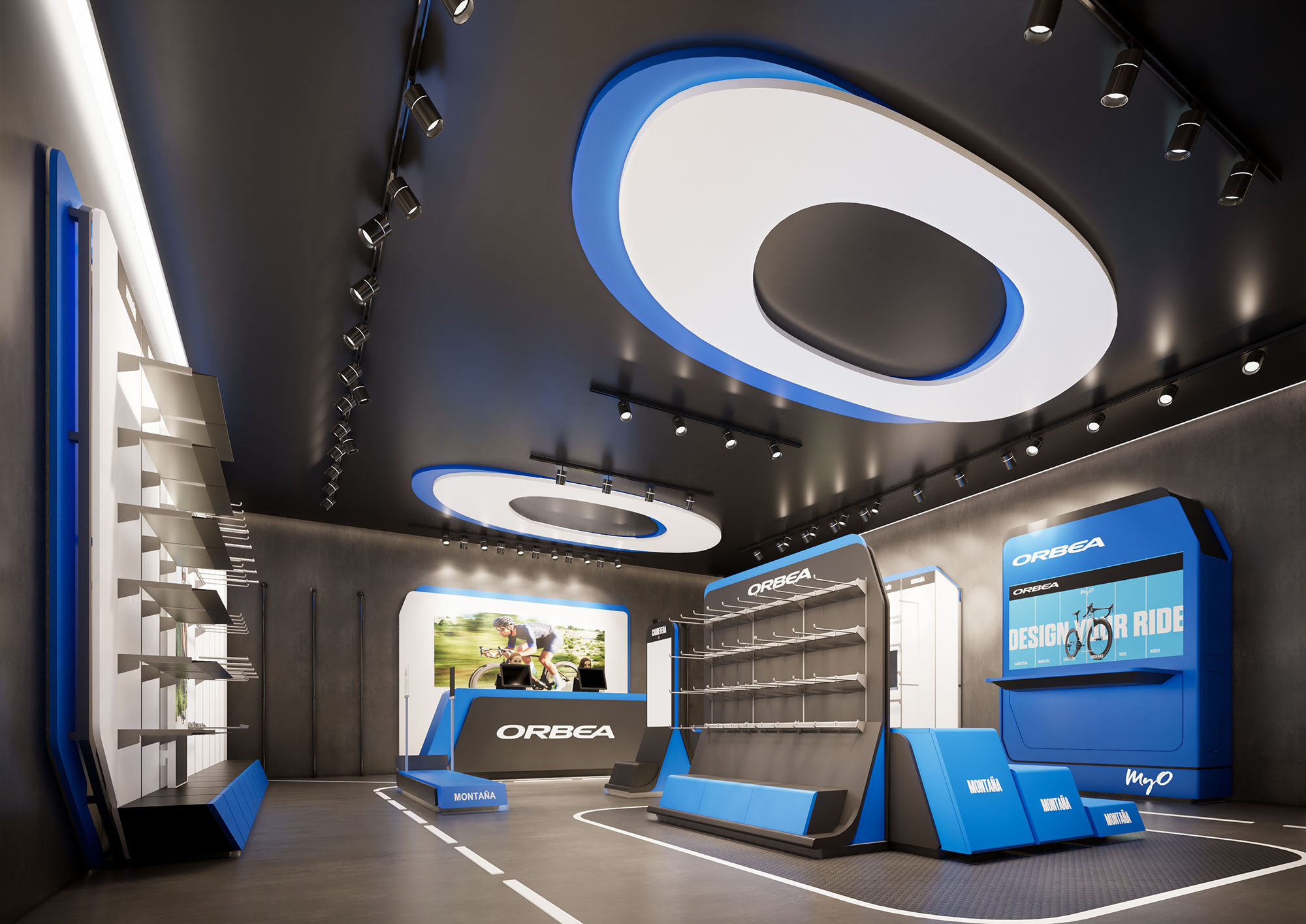
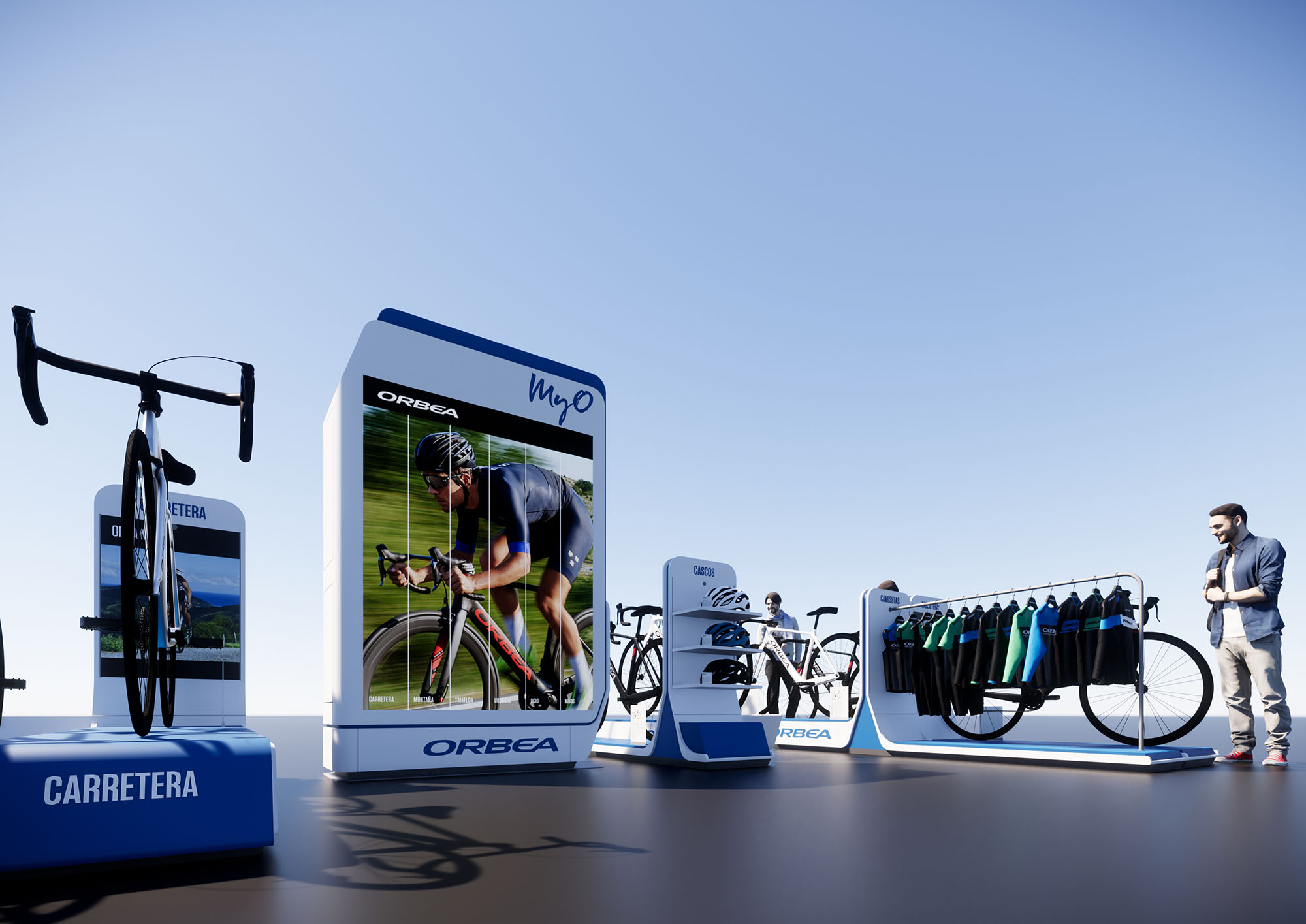
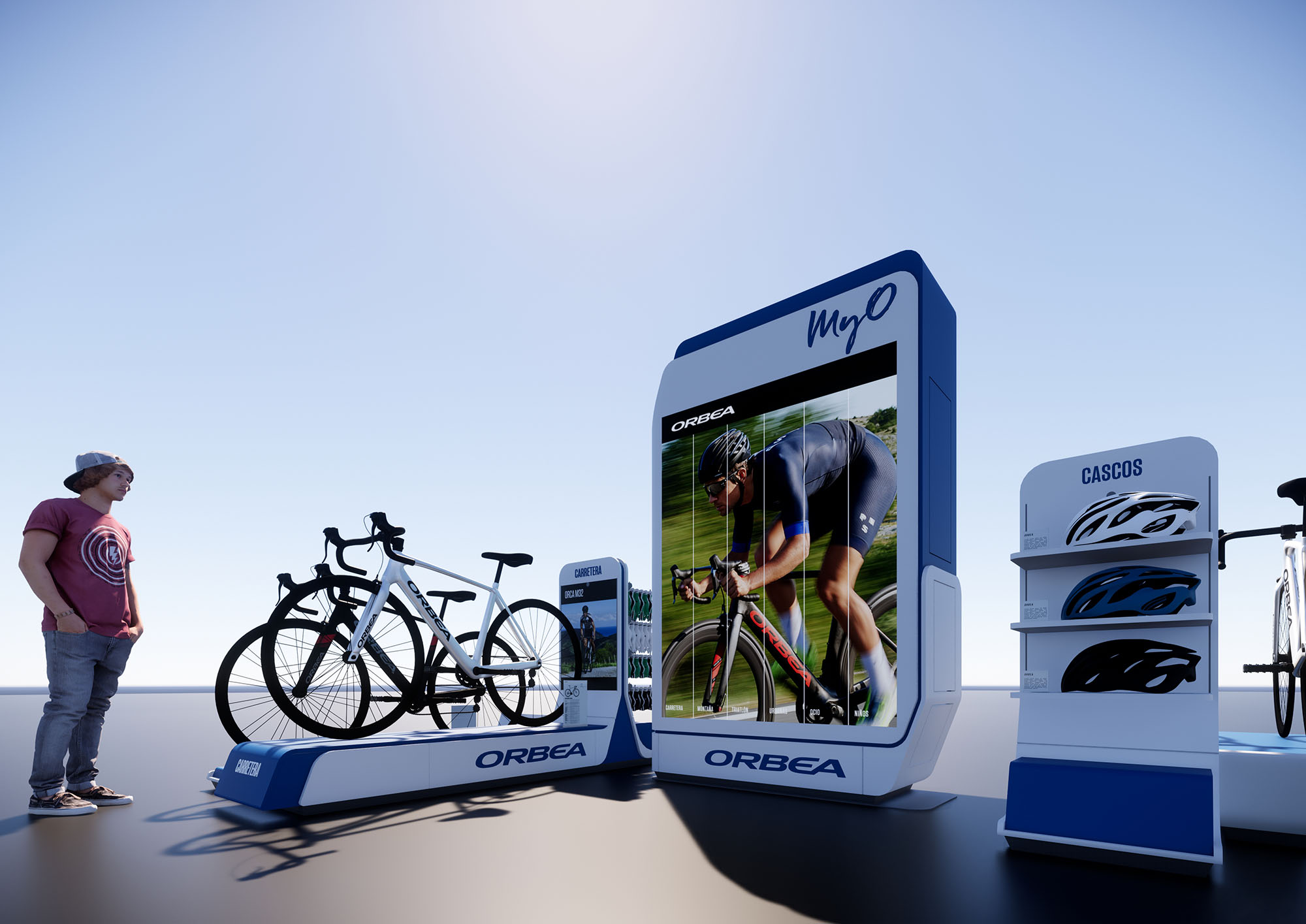

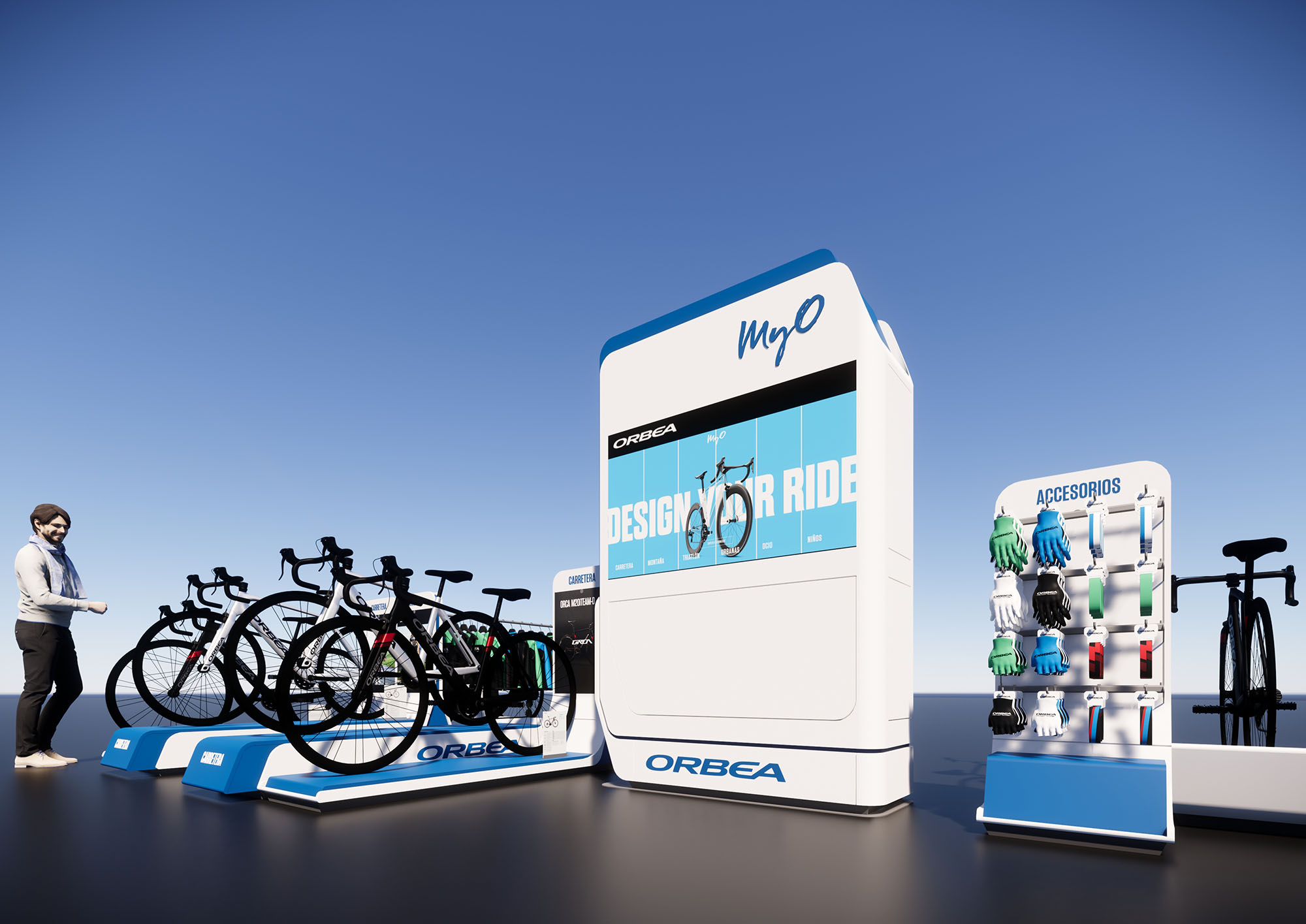
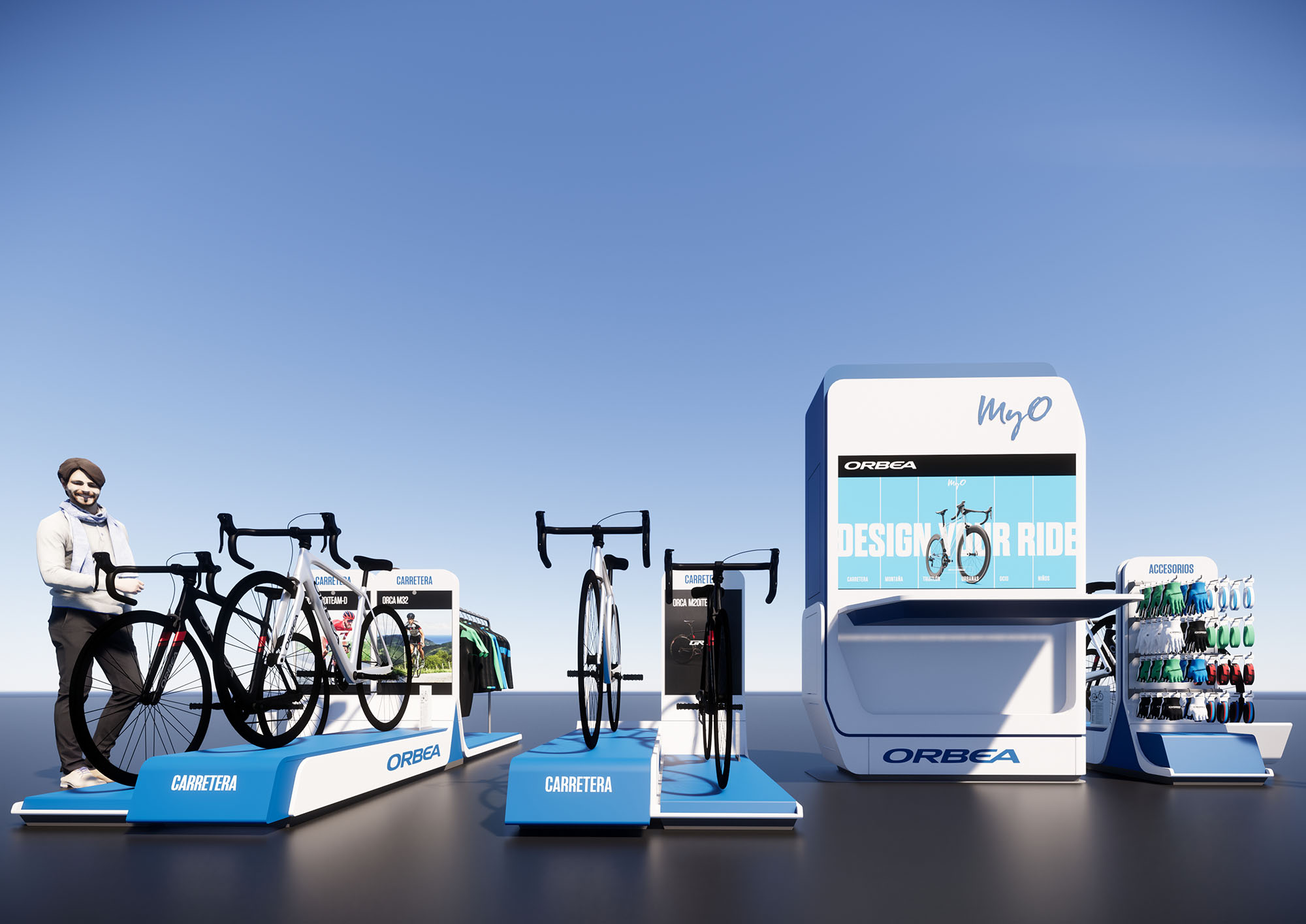
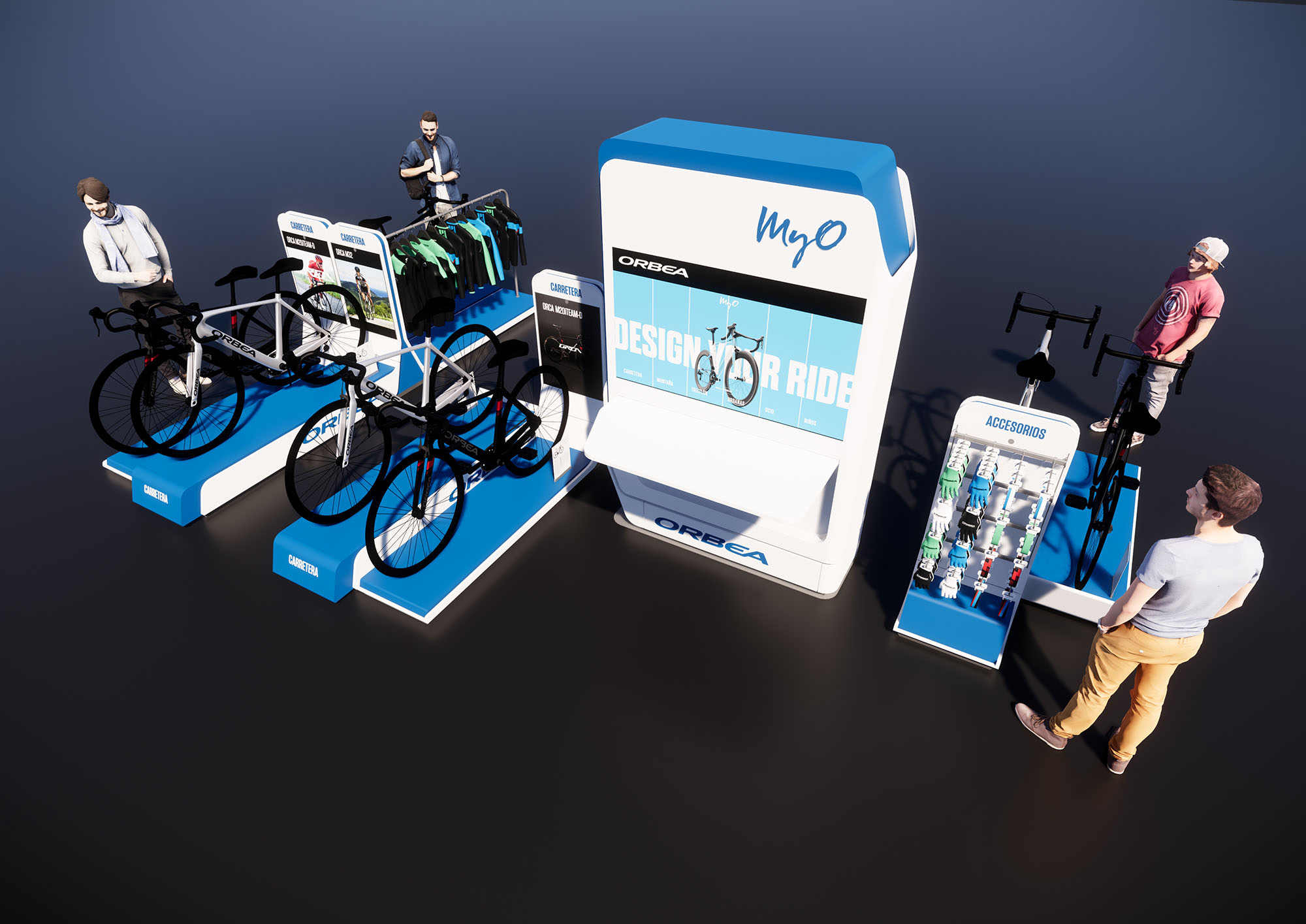
The ORBEA retail space in Barcelona is conceived as an immersive brand landscape that translates cycling performance into architectural form. The design uses the geometry and dynamics of a racing circuit to organize the interior, transforming the store into a three‑dimensional track where products, graphics and users move in a choreographed flow. Strong, clean lines and a controlled color palette create a highly recognizable brand environment that can be replicated in future locations as a scalable retail concept.
The concept focuses on clarity of orientation and product storytelling. Longitudinal axes direct visitors from the entrance to the main communication walls, while central islands define thematic zones such as mountain, road and urban categories. The store is understood as a showcase for innovation rather than a traditional shop, emphasizing experience, consultation and configuration over simple display.
The spatial layout is organized around a central spine composed of elevated blue platforms that function as display plinths and informal seating. This spine structures the circulation, encouraging a progressive discovery of the different product universes. Perimeter walls are reserved for modular display systems, leaving the core of the space open and highly flexible for seasonal changes or event setups.
At the entrance, a reception and information counter establishes an immediate point of contact with staff. From there, a clearly marked circulation path—suggested by floor graphics that reference road markings—guides visitors through the store. Large digital and printed visuals at focal points punctuate the route, reinforcing brand narratives and providing orientation anchors without the need for intrusive signage.
The material palette contrasts the technical precision of cycling equipment with a sober, almost industrial envelope. Dark, matte wall surfaces and ceilings create a neutral background that absorbs reflections and visually amplifies the luminous blue elements. The flooring uses a high‑resistance, low‑gloss surface suitable for heavy traffic, with integrated striping that suggests lanes and movement.
ORBEA blue is deployed as a structural element: it forms the volumetric frames of the display walls, the edges of the counters, and the central islands, creating a continuous chromatic thread. White planes are used selectively to highlight product areas and increase perceived brightness at eye level. Black accents in profiles, fixtures and lighting tracks add definition and a technical character consistent with high‑performance sports equipment.
The furniture is conceived as an integrated system rather than isolated pieces. Perimeter walls feature modular panels with interchangeable brackets, shelves and hooks, allowing quick reconfiguration for different product typologies. The base volumes, inclined and faceted, echo the geometry of frames and helmets, subtly referencing the mechanics of cycling.
The central blue platforms act as stages for hero products, special editions or bike fitting demonstrations. Freestanding totems accommodate digital screens and wayfinding information, while broad counters provide areas for configuration services and after‑sales support. All elements are dimensioned to maintain maximum transparency across the store, preserving long visual perspectives and avoiding visual clutter.
Lighting design plays a key role in shaping the atmosphere. A continuous track along the perimeter allows precise positioning of adjustable projectors to emphasize products without excessive glare. The dark ceiling visually disappears, turning luminaires and circular ceiling features into floating graphic elements that echo wheels and motion.
Large circular recessed elements, finished in white and blue, generate homogeneous ambient illumination over the central axis, while accent lighting intensifies contrast on key display walls. The result is a controlled, cinematic light level that enhances textures and colors of the merchandise and reinforces the high‑tech identity of the brand.
Sustainability is addressed through a combination of material selection, energy efficiency and long‑term adaptability. The use of LED luminaires with high luminous efficacy significantly reduces energy consumption compared to traditional retail lighting, while track systems allow reorientation without additional installations, extending the life of the infrastructure.
Furniture and wall systems are designed as modular, demountable components fabricated principally from recyclable metal profiles and certified wood panels with low‑emission finishes. This approach minimizes waste during updates and facilitates disassembly or relocation. The restrained palette and timeless geometry reduce the need for frequent refurbishments, supporting a slower, more responsible renovation cycle aligned with contemporary environmental standards.


Our offices are located in Barcelona, Cancún, Chicago and Santo Domingo, but thanks to technology we can do projects on all over the world.
Barcelona
Bac de Roda 136
08020, Barcelona
Spain
Madrid
Av. de Buendía 11
19005 Guadalajara (Madrid)
Spain
Chicago
373 Hazel Ave, Apt A1
60022, Glencoe, Illinois
United States