

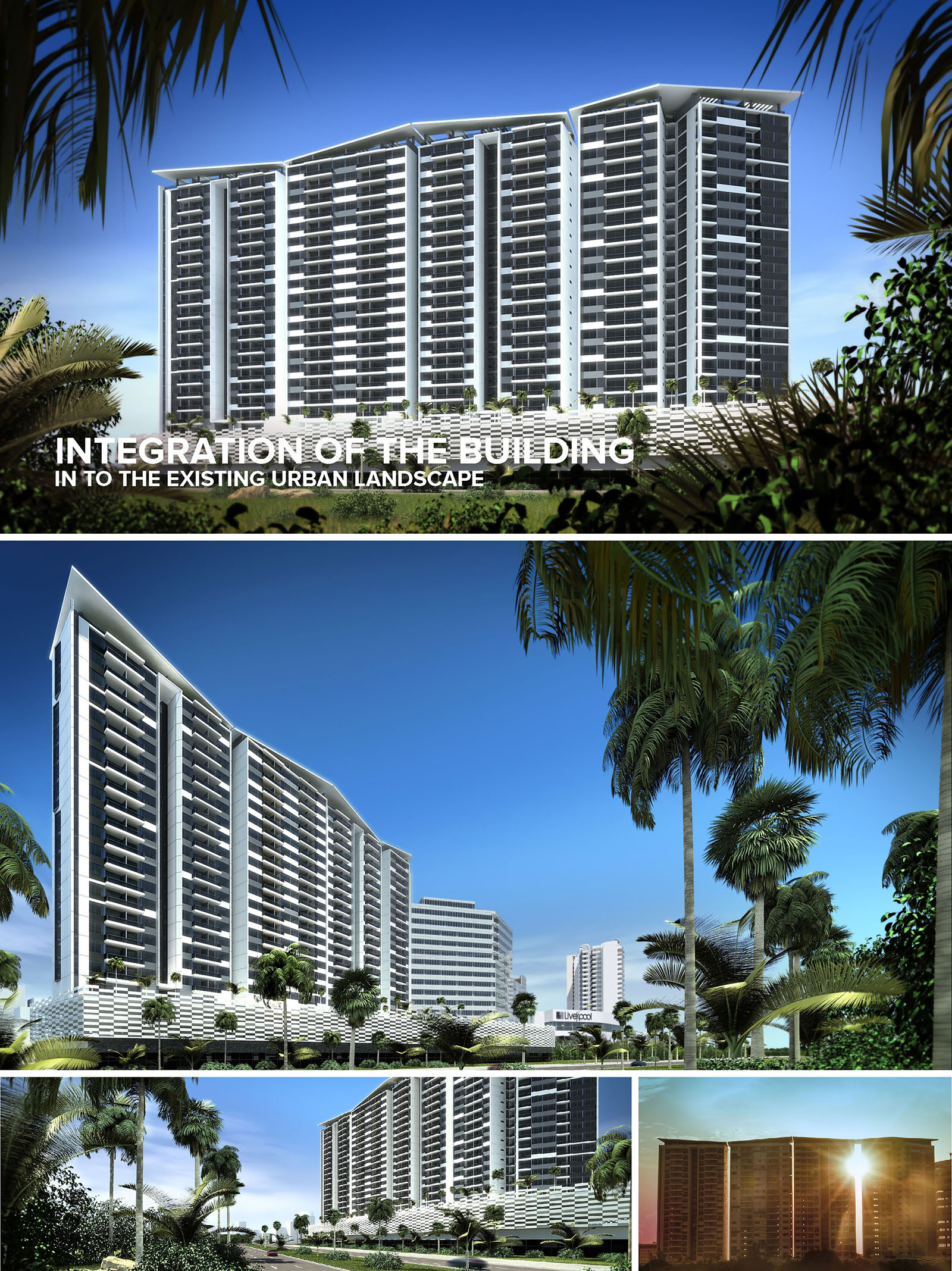
MALECON AMERICAS is conceived as a contemporary residential landmark that reinforces the urban skyline of Cancún while maintaining a strong connection with the coastal landscape. The volumetry is based on a sequence of slender towers joined by subtle inflections, creating a dynamic façade that responds to the movement of the sun and prevailing breezes. This configuration maximizes ocean-oriented views and cross-ventilation for the greatest number of units.
The architectural language is intentionally clean and orthogonal, emphasizing horizontality through continuous balconies and verticality through structural blades. The interplay of these elements produces a rhythm that visually lightens the mass of the building and expresses the modular nature of the residential typologies.
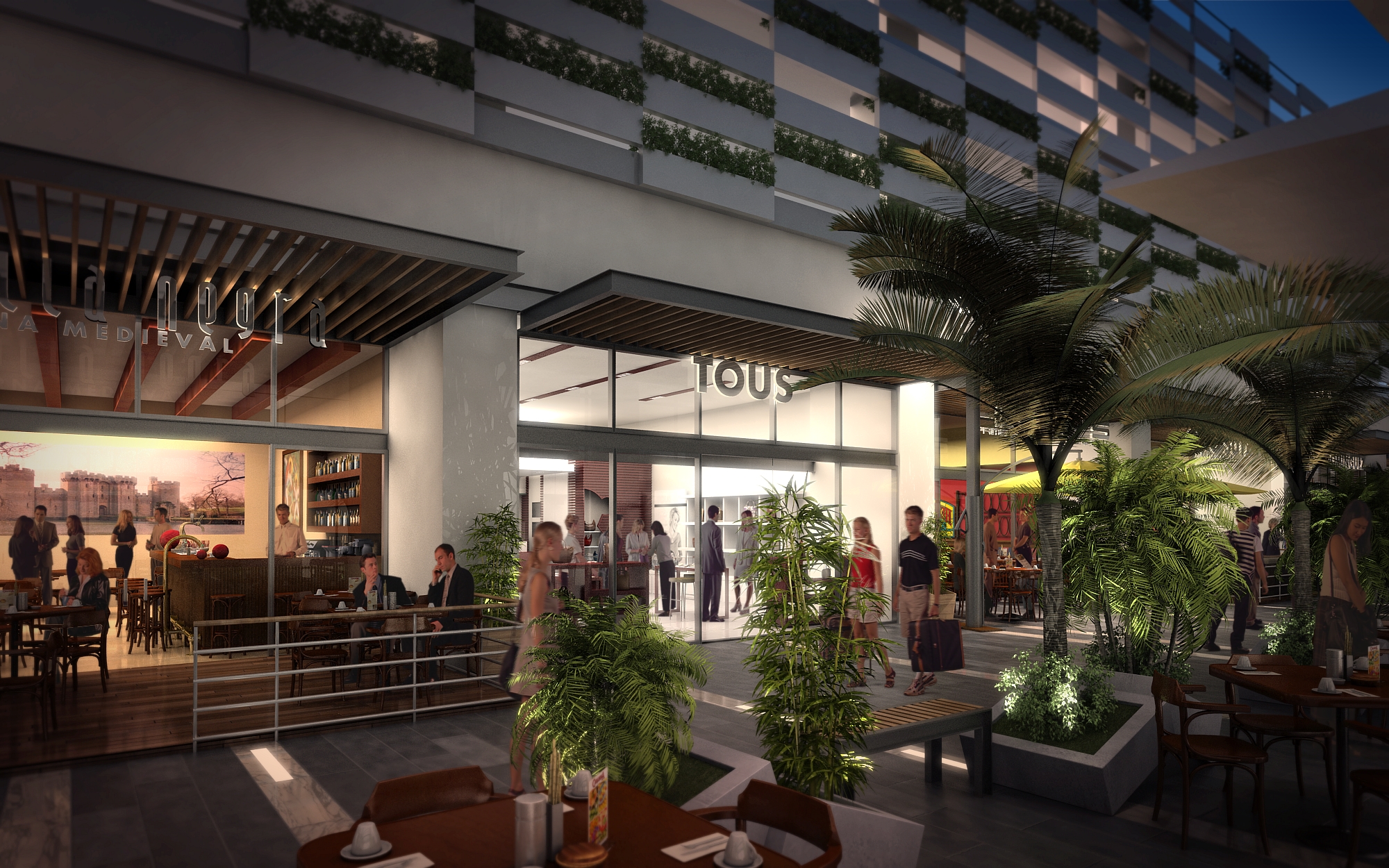
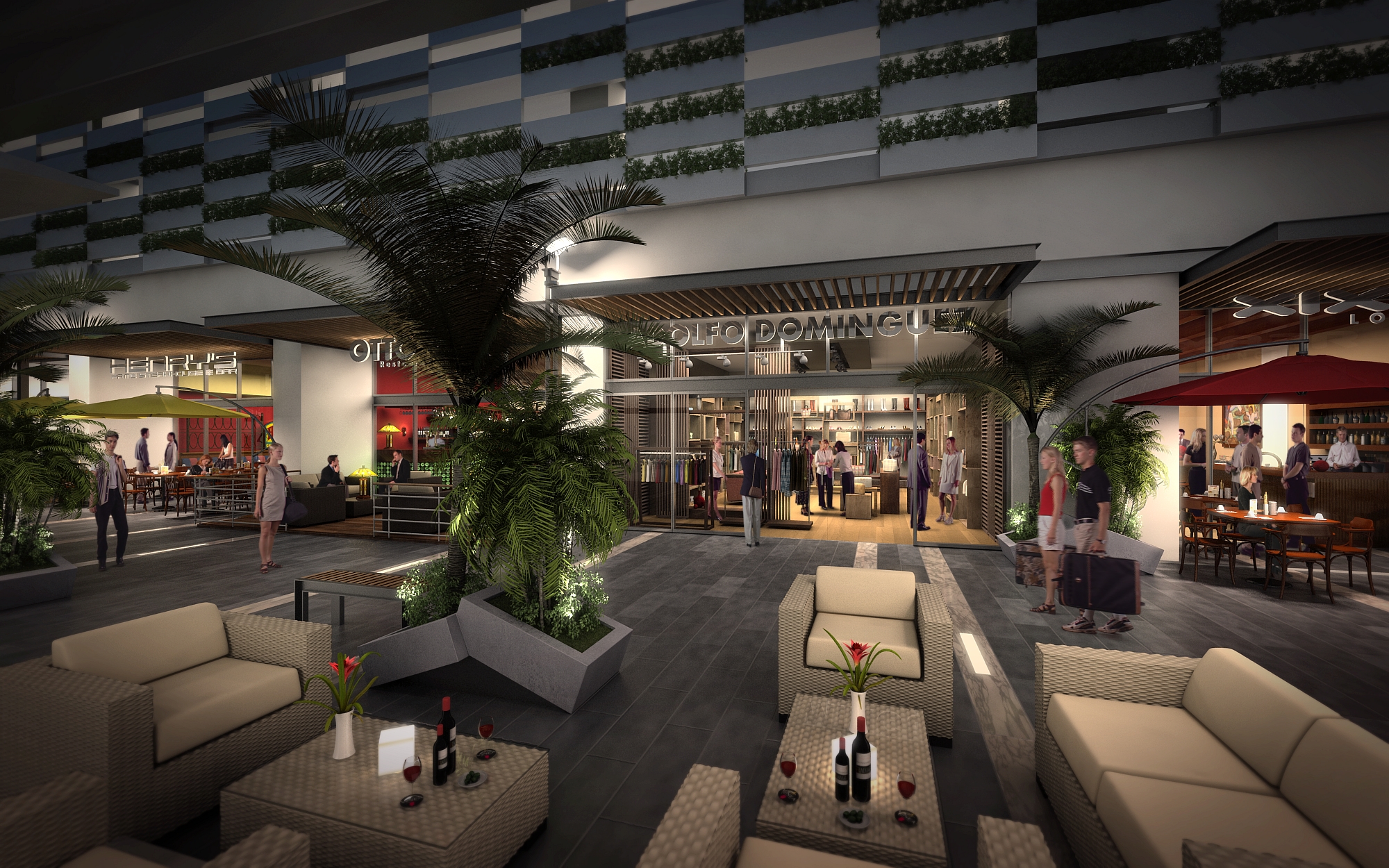
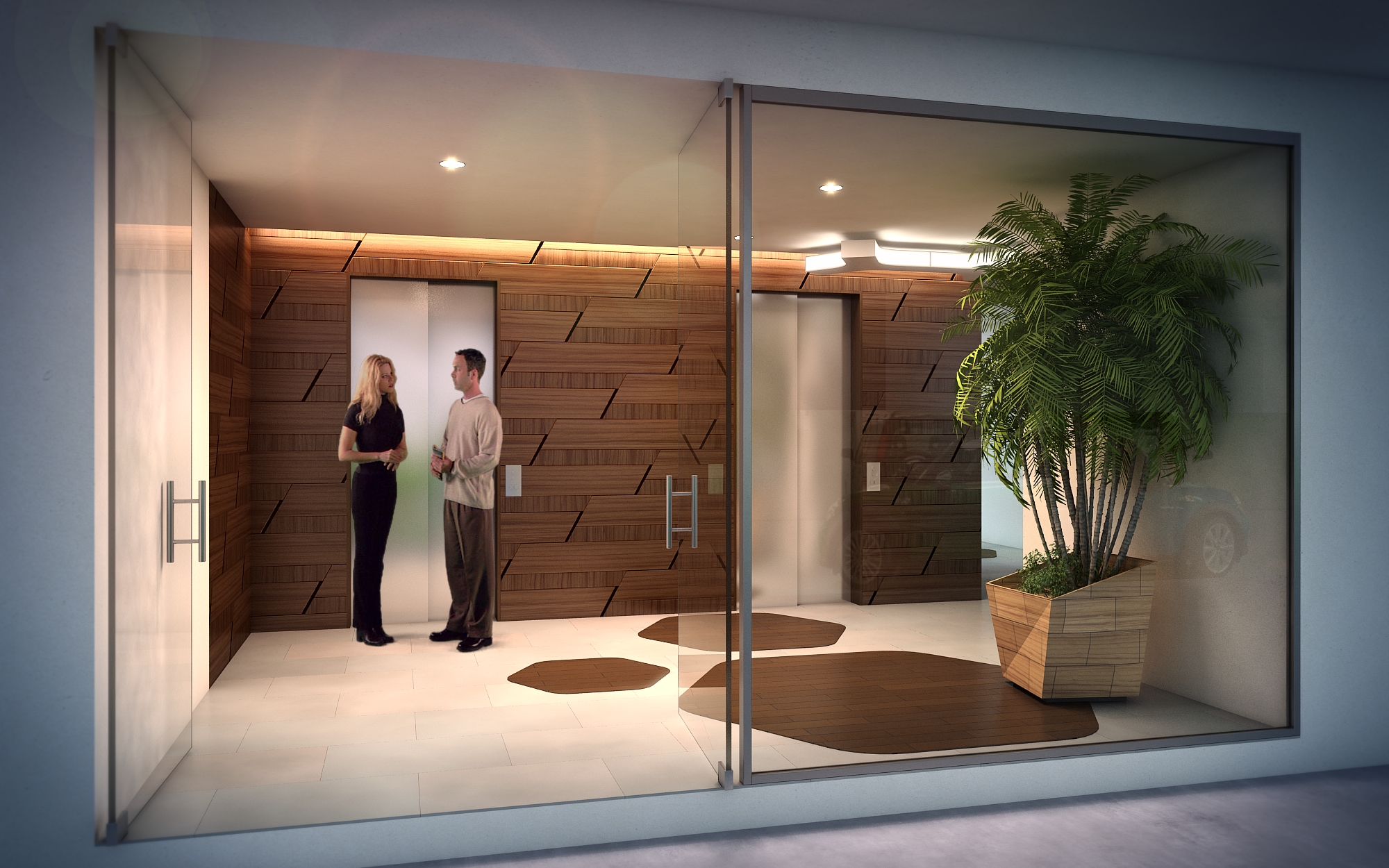
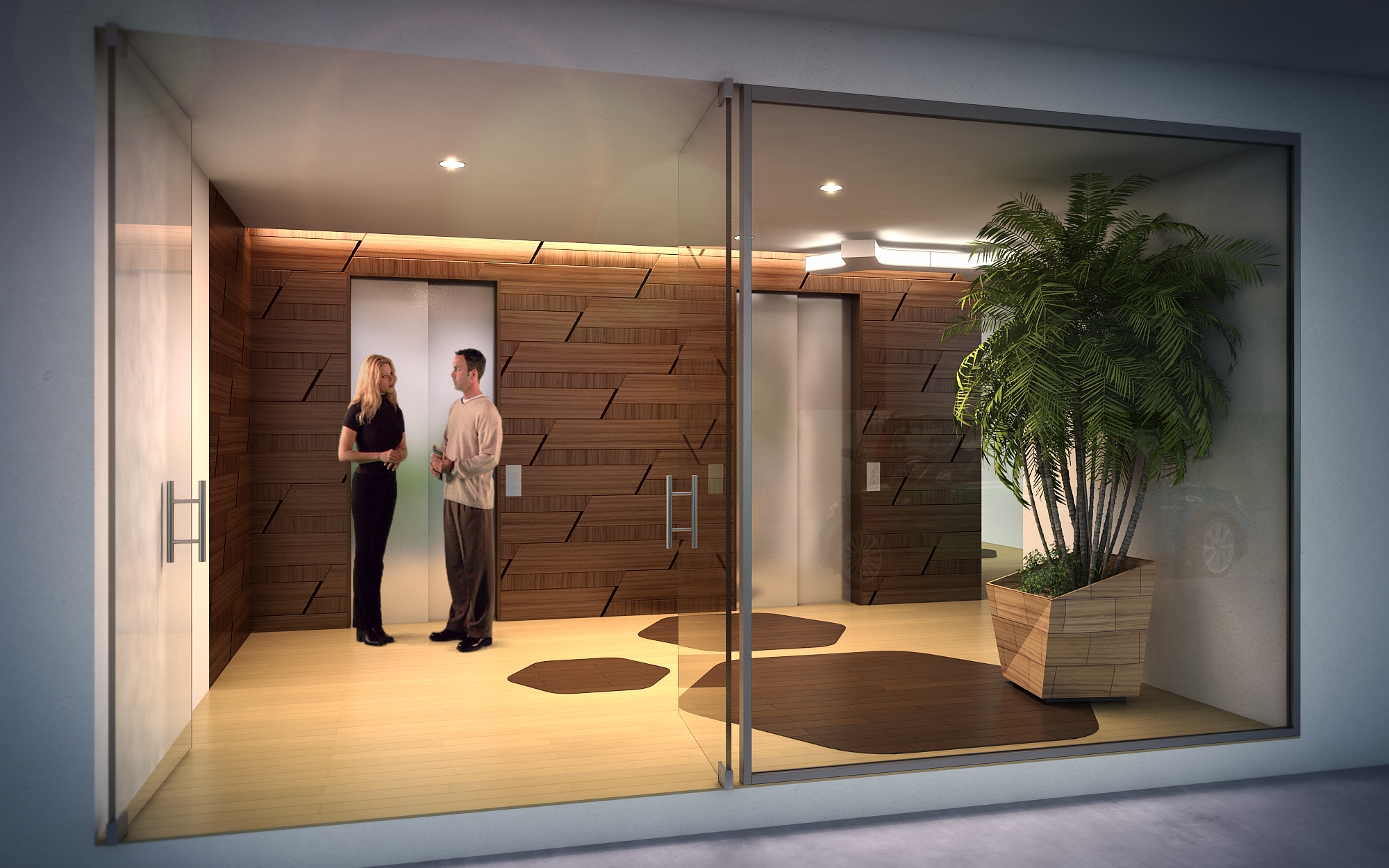
The project occupies a strategic front along an important urban corridor, acting as a transition between dense city fabric and the more open coastal landscape. The plinth aligns with the street grid, consolidating commercial and lobby functions and activating the public realm at ground level. Above this base, the residential volumes slightly withdraw, generating a clear separation between public, semi-public, and private domains.
Open landscaped setbacks and pedestrian promenades at the base connect to existing sidewalks and green areas, promoting permeability and walkability. The elevated platform accommodates parking and service areas, allowing the ground plane to remain visually open and planted, contributing to an improved microclimate along the avenue.
The towers are articulated through a faceted geometry, with subtle bends that orient the façades toward key views while reducing direct solar gain on the most exposed orientations. Vertical white frames and fins define the structural grid and provide shading to the balconies, while darker infill panels and glazing recede to emphasize depth and shadow.
At the podium, a textured horizontal banding creates a strong base condition and visually anchors the complex. This patterning introduces a human scale at street level and conceals parking ventilation through integrated perforations. The upper crown of the building is resolved with extended roof planes and recessed mechanical zones, giving a crisp, controlled silhouette against the sky.
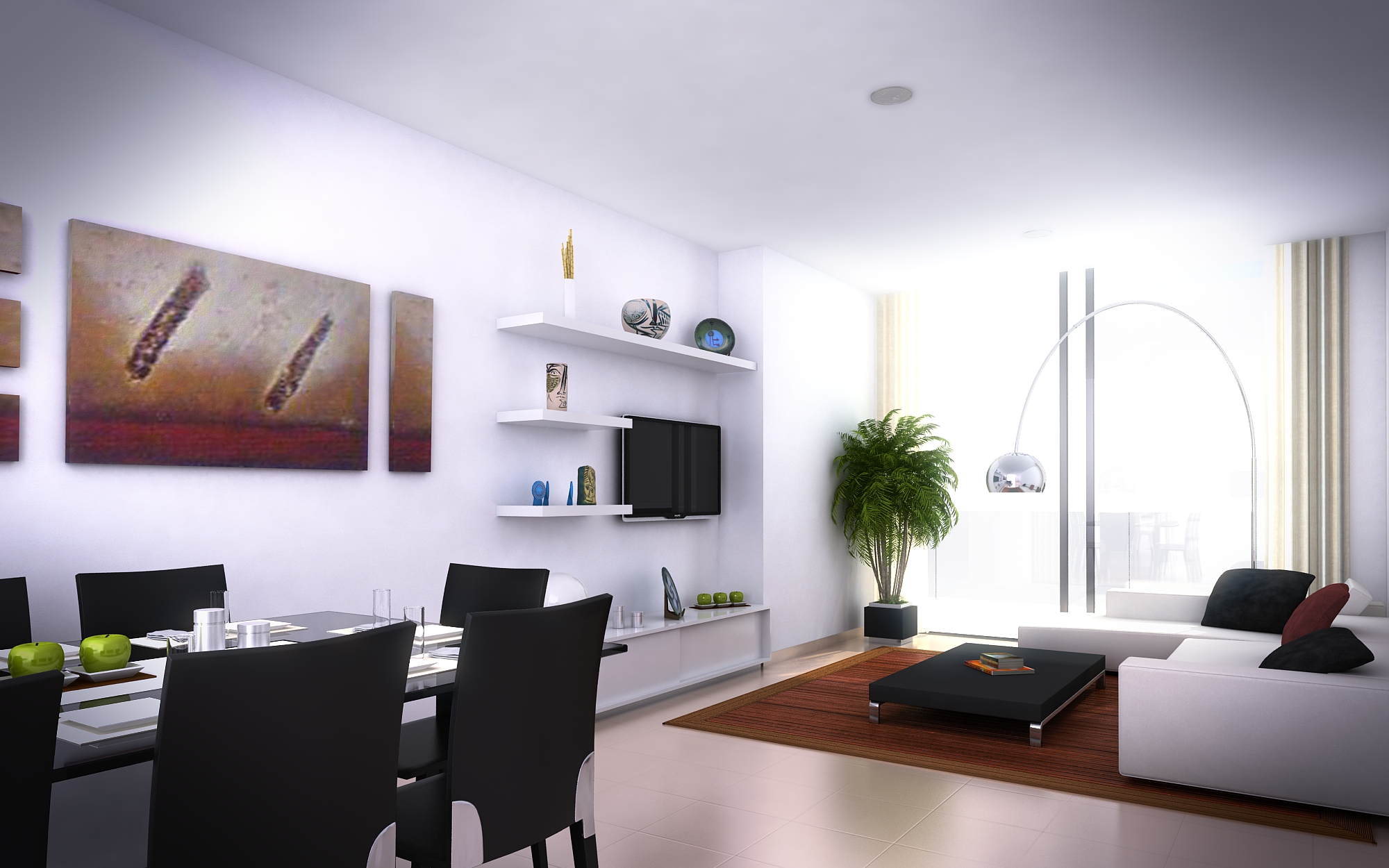
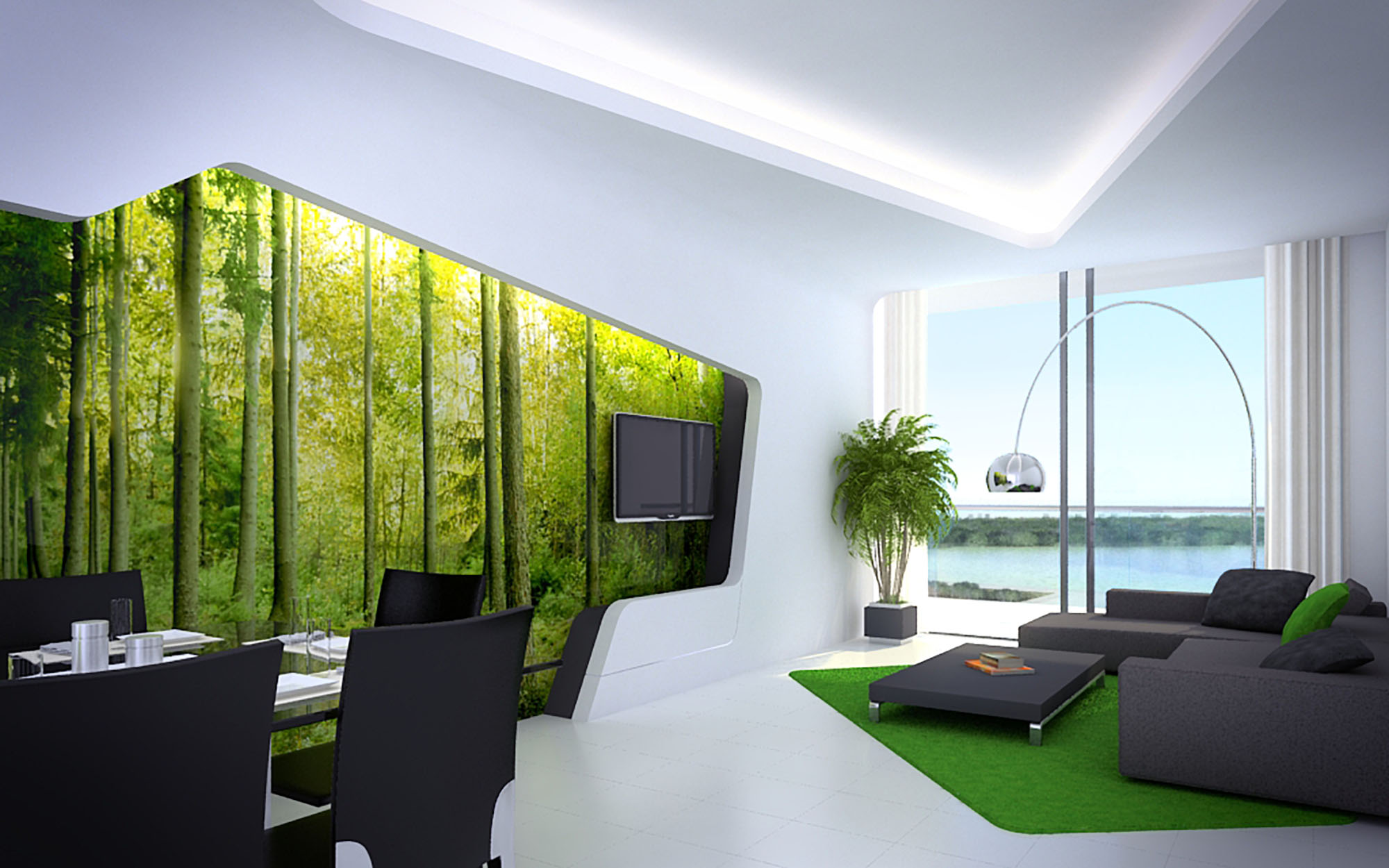
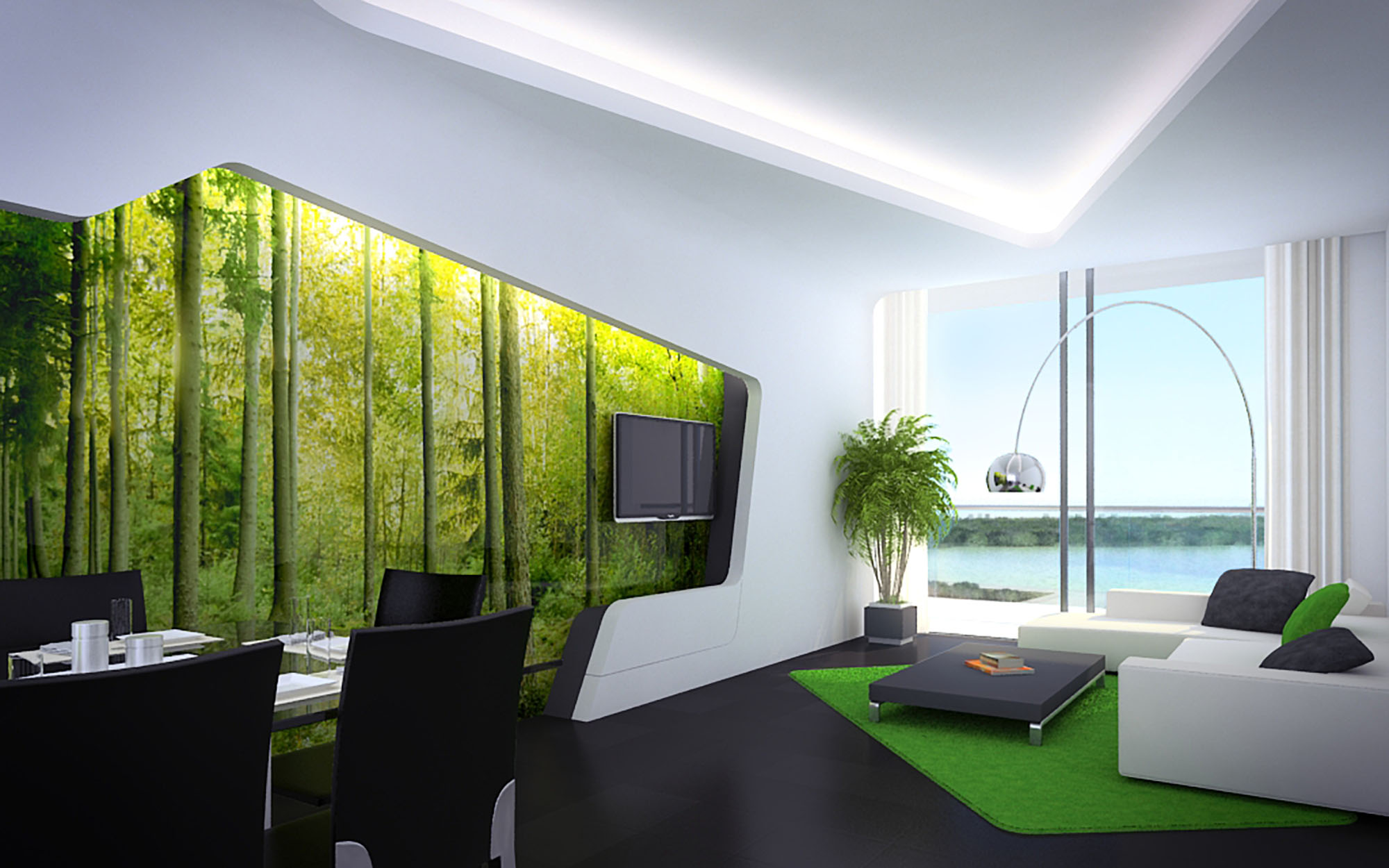
The residential floors are organized on efficient double-loaded corridors that prioritize corner units and long, panoramic façades. Each apartment enjoys generous balconies, conceived as outdoor living rooms that expand the interior space and frame views of the city and coastline. Sliding glazed doors enable a fluid relationship between inside and outside, adapting to different climatic conditions.
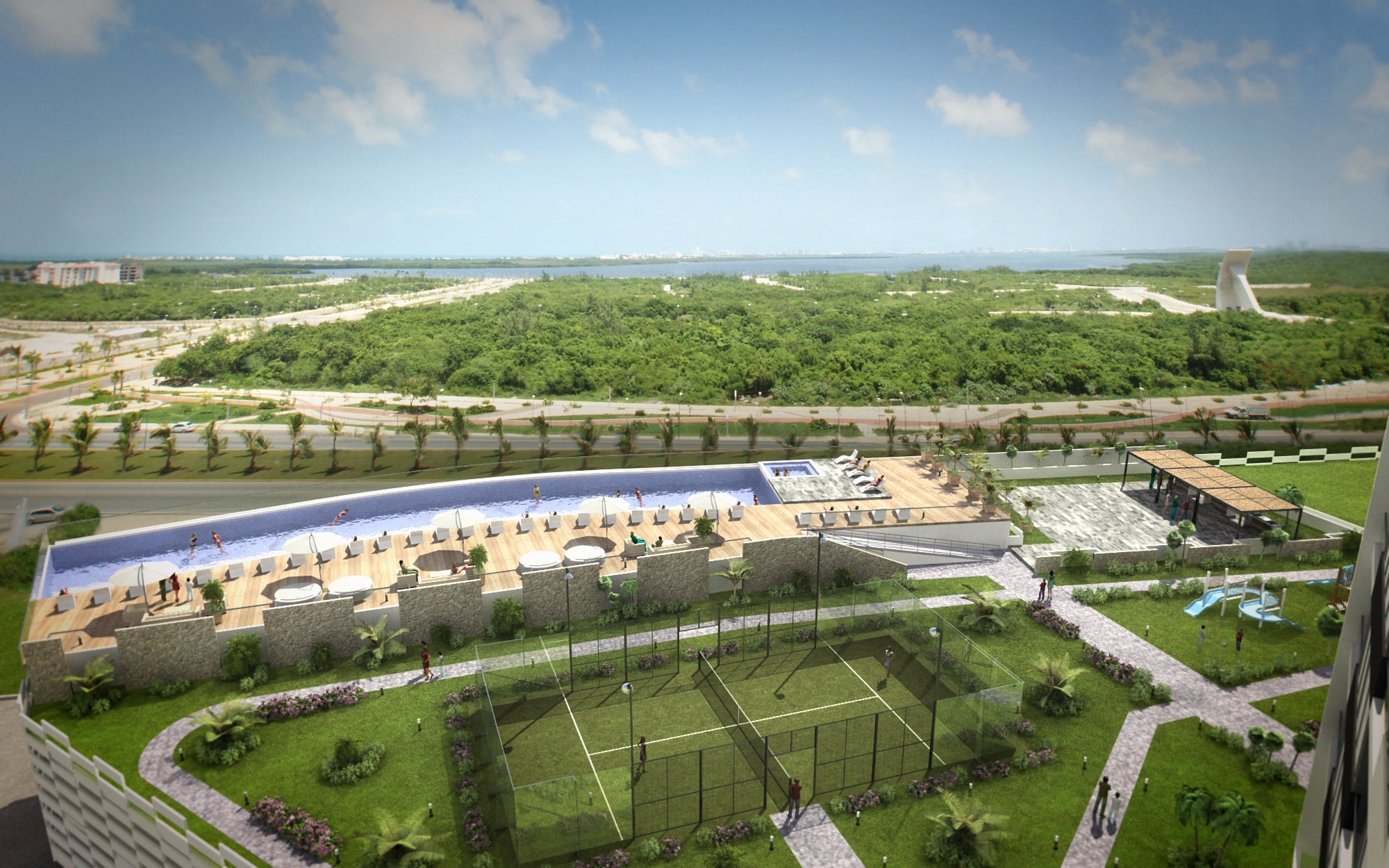
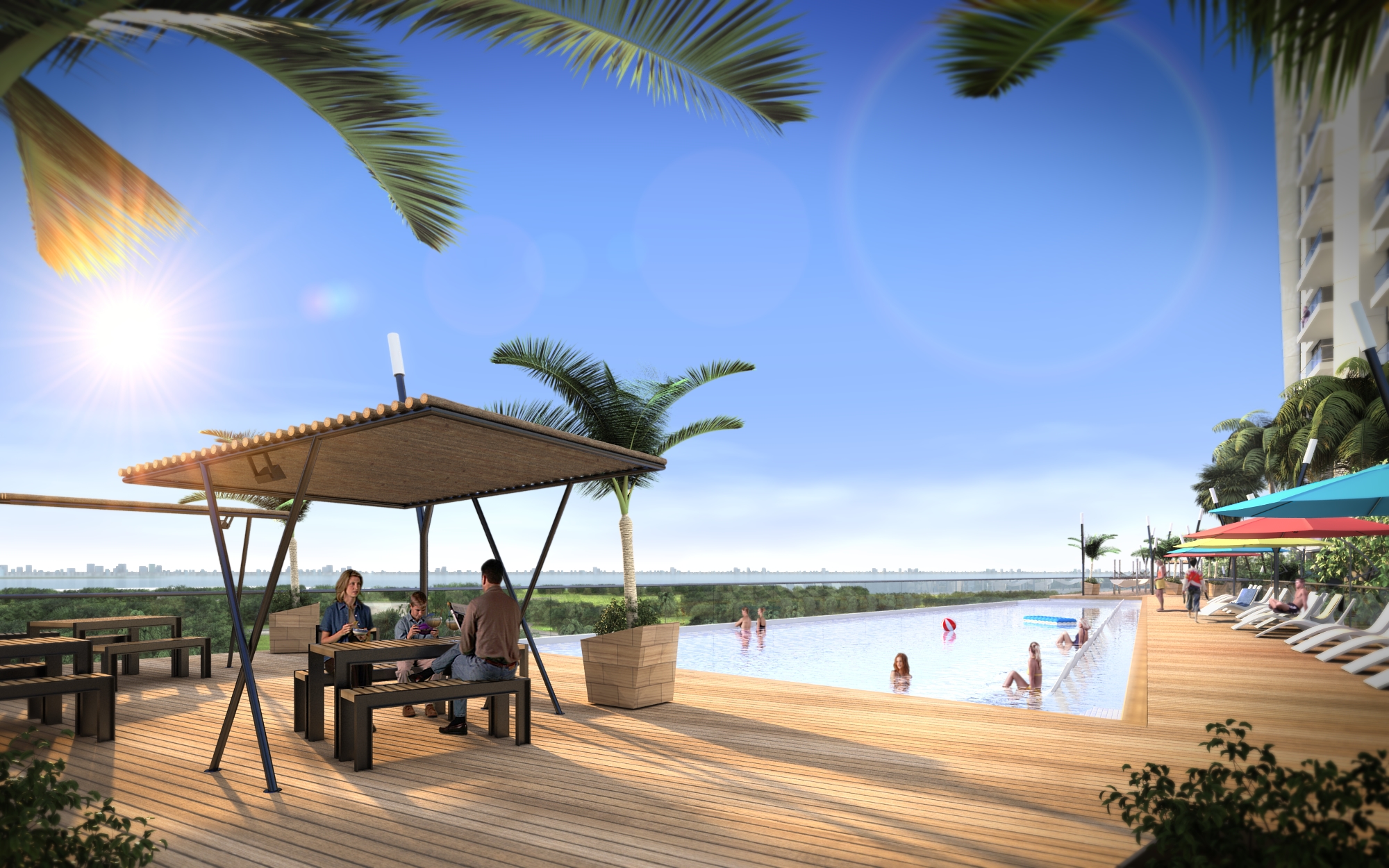
Common amenities are strategically located at podium and intermediate levels to encourage social interaction among residents. These shared spaces, combined with visual continuity toward the surrounding greenery, build a resort-like living atmosphere while maintaining the privacy expected in an urban residence.
The material palette emphasizes durability and low maintenance, essential in the saline and humid environment of Cancún. Reinforced concrete structure, high-performance glazing, and aluminum balcony railings provide robustness and longevity. The predominant white and light gray tones reflect solar radiation and enhance thermal comfort, while darker accents mark the voids of terraces and recessed volumes.
Daylight plays a central role in the design. Large openings and continuous balcony fronts capture natural light throughout the day, while vertical fins, overhangs, and balcony slabs control glare and heat gain. Nighttime illumination highlights the vertical blades and the rhythmic balcony edges, turning the complex into a recognizable reference point along the urban waterfront.
The landscape design draws from the native coastal vegetation of the Yucatán Peninsula, using palms, shrubs, and groundcovers adapted to the local climate and low water consumption. Planting is concentrated around the base, terraces, and communal areas, forming green buffers that filter noise and improve air quality. Permeable surfaces and controlled drainage help manage stormwater, mitigating runoff during heavy tropical rains.
Passive design strategies are fundamental to the project’s sustainability approach. Building orientation and façade shaping reduce solar exposure on critical faces, while continuous balconies and shading elements minimize cooling loads. Cross-ventilation is encouraged through unit layout and operable windows, reducing dependence on mechanical systems. High-reflectance finishes, efficient lighting, and the potential integration of solar technologies on roof surfaces further contribute to lower operational energy demand and long-term environmental performance.
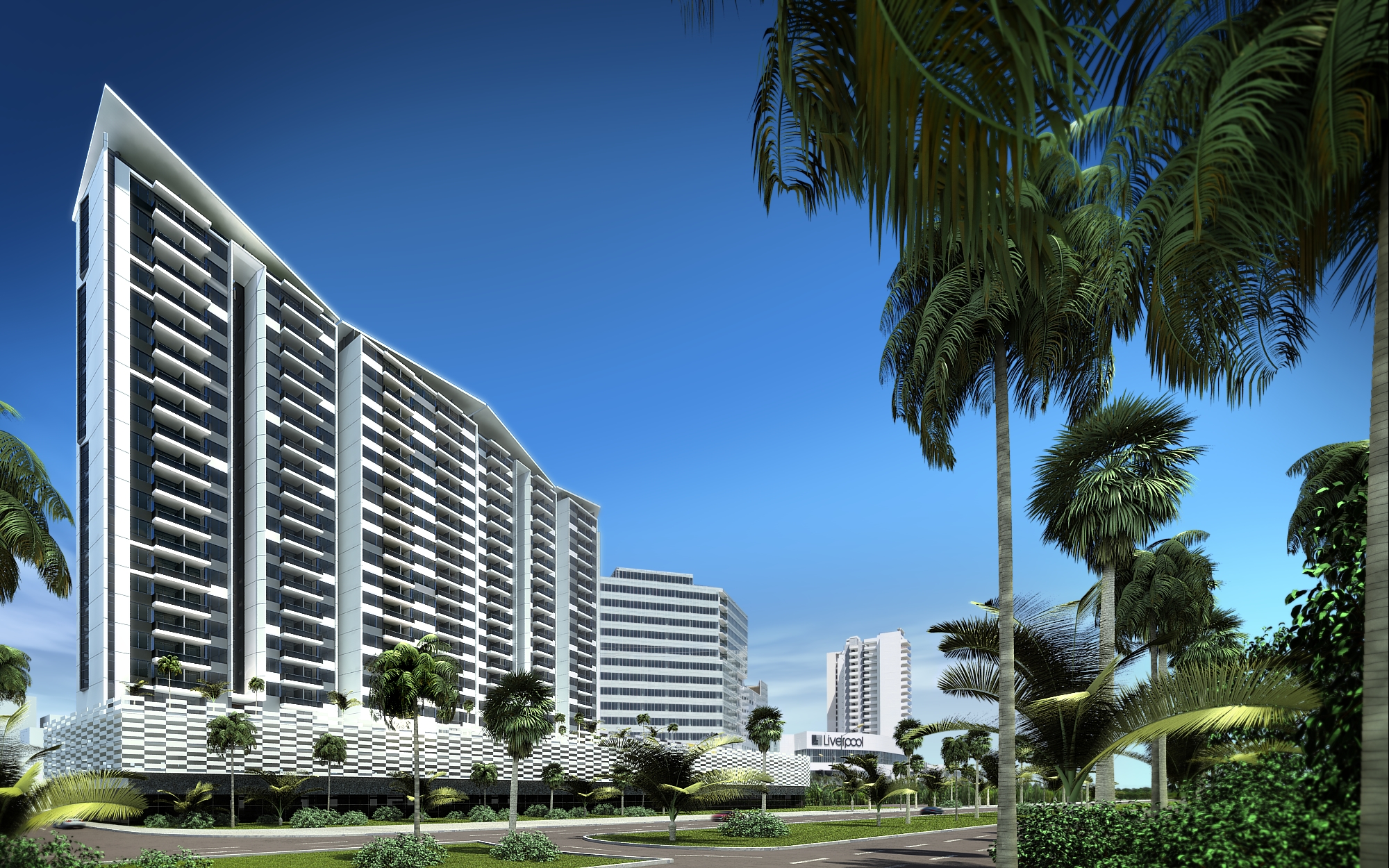
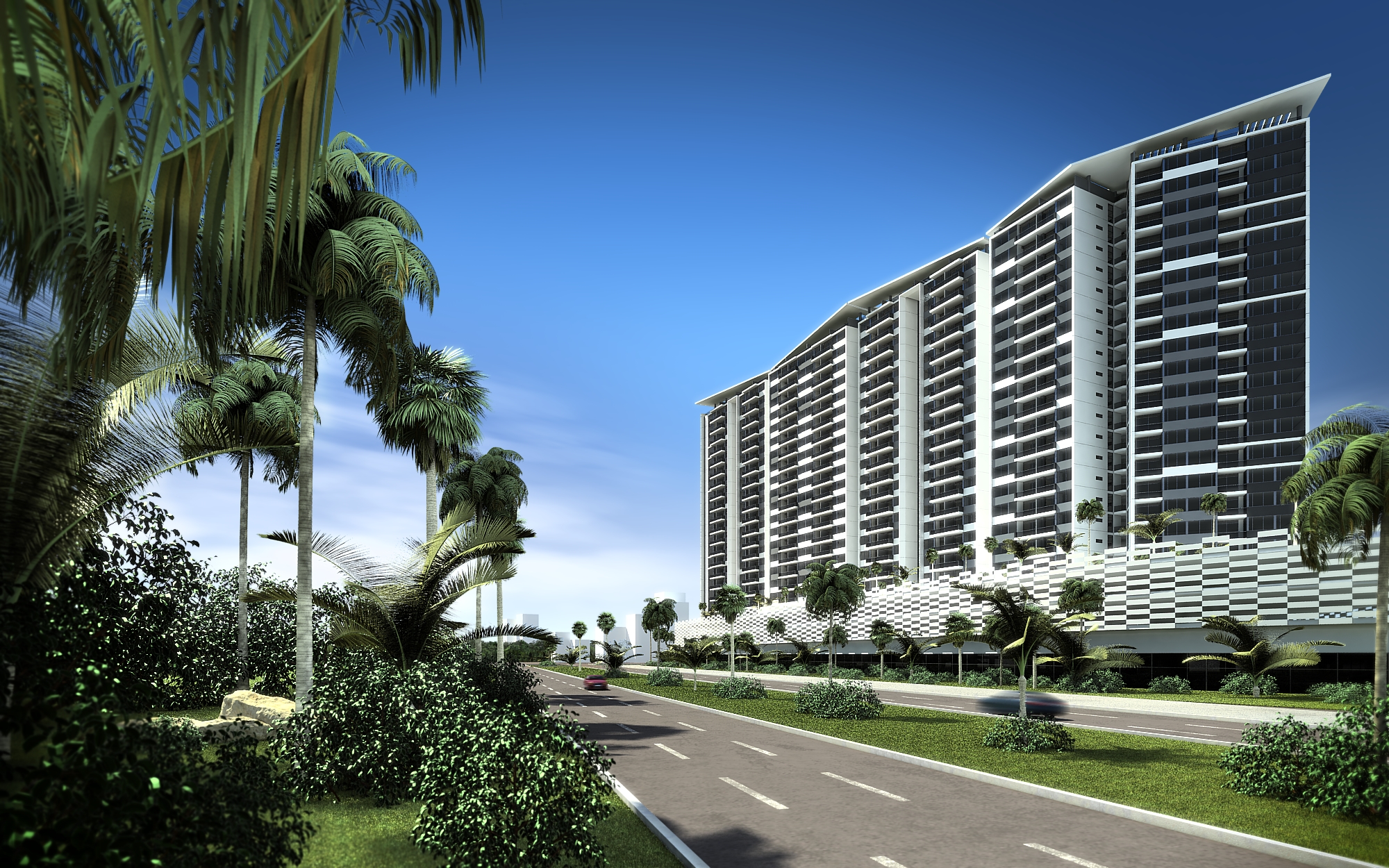
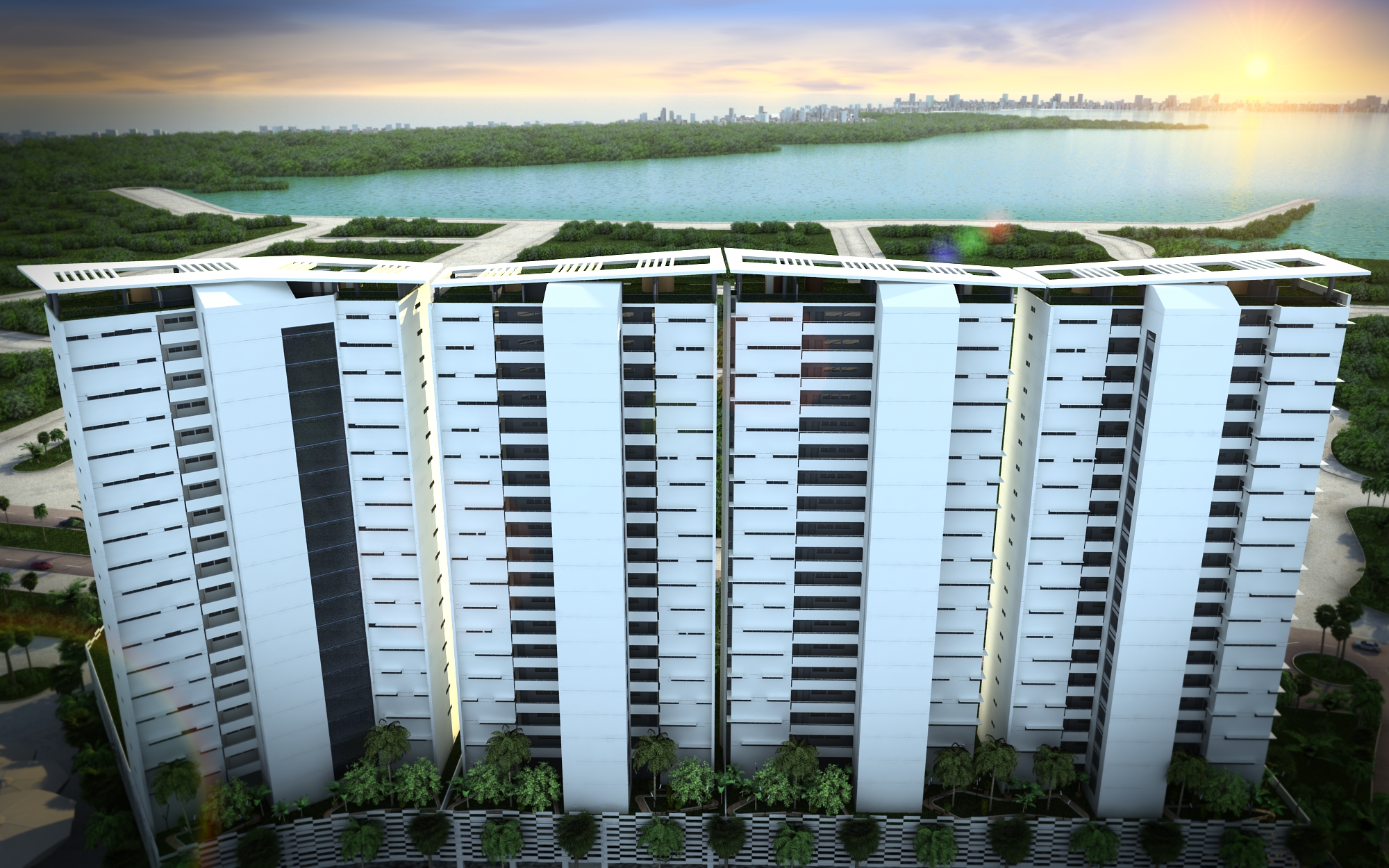
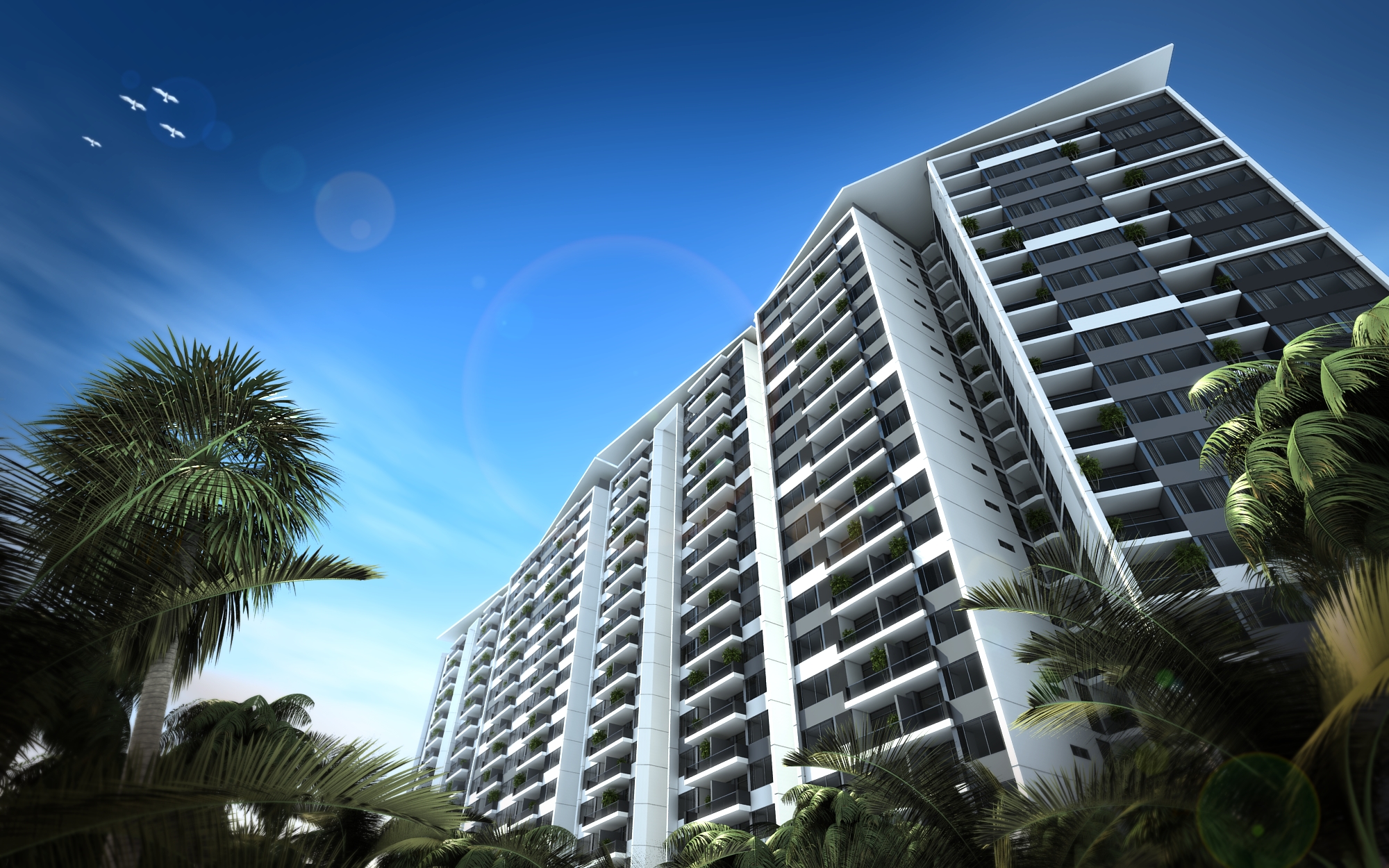
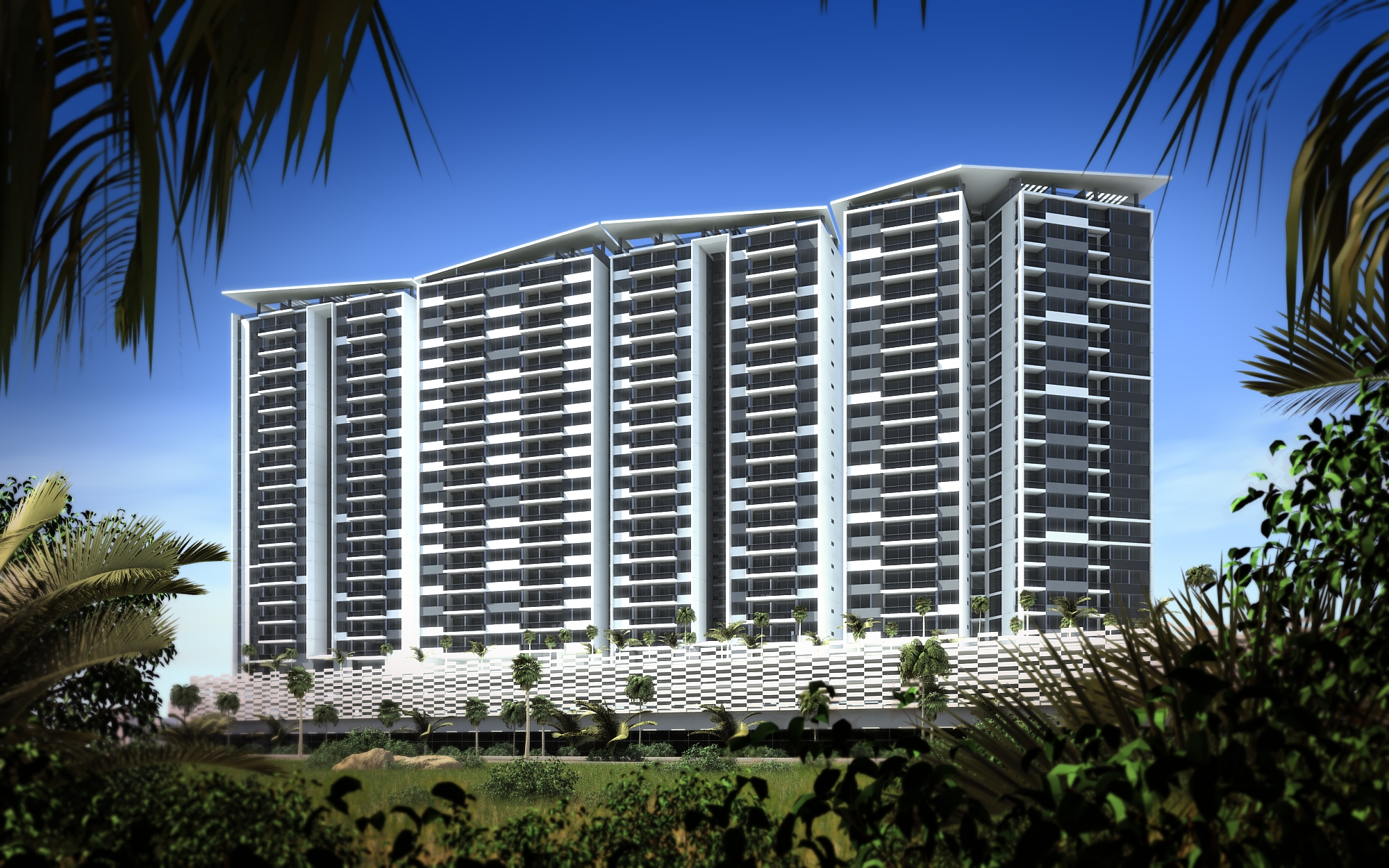





MALECON AMERICAS is conceived as a contemporary residential landmark that reinforces the urban skyline of Cancún while maintaining a strong connection with the coastal landscape. The volumetry is based on a sequence of slender towers joined by subtle inflections, creating a dynamic façade that responds to the movement of the sun and prevailing breezes. This configuration maximizes ocean-oriented views and cross-ventilation for the greatest number of units.
The architectural language is intentionally clean and orthogonal, emphasizing horizontality through continuous balconies and verticality through structural blades. The interplay of these elements produces a rhythm that visually lightens the mass of the building and expresses the modular nature of the residential typologies.
The project occupies a strategic front along an important urban corridor, acting as a transition between dense city fabric and the more open coastal landscape. The plinth aligns with the street grid, consolidating commercial and lobby functions and activating the public realm at ground level. Above this base, the residential volumes slightly withdraw, generating a clear separation between public, semi-public, and private domains.
Open landscaped setbacks and pedestrian promenades at the base connect to existing sidewalks and green areas, promoting permeability and walkability. The elevated platform accommodates parking and service areas, allowing the ground plane to remain visually open and planted, contributing to an improved microclimate along the avenue.
The towers are articulated through a faceted geometry, with subtle bends that orient the façades toward key views while reducing direct solar gain on the most exposed orientations. Vertical white frames and fins define the structural grid and provide shading to the balconies, while darker infill panels and glazing recede to emphasize depth and shadow.
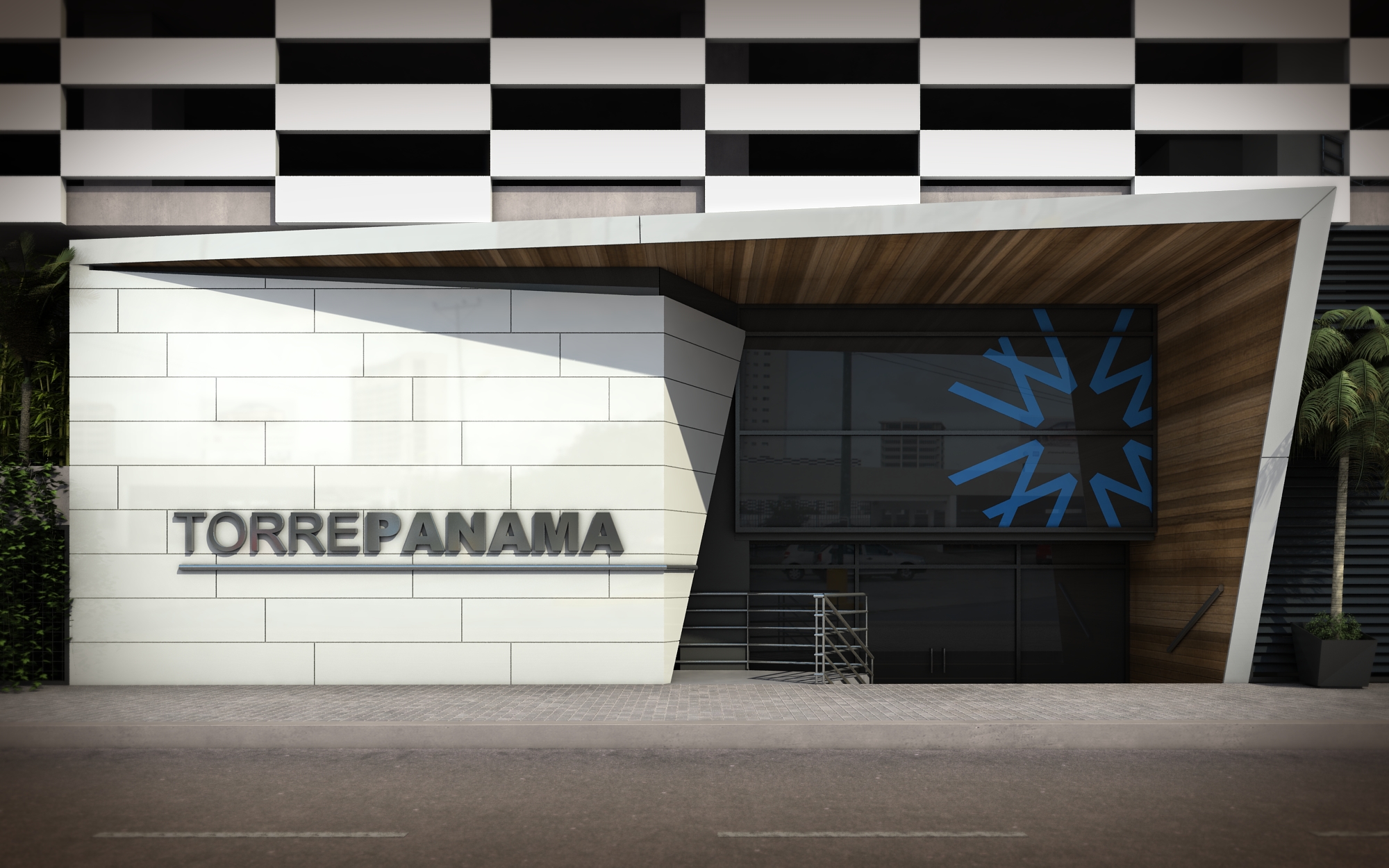
At the podium, a textured horizontal banding creates a strong base condition and visually anchors the complex. This patterning introduces a human scale at street level and conceals parking ventilation through integrated perforations. The upper crown of the building is resolved with extended roof planes and recessed mechanical zones, giving a crisp, controlled silhouette against the sky.
The residential floors are organized on efficient double-loaded corridors that prioritize corner units and long, panoramic façades. Each apartment enjoys generous balconies, conceived as outdoor living rooms that expand the interior space and frame views of the city and coastline. Sliding glazed doors enable a fluid relationship between inside and outside, adapting to different climatic conditions.
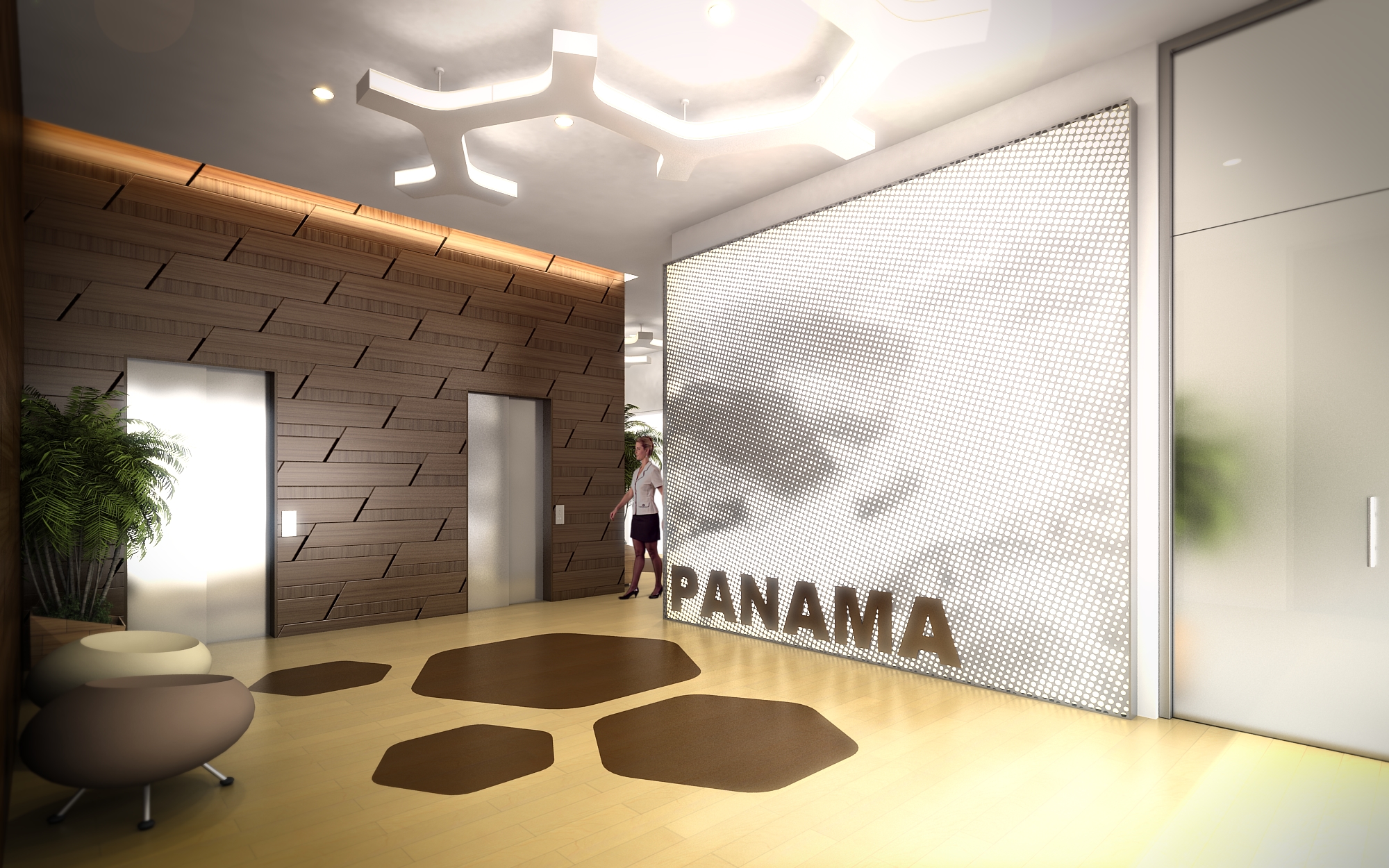
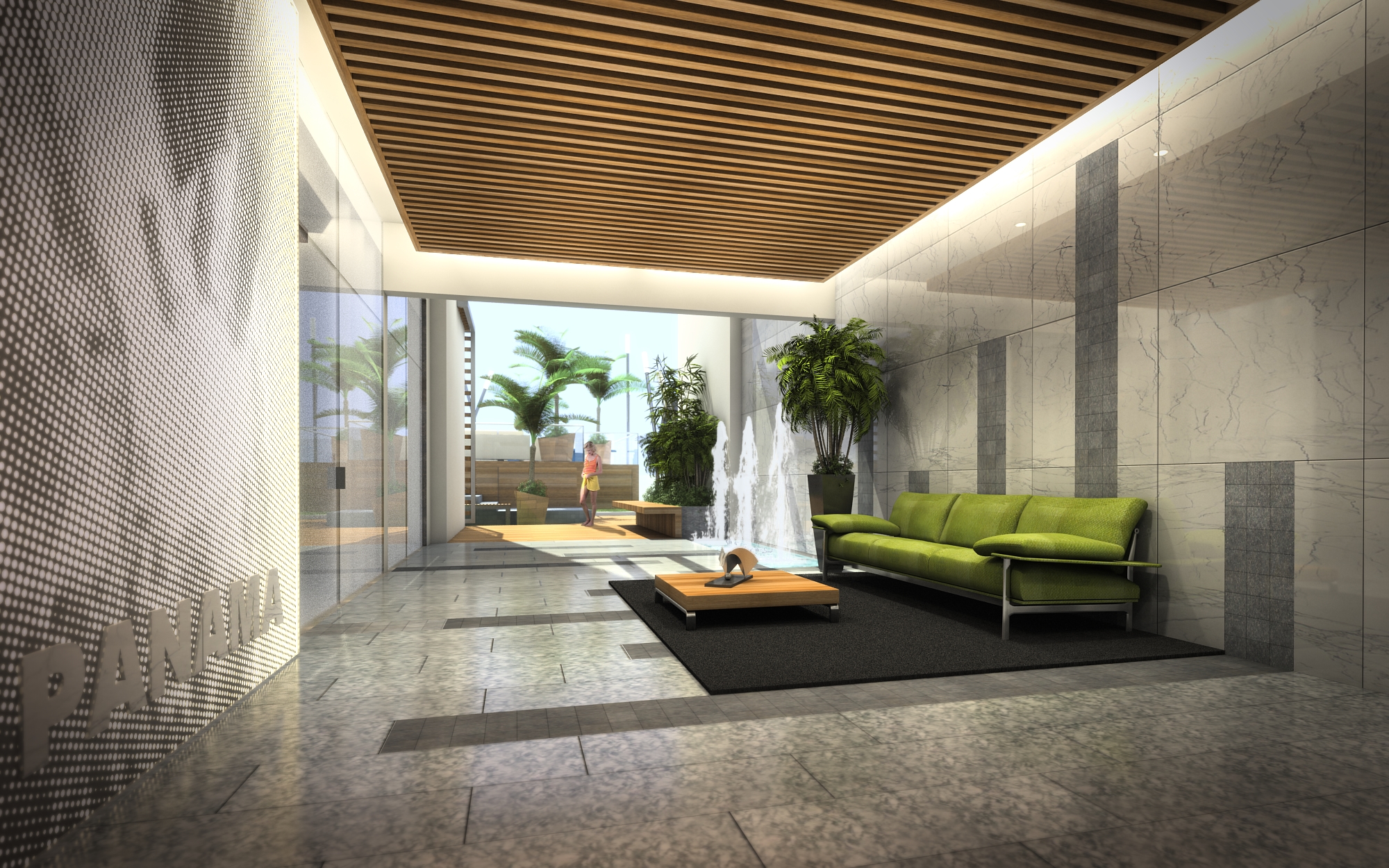
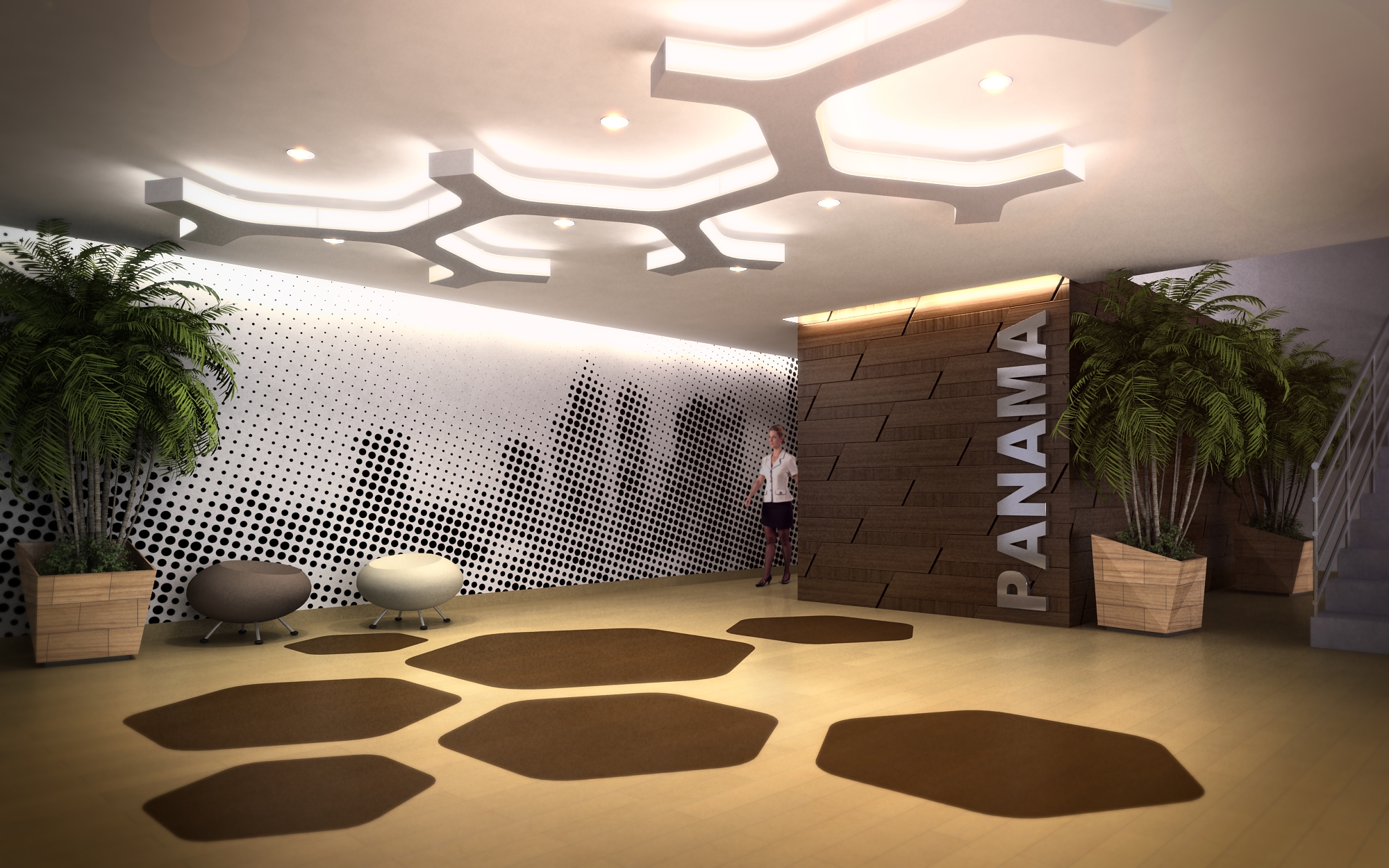
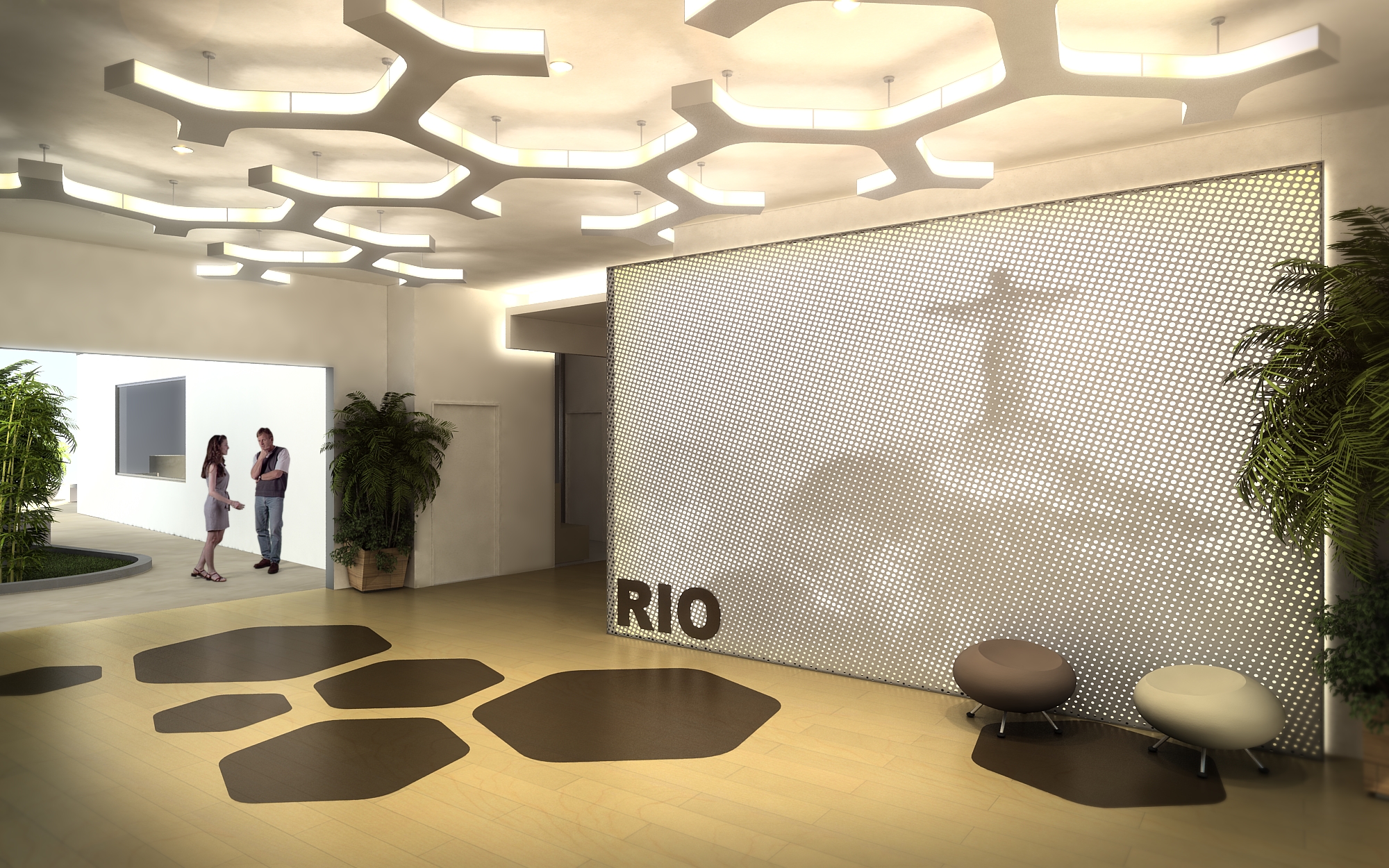
Common amenities are strategically located at podium and intermediate levels to encourage social interaction among residents. These shared spaces, combined with visual continuity toward the surrounding greenery, build a resort-like living atmosphere while maintaining the privacy expected in an urban residence.
The material palette emphasizes durability and low maintenance, essential in the saline and humid environment of Cancún. Reinforced concrete structure, high-performance glazing, and aluminum balcony railings provide robustness and longevity. The predominant white and light gray tones reflect solar radiation and enhance thermal comfort, while darker accents mark the voids of terraces and recessed volumes.
Daylight plays a central role in the design. Large openings and continuous balcony fronts capture natural light throughout the day, while vertical fins, overhangs, and balcony slabs control glare and heat gain. Nighttime illumination highlights the vertical blades and the rhythmic balcony edges, turning the complex into a recognizable reference point along the urban waterfront.
The landscape design draws from the native coastal vegetation of the Yucatán Peninsula, using palms, shrubs, and groundcovers adapted to the local climate and low water consumption. Planting is concentrated around the base, terraces, and communal areas, forming green buffers that filter noise and improve air quality. Permeable surfaces and controlled drainage help manage stormwater, mitigating runoff during heavy tropical rains.
Passive design strategies are fundamental to the project’s sustainability approach. Building orientation and façade shaping reduce solar exposure on critical faces, while continuous balconies and shading elements minimize cooling loads. Cross-ventilation is encouraged through unit layout and operable windows, reducing dependence on mechanical systems. High-reflectance finishes, efficient lighting, and the potential integration of solar technologies on roof surfaces further contribute to lower operational energy demand and long-term environmental performance.


Our offices are located in Barcelona, Cancún, Chicago and Santo Domingo, but thanks to technology we can do projects on all over the world.
Barcelona
Bac de Roda 136
08020, Barcelona
Spain
Madrid
Av. de Buendía 11
19005 Guadalajara (Madrid)
Spain
Chicago
373 Hazel Ave, Apt A1
60022, Glencoe, Illinois
United States