

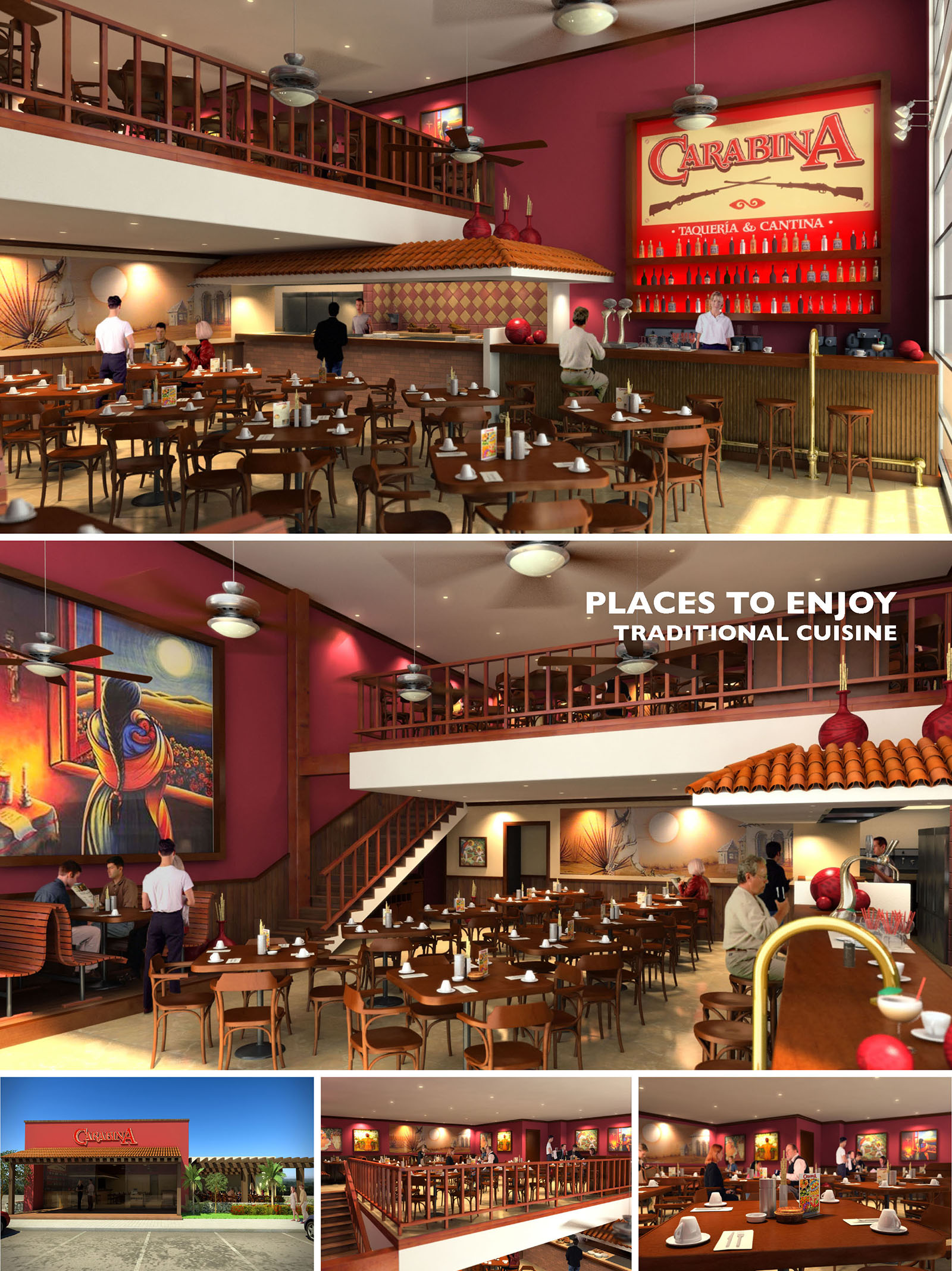
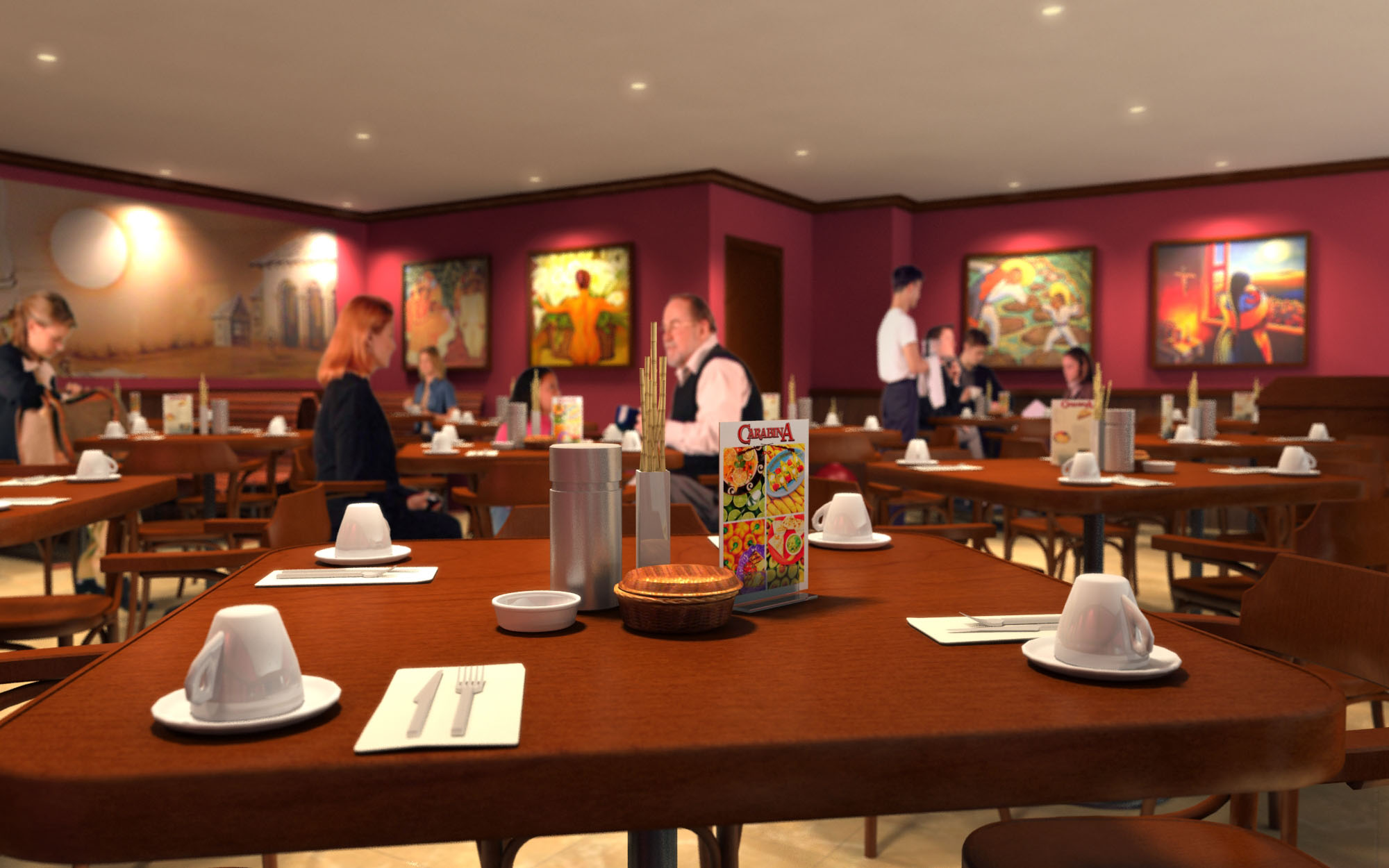
La Carabina is conceived as a contemporary taquería and cantina that celebrates traditional Mexican culture through a warm, festive spatial experience. The project combines the atmosphere of a neighborhood fonda with the efficiency of a modern casual-dining restaurant. Double-height volumes, bold color fields, and artisanal references create an environment that feels both familiar and iconic, suitable for replication in multiple locations across México.
The design strategy focuses on visibility and openness: the bar, grill and mezzanine are all visually connected to the main dining floor, reinforcing the idea of communal, shared enjoyment of food. Large murals and graphic elements become narrative devices that anchor the brand identity and transform the interior into a stage for traditional cuisine.
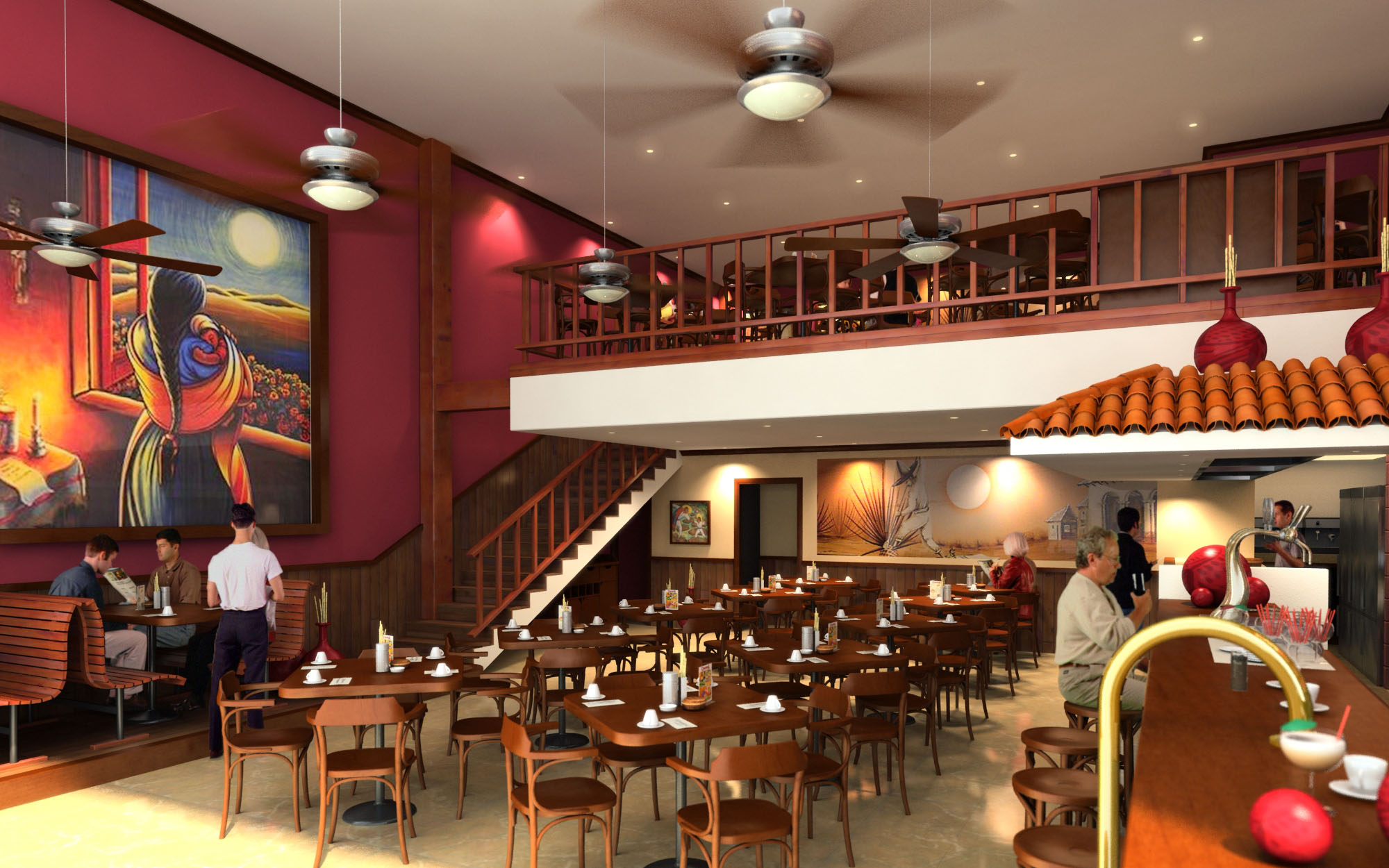
The restaurant is organized around a central double-height dining hall, with the primary seating distributed on the ground level and an open mezzanine that wraps along one side of the space. This configuration maximizes capacity while preserving generous visual connections between both levels. The mezzanine railing is intentionally transparent, using slender wooden balusters that maintain safety without obstructing sight lines.
Access to the mezzanine is provided by a straight wooden staircase placed at the side of the hall, allowing staff and guests to circulate without interfering with the main service routes. The bar and open kitchen are aligned along a longitudinal wall, clearly visible from almost every table. This ensures intuitive wayfinding for guests while facilitating efficient back-of-house operations and direct service to the main dining floor.
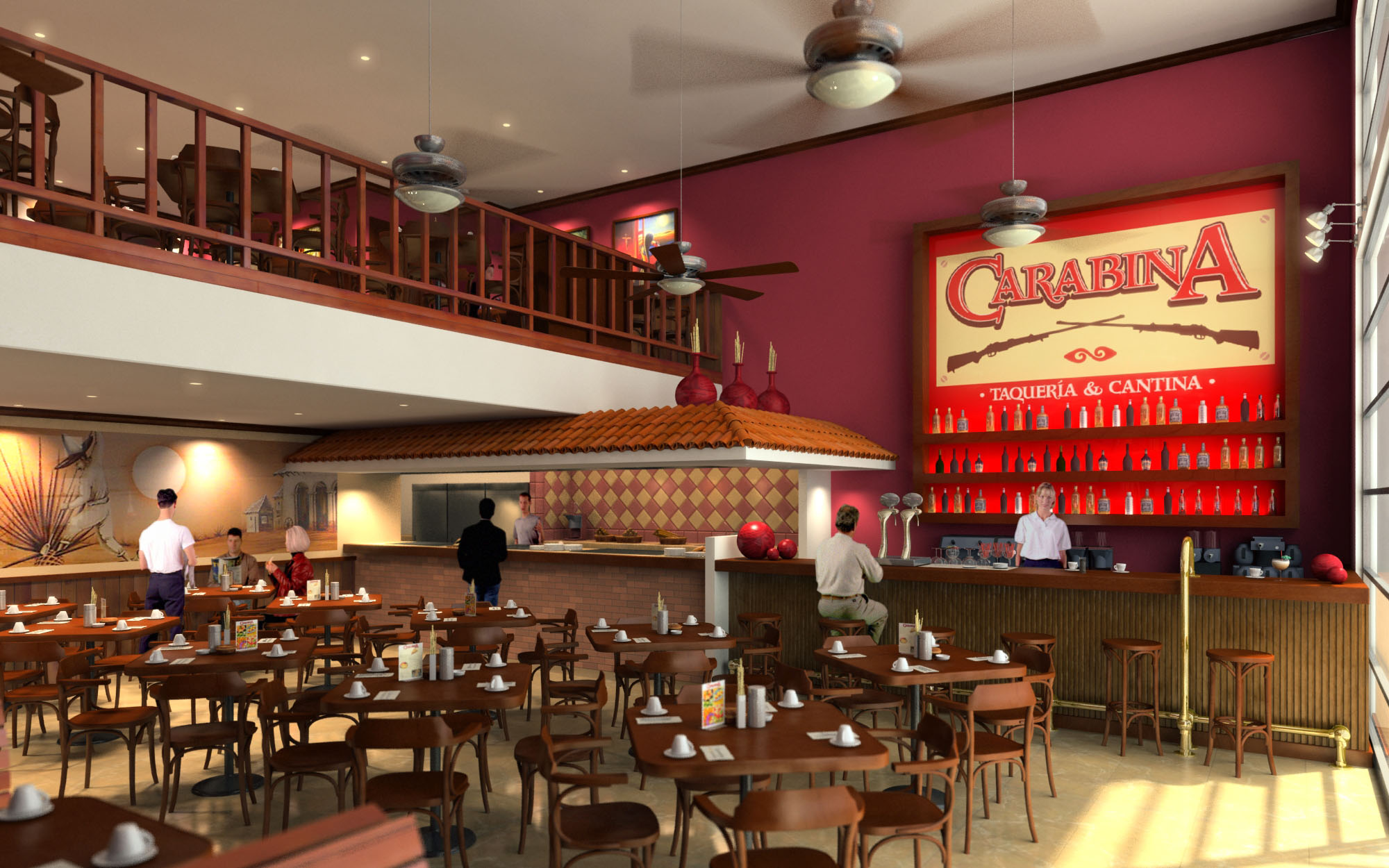
The material palette is anchored in warm timber tones, earthy tile finishes, and deep red walls. Wooden chairs, tables, railings and stair elements unify the different programmatic areas and evoke the atmosphere of traditional cantinas. The use of terracotta roof tiles over the kitchen volume functions as a strong visual motif, recalling vernacular Mexican architecture and visually “housing” the cooking area within the larger double-height space.
The color strategy combines saturated magentas and reds with neutral flooring and light ceilings. This contrast enhances luminosity while reinforcing the brand identity. Tiles in warm hues and geometric patterns enrich the bar and kitchen fronts, adding a tactile, handcrafted character. Decorative elements such as large red spheres and brass fixtures contribute subtle metallic accents that catch the light and animate the interior.
Ceiling-mounted pendants and fans are distributed rhythmically across the double-height volume, ensuring uniform ambient lighting and thermal comfort. The light temperature is kept warm to emphasize the natural tones of wood and tile, while accent lighting highlights the bar back, signage, and mural art. Indirect lighting behind bottle displays and under the bar counter adds depth and a cantina-like glow in the evening hours.
The large-scale artwork and graphics are deliberately lit to operate as visual focal points that guide the eye across the space. This creates an immersive, cinematic atmosphere without resorting to overly complex lighting systems, which supports ease of maintenance across multiple locations.
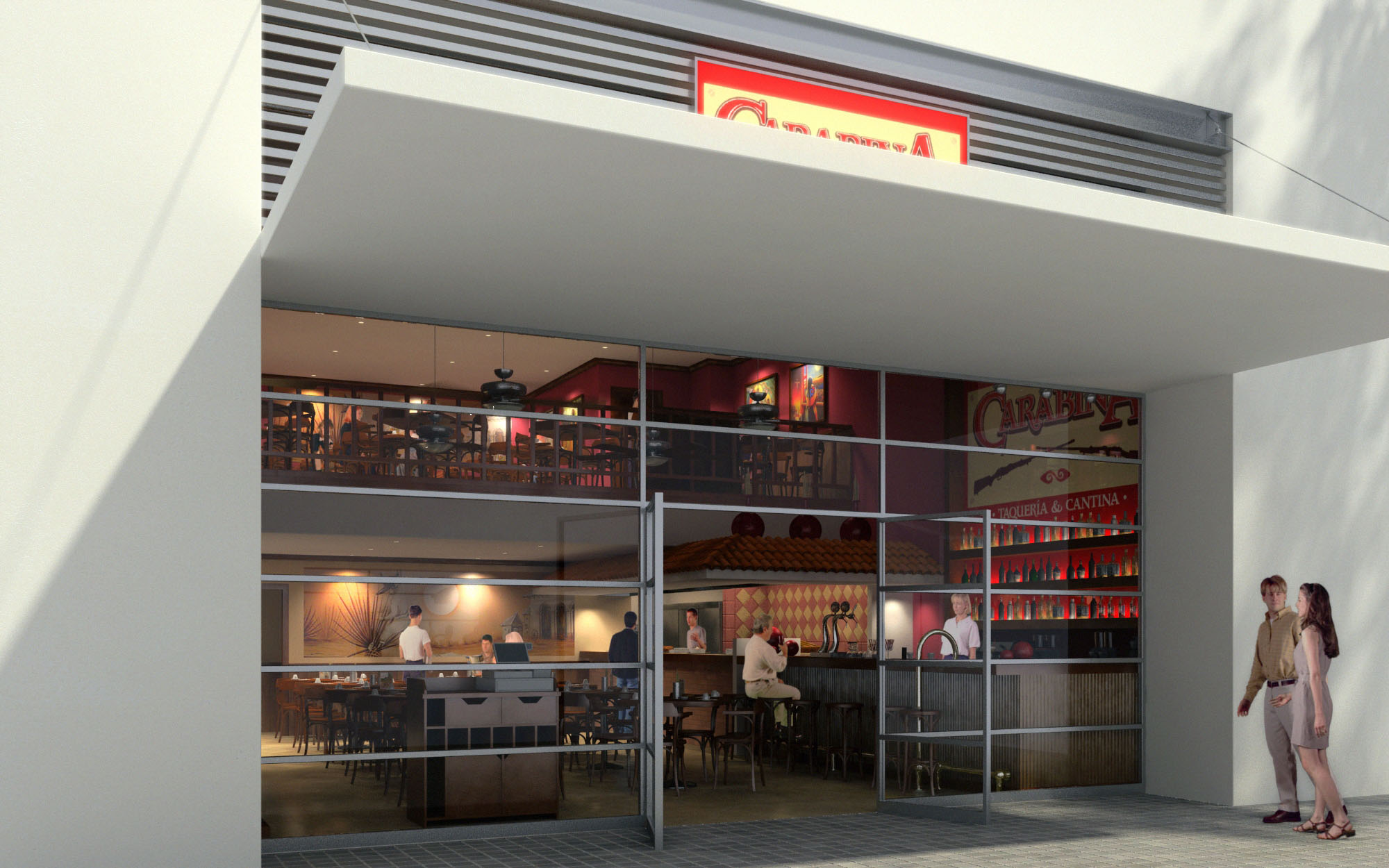
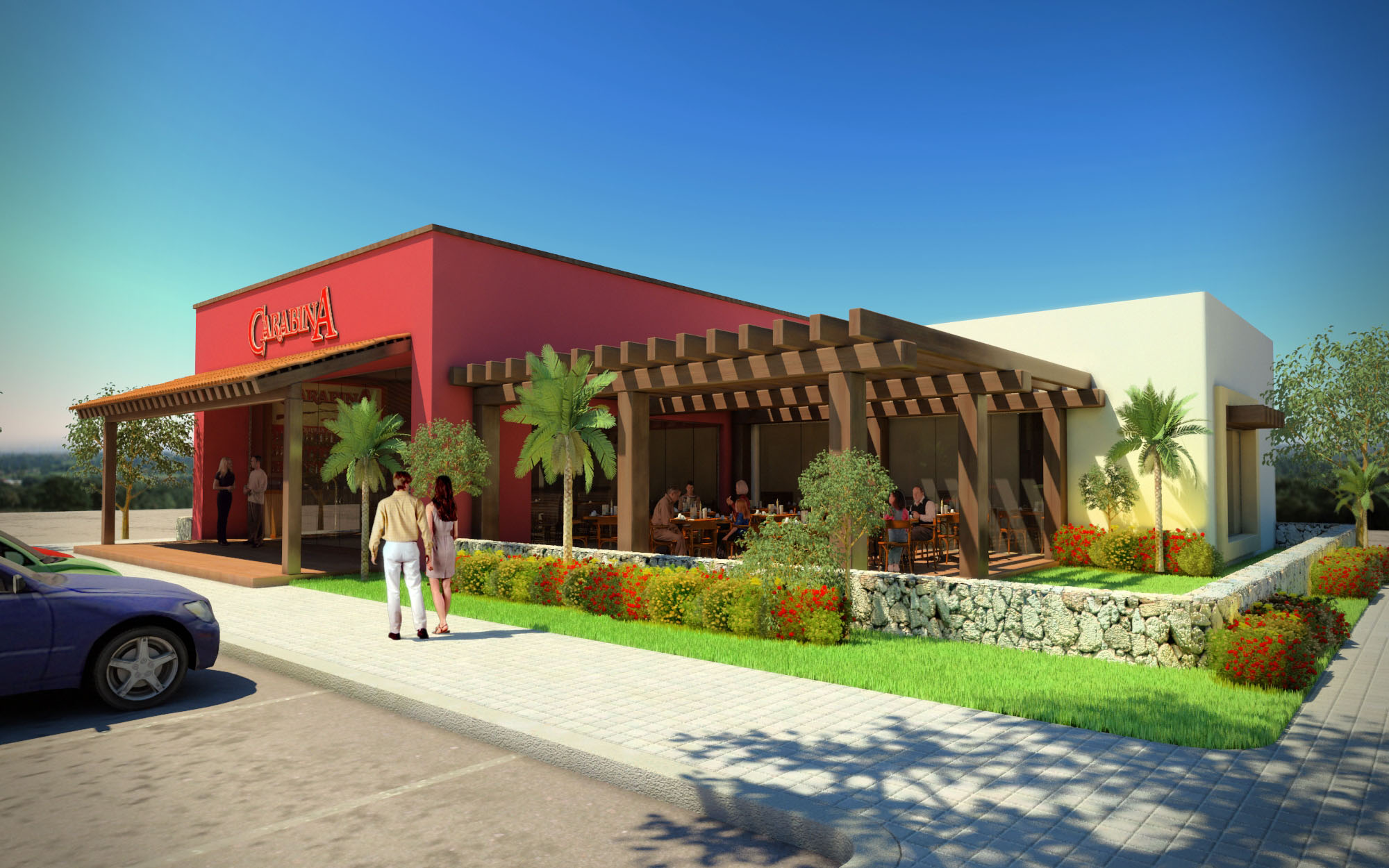
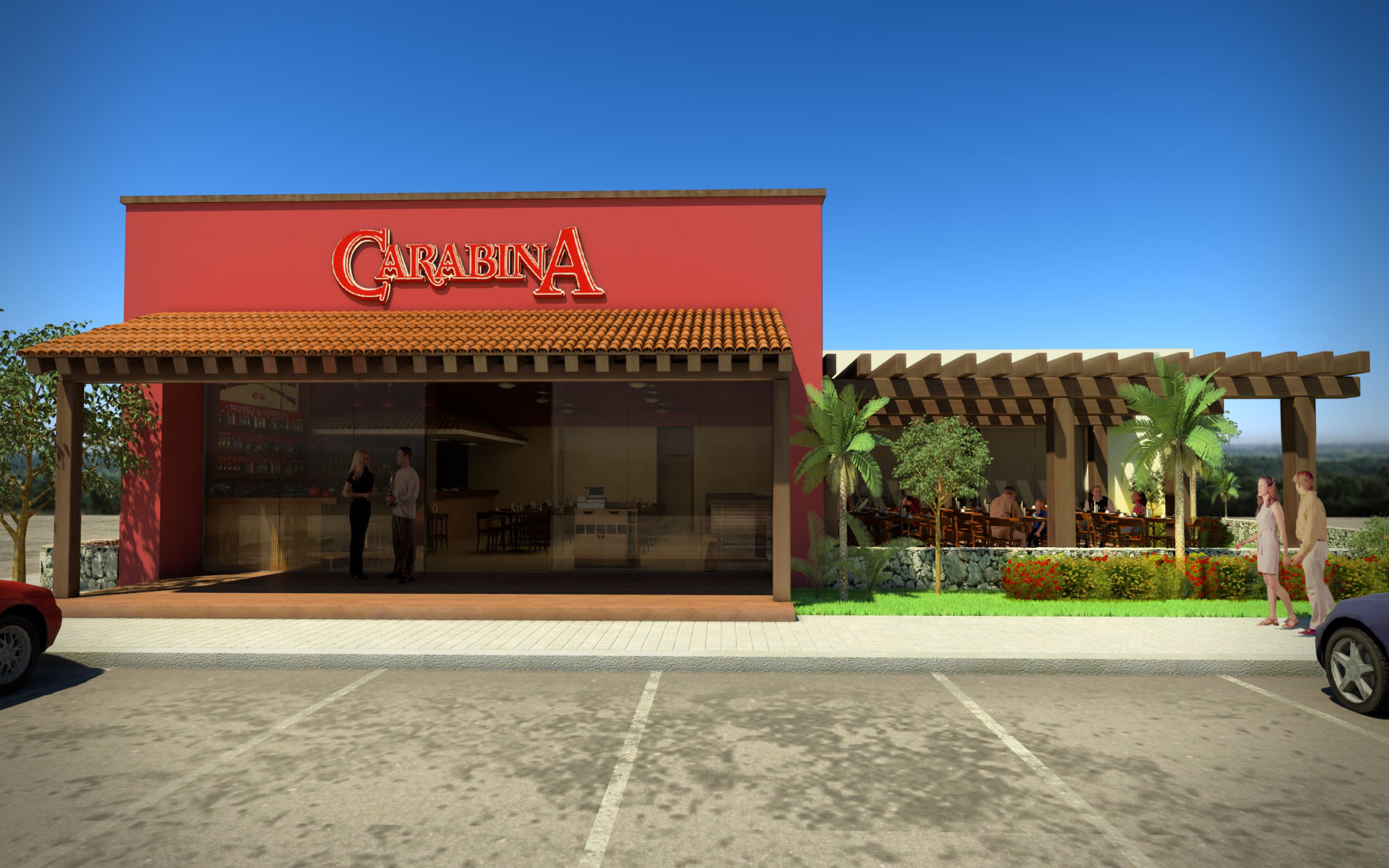
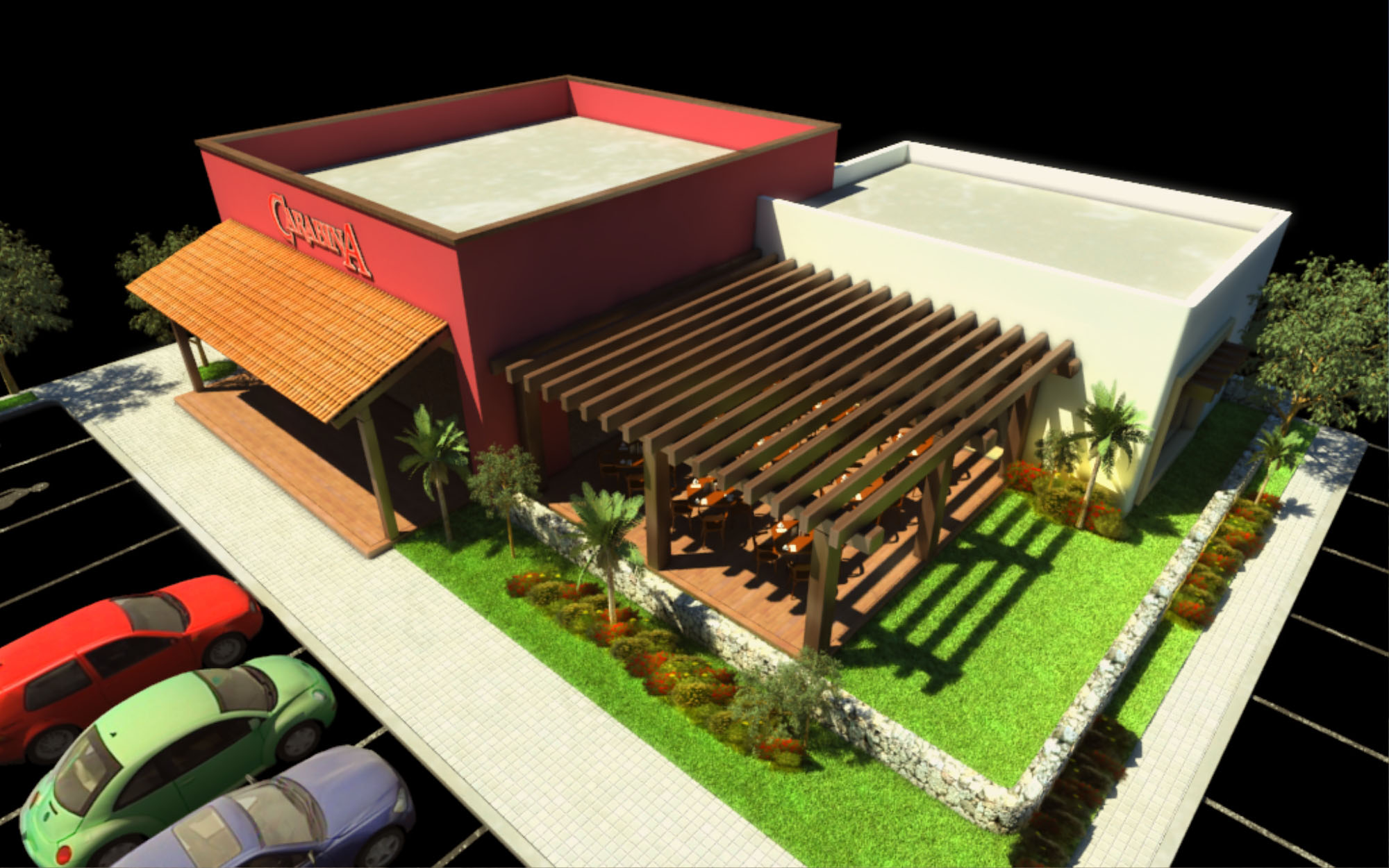
The exterior adopts a simple, bold façade with a dominant red volume and a clearly legible logo, ensuring strong recognition along vehicular corridors typical of suburban Mexican contexts. A recessed entrance porch offers shade and transition between exterior parking and interior dining, framed by a pergola structure and landscaping that soften the encounter with the building.
Glazing at the front allows visual continuity between street and interior activity, inviting passersby in and reinforcing the brand’s open, informal character. The façade’s restrained geometry facilitates adaptation to different lot sizes and orientations in the chain’s multiple locations.
Sustainability is approached through both passive design and robust material selection. The predominance of wood and ceramic tile responds well to Mexico’s diverse climates, offering durability and thermal stability. Light-colored flooring and ceilings enhance natural and artificial light, reducing the need for high-intensity fixtures. Ceiling fans support cross-ventilation strategies and allow moderate use of air conditioning, lowering energy consumption.
The modular furniture layout permits flexible occupancy and long-term adaptability, minimizing waste when reconfiguring the dining room. Finishes are chosen for their ease of cleaning and longevity in high-traffic hospitality environments, contributing to a reduced replacement cycle. The consistent design language across locations allows shared procurement of materials and fixtures, optimizing resources and supporting an efficient, scalable, and environmentally conscious restaurant model.
LIST OF PROJECTS EXPERIENCE
Designed, Executed and/or Built Projects
MEXICO
1. Carabina - Nuevo Vallarta
2. Carabina - Queretaro - La Estancia

La Carabina is conceived as a contemporary taquería and cantina that celebrates traditional Mexican culture through a warm, festive spatial experience. The project combines the atmosphere of a neighborhood fonda with the efficiency of a modern casual-dining restaurant. Double-height volumes, bold color fields, and artisanal references create an environment that feels both familiar and iconic, suitable for replication in multiple locations across México.
The design strategy focuses on visibility and openness: the bar, grill and mezzanine are all visually connected to the main dining floor, reinforcing the idea of communal, shared enjoyment of food. Large murals and graphic elements become narrative devices that anchor the brand identity and transform the interior into a stage for traditional cuisine.
The restaurant is organized around a central double-height dining hall, with the primary seating distributed on the ground level and an open mezzanine that wraps along one side of the space. This configuration maximizes capacity while preserving generous visual connections between both levels. The mezzanine railing is intentionally transparent, using slender wooden balusters that maintain safety without obstructing sight lines.
Access to the mezzanine is provided by a straight wooden staircase placed at the side of the hall, allowing staff and guests to circulate without interfering with the main service routes. The bar and open kitchen are aligned along a longitudinal wall, clearly visible from almost every table. This ensures intuitive wayfinding for guests while facilitating efficient back-of-house operations and direct service to the main dining floor.
The material palette is anchored in warm timber tones, earthy tile finishes, and deep red walls. Wooden chairs, tables, railings and stair elements unify the different programmatic areas and evoke the atmosphere of traditional cantinas. The use of terracotta roof tiles over the kitchen volume functions as a strong visual motif, recalling vernacular Mexican architecture and visually “housing” the cooking area within the larger double-height space.
The color strategy combines saturated magentas and reds with neutral flooring and light ceilings. This contrast enhances luminosity while reinforcing the brand identity. Tiles in warm hues and geometric patterns enrich the bar and kitchen fronts, adding a tactile, handcrafted character. Decorative elements such as large red spheres and brass fixtures contribute subtle metallic accents that catch the light and animate the interior.
Ceiling-mounted pendants and fans are distributed rhythmically across the double-height volume, ensuring uniform ambient lighting and thermal comfort. The light temperature is kept warm to emphasize the natural tones of wood and tile, while accent lighting highlights the bar back, signage, and mural art. Indirect lighting behind bottle displays and under the bar counter adds depth and a cantina-like glow in the evening hours.
The large-scale artwork and graphics are deliberately lit to operate as visual focal points that guide the eye across the space. This creates an immersive, cinematic atmosphere without resorting to overly complex lighting systems, which supports ease of maintenance across multiple locations.
The exterior adopts a simple, bold façade with a dominant red volume and a clearly legible logo, ensuring strong recognition along vehicular corridors typical of suburban Mexican contexts. A recessed entrance porch offers shade and transition between exterior parking and interior dining, framed by a pergola structure and landscaping that soften the encounter with the building.
Glazing at the front allows visual continuity between street and interior activity, inviting passersby in and reinforcing the brand’s open, informal character. The façade’s restrained geometry facilitates adaptation to different lot sizes and orientations in the chain’s multiple locations.
Sustainability is approached through both passive design and robust material selection. The predominance of wood and ceramic tile responds well to Mexico’s diverse climates, offering durability and thermal stability. Light-colored flooring and ceilings enhance natural and artificial light, reducing the need for high-intensity fixtures. Ceiling fans support cross-ventilation strategies and allow moderate use of air conditioning, lowering energy consumption.
The modular furniture layout permits flexible occupancy and long-term adaptability, minimizing waste when reconfiguring the dining room. Finishes are chosen for their ease of cleaning and longevity in high-traffic hospitality environments, contributing to a reduced replacement cycle. The consistent design language across locations allows shared procurement of materials and fixtures, optimizing resources and supporting an efficient, scalable, and environmentally conscious restaurant model.


Our offices are located in Barcelona, Cancún, Chicago and Santo Domingo, but thanks to technology we can do projects on all over the world.
Barcelona
Bac de Roda 136
08020, Barcelona
Spain
Madrid
Av. de Buendía 11
19005 Guadalajara (Madrid)
Spain
Chicago
373 Hazel Ave, Apt A1
60022, Glencoe, Illinois
United States