

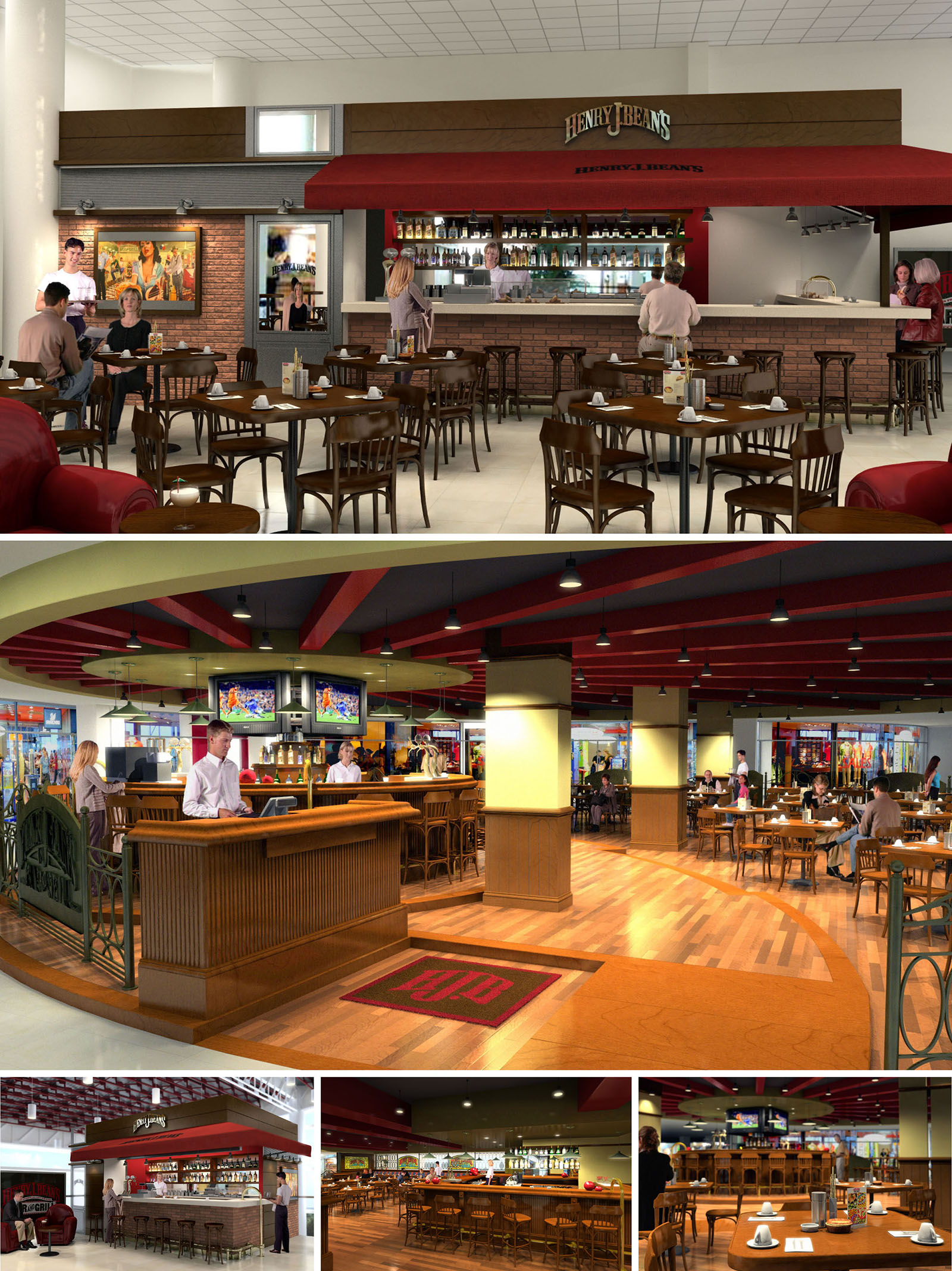
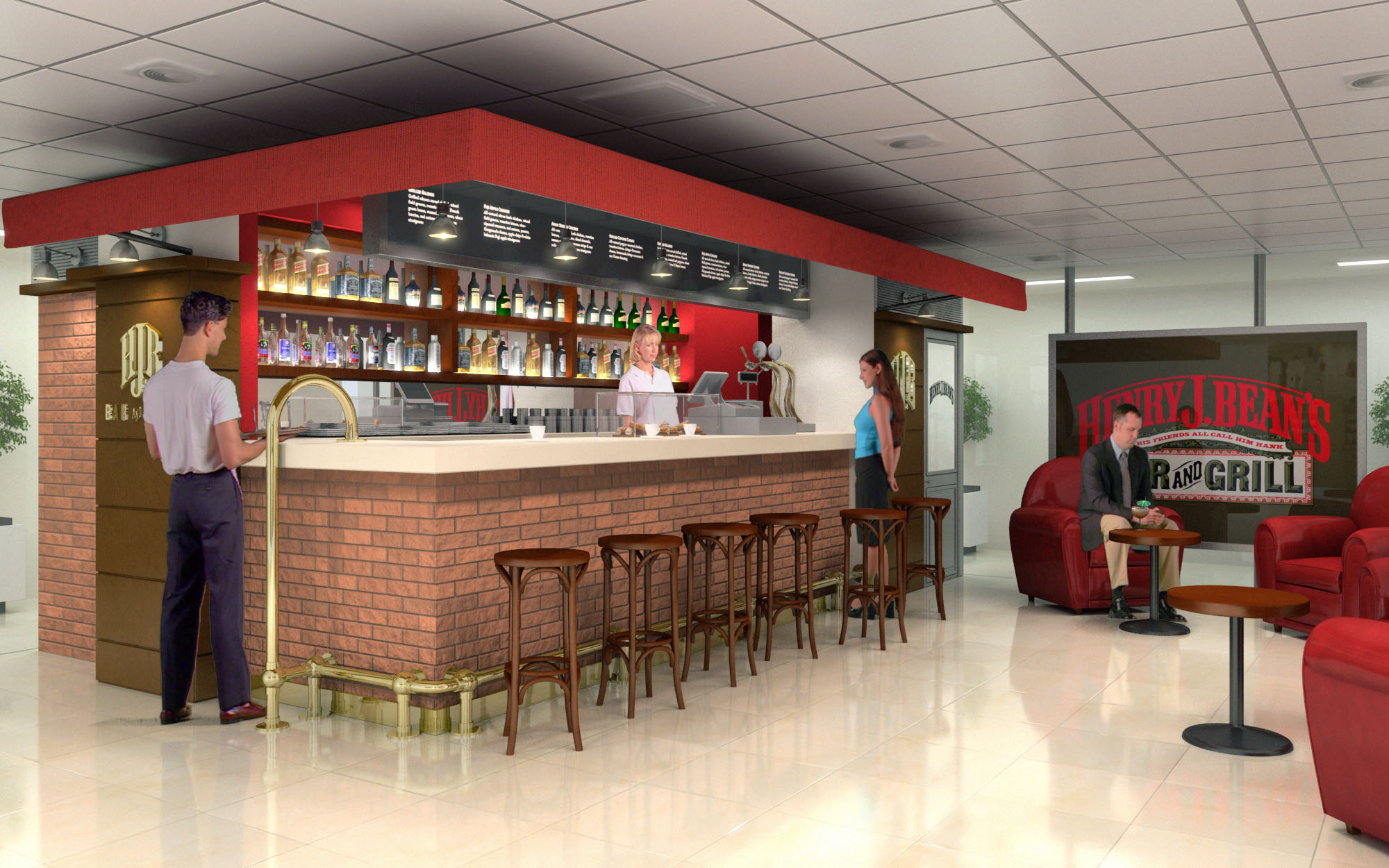
The HJB restaurants are conceived as contemporary interpretations of the classic American bar and grill, adapted to diverse commercial locations in México. The design strategy focuses on creating a recognizable brand atmosphere that can be replicated across multiple sites while allowing for subtle local variations. Warmth, informality and visual permeability guide the spatial narrative, inviting visitors to transition naturally from circulation areas into the dining environment.
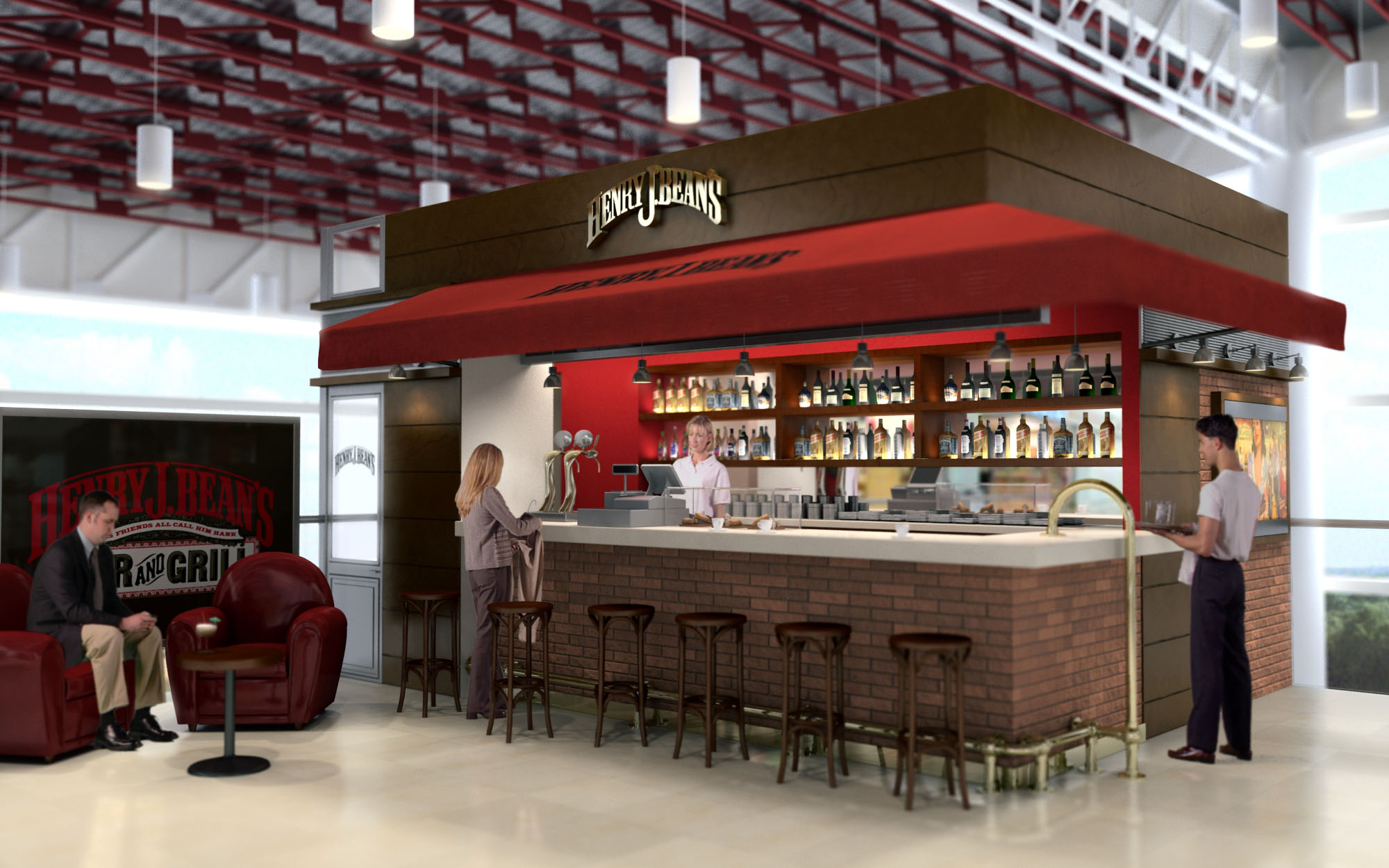
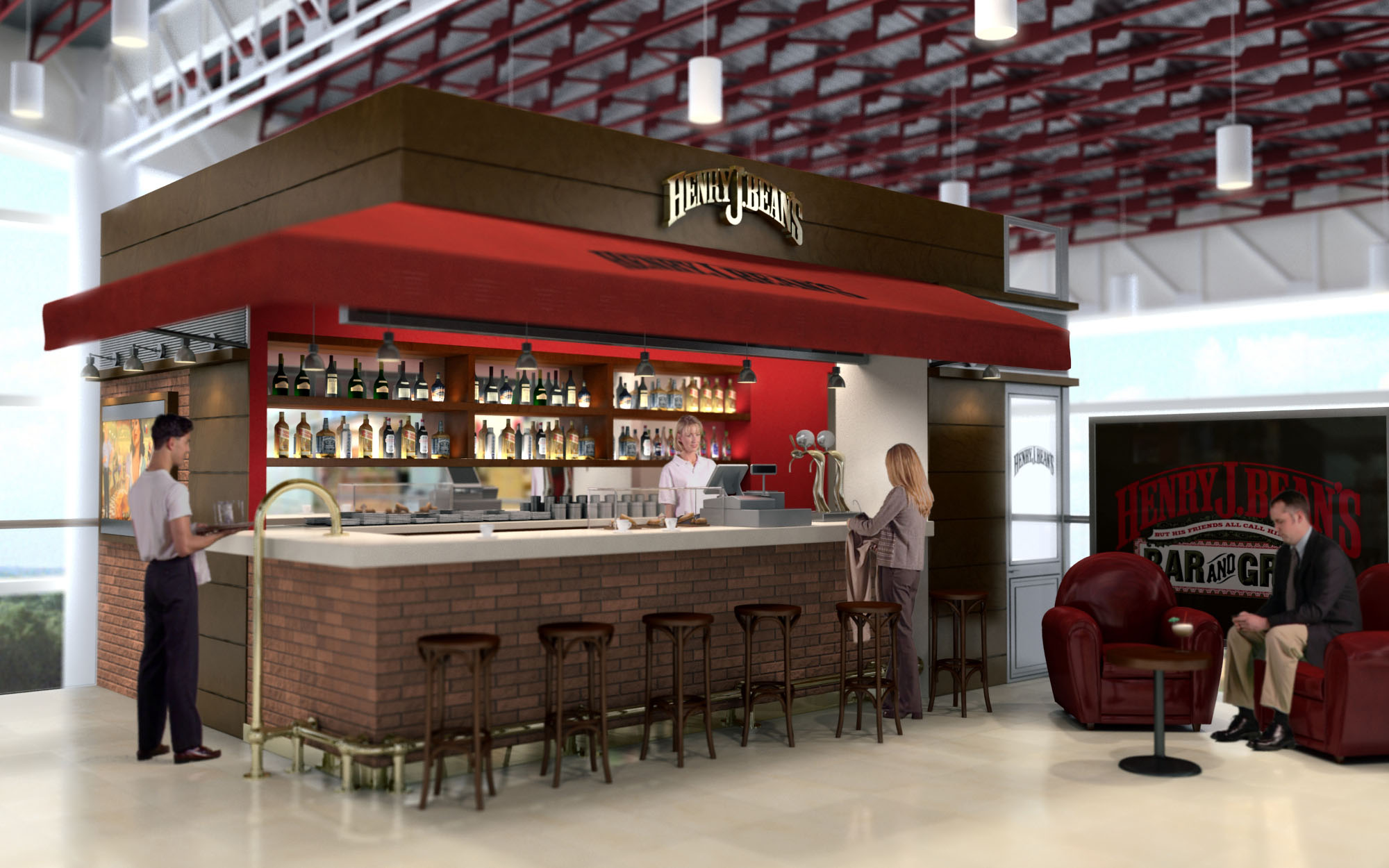
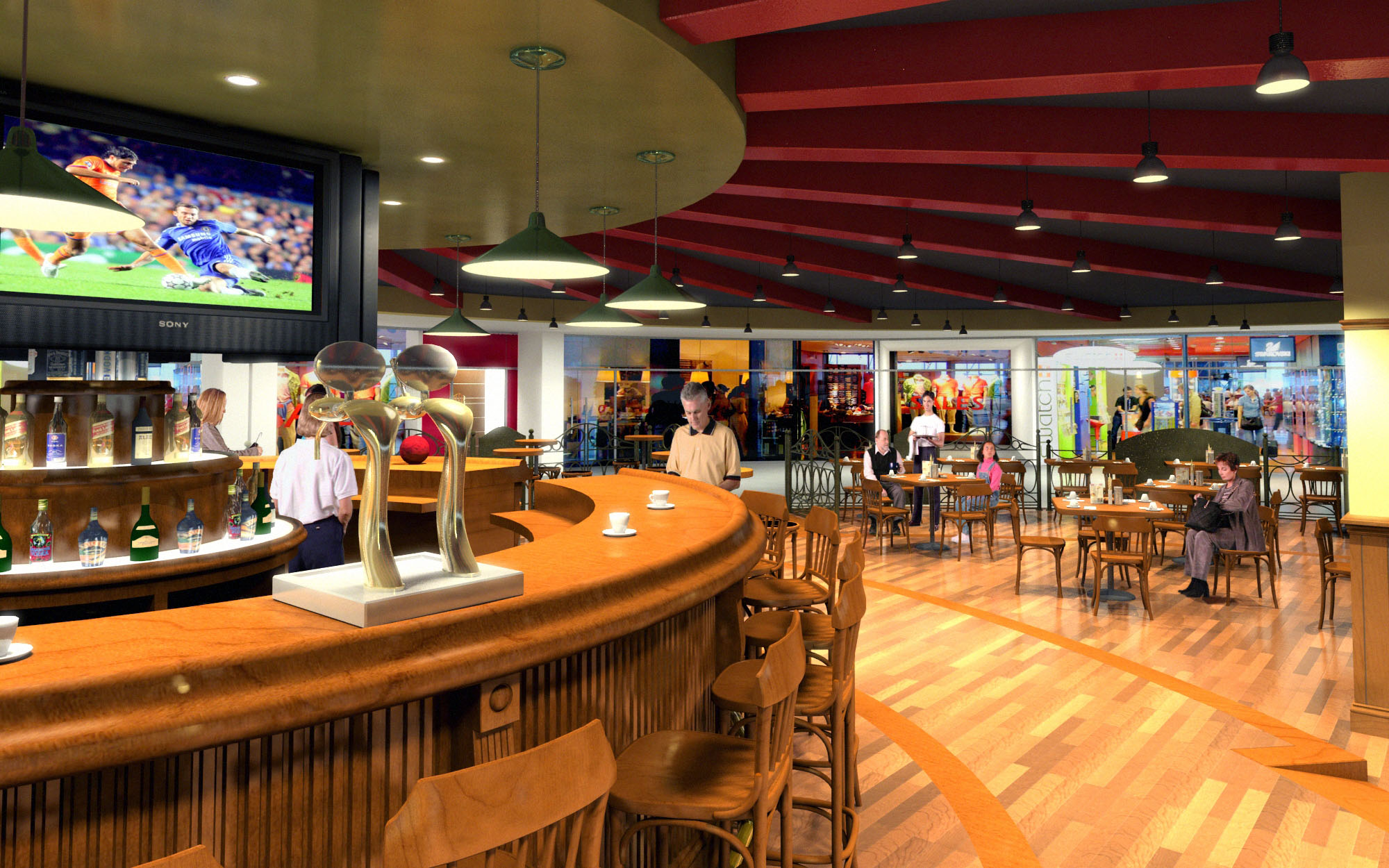
The concept blends a traditional pub vocabulary—brick, wood, bar counters and vintage imagery—with clean, modern lines and generous lighting. This balance communicates a casual yet carefully curated ambience, suitable for both daytime family use and evening social life. The bar becomes the identity anchor of each venue, always visually emphasized as a central island or façade element.
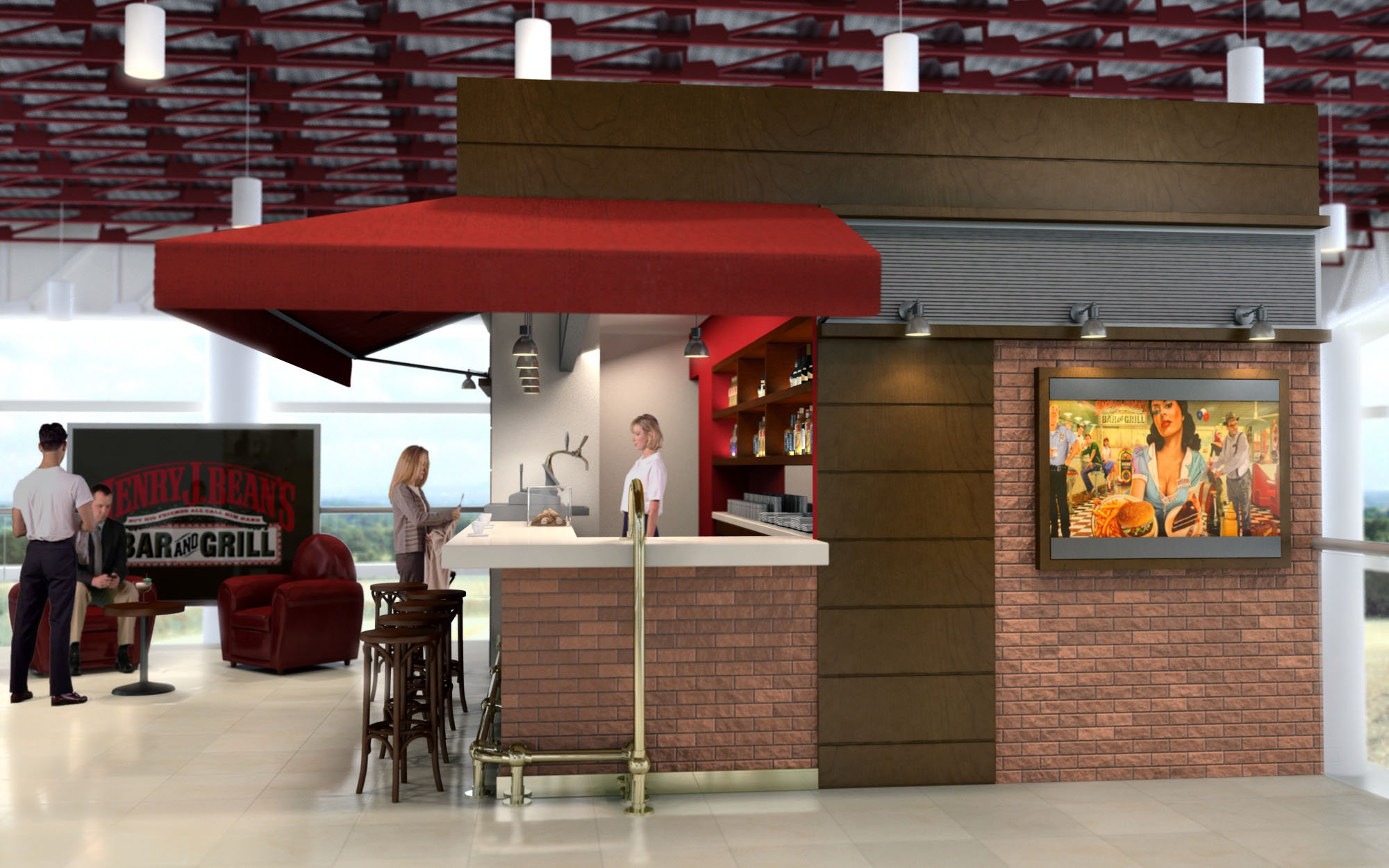
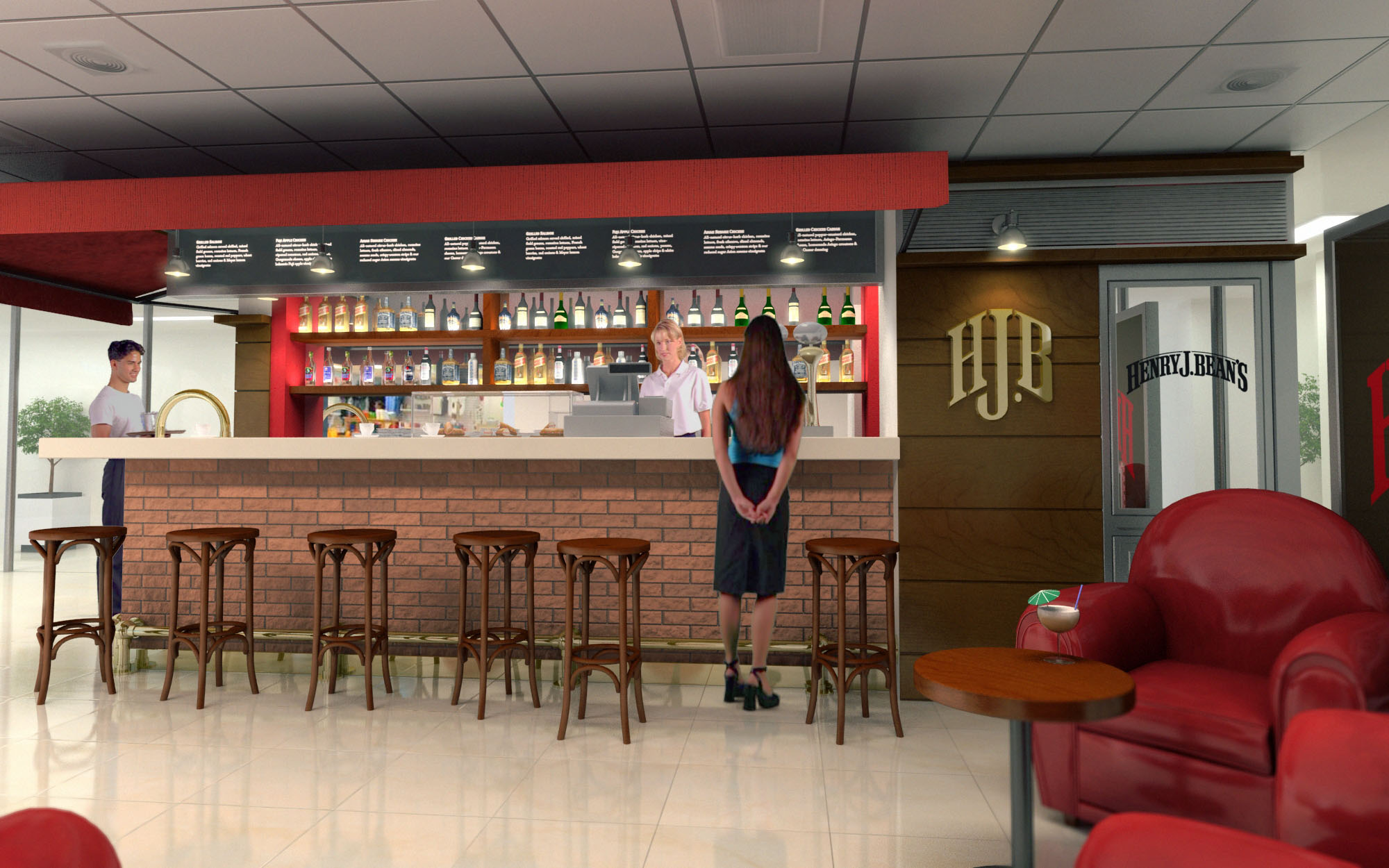
The layouts are open-plan, prioritizing clear visual axes between mall corridors, bar counter and main seating areas. In some locations the bar works as a linear counter against a brick backdrop; in others it becomes a central island around which circulation flows. This island strategy allows guests to access the bar from multiple directions and creates several micro-ambiences within a single continuous space.
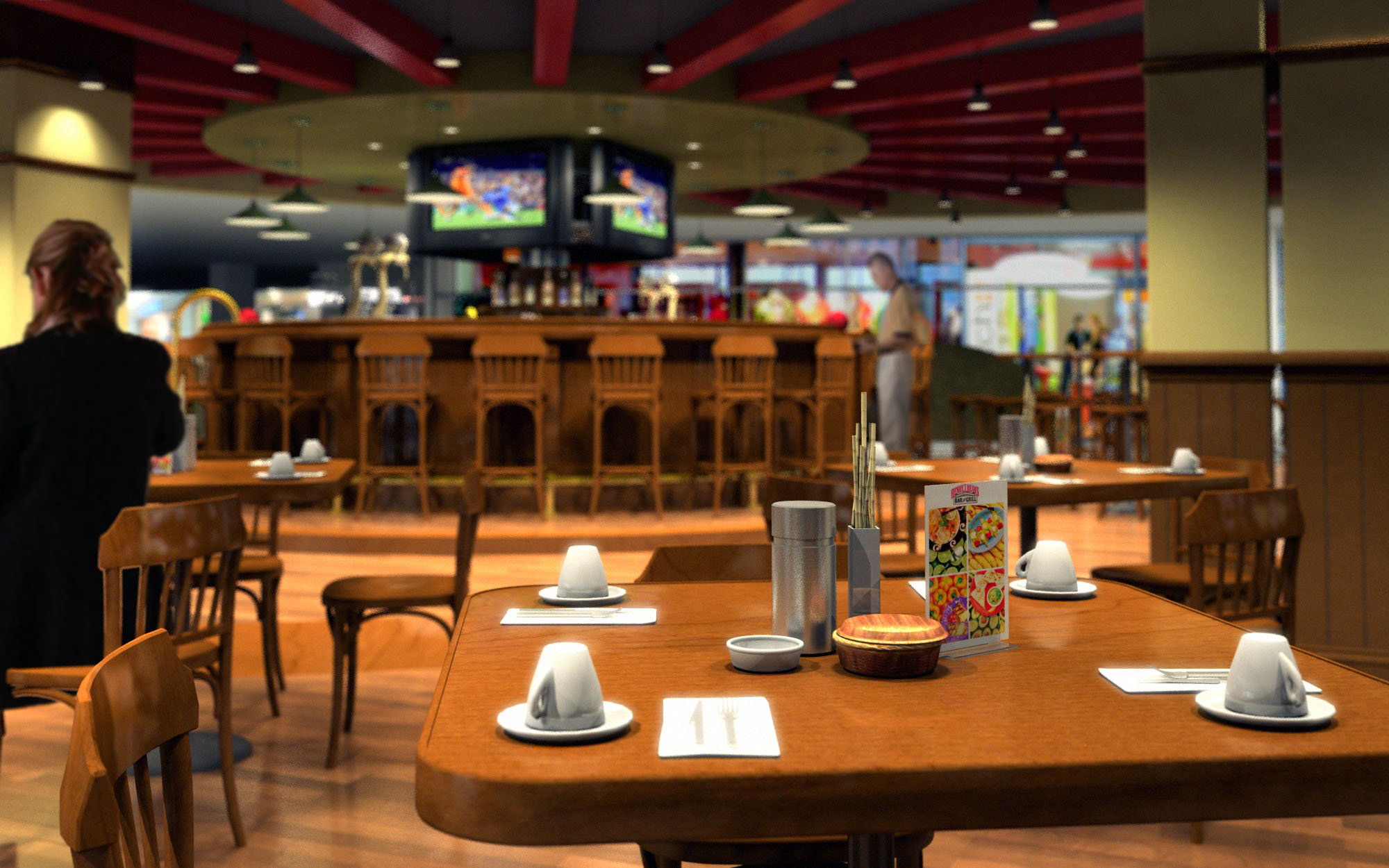
Dining zones are articulated with different densities of tables and variations in flooring patterns. Perimeter seating offers more intimate arrangements, while central areas are configured for flexibility and quick turnover. The alignment of furniture maintains direct views to television screens and the bar, reinforcing the sports-bar character without fragmenting the space with partitions.
Material selection prioritizes a sense of warmth and longevity. Wood is the main protagonist, used in solid and veneer applications for bar fronts, chair structures and tabletops. Its natural tone is contrasted with brick cladding on vertical surfaces, which evokes a classic bistro atmosphere and visually grounds the bar volume. Neutral ceramic floors are combined with wood or wood-effect inlays to define functional areas such as the bar perimeter and main circulation paths.
Metallic elements appear in railings, shelving and bar equipment, providing subtle industrial accents that enhance durability. Upholstered pieces in leather or leather-like materials add comfort while supporting a sophisticated yet robust image suitable for high-traffic environments. The palette is intentionally coherent across all venues to strengthen brand recognition.
The chromatic concept is built around warm browns, creams and beiges, complemented by a distinctive deep red associated with the HJB identity. This red appears in ceiling beams, awnings, signage and carpets, operating as a continuous visual thread between the different restaurants. The contrast between red details and neutral envelopes guides attention to key brand elements such as logos and bar counters.
Artwork and graphic panels, often with vintage or sports-inspired imagery, introduce narrative layers without overloading the architecture. These elements are positioned strategically on boundary walls facing circulation corridors, acting as visual attractors that announce the atmosphere of the interior.
The lighting design combines uniform ambient illumination with focused accent lighting on tables and bar surfaces. Ceiling-mounted downlights highlight the rhythm of structural beams and reinforce the linear geometry of the space. Over the back bar, more intense lighting showcases bottles and glassware, turning the bar into a luminous focal point.
Television screens are framed within darker ceiling areas to minimize glare and ensure comfortable visibility. The general brightness level is calibrated so that the restaurants feel open and inviting during the day, while dimmable systems enable a more intimate, evening-oriented ambience without modifying the physical layout.
Sustainability is addressed through both material selection and operational strategies appropriate for multi-site deployment. Preference is given to durable materials that reduce replacement frequency, such as high-resistance ceramics, engineered wood floors and robust upholstery. Where feasible, wood components can be specified from certified sources, and brick or masonry claddings are designed as thin veneers to reduce material volume.
The open-plan configuration optimizes natural visibility from adjacent mall areas, decreasing the need for internal signage and additional lighting to attract customers. Lighting fixtures are planned to be compatible with energy-efficient lamps and control systems, allowing flexible scenarios with reduced consumption. Standardized details for furniture, bars and finishes streamline fabrication, minimize waste and facilitate maintenance, ensuring that each HJB location maintains consistent quality and performance over time.
LIST OF PROJECTS EXPERIENCE
Designed, Executed and/or Built Projects
MEXICO
1. HJB - Acapulco - L15
2. HJB - Culiacan - L00
3. HJB - Guadalajara - N1 Internacional
4. HJB - Guadalajara - N2 Nacional
5. HJB - Mazatlán - L00
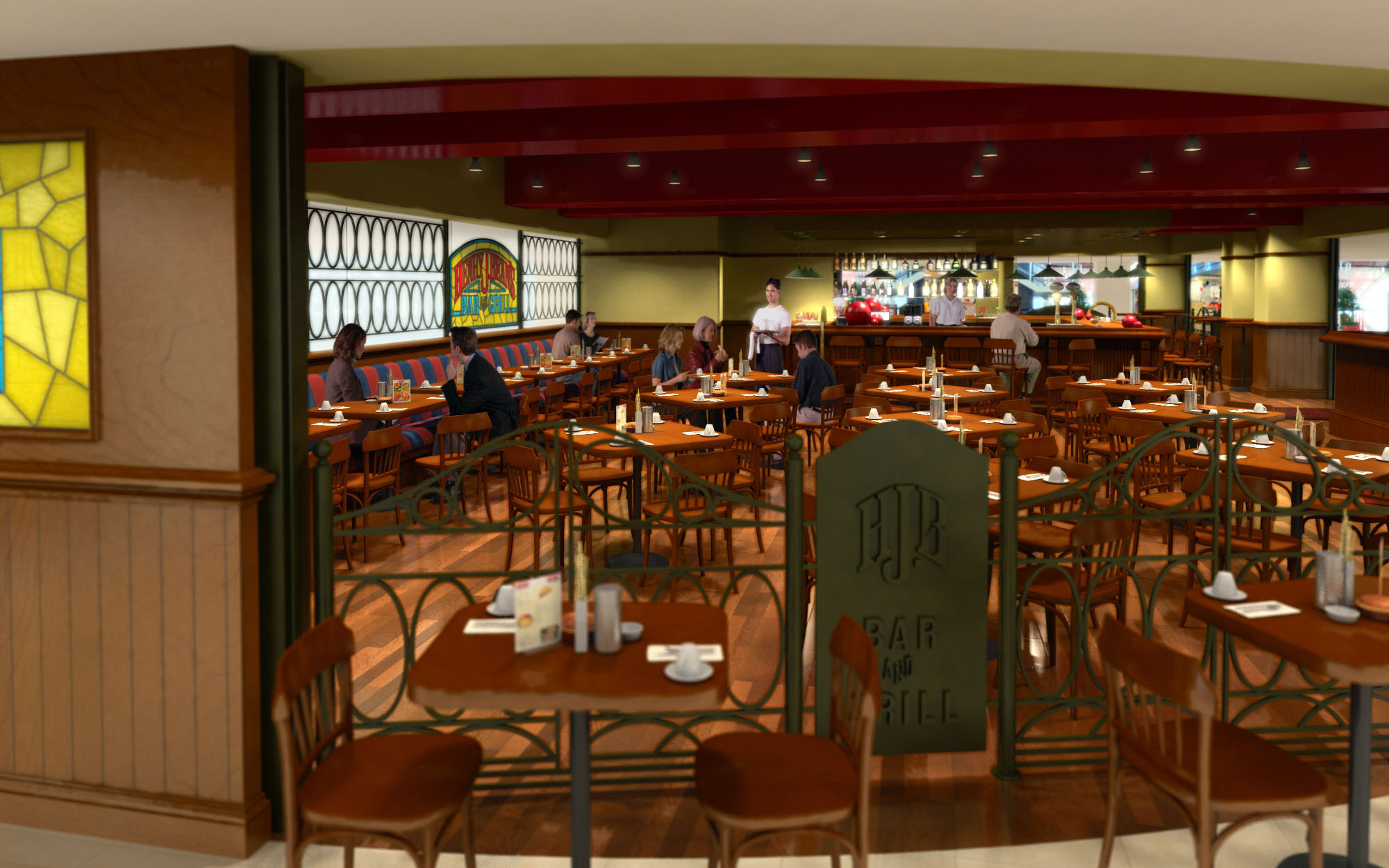
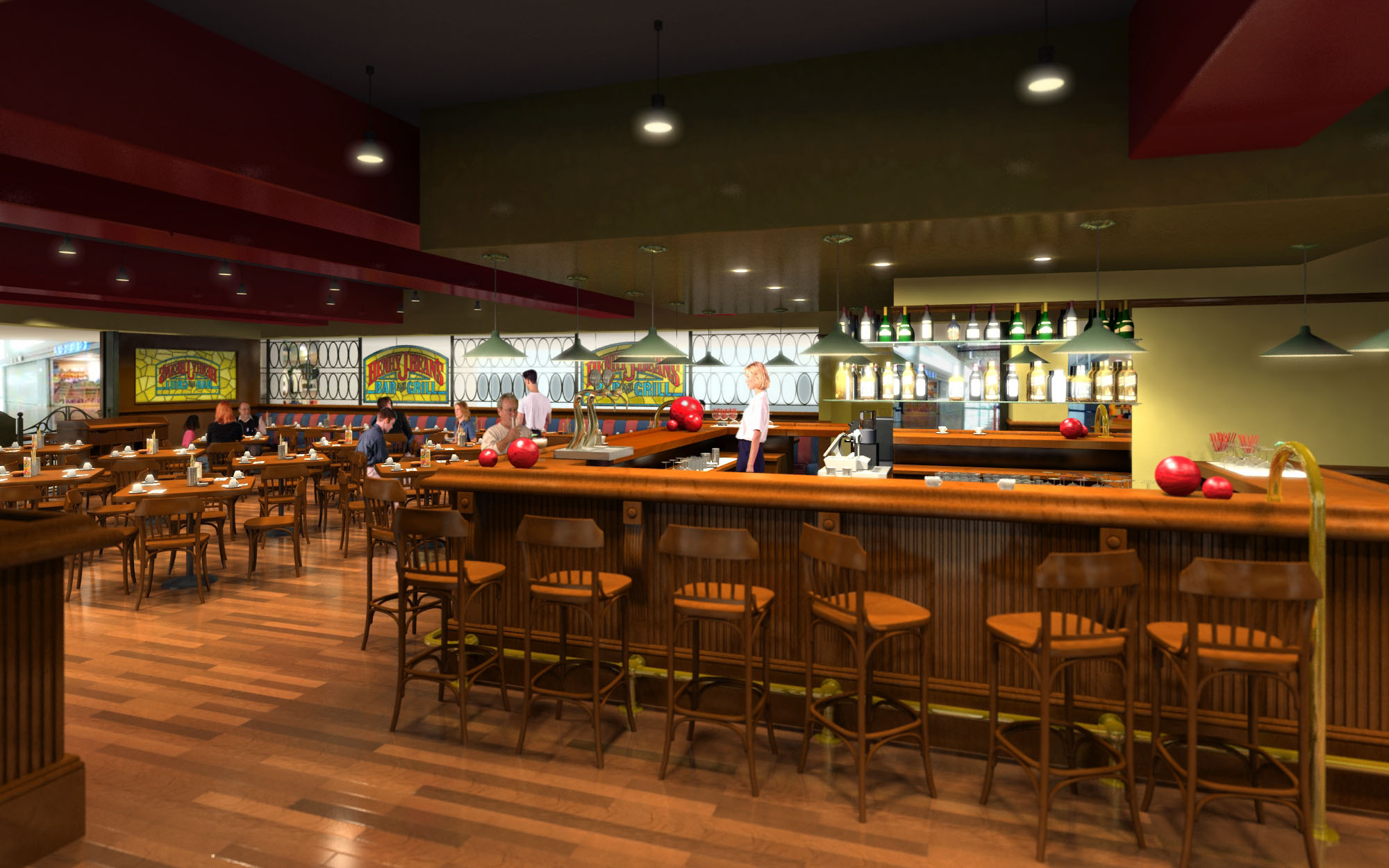
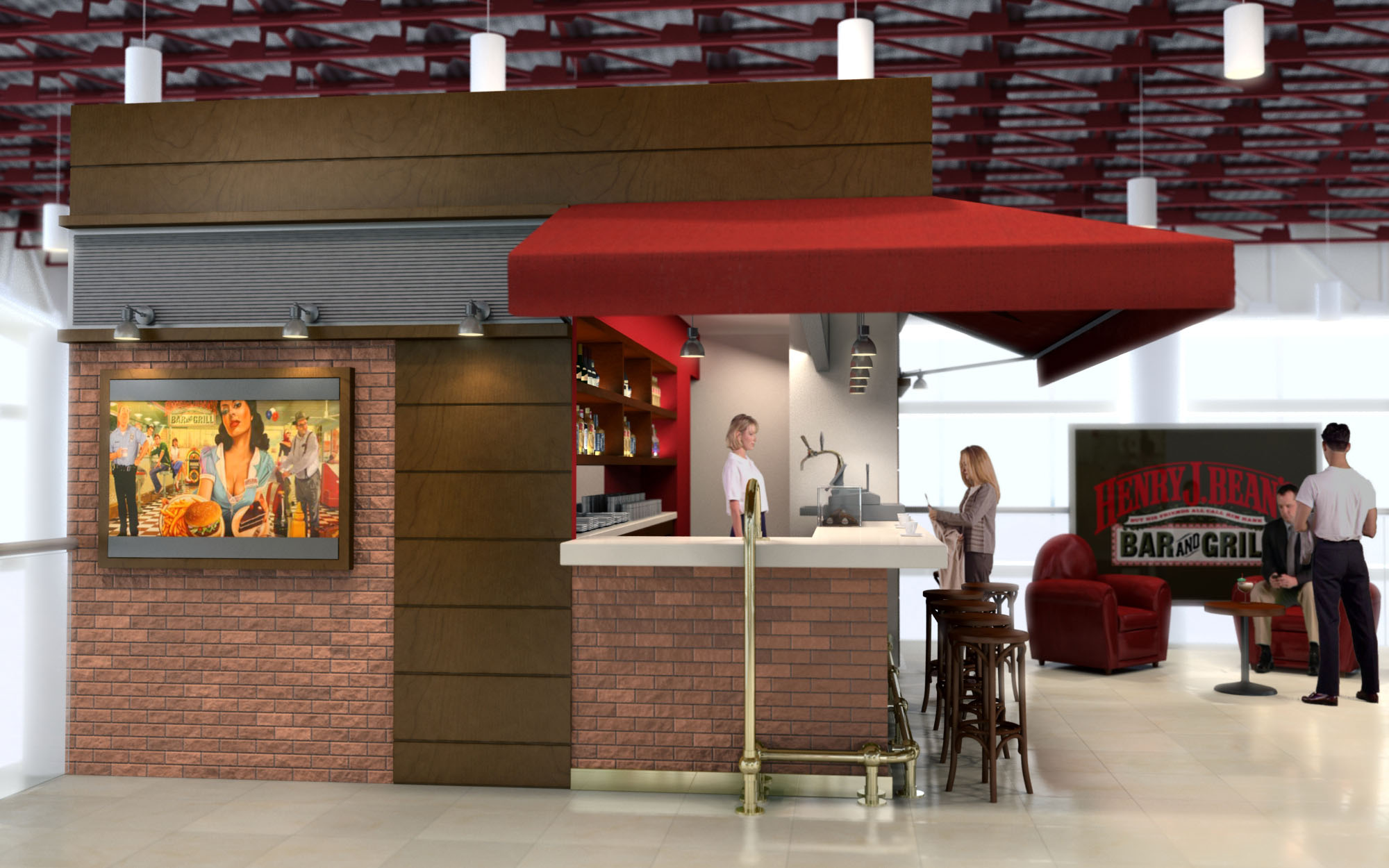
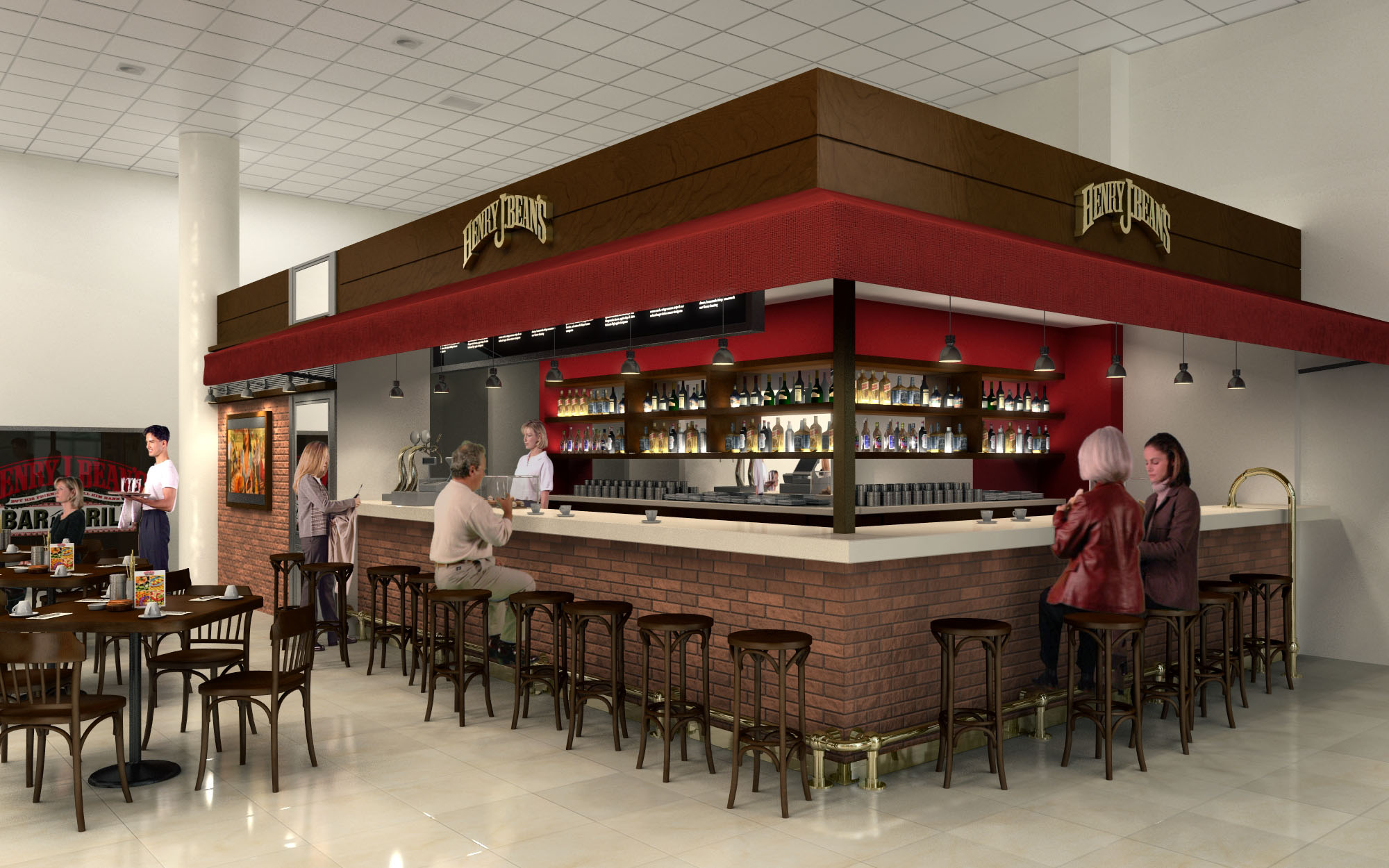
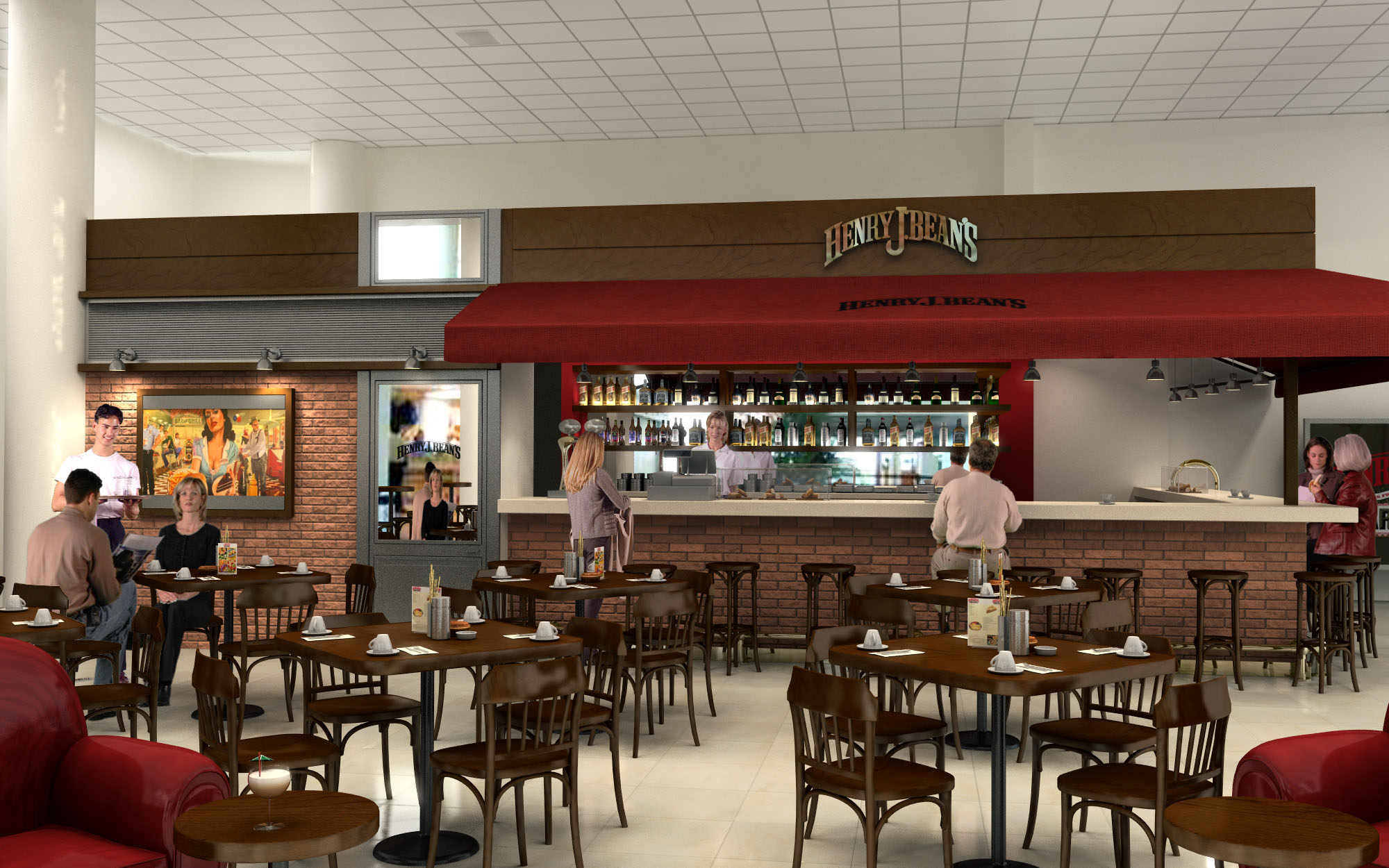
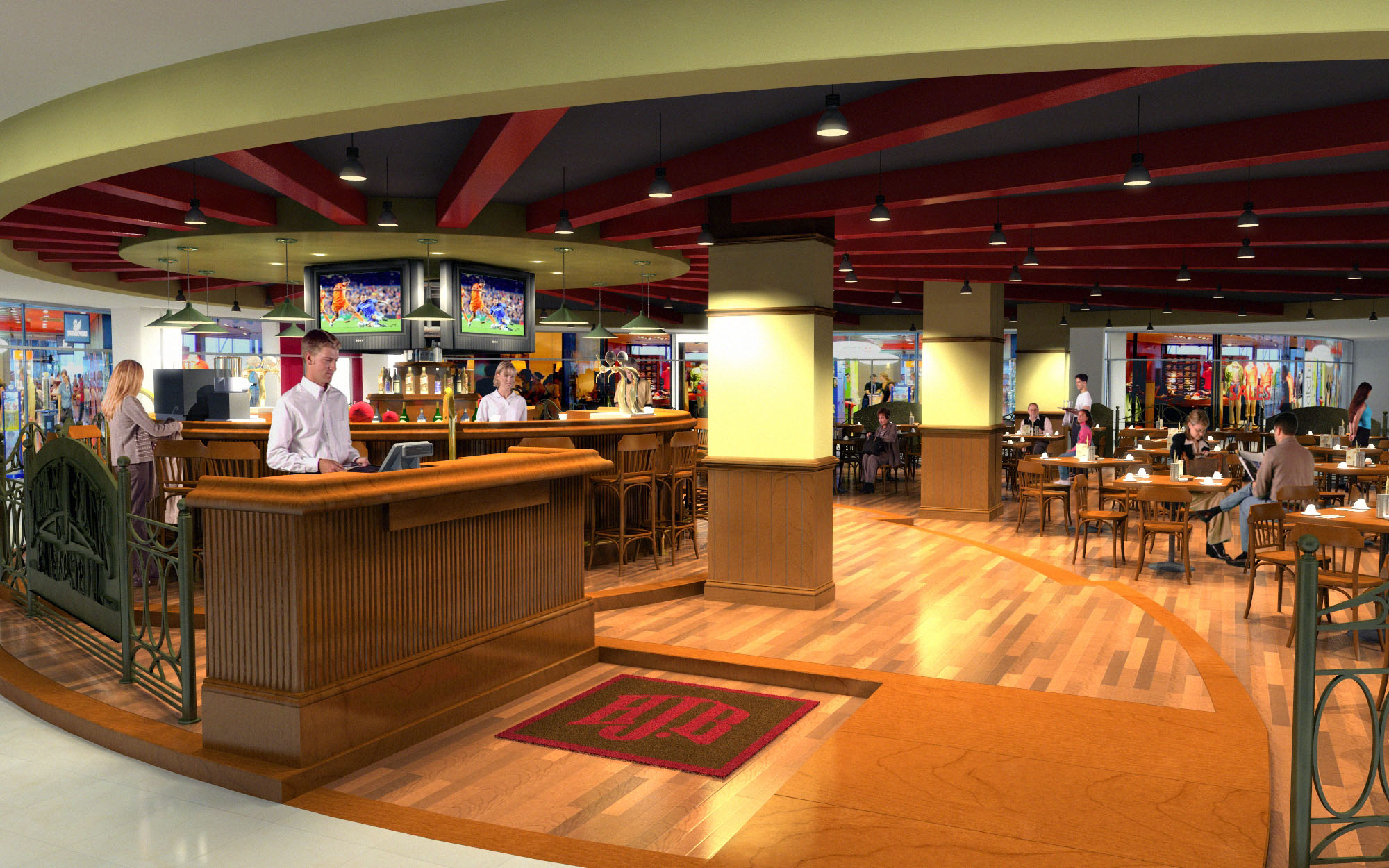
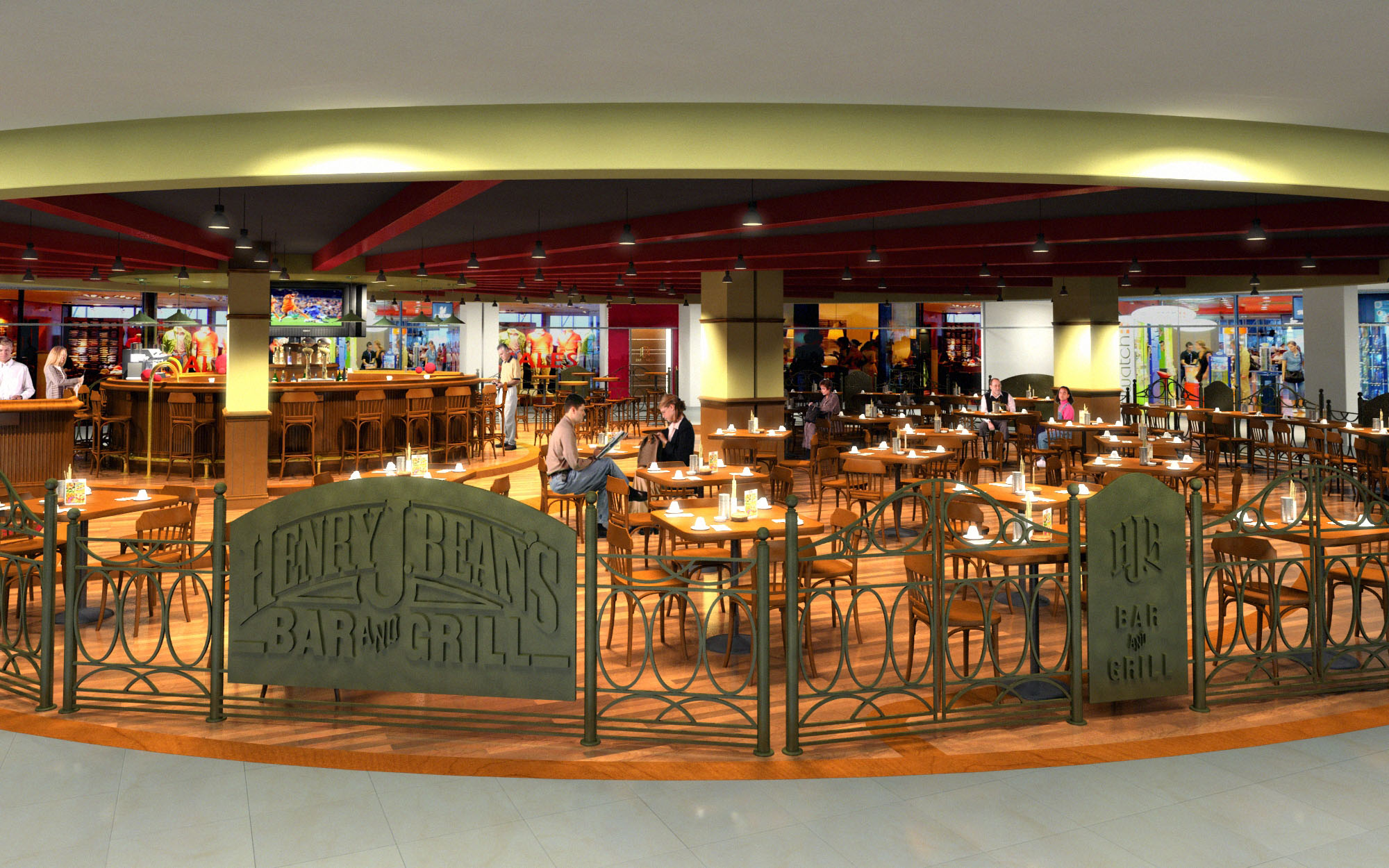
The HJB restaurants are conceived as contemporary interpretations of the classic American bar and grill, adapted to diverse commercial locations in México. The design strategy focuses on creating a recognizable brand atmosphere that can be replicated across multiple sites while allowing for subtle local variations. Warmth, informality and visual permeability guide the spatial narrative, inviting visitors to transition naturally from circulation areas into the dining environment.
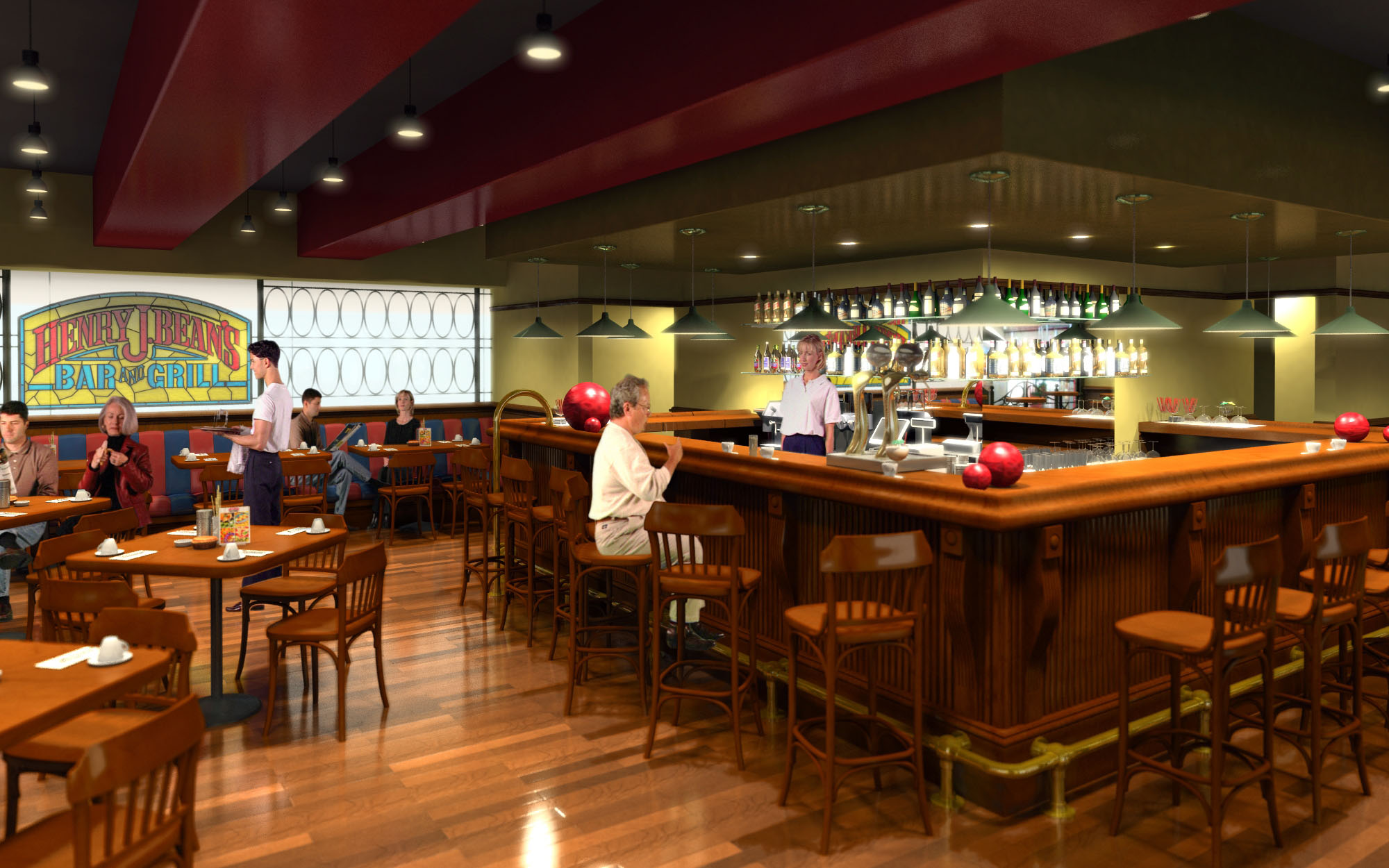
The concept blends a traditional pub vocabulary—brick, wood, bar counters and vintage imagery—with clean, modern lines and generous lighting. This balance communicates a casual yet carefully curated ambience, suitable for both daytime family use and evening social life. The bar becomes the identity anchor of each venue, always visually emphasized as a central island or façade element.
The layouts are open-plan, prioritizing clear visual axes between mall corridors, bar counter and main seating areas. In some locations the bar works as a linear counter against a brick backdrop; in others it becomes a central island around which circulation flows. This island strategy allows guests to access the bar from multiple directions and creates several micro-ambiences within a single continuous space.
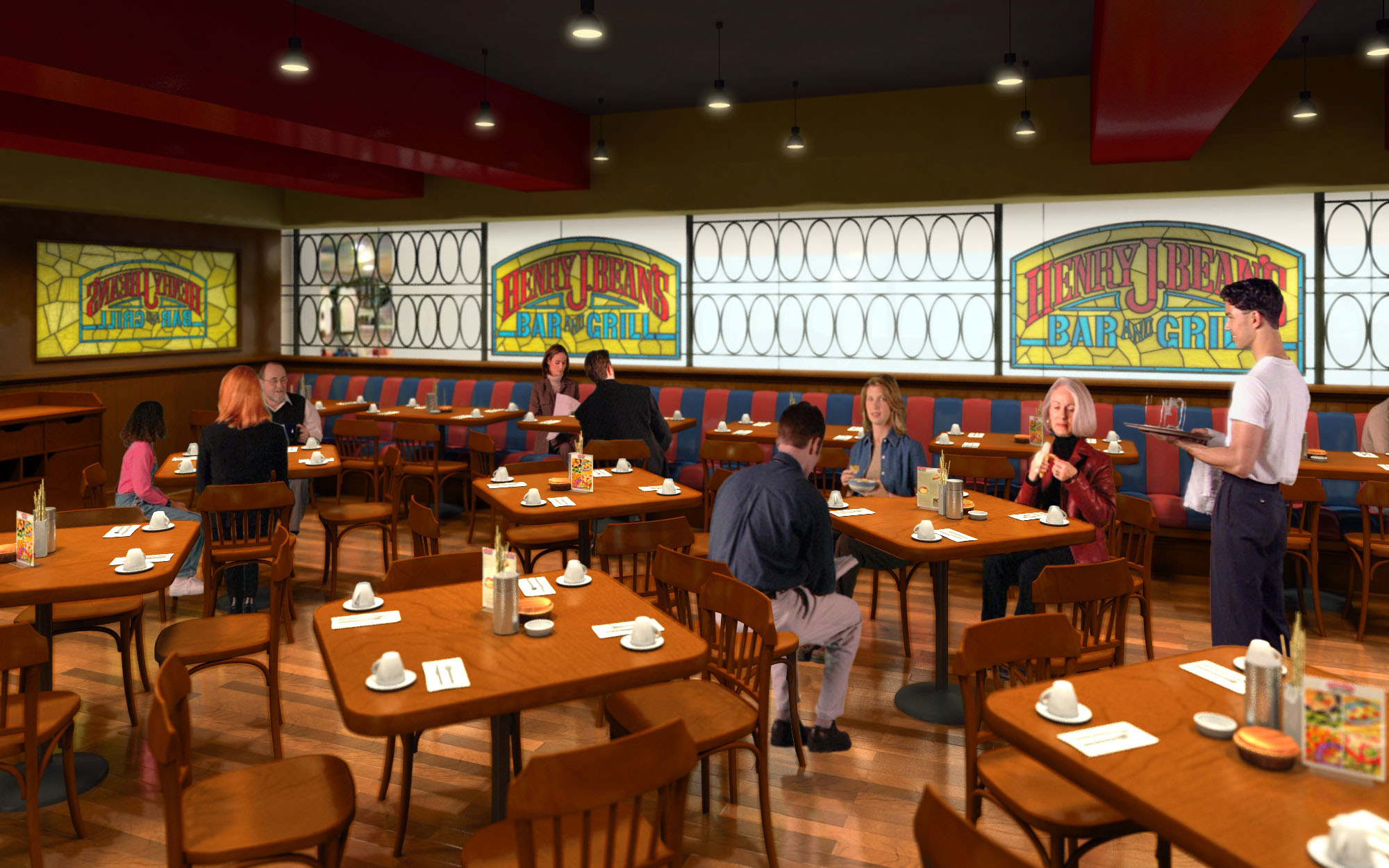
Dining zones are articulated with different densities of tables and variations in flooring patterns. Perimeter seating offers more intimate arrangements, while central areas are configured for flexibility and quick turnover. The alignment of furniture maintains direct views to television screens and the bar, reinforcing the sports-bar character without fragmenting the space with partitions.
Material selection prioritizes a sense of warmth and longevity. Wood is the main protagonist, used in solid and veneer applications for bar fronts, chair structures and tabletops. Its natural tone is contrasted with brick cladding on vertical surfaces, which evokes a classic bistro atmosphere and visually grounds the bar volume. Neutral ceramic floors are combined with wood or wood-effect inlays to define functional areas such as the bar perimeter and main circulation paths.
Metallic elements appear in railings, shelving and bar equipment, providing subtle industrial accents that enhance durability. Upholstered pieces in leather or leather-like materials add comfort while supporting a sophisticated yet robust image suitable for high-traffic environments. The palette is intentionally coherent across all venues to strengthen brand recognition.
The chromatic concept is built around warm browns, creams and beiges, complemented by a distinctive deep red associated with the HJB identity. This red appears in ceiling beams, awnings, signage and carpets, operating as a continuous visual thread between the different restaurants. The contrast between red details and neutral envelopes guides attention to key brand elements such as logos and bar counters.
Artwork and graphic panels, often with vintage or sports-inspired imagery, introduce narrative layers without overloading the architecture. These elements are positioned strategically on boundary walls facing circulation corridors, acting as visual attractors that announce the atmosphere of the interior.
The lighting design combines uniform ambient illumination with focused accent lighting on tables and bar surfaces. Ceiling-mounted downlights highlight the rhythm of structural beams and reinforce the linear geometry of the space. Over the back bar, more intense lighting showcases bottles and glassware, turning the bar into a luminous focal point.
Television screens are framed within darker ceiling areas to minimize glare and ensure comfortable visibility. The general brightness level is calibrated so that the restaurants feel open and inviting during the day, while dimmable systems enable a more intimate, evening-oriented ambience without modifying the physical layout.
Sustainability is addressed through both material selection and operational strategies appropriate for multi-site deployment. Preference is given to durable materials that reduce replacement frequency, such as high-resistance ceramics, engineered wood floors and robust upholstery. Where feasible, wood components can be specified from certified sources, and brick or masonry claddings are designed as thin veneers to reduce material volume.
The open-plan configuration optimizes natural visibility from adjacent mall areas, decreasing the need for internal signage and additional lighting to attract customers. Lighting fixtures are planned to be compatible with energy-efficient lamps and control systems, allowing flexible scenarios with reduced consumption. Standardized details for furniture, bars and finishes streamline fabrication, minimize waste and facilitate maintenance, ensuring that each HJB location maintains consistent quality and performance over time.


Our offices are located in Barcelona, Cancún, Chicago and Santo Domingo, but thanks to technology we can do projects on all over the world.
Barcelona
Bac de Roda 136
08020, Barcelona
Spain
Madrid
Av. de Buendía 11
19005 Guadalajara (Madrid)
Spain
Chicago
373 Hazel Ave, Apt A1
60022, Glencoe, Illinois
United States