

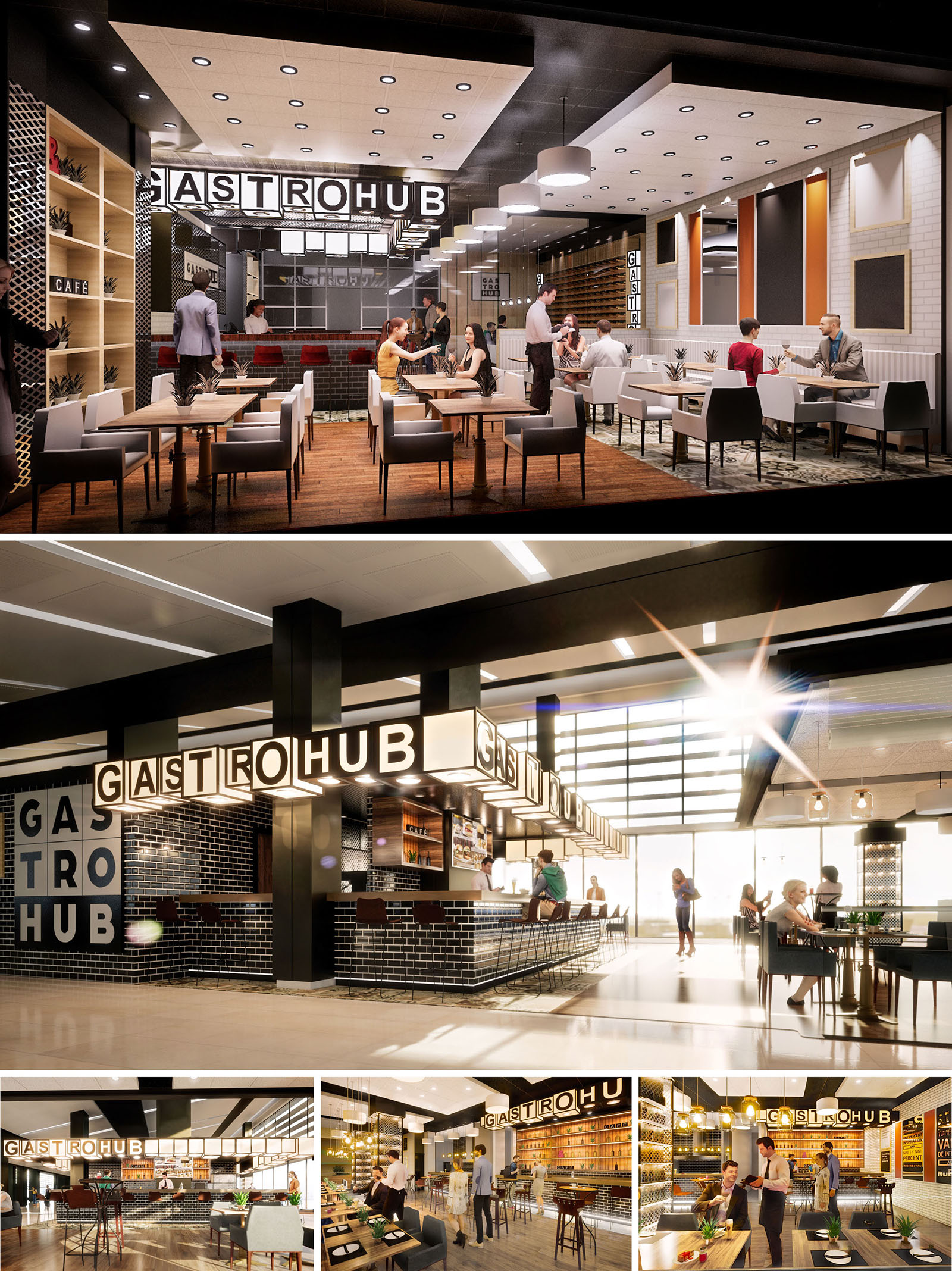
GASTROHUB is conceived as a cosmopolitan gastronomic platform that can be replicated across different countries while adapting to local cultures. The concept merges the informal vibrancy of a food market with the precision and comfort of a contemporary restaurant. A strong, recognizable identity is created through the illuminated volumetric signage, the use of black and white as the primary chromatic base, and a clear modular logic that structures bars, dining zones and circulation areas.
The design aims to generate a social condenser inside airports and commercial hubs, where travelers and locals converge. Open perimeters, visual transparency towards kitchens and bars, and a flexible furniture system encourage spontaneous occupation, short stays and longer, more relaxed visits. The project balances a bold graphic presence with warm, human-scale interiors.
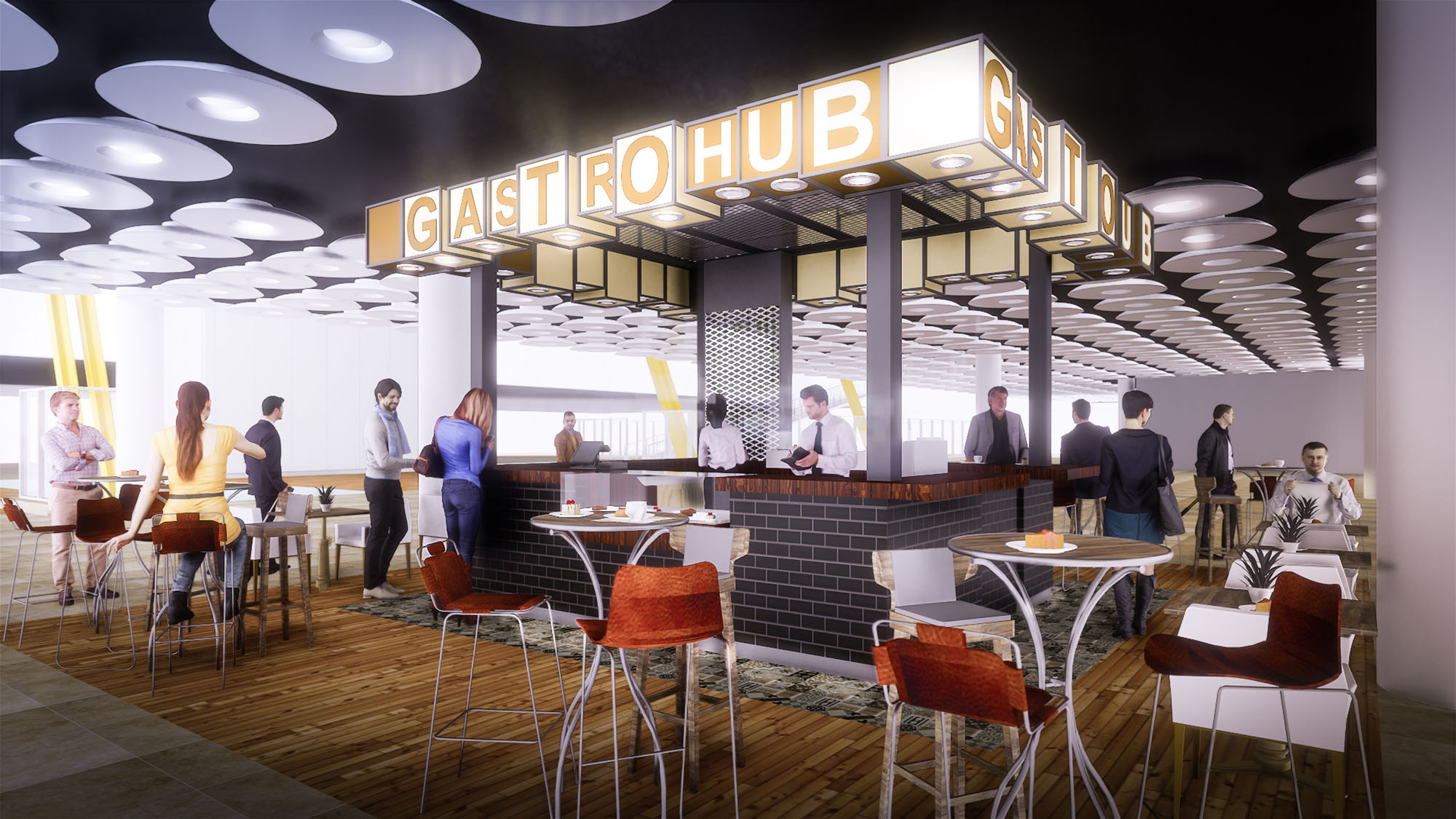
The layout is organized around a central bar volume that acts as an anchor and orientation element. This bar concentrates preparation zones, service counters and display areas, freeing the perimeter for diverse seating typologies. Circulation flows are radial and intuitive, allowing easy access from multiple sides and minimizing cross-traffic between staff and customers.
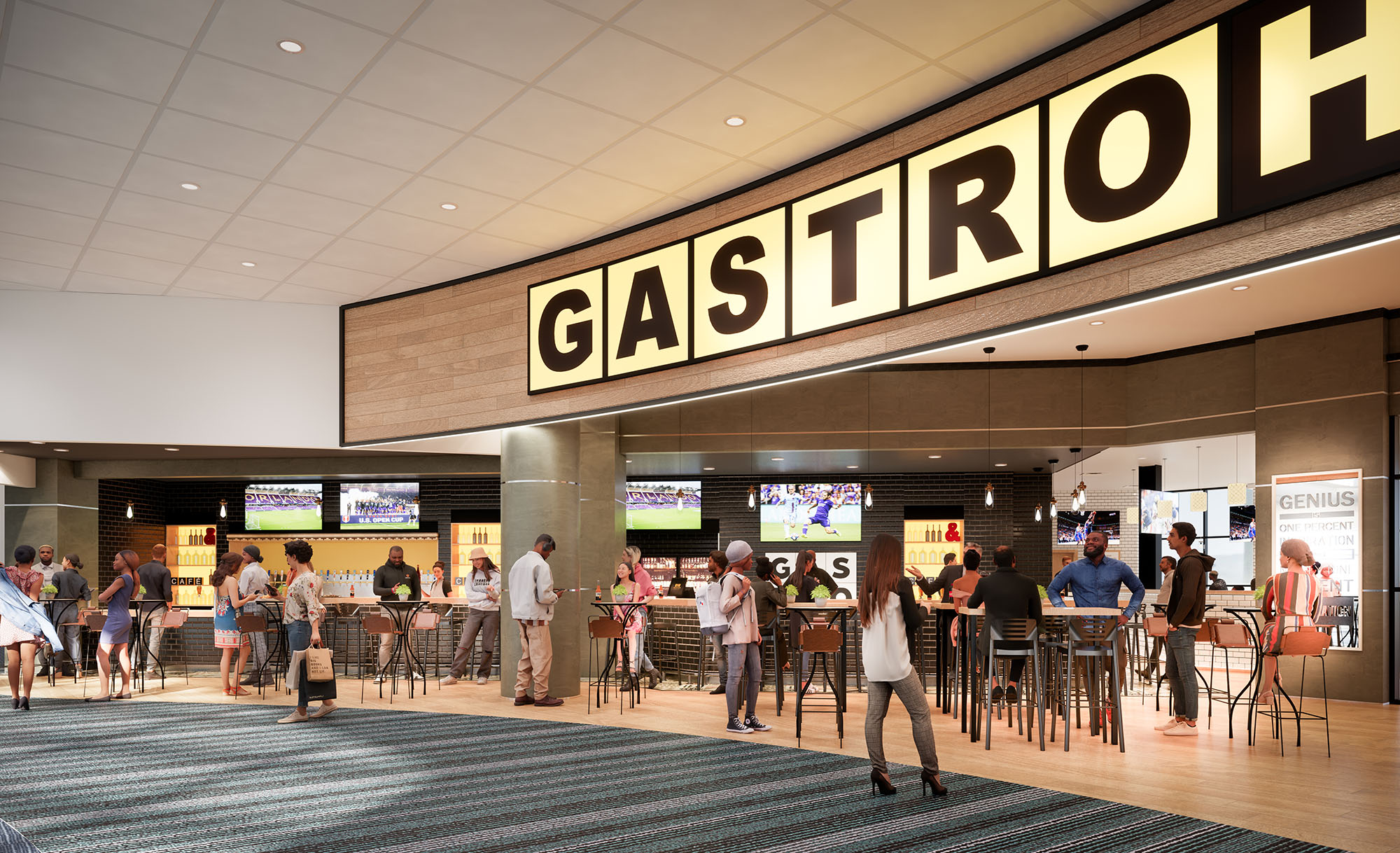
Peripheral bands contain lounge tables, high communal tables and banquette seating, which respond to different user profiles: solo travelers, informal meetings, families and quick stops. Visual porosity is ensured through the use of open shelves, low partitions and double-height signage elements, which preserve long perspectives while subtly defining zones of greater privacy.
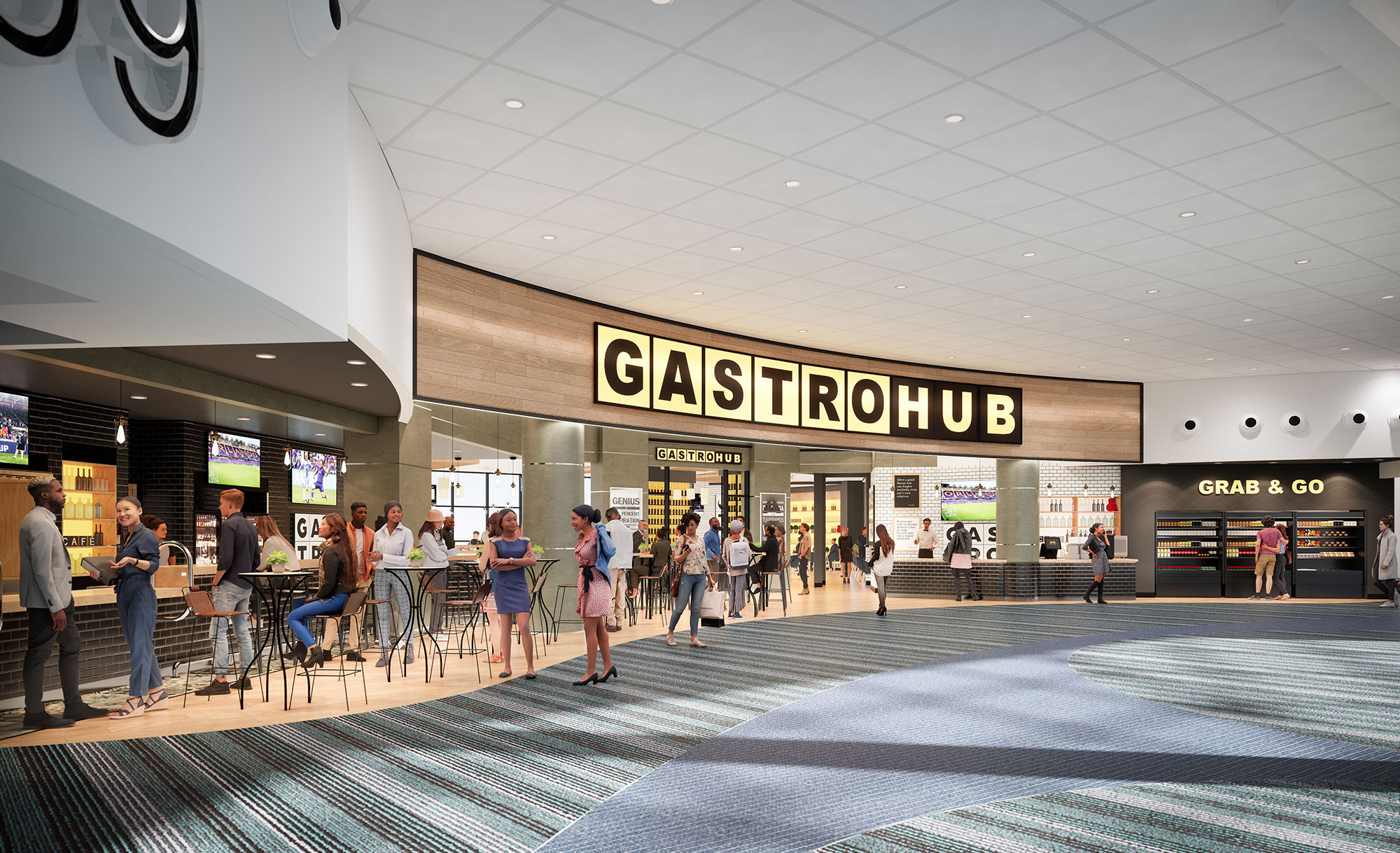
The material palette combines industrial robustness with domestic warmth. Black glazed brick tiles provide a durable, easy-to-clean envelope for bars and service walls, while also acting as a backdrop that enhances the luminous GASTROHUB signage. Light-toned wood is used on floors, shelving and table tops, counterbalancing the darker elements and generating a more welcoming atmosphere.
The color composition is deliberately restrained: black, white and warm wood tones are accented with selected graphic colors and lighting temperatures. This neutral base allows each geographic location to incorporate local textiles, artwork or vegetation without diluting the brand identity. Metallic elements in brushed steel and black iron profiles add precision and emphasize the structural grid.
Lighting design is a key component of the ambience. The volumetric letters of the logo function simultaneously as branding and as a continuous luminous canopy that defines the bar perimeter. These light boxes emit a warm, diffuse light that softens transitions between day and night uses and becomes a visual attractor from a distance.
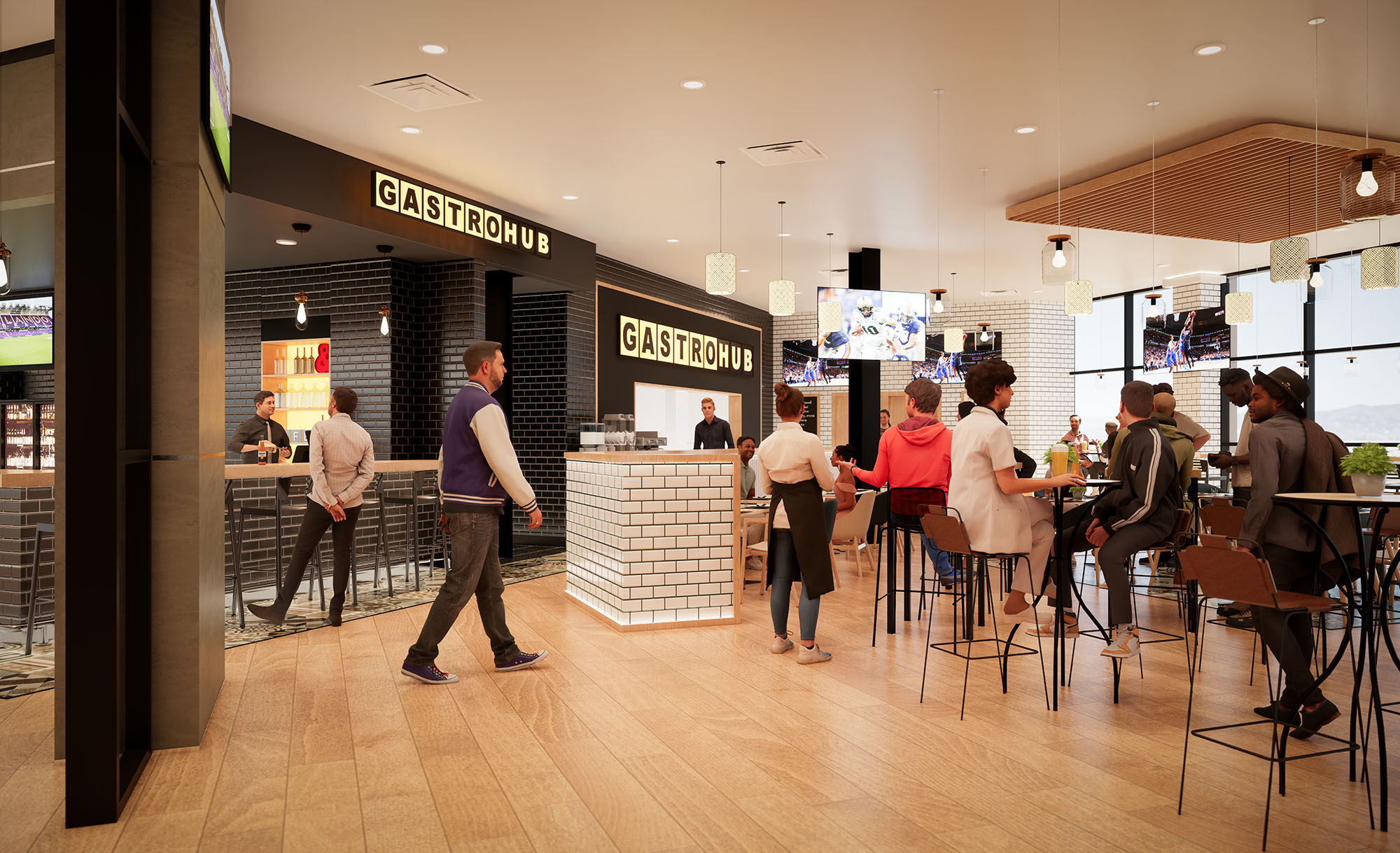
Ceiling-mounted downlights provide general illumination with a uniform grid, while accent pendants over specific tables and counters create intimate pockets of light. Reflection on glossy tiles and metallic surfaces contributes to a vibrant, animated atmosphere, particularly suitable for transit environments. The overall strategy balances functional lux levels with a comfortable, hospitality-oriented mood.
The furniture selection prioritizes comfort, resistance and modularity. Upholstered chairs with clean geometries and banquettes with vertical tufting generate ergonomic support and visual order. Tables are dimensioned to be easily reconfigurable, allowing the space to adapt to fluctuating peak-hour demands and group sizes.
Vertical surfaces incorporate open shelving for bottles, plants and merchandising, and perforated or patterned panels that act as acoustic diffusers while introducing texture. The bar front integrates footrests, concealed lighting and power outlets, anticipating contemporary needs such as device charging and remote work. Every detail seeks to reconcile the efficiency of a high-traffic operation with the warmth of a neighborhood restaurant.
The strong graphic identity of GASTROHUB is designed to be legible in multicultural contexts across Mexico, Spain and the USA. The modular signage, repetitive structural bays and standardized finishes enable consistent brand recognition while allowing variations in layout according to each site’s geometry and local regulations.
Sustainability considerations are integrated through the specification of durable, low-maintenance materials, reducing replacement cycles and waste. LED lighting systems with dimming capabilities lower energy consumption and adapt to natural light availability in each location. Where possible, wood products from certified sources and low-VOC finishes are prioritized to improve indoor environmental quality. The replicable construction system allows components to be prefabricated, optimizing resources, minimizing on-site waste and facilitating future disassembly or reconfiguration of the spaces.
LIST OF PROJECTS EXPERIENCE
Designed, Executed and/or Built Projects
MEXICO
1. Gastrohub - Los Mochis - 6-A
2. Gastrohub - Tijuana - BR-07
3. Gastrohub - Guadalajara - D11
SPAIN
4. Gastrohub - Madrid T4S - L10
USA
5. Gastrohub - Orlando - T64
6. Gastrohub - Salt Lake City
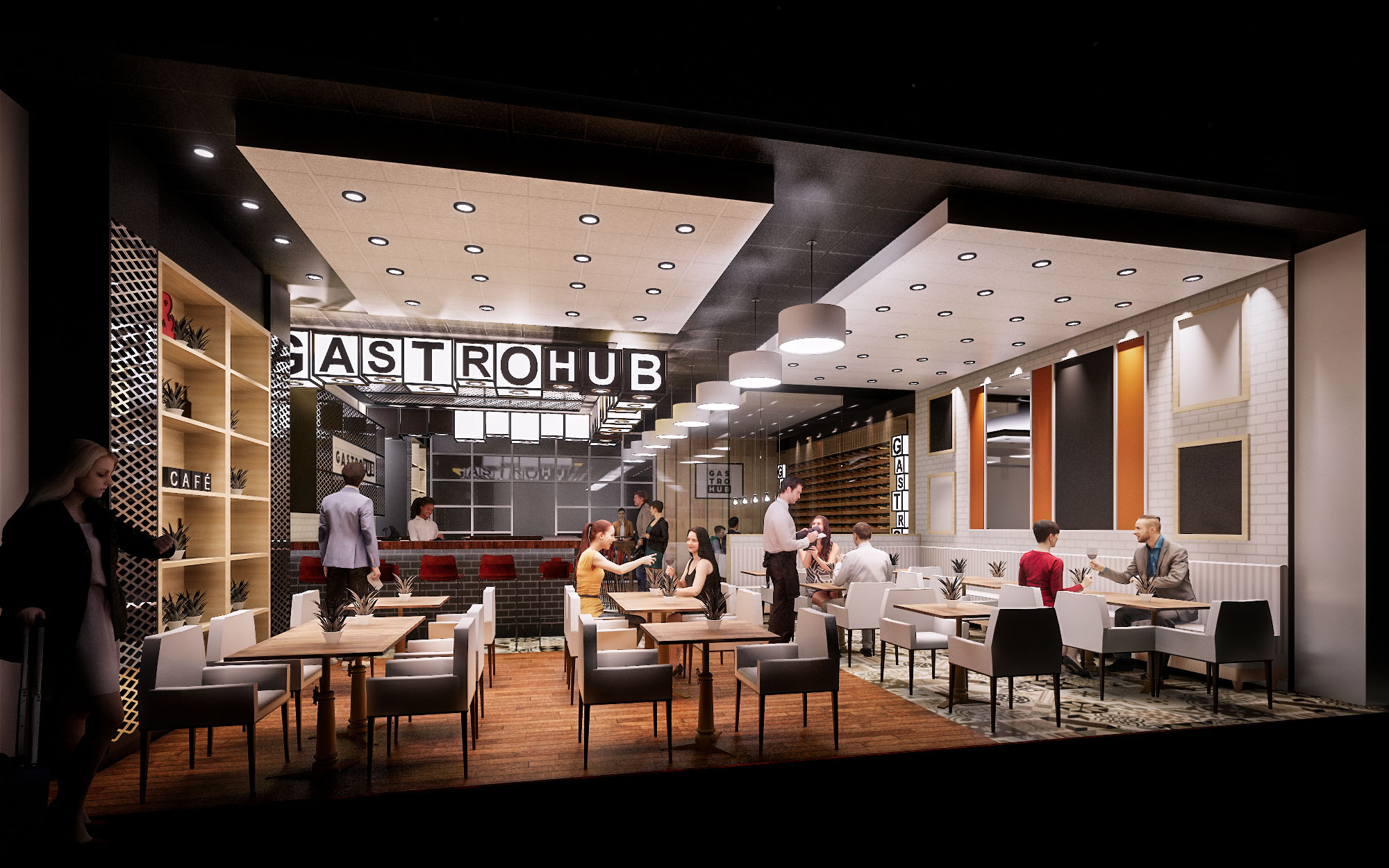
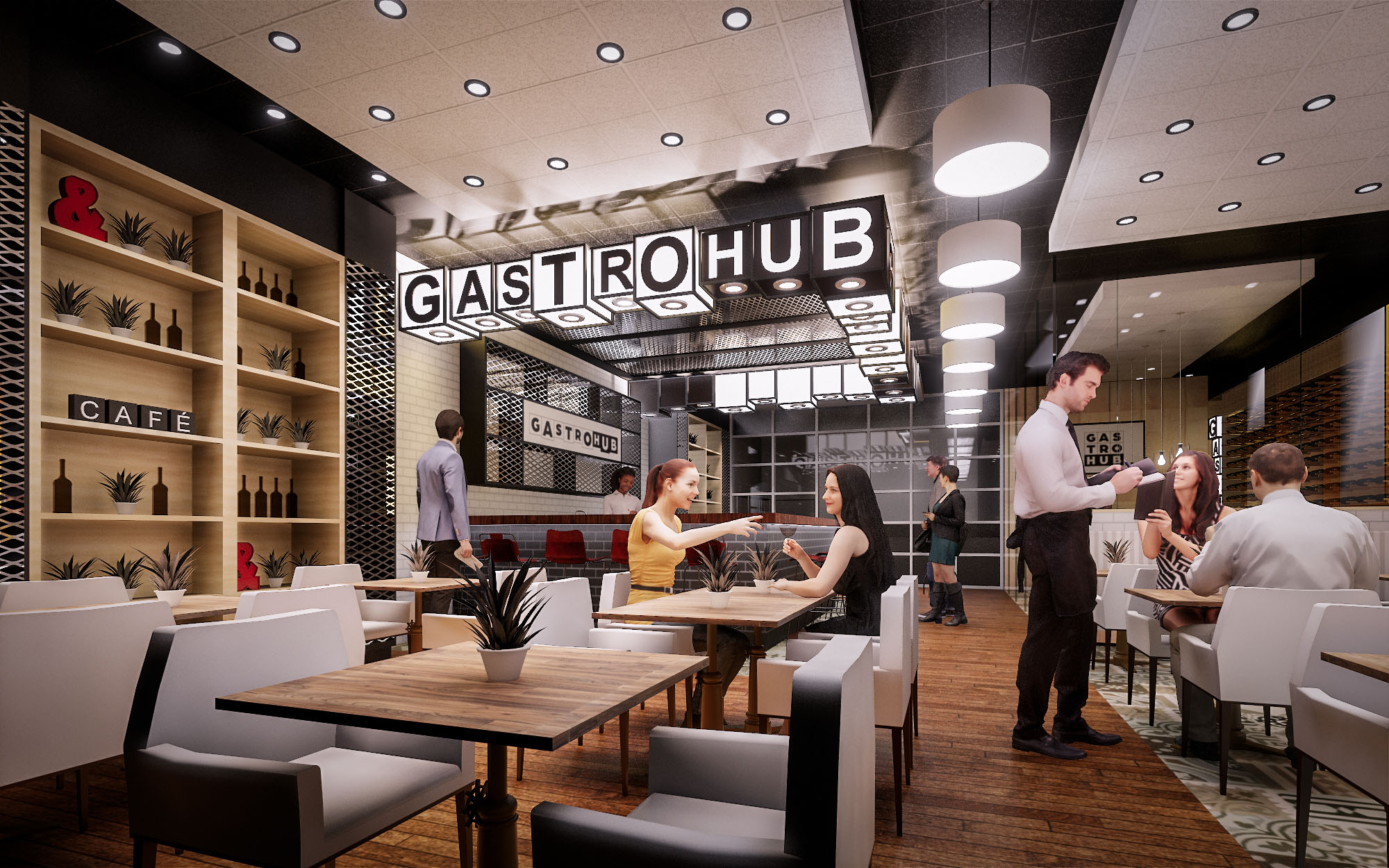
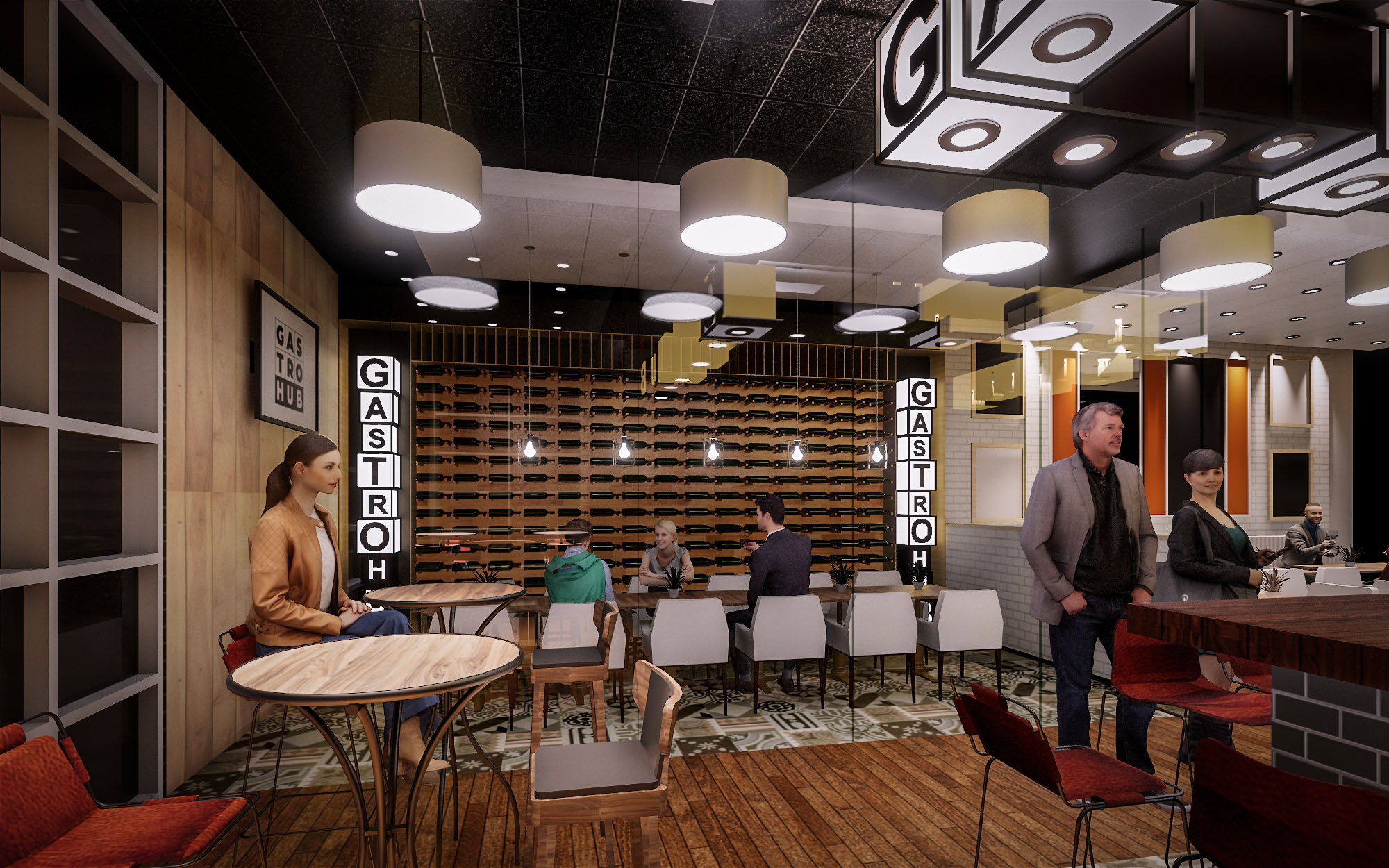

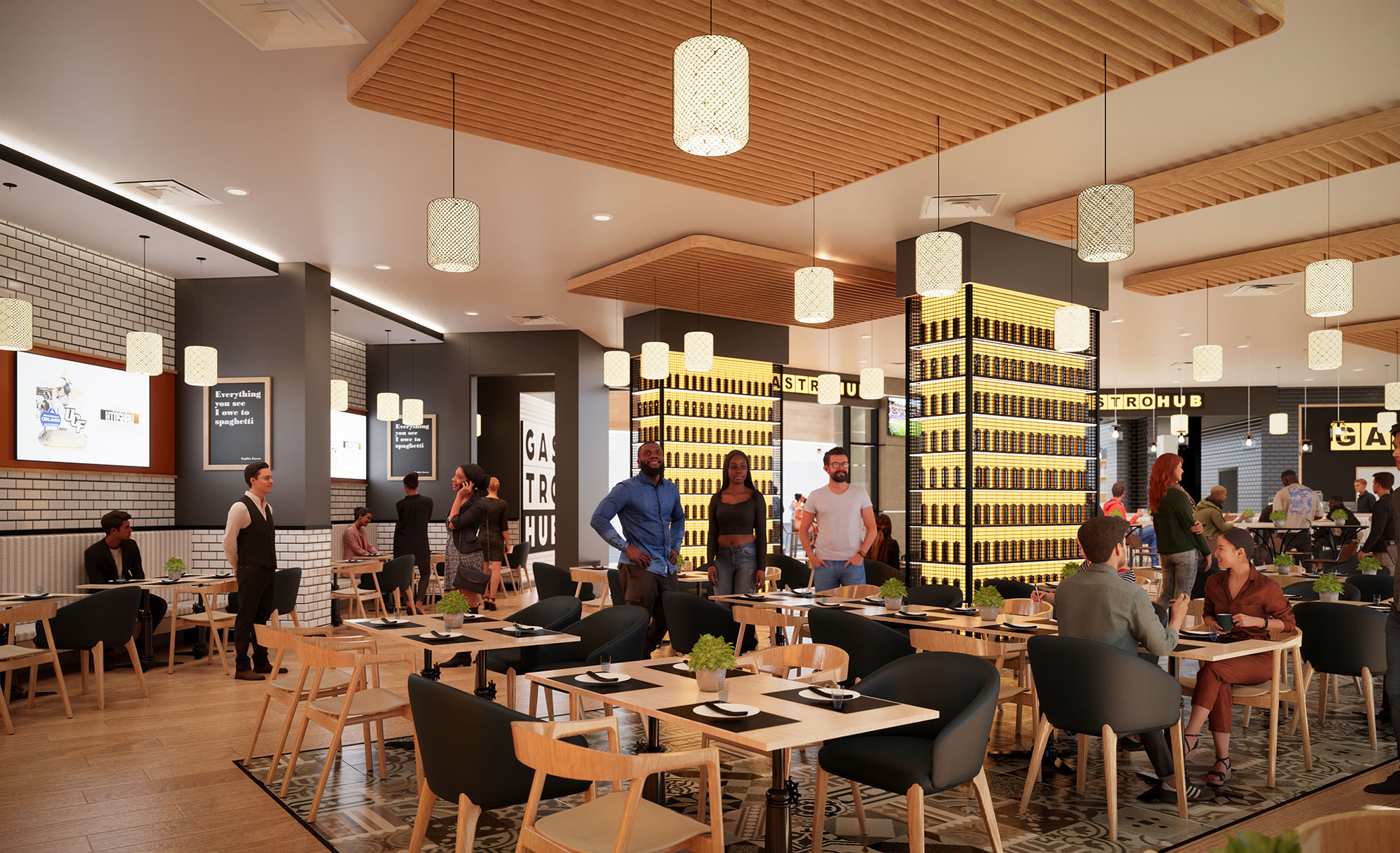
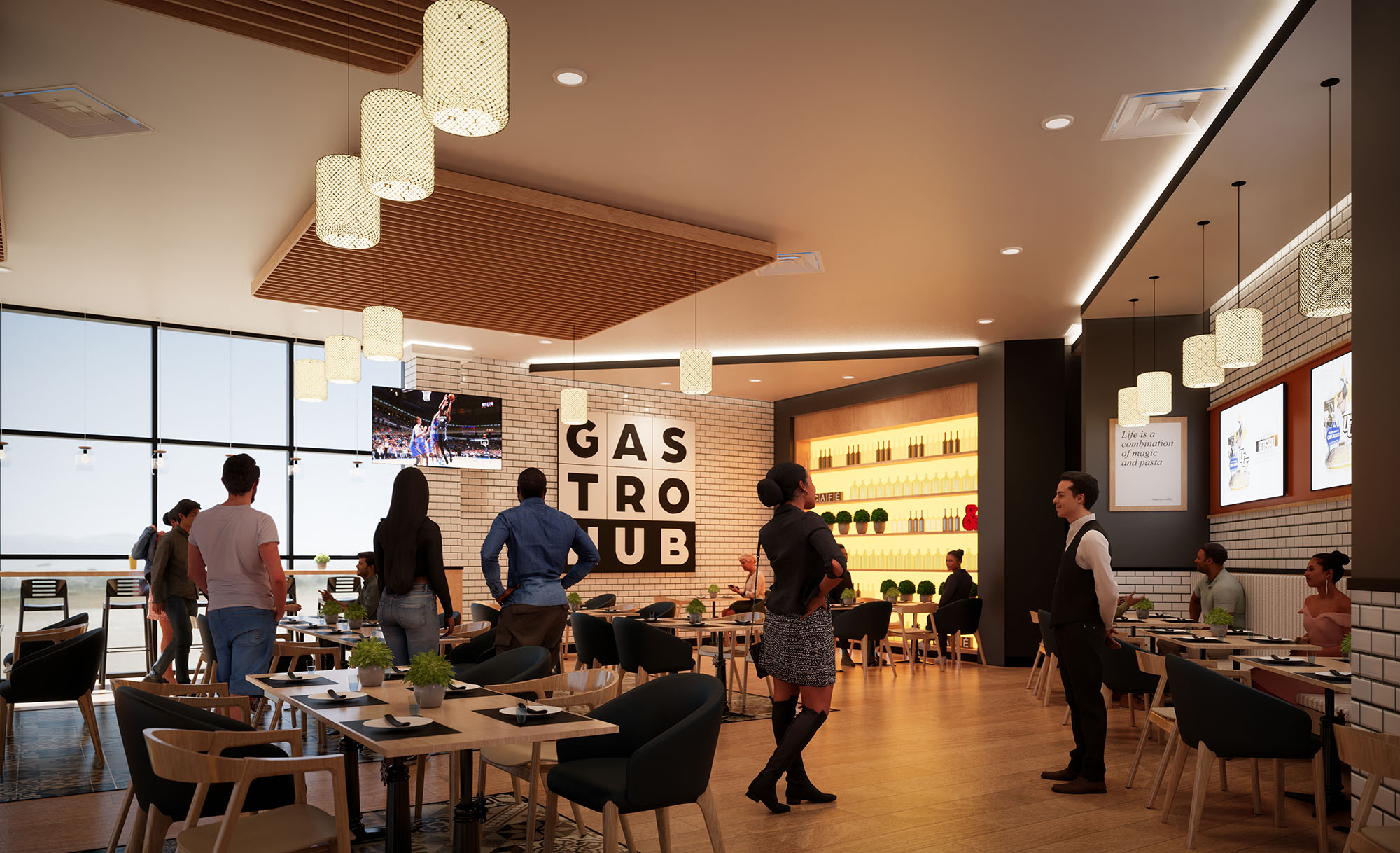
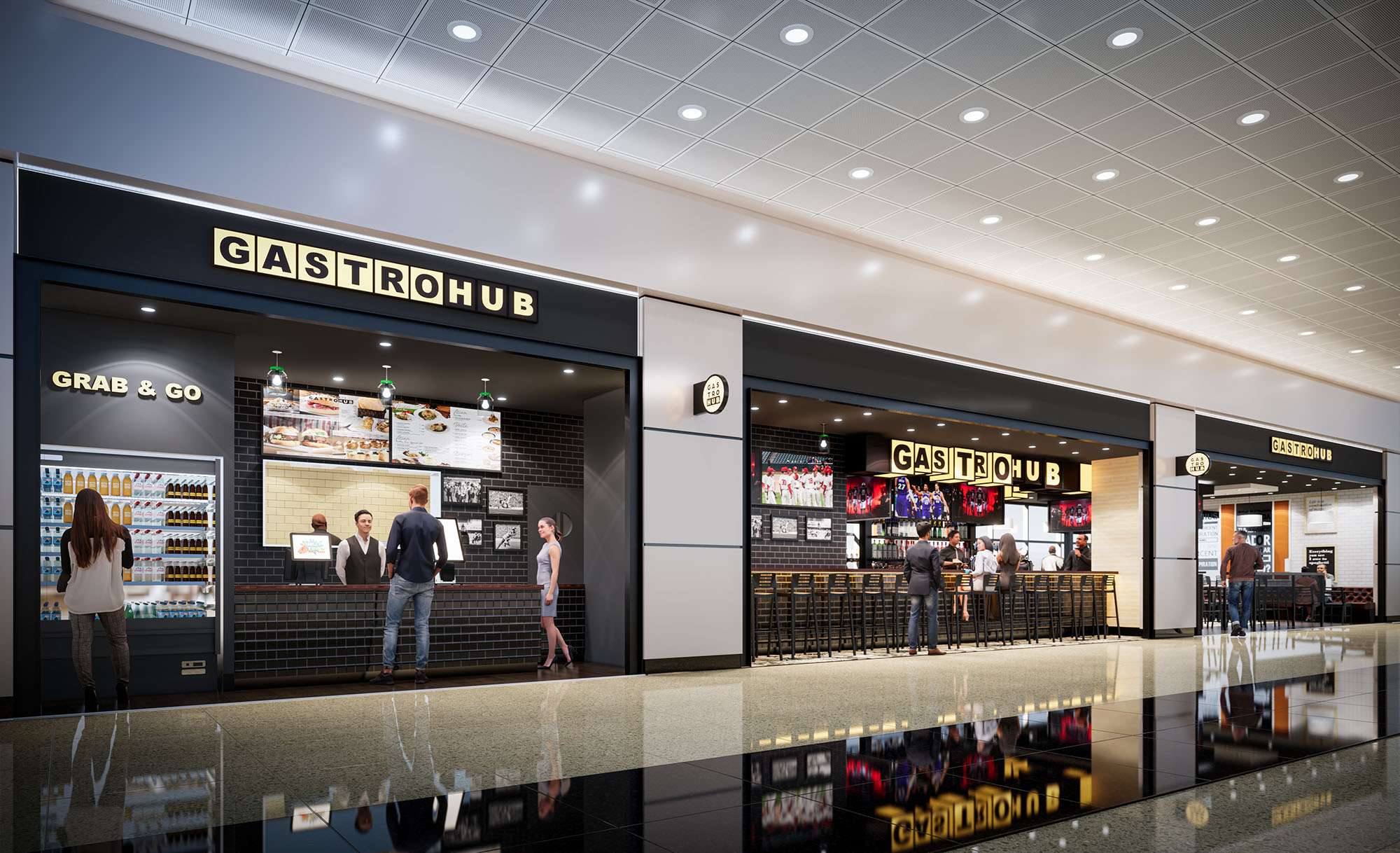

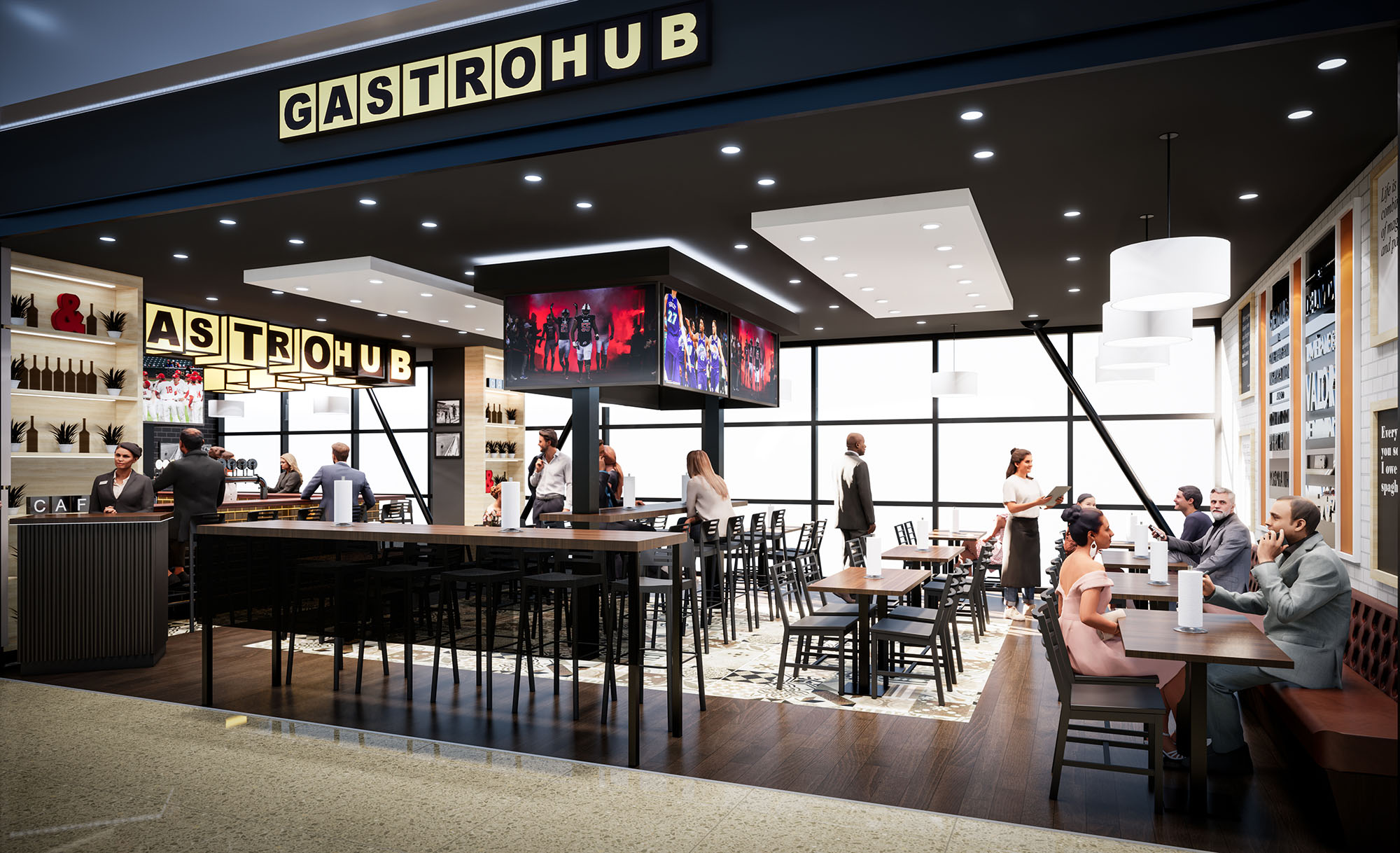
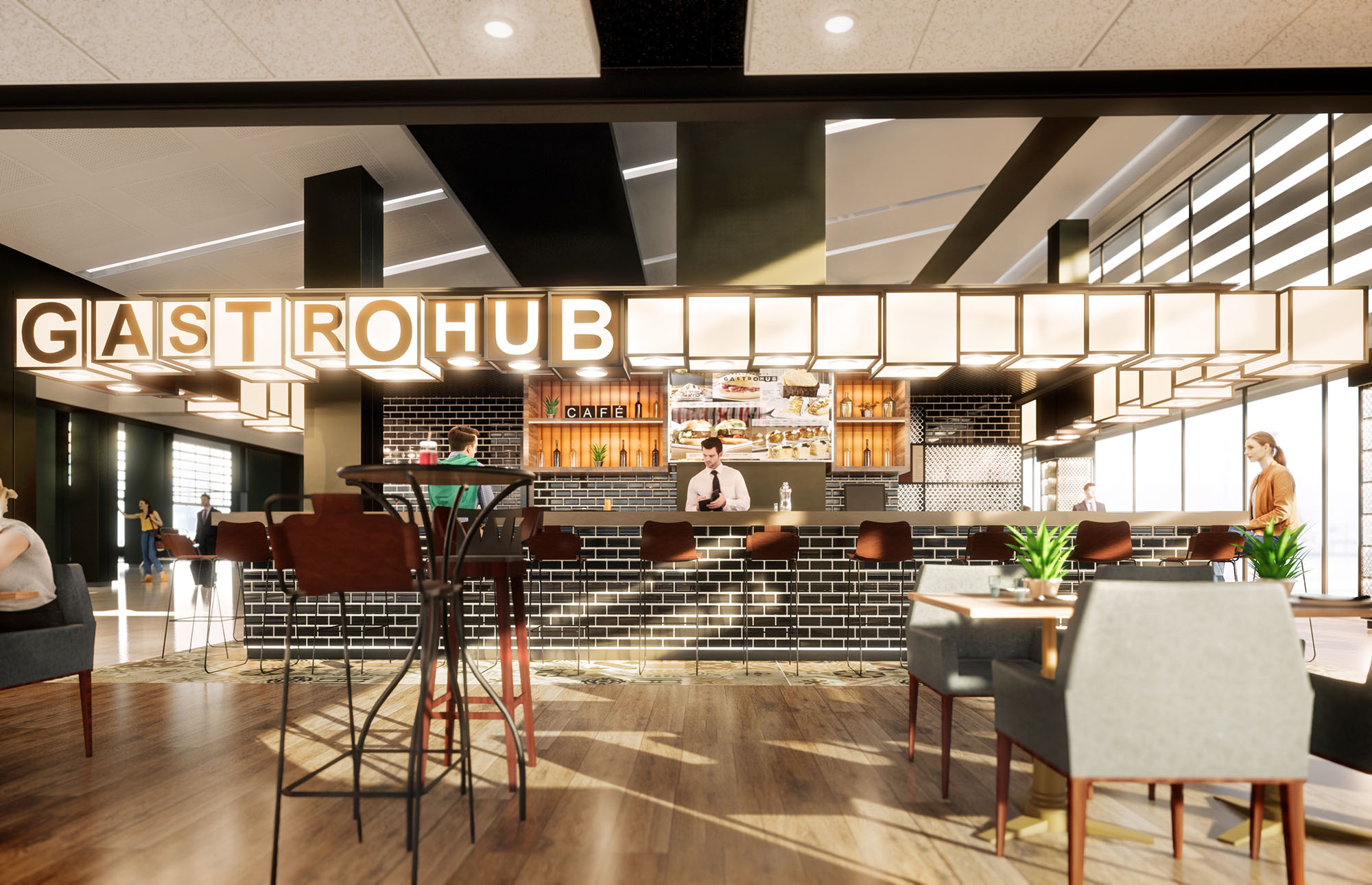
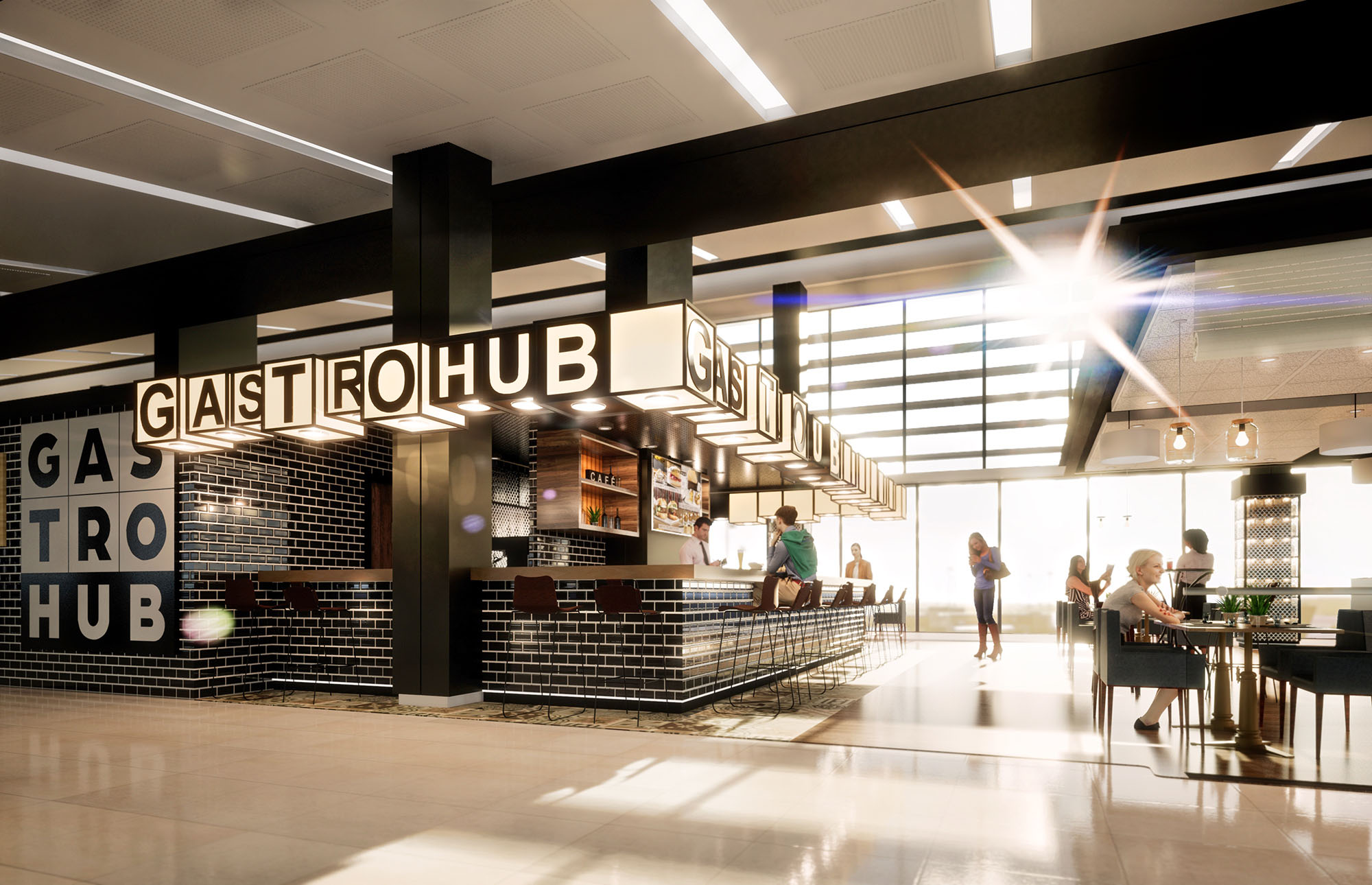
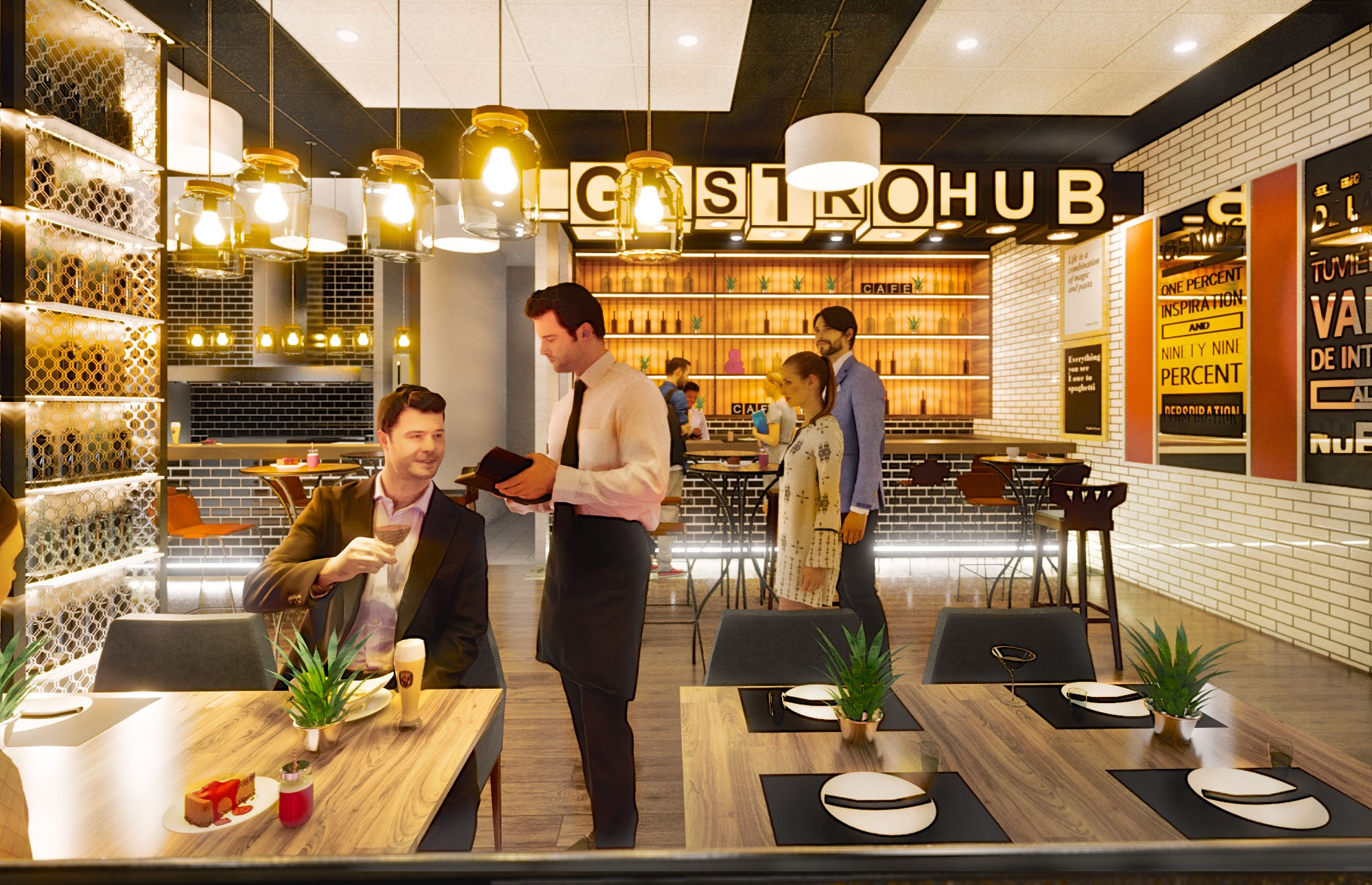
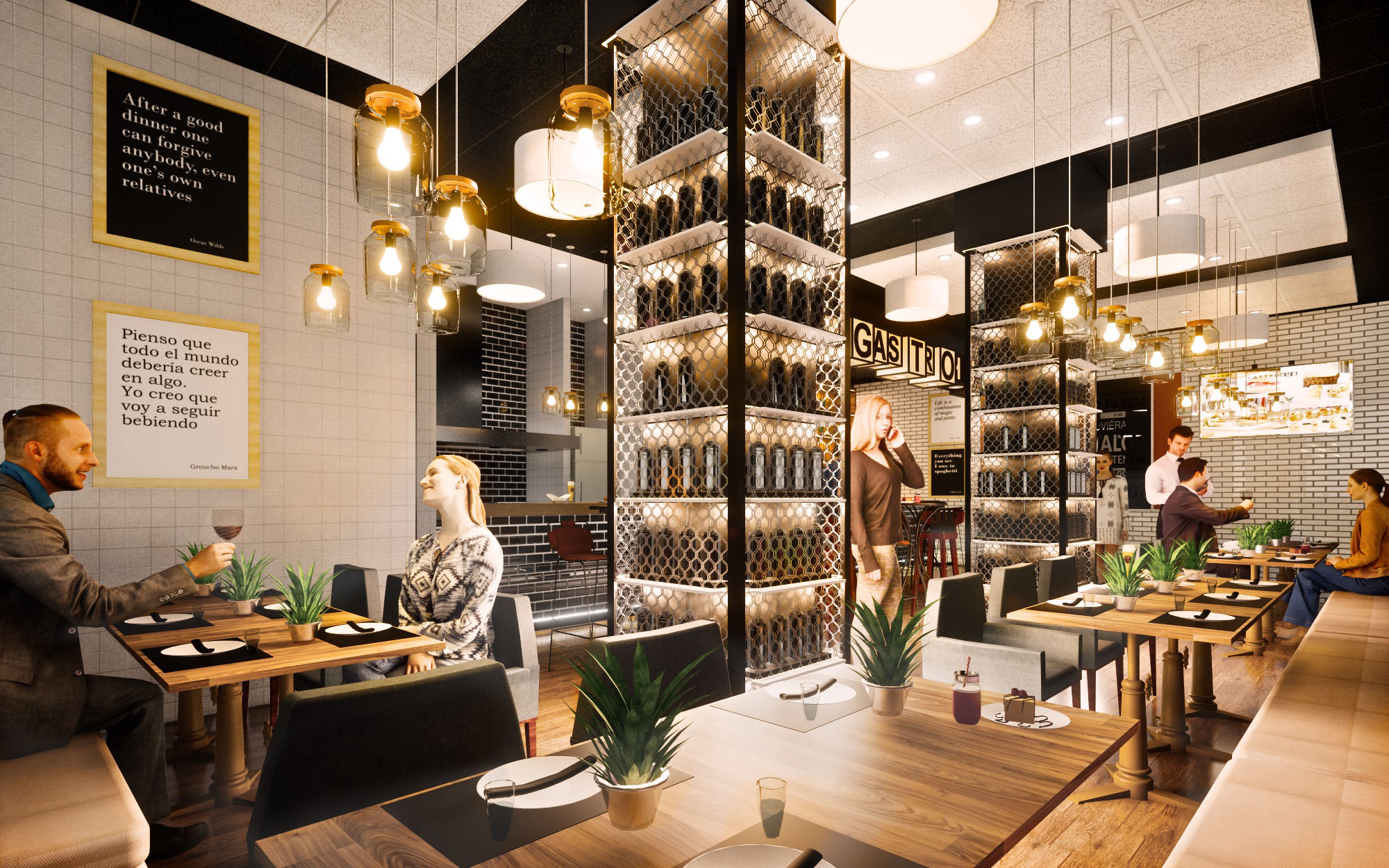
GASTROHUB is conceived as a cosmopolitan gastronomic platform that can be replicated across different countries while adapting to local cultures. The concept merges the informal vibrancy of a food market with the precision and comfort of a contemporary restaurant. A strong, recognizable identity is created through the illuminated volumetric signage, the use of black and white as the primary chromatic base, and a clear modular logic that structures bars, dining zones and circulation areas.
The design aims to generate a social condenser inside airports and commercial hubs, where travelers and locals converge. Open perimeters, visual transparency towards kitchens and bars, and a flexible furniture system encourage spontaneous occupation, short stays and longer, more relaxed visits. The project balances a bold graphic presence with warm, human-scale interiors.
The layout is organized around a central bar volume that acts as an anchor and orientation element. This bar concentrates preparation zones, service counters and display areas, freeing the perimeter for diverse seating typologies. Circulation flows are radial and intuitive, allowing easy access from multiple sides and minimizing cross-traffic between staff and customers.
Peripheral bands contain lounge tables, high communal tables and banquette seating, which respond to different user profiles: solo travelers, informal meetings, families and quick stops. Visual porosity is ensured through the use of open shelves, low partitions and double-height signage elements, which preserve long perspectives while subtly defining zones of greater privacy.
The material palette combines industrial robustness with domestic warmth. Black glazed brick tiles provide a durable, easy-to-clean envelope for bars and service walls, while also acting as a backdrop that enhances the luminous GASTROHUB signage. Light-toned wood is used on floors, shelving and table tops, counterbalancing the darker elements and generating a more welcoming atmosphere.
The color composition is deliberately restrained: black, white and warm wood tones are accented with selected graphic colors and lighting temperatures. This neutral base allows each geographic location to incorporate local textiles, artwork or vegetation without diluting the brand identity. Metallic elements in brushed steel and black iron profiles add precision and emphasize the structural grid.
Lighting design is a key component of the ambience. The volumetric letters of the logo function simultaneously as branding and as a continuous luminous canopy that defines the bar perimeter. These light boxes emit a warm, diffuse light that softens transitions between day and night uses and becomes a visual attractor from a distance.
Ceiling-mounted downlights provide general illumination with a uniform grid, while accent pendants over specific tables and counters create intimate pockets of light. Reflection on glossy tiles and metallic surfaces contributes to a vibrant, animated atmosphere, particularly suitable for transit environments. The overall strategy balances functional lux levels with a comfortable, hospitality-oriented mood.
The furniture selection prioritizes comfort, resistance and modularity. Upholstered chairs with clean geometries and banquettes with vertical tufting generate ergonomic support and visual order. Tables are dimensioned to be easily reconfigurable, allowing the space to adapt to fluctuating peak-hour demands and group sizes.
Vertical surfaces incorporate open shelving for bottles, plants and merchandising, and perforated or patterned panels that act as acoustic diffusers while introducing texture. The bar front integrates footrests, concealed lighting and power outlets, anticipating contemporary needs such as device charging and remote work. Every detail seeks to reconcile the efficiency of a high-traffic operation with the warmth of a neighborhood restaurant.
The strong graphic identity of GASTROHUB is designed to be legible in multicultural contexts across Mexico, Spain and the USA. The modular signage, repetitive structural bays and standardized finishes enable consistent brand recognition while allowing variations in layout according to each site’s geometry and local regulations.
Sustainability considerations are integrated through the specification of durable, low-maintenance materials, reducing replacement cycles and waste. LED lighting systems with dimming capabilities lower energy consumption and adapt to natural light availability in each location. Where possible, wood products from certified sources and low-VOC finishes are prioritized to improve indoor environmental quality. The replicable construction system allows components to be prefabricated, optimizing resources, minimizing on-site waste and facilitating future disassembly or reconfiguration of the spaces.


Our offices are located in Barcelona, Cancún, Chicago and Santo Domingo, but thanks to technology we can do projects on all over the world.
Barcelona
Bac de Roda 136
08020, Barcelona
Spain
Madrid
Av. de Buendía 11
19005 Guadalajara (Madrid)
Spain
Chicago
373 Hazel Ave, Apt A1
60022, Glencoe, Illinois
United States