

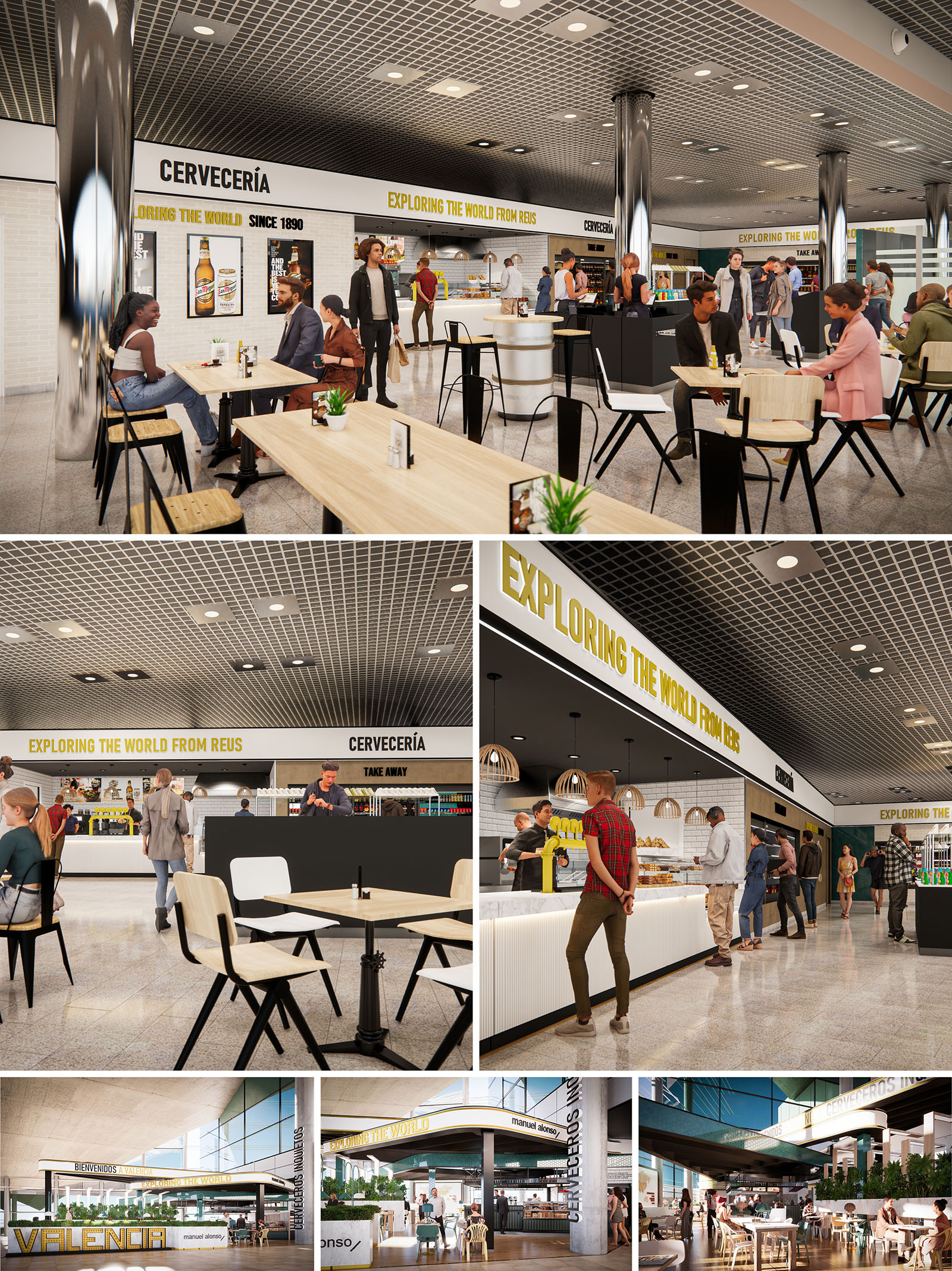
“Exploring the World” is conceived as a scalable hospitality concept that connects different Spanish cities through a unified architectural identity. Each location functions as an urban lounge where the idea of travel is translated into clear sight lines, permeable edges and a graphic narrative that runs through all spaces. The design emphasizes accessibility and visual openness, allowing users to intuitively understand the offer while feeling part of a broader journey across seven destinations.
The concept balances the informality of a cervecería with the efficiency of a contemporary food-court kiosk. A restrained palette of materials and colors is repeated in each project, creating brand cohesion and allowing local contextual variations in furniture arrangement, façade permeability and integration with surrounding commercial flows.
The plan is structured around a central service bar that operates as both visual anchor and functional core. Ordering, preparation and pick-up are aligned linearly to reduce crossings between customers and staff, improving ergonomics and safety. Perimeter counters and islands of seating radiate from this core, generating different degrees of intimacy: quick stops at high tables, social sharing at communal benches, and more relaxed stays at lower café tables.
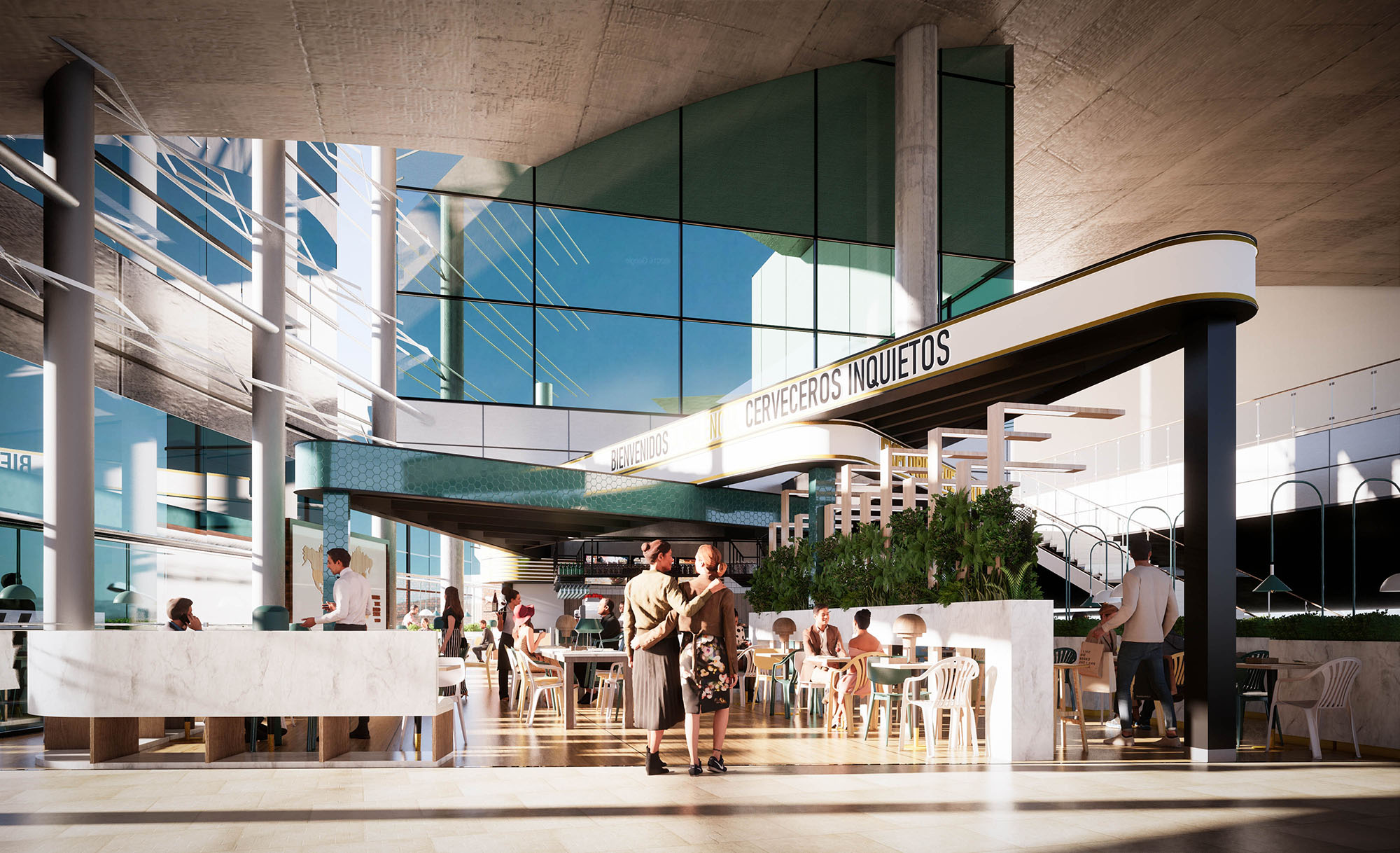
In airport and station environments, the interventions prioritize transparency. The perimeter is largely open, with only low-height elements and light metal frames defining the boundary. This strategy ensures uninterrupted visual connections with departure halls and exterior plazas, encouraging spontaneous use and orienting the traveler within the terminal.
The interior design combines robust hospitality standards with a warm, approachable atmosphere. Furniture is characterized by slender black metal structures and light-toned timber tops, creating a calm horizontal datum against the more technical ceiling. Chairs and stools feature slightly angled legs and curved backs for comfort and stability, while communal tables encourage social interaction and group use.
Lighting is layered: an orthogonal grid of recessed downlights ensures homogeneous general illumination, complemented by accent fixtures over the bar and product displays. In some units, woven pendant lamps introduce a tactile, domestic note that softens the industrial ceiling grid. This contrast underlines the bar as a focal point and subtly guides movement and queuing.
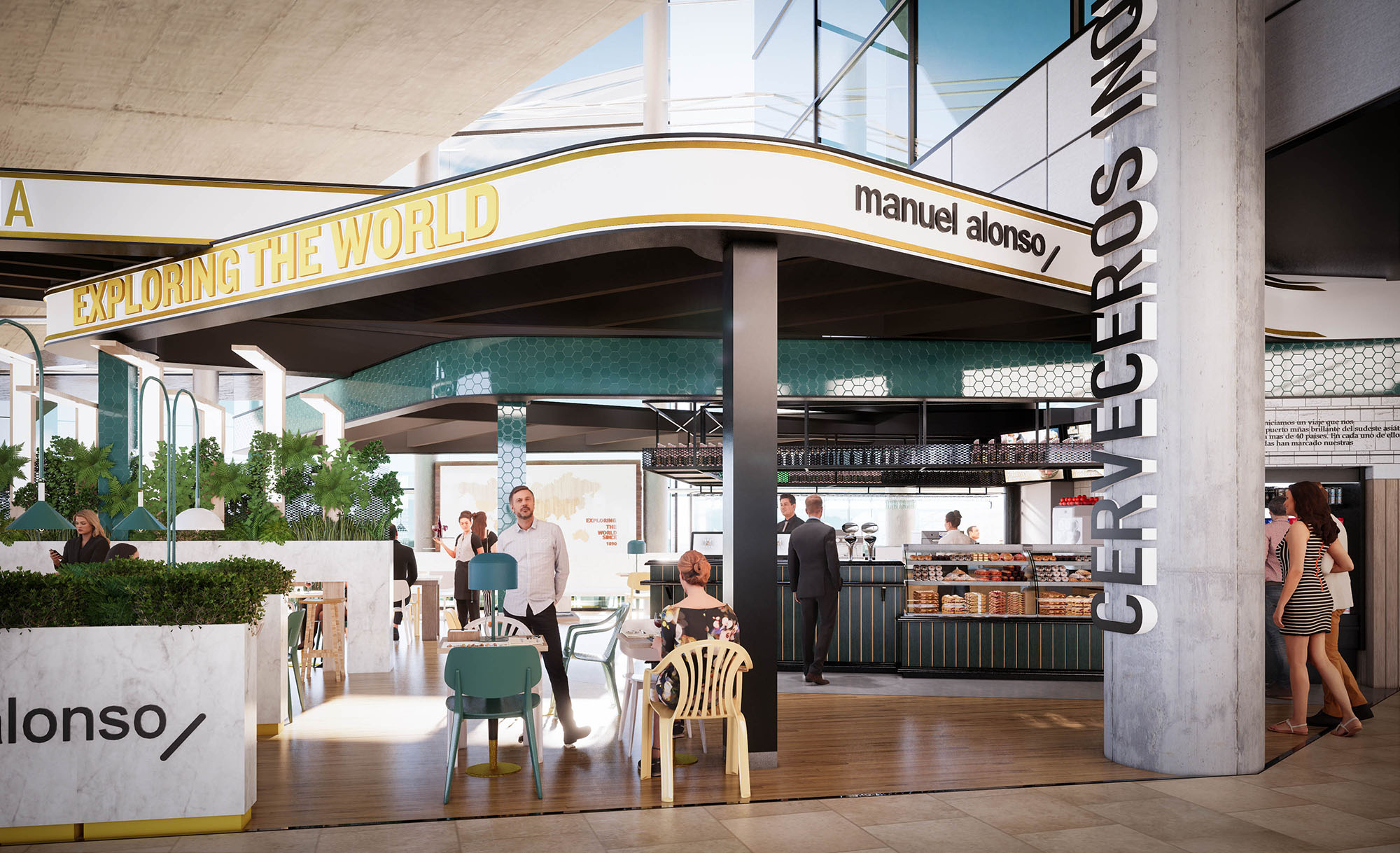
The material palette hinges on three elements: white ceramic tiles, light natural wood, and black metal. White tiles form a continuous backdrop for the bar, reflecting light and facilitating maintenance, while also evoking traditional Iberian taverns in a contemporary language. Wood surfaces provide warmth and tactility where users sit and touch, offering a counterpoint to the coolness of tile and metal.
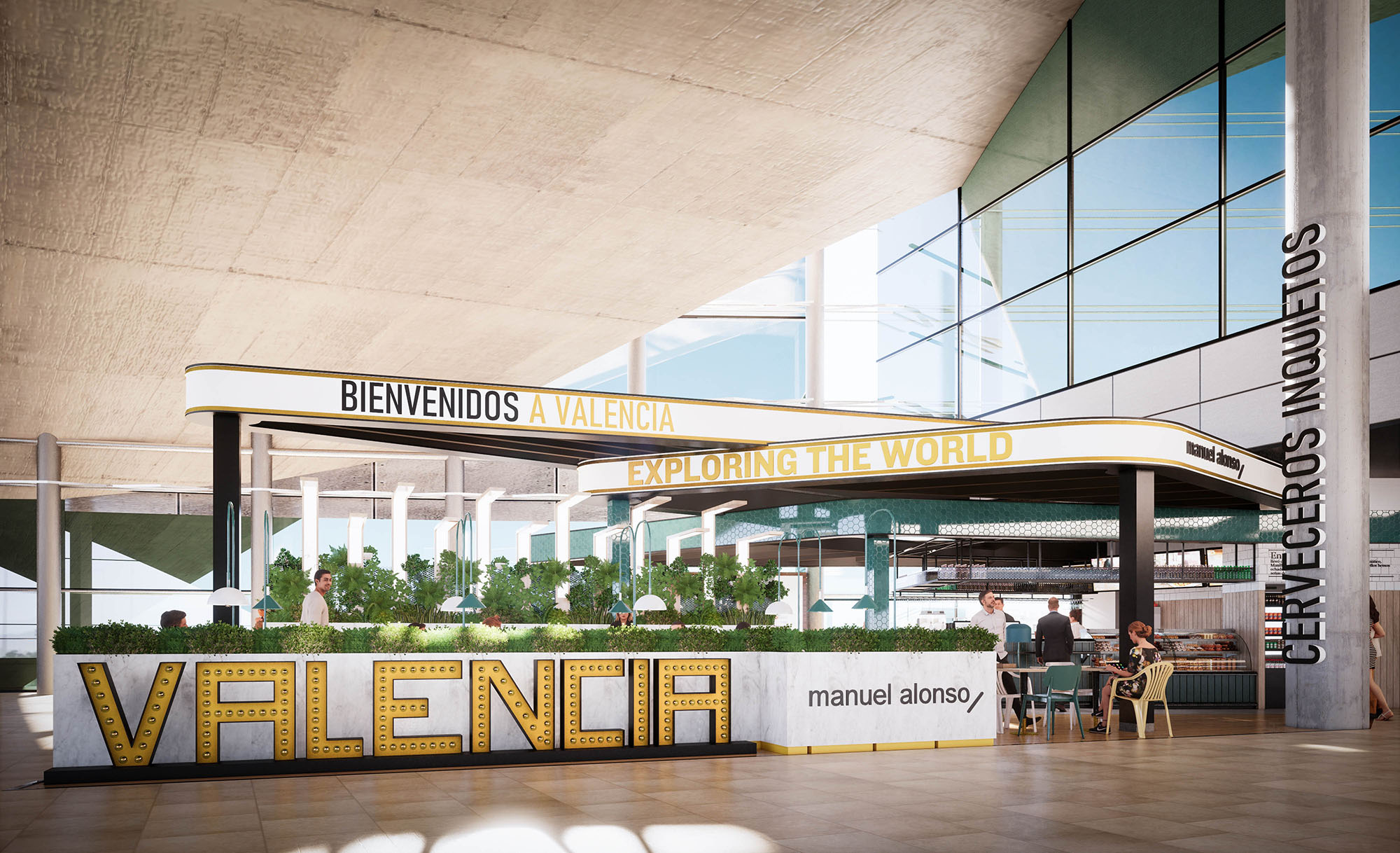
Branding is integrated architecturally rather than applied superficially. Bold yellow typography runs as a linear cornice above the counters, reading as a luminous band that unifies long façades and different modules. Black bands and frames emphasize openings and service points, while curated graphic panels showcase products and reinforce the narrative of travel “from Reus” or “Valencia” to the world, adapting text to each location without altering the overall identity.
In locations with generous façades, the design opens to plazas and terraces through large glazed planes and minimal framing. Interior flooring extends visually to exterior decking or paving, dissolving the threshold and turning terraces into an extension of the main hall. Pergolas and light canopies articulate these outdoor areas, providing shade and integrating lighting, signage and vegetation.
The edge between inside and outside is treated as an active façade with bar-height counters facing the public space, attracting passersby and providing a direct relationship with the urban environment. Structural columns are wrapped and branded, transforming technical elements into vertical beacons visible from a distance.
Sustainability is addressed through both material selection and operational strategies. The repeated use of standardized furniture and modular bar elements reduces manufacturing waste and facilitates maintenance across the seven projects. Preference is given to durable finishes such as high-resistance tiles, compact surfaces and powder-coated steel, extending lifecycle and minimizing replacement.
Where possible, LED lighting with high efficiency and dimmable controls is implemented, aligned with the regular ceiling grid to optimize installation. The open layout maximizes natural light penetration from existing façades, reducing daytime energy consumption. Planters and pockets of greenery in terraces and interior zones improve microclimate and user comfort, while specifying local suppliers for wood and fittings reduces transport impact and reinforces the link between the brand and each Spanish city it inhabits.
LIST OF PROJECTS EXPERIENCE
Designed, Executed and/or Built Projects
SPAIN
1. Exploring The World - Asturias - L201B
2. Exploring The World - Madrid - L121
3. Exploring The World - Mallorca - L3.04
4. Exploring The World - Mallorca - L286
5. Exploring The World - Murcia - L206
6. Exploring The World - Reus - L226.2
7. Exploring The World - Valencia - L188.2
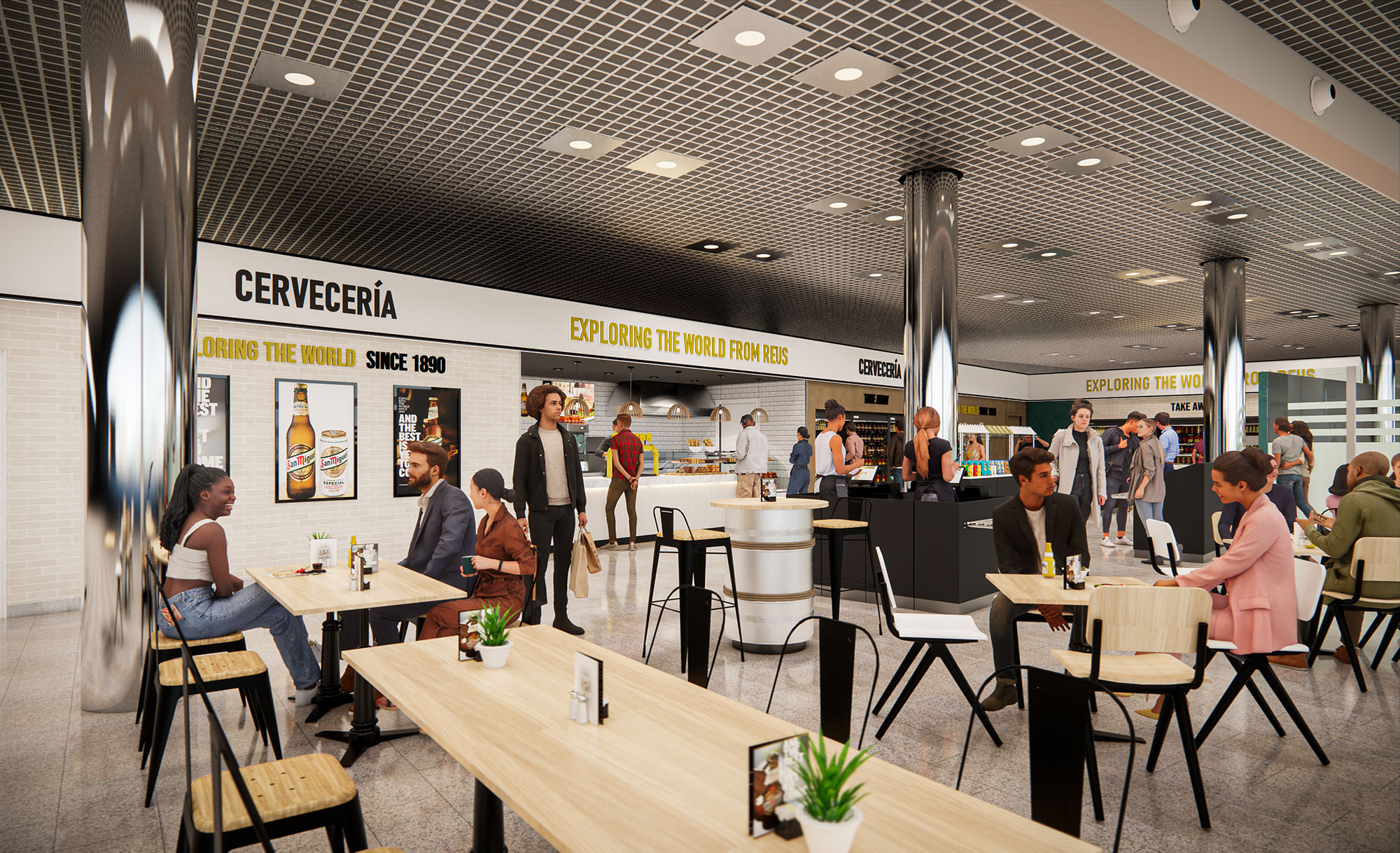
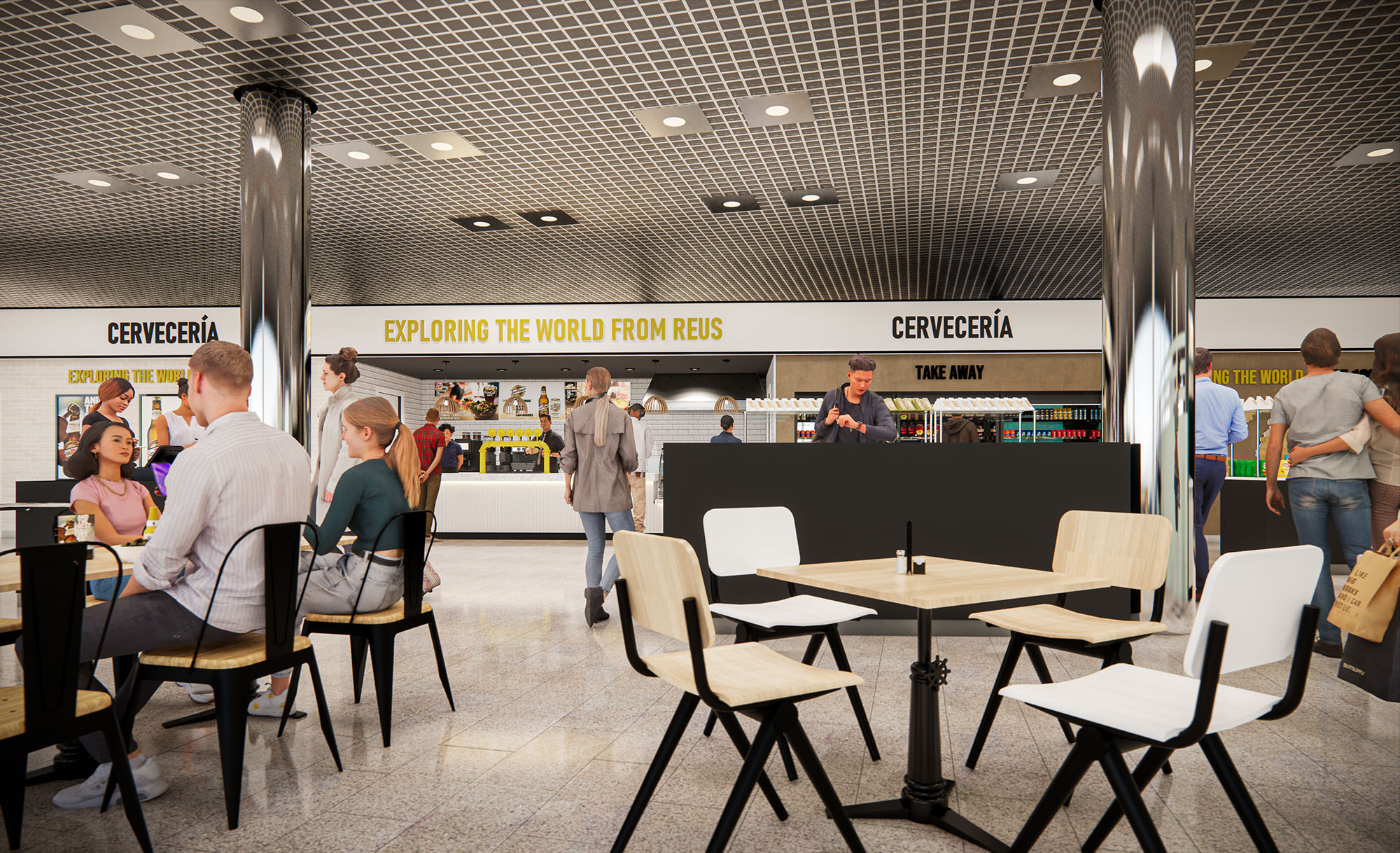
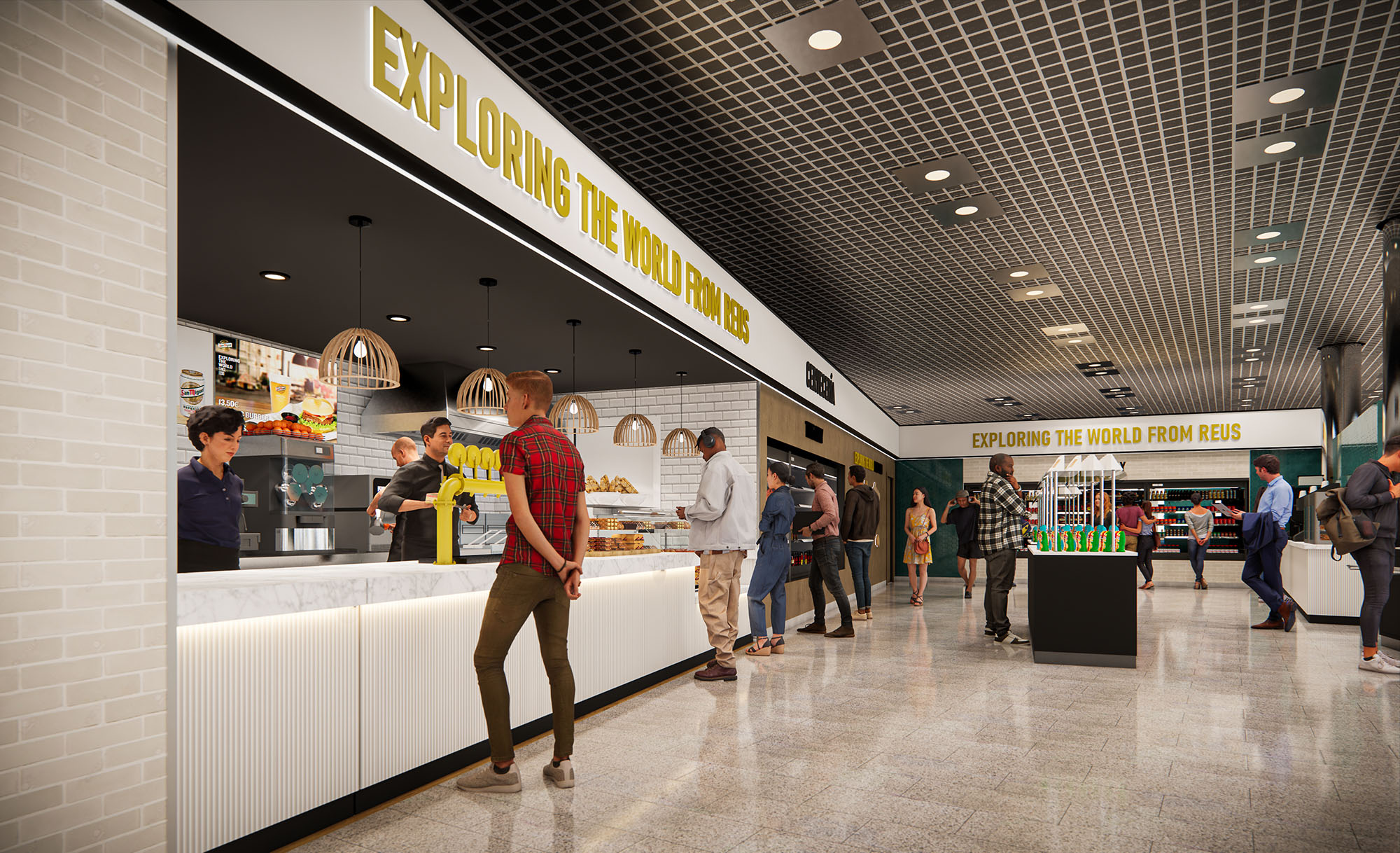


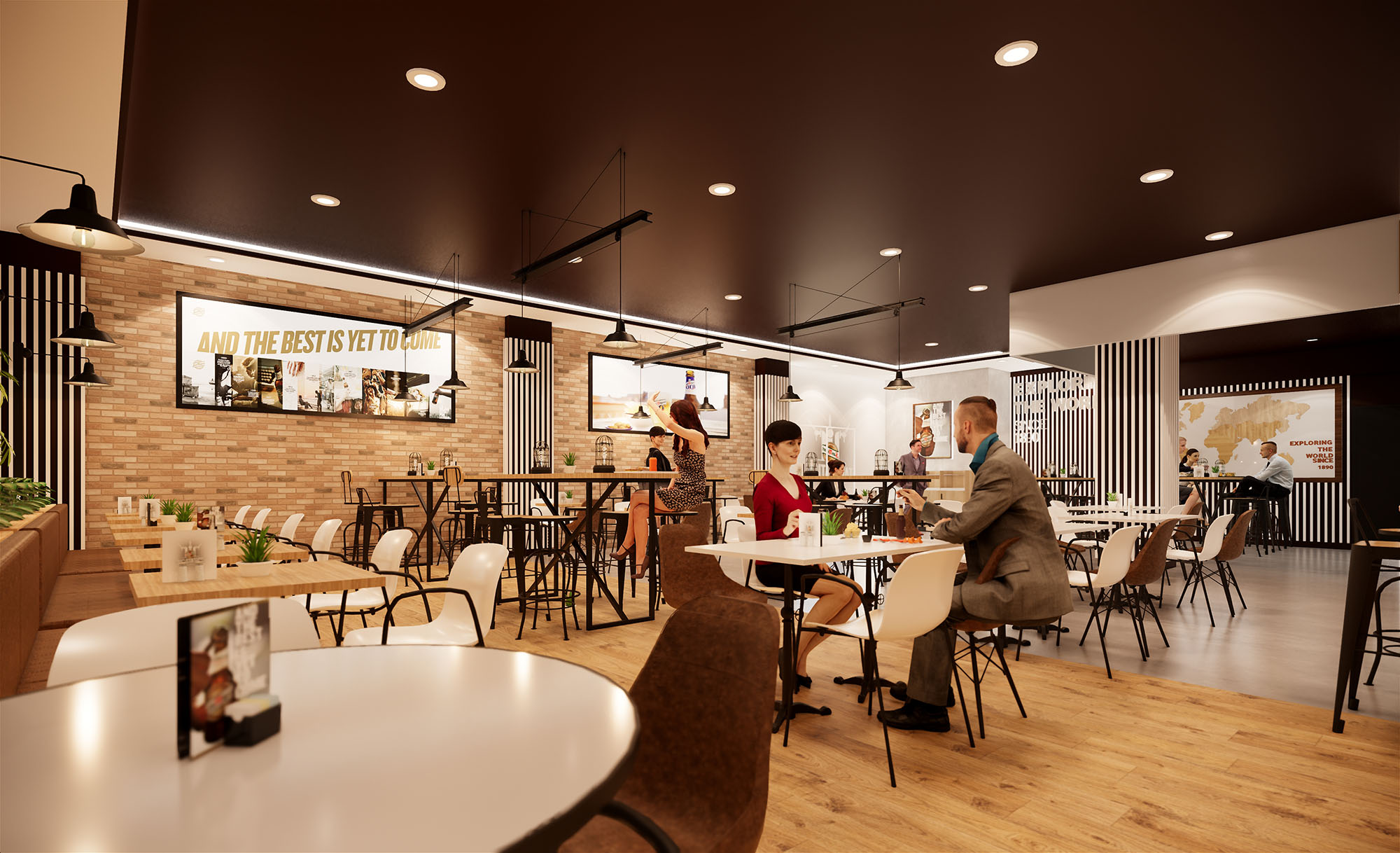
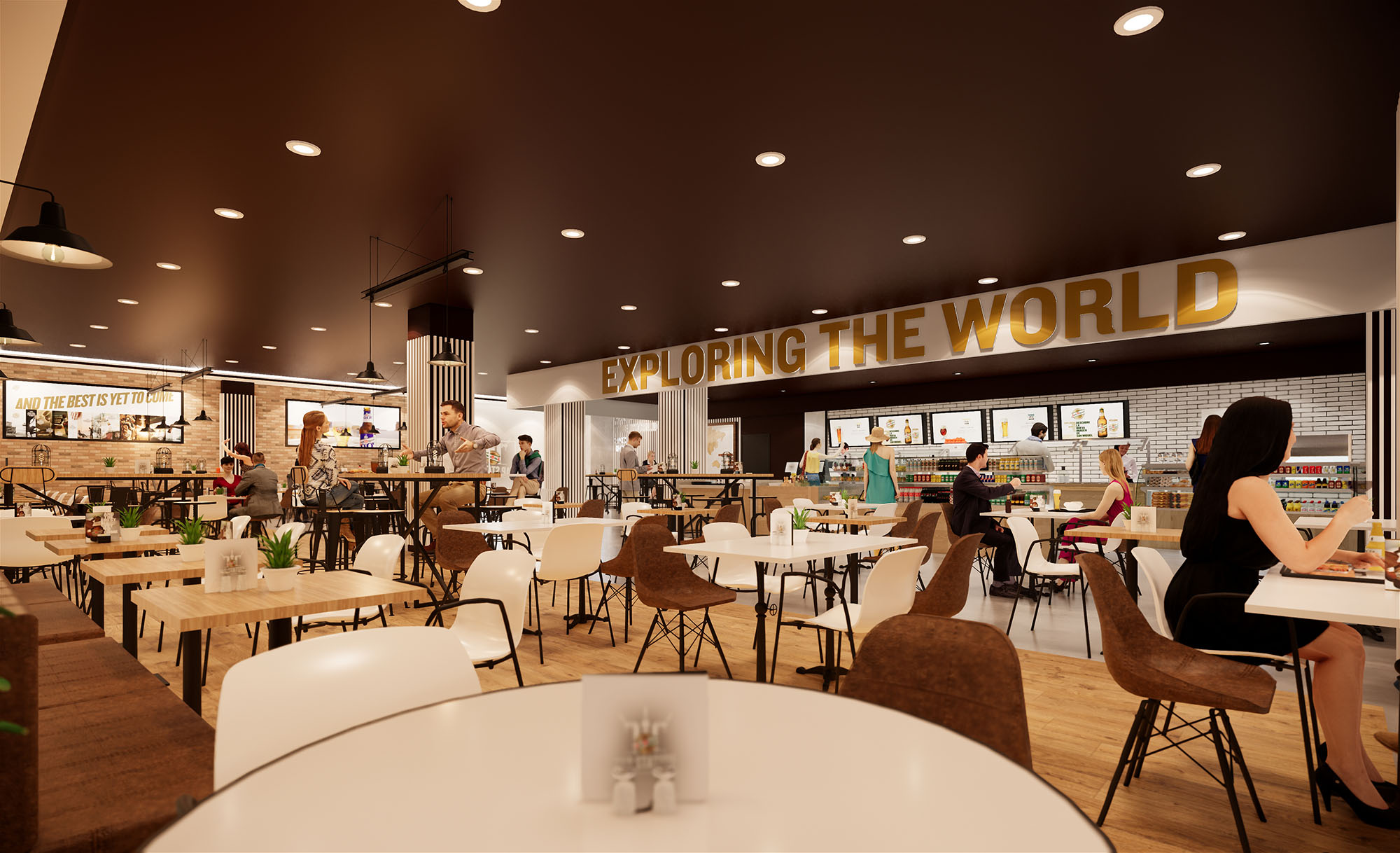
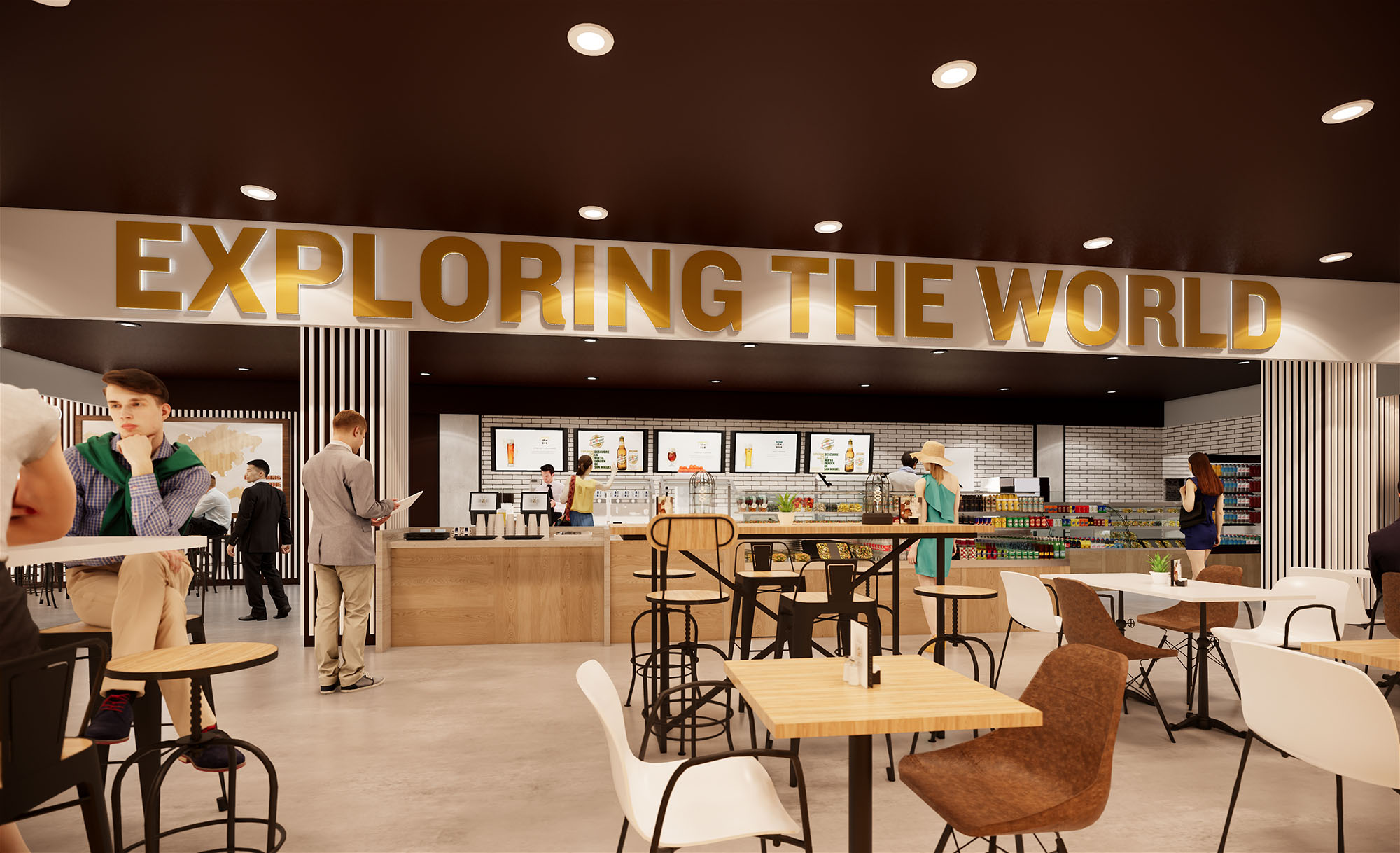
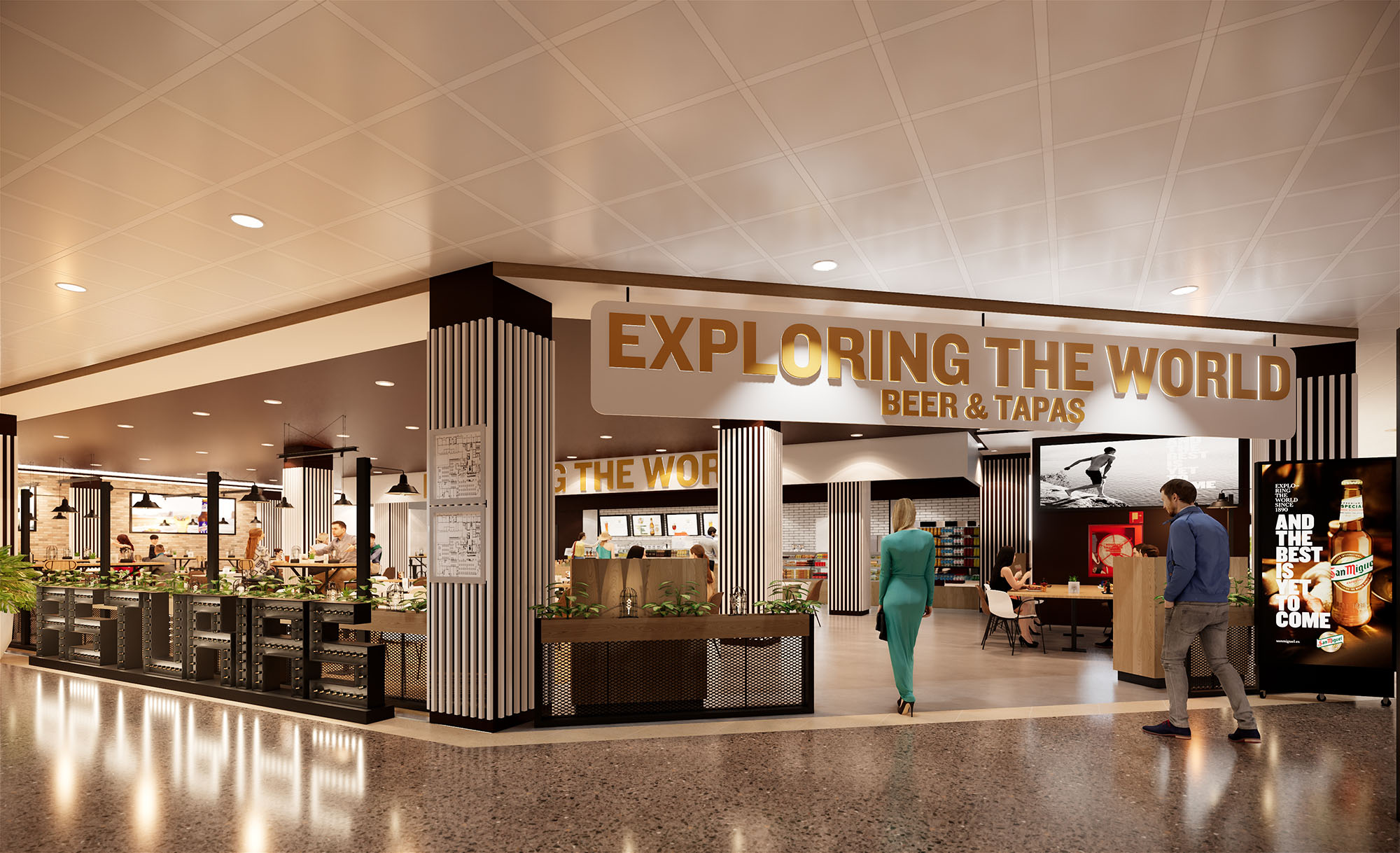
“Exploring the World” is conceived as a scalable hospitality concept that connects different Spanish cities through a unified architectural identity. Each location functions as an urban lounge where the idea of travel is translated into clear sight lines, permeable edges and a graphic narrative that runs through all spaces. The design emphasizes accessibility and visual openness, allowing users to intuitively understand the offer while feeling part of a broader journey across seven destinations.
The concept balances the informality of a cervecería with the efficiency of a contemporary food-court kiosk. A restrained palette of materials and colors is repeated in each project, creating brand cohesion and allowing local contextual variations in furniture arrangement, façade permeability and integration with surrounding commercial flows.
The plan is structured around a central service bar that operates as both visual anchor and functional core. Ordering, preparation and pick-up are aligned linearly to reduce crossings between customers and staff, improving ergonomics and safety. Perimeter counters and islands of seating radiate from this core, generating different degrees of intimacy: quick stops at high tables, social sharing at communal benches, and more relaxed stays at lower café tables.
In airport and station environments, the interventions prioritize transparency. The perimeter is largely open, with only low-height elements and light metal frames defining the boundary. This strategy ensures uninterrupted visual connections with departure halls and exterior plazas, encouraging spontaneous use and orienting the traveler within the terminal.
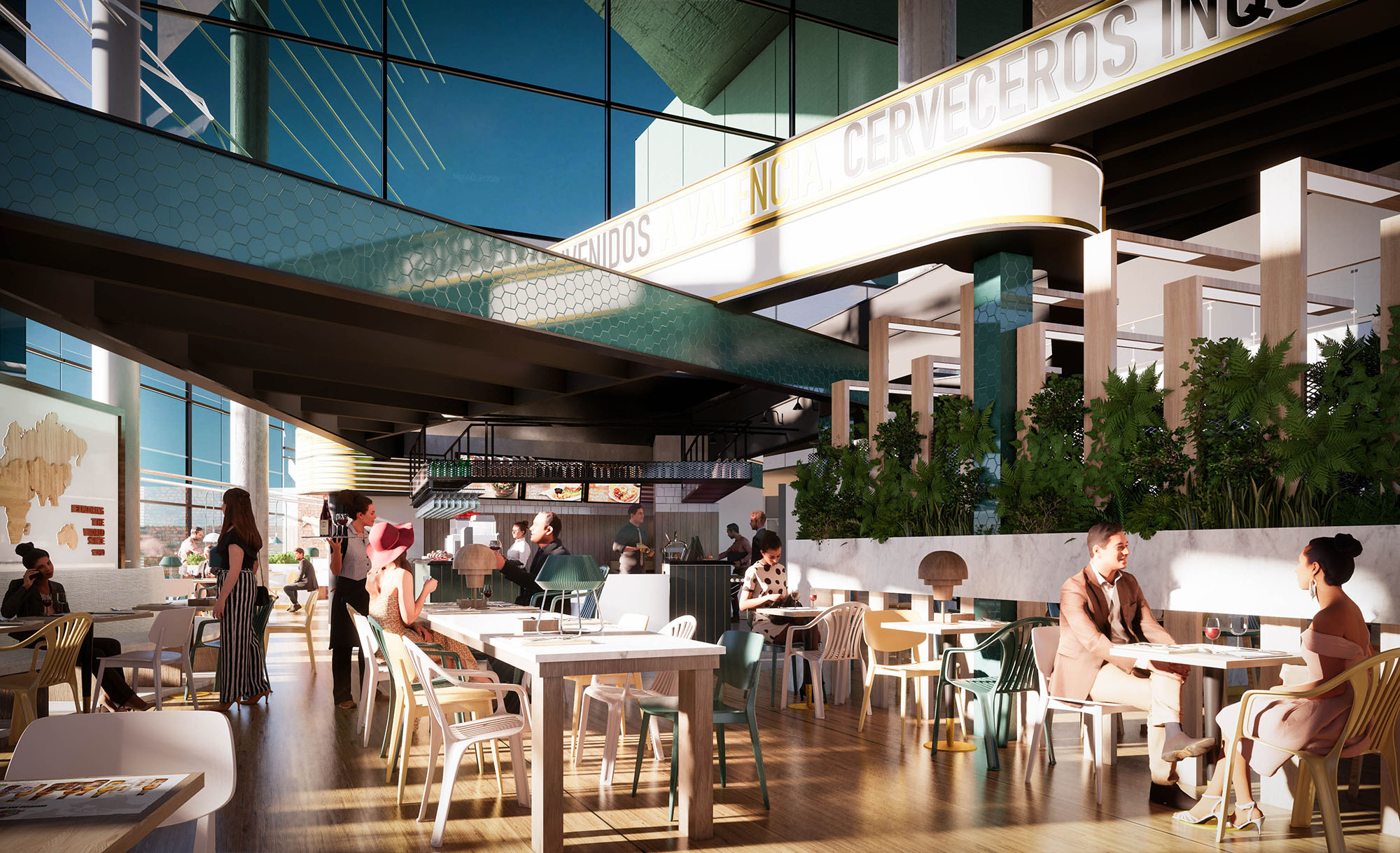
The interior design combines robust hospitality standards with a warm, approachable atmosphere. Furniture is characterized by slender black metal structures and light-toned timber tops, creating a calm horizontal datum against the more technical ceiling. Chairs and stools feature slightly angled legs and curved backs for comfort and stability, while communal tables encourage social interaction and group use.
Lighting is layered: an orthogonal grid of recessed downlights ensures homogeneous general illumination, complemented by accent fixtures over the bar and product displays. In some units, woven pendant lamps introduce a tactile, domestic note that softens the industrial ceiling grid. This contrast underlines the bar as a focal point and subtly guides movement and queuing.
The material palette hinges on three elements: white ceramic tiles, light natural wood, and black metal. White tiles form a continuous backdrop for the bar, reflecting light and facilitating maintenance, while also evoking traditional Iberian taverns in a contemporary language. Wood surfaces provide warmth and tactility where users sit and touch, offering a counterpoint to the coolness of tile and metal.
Branding is integrated architecturally rather than applied superficially. Bold yellow typography runs as a linear cornice above the counters, reading as a luminous band that unifies long façades and different modules. Black bands and frames emphasize openings and service points, while curated graphic panels showcase products and reinforce the narrative of travel “from Reus” or “Valencia” to the world, adapting text to each location without altering the overall identity.
In locations with generous façades, the design opens to plazas and terraces through large glazed planes and minimal framing. Interior flooring extends visually to exterior decking or paving, dissolving the threshold and turning terraces into an extension of the main hall. Pergolas and light canopies articulate these outdoor areas, providing shade and integrating lighting, signage and vegetation.
The edge between inside and outside is treated as an active façade with bar-height counters facing the public space, attracting passersby and providing a direct relationship with the urban environment. Structural columns are wrapped and branded, transforming technical elements into vertical beacons visible from a distance.
Sustainability is addressed through both material selection and operational strategies. The repeated use of standardized furniture and modular bar elements reduces manufacturing waste and facilitates maintenance across the seven projects. Preference is given to durable finishes such as high-resistance tiles, compact surfaces and powder-coated steel, extending lifecycle and minimizing replacement.
Where possible, LED lighting with high efficiency and dimmable controls is implemented, aligned with the regular ceiling grid to optimize installation. The open layout maximizes natural light penetration from existing façades, reducing daytime energy consumption. Planters and pockets of greenery in terraces and interior zones improve microclimate and user comfort, while specifying local suppliers for wood and fittings reduces transport impact and reinforces the link between the brand and each Spanish city it inhabits.


Our offices are located in Barcelona, Cancún, Chicago and Santo Domingo, but thanks to technology we can do projects on all over the world.
Barcelona
Bac de Roda 136
08020, Barcelona
Spain
Madrid
Av. de Buendía 11
19005 Guadalajara (Madrid)
Spain
Chicago
373 Hazel Ave, Apt A1
60022, Glencoe, Illinois
United States