

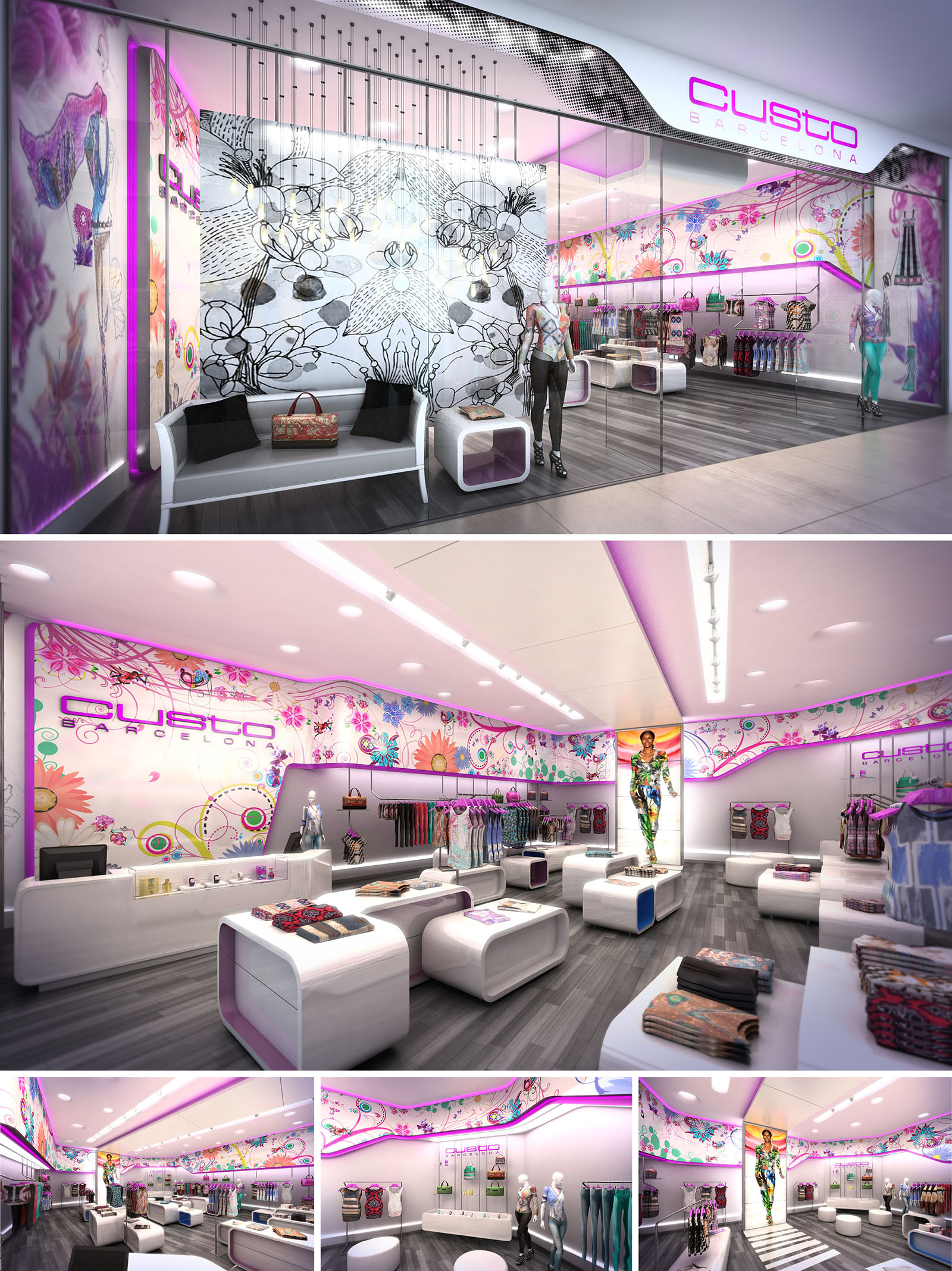
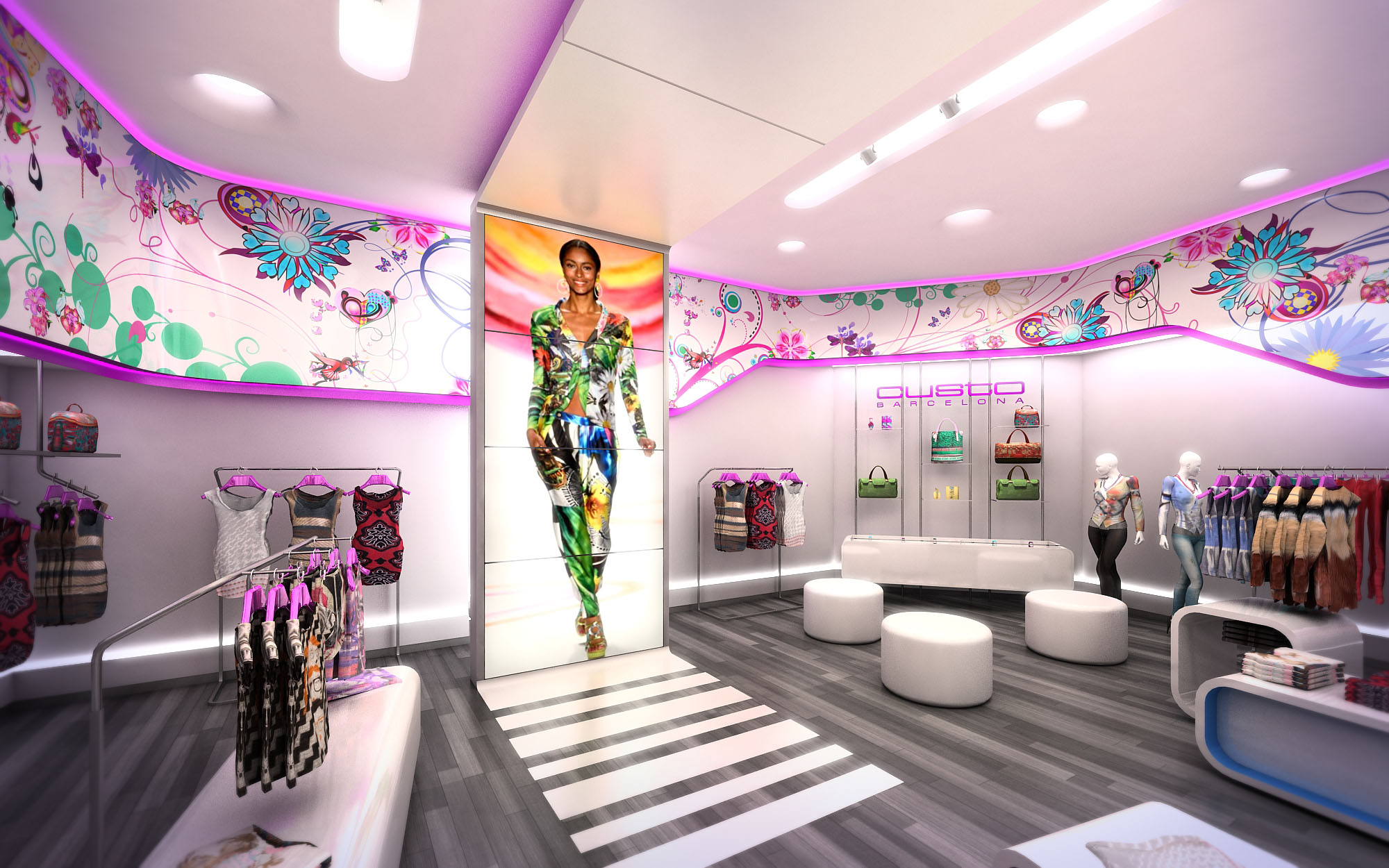
The CUSTO store in Barcelona is conceived as an immersive retail landscape that translates the brand’s vibrant graphic universe into three-dimensional space. The interior operates as a luminous white canvas over which a dynamic layer of color, illustration, and light is applied, echoing the fashion collections. An enveloping ribbon of artwork runs along the perimeter, visually unifying the store while guiding the customer through a curated sequence of product zones.
The design balances a futuristic minimalism with expressive, almost pop-art surfaces. Clean, rounded volumes and continuous lines generate a sense of fluidity, reducing visual noise so the garments and graphic murals remain the protagonists. The store becomes a hybrid between gallery and boutique, where fashion is displayed as collectible art pieces.
The plan is organized as a linear, open-flow space that begins at the fully glazed façade and extends toward the focal backdrop featuring a large-scale fashion graphic. This perspective axis reinforces depth and pulls visitors into the interior. Entrance and window display zones work as a porous threshold, combining seating, mannequins, and accessory displays to capture attention while maintaining transparency from the mall corridor.
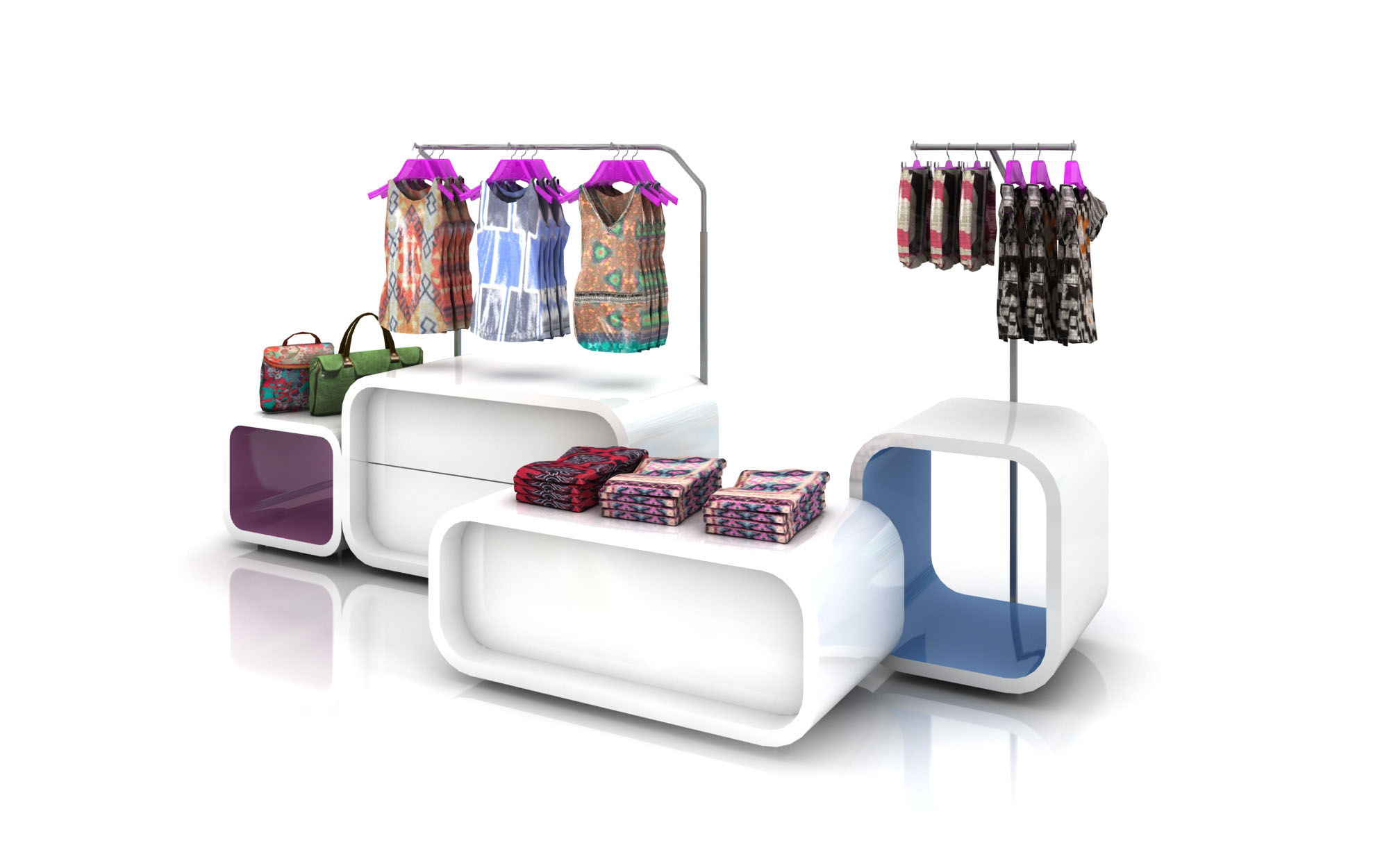
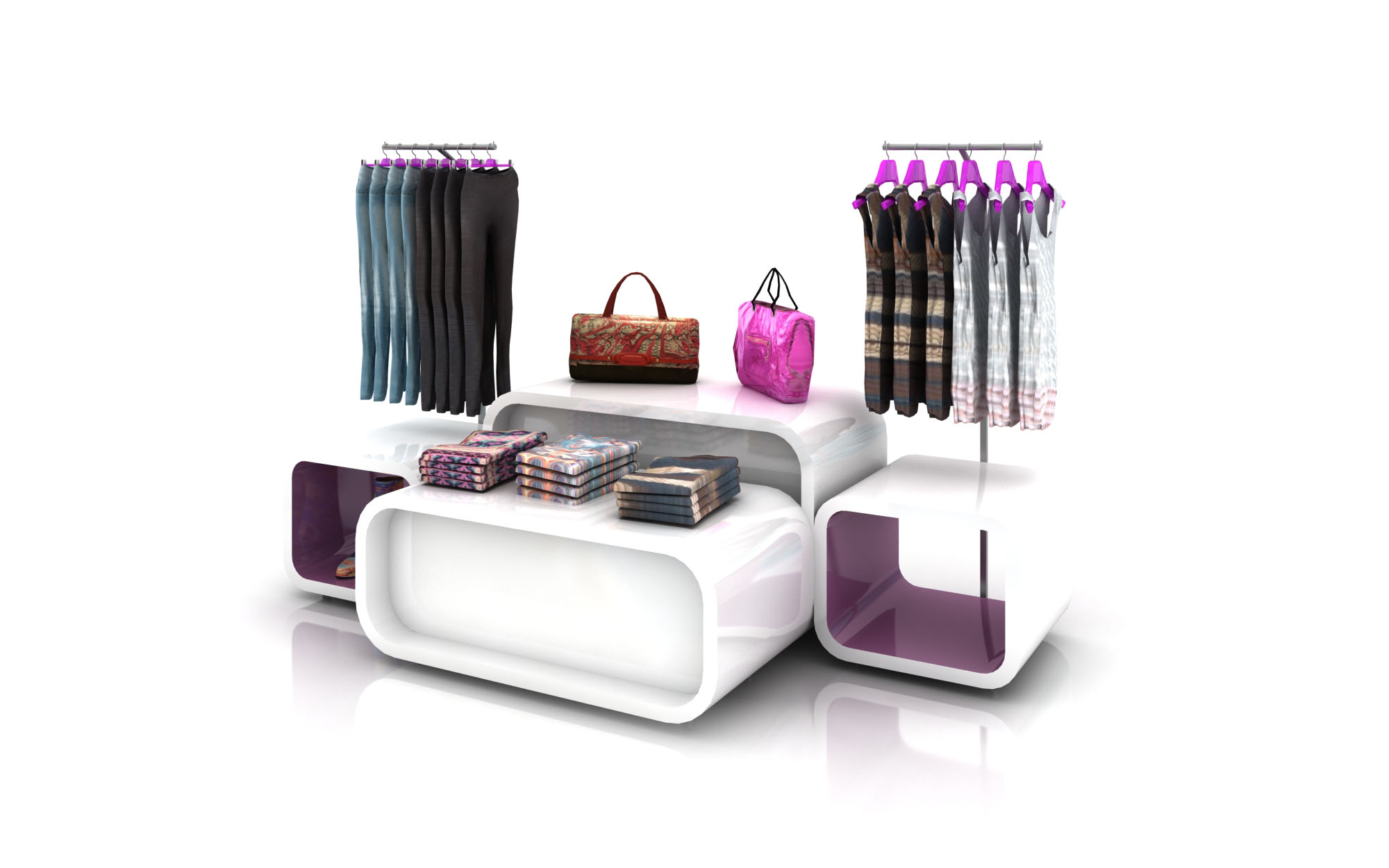
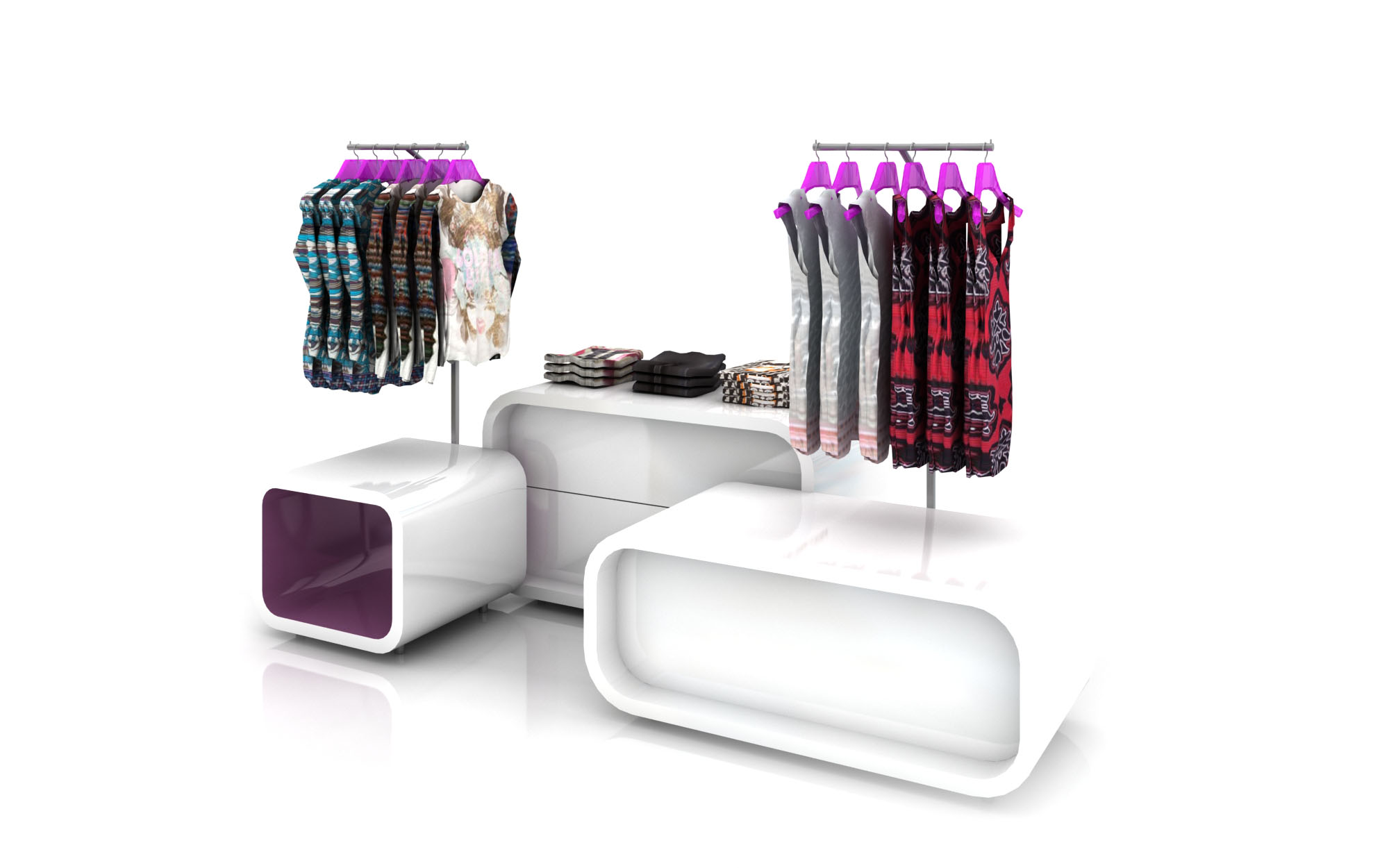
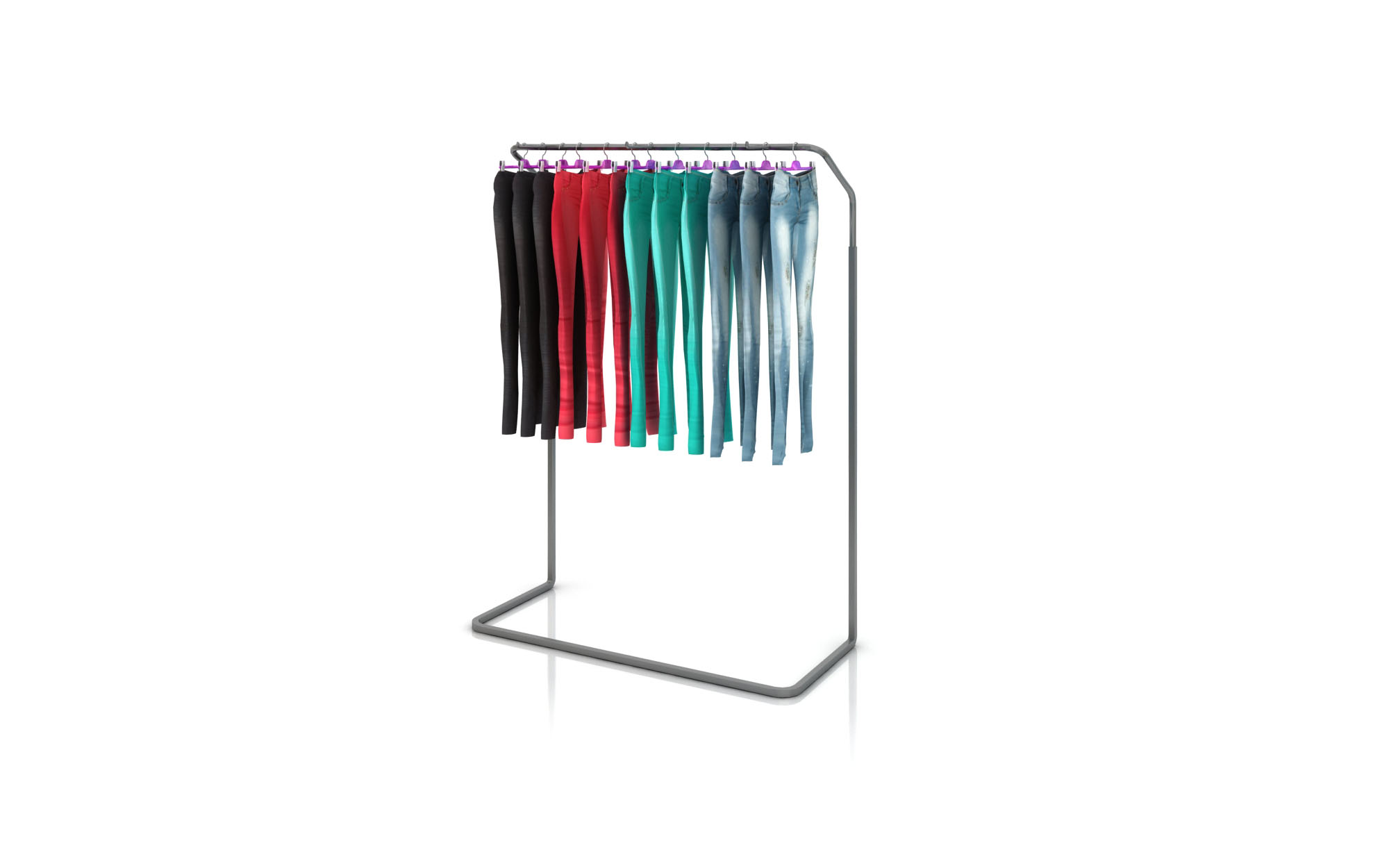
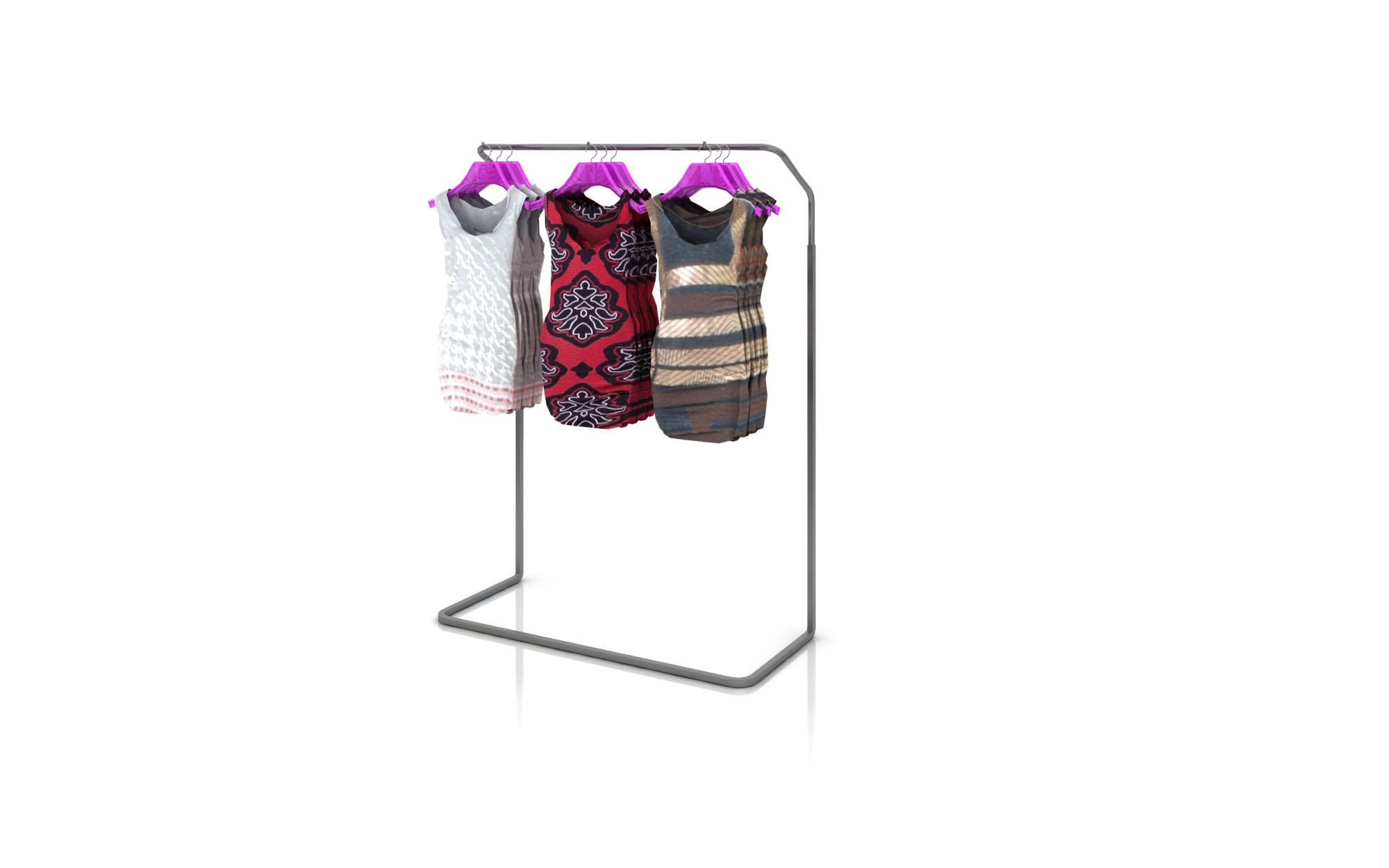
Central freestanding modules structure the circulation without rigid partitions, allowing a continuous loop around the store. These island fixtures are low in height to preserve long visual corridors and encourage cross-views between product categories. Perimeter walls host hanging rails and shelving, freeing the center for flexible merchandising and temporary installations. The cash desk is positioned near the entrance edge, ensuring intuitive orientation and efficient purchase flow.
The interior architecture is defined by softly curved geometries and a predominance of white, high-gloss surfaces. Walls are articulated by an upper undulating band that separates the neutral base plane from the intense printed graphics, functioning both as a design signature and as a concealed technical plenum for lighting and services. This ribbon effect visually lifts the ceiling, increasing the perceived height and generating a floating sensation.
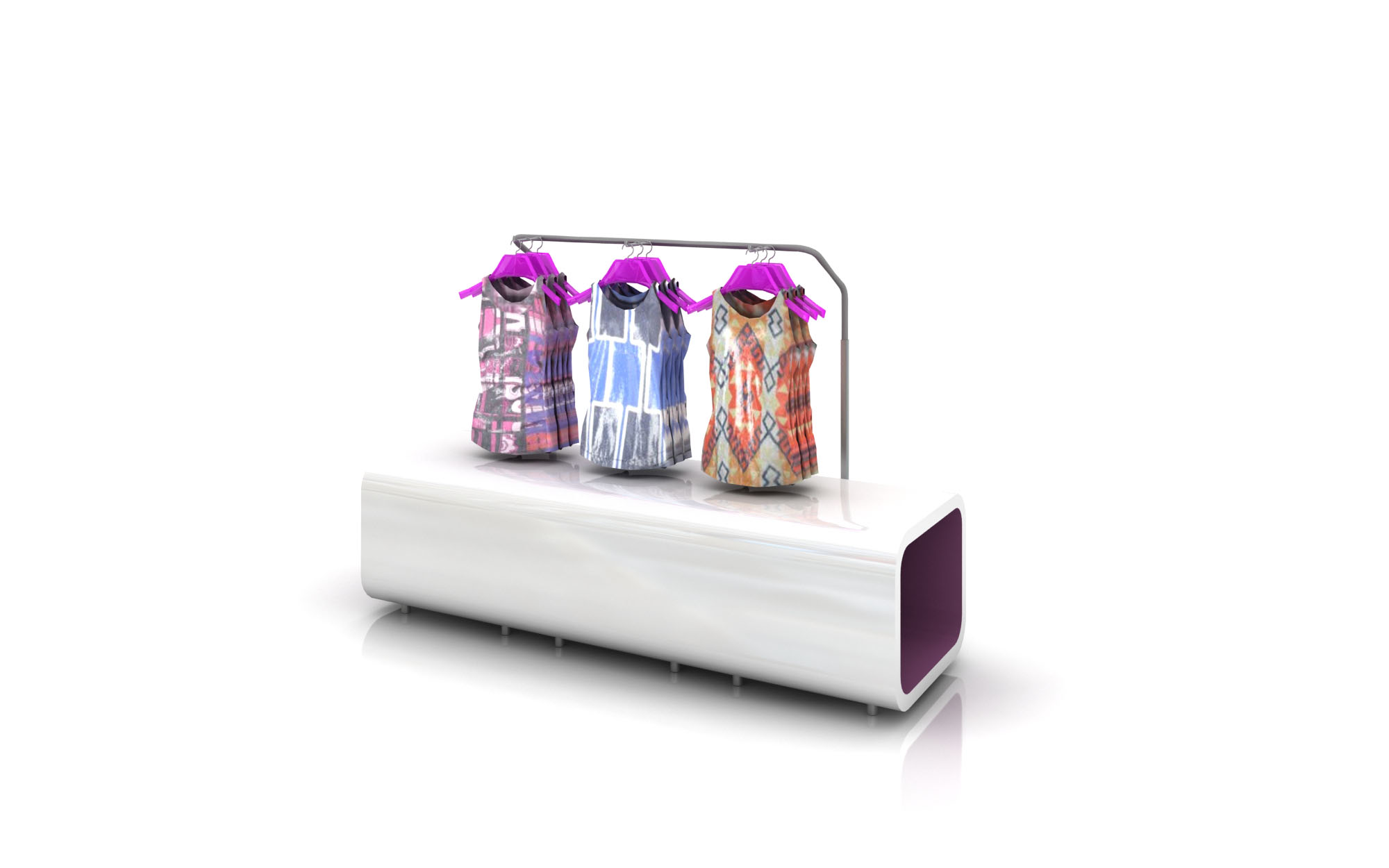
Furniture pieces are conceived as sculptural monoliths with rounded edges, integrating storage, display, and seating. Their modular nature allows reconfiguration according to seasonal needs. The continuous language between service counter, display tables, and seating elements creates a cohesive family of objects, reinforcing brand identity. Mannequins are strategically located at nodal points—corners, central alignments, and end walls—acting as three-dimensional extensions of the graphics behind them.
The material palette combines lacquered MDF, back-painted glass, and polished solid surfaces, all in a predominantly white tone to maximize light reflection. This neutral base is contrasted with high-definition printed panels featuring floral and abstract motifs in magenta, cyan, and citrus hues, mirroring the textile patterns of the clothing line. Flooring in warm grey wood or wood-look material introduces a tactile counterpoint, grounding the otherwise ethereal atmosphere.
Lighting is layered to support both ambience and product emphasis. Recessed downlights provide general uniform illumination, while a linear track of adjustable projectors targets mannequins and merchandise. Concealed LED strips integrated into the upper ribbon and furniture edges emit a soft magenta glow, enhancing the brand’s chromatic identity and creating depth without overwhelming the garments. The full-height glass façade allows visual continuity with the mall and capitalizes on existing ambient light.
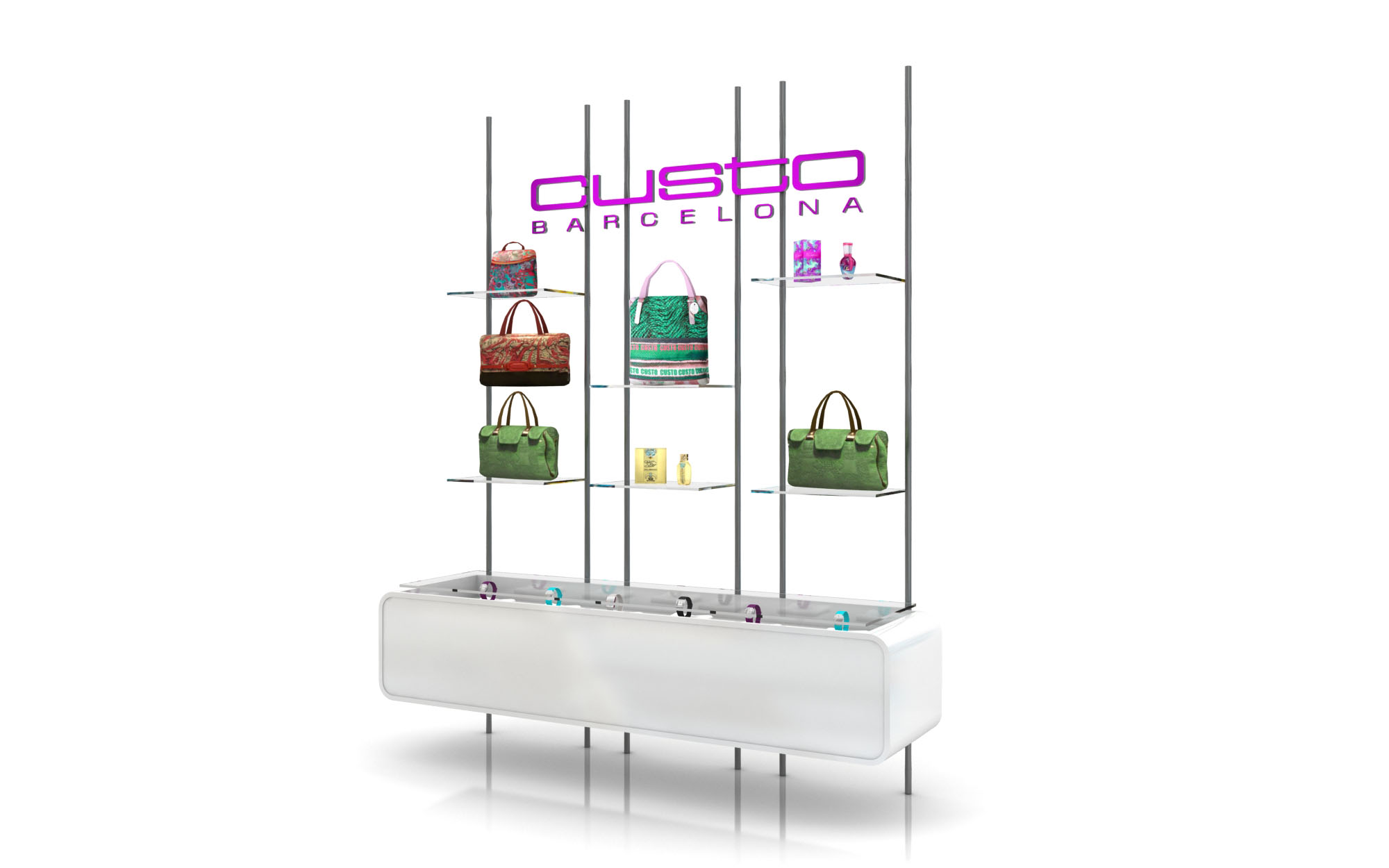
Brand identity is embedded architecturally through oversized logotypes, continuous graphic murals, and a consistent chromatic code. The interplay of illustration and architecture transforms the perimeter envelope into a communicative skin that narrates the CUSTO universe. Rather than relying on separate signage elements, the design fuses brand communication with spatial form, ensuring immediate recognition from the exterior.
Sustainability is addressed through the use of energy-efficient LED lighting systems with dimmable controls, reducing consumption and allowing adaptation to natural light levels throughout the day. Durable, low-maintenance materials such as high-pressure laminates and quality coatings extend the life cycle of fixtures, minimizing replacement needs. Where feasible, modular furniture facilitates reuse and adaptation in future layouts, reducing waste. The bright, reflective surfaces enhance luminosity, enabling a lower installed lighting power while maintaining the vibrant, high-impact visual experience that defines the CUSTO store.
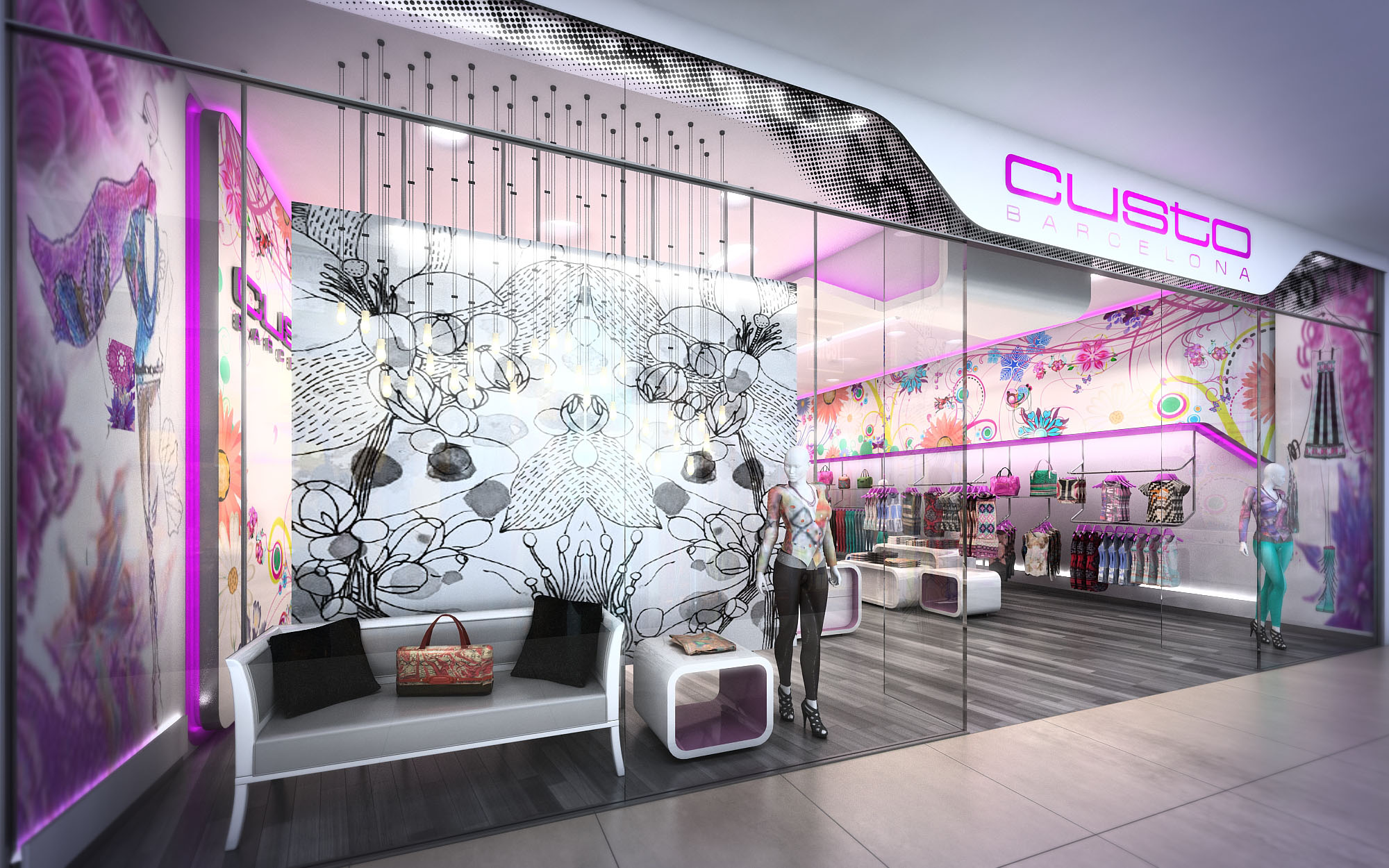
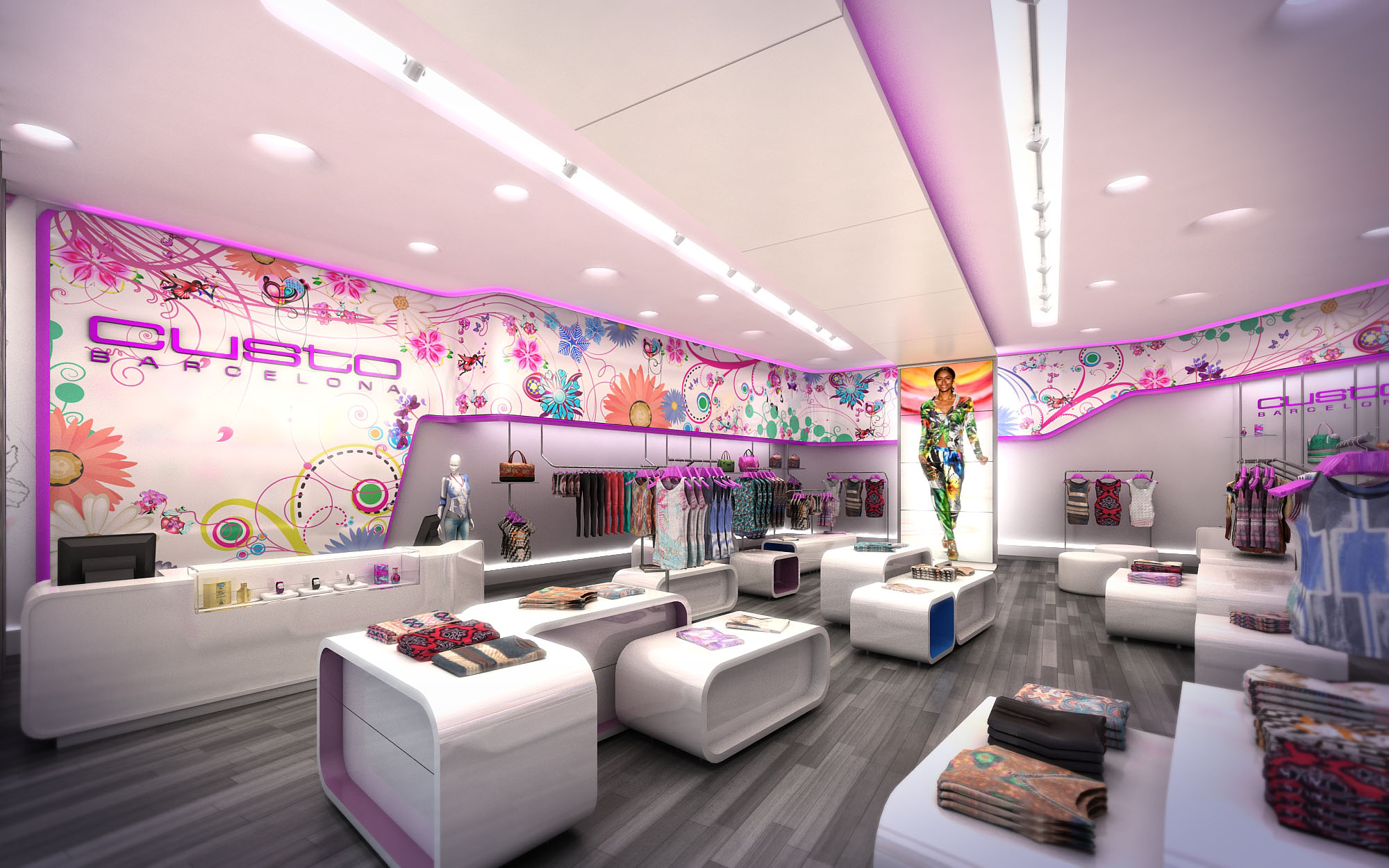

The CUSTO store in Barcelona is conceived as an immersive retail landscape that translates the brand’s vibrant graphic universe into three-dimensional space. The interior operates as a luminous white canvas over which a dynamic layer of color, illustration, and light is applied, echoing the fashion collections. An enveloping ribbon of artwork runs along the perimeter, visually unifying the store while guiding the customer through a curated sequence of product zones.
The design balances a futuristic minimalism with expressive, almost pop-art surfaces. Clean, rounded volumes and continuous lines generate a sense of fluidity, reducing visual noise so the garments and graphic murals remain the protagonists. The store becomes a hybrid between gallery and boutique, where fashion is displayed as collectible art pieces.
The plan is organized as a linear, open-flow space that begins at the fully glazed façade and extends toward the focal backdrop featuring a large-scale fashion graphic. This perspective axis reinforces depth and pulls visitors into the interior. Entrance and window display zones work as a porous threshold, combining seating, mannequins, and accessory displays to capture attention while maintaining transparency from the mall corridor.
Central freestanding modules structure the circulation without rigid partitions, allowing a continuous loop around the store. These island fixtures are low in height to preserve long visual corridors and encourage cross-views between product categories. Perimeter walls host hanging rails and shelving, freeing the center for flexible merchandising and temporary installations. The cash desk is positioned near the entrance edge, ensuring intuitive orientation and efficient purchase flow.
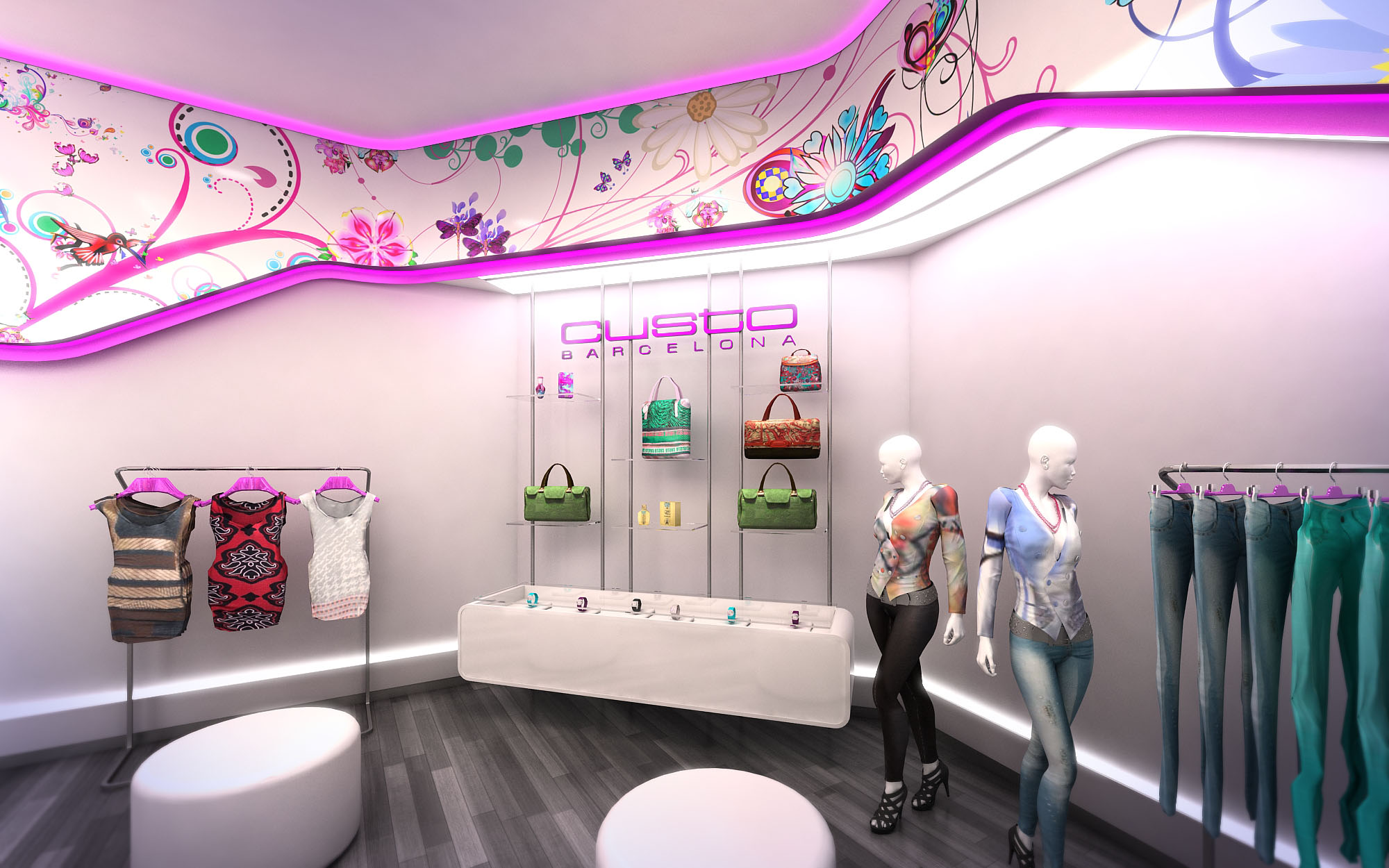
The interior architecture is defined by softly curved geometries and a predominance of white, high-gloss surfaces. Walls are articulated by an upper undulating band that separates the neutral base plane from the intense printed graphics, functioning both as a design signature and as a concealed technical plenum for lighting and services. This ribbon effect visually lifts the ceiling, increasing the perceived height and generating a floating sensation.
Furniture pieces are conceived as sculptural monoliths with rounded edges, integrating storage, display, and seating. Their modular nature allows reconfiguration according to seasonal needs. The continuous language between service counter, display tables, and seating elements creates a cohesive family of objects, reinforcing brand identity. Mannequins are strategically located at nodal points—corners, central alignments, and end walls—acting as three-dimensional extensions of the graphics behind them.
The material palette combines lacquered MDF, back-painted glass, and polished solid surfaces, all in a predominantly white tone to maximize light reflection. This neutral base is contrasted with high-definition printed panels featuring floral and abstract motifs in magenta, cyan, and citrus hues, mirroring the textile patterns of the clothing line. Flooring in warm grey wood or wood-look material introduces a tactile counterpoint, grounding the otherwise ethereal atmosphere.
Lighting is layered to support both ambience and product emphasis. Recessed downlights provide general uniform illumination, while a linear track of adjustable projectors targets mannequins and merchandise. Concealed LED strips integrated into the upper ribbon and furniture edges emit a soft magenta glow, enhancing the brand’s chromatic identity and creating depth without overwhelming the garments. The full-height glass façade allows visual continuity with the mall and capitalizes on existing ambient light.
Brand identity is embedded architecturally through oversized logotypes, continuous graphic murals, and a consistent chromatic code. The interplay of illustration and architecture transforms the perimeter envelope into a communicative skin that narrates the CUSTO universe. Rather than relying on separate signage elements, the design fuses brand communication with spatial form, ensuring immediate recognition from the exterior.
Sustainability is addressed through the use of energy-efficient LED lighting systems with dimmable controls, reducing consumption and allowing adaptation to natural light levels throughout the day. Durable, low-maintenance materials such as high-pressure laminates and quality coatings extend the life cycle of fixtures, minimizing replacement needs. Where feasible, modular furniture facilitates reuse and adaptation in future layouts, reducing waste. The bright, reflective surfaces enhance luminosity, enabling a lower installed lighting power while maintaining the vibrant, high-impact visual experience that defines the CUSTO store.


Our offices are located in Barcelona, Cancún, Chicago and Santo Domingo, but thanks to technology we can do projects on all over the world.
Barcelona
Bac de Roda 136
08020, Barcelona
Spain
Madrid
Av. de Buendía 11
19005 Guadalajara (Madrid)
Spain
Chicago
373 Hazel Ave, Apt A1
60022, Glencoe, Illinois
United States