


The Commercial Containers project in Tulúm reinterprets the traditional retail strip through the language of circular architecture and modular construction. The design transforms recycled shipping containers into a three‑level commercial hub, integrating them within a light steel skeleton and tropical timber envelope. The building acts as an urban façade that mediates between the informal street front and the dense vegetation at the back, while maintaining a strong linear presence along the road.
The concept is based on stacking and staggering container modules to create shaded galleries, generous terraces and double‑height moments that break the typical boxy reading of container architecture. Oblique structural fins and diagonal timber brise‑soleil generate a dynamic rhythm, expressing movement and echoing the angled geometry of the surrounding palm fronds and local vegetation.
The ground floor is conceived as a porous commercial plinth. Continuous glazing and multiple access points allow each retail unit to open directly to the sidewalk, encouraging pedestrian interaction and visual continuity between interior and exterior. The setback from the street creates a slim parking strip and a transitional zone, absorbing the informal character of Tulúm’s infrastructure.
The upper levels host a combination of offices, studios and flexible commercial spaces organized along linear exterior corridors. Terraces facing the street function as semi‑public balconies, offering vantage points over the urban activity while providing spill‑out space for tenants. Circulation is legible and straightforward, with stair cores integrated into the structural frames that punctuate the façade.
The architectural expression is defined by three superposed bands: the transparent, recessed ground floor; the more solid, timber‑clad middle level; and the lightweight roof level marked by the exposed container structure and metal overhangs. This stratification gives scale and hierarchy to the building volume while clearly articulating use.
Large concrete or masonry fins project from the façade, bracing the container volumes and framing the diagonal timber slats. These slats operate as vertical and oblique louvers, filtering sunlight, protecting glazing, and generating a play of shadows that evolves throughout the day. The interplay between industrial elements (corrugated steel, metal railings) and warm natural materials creates a balanced aesthetic midway between tropical rusticity and contemporary urban design.
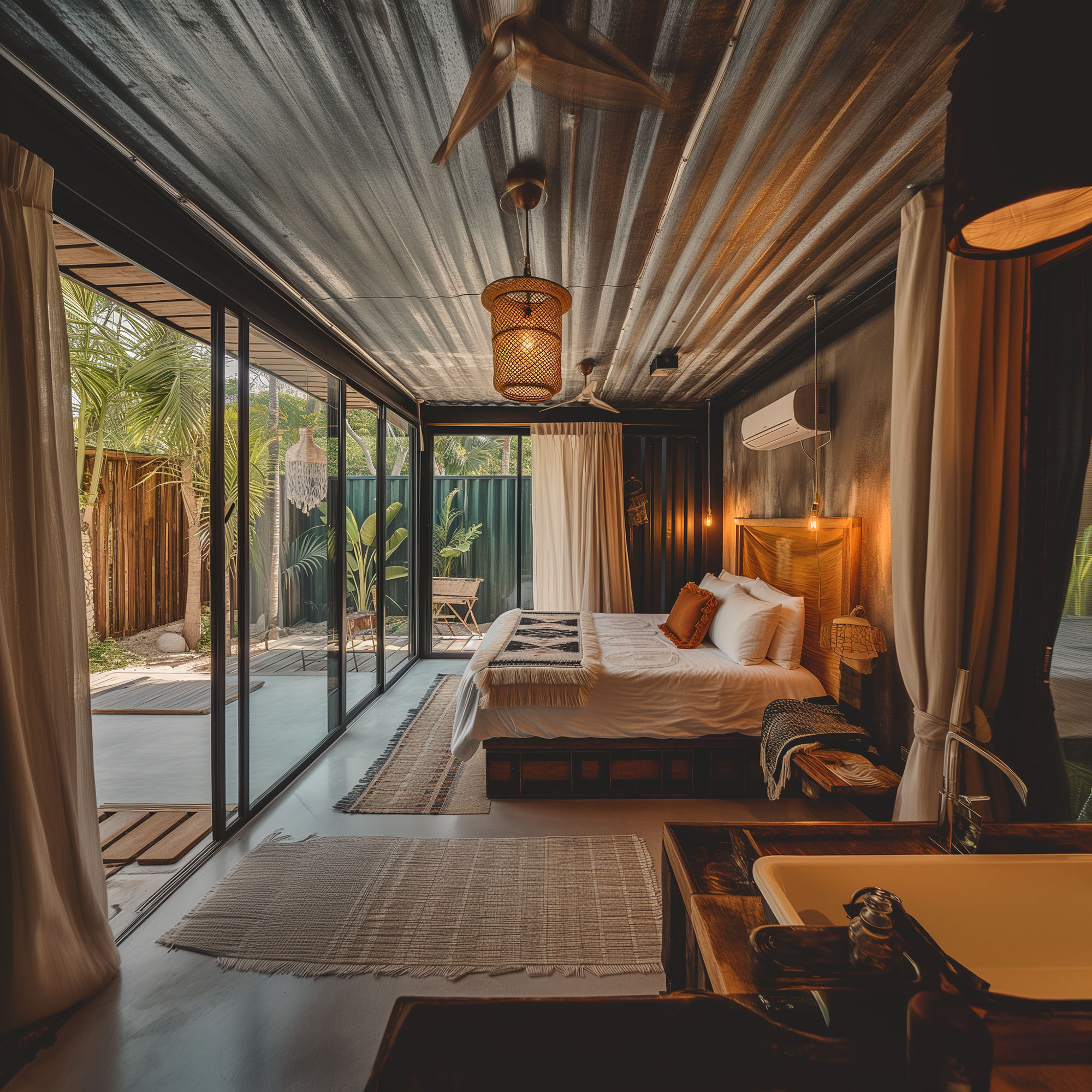
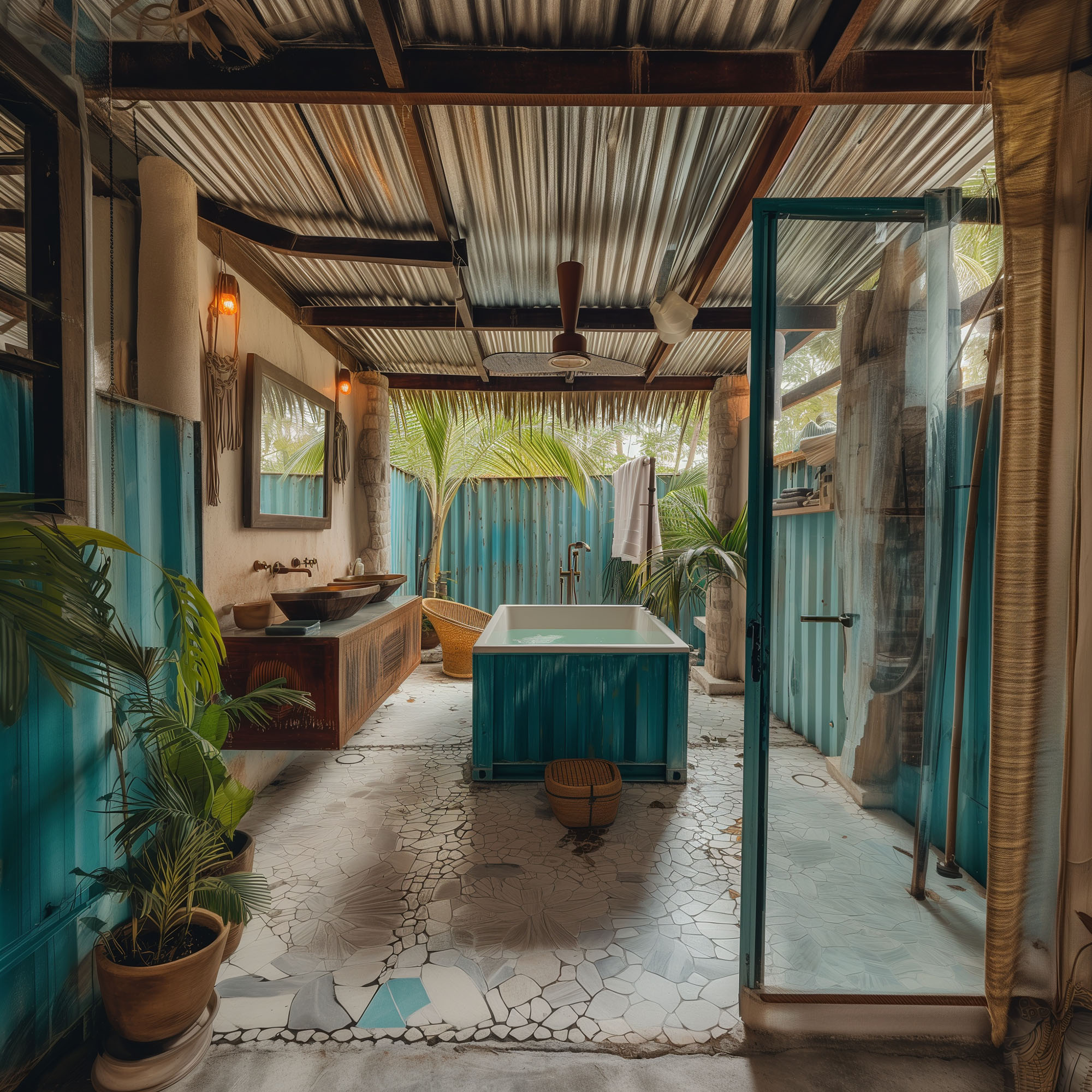
Recycled shipping containers form the primary structural and spatial modules. Their corrugated steel walls are strategically opened to accommodate full‑height glazing, sliding doors and interior connections between units. Internally, the containers are likely thermally insulated and lined with gypsum board or timber panels to provide comfort and acoustic control, while concealing services and reinforcing a more refined interior finish.
On floors and common areas, polished concrete and hardwood are used for durability and low maintenance in a high‑traffic commercial environment. Exposed steel members, visible roof decks and the repetition of timber on ceilings and balustrades extend the exterior language indoors, ensuring continuity between the retail spaces, galleries and terraces.
The project is designed as a passive response to Tulúm’s tropical climate. Deep overhangs, the diagonal timber brise‑soleil and the setback terraces collectively reduce solar gain on the glazed surfaces, limiting cooling demands. Cross‑ventilation is promoted by linear circulation balconies and the ability to open containers on multiple sides, capturing prevailing breezes and reducing reliance on mechanical air conditioning.
Circularity is central to the project’s sustainability strategy. The reuse of shipping containers significantly reduces embodied energy compared to conventional new construction, while the modular approach allows for potential disassembly and relocation of units in the future. The extensive use of locally sourced timber lowers transportation impacts and supports regional economies. Combined with the compact footprint and shared infrastructure of a multi‑tenant building, these measures position the development as a pragmatic example of circular commercial architecture in the Riviera Maya context.
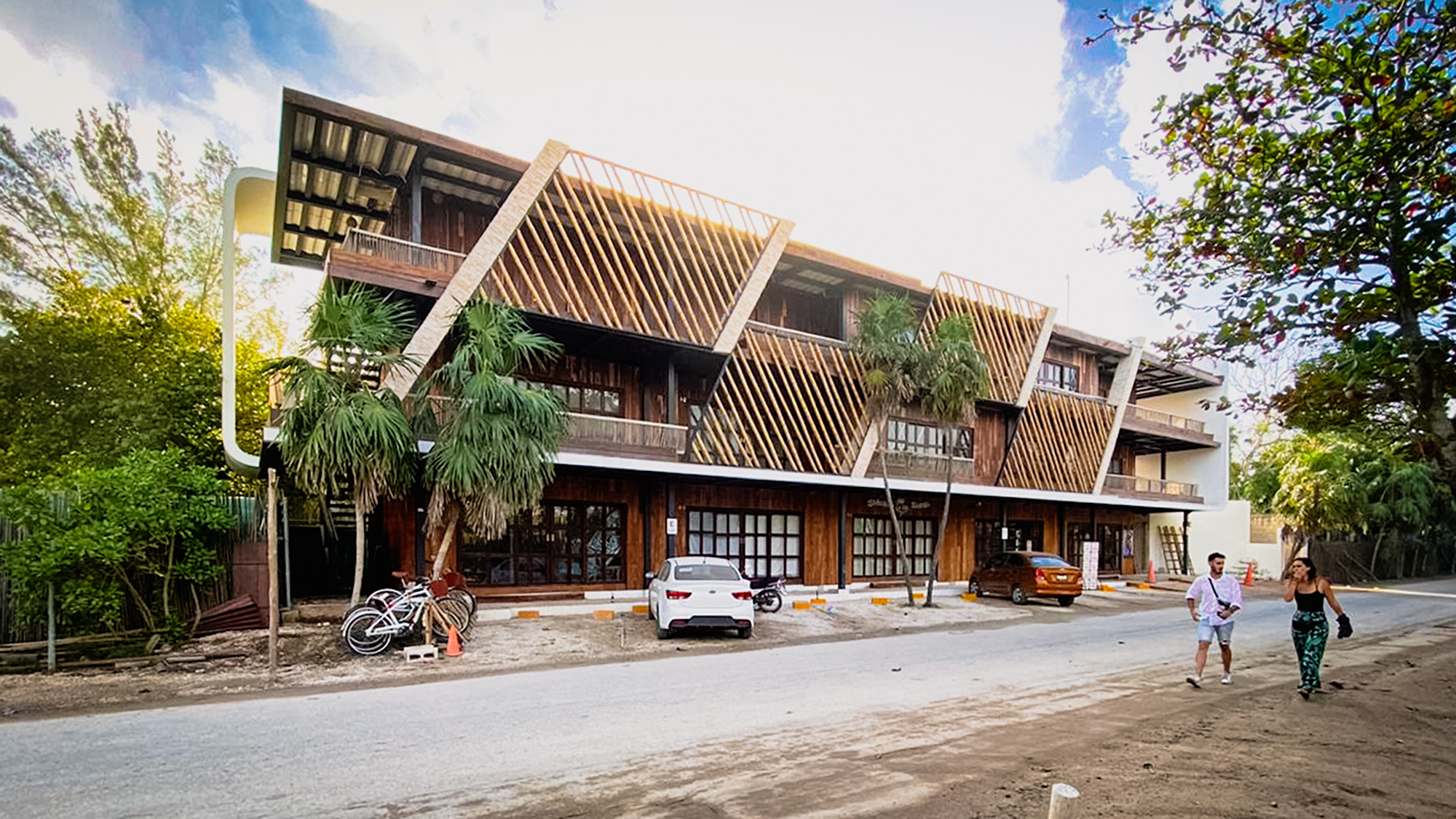
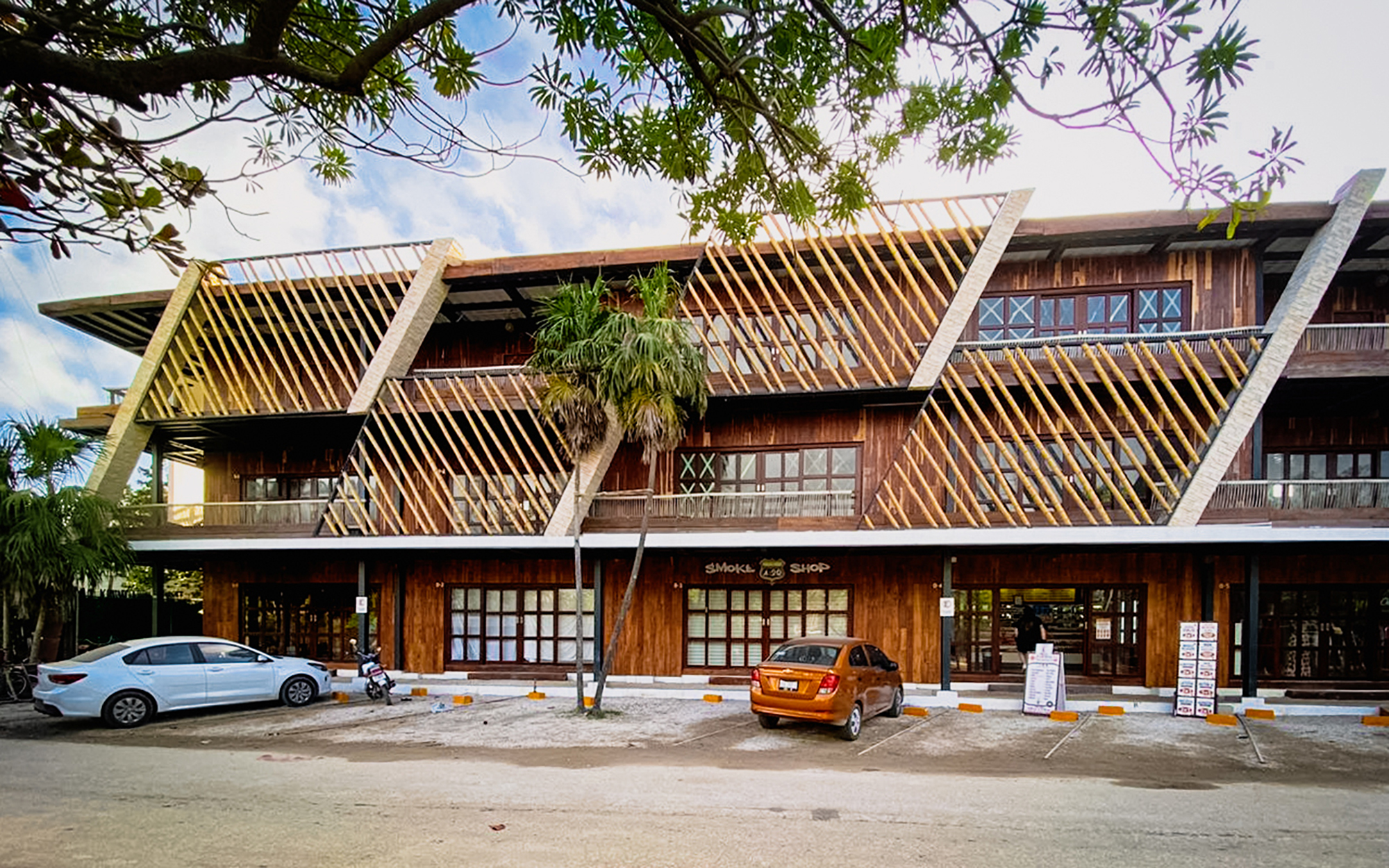
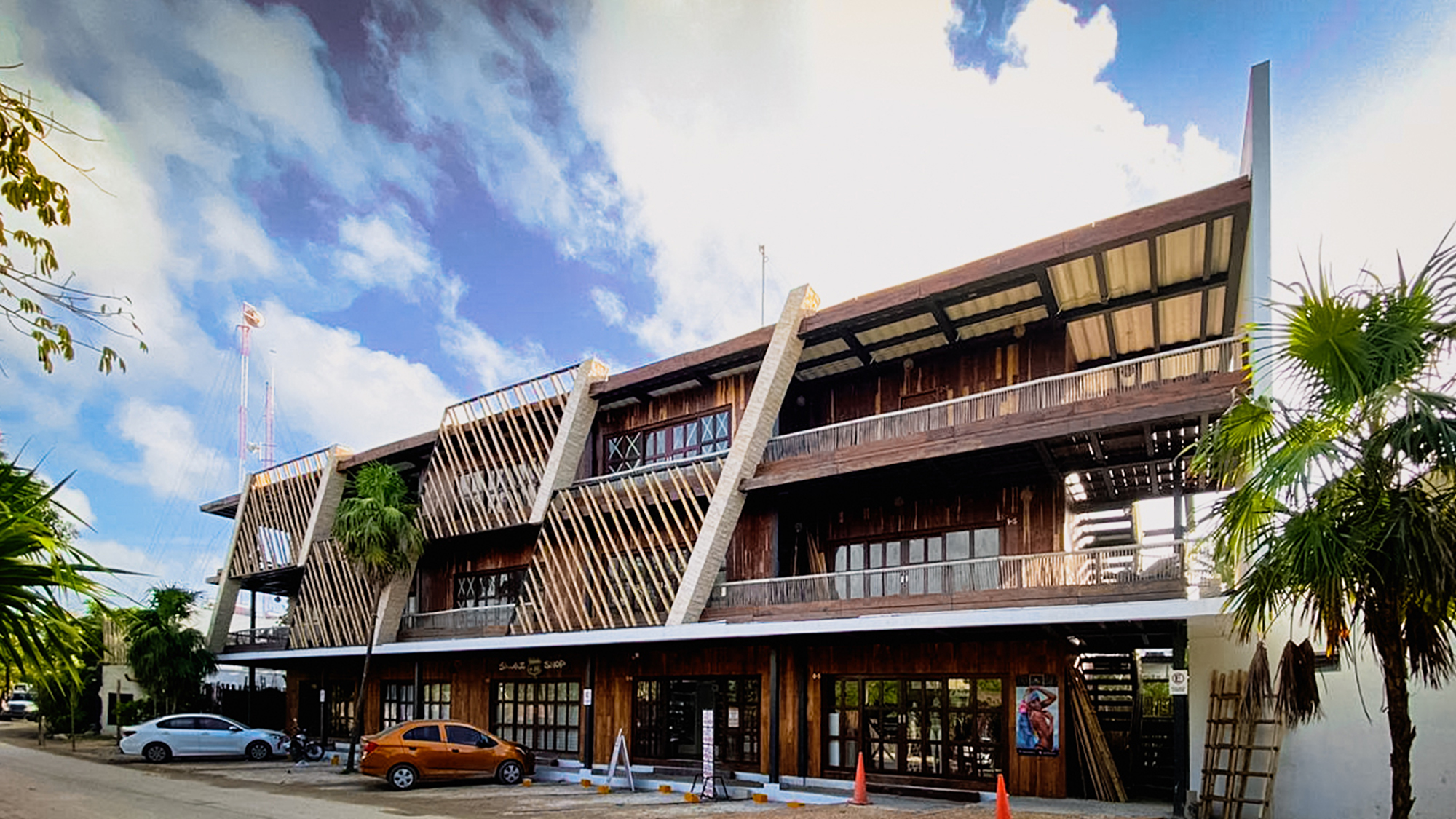
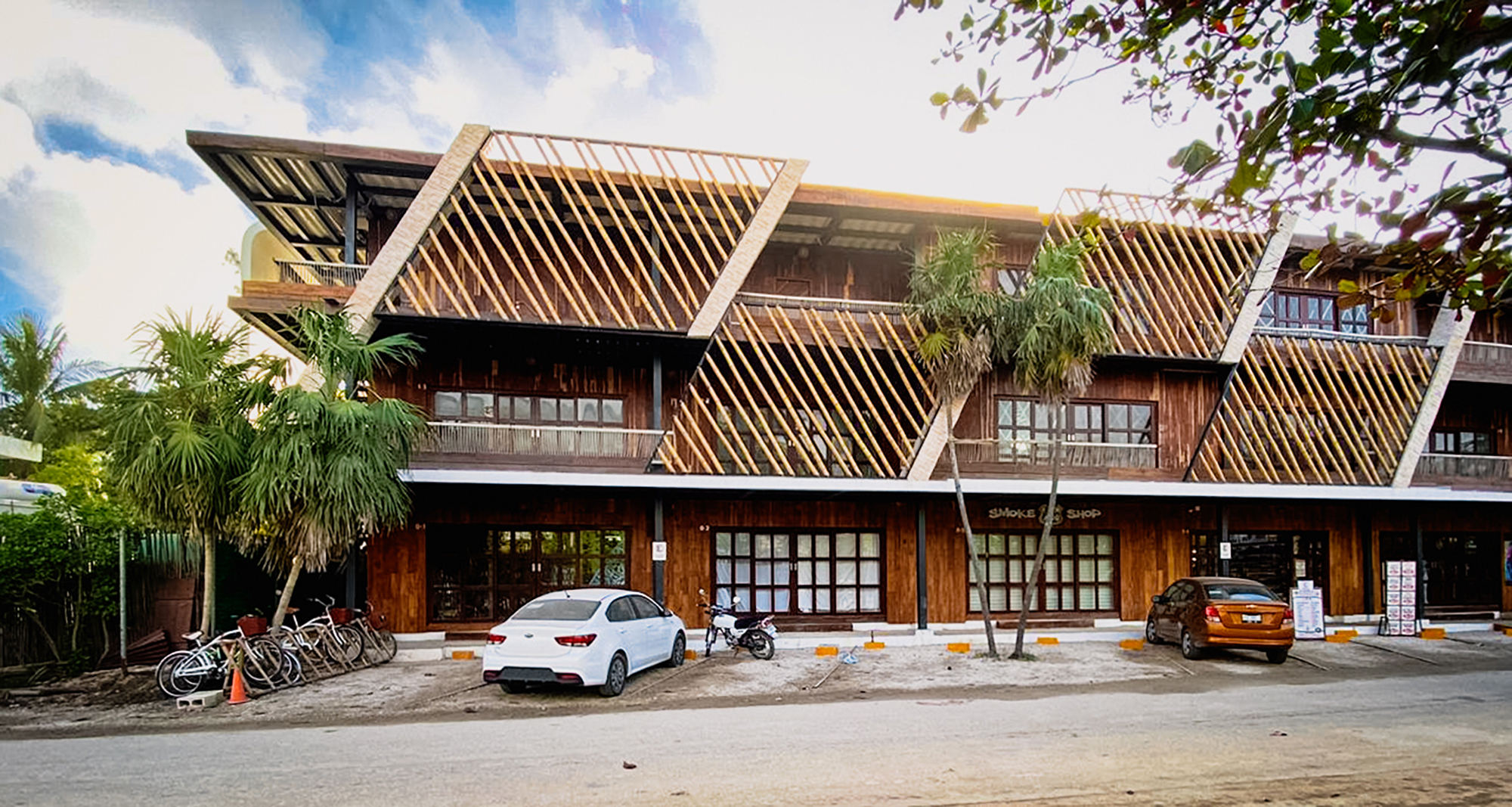



The Commercial Containers project in Tulúm reinterprets the traditional retail strip through the language of circular architecture and modular construction. The design transforms recycled shipping containers into a three‑level commercial hub, integrating them within a light steel skeleton and tropical timber envelope. The building acts as an urban façade that mediates between the informal street front and the dense vegetation at the back, while maintaining a strong linear presence along the road.
The concept is based on stacking and staggering container modules to create shaded galleries, generous terraces and double‑height moments that break the typical boxy reading of container architecture. Oblique structural fins and diagonal timber brise‑soleil generate a dynamic rhythm, expressing movement and echoing the angled geometry of the surrounding palm fronds and local vegetation.
The ground floor is conceived as a porous commercial plinth. Continuous glazing and multiple access points allow each retail unit to open directly to the sidewalk, encouraging pedestrian interaction and visual continuity between interior and exterior. The setback from the street creates a slim parking strip and a transitional zone, absorbing the informal character of Tulúm’s infrastructure.
The upper levels host a combination of offices, studios and flexible commercial spaces organized along linear exterior corridors. Terraces facing the street function as semi‑public balconies, offering vantage points over the urban activity while providing spill‑out space for tenants. Circulation is legible and straightforward, with stair cores integrated into the structural frames that punctuate the façade.
The architectural expression is defined by three superposed bands: the transparent, recessed ground floor; the more solid, timber‑clad middle level; and the lightweight roof level marked by the exposed container structure and metal overhangs. This stratification gives scale and hierarchy to the building volume while clearly articulating use.
Large concrete or masonry fins project from the façade, bracing the container volumes and framing the diagonal timber slats. These slats operate as vertical and oblique louvers, filtering sunlight, protecting glazing, and generating a play of shadows that evolves throughout the day. The interplay between industrial elements (corrugated steel, metal railings) and warm natural materials creates a balanced aesthetic midway between tropical rusticity and contemporary urban design.
Recycled shipping containers form the primary structural and spatial modules. Their corrugated steel walls are strategically opened to accommodate full‑height glazing, sliding doors and interior connections between units. Internally, the containers are likely thermally insulated and lined with gypsum board or timber panels to provide comfort and acoustic control, while concealing services and reinforcing a more refined interior finish.
On floors and common areas, polished concrete and hardwood are used for durability and low maintenance in a high‑traffic commercial environment. Exposed steel members, visible roof decks and the repetition of timber on ceilings and balustrades extend the exterior language indoors, ensuring continuity between the retail spaces, galleries and terraces.
The project is designed as a passive response to Tulúm’s tropical climate. Deep overhangs, the diagonal timber brise‑soleil and the setback terraces collectively reduce solar gain on the glazed surfaces, limiting cooling demands. Cross‑ventilation is promoted by linear circulation balconies and the ability to open containers on multiple sides, capturing prevailing breezes and reducing reliance on mechanical air conditioning.
Circularity is central to the project’s sustainability strategy. The reuse of shipping containers significantly reduces embodied energy compared to conventional new construction, while the modular approach allows for potential disassembly and relocation of units in the future. The extensive use of locally sourced timber lowers transportation impacts and supports regional economies. Combined with the compact footprint and shared infrastructure of a multi‑tenant building, these measures position the development as a pragmatic example of circular commercial architecture in the Riviera Maya context.


Our offices are located in Barcelona, Cancún, Chicago and Santo Domingo, but thanks to technology we can do projects on all over the world.
Barcelona
Bac de Roda 136
08020, Barcelona
Spain
Madrid
Av. de Buendía 11
19005 Guadalajara (Madrid)
Spain
Chicago
373 Hazel Ave, Apt A1
60022, Glencoe, Illinois
United States