

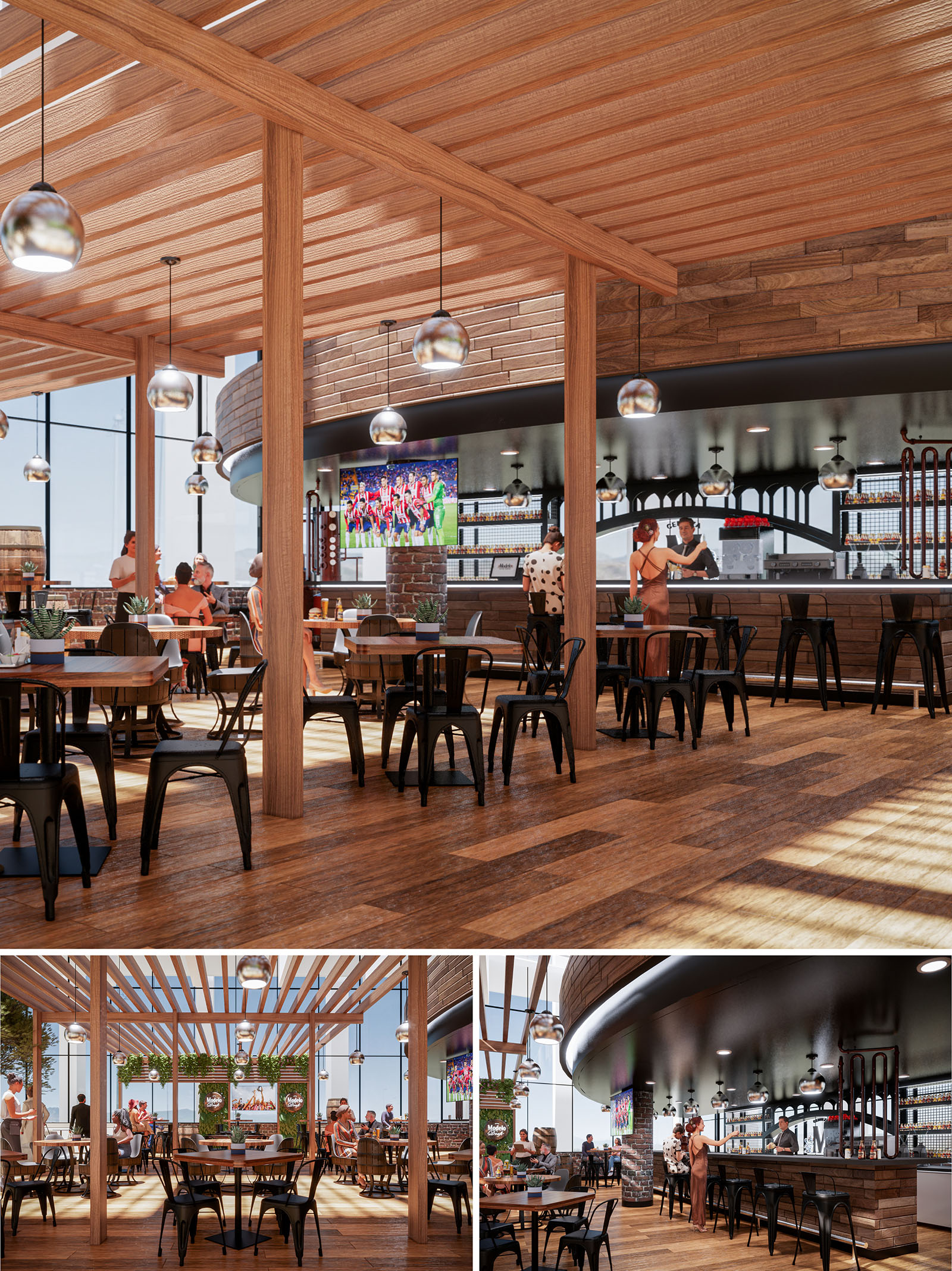
COCINA URBANA is conceived as an elevated urban terraza that merges the warmth of a traditional Mexican cantina with the openness of a contemporary rooftop pavilion. The design prioritizes visual porosity, social interaction and a direct relationship with the surrounding skyline of Guadalajara. A continuous wooden canopy, open yet strongly defined, frames the dining area and creates a recognizable architectural identity from both inside and outside the space.
The project organizes atmosphere rather than strict rooms: a fluid interior-exterior gradient where bar, dining and lounge zones overlap. This porosity supports different uses throughout the day, from casual meals to sports-viewing gatherings, always maintaining visual continuity and generous natural light.
The layout is structured around a central nave aligned with the bar, which acts as the main spatial anchor and social focus. Linear rows of structural wooden posts define subtle bays, guiding circulation while maintaining open sightlines toward the screens, façade and views. These bays accommodate flexible table arrangements that can adapt from small groups to larger communal settings without altering the spatial logic.
Perimetral seating is oriented toward the exterior glazing, privileging views and maximizing daylight. The open pergola transitions toward the outer edge, blurring the limit between interior and terrace. The bar volume, with its curved back wall, softens the geometry and creates a visual counterpoint to the strong linearity of the canopy and floor pattern.
Material selection emphasizes warmth and tactility, with wood as the protagonist across floor, ceiling and vertical cladding. Variations in tone and grain on the flooring generate a dynamic yet subtle pattern, reinforcing directionality and adding depth to the large surface. The ceiling pergola uses solid timber members, leaving controlled gaps that modulate natural light and cast changing shadows throughout the day.
Exposed brick and dark metal elements introduce an industrial vocabulary that resonates with the “urbana” concept, while remaining balanced by the more domestic warmth of wood. Black metal chairs and structural bases ground the space visually, providing contrast against the lighter timber. The bar front and surrounding walls employ horizontal wooden slats and masonry to create a textured backdrop for the bottle display and equipment.
Lighting is conceived as a suspended landscape of metallic globe pendants hanging at regular intervals along the pergola grid. These luminaires provide both functional illumination and a reflective, festive character, echoing the social nature of the space. Recessed lighting under the curved soffit above the bar enhances the sense of depth and emphasizes the bar as a glowing focal line at night.
Furniture is intentionally robust and archetypal: square and rectangular wooden tables paired with black metal chairs capable of intensive use and easy reconfiguration. The integration of small planters on tables introduces greenery at eye level, softening the industrial tones and referencing the outdoor condition of the terrace.
Sustainability is embedded primarily through passive design. The open pergola and extensive glazing harness natural light to reduce dependence on artificial lighting during the day, while the overhead structure provides partial shading, controlling glare and solar heat gain. Cross-ventilation is favored by the terrace configuration, reducing the need for constant mechanical cooling in Guadalajara’s climate.
The predominant use of timber, specified from responsibly managed sources, significantly lowers the embodied carbon compared to more intensive materials. Modular furniture and standardized structural bays facilitate future reconfiguration or partial reuse of components, extending the lifecycle of the fit-out. Incorporating indoor plants contributes to improved air quality and reinforces the user’s connection with nature in an urban context.
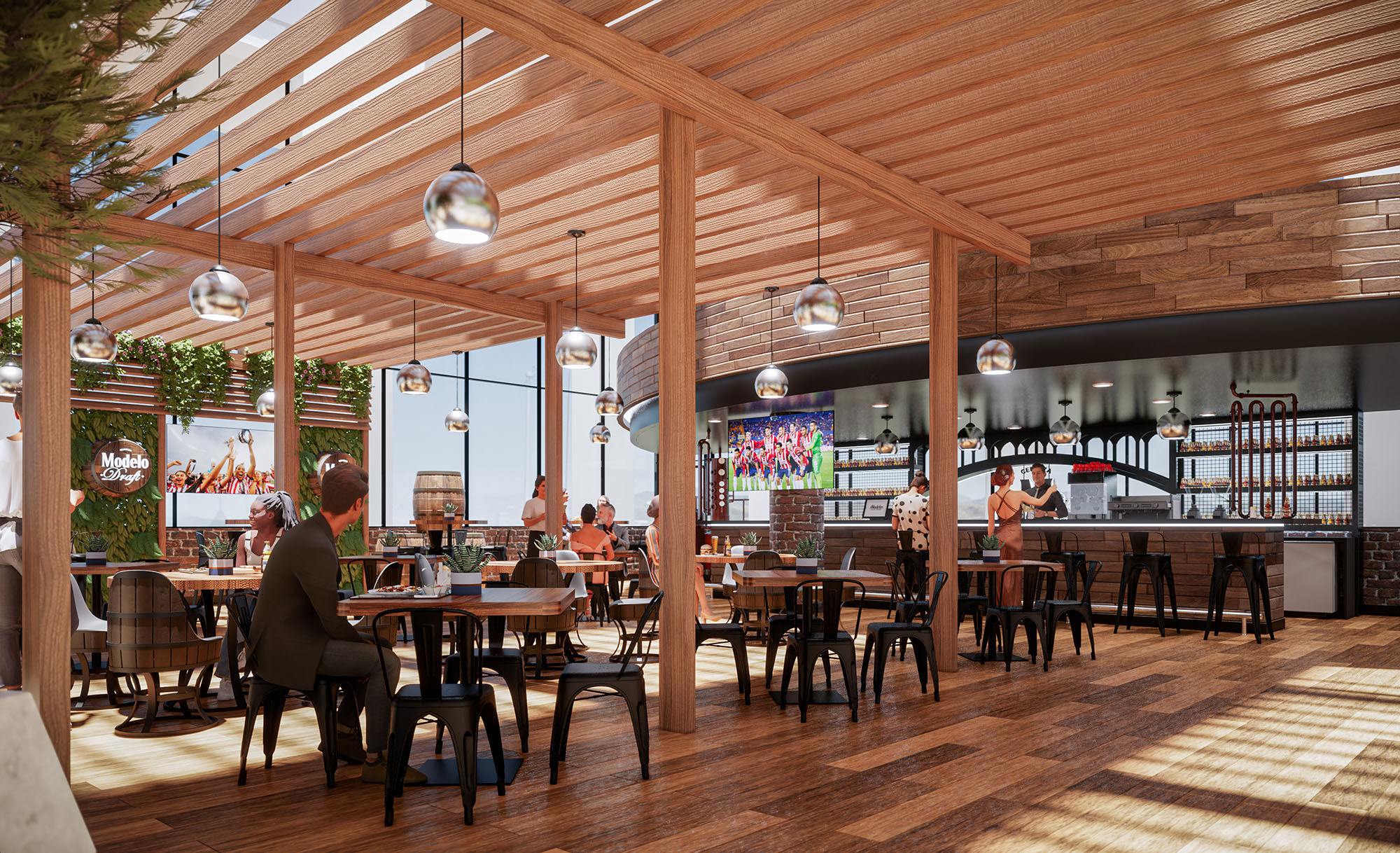
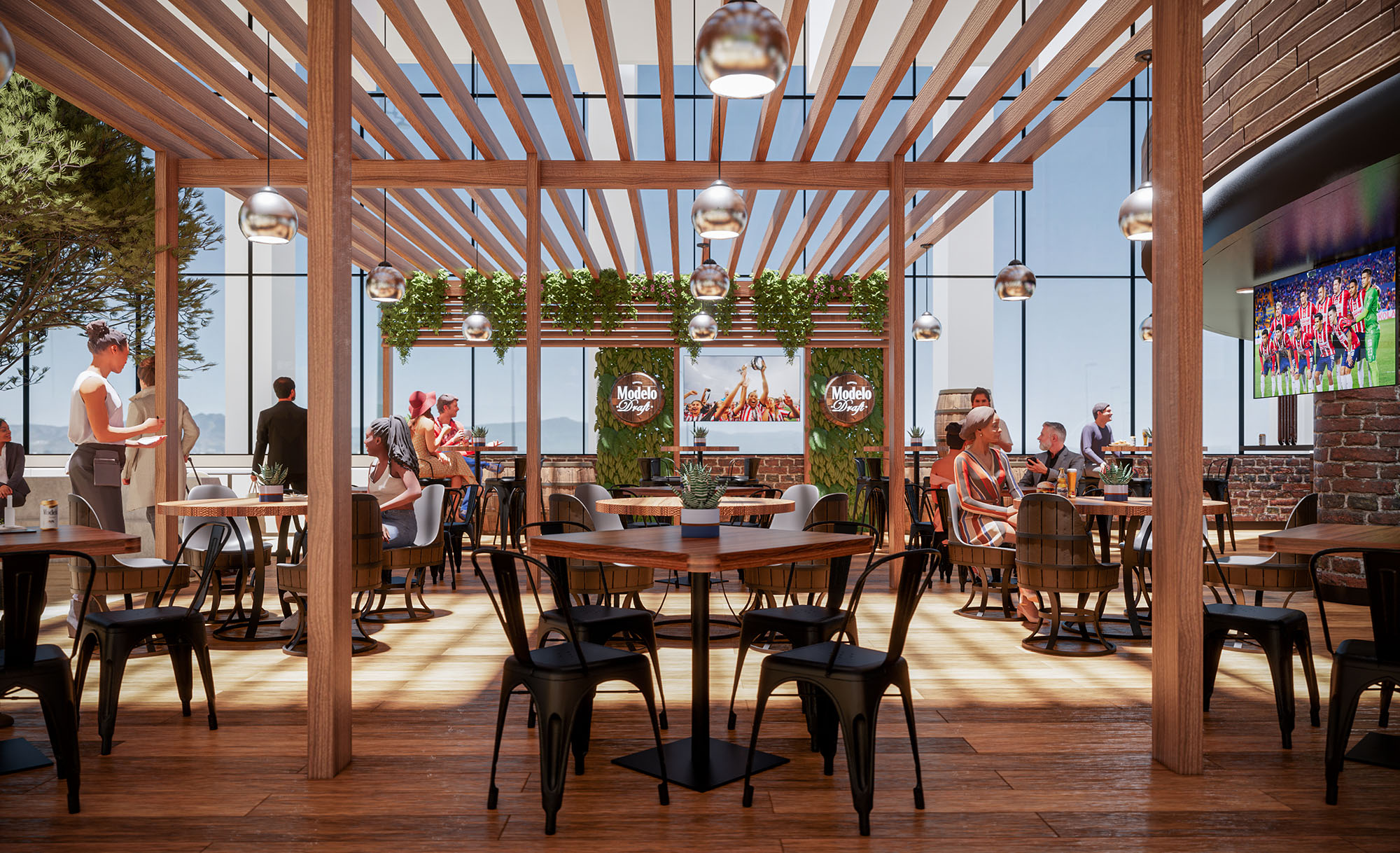
COCINA URBANA is conceived as an elevated urban terraza that merges the warmth of a traditional Mexican cantina with the openness of a contemporary rooftop pavilion. The design prioritizes visual porosity, social interaction and a direct relationship with the surrounding skyline of Guadalajara. A continuous wooden canopy, open yet strongly defined, frames the dining area and creates a recognizable architectural identity from both inside and outside the space.
The project organizes atmosphere rather than strict rooms: a fluid interior-exterior gradient where bar, dining and lounge zones overlap. This porosity supports different uses throughout the day, from casual meals to sports-viewing gatherings, always maintaining visual continuity and generous natural light.
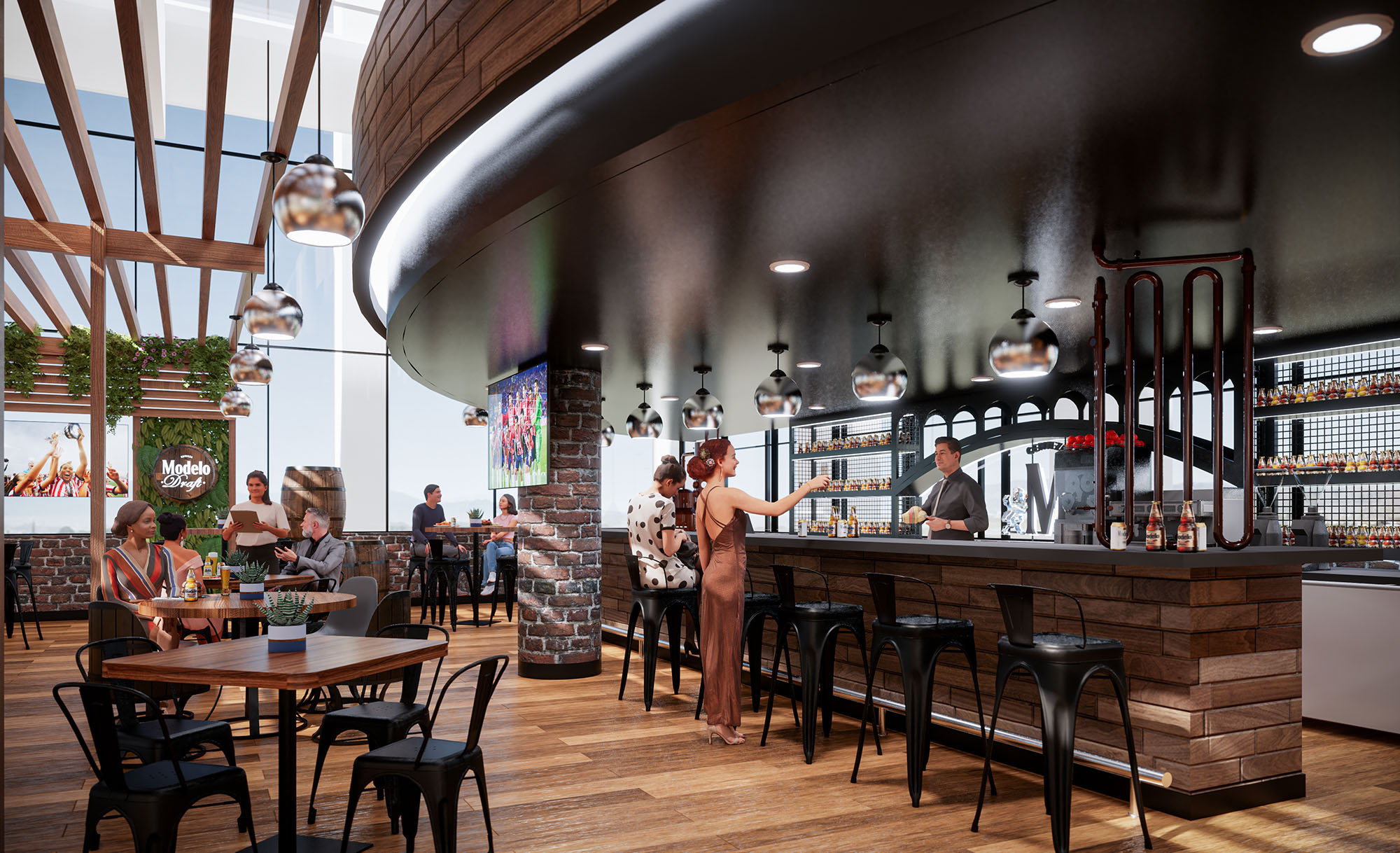
The layout is structured around a central nave aligned with the bar, which acts as the main spatial anchor and social focus. Linear rows of structural wooden posts define subtle bays, guiding circulation while maintaining open sightlines toward the screens, façade and views. These bays accommodate flexible table arrangements that can adapt from small groups to larger communal settings without altering the spatial logic.
Perimetral seating is oriented toward the exterior glazing, privileging views and maximizing daylight. The open pergola transitions toward the outer edge, blurring the limit between interior and terrace. The bar volume, with its curved back wall, softens the geometry and creates a visual counterpoint to the strong linearity of the canopy and floor pattern.
Material selection emphasizes warmth and tactility, with wood as the protagonist across floor, ceiling and vertical cladding. Variations in tone and grain on the flooring generate a dynamic yet subtle pattern, reinforcing directionality and adding depth to the large surface. The ceiling pergola uses solid timber members, leaving controlled gaps that modulate natural light and cast changing shadows throughout the day.
Exposed brick and dark metal elements introduce an industrial vocabulary that resonates with the “urbana” concept, while remaining balanced by the more domestic warmth of wood. Black metal chairs and structural bases ground the space visually, providing contrast against the lighter timber. The bar front and surrounding walls employ horizontal wooden slats and masonry to create a textured backdrop for the bottle display and equipment.
Lighting is conceived as a suspended landscape of metallic globe pendants hanging at regular intervals along the pergola grid. These luminaires provide both functional illumination and a reflective, festive character, echoing the social nature of the space. Recessed lighting under the curved soffit above the bar enhances the sense of depth and emphasizes the bar as a glowing focal line at night.
Furniture is intentionally robust and archetypal: square and rectangular wooden tables paired with black metal chairs capable of intensive use and easy reconfiguration. The integration of small planters on tables introduces greenery at eye level, softening the industrial tones and referencing the outdoor condition of the terrace.
Sustainability is embedded primarily through passive design. The open pergola and extensive glazing harness natural light to reduce dependence on artificial lighting during the day, while the overhead structure provides partial shading, controlling glare and solar heat gain. Cross-ventilation is favored by the terrace configuration, reducing the need for constant mechanical cooling in Guadalajara’s climate.
The predominant use of timber, specified from responsibly managed sources, significantly lowers the embodied carbon compared to more intensive materials. Modular furniture and standardized structural bays facilitate future reconfiguration or partial reuse of components, extending the lifecycle of the fit-out. Incorporating indoor plants contributes to improved air quality and reinforces the user’s connection with nature in an urban context.


Our offices are located in Barcelona, Cancún, Chicago and Santo Domingo, but thanks to technology we can do projects on all over the world.
Barcelona
Bac de Roda 136
08020, Barcelona
Spain
Madrid
Av. de Buendía 11
19005 Guadalajara (Madrid)
Spain
Chicago
373 Hazel Ave, Apt A1
60022, Glencoe, Illinois
United States