

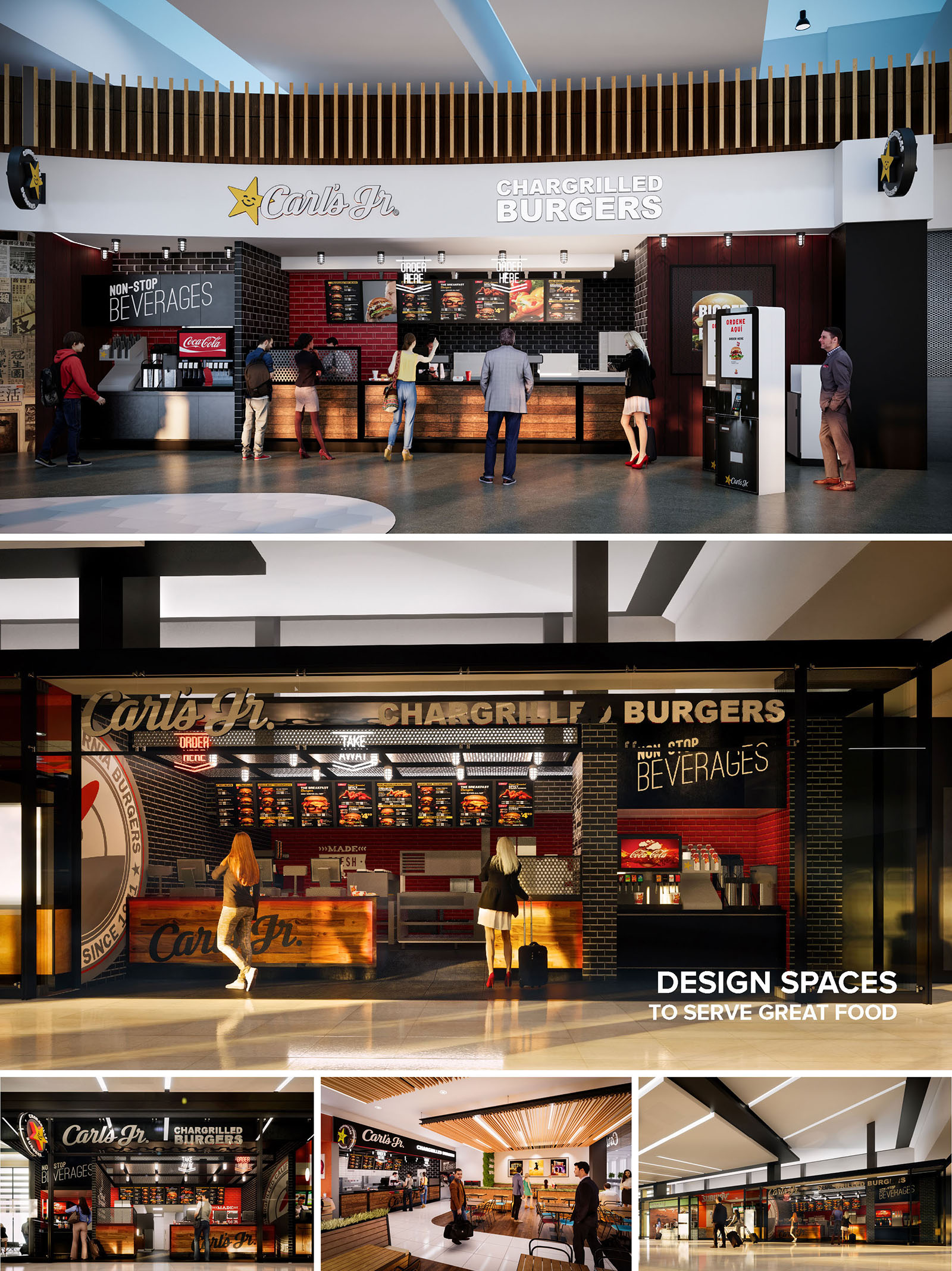
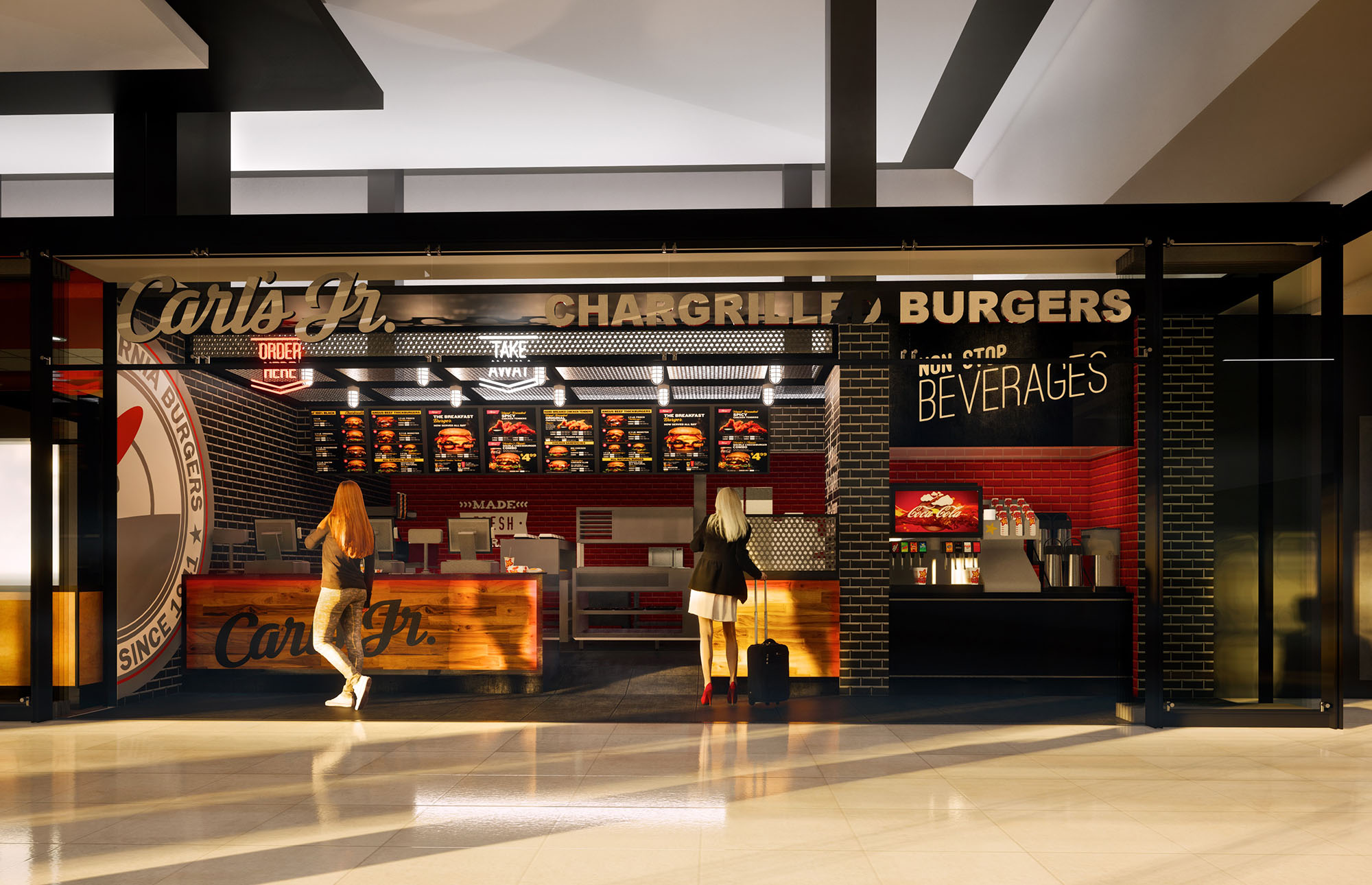
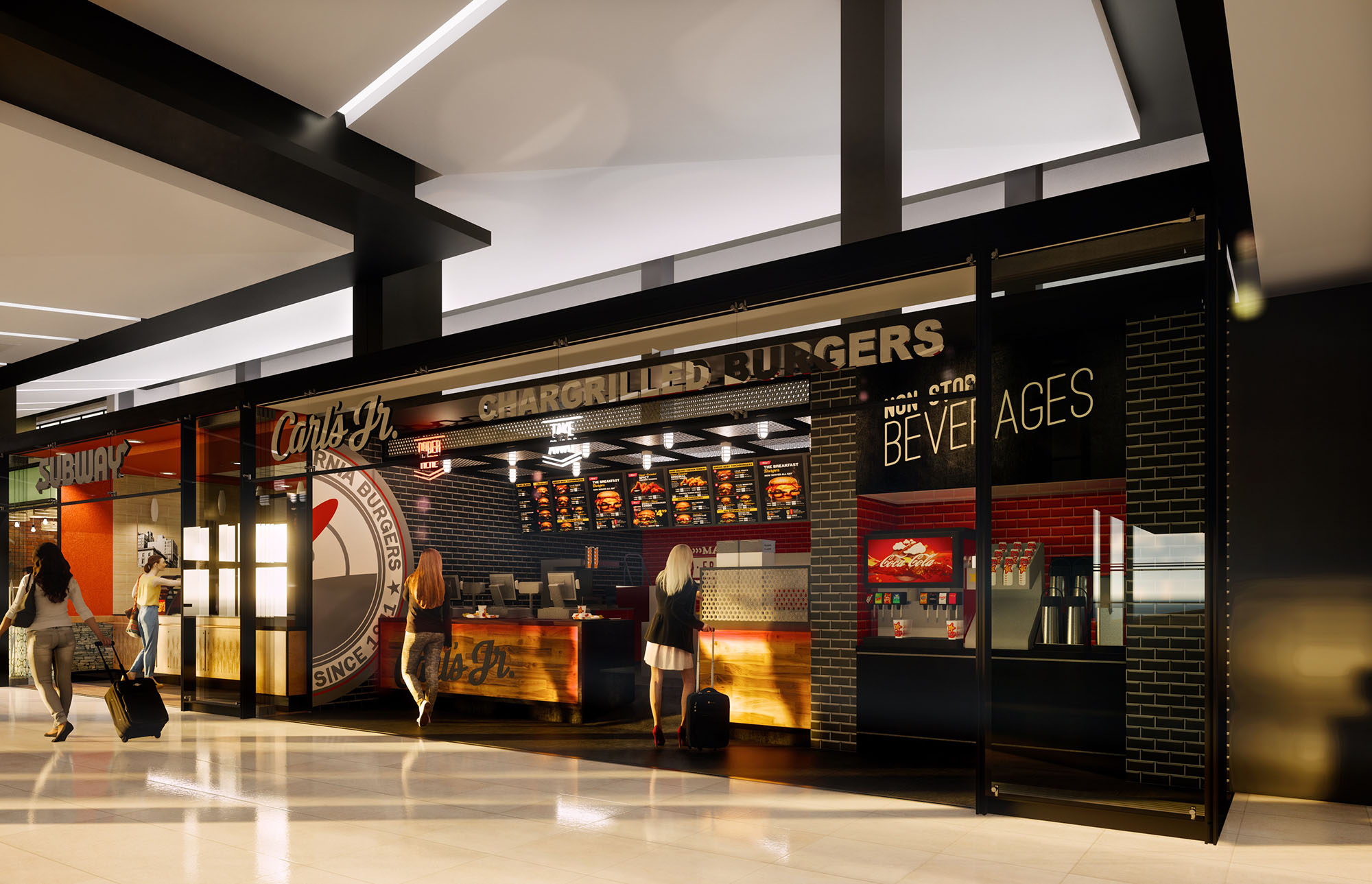
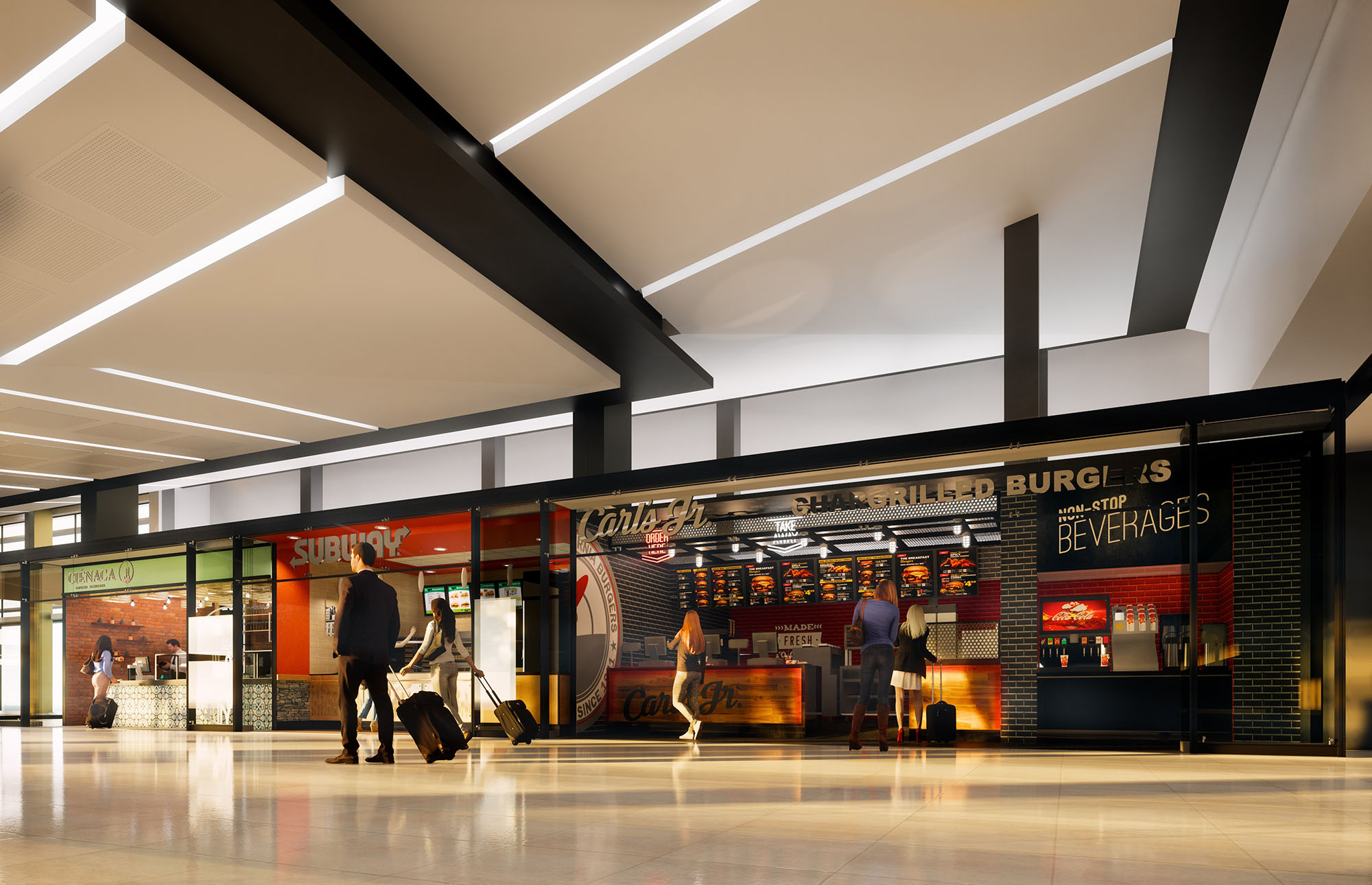
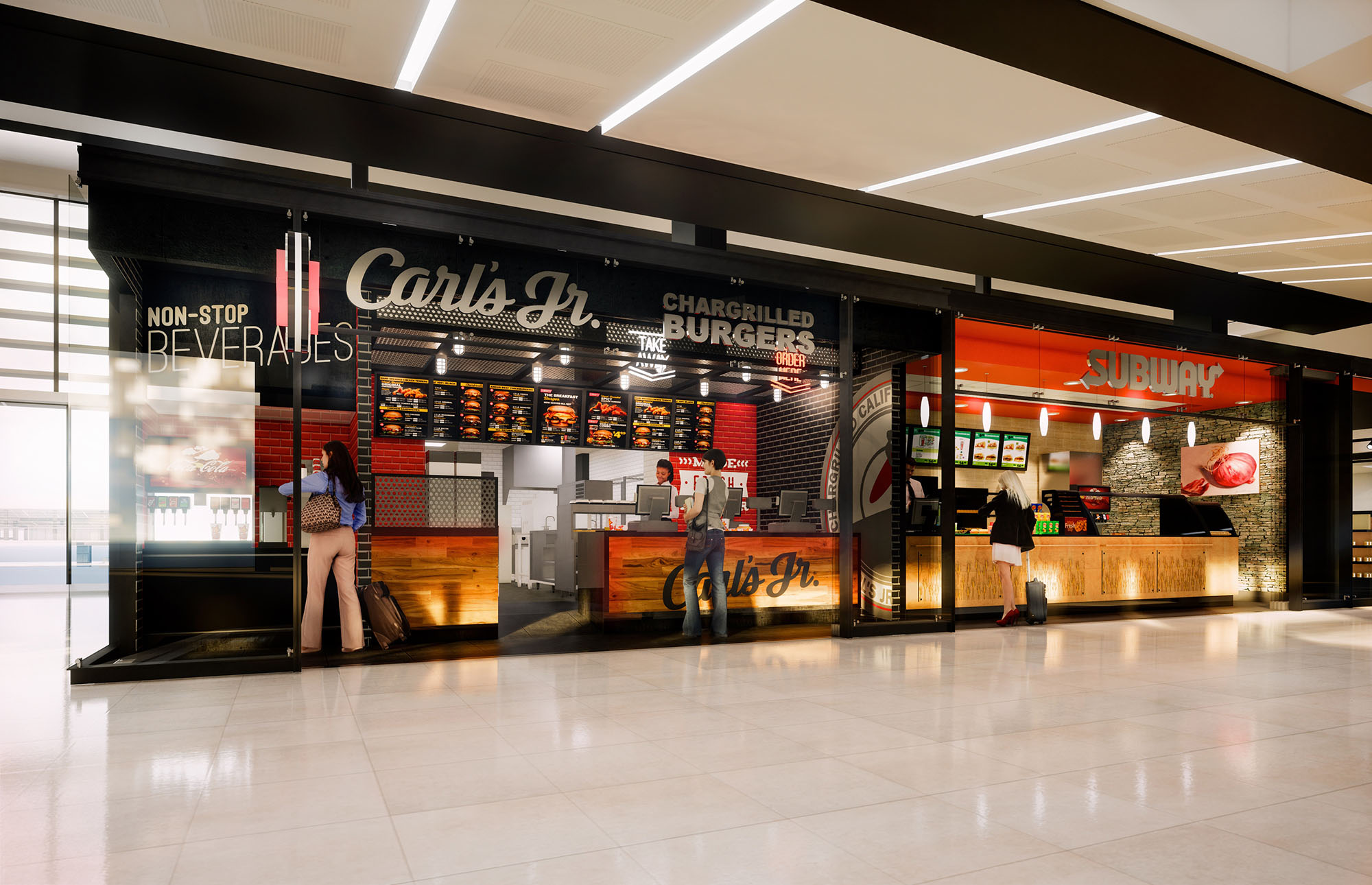
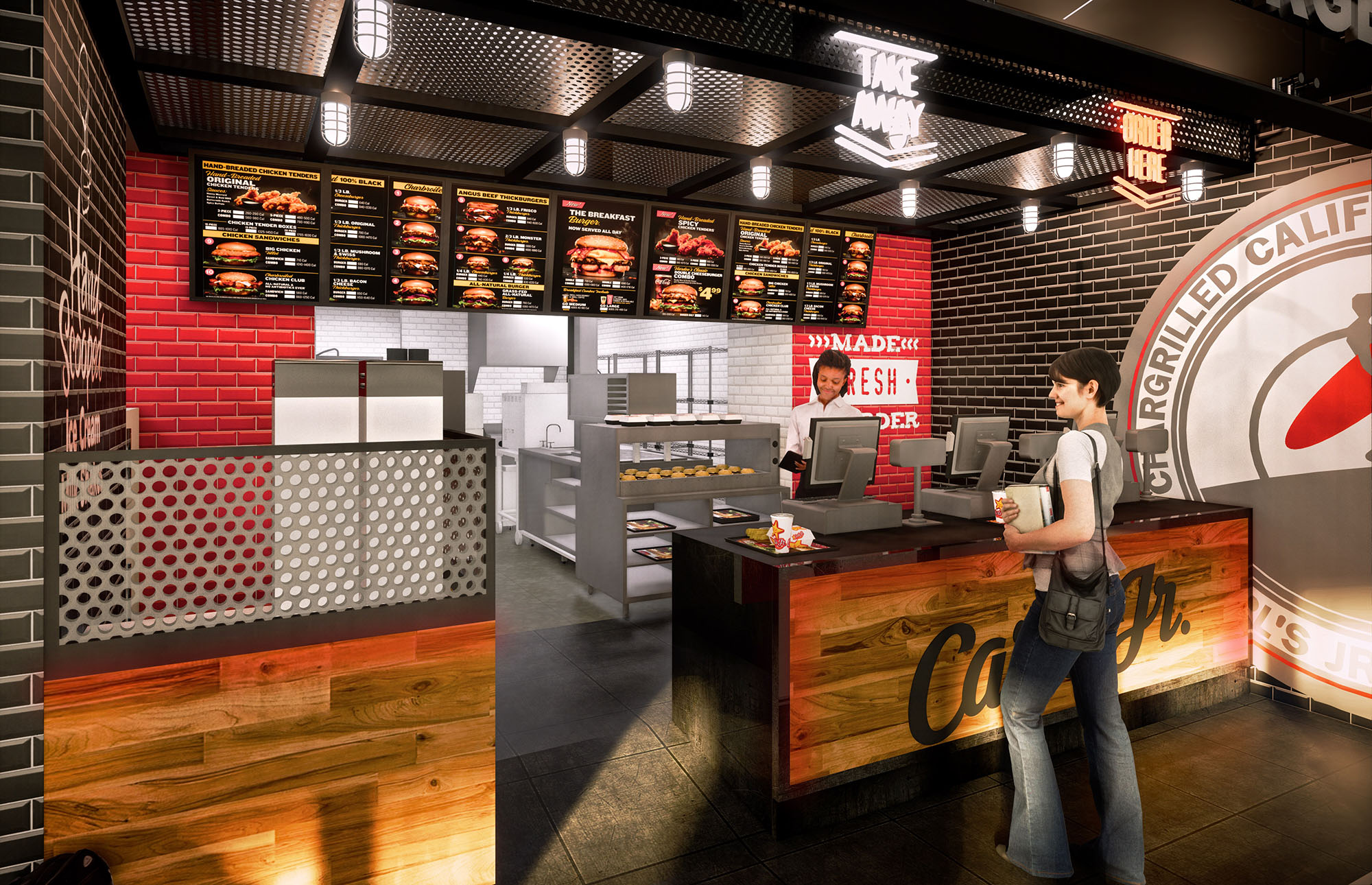
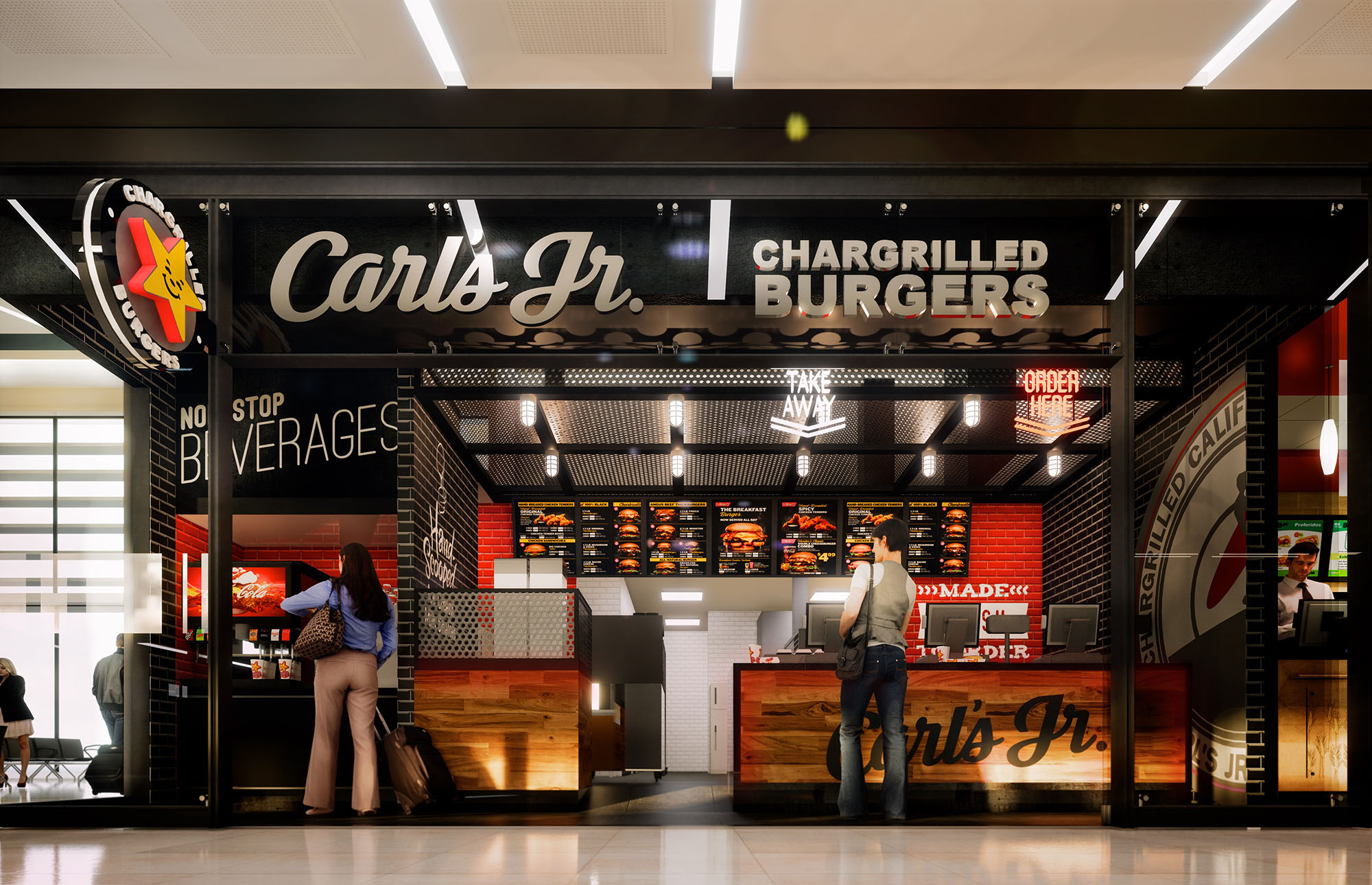
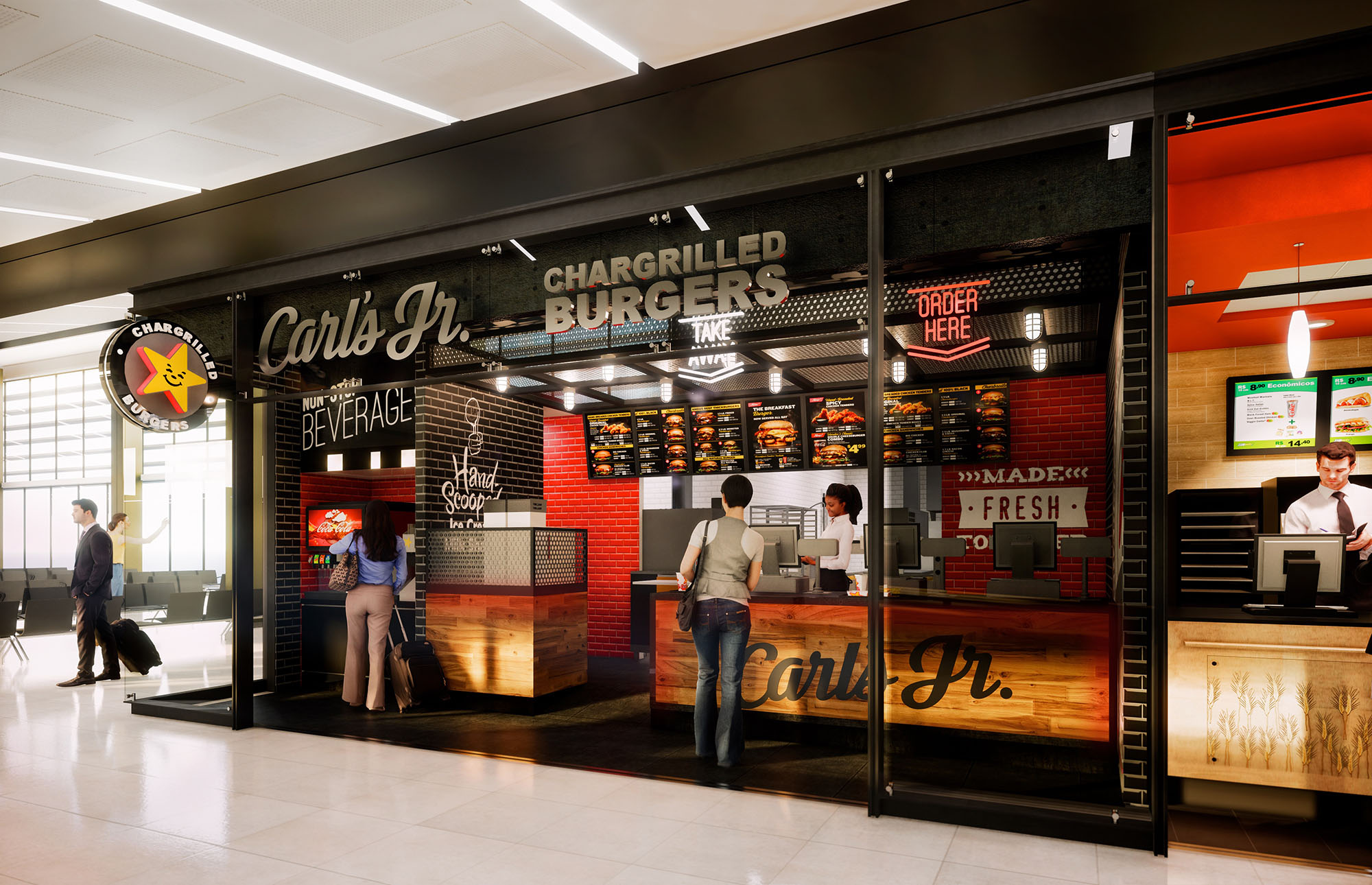
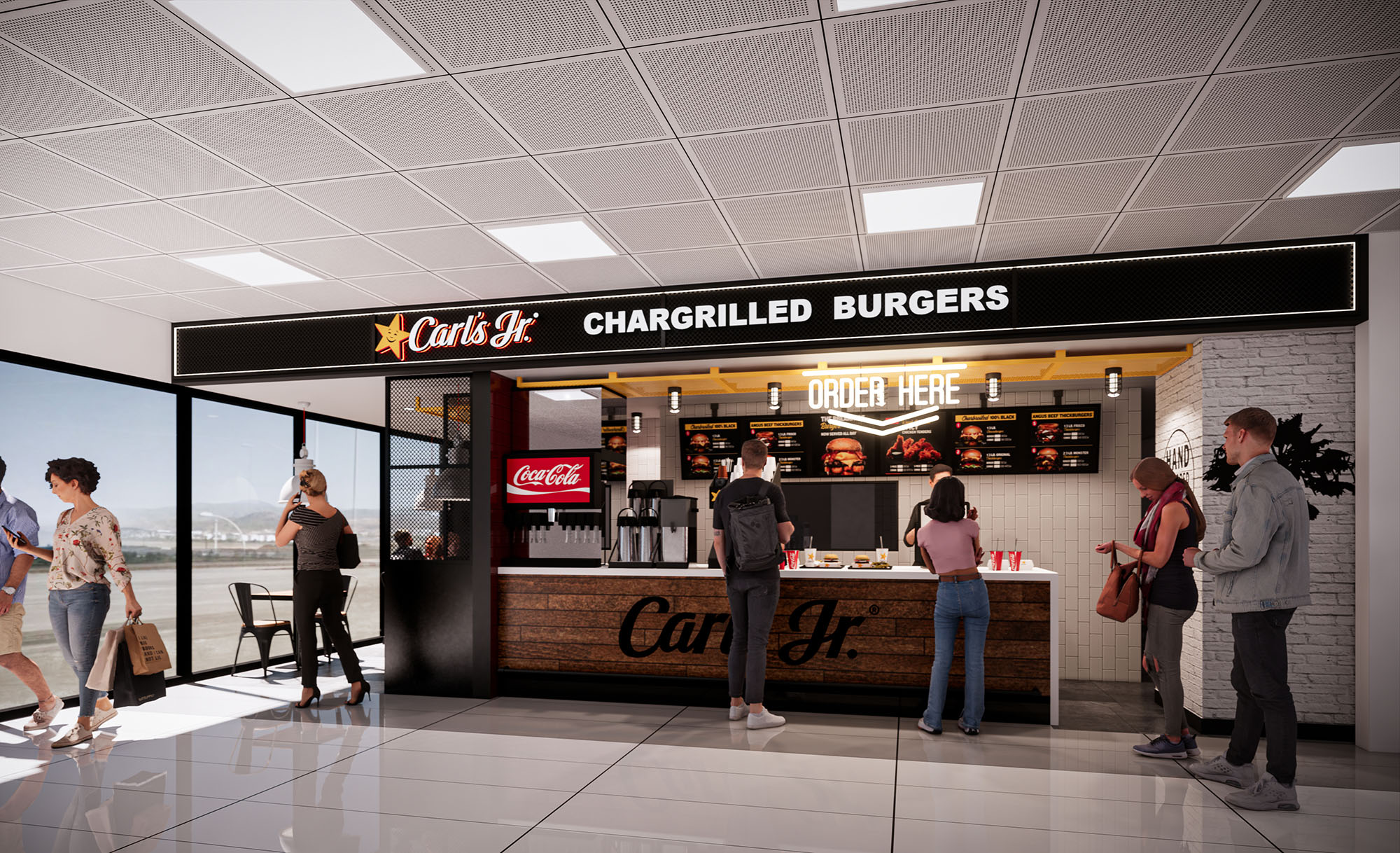
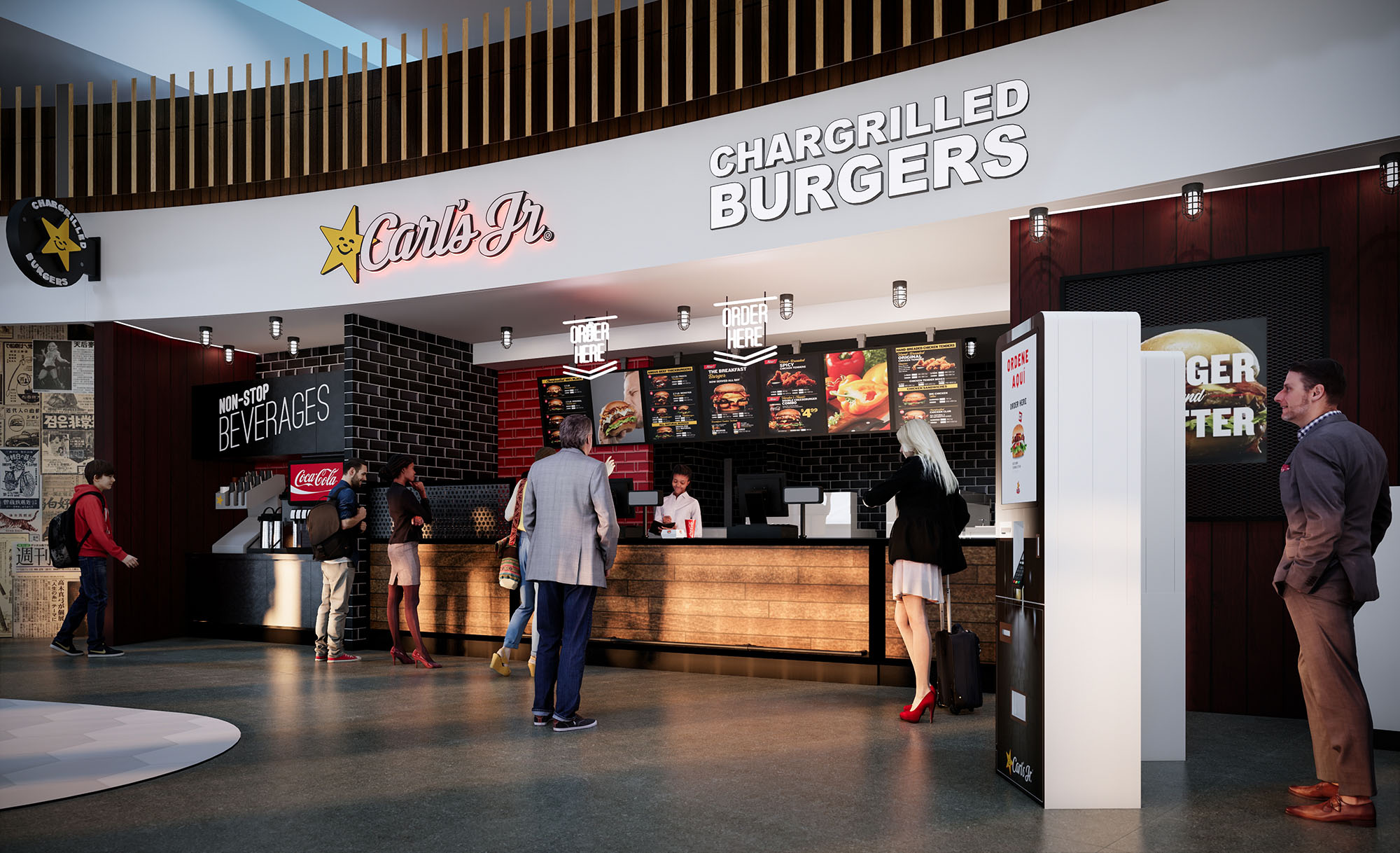
The architectural concept for Carl’s Jr. across these multiple locations is based on a contemporary reinterpretation of the classic American burger joint, translated into a clear and repeatable brand experience. The design combines industrial aesthetics with warm natural textures to communicate a chargrilled, handcrafted food offer while ensuring strong visual recognition in high-traffic environments such as malls and airports. Each unit acts as a highly visible “food stage,” where preparation, menu and brand graphics become the main façade.
The concept balances flexibility and consistency. A robust design language—defined by color, materials and lighting—adapts to varying footprints and ceiling heights while preserving a unified identity in Mexico and the USA. The goal is to create an immediate reading of the brand from a distance and a comfortable, efficient environment at close range.
The plan organizes the restaurants around a linear service counter that concentrates ordering, payment and pickup. This clear axis directs customer movement from entrance to menu reading, ordering and beverage refill, minimizing cross-traffic and congestion during peak hours. Visual references—suspended menus, illuminated signage and contrasting back walls—guide the user intuitively without relying on excessive wayfinding graphics.
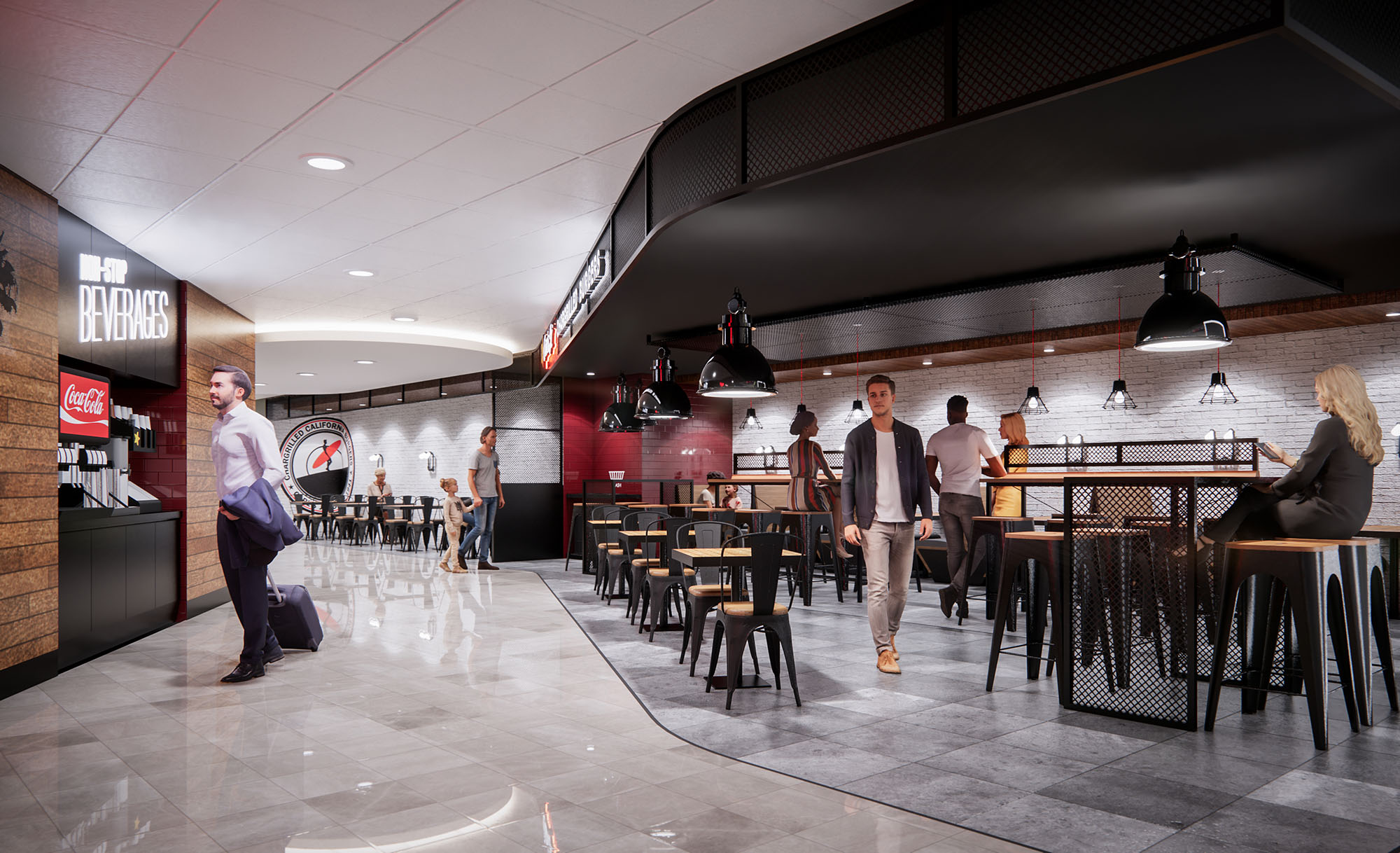
Back-of-house areas are compact and placed directly behind the counter, shortening production lines and allowing quick communication between kitchen staff and front-of-house. In food-court configurations, the design maximizes frontal visibility while maintaining a shallow depth. In standalone or larger footprints, the counter becomes the threshold to a dining area where seating is distributed in clusters, combining individual tables, banquettes and communal options for different user profiles.
The interior palette is anchored in the brand’s signature colors—black, red and yellow—balanced with timber and neutral finishes. Black brick tiles and dark metal frames convey an urban, industrial character that enhances the perception of flame-grilled cooking. Red is applied to selective planes—backsplashes, feature walls and menu backgrounds—to emphasize the food offer and create focal points.
Warm wood in counters, soffits and some wall claddings softens the environment and introduces a handcrafted feel. The use of horizontal wooden slats in ceilings and screens adds texture while visually lowering large volumes, making double-height or open-mall spaces feel more intimate. Durable surfaces such as quartz or high-pressure laminates are specified for worktops and tray slides, ensuring resistance to heavy use and ease of cleaning.
Lighting design plays a strategic role in reinforcing the brand. Linear LED fixtures and spotlights above the counter create a bright, high-contrast band that highlights menus and food preparation. The perimeter and dining zones employ warmer, more diffuse lighting to encourage dwell time and comfort. Accent lighting on signage and logos guarantees strong visibility even in environments with abundant ambient light.
Brand integration is achieved architecturally rather than superficially. Logos, slogans and menu systems are embedded into the architecture through backlit boxes, perforated metal panels and integrated graphic walls. Repetitive elements—star icons, typographic bands, and “chargrilled burgers” messaging—generate a coherent visual rhythm that unifies the different locations.
Sustainability strategies focus on operational efficiency and material performance across the 11 locations. LED lighting with high efficacy reduces energy consumption, while lighting levels are carefully calibrated to avoid over-illumination. Where possible, luminaires are paired with control systems to adapt intensity to natural light conditions in malls and airports.
Finishes are selected for longevity and low maintenance, reducing the need for frequent replacement and associated waste. Non-porous surfaces and modular cladding panels simplify cleaning and allow partial repairs instead of full refurbishment. In some units, open ceilings reduce the amount of suspended ceiling material, and exposed structures are painted rather than fully clad, lowering material use. Beverage and condiment stations are designed for efficient self-service, contributing to reduced staff movement and shorter customer waiting times, which in turn optimizes energy use in back-of-house equipment and improves the overall sustainability of the operation.
LIST OF PROJECTS EXPERIENCE
Designed, Executed and/or Built Projects
MEXICO
1. Carls Jr - Chihuahua - L04
2. Carls Jr - Ciudad Juarez - FB02
3. Carls Jr - Ciudad Juarez - FB07
4. Carls Jr - Guadalajara - B40
5. Carls Jr - Los Cabos - A5
6. Carls Jr - Monterrey - MZLCR-K
7. Carls Jr - Tijuana - AL-12
8. Carls Jr - Tijuana - BR-08
9. Carls Jr - Tijuana - BR-10
10. Carls Jr - Vallarta
USA
11. Carls Jr - Los Angeles - L00
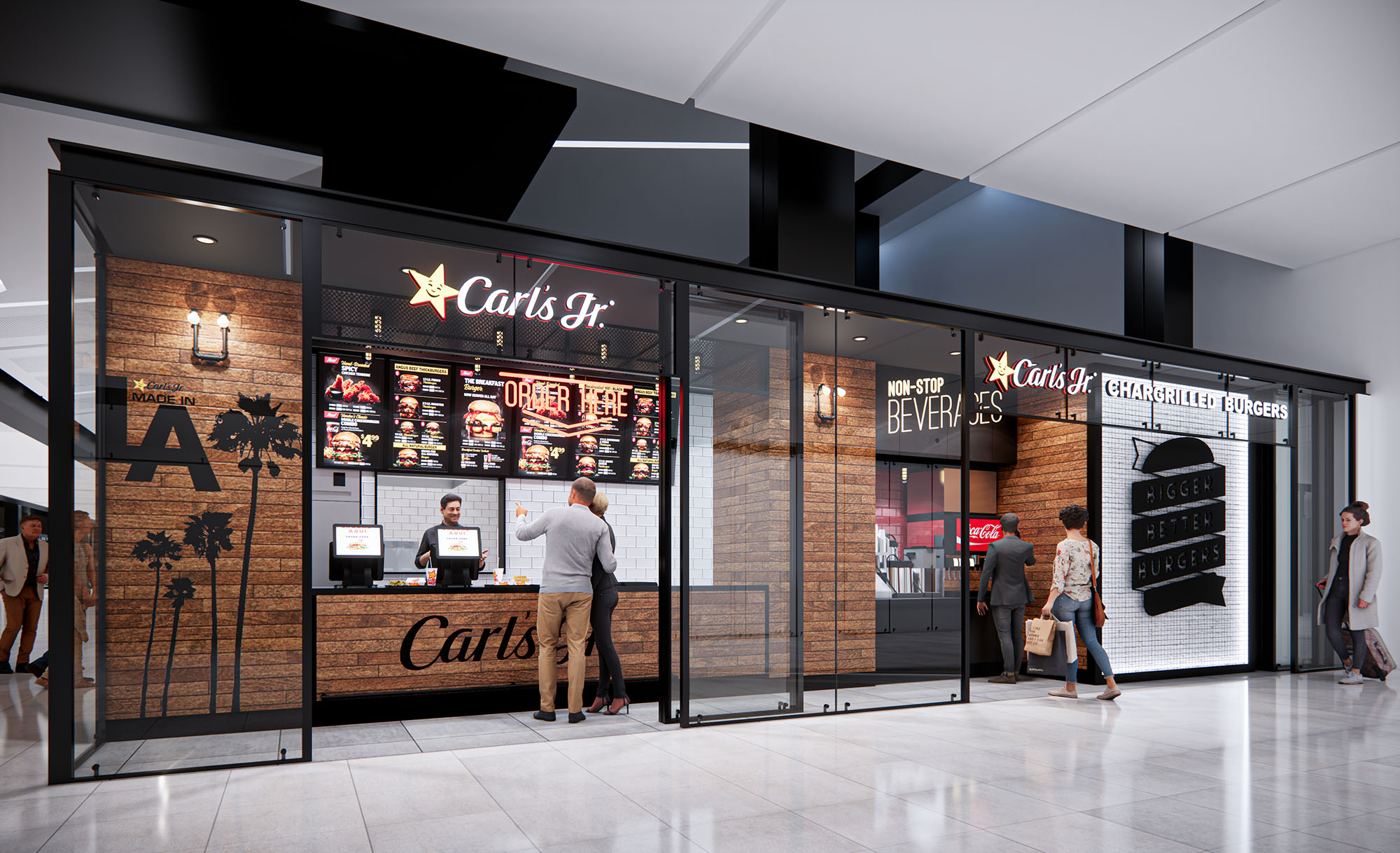
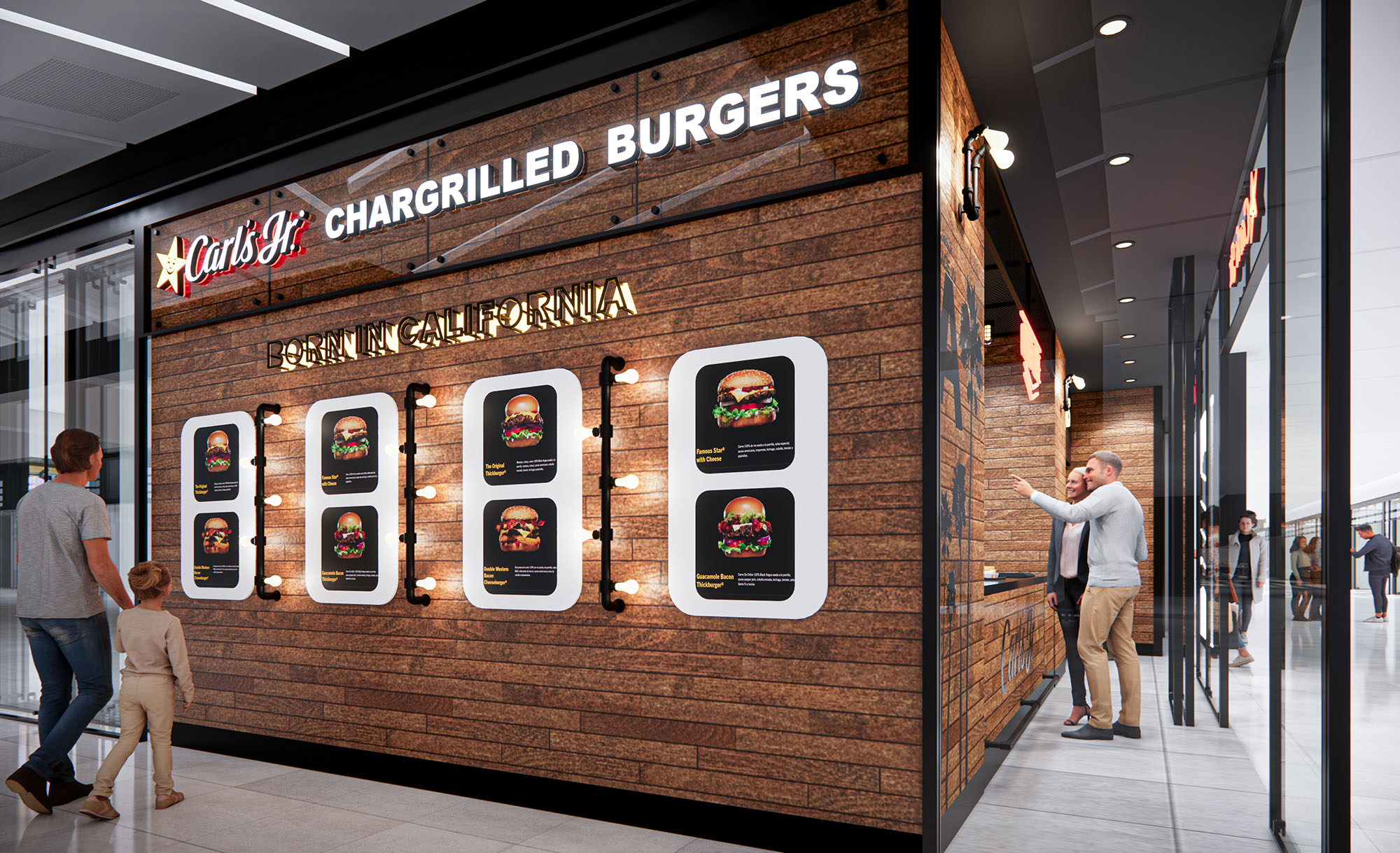
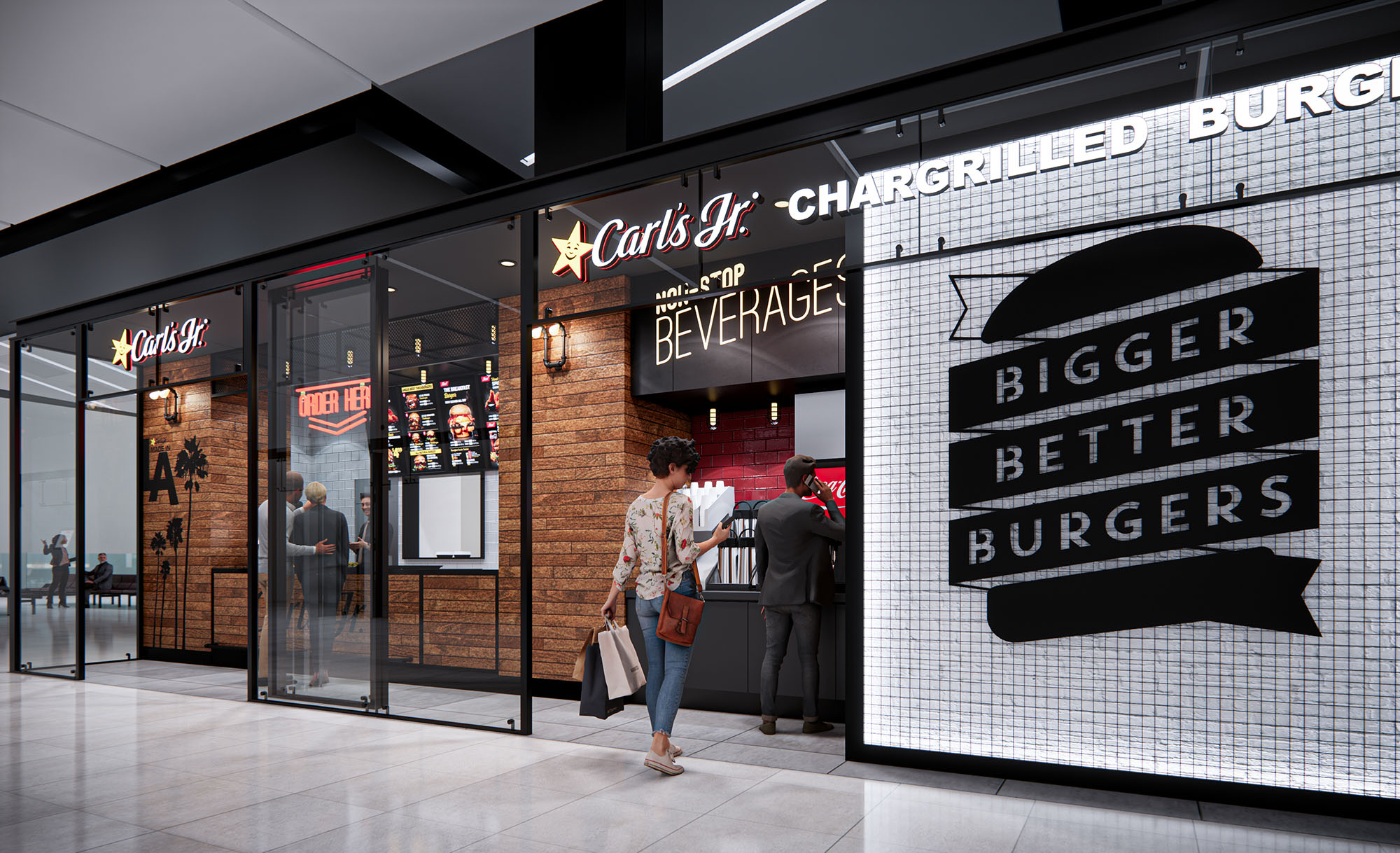

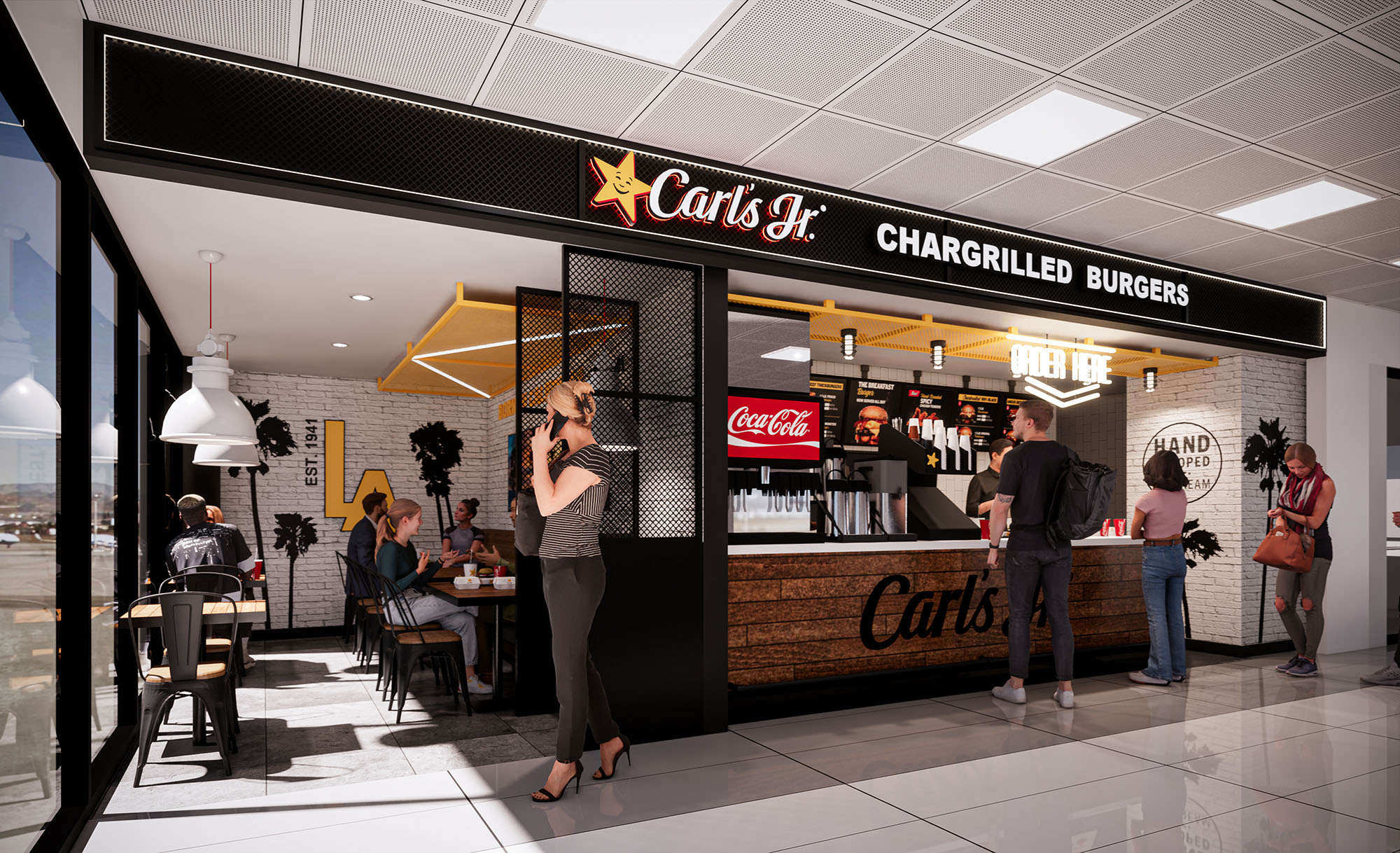
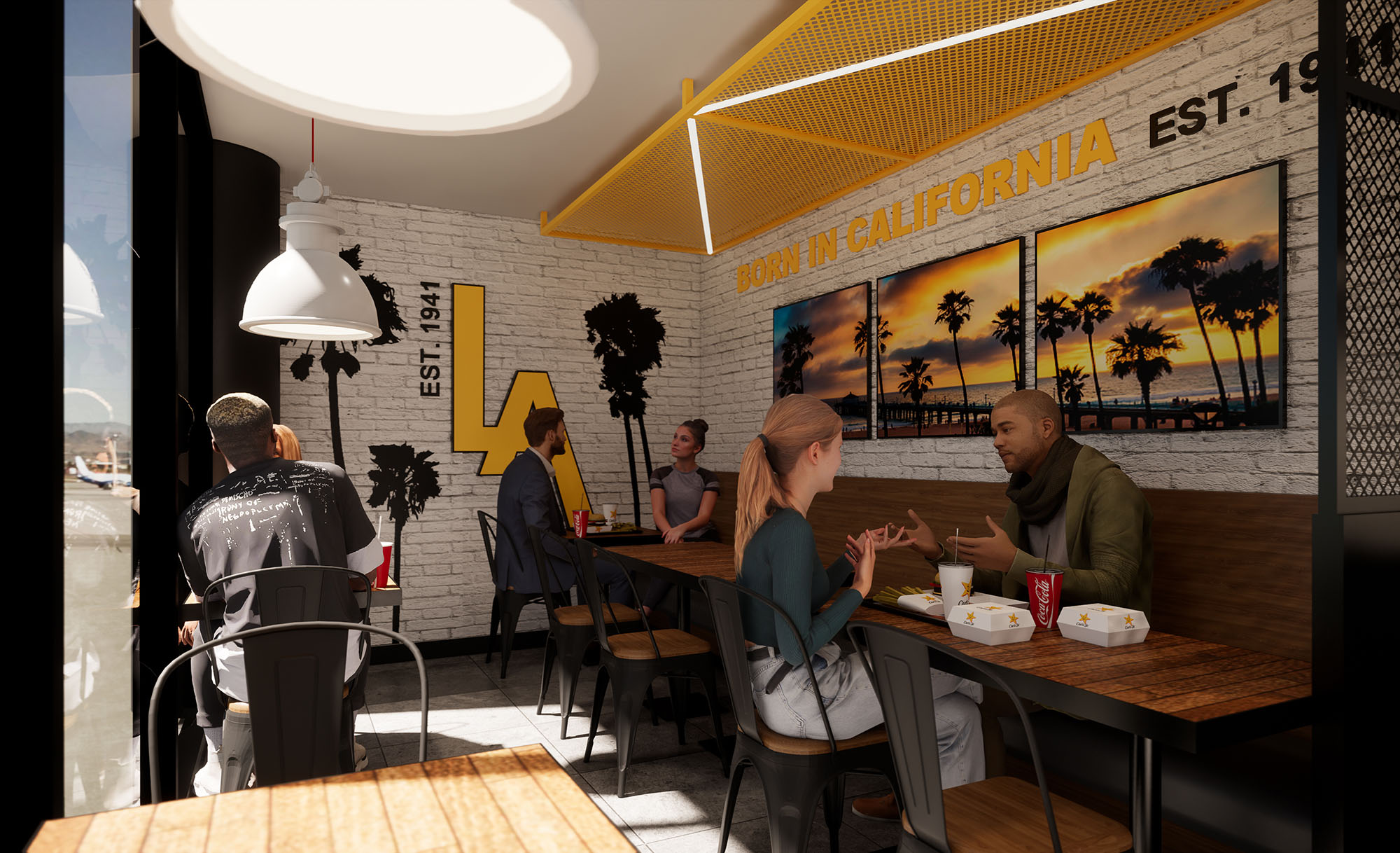
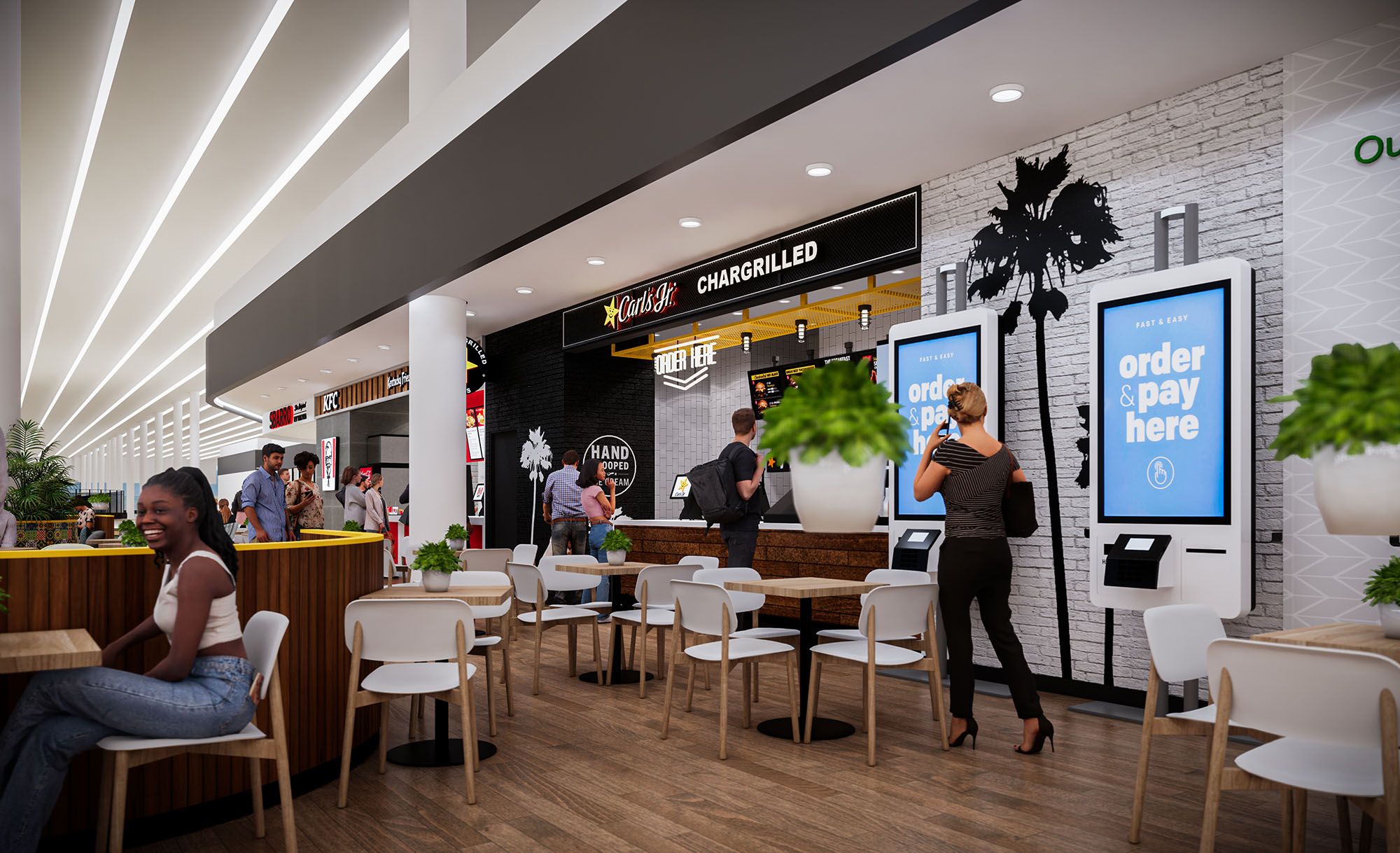
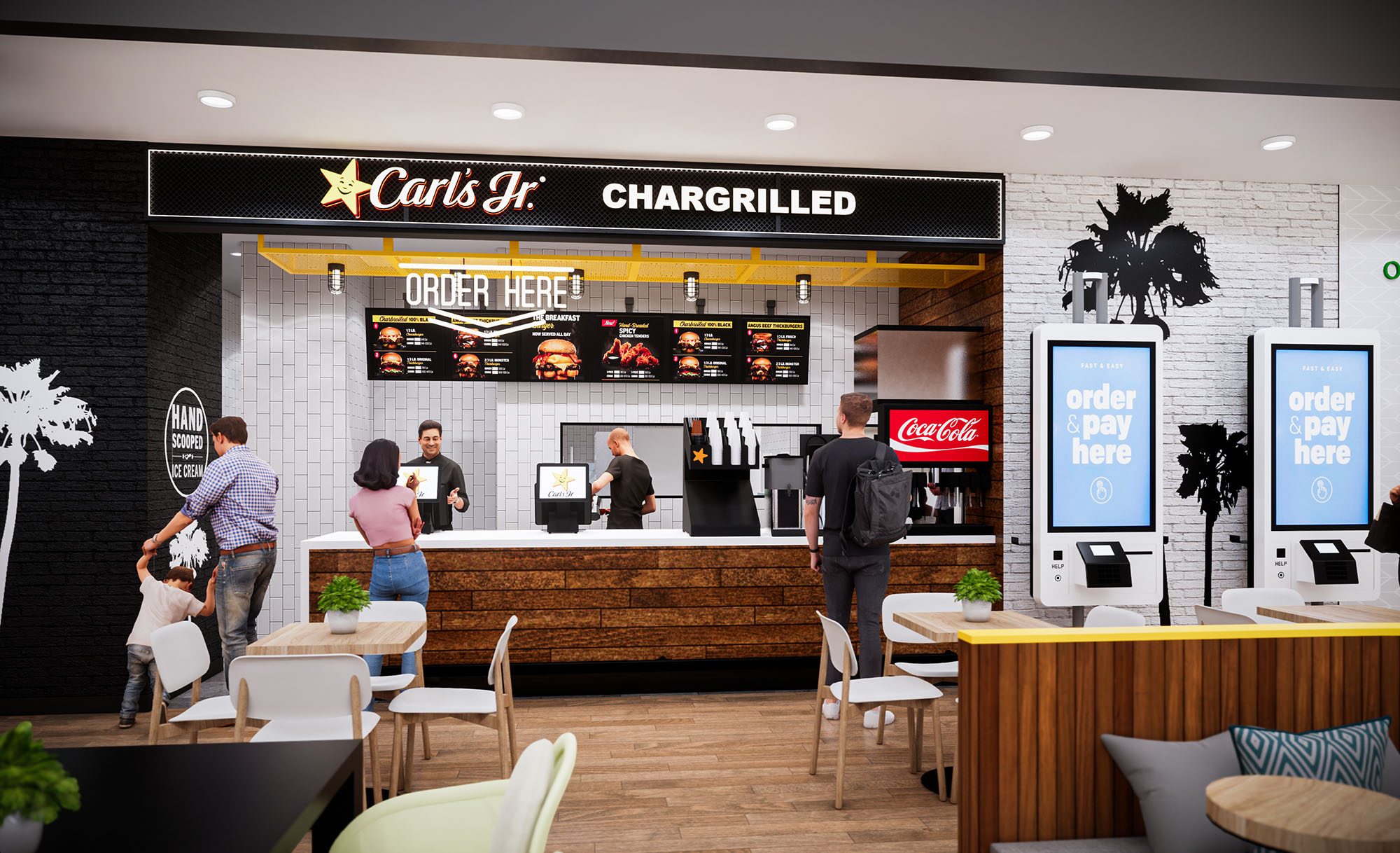
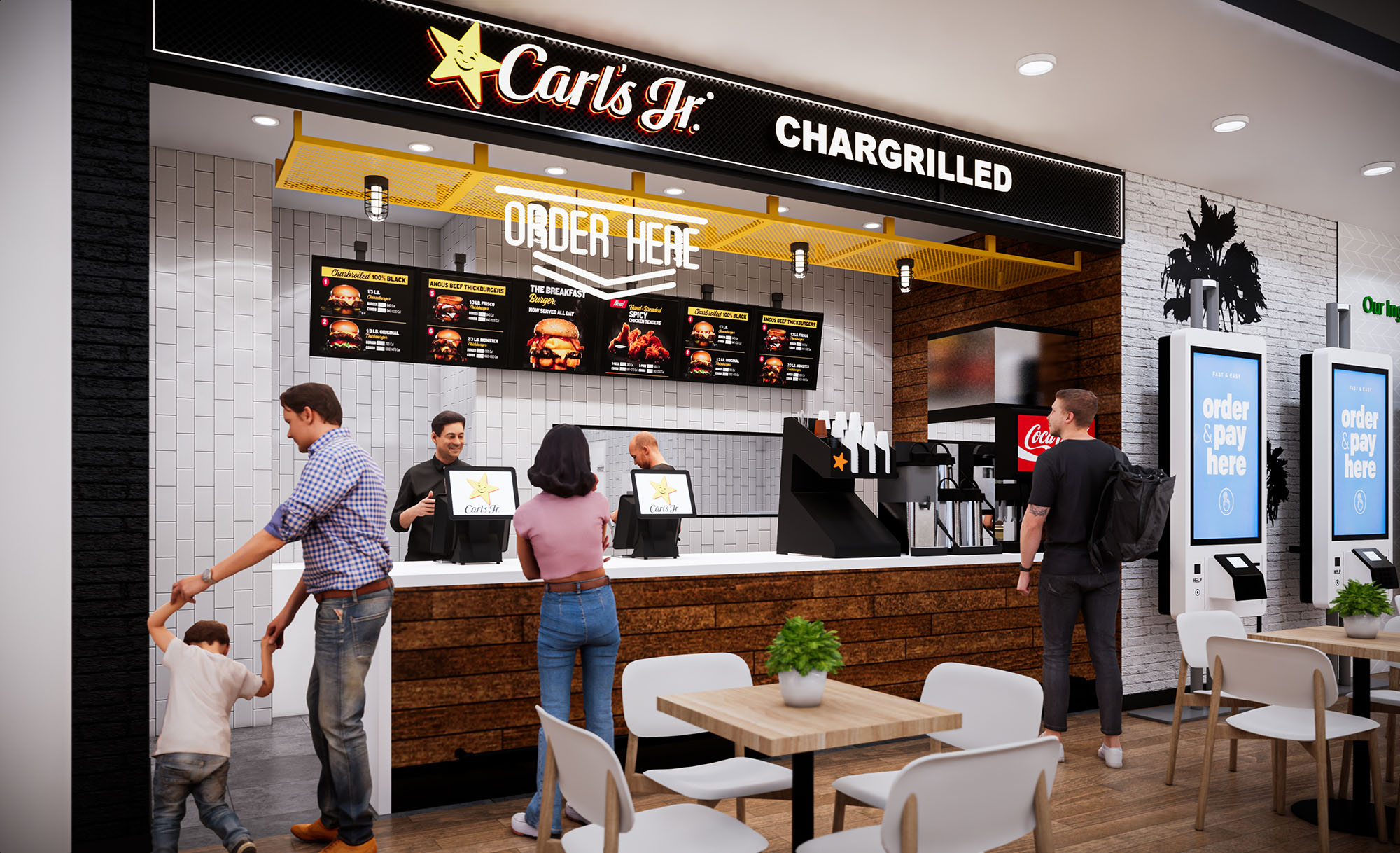

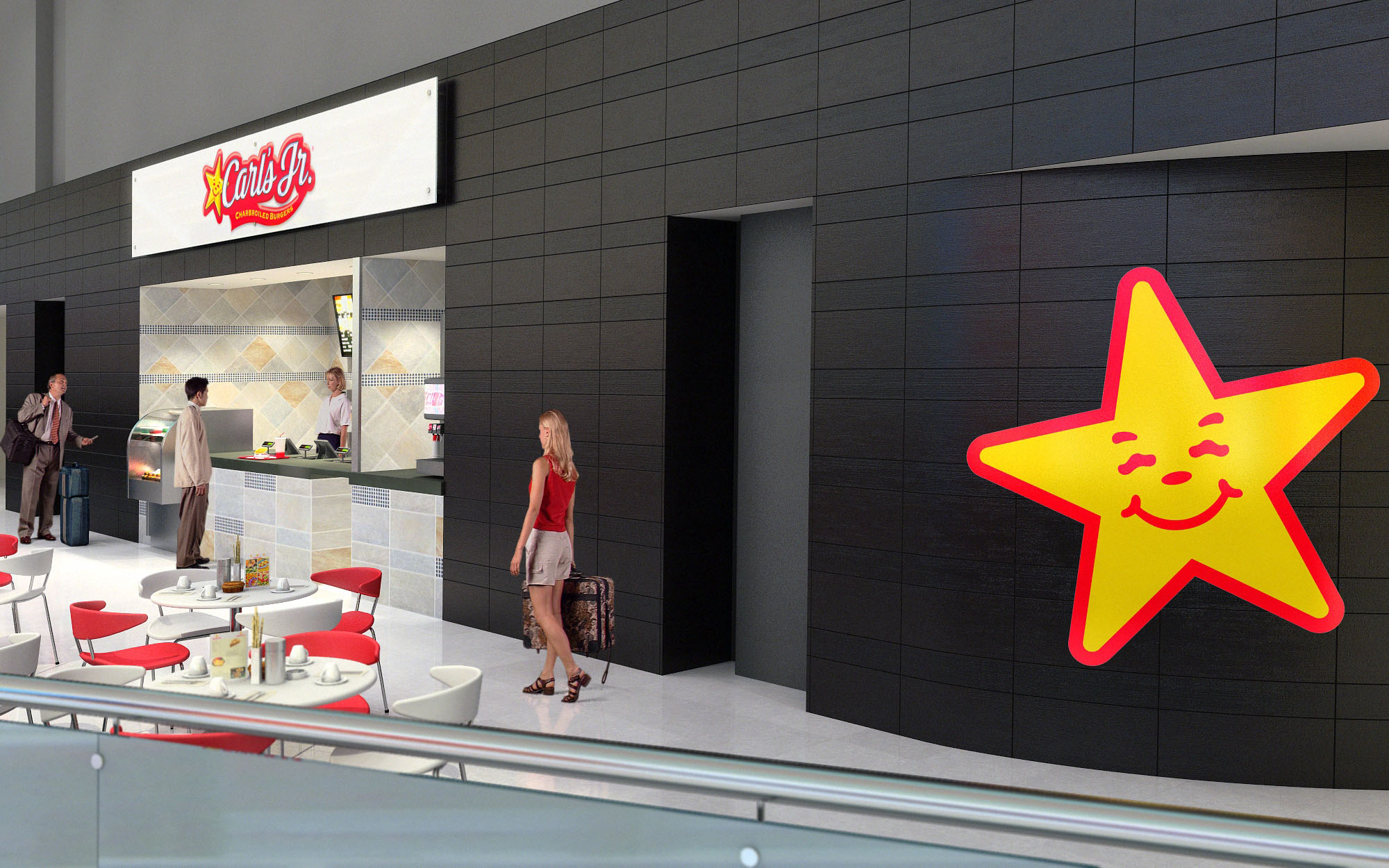
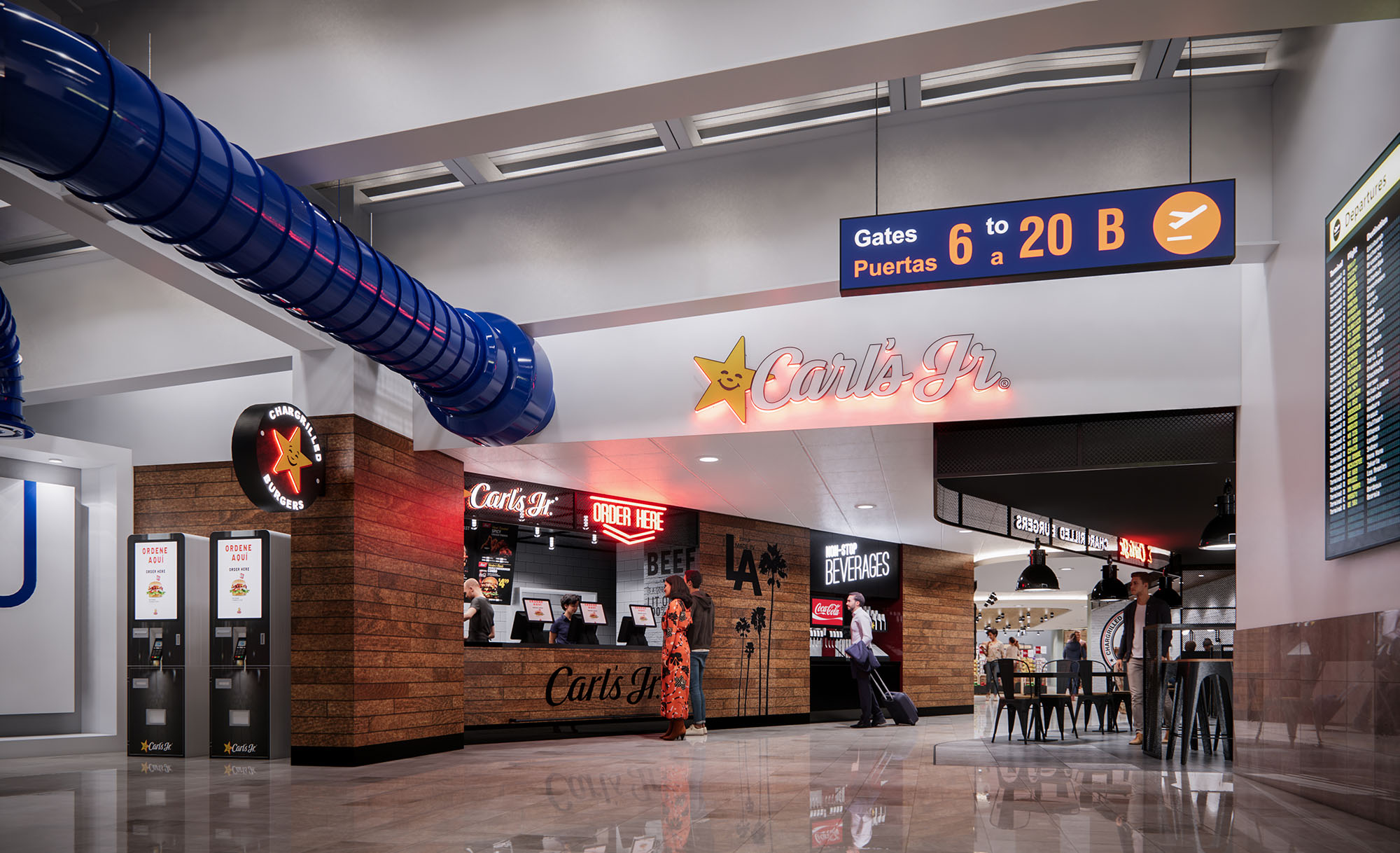
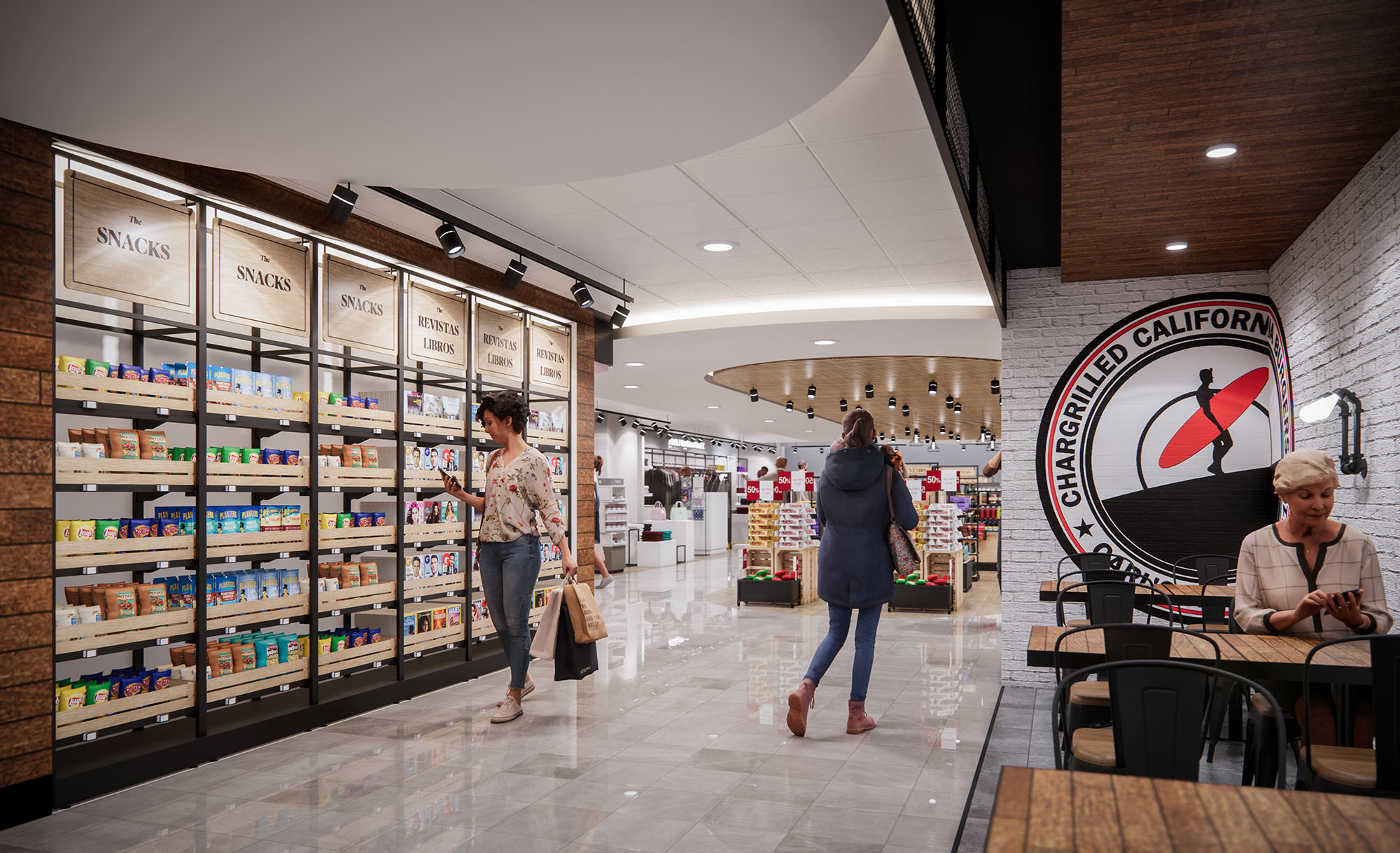
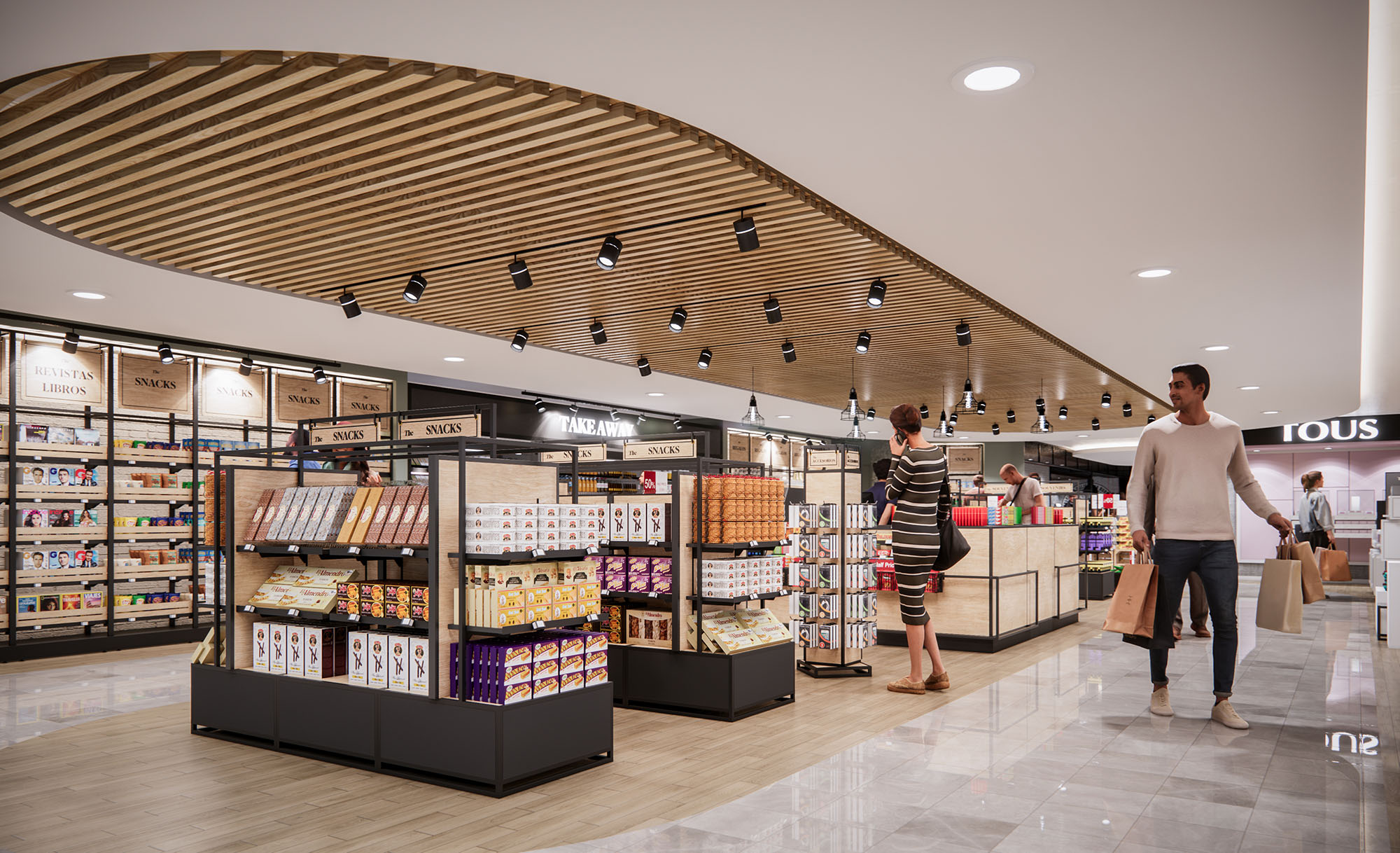
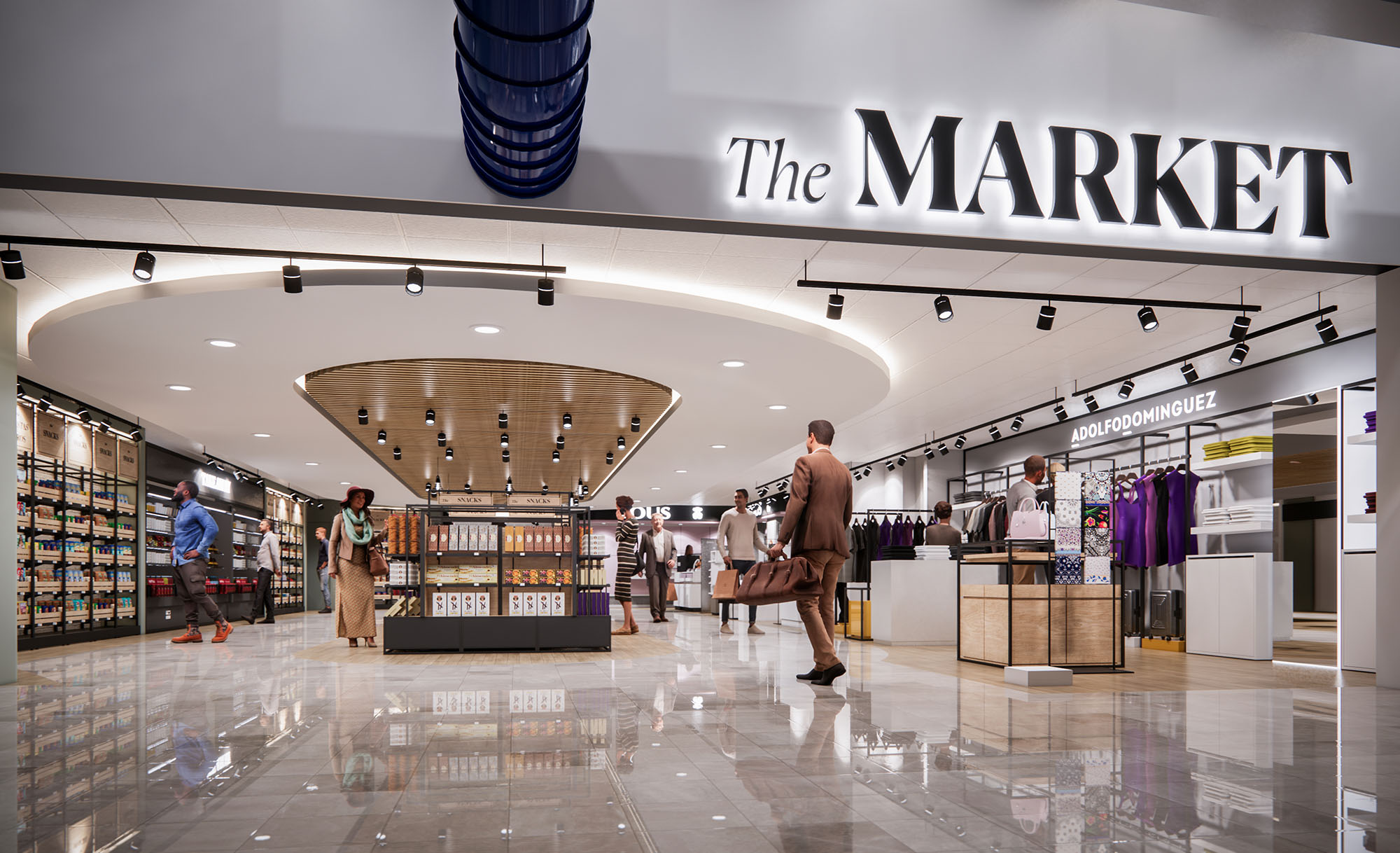
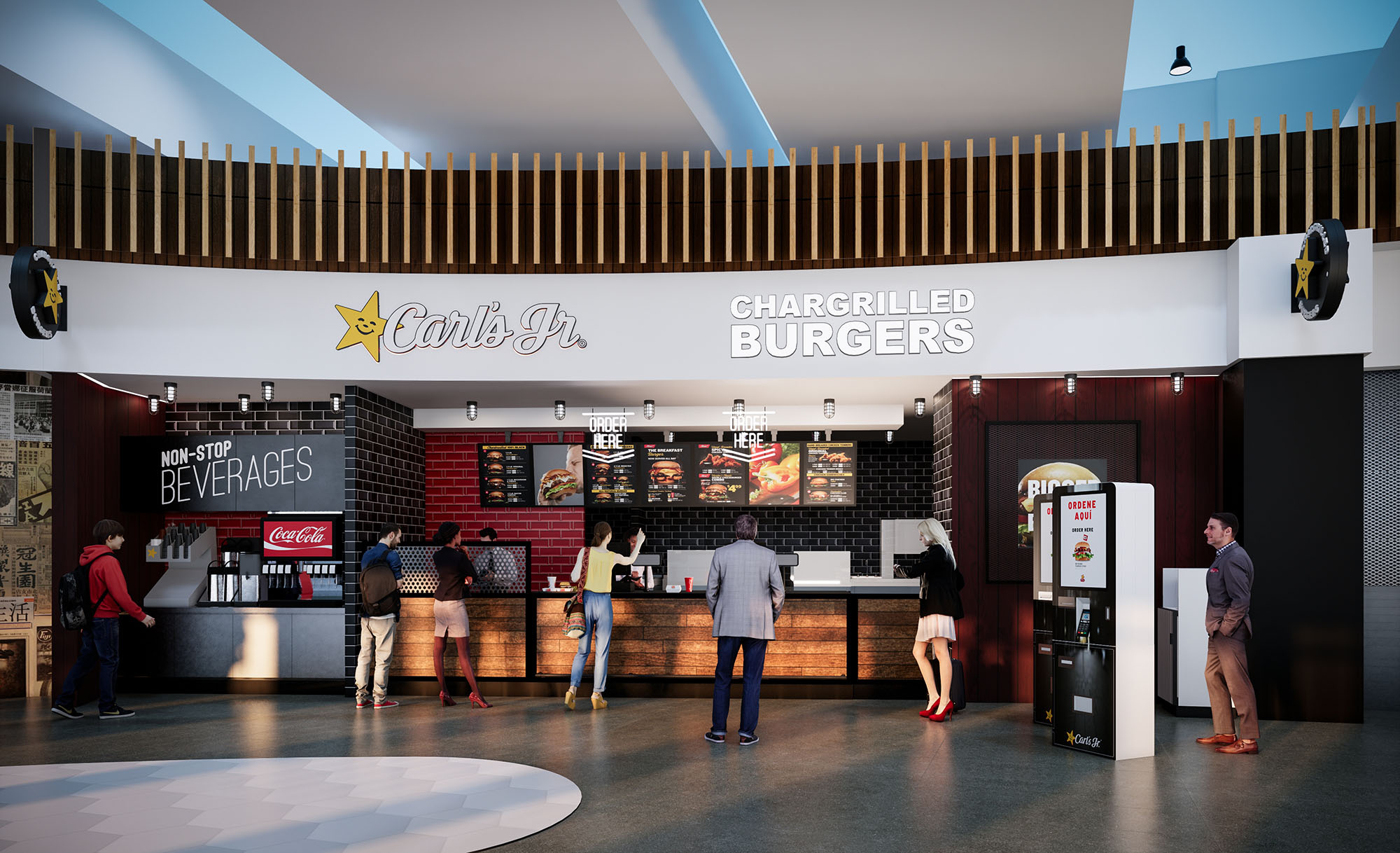
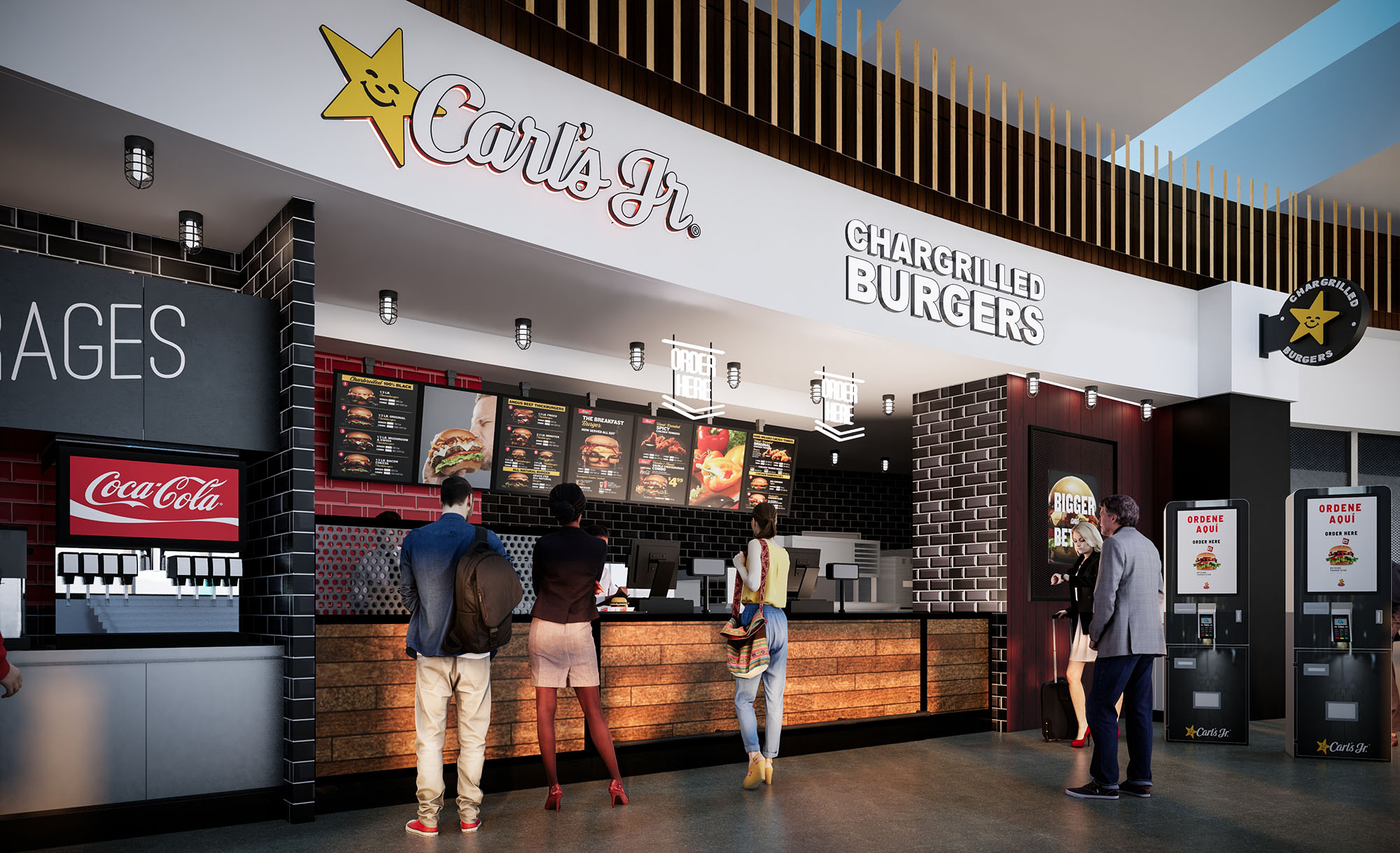
The architectural concept for Carl’s Jr. across these multiple locations is based on a contemporary reinterpretation of the classic American burger joint, translated into a clear and repeatable brand experience. The design combines industrial aesthetics with warm natural textures to communicate a chargrilled, handcrafted food offer while ensuring strong visual recognition in high-traffic environments such as malls and airports. Each unit acts as a highly visible “food stage,” where preparation, menu and brand graphics become the main façade.
The concept balances flexibility and consistency. A robust design language—defined by color, materials and lighting—adapts to varying footprints and ceiling heights while preserving a unified identity in Mexico and the USA. The goal is to create an immediate reading of the brand from a distance and a comfortable, efficient environment at close range.
The plan organizes the restaurants around a linear service counter that concentrates ordering, payment and pickup. This clear axis directs customer movement from entrance to menu reading, ordering and beverage refill, minimizing cross-traffic and congestion during peak hours. Visual references—suspended menus, illuminated signage and contrasting back walls—guide the user intuitively without relying on excessive wayfinding graphics.
Back-of-house areas are compact and placed directly behind the counter, shortening production lines and allowing quick communication between kitchen staff and front-of-house. In food-court configurations, the design maximizes frontal visibility while maintaining a shallow depth. In standalone or larger footprints, the counter becomes the threshold to a dining area where seating is distributed in clusters, combining individual tables, banquettes and communal options for different user profiles.
The interior palette is anchored in the brand’s signature colors—black, red and yellow—balanced with timber and neutral finishes. Black brick tiles and dark metal frames convey an urban, industrial character that enhances the perception of flame-grilled cooking. Red is applied to selective planes—backsplashes, feature walls and menu backgrounds—to emphasize the food offer and create focal points.
Warm wood in counters, soffits and some wall claddings softens the environment and introduces a handcrafted feel. The use of horizontal wooden slats in ceilings and screens adds texture while visually lowering large volumes, making double-height or open-mall spaces feel more intimate. Durable surfaces such as quartz or high-pressure laminates are specified for worktops and tray slides, ensuring resistance to heavy use and ease of cleaning.
Lighting design plays a strategic role in reinforcing the brand. Linear LED fixtures and spotlights above the counter create a bright, high-contrast band that highlights menus and food preparation. The perimeter and dining zones employ warmer, more diffuse lighting to encourage dwell time and comfort. Accent lighting on signage and logos guarantees strong visibility even in environments with abundant ambient light.
Brand integration is achieved architecturally rather than superficially. Logos, slogans and menu systems are embedded into the architecture through backlit boxes, perforated metal panels and integrated graphic walls. Repetitive elements—star icons, typographic bands, and “chargrilled burgers” messaging—generate a coherent visual rhythm that unifies the different locations.
Sustainability strategies focus on operational efficiency and material performance across the 11 locations. LED lighting with high efficacy reduces energy consumption, while lighting levels are carefully calibrated to avoid over-illumination. Where possible, luminaires are paired with control systems to adapt intensity to natural light conditions in malls and airports.
Finishes are selected for longevity and low maintenance, reducing the need for frequent replacement and associated waste. Non-porous surfaces and modular cladding panels simplify cleaning and allow partial repairs instead of full refurbishment. In some units, open ceilings reduce the amount of suspended ceiling material, and exposed structures are painted rather than fully clad, lowering material use. Beverage and condiment stations are designed for efficient self-service, contributing to reduced staff movement and shorter customer waiting times, which in turn optimizes energy use in back-of-house equipment and improves the overall sustainability of the operation.


Our offices are located in Barcelona, Cancún, Chicago and Santo Domingo, but thanks to technology we can do projects on all over the world.
Barcelona
Bac de Roda 136
08020, Barcelona
Spain
Madrid
Av. de Buendía 11
19005 Guadalajara (Madrid)
Spain
Chicago
373 Hazel Ave, Apt A1
60022, Glencoe, Illinois
United States