

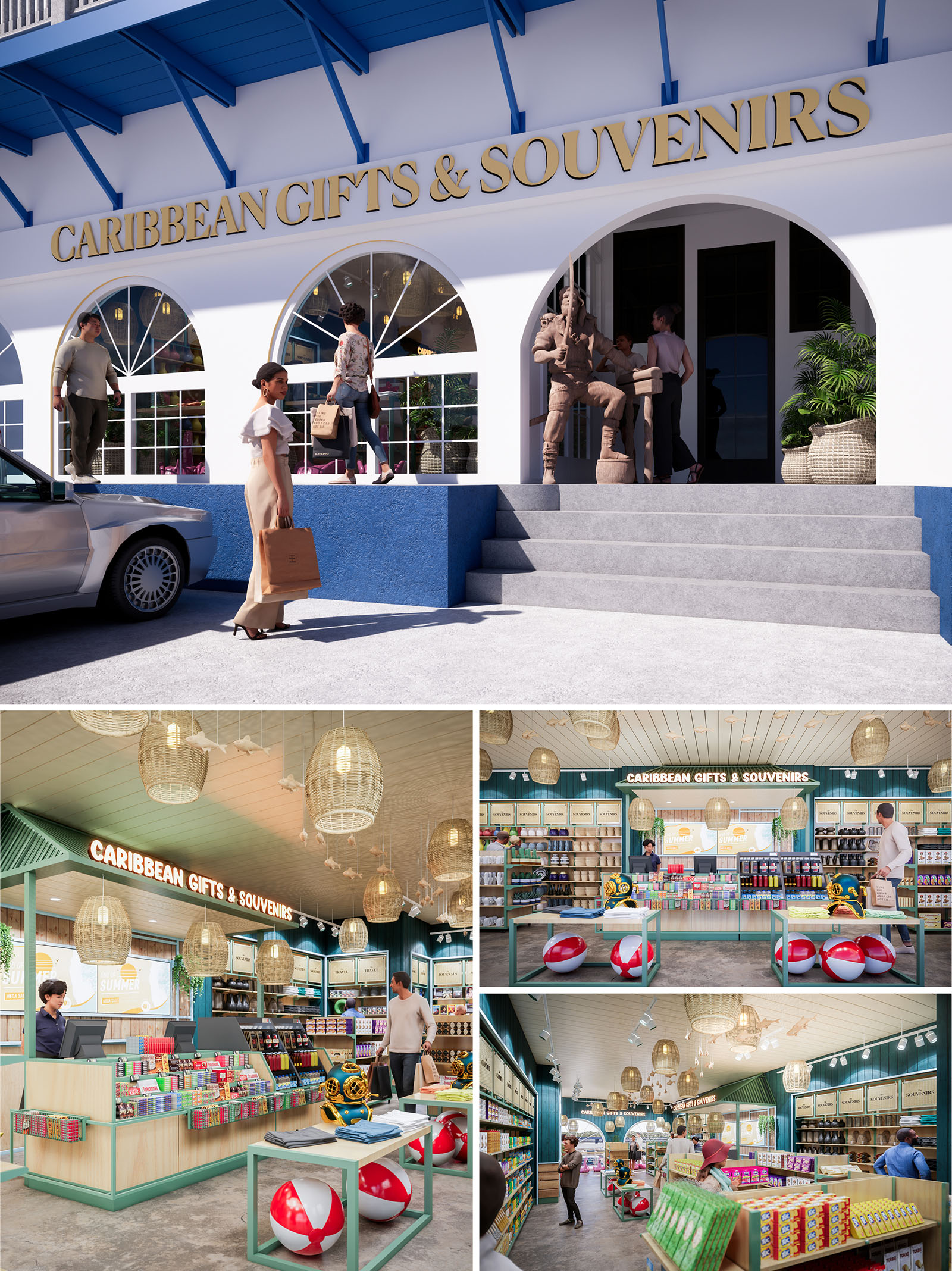
The project “Caribbean Souvenirs & Gifts” is conceived as a contemporary interpretation of the Caribbean coastal vernacular, adapted to the urban context of San Martín, México. The design prioritizes an immediate visual connection to vacation memories through a clear, fresh and luminous spatial identity, combining maritime references with warm local craftsmanship. The architecture seeks to create a seamless transition between exterior and interior, where the façade already anticipates the colorful and playful character of the retail experience.
The concept is organized around fluid circulation and full visibility of the merchandise from the entrance. A central axis directs the visitor’s gaze towards the main back wall, framed by generous shelving and branding, while freestanding display islands encourage intuitive browsing and impulse purchases. The overall spatial strategy supports high turnover retail without losing a relaxed, resort-like ambience.
The façade uses clean white volumes with accentuated blue elements evocative of Caribbean seaside architecture. Large segmental arches create a rhythmic colonnade that opens the interior to the street and maximizes natural light. The arches also frame the display windows, transforming the storefront into an active showcase for products and interior life.
The upper blue overhang and exposed structural brackets provide deep shading, acting as a passive climatic device while reinforcing the nautical aesthetic. The main entrance is emphasized by a sculptural figure and generous steps that form an informal plaza, inviting visitors to pause, take photos and gradually move into the store. Gold-toned signage in relief typography adds a refined, resort-hotel touch, ensuring strong visibility in the commercial context.
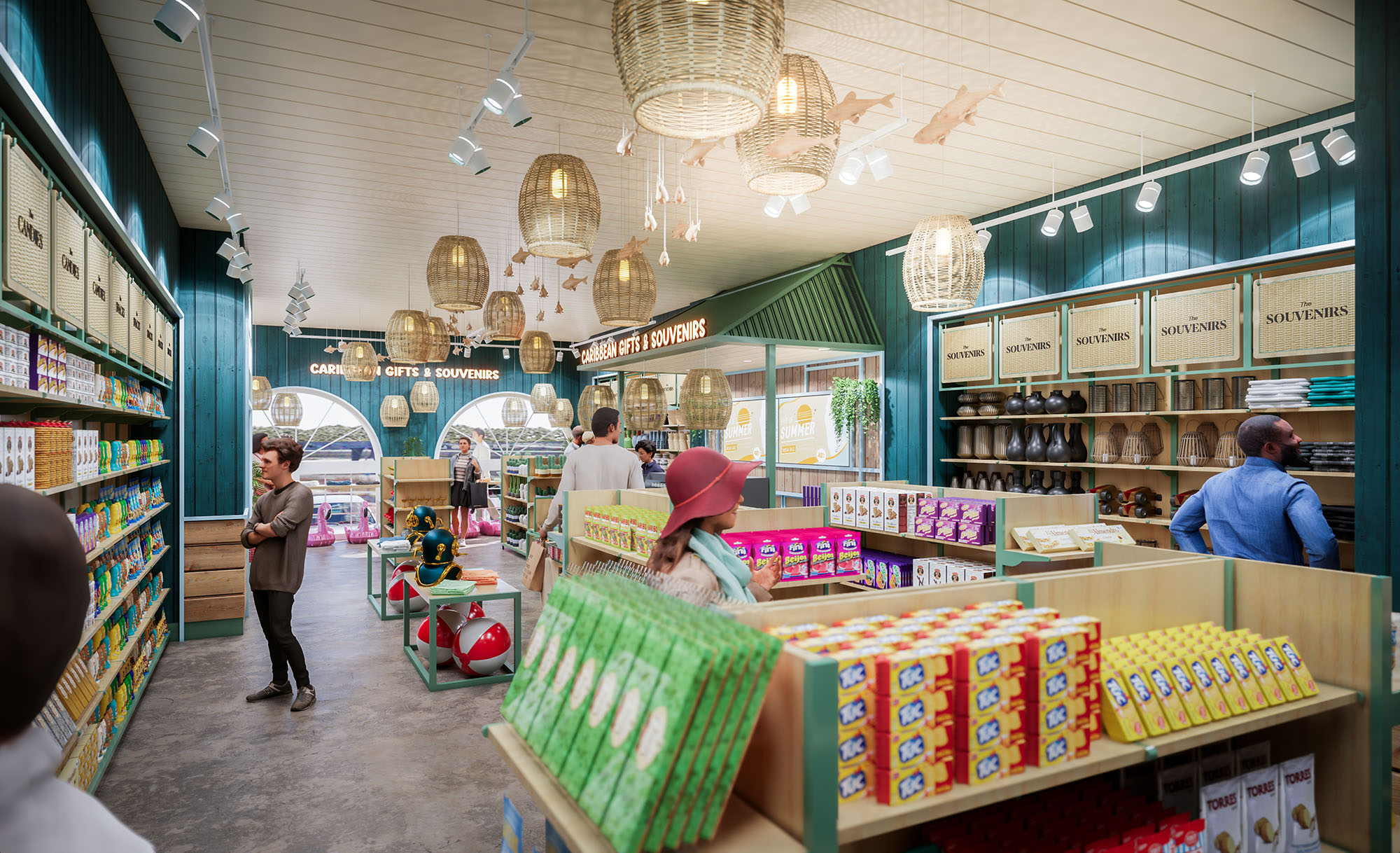
The interior layout is organized in a perimeter display system with a central field of low-height tables and gondolas. This configuration guarantees long visual corridors, facilitating orientation and allowing staff to monitor the entire space. The cashier block is placed laterally near the entrance to efficiently manage arrivals and departures without interrupting the main circulation loop.
Product zoning is defined both by color and by subtle variations in furniture height and density. Beach and leisure items are concentrated in the foreground with more tactile, accessible displays, while shelves with packaged gifts and local delicacies occupy the rear wall, functioning as a visual anchor. The layout supports both quick purchases and slower, exploratory browsing typical of tourists.
The material palette combines light-toned wood laminates for counters and shelving with deep green vertical paneling on accent walls, creating a contrast that makes merchandise stand out. Mint-green metal frames in the central tables introduce a fresh, coastal nuance, while the neutral concrete floor provides durability for high traffic and visually grounds the vivid colors of the products.
The ceiling is finished in light wood slats that reflect warm light and enhance acoustic comfort. Woven rattan pendant lamps create a handcrafted, tropical atmosphere and act as focal points over the central area. These are complemented by track lighting and recessed fixtures integrated into the perimeter signage band, ensuring uniform illumination and excellent product visibility while reducing glare.
Brand identity is embedded architecturally through continuous signage bands that wrap around key walls, unifying graphic communication and lighting. Typography is consistent from façade to interior, strengthening memorability and orientation. Neutral, organized back-of-shelf labeling systems allow fast reconfiguration of product lines without compromising visual order.
Display heights are carefully calibrated to maintain eye-level focus on primary merchandise while enabling secondary products to be discovered at lower shelves and table levels. The combination of open baskets, framed niches and linear shelving supports multiple product scales, from small souvenirs to volumetric beach toys, while preserving a cohesive visual language.
Sustainability is addressed through both passive and material strategies. The deep façade overhang, combined with the arched openings, reduces direct solar gain on the glazing, improving thermal comfort and limiting cooling loads. Natural daylight penetration minimizes daytime reliance on artificial lighting, while warm LED technology is specified throughout to reduce energy consumption.
The interior employs durable, low-maintenance finishes such as sealed concrete floors and laminated wood panels to extend lifecycle and reduce replacement frequency. The use of rattan and other natural fibers for lighting and decorative elements promotes renewable materials and supports local craftsmanship. Flexible modular furniture allows seasonal reconfiguration without major construction waste, ensuring the retail space can evolve with changing product lines and tourism trends.
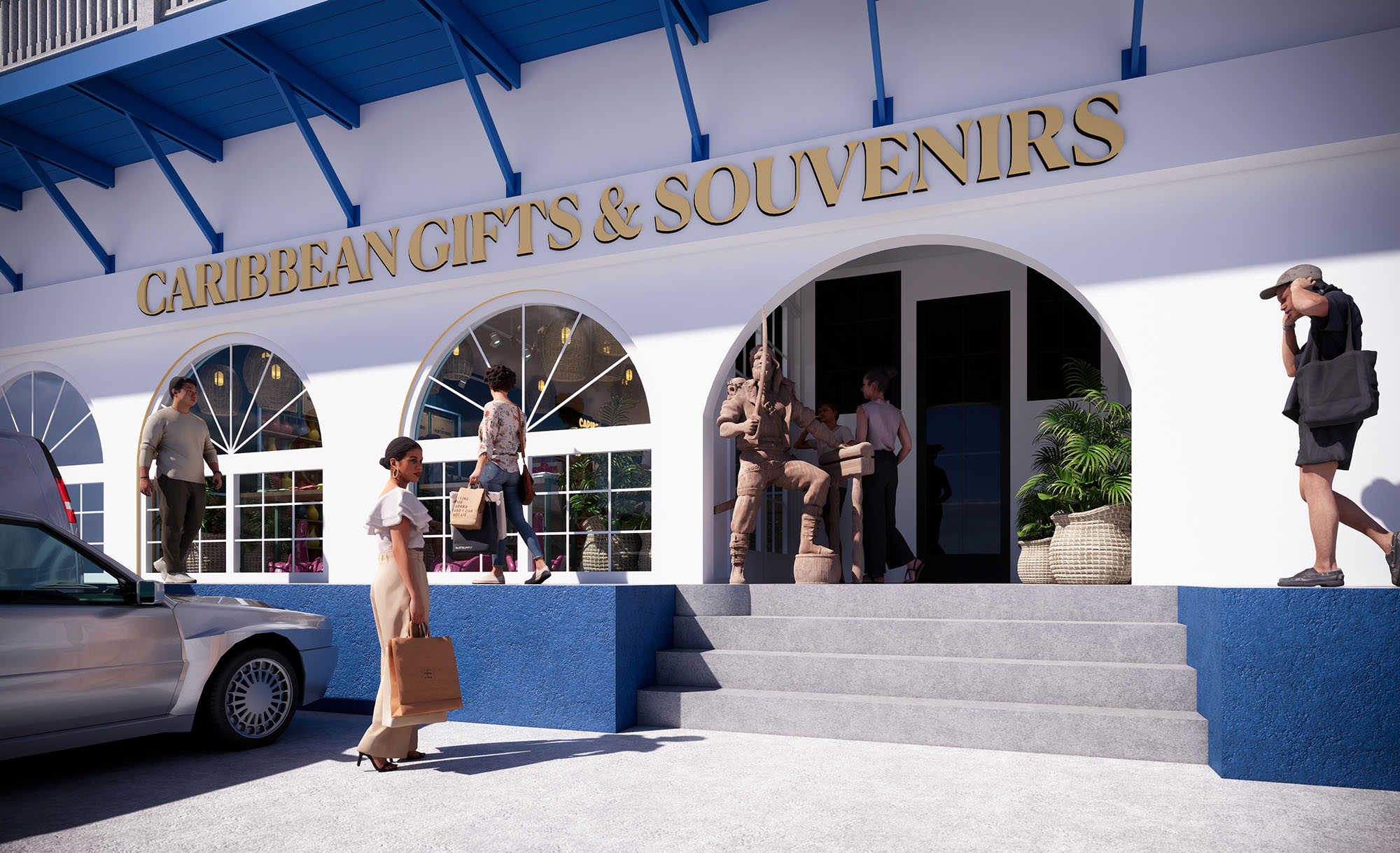
The project “Caribbean Souvenirs & Gifts” is conceived as a contemporary interpretation of the Caribbean coastal vernacular, adapted to the urban context of San Martín, México. The design prioritizes an immediate visual connection to vacation memories through a clear, fresh and luminous spatial identity, combining maritime references with warm local craftsmanship. The architecture seeks to create a seamless transition between exterior and interior, where the façade already anticipates the colorful and playful character of the retail experience.
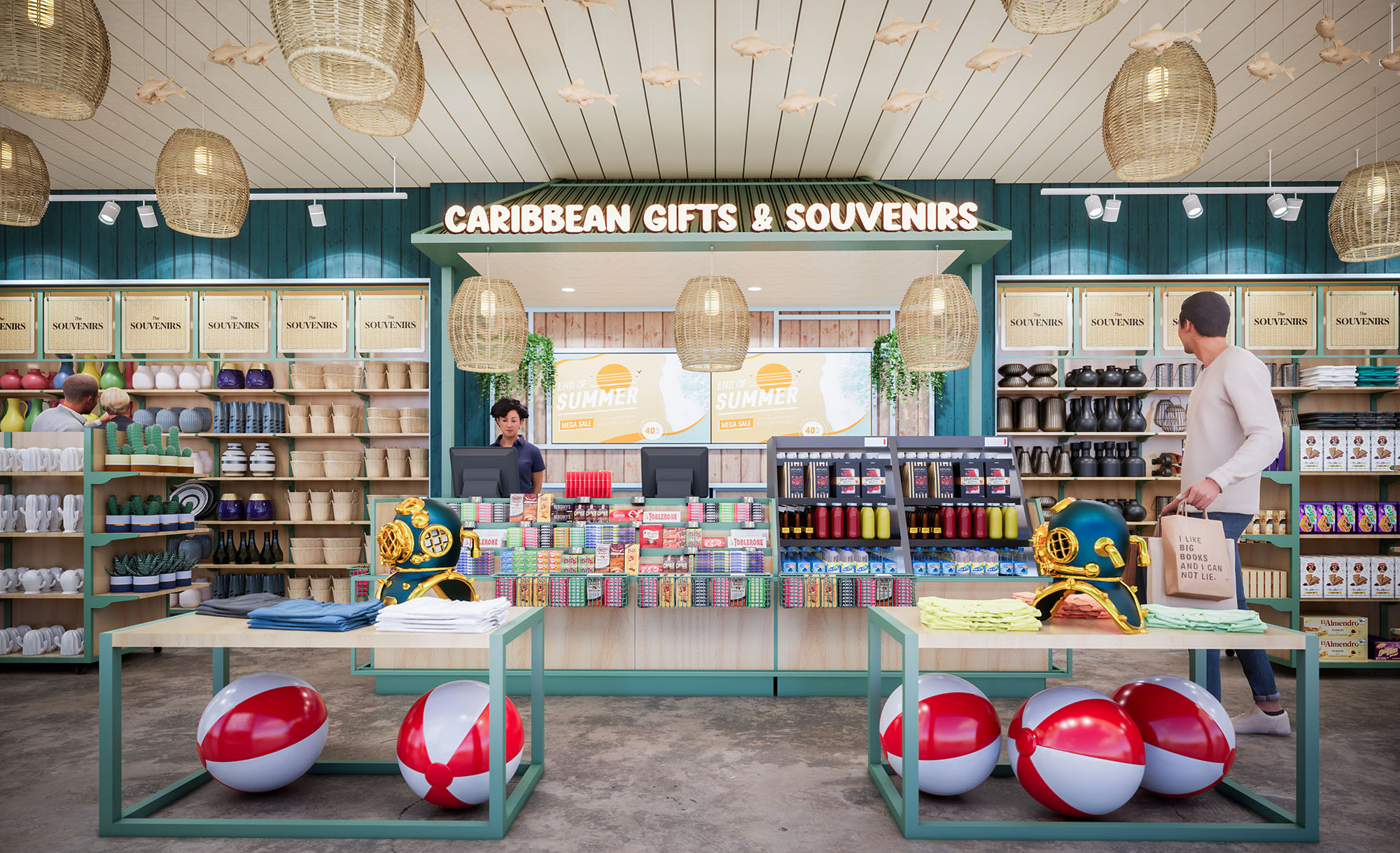
The concept is organized around fluid circulation and full visibility of the merchandise from the entrance. A central axis directs the visitor’s gaze towards the main back wall, framed by generous shelving and branding, while freestanding display islands encourage intuitive browsing and impulse purchases. The overall spatial strategy supports high turnover retail without losing a relaxed, resort-like ambience.
The façade uses clean white volumes with accentuated blue elements evocative of Caribbean seaside architecture. Large segmental arches create a rhythmic colonnade that opens the interior to the street and maximizes natural light. The arches also frame the display windows, transforming the storefront into an active showcase for products and interior life.
The upper blue overhang and exposed structural brackets provide deep shading, acting as a passive climatic device while reinforcing the nautical aesthetic. The main entrance is emphasized by a sculptural figure and generous steps that form an informal plaza, inviting visitors to pause, take photos and gradually move into the store. Gold-toned signage in relief typography adds a refined, resort-hotel touch, ensuring strong visibility in the commercial context.
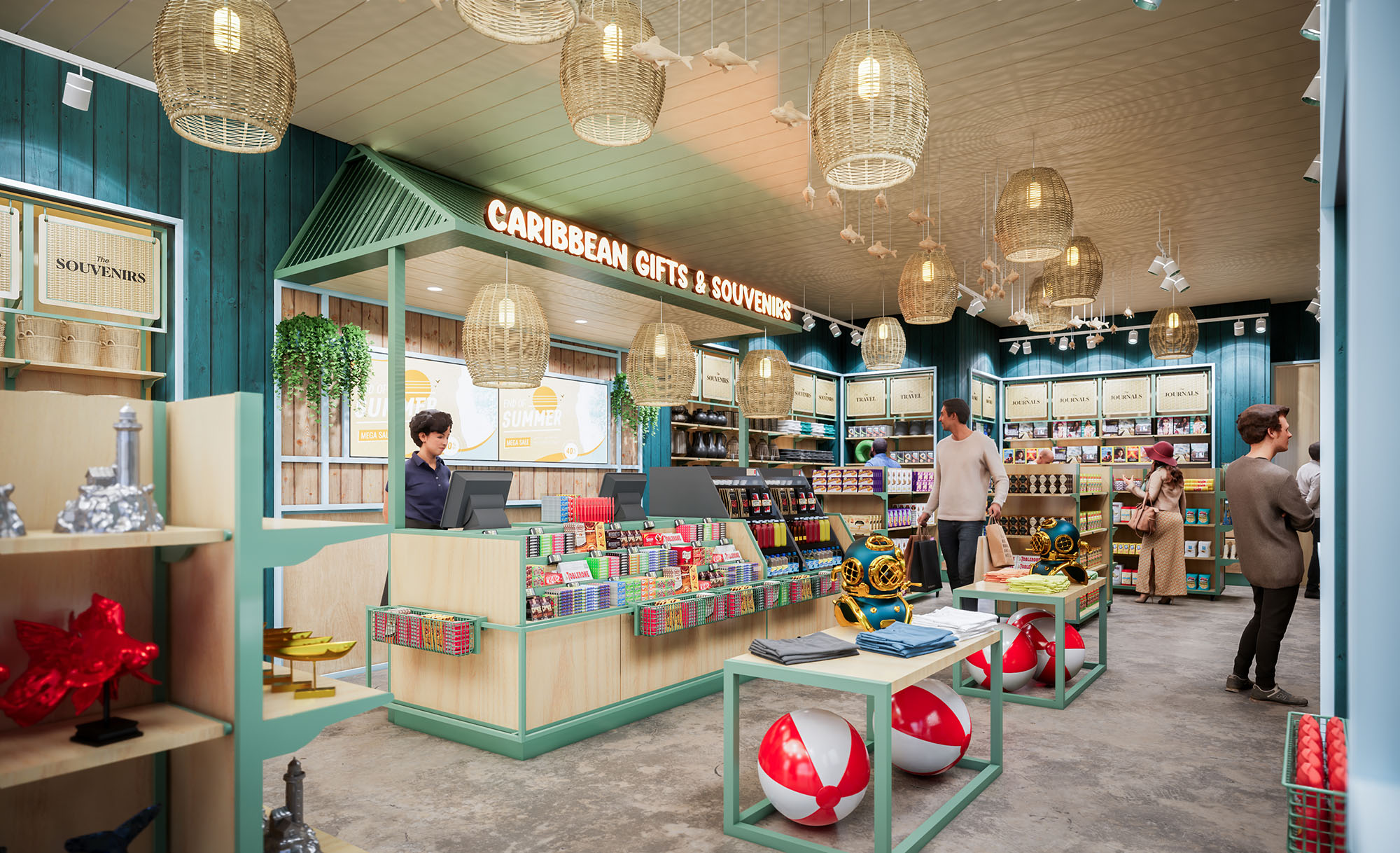
The interior layout is organized in a perimeter display system with a central field of low-height tables and gondolas. This configuration guarantees long visual corridors, facilitating orientation and allowing staff to monitor the entire space. The cashier block is placed laterally near the entrance to efficiently manage arrivals and departures without interrupting the main circulation loop.
Product zoning is defined both by color and by subtle variations in furniture height and density. Beach and leisure items are concentrated in the foreground with more tactile, accessible displays, while shelves with packaged gifts and local delicacies occupy the rear wall, functioning as a visual anchor. The layout supports both quick purchases and slower, exploratory browsing typical of tourists.
The material palette combines light-toned wood laminates for counters and shelving with deep green vertical paneling on accent walls, creating a contrast that makes merchandise stand out. Mint-green metal frames in the central tables introduce a fresh, coastal nuance, while the neutral concrete floor provides durability for high traffic and visually grounds the vivid colors of the products.
The ceiling is finished in light wood slats that reflect warm light and enhance acoustic comfort. Woven rattan pendant lamps create a handcrafted, tropical atmosphere and act as focal points over the central area. These are complemented by track lighting and recessed fixtures integrated into the perimeter signage band, ensuring uniform illumination and excellent product visibility while reducing glare.
Brand identity is embedded architecturally through continuous signage bands that wrap around key walls, unifying graphic communication and lighting. Typography is consistent from façade to interior, strengthening memorability and orientation. Neutral, organized back-of-shelf labeling systems allow fast reconfiguration of product lines without compromising visual order.
Display heights are carefully calibrated to maintain eye-level focus on primary merchandise while enabling secondary products to be discovered at lower shelves and table levels. The combination of open baskets, framed niches and linear shelving supports multiple product scales, from small souvenirs to volumetric beach toys, while preserving a cohesive visual language.
Sustainability is addressed through both passive and material strategies. The deep façade overhang, combined with the arched openings, reduces direct solar gain on the glazing, improving thermal comfort and limiting cooling loads. Natural daylight penetration minimizes daytime reliance on artificial lighting, while warm LED technology is specified throughout to reduce energy consumption.
The interior employs durable, low-maintenance finishes such as sealed concrete floors and laminated wood panels to extend lifecycle and reduce replacement frequency. The use of rattan and other natural fibers for lighting and decorative elements promotes renewable materials and supports local craftsmanship. Flexible modular furniture allows seasonal reconfiguration without major construction waste, ensuring the retail space can evolve with changing product lines and tourism trends.


Our offices are located in Barcelona, Cancún, Chicago and Santo Domingo, but thanks to technology we can do projects on all over the world.
Barcelona
Bac de Roda 136
08020, Barcelona
Spain
Madrid
Av. de Buendía 11
19005 Guadalajara (Madrid)
Spain
Chicago
373 Hazel Ave, Apt A1
60022, Glencoe, Illinois
United States