

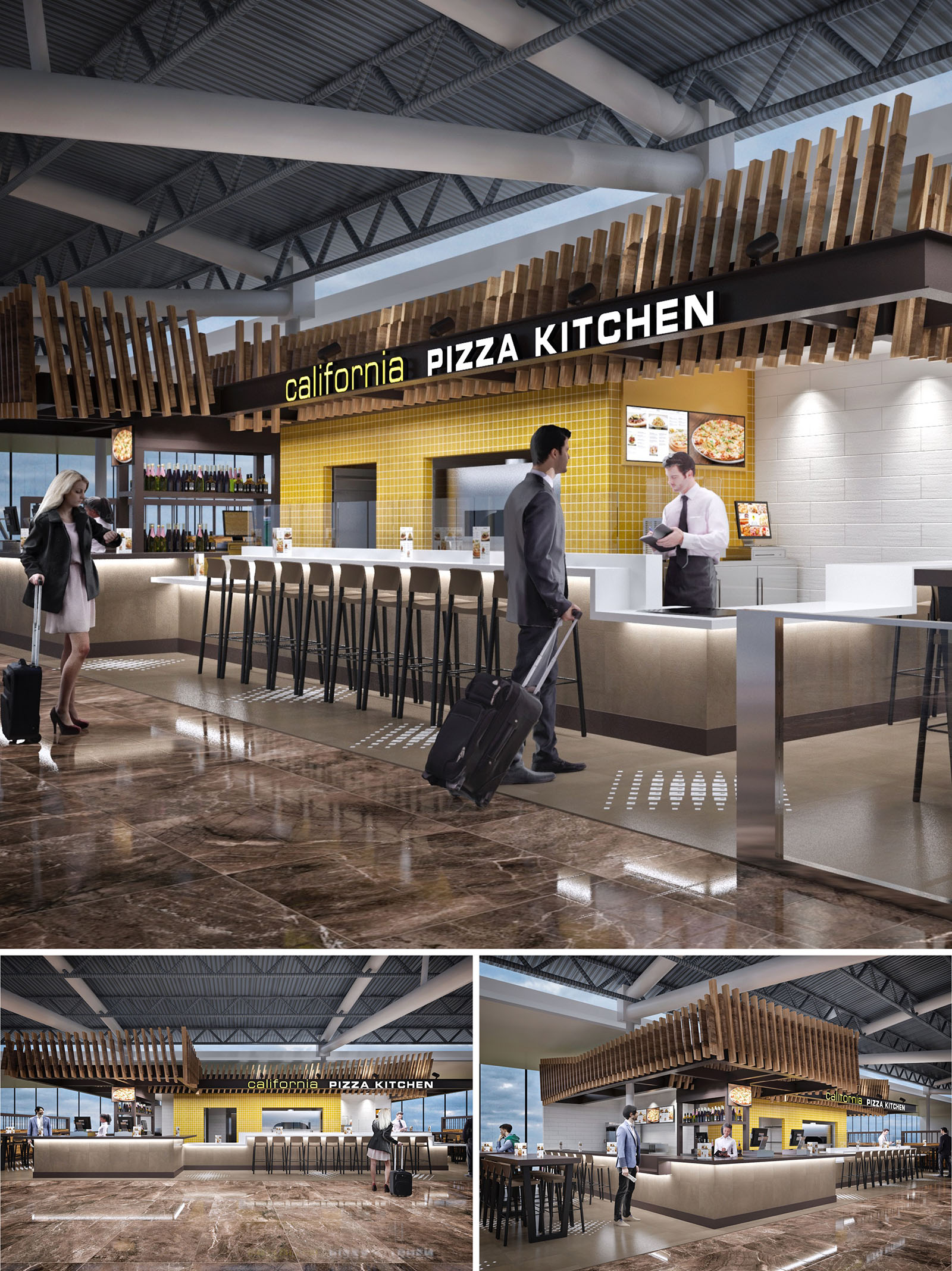
The California Pizza Kitchen in Tijuana is conceived as an open, sculptural island within the airport concourse, combining the informality of a Californian lifestyle with the efficiency required in a high‑traffic terminal. The design articulates a strong horizontal bar wrapped by a dynamic timber crown that becomes both a visual beacon and a unifying architectural element. This suspended wooden volume provides recognizable identity from multiple vantage points while maintaining visual permeability and openness to the surrounding terminal.
The project balances the warmth of natural materials with a contemporary, almost industrial envelope, dialoguing with the exposed steel trusses and generous heights of the airport structure. The restaurant is deliberately porous: no solid walls, only counters, furniture and overhead elements that define space without obstructing circulation or sightlines, ensuring comfort for transient users with limited time.
The layout is organized around a central service bar that acts as the operational core, concentrating ordering, payment and beverage service. This strategy reduces cross‑circulation between staff and travelers, allowing efficient workflows behind the counter while presenting a clear and intuitive front‑of‑house interface. High stools line the primary bar facing the kitchen, encouraging quick stays and solo travelers, while peripheral tables accommodate small groups with carry‑on luggage.
The island configuration prevents dead ends and enables 360‑degree access, essential in an airport context. Passengers can approach from any side, identify the service point immediately and continue their route without backtracking. Thresholds are subtly defined by floor material transitions and tactile guidance dots, which assist orientation and accessibility without resorting to physical barriers.
The material palette juxtaposes warm woods and textured ceramics against a neutral, durable base. The overhead timber slats, in a natural or lightly stained finish, provide a tactile counterpoint to the surrounding metal structure. They are composed in a rhythmic vertical pattern that folds and wraps around the bar, creating depth and a sense of crafted detail while remaining lightweight and modular.
The bar front and worktops use light, smooth solid‑surface or quartz finishes, chosen for their resistance to staining and ease of cleaning in a food‑service environment. Behind the counter, a field of yellow ceramic tiles introduces the brand’s chromatic identity and adds luminosity, reflecting light toward the preparation zone. White textured wall panels balance the composition, preventing visual saturation and ensuring a bright backdrop for digital menus and product imagery.
Lighting is designed to contrast the typically diffuse ambient light of the terminal with a more intimate, focused atmosphere at the restaurant. Linear recessed fixtures and discreet spotlights are integrated into the underside of the timber canopy, washing the bar and work surfaces with warm, uniform light. This approach clearly delineates the service zone and enhances the perception of cleanliness and order.
Under‑counter lighting along the bar introduces a floating effect, visually lightening the mass of the counter and guiding passengers along the seating edge. Accent lighting over the yellow-tiled wall reinforces the brand color and creates a depth gradient, drawing attention to the kitchen aperture and menu boards without competing with airport signage.
The furniture is intentionally slender and linear, with metal frames and timber seats that echo the canopy language. High stools along the bar prioritize quick turnover and clear sightlines, while standard-height tables on the perimeter allow more relaxed use. The neutral upholstery and finishes are selected to withstand intensive use yet remain visually calm against the more expressive architectural elements.
Brand integration is achieved architecturally rather than through excessive graphics. The yellow tile field, the black fascia band carrying the illuminated logo, and the timber envelope all function as three-dimensional branding devices visible from long distances within the concourse. This reduces the need for additional signage and visual clutter.
Sustainability considerations include the use of modular timber elements, allowing efficient fabrication, transport and potential replacement of individual slats instead of large assemblies. Durable, low‑maintenance surfaces minimize the need for aggressive cleaning chemicals and frequent replacement. High‑efficacy LED lighting reduces energy consumption, while the open island typology leverages the airport’s existing HVAC and natural lighting, avoiding redundant systems and lowering operational impact over the project’s life cycle.
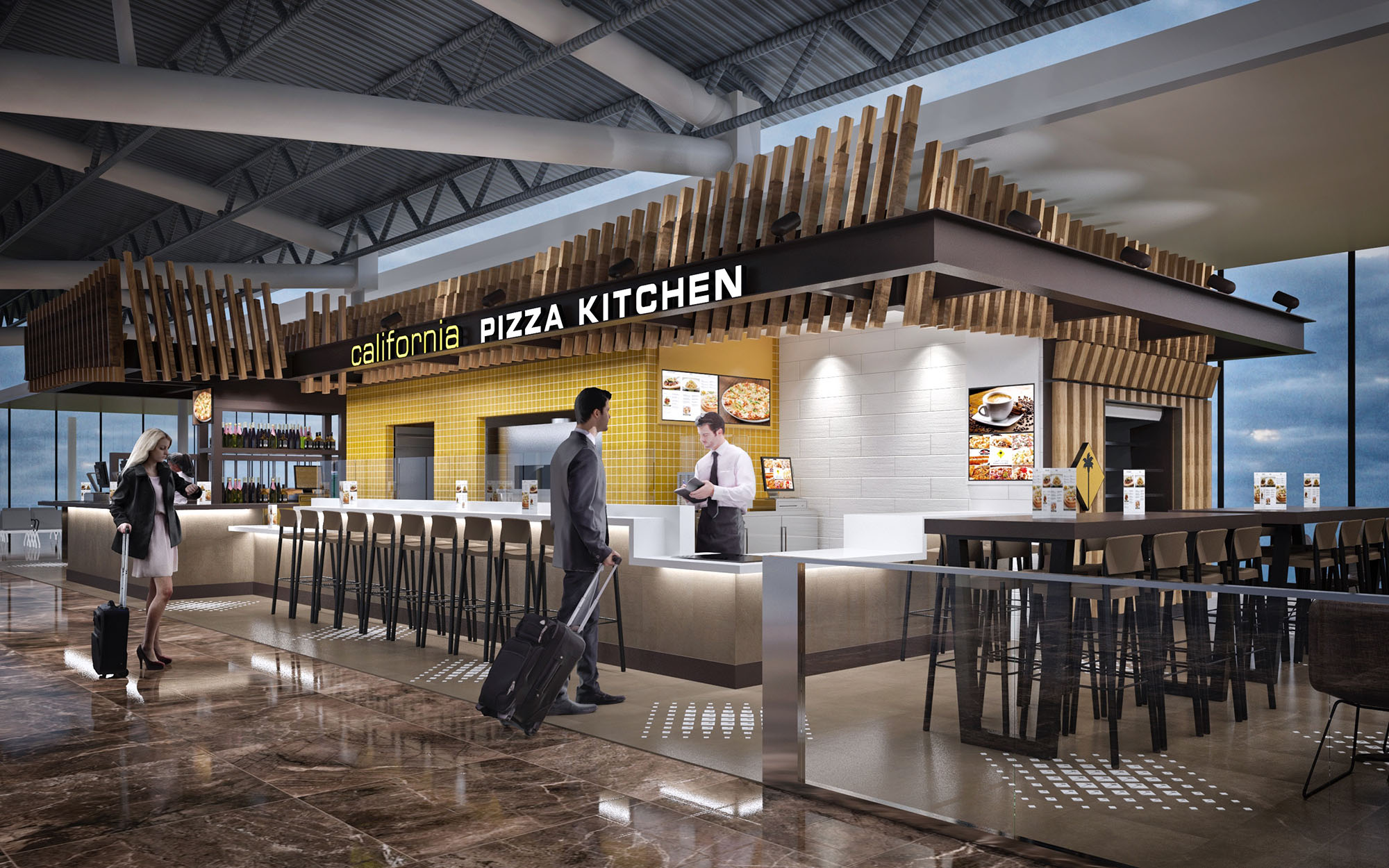
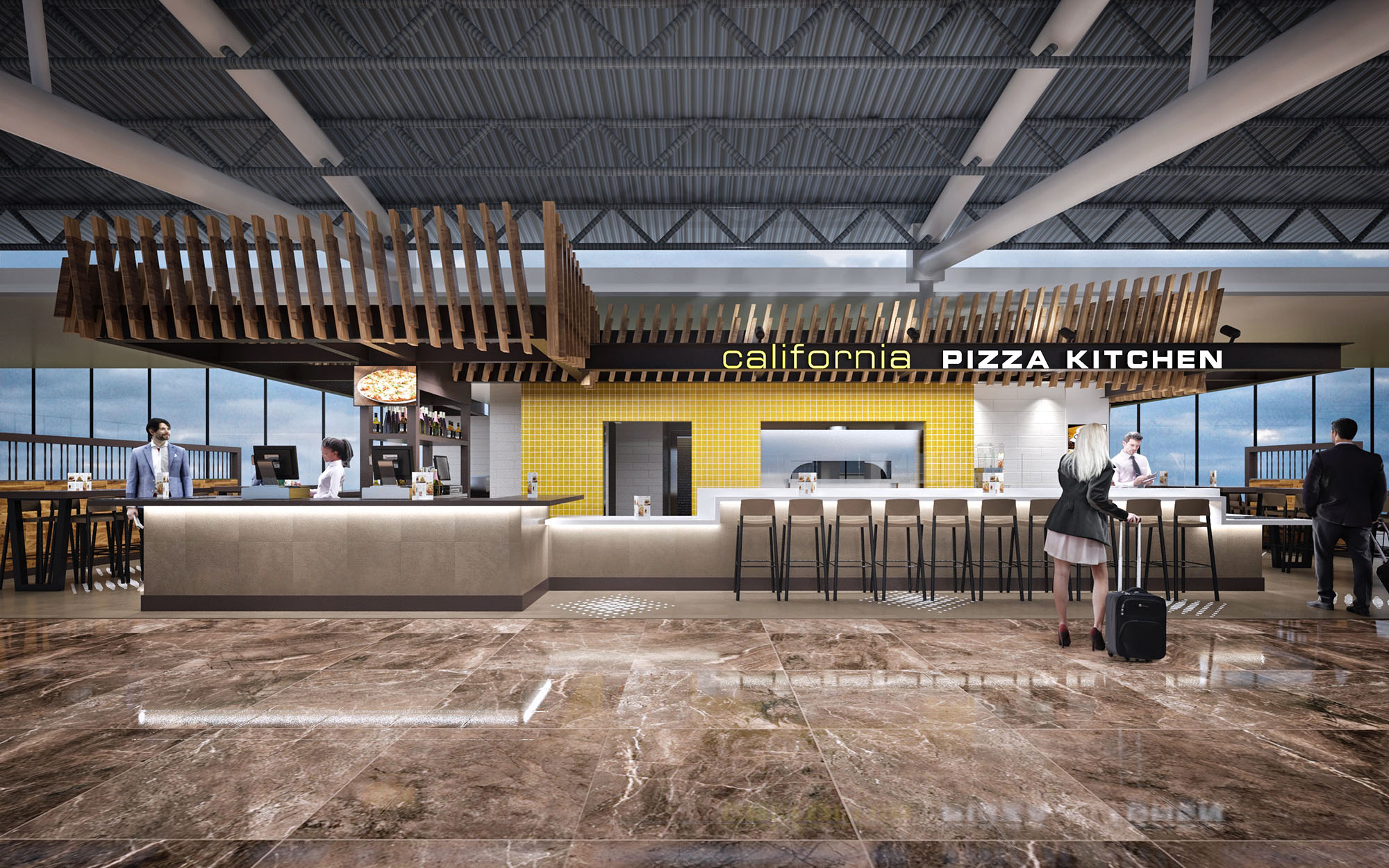
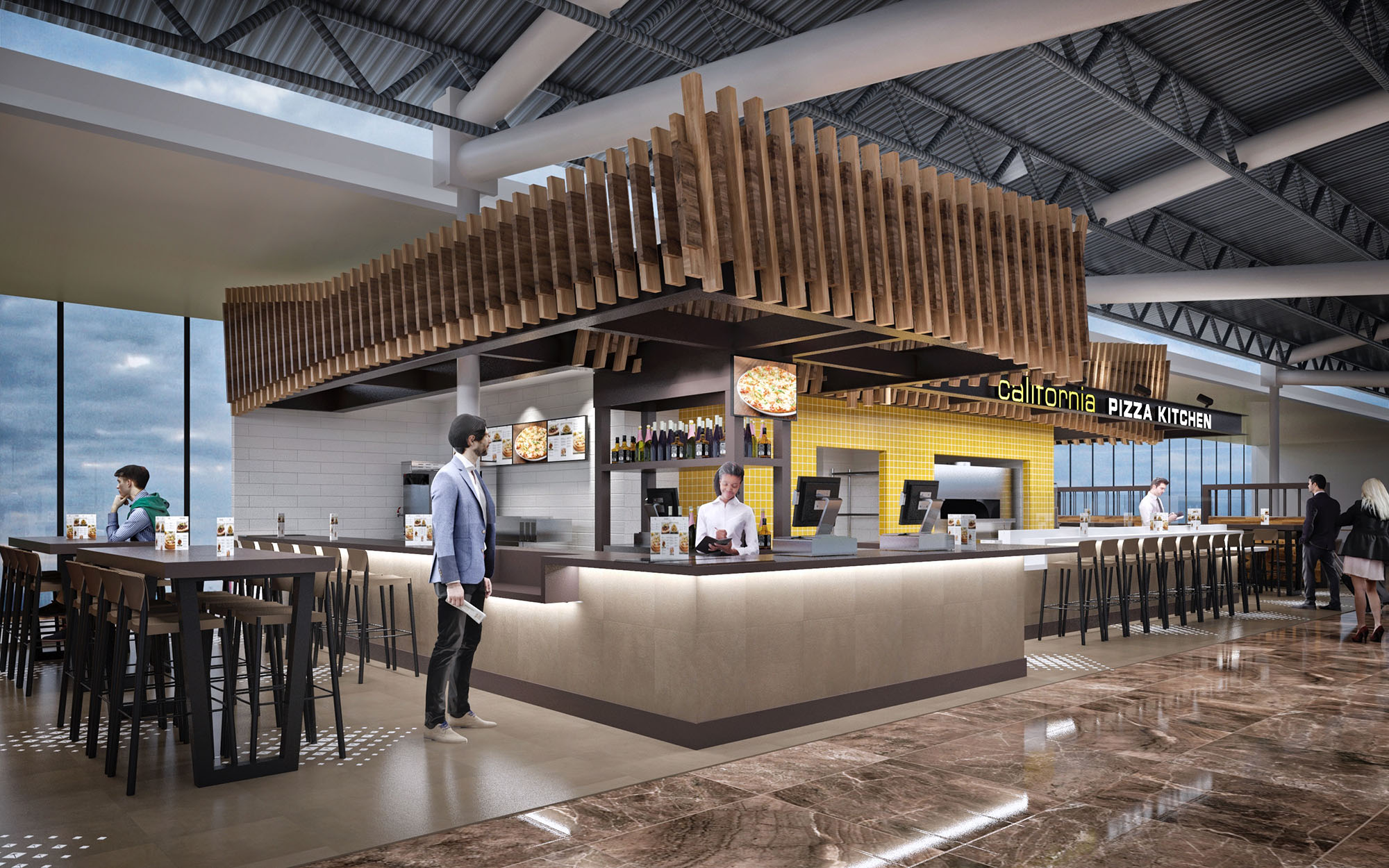
The California Pizza Kitchen in Tijuana is conceived as an open, sculptural island within the airport concourse, combining the informality of a Californian lifestyle with the efficiency required in a high‑traffic terminal. The design articulates a strong horizontal bar wrapped by a dynamic timber crown that becomes both a visual beacon and a unifying architectural element. This suspended wooden volume provides recognizable identity from multiple vantage points while maintaining visual permeability and openness to the surrounding terminal.
The project balances the warmth of natural materials with a contemporary, almost industrial envelope, dialoguing with the exposed steel trusses and generous heights of the airport structure. The restaurant is deliberately porous: no solid walls, only counters, furniture and overhead elements that define space without obstructing circulation or sightlines, ensuring comfort for transient users with limited time.
The layout is organized around a central service bar that acts as the operational core, concentrating ordering, payment and beverage service. This strategy reduces cross‑circulation between staff and travelers, allowing efficient workflows behind the counter while presenting a clear and intuitive front‑of‑house interface. High stools line the primary bar facing the kitchen, encouraging quick stays and solo travelers, while peripheral tables accommodate small groups with carry‑on luggage.
The island configuration prevents dead ends and enables 360‑degree access, essential in an airport context. Passengers can approach from any side, identify the service point immediately and continue their route without backtracking. Thresholds are subtly defined by floor material transitions and tactile guidance dots, which assist orientation and accessibility without resorting to physical barriers.
The material palette juxtaposes warm woods and textured ceramics against a neutral, durable base. The overhead timber slats, in a natural or lightly stained finish, provide a tactile counterpoint to the surrounding metal structure. They are composed in a rhythmic vertical pattern that folds and wraps around the bar, creating depth and a sense of crafted detail while remaining lightweight and modular.
The bar front and worktops use light, smooth solid‑surface or quartz finishes, chosen for their resistance to staining and ease of cleaning in a food‑service environment. Behind the counter, a field of yellow ceramic tiles introduces the brand’s chromatic identity and adds luminosity, reflecting light toward the preparation zone. White textured wall panels balance the composition, preventing visual saturation and ensuring a bright backdrop for digital menus and product imagery.
Lighting is designed to contrast the typically diffuse ambient light of the terminal with a more intimate, focused atmosphere at the restaurant. Linear recessed fixtures and discreet spotlights are integrated into the underside of the timber canopy, washing the bar and work surfaces with warm, uniform light. This approach clearly delineates the service zone and enhances the perception of cleanliness and order.
Under‑counter lighting along the bar introduces a floating effect, visually lightening the mass of the counter and guiding passengers along the seating edge. Accent lighting over the yellow-tiled wall reinforces the brand color and creates a depth gradient, drawing attention to the kitchen aperture and menu boards without competing with airport signage.
The furniture is intentionally slender and linear, with metal frames and timber seats that echo the canopy language. High stools along the bar prioritize quick turnover and clear sightlines, while standard-height tables on the perimeter allow more relaxed use. The neutral upholstery and finishes are selected to withstand intensive use yet remain visually calm against the more expressive architectural elements.
Brand integration is achieved architecturally rather than through excessive graphics. The yellow tile field, the black fascia band carrying the illuminated logo, and the timber envelope all function as three-dimensional branding devices visible from long distances within the concourse. This reduces the need for additional signage and visual clutter.
Sustainability considerations include the use of modular timber elements, allowing efficient fabrication, transport and potential replacement of individual slats instead of large assemblies. Durable, low‑maintenance surfaces minimize the need for aggressive cleaning chemicals and frequent replacement. High‑efficacy LED lighting reduces energy consumption, while the open island typology leverages the airport’s existing HVAC and natural lighting, avoiding redundant systems and lowering operational impact over the project’s life cycle.


Our offices are located in Barcelona, Cancún, Chicago and Santo Domingo, but thanks to technology we can do projects on all over the world.
Barcelona
Bac de Roda 136
08020, Barcelona
Spain
Madrid
Av. de Buendía 11
19005 Guadalajara (Madrid)
Spain
Chicago
373 Hazel Ave, Apt A1
60022, Glencoe, Illinois
United States