


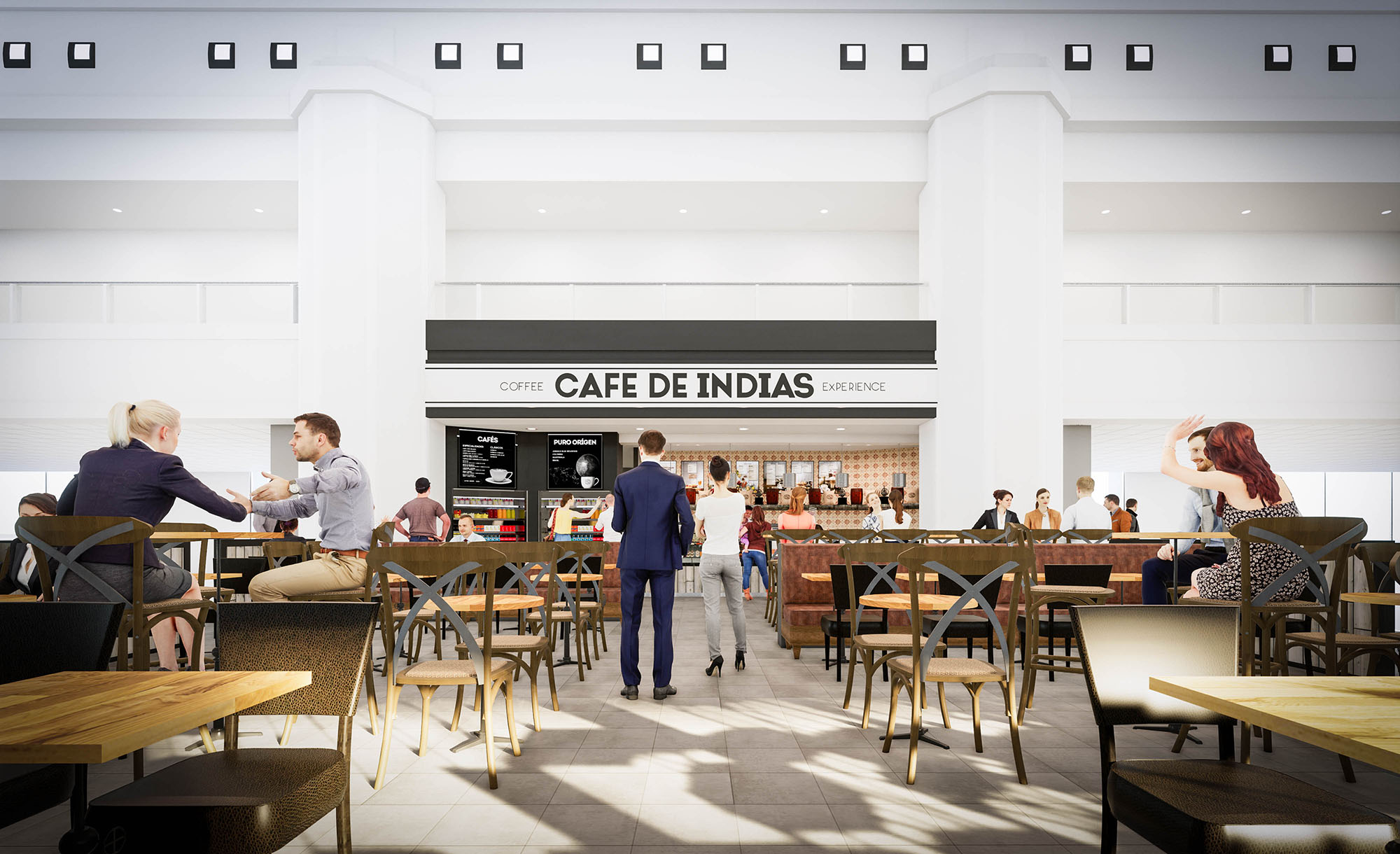
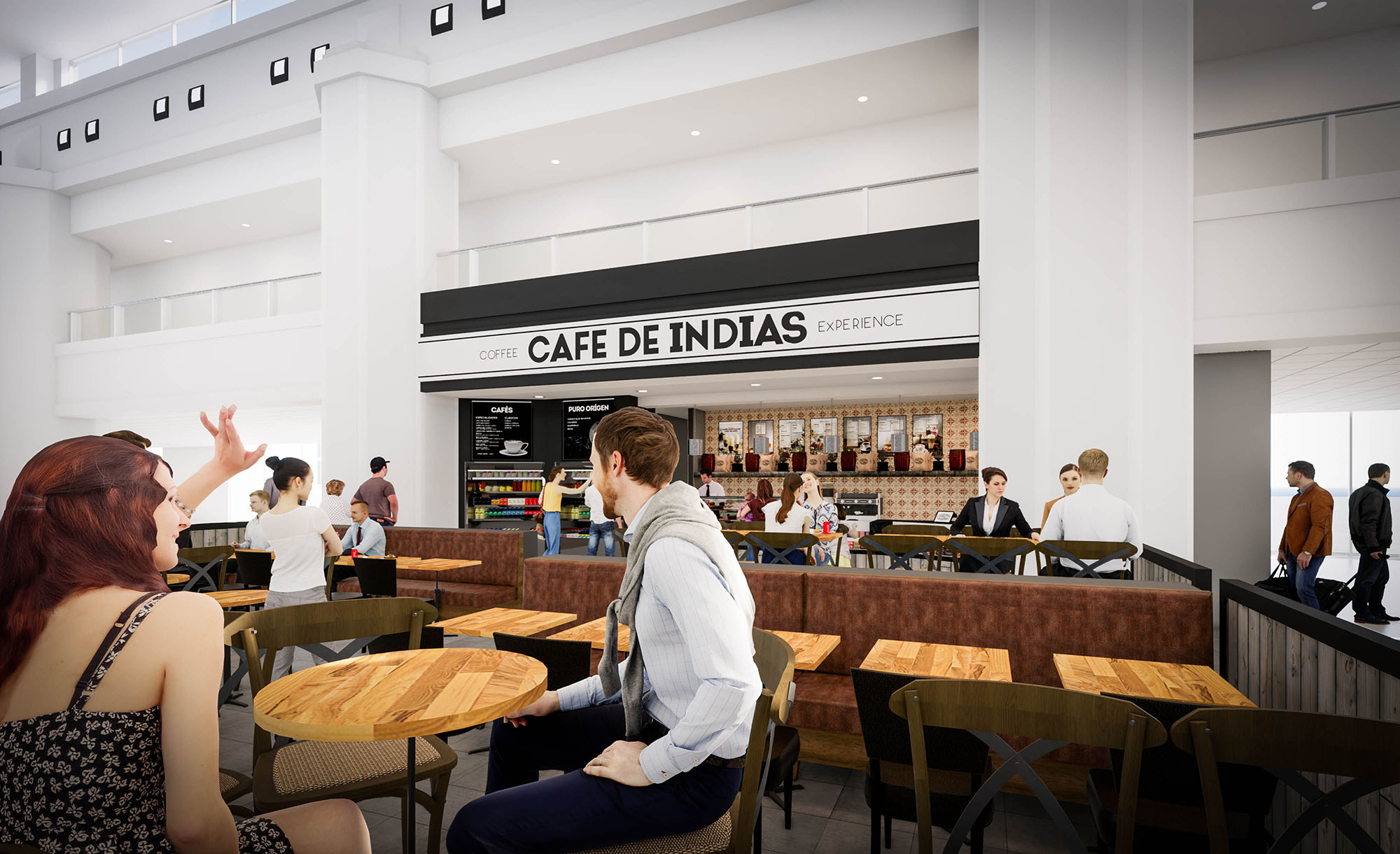
The Café de Indias project in Málaga is conceived as an open, contemporary coffee pavilion inserted within a larger commercial atrium. The design articulates a clear, recognizable brand front while remaining visually permeable and accessible from all sides. The café becomes a social condenser, blurring the limit between mall circulation and hospitality space through an inviting layout and an emphasis on transparency and warmth.
The architectural language combines clean, orthogonal lines with tactile finishes, seeking a balance between metropolitan sobriety and the artisan character of traditional coffee houses. The large, white structural frame provides a neutral canvas against which the dark fascia, signage, and warm timber elements stand out, generating a strong visual identity.
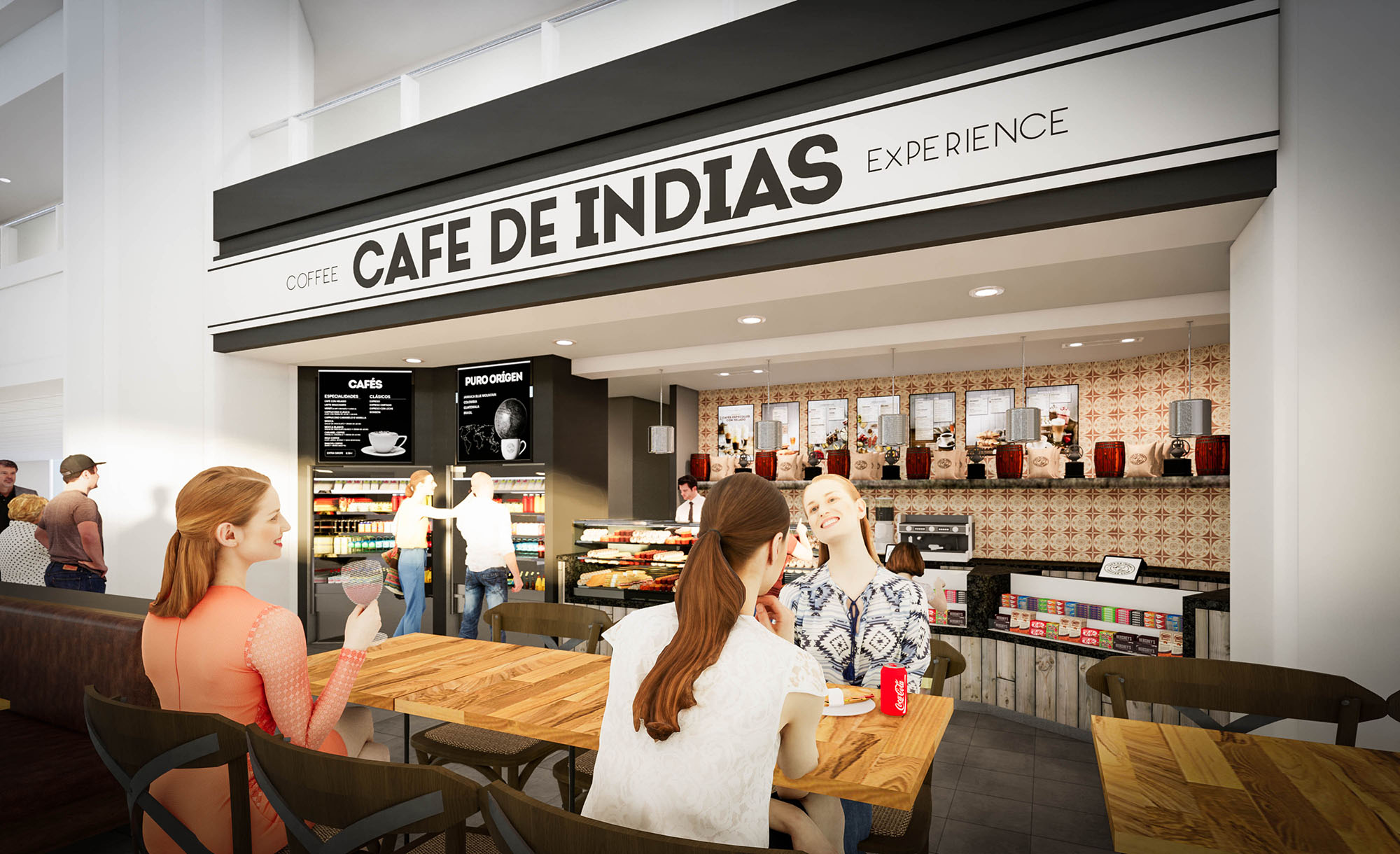
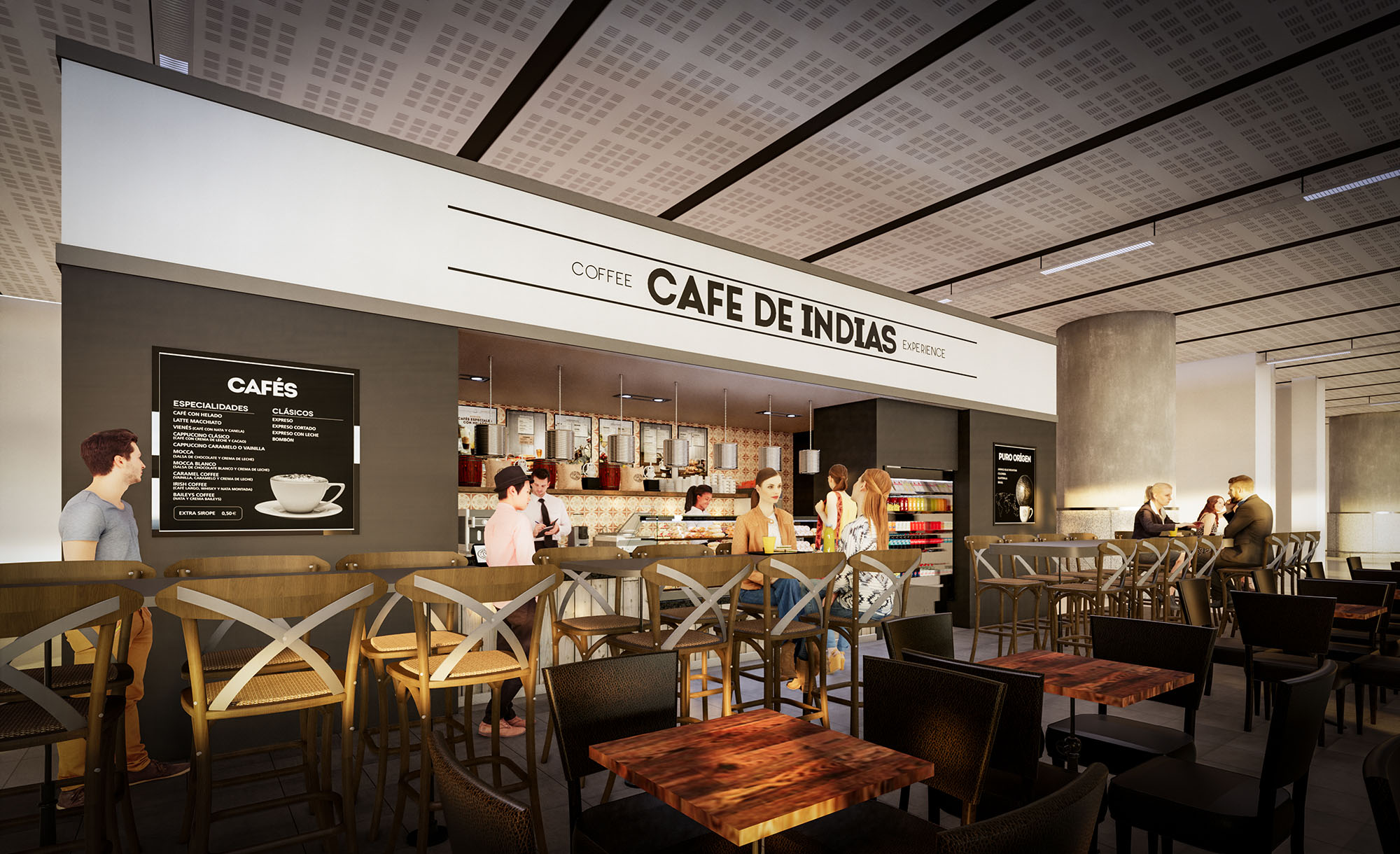
The plan is organized around a central service core that houses the counter, back-of-house preparation area, and refrigerated display units. This compact bar volume opens towards the main mall axis, maximizing visibility of products and barista activity, and thus enhancing the experiential dimension of the brand.
Seating radiates from this core in concentric bands of different densities. High tables and stools are located closer to the counter for short stays, while standard tables and more generous bench seating occupy the outer ring for longer, more relaxed use. Circulation aisles are intentionally wide, allowing fluid movement of customers and staff, and facilitating multiple entry points from the surrounding retail environment.
The material palette is governed by a contrast between light, large-format porcelain floor tiles and darker vertical surfaces. The floor provides continuity with the shopping center while clearly demarcating the café’s footprint through a subtle change in tone and joint pattern. The counter front uses textured timber cladding in a weathered finish, recalling coffee crates and reinforcing the narrative of origin and craftsmanship.
Tables employ warm natural wood tops combined with dark metal or leather-upholstered bases, while chairs feature slender black frames with light wooden backrests, adding visual rhythm without visual heaviness. The main fascia and soffit are rendered in matte white and charcoal, creating a crisp background for the “CAFE DE INDIAS” branding in bold black lettering, which becomes the key graphic element anchoring the space in the wider atrium.
Lighting design differentiates clearly between the commercial hall and the café interior. Within the high atrium, natural and general mall lighting flood the outer seating area, emphasizing openness. Under the café’s ceiling band, integrated downlights and focused spots generate a more intimate, human-scale atmosphere over the counter and central tables.
Accent lighting within the display cabinets and behind the bar highlights the product offer and creates depth in the background plane. The alternation of brighter operational zones and softer ambient pockets helps to structure the space without physical partitions, preserving the open character while offering a sense of enclosure to guests.
The brand identity is fully integrated into the architecture rather than applied superficially. Horizontal lines framing the logo are extended as subtle datum lines that organize menu boards, graphic panels, and shelving, resulting in a coherent visual grid. Informational panels about coffee origins and preparation methods are placed at eye level, transforming waiting time into an educational experience.
The seating typologies respond to different user profiles: individuals with laptops, quick solo visitors, couples, and larger groups. This diversity is achieved without fragmenting the space, thanks to the repetitive use of chair models, table geometries, and finishes, which maintain a unified aesthetic throughout.
Sustainability is approached through both material choices and operational efficiency. The specification prioritizes durable, easy-to-maintain finishes such as high-resistance porcelain flooring and robust timber laminates, extending the lifecycle of the fit-out and reducing replacement needs. Furniture is designed for disassembly, enabling components to be repaired or recycled.
LED lighting with high energy efficiency and long lifespan minimizes electrical consumption and maintenance. The open configuration of the café reduces the need for additional mechanical systems, taking advantage of the shopping center’s existing climate control. Where possible, equipment with low standby consumption and optimized refrigeration units is selected to decrease the overall environmental footprint of the operation.


The Café de Indias project in Málaga is conceived as an open, contemporary coffee pavilion inserted within a larger commercial atrium. The design articulates a clear, recognizable brand front while remaining visually permeable and accessible from all sides. The café becomes a social condenser, blurring the limit between mall circulation and hospitality space through an inviting layout and an emphasis on transparency and warmth.
The architectural language combines clean, orthogonal lines with tactile finishes, seeking a balance between metropolitan sobriety and the artisan character of traditional coffee houses. The large, white structural frame provides a neutral canvas against which the dark fascia, signage, and warm timber elements stand out, generating a strong visual identity.
The plan is organized around a central service core that houses the counter, back-of-house preparation area, and refrigerated display units. This compact bar volume opens towards the main mall axis, maximizing visibility of products and barista activity, and thus enhancing the experiential dimension of the brand.
Seating radiates from this core in concentric bands of different densities. High tables and stools are located closer to the counter for short stays, while standard tables and more generous bench seating occupy the outer ring for longer, more relaxed use. Circulation aisles are intentionally wide, allowing fluid movement of customers and staff, and facilitating multiple entry points from the surrounding retail environment.
The material palette is governed by a contrast between light, large-format porcelain floor tiles and darker vertical surfaces. The floor provides continuity with the shopping center while clearly demarcating the café’s footprint through a subtle change in tone and joint pattern. The counter front uses textured timber cladding in a weathered finish, recalling coffee crates and reinforcing the narrative of origin and craftsmanship.
Tables employ warm natural wood tops combined with dark metal or leather-upholstered bases, while chairs feature slender black frames with light wooden backrests, adding visual rhythm without visual heaviness. The main fascia and soffit are rendered in matte white and charcoal, creating a crisp background for the “CAFE DE INDIAS” branding in bold black lettering, which becomes the key graphic element anchoring the space in the wider atrium.
Lighting design differentiates clearly between the commercial hall and the café interior. Within the high atrium, natural and general mall lighting flood the outer seating area, emphasizing openness. Under the café’s ceiling band, integrated downlights and focused spots generate a more intimate, human-scale atmosphere over the counter and central tables.
Accent lighting within the display cabinets and behind the bar highlights the product offer and creates depth in the background plane. The alternation of brighter operational zones and softer ambient pockets helps to structure the space without physical partitions, preserving the open character while offering a sense of enclosure to guests.
The brand identity is fully integrated into the architecture rather than applied superficially. Horizontal lines framing the logo are extended as subtle datum lines that organize menu boards, graphic panels, and shelving, resulting in a coherent visual grid. Informational panels about coffee origins and preparation methods are placed at eye level, transforming waiting time into an educational experience.
The seating typologies respond to different user profiles: individuals with laptops, quick solo visitors, couples, and larger groups. This diversity is achieved without fragmenting the space, thanks to the repetitive use of chair models, table geometries, and finishes, which maintain a unified aesthetic throughout.
Sustainability is approached through both material choices and operational efficiency. The specification prioritizes durable, easy-to-maintain finishes such as high-resistance porcelain flooring and robust timber laminates, extending the lifecycle of the fit-out and reducing replacement needs. Furniture is designed for disassembly, enabling components to be repaired or recycled.
LED lighting with high energy efficiency and long lifespan minimizes electrical consumption and maintenance. The open configuration of the café reduces the need for additional mechanical systems, taking advantage of the shopping center’s existing climate control. Where possible, equipment with low standby consumption and optimized refrigeration units is selected to decrease the overall environmental footprint of the operation.


Our offices are located in Barcelona, Cancún, Chicago and Santo Domingo, but thanks to technology we can do projects on all over the world.
Barcelona
Bac de Roda 136
08020, Barcelona
Spain
Madrid
Av. de Buendía 11
19005 Guadalajara (Madrid)
Spain
Chicago
373 Hazel Ave, Apt A1
60022, Glencoe, Illinois
United States