

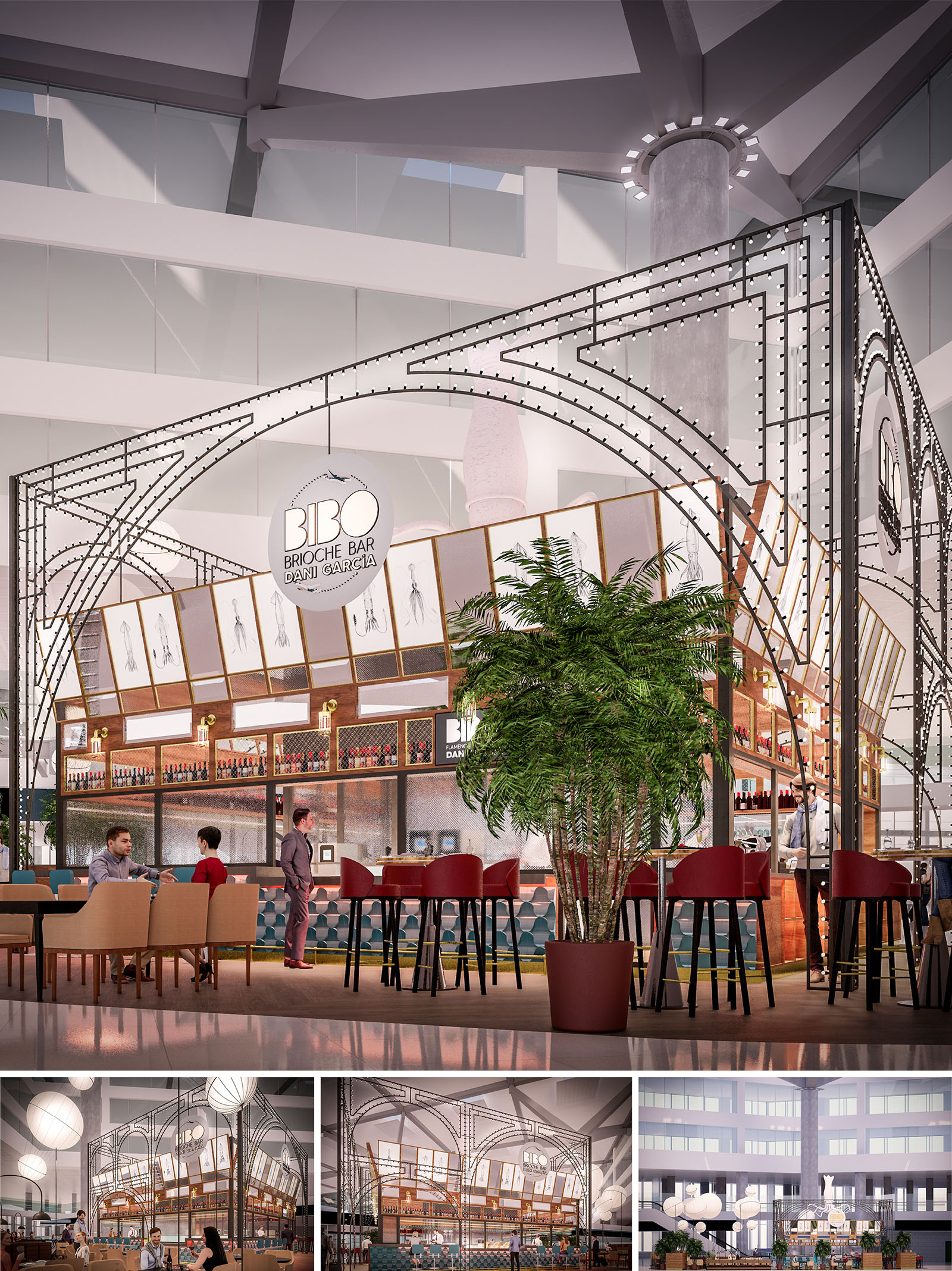
BRIOCHE BAR is conceived as a freestanding pavilion inside a shopping mall atrium, an urban kiosk that celebrates patisserie culture with a theatrical, almost scenographic presence. The design draws on light, slender metal structures reminiscent of early 20th‑century winter gardens and grand stations, reinterpreted with a contemporary language of geometry and illumination. The bar becomes a luminous object in the void of the atrium, clearly recognizable from every level of the building.
The open boundaries dissolve the traditional notion of a closed restaurant. Instead, a permeable framework outlines the space while preserving visual continuity with the mall. This approach allows the bar to function as a social node, inviting spontaneous occupation throughout the day and reinforcing its role as a meeting point within the commercial landscape of Málaga.
The project is organized around a compact, central service core that integrates the main bar, back‑of‑house, and display zones. Circulation flows around this nucleus, enabling 360‑degree access and maximizing seating exposure to both the bar and the surrounding atrium. This ring‑like organization ensures constant interaction between guests and staff, optimizing operational efficiency during peak hours.
Seating typologies are carefully layered to respond to different uses: perimeter bar stools create an active edge for quick consumption; intermediate high tables accommodate informal meetings; and lower lounge seating zones at the outer ring provide a more relaxed stay. The variation in heights generates a stepped visual field, keeping sightlines towards the interior open while offering a sense of gradated privacy as one moves away from the bar.
The most distinctive element is the exposed metal framework that defines the envelope without enclosing it. A series of arched trusses rise from a minimal base, intersecting overhead to form a light canopy that echoes the existing concrete structure of the atrium, creating a dialogue between the intervention and the host building. The rhythm of the arches frames views and subtly directs movement towards the main access points.
Integrated along this framework, a constellation of small, evenly spaced luminaires outlines the geometry, emphasizing its graphic quality. At night, the structure becomes a luminous drawing in space, a device that guides visitors from afar. Circular signage elements are suspended within the arches, reinforcing verticality and ensuring legibility from the upper levels of the mall.
The material palette contrasts the industrial refinement of steel with the warmth of timber and tactile upholstery. The main bar front is characterized by a combination of wood panels and patterned tiles, creating a vibrant pedestal for the food and beverage display. Transparent and mesh panels in the backbar introduce depth while allowing filtered glimpses into the preparation area, conveying craftsmanship and transparency.
Color operates in layers: deep reds in the bar stools, earthy tones in the low seating, and a nuanced range of blues and greens in the flooring and tiles generate a chromatic gradient that anchors the pavilion within the neutral mall context. Artwork and graphic illustrations, framed along the tilted upper band, bring a narrative dimension to the space, referencing gastronomic themes and linking the concept to the broader identity of the brand.
Lighting is treated as both functional infrastructure and expressive ornament. The perimeter light strings emphasize the structural arches, while concealed linear fixtures wash the bar fronts and shelving, enhancing material textures and product visibility. Large lantern‑type pendants hover above the seating area, softening the scale of the atrium and creating intimate pockets of light within the open environment.
The layered lighting design allows for different atmospheres throughout the day, from bright, energetic breakfast service to a more subdued, lounge‑like ambiance in the evening. Dimming strategies and energy‑efficient LED technology reduce consumption while maintaining precise control over the luminous composition.
Given its position within an existing, climate‑controlled atrium, the project focuses on material efficiency and operational sustainability rather than heavy envelope interventions. The metal framework is designed as a lightweight, demountable system, minimizing the quantity of material used and enabling potential disassembly or relocation with limited waste. Modular connections simplify installation and facilitate future maintenance or adaptation.
LED lighting with programmable control systems optimizes energy use, adapting light levels to natural daylight entering from the upper skylights of the mall. Finishes prioritize durability and ease of cleaning to support a long life cycle in a high‑traffic environment, reducing the need for frequent replacement. The incorporation of interior planting contributes to acoustic comfort and provides a biophilic counterpoint to the mineral character of the mall, subtly enhancing indoor environmental quality for users and staff.
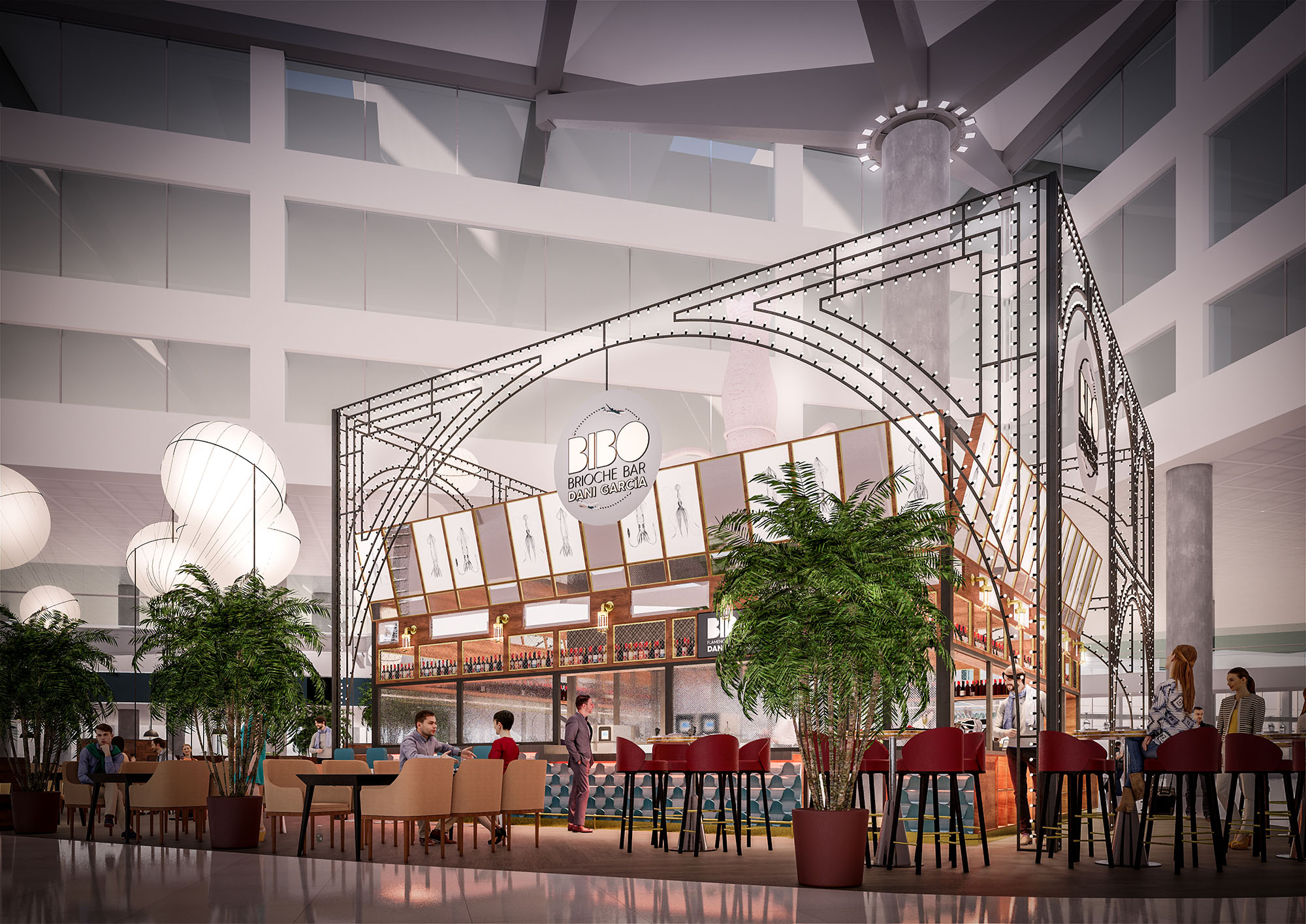
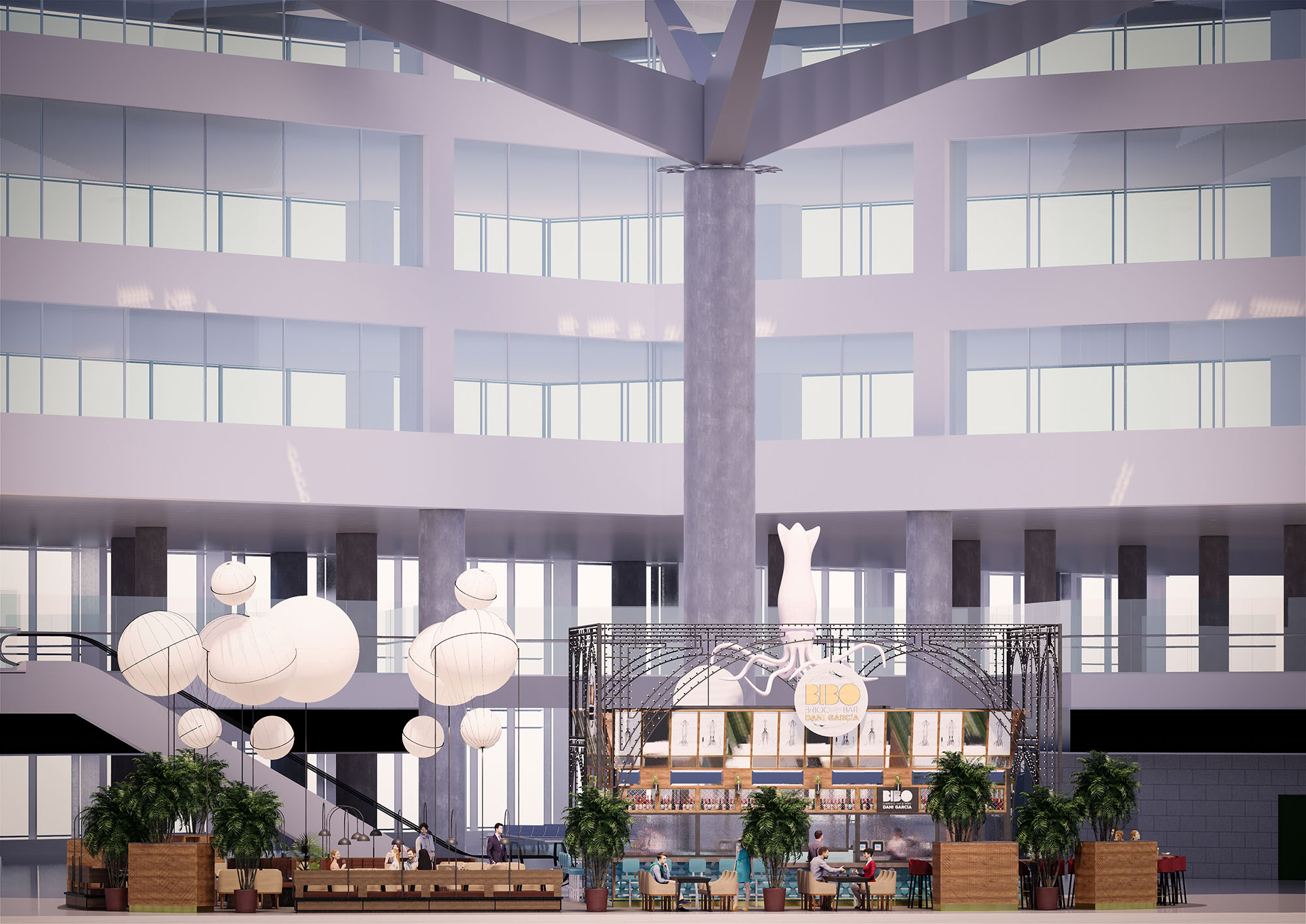
BRIOCHE BAR is conceived as a freestanding pavilion inside a shopping mall atrium, an urban kiosk that celebrates patisserie culture with a theatrical, almost scenographic presence. The design draws on light, slender metal structures reminiscent of early 20th‑century winter gardens and grand stations, reinterpreted with a contemporary language of geometry and illumination. The bar becomes a luminous object in the void of the atrium, clearly recognizable from every level of the building.
The open boundaries dissolve the traditional notion of a closed restaurant. Instead, a permeable framework outlines the space while preserving visual continuity with the mall. This approach allows the bar to function as a social node, inviting spontaneous occupation throughout the day and reinforcing its role as a meeting point within the commercial landscape of Málaga.
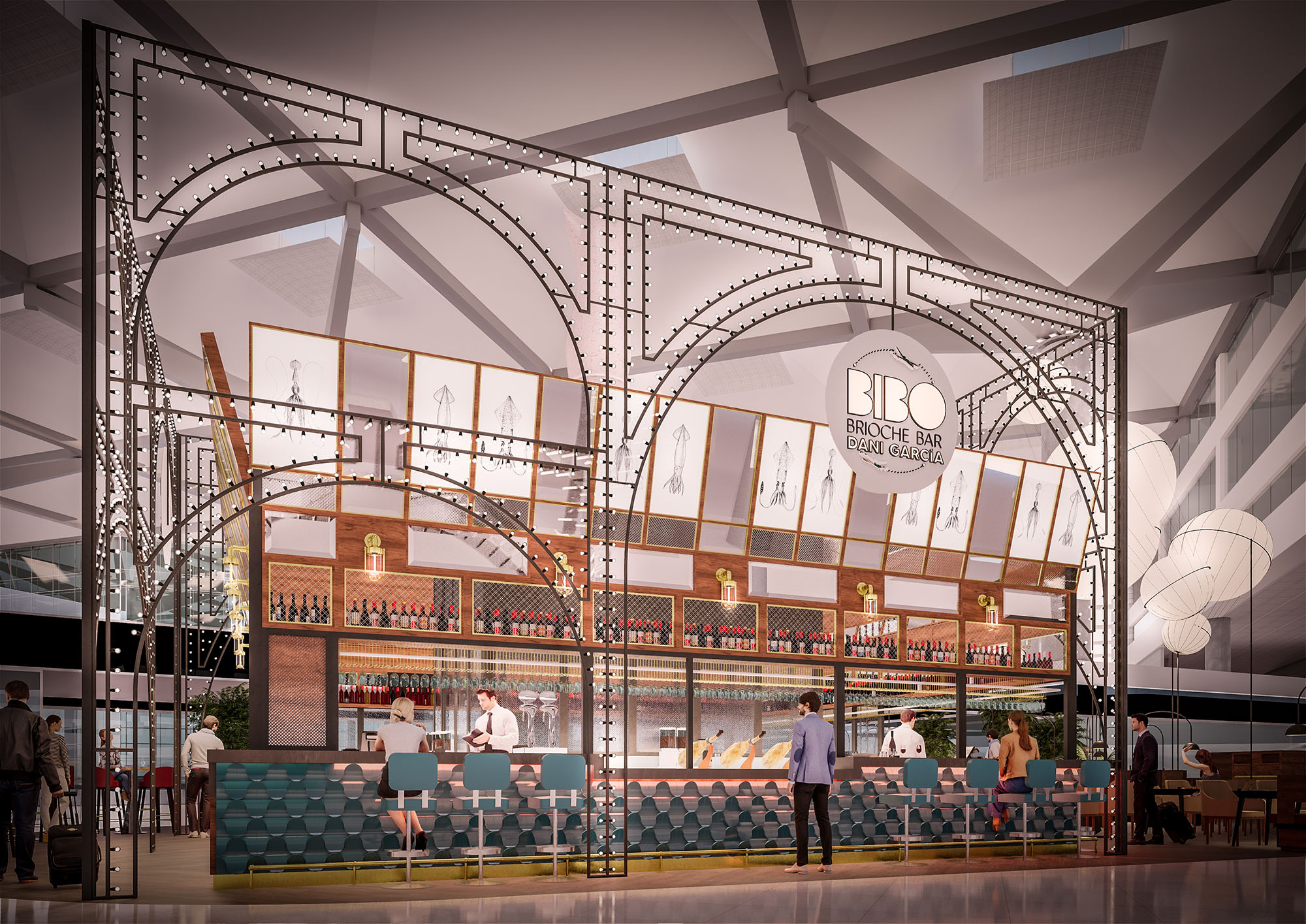
The project is organized around a compact, central service core that integrates the main bar, back‑of‑house, and display zones. Circulation flows around this nucleus, enabling 360‑degree access and maximizing seating exposure to both the bar and the surrounding atrium. This ring‑like organization ensures constant interaction between guests and staff, optimizing operational efficiency during peak hours.
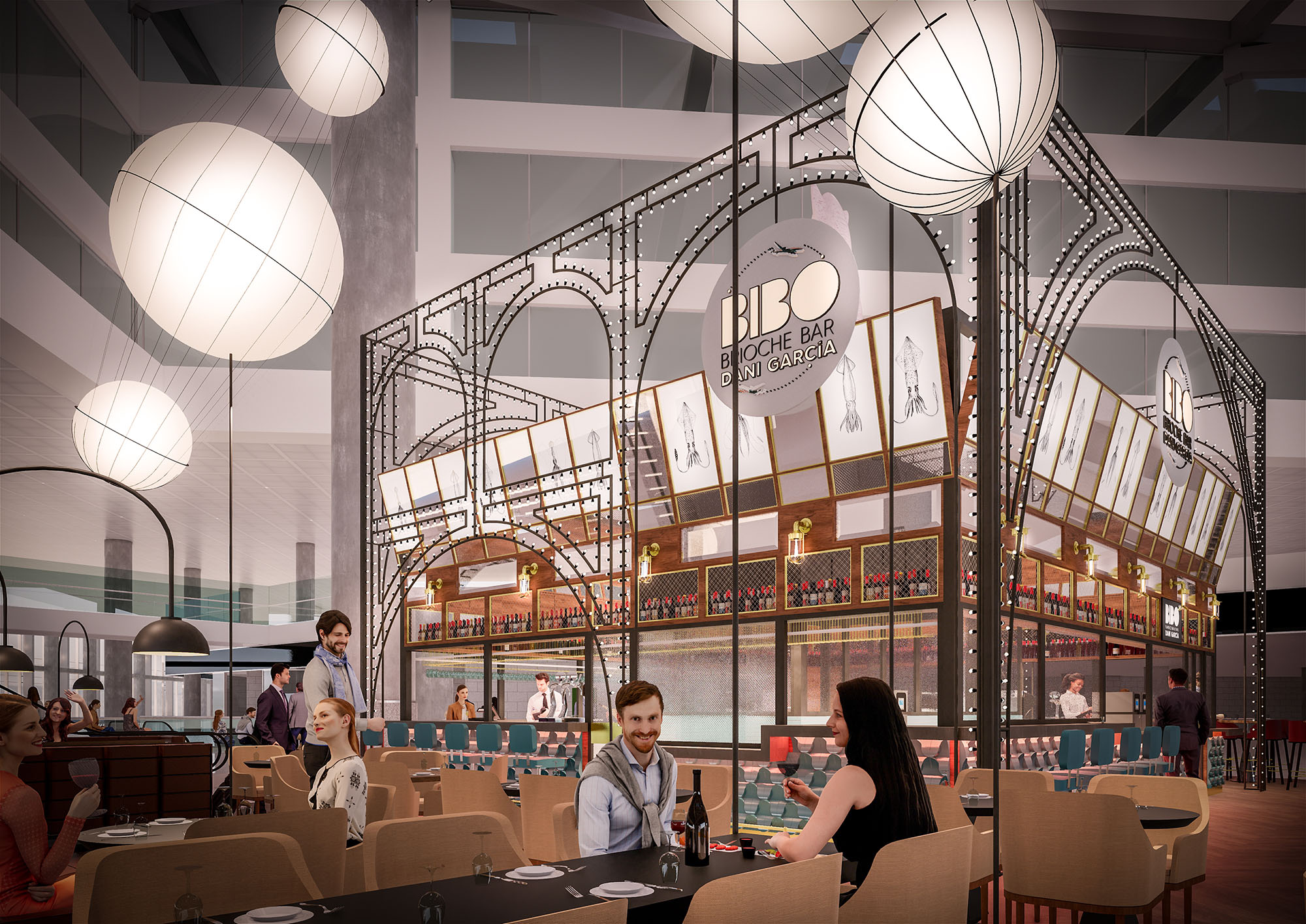
Seating typologies are carefully layered to respond to different uses: perimeter bar stools create an active edge for quick consumption; intermediate high tables accommodate informal meetings; and lower lounge seating zones at the outer ring provide a more relaxed stay. The variation in heights generates a stepped visual field, keeping sightlines towards the interior open while offering a sense of gradated privacy as one moves away from the bar.
The most distinctive element is the exposed metal framework that defines the envelope without enclosing it. A series of arched trusses rise from a minimal base, intersecting overhead to form a light canopy that echoes the existing concrete structure of the atrium, creating a dialogue between the intervention and the host building. The rhythm of the arches frames views and subtly directs movement towards the main access points.
Integrated along this framework, a constellation of small, evenly spaced luminaires outlines the geometry, emphasizing its graphic quality. At night, the structure becomes a luminous drawing in space, a device that guides visitors from afar. Circular signage elements are suspended within the arches, reinforcing verticality and ensuring legibility from the upper levels of the mall.
The material palette contrasts the industrial refinement of steel with the warmth of timber and tactile upholstery. The main bar front is characterized by a combination of wood panels and patterned tiles, creating a vibrant pedestal for the food and beverage display. Transparent and mesh panels in the backbar introduce depth while allowing filtered glimpses into the preparation area, conveying craftsmanship and transparency.
Color operates in layers: deep reds in the bar stools, earthy tones in the low seating, and a nuanced range of blues and greens in the flooring and tiles generate a chromatic gradient that anchors the pavilion within the neutral mall context. Artwork and graphic illustrations, framed along the tilted upper band, bring a narrative dimension to the space, referencing gastronomic themes and linking the concept to the broader identity of the brand.
Lighting is treated as both functional infrastructure and expressive ornament. The perimeter light strings emphasize the structural arches, while concealed linear fixtures wash the bar fronts and shelving, enhancing material textures and product visibility. Large lantern‑type pendants hover above the seating area, softening the scale of the atrium and creating intimate pockets of light within the open environment.
The layered lighting design allows for different atmospheres throughout the day, from bright, energetic breakfast service to a more subdued, lounge‑like ambiance in the evening. Dimming strategies and energy‑efficient LED technology reduce consumption while maintaining precise control over the luminous composition.
Given its position within an existing, climate‑controlled atrium, the project focuses on material efficiency and operational sustainability rather than heavy envelope interventions. The metal framework is designed as a lightweight, demountable system, minimizing the quantity of material used and enabling potential disassembly or relocation with limited waste. Modular connections simplify installation and facilitate future maintenance or adaptation.
LED lighting with programmable control systems optimizes energy use, adapting light levels to natural daylight entering from the upper skylights of the mall. Finishes prioritize durability and ease of cleaning to support a long life cycle in a high‑traffic environment, reducing the need for frequent replacement. The incorporation of interior planting contributes to acoustic comfort and provides a biophilic counterpoint to the mineral character of the mall, subtly enhancing indoor environmental quality for users and staff.


Our offices are located in Barcelona, Cancún, Chicago and Santo Domingo, but thanks to technology we can do projects on all over the world.
Barcelona
Bac de Roda 136
08020, Barcelona
Spain
Madrid
Av. de Buendía 11
19005 Guadalajara (Madrid)
Spain
Chicago
373 Hazel Ave, Apt A1
60022, Glencoe, Illinois
United States