

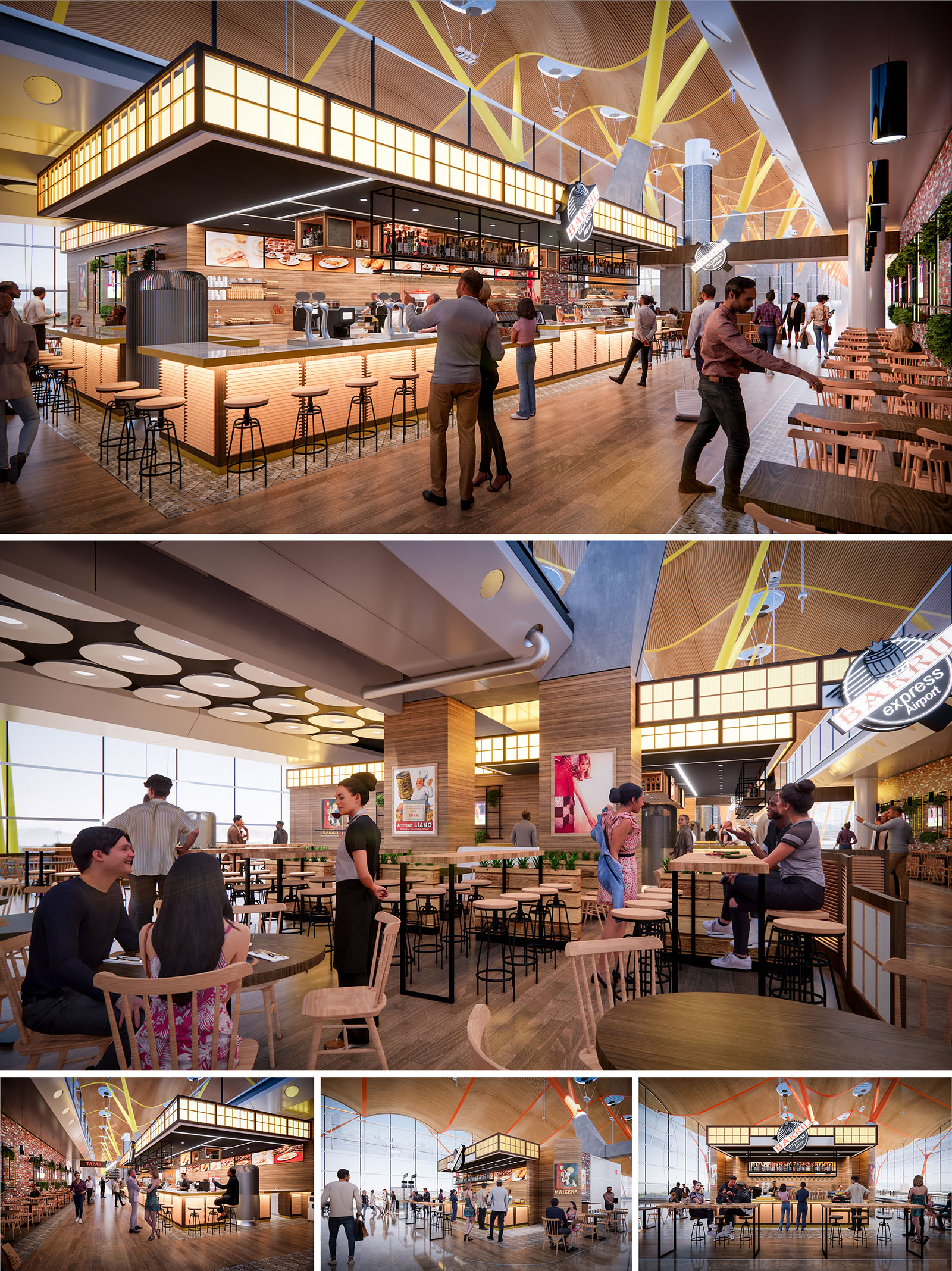
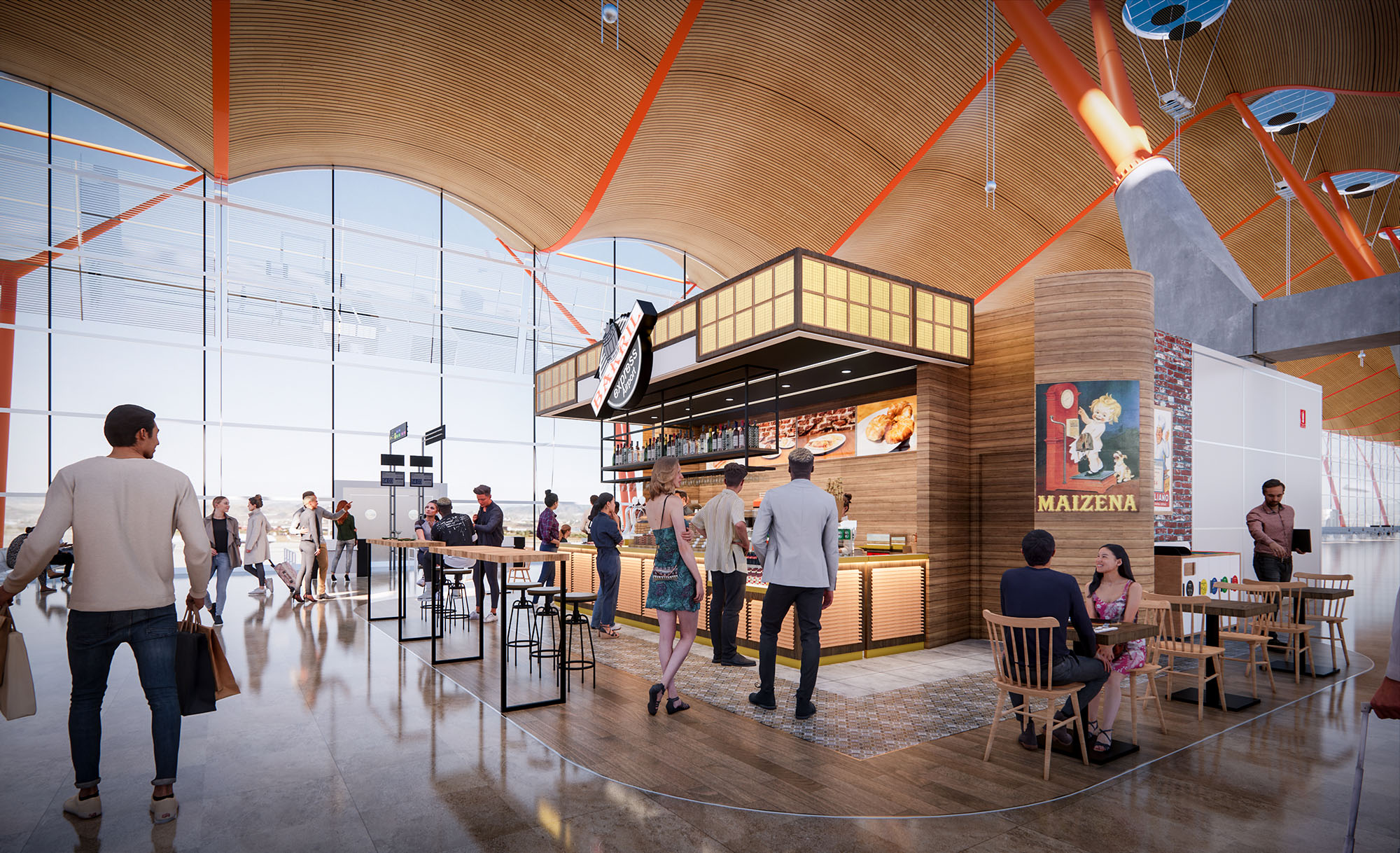
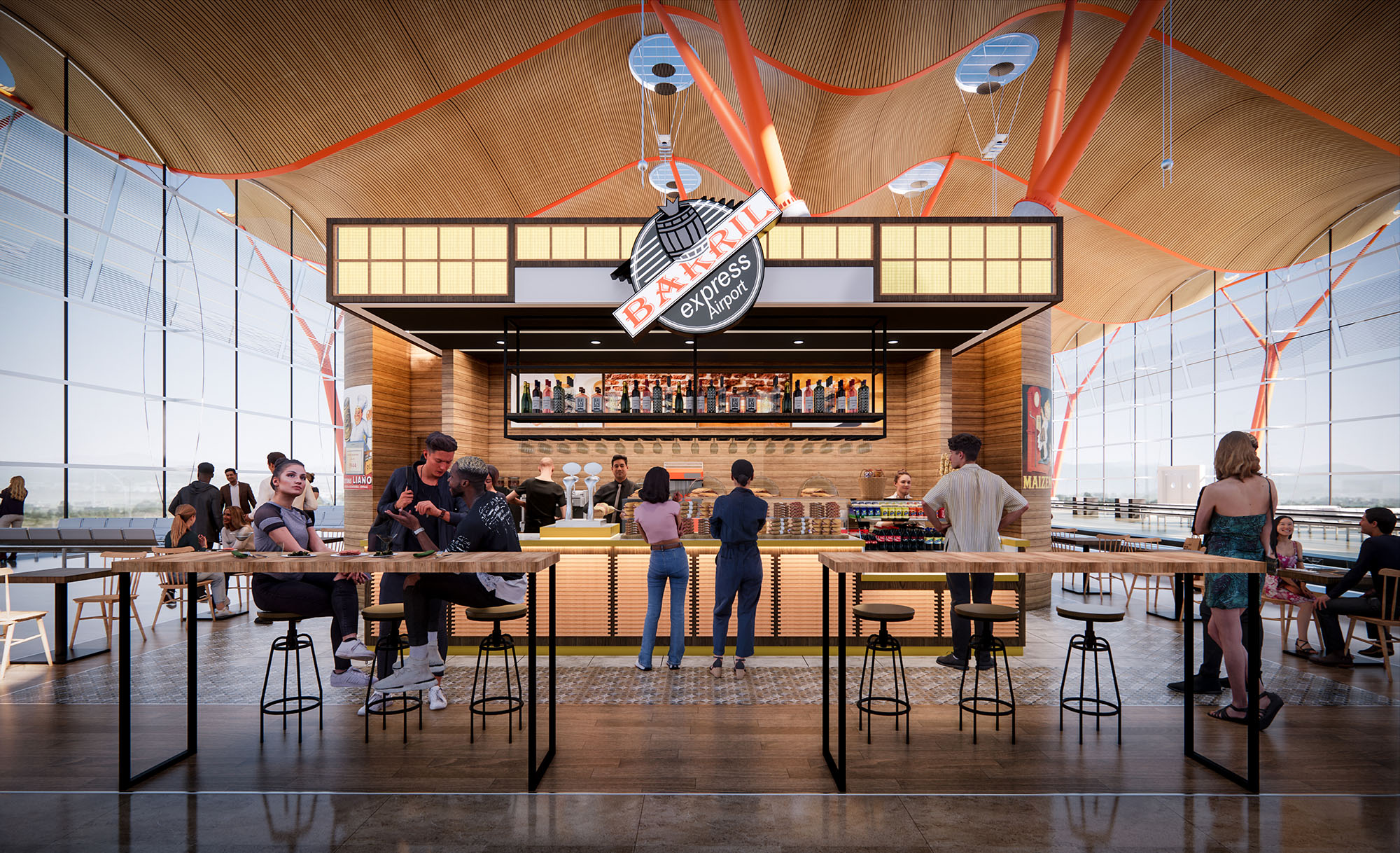
Barril Express is conceived as a contemporary reinterpretation of the traditional Spanish bar, adapted to the dynamics of an airport terminal in Madrid. The project combines the warmth of a neighbourhood taberna with the efficiency and clarity required by high passenger flows. The central bar becomes an illuminated landmark, functioning as an urban “farola” that guides travellers and organizes the surrounding seating areas.
The design strategically emphasizes permeability and visual continuity with the terminal, ensuring that the restaurant operates as an open, welcoming extension of the concourse rather than an enclosed unit. The atmosphere is informal and vibrant, encouraging short stays, quick meetings and relaxed waiting periods before boarding.
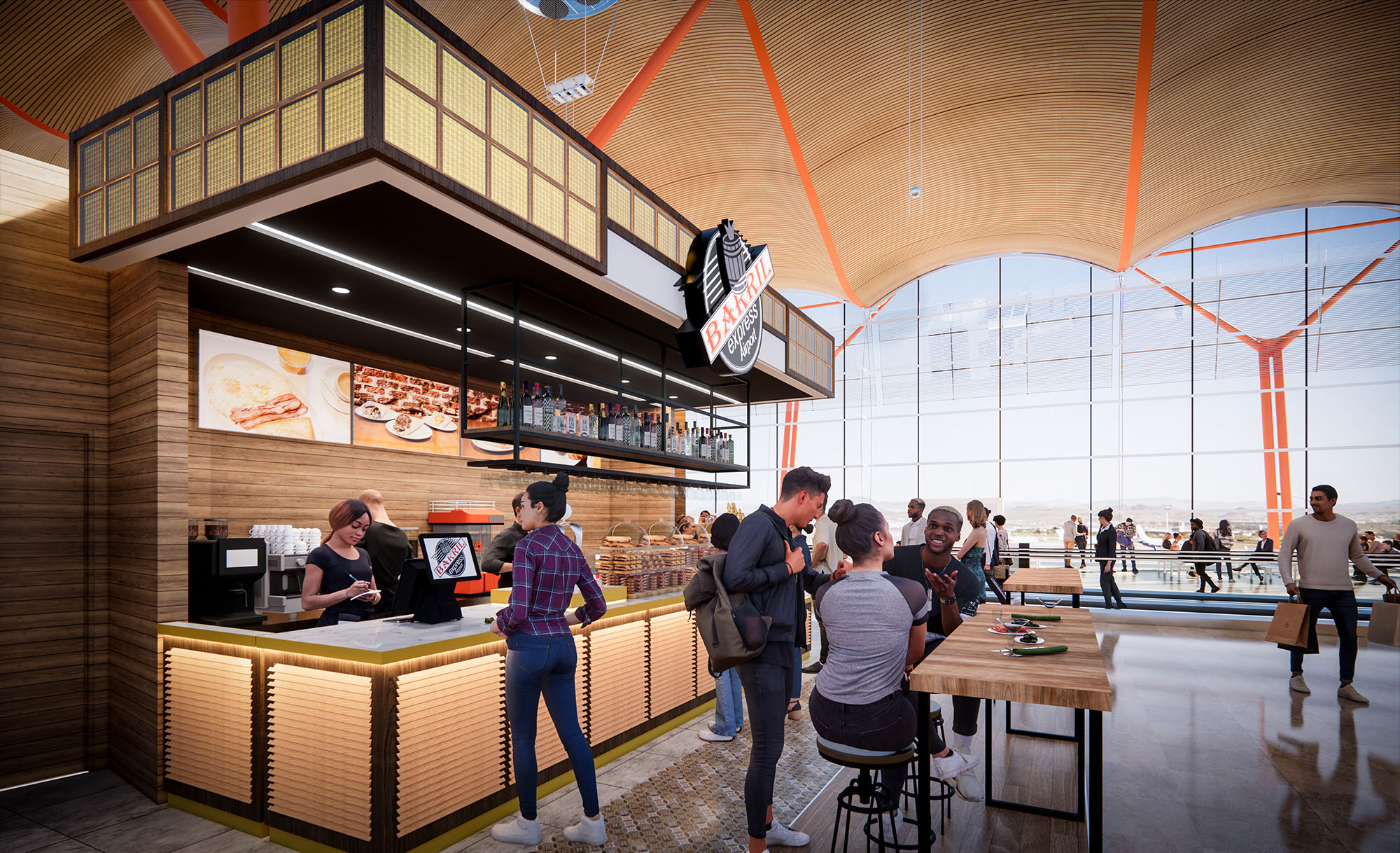
The layout is articulated around a large island bar that structures the entire project. This bar is accessible on multiple sides, optimizing service, reducing queues and allowing efficient distribution of drinks and tapas. The perimeter seating alternates high communal tables, bar stools and lower dining tables, responding to different user profiles and lengths of stay.
The main circulation axes of the terminal are respected and enhanced by clear transversal passages that cross the restaurant area. These allow intuitive entry from several fronts and maintain direct views to the boarding gates and the exterior apron. The open plan arrangement maximizes visibility of the product display and menu, facilitating quick decision-making for travellers under time pressure.
The material palette is based on warm woods, light ceramics and metallic accents in black, which generate a contemporary yet familiar language. The wooden floor and vertical cladding evoke the texture of traditional bars, while their controlled tonality ensures visual calm within the busy terminal environment. Metallic frames and shelving bring structural clarity and robustness.
Lighting is a key compositional element. A luminous cornice wraps the bar volume with diffuse, amber-toned light that recalls backlit glass of historic cafés. This glow contrasts with the cooler, more uniform general lighting of the terminal, creating a distinct micro-atmosphere without resorting to physical enclosures. Suspended luminaires and circular ceiling elements modulate scale above the seating area, visually lowering the height of the terminal and generating a more intimate dining space.
The furniture combines slender metal structures with solid timber seats and tabletops, ensuring durability and easy maintenance in a high-traffic context. The mix of high stools, benches and classic wooden chairs introduces diversity of posture and encourages flexible appropriation of the space, from solo travellers to families or business groups.
Branding is fully integrated into the architecture through signage, illuminated logos and graphic panels that recall Spanish culinary culture. These elements are placed strategically above the bar and on key façades, remaining legible from long distances within the terminal. The result is a strong identity that reinforces orientation and contributes to the overall character of the airport’s commercial area.
The project establishes a dialogue with the iconic structure of Madrid’s terminal through the careful alignment of volumes and the reading of existing rhythms. The elevated light box of the bar responds to the large-span roof and its structural lines, creating a secondary scale that coexists harmoniously with the dominant yellow structural elements and curved wooden ceiling of the terminal.
Large glazed façades are left as open as possible to maintain visual connection with the runway and natural light. This transparency turns Barril Express into an observatory over airport activity, enhancing the user experience and reducing the sensation of confinement typically associated with interior commercial units.
The design incorporates sustainability criteria through the selection of long-lasting, low-maintenance materials and the optimization of energy use. The predominant use of wood from certified sources contributes to reducing the project’s environmental impact while reinforcing a warm tactile quality. Finishes are specified for high durability, minimizing the need for replacements in a demanding, continuous-use environment.
Lighting is planned with high-efficiency LED systems, dimmable to adapt to different times of day and to the natural light available from the terminal’s large façades. Open layouts favor natural cross-ventilation within the terminal’s overall climate strategy, reducing reliance on localized mechanical systems. Operationally, the central bar consolidates equipment and services, shortening installation runs and helping to reduce both initial resource consumption and ongoing energy demand.
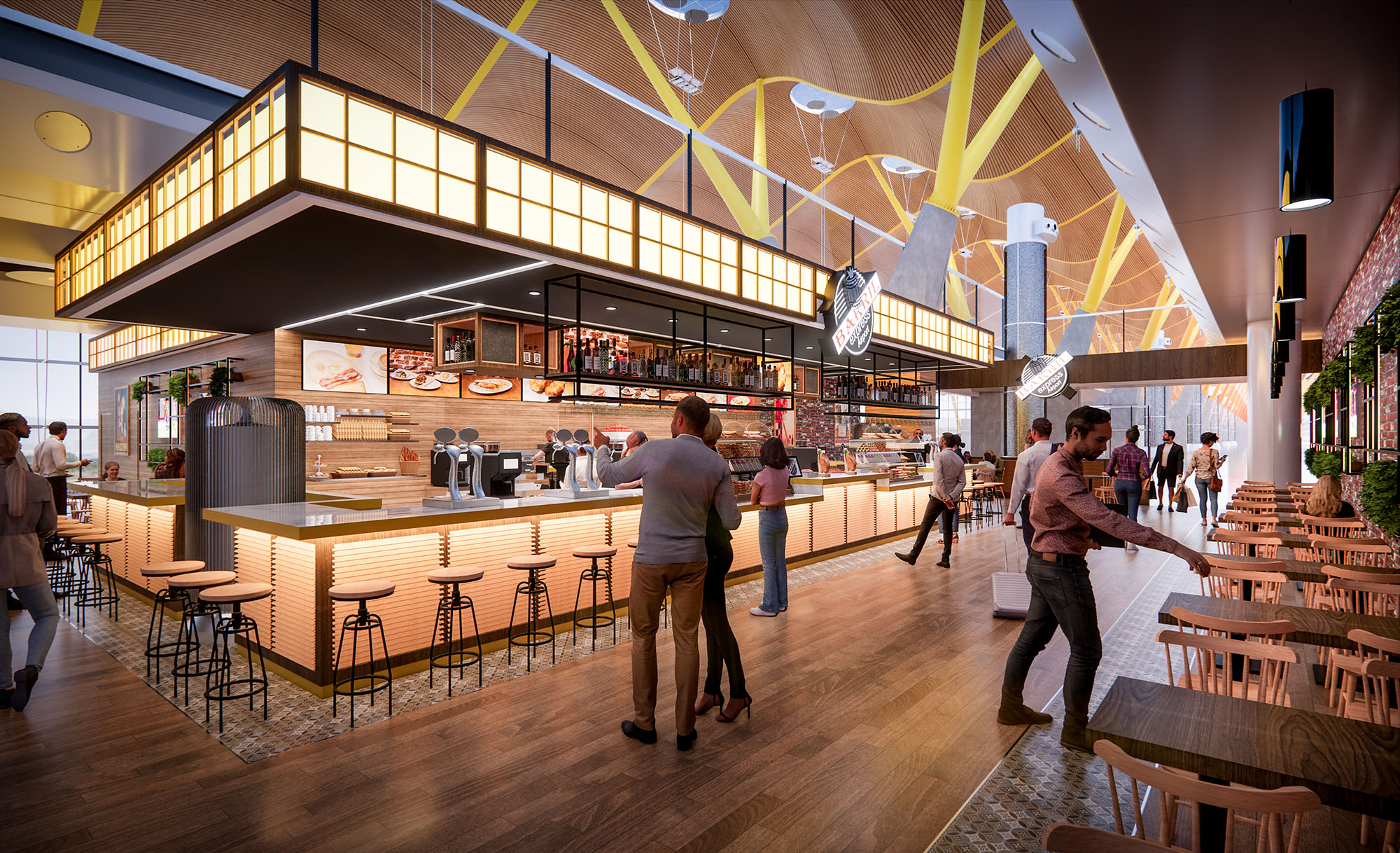
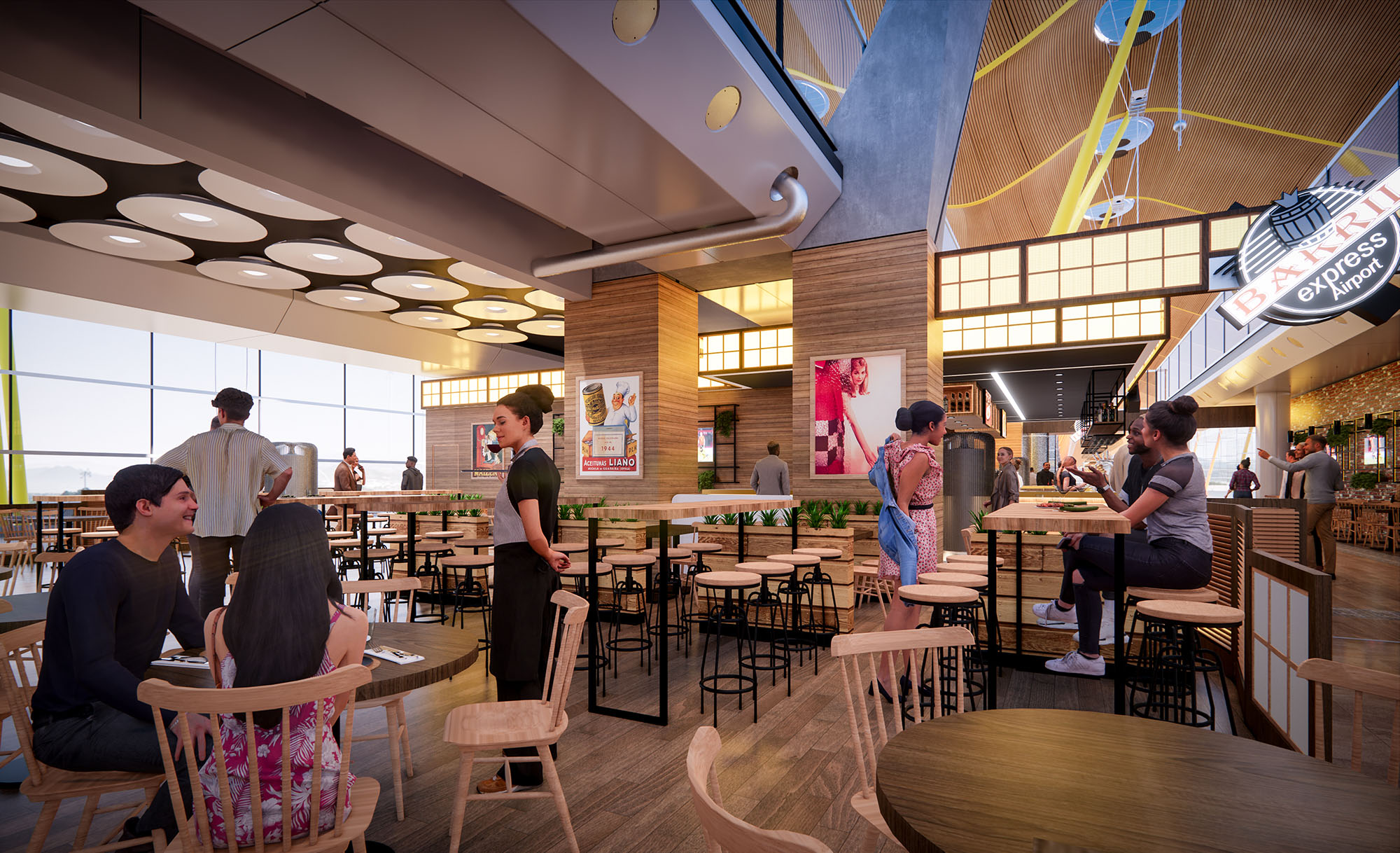
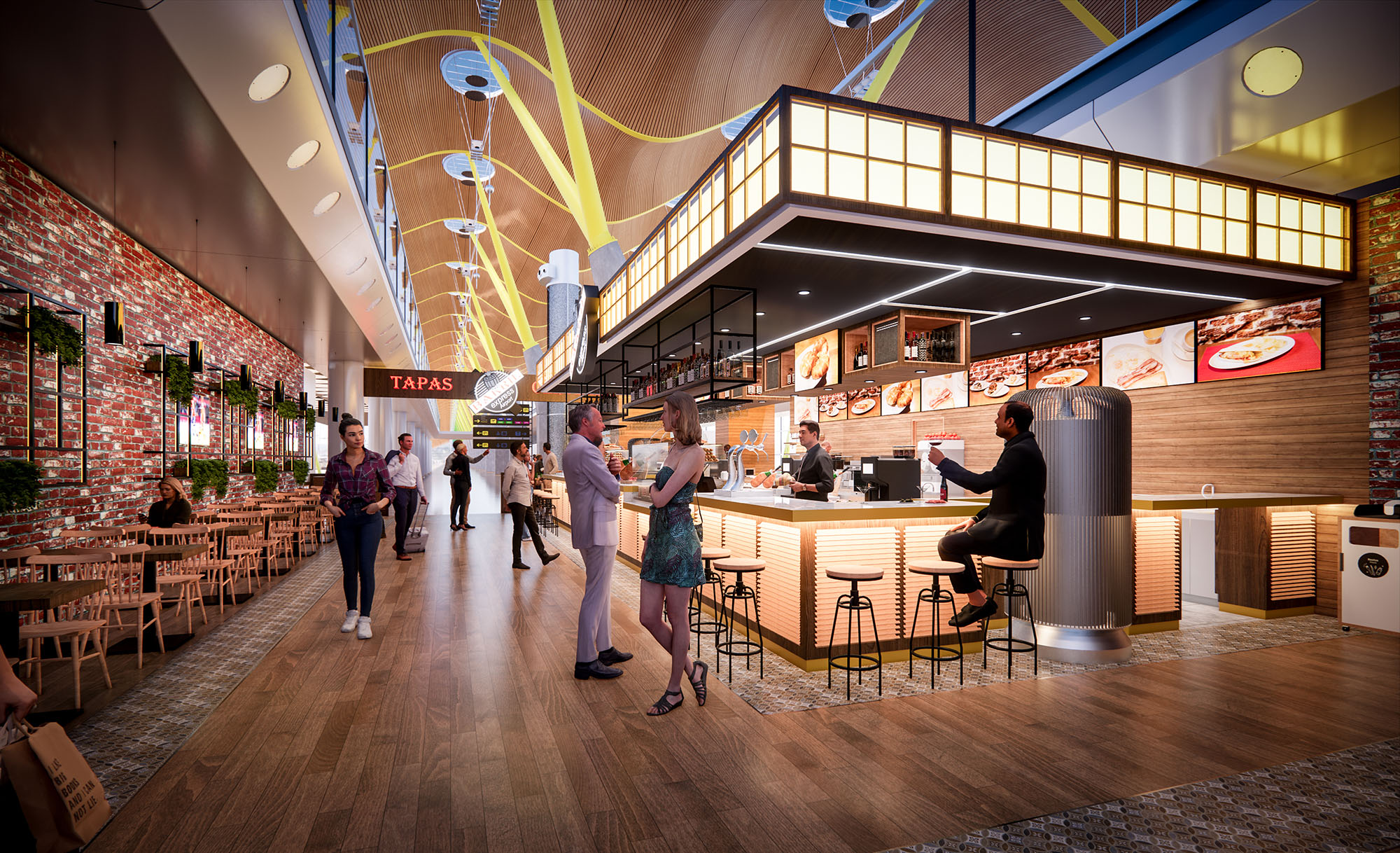
Barril Express is conceived as a contemporary reinterpretation of the traditional Spanish bar, adapted to the dynamics of an airport terminal in Madrid. The project combines the warmth of a neighbourhood taberna with the efficiency and clarity required by high passenger flows. The central bar becomes an illuminated landmark, functioning as an urban “farola” that guides travellers and organizes the surrounding seating areas.
The design strategically emphasizes permeability and visual continuity with the terminal, ensuring that the restaurant operates as an open, welcoming extension of the concourse rather than an enclosed unit. The atmosphere is informal and vibrant, encouraging short stays, quick meetings and relaxed waiting periods before boarding.
The layout is articulated around a large island bar that structures the entire project. This bar is accessible on multiple sides, optimizing service, reducing queues and allowing efficient distribution of drinks and tapas. The perimeter seating alternates high communal tables, bar stools and lower dining tables, responding to different user profiles and lengths of stay.
The main circulation axes of the terminal are respected and enhanced by clear transversal passages that cross the restaurant area. These allow intuitive entry from several fronts and maintain direct views to the boarding gates and the exterior apron. The open plan arrangement maximizes visibility of the product display and menu, facilitating quick decision-making for travellers under time pressure.
The material palette is based on warm woods, light ceramics and metallic accents in black, which generate a contemporary yet familiar language. The wooden floor and vertical cladding evoke the texture of traditional bars, while their controlled tonality ensures visual calm within the busy terminal environment. Metallic frames and shelving bring structural clarity and robustness.
Lighting is a key compositional element. A luminous cornice wraps the bar volume with diffuse, amber-toned light that recalls backlit glass of historic cafés. This glow contrasts with the cooler, more uniform general lighting of the terminal, creating a distinct micro-atmosphere without resorting to physical enclosures. Suspended luminaires and circular ceiling elements modulate scale above the seating area, visually lowering the height of the terminal and generating a more intimate dining space.
The furniture combines slender metal structures with solid timber seats and tabletops, ensuring durability and easy maintenance in a high-traffic context. The mix of high stools, benches and classic wooden chairs introduces diversity of posture and encourages flexible appropriation of the space, from solo travellers to families or business groups.
Branding is fully integrated into the architecture through signage, illuminated logos and graphic panels that recall Spanish culinary culture. These elements are placed strategically above the bar and on key façades, remaining legible from long distances within the terminal. The result is a strong identity that reinforces orientation and contributes to the overall character of the airport’s commercial area.
The project establishes a dialogue with the iconic structure of Madrid’s terminal through the careful alignment of volumes and the reading of existing rhythms. The elevated light box of the bar responds to the large-span roof and its structural lines, creating a secondary scale that coexists harmoniously with the dominant yellow structural elements and curved wooden ceiling of the terminal.
Large glazed façades are left as open as possible to maintain visual connection with the runway and natural light. This transparency turns Barril Express into an observatory over airport activity, enhancing the user experience and reducing the sensation of confinement typically associated with interior commercial units.
The design incorporates sustainability criteria through the selection of long-lasting, low-maintenance materials and the optimization of energy use. The predominant use of wood from certified sources contributes to reducing the project’s environmental impact while reinforcing a warm tactile quality. Finishes are specified for high durability, minimizing the need for replacements in a demanding, continuous-use environment.
Lighting is planned with high-efficiency LED systems, dimmable to adapt to different times of day and to the natural light available from the terminal’s large façades. Open layouts favor natural cross-ventilation within the terminal’s overall climate strategy, reducing reliance on localized mechanical systems. Operationally, the central bar consolidates equipment and services, shortening installation runs and helping to reduce both initial resource consumption and ongoing energy demand.


Our offices are located in Barcelona, Cancún, Chicago and Santo Domingo, but thanks to technology we can do projects on all over the world.
Barcelona
Bac de Roda 136
08020, Barcelona
Spain
Madrid
Av. de Buendía 11
19005 Guadalajara (Madrid)
Spain
Chicago
373 Hazel Ave, Apt A1
60022, Glencoe, Illinois
United States